fNIRS vs EEG for Prefrontal Cortex Research: A Comprehensive Guide for Scientists and Clinicians
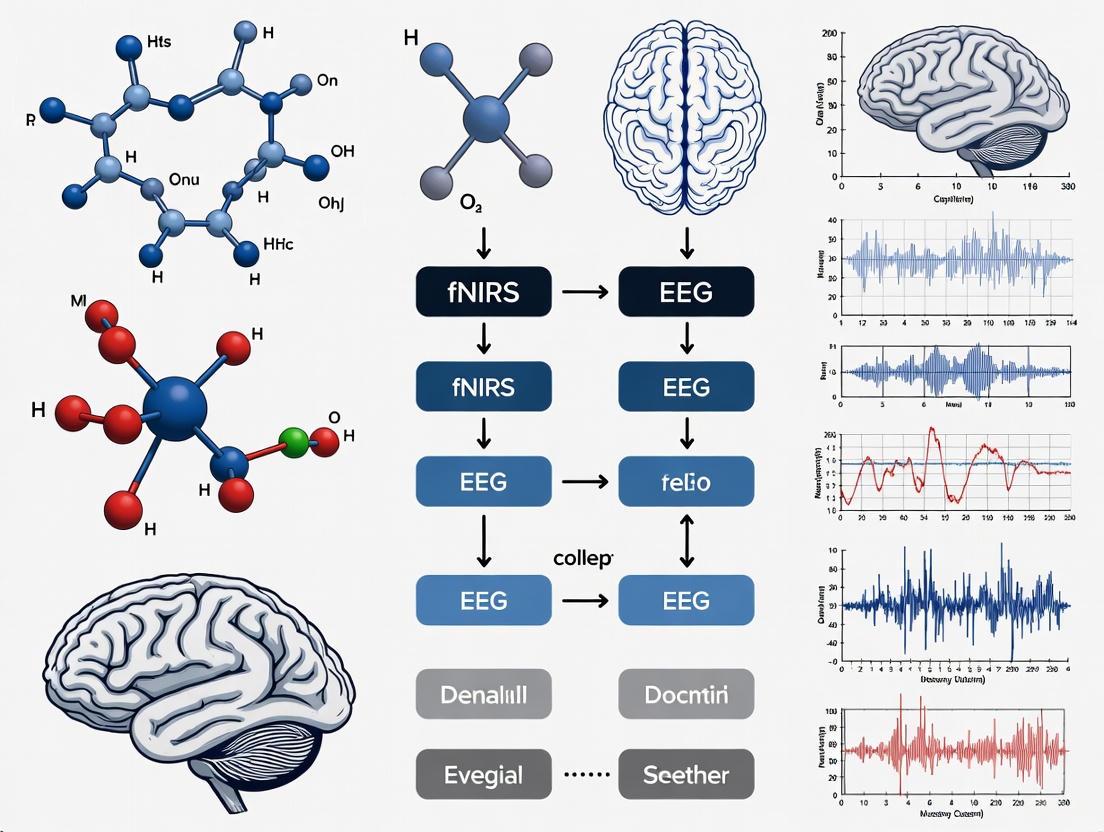
This article provides a definitive comparison of functional Near-Infrared Spectroscopy (fNIRS) and Electroencephalography (EEG) for studying the prefrontal cortex (PFC), tailored for researchers and drug development professionals.
fNIRS vs EEG for Prefrontal Cortex Research: A Comprehensive Guide for Scientists and Clinicians
Abstract
This article provides a definitive comparison of functional Near-Infrared Spectroscopy (fNIRS) and Electroencephalography (EEG) for studying the prefrontal cortex (PFC), tailored for researchers and drug development professionals. We explore the fundamental principles, with EEG measuring neuronal electrical activity and fNIRS monitoring hemodynamic responses. The scope covers methodological considerations for experimental design, troubleshooting for common technical challenges, and a rigorous validation of the complementary strengths of each modality. Crucially, the article highlights the emerging power of integrated fNIRS-EEG systems, which offer a more complete picture of PFC function by combining millisecond electrical dynamics with localized hemodynamic changes. This guide aims to empower scientists in selecting the optimal tool—or combination—for their specific PFC research or clinical application.
Understanding the Core Principles: What fNIRS and EEG Measure in the Prefrontal Cortex
Electroencephalography (EEG) is a non-invasive measurement method for brain activity that has become a cornerstone of cognitive neuroscience research due to its exceptional temporal resolution and hypersensitivity to dynamic changes in neural signaling [1]. The technique captures postsynaptic potentials generated when neurotransmitters bind to receptors on the postsynaptic membrane, which generate electric fields when sufficient neurons activate synchronously [1]. From a neurophysiological perspective, EEG provides a macroscopic readout of synchronous activity in large neural populations, offering researchers a direct window into the brain's millisecond-scale operational dynamics [2]. This unparalleled temporal resolution makes EEG particularly valuable for investigating fast cognitive processes such as attention, perception, and executive function, especially when compared to other neuroimaging modalities like functional near-infrared spectroscopy (fNIRS).
The fundamental advantage of EEG lies in its ability to track neural events on the same timescale at which they occur, capturing brain dynamics that are often obscured by the slower hemodynamic responses measured by techniques like fNIRS and fMRI. While EEG signals have relatively poor spatial resolution due to passage through the skull, this limitation is offset by its millisecond temporal precision, low equipment cost, and widespread clinical applicability [1]. These characteristics have established EEG as an indispensable tool for both basic neuroscience research and clinical neurology applications, particularly when investigating the rapid neural computations underlying prefrontal cortex functions.
Fundamental Principles of EEG Analysis
EEG signals can be categorized into three distinct types based on their temporal characteristics and relationship to neural events. Time-invariant EEG describes signals where the brain's functional state remains relatively unchanged during recording, such as during resting-state measurements without specific psychological activities [1]. Accurate event-related EEG refers to neural responses induced by stimuli with precisely known onset times, allowing researchers to time-lock EEG responses to external events [1]. Random event-related EEG encompasses brain activity triggered by events with unpredictable timing, such as epileptic seizures or other spontaneous neural phenomena [1]. Understanding these classifications is essential for selecting appropriate analytical methods aligned with research objectives.
Core Analytical Approaches
Power Spectrum Analysis: This method quantifies energy changes across different frequency components in EEG signals, revealing state-dependent neural oscillations [1]. Common implementation approaches include Fast Fourier Transform (FFT), Welch method, and autoregressive modeling, each with distinct advantages for resolving specific spectral features.
Time-Frequency Analysis: By examining how spectral power changes over time, this approach captures the dynamic nature of neural oscillations during cognitive tasks, bridging the gap between pure spectral and temporal analyses.
Connectivity Analysis: This increasingly important method examines functional relationships between different brain regions by measuring synchronization patterns in neural activity, providing insights into network dynamics [3]. Techniques range from simple pairwise coherence measurements to sophisticated multivariate approaches like Granger causality.
Source Localization: Advanced computational techniques that estimate the intracranial origins of scalp-recorded EEG signals, addressing EEG's inherent limitations in spatial resolution.
Machine Learning Applications: Modern pattern recognition algorithms applied to EEG data for classifying cognitive states, detecting abnormalities, and predicting behavioral outcomes.
Table 1: EEG Frequency Bands and Their Functional Correlates
| Band | Frequency Range | Primary Functional Associations |
|---|---|---|
| Delta | 0.5-4 Hz | Deep sleep, pathological states |
| Theta | 4-8 Hz | Drowsiness, meditation, memory encoding |
| Alpha | 8-13 Hz | Relaxed wakefulness, inhibitory control |
| Beta | 13-30 Hz | Active thinking, focus, problem solving |
| Gamma | >30 Hz | Information integration, cognitive binding |
Comparative Methodological Framework: EEG vs. fNIRS
When investigating prefrontal cortex function, researchers must carefully consider the relative strengths and limitations of EEG and fNIRS. The two modalities capture fundamentally different aspects of neural activity: EEG directly measures electrical potentials from synchronized neuronal firing, while fNIRS indirectly assesses brain activity through neurovascular coupling by measuring changes in hemoglobin concentration [4].
Temporal and Spatial Resolution Characteristics
EEG provides millisecond temporal resolution, enabling the capture of neural dynamics at the speed of cognition itself. This allows researchers to track the rapid sequence of information processing stages within the prefrontal cortex during executive function tasks. However, EEG suffers from relatively poor spatial resolution due to the blurring effects of the skull and scalp, making precise localization of PFC subregional activity challenging [1].
In contrast, fNIRS offers better spatial resolution for cortical mapping but has significantly slower temporal resolution (typically 0.1-1 second) due to its dependence on the hemodynamic response, which evolves over several seconds following neural activation [4]. This fundamental trade-off between temporal and spatial resolution often dictates the choice of instrumentation based on specific research questions.
Practical Implementation Considerations
fNIRS demonstrates superior tolerance for movement artifacts compared to EEG, making it more suitable for studying naturalistic behaviors and real-world occupational settings [4]. This advantage has led to growing fNIRS applications in ecologically valid environments such as piloting aircraft, operating transportation systems, and performing office work [4]. EEG remains more susceptible to movement artifacts but provides broader brain coverage beyond cortical regions accessible to fNIRS.
Table 2: Direct Comparison of EEG and fNIRS for Prefrontal Cortex Studies
| Parameter | EEG | fNIRS |
|---|---|---|
| Temporal Resolution | Millisecond | Seconds |
| Spatial Resolution | ~1-2 cm | ~1 cm |
| Depth Sensitivity | Whole brain | Superficial cortex (2-3 cm) |
| Portability | High | High |
| Motion Tolerance | Low to moderate | High |
| Environmental Robustness | Sensitive to electrical interference | Less sensitive to interference |
| Direct vs. Indirect Measure | Direct neural electrical activity | Indirect hemodynamic response |
| Cost | Low to moderate | Moderate |
Experimental Protocols and Applications
Protocol for Investigating Executive Function
The Stroop test represents a well-established protocol for examining prefrontal cortex function using both EEG and fNIRS. In a comparative study of elite retired boxers and healthy controls, researchers employed a multimodal approach combining both techniques [5]. The protocol involved:
Resting-state measurements: EEG recordings during eyes-open and eyes-closed conditions to establish baseline neural oscillatory patterns, with specific focus on alpha frequency spectral power (µV²) [5].
Task activation: fNIRS recordings from the prefrontal cortex during presentation of Stroop test stimuli in block design format, measuring hemodynamic responses during congruent and incongruent task conditions [5].
Data analysis: Comparison of alpha frequency power between groups and analysis of PFC activation patterns during cognitive task performance.
This protocol revealed that while no significant differences existed in resting-state alpha frequency between groups, boxers showed significantly lower activation over right dorsomedial PFC during congruent tasks and left dorsomedial PFC during incongruent tasks, suggesting long-term alterations in prefrontal processing efficiency [5].
Advanced Decoding Approaches
Modern EEG analysis has progressed beyond traditional spectral methods to include sophisticated decoding techniques that can extract detailed information about perceptual representations. Recent research has demonstrated that multivariate pattern analysis of scalp EEG can successfully decode visual color processing with remarkable precision [2]. The experimental protocol for such investigations includes:
This decoding approach has shown that color information follows a parametric coding space in neural representations, with prominent contributions from posterior electrodes contralateral to the visual stimulus [2]. The success of such fine-grained decoding demonstrates EEG's often-underestimated capacity to track detailed perceptual representations, bypassing potential confounds associated with spatial attention and eye movements that complicate interpretation of visual-spatial feature decoding.
Table 3: Key Research Reagent Solutions for EEG-fNIRS Prefrontal Cortex Studies
| Item | Function | Technical Specifications |
|---|---|---|
| High-density EEG System | Neural electrical potential acquisition | 64-128 channels, impedance monitoring, compatible with fNIRS integration |
| fNIRS Hyperscanning Setup | Hemodynamic response measurement | 8-16 source-detector pairs over PFC, 650-1000 nm wavelength |
| Stroop Task Stimulus Set | Prefrontal cortex activation | Congruent/incongruent color-word pairs, block design presentation |
| Advanced Signal Processing Suite | Data preprocessing and analysis | EEGLAB/FieldTrip compatibility, artifact removal algorithms |
| Linear Discriminant Analysis Toolkit | Multivariate pattern classification | MATLAB/Python implementation, cross-validation protocols |
| Source Localization Software | Spatial mapping of neural sources | sLORETA, minimum norm estimation, individual MRI coregistration |
Integrated Research Applications
Tracking Neural Connectivity Patterns
EEG connectivity analysis has proven particularly valuable for investigating network-level disturbances in neurological and psychiatric conditions. Research on Autism Spectrum Disorders (ASD) exemplifies this approach, where EEG coherence measures have revealed a complex pattern of mixed over- and under-connectivity that underpins the core symptoms of the disorder [3]. Sophisticated multivariate connectivity analyses, including Granger causality and sLORETA source coherence, have provided more detailed and accurate information about network abnormalities than traditional pairwise measurements [3].
These advanced analytical approaches have demonstrated that ASD involves frontal hypercoherence combined with anterior-to-posterior hypocoherence, suggesting disrupted long-range connectivity alongside locally overconnected neural assemblies [3]. Such findings highlight how EEG connectivity measures can reveal network-level pathologies that might be obscured in other neuroimaging modalities.
Occupational Neuroscience Applications
The combination of EEG and fNIRS has found increasing application in occupational neuroscience, where researchers aim to understand brain function in real-world work environments. fNIRS particularly excels in these settings due to its robustness to movement artifacts and greater practicality for monitoring brain activity during naturalistic behaviors [4]. Studies have consistently shown increased oxygenated hemoglobin (HbO) concentration and enhanced functional connectivity in the prefrontal cortex under conditions of high occupational workload [4].
EEG complements these findings by providing millisecond-temporal resolution data on neural dynamics during workload fluctuations, capturing transient cognitive events that might be missed by the slower hemodynamic response measured by fNIRS. Together, these modalities provide a more complete picture of how the prefrontal cortex manages cognitive demands during complex real-world tasks.
EEG remains an indispensable tool for capturing the millisecond-scale dynamics of prefrontal cortex function, providing unparalleled temporal resolution that complements the spatial strengths of other neuroimaging modalities like fNIRS. While each technique has distinct advantages—with EEG excelling in temporal precision and fNIRS in movement tolerance and spatial localization—their integration offers a particularly powerful approach for understanding the neural basis of cognition. Future methodological advances in multivariate pattern analysis, source localization, and multimodal integration will further enhance EEG's capacity to illuminate the rapid neural computations underlying executive function, both in healthy populations and clinical disorders. For researchers investigating the dynamic operations of the prefrontal cortex, EEG continues to provide a critical electrophysiological lens through which to observe the brain's millisecond-scale dynamics.
Functional near-infrared spectroscopy (fNIRS) has emerged as a pivotal neuroimaging technology that tracks cerebral blood oxygenation changes to investigate brain function. Within the context of prefrontal cortex studies, fNIRS occupies a unique position between the high temporal resolution of electroencephalography (EEG) and the high spatial resolution of functional magnetic resonance imaging (fMRI). As a hemodynamic monitoring technique, fNIRS measures changes in oxygenated (HbO) and deoxygenated hemoglobin (HbR) concentrations in the blood, providing an indirect marker of neural activity through the mechanism of neurovascular coupling [6] [7]. This physiological coupling forms the fundamental basis of fNIRS methodology, wherein localized neural firing triggers increased cerebral blood flow to deliver oxygen and nutrients, thus altering the relative concentrations of hemoglobin species in the active brain regions [7].
The technological foundation of fNIRS was established in 1977 when Jöbsis first demonstrated the ability to noninvasively assess brain oxygenation using near-infrared light [8] [7]. Over the subsequent decades, fNIRS has evolved into an established neuroimaging modality with particular relevance for investigating the prefrontal cortex (PFC)—a brain region critically involved in higher-order cognition, emotional processing, and executive function [9] [10]. The PFC's accessibility at the brain's surface makes it ideally suited for fNIRS investigation, as the technique typically penetrates to a depth of 1-2.5 cm beneath the scalp [6]. When compared to EEG, which measures electrical activity from pyramidal neurons with millisecond temporal resolution but limited spatial accuracy, fNIRS offers superior spatial localization for cortical mapping while maintaining greater tolerance to movement artifacts [6] [7]. This complementary relationship has motivated growing interest in combined fNIRS-EEG approaches that simultaneously capture both the electrical and hemodynamic dimensions of neural processing in the PFC [6] [7].
Technical Foundation: The Biophysical Principles of fNIRS
The Neurovascular Coupling Link
The physiological foundation of fNIRS rests on the well-established principle of neurovascular coupling, the mechanism by which neural activity triggers localized hemodynamic responses. When neurons become active, they require increased energy delivery in the form of glucose and oxygen. This metabolic demand triggers an increase in cerebral blood flow that overshoots the actual oxygen consumption needs, resulting in a characteristic hemodynamic response pattern: a rapid increase in oxygenated hemoglobin (HbO) accompanied by a smaller decrease in deoxygenated hemoglobin (HbR) in the activated brain region [7]. This blood oxygenation change typically peaks 2-6 seconds after neural activation, creating the temporal signature that fNIRS captures [6]. The neurovascular coupling forms the theoretical bridge between the direct electrical activity measured by EEG and the indirect hemodynamic response measured by fNIRS, enabling researchers to draw inferences about neural processing from observed blood oxygenation changes [7].
Optical Properties of Biological Tissues
fNIRS leverages the unique optical window in the near-infrared spectrum (approximately 600-1000 nm) where biological tissues exhibit relatively low absorption, allowing light to penetrate several centimeters through the scalp and skull to reach the cerebral cortex. Within this window, the primary absorbers in brain tissue are hemoglobin molecules, with oxygenated hemoglobin (HbO) and deoxygenated hemoglobin (HbR) displaying distinct absorption spectra [7]. fNIRS systems typically employ two or more wavelengths within this near-infrared range (commonly around 695 nm and 830 nm) to differentially quantify HbO and HbR concentration changes [11]. The differential absorption at these specific wavelengths enables the separation of HbO and HbR concentration changes using the Modified Beer-Lambert Law, which forms the mathematical foundation for converting detected light intensity changes into meaningful physiological information about brain activity [8] [7].
From Light Attenuation to Hemodynamic Changes
The Modified Beer-Lambert Law (MBLL) provides the mathematical framework for converting measured light attenuation changes into hemodynamic concentration values. The MBLL relates the change in light attenuation (ΔA) to changes in chromophore concentrations through the equation: ΔA = ∑ (εi · Δci · DPF · L) + G, where εi is the extinction coefficient of the i-th chromophore (HbO or HbR), Δci is its concentration change, DPF is the differential pathlength factor accounting for increased photon pathlength due to scattering, L is the source-detector separation distance, and G represents measurement geometry factors [8]. By measuring attenuation changes at multiple wavelengths and solving the resulting system of equations, fNIRS calculates relative concentration changes for both HbO and HbR. The typical source-detector separation of 3 cm in fNIRS systems represents a balance between sufficient light penetration depth to reach the cerebral cortex and maintaining adequate signal strength [11]. This biophysical foundation enables fNIRS to provide a noninvasive window into the hemodynamic correlates of neural activity in the prefrontal cortex and other superficial cortical regions.
Table 1: Key Biophysical Parameters in fNIRS
| Parameter | Typical Value/Range | Physiological Significance |
|---|---|---|
| Wavelengths | 695 nm, 830 nm [11] | Optimal separation of HbO and HbR absorption spectra |
| Source-Detector Separation | 3 cm [11] | Balances cortical penetration depth with signal strength |
| Hemodynamic Response Delay | 2-6 seconds [6] | Temporal delay due to neurovascular coupling |
| Penetration Depth | 1-2.5 cm [6] | Reaches superficial cortical layers including PFC |
| Sampling Rate | 10 Hz [11] to >100 Hz | Temporal resolution for capturing hemodynamic dynamics |
fNIRS vs EEG: A Comparative Technical Analysis
Fundamental Measurement Differences
fNIRS and EEG capture fundamentally different aspects of brain activity through distinct biophysical mechanisms. fNIRS measures hemodynamic responses by detecting changes in near-infrared light attenuation related to blood oxygenation, providing an indirect metabolic correlate of neural activity. In contrast, EEG measures electrical potentials generated by synchronized postsynaptic activity of cortical pyramidal neurons, offering a direct view of neural electrophysiology [6] [7]. This fundamental difference in measurement target creates complementary strengths and limitations: EEG provides exceptional temporal resolution on the millisecond scale, ideal for capturing rapid neural dynamics, while fNIRS offers superior spatial resolution for localizing cortical activity, particularly in prefrontal regions [6]. The temporal characteristics of these modalities differ significantly, with fNIRS capturing the relatively slow hemodynamic response (seconds) compared to EEG's immediate electrical signatures (milliseconds) of neural events [7].
Practical Implementation Considerations
In practical research settings, fNIRS and EEG present different implementation challenges and advantages. fNIRS demonstrates significantly greater tolerance to movement artifacts compared to EEG, making it more suitable for studies involving naturalistic movements, pediatric populations, or real-world scenarios such as classroom settings, sports performance, or driving simulations [6]. EEG systems are typically more sensitive to electromagnetic interference and require careful electrode preparation including conductive gels or pastes, while fNIRS requires minimal skin preparation beyond ensuring proper optode contact [6]. From a portability standpoint, both modalities now offer wearable, wireless systems, though fNIRS systems generally come at a higher cost, particularly for high-density configurations [6]. For prefrontal cortex studies specifically, fNIRS provides more straightforward localization of dorsal and ventral PFC subregions, while EEG offers comprehensive whole-scalp coverage but with limited ability to distinguish closely spaced PFC subregions due to the blurring effect of the skull and scalp on electrical signals [6] [9].
Table 2: Comparative Analysis: fNIRS vs EEG for Prefrontal Cortex Studies
| Characteristic | fNIRS | EEG |
|---|---|---|
| Signal Origin | Hemodynamic response (blood oxygenation) [6] | Electrical activity of pyramidal neurons [6] |
| Temporal Resolution | Low (seconds) [6] | High (milliseconds) [6] |
| Spatial Resolution | Moderate (better than EEG) [6] | Low (centimeter-level) [6] |
| Depth Sensitivity | Outer cortex (1-2.5 cm) [6] | Cortical surface [6] |
| Movement Tolerance | High [6] | Low - susceptible to movement artifacts [6] |
| Portability | High - wearable systems available [6] [10] | High - lightweight wireless systems [6] |
| Best Suited PFC Applications | Sustained cognitive states, workload assessment, emotional processing [6] | Rapid cognitive tasks, ERPs, brain-computer interfaces [6] |
Integrated fNIRS-EEG Approaches
The complementary nature of fNIRS and EEG has motivated growing interest in multimodal integration approaches that simultaneously capture both hemodynamic and electrophysiological aspects of prefrontal cortex function [7]. Integrated fNIRS-EEG systems provide a more comprehensive picture of brain activity by measuring both the direct electrical neural dynamics (via EEG) and the subsequent metabolic hemodynamic response (via fNIRS) [6] [7]. This multimodal approach offers built-in validation through the neurovascular coupling relationship and enables investigation of complex questions about how electrical and hemodynamic brain responses interrelate in different cognitive states and clinical conditions [7]. Technical implementation of concurrent fNIRS-EEG requires careful consideration of sensor placement compatibility, with both systems often using the international 10-20 system for positioning [6]. Hardware integration can be achieved through synchronized triggering or integrated commercial systems, while data fusion techniques include joint Independent Component Analysis (jICA), canonical correlation analysis (CCA), and machine learning approaches that combine feature sets from both modalities [6] [7]. For prefrontal cortex studies specifically, this integrated approach can reveal both the rapid electrical dynamics of cognitive control processes and the sustained hemodynamic patterns associated with emotional regulation or working memory load in the PFC [9] [10].
Experimental Methodology: fNIRS Protocol Implementation
fNIRS Instrumentation and Setup
Modern fNIRS systems, particularly continuous-wave (CW) systems that dominate research applications, consist of optodes (sources and detectors) arranged in specific arrays over the prefrontal cortex [8] [7]. Sources typically employ lasers or LEDs that emit near-infrared light at specific wavelengths (commonly 695 nm and 830 nm), while detectors measure the intensity of light that has traveled through the brain tissue [11] [7]. The experimental setup begins with proper optode placement according to the international 10-20 system, ensuring consistent positioning across participants and sessions [8]. For prefrontal cortex studies, optodes are typically arranged to cover key PFC subregions including the dorsolateral PFC (DLPFC), frontopolar cortex (FPC), and Brodmann Area 8 (BA8) [11]. Recent advancements include the development of wearable, wireless fNIRS systems that enable naturalistic data collection in real-world environments, with some platforms incorporating augmented reality guidance for reproducible device placement without technical assistance [10]. Proper setup requires ensuring good optode-scalp contact while minimizing pressure, verifying signal quality through real-time monitoring of detected light intensity, and establishing a stable baseline recording before task administration [8].
Paradigm Design Considerations
Effective fNIRS experimental paradigms must account for the hemodynamic response function's temporal characteristics, typically employing block designs, event-related designs, or resting-state protocols [8]. Block designs present stimuli of the same condition grouped together in extended periods (typically 20-30 seconds), allowing the hemodynamic response to reach a steady state and providing robust detection power at the expense of temporal precision [11]. Event-related designs present brief, isolated stimuli with variable inter-stimulus intervals (typically >10-15 seconds) to allow the hemodynamic response to return to baseline, enabling analysis of individual trial responses but with reduced statistical power [8]. Resting-state paradigms record spontaneous brain activity in the absence of structured tasks, typically for 5-10 minutes, to investigate functional connectivity between PFC regions and other brain networks [10]. For all paradigms, careful consideration must be given to the number and duration of trials/blocks, with longer recording durations generally improving signal-to-noise ratio and reliability, particularly for individual-level analyses [10]. Additionally, task instructions should be standardized, practice sessions should be provided to minimize learning effects, and potential confounding factors such as systemic physiology (heart rate, blood pressure, respiration) should be monitored or controlled [8].
Data Processing Pipeline
The fNIRS data processing pipeline transforms raw light intensity measurements into meaningful hemodynamic responses through a series of computational steps. Initial processing typically includes converting raw light intensity to optical density, then applying the Modified Beer-Lambert Law to calculate concentration changes in HbO and HbR [8]. Quality control measures identify and exclude channels with poor signal quality based on signal-to-noise ratio metrics [8]. Motion artifact correction represents a critical step, with methods ranging from simple spike removal and wavelet-based correction to more sophisticated approaches using accelerometer data or correlation-based signal improvement [8]. Bandpass filtering (typically 0.01-0.2 Hz) removes physiological noise from cardiac pulsation (∼1 Hz), respiration (0.2-0.3 Hz), and very low-frequency drift [8]. For statistical analysis, the general linear model (GLM) approach is commonly employed, modeling the expected hemodynamic response to experimental conditions while incorporating regressors for confounding factors [11] [8]. More advanced processing may include superficial layer regression to reduce scalp hemodynamic contributions, independent component analysis (ICA) for separating neural from non-neural signals, and functional connectivity analysis to investigate interactions between PFC regions [8] [7].
Applications in Prefrontal Cortex Research
Cognitive Neuroscience and Mental Health
fNIRS has become an invaluable tool for investigating prefrontal cortex function across various cognitive domains and mental health conditions. In cognitive neuroscience, fNIRS reliably detects PFC activation during executive function tasks such as working memory (N-back tasks), cognitive control (Flanker and Go/No-Go tasks), and problem-solving [10]. The portability and motion tolerance of fNIRS make it particularly suitable for studying naturalistic cognitive processes that cannot be easily investigated in constrained laboratory environments [6] [10]. In mental health research, fNIRS has demonstrated clinical utility for identifying PFC dysfunction in various psychiatric disorders. For depression, fNIRS studies have revealed characteristic patterns of prefrontal hypoactivation during cognitive and emotional tasks, with potential as objective biomarkers for diagnostic assessment and treatment monitoring [9]. For Parkinson's disease, fNIRS has shown promise in early detection, with one study achieving 85% accuracy in differentiating patients from healthy controls using support vector machine classification of PFC activation patterns [11]. These clinical applications benefit from fNIRS's ability to capture individualized functional patterns through dense-sampling approaches, moving beyond group-level comparisons to precision mental health assessment [10].
Educational Neuroscience and Neurodevelopment
The application of fNIRS in educational neuroscience capitalizes on its advantages for naturalistic settings, enabling investigation of PFC function during authentic learning activities. fNIRS studies have examined prefrontal hemodynamic responses during various educational tasks, including video lectures, virtual laboratories, and problem-solving activities [12]. These investigations have revealed characteristic patterns of PFC activation associated with different learning stages and cognitive demands, such as increased frontal theta and beta activity during quizzes compared to passive lecture viewing [12]. In neurodevelopmental research, fNIRS's tolerance to movement artifacts makes it particularly valuable for studying pediatric populations, where traditional neuroimaging methods face challenges [6]. fNIRS has been successfully employed to investigate the development of prefrontal executive functions throughout childhood and adolescence, revealing characteristic developmental trajectories of PFC specialization and connectivity [8]. The quiet operation and non-confinement of fNIRS systems also facilitate studies of infant and child cognition, including language acquisition, social interaction, and attentional processes, providing insights into typical and atypical neurodevelopment [6] [8].
Pharmaceutical Research and Clinical Trials
In pharmaceutical research and clinical trials, fNIRS offers a practical neuroimaging tool for evaluating drug effects on prefrontal cortex function. The non-invasive nature, relatively low cost, and repeatability of fNIRS measurements make it suitable for longitudinal studies assessing treatment efficacy and dose-response relationships [11] [10]. fNIRS can quantify changes in PFC hemodynamic responses following pharmacological interventions, providing objective biomarkers of target engagement and neural effects [10]. For neurodegenerative disorders like Parkinson's disease, fNIRS has been employed to detect characteristic patterns of frontal lobe dysfunction that may serve as endpoints in clinical trials [11]. In antidepressant development, fNIRS measurements of PFC activity during emotional and cognitive tasks can provide quantitative metrics of treatment response beyond subjective symptom reports [9]. The ability to collect dense-sampled fNIRS data through at-home or clinic-based portable systems enables more frequent monitoring of treatment effects than possible with traditional neuroimaging, potentially detecting subtle changes in PFC function that correlate with clinical outcomes [10]. As precision medicine advances, fNIRS may contribute to identifying neurophysiological subtypes within diagnostic categories that show differential treatment responses, ultimately guiding more targeted therapeutic approaches [10].
The Scientist's Toolkit: Essential Research Reagents and Materials
Table 3: Essential fNIRS Research Materials and Equipment
| Item | Function/Application | Technical Specifications |
|---|---|---|
| fNIRS Instrument | Measures light attenuation to compute HbO/HbR concentrations | Continuous-wave systems with 2+ wavelengths (695±10 nm, 830±10 nm); sampling rate ≥10 Hz [11] [7] |
| Optodes | Source and detector components for light transmission/reception | Laser diode/LED sources; photodiode/APD detectors; 3 cm source-detector separation [11] |
| Headgear/Cap | Holds optodes in predetermined positions on scalp | Compatible with international 10-20 system; adjustable for head size variability [8] |
| Augmented Reality Placement Guide | Ensures reproducible optode positioning across sessions | Tablet-based systems using camera guidance [10] |
| Data Processing Software | Converts raw signals to hemodynamic measures | Includes motion correction, filtering, GLM analysis capabilities [8] |
| Systemic Physiology Monitors | Records potential confounding physiological signals | Pulse oximeter, respiration belt, blood pressure monitor [8] |
| Stimulus Presentation Software | Administers experimental paradigms | Precise timing synchronization with fNIRS acquisition [8] |
Advanced Analytical Approaches
Machine Learning Integration
The integration of machine learning with fNIRS data has significantly advanced the analytical toolkit for prefrontal cortex research. Supervised learning approaches have demonstrated particular utility for classification of clinical conditions based on PFC activation patterns. For instance, support vector machine (SVM) algorithms applied to fNIRS data have achieved 85% accuracy in differentiating Parkinson's disease patients from healthy controls, with the frontopolar cortex identified as the most discriminative region [11]. Other algorithms including k-nearest neighbors (K-NN), random forest (RF), and logistic regression (LR) have also been successfully applied to fNIRS data for various classification tasks [11]. Beyond diagnostic classification, machine learning enables the identification of feature importance through methods like SHapley Additive exPlanations (SHAP) analysis, which reveals the relative contribution of specific fNIRS channels to classification models and enhances interpretability [11]. For individual-level prediction in precision medicine applications, dense-sampling approaches combined with machine learning can identify person-specific functional patterns that deviate from group-level averages, potentially enabling more individualized assessment and intervention planning [10]. These advanced analytical approaches transform fNIRS from a purely group-level research tool to a clinically applicable technology for personalized assessment of PFC function.
Connectivity and Network Analysis
Functional connectivity analysis of fNIRS data extends beyond localized activation to investigate interactions between prefrontal regions and other brain areas. Using correlation-based approaches, phase synchronization methods, or graph theory metrics, researchers can characterize the functional networks involving the PFC during various cognitive states and their alterations in clinical conditions [8] [10]. Studies have demonstrated that individualized functional connectivity patterns derived from dense-sampled fNIRS data show high test-retest reliability, supporting their potential as stable biomarkers for precision psychiatry applications [10]. In depression research, connectivity analyses have revealed disrupted prefrontal networks during emotional processing, particularly involving frontopolar and dorsolateral PFC regions [9]. For neurodegenerative disorders, fNIRS connectivity measures can detect early alterations in prefrontal network integrity that may precede overt cognitive symptoms [11]. The combination of functional connectivity analysis with graph theory approaches enables quantification of network properties such as modularity, efficiency, and hub distribution, providing comprehensive characterization of PFC network organization in health and disease [10]. These advanced connectivity analyses benefit from the dense spatial sampling achievable with modern high-density fNIRS systems, which provide sufficient coverage to investigate multiple PFC subregions and their interactions with other cortical areas [10].
fNIRS provides a powerful hemodynamic lens for investigating prefrontal cortex function through its unique ability to track blood oxygenation changes associated with neural activity. Its favorable balance of spatial and temporal resolution, combined with portability, tolerance to movement artifacts, and relatively low cost, positions fNIRS as an indispensable tool between EEG and fMRI in the neuroimaging arsenal [6] [7]. The continuing evolution of fNIRS technology—including wearable systems, high-density arrays, and automated placement guidance—promises to further expand its applications in naturalistic settings and clinical practice [10]. For prefrontal cortex studies specifically, fNIRS offers robust detection of activation patterns during cognitive tasks, emotional processing, and clinical interventions, with growing evidence supporting its utility as a biomarker for various neurological and psychiatric conditions [11] [9] [10].
Future directions in fNIRS research include the development of more sophisticated analytical approaches for modeling complex neurovascular coupling relationships, enhancing individual-level predictive accuracy through dense-sampling and machine learning, and standardizing methodological practices to improve reproducibility [8] [10]. The integration of fNIRS with other modalities, particularly EEG, will continue to provide multidimensional insights into both electrical and hemodynamic aspects of PFC function [6] [7]. As fNIRS technology becomes more accessible and analytical methods more refined, this hemodynamic imaging approach is poised to make significant contributions to basic cognitive neuroscience, clinical assessment, and therapeutic development, ultimately advancing our understanding of the prefrontal cortex's central role in human brain function and dysfunction.
This technical guide provides a direct comparison between functional Near-Infrared Spectroscopy (fNIRS) and Electroencephalography (EEG) for researching the prefrontal cortex (PFC). The PFC is critically involved in higher-order cognitive functions, and choosing the appropriate neuroimaging tool is paramount for experimental validity and ecological relevance. fNIRS measures hemodynamic responses (blood oxygenation) related to neural activity, offering moderate spatial resolution and high motion tolerance. In contrast, EEG measures the brain's electrical activity directly, providing millisecond-level temporal resolution but with more limited spatial localization [13]. The following sections detail the core technical specifications, experimental protocols, and practical considerations to guide researchers and scientists in selecting the optimal modality for their specific study designs.
Core Technical Comparison: fNIRS vs. EEG
The fundamental difference between these modalities lies in the physiological phenomena they capture. The choice is often a trade-off between capturing the when of brain activity (EEG) versus the where (fNIRS) [13]. For PFC studies, which often involve sustained cognitive tasks, fNIRS provides a robust measure of metabolic effort, while EEG is ideal for capturing rapid neural oscillations and event-related potentials.
Table 1: Key Technical Specifications for fNIRS and EEG
| Specification | EEG (Electroencephalography) | fNIRS (Functional Near-Infrared Spectroscopy) |
|---|---|---|
| What It Measures | Electrical activity from postsynaptic potentials of cortical neurons [13] | Hemodynamic response (changes in oxygenated (HbO) & deoxygenated hemoglobin (HbR)) [13] |
| Temporal Resolution | High (milliseconds) [13] | Low (seconds, due to slow hemodynamic response) [13] |
| Spatial Resolution | Low (centimeter-level, due to signal dispersion through skull/scalp) [13] | Moderate (better than EEG; can localize to surface cortical areas) [13] |
| Depth of Measurement | Cortical surface [13] | Outer cortex (~1–2.5 cm deep) [13] |
| Portability & Motion Tolerance | High for wireless systems; however, highly susceptible to movement artifacts [13] | High; more tolerant to subject movement, ideal for naturalistic studies [13] |
| Typical PFC Setup Complexity | Moderate; requires electrode gel and scalp prep for high-quality data [13] | Moderate; optode placement requires minimal skin preparation [13] |
| Typical System Cost Range | \$1,000 - \$25,000+ (research-grade) [14] [15] | Generally higher than EEG, especially for high-density systems [13] |
| Market Size & Growth (for context) | ~\$1.52B in 2025, growing at 10.24% CAGR to ~\$3.65B by 2034 [16] | Projected to grow at a CAGR of 3.6% to 12.5%, reaching ~\$175-650M in the forecast period [17] [18] |
Experimental Protocol for a Hybrid fNIRS-EEG Study
Simultaneous fNIRS-EEG recording is a powerful multimodal approach that provides a more comprehensive picture of brain activity by combining the high temporal resolution of EEG with the improved spatial resolution of fNIRS [13]. This is particularly valuable for studying the complex functions of the PFC. The following protocol is adapted from a semantic neural decoding study, a task heavily reliant on PFC function [19].
Workflow Diagram
The following diagram illustrates the workflow for a simultaneous fNIRS-EEG experiment, from participant preparation to data fusion.
Protocol Steps
- Participant Preparation: Recruit participants according to study criteria (e.g., right-handed, native language speakers for language tasks) [19]. Obtain informed consent.
- Equipment Setup:
- Use a high-density EEG cap with pre-defined openings for fNIRS optodes or an integrated hybrid cap [13].
- Ensure fNIRS optodes and EEG electrodes do not physically interfere. Mount optodes using holders that avoid electrode contact points.
- Sensor Placement: Place both EEG electrodes and fNIRS optodes according to the International 10-20 system, with dense coverage over the prefrontal cortex regions of interest [13].
- Signal Quality Check:
- For EEG: Ensure electrode impedances are below 10 kΩ for research-grade data.
- For fNIRS: Verify signal strength and ensure optodes have good contact with the scalp.
- Synchronization: Synchronize the EEG and fNIRS systems using a shared clock or external hardware triggers (e.g., TTL pulses) at the beginning of the recording and for all task events [13].
- Task Execution: Participants perform cognitive tasks. A sample task block for semantic categorization [19] is below.
- Data Acquisition: Record continuous EEG and fNIRS data throughout the task, marking all event onsets (cue presentation, task periods) in both data streams.
- Post-processing: Process EEG and fNIRS data through separate, modality-specific pipelines before integration and fusion analysis [13].
Example Prefrontal Cortex Task
This task is designed to engage the PFC in semantic processing and mental imagery [19].
- Stimuli: Images representing concepts from two semantic categories (e.g., "Animals" and "Tools").
- Procedure:
- Cue Presentation (2s): An image (e.g., a picture of a "cat" or "hammer") is displayed on the screen.
- Mental Task Period (3s): The screen goes blank, and the participant is cued to perform one of four mental tasks internally:
- Silent Naming: Silently name the object in their mind.
- Visual Imagery: Visualize the object in their mind.
- Auditory Imagery: Imagine the sounds the object makes.
- Tactile Imagery: Imagine the feeling of touching the object.
- Rest Period (10-15s): A cross-hair is displayed for a variable inter-trial interval to allow the hemodynamic response to return to baseline.
The Scientist's Toolkit: Essential Research Reagents & Materials
Table 2: Essential Equipment and Analysis Tools for fNIRS and EEG Research
| Item | Function & Importance in Research |
|---|---|
| fNIRS System | Measures hemodynamic responses. Portable systems (e.g., from NIRx, Artinis) enable real-world PFC studies on cognitive load, gait, and social interaction [18] [20]. |
| EEG System | Measures electrical brain activity. Research-grade systems (e.g., from Brain Products, BioSemi, EMOTIV) are crucial for capturing fast neural dynamics in the PFC during decision-making or error processing [14]. |
| Integrated Caps | Specialized headcaps (e.g., from Wearable Sensing, ANT Neuro) allow co-location of fNIRS optodes and EEG electrodes, facilitating multimodal data collection [13]. |
| Conductive Gel (EEG) | Improves electrical conductivity between scalp and electrodes, essential for high-quality, low-impedance EEG recordings [14] [15]. |
| Abrasive Prep Gel & Skin Cleaning | Used to gently abrade the scalp and remove dead skin cells, significantly reducing impedance for EEG electrodes [14]. |
| Saline Solution (for saline-based EEG) | Used to hydrate saline-based electrodes (e.g., in EMOTIV EPOC X); easier cleanup than gel but may be less stable for long recordings [14] [15]. |
| Data Analysis Software (Modality-Specific) | Software like BrainVision Analyzer (EEG) or Homer2 (fNIRS) is required for pre-processing, artifact removal, and statistical analysis of the raw data [21]. |
| Advanced Analysis Toolboxes (Python/MATLAB) | Toolboxes (e.g., MNE-Python, EEGLAB, FieldTrip, NIRS Brain AnalyzIR) provide customizable pipelines for advanced analysis and data fusion [19] [21]. |
The decision between fNIRS and EEG for prefrontal cortex research is not a matter of which technology is superior, but which is most appropriate for the specific research question. EEG is the unequivocal choice for studies requiring precise timing of neural events, such as investigating the rapid sequence of neural engagement during a reasoning task. Conversely, fNIRS is better suited for studies that require localization of sustained activity in the PFC during tasks like emotional regulation, cognitive workload, or in settings where participant movement is necessary, such as neurorehabilitation or studies with children. The emerging trend of simultaneous EEG-fNIRS recording offers a powerful hybrid approach, mitigating the limitations of each standalone method and providing a more holistic view of the brain's electrical and metabolic activity in the prefrontal cortex [19] [13]. As both technologies continue to advance in portability, data analysis sophistication, and accessibility, their value in both basic neuroscience and applied drug development will only increase.
Neurovascular coupling (NVC) describes the fundamental physiological process that ensures a tight temporal and spatial connection between neural activity and subsequent changes in local cerebral blood flow (CBF) [22] [23]. This mechanism delivers oxygen and glucose to activated brain cells, meeting the high energy demands of neural computation, while simultaneously clearing metabolic byproducts [22] [24]. The adult brain constitutes only about 2% of total body weight yet consumes approximately 20% of the body's energy, making this continuous supply of metabolic substrates via CBF critical for normal function [22] [23]. The NVC process is mediated by synaptic activity that triggers the release of various vasoactive molecules from neurons, astrocytes, and vascular cells, ultimately inducing changes in CBF and cerebral blood volume (CBV) by acting on vascular smooth muscle cells and pericytes [22] [23].
Understanding NVC is paramount because it forms the physiological basis for several non-invasive functional neuroimaging techniques, including functional magnetic resonance imaging (fMRI), functional near-infrared spectroscopy (fNIRS), and positron emission tomography (PET). These techniques rely on the assumption that measured hemodynamic changes are a reliable proxy for underlying neural activity [22] [23]. However, interpreting data from these modalities requires a detailed comprehension of the NVC, as alterations or impairments in this coupling can lead to misinterpretation of brain activation signals. Furthermore, investigating NVC itself provides insights into the pathophysiology of various neuropsychiatric disorders, such as major depressive disorder (MDD) [24], Alzheimer's disease [24], and opiate addiction [25], where cerebrovascular regulation may be compromised.
The Complementary Nature of EEG and fNIRS
Electroencephalography (EEG) and functional near-infrared spectroscopy (fNIRS) are two non-invasive neuroimaging techniques that, when combined, offer a powerful tool for investigating NVC by providing simultaneous measurements of the brain's electrical and hemodynamic activities [26] [27].
Table 1: Fundamental Comparison of EEG and fNIRS
| Feature | EEG (Electroencephalography) | fNIRS (Functional Near-Infrared Spectroscopy) |
|---|---|---|
| What It Measures | Electrical activity from postsynaptic potentials of cortical neurons [27] | Hemodynamic response (changes in oxygenated and deoxygenated hemoglobin) [27] |
| Temporal Resolution | High (milliseconds) [27] | Low (seconds) [27] |
| Spatial Resolution | Low (centimeter-level) [27] | Moderate (superior to EEG, but limited to cortical surface) [28] [27] |
| Depth of Measurement | Cortical surface [27] | Outer cortex (~1–2.5 cm deep) [27] |
| Signal Source | Direct neural synchrony and oscillatory activity [25] | Indirect hemodynamic response via neurovascular coupling [27] |
| Sensitivity to Motion | High – susceptible to movement artifacts [27] | Low – relatively robust to motion [28] [27] |
| Key Strengths | Captures fast neural dynamics (e.g., event-related potentials) [27] | Localized cortical activation, suitable for naturalistic settings [28] [27] |
EEG measures the brain's electrical activity with high temporal resolution, capturing direct neural dynamics on a millisecond scale, which is ideal for analyzing rapid cognitive processes. However, its spatial resolution is limited [27]. In contrast, fNIRS monitors hemodynamic responses by measuring changes in oxygenated (HbO) and deoxygenated hemoglobin (HbR) concentrations using near-infrared light. It offers better spatial resolution for surface cortical areas like the PFC and is more tolerant to movement artifacts, making it suitable for more naturalistic study environments [28] [27]. The combination of these modalities creates a bimodal approach that overcomes the limitations of each technique used in isolation, allowing researchers to correlate fast electrophysiological events with the slower, localized hemodynamic changes that define NVC [29] [26] [30].
Quantitative Models and Methodological Frameworks for NVC
A Unified Mathematical Model for NVC
Recent scientific efforts have focused on integrating disparate data into a unified quantitative model for NVC. Sten et al. (2023) presented a comprehensive mathematical model that brings together experimental data from mice, monkeys, and humans, preserving mechanistic insights across species [22] [23]. This model connects a mechanistic NVC model for arteriole control with a Windkessel model of blood flow, pressure, volume, and hemoglobin content in arterioles, capillaries, and venules, ultimately providing a complete description of the Blood Oxygen Level-Dependent (BOLD) signal used in fMRI [22] [23].
Key cell-specific contributions identified through this cross-species modeling include [22] [23]:
- The first rapid dilation in the vascular response is caused by NO-interneurons.
- The main part of the dilation during longer stimuli is caused by pyramidal neurons.
- The post-peak undershoot is caused by NPY-interneurons.
This model successfully predicts independent validation data and represents a significant advancement in understanding the complex, multi-scale physiology of NVC, moving beyond purely statistical interpretations of hemodynamic data [22] [23].
Experimental Protocols for Investigating CMI with EEG-fNIRS
Lin et al. (2023) developed a novel bimodal analysis framework to investigate Cognitive-Motor Interference (CMI), a phenomenon where the simultaneous execution of a motor and cognitive task deteriorates performance in one or both tasks [29].
Table 2: Key Experimental Protocol from Lin et al. (2023)
| Protocol Aspect | Detailed Description |
|---|---|
| Participants | 16 healthy young participants [29] |
| Experimental Tasks | Upper limb single motor task, single cognitive task, and cognitive-motor dual task [29] |
| Data Acquisition | Simultaneous recording of EEG and fNIRS signals [29] |
| Signal Analysis | A novel framework to extract task-related components for EEG and fNIRS separately, followed by correlation analysis of these components [29] |
| Key Findings | Decreased neurovascular coupling in the dual task across theta, alpha, and beta EEG rhythms, indicating divided attention due to extra cognitive interference [29] |
| Validation | The proposed framework demonstrated significantly higher within-class similarity and between-class distance compared to canonical channel-averaged methods [29] |
The methodology confirmed that the proposed framework was more effective at characterizing neural patterns than traditional methods, providing new evidence for the mechanism of NVC in CMI [29]. This exemplifies a robust protocol for bimodal investigation of complex cognitive processes.
Workload Classification Using Functional Brain Connectivity and Machine Learning
Another advanced application of concurrent EEG-fNIRS is in the classification of mental workload. One study extracted not only univariate features (like Power Spectral Density from EEG) but also bivariate functional brain connectivity (FBC) features in the time and frequency domains [30]. These were combined with fNIRS-derived HbO and HbR indicators and fed into machine learning classifiers [30].
The workflow and outcomes of this approach can be visualized as follows:
Diagram 1: Workflow for EEG/fNIRS-based Workload Classification. This diagram outlines the processing pipeline from data acquisition to the final classification outcome, highlighting the distinct feature sets extracted from each modality.
This multimodal approach achieved a classification accuracy of 77% for 0-back vs. 2-back tasks and 83% for 0-back vs. 3-back tasks, significantly outperforming methods using a single modality [30]. The study also found that the most discriminative regions for EEG and fNIRS differed: the posterior area (POz electrode) for EEG in the alpha band, and the right frontal region (AF8) for fNIRS [30]. This underscores the complementary nature of the two signals and the value of their integration.
Cellular and Molecular Mechanisms of NVC
At the microscopic scale, NVC is governed by a complex interplay of cellular signaling between neurons, astrocytes, and blood vessels. The canonical hemodynamic response function (HRF), measured by BOLD-fMRI, consists of two or three phases: a debated initial dip, the main response, and a post-peak undershoot. This qualitative shape and its timing (a peak at 3-6 seconds post-stimulus, lasting 15-20 seconds) are highly conserved across species, suggesting preserved mechanisms [22] [23].
The intricate signaling pathways that underlie this response can be summarized as follows:
Diagram 2: Core Cellular Pathways in Neurovascular Coupling. This diagram illustrates how neuronal activity triggers cell-type-specific signaling pathways, leading to the release of vasoactive messengers and ultimately an increase in local blood flow.
The model by Sten et al. assigns specific temporal roles to different interneurons: the first rapid dilation is mediated by NO-interneurons, the main sustained dilation by pyramidal neurons, and the post-peak undershoot by NPY-interneurons [22] [23]. These detailed mechanistic insights, often derived from animal optogenetics studies, are now being translated and preserved in the quantitative analysis of human data, enabling a more profound understanding of the neurobiology underpinning non-invasive imaging signals [22] [23].
The Scientist's Toolkit: Essential Research Reagents and Materials
To conduct rigorous research in this field, scientists rely on a suite of specialized tools and methodologies. The table below details key "research reagent solutions" and other essential components for EEG-fNIRS studies of the prefrontal cortex and NVC.
Table 3: Essential Tools and Reagents for EEG-fNIRS Research on NVC
| Tool or Material | Function and Role in Research |
|---|---|
| Multi-channel EEG System | Records electrical brain activity with high temporal resolution; essential for capturing neural oscillations (e.g., theta, alpha, beta) related to cognitive tasks [29] [30]. |
| fNIRS System with HbO/HbR Detection | Measures hemodynamic responses in the PFC via near-infrared light; provides the vascular component for NVC analysis [29] [28] [30]. |
| Synchronization Hardware/Software | Crucial for temporal alignment of EEG and fNIRS data streams, ensuring the correlation of electrical and hemodynamic events is accurate [27]. |
| Cognitive & Motor Task Paradigms | Well-established experimental protocols (e.g., n-back tasks, CMI paradigms) designed to elicit measurable and specific neural and hemodynamic responses in the PFC [29] [30]. |
| Signal Preprocessing Toolboxes | Software packages (e.g., BBCI in MATLAB, EEGLAB) for artifact removal, filtering, and baseline correction of raw EEG and fNIRS signals [30]. |
| Mathematical NVC Models | Quantitative frameworks that integrate multimodal data to simulate and predict the relationship between neural activity and hemodynamic changes [22] [23]. |
| Functional Brain Connectivity (FBC) Metrics | Bivariate analysis methods used to estimate statistical interdependencies between different brain regions from EEG data, revealing network-level interactions [30]. |
| Machine Learning Classifiers | Algorithms (e.g., SVM, LDA) used to decode mental states or workload levels from combined EEG-fNIRS feature sets [30]. |
Clinical Implications and Future Directions
The study of NVC using bimodal EEG-fNIRS has significant translational potential. Abnormal NVC, or neurovascular decoupling, is increasingly recognized as a potential neuropathological mechanism in various psychiatric and neurological disorders. For instance, a 2025 study on first-episode drug-naïve patients with Major Depressive Disorder (MDD) found reduced whole-brain NVC coupling, with distinct spatial-temporal patterns that varied based on disease severity and sex [24]. Similarly, research on patients with heroin dependency demonstrated desynchronized lower alpha rhythms and decreased hemodynamic connectivity in the PFC, suggesting cerebrovascular injury resulting from chronic opiate intake [25].
A promising frontier is functional-pharmacological coupling, a non-invasive approach that aims to enhance the efficacy and specificity of drug delivery in the brain. This method involves administering a drug, such as Methylphenidate (MPH), concurrently with a behavioral task known to activate the drug's target brain regions (e.g., the prefrontal cortex for cognitive tasks) [31]. The underlying hypothesis is that task-induced increases in local cerebral blood flow will enhance the delivery of the flow-dependent drug to the activated site, thereby improving its therapeutic effect and potentially reducing side effects and required dosage [31]. Preliminary studies in ADHD patients provide support for this concept's feasibility [31].
Future research will likely focus on refining integrated multimodal models, expanding the use of these techniques in naturalistic settings enabled by the portability of fNIRS and EEG, and further exploring the diagnostic and therapeutic potential of NVC monitoring in clinical populations. The continued integration of complementary neuroimaging modalities promises to deepen our understanding of the complex dialogue between neurons and blood vessels in health and disease.
The prefrontal cortex (PFC) serves as the central hub for executive functions, including working memory, cognitive control, decision-making, and goal-directed behavior. Studying this region presents unique challenges due to its complex functional topography and intricate connectivity patterns. Within the context of neuroimaging methodologies, electroencephalography (EEG) offers distinct advantages for investigating PFC dynamics, particularly when compared to functional near-infrared spectroscopy (fNIRS). While fNIRS provides better spatial resolution for surface cortical areas and greater tolerance to movement artifacts, EEG delivers unparalleled temporal resolution in the millisecond range, enabling researchers to capture the rapid neural dynamics that characterize prefrontal information processing [32]. This technical guide examines the ideal use-cases for EEG in PFC research, detailing specific methodologies, experimental protocols, and analytical frameworks that leverage EEG's unique capabilities for investigating prefrontal functions.
The fundamental physiological difference between these modalities dictates their optimal application domains. EEG measures the electrical activity generated by synchronized firing of cortical neurons, primarily pyramidal cells, providing a direct window into neuro-electrical dynamics. In contrast, fNIRS monitors cerebral hemodynamic responses by measuring changes in oxygenated and deoxygenated hemoglobin, offering an indirect metabolic marker of neural activity that is delayed by several seconds due to neurovascular coupling [32] [33]. This temporal disparity makes EEG uniquely suited for investigating the rapid neural oscillations and transient event-related potentials (ERPs) that underlie cognitive processes in the PFC, while fNIRS excels in studying sustained cognitive states and localized cortical activation, particularly in naturalistic settings where movement tolerance is required [32] [34].
Table 1: Comparative Technical Specifications of EEG and fNIRS for PFC Studies
| Feature | EEG | fNIRS |
|---|---|---|
| Temporal Resolution | Millisecond level | Seconds (limited by hemodynamic response) |
| Spatial Resolution | Limited (centimeter-level) | Moderate (better than EEG, limited to cortex) |
| Depth of Measurement | Cortical surface | Outer cortex (~1-2.5 cm deep) |
| Primary Signal Source | Postsynaptic potentials in cortical neurons | Changes in oxygenated/deoxygenated hemoglobin |
| Sensitivity to Motion | High - susceptible to movement artifacts | Low - more tolerant to subject movement |
| Best Use Cases | Fast cognitive tasks, ERP studies, brain-state monitoring | Naturalistic studies, child development, sustained cognitive states |
| Portability | High - lightweight and wireless systems available | High - often used in mobile and wearable formats |
EEG Methodologies for Probing Prefrontal Cortex Function
Event-Related Potentials (ERPs) in Prefrontal Assessment
Event-related potentials (ERPs) represent one of the most powerful EEG methodologies for investigating cognitive processes mediated by the PFC. ERPs are small voltage fluctuations in the EEG that are time-locked to sensory, cognitive, or motor events, providing exquisite temporal resolution for dissecting the rapid neural dynamics of prefrontal information processing [35]. The P300 component, a positive deflection occurring approximately 300 ms after stimulus presentation, has received particular attention as a reliable marker of cognitive function related to attentional resource allocation and working memory updating [35]. Research has demonstrated that both the latency and amplitude of the P300 serve as sensitive indicators of cognitive status, with systematic alterations observed during normal aging and more pronounced changes occurring in mild cognitive impairment (MCI) and dementia [35].
The Neurodetector system represents an innovative application of ERP methodology for motor-independent cognitive assessment. This brain-computer interface (BCI) approach utilizes ERPs as a virtual "EEG Switch" that enables cognitive assessment without requiring physical responses, making it particularly valuable for populations with motor impairments [35]. In this paradigm, when a stimulus elicits a recognizable ERP pattern (particularly the P300), the system interprets it as a selection signal, allowing users to perform cognitive tasks without physical movement. Experimental validation with healthy adults has demonstrated that participants can control the EEG Switch significantly above chance level across tasks of varying difficulty, with success rates correlating with task complexity and individual cognitive abilities [35].
Table 2: Key ERP Components for PFC Functional Assessment
| ERP Component | Latency (ms) | Cognitive Correlation | Topographical Distribution |
|---|---|---|---|
| P300 | 250-500 | Attentional allocation, context updating, working memory | Centroparietal, prefrontal contributions |
| Frontal Negativity | 200-300 | Conflict monitoring, error detection, cognitive control | Mid-frontal |
| Contingent Negative Variation | 500-1000 | Expectancy, preparation, motor planning | Bilateral frontal |
| Error-Related Negativity | 50-150 | Error detection, performance monitoring | Anterior cingulate/frontal midline |
Time-Frequency Analysis of Prefrontal Oscillations
Beyond ERPs, time-frequency analysis of neural oscillations provides a rich framework for investigating PFC function. Distinct frequency bands reflect specific aspects of cognitive processing, with characteristic patterns emerging during different prefrontal-mediated tasks [34]. Frontal-midline theta (4-8 Hz) increases linearly with working memory load, serving as a sensitive indicator of cognitive control demands. Alpha oscillations (8-13 Hz), particularly frontal alpha asymmetry, reliably index emotional valence with 75-85% classification accuracy in affective neuroscience studies [34]. Beta activity (13-30 Hz) maintains current cognitive sets, while gamma oscillations (30-80 Hz) support the binding of distributed neural representations into coherent percepts [34].
Advanced analytical approaches have enabled more precise characterization of these oscillatory patterns. Research using regularized linear discriminant analysis on scalp EEG data has successfully distinguished between mental-rotation tasks and color-perception tasks with 87% decoding accuracy, with dorsal and ventral areas in lateral PFC providing the dominant features that dissociated the two tasks [36]. This finding emphasizes the PFC's functional specificity in processing spatial versus feature-based information and demonstrates the capacity of EEG metrics to decode distinct cognitive states from prefrontal signals.
EEG Microstate Analysis
EEG microstate analysis has emerged as a powerful method for characterizing the neural activity of the whole brain in both spatial and temporal domains, with specific relevance to PFC function. Microstates are transient, spatially stable patterns of brain activity that typically last for 60-120 ms, representing the fundamental building blocks of brain dynamics [37]. Of the four classic microstate topographies (labeled A, B, C, and D), microstate C has been specifically linked to the default mode and executive control networks, primarily involving the bilateral inferior frontal cortex and anterior cingulate cortex [37].
Crucial evidence for the causal role of PFC in microstate generation comes from lesion studies. Patients with prefrontal lesions, particularly in the inferior and middle frontal gyrus, show significant abnormalities in the spatial distribution and temporal dynamics of microstate C, including reduced coverage and occurrence, along with altered transition probabilities from other microstate classes [37]. These findings demonstrate a causal link between specific prefrontal regions and microstate C, providing valuable insights into the cortical origins of this dynamic brain network.
Experimental Protocols for Prefrontal EEG Research
Protocol 1: ERP-Based Cognitive Assessment Using the EEG Switch
The Neurodetector protocol implements a motor-independent cognitive assessment system that can be adapted for various PFC research applications [35]:
Equipment Setup:
- EEG recording system with at least 8 channels (Fz, Cz, Pz, Oz, P3, P4, PO7, PO8 recommended)
- Active electrodes with impedance kept below 10 kΩ
- Stimulus presentation monitor
- Comfortable seating in an electrically shielded room
Procedure:
- Participants complete a brief training session to familiarize themselves with the EEG Switch paradigm.
- EEG data are collected during three cognitive tasks of increasing difficulty:
- Simple Attention Task: Participants attend to rare target stimuli amid frequent standard stimuli.
- Working Memory Task: Participants maintain and manipulate information in working memory.
- Executive Function Task: Participants perform complex problem-solving requiring cognitive flexibility.
- For each task, the system presents visual stimuli in a oddball paradigm, with targets occurring with 20% probability.
- Participants use the EEG Switch to make selections by focusing attention on target stimuli.
- EEG is continuously recorded with a sampling rate ≥256 Hz.
Data Analysis:
- Preprocessing: Bandpass filtering (0.1-30 Hz), artifact removal, epoching (-200 to 800 ms relative to stimulus).
- ERP analysis: Averaging of target versus standard trials, measurement of P300 amplitude and latency.
- Pattern-matching classification: Comparison of single-trial ERPs to template responses using spatial correlation.
- Success rate calculation: Percentage of correct selections via the EEG Switch.
Key Parameters:
- Stimulus duration: 100 ms
- Inter-stimulus interval: 1000-1500 ms (randomized)
- Number of trials: 40-60 per condition
- Performance metric: Task success rate relative to chance level (50%)
Protocol 2: Decoding Spatial and Color Processing in PFC
This protocol enables investigation of dorsal-ventral functional specialization in lateral PFC using multivariate pattern analysis [36]:
Equipment Setup:
- High-density EEG system (64+ channels)
- International 10-10 electrode placement
- Stimulus presentation system
Procedure:
- Participants perform two distinct cognitive tasks in counterbalanced order:
- Mental Rotation Task: Judge whether rotated figures match a target stimulus (spatial processing).
- Color Perception Task: Discriminate subtle color differences (feature processing).
- Each trial begins with a fixation cross (500 ms), followed by stimulus presentation (1500 ms).
- Participants make button-press responses with left/right hands counterbalanced.
- EEG is recorded continuously with sampling rate ≥512 Hz.
Data Analysis:
- Preprocessing: Filtering (0.5-40 Hz), artifact rejection, epoching (-500 to 1500 ms).
- Feature extraction: Time-frequency decomposition using complex Morlet wavelets.
- Regularized linear discriminant analysis (rLDA) to classify task states.
- Source localization using LORETA or sLORETA to identify PFC subregional contributions.
Key Parameters:
- Trial duration: 2000 ms
- Number of trials: 80 per condition
- Analysis focus: Theta (4-8 Hz) and alpha (8-13 Hz) power in dorsal vs. ventral PFC
- Performance metric: Classification accuracy between task states
Figure 1: Experimental workflow for decoding PFC functional specialization using EEG.
Protocol 3: Microstate Analysis in Prefrontal Lesion Patients
This protocol outlines the investigation of causal PFC contributions to large-scale brain networks using microstate analysis [37]:
Equipment Setup:
- 64-channel EEG system with BioSemi ActiveTwo amplifier or equivalent
- Ag-AgCl pin-type active electrodes mounted on elastic cap
- International 10-10 system placement
Procedure:
- Participants (prefrontal lesion patients and matched controls) are seated comfortably.
- Resting-state EEG is recorded for 10-15 minutes with eyes open.
- Participants fixate on a central cross to minimize eye movements.
- EEG is sampled at 1024 Hz with impedance kept below 20 kΩ.
Data Analysis:
- Preprocessing: Bandpass filtering (1-30 Hz), downsampling to 256 Hz, artifact removal.
- Microstate analysis:
- Identify global field power peaks.
- Cluster topographic maps into four canonical microstates (A, B, C, D).
- Calculate microstate parameters: duration, occurrence, coverage, transition probabilities.
- Statistical comparison between patient and control groups.
- Correlation of microstate parameters with lesion location and neuropsychological test scores.
Key Parameters:
- Resting-state recording: 10-15 minutes eyes-open
- Microstate classes: A, B, C, D
- Analysis focus: Microstate C parameters (coverage, occurrence, transition probabilities)
- Critical comparison: Prefrontal lesion patients vs. healthy controls
Table 3: Essential Research Reagents and Equipment for PFC EEG Studies
| Item | Specification | Research Function |
|---|---|---|
| High-Density EEG System | 64+ channels, active electrodes | Captures detailed spatial patterns of PFC activity |
| ERP Analysis Software | EEGLAB, ERPLAB, BrainVision Analyzer | Preprocessing, artifact removal, ERP quantification |
| Microstate Analysis Toolbox | Microstate EEGLAB plugin | Identifies and analyzes temporal dynamics of brain networks |
| Source Localization Software | sLORETA, BESA, Brainstorm | Estimates cortical generators of scalp-recorded EEG signals |
| Cognitive Task Presentation | Presentation, E-Prime, PsychToolbox | Controls stimulus timing and response collection |
| Pattern Classification Tools | MATLAB with Statistics Toolbox, Python scikit-learn | Implements machine learning for cognitive state decoding |
| fNIRS System (Multimodal) | Compatible with EEG cap, 690-850 nm wavelengths | Provides simultaneous hemodynamic data for multimodal fusion |
Multimodal Integration: EEG with fNIRS for Comprehensive PFC Assessment
The integration of EEG with fNIRS represents a powerful multimodal approach that leverages the complementary strengths of both modalities for comprehensive PFC assessment [33] [38] [39]. This combined methodology enables researchers to capture both the rapid electrophysiological dynamics (via EEG) and the localized hemodynamic responses (via fNIRS) that characterize prefrontal function during cognitive tasks.
Simultaneous EEG-fNIRS studies have demonstrated the value of this integrated approach for investigating cognitive processes. For example, research on intentional memory processing revealed that EEG metrics captured early neural dynamics related to encoding intention (300 ms post-stimulus), while fNIRS reflected more distributed patterns of cognitive engagement during subsequent decision periods [38]. Similarly, studies employing multilayer network analysis have shown that combined EEG-fNIRS approaches outperform unimodal analyses, providing a richer understanding of brain network dynamics during both resting state and task conditions [39].
Figure 2: Multimodal EEG-fNIRS integration workflow for comprehensive PFC assessment.
Practical implementation of simultaneous EEG-fNIRS requires careful consideration of technical factors. Sensor placement compatibility is essential, with both systems often using the international 10-20 system for electrode/optode placement. High-density EEG caps with pre-defined fNIRS-compatible openings or specialized hybrid caps can prevent interference between modalities [32]. Hardware integration may involve synchronized triggering systems or shared clock mechanisms to ensure temporal alignment of data streams. Motion artifacts present particular challenges, necessitating tight but comfortable cap fittings and the application of motion correction algorithms during preprocessing [32] [33].
Data fusion techniques for combined EEG-fNIRS analysis include joint Independent Component Analysis (jICA), canonical correlation analysis (CCA), and machine learning approaches that combine feature sets from both modalities [32]. These methods enable researchers to model the complex relationships between electrophysiological and hemodynamic activities, providing insights into neurovascular coupling mechanisms in the PFC [33] [40].
Advanced Applications and Future Directions
Closed-Loop Neurofeedback and Neuromodulation
EEG-based monitoring of PFC activity enables sophisticated closed-loop systems for cognitive enhancement and clinical intervention. Transcranial electrical stimulation (tES) techniques, including tDCS and tACS, can be guided by real-time EEG metrics to personalize neuromodulation protocols [41]. Most current studies use EEG post-tES to assess neuromodulatory effects, though emerging research explores real-time EEG for adaptive stimulation [41].
The combination of EEG with transcranial photobiomodulation (tPBM) represents another promising avenue. Research has shown that tPBM can significantly modulate the directionality of neurophysiological networks in the PFC, altering couplings among electrophysiological, metabolic, and hemodynamic activities [40]. These findings suggest potential applications for EEG-guided tPBM in enhancing cognitive function and treating neurological disorders.
Machine Learning and Pattern Recognition
Advanced machine learning approaches have dramatically enhanced the capacity to decode cognitive states from PFC EEG signals. Deep learning architectures now achieve 85-98% accuracy for subject identification and 70-95% for state classification in affective and cognitive domains [34]. Regularized linear discriminant analysis has demonstrated 87% accuracy in distinguishing between spatial and feature-based tasks from PFC EEG patterns [36].
The pattern-matching method for ERP decoding represents a significant advancement over conventional peak-based approaches, achieving consistently higher accuracy and greater sensitivity to task complexity and individual variability [35]. This approach accommodates the substantial inter-individual variability in ERP waveforms that has traditionally limited clinical applications, potentially enabling more reliable single-subject assessments.
EEG provides a powerful and versatile methodology for investigating PFC function, with particular strengths in capturing the rapid temporal dynamics of cognitive processing. Specific use-cases where EEG offers distinct advantages include the assessment of ERPs related to attention and working memory, time-frequency analysis of cognitive control mechanisms, microstate analysis of large-scale network dynamics, and real-time monitoring of cognitive states for closed-loop interventions. While fNIRS provides complementary information about localized hemodynamic responses with better spatial characteristics, EEG's millisecond temporal resolution remains unmatched for investigating the rapid neural dynamics that underlie prefrontal-mediated cognition. The ongoing development of multimodal integration approaches, advanced analytical techniques, and machine learning applications continues to expand the potential of EEG for elucidating the complex functions of the human prefrontal cortex.
Functional near-infrared spectroscopy (fNIRS) has emerged as a particularly suitable neuroimaging technology for investigating prefrontal cortex (PFC) function in real-world settings. Unlike electroencephalography (EEG), which measures electrical activity with millisecond temporal resolution but limited spatial localization, fNIRS measures hemodynamic responses correlated with neural activity, offering superior spatial resolution and robustness to motion artifacts [42] [43]. This technical profile makes fNIRS ideally suited for studying sustained cognitive tasks and naturalistic paradigms that are ecologically valid but challenging for traditional neuroimaging methods like fMRI. The fNIRS technique leverages the specific absorption properties of oxyhemoglobin (HbO) and deoxyhemoglobin (HbR) in the near-infrared spectrum (600-900 nm) to monitor cortical hemodynamics through neurovascular coupling [44] [43]. This review delineates the ideal use-cases for fNIRS in PFC research, providing technical specifications, experimental protocols, and empirical evidence to guide researchers in leveraging this technology effectively.
Technical Advantages of fNIRS for PFC Research
Comparative Analysis of fNIRS vs. EEG for Prefrontal Cortex Studies
Table 1: Technical comparison between fNIRS and EEG for PFC studies
| Parameter | fNIRS | EEG |
|---|---|---|
| Spatial Resolution | ~1-3 cm [42] | ~1-10 cm [42] |
| Temporal Resolution | ~0.1-1 second [43] | ~1 millisecond [42] |
| Measurement Principle | Hemodynamic response (HbO/HbR) [43] | Electrical potentials [45] |
| Motion Artifact Tolerance | High [43] | Moderate to Low [42] |
| Portability | High [46] [43] | High [42] |
| Penetration Depth | 1-3 cm (cortical surface) [43] | Scalp surface [42] |
| Naturalistic Paradigm Suitability | Excellent [46] [47] | Good [42] |
| Environmental Constraints | Minimal [46] | Electromagnetic shielding needed [42] |
The PFC's anatomical positioning directly beneath the forehead makes it particularly accessible to fNIRS measurement, requiring minimal penetration depth [43]. fNIRS provides direct measurement of hemodynamic responses through neurovascular coupling, wherein neural activation triggers increased blood flow, leading to elevated HbO and decreased HbR concentrations [43]. This contrasts with EEG, which measures postsynaptic potentials with excellent temporal resolution but limited ability to localize activity within specific PFC subregions [42].
The key advantage of fNIRS emerges in its tolerance for motion artifacts and flexibility for use in naturalistic settings that approximate real-world environments [46] [43]. Studies have successfully implemented fNIRS in scenarios involving walking [47], simulated daily activities, and interactive tasks that would be impossible with fMRI or problematic with EEG due to muscle artifacts [42].
fNIRS Signal Acquisition and Processing Fundamentals
fNIRS systems operate by emitting near-infrared light through optodes placed on the scalp and detecting the backscattered light after it has passed through cerebral tissue. The modified Beer-Lambert law enables the calculation of concentration changes in HbO and HbR based on light attenuation at multiple wavelengths (typically 680-850 nm) [43]. Contemporary systems offer various configurations, with high-density arrays providing coverage across key PFC subregions including dorsolateral (dlPFC), ventrolateral (vlPFC), orbitofrontal (OFC), and frontopolar areas [44].
Table 2: fNIRS technical specifications for PFC research
| Component | Specifications | Research Implications |
|---|---|---|
| Light Sources | VCSEL lasers at 780/850 nm [44] | Dual-wavelength operation enables HbO/HbR separation |
| Optode Configuration | 24 sources, 32 detectors, 204 channels [44] | High-density mapping of PFC subregions |
| Sampling Rate | 8.13 Hz (typical) up to 100 Hz [44] [43] | Adequate for hemodynamic response capture |
| Source-Detector Distances | 1.5-3.5 cm [44] | Shorter distances probe superficial layers, longer distances probe cerebral cortex |
| Spatial Resolution | 4x4 mm² [44] | Sufficient to distinguish PFC subregions |
| Data Output | HbO, HbR, total hemoglobin concentrations [43] | Multiple hemodynamic indices for comprehensive analysis |
Ideal Use-Case 1: Sustained Cognitive Tasks
Working Memory and Executive Function Assessment
Sustained cognitive tasks that engage PFC networks for extended periods represent an ideal application for fNIRS. The n-back task, a classic working memory paradigm, has been extensively used with fNIRS to probe dlPFC and vlPFC function. In a study investigating working memory training (WMT), fNIRS revealed reduced bilateral dlPFC activation during n-back performance after 8 weeks of adaptive training, indicating improved neural efficiency despite enhanced behavioral performance [48]. This neural efficiency pattern, characterized by reduced cortical activation for equivalent or improved performance, is a key biomarker fNIRS can reliably detect in sustained cognitive tasks.
The Stroop test represents another sustained executive function task well-suited to fNIRS assessment. Research comparing elite boxers to healthy controls demonstrated fNIRS's ability to detect significantly lower activation in dmPFC and left dlPFC/vlPFC/vmPFC/OFC regions during Stroop performance, indicating potential chronic traumatic brain injury despite preserved behavioral performance [5]. This dissociation between neural activation and behavioral outcomes highlights fNIRS's sensitivity to subtle neural alterations.
Experimental Protocol: n-Back Task with fNIRS
Task Design: Participants complete a visual n-back task with 0-back (control) and 2-back (working memory load) conditions. Stimuli consist of letters presented for 500ms with 2500ms interstimulus interval. Each block contains 20 trials with 30-second blocks alternating between conditions, totaling 6 blocks per condition [48].
fNIRS Configuration:
- Device: High-density fNIRS system with 24 sources, 32 detectors generating 204 channels [44]
- Regions of Interest: Bilateral dlPFC, vlPFC, frontopolar PFC
- Data Acquisition: Sampling rate ≥ 8.13 Hz, wavelengths 780/850 nm [44]
- Metrics: HbO concentration changes during 2-back versus 0-back conditions
Data Analysis:
- Preprocessing: Bandpass filtering (0.01-0.2 Hz) to remove physiological noise
- Motion artifact correction using wavelet or principal component analysis
- General linear modeling to estimate hemodynamic response functions
- Contrast maps for 2-back > 0-back activation
Outcome Measures: Activation magnitude (HbO concentration) in dlPFC, task performance (accuracy, reaction time), and their correlation [48].
Ideal Use-Case 2: Naturalistic Settings
Ecological Validity in Real-World Environments
fNIRS excels in naturalistic research environments that balance experimental control with ecological validity. A pioneering study examined social media's immediate impact on executive function using a wearable fNIRS system in a student residence setting that approximated natural social media use conditions [46]. Participants completed executive function tasks (n-back and Go/No-Go) before and after brief social media exposure, with fNIRS revealing reduced dlPFC and vlPFC activation post-exposure, reflecting impairments in working memory and inhibition [46]. This study exemplifies fNIRS's unique capability to monitor PFC function during real-world behaviors in natural settings.
Dual-task paradigms that combine cognitive and motor components represent another naturalistic application well-suited to fNIRS. Research investigating cognitive-motor interference during walking while performing subtraction tasks or N-Back tasks demonstrated increased PFC, motor cortex, and parietal cortex activation compared to single-task conditions [47]. The portable nature of fNIRS enabled monitoring of hemodynamic responses during actual walking, revealing the PFC's crucial role in integrating information from multiple brain networks to manage competing cognitive and motor demands [47].
Experimental Protocol: Naturalistic Social Media Assessment
Paradigm Design: Participants complete baseline executive function assessment followed by 15 minutes of passive social media scrolling (Instagram) in a naturalistic environment (quiet room in student residence), then repeat executive function assessment [46].
fNIRS Configuration:
- Device: Wearable fNIRS system with PFC coverage
- Experimental Setting: Natural environment with minimal constraints
- Tasks: n-back (working memory) and Go/No-Go (response inhibition) pre- and post-social media exposure
- Duration: 45-minute total session including baseline, intervention, and post-test
Data Collection:
- Continuous fNIRS recording throughout session
- Behavioral metrics: task accuracy, reaction time
- Self-report measures: mood states, social media usage patterns
Analysis Approach:
- Compare pre- versus post-social media PFC activation patterns
- Correlate behavioral performance changes with hemodynamic alterations
- Examine activation changes in specific PFC subregions: mPFC (performance monitoring), dlPFC/vlPFC (working memory/inhibition), IFG (motor response suppression) [46]
Advanced Applications and Integration Approaches
Multimodal Integration: fNIRS-EEG for Comprehensive Assessment
The integration of fNIRS with EEG creates a powerful multimodal approach that captures both hemodynamic and electrophysiological aspects of PFC function simultaneously. This combination offsets the limitations of each individual method: EEG provides millisecond-level temporal resolution of electrical neural dynamics, while fNIRS offers superior spatial localization of the hemodynamic response [42]. Integrated systems typically employ custom helmets that co-locate EEG electrodes and fNIRS optodes, with precise spatial co-registration enabling direct correlation between electrical and hemodynamic signals [42].
Advanced applications of fNIRS-EEG integration include resting-state functional connectivity analysis, which examines low-frequency fluctuations in hemodynamic signals to identify functionally connected networks [49]. Research has demonstrated associations between PFC intrinsic functional connectivity and executive function across development, from early childhood to young adulthood [49]. fNIRS's tolerance for naturalistic paradigms enables resting-state assessment during child-friendly viewing tasks (Inscapes), yielding high compliance rates even in young children while maintaining robust correlation with executive function performance [49].
Clinical and Translational Applications
fNIRS has demonstrated significant utility in clinical populations and translational research. Studies on major depressive disorder (MDD), generalized anxiety disorder (GAD), and their comorbidity have identified distinct PFC activation patterns during verbal fluency tasks, with MDD patients showing significantly lower PFC activation compared to GAD patients [50]. These disorder-specific hemodynamic signatures have enabled machine learning classification with accuracy up to 77.19% for three-class differentiation (MDD, GAD, healthy controls) [50].
In substance abuse research, fNIRS has revealed differential orbitofrontal cortex (OFC) activation patterns across users of methamphetamine, heroin, and mixed drugs, with methamphetamine users showing highest OFC activation, potentially reflecting heightened craving and punishment tolerance [44]. These findings provide a neurobiological basis for personalized addiction treatment approaches.
The Scientist's Toolkit: Research Reagent Solutions
Table 3: Essential research reagents and materials for fNIRS PFC studies
| Component | Function | Specifications |
|---|---|---|
| fNIRS System | Hemodynamic signal acquisition | High-density (≥32 channels); dual-wavelength (780/850 nm); sampling rate ≥8 Hz [44] |
| Optodes | Light emission and detection | Source-detector distances 1.5-3.5 cm; customizable configuration for PFC subregions [44] |
| Headgear | Secure optode placement | Customizable 3D-printed or thermoplastic helmets; elastic caps with probe fixtures [42] |
| Data Acquisition Software | Signal processing and visualization | Real-time display of HbO/HbR concentrations; motion artifact detection [42] |
| Cognitive Task Paradigms | PFC engagement | n-back, Stroop, Verbal Fluency, Go/No-Go tasks with standardized protocols [46] [48] [50] |
| Motion Correction Algorithms | Data quality enhancement | Wavelet-based, principal component analysis, correlation-based signal improvement [43] |
| 3D Digitization System | Spatial registration | Optode position mapping to standard brain atlas; Montreal Neurological Institute space [42] |
Signaling Pathways and Experimental Workflows
Diagram 1: Experimental workflow for fNIRS PFC studies
Diagram 2: Neurovascular coupling and fNIRS signaling pathway
fNIRS represents an optimal neuroimaging technology for investigating PFC function during sustained cognitive tasks and in naturalistic settings where ecological validity is paramount. Its unique combination of spatial resolution, motion tolerance, and portability enables research paradigms that are impossible with fMRI or limited with EEG. The growing body of evidence demonstrates fNIRS's sensitivity to PFC activation patterns associated with working memory, executive function, dual-task performance, and clinical conditions. As technological advances continue to improve signal processing, artifact rejection, and multimodal integration, fNIRS is poised to expand our understanding of PFC function in real-world contexts, bridging the gap between laboratory research and natural human behavior.
Designing Your Study: Methodological Strategies and PFC Application Scenarios
The prefrontal cortex (PFC) plays a critical role in executive functions, including decision-making, cognitive control, and learning [49] [28]. Studying this region non-invasively presents unique challenges and opportunities for researchers and drug development professionals. Two prominent neuroimaging techniques—functional near-infrared spectroscopy (fNIRS) and electroencephalography (EEG)—offer complementary approaches for investigating PFC function. fNIRS measures hemodynamic responses by detecting changes in oxygenated (HbO) and deoxygenated hemoglobin (HbR) concentrations in the outer layers of the cortex using near-infrared light [51] [44]. In contrast, EEG measures the brain's electrical activity via electrodes placed on the scalp, capturing voltage changes caused by synchronized firing of cortical neurons with millisecond temporal resolution [51] [42]. Understanding the technical capabilities, limitations, and appropriate applications of each modality is essential for designing robust experiments and generating reliable data for clinical research and drug development programs.
Fundamental Technical Differences: A Comparative Analysis
The core distinction between fNIRS and EEG lies in the physiological phenomena they capture. fNIRS measures hemodynamic activity, an indirect marker of neural activity through neurovascular coupling, while EEG provides a direct measurement of electrical potentials generated by neuronal populations [51]. This fundamental difference creates a complementary relationship between the two techniques, with each excelling in different domains of measurement.
Table 1: Core Technical Characteristics of fNIRS and EEG
| Parameter | fNIRS | EEG |
|---|---|---|
| What It Measures | Hemodynamic response (blood oxygenation) | Electrical activity of neurons |
| Signal Source | Changes in oxygenated/deoxygenated hemoglobin | Postsynaptic potentials in cortical neurons |
| Temporal Resolution | Low (seconds) | High (milliseconds) |
| Spatial Resolution | Moderate (better than EEG) | Low (centimeter-level) |
| Depth of Measurement | Outer cortex (~1-2.5 cm deep) | Cortical surface |
| Sensitivity to Motion Artifacts | Low - more tolerant to subject movement | High - susceptible to movement artifacts |
| Portability | High - often used in mobile formats | High - lightweight/wireless systems available |
This technical divergence translates directly into functional specialization. fNIRS provides superior spatial localization for PFC studies, with a mean spatial error of approximately ±3.5 mm compared to EEG's ±8.2 mm [52]. This enhanced spatial precision makes fNIRS particularly valuable for investigating specific PFC subregions like the dorsolateral PFC (DLPFC) and orbitofrontal cortex (OFC) [44]. Conversely, EEG excels at capturing rapid neural dynamics, making it ideal for studying transient cognitive processes and event-related potentials in the PFC [51].
The following diagram illustrates the fundamental signaling pathways and physiological processes captured by each modality:
Decision Framework: Selecting the Appropriate Modality
Nature of Brain Activity and Research Question
The specific nature of the PFC activity under investigation should drive modality selection. For studies focusing on sustained cognitive states, workload, or affective processing localized in the PFC, fNIRS provides significant advantages due to its superior spatial resolution and tolerance to movement artifacts [51]. For example, research on cognitive load during complex tasks has successfully employed fNIRS to detect PFC activation patterns corresponding to varying difficulty levels [53]. Conversely, EEG is the preferred modality when researching rapid cognitive processes such as stimulus perception, attention shifts, or decision onset, where millisecond-level temporal precision is essential [51] [42].
In clinical populations such as schizophrenia patients, fNIRS has demonstrated particular utility due to its resistance to motion artifacts and its ability to detect abnormal PFC hemodynamics during cognitive tasks [52]. Studies have consistently shown reduced HbO signals in the PFC of schizophrenia patients during verbal fluency and working memory tasks, providing valuable biomarkers for disease characterization and treatment monitoring [52].
Experimental Environment and Practical Constraints
The research environment and practical considerations significantly impact modality selection. fNIRS systems are relatively robust to movement artifacts and more portable than traditional EEG setups, making them ideal for field studies, investigations involving children, or paradigms requiring ambulatory participants [51] [28]. This advantage extends to naturalistic settings such as classroom environments, sports performance monitoring, or driving simulations [51].
Table 2: Modality Selection Guide Based on Research Context
| Research Consideration | Recommended Modality | Rationale |
|---|---|---|
| Fast cognitive processes | EEG | Millisecond temporal resolution captures rapid neural dynamics |
| Spatial localization in PFC | fNIRS | Superior spatial resolution for differentiating PFC subregions |
| Naturalistic/ambulatory settings | fNIRS | Higher motion tolerance and portability |
| Tightly controlled lab environments | EEG or fNIRS | Both perform well in controlled conditions |
| Limited budget | EEG | Generally lower equipment costs |
| Studying deep cortical areas | Neither (consider fMRI) | Both techniques limited to superficial cortical layers |
| Child populations | fNIRS | Higher compliance and movement tolerance |
| Long-duration studies | fNIRS | Less sensitive to discomfort and movement over time |
EEG typically requires more controlled laboratory environments to minimize environmental electrical interference and movement artifacts [51]. While modern wireless EEG systems have improved portability, they remain more susceptible to motion artifacts compared to fNIRS. For longitudinal studies or investigations involving special populations, fNIRS often provides more stable recording conditions and higher participant compliance [28].
Integrated Approaches: fNIRS-EEG Multimodal Imaging
Synergistic Integration for Comprehensive PFC Assessment
Dual-modality systems that integrate fNIRS and EEG provide a powerful approach for comprehensive PFC investigation by capturing both hemodynamic and electrophysiological aspects of neural activity simultaneously [42] [54]. This integration surmounts the limitations inherent in single-modality functional brain analyses while providing insights into cortical electrical activity and metabolic hemodynamics without electromagnetic interference [42]. The complementary nature of these signals enables researchers to investigate neurovascular coupling directly and obtain a more complete picture of PFC function than either modality could provide alone [54].
Technical implementation of integrated systems typically involves either separate systems synchronized during acquisition or unified systems with a single processor handling both signal types [42] [54]. The unified approach, while more complex to implement, provides more precise synchronization between the two systems, which is particularly important when analyzing the temporal relationship between electrical and hemodynamic responses [42]. Hardware integration often uses flexible EEG electrode caps as a foundation, with punctures made at specific locations to accommodate fNIRS probe fixtures [42]. Recent advances include 3D-printed customized helmets and composite polymer cryogenic thermoplastic sheets that provide improved fit and stability for concurrent measurements [42].
Data Fusion Methodologies
Successful multimodal integration requires sophisticated data fusion approaches that account for the fundamentally different nature of EEG and fNIRS signals. After separate preprocessing pipelines appropriate for each modality, data fusion techniques include joint Independent Component Analysis (jICA), canonical correlation analysis (CCA), and machine learning approaches that combine feature sets from both modalities [51]. These methods enable researchers to identify relationships between electrical and hemodynamic activity patterns in the PFC, potentially revealing new biomarkers for neurological disorders and cognitive states [42] [54].
The following workflow illustrates a typical experimental setup for simultaneous fNIRS-EEG data acquisition:
Experimental Protocols and Research Reagent Solutions
Standardized Experimental Paradigms for PFC Investigation
Well-validated experimental protocols provide the foundation for robust PFC research using both fNIRS and EEG. For working memory assessments, the n-back task (particularly 2-back variants) has been widely employed with both modalities [52]. fNIRS studies have demonstrated increased HbO concentration in the DLPFC during high working memory load conditions, while EEG studies show characteristic event-related potentials such as P300 components during target detection [52]. The verbal fluency task (VFT) is another well-established paradigm that reliably activates lateral PFC regions and has been used to identify hypofrontality in schizophrenia patients using fNIRS [52].
For studies investigating cognitive load and executive function in dynamic environments, complex tasks like Tetris gameplay have been successfully employed with multimodal measurements [53]. These paradigms demonstrate how increased cognitive workload results in increased PFC activation up to a certain threshold, after which reduced fNIRS activation may indicate mental fatigue or disengagement [53]. Motor imagery tasks provide another established protocol for studying PFC involvement in motor planning and execution, with simultaneous EEG-fNIRS recordings revealing complementary information about event-related desynchronization in EEG and hemodynamic responses in PFC regions [55].
Research Reagent Solutions and Essential Materials
Table 3: Essential Research Materials and Equipment for fNIRS and EEG Studies
| Item Category | Specific Examples | Function/Purpose |
|---|---|---|
| fNIRS Equipment | NIRScout System (NIRx), NIRSIT (OBELAB) | Measures hemodynamic responses via near-infrared light |
| EEG Systems | BrainAMP (Brain Products), BioSemi ActiveTwo | Records electrical activity via scalp electrodes |
| Integrated Systems | Custom fNIRS-EEG caps, 3D-printed helmets | Enables simultaneous multimodal data acquisition |
| Electrodes/Optodes | Ag/AgCl electrodes, VCSEL laser optodes | Signal transduction elements for each modality |
| Conductive Media | Electrolyte gels, SignaGel | Ensures proper electrical contact for EEG |
| Software Platforms | Homer2, NIRS-SPM, EEGLAB, Brainstorm | Data processing, analysis, and visualization |
| Synchronization Tools | TTL pulse generators, parallel port systems | Temporal alignment of multimodal data streams |
| Quality Assessment | Scalp-coupled index (SCI) metrics, impedance checkers | Ensures signal quality during acquisition |
Successful implementation of fNIRS and EEG studies requires careful attention to signal quality throughout data collection. For EEG, proper scalp preparation and electrode impedance checking are essential for obtaining clean signals [51]. For fNIRS, the scalp-coupled index (SCI) provides a valuable metric for assessing optode-scalp contact quality, with values above 0.7 typically indicating acceptable signal quality [55]. For multimodal studies, ensuring compatible sensor placement using the international 10-20 system as a common framework is essential for spatial co-registration of fNIRS and EEG data [51] [55].
Selecting between fNIRS and EEG for prefrontal cortex research requires careful consideration of multiple factors, including the specific research question, required temporal and spatial resolution, experimental environment, and participant population. fNIRS offers significant advantages for studies requiring spatial localization of PFC activity, investigations in naturalistic settings, and protocols involving movement or special populations. EEG remains the gold standard for capturing rapid neural dynamics and electrical signatures of cognitive processes with millisecond precision. For comprehensive investigations of PFC function, integrated fNIRS-EEG systems provide complementary data that captures both hemodynamic and electrophysiological aspects of neural activity, offering a more complete picture of brain function than either modality alone. By applying the decision framework outlined in this review, researchers can make informed choices about neuroimaging methodologies that optimize scientific rigor and practical feasibility for their specific PFC research applications.
The prefrontal cortex (PFC) serves as the neural substrate for higher-order cognitive functions, including executive control, working memory, and decision-making. Investigating its operational principles under various cognitive demands is paramount for advancing our understanding of both healthy brain function and neurological disorders. This technical guide provides a comprehensive overview of modern methodologies for probing prefrontal function, with a specific focus on assessing cognitive workload and decision-making processes. Within the context of a broader thesis comparing functional near-infrared spectroscopy (fNIRS) and electroencephalography (EEG), this document delineates the technical principles, experimental paradigms, and analytical frameworks that leverage the complementary strengths of these two non-invasive neuroimaging modalities. The subsequent sections are designed to equip researchers and drug development professionals with the necessary tools to design, execute, and interpret studies aimed at quantifying the PFC's role in complex cognitive tasks.
fNIRS vs. EEG: Core Technical Principles and Comparison
Understanding the fundamental biophysical principles of fNIRS and EEG is critical for selecting the appropriate tool for a given research question and for interpreting the resulting data accurately. The following table provides a structured comparison of their core characteristics.
Table 1: Fundamental Comparison of fNIRS and EEG for Prefrontal Cortex Studies
| Feature | fNIRS (Functional Near-Infrared Spectroscopy) | EEG (Electroencephalography) |
|---|---|---|
| Measured Signal | Hemodynamic response: Changes in oxygenated (HbO) and deoxygenated hemoglobin (HbR) concentrations [56] [57] | Neuroelectrical activity: Post-synaptic potentials from pyramidal neurons [58] [59] |
| Temporal Resolution | Moderate (~0.1 - 1.0 Hz), limited by hemodynamic response latency (seconds) [42] | High (>> 1 Hz), capable of tracking neural oscillations and event-related potentials (milliseconds) [42] |
| Spatial Resolution | Moderate (~1-3 cm), confined to cortical surface [42] [57] | Low (~several cm), limited by volume conduction and skull/scalp dispersion [42] |
| Invasiveness | Non-invasive | Non-invasive |
| Tolerance to Motion | High; suitable for naturalistic, seated, and walking tasks [56] [4] | Low to moderate; highly susceptible to motion artifacts from muscle and head movement [4] [42] |
| Key Strengths | Direct measure of metabolic effort; robust in real-world settings [4] [57] | Direct measure of neural electrical activity; excellent for tracking rapid cognitive processes [59] [60] |
| Primary Limitations | Indirect and slow measure of neural activity; limited depth penetration [57] | Poor spatial localization; signal is easily contaminated by non-neural sources [42] |
The following diagram illustrates the fundamental relationship between neural activity and the signals measured by EEG and fNIRS, highlighting their complementary nature.
Neural Activity to Signal Pathway
Measuring Cognitive Workload with fNIRS and EEG
Cognitive workload, or mental effort, is a multidimensional construct reflecting the interaction between task demands and an individual's cognitive capacity. Both fNIRS and EEG provide objective, neural correlates of workload that surpass subjective questionnaires.
fNIRS Signatures of Workload
fNIRS quantifies workload through hemodynamic changes in the PFC. As cognitive demand increases, the PFC exhibits a stereotypical hemodynamic response: a rise in oxygenated hemoglobin (HbO) and a concurrent decrease in deoxygenated hemoglobin (HbR) due to neurovascular coupling and the overcompensation of cerebral blood flow [57]. This response is most prominent in the dorsolateral prefrontal cortex (DLPFC), a key region for executive functions [4] [57]. Studies across various domains, from flight simulation to executive function tests, consistently show that HbO concentration in the DLPFC increases with task difficulty [4] [57]. Importantly, activation intensity reflects the level of mental effort invested, not necessarily performance output, thereby providing an estimate of an individual's neural efficiency—the ratio of performance output to neural resource input [57].
EEG Signatures of Workload
EEG captures workload through changes in the spectral power of specific neural oscillations. The most robust indicator is the suppression of alpha rhythm (~8-12 Hz) over parietal and frontal areas, which is associated with active cortical processing [5]. Conversely, an increase in theta rhythm (~4-7 Hz) over frontal midline areas is often linked to heightened cognitive demand and working memory load [56] [60]. The combination of frontal theta and parietal alpha power often provides a powerful composite index of mental workload.
Table 2: Workload Signatures and Representative Experimental Protocols
| Neuroimaging Method | Primary Biomarker | Representative Task | Protocol Description | Key Findings |
|---|---|---|---|---|
| fNIRS | ↑ HbO in DLPFC [57] | N-back Task [57] | Participants indicate if the current stimulus matches the one presented 'n' steps back. 'n' is manipulated (e.g., 1-back, 2-back) to vary working memory load. | Linear increase in DLPFC HbO with increasing 'n' (memory load), demonstrating sensitivity to graded cognitive demand [57]. |
| fNIRS | ↑ HbO, ↓ HbR in PFC [57] | Flight Simulator Landing [57] | Participants perform landing sequences in a flight simulator. Difficulty is manipulated by weather conditions (e.g., clear vs. storm). | Significantly higher PFC HbO and subjective workload during the difficult landing scenario compared to the easy scenario [57]. |
| EEG | ↓ Alpha Power, ↑ Theta Power [5] [60] | Stroop Test [5] | Participants name the ink color of a color-word that is either congruent ("RED" in red ink) or incongruent ("RED" in blue ink). | Incongruent trials, requiring conflict resolution, elicit reduced alpha power and increased theta power compared to congruent trials, reflecting higher cognitive load. |
Probing Decision-Making with fNIRS and EEG
Decision-making is a dynamic process involving evidence accumulation, valuation, and action selection. The high temporal resolution of EEG is particularly suited to dissect these rapid processes, while fNIRS can reveal the sustained metabolic cost of complex strategic reasoning.
EEG and Event-Related Potentials (ERPs) in Decision-Making
EEG allows for the examination of event-related potentials (ERPs)—voltage changes time-locked to sensory, cognitive, or motor events. Key ERPs in decision-making include:
- Medial-Frontal Negativity (MFN)/Feedback-Related Negativity (FRN): A negative deflection ~250-300 ms after feedback presentation, particularly sensitive to negative outcomes like monetary loss or prediction errors [58] [59].
- P300: A positive deflection ~300-600 ms post-stimulus, associated with attention allocation and context updating. Its amplitude can be modulated by the probability and significance of an event [58].
Strategic decision-making, as studied in economic games, modulates these ERPs. For example, during a matching-pennies game, a sustained medial ERP becomes more negative leading up to the subject's choice, and this activity is greater in complex (random or strategic) rules compared to a simple alternation rule [59]. Administration of levodopa, a dopamine precursor, enhances this negative peak, suggesting dopaminergic influence on decision processes, possibly through prediction error signaling [59].
fNIRS in Decision-Making
fNIRS studies of decision-making often focus on the sustained activation of prefrontal subregions during tasks requiring rule application, risk assessment, or reward processing. The orbitofrontal cortex (OFC) and frontopolar cortex (FPC) are deeply implicated in these processes. For instance, "task-set" activity in the FPC during a preparatory delay period not only differs based on the upcoming task rule (phonological vs. semantic) but also predicts subsequent performance speed and activation in posterior prefrontal and premotor areas [61]. This suggests the FPC is involved in implementing task rules for forthcoming cognitive operations.
The following workflow diagram outlines the stages of a combined decision-making experiment, from stimulus presentation to data acquisition with both modalities.
Decision-Making Experiment Workflow
The Scientist's Toolkit: Research Reagent Solutions
This section details essential materials and tools for conducting high-quality fNIRS and EEG studies on prefrontal function.
Table 3: Essential Research Reagents and Materials for Prefrontal Studies
| Item Category | Specific Examples | Function & Application Notes |
|---|---|---|
| fNIRS Hardware | NIRScout System (NIRx); LABNIRS (Shimadzu); OctaMon (Artinis) | Emits near-infrared light and detects returning light to calculate HbO/HbR concentrations. Systems vary in channel count, portability, and compatibility with EEG. |
| EEG Hardware | BrainAMP (Brain Products); NeuroScan SynAmps (Compumedics); actiCHamp (Brain Products) | Amplifies and digitizes electrical potentials from the scalp. Critical specifications include input impedance, sampling rate, and number of channels. |
| Integrated Systems | Custom fNIRS-EEG caps; 3D-printed helmets [42] | Enables simultaneous data acquisition. Integration challenges include optimizing probe/electrode placement and preventing crosstalk. Custom helmets improve co-registration and stability [42]. |
| Electrodes & Optodes | Ag/AgCl electrodes (EEG); Silicon photodiodes or Avalanche photodiodes (fNIRS detection) | EEG electrodes require conductive gel for low impedance. fNIRS optodes (sources and detectors) must maintain stable scalp contact. |
| Stimulation Software | E-Prime; Presentation; PsychoPy; MATLAB with Psychtoolbox | Presents experimental stimuli, records behavioral responses (reaction time, accuracy), and sends synchronization triggers to the fNIRS/EEG equipment. |
| Data Processing & Analysis | Homer2, NIRS-KIT (fNIRS); EEGLAB, BrainVision Analyzer (EEG); SPM, FNIRS Soft (Statistical Analysis) | Used for signal preprocessing, artifact removal (e.g., motion, heartbeat), feature extraction, and statistical modeling of neural data. |
Integrated Experimental Protocols
To illustrate the practical application of these tools, below are detailed methodologies for two key experiments cited in this guide.
- Participant Preparation: After obtaining informed consent, position the fNIRS headcap on the participant's head, ensuring the optodes cover the DLPFC regions (based on the international 10-20 system, e.g., Fp1, Fp2, F3, F4, F7, F8). Verify signal quality.
- Task Design: Implement a block design. Each block consists of a 30-second task period of a specific n-back level (e.g., 0-back, 1-back, 2-back), followed by a 20-second rest period where the participant fixates on a cross-hair. Repeat each condition 4-5 times in a counterbalanced order.
- Task Instruction: In the n-back task, a sequence of letters is presented one at a time. For each stimulus, the participant must press a button if the current letter matches the one presented 'n' stimuli back.
- Data Acquisition: Record continuous fNIRS data throughout the session. Synchronize the stimulus presentation software with the fNIRS system using TTL triggers at the start of each block.
- Data Analysis:
- Preprocessing: Convert raw light intensity to optical density and then to HbO/HbR concentrations using the Modified Beer-Lambert Law. Apply band-pass filtering (e.g., 0.01 - 0.2 Hz) to remove physiological noise (heartbeat, respiration) and slow drifts.
- General Linear Model (GLM): For each subject and channel, fit a GLM to the HbO data, modeling the n-back blocks against the rest baseline. Contrast the parameter estimates for the high-load condition (e.g., 2-back) versus the low-load condition (e.g., 0-back) to identify channels with significant workload-related activation.
- Participant Preparation: Fit the participant with a high-density EEG cap (e.g., 64-channel). Prepare electrodes with conductive gel to achieve impedances below 5 kΩ. Apply electro-oculogram (EOG) electrodes above and below the eye to monitor eye blinks.
- Task Design:
- Trial Structure: Each trial begins with a "WAIT" period (800 ms) where two gray circles are displayed. This is followed by a "GO" signal (color change), upon which the subject must choose left or right via a key press ("SBJ CHOICE"). After a 1000 ms delay, the computer opponent's choice is revealed ("OPP CHOICE"). Finally, the outcome (win/loss) is displayed for 700 ms.
- Task Rules: Implement different computer algorithms: a simple ALTERNATION rule, a RANDOM rule, and a complex GAME rule where the computer predicts and counters the subject's choices based on past history.
- Data Acquisition: Record continuous EEG data at a high sampling rate (e.g., 1000 Hz). Receive triggers from the task software marking key events: GO signal, subject's choice, opponent's choice, and outcome.
- Data Analysis:
- Preprocessing: Downsample data, apply a band-pass filter (e.g., 0.1-30 Hz). Correct for eye-blink artifacts using Independent Component Analysis (ICA) or regression. Re-reference data to an average reference.
- Epoching and ERP Analysis: Segment the continuous data into epochs time-locked to the subject's choice (e.g., -200 ms to +800 ms). Baseline correct each epoch. Average epochs separately for each condition (ALT, RAND, GAME) to create ERPs. Identify and statistically compare the amplitude of key components, such as the sustained negativity preceding the choice, across conditions.
The investigation of prefrontal function in cognitive workload and decision-making is powerfully served by the complementary use of fNIRS and EEG. fNIRS provides a robust, metabolically-grounded measure of sustained effort and regional specialization within the PFC, making it ideal for studies in ecological settings and those focusing on the cost of cognitive control. In contrast, EEG offers an unparalleled window into the rapid, millisecond-scale neural dynamics that underpin decision processes, from evidence accumulation to outcome evaluation. The integration of these modalities in a dual-modality setup presents a formidable approach, reconciling temporal and spatial dimensions to yield a more holistic picture of prefrontal dynamics. As hardware and analytical techniques continue to advance, this combined approach holds significant promise for both basic cognitive neuroscience and applied clinical research, including the objective evaluation of cognitive-enhancing therapies and neurotherapeutics.
The assessment of motor learning and the monitoring of neurorehabilitation represent critical challenges in both clinical and research neuroscience. Traditional behavioral measures, while informative, provide limited insight into the underlying neural processes that drive recovery and skill acquisition. Within this context, functional near-infrared spectroscopy (fNIRS) and electroencephalography (EEG) have emerged as powerful, non-invasive neuroimaging tools that enable researchers to investigate cortical brain dynamics during motor tasks with increasing precision and ecological validity [28] [62]. These technologies are particularly valuable for studying the prefrontal cortex (PFC), a brain region integral to cognitive control, coordination of thoughts and actions, and visuomotor sequence learning [28].
This technical guide provides an in-depth examination of how fNIRS and EEG are advancing our understanding of motor learning and rehabilitation through visuomotor task paradigms. We present a comprehensive comparison of these complementary modalities, detailed experimental methodologies from seminal studies, and emerging trends in multimodal integration that are shaping the future of neurorehabilitation research and clinical practice.
Neuroimaging Modalities: A Technical Comparison
Fundamental Principles and Measured Signals
fNIRS and EEG capture distinct yet complementary aspects of brain activity through different biophysical principles. fNIRS is an optical neuroimaging technique that measures cortical hemodynamic responses by detecting changes in oxygenated hemoglobin (HbO) and deoxygenated hemoglobin (HbR) concentrations using near-infrared light [62] [63]. This method relies on neurovascular coupling, where neural activity triggers localized changes in blood flow and oxygenation, making it an indirect measure of brain activation with a temporal delay of several seconds [63].
In contrast, EEG measures the electrical activity of populations of cortical neurons through electrodes placed on the scalp [62]. It detects postsynaptic potentials primarily from pyramidal cells aligned perpendicular to the scalp surface, providing a direct, millisecond-scale measurement of neural dynamics [63]. This fundamental difference in measured signals—hemodynamic versus electrical—underpins the complementary strengths and applications of each modality.
Table 1: Fundamental Characteristics of fNIRS and EEG
| Feature | EEG (Electroencephalography) | fNIRS (Functional Near-Infrared Spectroscopy) |
|---|---|---|
| What It Measures | Electrical activity of neurons | Hemodynamic response (blood oxygenation levels) |
| Signal Source | Postsynaptic potentials in cortical neurons | Changes in oxygenated and deoxygenated hemoglobin |
| Temporal Resolution | High (milliseconds) | Low (seconds) |
| Spatial Resolution | Low (centimeter-level) | Moderate (better than EEG, but limited to cortex) |
| Depth of Measurement | Cortical surface | Outer cortex (~1–2.5 cm deep) |
| Sensitivity to Motion | High – susceptible to movement artifacts | Low – more tolerant to subject movement |
| Portability | High – lightweight and wireless systems available | High – often used in mobile and wearable formats |
Comparative Strengths and Limitations for Motor Studies
The technical characteristics of fNIRS and EEG determine their respective advantages for investigating motor learning and rehabilitation. fNIRS offers superior spatial resolution for localizing cortical activation, particularly in prefrontal and parietal regions engaged during visuomotor tasks [28] [63]. Its relative tolerance to movement artifacts makes it suitable for studying naturalistic motor behaviors, including upper limb movements, walking, and rehabilitation exercises [62] [64]. Furthermore, fNIRS systems are increasingly portable and wearable, enabling brain imaging in real-world settings such as clinics, homes, and community environments [64].
EEG provides unparalleled temporal resolution for capturing rapid neural dynamics during motor tasks, including event-related potentials (ERPs) and oscillatory activity in specific frequency bands [63]. This millisecond-scale precision is invaluable for studying the timing of cognitive-motor processes such as motor planning, error detection, and feedback processing. However, EEG's spatial resolution is limited by the skull's blurring effect on electrical signals, making precise localization of neural sources challenging [62] [63].
For PFC studies specifically, fNIRS demonstrates particular utility in mapping sustained cognitive engagement during motor learning, while EEG excels at capturing transient neural responses to feedback and task events [28] [63].
fNIRS and EEG in Visuomotor Learning Research
Neural Correlates of Motor Skill Acquisition
Visuomotor learning involves acquiring and refining motor skills through the integration of visual information with motor output, a process dependent on distributed brain networks including the PFC. Neuroimaging studies have consistently demonstrated that PFC activity undergoes dynamic changes during skill acquisition. Specifically, fNIRS studies reveal that PFC activity generally decreases as a visuomotor task becomes more automatic and less cognitively demanding [28]. This reduction in PFC activation reflects decreased cognitive effort as motor sequences become consolidated and execution becomes more efficient.
The serial reaction time task (SRT) represents a paradigmatic experimental approach for studying visuomotor sequence learning [28]. In this task, participants respond to visual stimuli that appear at different locations by making spatially corresponding responses, typically using a joystick or keypress. Unknown to participants, the responses follow a continuous complex sequence, allowing researchers to measure implicit learning through improvements in reaction time and accuracy [28]. fNIRS measurements during SRT performance have shown sensitivity to learning-related changes in PFC activation, demonstrating the technique's value for assessing the learning process itself, beyond behavioral outcomes alone [28].
The Impact of Feedback on Neural Activity
Task feedback represents a critical factor influencing motor learning neural correlates. Research examining fNIRS outcomes during visuomotor learning under different feedback conditions has revealed that while PFC activity decreases over the course of learning, these changes appear robust to the presence or absence of performance feedback [28]. This suggests that fNIRS-measured PFC activation primarily reflects learning-related reductions in cognitive demand rather than feedback processing per se.
In contrast, EEG measures demonstrate greater sensitivity to feedback characteristics, showing differential responses to positive versus negative feedback, immediate versus delayed feedback, and age-related differences in feedback processing [28]. This complementary sensitivity highlights the value of both modalities for constructing comprehensive models of motor learning neurophysiology.
Advanced Applications in Motor Rehabilitation
Brain-Computer Interfaces and Motor Imagery
The integration of fNIRS and EEG in hybrid brain-computer interfaces (BCIs) represents a cutting-edge application in motor rehabilitation [62]. These systems enable users, including those with severe motor impairments, to control external devices or communicate through brain signals, offering alternative pathways for functional recovery. Motor imagery (MI)—the mental rehearsal of physical movements without actual execution—plays a central role in many BCIs, as it activates similar neural networks to actual movement execution and can promote neuroplasticity [62].
Hybrid fNIRS-EEG BCIs leverage the complementary strengths of each modality to improve classification accuracy and provide more robust control signals [62]. fNIRS contributes spatially specific information about hemodynamic responses in motor regions, while EEG provides millisecond-resolution data on electrical dynamics associated with movement intention and imagery. This multimodal approach has shown particular promise for stroke rehabilitation, allowing patients with limited movement capacity to engage in mental practice and receive real-time feedback on their brain activity patterns [62].
Table 2: Research Reagent Solutions for fNIRS-EEG Motor Studies
| Item Category | Specific Examples | Function in Research |
|---|---|---|
| fNIRS Systems | NIRSport2 (NIRx), Hitachi ETG-4100, Artinis Brite | Measures hemodynamic responses in cortical regions during motor tasks |
| EEG Systems | BrainAMP (BrainProducts), LiveAmp, Electrical Geodesics systems | Records electrical brain activity with high temporal resolution |
| Experimental Paradigms | Serial Reaction Time Task (SRT), Stroop test, N-back, Motor execution/observation/imagery tasks | Provides standardized protocols for assessing motor learning and cognitive-motor function |
| Data Analysis Tools | Structured Sparse Multiset CCA (ssmCCA), GLM, SVM, LDA classifiers | Enables multimodal data fusion and classification of brain states |
| Integration Solutions | Custom 3D-printed helmets, co-localized optode-electrode designs | Facilitates simultaneous fNIRS-EEG recording with precise spatial coordination |
Multimodal Assessment of Motor Execution, Observation, and Imagery
Simultaneous fNIRS-EEG recordings have provided new insights into the neural mechanisms underlying motor execution (ME), motor observation (MO), and motor imagery (MI)—three processes fundamental to motor rehabilitation [65]. Research has revealed that while these conditions share activation in the Action Observation Network (AON), they also exhibit distinct neural signatures that can be differentially captured by fNIRS and EEG [65].
Unimodal analyses show differentiated activation patterns between conditions, with fNIRS identifying activation in the left angular gyrus, right supramarginal gyrus, and right superior/inferior parietal lobes, while EEG detects bilateral central, right frontal, and parietal activation [65]. However, through multimodal data fusion techniques like structured sparse multiset Canonical Correlation Analysis (ssmCCA), researchers have consistently identified shared activation in the left inferior parietal lobe, superior marginal gyrus, and post-central gyrus across all three conditions [65]. These findings validate the Simulation Hypothesis of shared neural networks while highlighting the added value of multimodal approaches for identifying robust neural targets for rehabilitation.
Experimental Protocols and Methodologies
Standardized Visuomotor Task Protocols
Well-established experimental paradigms form the foundation of rigorous motor learning research. The Serial Reaction Time Task (SRT) represents a gold standard for assessing visuomotor sequence learning [28]. In a typical implementation, participants respond to visual stimuli presented at different screen locations using a joystick or response keys. The task incorporates both random and patterned sequences to differentiate sequence-specific learning from general performance improvement. Behavioral measures include reaction time and accuracy, while neural measures focus on PFC hemodynamic responses (fNIRS) and event-related potentials or oscillatory activity (EEG).
The Stroop test provides another validated paradigm for assessing cognitive-motor function, particularly in clinical populations [5]. During this task, participants must identify the color of written words while ignoring the semantic meaning of the word itself, creating conflict between automatic and controlled processing. fNIRS recordings during Stroop performance typically focus on PFC activation, while EEG measures may include ERPs and frontal theta oscillations associated with conflict monitoring [5].
Integrated fNIRS-EEG Data Acquisition
Simultaneous fNIRS-EEG recording requires careful technical consideration to optimize signal quality and minimize interference. Integration approaches range simply using separate systems synchronized via triggers to fully integrated hardware with unified data acquisition [42]. Co-localized optode-electrode designs represent an advanced solution that enables fNIRS sources and detectors to be positioned in immediate proximity to EEG electrodes, maximizing spatial correspondence between modalities [66].
Custom headgear solutions include flexible EEG caps with pre-defined openings for fNIRS optodes, 3D-printed helmets tailored to individual head shapes, and thermoplastic sheets that can be molded for precise sensor placement [42] [66]. Critical technical considerations include maintaining consistent optode-scalp coupling pressure, minimizing light leakage between fNIRS components, and preventing electrical interference from fNIRS electronics on EEG signals [42] [66].
Experimental workflow for multimodal fNIRS-EEG studies
Data Processing and Analysis Pipelines
fNIRS and EEG data require modality-specific preprocessing before multimodal integration. Typical fNIRS processing includes converting raw light intensity measurements to optical density, filtering to remove cardiac and respiratory oscillations, motion artifact correction, and converting to hemoglobin concentration changes using the modified Beer-Lambert law [62] [21]. EEG preprocessing typically involves filtering, artifact removal (e.g., ocular, muscular, cardiac), bad channel interpolation, and re-referencing [62].
Multimodal data fusion approaches include joint Independent Component Analysis (jICA), canonical correlation analysis (CCA), and structured sparse multiset CCA (ssmCCA) [65]. These techniques identify correlated patterns of activation across modalities, highlighting brain regions where hemodynamic and electrical responses show consistent task-related modulation. For classification-based applications such as BCIs, feature extraction from both modalities (e.g., HbO/HbR concentrations for fNIRS, band power for EEG) followed by machine learning classification (SVM, LDA, CNN) has demonstrated improved accuracy over unimodal approaches [62].
Table 3: Key Experimental Parameters from Representative Studies
| Study Focus | Participants | fNIRS Parameters | EEG Parameters | Key Findings |
|---|---|---|---|---|
| Visuomotor Learning with Feedback [28] | 42 students (21-26 years) | Prefrontal HbO/HbR changes during SRT task | Not applicable | PFC activity decreased during learning, unaffected by feedback |
| Motor Execution, Observation, Imagery [65] | 21 adults (18-65 years) | 24 channels over sensorimotor and parietal cortices, HbO/HbR | 128-channel EEG, event-related potentials | Shared AON activation across conditions identified via multimodal fusion |
| Boxers vs Controls [5] | Elite boxers and healthy controls | PFC activation during Stroop test | Resting-state alpha power | Boxers showed lower PFC activation despite similar behavioral performance |
| Infant Habituation [67] | 204 infants (1-18 months) | Prefrontal responses to auditory novelty | ERP responses to oddball stimuli | Significant correlations between fNIRS and EEG habituation metrics |
Emerging Trends and Future Directions
Wearable Technology and Ecological Monitoring
The development of wearable, wireless fNIRS and EEG systems is revolutionizing motor rehabilitation research by enabling brain monitoring in naturalistic environments [64]. Recent technological advances include lightweight headbands that can be self-applied by patients at home, integrated augmented reality guidance for reproducible sensor placement, and cloud-based data management systems that allow remote monitoring of rehabilitation progress [64]. These innovations support the emerging paradigm of "precision mental health," where interventions are tailored to individual neurobiological profiles measured in real-world contexts rather than laboratory settings alone [64].
Longitudinal studies using wearable fNIRS have demonstrated high test-retest reliability and within-participant consistency in functional connectivity patterns, supporting the feasibility of individualized functional mapping for tracking rehabilitation outcomes [64]. The combination of ecological monitoring with dense-sampling designs (multiple sessions over time) provides unprecedented insight into individual trajectories of motor recovery and learning.
Methodological Standardization and Reproducibility
As fNIRS and EEG methodologies mature, increasing attention is being directed toward standardization and reproducibility. A recent large-scale initiative (fNIRS Reproducibility Study Hub - FRESH) involving 38 research teams analyzing identical datasets found that nearly 80% agreed on group-level results, particularly when hypotheses were strongly supported by literature [21]. Teams with higher self-reported analysis confidence, which correlated with years of fNIRS experience, showed greater agreement [21].
Key sources of analytical variability included approaches for handling poor-quality data, response modeling techniques, and statistical analysis methods [21]. These findings highlight the need for clearer methodological standards and reporting guidelines to enhance reproducibility while maintaining analytical flexibility appropriate for diverse research questions.
Complementary characteristics of fNIRS and EEG signals
fNIRS and EEG provide complementary windows into the neural processes underlying motor learning and rehabilitation. fNIRS offers superior spatial localization and motion tolerance, making it ideal for tracking sustained PFC engagement during visuomotor tasks in ecological settings. EEG delivers millisecond-scale temporal resolution essential for capturing rapid neural dynamics during feedback processing and motor planning. The integrated use of both modalities through simultaneous recording and multimodal analysis approaches provides more comprehensive insights than either technique alone.
Future advances in wearable technology, analytical methods, and methodological standardization will further enhance the utility of these neuroimaging tools for both basic research and clinical applications. As the field moves toward personalized rehabilitation approaches, fNIRS and EEG are poised to play increasingly important roles in identifying individual patterns of neural function, tracking response to intervention, and optimizing recovery strategies for people with motor impairments.
Functional Near-Infrared Spectroscopy (fNIRS) is a non-invasive, safe, and portable optical neuroimaging technique that has emerged as a powerful tool for investigating brain function in both healthy individuals and patient populations. By utilizing near-infrared light (650–1000 nm) to measure changes in cerebral oxygenated (HbO) and deoxygenated hemoglobin (HbR) concentrations, fNIRS indirectly assesses neuronal activity via neurovascular coupling [68] [69]. This methodology offers a compelling alternative and complement to Electroencephalography (EEG), particularly for studies targeting the prefrontal cortex (PFC). While EEG provides direct, high-temporal-resolution measurements of electrical brain activity, fNIRS delivers superior spatial resolution and is markedly more robust to motion artifacts and environmental noise, making it exceptionally suitable for ecologically valid clinical settings and populations prone to movement [28] [70]. This technical guide delineates the application of fNIRS within clinical and pharmacological contexts, focusing on monitoring treatment efficacy and exploring neurological disorders, while consistently framing its advantages and limitations against the backdrop of EEG.
Technical Comparison: fNIRS vs. EEG for Prefrontal Cortex Studies
The choice between fNIRS and EEG for probing the PFC is guided by the specific requirements of the clinical or pharmacological study. The table below provides a systematic comparison of these two modalities across key technical dimensions relevant to PFC investigation.
Table 1: Technical comparison of fNIRS and EEG for prefrontal cortex studies
| Feature | fNIRS | EEG |
|---|---|---|
| Primary Signal | Hemodynamic (blood oxygenation) [68] [28] | Neuro-electrical (post-synaptic potentials) [70] |
| Temporal Resolution | Moderate (∼0.1 - 1 Hz) [71] | High (∼ms) [70] |
| Spatial Resolution | Moderate (∼1-3 cm) [68] [71] | Low (∼10 mm) [70] |
| Depth Sensitivity | Superficial cortex (2-3 cm) [68] | Cortical surface |
| Robustness to Motion Artifacts | High [28] [71] | Low to Moderate [68] |
| Susceptibility to Electrical Noise | Low | High |
| Portability / Ecological Validity | High (wearable systems available) [71] | Moderate (increasingly portable) |
| Primary Analysis Metrics | HbO/HbR concentration changes, Functional Connectivity (FC), Fractional Amplitude of Low-Frequency Fluctuations (fALFF) [68] [72] | Event-Related Potentials (ERPs), Spectral Power (Alpha, Beta, Theta bands) [73] |
This comparative analysis reveals that fNIRS is particularly advantageous when the research question involves localizing PFC activity with greater spatial precision than EEG, especially in environments where patient movement, conversation, or prolonged monitoring is required. Conversely, EEG remains the modality of choice for capturing neural dynamics on a millisecond timescale, such as during rapid stimulus processing.
Clinical Applications in Monitoring Treatment Efficacy
Chronic Pain Management
fNIRS has demonstrated significant utility as an objective biomarker for assessing neuromodulatory treatments for chronic pain. A 2024 study utilized resting-state fNIRS (rs-fNIRS) to investigate the neural mechanisms of Transcutaneous Electrical Nerve Stimulation (TENS) in patients with chronic pain [72]. The experimental protocol involved acquiring fNIRS signals for 5 minutes before and during TENS application. Results demonstrated a significant decrease in subjective pain intensity post-TENS. At the neural level, analysis of the fractional Amplitude of Low-Frequency Fluctuations (fALFF) revealed significantly reduced spontaneous brain activity in Brodmann Areas (BA) 46 and BA45 during TENS, indicating a normalization of hyperactive prefrontal circuits. Crucially, resting-state functional connectivity (rsFC) strength increased significantly between key PFC regions, most notably between BA10 and BA44/45, suggesting enhanced communication within the PFC network as a correlate of TENS-induced analgesia [72]. This finding positions fNIRS-derived FC as a promising, objective parameter for predicting and monitoring clinical outcomes in pain therapy.
Self-Injurious Behaviors and Impulsivity
In the realm of psychiatric disorders, fNIRS has been employed to elucidate cortical dysfunction underlying conditions like non-suicidal self-injury (NSSI). A 2025 multimodal study combining TMS-EEG and fNIRS in adolescents found that the NSSI group exhibited reduced prefrontal and temporal lobe activation measured by fNIRS, alongside abnormal cortical excitability in the PFC [74]. These findings point toward deficits in the prefrontal regulatory systems that govern impulsive behaviors. In such contexts, fNIRS provides a stable hemodynamic correlate of these trait-like regulatory deficits, complementing the more state-dependent, high-frequency information captured by EEG.
Experimental Protocols and Methodologies
Implementing fNIRS in clinical and pharmacological research requires stringent protocols to ensure data quality and interpretability. Below is a detailed workflow for a typical fNIRS study, such as one investigating a pharmaceutical intervention.
Diagram 1: fNIRS clinical study workflow.
Core Experimental Tasks and Paradigms
- N-Back Task: A classic working memory paradigm used to probe prefrontal function and cognitive load. Participants monitor a sequence of stimuli and indicate when the current stimulus matches the one presented 'n' steps back. fNIRS reliably shows increasing HbO concentration in the dorsolateral PFC (DLPFC) with increasing task difficulty (e.g., from 1-back to 3-back) [71]. This task is sensitive to pharmacological agents affecting cognitive resources.
- Serial Reaction Time Task (SRT): A visuomotor sequence learning task. As performance improves, PFC activity typically decreases, reflecting reduced cognitive effort and increasing automaticity [28]. This metric is valuable for tracking recovery of motor planning and execution in neurological patients.
- Risky Decision-Making Tasks: Paradigms like the Balloon Analogue Risk Task (BART) can be used to assess impulsivity and risk-taking. fNIRS has shown that lateral PFC responses reflect the subjective value of risk, distinguishing between risk-averse and risk-seeking individuals [75].
fNIRS Data Acquisition and Preprocessing Pipeline
Raw fNIRS data is contaminated by various physiological and instrumental noises, necessitating a robust preprocessing pipeline before statistical analysis [76].
Diagram 2: fNIRS data preprocessing pipeline.
Critical Preprocessing Steps:
- Short-Separation Regression: This is a highly effective method for removing systemic physiological noise originating from the scalp and skull. Short-separation channels (e.g., 8 mm) are used as regressors of no-interest in a General Linear Model (GLM) to isolate the cerebral signal [76].
- Motion Artifact Correction: Algorithms like Temporal Derivative Distribution Repair (TDDR) are commonly employed to identify and correct for signal spikes caused by head movement [72].
- Temporal Filtering: A band-pass filter (e.g., 0.01 - 0.1 Hz) is applied to remove high-frequency noise (e.g., cardiac pulsation) and very low-frequency drift [72].
The Scientist's Toolkit: Essential Research Reagents and Materials
Successful execution of a fNIRS study in a clinical or pharmacological context requires specific tools and materials. The following table details the key components of a research toolkit.
Table 2: Essential materials and reagents for fNIRS clinical research
| Item / Solution | Function / Purpose | Technical Notes |
|---|---|---|
| fNIRS System | Records cortical hemodynamics by emitting NIR light and detecting attenuation. | Choose based on channel count, portability (wired/wireless), and compatibility with co-registration with EEG [71]. |
| fNIRS Cap / Probe Set | Holds optodes (sources & detectors) in standardized positions on the scalp. | Layout should cover region of interest (e.g., full PFC). International 10-20 system used for registration [72]. |
| Short-Separation Detectors | Specialized detectors placed close (∼8 mm) to sources. | Critical for measuring and regressing out superficial, non-cerebral hemodynamic signals [76]. |
| Coupling Gel / Foam Pads | Ensures optimal optical coupling between optodes and scalp. | Minimizes signal loss and motion artifacts at the skin-opto de interface. |
| 3D Digitizer | Records the precise 3D locations of optodes on the subject's head. | Enables accurate co-registration of fNIRS data with anatomical MRI templates or models. |
| Stimulus Presentation Software | Prescribes the experimental paradigm (tasks, stimuli, timing). | Software like Unity, PsychoPy, or E-Prime can be synchronized with the fNIRS data acquisition system. |
| Data Processing Suite | For preprocessing and statistical analysis of fNIRS data. | Common platforms include Homer2/3, NIRS-KIT [72], BRAPH, and custom scripts in MATLAB or Python. |
fNIRS has firmly established itself as an indispensable neuroimaging modality within clinical and pharmacological research. Its capacity to provide a robust, portable, and spatially resolved measure of prefrontal cortex function makes it ideally suited for monitoring treatment efficacy in disorders like chronic pain and for characterizing neurological dysfunction in conditions like NSSI. While EEG continues to offer unparalleled temporal resolution, the synergistic use of fNIRS and EEG in hybrid designs represents the future of neuro-monitoring, combining deep temporal and spatial insights. As standardization in signal processing and optode placement improves, and as wearable systems become more prevalent, fNIRS is poised to play an even greater role in translating neuroscience from the laboratory to the clinic, ultimately guiding the development of novel therapeutics and personalized medicine approaches.
Functional near-infrared spectroscopy (fNIRS) and electroencephalography (EEG) represent two pillars of portable neuroimaging, enabling researchers to transcend traditional laboratory confines and study brain function in real-world environments. This transition is particularly relevant for investigating the prefrontal cortex (PFC), a region central to higher-order cognitive functions such as executive function, decision-making, and emotional regulation [28] [77]. While fMRI has provided exquisite spatial localization of PFC functions, its immobility and sensitivity to motion artifacts fundamentally limit its ecological validity. fNIRS and EEG overcome these limitations through their portability, relative tolerance to movement, and ability to operate outside electromagnetic shielding requirements [78] [77].
The core distinction between these modalities lies in their physiological targets: fNIRS measures hemodynamic responses (changes in oxygenated and deoxygenated hemoglobin concentration) coupled to neural activity, providing indirect metabolic insight with moderate spatial resolution. In contrast, EEG directly measures electrical potentials generated by synchronized neuronal firing with millisecond temporal precision [78]. This complementary nature makes fNIRS and EEG particularly powerful for studying the multifaceted operations of the PFC in contexts that matter—classrooms, clinical settings, workplaces, and social environments [77] [49]. This technical guide provides a comprehensive framework for designing real-world neuroimaging studies that leverage the unique strengths of both fNIRS and EEG for prefrontal cortex research.
Technical Foundations: fNIRS vs. EEG for PFC Studies
Core Physiological Principles and Measurement Characteristics
Table 1: Fundamental Characteristics of fNIRS and EEG
| Feature | EEG (Electroencephalography) | fNIRS (Functional Near-Infrared Spectroscopy) |
|---|---|---|
| What It Measures | Electrical activity from synchronized neuronal firing | Hemodynamic response (changes in oxygenated HbO and deoxygenated hemoglobin HbR) |
| Signal Source | Post-synaptic potentials, primarily from pyramidal cells | Cerebral blood flow and oxygenation changes due to neurovascular coupling |
| Temporal Resolution | High (milliseconds) | Low (seconds) |
| Spatial Resolution | Low (centimeter-level) | Moderate (better than EEG, ~1-3 cm) |
| Depth Sensitivity | Cortical surface | Outer cortex (~1-2.5 cm deep) |
| Sensitivity to Motion | High - susceptible to movement artifacts | Low - more tolerant to subject movement |
| Portability | High - lightweight and wireless systems available | High - wearable and wireless formats |
| Best Use Cases | Fast cognitive tasks, ERP studies, sleep research | Naturalistic studies, child development, motor rehabilitation |
| Key PFC Applications | Cognitive control, error-related negativity, engagement monitoring | Executive function, workload assessment, emotional processing |
EEG's exceptional temporal resolution makes it ideal for capturing rapid neural dynamics during transient cognitive processes mediated by the PFC, such as conflict monitoring, response inhibition, and quick decision-making [78]. Conversely, fNIRS provides superior spatial localization of hemodynamic activity within specific PFC subregions (e.g., dorsolateral, ventromedial, orbitofrontal), making it better suited for investigating sustained cognitive states, mental workload, and emotional processes that evolve over longer timescales [28] [72]. The PFC's accessibility beneath the forehead and its involvement in a wide spectrum of ecologically relevant behaviors make it an ideal target for both modalities in real-world settings [28] [49].
Quantitative Performance Comparisons
Table 2: Quantitative Performance Metrics for fNIRS and EEG
| Parameter | EEG | fNIRS | Notes |
|---|---|---|---|
| Temporal Resolution | <100 ms | 1-5 seconds | Limited by hemodynamic response delay in fNIRS |
| Spatial Resolution | ~10-20 mm | 5-15 mm | fNIRS resolution depends on source-detector distance |
| Setup Time | 10-30 minutes | 5-15 minutes | Varies by system complexity and channel count |
| Typical Sampling Rate | 250-2000 Hz | 1-100 Hz | fNIRS typically records at 10 Hz [72] |
| Source-Detector Distance | N/A | 20-40 mm | Critical for depth sensitivity in fNIRS |
| Typical Signal-to-Noise Ratio | Variable (µV range) | Variable (µM concentration changes) | Both require specialized processing to enhance SNR |
| Recovery from Saturation | Immediate | Several seconds | fNIRS signals saturate more easily with strong stimuli |
Experimental Design Framework for Real-World Settings
Paradigm Design Considerations
Designing effective real-world neuroimaging studies requires balancing experimental control with ecological validity. The following principles guide this process:
Control Condition Selection: Carefully matched control conditions are essential for isolating PFC-specific activity. For example, when studying motor imagery, a resting baseline or visual imagery task provides appropriate contrast [79]. In social interaction studies, a non-social parallel task establishes the specific social component [77].
Task Timing Structure: Block designs (e.g., 30-second task blocks alternating with rest) maximize signal-to-noise ratio for fNIRS by allowing the hemodynamic response to develop fully [28] [77]. Event-related designs with jittered stimulus presentations are more suitable for EEG studies targeting specific event-related potentials (ERPs) from the PFC, such as the error-related negativity [78].
Naturalistic Engagement: Real-world paradigms should incorporate meaningful tasks that engage participants naturally. Examples include problem-solving during walking [77], social conversations [77], or listening to personally relevant music [80] while measuring PFC responses.
Protocol Implementation Across Applications
Table 3: Exemplary Experimental Protocols for PFC Research
| Application Domain | Protocol Description | fNIRS Metrics | EEG Metrics | Key Considerations |
|---|---|---|---|---|
| Visuomotor Learning [28] | Serial Reaction Time Task (SRT) with unknown sequence; 42 participants; Feedback vs. No-Feedback conditions | HbO/HbR changes in PFC; Decreased activity with learning | Not measured in cited study | PFC activity decreases as task becomes automatic; Robust to feedback presence |
| Motor Imagery for Rehabilitation [79] | Left vs. right hand motor imagery; 15s preparation, 10s execution, 15s rest; 60 trials minimum | HbO changes in motor and prefrontal regions | Mu/beta rhythms in sensorimotor cortex | Kinesthetic imagination crucial; Grip strength calibration enhances vividness |
| Chronic Pain Treatment [72] | 5-minute resting baseline followed by 5-minute TENS application; 15 patients | Functional connectivity (FC) in PFC; fALFF in BA46, BA45 | Not measured in cited study | Increased FC between BA10 and BA44/45 during TENS correlated with pain relief |
| Executive Function Development [49] | Resting-state with naturalistic viewing paradigm (Inscapes); Children (4-5) vs. adults (18-22) | Intrinsic functional connectivity within PFC | Not measured in cited study | Age-dependent strengthening of PFC connections; High compliance in young children |
| Music Therapy Research [80] | Preferred vs. neutral music listening; Eyes closed; 9 participants | HbO activation in PFC | Frequency band power analysis | Preferred music creates stronger PFC activation; Personal meaning enhances response |
The Scientist's Toolkit: Essential Research Reagents and Materials
Table 4: Essential Materials and Equipment for Real-World fNIRS/EEG Studies
| Item | Function | Technical Specifications | Example Applications |
|---|---|---|---|
| fNIRS System (portable) | Measures hemodynamic responses via near-infrared light | Wavelengths: 750-850 nm; Sources: 16-32; Detectors: 12-30; Sampling: 10 Hz [81] [72] | Walking studies [77], social interactions [77] |
| EEG System (mobile) | Records electrical brain activity | Electrodes: 32-64; Sampling: 256-1000 Hz; Reference: Cz or linked mastoids [79] | Rapid cognitive tasks, brain-computer interfaces [82] |
| Hybrid EEG-fNIRS Cap | Enables simultaneous data collection | Integrated electrodes and optodes; International 10-20 system placement [79] | Multimodal studies of neurovascular coupling [79] [80] |
| Synchronization Interface | Aligns temporal data across systems | TTL pulses, parallel ports, or shared clock systems [79] | All multimodal research designs |
| Stimulus Presentation Software | Prescribes experimental paradigm | E-Prime, Unity, Presentation; Marker output capability [28] [79] | Controlled stimulus delivery in naturalistic settings |
| Motion Tracking System | Monitors and corrects for movement | Inertial measurement units (IMUs), accelerometers | Mobile studies involving walking or gesturing [77] |
| Physiological Monitoring | Records confounding signals | EKG, respiration, skin conductance | Signal cleaning and integrative analysis |
Multimodal Integration: Leveraging Synergistic Advantages
The complementary nature of fNIRS and EEG makes their combined use particularly powerful for comprehensive PFC assessment. Integrated approaches leverage EEG's temporal precision with fNIRS's spatial specificity to overcome the limitations of either modality alone [78] [80].
Implementation Protocols for Multimodal Studies
Successful multimodal integration requires addressing several technical challenges:
Hardware Synchronization: Precise temporal alignment is critical. Use shared trigger systems (TTL pulses) sent from stimulus presentation computers to both recording devices simultaneously [79] [80]. Modern integrated systems incorporate synchronization at the hardware level.
Sensor Placement Compatibility: Hybrid caps with predefined layouts that avoid interference between EEG electrodes and fNIRS optodes are essential. The international 10-20 system provides a common framework for positioning [78] [79].
Motion Artifact Management: While fNIRS is relatively motion-tolerant, combined systems require additional stabilization. Secure cap fittings and motion correction algorithms during preprocessing are necessary [78].
Data Fusion Techniques: Approaches include data-level fusion (raw signal integration), feature-level fusion (combining extracted features before classification), and decision-level fusion (combining classifier outputs) [80]. Feature-level fusion using methods like improved Normalized-ReliefF has demonstrated up to 98.38% classification accuracy for distinguishing brain states induced by different music types [80].
Advanced Applications and Future Directions
Real-world fNIRS and EEG applications continue to expand across diverse domains. In clinical settings, hybrid systems show particular promise for rehabilitation, with studies demonstrating their utility for motor imagery training in intracerebral hemorrhage patients [79] and chronic pain management through functional connectivity monitoring [72]. Developmental cognitive neuroscience benefits from these technologies' ability to study young children in naturalistic contexts, such as examining executive function development through resting-state functional connectivity during child-friendly video viewing [49].
Neuroergonomics applications include mental workload assessment during complex real-world tasks like driving simulations or industrial operations. The motion tolerance of fNIRS specifically enables studies of brain function during physical activity, such as walking [77] or even dance [77]. Social neuroscience is being transformed through hyperscanning approaches where multiple individuals' brain activities are recorded simultaneously during genuine social interactions [77].
As these technologies continue to evolve, several emerging trends will shape their future application: miniaturization toward truly wearable form factors, improved artifact removal algorithms for noisy real-world environments, standardization of analysis pipelines for multimodal data, and development of closed-loop systems that adapt in real-time to changing brain states. These advances will further blur the boundary between laboratory and life, ultimately providing a more complete understanding of prefrontal cortex function in its natural context.
The Prefrontal Cortex (PFC) is a critical brain region responsible for executive functions, including decision-making, working memory, and cognitive control [83]. Studying the PFC non-invasively is fundamental to cognitive neuroscience and pharmaceutical research, with functional Near-Infrared Spectroscopy (fNIRS) and Electroencephalography (EEG) emerging as pivotal, complementary tools. fNIRS measures hemodynamic activity by detecting changes in oxygenated (HbO) and deoxygenated hemoglobin (HbR) concentrations, offering moderate spatial resolution and high tolerance to movement [84] [85]. In contrast, EEG measures the brain's electrical activity from the scalp surface, providing millisecond-level temporal resolution but lower spatial resolution [84]. This guide details the protocols for integrating these modalities to achieve a comprehensive picture of PFC activity, combining fNIRS's localization capabilities with EEG's precise timing.
Technical Comparison of fNIRS and EEG
Table 1: Technical Specifications of fNIRS and EEG for PFC Studies
| Feature | EEG (Electroencephalography) | fNIRS (Functional Near-Infrared Spectroscopy) |
|---|---|---|
| What It Measures | Electrical activity of neurons [84] | Hemodynamic response (blood oxygenation levels) [84] |
| Temporal Resolution | High (milliseconds) [84] | Low (seconds) [84] |
| Spatial Resolution | Low (centimeter-level) [84] | Moderate (better than EEG, but limited to cortex) [84] [85] |
| Depth of Measurement | Cortical surface [84] | Outer cortex (~1–2.5 cm deep) [84] |
| Sensitivity to Motion | High – susceptible to movement artifacts [84] | Low – more tolerant to subject movement [84] |
| Key PFC Signals | Delta (1-4 Hz), Theta (4-7 Hz), and Alpha (8-15 Hz) band powers; Event-Related Potentials (ERPs) [86] | Concentrations of Oxygenated Hemoglobin (HbO) and Deoxygenated Hemoglobin (HbR) [83] [86] |
Channel Placement and Localization
The 10-20 System and PFC Subregions
Precise channel placement is crucial for replicability and data interpretation. The international 10-20 system is the standard framework for positioning both EEG electrodes and fNIRS optodes on the scalp [83] [42]. For PFC studies, coverage typically focuses on frontal electrode sites (e.g., Fp1, Fp2, F7, F3, Fz, F4, F8) [83].
The PFC is not a uniform region; thus, co-registering channels to specific subregions enhances data specificity. fNIRS channels and EEG electrodes should be placed to cover key PFC subregions, which can be grouped into broader scalp quadrants for analysis [83]:
- Dorsolateral PFC (DLPFC): Associated with executive functions and working memory. Approximated by channels near F3/F4.
- Ventrolateral PFC (VLPFC): Involved in memory retrieval and emotional processing. Approximated by channels near F7/F8.
- Frontopolar Area (FPA): Related to complex cognitive operations like integrating information. Approximated by channels near Fp1/Fp2.
Integrated EEG-fNIRS Montage Designs
Simultaneous acquisition requires careful hardware integration to avoid physical interference and signal crosstalk.
- EEG-led Montage: An elastic EEG cap serves as the base. fNIRS optode holders are inserted into pre-defined punctures at specific 10-20 locations [42]. This ensures standardized placement but may require custom solutions for optimal optode-scalp contact.
- fNIRS-led Montage: A custom-fitted helmet (e.g., using 3D printing or cryogenic thermoplastic sheets) holds both fNIRS optodes and EEG electrodes in a fixed, co-registered geometry [42]. This method improves stability and coupling but at a higher cost and setup complexity.
Table 2: Optimized Channel Configurations for PFC Studies
| Study Focus | Recommended EEG Channels | Recommended fNIRS Channels | Key Target PFC Subregions |
|---|---|---|---|
| Mental Stress & Workload [83] [87] | 7-26 channels (e.g., Fp1, Fp2, F7, F3, Fz, F4, F8) [83] [87] | 2-23 channels covering frontal areas [83] [87] | Right VLPFC, DLPFC [83] |
| General Workload Classification [87] [86] | Up to 26 channels for optimal accuracy [87] | 2 channels over the right frontal region (e.g., near AF8) [86] | Right Frontal Region (e.g., AF8) [86] |
| Visuomotor Learning [85] | N/A | Multiple channels covering the PFC | Dorsal and Ventral PFC |
Experimental Task Design Paradigms
Task design is paramount for eliciting robust and interpretable PFC activity. The following paradigms are well-validated for probing specific PFC functions.
Mental Arithmetic Tasks with Time Pressure
This paradigm is highly effective for inducing mental stress and assessing workload.
- Protocol: Participants solve arithmetic problems (e.g., "2-3+9") under different conditions [83].
- Practice Phase (5 mins): Establish baseline performance without pressure.
- Control Condition (5 mins): Perform tasks at their own pace.
- Stress Condition (5 mins): Introduce time pressure (e.g., 10% less time per problem than their average) and provide negative feedback ("Incorrect," "Time's up") for wrong or slow answers [83].
- Block Design: Each 5-minute recording can consist of 5 blocks of 30-second task periods interspersed with 20-second rest periods [83].
- PFC Response: Stress specifically activates the right ventrolateral PFC (VLPFC), making it a potential biomarker for stress studies [83].
N-Back Task for Working Memory
The N-Back is a standard paradigm for quantifying working memory load.
- Protocol: Participants indicate whether the current stimulus matches the one presented 'n' steps back. Common levels include 0-back (low load), 2-back (medium load), and 3-back (high load) [86].
- Trial Structure:
- 2-second instruction period.
- 40-second task period (containing ~20 trials).
- 20-second rest period [86].
- PFC Response: Increased task difficulty (higher 'n') typically correlates with an increase in EEG theta power and fNIRS HbO concentration in the DLPFC [87] [86].
Naturalistic and Imagery Paradigms
These paradigms offer high ecological validity for studying complex cognitive processes.
- Movie Watching: Participants watch emotionally engaging film clips (e.g., a comedy segment). Data is analyzed using Intersubject Correlation (ISC), which measures the synchronization of brain activity across viewers. This reveals PFC involvement in high-level cognition like humor appreciation [88].
- Mental Imagery Tasks: Participants are cued to silently imagine objects (e.g., animals vs. tools) using different sensory modalities (visual, auditory, tactile). This is used to decode semantic information and has applications in Brain-Computer Interfaces (BCIs) [89].
Table 3: Summary of Key Experimental Protocols for PFC Studies
| Paradigm | Primary Cognitive Function | Typical Duration & Design | Key fNIRS Biomarker | Key EEG Biomarker |
|---|---|---|---|---|
| Mental Arithmetic with Stress [83] | Mental Stress, Workload | 5 min blocks; Blocked design (30s task, 20s rest) | Increased HbO in right VLPFC | Changes in frontal Theta/Alpha power |
| N-Back Task [87] [86] | Working Memory Load | 40s task blocks; Event-related/Blocked | Increased HbO in DLPFC | Increased Theta power; decreased Alpha power |
| Visuomotor Learning [85] | Motor Learning, Automaticity | 5-10 min continuous task | Decreased HbO in PFC over time | Increased Alpha power over time |
| Semantic Imagery [89] | Mental Imagery, Semantic Decoding | 3-5s trials; Event-related | HbO/HbR changes in language/motor areas | Event-Related Desynchronization (ERD) in specific bands |
Data Fusion and Analysis Workflows
The synergy of fNIRS and EEG is realized through advanced data fusion techniques. The following workflow outlines the process from acquisition to integrated analysis.
Feature-Level Fusion using Canonical Correlation Analysis (CCA) is a powerful method. CCA identifies a shared latent space between the two modalities by finding linear combinations of EEG features (e.g., power spectral densities) and fNIRS features (e.g., HbO concentrations) that are maximally correlated [83]. This fused feature set provides a richer input for machine learning classifiers (e.g., Support Vector Machines, Linear Discriminant Analysis), significantly improving the accuracy of classifying mental states like workload and stress compared to using either modality alone [83] [87] [86].
The Scientist's Toolkit: Essential Research Reagents and Materials
Table 4: Essential Materials and Equipment for fNIRS-EEG PFC Studies
| Item Category | Specific Examples & Functions | Key Considerations |
|---|---|---|
| Acquisition Hardware | Integrated fNIRS-EEG Systems (e.g., BrainAMP EEG with NIRScout fNIRS): Enable synchronized data capture [42].Portable EEG Systems: For field studies and naturalistic paradigms [84].High-Density fNIRS Systems (e.g., OT-R40, CW5): Provide coverage over multiple PFC subregions [83] [90]. | Prioritize systems with hardware synchronization capabilities. Portability is key for ecological validity. |
| Acquisition Helmets & Caps | Custom 3D-Printed Helmets: Ensure precise, stable optode and electrode placement for any head size [42].EEG Caps with fNIRS Openings: Elastic caps with pre-defined holes for fNIRS optode holders; a cost-effective solution [42].Cryogenic Thermoplastic Sheets: Custom-molded to the subject's head for a secure fit [42]. | Stability of optode-scalp contact is critical for fNIRS data quality. Customization reduces motion artifacts. |
| Software & Analysis Tools | Stimulus Presentation Software (e.g., Psychopy, MATLAB, Unity): For precise control of experimental paradigms [83] [85].Data Analysis Toolboxes (e.g., BBCI in MATLAB, HOMer, MNE-Python): For preprocessing, feature extraction, and fusion analysis [90] [86].Machine Learning Libraries (e.g., scikit-learn, TensorFlow/PyTorch): For building classification models from fused data [87] [86]. | Ensure software supports synchronization triggers and is compatible with both data formats. |
| Experimental Consumables | EEG Electrolyte Gel: To ensure good electrical conductivity and impedance reduction (< 2 kΩ) [83].fNIRS Optode Covers/Sponges: To improve comfort and light coupling on the scalp. | For fNIRS, avoid hair products that may interfere with light transmission. |
Integrating fNIRS and EEG provides an unparalleled approach to studying the multifaceted functions of the Prefrontal Cortex. fNIRS offers robust, localized hemodynamic data, while EEG captures rapid neural dynamics. By adhering to rigorous protocols for channel placement—targeting specific PFC subregions like the DLPFC and VLPFC—and employing well-validated task designs such as the N-Back and stress-inducing arithmetic, researchers can elicit clear and interpretable signals. The path to a unified view of brain function lies in advanced fusion techniques like CCA, which leverage the complementary strengths of each modality. This integrated methodology, supported by the appropriate toolkit, promises significant advancements in understanding cognitive processes, developing neurofeedback interventions, and evaluating the efficacy of neuropharmaceutical compounds.
Overcoming Practical Challenges: Artifact Mitigation and Signal Quality Optimization
In the realm of non-invasive neuroimaging, functional near-infrared spectroscopy (fNIRS) and electroencephalography (EEG) stand as two pivotal technologies for probing prefrontal cortex functions, from basic cognitive research to clinical drug development. A critical challenge in obtaining clean neural data, especially in real-world or clinical populations, is the pervasive influence of motion artifacts. These unwanted signals, generated by participant movement, can severely corrupt data quality and lead to erroneous interpretations [91] [92] [93]. The core thesis of this work posits that fNIRS possesses a inherent tolerance to motion that can be strategically exploited, whereas EEG research requires a focused implementation of sophisticated correction algorithms to manage its higher susceptibility. This guide provides an in-depth technical examination of motion artifact characteristics, correction methodologies, and experimental protocols for these two modalities, equipping researchers with the tools to enhance data fidelity in prefrontal cortex studies.
fNIRS: Exploiting Innate Tolerance and Advanced Corrections
The Basis of fNIRS Motion Tolerance
fNIRS measures hemodynamic responses by detecting changes in near-infrared light attenuation as it passes through cortical tissues, reflecting concentrations of oxygenated (HbO) and deoxygenated hemoglobin (HbR) [91] [6]. This optical methodology confers a significant advantage over EEG in terms of reduced sensitivity to motion artifacts and electromagnetic interference [94] [6] [95]. fNIRS is more tolerant of movement, making it superior for naturalistic social interactions, studies involving children, or mobile contexts such as classroom settings, sports performance, or driving simulations [6] [96].
However, this tolerance is not absolute. Motion artifacts in fNIRS primarily arise from imperfect contact between optodes and the scalp, including decoupling, displacement, and oscillation, often resulting from head movements, jaw movements (e.g., talking, eating), or facial muscle activity [91] [95]. These artifacts manifest as spikes, baseline shifts, and low-frequency variations that can mimic or obscure the genuine hemodynamic response [91].
Quantitative Comparison of fNIRS Motion Correction Algorithms
A systematic evaluation of common algorithmic correction techniques is crucial for selecting an appropriate method. The following table synthesizes performance metrics from studies that compared these methods on real fNIRS data.
Table 1: Performance Comparison of fNIRS Motion Correction Algorithms on Real Functional Data
| Correction Method | Key Principle | Efficacy on Low-Frequency Artifacts | Advantages | Limitations |
|---|---|---|---|---|
| Wavelet Filtering [91] | Multi-scale decomposition to isolate and remove artifact components. | Most effective; reduced artifact area in 93% of cases. | Powerful for artifacts correlated with HRF; does not require auxiliary hardware. | Complex parameter selection. |
| Spline Interpolation [91] [95] | Identifies artifact segments and interpolates over them using spline functions. | Moderate to high. | Effective for high-amplitude spikes. | Performance depends on accurate artifact segment identification. |
| Correlation-Based Signal Improvement (CBSI) [91] | Utilizes the temporal correlation between HbO and HbR signals. | Moderate. | Simple, fast computation; requires only the two hemoglobin signals. | Limited to certain artifact types. |
| Principal Component Analysis (PCA) [91] | Identifies and removes principal components representing artifacts. | Low to moderate. | - | Can remove physiological signals of interest. |
| Kalman Filtering [91] [95] | Uses a state-space model to recursively estimate the clean signal. | Low to moderate. | Can be adapted for real-time application. | Requires tuning of model parameters. |
The evidence consistently demonstrates that correcting for motion artifacts is always better than outright trial rejection [91]. Wavelet filtering has emerged as the most powerful technique for correcting challenging, task-related motion artifacts [91].
Hardware-Based fNIRS Motion Correction
Beyond algorithmic approaches, hardware solutions can directly measure and help correct for motion.
Table 2: Hardware-Based Solutions for fNIRS Motion Artifact Management
| Auxiliary Hardware | Function | Implementation Examples |
|---|---|---|
| Accelerometer [95] | Measures head acceleration, providing a reference noise signal. | Active Noise Cancelation (ANC), Accelerometer-Based Motion Artifact Removal (ABAMAR). |
| Inertial Measurement Unit (IMU) [95] | Tracks head orientation and movement using gyroscopes and magnetometers. | - |
| 3D Motion Capture [97] | Provides high-fidelity, ground-truth movement data using cameras and markers. | Used to characterize specific movement-artifact relationships. |
| Computer Vision [97] | Uses deep neural networks to compute head orientation from video recordings. | Enables automated analysis of movement and its impact on signal quality. |
EEG: Overcoming Susceptibility with Sophisticated Corrections
The Challenge of Motion in EEG
EEG measures the brain's electrical activity through electrodes placed on the scalp, offering millisecond-level temporal resolution ideal for studying fast cognitive processes [6] [98]. However, this high sensitivity is a double-edged sword, as EEG is highly susceptible to electrical noise and motion artifacts [92] [98] [93]. Motion can cause significant artifacts through various mechanisms, including changes in electrode-scalp impedance, cable movement, and the generation of large electrical potentials from muscle activity [93].
Table 3: Common Motion-Related Artifacts in EEG and Their Characteristics
| Artifact Type | Origin | Characteristics in EEG Signal |
|---|---|---|
| Muscular Artifact [92] [93] | Head, jaw, neck, and shoulder muscle activation. | High-frequency, broad-spectrum noise affecting entire EEG spectrum. |
| Electrode Pop [93] | Sudden change in electrode-skin impedance from movement. | A very sharp, transient spike. |
| Cable Movement [93] | Swinging or tugging of EEG cables. | Transient signal alterations or oscillations at swing frequency. |
| Body Movement [93] | Gross body movement causing cap displacement. | Large, slow drifts or shifts in the signal baseline. |
| Eye Blinks & Movements [92] [93] | Blinking or lateral eye movement. | Low-frequency, high-amplitude deflections, most prominent in frontal channels. |
A Taxonomy of EEG Motion Correction Methodologies
EEG artifact correction relies heavily on advanced signal processing techniques to separate neural activity from noise.
Table 4: Primary Methodologies for EEG Motion and Physiological Artifact Correction
| Correction Method | Underlying Principle | Application to Motion Artifacts | Pros/Cons |
|---|---|---|---|
| Blind Source Separation (BSS) - Independent Component Analysis (ICA) [92] [93] | Decomposes EEG data into statistically independent components; artifactual components are manually or automatically identified and removed. | Highly effective for removing ocular and persistent muscular artifacts. | Pro: Powerful for separating neural and non-neural sources.Con: Requires manual component inspection; less effective for non-stationary artifacts. |
| Regression Methods [92] | Uses reference channels (EOG, EMG) to estimate and subtract the artifact contribution from EEG channels. | Traditionally used for ocular artifacts; can be applied with EMG references. | Pro: Conceptually straightforward.Con: Requires clean reference channels; risks over-correction and removing neural signals. |
| Wavelet Transform [92] | Similar to fNIRS; uses multi-resolution analysis to threshold and remove artifact coefficients in specific wavelet domains. | Effective for transient artifacts like electrode pops and spike-like motion artifacts. | Pro: Good for local, transient artifacts in time-frequency space. |
| Empirical Mode Decomposition (EMD) [92] | Adaptively decomposes signal into oscillatory modes; artifactual modes can be removed before reconstruction. | Emerging technique for dealing with non-stationary and nonlinear artifacts. | Pro: Data-driven and adaptive. |
| Hybrid Methods [92] | Combines two or more techniques (e.g., Wavelet-ICA) to leverage their individual strengths. | Addresses limitations of single methods; improves overall correction performance. | Pro: Can achieve superior artifact removal. Con: Increased complexity. |
Experimental Protocols for Motion Artifact Characterization and Correction
Protocol for Inducing and Validating fNIRS Motion Artifacts
Objective: To characterize the relationship between specific head movements and motion artifact morphology in fNIRS signals [97].
Participants: 15 adults (or as required by power analysis).
Equipment:
- A whole-head fNIRS system with a high-density cap.
- Video recording system (e.g., high-frame-rate camera).
- A chin rest or head stabilizer (for baseline periods).
Procedure:
- Setup: Position the participant and start video and fNIRS recording.
- Baseline Recording: Record a 5-minute resting-state baseline with the head stabilized.
- Movement Tasks: Instruct participants to perform controlled head movements, categorized by:
- Axis: Vertical (pitch), Frontal (roll), Sagittal (yaw).
- Speed: Slow vs. Fast.
- Type: Half rotation, Full rotation, Repeated rotation.
- Each movement should be performed multiple times in a randomized block design, with sufficient rest between movements to allow the hemodynamic response to return to baseline.
Data Analysis:
- Computer Vision Analysis: Use a deep neural network (e.g., SynergyNet) on the video footage to compute head orientation angles frame-by-frame. Extract metrics like maximal movement amplitude and speed.
- fNIRS Signal Processing: Apply a standard preprocessing pipeline (e.g., bandpass filtering). Identify and characterize artifacts (spikes, baseline shifts) in the raw light intensity and converted hemoglobin signals.
- Correlation: Correlate the movement metrics from the computer vision analysis with the artifact features in the fNIRS signals to determine which movements most compromise signal quality in different brain regions [97].
Protocol for Benchmarking EEG Correction Algorithms
Objective: To quantitatively compare the performance of different artifact correction algorithms (ICA, Wavelet, etc.) on EEG data contaminated with motion artifacts.
Participants: A cohort that includes both healthy adults and the target clinical population (if applicable).
Equipment:
- High-density EEG system (e.g., 64+ channels).
- Synchronized EMG and EOG recording setup.
- Motion tracking system (optional but recommended).
Procedure:
- Paradigm: Use a task that includes both periods of stillness and guided motion (e.g., jaw clenching, head turning, blinking on cue, shoulder tension).
- Task Design: Embed the motion epochs within a cognitive task (e.g., a working memory n-back task) to evaluate the algorithms' ability to preserve neural signals of interest while removing artifacts.
- Recording: Record simultaneous EEG, EOG, and EMG data.
Data Analysis:
- Preprocessing: Apply a standard high-pass filter (e.g., 1 Hz) and a notch filter (50/60 Hz) to all data.
- Algorithm Application: Process the contaminated data through multiple parallel pipelines, each implementing a different correction method (e.g., ICA, Wavelet, Regression, Hybrid).
- Performance Metrics: Compare the algorithms using:
- Signal-to-Noise Ratio (SNR) Improvement: Calculate SNR in the cleaned data versus the raw data.
- Preservation of Neural Signals: Quantify the retention of expected task-evoked potentials (e.g., P300) or oscillatory power in relevant frequency bands after correction.
- Residual Artifact Power: Measure the power of artifact-related frequencies remaining in the cleaned data.
The Scientist's Toolkit: Essential Reagents and Materials
Table 5: Key Research Reagent Solutions for Motion-Resilient Neuroimaging
| Item Name | Function/Application | Technical Specification & Purpose |
|---|---|---|
| Whole-Head fNIRS System [97] | Recording hemodynamic activity across the cortex. | High-density optode configuration (e.g., 32 sources, 32 detectors) for comprehensive cortical coverage. |
| High-Density EEG Cap [98] [93] | Recording electrical brain activity. | 64+ electrodes arranged in the international 10-20 system; compatible with fNIRS optodes for hybrid studies. |
| Conductive Electrode Gel [98] | Ensuring high-quality electrical contact for EEG. | Low-impedance gel (e.g., NeuroPrep, Ten20 paste); crucial for stabilizing the electrode-scalp interface and reducing motion-induced impedance changes. |
| Auxiliary Inertial Measurement Unit (IMU) [95] | Measuring head acceleration and rotation. | A 9-axis IMU (accelerometer, gyroscope, magnetometer) integrated into the fNIRS/EEG cap to provide a reference signal for motion correction algorithms. |
| Synchronized Video Recording System [97] | Capturing participant behavior and movement. | High-resolution, high-frame-rate camera with a deep neural network (e.g., SynergyNet) for computer vision-based head pose estimation. |
| Electrooculogram (EOG) & Electromyogram (EMG) [92] [93] | Recording eye movement and muscle activity. | Surface electrodes placed around the eyes and on relevant muscles (e.g., temporalis, trapezius) to provide reference signals for regression-based artifact removal. |
fNIRS Motion Correction Workflow
Diagram 1: fNIRS Motion Artifact Correction Workflow
EEG Motion Correction Pathways
Diagram 2: EEG Motion Artifact Correction Pathways
In the comparative study of the prefrontal cortex using functional near-infrared spectroscopy (fNIRS) and electroencephalography (EEG), data quality is fundamentally constrained by the quality of scalp coupling. Achieving consistent and optimal contact for both fNIRS optodes and EEG electrodes presents a significant technical challenge that directly impacts signal-to-noise ratio (SNR), data validity, and subsequent scientific conclusions. fNIRS measures hemodynamic responses by detecting changes in oxygenated and deoxygenated hemoglobin concentrations through near-infrared light, while EEG records electrical potentials generated by neuronal activity [99]. Despite their different physiological bases, both techniques are susceptible to signal degradation from poor scalp contact, though the specific artifacts and optimization strategies differ considerably.
For fNIRS, inadequate optode-scalp coupling leads to optical losses, particularly problematic for subjects with thick or dark hair, ultimately resulting in areas of the hemodynamic map being functionally undetermined [100]. For EEG, poor electrode contact increases impedance, introducing noise and artifacts that obscure genuine neural signals. Within the specific context of prefrontal cortex research—which encompasses executive function, cognitive workload, and decision-making studies—ensuring reliable coupling is particularly challenging due to hairline variations, forehead curvature, and increased susceptibility to motion artifacts from facial movements. This technical guide provides comprehensive methodologies for achieving and verifying optimal scalp coupling for both modalities, framed within the practical considerations of fNIRS vs. EEG research design.
Quantitative Comparison of fNIRS and EEG Scalp Coupling Requirements
The physiological signals, artifacts, and quality metrics for fNIRS and EEG differ significantly. The table below summarizes the key quantitative and qualitative differences that researchers must consider when designing experiments.
Table 1: Scalp Coupling Characteristics and Quality Assessment for fNIRS and EEG
| Characteristic | fNIRS | EEG |
|---|---|---|
| Physiological Signal Measured | Hemodynamic response (changes in HbO and HbR) [99] | Electrical activity from synchronized neuronal firing [99] |
| Primary Coupling Metric | Scalp Coupling Index (SCI) [100] [55] | Electrode Impedance |
| Target Quality Value | SCI > 0.7 [55] | Typically < 5-10 kΩ |
| Primary Signal for Quality Verification | Prominence of the cardiac pulsatile (photoplethysmographic) waveform in the raw signal [100] | Stability and amplitude of the raw voltage signal |
| Common Sources of Artifacts | Hair obstruction, scalp blood flow, large head vessels [100] | Skin oils, dead skin cells, hair, sweat |
| Impact of Poor Coupling | Low SNR, functionally undetermined hemodynamic maps [100] | Increased noise, reduced signal fidelity, introduction of slow-drift artifacts |
| Typical Preparation Time | Can be lengthy, especially for hairy regions [100] | Moderate (depends on number of electrodes and desired impedance) |
Experimental Protocols for Assessing and Ensuring Optimal Coupling
fNIRS-Specific Protocol: Utilizing the Scalp Coupling Index (SCI)
The SCI provides an objective, physiologically based measure of fNIRS signal quality derived from the cardiac pulsation. The following protocol ensures its effective implementation.
- Objective: To achieve optimal optode-scalp coupling for all fNIRS channels as quantified by a real-time SCI calculation.
- Equipment: fNIRS system compatible with real-time signal visualization (e.g., NIRx NIRScout/NIRSport), optodes, optode holders, and a measurement cap. The PHOEBE software tool can be used for real-time visualization of individual optode coupling status [100].
- Step-by-Step Procedure:
- System Setup and Optode Placement: Part the subject's hair using a non-abrasive tool at each optode location to minimize optical losses. Secure the optodes firmly against the scalp using a headgear that ensures consistent pressure [100].
- Real-Time Signal Acquisition: Initiate a brief period of data acquisition (e.g., 1-2 minutes). The raw photodetected signals for each wavelength are band-pass filtered between 0.5 Hz and 2.5 Hz (corresponding to a heart rate of 30-150 bpm) to isolate the cardiac pulsatile component [100].
- SCI Calculation: The SCI is computed by quantifying the prominence of this cardiac waveform. The specific algorithm often involves calculating the power spectral density of the filtered signal and determining the ratio of power in the cardiac frequency band to the power in adjacent non-cardiac frequencies.
- Coupling Optimization: Visually inspect the real-time SCI display or the optode coupling status on a head model as provided by tools like PHOEBE. Identify channels with low SCI values (< 0.7) and the specific optodes (sources or detectors) responsible [55]. Readjust these optodes by improving hair parting or contact pressure and repeat steps 2-4 until all channels meet the quality threshold.
- Troubleshooting: For subjects with challenging hair types, consider using optodes with longer, sharper tips designed to penetrate the hair layer more effectively. If specific channels consistently fail, document their locations as they may need to be excluded from final analysis.
EEG-Specific Protocol: Achieving Low-Impedance Electrode Contact
This protocol outlines the standard procedure for ensuring high-quality EEG signals through low-impedance electrode coupling.
- Objective: To achieve stable electrode-scalp impedance values below 5-10 kΩ for all EEG electrodes.
- Equipment: EEG amplifier, electrode cap, abrasive/conductive electrolyte gel, and blunt-tipped syringes for gel application.
- Step-by-Step Procedure:
- Scalp Preparation: Clean the scalp area with a mild abrasive cleanser or alcohol wipe to remove oils and dead skin cells, which are primary sources of high impedance.
- Cap Fitting and Gel Application: Fit the electrode cap securely on the subject's head. For each electrode, part the hair and use a blunt-tipped syringe to fill the electrode cup with a conductive gel. Gently abrade the scalp through the gel by moving the tip of the syringe in a small circular motion.
- Impedance Checking: Use the amplifier's built-in impedance checking function to monitor the impedance at each electrode. The goal is a stable reading consistently below the predefined threshold (e.g., 5 kΩ).
- Iterative Optimization: For electrodes with high impedance, apply additional gel and/or continue mild scalp abrasion until the impedance is satisfactorily reduced. Ensure that gel does not bridge between adjacent electrodes.
- Troubleshooting: If impedance remains high, re-check scalp preparation and consider re-applying the conductive gel. For integrated fNIRS-EEG setups, ensure that EEG electrodes and fNIRS optodes are placed to avoid physical interference and gel contamination of optical components [54].
Integrated fNIRS-EEG Protocol for Prefrontal Cortex Studies
Simultaneous fNIRS-EEG setups require special considerations to ensure optimal coupling for both modalities without interference.
- Helmet Design: Use a customized helmet or cap that integrates both EEG electrodes and fNIRS optodes. 3D-printed helmets or those made from cryogenic thermoplastic sheets offer a customized fit, accommodating head-size variations and ensuring consistent probe-to-scalp pressure for both systems [54].
- Spatial Arrangement: Co-register the EEG electrodes and fNIRS optodes using the international 10-20 or 10-5 system. The spatial arrangement of EEG electrodes can assist in the precise localization of fNIRS channels on the prefrontal cortex [54].
- Sequential Preparation: It is often practical to establish good fNIRS optode coupling first, due to the more time-consuming process of parting hair. Subsequently, EEG gel can be applied carefully to avoid disturbing the positioned fNIRS optodes or creating optical bridges between sources and detectors.
- Unified Quality Check: Perform final quality checks for both systems simultaneously to identify any motion or pressure artifacts introduced during the full setup process.
Signaling Pathways and Workflows
The following diagram illustrates the logical workflow for achieving optimal coupling in a simultaneous fNIRS-EEG study, integrating the protocols for both modalities.
fNIRS-EEG Coupling Workflow
The Scientist's Toolkit: Essential Reagents and Materials
Successful implementation of the above protocols requires a set of specific materials and tools. The following table details key items for a research lab conducting fNIRS and EEG studies.
Table 2: Essential Research Reagents and Materials for Scalp Coupling
| Item Name | Function/Benefit | Primary Modality |
|---|---|---|
| Conductive Electrolyte Gel | Reduces impedance between the scalp and EEG electrodes by facilitating electrical conduction. | EEG |
| Abrasive Skin Prep Gel | Removes dead skin cells and oils from the scalp, providing a cleaner surface for lower initial electrode impedance. | EEG |
| Blunt-Tipped Syringes | Allows for precise application of EEG gel and gentle scalp abrasion without damaging electrodes or the subject's skin. | EEG |
| Non-Abrasive Hair Parting Tool | Helps part hair to expose the scalp for optode contact without causing discomfort, minimizing optical losses. | fNIRS |
| Optode Holders with Springs | Provides consistent and firm pressure to maintain optode-scalp contact, compensating for minor head movements. | fNIRS |
| 3D-Printed/Custom Helmets | Ensures a stable, subject-specific fit for integrated fNIRS-EEG setups, fixing source-detector distances and improving reproducibility [54]. | fNIRS & EEG |
| PHOEBE-like Software | Provides real-time visualization of individual optode coupling status, drastically reducing setup time by identifying problematic optodes [100]. | fNIRS |
Achieving optimal and consistent scalp coupling is not merely a preliminary step but a foundational aspect of generating high-quality, reliable data in fNIRS and EEG studies of the prefrontal cortex. The strategies outlined—employing quantitative metrics like SCI and impedance, following rigorous experimental protocols, utilizing appropriate tools and materials, and leveraging integrated hardware designs—provide a comprehensive framework for researchers. By systematically addressing the challenge of scalp coupling, scientists can enhance the validity of their findings, improve reproducibility, and confidently leverage the complementary strengths of fNIRS and EEG to unravel the complexities of human brain function.
In the study of the prefrontal cortex (PFC), a region critical for executive functions, learning, and emotional regulation, researchers are often faced with a choice between neuroimaging modalities. Electroencephalography (EEG) provides a direct measure of neuronal electrical activity with millisecond-scale temporal resolution, ideal for capturing rapid neural dynamics. Conversely, functional near-infrared spectroscopy (fNIRS) measures hemodynamic activity—changes in oxygenated and deoxygenated hemoglobin—linked to neural metabolism, offering superior spatial resolution for localizing cortical activity [101]. Individually, each technique has limitations; EEG's spatial resolution is constrained by the skull's blurring of electrical signals, while fNIRS' temporal resolution is limited by the slow, seconds-long hemodynamic response [42]. The integration of fNIRS and EEG into a single platform surmounts these individual limitations, providing a more comprehensive picture of PFC function by simultaneously capturing its electrical and metabolic facets [102] [103]. This co-registration is particularly powerful for investigating the neurovascular coupling mechanism itself and for studying complex cognitive processes in the PFC that involve both rapid electrophysiological shifts and sustained hemodynamic changes [104] [75]. This technical guide details the hardware integration solutions essential for robust fNIRS-EEG co-registration and synchronization, with a specific focus on applications for prefrontal cortex research.
Hardware Integration and Co-registration
Successful integration begins with the physical co-localization of EEG electrodes and fNIRS optodes on the scalp. The goal is to maximize signal quality and spatial correspondence while minimizing interference.
Montage Design and Sensor Placement
The international 10-20 system is the standard scaffold for defining EEG and fNIRS montages, ensuring consistent placement across subjects [102] [101]. When designing a montage for the PFC, the research question guides which specific regions (e.g., dorsolateral, ventromedial) are prioritized. There are two primary approaches to sensor placement:
- Adjacent Positioning: EEG electrodes and fNIRS optodes are placed next to each other on the scalp. This method is compatible with any EEG electrode type and can reduce setup time [103].
- Co-located Positioning: EEG electrodes are positioned directly between fNIRS light sources (LEDs) and detectors [105]. This advanced configuration ensures that the electrical and hemodynamic signals originate from the same cortical patch, providing high spatial-temporal correspondence. This is crucial for fine-grained studies of neurovascular coupling in the PFC [105].
Competition for scalp locations is a key challenge. A strategic approach involves first defining the fNIRS montage based on the cortical regions of interest and then populating the remaining locations with EEG electrodes, or vice versa [102].
Cap Design and Integration
The acquisition helmet is a foundational component. Flexible EEG caps made of elastic fabric are a common starting point. Holes are punched at specific locations to host fNIRS probe fixtures, and plastic connectors are used to secure them [42]. For PFC-specific studies, specialized patches have been developed that integrate both modalities into a single, compact unit designed for the forehead [105].
For higher-density whole-head measurements, recommended solutions include caps with a large number of slits (e.g., 128 or 160) to provide the flexibility needed for both sensor types. A black fabric is recommended to reduce unwanted optical reflection and improve fNIRS signal quality [102]. Customized solutions using 3D printing or cryogenic thermoplastic sheets offer a superior fit by conforming precisely to an individual's head anatomy, ensuring consistent probe placement and pressure. However, these can have higher costs and may be less comfortable over long durations [42].
Table 1: Cap Integration Approaches for fNIRS-EEG
| Approach | Description | Advantages | Disadvantages |
|---|---|---|---|
| Modified Elastic Cap [102] [42] | Standard EEG cap with pre-defined or custom-punched holes for fNIRS fixtures. | Low cost, widely available, familiar to researchers. | Potential for inconsistent optode-scalp pressure; stretchable fabric can lead to variable source-detector distances. |
| Integrated Wearable Patch [105] | A dedicated, often rigid, module housing co-located EEG electrodes and fNIRS optodes. | Optimal for specific regions (e.g., forehead); ensures fixed sensor geometry and high signal coupling. | Limited to a specific brain region (e.g., PFC); not suitable for whole-head imaging. |
| Custom 3D-Printed Helmet [42] | Helmet printed to match subject-specific head anatomy. | Excellent fit; allows for flexible and precise positioning of all sensors. | Higher cost and manufacturing time; less accessible. |
Managing Cross-Modal Interference
A primary technical hurdle is minimizing crosstalk between the electrical (EEG) and optical (fNIRS) systems. Key strategies include:
- Circuit Design: Placing the EEG pre-amplifier directly on the electrode side within an integrated module can significantly improve the acquisition of weak EEG signals and suppress input noise [105].
- LED Switching Frequency: Configuring fNIRS LEDs to switch at a high frequency (e.g., above 100 Hz) moves the optical signal's fundamental frequency away from the typical EEG frequency bands (delta, theta, alpha, beta, gamma), thereby minimizing electromagnetic interference on the EEG signals [105].
Synchronization and Data Acquisition
Precise temporal alignment of fNIRS and EEG data streams is non-negotiable for meaningful multimodal analysis. Synchronization ensures that events in the experimental paradigm can be accurately related to both the fast electrophysiological responses and the slower hemodynamic changes.
Synchronization Methodologies
There are two predominant methods for achieving synchronization, with a clear trend toward the latter:
Shared Hardware Triggers: This method uses a parallel port or other digital I/O port to send a transistor-transistor logic (TTL) pulse from the stimulus presentation computer to both the EEG and fNIRS acquisition systems at the onset of an experimental event. A device like a parallel port replicator can split a single trigger signal to multiple outputs, ensuring both systems receive the same event marker simultaneously [103]. While effective, this method may not achieve the microsecond-level precision sometimes required for the highest-temporal-resolution EEG analysis.
Software Streaming via Lab Streaming Layer (LSL): LSL is an open-source, unified protocol for streaming time-series data in research experiments [102] [106]. It allows for the synchronous collection of data from multiple sources, including EEG, fNIRS, and stimulus markers, into a single coordinated data stream. This method is increasingly favored in modern systems due to its flexibility and high-precision synchronization capabilities [102] [106].
Diagram: Data synchronization via the Lab Streaming Layer (LSL) protocol.
Integrated Acquisition Systems
Beyond synchronizing separate devices, some researchers are developing fully integrated hardware patches. These systems utilize a single microcontroller unit (MCU) to govern both EEG and fNIRS analog front-ends (e.g., based on ADS1299 for EEG and AFE4404 for fNIRS). The "Data Ready" (DRDY) signal from the EEG system can be used to control the timing of fNIRS wavelength switching, ensuring intrinsic hardware-level synchronization [105].
Table 2: Synchronization Methods for fNIRS-EEG
| Method | Mechanism | Precision | Best For |
|---|---|---|---|
| Shared Hardware Triggers [103] | TTL pulses from stimulus PC are sent simultaneously to both acquisition systems. | Good (millisecond range) | Basic event-related designs; setups with legacy equipment. |
| Software Streaming (LSL) [102] [106] | Unified software protocol collects and timestamps all data streams. | Excellent (sub-millisecond) | Complex experiments with multiple data sources; requiring high-precision alignment. |
| Unified Processor [42] [105] | A single master controller operates both EEG and fNIRS analog front-ends. | Highest (hardware-level) | Custom-built, integrated systems where perfect synchronization is critical. |
Experimental Protocol: A Prefrontal Cortex Case Study
To illustrate the application of these integration principles, consider a protocol designed to study cognitive control in the PFC using a combined fNIRS-EEG setup.
Experiment: Investigating the neural correlates of cognitive conflict using the Stroop task [5].
Objective: To simultaneously capture the rapid conflict-related potentials (EEG) and the sustained hemodynamic workload (fNIRS) in the dorsolateral and ventrolateral PFC.
Materials and Setup
- fNIRS System: A multichannel continuous-wave system with dual wavelengths (e.g., 760 nm and 850 nm). Sources and detectors are arranged over the PFC according to the international 10-20 system (e.g., around Fp1, Fpz, Fp2, AF3, AF4, F3, F4) [5] [105].
- EEG System: A high-impedance EEG amplifier with active electrodes. A minimum of 2 channels over the PFC (e.g., Fp1, Fp2) is needed for a basic setup, but higher-density configurations are preferable [5] [105].
- Cap: A 128-slit black fabric cap or a customized integrated patch for the PFC [102] [105].
- Stimulus Presentation Software: Software capable of sending precise triggers (e.g., via LSL or parallel port) at the onset of each Stroop trial.
Procedure
- Participant Preparation: The participant is fitted with the integrated cap. EEG electrodes are prepared to achieve impedances below 20 kΩ. fNIRS optodes are positioned and checked for signal quality within the manufacturer's software [102].
- Synchronization Setup: The LSL protocol is configured to stream triggers from the stimulus PC alongside the EEG and fNIRS data [106].
- Task Execution: The experiment employs a block design, ideal for fNIRS:
- Blocks of Congruent Trials (e.g., "BLUE" written in blue ink): 30 seconds.
- Blocks of Incongruent Trials (e.g., "BLUE" written in red ink): 30 seconds.
- Blocks are separated by rest periods of 20-30 seconds. Within each block, individual trials are presented in a rapid, event-related fashion, allowing for the extraction of both event-related potentials (ERPs) like the N450 (linked to conflict processing) and the block-wise hemodynamic response [102] [5].
Diagram: Block design for a combined fNIRS-EEG Stroop task.
The Scientist's Toolkit: Essential Research Reagents
The following table details key materials and tools required for establishing a robust fNIRS-EEG co-registration platform for PFC studies.
Table 3: Essential Research Reagents for fNIRS-EEG Integration
| Item | Function / Description | Example / Specification |
|---|---|---|
| High-Density EEG Cap [102] | Base platform for holding sensors. Fabric should be black to reduce optical reflection. | actiCAP with 128+ slits (Easycap GmbH). |
| fNIRS Optode Holders [102] | Fixtures to secure fNIRS sources and detectors into the cap's slits. | Manufacturer-specific plastic holders. |
| EEG Amplifier [106] | Records electrical potentials from the scalp. Requires high input impedance and low noise. | LiveAmp (Brain Products), ActiChamp Plus. |
| fNIRS System [106] | Emits NIR light and detects attenuation to calculate HbO/HbR concentrations. | Cortivision systems, NIRSport2 (NIRx). |
| Conductive Gel | Ensures electrical conductivity between EEG electrodes and the scalp. | Standard EEG electrolyte gel. |
| Lab Streaming Layer (LSL) [102] [106] | Open-source software protocol for synchronizing multiple data acquisition systems. | Available from https://github.com/sccn/labstreaminglayer |
| Parallel Port Replicator [103] | Hardware device to split a single trigger signal to multiple acquisition devices. | NIRx Parallel Port Replicator. |
| 3D Digitizer | Measures the precise 3D locations of EEG electrodes and fNIRS optodes on the head for accurate co-registration with anatomical images. | Polhemus or Structure Sensor. |
The technical co-registration and synchronization of fNIRS and EEG represent a powerful frontier in cognitive neuroscience, particularly for elucidating the complex functions of the prefrontal cortex. By carefully addressing the challenges of hardware integration—through strategic montage design, appropriate cap selection, and crosstalk mitigation—and by implementing robust synchronization protocols like LSL, researchers can reliably capture the brain's complementary electrical and hemodynamic dialogues. As integrated hardware patches become more sophisticated and accessible, this multimodal approach will undoubtedly deepen our understanding of brain function in both health and disease, providing a more complete picture of the neural underpinnings of cognition, emotion, and behavior.
The study of the prefrontal cortex (PFC), a brain region critical for executive functions, decision-making, and emotional regulation, increasingly relies on non-invasive neuroimaging techniques like functional near-infrared spectroscopy (fNIRS) and electroencephalography (EEG). Each modality captures distinct physiological phenomena: fNIRS measures hemodynamic responses associated with neural activity, while EEG records the brain's electrical potentials [107]. The choice between them—or their integration—fundamentally shapes the preprocessing pipeline required to extract clean, interpretable data. The path to obtaining clean PFC data is fraught with unique challenges, as this region is particularly susceptible to artifacts from facial muscle movements, eye blinks, and physiological noise [92] [95]. This technical guide provides an in-depth overview of advanced preprocessing pipelines, detailing the systematic approaches necessary for effective artifact filtering and removal in fNIRS and EEG studies of the PFC, framed within the broader context of selecting an appropriate neuroimaging modality.
fNIRS vs. EEG: Core Considerations for PFC Studies
Selecting between fNIRS and EEG requires a fundamental understanding of their strengths, limitations, and the nature of the signals they acquire. This decision directly dictates the types of artifacts you will encounter and the preprocessing strategies you must employ.
Table 1: Fundamental Comparison of fNIRS and EEG for PFC Research
| Feature | EEG (Electroencephalography) | fNIRS (Functional Near-Infrared Spectroscopy) |
|---|---|---|
| What It Measures | Electrical activity from cortical neurons [107] | Hemodynamic response (changes in oxy- and deoxy-hemoglobin) [107] |
| Temporal Resolution | High (milliseconds) [107] | Low (seconds) [107] |
| Spatial Resolution | Low (centimeter-level) [107] | Moderate (better than EEG, limited to cortex) [107] |
| Primary Signal Source | Postsynaptic potentials of pyramidal cells [107] | Neurovascular coupling in cortical blood flow [107] |
| Key Strengths | Captures fast neural dynamics, ideal for event-related potentials [107] | Tolerates movement better, suitable for real-world settings [107] |
| Common PFC Artifacts | Ocular (blinks, movements), muscle (facial, jaw), cardiac [92] | Motion artifacts (from head movement, jaw clenching), physiological noise (cardiac, respiration) [108] [95] |
For PFC studies specifically, fNIRS offers a practical advantage due to its relative resilience to motion artifacts, making it suitable for experiments involving speaking, naturalistic settings, or populations like children [107]. However, its slower temporal resolution makes it less ideal for studying the rapid neural dynamics of decision-making. Conversely, EEG excels at tracking fast cognitive processes but requires rigorous control and processing to mitigate the strong ocular and muscle artifacts that heavily contaminate frontal electrode sites [92].
fNIRS Preprocessing Pipeline for the PFC
The goal of the fNIRS preprocessing pipeline is to convert raw light intensity measurements into a clean hemoglobin concentration time series that reflects cerebral activity.
Signal Conversion and Quality Assessment
The initial steps transform the raw signal and assess data quality.
- Conversion to Optical Density (OD): Raw light intensity signals are converted to optical density, which is more linearly related to changes in hemoglobin concentration [109].
- Channel Rejection: Channels with poor scalp coupling are identified and removed. A common metric is the Scalp Coupling Index (SCI), which quantifies the presence of the cardiac signal in the data. Channels with an SCI below a threshold (e.g., 0.5) are typically considered bad and excluded from further analysis [109].
- Conversion to Hemoglobin: The OD data is converted to concentration changes of oxygenated (HbO) and deoxygenated (HbR) hemoglobin using the modified Beer-Lambert law [109].
Motion Artifact and Noise Removal
Motion artifacts are a primary challenge in fNIRS, often manifesting as rapid, high-amplitude spikes or slow baseline shifts [108] [95]. A single strategy is often insufficient; a hybrid approach is superior.
Table 2: Motion Artifact Correction Methods for fNIRS
| Method | Principle | Advantages | Limitations |
|---|---|---|---|
| Spline Interpolation [108] | Identifies corrupted segments and models the artifact using spline functions, which is then subtracted. | Effective for correcting large spikes and baseline shifts. | Performance depends on accurate artifact detection; may oversmooth. |
| Wavelet-Based Methods [108] | Decomposes the signal into time-frequency components, thresholds components correlated with artifacts, and reconstructs the signal. | Effective for removing high-frequency spikes and slight oscillations. | Less effective for slow baseline drifts on its own [108]. |
| tCCA & PCA [95] | Uses target Principal Component Analysis (PCA) or Canonical Correlation Analysis (CCA) to isolate and remove components representing motion. | Does not require additional hardware; data-driven. | Risk of removing physiological signals of interest if they correlate with motion. |
| Accelerometer-Based Methods (e.g., ABAMAR) [95] | Uses data from co-located accelerometers to inform an adaptive filter that identifies and removes motion-related signals. | Provides an independent measure of motion for improved artifact identification. | Requires additional, synchronized hardware; may not capture all types of motion artifacts perfectly. |
A robust strategy involves a hybrid approach that combines these methods. For example, one can first use a detection algorithm to identify motion artifacts and classify them as severe oscillations, slight oscillations, or baseline shifts [108]. Subsequently:
- Severe artifacts are corrected using cubic spline interpolation.
- Baseline shifts are removed via spline interpolation.
- Slight oscillations are reduced using a dual-threshold wavelet-based method [108].
Filtering Physiological Noise
After major motion artifacts are corrected, the signal still contains physiological noise.
- The hemodynamic response of interest is typically below 0.5 Hz. A band-pass filter (e.g., 0.01 - 0.5 Hz) is applied to remove both slow drifts and higher-frequency noise.
- A specific band-stop filter can be applied to remove the cardiac pulsation (around 1 Hz or 60 BPM) and its harmonics [109].
- Respiration rhythms, typically around 0.3 Hz, can also be removed if they are not part of the experimental paradigm.
The following workflow diagram summarizes the complete fNIRS preprocessing pipeline:
EEG Preprocessing Pipeline for the PFC
The EEG preprocessing pipeline aims to isolate brain-generated electrical activity from various sources of contamination, with a particular focus on artifacts that plague prefrontal electrodes.
Basic Filtering and Line Noise Removal
The first steps involve basic filtering to remove non-physiological noise.
- High-Pass Filtering: A cutoff of 0.5-1.0 Hz is typical to remove slow drifts and sweat artifacts.
- Low-Pass Filtering: A cutoff of 40-70 Hz is used to remove high-frequency muscle noise, though some research may require higher frequencies.
- Notch Filtering: A 50/60 Hz notch filter is applied to remove line noise from electrical mains. Advanced methods like
spectrum_fitorZapLineare preferred over standard notch filters as they cause less signal distortion [110].
Advanced Artifact Removal
Filtering alone is insufficient for biological artifacts, which overlap with the EEG frequency spectrum. Advanced, data-driven methods are required.
Table 3: Advanced Artifact Removal Methods for EEG
| Method | Principle | Best For | Considerations for PFC |
|---|---|---|---|
| Independent Component Analysis (ICA) [92] | Decomposes the data into statistically independent components (ICs). The user manually identifies and removes ICs representing artifacts (e.g., eye blinks, heartbeats). | Ocular and cardiac artifacts. The most common method [92]. | Highly effective for removing blink artifacts from frontal channels. Can be time-consuming for large datasets [110]. |
| Regression [92] [110] | Uses reference channels (e.g., EOG, ECG) to estimate the artifact's contribution to each EEG channel and subtracts it. | Ocular and cardiac artifacts when reference channels are available. | Can be automated but may perform poorly with a low number of EEG channels [110]. |
| Wavelet Transform [111] | Decomposes the signal into time-frequency components, allowing for targeted removal of artifact-related components before reconstruction. | Muscle and transient artifacts. | Useful for high-frequency artifact removal but requires careful parameter selection. |
| Deep Learning (e.g., AnEEG, GANs) [111] | Trains a model (e.g., a Generative Adversarial Network) to map artifact-contaminated EEG signals to their clean versions. | All artifact types, promising for automation. | Requires large, high-quality training datasets. Emerging as a powerful, automated tool [111]. |
For a typical PFC study, a combination of ICA and filtering is highly effective. ICA can successfully isolate and remove components generated by eye blinks and saccades, which are a major contaminant of the prefrontal EEG signal.
Bad Channel Removal and Epoching
- Bad Channel Identification: Channels with excessive noise, flat lines, or unusually high impedance are identified (often via automated algorithms like
autoreject[110]) and interpolated from surrounding good channels. - Epoching: The continuous data is segmented into time-locked epochs (e.g., -200 ms to 800 ms around a stimulus).
- Bad Epoch Rejection: Epochs still containing large, uncorrected artifacts are automatically or manually rejected to prevent them from biasing the final average.
The following workflow diagram summarizes the core EEG preprocessing pipeline:
The Scientist's Toolkit: Essential Research Reagents and Materials
Table 4: Essential Materials and Tools for fNIRS/EEG Preprocessing
| Item | Function | Example/Note |
|---|---|---|
| Integrated EEG-fNIRS Cap | Allows for simultaneous multimodal data acquisition from the same scalp locations, ensuring data co-registration [112] [79]. | Homemade caps integrating systems from Brain Products (EEG) and NIRx (fNIRS) are used in research [112]. |
| MNE-Python Software | An open-source Python package for processing and analyzing electrophysiological data (EEG, MEG) and fNIRS [109] [110]. | Provides a unified framework for the entire preprocessing pipeline of both modalities, from raw data to statistics. |
| Accelerometer/Gyroscope | A hardware sensor integrated into the acquisition system to provide an objective, continuous measure of head movement. | Informs motion artifact correction algorithms in fNIRS (e.g., ABAMAR) [95]. |
| Reference EOG/ECG Electrodes | Dedicated sensors to record eye movement and cardiac activity separately from the EEG. | Serves as a reference signal for regression-based removal of ocular and cardiac artifacts from the EEG [92] [110]. |
| Deep Learning Models (e.g., AnEEG) | Pre-trained or custom neural network models for automated, high-quality artifact removal. | AnEEG uses an LSTM-based GAN to remove artifacts while preserving neural information, improving SNR and SAR [111]. |
The pursuit of clean PFC data demands rigorous, modality-specific preprocessing strategies. fNIRS pipelines must prioritize robust motion artifact correction through hybrid methods like spline and wavelet analysis, while EEG pipelines require sophisticated biological artifact rejection via ICA or emerging deep learning techniques. The choice between fNIRS and EEG hinges on the core research question: fNIRS is advantageous for its motion tolerance and applicability in naturalistic PFC studies, whereas EEG is unparalleled for investigating the millisecond-scale dynamics of prefrontal processing. Ultimately, a thorough understanding of these preprocessing pipelines is not merely a technical prerequisite but a fundamental scientific responsibility, ensuring the validity and interpretability of data drawn from the complex landscape of the human prefrontal cortex.
The integration of functional near-infrared spectroscopy (fNIRS) and electroencephalography (EEG) has emerged as a powerful approach for studying prefrontal cortex function, combining EEG's millisecond-scale temporal resolution with fNIRS's superior spatial localization of hemodynamic responses [113] [42]. This hybrid approach enables researchers to simultaneously capture electrical neuronal activity and neurovascular coupling, providing complementary insights into cognitive processes such as working memory, decision-making, and executive function [114] [30]. The critical hardware decision facing researchers involves selecting an optimal platform for integrating fNIRS optodes and EEG electrodes: either modifying existing standardized EEG caps or developing custom-fabricated helmets. This technical guide examines both approaches through the lens of experimental requirements for prefrontal cortex studies, providing a structured framework for selection and implementation.
The prefrontal cortex presents unique instrumentation challenges compared to other cortical regions, including hair-free positioning that simplifies sensor placement but requires careful consideration of forehead curvature and participant comfort during extended protocols [115]. Research objectives requiring precise spatial localization of hemodynamic responses or robust artifact rejection during movement-intensive paradigms further complicate this decision. This review provides quantitative comparisons, detailed methodological protocols, and evidence-based recommendations to guide researchers in selecting and implementing the optimal integration platform for their specific research context.
Technical Comparison: Custom Helmets vs. Modified EEG Caps
The design approach for integrating fNIRS and EEG sensors significantly impacts data quality, participant comfort, and experimental flexibility. The two primary approaches—custom-fabricated helmets and modified EEG caps—offer distinct advantages and limitations across critical technical parameters.
Table 1: Comparative Analysis of Custom Helmets vs. Modified EEG Caps for fNIRS-EEG Integration
| Parameter | Custom Fabricated Helmets | Modified EEG Caps |
|---|---|---|
| Spatial Accuracy & Stability | High (rigid structure maintains precise optode placement) [42] | Moderate (elastic fabric causes variable optode distance) [42] |
| Motion Artifact Resistance | Superior (stable sensor-scalp coupling) | Moderate (movement affects optode pressure) [42] |
| Implementation Complexity | High (requires specialized design/fabrication) [42] [116] | Low (utilizes existing cap infrastructure) [42] |
| Cost Considerations | Higher (custom manufacturing) [42] [116] | Lower (modification of commercial caps) [42] |
| Participant Comfort | Variable (custom-fit excellent; generic may be poor) | Generally good (established ergonomics) |
| Experimental Flexibility | Limited (task-specific design) | High (adaptable to various paradigms) |
| Optode-Scalp Contact | Consistent (mechanically controlled) [116] | Variable (dependent on cap tension) [42] |
| Ideal Application Scope | High-precision studies, mobile paradigms, clinical populations | Proof-of-concept studies, limited-budget projects, multi-site standardization |
Custom-fabricated helmets typically utilize 3D printing or thermoplastic molding technologies to create patient-specific or task-optimized platforms that maintain precise sensor positioning [42] [116]. These systems address the fundamental limitation of elastic EEG caps, which exhibit variable optode placement and contact pressure across participants due to material stretchability [42]. This variability introduces significant measurement error in hemodynamic response quantification, particularly concerning for clinical trials or longitudinal studies requiring high measurement fidelity.
Modified EEG caps represent a pragmatic approach that leverages existing electrode infrastructure, creating openings for fNIRS optodes at standardized locations according to the international 10-20 or 10-10 systems [42]. While this approach benefits from established ergonomics and immediate availability, the elastic substrate material compromises spatial precision, particularly concerning source-detector separation consistency—a critical parameter for fNIRS signal quality [42]. The mechanical decoupling of EEG electrodes and fNIRS optodes in integrated systems can further complicate data co-registration and interpretation.
Decision Framework and Implementation Protocols
Selecting between custom helmets and modified caps requires systematic consideration of research objectives, participant characteristics, and practical constraints. The following decision framework and implementation protocols provide guidance for researchers designing integrated fNIRS-EEG studies targeting the prefrontal cortex.
Diagram 1: System selection workflow
Protocol 1: Custom Helmet Fabrication Using 3D Printing
Objective: Create a subject-specific helmet ensuring precise optode positioning and stable scalp coupling for high-density fNIRS-EEG prefrontal cortex mapping.
Materials and Equipment:
- 3D scanner or anatomical MRI for head shape digitization
- Computer-aided design (CAD) software with optode placement module
- Fused deposition modeling (FDM) or stereolithography (SLA) 3D printer
- Biocompatible printing materials (e.g., PLA, ABS, or flexible resins)
- fNIRS optode holders and EEG electrode mounts
- Spring-loaded mechanisms for consistent scalp contact [116]
Procedure:
- Head Model Acquisition: Obtain high-resolution (≤1mm³) anatomical data via MRI or 3D surface scanning, ensuring full coverage of prefrontal regions from nasion to hairline.
- Sensor Placement Planning: Design optode and electrode arrays using reference atlases (e.g., Brodmann areas 9, 10, 46) with predetermined source-detector separations (25-35mm for adults).
- Helmet Model Generation: Create helmet structure implementing spring-relaxation algorithms to flatten 3D coordinates to 2D printable panels [116].
- Prototype Fabrication: Print helmet components using layer height ≤0.2mm for surface smoothness, with embedded channels for fiber optic and wiring management.
- Fit Validation: Verify helmet placement accuracy using photogrammetry or fiduciary markers relative to cranial landmarks (nasion, inion, preauricular points).
Quality Control Measures:
- Inter-optode distance variation: ≤1mm across multiple donnings
- Contact pressure uniformity: 10-15N per optode/electrode
- Setup time: <20 minutes after training
Protocol 2: Standardized EEG Cap Modification
Objective: Adapt commercial EEG caps for simultaneous fNIRS-EEG acquisition with minimal customization while maintaining acceptable signal quality.
Materials and Equipment:
- Standard 32-channel EEG cap (international 10-20 system)
- Leather punch or specialized cutting tool for optode ports
- Plastic fNIRS probe fixtures and mounting adapters
- Silicone sealant for edge finishing
- fNIRS optodes with flexible mounting arms [42]
Procedure:
- Cap Selection: Choose cap material with minimal stretch (≤10% elongation) and adequate prefrontal coverage.
- Optode Port Placement: Create openings at Fp1, Fp2, Fpz, AF3, AF4, AF7, AF8 positions using template-guided cutting.
- Fixture Installation: Secure plastic connectors around port edges to prevent stretching and maintain structural integrity.
- Integration Validation: Confirm minimal cross-talk between EEG electrodes and fNIRS optodes using impedance testing and light leakage checks.
- Stability Assessment: Perform motion tests (head rotation, walking) to verify optode stability under movement conditions.
Quality Control Measures:
- Inter-optode distance variation: ≤3mm across participants
- EEG impedance: ≤5kΩ after modification
- fNIRS signal stability: >90% across 10-minute stationary recording
Experimental Validation and Data Analysis Considerations
Implementing rigorous validation protocols is essential for ensuring data quality regardless of integration approach. The following methodologies establish performance benchmarks for integrated fNIRS-EEG systems.
Protocol 3: System Performance Validation
Objective: Quantify spatial co-registration accuracy, signal quality, and cross-modal interference for integrated fNIRS-EEG systems.
Task Design:
- Hemodynamic Response Validation: Implement block-design working memory tasks (n-back) with 30s task/30s rest cycles [30].
- Electrical Activity Correlation: Incorporate event-related potentials (P300) with auditory oddball paradigm.
- Motion Artifact Assessment: Standardized head movements (left-right rotation, flexion-extension) at 2-minute intervals.
Data Quality Metrics:
- fNIRS Signal Quality: Signal-to-noise ratio (SNR) >10dB, physiological noise correlation with short-separation channels [76].
- EEG Signal Quality: Alpha band (8-12Hz) power increase >50% during eyes-closed condition.
- Spatial Co-registration: Target registration error ≤5mm relative to MRI-derived scalp landmarks.
Data Processing and Fusion Techniques
Integrated fNIRS-EEG systems generate multimodal datasets requiring specialized processing pipelines to address unique integration challenges.
Table 2: Essential Research Reagent Solutions for fNIRS-EEG Integration
| Category | Specific Solution | Function/Purpose |
|---|---|---|
| Hardware Platforms | 3D-printed custom helmets | Precise sensor placement, motion stability [42] [116] |
| Modified elastic EEG caps | Rapid setup, cost-effective integration [42] | |
| Signal Quality Control | Short-separation fNIRS channels | Regression of superficial physiological noise [76] |
| Electrode impedance monitoring system | Real-time EEG contact quality assessment | |
| Data Processing | General Linear Model (GLM) with prewhitening | Statistical analysis of hemodynamic responses [76] |
| Joint Independent Component Analysis (jICA) | Multimodal data fusion and artifact removal [113] | |
| Synchronization | TTL pulse synchronization | Temporal alignment of fNIRS and EEG data streams [113] |
| Experimental Tasks | n-back working memory paradigm | Prefrontal cortex activation [30] |
| Mental arithmetic tasks | Hemodynamic response elicitation [115] |
Synchronization Implementation: Temporal alignment of fNIRS and EEG data streams is critical for multimodal integration. Implement hardware synchronization using TTL pulses from the stimulus presentation computer to both acquisition systems, with precision ≤1ms [113]. For software-based synchronization, use shared clock systems with periodic timestamp verification to correct for drift.
Artifact Removal Strategies:
- fNIRS-Specific Processing: Apply motion correction algorithms (e.g., wavelet-based, spline interpolation) followed by physiological noise reduction using short-separation regression [76].
- EEG-Specific Processing: Implement adaptive filtering for ocular artifacts, followed by blind source separation (ICA) for muscle and cardiac interference.
- Multimodal Artifact Detection: Utilize fNIRS motion artifacts to inform EEG contamination periods, enabling joint artifact rejection.
Data Fusion Approaches:
- Feature-Level Fusion: Extract temporal and spectral features from both modalities (HbO/HbR concentrations, EEG band powers) for combined classification [114] [30].
- Model-Level Fusion: Implement hierarchical models that use EEG-derived neuronal activity to inform hemodynamic response functions in fNIRS analysis.
The choice between custom helmets and modified EEG caps for integrated fNIRS-EEG systems involves fundamental trade-offs between spatial precision, implementation practicality, and experimental flexibility. Custom-fabricated helmets provide superior performance for studies requiring precise spatial localization, motion artifact resistance, and consistent scalp coupling—particularly valuable in clinical populations, pharmacological interventions, and naturalistic paradigms involving significant movement [42] [116]. Modified EEG caps offer an accessible entry point for proof-of-concept studies, multi-site collaborations requiring standardization, and research with budget constraints.
Future developments in integrated system design will likely focus on hybrid approaches that combine the precision of custom fabrication with the flexibility of modular designs. Advances in rapid prototyping technologies, coupled with developments in dry electrode and wireless fNIRS systems, will further reduce the implementation barriers for high-performance integrated systems [116]. Additionally, machine learning approaches for optimizing sensor placement based on individual neuroanatomy may enable task-specific configurations that maximize signal quality while minimizing hardware complexity.
For researchers embarking on integrated fNIRS-EEG studies of the prefrontal cortex, we recommend beginning with a systematic assessment of spatial accuracy requirements, participant population characteristics, and motion artifacts anticipated in the experimental paradigm. This analysis, combined with the validation protocols presented herein, will support evidence-based selection of the integration approach that optimally balances scientific rigor with practical implementation.
Beyond Either/Or: Validating Findings and Harnessing Multimodal Integration
Within the domain of prefrontal cortex (PFC) studies, selecting the appropriate neuroimaging technology is paramount. Functional near-infrared spectroscopy (fNIRS) and electroencephalography (EEG) represent two prominent non-invasive methods, each with distinct sensitivity profiles for capturing cortical activity. Sensitivity here refers to a technique's capacity to detect a neural signal of interest and accurately reflect its underlying temporal, spatial, and functional characteristics. This guide provides an in-depth technical comparison of fNIRS and EEG sensitivity, anchored in empirical case studies from risk processing and motor tasks. The complementary nature of their sensitivities—where fNIRS excels in localizing sustained hemodynamic changes and EEG in capturing millisecond electrical dynamics—forms a compelling thesis for their integrated use in advanced neuroergonomics and clinical research [117] [118].
Fundamental Technical Specifications
fNIRS and EEG measure fundamentally different physiological phenomena. fNIRS measures hemodynamic responses, specifically changes in oxygenated (HbO) and deoxygenated hemoglobin (HbR) concentrations, providing an indirect measure of neural activity with a temporal resolution on the scale of seconds [117]. EEG measures the electrical activity generated by synchronized firing of cortical neurons, directly capturing neural dynamics with millisecond temporal resolution [117]. The following table summarizes their core technical characteristics.
Table 1: Core Technical Specifications of fNIRS and EEG
| Feature | EEG (Electroencephalography) | fNIRS (Functional Near-Infrared Spectroscopy) |
|---|---|---|
| What It Measures | Electrical activity of neurons [117] | Hemodynamic response (blood oxygenation levels) [117] |
| Signal Source | Post-synaptic potentials in cortical neurons [117] | Changes in oxygenated (HbO) and deoxygenated hemoglobin (HbR) [117] |
| Temporal Resolution | High (milliseconds) [117] | Low (seconds) [117] |
| Spatial Resolution | Low (centimeter-level) [117] | Moderate (better than EEG, but limited to cortex) [117] |
| Depth of Measurement | Cortical surface [117] | Outer cortex (~1–2.5 cm deep) [117] |
| Sensitivity to Motion | High – susceptible to movement artifacts [117] | Low – more tolerant to subject movement [117] |
The concept of resolution is nuanced. For EEG, spatial blurring caused by volume conduction through the skull and other tissues not only degrades spatial localization but can also distort the recovered time course of underlying neural sources, thereby impairing its effective temporal resolution [119]. Conversely, fNIRS sensitivity is challenged by superficial systemic noise (e.g., scalp blood flow) and motion artifacts, though it is generally more robust to movement than EEG [120]. Achieving optimal sensitivity with fNIRS requires careful attention to optode placement and signal quality to ensure measurements reflect true underlying brain activity [120].
Case Study 1: Risk Processing in the Prefrontal Cortex
Experimental Protocol
A seminal study directly compared fNIRS and electrodermal activity (EDA) during a financial decision-making task to dissect neural correlates of objective versus subjective risk processing [75].
- Participants: 20 healthy, right-handed adults.
- Task: Participants repeatedly chose between a safe, certain monetary option and two risky gambles (one with high risk, one with low risk) with equal expected value [75].
- Measurements: Simultaneous recording of fNIRS over the lateral prefrontal cortex (LPFC) and EDA [75].
- Key Metric: Individual risk attitude was quantified behaviorally using certainty equivalents (CEs), derived from the points of indifference between safe and risky options [75].
Findings and Sensitivity Comparison
The study revealed a fundamental dissociation in the sensitivity of fNIRS and autonomic measures to different aspects of risk processing.
Table 2: Sensitivity Dissociation in Risk Processing
| Modality | Signal Correlate | Response to High vs. Low Risk | Interpretation & Sensitivity |
|---|---|---|---|
| fNIRS | Hemodynamic activity in lateral PFC [75] | Linearly related to individual risk attitude. Decreased in risk-averse subjects; increased in risk-seeking subjects [75] | Sensitive to the subjective value of risk. Reflects individual-specific, cognitive valuation processes. |
| EDA | Skin conductance (autonomic arousal) [75] | Enhanced for high risk, independent of individual risk attitude [75] | Sensitive to the objective amount of risk. Reflects a general, non-specific arousal response to risk magnitude. |
This dissociation demonstrates that fNIRS possesses a unique sensitivity to the top-down, subjective valuation processes occurring in the LPFC, a sensitivity not shared by the autonomic nervous system measure. The fNIRS signal was not merely detecting the presence of risk, but was precisely tuned to its personal significance to the individual [75].
Signaling Pathway in Risk Processing
The following diagram illustrates the distinct neural and physiological pathways captured by fNIRS and EDA during risky decision-making.
Case Study 2: Motor Execution, Observation, and Imagery
Experimental Protocol
A multimodal neuroimaging study investigated the neural correlates of the Action Observation Network (AON) during motor execution (ME), motor observation (MO), and motor imagery (MI) [65].
- Participants: 21 healthy adults.
- Task: A live-action paradigm where participants: 1) Executed a grasp-and-lift action (ME), 2) Observed an experimenter perform the action (MO), and 3) Imagined themselves performing the action (MI) [65].
- Measurements: Simultaneous recording of fNIRS (24 channels) and EEG (128 electrodes) over sensorimotor and parietal cortices [65].
- Data Fusion: The structured sparse multiset Canonical Correlation Analysis (ssmCCA) was used to fuse fNIRS and EEG data to identify brain regions consistently activated across both modalities [65].
Findings and Sensitivity Comparison
Unimodal and multimodal analyses revealed complementary sensitivity profiles for fNIRS and EEG.
Table 3: Sensitivity Profiles in Motor Tasks
| Modality | Unimodal Activation Findings | Sensitivity Interpretation |
|---|---|---|
| fNIRS | Activated left angular gyrus, right supramarginal gyrus, right superior/inferior parietal lobes [65]. | High spatial specificity for sustained hemodynamic changes in parietal regions associated with motor planning and visuospatial processing. |
| EEG | Activated bilateral central, right frontal, and parietal sites [65]. | High temporal sensitivity to electrical oscillations associated with rapid sensorimotor processing, but with diffuse spatial localization. |
| Fused EEG-fNIRS | Consistently identified the left inferior parietal lobe, supramarginal gyrus, and post-central gyrus as a shared AON hub across all conditions [65]. | Enhanced sensitivity and reliability by fiding convergent evidence from hemodynamic and electrical signals, validating the localization of core AON circuitry. |
The fusion of both modalities via ssmCCA provided a more robust and precise identification of the AON, demonstrating that neither modality alone offered a complete picture. The combined approach validated the involvement of specific parietal regions while leveraging the inherent strengths of each technique [65].
Experimental Workflow for Multimodal Motor Study
The workflow for simultaneous EEG-fNIRS data acquisition and analysis in motor studies involves several critical stages.
The Scientist's Toolkit: Essential Research Reagents and Materials
Successful execution of simultaneous fNIRS-EEG studies requires specific hardware, software, and methodological considerations. The following table details key components.
Table 4: Essential Reagents and Solutions for fNIRS-EEG Research
| Item Name/Category | Function & Technical Role in Experimentation |
|---|---|
| Integrated EEG-fNIRS Helmets/Caps | Provides co-registration of electrodes and optodes. Custom 3D-printed or thermoplastic shells can improve placement accuracy and reproducibility across sessions compared to standard elastic caps [42]. |
| Multimodal Data Acquisition System | Hardware for simultaneous, synchronized recording of electrical (EEG) and optical (fNIRS) signals. Precise synchronization is critical for meaningful data fusion, achievable via external triggers or unified processors [42] [118]. |
| 3D Magnetic Space Digitizer | Used to record the precise 3D locations of EEG electrodes and fNIRS optodes relative to cranial landmarks (nasion, inion). This is essential for accurate co-registration with anatomical atlases and for source localization [65]. |
| Structured Sparse Multiset CCA (ssmCCA) | An advanced data fusion algorithm. It identifies latent variables that maximize correlation between EEG and fNIRS datasets, pinpointing brain regions consistently active in both modalities and enhancing result validity [65]. |
| Canonical Correlation Analysis (CCA) | A statistical method used for feature-level fusion. It maximizes inter-subject covariance across modalities to find associative components, useful for mental state assessment (e.g., stress) and eliminating redundant information [83]. |
| Surface Laplacian (SL) Transform | A computational technique applied to EEG data. It reduces the spatial blurring effect of volume conduction by calculating the current source density (CSD), thereby improving both spatial and effective temporal resolution of EEG [119]. |
| Motion Correction Algorithms | Signal processing algorithms (e.g., based on accelerometer data or signal analysis) crucial for real-time applications. They help mitigate motion artifacts, which are particularly detrimental to EEG signal quality [117] [120]. |
The case studies in risk processing and motor function unequivocally demonstrate that the sensitivity of fNIRS and EEG is not a matter of superiority but of complementarity. fNIRS shows high sensitivity to localized, sustained hemodynamic changes related to cognitive states like subjective risk valuation and motor planning within specific PFC and parietal subregions. In contrast, EEG provides unparalleled sensitivity to the millisecond-scale electrical dynamics of neural processing, though with less precise spatial localization. For researchers investigating the multifaceted functions of the prefrontal cortex, a unimodal approach may yield an incomplete picture. The emerging paradigm, supported by robust data fusion algorithms like ssmCCA and CCA, is a bimodal approach. Integrating fNIRS and EEG provides a more holistic, validated, and sensitive account of brain function, paving the way for more reliable neuroergonomic applications and a deeper understanding of brain-behavior relationships.
The Prefrontal Cortex (PFC) is central to goal-directed cognition, executive control, and complex decision-making processes, making it a critical region for both neuroscience research and clinical applications [121]. However, accurately capturing its complex activity presents significant challenges for single-modality neuroimaging approaches. Electroencephalography (EEG) provides excellent temporal resolution for tracking rapid neural dynamics but offers limited spatial resolution for localizing activity within specific PFC subregions [122] [42]. Functional near-infrared spectroscopy (fNIRS) delivers better spatial localization of hemodynamic responses but operates on a slower timescale due to the inherent latency of the hemodynamic response [122]. This technical divide has historically forced researchers to choose between capturing "when" neural activity occurs (EEG) or "where" it happens (fNIRS) within the PFC. The fusion of these two modalities creates a unified imaging approach that overcomes these individual limitations, providing researchers with a more comprehensive tool for investigating PFC function in both laboratory and real-world settings [123] [42].
Technical Foundations: A Comparative Analysis
Fundamental Principles and Complementary Strengths
fNIRS and EEG measure fundamentally different yet complementary physiological processes. fNIRS is an optical neuroimaging technique that indirectly measures brain activity by detecting hemodynamic changes in the brain. It uses near-infrared light to measure concentration changes in oxygenated hemoglobin (HbO) and deoxygenated hemoglobin (HbR), providing a metabolic perspective on neural activity localized to surface cortical areas like the PFC [122] [124]. In contrast, EEG measures the electrical activity of neurons via electrodes placed on the scalp, detecting voltage changes caused by synchronized firing of cortical neurons, primarily pyramidal cells [122]. This provides a direct view of neural dynamics with millisecond temporal precision [122].
The combination of these modalities is particularly powerful for PFC research. The PFC's central role in executive functions—including working memory, decision-making, and cognitive control—involves both rapid electrical transitions and sustained metabolic demands. fNIRS-EEG fusion captures both dimensions simultaneously, allowing researchers to link specific electrical patterns with their metabolic consequences across PFC subregions [123] [121].
Table 1: Fundamental Characteristics of fNIRS and EEG
| Feature | EEG (Electroencephalography) | fNIRS (Functional Near-Infrared Spectroscopy) |
|---|---|---|
| What It Measures | Electrical activity of neurons | Hemodynamic response (blood oxygenation levels) |
| Signal Source | Postsynaptic potentials in cortical neurons | Changes in oxygenated and deoxygenated hemoglobin |
| Temporal Resolution | High (milliseconds) | Low (seconds) |
| Spatial Resolution | Low (centimeter-level) | Moderate (better than EEG, but limited to cortex) |
| Depth of Measurement | Cortical surface | Outer cortex (~1–2.5 cm deep) |
| Sensitivity to Motion | High – susceptible to movement artifacts | Low – more tolerant to subject movement |
| Best Use Cases | Fast cognitive tasks, ERP studies, sleep research | Naturalistic studies, child development, sustained cognitive states |
Technical Specifications for PFC Imaging
When specifically targeting PFC activity, both modalities require careful configuration to optimize signal quality. fNIRS systems for PFC monitoring typically use continuous-wave (CW) technology due to its accessibility, portability, and cost-effectiveness [124]. These systems measure relative changes in hemoglobin concentrations using multiple wavelengths (typically 695nm and 830nm) to distinguish between HbO and HbR [65]. For EEG, high-density systems (64+ channels) employing the international 10-10 system provide optimal coverage of frontal regions, with impedance typically maintained below 5kΩ for optimal signal quality [121].
The hemodynamic response measured by fNIRS in the PFC follows a characteristic time course, with oxygenated hemoglobin typically peaking 4-6 seconds after neural activation, while deoxygenated hemoglobin shows a reciprocal decrease [122]. This hemodynamic delay creates distinct temporal relationships between electrical events captured by EEG and metabolic responses captured by fNIRS, providing complementary constraints for data interpretation.
Table 2: Technical Specifications for PFC Studies
| Parameter | EEG Configuration for PFC | fNIRS Configuration for PFC |
|---|---|---|
| Optimal Channel Count | 64+ channels (10-10 system) | 8+ sources, 10+ detectors (24+ channels) |
| Key PFC Regions | Dorsolateral PFC (F3, F4), Ventrolateral PFC (F7, F8), Frontopolar (Fp1, Fp2) | Dorsolateral PFC, Inferior Frontal Gyrus, Frontopolar Cortex |
| Sampling Rate | ≥500 Hz | ≥10 Hz |
| Key Metrics | Event-Related Potentials (ERPs), Band Power (Theta, Alpha, Beta) | HbO/HbR concentration changes (mmol×mm) |
| Artifact Concerns | Ocular artifacts, muscle tension, frontal electrode displacement | Prefrontal sinus variability, scalp blood flow interference |
The Multimodal Integration Framework
Hardware Integration and Co-Registration
Successful fNIRS-EEG integration requires careful hardware configuration to ensure both modalities capture signals from the same PFC regions without interference. The most common approach involves integrating fNIRS optodes within standard EEG electrode caps using specialized adapters that maintain proper optode-scalp contact while preserving EEG electrode placement [42]. This integrated assembly typically follows the international 10-20 or 10-10 systems for consistent spatial registration across participants and studies [122].
More advanced integration approaches include 3D-printed helmets customized to individual head shapes and cryogenic thermoplastic sheets that can be molded to precise anatomical contours [42]. These customized solutions improve optode-scalp coupling and reduce motion artifacts, which is particularly important for PFC studies where even slight optode displacement can significantly impact data quality from specific prefrontal subregions.
Critical technical considerations for hardware integration include:
- Optode-electrode spacing: Maintaining sufficient distance between fNIRS optodes and EEG electrodes to prevent physical interference while ensuring spatial co-registration
- Pressure management: Balancing cap tightness to ensure adequate scalp contact without causing discomfort that might affect PFC-dependent cognitive performance
- Light leakage prevention: Ensuring fNIRS optodes are properly shielded to prevent infrared light from interfering with EEG electrode contact quality
Data Acquisition and Synchronization
Precise temporal synchronization is critical for correlating EEG's millisecond-scale electrical events with fNIRS's second-scale hemodynamic responses in the PFC. The most effective synchronization approach uses a unified processor that simultaneously processes and acquires both EEG and fNIRS signals, ensuring high-precision alignment [42]. This hardware-level synchronization is superior to software-based alternatives that may lack the temporal precision needed for analyzing precise neurovascular coupling relationships.
During acquisition, several parameters must be optimized for PFC-specific applications:
- fNIRS source-detector distances: Typically 2.5-3.0 cm for optimal penetration to PFC regions while maintaining signal quality [65]
- EEG referencing: Often uses nose tip or combined mastoid references to maximize frontal signal quality [121]
- Sampling rates: EEG typically ≥500Hz, fNIRS typically ≥10Hz to adequately capture their respective signals
- Trigger integration: External event markers simultaneously recorded by both systems for precise stimulus-response alignment
Data quality monitoring during acquisition should include scalp coupling index (SCI) assessment for fNIRS to verify optode-scalp contact, and impedance monitoring for EEG to ensure electrode-scalp contact remains below 5kΩ [109] [121].
Experimental Design and Methodologies
Protocol Design for PFC Investigation
Well-designed experimental protocols are essential for eliciting and capturing distinct PFC activity patterns. Effective paradigms for fNIRS-EEG studies typically involve tasks that engage specific PFC subregions through carefully controlled cognitive demands.
Mental Rotation vs. Color Perception Tasks: This paradigm effectively dissociates dorsal and ventral PFC pathways. Participants determine whether pairs of objects have the same shape when mentally rotated (engaging dorsal PFC for spatial processing) or the same color (engaging ventral PFC for visual perception). Using the same stimulus set for both tasks controls for sensory inputs while isolating cognitive processes to specific PFC subregions [121].
Motor Execution, Observation, and Imagery (ME/MO/MI): This paradigm investigates the Action Observation Network, which involves PFC regions in motor planning and execution. Participants physically perform actions, observe others performing actions, or mentally imagine performing actions while fNIRS-EEG recordings capture both the rapid electrical signatures and slower hemodynamic responses across PFC regions [65].
Occupational Workload Assessment: For ecologically valid PFC assessment, researchers use simulated work environments (e.g., air traffic control, surgical tasks) where participants perform complex tasks under varying cognitive demands. fNIRS captures sustained PFC activation patterns related to cognitive load, while EEG tracks moment-to-moment fluctuations in engagement and fatigue [123] [68].
Table 3: Experimental Paradigms for PFC Research
| Paradigm | PFC Regions Engaged | EEG Measures | fNIRS Measures | Key Applications |
|---|---|---|---|---|
| Mental Rotation | Dorsolateral PFC | Theta/alpha power modulation, ERP components | Increased HbO in dorsal PFC | Spatial cognition, executive function |
| Color Perception | Ventrolateral PFC | Gamma band activity, visual ERPs | Increased HbO in ventral PFC | Visual processing, attention |
| Cognitive Workload | Entire prefrontal cortex | Frontal theta power, alpha suppression | Bilateral PFC HbO increase | Neuroergonomics, human factors |
| Motor Imagery | Premotor cortex, DLPFC | Sensorimotor rhythm suppression | HbO changes in motor planning regions | Rehabilitation, BCI development |
Data Processing Pipeline
The multimodal data processing workflow involves both modality-specific preprocessing steps followed by integrated analysis approaches:
EEG Processing Steps:
- Filtering: Bandpass filtering (e.g., 0.5-40Hz) to remove drift and high-frequency noise
- Artifact Removal: Ocular and muscle artifact correction using ICA or regression-based approaches
- Epoching: Segmenting data around stimulus events
- Source Reconstruction: Using methods like eLORETA for spatial localization of signals to PFC subregions [121]
fNIRS Processing Steps:
- Conversion to Optical Density: Transforming raw intensity signals [109]
- Quality Assessment: Applying Scalp Coupling Index to identify poor channels [109]
- Conversion to Hemoglobin: Using Modified Beer-Lambert Law to calculate HbO and HbR concentrations [109]
- Filtering: Bandpass filtering (0.01-0.5Hz) to remove cardiac, respiratory, and drift components [109]
Multimodal Fusion Approaches:
- Structured Sparse Multiset Canonical Correlation Analysis (ssmCCA): Identifies components that maximize correlation between electrical and hemodynamic responses [65]
- Joint Independent Component Analysis (jICA): Separates mixed signals into statistically independent components across modalities
- Multimodal Machine Learning: Combining EEG and fNIRS feature sets to improve classification accuracy for brain-computer interfaces and cognitive state monitoring [122] [42]
The Scientist's Toolkit: Research Reagent Solutions
Table 4: Essential Equipment and Software for fNIRS-EEG Research
| Tool Category | Specific Examples | Function in PFC Research |
|---|---|---|
| fNIRS Systems | Hitachi ETG-4100, Cortivision Photon Cap | Continuous-wave fNIRS systems for measuring PFC hemodynamic responses |
| EEG Systems | BrainAmp DC amplifier, Bitbrain Versatile EEG | High-impedance EEG systems with 64+ electrodes for frontal coverage |
| Integrated Caps | Custom 3D-printed helmets, EGI nets with fNIRS integration | Co-registration of fNIRS optodes and EEG electrodes over PFC |
| Synchronization Hardware | TTL pulse generators, shared clock systems | Precise temporal alignment of EEG and fNIRS data streams |
| Analysis Software | MNE-Python, NIRS Toolbox, Homer2/3, nirsLAB | Processing pipelines for unimodal and multimodal data fusion |
| Source Localization | eLORETA, AtlasViewer | Spatial mapping of signals to specific PFC subregions |
| Multimodal Fusion Algorithms | ssmCCA, jICA, CCA | Identifying correlated patterns across electrical and hemodynamic domains |
Applications and Research Insights
Cognitive Neuroscience Applications
fNIRS-EEG fusion has generated significant insights into PFC function across multiple cognitive domains. Research on mental workload demonstrates how combined metrics offer superior assessment of cognitive states: EEG captures momentary fluctuations in attention through alpha and theta band oscillations, while fNIRS tracks sustained cognitive effort through hemodynamic changes in dorsolateral PFC regions [123] [68]. Studies examining expert-novice differences reveal that experts show more efficient PFC activation patterns—demonstrating lower fNIRS-measured hemodynamic responses despite similar task performance, suggesting more efficient neural processing [68].
In clinical populations, the combined approach has proven valuable for characterizing PFC dysfunction. For example, in attention-deficit/hyperactivity disorder (ADHD), researchers have identified atypical patterns in both EEG oscillations and fNIRS hemodynamic responses during cognitive tasks, providing complementary biomarkers of the disorder [42]. The multimodal approach also shows promise for neurofeedback applications, where both electrical and hemodynamic signals can be used to train self-regulation of PFC activity for therapeutic purposes [124].
Action Observation Network Studies
Simultaneous fNIRS-EEG recordings during motor execution, observation, and imagery tasks have clarified the role of PFC within the Action Observation Network (AON). Unimodal analyses revealed differentiated activation between conditions, but the activated regions did not fully overlap across the two modalities. However, using fused fNIRS-EEG data with ssmCCA, researchers consistently identified activation over the left inferior parietal lobe, superior marginal gyrus, and post-central gyrus during all three conditions, demonstrating how multimodal fusion can identify shared neural mechanisms that might be missed when using either technique alone [65].
This approach has particular relevance for rehabilitation and motor learning, where understanding the neural basis of action observation and imagery can inform therapies for stroke recovery and other motor impairments. The ability to capture both the rapid electrical signatures of motor planning and the slower hemodynamic patterns associated with sustained motor imagery provides a more complete picture of how the PFC contributes to motor learning processes [65].
The fusion of fNIRS and EEG represents a significant advancement in our ability to study Prefrontal Cortex function with both high temporal and spatial resolution. This multimodal approach provides researchers with a unified view of PFC activity, capturing both the rapid electrical dynamics and slower metabolic processes that underlie complex cognitive functions. The technical frameworks and experimental methodologies reviewed here demonstrate how this integrated approach can reveal neural mechanisms that remain invisible to single-modality investigations.
Future developments in fNIRS-EEG fusion will likely focus on hardware miniaturization, improving real-time processing capabilities, and developing more sophisticated multimodal algorithms for clinical applications. As these technologies become more accessible and standardized, they have the potential to transform both basic cognitive neuroscience and clinical practice—particularly in areas such as neuroergonomics, psychiatric diagnosis, and personalized neurotherapeutics. The continued refinement of this multimodal approach will undoubtedly deepen our understanding of the human brain's most complex region and its role in health and disease.
The simultaneous recording of electroencephalography (EEG) and functional near-infrared spectroscopy (fNIRS) provides a powerful multimodal approach for studying brain function, particularly in prefrontal cortex research relevant to substance use disorders and cognitive neuroscience. While EEG captures neuronal electrical activity with millisecond temporal resolution, fNIRS measures hemodynamic responses with better spatial localization [125]. This technical guide explores the evolution of data fusion techniques developed to integrate these complementary neural signals, from foundational methods like joint Independent Component Analysis (jICA) to advanced approaches such as structured sparse multiset Canonical Correlation Analysis (ssmCCA). We provide a comprehensive analysis of their mathematical foundations, experimental applications, and implementation protocols to assist researchers in selecting appropriate fusion methodologies for their specific research questions, particularly in the context of drug development and clinical neuroscience.
Multimodal data fusion addresses the fundamental challenge of integrating neuroimaging signals that capture different aspects of brain activity but are inherently diverse in their temporal dynamics, spatial characteristics, and physiological origins [126] [127]. EEG measures the electrical potentials generated by synchronized synaptic activity, providing direct insight into neural dynamics with millisecond precision but limited spatial resolution due to the conductive properties of the skull and scalp [125]. In contrast, fNIRS utilizes near-infrared light to measure hemodynamic changes in cortical blood oxygenation, offering better spatial localization of surface cortical activity but constrained by the slow hemodynamic response time (2-6 seconds) [128] [125].
The prefrontal cortex (PFC) has emerged as a critical region of interest in addiction research, with studies demonstrating reduced blood flow and disrupted functional connectivity in substance use disorders [25]. fNIRS provides excellent capability for monitoring PFC activity, making it particularly valuable for studies of higher-order cognitive functions and emotional regulation [44] [125]. When combined with EEG's temporal precision, researchers can achieve a more comprehensive understanding of the neurovascular dynamics underlying cognitive processes and pathological states.
Foundational Fusion Method: Joint Independent Component Analysis (jICA)
Theoretical Framework and Algorithm
Joint Independent Component Analysis (jICA) represents an early approach for multimodal data fusion that extends the blind source separation technique to multiple datasets [126]. The fundamental assumption underlying jICA is that different neuroimaging modalities share common underlying sources of variability, which can be separated into statistically independent components that represent distinct spatiotemporal patterns of brain activity.
The jICA model can be mathematically represented as: X = A·S where X represents the concatenated multimodal data matrix, A is the mixing matrix containing the component time courses or subject loadings, and S contains the independent spatial sources or features from each modality [126]. The algorithm employs an optimization approach, typically using extended Infomax ICA, which maximizes the entropy of the output of a single-layer neural network to achieve source separation [126].
Experimental Implementation and Protocols
Implementing jICA requires careful data preprocessing and transformation to create a common data space. The standard protocol involves:
Modality-Specific Preprocessing: For fMRI data, this includes spatial normalization to a standardized template, motion correction, temporal filtering, and masking of non-brain regions. For EEG, essential steps involve band-pass filtering, epoching, re-referencing, and correction of artifacts [126].
Data Transformation: The preprocessed data from each modality must be transformed into a compatible format. For ERPs and fMRI fusion, this typically involves using average ERPs from multiple electrodes and fMRI contrast images from multiple subjects, entered into a joint space for analysis [126].
Component Estimation: The joint data matrix is decomposed into independent components, with the assumption that each component represents a source whose trial-to-trial dynamics are jointly reflected in both modalities [126].
A notable application of jICA in clinical neuroscience demonstrated its utility for detecting mental stress, with reported detection rates of 91% for fNIRS alone, 95% for EEG alone, and 98% for fused fNIRS-EEG signals [127].
Advanced Fusion Method: Structured Sparse Multiset Canonical Correlation Analysis (ssmCCA)
Theoretical Foundations and Mathematical Formulation
Structured sparse multiset Canonical Correlation Analysis (ssmCCA) represents a sophisticated evolution in multimodal fusion designed to address the limitations of traditional CCA when applied to high-dimensional neuroimaging data with small sample sizes [129]. While standard CCA identifies linear transformations that maximize correlation between two sets of variables, it performs poorly when the number of features exceeds the number of observations (the "n ≪ p" problem) [129].
ssmCCA extends multiset CCA by incorporating structured sparsity constraints through a graph-guided fused least absolute shrinkage and selection operator (LASSO) penalty [129]. This approach can be represented by the regularization term:
‖u‖𝒢 = λ₁uᵀMu + γ₁‖u‖₁
where M is a matrix representing the structural information (typically the Laplacian matrix of a graph), (λ₁, γ₁) are regularization parameters, and ‖u‖₁ imposes sparsity to select relevant features [129]. The graph structure 𝒢 incorporates anatomical or functional constraints, where vertices represent features (e.g., brain regions, optodes) and edges indicate relationships between them, with weights depending on adjacency conditions such as correlation strength [129].
Implementation Workflow and Algorithmic Steps
The implementation of ssmCCA follows a structured pipeline:
Input Data Preparation: Simultaneously recorded EEG and fNIRS data are preprocessed separately. EEG processing includes filtering, artifact removal, and feature extraction (e.g., power spectral densities), while fNIRS processing involves converting raw light intensity to oxygenated (HbO) and deoxygenated hemoglobin (HbR) concentrations, motion correction, and band-pass filtering [129] [128].
Feature Selection and Structured Penalty Application: The algorithm incorporates structural information amongst variables (brain regions) using the graph-guided fused LASSO penalty, which tends to group neighboring features to recover spatial structure [129].
Optimization and Correlation Maximization: ssmCCA finds linear transforms for each modality that maximize the correlation between their projections while maintaining sparsity and structural constraints [129].
Result Interpretation: The output identifies brain regions where electrical and hemodynamic responses show maximal correlation, providing insights into neurovascular coupling and task-related activation [129] [128].
Figure 1: ssmCCA Implementation Workflow. The diagram illustrates the sequential steps for implementing structured sparse multiset canonical correlation analysis for EEG-fNIRS data fusion.
Comparative Analysis of Fusion Techniques
Technical Comparison of Methodologies
Table 1: Quantitative Comparison of Multimodal Fusion Techniques
| Feature | jICA | ssmCCA | Feature-Level Fusion | Decision-Level Fusion |
|---|---|---|---|---|
| Mathematical Foundation | Blind source separation | Multiset correlation with sparsity | Feature concatenation | Classifier combination |
| Underlying Assumption | Statistical independence of joint sources | Maximal correlation with structural constraints | Complementary information in features | Complementary information in decisions |
| Handling of High-Dimensional Data | Moderate | Excellent (via sparsity) | Poor | Good |
| Incorporation of Structural Information | No | Yes (graph-based) | No | No |
| Feature Selection Capability | No | Yes (built-in) | Requires external methods | Requires external methods |
| Reported Classification Accuracy | ~98% (stress detection) [127] | N/A (discovery-focused) | 96.74% (MI), 98.42% (MA) [127] | +7.76-10.57% improvement [127] |
Application-Specific Performance Considerations
The selection of an appropriate fusion technique depends heavily on the research objectives and experimental paradigm:
jICA is particularly effective when researchers hypothesize that shared underlying sources generate both electrical and hemodynamic signals, and when the goal is to identify these common generators [126].
ssmCCA excels in scenarios where the relationship between modalities is not necessarily governed by shared sources but by correlated patterns of activation, and when localization of activated regions is prioritized [129] [128].
Feature-level fusion generally provides higher accuracy for classification tasks, as demonstrated by studies achieving up to 98.42% accuracy for mental arithmetic tasks [127].
Decision-level fusion offers practical advantages for real-time applications like brain-computer interfaces, where modular processing pipelines can be beneficial [127].
Experimental Protocols and Applications
Protocol for ssmCCA in Action Observation Network Studies
A comprehensive experimental protocol for implementing ssmCCA in prefrontal cortex studies involves the following steps:
Participant Recruitment and Selection: Studies typically involve 20-30 participants, with careful screening for neurological conditions and handedness. For example, one ssmCCA study included 21 right-handed participants (33.1 ± 2.8 years) to investigate the action observation network [128].
Simultaneous Data Acquisition:
- EEG Setup: Use a 128-electrode EEG system (e.g., Electrical Geodesics, Inc.) with sampling rate ≥ 250 Hz [128].
- fNIRS Configuration: Employ a 24-channel continuous-wave fNIRS system (e.g., Hitachi ETG-4100) with two wavelengths (695 nm and 830 nm) at 10 Hz sampling rate [128].
- Probe Placement: Position fNIRS optodes over sensorimotor and parietal cortices using the international 10-20 system, embedded within an EEG cap [128].
Experimental Paradigm Design: Implement block-designed tasks including:
Data Preprocessing Pipeline:
- EEG Processing: Apply band-pass filtering (0.1-40 Hz), artifact removal, and epoching relative to task events [128] [127].
- fNIRS Processing: Convert raw light intensity to HbO and HbR concentrations using the modified Beer-Lambert law, perform motion correction, and apply band-pass filtering (0.01-0.5 Hz) to remove physiological noise [128].
ssmCCA Implementation: Execute the structured sparse CCA algorithm with cross-validation to determine optimal regularization parameters (λ₁, γ₁), then compute canonical variates and their correlations to identify significantly activated regions [129].
Application in Substance Use Disorder Research
In addiction neuroscience, multimodal fusion has revealed distinctive prefrontal cortex abnormalities. One study employing bimodal EEG-fNIRS in patients with heroin dependency demonstrated:
- Desynchronized lower alpha rhythms in frontal and occipitoparietal cortices [25]
- Decreased HbO-based functional connectivity in PFC networks [25]
- Strong correlations between lower alpha oscillations and blood oxygenation across PFC [25]
These findings illustrate how multimodal fusion can provide insights into the neurovascular mechanisms underlying the cognitive deficits observed in substance use disorders.
Figure 2: Fusion Technique Selection Framework. This decision workflow guides researchers in selecting appropriate data fusion methods based on their specific research questions and data characteristics.
Essential Research Reagents and Materials
Experimental Setup and Equipment
Table 2: Essential Research Equipment for Multimodal EEG-fNIRS Studies
| Equipment Category | Specific Example | Technical Specifications | Research Application |
|---|---|---|---|
| fNIRS System | NIRSIT (OBELAB) | 24 sources, 32 detectors, 204 channels, 780 & 850 nm wavelengths [44] | High-density prefrontal cortex mapping |
| fNIRS System | Hitachi ETG-4100 | 24 channels, 695 & 830 nm wavelengths, 10 Hz sampling [128] | Action observation network studies |
| EEG System | Electrical Geodesics, Inc. | 128 electrodes, embedded with fNIRS optodes [128] | Simultaneous electrophysiological recording |
| 3D Digitizer | Fastrak (Polhemus) | Magnetic space digitization [128] | Precise optode/electrode localization |
| Integrated Caps | Custom EEG-fNIRS caps | Pre-defined fNIRS-compatible openings [125] | Optimal sensor placement compatibility |
Analytical Tools and Software Requirements
Successful implementation of advanced fusion techniques requires specialized analytical resources:
- Structured Sparse Optimization Packages: MATLAB-based toolboxes implementing graph-guided fused LASSO penalties for ssmCCA [129]
- Blind Source Separation Tools: Group ICA of fMRI Toolbox (GIFT) for jICA implementation [126]
- Statistical Parametric Mapping: SPM software for anatomical normalization and statistical analysis [126]
- Custom Machine Learning Scripts: Python or MATLAB scripts for feature-level and decision-level fusion [127]
- Synchronization Solutions: External hardware (TTL pulses) or software for EEG-fNIRS temporal alignment [125]
The evolution of data fusion techniques from jICA to ssmCCA represents significant methodological advancement in multimodal neuroimaging, particularly for studying the prefrontal cortex in substance use disorders and cognitive neuroscience. These methods enable researchers to leverage the complementary strengths of EEG and fNIRS, providing more comprehensive insights into neurovascular coupling and brain function.
Future developments in multimodal fusion will likely focus on deep learning approaches that can automatically learn optimal fusion strategies from data, real-time processing algorithms for clinical applications and brain-computer interfaces, and standardized validation frameworks to ensure reproducibility across studies. As these techniques mature, they will increasingly inform drug development by providing sensitive biomarkers for target engagement and treatment efficacy evaluation in central nervous system disorders.
The choice between jICA, ssmCCA, and other fusion methodologies should be guided by specific research questions, the nature of the hypothesized relationship between modalities, data dimensionality, and the availability of structural information. By selecting appropriate fusion techniques and implementing robust experimental protocols, researchers can unlock the full potential of simultaneous EEG-fNIRS recordings to advance our understanding of brain function in health and disease.
The quest to accurately decode human brain activity for brain-computer interfaces (BCIs) and clinical diagnostics has long been hampered by the fundamental limitations of unimodal neuroimaging approaches. Within prefrontal cortex research, this challenge is particularly pronounced, as this brain region mediates complex cognitive functions that manifest across both electrical and hemodynamic domains. Electroencephalography (EEG) and functional near-infrared spectroscopy (fNIRS) have emerged as predominant non-invasive technologies for probing prefrontal cortex function, yet each possesses complementary strengths and limitations that have fueled the fNIRS vs EEG debate [130].
EEG measures the brain's electrical activity via electrodes placed on the scalp, capturing postsynaptic potentials from cortical neurons with millisecond temporal resolution, making it ideal for analyzing rapid cognitive processes like attention and sensory perception [130]. However, its spatial resolution is limited due to the dispersion of electrical signals through the skull and scalp. Conversely, fNIRS monitors cerebral hemodynamic responses by measuring changes in oxygenated (HbO) and deoxygenated hemoglobin (HbR) using near-infrared light, offering better spatial resolution for surface cortical areas but constrained by the delay of the hemodynamic response (2–6 seconds) [130]. This fundamental dichotomy in temporal versus spatial resolution has historically positioned these technologies as competitors rather than collaborators.
Emerging research demonstrates that the integration of EEG and fNIRS transcends these limitations through multimodal fusion, creating systems whose diagnostic and classification capabilities exceed the sum of their parts. This technical guide examines how multimodal data fusion enhances classification accuracy in BCI and diagnostic models, with specific focus on prefrontal cortex applications. We present quantitative comparisons, detailed experimental protocols, signaling pathways, and essential research tools to empower researchers in implementing these advanced methodologies.
Neurophysiological Basis and Complementarity of EEG and fNIRS
The theoretical foundation for EEG-fNIRS integration rests on the neurovascular coupling principle – the fundamental relationship between neural electrical activity and subsequent hemodynamic responses [33]. When neurons become active, they trigger a complex cascade of metabolic and vascular events that ultimately increase local blood flow to deliver oxygen and nutrients. This biological process creates a natural temporal hierarchy where electrical activity (measured by EEG) precedes the hemodynamic response (measured by fNIRS) by several seconds [83].
The relationship between these modalities is not merely sequential but reflects different aspects of brain network organization. Recent studies investigating structure-function relationships in brain networks have revealed that EEG and fNIRS provide complementary perspectives on brain organization [55]. Specifically, fNIRS structure-function coupling resembles slower-frequency EEG coupling at rest, with variations across brain states and oscillations [55]. At a local level, this relationship demonstrates heterogeneity across brain regions, with stronger coupling in sensory cortex and increased decoupling in association cortex, following the unimodal to transmodal gradient [55].
This complementarity is further evidenced by their differential sensitivity to artifacts and brain states. EEG captures faster changes in neural activity, providing more precise estimation of the timing of information transfer between brain regions during resting state [39]. fNIRS provides insights into slower hemodynamic responses associated with longer-lasting and sustained neural processes during cognitive tasks [39]. Moreover, fNIRS demonstrates greater tolerance to movement artifacts compared to EEG, making it potentially more suitable for naturalistic studies involving children or mobile participants [130].
Table 1: Fundamental Characteristics of EEG and fNIRS for Prefrontal Cortex Studies
| Feature | EEG | fNIRS |
|---|---|---|
| What It Measures | Electrical activity of neurons | Hemodynamic response (blood oxygenation) |
| Signal Source | Postsynaptic potentials in cortical neurons | Changes in oxygenated and deoxygenated hemoglobin |
| Temporal Resolution | High (milliseconds) | Low (seconds) |
| Spatial Resolution | Low (centimeter-level) | Moderate (better than EEG, but limited to cortex) |
| Depth of Measurement | Cortical surface | Outer cortex (~1–2.5 cm deep) |
| Sensitivity to Motion | High – susceptible to movement artifacts | Low – more tolerant to subject movement |
| Best Use Cases | Fast cognitive tasks, ERP studies, sleep research | Naturalistic studies, child development, sustained cognitive states |
| Prefrontal Cortex Applications | Rapid attention shifts, sensory processing, motor planning | Sustained attention, problem-solving, emotional engagement, workload assessment |
Quantitative Impact on Classification Accuracy
Multimodal EEG-fNIRS integration has demonstrated substantial improvements in classification accuracy across diverse BCI and diagnostic applications. The enhanced performance stems from the complementary information provided by each modality, which enables more robust brain state decoding than either modality can achieve independently.
In cognitive state decoding, the MBC-ATT (Multi-Branch Convolutional Neural Network with Attention) framework employing cross-modal attention fusion has shown superior performance on n-back and word generation tasks compared to conventional approaches [131]. This architecture uses independent branch structures to process EEG and fNIRS signals separately while leveraging a cross-modal attention mechanism to dynamically weight the contribution of each modality, thereby strengthening the model's ability to focus on task-relevant features [131].
Motor imagery classification, a cornerstone of BCI applications, particularly benefits from multimodal approaches. Research utilizing multilayer network models has demonstrated that combining EEG and fNIRS provides a richer understanding of brain function during motor imagery tasks [39]. A small-world network structure was observed in rest, right motor imagery, and left motor imagery tasks in both modalities, with the multilayer approach outperforming unimodal analyses [39]. This complementarity is especially valuable for addressing the challenge of "BCI inefficiency," where 15-30% of users cannot effectively control BCIs with current systems [132].
Mental stress detection represents another area where multimodal classification excels. One study investigating mental stress effects on prefrontal cortical subregions found that fusion of EEG and fNIRS signals at the feature-level using canonical correlation analysis (CCA) significantly improved detection accuracy by maximizing the inter-subject covariance across modalities [83]. The research further identified that mental stress experienced by subjects was subregion specific and localized to the right ventrolateral PFC, demonstrating how multimodal approaches can enhance spatial specificity in diagnostics [83].
Table 2: Classification Performance Comparison Across Modalities and Tasks
| Study/Application | Unimodal EEG | Unimodal fNIRS | Multimodal EEG-fNIRS | Fusion Method |
|---|---|---|---|---|
| Cognitive Task Classification (n-back/WG) | Baseline | Baseline | ~98.38% [131] | MBC-ATT with cross-modal attention |
| Motor Imagery Tasks | Reference | Reference | Significantly enhanced [39] | Multilayer network model |
| Mental Stress Detection | Baseline | Baseline | Substantially improved [83] | Feature-level CCA |
| Music Preference Discrimination | Baseline | Baseline | ~98.38% [80] | Improved Normalized-ReliefF feature fusion |
| BCI Inefficiency | 15-30% unable to use [132] | 15-30% unable to use [132] | Potentially reduced | Multimodal approaches |
Multimodal Fusion Methodologies
The enhanced classification accuracy achieved through EEG-fNIRS integration depends critically on the selection of appropriate fusion methodologies. These approaches can be categorized based on the stage at which integration occurs, each with distinct advantages and implementation considerations.
Data-Level Fusion
Data-level fusion, also known as early fusion, involves combining raw or minimally processed data from both modalities before feature extraction. This approach maintains the maximum information content from both signals but requires careful temporal alignment and normalization due to the inherent differences in sampling rates and physiological delays between EEG and fNIRS signals [33]. Data-driven unsupervised symmetric techniques are particularly promising for naturalistic environments where precise stimulus timing may not be available [33]. Methods such as joint Independent Component Analysis (jICA) and canonical correlation analysis (CCA) fall into this category. CCA, for instance, maximizes the inter-subject covariance across modalities and has been successfully applied to mental stress assessment by discovering associations across modalities and estimating components responsible for these associations [83].
Feature-Level Fusion
Feature-level fusion represents the most widely adopted approach, where features are extracted separately from each modality then combined into a unified feature vector for classification [131] [80]. This method offers flexibility in handling modality-specific processing requirements while enabling the classifier to learn cross-modal relationships. The MBC-ATT framework exemplifies an advanced feature-level fusion approach that employs a cross-modal attention mechanism to dynamically weight the importance of features from each modality based on the specific task [131]. Similarly, the improved Normalized-ReliefF algorithm has demonstrated exceptional performance (up to 98.38% accuracy) in distinguishing brain activity evoked by preferred versus neutral music by effectively selecting and optimizing multimodal features [80].
Decision-Level Fusion
Decision-level fusion, or late fusion, involves processing each modality through separate classification pipelines then combining their outputs through various integration strategies (e.g., voting, weighted averaging, or meta-classifiers) [131]. This approach preserves modality-specific processing pipelines but may fail to capture finer-grained cross-modal interactions. Recent advances have introduced more sophisticated decision-level fusion techniques, such as the polynomial fusion method which operates at a deeper semantic level [131]. The FGANet model represents another advanced decision-level fusion approach that employs spatial mapping and attention mechanisms to extract high-level cross-modal features [131].
Table 3: Comparison of Multimodal Fusion Strategies
| Fusion Type | Key Characteristics | Advantages | Limitations | Representative Methods |
|---|---|---|---|---|
| Data-Level (Early Fusion) | Combines raw or minimally processed data | Maximizes information preservation; Enables discovery of latent relationships | Requires precise temporal alignment; Sensitive to modality-specific artifacts | jICA, CCA [83] [33] |
| Feature-Level (Intermediate Fusion) | Extracts features separately then combines | Flexible modality-specific processing; Balances information preservation and noise reduction | May require sophisticated feature selection; Feature space can become high-dimensional | MBC-ATT [131], Improved Normalized-ReliefF [80] |
| Decision-Level (Late Fusion) | Combines outputs from separate classifiers | Preserves modality-specific processing; Robust to failure of single modality | May miss fine-grained cross-modal interactions | Polynomial fusion [131], FGANet [131] |
Experimental Protocols and Methodologies
Implementing successful multimodal EEG-fNIRS studies requires careful experimental design and methodological rigor. Below we detail two representative experimental protocols that have demonstrated enhanced classification accuracy through multimodal integration.
Protocol 1: Mental Stress Assessment Using CCA Fusion
This protocol, adapted from [83], investigates mental stress effects on prefrontal cortical subregions using simultaneous EEG-fNIRS measurement and CCA-based fusion.
Participants: Twenty-five healthy right-handed male adults (aged 22 ± 3 years) with no history of psychiatric or neurological disorders. Participants are asked to refrain from exercise, caffeine, and eating for specified periods before experiments, which are conducted between 3:00 and 4:30 p.m. to minimize circadian rhythm influences.
Experimental Task: Based on the Montreal Imaging Stress Task (MIST), participants perform mental arithmetic tasks under control and stress conditions:
- Practice Phase: 5 minutes without stress to establish baseline performance
- Control Condition: 5 minutes of arithmetic tasks without time pressure
- Stress Condition: 5 minutes with time pressure (10% reduction from baseline time) and negative feedback (mock performance indicators suggesting poor performance relative to peers)
Data Acquisition:
- EEG: 7 electrodes placed at FP1, F7, F3, Fz, FP2, F8, F4 according to international 10-20 system, referenced to mastoids (A1+A2), sampling at 256 Hz
- fNIRS: 16 optodes (8 sources, 8 detectors) with 3 cm source-detector distance, creating 23 channels co-registered to prefrontal subregions (Frontopolar, Ventrolateral, Dorsolateral), sampling at 10 Hz
Data Processing Pipeline:
- Preprocessing:
- EEG: Filtering, artifact removal
- fNIRS: Optical density transformation, bandpass filtering (0.02-0.08 Hz), movement artifact detection
- Feature Extraction:
- EEG: Bandpower features from relevant frequency bands
- fNIRS: Hemodynamic response features (HbO, HbR concentrations)
- Fusion: CCA applied to maximize inter-subject covariance across modalities
- Classification: Stress vs. control condition detection
This protocol demonstrated that mental stress is subregion specific and localized to the right ventrolateral PFC, with significantly improved detection accuracy through multimodal fusion [83].
Protocol 2: Cognitive Task Classification Using MBC-ATT
This protocol, based on [131], employs a cross-modal attention fusion framework for classifying cognitive states during n-back and word generation tasks.
Participants: 26 healthy adults (9 males, 17 females) aged 17-33 years (M = 26.1, SD = 3.5), all right-handed with no neurological or psychiatric history.
Experimental Tasks:
- n-back Task: Participants complete 0-back, 2-back, and 3-back conditions with visual instruction (2s), task period (40s), and rest period (20s)
- Word Generation (WG) Task: Spontaneous generation of words starting with specific letters
Data Acquisition:
- EEG: 30 electrodes placed according to international 10-5 system, sampled at 1000 Hz
- fNIRS: 36 channels (14 sources, 16 detectors) with 30 mm inter-optode distance, following 10-20 system, sampled at 12.5 Hz with wavelengths at 760 nm and 850 nm
MBC-ATT Framework Architecture:
- Input Layer: Separate branches for EEG and fNIRS signals
- Modality-Specific Processing:
- Independent convolutional branches for spatial-temporal feature extraction
- Batch normalization and activation functions
- Cross-Modal Attention Fusion:
- Modality-guided attention mechanism selectively integrates information
- Joint modeling of cross-modal features
- Classification Layer: Fully connected layers with softmax output for task classification
This protocol demonstrated superior classification performance compared to conventional approaches, validating the effectiveness of cross-modal attention mechanisms in BCI applications [131].
The Scientist's Toolkit: Essential Research Reagents and Materials
Successful implementation of multimodal EEG-fNIRS research requires specific hardware, software, and methodological components. The following toolkit details essential resources referenced in the studies analyzed.
Table 4: Research Reagent Solutions for Multimodal EEG-fNIRS Studies
| Item | Function/Purpose | Examples/Specifications |
|---|---|---|
| fNIRS Systems | Measures hemodynamic responses via near-infrared light | OT-R40 system (Hitachi), continuous wave systems with 760nm & 850nm wavelengths [83] |
| EEG Systems | Records electrical activity via scalp electrodes | Discovery 24E system (BrainMaster), typically 30+ electrodes following 10-5 or 10-20 system [55] |
| Integrated Caps | Enables simultaneous placement of EEG electrodes and fNIRS optodes | High-density EEG caps with fNIRS-compatible openings; custom designs for specific prefrontal cortex coverage [130] |
| Synchronization Hardware | Temporally aligns multimodal data streams | TTL pulses, parallel ports, or shared clock systems; some vendors offer integrated systems [130] |
| Artifact Removal Algorithms | Identifies and removes motion and physiological artifacts | Principal component analysis (PCA), independent component analysis (ICA), motion correction algorithms [33] [133] |
| Multimodal Fusion Toolboxes | Implements data integration algorithms | Custom implementations of CCA, jICA, cross-modal attention mechanisms in Python/MATLAB [131] [83] |
| Prefrontal Cortex Atlases | Provides anatomical reference for optode/electrode placement | Desikan-Killiany atlas, international 10-20 system for prefrontal subregions [55] |
| Experimental Paradigm Software | Presents stimuli and records responses | MATLAB GUI, PsychoPy, Presentation; capable of sending synchronization triggers [83] |
The integration of EEG and fNIRS represents a paradigm shift in prefrontal cortex research, moving beyond the "EEG vs fNIRS" dichotomy to embrace a collaborative multimodal approach. The evidence consistently demonstrates that combined EEG-fNIRS systems achieve enhanced classification accuracy compared to unimodal approaches across diverse applications including cognitive state decoding, motor imagery classification, mental stress detection, and clinical diagnostic models.
The superior performance of multimodal systems stems from their ability to leverage the complementary strengths of each modality: the millisecond temporal resolution of EEG combined with the superior spatial localization of fNIRS. This synergy is particularly valuable for studying the prefrontal cortex, where complex cognitive functions manifest across both electrical and hemodynamic domains. Advanced fusion methodologies, particularly cross-modal attention mechanisms and sophisticated feature-level fusion, have demonstrated remarkable classification accuracies approaching 98% in some applications.
As research progresses, key challenges remain in standardization of fusion methodologies, improvement of artifact handling particularly for fNIRS confounders, and development of more sophisticated unsupervised fusion approaches for naturalistic environments. The growing availability of multimodal datasets and analysis toolboxes will accelerate innovation in this field. For researchers and clinicians investigating prefrontal cortex function, multimodal EEG-fNIRS approaches now represent the gold standard for achieving enhanced classification accuracy in both BCI applications and diagnostic models.
In prefrontal cortex (PFC) research, the complementary use of functional near-infrared spectroscopy (fNIRS) and electroencephalography (EEG) has emerged as a powerful methodological paradigm for cross-validating neurophysiological findings. These modalities capture distinct yet functionally coupled aspects of neural activity: fNIRS measures hemodynamic responses through concentration changes in oxygenated and deoxygenated hemoglobin, reflecting metabolic demand; whereas EEG records electrical potentials from synchronized neuronal firing with millisecond temporal resolution [134] [135]. This technical whitepaper examines systematic approaches for using one modality to ground-truth the other, thereby enhancing measurement validity and deepening our understanding of neurovascular coupling mechanisms in PFC function.
The fundamental premise of cross-modal validation rests on neurovascular coupling—the established physiological relationship between neuronal electrical activity and subsequent hemodynamic responses. While this relationship forms the basis for both EEG and fNIRS measurements of brain function, each modality captures different temporal and spatial aspects of neural processes [136]. fNIRS provides superior spatial localization within the PFC but suffers from inherent hemodynamic delay (~5-6 seconds), whereas EEG offers millisecond temporal precision but limited spatial resolution due to volume conduction [137] [135]. By leveraging these complementary strengths, researchers can develop more robust experimental designs that mitigate the limitations of either standalone approach.
Theoretical Foundations: The Complementary Nature of EEG and fNIRS
Fundamental Physiological Principles
The theoretical basis for cross-modal validation rests on the neurovascular coupling mechanism, where increased neuronal activity triggers localized cerebral blood flow changes. EEG primarily captures postsynaptic potentials from pyramidal neurons, representing direct electrical signatures of neural processing. fNIRS measures the hemodynamic response that follows neural activity, reflecting metabolic support processes through changes in oxygenated hemoglobin (HbO) and deoxygenated hemoglobin (HbR) concentrations [135]. This temporal cascade—from electrical activity to hemodynamic response—creates a natural validation sequence where EEG signals can predict subsequent fNIRS measurements.
Comparative Strengths and Limitations
Table: Technical Comparison of EEG and fNIRS for PFC Studies
| Parameter | EEG | fNIRS |
|---|---|---|
| Temporal Resolution | Millisecond range (~0.05s) [137] | Limited by hemodynamic response (0.5-2s) [70] |
| Spatial Resolution | ~10 mm, limited by volume conduction [138] | ~5-20 mm, superior spatial specificity [137] |
| Measurement Depth | Cortical and subcortical (with volume conduction) | Superficial cortex (2-3mm) [139] |
| Portability | High (modern systems) | High [140] |
| Artifact Sensitivity | High sensitivity to motion, EMG, EOG [137] | Less sensitive to electrical artifacts [70] |
| Direct Neural Measure | Yes (electrical activity) | No (hemodynamic/metabolic correlate) |
| Signal-to-Noise Ratio | Lower for deep sources | Higher for cortical regions [70] |
This complementary profile enables unique cross-validation opportunities. For instance, EEG's millisecond temporal precision can verify whether fNIRS-detected activations correspond to appropriate neural timing, while fNIRS's spatial specificity can help localize the neural generators of EEG signals [138] [137].
Experimental Design for Cross-Modal Validation
Paradigm Selection and Implementation
Effective cross-modal validation requires carefully selected experimental paradigms that robustly engage prefrontal regions. The following paradigms have demonstrated efficacy for simultaneous EEG-fNIRS studies:
- Stroop Task: A classic cognitive conflict task that reliably activates the PFC. Implementation should include block designs with neutral and incongruent conditions, with 30-second rest periods between blocks. Stimuli should be presented for 2 seconds with 5-second inter-trial intervals to accommodate both EEG and fNIRS temporal characteristics [136].
- N-Back Working Memory Task: Systematically varies cognitive load (0-back, 1-back, 2-back) with blocks of 20 trials per difficulty level. Stimuli should be presented for 300ms followed by 2,700ms blank screens to capture both immediate EEG responses and delayed hemodynamic changes [140].
- Mental Arithmetic Tasks: Implemented with time pressure and negative feedback to induce stress. Recommended structure: 5 blocks of 30-second task periods alternating with 20-second rest periods [135].
- Motor Imagery Paradigms: Left vs. right-hand motor imagery with visual instruction (2s), task execution (10s), and rest (15s) periods [141].
Simultaneous Data Acquisition Protocols
Proper simultaneous data acquisition requires meticulous synchronization and hardware configuration:
- Temporal Synchronization: Hardware synchronization through photoelectric triggers is essential. Visual stimulus changes should generate simultaneous markers in both EEG and fNIRS systems via a capture card [136].
- EEG Configuration: 34 electrodes following the 10-20 system, sampled at 1000 Hz with a left mastoid reference. Include bipolar electrodes for electrooculograms (EOGs) to monitor ocular artifacts [136].
- fNIRS Configuration: 20 channels covering the PFC with 3cm source-detector separation, sampling at 100 Hz using two wavelengths (785nm and 850nm) to determine Δ[HbO] and Δ[Hb] concentrations [136].
- Co-registration: fNIRS optodes and EEG electrodes should be mounted on the same fabric cap to ensure spatial correspondence [141].
Analytical Frameworks for Cross-Modal Validation
Temporal Correlation Analysis
This approach examines the temporal relationship between EEG spectral features and fNIRS hemodynamic responses:
- EEG Feature Extraction: Compute power spectral density in standard frequency bands (delta: 1-4Hz, theta: 4-8Hz, alpha: 8-13Hz, beta: 13-30Hz) from prefrontal electrodes [135].
- fNIRS Feature Extraction: Calculate Δ[HbO] and Δ[Hb] concentrations using the Modified Beer-Lambert Law, then apply band-pass filtering (0.01-0.1Hz) to remove physiological noise [140].
- Temporal Alignment: Apply appropriate temporal shifts (2-6 seconds) to EEG features to account for hemodynamic delay before computing correlation coefficients [137].
- Validation Metric: Significant positive correlation between EEG power decreases (particularly in alpha band) and HbO increases provides evidence of convergent validity [135].
Joint Independent Component Analysis (jICA)
jICA enables fusion of multimodal data at the feature level:
- Feature Extraction: Extract time-frequency features from EEG and temporal features from fNIRS.
- Data Reduction: Apply Principal Component Analysis separately to each modality's feature set.
- Joint Decomposition: The reduced datasets are concatenated and decomposed into independent components that represent shared sources of variance.
- Component Interpretation: Each resulting component consists of dual-loading parameters that link EEG spectral patterns with fNIRS spatial activation maps, revealing coupled electrophysiological and hemodynamic responses [135].
Classification-Based Validation
This method uses machine learning to determine whether combined modalities improve cognitive state classification:
- Feature-Level Fusion: Combine EEG spectral features with fNIRS HbO/HbR concentrations to create a multimodal feature vector.
- Classification: Implement Support Vector Machines (SVM) or Deep Neural Networks (DNN) for mental state classification (e.g., stress vs. non-stress, high vs. low workload).
- Validation Metric: Superior classification accuracy with multimodal features compared to either modality alone indicates complementary information that validates both measurements [135] [138].
Table: Performance Comparison of Modality Combinations in Classification Tasks
| Study | Task | EEG Alone | fNIRS Alone | EEG+fNIRS | Improvement |
|---|---|---|---|---|---|
| Al-Shargie et al. (2016) [135] | Mental Stress | 85.6% | 78.0% | 89.0% | +3.4% over EEG, +11.0% over fNIRS |
| Frontiers (2017) [137] | Motor Execution | 85.6% | 85.6% | 91.0% | +5.4% over either modality |
| JTEHM (2024) [138] | Cognitive Tasks | 86.2% | - | 88.4% | +2.2% over EEG alone |
| fNIRS (2023) [140] | Mental Workload | - | 83-96% | - | (fNIRS alone) |
Implementation Protocols
Protocol 1: Validating fNIRS with EEG Temporal Dynamics
This protocol uses EEG's temporal precision to verify the timing of fNIRS-detected activations:
- Experimental Setup: Implement a Stroop task with block design (30s task, 20s rest) while recording simultaneous EEG (34 channels) and fNIRS (20 channels) from PFC [136].
- EEG Processing:
- Filter raw EEG (0.5-50Hz bandpass, 50Hz notch filter)
- Compute event-related potentials (ERPs) time-locked to stimulus onset
- Extract N450 component amplitude and latency from conflict conditions
- fNIRS Processing:
- Convert raw optical densities to hemoglobin concentrations using Modified Beer-Lambert Law
- Apply 0.01-0.1Hz bandpass filter to remove physiological noise
- Generate hemodynamic response functions for incongruent vs. neutral conditions
- Cross-Validation:
- Verify that fNIRS HbO increases correspond temporally to EEG N450 components (accounting for hemodynamic delay)
- Confirm that both modalities show significant differences between incongruent and neutral conditions
- Validate that individuals showing stronger EEG conflict effects also demonstrate stronger fNIRS activation
Protocol 2: Validating EEG Source Localization with fNIRS Spatial Specificity
This protocol uses fNIRS's spatial specificity to constrain EEG source localization:
- Experimental Setup: Implement an n-back working memory task (0-back, 1-back, 2-back) with simultaneous EEG-fNIRS recording [140].
- fNIRS Processing:
- Create statistical activation maps showing PFC regions with significant HbO increases during high load (2-back)
- Identify specific channels demonstrating load-dependent activation
- EEG Processing:
- Compute theta (4-8Hz) power increases during high working memory load
- Apply source localization algorithms (e.g., sLORETA) to identify neural generators
- Cross-Validation:
- Constrain EEG source solutions to regions showing fNIRS activation
- Verify concordance between fNIRS activation foci and EEG source localization
- Correlate individual differences in fNIRS activation strength with EEG theta power
The Scientist's Toolkit: Essential Research Reagents
Table: Essential Equipment and Analytical Tools for EEG-fNIRS Cross-Validation
| Category | Item | Specification | Function |
|---|---|---|---|
| Hardware | EEG System | 34+ channels, 1000Hz sampling, impedance <5kΩ [136] | Electrical neural activity recording |
| fNIRS System | 20+ channels, dual-wavelength (785nm, 850nm), 100Hz sampling [136] | Hemodynamic response measurement | |
| Synchronization Interface | Photoelectric trigger with capture card [136] | Temporal alignment of multimodal data | |
| Software | Preprocessing Tools | EEGLAB, BBCI Toolbox, OxySoft [141] [140] | Signal filtering, artifact removal |
| Analysis Platforms | MATLAB with custom scripts, Python (MNE, NiLearn) | Statistical analysis and visualization | |
| Fusion Algorithms | jICA toolbox, CSP algorithms, Deep Learning frameworks [70] [135] | Multimodal data integration | |
| Experimental Materials | EEG Caps | 10-20 system integration with fNIRS optodes [141] | Secure sensor placement |
| fNIRS Optodes | 3cm source-detector distance, elastic mounting [140] | Prefrontal cortex coverage | |
| Task Presentation | Unity, PsychToolbox, Presentation | Experimental paradigm implementation |
Case Studies in Cross-Modal Validation
Case Study 1: Mental Stress Assessment
Al-Shargie et al. (2016) demonstrated successful cross-modal validation in mental stress assessment [135]:
- Experimental Design: 22 participants performed mental arithmetic tasks under control and stress conditions while simultaneous EEG-fNIRS was recorded from PFC.
- EEG Findings: Significant decrease in alpha power (8-12.5Hz) during stress conditions in prefrontal electrodes.
- fNIRS Findings: Significant increase in HbO concentration in PFC during stress conditions.
- Cross-Validation: Joint ICA revealed coupled components showing simultaneous alpha decrease and HbO increase, confirming neural origin of hemodynamic changes.
- Outcome: Multimodal classification achieved 89.0% accuracy, significantly outperforming either modality alone (EEG: 85.6%, fNIRS: 78.0%).
Case Study 2: Working Memory Load Classification
Frontiers in Human Neuroscience (2017) research on motor execution tasks demonstrated cross-modal validation benefits [137]:
- Experimental Design: 11 participants performed left vs. right hand motor imagery with simultaneous EEG-fNIRS.
- Innovative Approach: Used early EEG temporal information (0-1s) combined with fNIRS initial dip (0-2s) for classification.
- Cross-Validation: Demonstrated temporal correspondence between early EEG responses and initial hemodynamic changes.
- Outcome: Hybrid classification achieved 91.0% accuracy, compared to 85.6% for either modality alone.
Cross-validation of EEG and fNIRS represents a methodological advancement in PFC research, addressing fundamental limitations of either standalone approach. Through temporal correlation analysis, joint ICA, and classification-based validation, researchers can establish stronger evidence for neural effects by demonstrating convergent operations across distinct physiological domains.
The future of cross-modal validation lies in developing standardized analytical frameworks and shared datasets that enable direct comparison across laboratories. Publicly available simultaneous EEG-fNIRS datasets, such as the Stroop task dataset with 34-channel EEG and 20-channel fNIRS [136], provide essential resources for methodological development. As deep learning approaches advance [70] [138] [139], we anticipate more sophisticated cross-modal validation frameworks that can model complex nonlinear relationships between electrophysiological and hemodynamic responses, further strengthening the evidential foundation for PFC research in basic science and pharmaceutical development.
The study of the Prefrontal Cortex (PFC), a central hub for executive function, decision-making, and cognitive control, has been profoundly advanced by non-invasive neuroimaging techniques. Among these, functional Near-Infrared Spectroscopy (fNIRS) and Electroencephalography (EEG) have emerged as particularly valuable tools. fNIRS measures hemodynamic responses (changes in oxygenated and deoxygenated hemoglobin) in the outer layers of the cortex, offering moderate spatial resolution and high tolerance to movement. In contrast, EEG measures the brain's electrical activity via electrodes on the scalp, providing millisecond-level temporal resolution but lower spatial accuracy [142]. This inherent complementarity makes them ideal for multimodal investigation of the PFC's complex dynamics.
The fusion of fNIRS and EEG data presents a unique opportunity to overcome the limitations of each standalone modality. However, this integration also introduces significant challenges, including data heterogeneity, the curse of dimensionality, and the complexity of modeling neurovascular coupling. This is where machine learning (ML) and artificial intelligence (AI) become indispensable. This whitepaper explores the future directions of ML in harnessing multimodal fNIRS-EEG data to unlock a more precise, dynamic, and comprehensive understanding of PFC function in health and disease, directly supporting advanced research and drug development.
Machine Learning Frameworks for Multimodal Fusion
The core challenge in multimodal data analysis is the development of robust frameworks that can effectively integrate disparate data types. Modern ML approaches are moving beyond simple concatenation of features towards more sophisticated, biologically-informed architectures.
Advanced Fusion Architectures
Transformers, initially developed for natural language processing, are now being adapted for multimodal biomedical data. Their self-attention mechanism allows them to assign weighted importance to different parts of the input data, which is crucial for understanding the context-dependent relationships between fNIRS hemodynamic responses and EEG electrical potentials. Unlike recurrent neural networks, transformers employ a parallelized approach, enabling scalable computation that is essential for handling high-density fNIRS-EEG datasets [143]. For instance, a study by Yu et al. demonstrated that a transformer architecture integrating imaging, clinical, and genetic information set a new benchmark for diagnosing Alzheimer's disease, achieving an area under the receiver operator characteristic curve of 0.993 [143]. This illustrates the potential of transformers to unify information across modalities for comprehensive learning in specific disease contexts.
Graph Neural Networks (GNNs) offer another powerful framework, particularly suited for representing the non-Euclidean structure of brain networks. GNNs model data in a graph-structured format, where nodes can represent different PFC regions or channels, and edges represent the functional or structural connections between them. This approach is uniquely capable of capturing the complex, non-linear relationships between fNIRS-derived hemodynamic correlations and EEG-derived electrical synchronies [143]. GNNs extend the concept of convolution from regular grids to graphs, adaptively learning how to weight the influence of neighboring nodes. This makes them adept at handling the irregular data structures that inherently characterize multimodal imaging data, where relationships between data points are not grid-like [143].
Fusion Techniques and Pipeline Development
The practical implementation of these architectures involves specific fusion strategies, which can be categorized based on the stage at which data integration occurs:
- Late Fusion: This approach involves training separate models on each modality and then combining their predictions. It is often more robust to overfitting, especially when dealing with highly dimensional data and limited sample sizes, as is common in neuroimaging [144].
- Data-Driven Symmetric Fusion: Emerging unsupervised symmetric techniques aim to model, identify, and extract co-modulation between fNIRS and EEG or reject physiological confounders without requiring a priori labeling or stimulus timing. This is particularly valuable for analyzing data from continuous brain imaging in naturalistic environments [33].
Dedicated computational pipelines, such as the AstraZeneca–AI (AZ-AI) multimodal pipeline, have been developed to manage the entire workflow. This reusable Python library encompasses preprocessing, dimensionality reduction, multimodal integration, and survival model training, providing a standardized framework for rigorous evaluation [144].
Table 1: Machine Learning Fusion Strategies for fNIRS-EEG Data
| Fusion Strategy | Description | Advantages | Ideal Use Cases |
|---|---|---|---|
| Late Fusion | Combines predictions from models trained on separate modalities. | Resistant to overfitting; handles data heterogeneity well. | Studies with limited samples; initial proof-of-concept work. |
| Early Fusion | Concatenates raw or preprocessed features from all modalities before model input. | Model can learn complex, cross-modal interactions from the rawest data. | Data-rich environments; exploring novel cross-modal relationships. |
| Symmetric Data-Driven Fusion | Unsupervised techniques like joint ICA to find latent components shared across modalities. | Does not require task labels; can reveal intrinsic neurovascular coupling. | Naturalistic studies; functional connectivity analysis; confounder removal. |
Experimental Protocols and Methodological Workflow
Implementing a robust ML analysis for multimodal fNIRS-EEG PFC data requires a meticulous and standardized workflow. The following protocol outlines the key stages from data acquisition to model interpretation.
Data Acquisition and Preprocessing
Hardware Integration: The first step involves the physical integration of fNIRS and EEG systems. A common approach is to use a flexible EEG electrode cap as a base, with punctures made to accommodate fNIRS probe fixtures. Alternatively, customized helmets crafted via 3D printing or cryogenic thermoplastic sheets offer a better fit and more stable probe placement, which is critical for data quality [42]. Systems must be synchronized, either via a unified processor for high-precision timing or through software synchronization of separate systems [42].
Signal Preprocessing: fNIRS and EEG data require separate, modality-specific preprocessing pipelines before fusion.
- fNIRS Pipeline: Convert raw light intensity to optical density, then to concentrations of oxygenated (HbO) and deoxygenated hemoglobin (HbR). Apply band-pass filtering to isolate the hemodynamic response (e.g., 0.01-0.2 Hz) and correct for motion artifacts using algorithms like wavelet or PCA-based methods. Short-separation channels should be used to regress out superficial physiological noise [33].
- EEG Pipeline: Apply high-pass and low-pass filtering (e.g., 0.5-45 Hz). Remove line noise. Identify and reject or correct artifacts from eye movements (EOG) and muscle activity (EMG) using techniques like Independent Component Analysis (ICA). Re-reference the data to a common average or mastoid reference [33].
Feature Extraction and Dimensionality Reduction
Following preprocessing, informative features must be extracted from both modalities. The high dimensionality of this feature space necessitates reduction to prevent model overfitting.
Table 2: Dimensionality Reduction Methods for Multimodal Data
| Method | Type | Key Characteristic | Accounts for Censoring |
|---|---|---|---|
| Principal Component Analysis (PCA) | Feature Extraction | Unsupervised; linear transformation. | No |
| Autoencoders | Feature Extraction | Unsupervised; nonlinear transformation. | No |
| Spearman Correlation | Feature Selection | Supervised; selects features with monotonic relationship to target. | No |
| Univariate Cox PH Models | Feature Selection | Supervised; selects features based on survival outcome. | Yes |
| Joint Mutual Information (JMI) | Feature Selection | Supervised; accounts for feature interactions with regard to target. | No |
| Biological Pathways | Feature Selection | Knowledge-driven; uses domain expertise to select feature sets. | No |
For fNIRS, features can include the mean, slope, or area under the curve of HbO/HbR time-series during tasks, or connectivity metrics between PFC regions during rest. For EEG, features can include spectral band powers (e.g., alpha, beta), event-related potentials (ERPs), or functional connectivity metrics. The choice of reduction method depends on the data structure and research question, with supervised methods like Spearman correlation or Joint Mutual Information (JMI) often providing more targeted feature sets for prediction tasks [144].
Diagram 1: ML Workflow for Multimodal PFC Data Analysis. This diagram outlines the key stages in a machine learning pipeline for analyzing fused fNIRS-EEG data, from acquisition to clinical interpretation. GNNs=Graph Neural Networks; ERPs=Event-Related Potentials.
The Scientist's Toolkit: Essential Research Reagents and Materials
Successful execution of multimodal fNIRS-EEG studies relies on a suite of specialized hardware, software, and methodological components. The following table details key solutions and their functions.
Table 3: Key Research Reagent Solutions for Multimodal fNIRS-EEG Studies
| Item / Solution | Function / Description | Example Use Case / Note |
|---|---|---|
| Integrated fNIRS-EEG Caps | Flexible headgear with co-registered electrode and optode placements based on the 10-20 system. | Ensures consistent spatial registration between electrical and hemodynamic measurements from the PFC. |
| 3D-Printed/Custom Helmets | Patient-specific helmets crafted via 3D printing or thermoplastic for optimal fit and probe stability. | Improves signal quality by minimizing motion artifacts and ensuring consistent optode-scalp coupling. |
| Synchronization Hardware | External hardware (e.g., TTL pulses) or a unified acquisition system to align fNIRS and EEG data streams. | Critical for millisecond-precision analysis of neurovascular coupling dynamics. |
| Short-Separation fNIRS Probes | Special fNIRS source-detector pairs with very short distances (e.g., < 1 cm). | Measures and allows for regression of systemic physiological noise from the scalp. |
| Motion Correction Algorithms | Computational methods (e.g., wavelet, PCA-based) to identify and correct for movement artifacts. | Essential for studies involving patient populations or naturalistic paradigms where movement is likely. |
| Dimensionality Reduction Tools | Software implementations of feature selection/extraction methods (e.g., Spearman, JMI, Autoencoders). | Mitigates the curse of dimensionality before model training to prevent overfitting. |
| Multimodal Fusion Pipelines | Reusable software libraries (e.g., AZ-AI Pipeline) for preprocessing, fusion, and model training. | Standardizes analysis, ensures reproducibility, and facilitates comparison across studies. |
Applications in Clinical Research and Drug Development
The application of ML-powered multimodal analysis is poised to create a paradigm shift in clinical neuroscience and the drug development pipeline.
Monitoring Neurological Health and Treatment Efficacy
Dual-modality systems have demonstrated sensitivity to pathological changes in the PFC. For example, a study comparing retired boxers to healthy controls used fNIRS and EEG during a Stroop test, finding that boxers exhibited significantly lower cerebral activation in several PFC subregions despite similar behavioral performance. This suggests that multimodal neuroimaging can detect subtle neural deficits before they manifest in overt cognitive tests, highlighting its potential for early detection and longitudinal monitoring of conditions like chronic traumatic encephalopathy (CTBI) [5]. For drug development, this sensitive biomarker can objectively measure a treatment's biological effect on target neural circuits.
Precision Psychiatry and Biomarker Identification
The integration of ML with fNIRS-EEG aligns with the goals of precision psychiatry, which seeks to find objective biomarkers for diagnosis and individualized treatment. fNIRS is particularly practical for studying PFC functional connectivity (rsFC) in developmental populations, where fMRI is challenging. Research has shown that rsFC in the PFC, assessed with fNIRS, is associated with executive function performance in both children and adults [134]. ML models can leverage these multimodal connectivity patterns to identify biologically distinct subtypes of psychiatric disorders, predict individual treatment response, and track therapy outcomes, moving beyond reliance on subjective symptom scores [145].
The future of ML in analyzing multimodal PFC data is bright but requires concerted effort in several key areas. First, there is a critical need for large-scale, open-access datasets to train more robust and generalizable models. Second, developing explainable AI (XAI) techniques is paramount for clinical translation; models must not only be accurate but also provide interpretable insights into the neurobiological mechanisms underlying their predictions [145]. Finally, the field will benefit from a stronger focus on causal modeling and the integration of human-in-the-loop frameworks, potentially combined with neuromodulation, to move from correlation to causation and ultimately to closed-loop therapeutic systems.
In conclusion, the synergistic combination of fNIRS and EEG provides a powerful lens through which to observe the multifaceted activity of the PFC. Machine learning serves as the essential computational engine that translates this complex, multimodal data into meaningful insights, robust biomarkers, and predictive models. As these technologies and methods continue to mature, they hold the definitive promise to revolutionize our understanding of brain function and accelerate the development of targeted interventions in neurology and psychiatry.
Conclusion
The choice between fNIRS and EEG for prefrontal cortex studies is not a matter of identifying a superior technology, but of selecting the right tool for the specific research objective. EEG remains unparalleled for capturing the rapid electrophysiological dynamics of cognitive processes, while fNIRS excels at providing spatially resolved information on sustained cortical activation in the PFC, especially in naturalistic environments. The most significant advancement, however, lies in their integration. Simultaneous fNIRS-EEG systems overcome the inherent limitations of each standalone modality, offering a comprehensive view that links electrical activity with its hemodynamic consequences. This multimodal approach is poised to revolutionize PFC research, enabling more precise biomarker discovery, refined assessment of therapeutic interventions in neurology and pharmacology, and the development of more robust brain-computer interfaces. Future work should focus on standardizing fusion methodologies and harnessing artificial intelligence to unlock the full potential of these complementary techniques for understanding prefrontal cortex function.
References
- 1. The applied principles of EEG analysis methods in ... [https://mmrjournal.biomedcentral.com/articles/10.1186/s40779-023-00502-7]
- 2. Decoding visual colour from scalp electroencephalography ... [https://pmc.ncbi.nlm.nih.gov/articles/PMC8285579/]
- 3. Using quantitative and analytic EEG methods in the ... [https://pmc.ncbi.nlm.nih.gov/articles/PMC3935255/]
- 4. The application of fNIRS in studies on occupational workload [https://pmc.ncbi.nlm.nih.gov/articles/PMC12053328/]
- 5. Comparison of resting-state alpha frequency and prefrontal ... [https://www.jomh.org/articles/10.22514/jomh.2025.052]
- 6. fNIRS vs EEG: Comparing Non-Invasive Brain Imaging Techniques - iMotions [https://imotions.com/blog/learning/research-fundamentals/fnirs-vs-eeg/]
- 7. Concurrent fNIRS and EEG for Brain Function Investigation: A Systematic, Methodology-Focused Review - PMC [https://pmc.ncbi.nlm.nih.gov/articles/PMC9371171/]
- 8. Best practices for fNIRS publications - PMC - PubMed Central [https://pmc.ncbi.nlm.nih.gov/articles/PMC7793571/]
- 9. Prefrontal Internal Event‐Driven Analysis of Dynamical ... [https://pmc.ncbi.nlm.nih.gov/articles/PMC12001428/]
- 10. Wearable fNIRS platform for dense sampling and precision ... [https://www.nature.com/articles/s41746-025-01690-3]
- 11. Exploring the application and challenges of fNIRS ... [https://pmc.ncbi.nlm.nih.gov/articles/PMC10957543/]
- 12. EEG analysis of brain dynamics in a simulated multi-task ... [https://www.nature.com/articles/s41539-025-00376-5]
- 13. fNIRS vs EEG: Comparing Non-Invasive Brain Imaging ... [https://imotions.com/blog/learning/research-fundamentals/fnirs-vs-eeg/?srsltid=AfmBOoqdN8bl7vtYPvmKm8_P3s9LvIXEcoT_P7XztdkNYt9qhUbmTFXz]
- 14. EEG Headset Prices – An Overview of 15+ EEG Devices [https://imotions.com/blog/learning/product-guides/eeg-headset-prices/?srsltid=AfmBOoq9UEHpOzWcp5TpaHC4Rf7X6GEXPaZ0X6ORYAa5Or5hBszrKQTh]
- 15. Portable EEG Machine Price: A Buyer's Guide [https://www.emotiv.com/blogs/news/portable-eeg-machine-price-guide?srsltid=AfmBOopp-UsrSSiaqKLUiFSAg6EuW9Ew39GdhZewY36CeT_YFRJ8FfKn]
- 16. Electroencephalography Devices Market Size 2025 to 2034 [https://www.precedenceresearch.com/electroencephalography-devices-market]
- 17. fNIRS Brain Imaging Equipment 2025-2033 Trends [https://www.datainsightsmarket.com/reports/fnirs-brain-imaging-equipment-1715135]
- 18. Functional Near Infrared Optical Brain Imaging System (fNIRS) [https://www.archivemarketresearch.com/reports/functional-near-infrared-optical-brain-imaging-system-fnirs-302096]
- 19. Simultaneous EEG and fNIRS recordings for semantic ... [https://pmc.ncbi.nlm.nih.gov/articles/PMC11993746/]
- 20. Functional Near-Infrared Spectroscopy (fNIRS) Navigating ... [https://www.marketreportanalytics.com/reports/functional-near-infrared-spectroscopy-fnirs-279449]
- 21. fNIRS reproducibility varies with data quality, analysis ... [https://www.nature.com/articles/s42003-025-08412-1]
- 22. A quantitative model for human neurovascular coupling with ... [https://pmc.ncbi.nlm.nih.gov/articles/PMC9821752/]
- 23. A quantitative model for human neurovascular coupling with ... [https://journals.plos.org/ploscompbiol/article?id=10.1371/journal.pcbi.1010818]
- 24. Neurovascular coupling abnormalities in first-episode drug ... [https://bmcpsychiatry.biomedcentral.com/articles/10.1186/s12888-025-07503-x]
- 25. Machine learning: assessing neurovascular signals in the ... [https://www.nature.com/articles/s41598-019-54316-6]
- 26. Viewing neurovascular coupling through the lens of ... [https://pubmed.ncbi.nlm.nih.gov/35357703/]
- 27. fNIRS vs EEG: Comparing Non-Invasive Brain Imaging ... [https://imotions.com/blog/learning/research-fundamentals/fnirs-vs-eeg/?srsltid=AfmBOorsd0OefhWPgPgp7Jybp6CxJ6T4lmIfGO7o-g8oPmwT3p2lKtbd]
- 28. Measures of prefrontal functional near-infrared ... [https://pmc.ncbi.nlm.nih.gov/articles/PMC8068645/]
- 29. An EEG-fNIRS neurovascular coupling analysis method to ... [https://pubmed.ncbi.nlm.nih.gov/37196454/]
- 30. EEG/fNIRS Based Workload Classification Using ... [https://www.mdpi.com/1424-8220/22/19/7623]
- 31. Inducing a Functional-Pharmacological Coupling in the ... [https://pmc.ncbi.nlm.nih.gov/articles/PMC7586318/]
- 32. fNIRS vs EEG: Comparing Non-Invasive Brain Imaging ... [https://imotions.com/blog/learning/research-fundamentals/fnirs-vs-eeg/?srsltid=AfmBOoq4GsiLxgdw29SCpLc6Mcnnm3L7AAaZndEJQDcEeYlQol1xSPGJ]
- 33. Multimodal fNIRS–EEG sensor fusion: Review of data-driven ... [https://pmc.ncbi.nlm.nih.gov/articles/PMC12592382/]
- 34. Mapping EEG Metrics to Human Affective and Cognitive ... [https://www.mdpi.com/2313-7673/10/11/730]
- 35. Neurodetector: EEG-Based Cognitive Assessment Using ... [https://pmc.ncbi.nlm.nih.gov/articles/PMC12467680/]
- 36. Electrophysiological Decoding of Spatial and Color ... [https://www.sciencedirect.com/science/article/pii/S1053811921004420]
- 37. Causal link between prefrontal cortex and EEG microstates [https://pmc.ncbi.nlm.nih.gov/articles/PMC10757643/]
- 38. Simultaneous EEG-fNIRS study of visual cognitive processing [https://pmc.ncbi.nlm.nih.gov/articles/PMC12157042/]
- 39. Investigating the interaction between EEG and fNIRS [https://www.sciencedirect.com/science/article/pii/S1877750324002096]
- 40. Directed physiological networks in the human prefrontal ... [https://www.nature.com/articles/s41598-024-59879-7]
- 41. Combined Use of Electroencephalography and Transcranial ... [https://pmc.ncbi.nlm.nih.gov/articles/PMC12473811/]
- 42. A Cross-Disciplinary Review of the fNIRS-EEG Dual-Modality ... [https://pmc.ncbi.nlm.nih.gov/articles/PMC11506513/]
- 43. Applications of Functional Near-Infrared Spectroscopy ... [https://www.mdpi.com/2077-0383/14/15/5197]
- 44. Prefrontal fNIRS-based clinical data analysis of brain ... [https://pmc.ncbi.nlm.nih.gov/articles/PMC8620253/]
- 45. Current implications of EEG and fNIRS as functional ... [https://pmc.ncbi.nlm.nih.gov/articles/PMC11629311/]
- 46. Naturalistic fNIRS assessment reveals decline in executive ... [https://pmc.ncbi.nlm.nih.gov/articles/PMC12546605/]
- 47. Functional near-infrared spectroscopy evidence of ... [https://pubmed.ncbi.nlm.nih.gov/38576168/]
- 48. Enhancing Brain Plasticity: Functional near-infrared ... [https://www.sciencedirect.com/science/article/pii/S0361923025004587]
- 49. Prefrontal cortex intrinsic functional connectivity and ... [https://www.sciencedirect.com/science/article/pii/S1878929325000659]
- 50. Functional near-infrared spectroscopy (fNIRS) in patients ... [https://www.sciencedirect.com/science/article/pii/S1876201825000255]
- 51. fNIRS vs EEG: Comparing Non-Invasive Brain Imaging ... [https://imotions.com/blog/learning/research-fundamentals/fnirs-vs-eeg/?srsltid=AfmBOoo-YhDxyNNzhdAzssrb6EWgHK9ydHb4GbwOgD3Z7YZAmOXQ_wxo]
- 52. Functional Near-Infrared Spectroscopy in Schizophrenia ... [https://pmc.ncbi.nlm.nih.gov/articles/PMC12413766/]
- 53. fNIRS, EEG, ECG, and GSR reveal an effect of complex ... [https://pmc.ncbi.nlm.nih.gov/articles/PMC12171126/]
- 54. A Cross-Disciplinary Review of the fNIRS-EEG Dual ... [https://www.mdpi.com/2076-3425/14/10/1022]
- 55. Comparing structure–function relationships in brain ... [https://www.nature.com/articles/s41598-024-79817-x]
- 56. Evaluation of Prefrontal Cortex Activation and Static Balance ... [https://pmc.ncbi.nlm.nih.gov/articles/PMC12028968/]
- 57. Mental workload and neural efficiency quantified in the ... [https://www.nature.com/articles/s41598-017-05378-x]
- 58. Behavioral Analysis of EEG Signals in Loss-Gain Decision ... [https://pmc.ncbi.nlm.nih.gov/articles/PMC9307401/]
- 59. Event-Related Potentials During Decision-Making in a ... [https://www.frontiersin.org/journals/neuroscience/articles/10.3389/fnins.2021.552750/full]
- 60. The effect of EEG and fNIRS in the digital assessment ... [https://www.frontiersin.org/journals/neuroscience/articles/10.3389/fnins.2023.1269359/full]
- 61. Prefrontal Set Activity Predicts Rule-Specific Neural ... [https://pmc.ncbi.nlm.nih.gov/articles/PMC6674561/]
- 62. fNIRS-EEG BCIs for Motor Rehabilitation: A Review - PMC [https://pmc.ncbi.nlm.nih.gov/articles/PMC10740927/]
- 63. fNIRS vs EEG: Comparing Non-Invasive Brain Imaging ... [https://imotions.com/blog/learning/research-fundamentals/fnirs-vs-eeg/?srsltid=AfmBOooSKawhBwBhr3pTHBGSr4yDOLmBvaX897S0cGIkeYIRuuBexDSc]
- 64. Wearable fNIRS platform for dense sampling and precision ... [https://pmc.ncbi.nlm.nih.gov/articles/PMC12069634/]
- 65. Simultaneous multimodal fNIRS-EEG recordings reveal ... [https://www.nature.com/articles/s41598-023-31609-5]
- 66. Co-localized optode-electrode design for multimodal ... [https://pmc.ncbi.nlm.nih.gov/articles/PMC11978466/]
- 67. Longitudinal fNIRS and EEG metrics of habituation ... [https://www.sciencedirect.com/science/article/pii/S105381192300304X]
- 68. The application of fNIRS in studies on occupational workload [https://www.frontiersin.org/journals/public-health/articles/10.3389/fpubh.2025.1560605/full]
- 69. Application of Functional Near-Infrared Spectroscopy to the ... [https://www.sciencedirect.com/science/article/pii/S1016847823006428]
- 70. EEG-fNIRS-based hybrid image construction and ... [https://pmc.ncbi.nlm.nih.gov/articles/PMC9472125/]
- 71. Continuous monitoring of brain dynamics with functional ... [https://www.frontiersin.org/journals/human-neuroscience/articles/10.3389/fnhum.2013.00871/full]
- 72. Resting-state fNIRS reveals changes in prefrontal cortex ... [https://www.nature.com/articles/s41598-024-79820-2]
- 73. Longitudinal fNIRS and EEG metrics of habituation ... [https://pmc.ncbi.nlm.nih.gov/articles/PMC10199411/]
- 74. Cortical dysfunction and impulsivity in non-suicidal self-injury [https://pubmed.ncbi.nlm.nih.gov/41042674/]
- 75. Comparison of functional near-infrared spectroscopy and ... [https://www.sciencedirect.com/science/article/abs/pii/S105381191300983X]
- 76. Quantitative comparison of correction techniques for ... [https://pmc.ncbi.nlm.nih.gov/articles/PMC7511246/]
- 77. How to design real-world functional near-infrared ... [https://pmc.ncbi.nlm.nih.gov/articles/PMC12618016/]
- 78. fNIRS vs EEG: Comparing Non-Invasive Brain Imaging ... [https://imotions.com/blog/learning/research-fundamentals/fnirs-vs-eeg/?srsltid=AfmBOoqiOBWDltfynLs0UENZUr7OWICeP16_66O-_FvT2A0KaHY--hgu]
- 79. HEFMI-ICH: a hybrid EEG-fNIRS motor imagery dataset for ... [https://www.nature.com/articles/s41597-025-06100-7]
- 80. Multi-Modal Integration of EEG-fNIRS for Characterization ... [https://www.frontiersin.org/journals/neurorobotics/articles/10.3389/fnbot.2022.823435/full]
- 81. Influence of contrast-reversing frequency on the amplitude ... [https://pmc.ncbi.nlm.nih.gov/articles/PMC6913388/]
- 82. EEG + fNIRS for BCI: The Definitive Motor Imagery Dataset ... [https://neuroinsight.net/blog/eeg-fnirs-for-bci-the-definitive-motor-imagery-dataset-2025]
- 83. Assessment of mental stress effects on prefrontal cortical ... [https://pmc.ncbi.nlm.nih.gov/articles/PMC5480499/]
- 84. fNIRS vs EEG: Comparing Non-Invasive Brain Imaging ... [https://imotions.com/blog/learning/research-fundamentals/fnirs-vs-eeg/?srsltid=AfmBOopdLDQ_9u4-vEq5rNG45X54PZYkaUdx8k61mIcRMybMq5CJ4UlM]
- 85. Measures of prefrontal functional near-infrared ... [https://link.springer.com/article/10.1007/s00221-021-06039-2]
- 86. EEG/fNIRS Based Workload Classification Using ... [https://pmc.ncbi.nlm.nih.gov/articles/PMC9571712/]
- 87. Optimized electroencephalogram and functional near- ... [https://pmc.ncbi.nlm.nih.gov/articles/PMC8812267/]
- 88. Functional near-infrared spectroscopy imaging of the ... [https://www.frontiersin.org/journals/neuroscience/articles/10.3389/fnins.2022.913540/full]
- 89. Simultaneous EEG and fNIRS recordings for semantic ... [https://www.nature.com/articles/s41597-025-04967-0]
- 90. Functional connectivity in the prefrontal cortex measured by ... [https://pmc.ncbi.nlm.nih.gov/articles/PMC3055589/]
- 91. Motion artifacts in functional near-infrared spectroscopy [https://pmc.ncbi.nlm.nih.gov/articles/PMC3762942/]
- 92. Removal of Artifacts from EEG Signals: A Review - PMC [https://pmc.ncbi.nlm.nih.gov/articles/PMC6427454/]
- 93. Getting to know EEG artifacts and how to handle them in ... [https://pressrelease.brainproducts.com/eeg-artifacts-handling-in-analyzer/]
- 94. Cooperative Behavior Evokes Interbrain Synchrony in the ... [https://pmc.ncbi.nlm.nih.gov/articles/PMC9014979/]
- 95. Motion artifacts removal and evaluation techniques for ... [https://www.frontiersin.org/journals/neuroscience/articles/10.3389/fnins.2022.878750/full]
- 96. Interpersonal neural synchronization during social ... [https://www.sciencedirect.com/science/article/abs/pii/S0149763424000344]
- 97. Characterizing motion artifacts in functional near-infrared ... [https://www.sciencedirect.com/science/article/pii/S1746809425007670]
- 98. Exploring Imagined Movement for Brain–Computer Interface ... [https://pmc.ncbi.nlm.nih.gov/articles/PMC12468679/]
- 99. fNIRS vs EEG: Comparing Non-Invasive Brain Imaging ... [https://imotions.com/blog/learning/research-fundamentals/fnirs-vs-eeg/?srsltid=AfmBOor9RTQbtXcb7KyN0LVJFczpfzBJ7V1Xfnroa1vO31yV9CY_Wsc7]
- 100. PHOEBE: a method for real time mapping of optodes-scalp ... [https://pmc.ncbi.nlm.nih.gov/articles/PMC5175555/]
- 101. fNIRS vs EEG: Comparing Non-Invasive Brain Imaging ... [https://imotions.com/blog/learning/research-fundamentals/fnirs-vs-eeg/?srsltid=AfmBOooJJ4PKvrywOLDrG258Lot2YTD81lQiY5l7lA4hvmwFrM624yCI]
- 102. EEG-fNIRS Cookbook [https://www.brainproducts.com/support-resources/eeg-fnirs-cookbook/]
- 103. EEG | fNIRS Systems | NIRS Devices [https://nirx.net/fnirs-eeg]
- 104. Functional Near-Infrared Spectroscopy and Its Clinical ... [https://www.frontiersin.org/journals/neuroscience/articles/10.3389/fnins.2020.00724/full]
- 105. Hybrid Integrated Wearable Patch for Brain EEG-fNIRS ... [https://www.mdpi.com/1424-8220/24/15/4847?]
- 106. fNIRS+EEG | BrainProducts [https://www.cortivision.com/integrations-fnirs-eeg/]
- 107. fNIRS vs EEG: Comparing Non-Invasive Brain Imaging ... [https://imotions.com/blog/learning/research-fundamentals/fnirs-vs-eeg/?srsltid=AfmBOopiUXoxtIHBLLw82fbWTOv_p5URzu2wqI3fR-2W1As0Zqr95ne8]
- 108. Hybrid motion artifact detection and correction approach for ... [https://pmc.ncbi.nlm.nih.gov/articles/PMC8871689/]
- 109. Preprocessing functional near-infrared spectroscopy ... [https://mne.tools/stable/auto_tutorials/preprocessing/70_fnirs_processing.html]
- 110. Preprocessing EEG: Filters, Artifact Removal Methods and ... [https://mne.discourse.group/t/preprocessing-eeg-filters-artifact-removal-methods-and-their-parameters/6317]
- 111. AnEEG: leveraging deep learning for effective artifact ... [https://www.nature.com/articles/s41598-024-75091-z]
- 112. Evaluating the effects of multimodal EEG-fNIRS ... [https://pmc.ncbi.nlm.nih.gov/articles/PMC12425317/]
- 113. fNIRS vs EEG: Comparing Non-Invasive Brain Imaging ... [https://imotions.com/blog/learning/research-fundamentals/fnirs-vs-eeg/?srsltid=AfmBOoqLPmR362XNwdAiopLEfwNpJz2Wry3arOj5HNZC6KbC0KPEsvDV]
- 114. Feature Extraction and Classification Methods for Hybrid ... [https://www.frontiersin.org/journals/human-neuroscience/articles/10.3389/fnhum.2018.00246/full]
- 115. fNIRS-based brain-computer interfaces: a review - PMC [https://pmc.ncbi.nlm.nih.gov/articles/PMC4309034/]
- 116. Design, Manufacturing, and Electroencephalography of the ... [https://www.mdpi.com/2571-5577/8/2/56]
- 117. fNIRS vs EEG: Comparing Non-Invasive Brain Imaging ... [https://imotions.com/blog/learning/research-fundamentals/fnirs-vs-eeg/?srsltid=AfmBOoo9iFiDTRf8uOvvpw0uCLvPy7WJUTDGsRnOSJ1-2V8ZtCNP0waD]
- 118. Bimodal EEG-fNIRS in Neuroergonomics. Current ... [https://www.frontiersin.org/journals/neuroergonomics/articles/10.3389/fnrgo.2022.934234/full]
- 119. Spatial and temporal resolutions of EEG - PubMed Central - NIH [https://pmc.ncbi.nlm.nih.gov/articles/PMC4548479/]
- 120. Optimizing spatial specificity and signal quality in fNIRS [https://www.frontiersin.org/journals/neuroergonomics/articles/10.3389/fnrgo.2024.1286586/full]
- 121. Electrophysiological Decoding of Spatial and Color ... [https://pmc.ncbi.nlm.nih.gov/articles/PMC8344402/]
- 122. fNIRS vs EEG: Comparing Non-Invasive Brain Imaging ... [https://imotions.com/blog/learning/research-fundamentals/fnirs-vs-eeg/?srsltid=AfmBOor2_h9rSRojw3bLHFWk7Y4IKl5ZDVAGj-k_ci-kqCaR4fvBmpEN]
- 123. The Advantages of Combining fNIRS and EEG for Brain Monitoring — Artinis Medical Systems | (f)NIRS devices [https://www.artinis.com/blogpost-all/advantages-of-combining-fnirs-and-eeg]
- 124. Fusion of fNIRS and EEG: a step further in brain research | Bitbrain [https://www.bitbrain.com/blog/fusion-fnirs-eeg-brain-activity-research]
- 125. fNIRS vs EEG: Comparing Non-Invasive Brain Imaging ... [https://imotions.com/blog/learning/research-fundamentals/fnirs-vs-eeg/?srsltid=AfmBOop034HsrBeUDXJNq7wrW1FL_d_StVQlb1128iV_ImzT6wl_sXT5]
- 126. Joint independent component analysis for simultaneous ... [https://pmc.ncbi.nlm.nih.gov/articles/PMC2649876/]
- 127. Improved classification performance of EEG-fNIRS ... [https://www.frontiersin.org/journals/human-neuroscience/articles/10.3389/fnhum.2022.973959/full]
- 128. Simultaneous multimodal fNIRS-EEG recordings reveal new ... [https://pmc.ncbi.nlm.nih.gov/articles/PMC10060581/]
- 129. Structured sparse multiset canonical correlation analysis of ... [https://www.nature.com/articles/s41598-022-10942-1]
- 130. fNIRS vs EEG: Comparing Non-Invasive Brain Imaging ... [https://imotions.com/blog/learning/research-fundamentals/fnirs-vs-eeg/?srsltid=AfmBOopCX_sabxjeofy3fn2oZx99fM1gJ6zpOxyVveWakyQ6nSBoDAq0]
- 131. Multimodal MBC-ATT: cross-modality attentional fusion of ... [https://www.frontiersin.org/journals/human-neuroscience/articles/10.3389/fnhum.2025.1660532/full]
- 132. NxGenBCI 2025 [https://www.metroxraine.org/nxgenbci]
- 133. An Information-Theoretic Approach to Quantitative Analysis ... [https://www.frontiersin.org/journals/neuroscience/articles/10.3389/fnins.2019.00079/full]
- 134. Prefrontal cortex intrinsic functional connectivity and executive ... [https://pmc.ncbi.nlm.nih.gov/articles/PMC12162044/]
- 135. Mental stress assessment using simultaneous ... [https://opg.optica.org/boe/abstract.cfm?uri=boe-7-10-3882]
- 136. Open access dataset integrating EEG and fNIRS during ... [https://www.nature.com/articles/s41597-023-02524-1]
- 137. Enhancing Performance of a Hybrid EEG-fNIRS System ... [https://www.frontiersin.org/journals/human-neuroscience/articles/10.3389/fnhum.2017.00462/full]
- 138. Simultaneous EEG-fNIRS Data Classification Through ... [https://pmc.ncbi.nlm.nih.gov/articles/PMC11379445/]
- 139. Transformer-based deep learning model for predicting ... [https://pmc.ncbi.nlm.nih.gov/articles/PMC12618017/]
- 140. Mental workload classification using convolutional neural ... [https://bmcneurol.biomedcentral.com/articles/10.1186/s12883-023-03504-z]
- 141. Cross-Modal Transfer Learning From EEG to Functional Near ... [https://pmc.ncbi.nlm.nih.gov/articles/PMC9021696/]
- 142. fNIRS vs EEG: Comparing Non-Invasive Brain Imaging ... [https://imotions.com/blog/learning/research-fundamentals/fnirs-vs-eeg/?srsltid=AfmBOorILAi67yqdHoNW_Glm2NhUAGg6JZajGVG_SmBX_QQKUiJQq8Hg]
- 143. The future of multimodal artificial intelligence models for ... [https://pmc.ncbi.nlm.nih.gov/articles/PMC12239537/]
- 144. A machine learning approach for multimodal data fusion ... [https://pmc.ncbi.nlm.nih.gov/articles/PMC12053085/]
- 145. Modern views of machine learning for precision psychiatry [https://www.sciencedirect.com/science/article/pii/S2666389922002276]