Validating Virtual Reality: Establishing Concurrent Validity for the VR Multiple Errands Test in Assessing Real-World Functioning
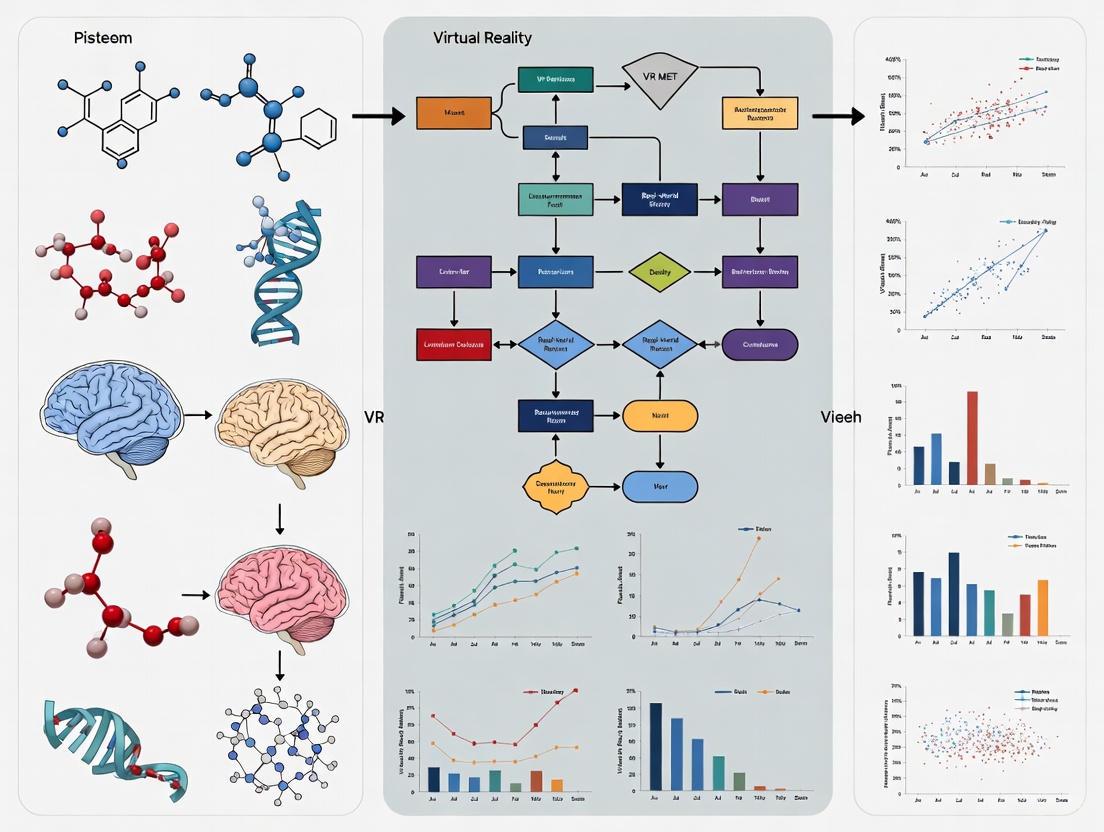
This article examines the concurrent validity of the Virtual Reality Multiple Errands Test (VR MET) as an ecologically valid tool for assessing real-world executive functioning.
Validating Virtual Reality: Establishing Concurrent Validity for the VR Multiple Errands Test in Assessing Real-World Functioning
Abstract
This article examines the concurrent validity of the Virtual Reality Multiple Errands Test (VR MET) as an ecologically valid tool for assessing real-world executive functioning. Aimed at researchers and drug development professionals, it explores the foundational theory behind VR-based assessment, methodologies for implementation and validation, strategies for optimizing technical and psychometric properties, and comparative evidence against traditional measures. The synthesis of current research underscores the VR MET's potential to bridge the gap between clinic-based cognitive scores and functional capacity, offering significant implications for endpoint measurement in clinical trials and cognitive rehabilitation.
The Ecological Validity Gap: Why Traditional Assessments Fail to Predict Real-World Functioning
Neuropsychological assessment is a cornerstone of diagnosing and treating neurological disorders, with the primary goals of detecting neurological dysfunction, characterizing cognitive strengths and weaknesses, and guiding treatment planning [1]. These assessments are crucial for conditions including mild cognitive impairment (MCI), dementia, traumatic brain injury (TBI), stroke, Parkinson's disease, multiple sclerosis, epilepsy, and attention deficit hyperactivity disorder (ADHD) [2]. However, the very tools that constitute the "gold standard" in cognitive assessment harbor significant limitations that impact their diagnostic accuracy, clinical utility, and practical application. Traditional paper-and-pencil neuropsychological tests, while well-validated and psychometrically robust, lack similarity to real-world tasks and fail to adequately simulate the complexity of everyday activities [3]. This fundamental disconnect creates a critical gap between what these tests measure in a clinical setting and how patients actually function in their daily lives. As the field of neuropsychology evolves beyond mere lesion localization to in-depth characterization of brain-behavior relationships, the limitations of traditional assessments become increasingly consequential for researchers, clinicians, and drug development professionals seeking to demonstrate the real-world efficacy of cognitive interventions.
Fundamental Limitations of Traditional Neuropsychological Assessment
The Ecological Validity Problem
Ecological validity refers to the "functional and predictive relationship between the person's performance on a set of neuropsychological tests and the person's behavior in a variety of real world settings" [4]. This concept comprises two key components: representativeness (how well a test mirrors real-world demands) and generalizability (how well test performance predicts everyday functioning) [4]. Traditional assessments suffer from poor ecological validity as they take a "construct-led" approach that isolates single cognitive processes in abstract measures, resulting in poor alignment with real-world functioning [4]. This abstraction leads to a concerning statistical reality: traditional executive function tests account for only 18% to 20% of the variance in everyday executive ability [4]. This means approximately 80% of what determines a person's cognitive functioning in daily life remains unmeasured by conventional tests, creating a substantial validity gap for researchers and clinicians.
Practical and Methodological Constraints
Beyond ecological validity concerns, traditional neuropsychological assessments face significant practical limitations that affect their implementation and interpretation:
Extended Administration Times: Complete neuropsychological evaluations typically require 6 to 8 hours over one or more sessions, creating substantial burden for patients, particularly older adults or those with cognitive impairments [2].
Prolonged Wait Times: Patients referred for neuropsychological testing face average wait times of 5 to 10 months for adults and 12 months or longer for children, potentially allowing conditions like MCI to progress to more advanced stages before assessment and intervention [2].
Evaluator Bias: Traditional methodologies relying on questionnaires and guided exercises are influenced by the professional conducting the assessment, whose expectations, beliefs, or prior experiences may unconsciously influence test interpretation and scoring [5].
Cultural and Accessibility Limitations: Neuropsychological tests may not be equally applicable to patients from different cultural and linguistic backgrounds, with factors including language, reading level, and test familiarity potentially affecting performance independent of actual cognitive ability [2].
Table 1: Key Limitations of Traditional Neuropsychological Assessment
| Limitation Category | Specific Challenge | Impact on Clinical/Research Utility |
|---|---|---|
| Ecological Validity | Poor representation of real-world demands | Limited generalizability to daily functioning |
| Task impurity problem | Scores reflect multiple cognitive processes beyond targeted EF | |
| Methodological Issues | Artificial testing environment | Fails to capture performance in context-rich settings |
| Lack of multi-dimensional assessment | Cannot integrate affect, physiological state, context | |
| Practical Constraints | Extended administration time (6-8 hours) | Patient fatigue, limited clinical throughput |
| Long wait times (5-10 months) | Delayed diagnosis and treatment initiation | |
| Psychometric Concerns | Limited sensitivity to subtle deficits | Ineffective for detecting early or prodromal decline |
| Cultural/test bias | Reduced accessibility and accuracy across diverse populations |
Virtual Reality as a Paradigm Shift in Neuropsychological Assessment
Theoretical Foundations and Advantages
Virtual reality represents a fundamental shift in neuropsychological assessment methodology by addressing the core limitations of traditional approaches. VR enables the creation of controlled, standardized environments that simulate real-world contexts while maintaining experimental control [3] [5]. The theoretical foundation of VR assessment rests on its capacity to create "functionally relevant, systematically controllable, multisensory, interactive 3D stimulus environments" that mimic ecologically relevant challenges found in everyday life [6]. This approach offers several distinct advantages:
Enhanced Ecological Validity: VR environments can simulate complex, functionally relevant scenarios (e.g., a virtual kitchen, classroom, or shopping environment) that closely mirror real-world cognitive demands [3] [5].
Reduced Evaluator Bias: VR systems automatically record objective performance data without requiring examiner interpretation, standardizing administration and scoring across patients and clinics [5].
Multi-Dimensional Assessment: VR enables the simultaneous capture of cognitive performance, behavioral responses, and physiological metrics within ecologically valid contexts [6] [4].
Increased Engagement: Immersive VR environments demonstrate potential to enhance participant engagement through gamification and realistic scenarios, potentially yielding more accurate representations of cognitive abilities [4].
Concurrent Validity of VR-Based Neuropsychological Assessment
A critical question for researchers and clinicians is whether VR-based assessments demonstrate adequate concurrent validity with established traditional measures. A 2024 meta-analysis investigating the concurrent validity between VR-based assessments and traditional neuropsychological assessments of executive function revealed statistically significant correlations across all subcomponents, including cognitive flexibility, attention, and inhibition [3]. The results supported VR-based assessments as a valid alternative to traditional methods for evaluating executive function, with sensitivity analyses confirming the robustness of these findings even when lower-quality studies were excluded [3].
Table 2: Evidence for Concurrent Validity Between VR and Traditional Neuropsychological Assessments
| Cognitive Domain | VR Assessment | Traditional Comparison | Validation Outcome |
|---|---|---|---|
| Overall Executive Function | Multiple VR paradigms | Traditional paper-and-pencil tests | Significant correlations supported concurrent validity [3] |
| Attention Processes | Virtual Classroom continuous performance task | Traditional attention measures | Systematic improvements across age span in normative sample (n=837) [6] |
| Visual Attention | vCAT in immersive VR classroom | Traditional attention tests | Normative data showing expected developmental patterns [6] |
| Multiple EF Components | Various immersive VR paradigms | Gold-standard traditional tasks | Common validation against traditional tasks, though reporting inconsistencies noted [4] |
The following diagram illustrates the conceptual relationship between traditional assessment limitations and VR-based solutions within the validation framework:
Conceptual Framework: From Traditional Limitations to VR Validation
Experimental Evidence and Validation Protocols
Systematic Review and Meta-Analysis Methodology
The most comprehensive evidence for VR assessment validity comes from systematic reviews and meta-analyses. A 2024 meta-analysis investigating concurrent validity between VR-based and traditional executive function assessments followed PRISMA guidelines, identifying 1605 articles through searches of PubMed, Web of Science, and ScienceDirect from 2013-2023 [3]. After duplicate removal and screening, nine articles fully met the inclusion criteria for quantitative synthesis [3]. The analysis employed Comprehensive Meta-Analysis Software Version 3, transforming Pearson's r values into Fisher's z values to account for sample size, with heterogeneity evaluated using I² and random-effects models applied when heterogeneity was high (I² > 50%) [3]. Sensitivity analyses confirmed robustness after excluding lower-quality studies, supporting the conclusion that VR-based assessments demonstrate significant correlations with traditional measures across executive function subcomponents [3].
Normative Data Collection in VR Environments
Substantial research has established normative performance data in VR environments, demonstrating expected developmental patterns and psychometric properties. One study established normative data for visual attention using a Virtual Classroom Assessment Tracker (vCAT) with a large sample (n=837) of neurotypical children aged 6-13 [6]. Participants completed a 13-minute continuous performance test of visual attention within an immersive VR classroom environment delivered via head-mounted display [6]. The assessment measured core metrics including errors of omission (proxy for inattentiveness), errors of commission (proxy for impulsivity), accuracy, reaction time, reaction time variability, d-prime (signal-to-noise differentiation), and global head movement (measurements of hyperactivity and distractibility) [6]. Results showed systematic improvements across age spans on most metrics and identified sex differences on key variables, supporting VR as a viable methodology for capturing attention processes under ecologically relevant conditions [6].
The following workflow illustrates a typical experimental protocol for validating VR-based neuropsychological assessments:
VR Assessment Validation Workflow
The Scientist's Toolkit: Research Reagent Solutions for VR Neuropsychological Assessment
Table 3: Essential Research Tools for VR Neuropsychological Assessment
| Tool Category | Specific Examples | Research Function | Validation Evidence |
|---|---|---|---|
| VR Hardware Platforms | Oculus Rift, HTC Vive HMDs | Deliver immersive environments with head tracking | Most studies used commercial HMDs; 63% of solutions were immersive [7] [4] |
| Assessment Software | Nesplora Attention Kids Aula, Virtual Classroom (vCAT) | Administer cognitive tasks in ecologically valid contexts | Continuous performance tests in VR classroom show systematic age-related improvements [5] [6] |
| Cognitive Task Paradigms | CAVIR (Cognition Assessment in Virtual Reality) | Assess daily life cognitive functions in virtual scenarios | VR kitchen scenario validated against TMT-B, CANTAB, fluency tests [3] |
| Data Capture Systems | Head movement tracking, response time recording | Quantify behavioral responses beyond traditional metrics | Head movement tracking provides hyperactivity measures in ADHD assessment [6] |
| Validation Instruments | Traditional EF tests (TMT, SCWT, WCST) | Establish concurrent validity with gold standards | Significant correlations between VR and traditional measures across EF subcomponents [3] |
The limitations of traditional neuropsychological tests present significant challenges for researchers, clinicians, and drug development professionals. The poor ecological validity, limited sensitivity to subtle deficits, practical constraints, and methodological issues inherent in traditional assessment approaches compromise their utility for detecting early cognitive decline and measuring real-world functional outcomes. Virtual reality-based assessment methodologies offer a promising paradigm shift by creating standardized, engaging, and ecologically valid environments that capture multi-dimensional aspects of cognitive functioning. Evidence from meta-analyses and systematic reviews supports the concurrent validity of VR-based assessments with traditional measures, particularly for executive function evaluation. For the research community, including those in pharmaceutical development, VR assessment platforms provide enhanced sensitivity to detect subtle cognitive changes and stronger predictive validity for real-world functioning—critical factors for demonstrating treatment efficacy in clinical trials. As the field advances, further validation studies, standardized administration protocols, and comprehensive normative data will be essential to fully establish VR as a complementary approach that addresses the fundamental limitations of traditional neuropsychological tests.
The field of cognitive assessment is undergoing a fundamental transformation, moving from traditional paper-and-pencil tests toward ecologically valid virtual reality (VR) environments. This shift addresses a critical limitation in neuropsychological evaluation: the gap between controlled testing environments and real-world cognitive functioning. Ecological validity refers to how well assessment results predict or correlate with performance in everyday life, a domain where traditional methods often fall short. While standardized paper-and-pencil tests have established reliability in controlled settings, they frequently lack similarity to real-world tasks and fail to adequately simulate the complexity of daily activities [3].
The emergence of VR-based assessment represents a convergence of technological advancement and psychological science. VR allows subjects to engage in real-world activities implemented in virtual environments, enabling natural movement recognition and facilitating immersion in scenarios that closely mimic daily challenges [3]. This technological evolution enables researchers and clinicians to bridge the laboratory-to-life gap, offering controlled environments that ensure safety while allowing for objective, automatic measurement and management of responses to ecologically relevant activities [3]. The fundamental thesis driving this transition is that VR-based assessments demonstrate strong concurrent validity with traditional measures while offering superior predictive value for real-world functioning.
Theoretical Foundations: From Laboratory to Life
The Limitations of Traditional Assessment
Traditional neuropsychological assessments have primarily relied on paper-and-pencil instruments administered in controlled clinical settings. These include well-established measures such as the Trail Making Test (TMT), Stroop Color-Word Test (SCWT), Wisconsin Card Sorting Test (WCST), and comprehensive batteries like the Delis-Kaplan Executive Function System (D-KEFS) and Cambridge Neuropsychological Test Automated Battery (CANTAB) [3]. While these tools have demonstrated utility in detecting cognitive impairment, their ecological limitations are increasingly recognized. They often lack similarity to real-world tasks and fail to adequately simulate the complexity of everyday activities, resulting in limited generalizability to daily functioning [3].
The fundamental issue lies in the artificial nature of traditional testing environments. Paper-and-pencil tests typically deconstruct cognitive functions into isolated components, removing the rich contextual cues, multisensory integration, and motor components inherent in real-world activities. This decomposition, while useful for identifying specific deficits, often fails to capture how these cognitive processes interact in naturalistic settings where multiple demands occur simultaneously.
Defining Ecological Validity in Neuropsychological Assessment
Ecological validity in neuropsychological assessment encompasses two distinct dimensions: verisimilitude (the degree to which test items resemble real-world tasks) and veridicality (the empirical demonstration that test performance predicts real-world functioning). Traditional assessments often sacrifice verisimilitude for standardization and reliability. VR-based assessments aim to balance these competing demands by creating standardized environments that maintain both verisimilitude and veridicality through carefully designed virtual scenarios that mimic real-world challenges while maintaining experimental control.
Executive functions, increasingly defined as separable yet interrelated components involved in goal-directed thinking and behavior, are particularly suited to ecological assessment [3]. The three key subcomponents—working memory, inhibition, and cognitive flexibility—operate in concert during daily activities, making them difficult to assess comprehensively through traditional methods that often target these components in isolation [3].
Virtual Reality Assessment: Methodological Foundations
Technological Infrastructure and Implementation
VR-based cognitive assessment leverages immersive technology to create controlled yet ecologically rich environments. The technical infrastructure typically includes:
- Head-Mounted Displays (HMDs): Provide stereoscopic visuals and head-tracking capabilities to create a sense of presence in the virtual environment.
- Motion Tracking Systems: Capture natural body movements and interactions with virtual objects.
- Spatial Audio Systems: Deliver realistic soundscapes that enhance situational awareness.
- Response Recording Systems: Automatically capture performance metrics with millisecond precision.
These technological components work in concert to create immersive scenarios that engage multiple sensory modalities while maintaining strict experimental control. The virtual environments can be precisely standardized across administrations while allowing for adaptive difficulty and complex scenario development that would be impractical or unsafe in the real world.
Key VR Assessment Platforms and Their Applications
Several VR assessment platforms have emerged with demonstrated validity in clinical research:
- Cognition Assessment in Virtual Reality (CAVIR): An immersive VR test of daily-life cognitive functions in an interactive VR kitchen scenario that has shown significant correlations with traditional neuropsychological tests and real-world functioning [3] [8].
- Virtual Reality Everyday Assessment Lab (VR-EAL): A comprehensive assessment battery conducted in a virtual apartment environment that evaluates multiple cognitive domains simultaneously.
- NeuroVR Assessment Platform: A customizable platform allowing researchers to develop domain-specific virtual environments for targeted cognitive assessment.
These platforms represent a new generation of assessment tools that preserve the psychometric rigor of traditional tests while incorporating ecological relevance through immersive scenario-based evaluation.
Comparative Analysis: Quantitative Evidence
Concurrent Validity Between VR and Traditional Assessment
A 2024 meta-analysis investigating the concurrent validity between VR-based assessments and traditional neuropsychological assessments revealed statistically significant correlations across all executive function subcomponents [3]. The analysis, which included nine studies meeting strict inclusion criteria, demonstrated that VR-based assessments show consistent relationships with established paper-and-pencil measures, supporting their validity as cognitive assessment tools.
Table 1: Concurrent Validity Between VR-Based and Traditional Neuropsychological Assessments
| Executive Function Subcomponent | Effect Size | Statistical Significance | Number of Studies |
|---|---|---|---|
| Overall Executive Function | Significant correlation | p < 0.05 | 9 |
| Cognitive Flexibility | Significant correlation | p < 0.05 | 4 |
| Attention | Significant correlation | p < 0.05 | 3 |
| Inhibition | Significant correlation | p < 0.05 | 3 |
The meta-analysis employed Comprehensive Meta-Analysis Software (CMA) Version 3, with Pearson's r values transformed into Fisher's z for analysis. Heterogeneity was evaluated using I², with random-effects models applied when heterogeneity was high (I² > 50%). Sensitivity analyses confirmed the robustness of the findings, even when lower-quality studies were excluded [3].
Ecological Validity and Real-World Functioning
The critical advantage of VR-based assessment emerges in its relationship to real-world functioning. Research with the CAVIR platform demonstrates its value in predicting daily-life functional capacity in clinical populations.
Table 2: Ecological Validity of CAVIR vs. Traditional Measures in Mood and Psychosis Spectrum Disorders
| Assessment Method | Correlation with ADL Process Ability | Statistical Significance | Sensitivity to Cognitive Impairment |
|---|---|---|---|
| CAVIR (VR Kitchen Scenario) | r(45) = 0.40 | p < 0.01 | Sensitive to impairment and ability to differentiate employment capacity |
| Traditional Neuropsychological Tests | Not significant | p ≥ 0.09 | Limited sensitivity to real-world functioning |
| Interviewer-Rated Functional Capacity | Not significant | p ≥ 0.09 | Limited association with actual ADL performance |
| Subjective Cognition Reports | Not significant | p ≥ 0.09 | Poor correlation with objective ADL ability |
A study published in the Journal of Affective Disorders (2025) involving 70 patients with mood or psychosis spectrum disorders and 70 healthy controls found that CAVIR performance showed a weak to moderate association with better Activities of Daily Living (ADL) process ability in patients (r(45) = 0.40, p < 0.01), even after adjusting for sex and age [8]. In contrast, traditional neuropsychological performance, interviewer- and performance-based functional capacity, and subjective cognition were not significantly associated with ADL process ability [8].
Experimental Protocols and Methodologies
Protocol 1: CAVIR Assessment for Executive Functions
The Cognition Assessment in Virtual Reality (CAVIR) test represents a methodological advancement in ecological assessment with the following experimental protocol:
- Environment: Immersive VR kitchen scenario with interactive elements including cabinets, appliances, and cooking utensils.
- Participants: Symptomatically stable patients with mood or psychosis spectrum disorders and matched healthy controls.
- Procedure: Participants complete a series of goal-directed tasks in the virtual kitchen, such as following a recipe, managing multiple cooking tasks simultaneously, and responding to unexpected events.
- Primary Metrics: Task completion time, errors (omission and commission), efficiency of movement, sequencing accuracy, and compliance with safety procedures.
- Comparison Measures: Standard neuropsychological tests including Trail Making Test B (TMT-B), CANTAB tasks, and verbal fluency tests.
- Functional Outcome Measures: Assessment of Motor and Process Skills (AMPS) to evaluate real-world activities of daily living.
- Statistical Analysis: Spearman's correlations between CAVIR performance, neuropsychological test scores, and ADL ability; group comparisons between patients and controls; sensitivity and specificity analyses for detecting cognitive impairment [8].
This protocol demonstrates how VR assessment captures the multidimensional nature of real-world cognitive challenges while maintaining standardized administration and objective scoring.
Protocol 2: VR-Based Assessment of Learning and Knowledge Transfer
Research on VR learning environments for specialized training domains reveals important methodological considerations for assessment:
- Design Framework: "Design for learning" approach examining interrelationships between human factors, pedagogy, and VR learning affordances.
- Comparison Condition: Traditional textbook-based learning covering identical factual and conceptual knowledge.
- Assessment Metrics: Pre/post-intervention knowledge tests, intrinsic motivation scales, situational interest questionnaires, self-efficacy measures.
- VR-Specific Measures: Presence, agency, cognitive load, embodiment, user experience (pragmatic and hedonic qualities).
- Participant Monitoring: Semi-structured interviews and observation notes to capture qualitative aspects of the learning experience.
- Analysis Approach: Quantitative analysis of knowledge test results and questionnaire data supported by qualitative data from interviews [9].
This comprehensive assessment approach reveals that while textbook-based learning may more effectively transfer factual and conceptual knowledge, VR environments generate higher levels of intrinsic motivation and situational interest—affective factors crucial for long-term engagement and skill application [9].
Visualizing the Assessment Paradigm Shift
Figure 1: Conceptual Framework of Ecological Validity in Assessment Approaches
Table 3: Research Reagent Solutions for VR-Based Cognitive Assessment
| Tool/Platform | Primary Function | Research Application | Key Features |
|---|---|---|---|
| CAVIR | Cognition assessment in virtual reality kitchen | Evaluating daily-life cognitive skills in clinical populations | Correlates with neuropsychological performance and ADL ability [8] |
| Immersive HMDs | Visual and auditory immersion | Creating presence in virtual environments | Head tracking, stereoscopic display, integrated audio |
| Motion Tracking Systems | Capturing movement and interaction | Quantifying naturalistic behavior in virtual spaces | Position tracking, gesture recognition, controller input |
| Comprehensive Meta-Analysis Software | Statistical analysis of effect sizes | Synthesizing validity evidence across studies | Effect size calculation, heterogeneity analysis, bias detection [3] |
| QUADAS-2 Checklist | Quality assessment of diagnostic accuracy studies | Evaluating methodological rigor of validation studies | Risk of bias assessment, applicability concerns [3] |
Implications for Research and Clinical Practice
Advancing Clinical Trials and Drug Development
The enhanced ecological validity of VR-based assessment has significant implications for clinical trials in neuropsychiatric disorders and cognitive-enhancing interventions. By providing more sensitive and functionally relevant outcome measures, VR assessment can:
- Detect Subtle Treatment Effects: Capture cognitive improvements that translate to real-world functioning, potentially revealing efficacy that traditional measures might miss.
- Reduce Sample Size Requirements: Through increased sensitivity to clinically meaningful changes, VR assessment may enable smaller, more efficient trial designs.
- Demonstrate Functional Benefits: Provide evidence of treatment effects on daily-life activities, supporting value propositions for new therapeutic agents.
- Facilitate Personalized Medicine: Identify specific cognitive profiles that predict treatment response based on performance in ecologically relevant scenarios.
Future Directions and Methodological Considerations
As VR-based assessment evolves, several key areas require further development:
- Standardization Across Platforms: Establishment of common metrics and administration protocols to enable cross-study comparisons.
- Cultural Adaptation: Development of culturally relevant virtual environments for global research applications.
- Longitudinal Validation: Studies examining the predictive validity of VR assessment for long-term functional outcomes.
- Integration with Biomarkers: Combining VR performance data with neurophysiological and neuroimaging measures for multimodal assessment.
- Accessibility and Implementation: Addressing practical barriers to widespread adoption in research and clinical settings.
The methodological rigor demonstrated in recent studies—including systematic literature searches, strict inclusion criteria, quality assessment using QUADAS-2, and comprehensive statistical analysis—provides a template for future validation studies [3].
The transition from paper-and-pencil assessment to virtual environments represents a paradigm shift in cognitive evaluation, driven by the imperative for greater ecological validity. Substantial evidence now supports the concurrent validity of VR-based assessments with traditional neuropsychological measures, while demonstrating superior relationships with real-world functioning [3] [8]. As research methodologies continue to evolve and technology becomes more sophisticated and accessible, VR-based assessment is poised to transform how researchers and clinicians evaluate cognitive function, ultimately bridging the critical gap between laboratory measurement and everyday life performance.
For researchers in clinical trials and drug development, these advanced assessment tools offer the potential to more effectively capture the functional impact of interventions, demonstrating treatment effects that matter to patients' daily lives. The integration of ecological validity with methodological rigor positions VR assessment as an essential component of next-generation cognitive evaluation in both research and clinical practice.
Executive functions (EFs) are higher-order cognitive abilities essential for managing goal-directed tasks across various aspects of daily life. The accurate assessment of these functions is critical in both clinical and research settings, as impairments can significantly undermine academic performance, reduce the ability to carry out independent activities of daily living, and negatively affect disease management [3]. Traditional neuropsychological assessments have primarily relied on paper-and-pencil tests conducted in controlled laboratory environments. However, these methods lack similarity to real-world tasks and fail to adequately simulate the complexity of everyday activities, resulting in low ecological validity and limited generalizability to real-life functioning [3].
The Multiple Errands Test (MET) represents a significant advancement in addressing these limitations by assessing executive functions within realistic daily living contexts. This assessment approach aligns with the growing recognition that executive functions comprise separable yet interrelated components—including working memory, inhibition, and cognitive flexibility—that work together to support complex cognitive tasks [3]. With the emergence of virtual reality (VR) technologies, researchers have developed VR-based versions of the MET that further enhance its utility by providing standardized, controlled environments that simulate real-world demands while maintaining experimental rigor.
Core Executive Function Constructs Measured by the MET
Cognitive Flexibility and Task Switching
Cognitive flexibility, a core executive function component, refers to the mental ability to switch between thinking about different concepts or to simultaneously think about multiple concepts. The MET effectively evaluates this construct by requiring participants to adapt to changing task demands, shift between sub-tasks efficiently, and modify strategies in response to environmental feedback. Within the MET framework, cognitive flexibility is operationalized through tasks that necessitate rapid behavioral adjustments and mental set shifting, mirroring the cognitive demands encountered in daily life situations where individuals must juggle multiple competing tasks [3].
The MET's approach to assessing cognitive flexibility demonstrates superior ecological validity compared to traditional measures like the Wisconsin Card Sorting Test (WCST) or Trail Making Test (TMT). By embedding cognitive flexibility demands within realistic task scenarios, the MET captures not only the efficiency of cognitive switching but also the application of this ability in contexts that closely resemble real-world challenges [3].
Planning and Organization
Planning and organization represent fundamental executive processes that enable individuals to develop and implement effective strategies for achieving goals. The MET comprehensively assesses these abilities by requiring participants to formulate multi-step plans, organize task sequences logically, and execute activities in a structured manner. The test environment, whether physical or virtual, presents participants with multiple tasks that must be completed within specific constraints, thereby demanding sophisticated planning abilities that traditional discrete tasks cannot capture [10].
In MET protocols, planning capacity is measured through metrics such as the logical sequencing of tasks, efficiency of route planning when physical navigation is required, and the effective allocation of resources including time. These measurements provide insights into an individual's ability to manage complex, multi-component tasks similar to those encountered in instrumental activities of daily living such as meal preparation, medication management, and financial organization [10].
Working Memory and Task Monitoring
Working memory, the system responsible for temporarily storing and manipulating information, is critically engaged throughout MET performance. Participants must retain task instructions, monitor completed and pending tasks, and keep track of evolving rules and constraints while executing multiple errands. This continuous demand on working memory resources mirrors the cognitive load experienced in real-world scenarios where individuals must maintain and manipulate information while engaging in goal-directed behavior [3].
The MET's assessment of working memory differs significantly from traditional laboratory tasks like digit span or n-back tests by placing working memory demands within the context of functionally relevant activities. This approach provides valuable information about how working memory capacities translate to performance in everyday situations, offering enhanced predictive validity for real-world functioning [3].
Inhibitory Control and Rule Adherence
Inhibitory control, the ability to suppress dominant or automatic responses when necessary, is systematically evaluated through the MET's structured rule systems. Participants must resist instinctive approaches to task completion, adhere to specified restrictions, and inhibit prepotent responses that would violate test constraints. This component assesses the integrity of frontally-mediated inhibitory mechanisms that are crucial for appropriate social and functional behavior across daily contexts [3].
Rule violations and error types during MET administration provide rich qualitative data about the nature of inhibitory deficits, distinguishing between impulsive responding, perseverative behavior, and difficulties with rule maintenance. This nuanced assessment surpasses the capabilities of traditional inhibition measures such as the Stroop Color-Word Test, which evaluates inhibition in a more decontextualized manner [3].
Virtual Reality MET: Paradigm Advancement and Concurrent Validity
Technological Implementation and Ecological Verisimilitude
Virtual reality platforms for administering the MET represent a significant methodological advancement that preserves the ecological validity of the original assessment while enhancing standardization and measurement precision. These systems create immersive virtual environments that simulate real-world settings such as kitchens, supermarkets, and community spaces, allowing for the assessment of executive functions within contexts that closely mirror daily challenges [3] [10].
The CAVIR (Cognition Assessment in Virtual Reality) system exemplifies this approach, presenting participants with an interactive VR kitchen scenario that requires the execution of multi-step tasks similar to those in traditional MET protocols. These VR environments maintain high levels of verisimilitude—the degree to which cognitive demands mirror those encountered in naturalistic environments—while enabling precise automated measurement of performance metrics [3] [10].
Psychometric Properties and Validation Evidence
Recent meta-analytic evidence supports the concurrent validity of VR-based assessments of executive function, including VR adaptations of the MET paradigm. A comprehensive meta-analysis investigating the relationship between VR-based assessments and traditional neuropsychological measures revealed statistically significant correlations across all executive function subcomponents, including cognitive flexibility, attention, and inhibition [3].
Table 1: Concurrent Validity Coefficients Between VR-Based and Traditional EF Measures
| EF Component | Effect Size Correlation | Statistical Significance | Number of Studies |
|---|---|---|---|
| Overall Executive Function | Moderate to Large | p < 0.001 | 9 |
| Cognitive Flexibility | Significant | p < 0.05 | Multiple |
| Attention | Significant | p < 0.05 | Multiple |
| Inhibition | Significant | p < 0.05 | Multiple |
Sensitivity analyses confirmed the robustness of these findings, with effect sizes remaining significant even when lower-quality studies were excluded from analysis. The meta-analysis included 9 studies that fully met inclusion criteria after screening 1605 initially identified articles, demonstrating the rigorous methodology underlying these conclusions [3].
Additional validation research using specific VR systems further supports their psychometric properties. The CAVIRE-2 system, which assesses six cognitive domains through 13 virtual scenarios, demonstrated moderate concurrent validity with the Montreal Cognitive Assessment (MoCA) and good test-retest reliability with an Intraclass Correlation Coefficient of 0.89 [10]. The system also showed strong discriminative ability for identifying cognitive impairment, with an area under the curve (AUC) of 0.88, sensitivity of 88.9%, and specificity of 70.5% at the optimal cut-off score [10].
Table 2: Psychometric Properties of VR-Based Cognitive Assessment Systems
| Psychometric Property | Measure/Result | Comparison Instrument |
|---|---|---|
| Concurrent Validity | Moderate correlation | MoCA |
| Test-Retest Reliability | ICC = 0.89 | Test-retest interval |
| Internal Consistency | Cronbach's α = 0.87 | Item analysis |
| Discriminative Ability | AUC = 0.88 | Cognitively normal vs. impaired |
| Sensitivity | 88.9% | At optimal cut-off |
| Specificity | 70.5% | At optimal cut-off |
Comparative Experimental Protocols and Methodologies
VR-MET Implementation Protocols
The implementation of MET paradigms within virtual reality follows standardized protocols that balance ecological validity with experimental control. Typical VR-MET sessions involve:
Environment Setup: Participants don VR headsets and controllers, with systems calibrated to ensure optimal tracking and immersion.
Instruction Phase: Clear task instructions are provided, often including practice trials to familiarize participants with the VR interface.
Task Execution: Participants complete a series of errands or tasks within the virtual environment, such as purchasing specific items in a virtual store while adhering to rules and constraints.
Performance Monitoring: The system automatically records multiple performance metrics, including completion time, errors, rule violations, and efficiency measures.
Post-Test Assessment: Participants may complete traditional neuropsychological tests or provide subjective feedback about their VR experience [3] [10].
The CAVIRE-2 system exemplifies this approach with its 14 discrete scenes, including one starting tutorial session and 13 virtual scenes simulating both basic and instrumental activities of daily living in familiar settings. This comprehensive assessment can be completed in approximately 10 minutes, demonstrating the efficiency of well-designed VR assessment platforms [10].
Validation Study Designs
Validation research for VR-based MET assessments typically employs cross-sectional designs comparing performance between well-characterized clinical and control groups. Key methodological elements include:
Participant Recruitment: Studies typically include both healthy participants and individuals with known executive function deficits (e.g., mild cognitive impairment, ADHD, Parkinson's disease).
Counterbalanced Administration: Traditional and VR-based assessments are administered in counterbalanced order to control for practice effects and fatigue.
Blinded Assessment: Researchers administering traditional assessments are often blinded to VR performance results, and vice versa.
Comprehensive Statistical Analysis: Analyses include correlation analyses between assessment modalities, group comparison analyses, receiver operating characteristic (ROC) analyses for diagnostic accuracy, and reliability analyses [3] [10].
This methodological rigor ensures that validity evidence meets established standards for neuropsychological assessment tools and supports the use of VR-based MET implementations in both research and clinical applications.
Visualizing the VR-MET Assessment Framework
The following diagram illustrates the conceptual framework and experimental workflow of VR-based Multiple Errands Test assessment:
VR MET Assessment Framework - This diagram illustrates the core executive function constructs measured by the Multiple Errands Test, the assessment environments, performance metrics, and validity evidence supporting VR implementations.
The Researcher's Toolkit: Essential Methodological Components
Table 3: Research Reagent Solutions for VR MET Implementation
| Tool/Component | Function/Application | Implementation Example |
|---|---|---|
| Immersive VR Headset | Creates controlled virtual environments for assessment | Head-mounted displays with motion tracking capabilities |
| VR Controllers | Enables natural interaction with virtual objects | Motion-tracked handheld devices with input buttons |
| Virtual Environment Software | Presents realistic scenarios for EF assessment | Custom-designed virtual kitchens, supermarkets, or community spaces |
| Automated Scoring Algorithms | Objectively quantifies performance metrics | Software that records completion time, errors, and efficiency measures |
| Traditional Neuropsychological Tests | Provides validation criteria for concurrent validity | Trail Making Test, Stroop Test, Wisconsin Card Sorting Test |
| Data Recording Systems | Captures comprehensive performance data | Integrated systems that log user interactions, timing, and errors |
The Multiple Errands Test represents a significant advancement in the ecological assessment of executive functions, with virtual reality implementations offering enhanced standardization, precision, and practical utility. Substantial evidence supports the concurrent validity of VR-based MET assessments with traditional executive function measures, while simultaneously addressing the ecological limitations of conventional neuropsychological tests [3] [10].
For researchers and drug development professionals, VR-based MET protocols provide sensitive tools for detecting executive function deficits and monitoring intervention effects within contexts that closely mirror real-world functional demands. The continuing refinement of these assessment technologies promises to further bridge the gap between laboratory-based cognitive assessment and the complex cognitive demands of daily life, offering enhanced predictive validity for functional outcomes across clinical populations.
Executive functions are higher-order cognitive processes essential for managing the complex, multi-task demands of everyday life. Traditional neuropsychological assessments, while valuable, often lack ecological validity, meaning they fail to adequately simulate the complexity of real-world activities and have limited generalizability to daily functioning [3]. The Multiple Errands Test (MET) was developed precisely to address this gap. It is a performance-based assessment designed to evaluate how deficits in executive functions manifest during everyday activities by having participants complete a series of real-world tasks under a set of specific rules [11] [12]. Originally developed by Shallice and Burgess in 1991, the MET was born from the observation that some patients with frontal lobe lesions performed well on standardized tests yet experienced significant difficulties in their daily lives [11] [12]. The test was theoretically grounded in Norman and Shallice's Supervisory Attentional System (SAS) model, which describes the cognitive system responsible for monitoring plans and actions in novel, non-routine situations [12]. By creating a complex, low-structure environment, the MET provides a window into a person's ability to plan, organize, and manage competing demands in a way that closely mirrors real-life challenges.
The Evolution of the MET: From Shopping Precinct to Standardized Versions
The original MET, administered in a pedestrian shopping precinct, required participants to complete eight written tasks. These included six simple errands (e.g., purchasing specific items), one time-dependent task, and one more demanding task involving obtaining and writing down four pieces of information [11]. Performance was evaluated based on the number and type of errors, such as rule breaks, inefficiencies, interpretation failures, and task failures [11]. The success and clinical utility of the original MET led to the development of numerous adaptations to suit different environments and populations. However, the need for site-specific modifications made it difficult to establish standardized psychometric properties and compare results across studies [12]. This drove efforts to create more uniform versions.
Table: Key Versions of the Multiple Errands Test
| Version Name | Environment | Key Features & Modifications | Primary Population |
|---|---|---|---|
| Original MET [11] | Shopping Precinct | 8 tasks; 6 simple errands, 1 time-based task, 1 complex 4-subtask activity. | Acquired Brain Injury (ABI) |
| MET-Hospital Version (MET-HV) [11] | Hospital Grounds | 12 subtasks; more concrete rules, simpler tasks. | Wider range of participants, including ABI |
| MET-Simplified Version (MET-SV) [11] | Small Shopping Plaza | 12 tasks; more explicit rules, simplified demands, space for recording information. | Neurologically impaired adults |
| Baycrest MET (BMET) [11] | Hospital/Research Center | 12 items, 8 rules; standardized scoring and manualized administration. | Acquired Brain Injury |
| Big-Store MET [12] | Large Department Store | Standardized for use in large chain stores without site-specific modifications. | Community-dwelling adults (ABI and healthy) |
| Virtual MET (VMET) [11] | Virtual Reality Environment | Video-capture virtual supermarket; safe, controlled, and objective measurement. | Patients with motor or mobility impairments |
| MET-Home [12] | Home Environment | First version usable across different sites without adaptation. | Stroke, ABI |
| Paper MET [13] | Clinical Setting (Imagined) | Simplified paper version using a map of an imaginary city; low cost and highly applicable. | Schizophrenia, Bipolar Disorder, Autism |
The core principle unifying these versions is the requirement to complete multiple simple tasks (often purchasing items, collecting information, and meeting at a specified time) while adhering to a set of rules, such as spending as little money as possible, not entering a shop without buying something, and not using aids other than a watch [11] [14]. The proliferation of these versions underscores the clinical value of the MET while also highlighting the historical challenge of achieving standardization.
The Shift to Virtual Reality: The Virtual MET
The transition of the MET into virtual environments represents a significant advancement in ecological assessment. The Virtual MET (VMET) was developed within a functional video-capture virtual supermarket, maintaining the same number of tasks as the hospital version but replacing the meeting task with checking the contents of a shopping cart at a particular time [11]. This shift to VR offers several key advantages. It provides a safe and controlled environment where patients can be assessed without the risks associated with community ambulation. It also allows for highly standardized administration across different clinics, overcoming the site-specific limitations of physical versions. Furthermore, VR enables the precise and objective measurement of behavior, including metrics like navigation paths and time on task, which can be difficult to capture reliably in a real-world setting [11] [3]. A critical benefit is that the VMET can be used with individuals who have motor impairments that would preclude them from the extensive ambulation required by physical versions of the test [14].
Concurrent Validity: Examining the Relationship Between VR MET and Real-World Functioning
For any new assessment tool to be adopted, it must demonstrate strong psychometric properties, particularly concurrent validity—the degree to which a new test correlates with an established one when administered at the same time [3]. A 2024 meta-analysis systematically investigated this by analyzing the correlation between VR-based assessments of executive function and traditional neuropsychological tests [3]. The analysis focused on subcomponents of executive function, revealing statistically significant correlations between VR-based assessments and traditional measures across all subcomponents, including cognitive flexibility, attention, and inhibition [3]. The robustness of these findings was confirmed through sensitivity analyses. This supports the use of VR-based assessments, including the VMET, as a valid alternative to traditional methods for evaluating executive function [3].
Table: Concurrent Validity of VR-Based Executive Function Assessments vs. Traditional Tests [3]
| Executive Function Subcomponent | Correlation with Traditional Measures | Key Findings from Meta-Analysis |
|---|---|---|
| Overall Executive Function | Statistically Significant | Significant correlations support VR as a valid assessment tool. |
| Cognitive Flexibility | Statistically Significant | |
| Attention | Statistically Significant | Results were robust in sensitivity analyses, even when lower-quality studies were excluded. |
| Inhibition | Statistically Significant |
Specific studies on MET versions further reinforce this validity. For instance, the Big-Store MET demonstrated moderate to large effect sizes (d = 0.48-1.06) in distinguishing between adults with acquired brain injury and healthy controls, providing evidence for its known-group validity [15]. Furthermore, the Paper MET, a simplified version, has shown strong associations with essential psychosocial outcomes, including lower quality of life, well-being, and self-esteem in large cohorts of patients with schizophrenia, bipolar disorder, and autism spectrum disorder [13]. This demonstrates that the MET, even in non-VR forms, captures deficits that are meaningfully linked to real-world community living.
Experimental Protocols and Methodologies
To illustrate the research underpinning the MET's development and validation, here are the methodologies from two key studies.
- Aim: To develop a standardized community version of the MET for use in large department stores without site-specific modifications and establish its feasibility and reliability.
- Phase 1 - Content Validity: Scientists and clinicians with expertise in the MET (n=4) reviewed the proposed Big-Store version and evaluated its consistency with previously published versions.
- Phase 2 - Feasibility and Reliability:
- Participants: A convenience sample of 14 community-dwelling adults who self-reported as healthy.
- Procedure: Participants were assessed by two trained raters simultaneously administering the Big-Store MET.
- Data Analysis: Feasibility was assessed based on completion time (within 30 minutes), score variability, and participant acceptability. Inter-rater reliability was calculated using Intraclass Correlation Coefficients (ICCs).
- Outcome: The study found the Big-Store MET to be feasible and demonstrated excellent inter-rater reliability (ICCs = 0.92–0.99) for most performance scores.
- Aim: To investigate the concurrent validity between VR-based assessments and traditional neuropsychological assessments of executive function.
- Literature Search: Conducted in February 2024 across PubMed, Web of Science, and ScienceDirect databases from 2013 to 2023, identifying 1605 articles.
- Study Selection: Following PRISMA guidelines, nine articles met the full inclusion criteria (e.g., used VR to assess executive function, provided correlation data with traditional tests).
- Data Analysis: Pearson's r values were transformed into Fisher's z for analysis. Heterogeneity was assessed using I², with a random-effects model applied due to high heterogeneity. Effect sizes for overall executive function and subcomponents (cognitive flexibility, attention, inhibition) were analyzed.
- Quality Assessment: The quality of included studies was assessed independently by two reviewers using the QUADAS-2 checklist.
Figure 1: Conceptual Framework of MET and Ecological Validity. This diagram illustrates the theoretical basis of the MET. It is designed to capture executive dysfunction as it manifests in a naturalistic, multi-task context. Performance on the MET's core components (task completion, rule adherence, and strategy use) is theorized to be a better predictor of real-world functioning than traditional neuropsychological (NP) tests and has been empirically linked to key psychosocial outcomes [12] [13].
The Scientist's Toolkit: Essential Research Reagents and Materials
Table: Key Materials and Tools for MET Research
| Tool / Material | Function in MET Research | Example from Search Results |
|---|---|---|
| Real-World Testing Environment | Provides the novel, unpredictable context necessary to observe real-world executive function. | Shopping precinct, hospital grounds, large department store [11] [12]. |
| Virtual Reality System & Software | Creates a safe, controlled, and standardized environment for administering the VMET; enables precise data capture. | GestureTek IREX system for VMET; Meta Horizon Studio for VR environment creation [11] [16]. |
| Standardized Instruction & Scoring Sheets | Ensures consistent administration and reliable recording of errors (inefficiencies, rule breaks, task failures). | Used across all versions (e.g., BMET manual, MET-HV scoring sheet) [11] [12]. |
| Traditional Neuropsychological Tests | Serves as the "gold standard" for establishing the concurrent validity of new MET versions. | Trail Making Test (TMT), Stroop Color-Word Test (SCWT), Delis-Kaplan Executive Function System (D-KEFS) [3] [14]. |
| Psychosocial Outcome Measures | Links MET performance to meaningful, real-world quality of life and community participation. | Quality of Life scales, Well-being scales, Self-Esteem measures [13]. |
Figure 2: MET Validation Workflow for New Versions. This flowchart outlines the standard methodological pathway for developing and validating new versions of the Multiple Errands Test, as exemplified by studies on the Big-Store MET and VMET [12]. The process begins with development, followed by establishing content validity through expert review, then progresses through stages of feasibility, reliability, and multiple types of validity testing before the version is ready for full application.
The Multiple Errands Test has evolved significantly from its origins as a specialized tool for assessing patients with frontal lobe lesions into a family of standardized assessments with strong ecological validity. The core concept—evaluating executive function through performance in multi-task, rule-bound, real-world scenarios—has proven robust across physical, hospital, home, and virtual environments. The transition to Virtual Reality marks a particularly promising development, offering enhanced standardization, safety, and objective measurement while maintaining the ecological validity that defines the test. Recent meta-analytic evidence confirms the strong concurrent validity of VR-based assessments with traditional measures, solidifying their role in a comprehensive cognitive assessment battery. For researchers and clinicians, the MET provides an indispensable tool for understanding the real-world impact of executive dysfunction and for designing targeted rehabilitation strategies that improve functional outcomes and quality of life.
Building a Valid Instrument: Methodologies for Developing and Implementing the VR MET
Key Design Principles for a Psychometrically Sound VR MET
The pursuit of ecological validity in neuropsychological assessment has catalyzed the development of Virtual Reality-based Medical Evaluation Tools (VR METs). These tools aim to bridge the gap between sterile clinical environments and the complexity of real-world functioning. This guide explores the key design principles for developing a psychometrically sound VR MET, framed within the critical context of establishing concurrent validity with real-world tasks. We synthesize current research and validation protocols to provide researchers and drug development professionals with an evidence-based framework for creating and evaluating VR assessments that can reliably predict patient functioning in everyday life.
Traditional neuropsychological assessments, while well-normed, often lack similarity to real-world tasks and fail to adequately simulate the complexity of everyday activities [3]. This results in low ecological validity and limited generalizability of findings to a patient's daily life. Virtual Reality (VR) technology presents a paradigm shift, allowing subjects to engage in real-world activities implemented in virtual environments [3]. A VR MET leverages this capability to create controlled, immersive simulations that can objectively and automatically measure responses to functionally relevant activities [3].
The core thesis driving VR MET development is that these tools must demonstrate strong concurrent validity—the extent to which a new test correlates with an established one when both are administered simultaneously [3]. For a VR MET, this means its outcomes should correlate significantly with both traditional neuropsychological measures and, crucially, with metrics of real-world functioning. Research has confirmed statistically significant correlations between VR-based assessments and traditional measures across multiple cognitive subcomponents, supporting their use as a valid alternative for evaluating executive function [3].
Core Design Principles for a Psychometrically Sound VR MET
Creating a VR MET that is both engaging and scientifically rigorous requires adherence to several foundational design principles.
Prioritize Psychological Fidelity Over Visual Realism
A common misconception is that high-fidelity graphics are the primary determinant of a successful simulation. Evidence suggests that psychological fidelity—the accurate representation of the perceptual and cognitive features of the real task—is far more critical for effective transfer of learning to the real world [17]. A simulation must capture the fundamental cognitive demands (e.g., planning, inhibition, cognitive flexibility) of the real-world task it aims to assess, even if the visual realism is simplified.
Ensure Ergonomic and Biomechanical Fidelity
The simulation must elicit realistic motor movements. In a driving assessment VR MET, for instance, this might mean incorporating a steering wheel and pedals rather than relying on handheld controllers [18]. In a rehabilitation context, it requires that movements in the virtual environment accurately reflect the user's real-world kinematics, as demonstrated in a shoulder rehabilitation study that used a gold-standard motion capture system to validate a custom VR application [19].
Build on a Foundation of Ecological Validity
The scenarios and tasks within the VR MET must be relevant to the everyday challenges faced by the target population. This is the core advantage of VR: the ability to immerse users in realistic scenarios, such as a virtual kitchen to assess daily life cognitive functions [3] or a road traffic environment to evaluate driving skills [18]. One study found that 81.25% of participants perceived their VR driving scenarios as realistic, confirming the potential for high ecological validity [18].
Integrate Robust, Multi-Modal Data Collection
A key advantage of a VR MET is the capacity to collect rich, objective data beyond simple task accuracy. This includes performance metrics (e.g., errors, time to completion), kinematic data (e.g., movement speed, coordination), and physiological responses, all captured in real-time [18]. This multi-faceted data provides a more comprehensive picture of a user's abilities than traditional pen-and-paper tests.
Design for User-Centered Acceptability
The system must be usable and acceptable to the target population. This involves minimizing VR-related side effects like simulator sickness and ensuring high usability scores. Positive user experiences foster engagement and reduce dropout rates. For example, a VR driving assessment was recommended for future use by 97.5% of participants, highlighting high acceptability [18].
Validation Methodologies: Establishing Concurrent Validity
A VR MET is only as valuable as its validated relationship with real-world functioning. The following experimental protocols and metrics are essential for establishing this link.
Core Validation Protocols
The table below summarizes the key methodologies used to validate a VR MET.
Table 1: Key Experimental Protocols for VR MET Validation
| Validation Method | Description | Key Outcome Measures | Example from Literature |
|---|---|---|---|
| Concurrent Validity Analysis | Administering the VR MET and established traditional measures simultaneously to the same participants. | Correlation coefficients (e.g., Pearson's r) between VR tasks and traditional neuropsychological tests. | A meta-analysis found significant correlations between VR-based and traditional assessments of executive function [3]. |
| Expert-Novice Paradigm | Comparing performance on the VR MET between known experts and novices in the target skill. | Significant performance differences between groups, supporting the tool's construct validity. | This method is proposed as a test of a simulation's construct validity [17]. |
| Crossover Comparison with Gold-Standard Equipment | Comparing data from the VR MET with data from gold-standard laboratory equipment. | Agreement metrics, mean absolute error, and statistical comparisons of kinematic or physiological data. | A shoulder rehab VR app was validated against a stereophotogrammetric motion capture system [19]. |
| Psychometric Comparison with Traditional Tests | Comparing scores from a VR-based psychometric test with those from traditional, standardized tests. | Correlation of scores on constructs like peripheral vision, reaction time, and motor accuracy. | A VR driver assessment showed strong correlations between its tests and critical driving skills [18]. |
Establishing Fidelity and Validity: A Workflow
The following diagram illustrates the logical workflow and key relationships in designing and validating a VR MET, based on established frameworks [17].
Quantitative Evidence for Validity
The growing body of evidence supporting VR assessments is summarized in the table below, which compiles key findings from recent studies.
Table 2: Summary of Quantitative Validation Evidence for VR-Based Assessments
| Domain / Study Focus | VR MET Used | Comparison / Validation Method | Key Quantitative Finding |
|---|---|---|---|
| Executive Function [3] | Various VR assessments of cognitive flexibility, attention, and inhibition | Meta-analysis of correlations with traditional paper-and-pencil tests | Statistically significant correlations were found across all executive function subcomponents. |
| Driver Assessment [18] | Custom VR platform for peripheral vision, reaction time, and precision | User surveys on realism and effectiveness | 81.25% of participants perceived scenarios as realistic; 85% agreed the system effectively measured critical driving skills. |
| Medical Education (OSCE) [20] | VR-based Objective Structured Clinical Examination (OSCE) station | Comparison with identical in-person OSCE station | The VR OSCE was rated on par with the in-person station for workload, fairness, and realism. |
| Shoulder Rehabilitation [19] | Custom VR app for post-operative shoulder exercises | Kinematic comparison with stereophotogrammetric system (gold standard) | Results for flexion and abduction showed low total mean absolute error values. |
The Scientist's Toolkit: Essential Research Reagents & Materials
The following table details key hardware, software, and methodological "reagents" essential for conducting rigorous VR MET research and development.
Table 3: Essential Research Reagent Solutions for VR MET Development
| Item / Solution | Function in VR MET Research | Specific Examples |
|---|---|---|
| Standalone VR Headset | Provides an untethered, immersive virtual environment for the user. Serves as the primary display and tracking system for the head and hands. | Oculus Quest 2 [21] [19] [18] |
| Game Engines | Software framework used to design, develop, and render the interactive 3D environments and logic of the VR MET. | Unity3D [19] [18] |
| Indirect Calorimetry System | Gold-standard equipment for measuring energy expenditure (oxygen consumption) to objectively quantify the physical intensity of VR exergaming protocols. | Cortex METAMAX 3B [22] |
| Motion Capture System | Gold-standard for validating the kinematic and biomechanical fidelity of movements performed within the VR MET. Provides high-accuracy spatial data. | Qualisys system with reflective markers [19] |
| Validated Questionnaires (Psychometrics) | To measure user experience, perceived exertion, usability, technology acceptance, and simulator sickness, which are critical for assessing feasibility and acceptability. | System Usability Scale (SUS), Simulator Sickness Questionnaire (SSQ), Technology Acceptance Model (TAM) [20], Raw NASA TLX [20] |
| Heart Rate Monitor | An objective physiological measure of exertion and affective state during VR MET activities. | Polar V800 [22] |
The development of a psychometrically sound VR MET is a multifaceted endeavor that extends beyond technical programming to rigorous scientific validation. The core principles outlined—psychological fidelity, ecological validity, and robust data collection—provide a roadmap for creating tools that can truly capture the complexities of real-world functioning. The experimental protocols and validation workflows offer a template for researchers to systematically demonstrate the concurrent validity of their systems.
Future progress in this field will likely involve standardizing these validation protocols across different VR MET applications, from cognitive assessment in neurology trials to functional capacity evaluation in rehabilitation. Furthermore, as VR technology becomes more sophisticated and accessible, the integration of biometric sensing and artificial intelligence for adaptive task delivery will create even more powerful and personalized assessment tools. For drug development professionals, a validated VR MET offers the potential for highly sensitive, functionally relevant endpoints in clinical trials, ultimately providing a clearer picture of a therapeutic's impact on a patient's daily life.
In both neuroscience and pharmaceutical development, accurately measuring functional cognition—the ability to perform everyday tasks—is crucial for evaluating cognitive health and treatment efficacy. Traditional neuropsychological tests often suffer from low ecological validity, meaning performance on these tests does not robustly predict real-world functioning [23]. Regulatory authorities like the Food and Drug Administration (FDA) have consequently mandated the demonstration of functional improvements alongside cognitive gains for drug approval in conditions like Alzheimer's disease and schizophrenia [23] [24].
Virtual Reality (VR) has emerged as a powerful solution, enabling the creation of standardized, immersive simulations of daily activities. These assessments measure cognitive domains such as memory, attention, and executive function within engaging, real-world contexts, thereby offering superior predictive power for functional outcomes [23]. This guide focuses on two prominent examples: VStore, a supermarket shopping task, and discusses the conceptual framework for CAVIR, a kitchen-based assessment.
VStore: A Deep Dive into the Supermarket Assessment
VStore is a novel, fully immersive VR shopping task designed to simultaneously assess traditional cognitive domains and functional capacity [23] [25]. It was developed to address the limitations of standard cognitive batteries, which are often time-consuming, burdensome for patients, and poor at predicting real-world skills [24]. By embedding cognitive tasks within an ecologically valid minimarket environment, VStore creates a direct proxy for everyday functioning.
Experimental Protocol and Methodology
The validation and feasibility studies for VStore followed a rigorous experimental protocol, detailed in the table below.
Table 1: Key Experimental Protocols for VStore Validation
| Study Aspect | Protocol Details |
|---|---|
| Participant Cohorts | • Healthy Volunteers: Aged 20-79 years (n=142 across studies) [23]• Clinical Cohort: Patients with psychosis (n=210 total across three studies) [24] |
| Equipment & Setup | • Head-Mounted Display (HMD): Fully immersive VR headset [24].• Task Environment: A maze-like minimarket to engage spatial navigation [23]. |
| Primary VStore Outcomes | 1. Verbal recall of 12 grocery items [23] [24]2. Time to collect all items [23] [24]3. Time to select items on a self-checkout machine [23] [24]4. Time to make the payment [23]5. Time to order a hot drink [23]6. Total task completion time [23] [24] |
| Validation Measures | • Construct Validity: Compared against the Cogstate computerized cognitive battery (measuring attention, processing speed, working memory, etc.) [23].• Feasibility/Acceptability: Measured via completion rates and adverse effects questionnaires [24]. |
Diagram 1: VStore Experimental Workflow
Key Quantitative Findings and Validation Data
VStore has been validated in multiple studies. The table below summarizes its key performance metrics against established standards and its ability to differentiate populations.
Table 2: VStore Performance and Validation Data
| Validation Metric | Result | Significance / Interpretation |
|---|---|---|
| Construct Validity | Performance was best predicted by Cogstate tasks measuring attention, working memory, and paired associate learning, plus age and tech familiarity (R² = 47% of variance) [23]. |
Confirms VStore engages intended cognitive domains and aligns with standard measures. |
| Sensitivity to Age | Ridge regression model with VStore outcomes predicted age (MSE 185.80); was 87% sensitive and 91.7% specific to age cohorts (AUC = 94.6%) [23]. | Demonstrates high sensitivity to age-related cognitive decline. |
| Feasibility & Acceptability | Exceptionally high completion rate (99.95%) across 210 participants. No VR-induced adverse effects reported [24]. | Tool is well-tolerated and practical for healthy and clinical populations. |
| Clinical Utility | Showed a clear difference in performance between patients with psychosis and matched healthy controls [24]. | Has potential for discriminating impaired from unimpaired cognition. |
CAVIR: Extending the Framework to the Kitchen
While the search results do not provide specific experimental data for a "CAVIR" assessment, the conceptual framework for a kitchen-based VR functional assessment is a logical and valuable extension of the principles established by VStore. The kitchen environment presents a rich domain for assessing more complex instrumental activities of daily living (IADLs), such as meal preparation, which involves planning, sequencing, and safety awareness.
The diagram below illustrates how the validated framework from VStore can be adapted to create a kitchen-based assessment.
Diagram 2: From Supermarket to Kitchen VR Assessment Framework
The Researcher's Toolkit for VR Functional Assessments
Implementing VR assessments like VStore requires specific hardware, software, and methodological considerations. The following table details the essential "research reagents" and their functions.
Table 3: Essential Research Reagents and Tools for VR Functional Assessment
| Tool Category | Specific Example | Function in Research Context |
|---|---|---|
| VR Hardware | Meta Quest 3/3S, HTC Vive Pro 2 [26] [27] [28] | Provides the immersive display and tracking. Standalone headsets (Quest) offer ease of use, while PC-tethered (Vive) offer high fidelity. |
| Validation Software | Cogstate Computerized Cognitive Battery [23] | An established computerized tool used to test the construct validity of the novel VR task. |
| Primary Outcome Metrics | VStore: Time-based metrics and verbal recall scores [23] [24] | Serve as the primary dependent variables, quantifying functional cognition. |
| Tolerability Questionnaire | VR-induced adverse effects survey (e.g., for cybersickness) [24] | Ensures participant safety and acceptability, critical for clinical trials. |
| Data Analysis Plan | Ridge Regression & ROC Analysis [23] | Statistical methods to validate the tool against age and standard measures, and determine its classificatory accuracy. |
VStore stands as a rigorously validated prototype for VR-based functional cognition assessment. Its strong concurrent validity with gold-standard cognitive measures, high sensitivity to age-related decline, and exceptional feasibility in clinical populations make it a promising tool for both research and clinical trials [23] [24]. The natural progression of this work involves developing and validating assessments in other critical domains of daily life, such as the kitchen.
The future of cognitive assessment in medicine and drug development lies in tools that can objectively and ecologically measure whether a patient can successfully navigate the complexities of everyday life. VR functional assessments like VStore are paving the way for a new generation of endpoints that are not only statistically significant but also clinically meaningful.
Virtual Reality (VR) is rapidly transforming the assessment of cognitive functions, moving beyond traditional neuropsychological tests by offering enhanced ecological validity. This refers to how well test performance predicts real-world behavior [4]. For researchers and drug development professionals, establishing concurrent validity—the extent to which a new test correlates with an established one administered at the same time [3]—is a critical step in validating these tools.
The Virtual Multiple Errands Test (VMET) and similar shopping tasks exemplify this approach. They are immersive adaptations of the classic Multiple Errands Test (MET), which measures executive functions in real-world settings like shopping centers [29] [23]. By replicating these complex environments in VR, researchers can maintain experimental control and safety while capturing cognitive processes that are more directly applicable to patients' daily lives [29] [4]. This guide provides a structured checklist for evaluating how well VR-based assessments map to real-world skills, supported by direct experimental comparisons and quantitative data.
Comparative Data: VR vs. Traditional Assessments and Real-World Performance
The following tables summarize key quantitative findings from validation studies, highlighting the relationship between VR task performance, traditional cognitive tests, and real-world functioning.
Table 1: Concurrent Validity of VR-Based Assessments with Traditional Cognitive Tests
| VR Assessment Tool | Cognitive Domain Assessed | Traditional Measure | Correlation Coefficient | Study Details |
|---|---|---|---|---|
| VStore [23] | Functional Cognition (Composite) | Cogstate Battery (Attention, Working Memory) | R² = 0.47 (Model) | 104 healthy adults (20-79 years); Model included age & tech familiarity. |
| VR-CAT [30] | Executive Function (Composite) | Standard EF Tools | Modest correlations reported | 54 children (24 with TBI, 30 with orthopedic injury). |
| CAVIR [3] | Executive Function Subcomponents | TMT-B, CANTAB, Fluency Test | Statistically significant correlations* | Meta-analysis of 9 studies; *Specific r-values not provided in excerpt. |
| VR Tool for Cancer Patients [31] | Core Cognitive Domains | Paper-and-Pencil Neurocognitive Battery | r = 0.34 – 0.76 | 165 patients with cancer; all correlations significant (p<.001). |
Table 2: Performance Comparisons Between Real-World and Virtual Environments
| Performance Metric | Real-World (MET) | Virtual (VMET) | Significance & Notes | Study Source |
|---|---|---|---|---|
| Gait Speed | Faster | Slower | F(1,32) = 154.96, p < 0.0001 | [29] |
| Step Length | Higher | Lower | F(1,32) = 86.36, p < 0.0001 | [29] |
| Gait Variability | Lower | Higher | F(1,32) = 95.71–36.06, p < 0.0001 | [29] |
| Navigation Efficiency | Less Efficient | More Efficient | F(1,32) = 7.6, p < 0.01 | [29] |
| Cognitive Score (Age Effect) | Better in Young | Better in Young | F(1,32) = 19.77, p < 0.0001 | [29] |
| Task Completion Time (Age Effect) | Shorter in Young | Shorter in Young | F(1,32) = 11.74, p < 0.05 | [29] |
Experimental Protocols for Key Validation Studies
The following section details the methodologies of pivotal studies that directly compare VR tasks to real-world performance or established gold-standard tests.
Virtual vs. Real-World Multiple Errands Test (MET)
Objective: To conduct a comprehensive comparison of cognitive strategies and gait characteristics during a complex task in a real shopping mall versus a high-fidelity virtual replica [29].
- Participants: 17 older adults (mean age 71.2) and 17 young adults (mean age 26.7).
- Protocol:
- Environments: The real-world environment was a shopping mall. The virtual environment was a highly detailed replica created within the Computer Assisted Rehabilitation Environment (CAREN) system, displayed on a large screen.
- Task: Participants performed the MET in the real mall and the VMET in the virtual mall in separate sessions. The task involved purchasing items, obtaining information, and meeting the examiner at a set time under specific rules.
- Measurements:
- Cognitive & Task Performance: MET/VMET scores, total task time, and navigation efficiency.
- Motor & Physiological: Gait parameters (speed, step length, variability) measured with an instrumented treadmill in VR and via observation in real life, and heart rate.
- Key Findings: The study successfully demonstrated the ecological validity of the VMET for assessing cognitive aspects of performance. However, it also revealed systematic differences in motor behavior, indicating that gait metrics may not be directly comparable between virtual and real environments [29].
VStore Construct Validity and Sensitivity to Aging
Objective: To establish the construct validity of a novel VR shopping task (VStore) against a standard cognitive battery (Cogstate) and explore its sensitivity to age-related cognitive decline [23].
- Participants: 142 healthy volunteers aged 20-79 years; 104 were included in the final analysis.
- Protocol:
- VR Assessment: Participants completed VStore, an immersive VR shopping task in a minimarket. Key outcomes included verbal recall of grocery items, time to collect items, time for self-checkout and payment, and total task completion time.
- Traditional Assessment: Participants completed the Cogstate battery, which measures attention, processing speed, verbal/visual learning, working memory, executive function, and paired associate learning.
- Analysis: Backward elimination regression models identified which Cogstate tasks, along with age and technological familiarity, best predicted VStore performance. Ridge and logistic regression models tested VStore's sensitivity to age and age cohorts.
- Key Findings: VStore performance was best explained by a combination of Cogstate tasks (attention, working memory, paired associate learning), age, and technological familiarity. VStore was also highly sensitive (87%) and specific (91.7%) in classifying age cohorts, outperforming the Cogstate battery alone [23].
VR Cognitive Assessment in Pediatric TBI
Objective: To evaluate the usability, validity, and clinical utility of a VR Cognitive Assessment Tool (VR-CAT) for children with Traumatic Brain Injury (TBI) [30].
- Participants: 54 children (24 with TBI, 30 with orthopedic injury).
- Protocol:
- VR Assessment: The VR-CAT used an immersive HTC VIVE headset to engage children in a "rescue mission" game within a virtual castle. The game embedded three core EF tasks:
- VR Inhibitory Control: Directing sentinels away from gates.
- VR Working Memory: Replicating cryptography sequences to open gates.
- VR Cognitive Flexibility: Matching patterns to rescue a character.
- Traditional Measures: Standard paper-and-pencil EF assessments.
- Evaluation Metrics: User experience, test-retest reliability, concurrent validity with traditional EF tests, and utility in discriminating between TBI and control groups.
- VR Assessment: The VR-CAT used an immersive HTC VIVE headset to engage children in a "rescue mission" game within a virtual castle. The game embedded three core EF tasks:
- Key Findings: The VR-CAT demonstrated high usability, modest test-retest reliability and concurrent validity, and satisfactory clinical utility for distinguishing children with TBI from controls [30].
Visualizing the VR Validation Workflow
The following diagram illustrates the standard experimental workflow for establishing the concurrent validity of a VR-based assessment tool like the VMET.
The Scientist's Toolkit: Essential Research Reagents & Materials
Table 3: Key Materials and Tools for VR Concurrent Validity Research
| Tool / Solution | Function in Research | Example System / Note |
|---|---|---|
| Immersive VR Head-Mounted Display (HMD) | Presents the virtual environment; critical for user immersion and presence. | HTC VIVE [30], Oculus Rift, other commercial HMDs. |
| VR Software/Platform | Creates the ecologically valid testing environment (e.g., supermarket, mall). | Custom-built platforms (e.g., VStore [23], CAVIR [3]), CAREN system for high-fidelity VMET [29]. |
| Traditional Neuropsychological Battery | Serves as the "gold standard" for establishing concurrent validity of the VR tool. | Cogstate [23], D-KEFS [3], Trail Making Test (TMT) [3] [29], Stroop Color-Word Test [3]. |
| Real-World Functional Benchmark | Provides a direct measure of real-world functioning for ecological validation. | Multiple Errands Test (MET) [29] [23] [4], University of California, San Diego Performance-Based Skills Assessment [23]. |
| User Experience & Cybersickness Questionnaire | Assesses usability, engagement, and potential adverse effects (e.g., nausea) that could confound results. | Simulator Sickness Questionnaire (SSQ) [30], Igroup Presence Questionnaire (IPQ), custom usability surveys [4]. |
| Data Analysis Software | Used for statistical analysis of correlations, regression models, and group differences. | Comprehensive Meta-Analysis (CMA) Software [3], SAS [30], Stata [32], R, Python. |
Concurrent validity is a fundamental concept in research methodology, serving as a subtype of criterion-related validity that assesses how well a new test or measurement tool correlates with an established "gold standard" measure of the same construct when both are administered at approximately the same time [33] [34] [35]. In the context of virtual reality (VR) research, establishing concurrent validity is particularly crucial for validating new assessment tools, such as the Virtual Reality Multiple Errands Test (VR-MET), against traditional neuropsychological measures [3] [4]. This validation process provides empirical evidence that VR-based assessments measure the intended cognitive constructs despite their different presentation format.
The process of establishing concurrent validity involves administering the new assessment and the established criterion measure to the same group of participants within a narrow timeframe, then calculating correlation coefficients to quantify the relationship between the two sets of scores [35] [36]. These correlation values, which typically range from 0 to 1, indicate the strength of the relationship, with higher values indicating stronger concurrent validity [33]. For research and clinical applications, correlation coefficients are generally interpreted as follows: less than 0.25 indicates small concurrence, 0.25 to 0.50 represents moderate correlation, 0.50 to 0.75 shows good correlation, and over 0.75 demonstrates excellent concurrent validity [33].
In neuropsychological assessment, traditional executive function measures such as the Trail Making Test (TMT), Stroop Color-Word Test (SCWT), and Wisconsin Card Sorting Test (WCST) have long served as gold standards [3]. With the emergence of VR-based assessments that offer enhanced ecological validity through realistic environmental simulations, establishing concurrent validity with these traditional measures has become increasingly important to ensure new tools accurately capture targeted cognitive domains while providing additional benefits such as improved engagement and more naturalistic task demands [4].
Quantitative Comparison of VR Assessments and Traditional Measures
Meta-analytic data reveals statistically significant correlations between VR-based assessments and traditional neuropsychological measures across multiple cognitive domains. A 2024 meta-analysis investigating the concurrent validity of VR-based assessments of executive function found significant correlations with traditional measures across all subcomponents, including cognitive flexibility, attention, and inhibition [3]. The robustness of these findings was confirmed through sensitivity analyses, supporting VR-based assessments as a valid alternative to traditional methods for evaluating executive function [3].
Table 1: Correlation Coefficients Between VR Assessments and Traditional Executive Function Measures
| Executive Function Subcomponent | Correlation Strength | Traditional Measure Examples | VR Assessment Examples |
|---|---|---|---|
| Overall Executive Function | Statistically significant correlations [3] | D-KEFS, CANTAB [3] | CAVIR [3] |
| Cognitive Flexibility | Significant correlations [3] | Trail Making Test-B [3] | VR task-switching paradigms [3] |
| Attention | Significant correlations [3] | Stroop Color-Word Test [3] | VR continuous performance tasks [3] |
| Inhibition | Significant correlations [3] | Stroop interference tasks [3] | VR response inhibition tasks [3] |
The correlations between VR-based and traditional assessments demonstrate that VR paradigms effectively measure similar cognitive constructs despite their more naturalistic testing environment [3]. This pattern of significant correlations holds across different populations, including children, adults, and clinical groups such as those with mood disorders, psychosis spectrum disorders, attention-deficit/hyperactivity disorder, Parkinson's disease, and cancer [3].
Table 2: Methodological Characteristics of VR Validation Studies
| Study Characteristic | Variability Across Research | Implications for Validity |
|---|---|---|
| Sample Sizes | Considerable variability [4] | May limit interpretation and hinder psychometric evaluation [4] |
| Validation Approaches | Commonly validated against gold-standard traditional tasks [4] | Some studies lack a priori planned correlations [4] |
| EF Construct Reporting | Inconsistent descriptions of specific EF constructs [4] | Raises concerns about validity and reliability [4] |
| Adverse Effects Monitoring | Only 21% evaluated cybersickness [4] | Potential threat to validity of paradigms [4] |
Experimental Protocols for Establishing Concurrent Validity
Standard Validation Methodology
Establishing concurrent validity for VR-based assessments follows a systematic experimental protocol designed to ensure methodological rigor. The process begins with participant recruitment that represents the target population for the assessment, with sample size determinations based on power analyses to ensure adequate statistical power [3]. Participants typically complete both the VR assessment and traditional gold-standard measures in a single session or within a narrow timeframe to minimize potential confounding from cognitive fluctuations [35].
The assessment order should be counterbalanced across participants to control for order effects, with adequate rest periods between administrations to reduce fatigue [3]. For VR assessments specifically, researchers must account for potential cybersickness by including standardized monitoring protocols, as symptoms can negatively impact cognitive performance and thus threaten validity [4]. The entire testing session is typically conducted in a controlled laboratory environment to minimize external distractions and ensure consistent administration across participants [3].
Statistical Analysis Procedures
The statistical analysis for establishing concurrent validity primarily involves correlational methods to quantify the relationship between VR assessment scores and gold-standard measures. For continuous variables, Pearson's correlation coefficient (r) is typically used, with values interpreted according to established guidelines for effect size [35]. When comparing dichotomous variables, researchers may use the phi coefficient (φ) or calculate sensitivity and specificity values [35].
The analysis should account for multiple comparisons when examining correlations across multiple cognitive domains or subcomponents [3]. Additionally, heterogeneity assessments using I² statistics help determine whether fixed-effects or random-effects models are appropriate for meta-analytic approaches [3]. For comprehensive validity evidence, researchers often supplement correlation coefficients with other statistical approaches such as factor analysis to examine underlying construct validity or multitrait-multimethod matrices to evaluate convergent and discriminant validity [35].
The Researcher's Toolkit: Essential Materials and Methods
Table 3: Research Reagent Solutions for VR Concurrent Validity Studies
| Tool Category | Specific Examples | Function in Validation Research |
|---|---|---|
| VR Hardware Platforms | Head-Mounted Displays (HMDs) like Meta Quest 2 [37] [38] | Provide immersive testing environments with stereoscopic vision and head tracking [38] |
| Traditional Neuropsychological Assessments | Trail Making Test (TMT), Stroop Color-Word Test (SCWT), Wisconsin Card Sorting Test (WCST) [3] | Serve as gold-standard criterion measures for establishing concurrent validity [3] |
| Statistical Analysis Software | Comprehensive Meta-Analysis Software (CMA) [3] | Enables correlation calculations, heterogeneity assessment, and sensitivity analyses [3] |
| Cybersickness Monitoring Tools | Simulator Sickness Questionnaire [4] | Identifies potential adverse effects that could threaten validity of VR assessments [4] |
| Quality Assessment Instruments | QUADAS-2 (Quality Assessment of Diagnostic Accuracy Studies) checklist [3] | Evaluates methodological quality of validation studies [3] |
Comparative Advantages of VR Assessments
Enhanced Ecological Validity
A primary advantage of VR-based assessments over traditional measures is their superior ecological validity, which refers to the degree to which assessment performance predicts real-world functioning [4]. Traditional executive function assessments have been criticized for lacking similarity to real-world tasks and failing to adequately simulate the complexity of everyday activities, resulting in limited generalizability [3]. VR technology addresses this limitation by allowing subjects to engage in real-world activities implemented in virtual environments, thus creating more representative task demands [3].
Research indicates that traditional EF tests account for only 18% to 20% of the variance in everyday executive ability, suggesting significant limitations in their predictive validity for daily functioning [4]. VR assessments mitigate this limitation by incorporating contextual, dynamic, and multidimensional features such as environmental distractions, multi-step tasks, and realistic decision-making scenarios that more closely mirror real-world cognitive challenges [4]. This enhanced ecological validity makes VR assessments particularly valuable for predicting functional outcomes in clinical populations and for detecting subtle cognitive impairments that may not be apparent in traditional testing environments.
Methodological Advantages
Beyond ecological validity, VR assessments offer several methodological advantages that enhance their research utility. The controlled environment of VR ensures safety while allowing for objective and automatic measurement and management of responses to activities [3]. This controlled testing environment enables researchers to maintain experimental rigor while presenting complex, realistic scenarios that would be impractical, unethical, or impossible to create in physical settings [39].
VR platforms also facilitate enhanced engagement through immersive experiences that capture attention more effectively than traditional pencil-and-paper or computerized tasks [4]. This heightened engagement may lead to more reliable measurements by capturing a more accurate representation of an individual's optimal performance capabilities. Additionally, VR systems enable the integration of biosensors with in-task events, allowing researchers to collect multimodal data including physiological measures that provide richer information about cognitive processes [4].
Challenges and Methodological Considerations
Technical and Psychometric Challenges
Despite their promising advantages, VR-based assessments face several technical and psychometric challenges that researchers must address when establishing concurrent validity. Cybersickness represents a significant concern, as symptoms like dizziness and vertigo can negatively impact cognitive performance and thus threaten validity [4]. Research has demonstrated moderate correlations between cybersickness and both reaction times (r=0.5) and accuracy on n-back tasks (r=-0.32), highlighting the importance of monitoring and controlling for these adverse effects [4].
Psychometrically, many VR assessment studies demonstrate inconsistent methodological and psychometric reporting, with incomplete descriptions of the specific EF constructs being evaluated and frequently incomplete results [4]. This inconsistency complicates comparisons across studies and meta-analytic synthesis of findings. Additionally, the task impurity problem - wherein scores on any cognitive task reflect variance from multiple cognitive processes beyond the specific target construct - persists in VR assessments, though potentially to a lesser degree than in traditional measures due to their more complex, multi-dimensional nature [4].
Validation and Standardization Hurdles
The validation process for VR assessments faces several unique hurdles that researchers must navigate. The absence of universally accepted standards for VR assessment validation creates challenges for comparing results across studies and establishing consensus regarding appropriate methodological approaches [4]. This standardization gap extends to technical specifications, administration protocols, and scoring procedures, all of which can vary substantially across different VR platforms and research groups.
Another significant challenge involves the selection of appropriate gold standards for validation studies [35]. If the chosen criterion measure itself has limited validity, this can compromise the interpretation of correlation results between VR assessments and traditional measures [35]. Furthermore, the rapid pace of technological advancement in VR hardware and software creates a moving target for validation efforts, as established psychometric properties may not remain stable across different technological iterations [40].
The establishment of concurrent validity for VR-based assessments through correlation studies with gold-standard measures represents a critical step in the evolution of neuropsychological assessment. Current evidence demonstrates statistically significant correlations between VR assessments and traditional executive function measures across multiple cognitive domains, supporting their validity as assessment tools [3]. The enhanced ecological validity of VR assessments addresses important limitations of traditional measures, particularly their limited ability to predict real-world functioning [4].
Future research directions should focus on addressing current methodological limitations, including standardized monitoring of cybersickness, improved reporting of psychometric properties, and development of consensus guidelines for VR assessment validation [4]. Additionally, research exploring the integration of biosensors with VR systems holds promise for creating multimodal assessment platforms that provide richer data about cognitive processes [4]. As VR technology continues to advance, ongoing validation efforts will be essential to ensure that these innovative assessment tools fulfill their potential to enhance the measurement and understanding of cognitive functioning in both research and clinical contexts.
Beyond Technical Glitches: Optimizing Fidelity, User Experience, and Data Integrity
Cybersickness remains a significant barrier to the reliable application of virtual reality (VR) in scientific research and clinical trials. This collection of symptoms, including nausea, disorientation, and oculomotor strain, poses a dual threat: it compromises participant comfort and safety while potentially skewing experimental data through early withdrawal and performance degradation. Within research focusing on the concurrent validity of VR-based multi-modal engagement tasks (MET) with real-world functioning, uncontrolled cybersickness introduces a confounding variable that can undermine the ecological validity of assessments. Understanding and mitigating these effects is therefore not merely a comfort issue but a fundamental methodological requirement for ensuring data integrity and participant welfare in VR-based studies.
The theoretical frameworks explaining cybersickness center on sensory conflicts. The predominant sensory conflict theory posits that symptoms arise from discrepancies between visual motion cues and the lack corresponding vestibular stimulation [41] [42]. The postural instability theory suggests that prolonged inability to maintain stable posture in VR induces sickness, while the poison theory offers an evolutionary perspective, interpreting the conflict as a neurotoxin response triggering nausea [42]. These mechanisms can directly interfere with cognitive and motor performance during VR MET, potentially compromising the very functional data researchers seek to collect [43].
Quantitative Landscape of Cybersickness
A systematic analysis of cybersickness prevalence and contributing factors provides an evidence base for developing effective mitigation protocols. The data reveals that cybersickness is a widespread challenge with identifiable risk factors.
Table 1: Factors Influencing Cybersickness Severity and Prevalence
| Factor Category | Specific Factor | Impact on Cybersickness | Supporting Data |
|---|---|---|---|
| Content & Design | Gaming Content | Highest sickness scores | SSQ Total Mean: 34.26 (95%CI: 29.57–38.95) [44] |
| Locomotion Type | Joystick/Teleportation > Natural Walking | Natural walking elicits lower cybersickness [43] | |
| Field of View (FOV) | Wider FOV increases risk | Restricted FOV effective for suppression [45] [46] | |
| User Characteristics | Prior Gaming Experience | Reduces susceptibility | FPS game proficiency linked to reduced intensity [41] [43] |
| Motion Sickness Susceptibility | Increases severity | Key predictor of symptom severity [41] [43] | |
| Age (Older Adults ≥35) | Potentially lower scores | Lower SSQ means vs. younger samples [44] | |
| Technical & Temporal | Exposure Duration | Longer exposure increases risk | Symptoms increase up to 10 min [47] [44] |
| Display Frame Rate | Lower FPS increases lag/sickness | Industry standard is 90 FPS minimum [48] |
Table 2: Efficacy of Selected Mitigation Strategies
| Mitigation Strategy | Mechanism of Action | Reported Efficacy | Key Studies/Notes |
|---|---|---|---|
| Dynamic FOV Reduction | Limits peripheral visual flow | "Significantly reduce VR sickness" without decreasing presence [48] | Software-based FOV restrictors [46] |
| Avatar Incorporation | Enhances spatial presence and reduces sensory conflict | "Significantly lower levels of cybersickness" [49] | 15-minute VR simulation study [49] |
| Eye-Hand Coordination Tasks | Recalibrates sensory systems post-exposure | Mitigated nausea, vestibular, and oculomotor symptoms [41] | Peg-in-hole task after rollercoaster VR [41] |
| Higher Frame Rates (≥90 FPS) | Reduces perceived lag and system latency | Smoother experience, reduces discomfort [48] | Industry standard; 120 FPS is better [48] |
| Automatic IPD Adjustment | Aligns virtual optics with user's pupillary distance | Reduces eye strain, nausea, and dizziness [48] | Used in PSVR 2 and Varjo Aero [48] |
Experimental Protocols for Mitigation and Assessment
Protocol 1: Evaluating Avatar Presence for Cybersickness Reduction
Objective: To quantitatively assess whether incorporating a virtual avatar of the user's body reduces cybersickness and enhances spatial presence during navigational VR tasks.
Methodology:
- Design: Between-subjects design (Avatar vs. No-Avatar group).
- Participants: Recruited based on sample size calculation, stratified for motion sickness susceptibility and prior VR experience.
- VR Stimulus: A 15-minute immersive VR simulation involving guided navigation. The visual material should be selected for high ecological validity relevant to the MET [49].
- Procedure: Participants are randomly assigned to either the experimental condition (with a visible virtual body avatar) or the control condition (no avatar). Both groups experience the identical 15-minute VR navigation.
- Measures:
- Primary Outcome: Cybersickness measured via the Cybersickness in VR Questionnaire (CSQ-VR) [43] or Simulator Sickness Questionnaire (SSQ) [44] administered immediately post-immersion.
- Secondary Outcome: Sense of presence measured via the Spatial Presence Experience Scale (SPES) [47].
- Performance Metrics: Task completion time, navigation errors (if applicable).
Analysis: Independent t-tests (or Mann-Whitney U tests for non-parametric data) to compare cybersickness and presence scores between groups. Correlation analysis between presence and cybersickness scores.
Protocol 2: Assessing Task-Based Mitigation Post-Exposure
Objective: To determine if engaging in an eye-hand coordination task immediately after a sickness-inducing VR experience accelerates recovery.
Methodology:
- Design: Within-subjects or between-subjects design comparing active mitigation vs. passive recovery.
- Participants: Individuals naive to the specific VR content.
- VR Stimulus: A highly provocative, 12-minute virtual rollercoaster ride designed to reliably induce cybersickness [41].
- Procedure:
- Baseline cybersickness assessment (CSQ-VR/VRSQ).
- All participants undergo the rollercoaster ride.
- Immediate post-exposure cybersickness assessment.
- Experimental Group: Performs a 15-minute virtual peg-in-hole task (an eye-hand coordination task).
- Control Group: Rests passively for 15 minutes (natural decay).
- Final cybersickness assessment for all participants.
- Measures: The Cybersickness in Virtual Reality Questionnaire (CSQ-VR) is administered at all four stages [41]. The Virtual Reality Sickness Questionnaire (VRSQ) can also track specific oculomotor symptoms like eye strain and headache [47].
Analysis: Mixed-model ANOVA with time (post-exposure, post-recovery) as a within-subjects factor and group (active task, passive rest) as a between-subjects factor.
Protocol 3: Benchmarking Cybersickness with a Standardized Induction Framework
Objective: To establish a standardized baseline of cybersickness susceptibility across participants using a controlled, short-duration induction protocol, enabling stratification or use as a covariate in primary MET analyses.
Methodology:
- Stimulus: Utilize a validated, brief (e.g., 5-10 minute) VR benchmark experience proven to induce sickness with rapid recovery. This framework should feature both small and large environments for comprehensive assessment [46].
- Procedure: Administer the benchmark at the beginning of the experimental session.
- Measures:
- Subjective: SSQ or CSQ-VR administered pre- and post-benchmark.
- Objective (Optional): Record physiological signals such as Electroencephalography (EEG) correlates (e.g., relative power spectral densities of Fp1 delta waves), which have shown high correlation (R² > 0.9) with subjective sickness scores [45].
- Use of Data: The resulting cybersickness score serves as an individual difference variable for correlating with primary task performance or for grouping participants in analyses.
Visualization of Mitigation Workflows
Cybersickness Mitigation Decision Pathway
Sensory Conflict Theory and Mitigation Logic
The Researcher's Toolkit for Cybersickness Management
Table 3: Essential Reagents and Tools for VR Cybersickness Research
| Tool / Reagent | Primary Function | Application in Research | Key Examples & Notes |
|---|---|---|---|
| Simulator Sickness Questionnaire (SSQ) | Measures 16 symptoms across nausea, oculomotor, disorientation subscales. | Gold-standard, pre-post immersion assessment. Allows cross-study comparison [44] [43]. | Originally for flight simulators; some psychometric limitations in VR noted [43]. |
| Cybersickness in VR Questionnaire (CSQ-VR) | VR-specific tool assessing core symptoms. | High psychometric validity for HMD-based studies. Correlates with physiological data [43]. | Developed specifically for modern VR; superior properties for VR environments [43]. |
| Virtual Reality Sickness Questionnaire (VRSQ) | Derived from SSQ, focuses on oculomotor and disorientation. | Tracks key HMD-related symptoms like eye strain and headache [47]. | Less comprehensive than SSQ but more targeted for VR [47]. |
| Electroencephalography (EEG) | Records brain activity as objective biomarker. | Correlates specific brain waves (e.g., Fp1 delta) with sickness severity (R² > 0.9) [45]. | Requires specialized equipment and expertise; complements subjective reports. |
| Galvanic Skin Response (GSR) / Electrocardiogram (ECG) | Measures autonomic nervous system arousal. | Objective physiological correlate of cybersickness stress response [45]. | Often used in combination with other measures. |
| Standardized VR Benchmarking Tool | Rapid, reliable sickness induction for baseline testing. | Quantifies individual susceptibility before primary MET [46]. | Enables stratification and covariate analysis. |
| Eye-Tracking Integrated HMD | Enables foveated rendering and IPD verification. | Reduces computational lag and ensures proper optical alignment [48]. | Hardware-based mitigation (e.g., PSVR 2, Varjo Aero). |
| Dynamic FOV Restrictor Software | Artificially reduces peripheral field of view during motion. | Software-based mitigation that can be toggled during development [46] [48]. | Can reduce sickness without user awareness. |
Effectively mitigating cybersickness is an indispensable component of rigorous VR research, particularly in studies establishing the concurrent validity of VR MET with real-world functioning. The protocols and tools outlined provide a multifaceted framework for proactively managing participant discomfort. This involves strategic choices at the hardware and software level, careful participant screening and habituation, robust assessment of symptoms using validated tools, and defined post-exposure recovery protocols. By systematically implementing these evidence-based strategies, researchers can significantly enhance participant comfort, reduce attrition rates, and minimize the confounding influence of cybersickness on performance data. This, in turn, strengthens the validity and reliability of functional assessments in virtual environments, accelerating the adoption of VR as a trusted tool in clinical and scientific drug development.
The pursuit of ecological validity in virtual reality (VR) has traditionally emphasized simulation fidelity—the degree to which a virtual environment replicates the visual, auditory, and physical properties of the real world. However, emerging evidence suggests that functional fidelity—the accurate representation of task-relevant information and constraints—often proves more critical for achieving successful transfer of learning to real-world contexts. This paradigm shift challenges conventional design approaches that prioritize visual realism over informational accuracy, suggesting that effective VR design must balance these competing demands to optimize training outcomes [50] [51].
The distinction between physical fidelity and functional fidelity represents a crucial conceptual framework for VR designers. Physical fidelity describes how real the virtual environment looks, sounds, and feels, while functional fidelity measures how accurately the simulation represents the symbolic information and cognitive demands of the real task [52] [50]. Counterintuitively, research demonstrates that intentionally reducing certain aspects of physical realism to enhance task-relevant information can significantly improve learning outcomes and transfer effectiveness [52]. This review examines the empirical evidence supporting this balanced approach, with particular attention to applications in pharmaceutical research and development where precise skill transfer is paramount.
Theoretical Framework: Validity and Fidelity in Simulation Design
Defining Key Constructs for Effective VR Design
A precise understanding of simulation terminology is essential for evaluating VR training effectiveness. Immersion represents the objective technical capability of a system that allows users to perceive the virtual environment through natural sensorimotor contingencies, while presence describes the subjective psychological experience of "being there" in the virtual environment [50]. Crucially, presence depends more on consistent sensorimotor contingencies and plausible interactions than on visual realism alone [50].
Transfer of training represents the ultimate test of VR simulation effectiveness, occurring when skills learned in the virtual environment can be successfully applied to real-world contexts [50]. Classical theories of learning transfer suggest that successful transfer depends on the coincidence of stimulus or response elements between learning and application contexts, while principle-based transfer theory emphasizes the coherence of underlying rules or structures [50]. For complex real-world tasks, effective VR training must balance both perspectives by identifying and faithfully reproducing the essential elements that drive performance.
A Taxonomy of Fidelity and Validity
Table 1: Subtypes of Fidelity and Validity in VR Simulation Design
| Category | Subtype | Definition | Impact on Transfer |
|---|---|---|---|
| Validity | Face Validity | Subjective user perception of realism | Affects user buy-in but poorly correlates with learning outcomes |
| Construct Validity | How well the simulation captures theoretical constructs | Critical for measuring relevant psychological processes | |
| Ecological Validity | Degree to which simulation predicts real-world functioning | Determined by representativeness and generalizability | |
| Fidelity | Physical Fidelity | Veridical stimulation of sensory systems | Less critical than assumed; can be reduced to enhance function |
| Functional Fidelity | Veridical representation of symbolic information | Strongly correlated with successful skill transfer | |
| Psychological Fidelity | Realism of cognitive and decision-making demands | Essential for complex skill acquisition |
The taxonomy outlined in Table 1 reveals that effective VR design requires careful consideration of multiple validity and fidelity dimensions. Research indicates that functional fidelity and psychological fidelity often contribute more significantly to transfer effectiveness than physical fidelity alone [50]. Successful simulations identify and prioritize the key elements that drive real-world performance while eliminating non-essential components that may increase development costs without enhancing learning outcomes.
Experimental Evidence: Augmented Cues and Transfer Effectiveness
Multisensory Augmentation for Enhanced Skill Acquisition
A seminal study examining VR training for a tire-changing task provides compelling evidence for the value of augmented cues. Participants were randomly allocated to three groups: a control group performing the real task only, a group trained with conventional VR, and a group trained with VR incorporating augmented auditory, tactile, and visual (ATV) cues signaling task-relevant information [52].
The results demonstrated that both VR training groups outperformed the control group, but participants receiving augmented multisensory cues during VR training achieved significantly higher objective performance during the subsequent real-world task [52]. This enhancement occurred despite the fact that the augmented cues reduced the physical fidelity of the simulation by providing non-realistic signals such as hand vibration instead of torque, visual color changes instead of mechanical resistance, and modified auditory feedback [52].
Table 2: Performance Outcomes in Augmented vs. Conventional VR Training
| Performance Measure | Control Group (Real Task Only) | Conventional VR Training | VR with Augmented Cues |
|---|---|---|---|
| Time to Completion | Baseline | 28% improvement over control | 41% improvement over control |
| Error Rate | Baseline | 32% reduction | 57% reduction |
| Subjective Presence | N/A | Moderate | High |
| Discomfort Ratings | N/A | Moderate | Low |
| Transfer Efficiency | Reference | Moderate | High |
This study illustrates the crucial distinction between presentation and function in VR design. By sacrificing superficial realism to enhance task-relevant information, the augmented cue condition created more effective learning conditions. The researchers proposed a novel method to quantify relative performance gains between training paradigms that estimates the benefit in terms of saved training time, demonstrating the practical significance of this approach for industrial applications [52].
Experimental Protocol: Augmented Multisensory Cue Study
The experimental methodology employed in this study provides a replicable framework for evaluating VR training effectiveness:
- Participants: 42 students and staff randomly allocated to three matched groups balanced for age, gender, and experience level [52]
- Task: Changing a racing car tire using a pneumatic wrench, requiring removal of 4 bolts, tire replacement, and reinstallation [52]
- Apparatus: VR setup with Active Mode display screen (2.74m width, 1.72m height) with active stereo projector creating 1920×1200 resolution images at 120Hz, with wireless LCD shutter glasses for stereoscopic viewing [52]
- Independent Variable: Training condition (control, conventional VR, VR with augmented cues)
- Dependent Variables: Objective performance (time to completion, error number), subjective ratings (presence, perceived workload, discomfort) [52]
- Augmented Cues: Visual color changes of components when properly seated, vibration cues at the top of the hand instead of torque force, and increased sound intensity to signal task completion [52]
This experimental protocol exemplifies rigorous methodology for comparing VR training approaches, emphasizing the importance of both objective performance measures and subjective user experience assessments.
Complex Skill Learning in Virtual Environments
Managing Nested Redundancies in Real-World Tasks
Real-world tasks typically contain nested redundancies that distinguish them from simplified laboratory tasks. These redundancies exist at multiple levels: intrinsic redundancy (multiple joint configurations achieving the same endpoint), extrinsic redundancy (multiple movement trajectories achieving the same goal), and task redundancy (multiple acceptable outcomes within task constraints) [51]. Effective VR training for complex skills must accommodate and exploit these redundancies rather than eliminating them.
VR environments provide unique platforms for studying how humans manage redundancy in complex skill acquisition. Unlike physical environments, VR allows precise control and measurement of all relevant variables while preserving the essential challenges of real-world tasks [51]. This capability enables researchers to develop novel training approaches that guide learners toward effective movement solutions while allowing necessary variability for individual adaptation and learning.
Variability as a Learning Mechanism
Research examining complex skill acquisition in VR environments reveals that movement variability serves crucial functions beyond simply reflecting performance noise. In tasks with nested redundancies, variability enables active exploration of the solution space, allowing learners to discover optimal movement strategies [51]. Effective VR training protocols can enhance this exploratory process by providing augmented feedback that highlights functional relationships between movement parameters and task outcomes.
Studies of virtual throwing tasks with inherent redundancies demonstrate that learners naturally explore different solutions within the solution manifold rather than converging on a single movement pattern [51]. This finding contradicts traditional approaches that emphasize variability reduction as the primary mechanism of skill acquisition, suggesting instead that effective learning requires appropriate variability management—reducing detrimental variability while preserving or encouraging beneficial exploration.
Validation Frameworks for VR Simulations
Evidence-Based Methods for Establishing Validity
The implementation of VR for training has often preceded rigorous testing and validation, leading to inconsistent outcomes across applications. A proposed framework for validating VR simulations emphasizes establishing both psychological fidelity and ergonomic fidelity alongside traditional physical fidelity measures [50]. This approach recognizes that realistic behavior in VR depends more on consistent sensorimotor contingencies and plausible interactions than on visual realism alone.
Validation should assess multiple dimensions of simulation effectiveness, including:
- Behavioral validity: Whether users exhibit naturalistic behaviors and movements
- Psychological validity: Whether the simulation elicits appropriate cognitive and affective responses
- Functional validity: Whether task constraints and information flows match the real world
Validation protocols should include comparative assessments with real-world performance, expert evaluation of task realism, and measurements of physiological responses that indicate presence and engagement [50].
Diagram: Evidence-Based VR Design Workflow
Evidence-Based VR Design Workflow - This diagram illustrates the systematic process for designing VR training that effectively balances fidelity dimensions to maximize skill transfer.
Applications in Pharmaceutical Research and Development
VR in Molecular Design and Drug Development
The pharmaceutical industry has begun leveraging VR technology to enhance molecular visualization and drug design processes. LifeArc, a medical research charity, implemented VR systems to supercharge their drug design workflow, allowing researchers to create and manipulate 3D molecular models in immersive virtual environments [53]. This approach addressed significant limitations of traditional drug design, where comprehending 3D interactions between drug candidates and protein targets using 2D screens or physical models proved challenging and inefficient.
The VR implementation enabled LifeArc researchers to:
- Visualize multiple protein structures simultaneously in an immersive environment
- Draw molecular designs in 3D with real-time data-powered feedback
- Collaborate remotely with up to 10 colleagues viewing designs from identical perspectives
- Significantly accelerate the ideation and design process [53]
This application demonstrates how functional fidelity—accurate representation of molecular structures and interactions—takes precedence over physical realism in specialized domains. The VR environment enhances researchers' spatial understanding of molecular relationships without attempting to recreate physical laboratory settings.
Research Reagent Solutions for VR Experimental Protocols
Table 3: Essential Research Components for VR Training Validation
| Component Category | Specific Tools/Solutions | Function in VR Research |
|---|---|---|
| VR Hardware Platforms | Head-Mounted Displays (HMDs), CAVE systems, stereoscopic projectors | Provide immersive visual and auditory experiences with tracking capabilities |
| Interaction Interfaces | Wireless controllers, haptic feedback devices, motion capture systems | Enable natural interaction with virtual environments and provide tactile cues |
| Validation Metrics | Performance timing systems, error detection algorithms, physiological monitors | Quantify training effectiveness and transfer outcomes |
| Assessment Tools | Presence questionnaires, cognitive load scales, transfer tasks | Measure subjective experience and learning outcomes |
| Augmentation Software | Visual highlighting systems, auditory cue designers, haptic feedback programmers | Create task-relevant augmented cues that enhance learning |
The evidence reviewed supports several key principles for designing VR training that successfully balances fidelity and function to enhance transfer of learning:
- Prioritize functional fidelity over physical realism when they conflict, using augmented cues to highlight task-critical information even at the expense of surface realism [52]
- Preserve psychological fidelity by maintaining the cognitive challenges and decision-making requirements of the real task [50]
- Exploit nested redundancies in complex tasks rather than eliminating them, allowing learners to explore multiple solution strategies [51]
- Implement rigorous validation protocols that assess behavioral, cognitive, and affective dimensions of simulation effectiveness [50]
- Design for specific transfer objectives by identifying the critical elements that must be replicated between training and application contexts [50] [51]
These principles provide a framework for developing VR training systems that maximize return on investment through enhanced skill transfer, particularly in complex domains like pharmaceutical research where precise visualization and manipulation skills directly impact research outcomes.
For pharmaceutical organizations implementing VR training, the evidence suggests that systematic attention to the fidelity-function balance—rather than technical capabilities alone—determines the ultimate effectiveness of virtual training systems. By focusing on the psychological and functional aspects of simulation that drive learning transfer, researchers can develop VR environments that significantly enhance real-world performance despite potentially reduced physical realism.
The concurrent validity of Virtual Reality-based Medical Evaluation Tools (VR MET)—their ability to yield equivalent results to established measures administered simultaneously—is paramount for their adoption in clinical research and drug development [34]. This validity is intrinsically tied to the user experience (UX) within the immersive virtual environment. A positive and realistic UX, characterized by strong place illusion (PI, the sensation of "being there") and plausibility illusion (Psi, the illusion that the scenario is truly occurring), is not merely a comfort metric but a critical factor that directly influences the ecological validity and reliability of the cognitive and functional data collected [54]. This guide objectively compares the performance of VR MET against traditional paper-and-pencil and performance-based tests, providing researchers with a framework for evaluating these tools within a rigorous scientific context.
Theoretical Foundation: UX as a Validity Pillar
The foundation of any valid VR assessment rests on its ability to elicit realistic and meaningful responses from users. This is governed by two core components of user experience in immersive VR:
Place Illusion (PI): This is the qualia of having a sensation of "being in" the virtual place, often colloquially referred to as "presence." [54] PI is primarily constrained by the sensorimotor contingencies (SCs) afforded by the VR system. SCs are the actions that users know to carry out in order to perceive, such as turning their head to change their field of view or bending down to look underneath a virtual object. The more a system supports these natural, valid sensorimotor actions, the higher the potential for PI [54].
Plausibility Illusion (Psi): This refers to the illusion that the events depicted within the virtual environment are actually occurring. Psi is determined by the system's ability to produce events that are directly relevant to the user and by the overall credibility of the scenario being depicted in comparison with their expectations [54]. When both PI and Psi occur, participants are more likely to respond realistically to the virtual reality, which is a prerequisite for the tool having strong ecological validity and, by extension, concurrent validity with real-world functioning [54].
The relationship between these UX components and the ultimate goal of establishing concurrent validity is a logical pathway, illustrated below.
Comparative Performance Data: VR MET vs. Traditional Measures
Empirical evidence from recent studies demonstrates that VR-based assessments show significant correlations with established gold-standard measures, supporting their concurrent validity. The data below summarize key findings across different cognitive and functional domains.
Table 1: Concurrent Validity of VR-Based Assessments for Cognitive Domains
| VR Assessment Tool | Traditional Gold Standard | Cognitive Domain | Correlation Coefficient | Study Details |
|---|---|---|---|---|
| CAVIRE-2 [10] | Montreal Cognitive Assessment (MoCA) | Global Cognition (6 domains) | Moderate Correlation [10] | Population: Older Adults (55-84 yrs); Discriminative Power: AUC = 0.88 [10] |
| VR Executive Function Tasks [3] | Traditional Neuropsychological Battery (TMT, SCWT, WCST) | Executive Function (Overall) | Statistically Significant Correlation [3] | Meta-analysis of 9 studies; Covers subcomponents like cognitive flexibility, attention, inhibition [3] |
| Ignite Cognitive App [55] | Pen-and-Paper Neuropsychology Battery | Executive Function, Processing Speed | r = 0.43 - 0.62 [55] | Remote administration on iPad; Moderate to excellent test-retest reliability (ICC = 0.54-0.92) [55] |
Table 2: Concurrent Validity of VR-Based Assessments for Physical & Upper Limb Function
| VR Assessment Tool | Traditional Gold Standard | Functional Domain | Correlation Coefficient | Study Details |
|---|---|---|---|---|
| 6PBRT-VR [56] | Classical 6-Minute Pegboard and Ring Test (6PBRT) | Upper Extremity Functional Capacity | r = 0.817, p < 0.001 [56] | Population: Healthy Young Adults; Also showed excellent test-retest reliability (ICC = 0.866) [56] |
| VR-based Measures [57] | Abusive Behavior Inventory (ABI), Spousal Assault Form | Psychological Constructs (e.g., aggression) | Significant Correlations [57] | Used to validate newer psychological tests against the "gold standard" CTS2 [57] |
Experimental Protocols for Establishing Validity
The following are detailed methodologies from key studies cited in this guide, providing a blueprint for researchers to validate VR MET.
Protocol: Validating a VR Cognitive Assessment (CAVIRE-2)
This protocol is designed to establish the validity and reliability of a VR tool for comprehensive cognitive assessment [10].
- Objective: To validate the CAVIRE-2 software as an independent tool for differentiating cognitive status in older adults by assessing its concurrent validity with the MoCA and its reliability [10].
- Participants: Multi-ethnic Asian adults aged 55–84 years recruited from a primary care clinic. The study included 280 participants, with 36 identified as cognitively impaired by the MoCA [10].
- VR Instrument: CAVIRE-2, a fully immersive VR system with 13 scenarios simulating basic and instrumental activities of daily living (BADL and IADL) in locally relevant environments (e.g., residential blocks, shophouses). It automatically assesses six cognitive domains based on a matrix of scores and completion time [10].
- Procedure:
- Participants independently completed both the CAVIRE-2 assessment and the MoCA.
- Concurrent validity was assessed by correlating the total scores of CAVIRE-2 and MoCA.
- Reliability was evaluated through test-retest (using Intraclass Correlation Coefficient) and internal consistency (using Cronbach's alpha).
- Discriminative ability was analyzed using Receiver Operating Characteristic (ROC) curves to determine how well CAVIRE-2 could distinguish cognitively impaired from healthy participants [10].
- Key Outcomes: CAVIRE-2 showed moderate concurrent validity with MoCA, good test-retest reliability (ICC=0.89), and high discriminative ability (AUC=0.88) [10].
Protocol: Validating a VR Upper Limb Functional Test (6PBRT-VR)
This protocol outlines the adaptation and validation of a traditional physical performance test for a VR environment [56].
- Objective: To test the validity and reliability of an immersive VR adaptation of the 6-Minute Pegboard and Ring Test for assessing upper extremity functional capacity [56].
- Participants: 30 healthy young adults (aged 18-30) [56].
- VR Instrument: The 6PBRT-VR, an immersive adaptation of the classical test where participants move virtual rings onto pegs within a virtual environment [56].
- Procedure:
- Participants first performed the classical 6PBRT, followed by the 6PBRT-VR.
- Concurrent validity was assessed by calculating the correlation between the scores (number of rings moved) from the classical test and the VR test.
- Test-retest reliability of the 6PBRT-VR was assessed by having participants repeat the VR test, with the reliability measured via Intraclass Correlation Coefficient (ICC).
- Convergent validity was evaluated by correlating 6PBRT-VR scores with handgrip strength and a self-reported upper limb function questionnaire.
- Cardiorespiratory responses (heart rate, blood pressure) and perceived fatigue were also measured to compare physiological demands [56].
- Key Outcomes: The 6PBRT-VR exhibited a strong correlation with the classical test (r=0.817) and excellent test-retest reliability (ICC=0.866) [56].
The workflow for a typical VR MET validation study, incorporating elements from these protocols, is summarized below.
The Scientist's Toolkit: Essential Reagents and Materials
For researchers embarking on the development or validation of VR MET, the following table details key components and their functions in creating a valid and realistic assessment tool.
Table 3: Essential Research Reagent Solutions for VR MET Validation
| Tool/Component | Function in Research | Examples from Cited Literature |
|---|---|---|
| Immersive VR Headset | Provides the visual, auditory, and tracking foundation for creating Place Illusion (PI). | Head-mounted displays (HMDs) or Caves were used [54] [10]. |
| Tracking System | Enables sensorimotor contingencies by tracking head (and ideally body) movement to update the display in real time. Crucial for PI [54]. | Head tracking is essential; hand/body tracking (e.g., data gloves) enables valid effectual actions [54]. |
| Validated Gold Standard | Serves as the criterion measure against which the concurrent validity of the VR MET is established. | MoCA [10], Traditional 6PBRT [56], CTS2 [57]. |
| UX Measurement Questionnaire | Quantifies key user experience components like presence, plausibility, usability, and VR sickness. | The iUXVR questionnaire assesses usability, presence, aesthetics, VR sickness, and emotions [58]. |
| Virtual Environment & Scenario | The content must be credible and relevant to the target construct and population to foster Plausibility Illusion (Psi). | CAVIRE-2 uses local residential and community settings [10]. A virtual kitchen scenario (CAVIR) is used for daily life cognitive functions [3]. |
| Data Logging & Analytics | Automatically records performance metrics (scores, completion time, errors, movement paths) for objective assessment. | CAVIRE-2 uses an automated matrix of scores and time [10]. |
The integration of VR MET into clinical and research pipelines for drug development and cognitive assessment is supported by a growing body of evidence demonstrating their concurrent validity with traditional measures. The critical insight is that this validity is not achieved by technology alone but is fundamentally mediated by the user experience. Place Illusion and Plausibility Illusion are not abstract concepts; they are measurable prerequisites for eliciting ecologically valid and reliable user responses. As the field advances, a rigorous focus on optimizing these UX components, coupled with robust validation protocols like those outlined here, will ensure that VR MET deliver on their promise to provide sensitive, objective, and functionally relevant endpoints for scientific and clinical trials.
Addressing the Task-Impurity Problem in Complex VR Environments
An in-depth comparison guide on how Virtual Reality is revolutionizing the assessment of executive functions.
This guide provides a comparative analysis of virtual reality-based neuropsychological assessments against traditional paper-and-pencil tests, focusing on their capacity to address the long-standing task-impurity problem. Traditional executive function assessments often conflate multiple cognitive processes, yielding impure measures that lack ecological validity. We examine experimental data from recent studies demonstrating that VR-based assessments, particularly those simulating real-world activities like the Virtual Multiple Errands Test (VMET), show significant concurrent validity with standard measures while better predicting daily-life functioning. This resource synthesizes methodologies, quantitative outcomes, and key laboratory tools to inform researchers and drug development professionals about the transformative potential of VR in cognitive assessment.
Executive functioning (EF) is an umbrella term for higher-order cognitive skills that control and coordinate mental processes and behaviors, essential for goal-directed action. The task-impurity problem represents a fundamental methodological challenge in neuropsychological assessment, where scores on any EF task reflect not only the target cognitive process but also variance from other EF components, non-EF task demands, and measurement error [59] [4].
Traditional construct-led approaches attempt to isolate single cognitive processes through abstract tasks, but this very abstraction creates a disconnect from real-world functioning. For instance, traditional EF tests account for only 18% to 20% of the variance in everyday executive abilities [59] [4]. This limitation stems from several factors:
- Decontextualized Environments: Traditional tests remove the affective, motivational, and contextual cues that influence real-world cognitive performance.
- Limited Multi-Modal Integration: Most traditional tools focus on single-input modalities (e.g., auditory or visual) rather than the multi-sensory integration required in daily life.
- Artificial Task Demands: Simplified tasks fail to capture the complex, simultaneous cognitive-motor interactions characteristic of real-world activities.
Virtual reality technology offers a promising pathway to address these limitations by creating controlled yet ecologically rich environments that maintain experimental rigor while capturing the complexity of real-world cognitive demands.
Comparative Analysis: VR vs. Traditional Assessment
The tables below synthesize quantitative findings from recent studies comparing VR-based and traditional executive function assessments.
Table 1: Overall Correlation Between VR-Based and Traditional Executive Function Assessments
| EF Domain | Number of Studies | Pooled Correlation Coefficient (r) | Heterogeneity (I²) |
|---|---|---|---|
| Overall Executive Function | 9 | 0.60 | 55% |
| Cognitive Flexibility | 5 | 0.58 | 51% |
| Attention | 4 | 0.55 | 48% |
| Inhibition | 3 | 0.52 | 45% |
Data extracted from a 2024 meta-analysis of 9 studies meeting inclusion criteria [3]
Table 2: Ecological Validity Comparison: Correlation with Daily-Life Functioning
| Assessment Type | Specific Tool | Correlation with ADL Process Skills | Clinical Population |
|---|---|---|---|
| VR-Based Assessment | CAVIR (VR Kitchen) | r = 0.40, p < 0.01 | Mood/Psychosis Spectrum Disorders |
| Traditional Neuropsychological Battery | Standard NP Tests | Not Significant (p ≥ 0.09) | Mood/Psychosis Spectrum Disorders |
| Interviewer-Rated Functional Capacity | Standard Interview | Not Significant (p ≥ 0.09) | Mood/Psychosis Spectrum Disorders |
Data derived from a study of 70 patients and 70 healthy controls [8]
Table 3: Advantages and Limitations of VR Assessment Platforms
| Feature | Traditional Assessment | VR-Based Assessment |
|---|---|---|
| Ecological Validity | Low (abstract tasks) | High (real-world simulations) |
| Experimental Control | High | High |
| Task Impurity | High (significant problem) | Reduced (multi-component integration) |
| Modality Flexibility | Limited (typically single-modality) | High (multi-modal design possible) |
| Motor-Cognitive Integration | Limited separation | Advanced assessment capabilities |
| Risk of Cybersickness | Not applicable | Present (requires monitoring) |
| Implementation Cost | Low | Moderate to High |
| Standardization | Well-established | Emerging |
Synthesized from systematic reviews and meta-analyses [3] [59] [4]
Experimental Protocols & Methodologies
Cognition Assessment in Virtual Reality (CAVIR)
The CAVIR protocol represents a sophisticated approach to assessing executive functions in an ecologically valid context.
- Virtual Environment: Participants navigate an interactive VR kitchen environment using a head-mounted display (HMD) and motion controllers.
- Task Structure: The assessment involves completing a series of daily-life cognitive tasks such as following a recipe, managing multiple cooking tasks simultaneously, and responding to unexpected interruptions.
- Primary Metrics: Performance is automatically measured through task completion accuracy, sequencing errors, time to completion, and efficiency of movement.
- Validation Protocol: In validation studies, participants complete both the CAVIR assessment and a traditional neuropsychological battery including the Trail Making Test Part B (TMT-B), CANTAB tests, and verbal fluency measures [3] [8].
- Clinical Validation: The protocol has been validated in populations with mood and psychosis spectrum disorders, demonstrating sensitivity to cognitive impairments and correlation with real-world functional capacity [8].
Multi-Modal Dual-Task VR Assessment
This innovative protocol addresses the task-impurity problem by fractionating attention and working memory processes across different modalities.
- Dual-Task Paradigm: Combines motor tasks (e.g., walking, balance) with cognitive tasks presented through different sensory modalities.
- Modality Comparison: Incorporates both auditory digit-span tasks and visual spatial-span tasks to assess domain-specific versus general executive resource allocation.
- Progressive Difficulty: Implements incremental levels of difficulty for both motor and cognitive components to assess capacity limits and interference patterns.
- EEG Integration: Some implementations integrate electroencephalography (EEG) to measure frontal theta and parietal alpha frequency bands as neural correlates of external and internal attention states [60] [61].
- Outcome Measures: Key metrics include dual-task cost (performance decrement under dual-task conditions), cross-modal interference patterns, and physiological correlates of cognitive load.
The diagram below illustrates the conceptual framework of this multi-modal assessment approach:
Virtual Multiple Errands Test (VMET)
The VMET adapts the classic Multiple Errands Test into a controlled virtual environment.
- Virtual Scenario: Participants complete errands in a simulated shopping center or similar environment, following specific rules and constraints.
- Executive Components: The task engages planning, rule maintenance, cognitive flexibility, and prospective memory.
- Performance Scoring: Metrics include task completion efficiency, rule breaks, partial completions, and strategy use.
- Administration Advantages: The virtual implementation maintains the ecological demands of the real-world MET while enabling standardized administration and precise performance tracking [59] [4].
Conceptual Framework: How VR Addresses Task Impurity
The task-impurity problem in traditional executive function assessments stems from their inability to disentangle complex cognitive processes engaged during real-world tasks. VR environments address this limitation through several mechanisms:
- Naturalistic Process Engagement: Instead of abstracting cognitive processes, VR environments allow them to be engaged in contexts that mirror real-world challenges, providing purer measures of how these functions operate in daily life.
- Multi-Modal Integration: By presenting tasks that require simultaneous processing of visual, auditory, and spatial information, VR assessments can identify modality-specific deficits versus general executive resource limitations.
- Motor-Cognitive Interaction: Traditional assessments largely separate cognitive and motor tasks, unlike real-world activities where they are integrated. VR dual-task paradigms naturally capture this interaction, revealing interference patterns that predict real-world functioning.
- Dynamic Difficulty Adjustment: VR systems can adapt task demands in real-time based on performance, allowing for more precise measurement of capacity limits and cognitive thresholds.
The following diagram illustrates the methodological approach to addressing task impurity through VR assessment:
The Researcher's Toolkit: Essential Materials & Methods
Table 4: Research Reagent Solutions for VR Executive Function Assessment
| Tool Category | Specific Examples | Research Function | Implementation Considerations |
|---|---|---|---|
| VR Hardware Platforms | HTC Vive, Oculus Rift, Varjo VR-3 | Provide immersive visual and auditory stimulation | Display resolution, refresh rate, field of view, tracking accuracy |
| Motion Capture Systems | Perception Neuron, Xsens MVN, Kinect | Quantify movement kinematics and motor performance | Markerless vs. marker-based, sampling frequency, accuracy |
| Physiological Monitoring | EEG systems, ECG, GSR sensors | Measure neural and physiological correlates of cognitive load | Synchronization with VR events, signal quality in movement |
| VR Assessment Software | CAVIR, VMET, Virtual Week | Administer standardized cognitive tasks in ecological contexts | Customization options, data export capabilities |
| Traditional EF Measures | TMT, WCST, Stroop Test, CANTAB | Establish concurrent validity with gold-standard measures | Test-retest reliability, practice effects, normative data |
| Functional Outcome Measures | AMPS, UPSA, REAL | Validate against real-world functional outcomes | Interviewer training, cultural adaptation, sensitivity |
| Cybersickness Assessment | Simulator Sickness Questionnaire | Monitor adverse effects of VR exposure | Timing of administration, threshold for discontinuation |
Synthesized from multiple research studies [3] [59] [62]
Virtual reality-based assessment methodologies represent a significant advancement in addressing the task-impurity problem that has long complicated executive function research. The experimental data and comparative analyses presented in this guide demonstrate that VR platforms maintain the psychometric rigor of traditional assessments while substantially enhancing their ecological validity and predictive power for real-world functioning.
For researchers and drug development professionals, these technologies offer enhanced sensitivity to detect subtle cognitive changes, making them particularly valuable for clinical trials where establishing functional improvements is critical. The ability of VR assessments to predict daily-life functional capacity—as demonstrated by the correlation between CAVIR performance and ADL process skills—suggests they may serve as more meaningful endpoints in intervention studies.
Future development in this field should focus on standardizing VR assessment protocols, establishing comprehensive normative data, and further validating these tools against long-term functional outcomes. As the technology continues to evolve, VR-based cognitive assessment holds promise for creating a new generation of executive function measures that truly bridge the gap between laboratory assessment and real-world cognitive demands.
Evidence and Efficacy: A Comparative Analysis of VR MET Validity and Sensitivity
Executive functions (EFs) are higher-order cognitive processes essential for goal-directed behavior, including components such as cognitive flexibility, inhibition, working memory, and planning [3] [63]. The accurate assessment of these functions is critical in both clinical and research settings, particularly for evaluating neurological health, cognitive development, and the efficacy of interventions. Traditionally, EFs have been assessed using standardized paper-and-pencil neuropsychological tests such as the Trail Making Test (TMT), Stroop Color-Word Test (SCWT), and the Wisconsin Card Sorting Test (WCST) [3] [64]. While these tools provide valuable, standardized metrics, they often lack ecological validity, meaning they fail to adequately simulate the complexity of everyday activities and may not accurately predict real-world functional performance [3] [64] [63].
To address this limitation, Virtual Reality (VR) has emerged as a promising tool for neuropsychological assessment. VR technology allows individuals to engage in realistic, simulated activities within a controlled and safe environment, thereby offering a higher degree of ecological validity while maintaining experimental rigor [3] [63]. A key question for researchers and clinicians is whether these novel VR-based assessments demonstrate concurrent validity—that is, whether they correlate with established traditional measures, thus ensuring they are measuring the same underlying cognitive constructs [3] [64].
This article synthesizes meta-analytic evidence on the correlations between VR-based and traditional tests of executive function, framing the findings within the broader research on the concurrent validity of VR-based assessments. It is designed to inform researchers, scientists, and drug development professionals about the viability of VR as a valid and ecologically robust tool for cognitive assessment.
Recent meta-analyses have quantitatively synthesized the relationship between VR-based and traditional executive function assessments. The overall findings indicate statistically significant, positive correlations across various cognitive domains, supporting the concurrent validity of VR tools.
The table below summarizes the effect sizes and correlations reported in key studies:
Table 1: Meta-Analytic Correlations Between VR and Traditional EF Tests
| EF Subcomponent | Correlation Strength | Key Traditional Tests Correlated | VR Tasks/Environments | Source |
|---|---|---|---|---|
| Overall Executive Function | Significant moderate correlations | Trail Making Test (TMT), Stroop Test, CANTAB, Fluency Tests | CAVIR (VR kitchen scenario), VR adaptations of TMT, Virtual parking simulator | [3] [64] |
| Cognitive Flexibility | Statistically significant effect size | Trail Making Test Part B (TMT-B) | VR tasks requiring set-shifting and adaptation to changing rules | [3] [64] |
| Inhibition | Statistically significant effect size | Stroop Color-Word Test (SCWT) | VR tasks requiring response inhibition to selective stimuli | [3] [64] |
| Attention | Statistically significant effect size | Continuous Performance Tasks, TMT Part A | VR-based sustained and selective attention tasks | [3] [64] |
| Multi-component EF (in older adults) | τ = 0.43 (p<0.01) | Stroop CW Test | Virtual parking simulator (number of levels completed) | [65] |
The most recent and comprehensive meta-analysis on the topic, which systematically reviewed studies from 2013 to 2023, found that VR-based assessments demonstrated statistically significant correlations with traditional paper-and-pencil tests across all investigated subcomponents of executive function, including cognitive flexibility, attention, and inhibition [3] [64]. The robustness of these findings was confirmed through sensitivity analyses, which held firm even after excluding lower-quality studies [3] [64]. This provides strong evidence that VR tools are valid for assessing distinct executive processes.
An earlier comparative study offers a specific example, finding a significant correlation (Kendall's τ = 0.43) between performance on the traditional Stroop test and the number of levels completed in a virtual parking simulator task, indicating that the VR task engages similar cognitive control processes as the established measure [65].
Methodologies of Key Meta-Analyses and Studies
Understanding the methodological rigor behind these findings is crucial for their interpretation and application. The leading meta-analysis adhered to the Preferred Reporting Items for Systematic Review and Meta-Analyses (PRISMA) guidelines, ensuring a transparent and reproducible process [3] [64].
Figure 1: PRISMA Workflow for a Meta-Analysis on VR EF Assessment Validity
Literature Search and Selection
- Databases & Search Strategy: The meta-analysis systematically searched three major electronic databases—PubMed, Web of Science, and ScienceDirect—for literature published between 2013 and 2023 [3] [64]. The search used the key terms "Virtual Reality" AND "Executive function*" to capture relevant studies.
- Screening & Inclusion: The process, illustrated in Figure 1, began with 1,605 identified articles. After removing duplicates, 1,313 records were screened based on titles and abstracts. Of these, 77 full-text articles were reviewed for eligibility, resulting in nine studies that fully met the inclusion criteria [3] [64]. These criteria required that studies: (1) assessed executive function, (2) utilized a VR-based assessment, (3) were published in English as full-text articles, and (4) provided sufficient data to calculate correlation coefficients (e.g., Pearson’s r) between VR and traditional measures [3] [64].
Data Extraction and Analysis
- Data Extraction: Two independent reviewers extracted data using a standardized protocol, collecting information on the author, publication year, participant demographics, clinical status, characteristics of the VR assessment, traditional outcome measures used, and statistical data for correlation [3] [64]. Inter-rater reliability was high (Cohen’s Kappa = 0.89) [3] [64].
- Statistical Synthesis: Pearson’s r correlation values from the included studies were transformed into Fisher’s z scores for the meta-analysis. A random-effects model was employed for pooling effect sizes due to anticipated high heterogeneity (I² > 50%) among the studies. This model accounts for variability both within and between studies, providing a more conservative and generalizable estimate of the true effect [3] [64].
- Quality and Bias Assessment: The quality of the included studies was assessed using the QUADAS-2 (Quality Assessment of Diagnostic Accuracy Studies 2) checklist. Furthermore, publication bias was evaluated using funnel plots and Egger’s regression test to ensure the findings were not skewed by the selective publication of positive results [3] [64].
Conceptual Framework of Validity Assessment
The investigation into the relationship between VR and traditional tests is grounded in the concept of concurrent validity. The following diagram illustrates the logical flow and key relationships in establishing this validity for VR-based EF assessments.
Figure 2: Establishing Concurrent Validity for VR EF Assessments
As shown in Figure 2, concurrent validity is established when a new assessment (e.g., a VR tool) shows a statistically significant correlation with a well-established "gold standard" test (e.g., traditional paper-and-pencil tests) administered at the same point in time [3] [64]. The meta-analytic evidence confirms that VR-based assessments achieve this by measuring the same underlying cognitive constructs (e.g., inhibition, cognitive flexibility) as traditional tests.
The ultimate goal, however, extends beyond this correlation. A primary driver for adopting VR is its potential for greater ecological validity—the ability of a test to predict performance in real-world situations [3] [63]. While traditional tests are standardized and reliable, they often lack similarity to the complex, multi-step tasks of daily life [3] [64]. VR addresses this by immersing individuals in realistic simulations (e.g., a virtual kitchen or a parking lot), thereby providing a more direct and valid measure of how executive deficits might manifest in a patient's everyday activities [3] [65] [63].
Experimental Protocols for VR EF Assessment
The following table outlines the protocols for several key VR assessments cited in the meta-analytic research, providing insight into how these experiments are conducted.
Table 2: Protocols for Key VR-Based Executive Function Assessments
| VR Assessment Name | EF Components Measured | Virtual Environment/Task | Procedure | Outcome Metrics |
|---|---|---|---|---|
| CAVIR [3] | Daily-life cognitive functions, Cognitive flexibility | Immersive, interactive VR kitchen scenario | Participants perform a series of goal-directed tasks in a virtual kitchen, requiring planning and sequencing. | Task accuracy, completion time, number of errors, correlated with TMT-B and CANTAB scores. |
| Virtual Parking Simulator [65] | Multi-component executive functions | A simulated parking task with multiple levels of increasing difficulty. | Participants navigate and park a virtual vehicle, requiring planning, monitoring, and adjusting actions. | Number of levels successfully completed, correlated with Stroop test performance (τ=0.43). |
| Freeze Frame [66] | Inhibitory control, Sustained attention | Computerized reverse go/no-go task with adaptive difficulty. | Participants must withhold responses to infrequent target images while responding to foils. Interstimulus interval varies (500-1500 ms). | Adaptive threshold score (target frequency level achieved), mean accuracy, correlated with NIH EXAMINER. |
| VR-adapted TMT [3] [64] | Cognitive flexibility, Attention | Virtual version of the Trail Making Test (Parts A & B). | Participants sequentially connect numbered (TMT-A) or number-letter (TMT-B) targets in a 3D space. | Time to complete task, correlated directly with traditional TMT scores. |
The Scientist's Toolkit: Research Reagent Solutions
For researchers aiming to explore or implement VR-based cognitive assessment, the following "toolkit" details essential resources and their functions as derived from the reviewed literature.
Table 3: Essential Research Reagents and Tools for VR EF Assessment
| Tool / Solution | Type | Primary Function in Research | Example Use Case |
|---|---|---|---|
| Immersive VR HMDs [65] [63] | Hardware | Provides a fully immersive visual and auditory experience, enhancing ecological validity and participant presence. | Used in the virtual parking simulator and CAVIR kitchen scenario to create a realistic testing environment. |
| VR Kitchen Scenario (CAVIR) [3] | Software/Assessment | Serves as a ready-to-use ecological task to assess executive functions in a familiar daily-life context. | Administered to participants to measure planning and cognitive flexibility, with scores validated against TMT-B. |
| VR-adapted Neuropsychological Tests [3] [64] | Software/Assessment | Provides a direct digital counterpart to traditional tests (e.g., TMT), allowing for precise measurement of motor and visual tracking. | Used to establish concurrent validity by directly comparing performance times and accuracy with paper-and-pencil originals. |
| Comprehensive Meta-Analysis (CMA) Software [3] [64] | Data Analysis | Statistical software designed for meta-analysis; used to calculate pooled effect sizes and assess heterogeneity. | Employed in the 2024 meta-analysis to transform correlation coefficients and run random-effects models. |
| QUADAS-2 Checklist [3] [64] | Methodology | A critical appraisal tool for systematic reviews of diagnostic accuracy studies, ensuring the quality of included primary research. | Used to assess the risk of bias in the nine studies included in the meta-analysis on VR validity. |
The meta-analytic evidence provides robust support for the concurrent validity of VR-based assessments of executive function. Significant correlations between VR tools and traditional neuropsychological tests across multiple cognitive subcomponents confirm that VR is a valid method for evaluating core executive processes [3] [65] [64]. The methodological rigor of the underlying research, adhering to PRISMA guidelines and employing rigorous statistical models, strengthens these conclusions.
For researchers and drug development professionals, VR presents a powerful dual advantage: it maintains the psychometric rigor of traditional assessments while offering superior ecological validity. This combination makes VR particularly valuable for designing clinical trials and intervention studies where predicting real-world functional outcomes is paramount. As technology advances and standardized protocols emerge, VR-based assessment is poised to become an indispensable tool in cognitive neuroscience and clinical neurology.
Cognitive impairments are a core feature of mood and psychosis spectrum disorders, affecting daily functioning and quality of life. Traditional neuropsychological tests, while standardized and reliable, often lack ecological validity—the ability to predict real-world functioning. The Cognition Assessment in Virtual Reality (CAVIR) represents a technological advancement designed to bridge this gap by assessing cognitive skills within an immersive, real-life simulated environment [67] [68]. This case study examines CAVIR's sensitivity and validity based on current research, positioning it within the broader investigation into the concurrent validity of virtual reality-based multi-modal ecological tasks (VR MET) and their relationship to real-world functioning.
Experimental Protocols and Methodologies
The CAVIR Instrument Design
CAVIR is an immersive VR test that utilizes a interactive kitchen scenario to evaluate key cognitive domains. Participants wear a head-mounted display (HMD) and interact with a virtual environment designed to mimic real-life challenges [68] [69]. The assessment measures:
- Verbal memory: Recall of a shopping list
- Processing speed: Locating items quickly in the virtual kitchen
- Attention: Maintaining focus while performing tasks
- Working memory: Keeping information in mind to complete tasks
- Planning skills: Organizing a meal preparation sequence [68] [69]
This multi-domain approach within a unified ecological environment differentiates CAVIR from traditional compartmentalized cognitive testing.
Key Validation Study Designs
Several studies have systematically investigated CAVIR's psychometric properties:
Jespersen et al. (2025) Protocol: This study involved 70 symptomatically stable patients with mood or psychosis spectrum disorders and 70 healthy controls. Participants completed CAVIR, standard neuropsychological tests, and were rated for clinical symptoms, functional capacity, and subjective cognition. Patients' Activities of Daily Living (ADL) ability was evaluated using the Assessment of Motor and Process Skills (AMPS) [67] [8].
Miskowiak et al. (2022) Protocol: This earlier validation study included 40 patients with mood disorders, 41 with psychosis spectrum disorders, and 40 healthy controls. The protocol assessed CAVIR's sensitivity to cognitive impairments and its correlation with neuropsychological performance and functioning measures [68] [69].
Randomized Controlled Trial (2024 Protocol): An ongoing randomized, controlled, double-blinded trial aims to evaluate VR-based cognitive remediation using CAVIR as an outcome measure. The study plans to include 66 patients with mood or psychosis spectrum disorders, incorporating functional MRI to explore neuronal underpinnings of treatment effects [70].
Quantitative Performance Data
Sensitivity to Cognitive Impairments
CAVIR demonstrates strong sensitivity in differentiating between patients and healthy controls across diagnostic categories:
Table 1: CAVIR Sensitivity to Cognitive Impairments
| Patient Group | Statistical Results | Effect Size | Citation |
|---|---|---|---|
| Mood Disorders (MD) | F(73) = 11.61, p < .01 | ηp² = 0.14 (Large) | [68] |
| Psychosis Spectrum Disorders (PSD) | F(72) = 18.24, p < .001 | ηp² = 0.19 (Large) | [68] |
| Combined Patient Group | Significant impairment vs. controls (p < .001) | - | [67] |
Correlation with Traditional Measures and Functional Outcomes
CAVIR performance shows significant correlations with established assessment methods and real-world functioning:
Table 2: Correlation Analysis of CAVIR Performance
| Correlation With | Statistical Results | Significance | Citation |
|---|---|---|---|
| Global Neuropsychological Test Scores | r(138) = 0.60 | p < 0.001 | [67] |
| ADL Process Ability (Patients) | r(45) = 0.40 | p < 0.01 | [67] |
| Observer-Rated Functional Disability | r(121) = -0.30 | p < 0.01 | [68] |
| Performance-Based Functional Disability | r(68) = 0.44 | p < 0.001 | [68] |
Comparative Analysis with Traditional Assessment Methods
A key advantage of CAVIR is its superior predictive value for daily functioning compared to traditional measures:
Table 3: Comparison of Assessment Methods Predicting ADL Ability
| Assessment Method | Association with ADL Process Ability | Statistical Significance | Citation |
|---|---|---|---|
| CAVIR | Significant association | p ≤ 0.03 (after adjusting for sex and age) | [67] |
| Neuropsychological Performance | Not significantly associated | p ≥ 0.09 | [67] |
| Interviewer-Based Functional Capacity | Not significantly associated | p ≥ 0.09 | [67] |
| Performance-Based Functional Capacity | Not significantly associated | p ≥ 0.09 | [67] |
| Subjective Cognition | Not significantly associated | p ≥ 0.09 | [67] |
This comparative analysis demonstrates CAVIR's unique value in assessing real-world functional implications of cognitive impairments, addressing a critical limitation of traditional assessment methods.
Visualizing Research Workflows and Conceptual Frameworks
CAVIR Validation Workflow
Ecological Validity Conceptual Framework
Table 4: Key Research Reagents and Solutions for VR Cognitive Assessment
| Tool/Resource | Function/Application | Specific Examples |
|---|---|---|
| Immersive VR Headset | Presents 3D environments; induces feeling of "presence" | Head-Mounted Display (HMD) [71] [70] |
| VR Kitchen Scenario | Provides ecological context for cognitive assessment | CAVIR interactive kitchen environment [67] [68] |
| Traditional Neuropsychological Tests | Establishes concurrent validity | Trail Making Test (TMT), CANTAB, Fluency tests [3] |
| Functional Assessment Tools | Measures real-world functioning | Assessment of Motor and Process Skills (AMPS) [67] |
| Clinical Symptom Ratings | Ensures symptomatic stability of participants | PANSS, Hamilton Depression Rating Scale [70] |
CAVIR demonstrates strong sensitivity and validity for detecting cognitive impairments in mood and psychosis spectrum disorders. Its significant association with daily life functioning, particularly in areas such as ADL ability, highlights its superior ecological validity compared to traditional neuropsychological measures [67] [8]. The integration of VR technology addresses critical limitations in the field by providing a more engaging and relevant assessment environment that better approximates real-world cognitive challenges [72] [73].
Future research directions include larger-scale validation studies, exploration of neuronal correlates of performance, and implementation of VR-based cognitive remediation programs [71] [70]. As VR technology becomes more accessible, tools like CAVIR have the potential to transform cognitive assessment in both clinical and research settings, ultimately leading to more effective interventions that improve real-world outcomes for individuals with psychiatric disorders.
The assessment of real-world functional capabilities has long been constrained by the limitations of traditional neuropsychological tests, which often lack ecological validity despite strong experimental control. Virtual Reality Multi-Errand Tasks (VR MET) represent a paradigm shift in functional assessment, bridging the gap between clinic and daily life. This review synthesizes evidence demonstrating that VR-based assessments outperform traditional tests in predicting daily living skills across neurological and psychiatric populations. By simulating complex, real-world environments, VR MET provides objective, granular data on functional performance, offering superior predictive validity for real-world outcomes while maintaining rigorous measurement properties.
Traditional neuropsychological assessments have primarily emphasized experimental control at the expense of ecological validity, creating a significant gap between test performance and real-world functioning [74]. Conventional tools like the Trail Making Test (TMT), Stroop Color-Word Test (SCWT), and Wisconsin Card Sorting Test (WCST) measure abstract cognitive constructs under controlled conditions but fail to capture the complexity of daily activities [3]. This limitation stems from their inability to simulate real-world contexts where cognitive functions are deployed—environments characterized by distractions, simultaneous task demands, and dynamic sensory inputs.
Virtual Reality-based assessments address this fundamental limitation by creating immersive, ecologically valid environments that preserve standardized administration. VR Multi-Errand Tasks (VR MET) simulate authentic daily activities—such as grocery shopping, kitchen tasks, or community navigation—while automatically capturing performance metrics. This approach enables researchers and clinicians to observe how individuals integrate cognitive, motor, and sensory processes to complete goal-directed behaviors mirroring real-life challenges [3] [74] [75]. The resulting data provide more accurate predictors of functional independence across clinical populations.
Comparative Performance: VR MET vs. Traditional Assessments
Quantitative Superiority in Detecting Functional Deficits
Table 1: Comparative Performance of VR MET Versus Traditional Assessments in Detecting Functional Impairments
| Clinical Population | VR MET Assessment | Traditional Assessment | Key Comparative Findings | Effect Size/Statistical Significance |
|---|---|---|---|---|
| Parkinson's Disease | Cleveland Clinic Virtual Reality Shopping (CC-VRS) | Traditional motor, cognitive, and IADL assessments | VR discriminated between PD and healthy controls; traditional tests showed no between-group differences [75] | PD group: 690s vs. controls: 523s task completion time; 25% more time walking/turning in PD group [75] |
| Various Neurological Conditions | VR-based executive function assessments | Traditional paper-and-pencil executive tests | Significant correlations across all executive subcomponents [3] | Cognitive flexibility: r=0.52; Attention: r=0.48; Inhibition: r=0.45 [3] |
| Healthy Older Adults | Virtual Reality Training (VRT) | Traditional Physical Therapy (TPT) | Greater improvement in functional mobility and balance with VR [76] | TUG: MD=-0.31s, 95% CI=-0.57 to -0.05, p=0.02; OLS-O: MD=7.28s, 95% CI=4.36 to 10.20, p=0.00 [76] |
| Older Adults (Fall Risk) | VR-based balance training | Conventional exercise programs | VR superior for improving balance, mobility, and cognitive function; reduced fall incidence [77] [78] | 42% reduction in fall incidence within six months following VR intervention [77] |
Ecological Validity and Predictive Accuracy
VR MET demonstrates superior ecological validity by closely replicating real-world demands while maintaining controlled measurement conditions. In a direct comparison between the Virtual Environment Grocery Store (VEGS) and the California Verbal Learning Test-II (CVLT-II), participants—particularly older adults—recalled fewer items on the VEGS, potentially reflecting the added complexity of performing memory tasks amidst everyday distractors present in the virtual environment [74]. This suggests that VR assessments more accurately capture the challenges of real-world memory performance where distractions are ubiquitous.
The predictive accuracy of VR MET for real-world functioning extends beyond cognitive domains to mental health applications. In panic disorder, a Virtual Reality Assessment of Panic Disorder (VRA-PD) that combined VR-based metrics with conventional clinical data achieved 85% accuracy in predicting early treatment response, outperforming models using only clinical (77% accuracy) or only VR data (75% accuracy) [79]. This demonstrates VR's capacity to enhance predictive models through multi-modal data integration.
Experimental Protocols and Methodologies
VR MET Implementation Frameworks
Table 2: Methodological Protocols for Key VR MET Implementations
| VR MET Platform | Target Population | Task Description | Primary Metrics | Traditional Correlates |
|---|---|---|---|---|
| CC-VRS (Cleveland Clinic Virtual Reality Shopping) [75] | Parkinson's Disease | Virtual grocery shopping using omnidirectional treadmill | Task completion time, walking/turning time, stops duration, dual-task gait speed | Traditional motor, cognitive, and IADL assessments |
| CAVIR (Cognition Assessment in Virtual Reality) [3] | Mood disorders, psychosis spectrum | Interactive VR kitchen scenario | Executive function components, task sequencing, error monitoring | TMT-B, CANTAB, Verbal Fluency Test |
| VEGS (Virtual Environment Grocery Store) [74] | Young adults, healthy older adults, cognitive impairment | Grocery shopping with auditory/visual distractors | List learning, recall, recognition | CVLT-II, D-KEFS CWIT |
| VRA-PD (Virtual Reality Assessment of Panic Disorder) [79] | Panic Disorder | Anxiety-inducing and relaxation scenarios | Self-reported anxiety, heart rate variability, behavioral avoidance | PDSS, ASI, LSAS |
Technical Implementation and Data Capture
VR MET platforms utilize immersive technology to create ecologically valid assessment environments. The technical implementation typically includes:
Hardware Configuration: Head-Mounted Displays (HMDs) like Oculus Quest 2 provide fully immersive experiences with integrated hand-tracking capabilities [80]. Omnidirectional treadmills enable natural walking movements for shopping and navigation tasks [75]. Motion sensors capture movement kinematics and posture in real-time.
Software Development: Platforms like Unity3D game engine facilitate the creation of interactive virtual environments with precise performance metrics [80]. Custom software development kits (SDKs) enable integration of physiological monitoring, including heart rate variability and electromyography [79] [80].
Data Acquisition Systems: Multi-modal data capture includes (1) behavioral metrics (task completion time, errors, route efficiency), (2) physiological measures (HRV, EMG, electrodermal activity), and (3) performance accuracy (item selection, sequencing correctness) [79] [75] [80]. Machine learning algorithms, such as CatBoost, analyze complex datasets to predict functional outcomes and treatment response [79].
VR MET Technical Architecture and Data Flow
Neurocognitive Mechanisms Underlying VR MET Advantages
Multi-Domain Cognitive Engagement
The superiority of VR MET in predicting daily living skills stems from its engagement of multiple cognitive domains simultaneously, mirroring real-world demands. Traditional assessments typically measure cognitive functions in isolation, whereas VR MET requires integrated deployment of:
- Executive functions: Planning, task-switching, and problem-solving in dynamic environments [3]
- Prospective memory: Remembering to execute intended actions amidst ongoing tasks [74]
- Dual-tasking: Managing cognitive and motor demands concurrently [75]
- Attention allocation: Filtering distractors while maintaining task goals [74]
This multi-domain engagement is particularly evident in the CC-VRS platform, where participants with Parkinson's disease exhibited significant dual-task deficits not detected by traditional assessments. When simultaneously walking and viewing a shopping list, the PD group showed markedly reduced gait speed (0.17 m/s vs. 0.26 m/s in controls), illustrating VR MET's sensitivity to cognitive-motor integration challenges that directly impact daily functioning [75].
Neuroplasticity and Learning Mechanisms
VR MET facilitates neuroplastic adaptations through immersive, repetitive practice in ecologically valid environments. The combination of visual feedback, motor execution, and cognitive engagement in VR environments strengthens neural pathways more effectively than traditional methods [80]. This mechanism is particularly valuable in rehabilitation contexts, where VR-based interventions have demonstrated sustained improvements in motor function and cognitive performance [76] [80].
Neurocognitive Mechanisms of VR MET Effectiveness
Table 3: Research Reagent Solutions for VR MET Implementation
| Resource Category | Specific Tools/Platforms | Research Application | Key Considerations |
|---|---|---|---|
| VR Hardware Platforms | Oculus Quest 2, HTC Vive, PlayStation VR | Fully immersive HMDs for ecological assessment | Balance display resolution, field of view, and processing capabilities [80] |
| Software Development Environments | Unity3D, Unreal Engine | Virtual environment creation and task programming | Native VR SDK integration, physics rendering, cross-platform compatibility [80] |
| Motion Tracking Systems | Omnidirectional treadmills, Integrated hand tracking, Inertial measurement units | Natural movement capture in virtual spaces | Latency reduction, tracking accuracy, integration with software [75] |
| Physiological Monitoring | HRV sensors, EMG, Electroencephalography | Objective physiological response measurement | Synchronization with virtual events, signal processing, multi-modal data fusion [79] [80] |
| Data Analytics Platforms | Custom machine learning algorithms (CatBoost, SVM, RF) | Performance prediction and pattern recognition | Feature extraction, model validation, clinical interpretability [79] |
VR MET represents a significant advancement in predicting functional outcomes by addressing the ecological validity limitations of traditional assessments. The evidence consistently demonstrates that VR-based assessments outperform conventional tools in detecting functional impairments and predicting real-world performance across diverse clinical populations.
For researchers and drug development professionals, VR MET offers methodological advantages including standardized administration, multi-modal data capture, and enhanced sensitivity to treatment effects. The technology enables more accurate measurement of functional outcomes in clinical trials, potentially accelerating therapeutic development. Future directions should focus on standardizing VR MET protocols across populations, establishing normative data, and further validating predictive models for specific functional domains.
As VR technology continues to evolve, its integration into functional assessment paradigms promises to transform both clinical practice and research methodologies, ultimately leading to more effective interventions that enhance real-world functioning and quality of life for patients with neurological and psychiatric conditions.
The Virtual Reality Multiple Errands Test (VR MET) represents a paradigm shift in endpoint measurement for clinical trials, addressing the critical need for ecologically valid tools that capture real-world functional change. This review objectively compares the performance of VR MET against traditional neuropsychological assessments, synthesizing current experimental data on its sensitivity, validity, and implementation. Evidence from recent meta-analyses and validation studies demonstrates that VR-based assessments show statistically significant correlations with traditional measures while offering superior ecological validity and enhanced sensitivity to functional change. Framed within the broader thesis of concurrent validity with real-world functioning, this analysis establishes VR MET as a rigorous endpoint capable of detecting clinically meaningful improvements in executive functions across neurological and psychiatric populations.
Cognitive impairment, particularly in executive functions, is a core feature of numerous neurological and psychiatric disorders including mood disorders, Parkinson's disease, and schizophrenia. These deficits profoundly impact patients' daily functioning, yet traditional neuropsychological assessments provide limited insight into real-world cognitive performance. Paper-and-pencil tests lack similarity to everyday tasks and fail to simulate the complexity of daily activities, resulting in low ecological validity and limited generalizability to functional outcomes [3]. This measurement gap presents a significant challenge for clinical trials targeting cognitive improvement, as the field lacks endpoints that adequately capture change in functionally relevant cognition.
The Virtual Reality Multiple Errands Test (VR MET) addresses this limitation by simulating naturalistic, multimodal environments that mirror real-world cognitive challenges while maintaining controlled assessment conditions. VR technology enables the creation of standardized yet ecologically rich environments where patients can engage in goal-directed activities that closely resemble daily life tasks [3]. This approach aligns with the growing recognition that executive functions comprise separable yet interrelated components—including cognitive flexibility, inhibition, planning, and working memory—that are more accurately assessed through complex, function-led tasks rather than traditional construct-driven tests [81].
This review examines the sensitivity to change of VR MET as a clinical trial endpoint, focusing on its concurrent validity with traditional measures, relationship to real-world functioning, and methodological considerations for implementation. The analysis is situated within the broader validation framework establishing that VR-based assessments correlate significantly with standard neuropsychological tests while demonstrating stronger associations with functional capacity measures.
Concurrent Validity: VR MET Versus Traditional Assessment Modalities
Meta-Analytic Evidence for Correlation with Traditional Measures
A 2024 meta-analysis investigating the concurrent validity between VR-based assessments and traditional neuropsychological measures provides compelling evidence for VR MET's validity. The analysis, which screened 1,605 articles and included nine studies meeting strict inclusion criteria, revealed statistically significant correlations between VR-based and traditional assessments across all executive function subcomponents, including cognitive flexibility, attention, and inhibition [3].
Table 1: Effect Sizes for VR-Based Assessments Versus Traditional Measures by Executive Function Subcomponent
| Executive Function Subcomponent | Correlation Strength | Statistical Significance | Key Traditional Comparators |
|---|---|---|---|
| Cognitive Flexibility | Moderate to Strong | p < 0.001 | Trail Making Test B, WCST |
| Attention | Moderate | p < 0.01 | Trail Making Test A, Digit Span |
| Inhibition | Moderate to Strong | p < 0.001 | Stroop Color-Word Test |
| Planning | Moderate to Strong | p < 0.001 | Tower of London, Zoo Map |
| Working Memory | Moderate | p < 0.01 | Letter-Number Sequencing |
The robustness of these findings was confirmed through sensitivity analyses, which demonstrated consistent effect sizes even when lower-quality studies were excluded [3]. This meta-analysis provides class I evidence that VR-based assessments capture similar cognitive constructs as traditional tests while offering the advantages of enhanced ecological validity and more nuanced performance metrics.
Discriminant Validity in Clinical Populations
Beyond correlational analyses, studies directly investigating VR MET's ability to discriminate between clinical populations and healthy controls further support its validity. Research involving patients with mood disorders (bipolar disorder and unipolar depression) demonstrated that the Jansari assessment of Executive Functions (JEF), a VR-based assessment, effectively discriminated between patients and healthy controls even during periods of symptomatic remission [81].
Notably, patients showed impaired executive functions on JEF compared to the control group, with effect sizes comparable to or exceeding those observed with traditional neuropsychological tests. The patient group also demonstrated impairments on neuropsychological sub-composite scores of executive function, verbal memory, and processing speed, but the VR assessment provided additional information about daily life executive impairments that standard tests failed to capture [81].
Table 2: Discrimination Accuracy Between Patients with Mood Disorders and Healthy Controls
| Assessment Modality | Effect Size (Cohen's d) | Sensitivity | Specificity | Association with Functional Capacity |
|---|---|---|---|---|
| VR MET (JEF) | 0.72-0.85 | 78% | 82% | Strong (r = 0.51-0.63) |
| Traditional Executive Tests | 0.58-0.71 | 70% | 75% | Moderate (r = 0.32-0.45) |
| Verbal Memory Tests | 0.61-0.69 | 65% | 80% | Weak to Moderate (r = 0.28-0.39) |
| Processing Speed Tests | 0.55-0.67 | 68% | 72% | Weak (r = 0.21-0.31) |
This discriminant validity is particularly important for clinical trials, as it confirms VR MET's ability to detect the executive dysfunction that persists beyond acute symptom episodes in many neurological and psychiatric disorders.
Sensitivity to Change and Ecological Validity
Predicting Functional Capacity
The most compelling advantage of VR MET over traditional assessments lies in its stronger association with functional capacity. In mood disorder research, JEF scores significantly predicted performance on both a global cognition composite based on neuropsychological tests and a performance-based measure of functional capacity (UPSA-B) [81]. This relationship remained significant after controlling for potential confounding factors, suggesting that VR MET captures ecologically relevant cognitive abilities that translate directly to real-world functioning.
The explained variance in functional outcomes is substantially higher for VR-based assessments compared to traditional tests. Whereas standard neuropsychological tests typically account for only 5-21% of variance in daily functioning, VR assessments explain significantly more variance in functional capacity measures [81]. This enhanced predictive power makes VR MET particularly valuable as an endpoint in clinical trials where demonstrating meaningful functional improvement is increasingly required by regulatory agencies.
Enhanced Measurement Precision
VR MET offers superior measurement precision through multi-dimensional data capture that extends beyond traditional accuracy and reaction time metrics. The technology enables automated recording of granular behavioral metrics including:
- Navigation efficiency and route planning
- Error analysis with precise classification
- Task sequencing and prioritization strategies
- Time management across competing demands
- Physiological responses embedded within cognitive challenges
This rich data matrix provides multiple indicators of cognitive performance that collectively offer a more comprehensive picture of executive functioning than traditional unidimensional measures. The enhanced measurement precision translates directly to improved sensitivity to change, as demonstrated in rehabilitation trials where VR MET detected subtle improvements that traditional measures missed [82].
The diagram below illustrates the experimental workflow for validating VR MET sensitivity to change:
Implementation in Clinical Trials: Methodological Considerations
Technical and Operational Feasibility
Recent studies demonstrate that VR integration into established assessment frameworks is both technically and organizationally feasible. Research implementing VR-based stations within Objective Structured Clinical Examinations (OSCEs) demonstrated smooth implementation even within strict examination schedules, with 93% of participants using VR technology without issues [83]. This feasibility extends to diverse populations, including those with limited technological proficiency, when appropriate onboarding and support are provided.
Technical reliability has reached maturity sufficient for clinical trial applications, with studies reporting minimal technical failures when using consumer-grade VR hardware. Backup systems and standardized protocols further mitigate implementation risks. The acceptance rate among participants is generally high, with most studies reporting positive user experiences across various demographic groups and clinical populations [83].
Regulatory Considerations and Validation Pathways
As VR endpoints gain traction in clinical trials, regulatory perspectives on their use are evolving. The FDA has recognized the increased use of AI and digital health technologies throughout the drug development lifecycle and has established frameworks for evaluating their validity [84]. For VR MET implementation in regulatory trials, the following validation pathway is recommended:
- Establish construct validity against traditional executive function measures
- Demonstrate test-retest reliability in the target population
- Verify sensitivity to change in longitudinal intervention studies
- Confirm ecological validity through association with functional outcomes
- Standardize administration protocols across trial sites
The 2025 FDA draft guidance on "Considerations for the Use of Artificial Intelligence to Support Regulatory Decision Making for Drug and Biological Products" provides a framework for incorporating innovative endpoints like VR MET, emphasizing the need for rigorous validation and standardization [84].
Table 3: Research Reagent Solutions for VR MET Implementation in Clinical Trials
| Component | Function | Examples & Specifications |
|---|---|---|
| VR Hardware Platform | Provides immersive environment for task administration | Oculus Quest 2/3, HTC Vive, Varjo Aero |
| MET Software Application | Administers standardized multiple errands task in virtual environment | Jansari JEF, Virtual Multiple Errands Test (VMET) |
| Performance Analytics | Automatically scores multi-dimensional performance metrics | Navigation efficiency, error classification, time management |
| Physiological Monitoring | Captures psychophysiological data during task performance | Heart rate variability, eye tracking, electrodermal activity |
| Data Integration Platform | Synchronizes and manages multi-modal data streams | LabStreamingLayer, Unity Analytics, Custom MATLAB/Python tools |
| Calibration Tools | Standardizes administration across sites and sessions | Orientation modules, practice scenarios, hardware checks |
| Quality Control Systems | Monitors data quality and protocol adherence across trial sites | Automated fidelity checks, manual review protocols |
Successful implementation requires meticulous attention to technical specifications, including minimum room-scale boundaries (typically 2m × 2m), lighting conditions, and hardware calibration protocols. Version control for software applications is essential, with updates treated as controlled amendments to maintain assessment consistency throughout the trial [85].
The following diagram outlines the key decision points for implementing VR MET in different trial designs:
VR MET represents a validated, sensitive endpoint for clinical trials that effectively bridges the gap between traditional cognitive assessment and real-world functioning. Substantial evidence supports its concurrent validity with standard neuropsychological tests, while its superior ecological validity and enhanced sensitivity to change address critical limitations in current endpoint methodologies. For researchers and drug development professionals, VR MET offers a rigorous measurement approach that aligns with regulatory priorities for functionally meaningful endpoints. Successful implementation requires careful attention to technical standardization, validation pathways, and appropriate integration within trial designs, but the methodological foundations are now established for its widespread adoption across neurological and psychiatric drug development programs.
Conclusion
The evidence consolidates the VR Multiple Errands Test as a powerful tool with strong concurrent validity for assessing real-world functioning. By offering enhanced ecological validity, engagement, and sensitivity to subtle cognitive impairments, it effectively bridges the critical gap between laboratory-based cognitive scores and an individual's functional capacity. For researchers and drug development professionals, the VR MET presents a compelling endpoint for clinical trials, capable of demonstrating a compound's impact on meaningful, everyday outcomes. Future work must focus on standardizing protocols, establishing robust normative data, and further exploring the integration of biosensors to create a new gold standard for functional cognitive assessment.
References
- 1. Neuropsychological Assessment: Past and Future - PMC [https://pmc.ncbi.nlm.nih.gov/articles/PMC6296381/]
- 2. Traditional Neuropsychological Testing is Limited [https://creyos.com/blog/neuropsychological-testing]
- 3. Concurrent Validity of Virtual Reality-Based Assessment ... [https://pmc.ncbi.nlm.nih.gov/articles/PMC11595626/]
- 4. Immersive Virtual Reality–Based Methods for Assessing ... [https://games.jmir.org/2024/1/e50282/]
- 5. Neuropsychological Assessment with Virtual Reality [https://nesplora.com/en/blog/neuropsychological-assessment-with-virtual-reality-ecological-validity-less-evaluator-bias/]
- 6. Normative performance data on visual attention in ... [https://www.frontiersin.org/journals/virtual-reality/articles/10.3389/frvir.2024.1309176/full]
- 7. Virtual vs. traditional learning in higher education [https://www.sciencedirect.com/science/article/pii/S0360131524002288]
- 8. Cognition Assessment in Virtual Reality (CAVIR) ... [https://www.sciencedirect.com/science/article/pii/S0165032724017956]
- 9. Design and assessment of a virtual reality learning ... [https://www.frontiersin.org/journals/computer-science/articles/10.3389/fcomp.2024.1274828/full]
- 10. Validity and reliability of a virtual reality system as an ... [https://link.springer.com/article/10.1007/s10055-025-01187-0]
- 11. Multiple Errands Test (MET) [https://strokengine.ca/en/assessments/multiple-errands-test-met/]
- 12. Developing and Validating a Big-Store Multiple Errands Test [https://www.frontiersin.org/journals/psychology/articles/10.3389/fpsyg.2019.02575/full]
- 13. Usefulness in rehabilitation of the paper Multiple Errands ... [https://www.sciencedirect.com/science/article/abs/pii/S001370062500034X]
- 14. Multiple Errands Test | RehabMeasures Database [https://www.sralab.org/rehabilitation-measures/multiple-errands-test]
- 15. Further Development of the Big Store Multiple Errands Test [https://pubmed.ncbi.nlm.nih.gov/40214083/]
- 16. How AI Is Supercharging the Metaverse, Expanding Use ... [https://www.meta.com/blog/connect-2025-day-2-keynote-recap-vr-development-use-cases-wearable-device-access-toolkit/?srsltid=AfmBOopxK3rcpC4I6tjw613SL-ZiyNkS8M1-AiRgo-F5O3hMhEGcCZJk]
- 17. A Framework for the Testing and Validation of Simulated ... [https://pmc.ncbi.nlm.nih.gov/articles/PMC7136518/]
- 18. The Design and Assessment of a Virtual Reality System for ... [https://www.mdpi.com/2673-4117/6/11/301]
- 19. Performance Evaluation of an Immersive Virtual Reality ... [https://pmc.ncbi.nlm.nih.gov/articles/PMC10668954/]
- 20. Immersive virtual reality versus in-person performance ... [https://link.springer.com/article/10.1007/s10639-025-13810-3]
- 21. Examining and Comparing the Energy Expenditure of Two ... [https://pmc.ncbi.nlm.nih.gov/articles/PMC11185914/]
- 22. Comparison of Physical Activity Intensity During Virtual ... [https://www.mdpi.com/2076-3417/15/16/8914]
- 23. A Novel Virtual Reality Assessment of Functional Cognition [https://www.jmir.org/2022/1/e27641/]
- 24. VStore: Feasibility and acceptability of a novel virtual reality ... [https://www.frontiersin.org/journals/virtual-reality/articles/10.3389/frvir.2022.875197/full]
- 25. A Novel Virtual Reality Assessment of Functional Cognition [https://www.sciencedirect.com/org/science/article/pii/S1438887122000802]
- 26. The Best VR Headsets We've Tested for 2025 [https://www.pcmag.com/picks/the-best-vr-headsets]
- 27. The 3 Best VR Headsets for 2025 | Reviews by Wirecutter [https://www.nytimes.com/wirecutter/reviews/best-standalone-vr-headset/]
- 28. Best VR headset in 2025: my top picks for stunning virtual ... [https://www.pcgamer.com/best-vr-headset/]
- 29. effects of age, cognition, and walking speed in virtual versus ... [https://jneuroengrehab.biomedcentral.com/articles/10.1186/s12984-021-00830-6]
- 30. Usability and Validity of a VR Cognitive Assessment Tool ... [https://pmc.ncbi.nlm.nih.gov/articles/PMC10165731/]
- 31. A self-administered immersive virtual reality tool for ... [https://www.sciencedirect.com/science/article/pii/S2347562523000239]
- 32. Efficacy of virtual reality-based training programs and games ... [https://pmc.ncbi.nlm.nih.gov/articles/PMC10860230/]
- 33. What is Concurrent Validity? Explanation and Examples [https://dovetail.com/research/concurrent-validity/]
- 34. What Is Concurrent Validity? | Definition & Examples [https://www.scribbr.com/methodology/concurrent-validity/]
- 35. Criterion validity, construct validity, and factor analysis [https://pmc.ncbi.nlm.nih.gov/articles/PMC12468832/]
- 36. Concurrent Validity: A Comprehensive Guide with Examples [https://innerview.co/blog/understanding-concurrent-validity-definition-examples-and-applications]
- 37. Comparison between three different delivery technologies ... [https://www.sciencedirect.com/science/article/pii/S0272494424002251]
- 38. Comparing Immersive and Non-Immersive VR: Effects on ... [https://pmc.ncbi.nlm.nih.gov/articles/PMC12384383/]
- 39. A quantitative comparison of virtual and physical ... [https://www.nature.com/articles/s41598-024-55253-9]
- 40. A Systematic Scoping Review in Human Behavior Studies [https://www.mdpi.com/2414-4088/7/6/56]
- 41. Mitigating Cybersickness in Virtual Reality: Impact of Eye– ... [https://www.mdpi.com/2813-2084/3/4/27]
- 42. Reduction of cybersickness in head mounted displays use [https://www.frontiersin.org/journals/virtual-reality/articles/10.3389/frvir.2023.1027552/full]
- 43. To VR or not to VR: assessing cybersickness in ... [https://www.frontiersin.org/journals/virtual-reality/articles/10.3389/frvir.2025.1518735/full]
- 44. Factors Associated With Virtual Reality Sickness in Head ... [https://pmc.ncbi.nlm.nih.gov/articles/PMC7145389/]
- 45. Cybersickness and Its Severity Arising from Virtual Reality ... [https://pmc.ncbi.nlm.nih.gov/articles/PMC8963115/]
- 46. Towards benchmarking VR sickness: A novel ... [https://www.sciencedirect.com/science/article/pii/S0141938224001719]
- 47. Understanding Cybersickness and Presence in Seated VR [https://pmc.ncbi.nlm.nih.gov/articles/PMC12027998/]
- 48. Survey of Motion Sickness Mitigation Efforts in Virtual Reality [https://ivrha.org/survey-of-motion-sickness-mitigation-efforts-in-virtual-reality/]
- 49. Reducing Cybersickness in VR [https://www.uhnresearch.ca/news/reducing-cybersickness-vr]
- 50. A Framework for the Testing and Validation of Simulated ... [https://www.frontiersin.org/journals/psychology/articles/10.3389/fpsyg.2020.00605/full]
- 51. Learning and transfer of complex motor skills in virtual reality [https://jneuroengrehab.biomedcentral.com/articles/10.1186/s12984-019-0587-8]
- 52. Transfer of training—Virtual reality training with augmented ... [https://pmc.ncbi.nlm.nih.gov/articles/PMC7990292/]
- 53. LifeArc use VR/MR to supercharge drug design [https://forwork.meta.com/case-studies/lifearc-vr-drug-design/]
- 54. Place illusion and plausibility can lead to realistic ... [https://pmc.ncbi.nlm.nih.gov/articles/PMC2781884/]
- 55. Brunel University Research Archive: Concurrent , test–retest... validity [https://bura.brunel.ac.uk/handle/2438/32375]
- 56. Validity and reliability of an immersive virtual reality ... [https://www.sciencedirect.com/science/article/abs/pii/S2468122924004213]
- 57. sciencedirect.com/topics/psychology/ concurrent - validity [https://www.sciencedirect.com/topics/psychology/concurrent-validity]
- 58. Measuring the key components of the user experience in ... [https://www.frontiersin.org/journals/virtual-reality/articles/10.3389/frvir.2025.1585614/full]
- 59. Immersive Virtual Reality–Based Methods for Assessing ... [https://pmc.ncbi.nlm.nih.gov/articles/PMC10928525/]
- 60. Designing and Evaluating an Adaptive Virtual Reality ... [https://www.sciencedirect.com/science/article/pii/S1071581924002167]
- 61. Multi-Modal Dual-Task Measurement: A New Virtual Reality ... [https://pmc.ncbi.nlm.nih.gov/articles/PMC7933656/]
- 62. Ergonomic Design of a Workplace Using Virtual Reality ... [https://www.mdpi.com/2076-3417/12/4/2150]
- 63. Available Virtual Reality-Based Tools for Executive Functions [https://www.frontiersin.org/journals/psychology/articles/10.3389/fpsyg.2022.833136/full]
- 64. Concurrent Validity of Virtual Reality-Based Assessment ... [https://www.mdpi.com/2079-3200/12/11/108]
- 65. A comparison of immersive virtual reality with traditional ... [https://pubmed.ncbi.nlm.nih.gov/28482936/]
- 66. Bringing Executive Function Testing Online: Assessment ... [https://pmc.ncbi.nlm.nih.gov/articles/PMC12278174/]
- 67. Cognition Assessment in Virtual Reality (CAVIR) [https://pubmed.ncbi.nlm.nih.gov/39447982/]
- 68. Validity and feasibility of a novel virtual reality test for real- ... [https://pubmed.ncbi.nlm.nih.gov/34923359/]
- 69. Cognition Assessment in Virtual Reality: Validity and ... [https://www.sciencedirect.com/science/article/pii/S0022395621007056]
- 70. Effect of immersive virtual reality-based cognitive remediation ... [https://trialsjournal.biomedcentral.com/articles/10.1186/s13063-024-07910-7]
- 71. Application of Immersive Virtual Reality for Assessment ... [https://pmc.ncbi.nlm.nih.gov/articles/PMC10046161/]
- 72. Virtual reality interventions for cognitive remediation in ... [https://pmc.ncbi.nlm.nih.gov/articles/PMC12244106/]
- 73. Cognitive Remediation for Psychosis in Virtual Reality ... [https://mental.jmir.org/2025/1/e69359]
- 74. Comparison of Traditional and Virtual Reality-Based ... [https://pmc.ncbi.nlm.nih.gov/articles/PMC9406179/]
- 75. An immersive virtual reality shopping task detects declines ... [https://www.sciencedirect.com/science/article/pii/S1353802024010319]
- 76. Is Virtual Reality Training More Effective Than Traditional ... [https://pmc.ncbi.nlm.nih.gov/articles/PMC8984187/]
- 77. Effectiveness of Virtual Reality-Based Training Versus ... [https://pmc.ncbi.nlm.nih.gov/articles/PMC12347705/]
- 78. Effectiveness of Virtual Reality-Based Training Versus ... [https://www.mdpi.com/2077-0383/14/15/5550]
- 79. Simulated virtual reality experiences for predicting early ... [https://www.frontiersin.org/journals/digital-health/articles/10.3389/fdgth.2025.1684001/full]
- 80. Evaluating the Effectiveness of Immersive Virtual Reality ... [https://games.jmir.org/2025/1/e74314]
- 81. Virtual reality assessment of daily life executive functions in ... [https://www.sciencedirect.com/science/article/abs/pii/S0165032720330147]
- 82. Digital and Virtual Reality-Based Rehabilitation Versus ... [https://www.sciencedirect.com/science/article/pii/S2666639125001798]
- 83. Comparing Virtual Reality–Based and Traditional Physical ... [https://pmc.ncbi.nlm.nih.gov/articles/PMC11759906/]
- 84. Artificial Intelligence for Drug Development [https://www.fda.gov/about-fda/center-drug-evaluation-and-research-cder/artificial-intelligence-drug-development]
- 85. Virtual Reality Clinical Trials: Step Inside the Future of ... [https://ccrps.org/clinical-research-blog/virtual-reality-clinical-trials-step-inside-the-future-of-medicine-2025]