Beyond Black Boxes: How Scientists Are Cracking Open AI's Inner Workings
The same AI technology that powers chatbots is now helping neuroscientists understand the brain — if we can decipher what it's telling us.
Article Navigation
Imagine driving a car where the dashboard only shows your final destination, with no speedometer, no fuel gauge, and no warning lights. You'd arrive somewhere, but with no understanding of how you got there or what might go wrong along the journey. This is essentially the challenge scientists face with today's most powerful artificial intelligence models — they produce remarkable results, but their inner workings remain mysterious 'black boxes.'
Nowhere is this mystery more consequential than in neuroscience, where researchers are using sophisticated AI called transformer networks to decode the brain's secrets. When these models can predict what we see or remember from brain activity alone, but can't explain how they do it, we're left with an incredible tool that we cannot fully understand or trust. The quest to open these black boxes represents one of the most important frontiers in both artificial intelligence and neuroscience today.
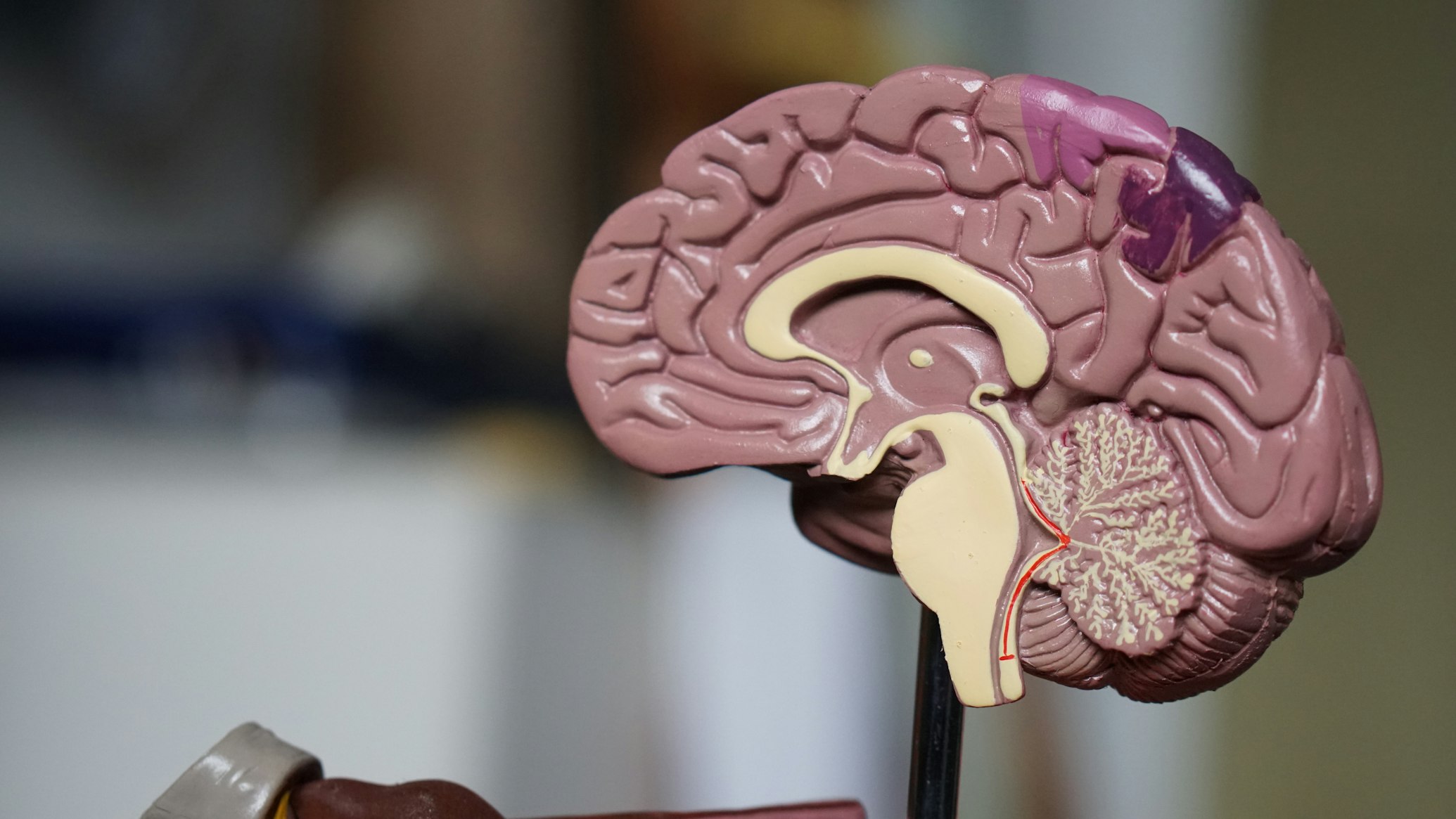
The Black Box Problem: Why We Need to Understand the Machines
Transformers have become the state-of-the-art tool for decoding stimuli and behavior from neural activity, significantly advancing neuroscience research 1 . These same models power today's most advanced chatbots and image generators, demonstrating remarkable ability to find patterns in complex data. When trained on neural recordings — measurements of brain activity from hundreds or thousands of cells — they can often predict what an animal is seeing, remembering, or about to do.
Yet there's a critical problem: greater transparency in their decision-making processes would substantially enhance their utility in scientific and clinical contexts 1 .
Without understanding how these models arrive at their predictions, scientists cannot:
- Validate whether the models have discovered genuine biological principles or learned spurious correlations
- Extract new neuroscientific insights about how the brain processes information
- Trust these systems for potential clinical applications, such as brain-computer interfaces
As one research team notes, "The 'black box' nature has raised concerns in scientific domains where interpretability is essential for hypothesis generation and causal understanding" 6 . The situation is particularly challenging with neural data, which lacks the predefined vocabulary or token structure of language, making it difficult to identify consistent, interpretable patterns across sessions, subjects, or brain regions 6 .
Neural Data Complexity
Lacks predefined structure, making interpretation challenging across different brain regions and subjects.
Scientific Validation
Without interpretability, it's impossible to distinguish genuine biological insights from statistical artifacts.
The Interpretability Breakthrough: From Black Boxes to Glass Rooms
Enter a promising solution: sparse autoencoders (SAEs). In recent years, researchers have discovered that by adding these specialized components to transformer models, they can produce hidden units that respond selectively to specific variables, dramatically enhancing interpretability 1 .
The fundamental insight comes from the field of mechanistic interpretability, which treats neural networks as programs to be reverse-engineered 5 . Rather than simply noting which parts of a brain image activate when a model makes a decision, mechanistic interpretability aims to understand the actual computational processes — the "circuits" and "algorithms" inside the network.
Think of it as the difference between knowing that a particular office light turns on whenever someone enters the building (correlation) versus understanding the complete electrical circuit that connects the motion sensor to the light switch to the bulb (causation).
This causal understanding is what allows true debugging and trust. As one comprehensive review notes, mechanistic interpretability has recently "garnered significant attention for interpreting transformer-based language models, resulting in many novel insights yet introducing new challenges" 2 . The same approaches are now being adapted to transformers trained on neural data.
Traditional Black Box Models
Input → Complex Transformations → Output (No visibility into internal processes)
Sparse Autoencoder Integration
Input → Sparse Representations → Interpretable Features → Output
Mechanistic Interpretability
Reverse-engineering the actual computational processes and circuits within the network
A Deep Dive Into the Visual Cortex: How It Works
A landmark study published in 2025 demonstrates precisely how this interpretability revolution is unfolding in neuroscience 1 6 . The research team integrated sparse autoencoders with a transformer model called POYO+ that had been trained on one of the largest-scale neural datasets available — covering hundreds of recording sessions across 256 mice from the Allen Brain Observatory 6 .
Cracking the Code of Vision
The experiment focused on the mouse visual cortex — a brain region particularly well-suited for interpretability research because its responses to basic visual features like oriented edges are well-understood 6 . The researchers asked: could they train a transformer to predict what visual stimuli a mouse was seeing based on its brain activity, and then understand how the model was making these predictions?
Methodology Steps
Latent Extraction: First, they extracted compact representations from the POYO+ transformer at the moment when distilled neural information and task context had been fused into a compact latent code 6 .
Sparse Recoding: They then trained a TopK sparse autoencoder to recode these latents into a more interpretable format. The SAE learned an overcomplete dictionary while enforcing sparsity through an explicit TopK operation 6 .
Feature Interpretation: With the sparsely activated units in hand, the researchers could then examine what each unit represented by looking at which stimuli caused it to activate most strongly.
Causal Validation: Finally, they performed ablation experiments — selectively "lesioning" specific units by setting their activations to zero — to verify that units identified as representing particular features were actually necessary for processing those features 6 .
Experimental Components
| Component | Role |
|---|---|
| POYO+ Transformer | Base model for decoding |
| Sparse Autoencoder | Interpretability module |
| TopK Sparsity | Enforcement mechanism |
| Ablation Tests | Causal verification |
What They Discovered
The results were striking. The enhanced transformer model preserved its original decoding performance while yielding hidden units that selectively responded to interpretable features, such as stimulus orientation and genetic background 1 6 .
Individual SAE latents exhibited sharply tuned "receptive fields" that linked units to specific stimuli and cell types 6 . Even more importantly, targeted ablations of SAE units yielded causal, feature-specific effects on prediction accuracy — when researchers silenced units associated with a particular visual orientation, the model specifically struggled to process that orientation while maintaining its performance on other features 6 .
Key Findings
| Discovery | Significance |
|---|---|
| Feature Selectivity | Units responded to specific stimuli |
| Performance Preservation | No loss of accuracy with interpretability |
| Causal Validation | Ablations confirmed computational role |
| Biological Alignment | Representations matched known biology |
The Scientist's Toolkit: Essential Tools for Cracking Neural Codes
The visual cortex experiment relied on a sophisticated suite of computational tools that are rapidly becoming standard in the interpretability toolkit. These tools span from theoretical frameworks to practical software libraries.
| Tool Category | Specific Examples | Primary Function |
|---|---|---|
| Interpretability Frameworks | Mechanistic Interpretability, Circuit Analysis | Reverse-engineer model computations 2 5 |
| Sparse Coding Methods | Sparse Autoencoders (SAEs), TopK-SAE, Cross-Layer Transcoders | Decompose representations into interpretable features 1 9 |
| Intervention Tools | Activation Patching, Neuron Ablation, Feature Visualization | Test causal relationships and feature importance 5 |
| Evaluation Metrics & Toolkits | Quanda Toolkit, Automated Evaluation Protocols | Systematically evaluate attribution methods 3 |
| Automated Agents | MAIA (Multimodal Automated Interpretability Agent) | Automate design and running of interpretability experiments |
Beyond these specialized tools, the field is also benefiting from more general advances in AI. Systems like MAIA (Multimodal Automated Interpretability Agent) developed at MIT can automatically generate hypotheses, design experiments to test them, and refine their understanding through iterative analysis . As one researcher notes, "Our goal is to create an AI researcher that can conduct interpretability experiments autonomously" .
Automated Agents
Systems like MAIA automate hypothesis generation and testing
Intervention Tools
Ablation and patching methods test causal relationships
Evaluation Toolkits
Systematic frameworks for assessing interpretability methods
Beyond the Lab: Implications for AI Safety and Biological Discovery
The implications of these interpretability advances extend far beyond understanding mouse vision. We're witnessing the emergence of tools that could transform how we develop and deploy AI systems across society.
AI Safety
In AI safety, mechanistic interpretability is increasingly seen as a cornerstone for ensuring that powerful AI systems remain aligned with human values 5 . When we can understand how models represent concepts and make decisions, we can better identify and remove harmful biases, implement safeguards, and predict potential failures before they occur.
Biology & Medicine
In biology and medicine, these approaches are already accelerating discovery. AI tools are enhancing the prediction of gene functions, the identification of disease-causing mutations, and accurate protein structure modeling 7 . Breakthroughs like AlphaFold for protein folding and DeepBind for DNA regulatory element detection demonstrate the power of these approaches 7 .
The clinical potential is particularly exciting. As interpretability methods improve, we move closer to trustworthy brain-computer interfaces that could restore function to people with neurological conditions, AI diagnostics that can explain their reasoning to doctors, and personalized treatments based on interpretable biomarkers.
As one comprehensive review notes, methods that balance interpretability and accuracy in biomedical time series analysis "warrant further studies, as only a few of them were applied" in this domain 4 . The future will likely see increased emphasis on developing models that are inherently interpretable rather than requiring post-hoc explanation.
Clinical Applications
Brain-computer interfaces, diagnostics
Biological Discovery
Gene function, protein structure
AI Safety
Bias detection, alignment
The Path Forward: Partnership Between AI and Neuroscience
The journey beyond black boxes represents one of the most exciting frontiers in science today. We're developing not just tools for understanding AI, but potentially tools for understanding intelligence itself — both artificial and biological.
As the field progresses, key challenges remain: scaling interpretability methods to ever-larger models, dealing with the complexity of "polysemantic" neurons that encode multiple concepts, developing better visualization tools, and establishing benchmarks for evaluating interpretations 5 . Yet the progress has been remarkable.
What makes this moment particularly special is the symbiotic relationship between AI and neuroscience. Techniques like sparse autoencoders were first developed for understanding AI systems, then applied to neural data analysis. Insights gained from studying biological neural networks continue to inspire more efficient and powerful artificial neural networks. Each field illuminates the other.
As we stand at this crossroads, one thing becomes clear: the future of intelligent systems — both natural and artificial — depends not just on building more powerful models, but on developing a deeper understanding of how they work. The black box must become a window, through which we can observe, understand, and ultimately guide the intelligence we create.
As one research team aptly puts it, integrating methods like sparse autoencoders with transformers "combines the power of modern deep learning with the interpretability essential for scientific understanding and clinical translation" 1 . We're not just building smarter machines — we're building machines we can understand, trust, and safely integrate into our lives and society.
Future Challenges
- Scaling to larger models
- Polysemantic neurons
- Better visualization tools
- Evaluation benchmarks
Future Opportunities
- AI-neuroscience partnership
- Clinical applications
- AI safety advances
- Understanding intelligence