Beyond Memory: The Hippocampus as a Central Engine for Imagination and Future Thought
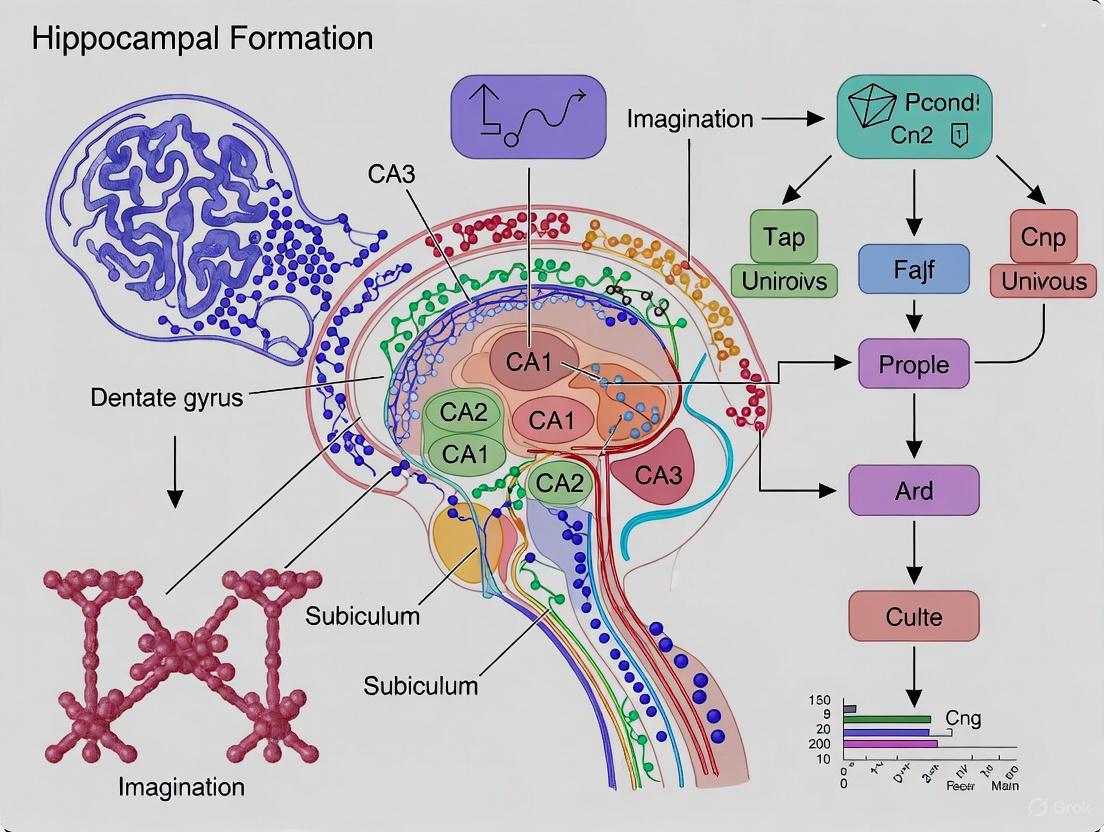
This article synthesizes contemporary neuroscience research to reposition the hippocampal formation from a mere memory archive to a dynamic generator of imagination.
Beyond Memory: The Hippocampus as a Central Engine for Imagination and Future Thought
Abstract
This article synthesizes contemporary neuroscience research to reposition the hippocampal formation from a mere memory archive to a dynamic generator of imagination. We explore the foundational mechanisms, including spatial model construction and neuronal replay, that enable the hippocampus to support a spectrum of cognitive functions from episodic future thinking and creative divergent thinking to constructive reasoning. For researchers and drug development professionals, we review cutting-edge methodologies for investigating hippocampal-dependent imagination, analyze impairments in clinical and addictive disorders, validate findings through causal interventional studies, and discuss the translational implications for treating neuropsychiatric conditions characterized by imaginative deficits.
From Cognitive Maps to Constructive Simulation: Core Hippocampal Mechanisms in Imagination
For decades, the hippocampal formation has been conceptualized primarily as an episodic memory system, responsible for encoding, storing, and retrieving past experiences. However, a paradigm shift is underway, redefining the hippocampus as a generative system that constructs experiences beyond simple recollection. This whitepaper synthesizes recent neurophysiological, computational, and clinical evidence demonstrating that the core function of the hippocampus is not merely to record the past but to flexibly recombine stored information for imagining future scenarios, creative problem-solving, and inferential reasoning. This reformulation from a reactive memory archive to a proactive generative engine has profound implications for understanding human cognition and developing novel therapeutic interventions for neuropsychiatric disorders.
The traditional view of hippocampal function is inextricably linked to episodic memory. The seminal case of patient H.M., who developed profound anterograde amnesia following bilateral hippocampal resection, cemented this structure's role in memory formation [1] [2]. The dominant "standard framework" theorized the hippocampus, particularly the CA3 region, as an autoassociative network storing memory patterns as attractor states, enabling pattern completion during recall [3] [4].
Converging evidence now challenges this passive storage model. Patients with hippocampal damage exhibit deficits not only in memory recall but also in imagining novel future experiences and constructing fictitious scenes [1] [2]. Neuroimaging studies consistently show robust hippocampal activation during future simulation and creative thinking tasks [5]. At the cellular level, discoveries of episode-specific neurons (ESNs) and mechanisms like hippocampal replay provide a neural substrate for generative construction [6] [7]. This evidence compels a theoretical shift: the hippocampus is fundamentally a generative system that uses past experiences as building blocks to construct novel mental representations.
Critical Evidence for the Generative Hippocampus
Neuropsychological and Neuroimaging Evidence
The generative hypothesis is strongly supported by human clinical and brain imaging data, which reveal parallel deficits and activation patterns for memory and imagination.
- Constructive Episodic Simulation Hypothesis: Research demonstrates that imagining future events relies on the same neural machinery as remembering past events. Patients with hippocampal damage produce impoverished descriptions of both past experiences and hypothetical future scenarios, indicating a shared constructive process [2].
- Neural Overlap in fMRI Studies: Functional neuroimaging reveals that the hippocampus is activated during a range of generative tasks, including imagining the future, creative thinking, and insight problem-solving [5] [2]. Notably, some studies report even greater hippocampal activation during future simulation compared to past recall [2].
Cellular and Circuit-Level Mechanisms
Single-neuron recordings in humans and rodents provide direct evidence for neural codes and processes that support generative functions.
- Episode-Specific Neurons (ESNs): Human intracranial recordings have identified neurons in the hippocampus that fire selectively during the encoding and retrieval of a specific episodic memory. These ESNs code for the conjunction of all elements within an episode, rather than responding to individual invariant elements [6]. This conjunctive code is ideal for binding disparate elements into a coherent whole during both memory and imagination.
- Hippocampal Replay and Preplay: During rest and sleep, the hippocampus exhibits "replay" events—compressed reactivations of previous behavioral sequences. Importantly, these events also include "preplay" of novel paths or sequences not yet experienced [7] [1]. This mechanism allows for the offline construction of novel experiences and the planning of future behaviors.
- Compositional Codes: A 2025 study proposes that hippocampal place cells do not merely represent location but are conjunctive representations that bind reusable "building blocks" (e.g., spatial maps, object-vector maps, reward-vector maps) [7]. This compositionality enables an agent to understand and act optimally in new environments immediately, without new learning.
Table 1: Key Neural Codes Supporting Generative Hippocampal Function
| Neural Code/Process | Description | Functional Significance for Generativity |
|---|---|---|
| Episode-Specific Neurons (ESNs) [6] | Hippocampal neurons firing to the unique conjunction of all elements in a specific episode. | Binds disparate elements into a novel, coherent whole during imagination and scene construction. |
| Compositional Place Codes [7] | Place cells formed by conjoining reusable spatial and non-spatial building blocks (e.g., object-vectors). | Enables immediate understanding and navigation of novel environments (zero-shot generalization). |
| Sharp-Wave Ripples (Replay/Preplay) [7] [1] | Brief, high-frequency events during rest/sleep that replay past or preplay novel sequences. | Constructs and consolidates novel maps offline; simulates potential future behavioral paths. |
| Theta Rhythm Sequencing [2] | ~8 Hz oscillation organizing the firing of place cells into sequences. | Represents past, present, and possible future locations, supporting mental simulation and deliberation. |
Computational and Theoretical Support
Computational models provide a formal framework for understanding how generative functions can arise from hippocampal circuitry.
- CRISP Theory: This alternative to the standard framework posits that sequences are intrinsic to CA3. Storage involves mapping inputs onto these pre-existing sequences via feedforward projections, not by imprinting new attractors in recurrent CA3 synapses. This architecture is inherently suited for generating sequential narratives and simulations [4].
- State Space Composition Models: Recent models propose the hippocampus constructs state spaces compositionally from reusable primitives (e.g., vector representations of walls, objects, rewards). This allows policies learned in one context to generalize to new situations, explaining rapid learning and imaginative construction [7].
Experimental Paradigms and Methodologies
Research into the generative hippocampus employs a diverse toolkit, from human cognitive neuroscience to rodent electrophysiology.
Human Cognitive Paradigms
- Scene Construction and Future Simulation Tasks: Participants are asked to imagine and describe in detail a fictitious future experience or a novel scene (e.g., "Imagine a day at a museum"). Responses are scored for richness, spatial coherence, and detail. Individuals with hippocampal damage produce fragmented, implausible descriptions [1] [2].
- Alternate Uses Task (AUT) and Creative Association Encoding: During fMRI, participants generate creative uses for common objects or learn novel creative associations (e.g., "basketball-buoy"). The "Subsequent Memory Effect" paradigm is used to identify brain activity predicting successful memory for these creative associations [5].
- Intracranial EEG and Single-Unit Recording: In epileptic patients with implanted depth electrodes, researchers can identify ESNs by recording firing rates during the encoding and retrieval of distinct episodic memories (e.g., associating an animal cue with specific faces/places) [6].
Rodent Electrophysiology Paradigms
- Virtual Navigation and Planning Tasks: Rodents navigate virtual reality environments while neural activity is recorded. Replay events are analyzed to determine if they correspond to past trajectories, future goal-directed paths, or novel shortcuts [7] [1].
- Landmark Manipulation and Replay Analysis: The location of a salient landmark or reward is moved within an environment. Researchers then test if hippocampal replay events occurring at the old location predict the formation of a new place field at a corresponding vector from the new landmark location, demonstrating compositional map construction [7].
The following workflow diagram illustrates a typical experimental protocol for investigating generative replay in rodents:
This section details essential methodological tools and conceptual models for researching the generative hippocampus.
Table 2: Key Reagents and Resources for Hippocampal Generativity Research
| Category / Item | Specifications / Examples | Primary Function in Research |
|---|---|---|
| Animal Models | Transgenic rodent lines (e.g., Cre-drivers), disease models. | Enables cell-type-specific manipulation and modeling of cognitive deficits. |
| Viral Vectors | AAVs for optogenetics (e.g., ChR2, eNpHR) or chemogenetics (DREADDs). | Allows precise control of neural activity in specific cell populations or pathways. |
| Electrophysiology | High-density silicon probes, tetrodes, intracranial microwire arrays in humans. | Records single-unit activity and local field potentials to identify ESNs and replay. |
| Behavioral Arenas | Virtual reality setups for rodents, custom-built real mazes with reward zones. | Provides controlled environments for spatial navigation and decision-making tasks. |
| Computational Models | CRISP model, State Space Composition models, Attractor Network models. | Provides theoretical framework and generates testable predictions for circuit function. |
Theoretical Implications and Future Directions
The reconceptualization of the hippocampus as a generative engine necessitates updates to long-held theoretical models.
- Beyond the Standard Model: The standard framework of CA3 as a static autoassociative network is insufficient to explain rapid generalization and imagination. Theories like CRISP and compositional state spaces, which emphasize sequence generation and the flexible recombination of representations, offer more powerful explanatory frameworks [7] [4].
- Resolution of Theoretical Debates: The generative view helps resolve the longstanding debate about the hippocampus's role in remote memory. Evidence suggests the hippocampus is always needed for retrieving detailed, vivid memories, regardless of their age, while more generalized or gist-like memories become independent [8]. This aligns with a role in detailed scene (re)construction.
- Link to Neuropsychiatry: A dysfunctional generative system could underlie symptoms of mental illness. For instance, in schizophrenia, overly weak constraints on hippocampal construction might lead to the formation of delusional and reality-incongruent imaginary scenarios [1].
The following diagram illustrates the core conceptual shift from a static memory system to a dynamic generative one:
The accumulated evidence from multiple levels of analysis—cognitive, neurophysiological, and computational—mandates a fundamental theoretical shift. The hippocampal formation is not merely a memory repository but a dynamic, generative system dedicated to constructing coherent mental models of experience. This includes remembering the past, simulating the future, engaging in creative thought, and navigating novel challenges. Embracing this generative framework opens new avenues for understanding the neural basis of imagination and for developing innovative treatments for disorders of memory and cognition, with significant potential impact for the field of neuropsychopharmacology and drug development.
The hippocampal formation, long recognized as the canonical memory system, is now understood to be a core component of the neural machinery that underlies various forms of mental imagery. This whitepaper synthesizes recent research demonstrating that distinct hippocampal circuits and cell populations support different imagery modalities—object imagery, scene imagery, and temporally-structured imagination. We present a circuit-based framework showing how specialized hippocampal subregions and their interactions with cortical partners enable the construction of mental images, focusing on the mechanistic distinctions between imagery types. The findings compiled herein reframe the hippocampus as a critical hub for constructive imagination, with significant implications for research methodologies and therapeutic development in disorders characterized by imagery deficits.
Traditionally conceptualized primarily as a memory system, the hippocampal formation is increasingly recognized for its fundamental role in various forms of imagination, including simulating future scenarios, constructing fictitious scenes, and recombining past experiences into novel concepts. This constructive function relies on the same neural machinery that supports episodic memory, spatial navigation, and relational binding [9] [1]. Neuropsychological evidence firmly establishes that hippocampal damage impairs not only memory formation but also the ability to imagine novel experiences, a deficit in "scene construction" where patients cannot generate coherent mental scenes [1].
We propose a parsimonious framework wherein the hippocampus contributes to imagination by providing a spatial model that serves as a scaffold for mental imagery [9]. This model is built from specialized neuronal populations including place cells, grid cells, boundary vector cells, and object-vector cells which encode different aspects of spatial and relational information [10] [11]. Different forms of imagery engage distinct configurations of these building blocks, implemented through segregated hippocampal-cortical circuits.
This whitepaper advances three core theses: First, object imagery and scene imagery rely on partially distinct hippocampal subcircuits with different cortical connectivity patterns. Second, temporal imagination—the mental simulation of sequential experiences—engages unique temporal encoding mechanisms within the hippocampal formation. Third, the process of hippocampal replay serves as a fundamental mechanism for constructing novel imaginary scenarios by recombining stored elements into new compositions.
Neural Mechanisms of Distinct Imagery Types
Object Imagery Circuits
Object imagery involves generating mental representations of discrete items, often in isolation from their spatial context. This form of imagery relies heavily on the ventral visual stream but engages specific hippocampal mechanisms when objects must be relationally bound or conceptually integrated.
The neural implementation of object imagery involves:
- Allocentric object-vector cells in the medial temporal lobe that encode the positions of objects relative to environmental boundaries and other stable references [10]
- Egocentric object-coding cells in parietal cortex (PWo cells) that represent objects in body-centered coordinates [10]
- Perirhinal-hippocampal interactions that support object-context binding and integrate object identity with spatial and temporal information [5]
Table 1: Neural Correlates of Object Imagery
| Neural Element | Location | Proposed Function in Object Imagery |
|---|---|---|
| Object-vector cells | Medial temporal lobe | Encode allocentric relationships between objects and boundaries |
| PWo cells | Parietal window | Egocentric representation of object location |
| Place cells | Hippocampus proper | Contextual anchoring of object representations |
| Perirhinal cortex | Anterior medial temporal lobe | Object identification and familiarity |
The circuit for object imagery is characterized by strong connectivity between the posterior hippocampus and occipital areas (V1 and V2), facilitating the integration of visual details into object representations [9]. During object-based imagination, these circuits enable the mental manipulation of objects independent of their original contexts, supporting functions such as creative alternative uses for common objects [5].
Scene Imagery Circuits
Scene imagery involves constructing coherent mental representations of environments, including their spatial layout, boundaries, and the relationships between environmental elements. This form of imagery critically depends on the hippocampus and related structures, with distinct contributions from specialized cell populations.
The core components of the scene imagery system include:
- Boundary vector cells (BVCs) that fire at specific distances and allocentric directions from environmental boundaries, providing metrical information about the spatial layout [11]
- Place cells that represent specific locations within an environment, with their collective activity forming a cognitive map of space [11]
- Grid cells that provide a metric for space through their hexagonal firing patterns, supporting path integration and navigation in mental imagery [10]
- Head direction cells that track orientation within the mental space, determining the imagined viewpoint [11]
Table 2: Neural Correlates of Scene Imagery
| Cell Type | Primary Location | Contribution to Scene Imagery |
|---|---|---|
| Boundary vector cells (BVCs) | Subiculum, entorhinal cortex | Encode distance and direction to environmental boundaries |
| Place cells | Hippocampus proper | Signal specific locations within the mental scene |
| Grid cells | Entorhinal cortex | Provide spatial metric and enable mental navigation |
| Head direction cells | Multiple Papez circuit structures | Determine orientation within the imagined scene |
Scene construction relies on a transformation circuit between egocentric and allocentric reference frames, implemented through retrosplenial cortex (RSC) with gain-field modulation by head direction signals [10]. This circuit enables the translation between viewer-centered and environment-centered perspectives, allowing both the recall of scenes from specific viewpoints and mental navigation within them.
Temporal Imagination Circuits
Temporal imagination involves mentally simulating sequential experiences, future events, or novel sequences structured in time. This capacity relies on the hippocampal formation's ability to encode and retrieve temporal relationships between events, enabling the construction of coherent sequences that extend beyond direct experience.
Key mechanisms for temporal imagination include:
- Temporal relational neurons in the hippocampus and entorhinal cortex that modify their responses based on learned temporal relationships between stimuli [12]
- Sequence prediction cells in CA3 that anticipate upcoming experience based on current context and past regularities [13]
- Replay mechanisms that reactivate and reorganize experience sequences, often in compressed timeframes, to construct novel temporal trajectories [7] [1]
Crucially, human hippocampal and entorhinal neurons rapidly encode the temporal structure of experience, forming predictive representations that persist beyond the actual experience [12]. These representations reflect both the graph-like structure of sequences and the probability of upcoming stimuli, providing a neural substrate for simulating possible futures.
The CA3 region appears particularly important for predictive sequence learning, functioning as a self-supervised recurrent network that anticipates next inputs, while CA1 may compute prediction errors by comparing CA3 predictions with actual direct input from the entorhinal cortex [13].
Experimental Approaches and Methodologies
Electrophysiological Paradigms for Imagery Research
Investigating the neural bases of different imagery types requires specialized experimental approaches capable of detecting and manipulating specific neural populations and their dynamics.
Table 3: Key Experimental Methods for Imagery Circuit Research
| Methodology | Application | Key Insights Generated |
|---|---|---|
| Single-unit recording in humans | Recording from hippocampal formation during temporal sequence tasks | Identification of "relational neurons" that encode temporal structure [12] |
| Microendoscope calcium imaging | Mapping spatial representations in hippocampal subregions | Revealed transformation from egocentric (DG) to allocentric (CA3) coding [14] |
| Intracranial EEG with spike sorting | Tracking sequence learning and replay | Demonstrated time-compressed replay of experienced sequences [12] |
| fMRI with multivariate pattern analysis | Examining hippocampal representation during creative association | Revealed pattern similarity differences for creative vs. conventional associations [5] |
For temporal sequence learning experiments, researchers typically use structured stimulus presentations where images or other stimuli follow a predetermined graph structure [12]. Participants engage in cover tasks while stimuli are presented according to both random and rule-based sequences. Neural activity is recorded throughout, allowing identification of cells that modify their responses based on the temporal structure rather than simply responding to specific stimuli.
Behavioral Paradigms for Assessing Imagery Types
Different behavioral tasks have been developed to probe specific imagery modalities:
- Scene Construction Task: Participants imagine and describe complex scenes in response to cue words, with responses scored for spatial coherence, sensory details, and presence of a spatial context [1]
- Alternate Uses Task: Participants generate creative uses for common objects while neural activity is recorded, assessing object-based creative imagination [5]
- Temporal Sequence Learning: Participants are exposed to structured sequences of stimuli while performing cover tasks, with subsequent testing for implicit knowledge of temporal relationships [12]
- Mental Navigation Tasks: Participants imagine moving through familiar environments while neural correlates of mental traversal are recorded [10]
The Scientist's Toolkit: Essential Research Reagents
Table 4: Key Research Reagents and Their Applications in Imagery Research
| Reagent/Resource | Function/Application | Experimental Context |
|---|---|---|
| Microendoscope calcium imaging systems | High-resolution imaging of neural population activity in deep structures | Tracking spatial representations in DG and CA3 [14] |
| Tetrode arrays for single-unit recording | Isolation of individual neuron activity in behaving animals | Identifying place cells, grid cells, and replay events [7] |
| Intracranial depth electrodes | Recording human single-neuron activity in clinical settings | Studying temporal coding and relational neurons in humans [12] |
| Viral vectors for optogenetics (e.g., ChR2, eNpHR) | Cell-type-specific manipulation of neural activity | Causal testing of circuit elements in imagination |
| Custom sequence presentation software | Controlling stimulus timing and structure in temporal learning tasks | Investigating sequence learning and prediction [12] |
| The Behavioral Task Toolbox | Standardized paradigms for assessing different imagery modalities | Cross-species comparison of imagination functions |
Circuit Diagrams of Hippocampal Imagery Systems
Hippocampal Circuitry for Imagery Types
This diagram illustrates the distinct hippocampal pathways preferentially engaged by different imagery types. Object imagery relies more heavily on the ventral visual stream input to entorhinal cortex and the trisynaptic pathway (DG→CA3→CA1). Scene imagery depends on parietal spatial information flowing through entorhinal cortex to CA3 and CA1, with significant subicular output. Temporal imagination engages prefrontal inputs carrying sequential structure information and utilizes CA3's recurrent network for prediction and CA1 for comparison with actual experience.
Experimental Workflow for Temporal Sequence Learning
This workflow depicts the experimental paradigm used to study temporal sequence learning and imagination [12]. The approach involves selecting stimuli that elicit specific neuronal responses, assigning them to a graph structure, and exposing participants to different sequence regimes while recording neural activity. The critical comparison between pre-exposure (baseline) and post-exposure phases reveals how temporal structure has been incorporated into neural representations, even when learning is implicit.
Discussion and Future Directions
The evidence synthesized in this whitepaper supports a model of hippocampal function that extends far beyond its traditional memory domain to encompass various forms of imagination. The hippocampal formation implements a flexible system for constructing mental experiences by composing elemental representations into novel configurations. Different imagery types engage distinct but overlapping circuits within this system:
- Object imagery utilizes posterior hippocampal connections with occipital cortex and object-vector representations
- Scene imagery relies on boundary-based spatial representations and transformation circuits between egocentric and allocentric reference frames
- Temporal imagination engages sequence prediction mechanisms and replay processes that reorganize experience into novel trajectories
A promising future direction involves exploring the compositional nature of hippocampal representations, whereby a limited set of elemental representations can be recombined to generate a vast array of novel imaginary scenarios [7] [1]. This compositional capacity may explain how humans and other animals can so rapidly adapt to new environments and imagine novel situations without direct experience.
The role of hippocampal replay in imagination deserves particular emphasis. Rather than merely consolidating past experiences, replay appears to function as an imagination engine, constructing novel sequences by combining elements from different experiences [7] [1]. This constructive replay mechanism may underlie various forms of creative thought and problem-solving.
From a clinical perspective, these findings suggest that disorders characterized by imagination deficits—including certain aspects of schizophrenia, PTSD, and depression—may involve disruptions in specific hippocampal circuits [1]. Developing targeted interventions that modulate these specific circuits represents a promising avenue for therapeutic development.
For researchers investigating neural circuits of imagination, we recommend:
- Employing paradigm that distinguish between different imagery modalities rather than treating "imagination" as a unitary function
- Focusing on the compositional nature of hippocampal representations and how elements are recombined in novel ways
- Investigating how replay mechanisms support various forms of constructive thought
- Developing cross-species approaches that leverage the precise neural manipulation possible in animal models with the rich subjective experience reported in humans
The hippocampal formation serves as a core imagination engine in the brain, with distinct circuits dedicated to different aspects of mental simulation. Understanding these specialized circuits provides not only fundamental insights into human cognition but also promising targets for therapeutic intervention in disorders characterized by disruptions in constructive imagination.
The hippocampal formation, traditionally considered the cornerstone of episodic memory, is now recognized as a fundamental neural substrate for constructing mental imagery. This technical guide explores the paradigm shift from viewing the hippocampus purely as a memory structure to understanding its role as a dynamic scaffold for spatial models and scene simulation. Framed within a broader thesis on hippocampal contributions to imagination, we examine how this region provides the spatial context necessary for generating, maintaining, and manipulating mental images. Contemporary research indicates that the hippocampus supports a core process of scene construction—the ability to form and maintain coherent spatial contexts—that underlies diverse cognitive functions including episodic memory, future simulation, and spatial reasoning [15]. This constructive function relies on the hippocampus's unique neuroanatomical position and connectivity patterns, particularly its integration within the default mode network and its direct connections with occipital areas such as V1 and V2, which facilitate the top-down generation of imagery [9].
The hippocampus enables what has been described as 'vision in reverse'—while visual perception exploits bottom-up neural pathways, mental imagery utilizes top-down pathways, with the prefrontal cortex driving activation in visual cortices through a reverse hierarchy [9]. Within this framework, the hippocampus provides the spatial model upon which imagery content is scaffolded, explaining its involvement in both remembering the past and imagining the future [9] [15]. This guide synthesizes current neuroscientific evidence, experimental protocols, and computational models that elucidate how hippocampal circuits support different imagery modalities, with particular relevance for researchers investigating the neural bases of imagination and related pathologies.
Theoretical Framework: From Cognitive Maps to Scene Construction
Evolution of Hippocampal Theories
The understanding of hippocampal function has evolved significantly from initial conceptualizations as a pure memory structure. Seminal patient studies, beginning with H.M., established the hippocampus as critical for episodic memory formation [15] [1]. Parallel research in rodents revealed specialized spatial representations, including place cells that fire at specific locations, suggesting a primary role in spatial cognition [1]. These apparently disparate functions began to converge in the early 2000s when studies demonstrated that hippocampal damage also impairs the ability to imagine fictitious and future scenes [15].
The Scene Construction Theory (SCT) emerged as a unifying framework, positing that the hippocampus facilitates the marshaling, binding, and organization of details into a coherent spatial context [15]. This process is considered fundamental to episodic memory, future thinking, spatial navigation, and even scene perception. According to SCT, the hippocampus does not merely store static representations but dynamically constructs scenes by integrating multimodal information within a spatially coherent framework [15]. This constructive process explains why patients with hippocampal damage describe imagined scenes as fragmented and lacking spatial coherence [15].
Compositionality and Mental Imagery
A more recent computational perspective reframes hippocampal function through the principle of compositionality—the combinatorial use of reusable building blocks to construct novel representations [7]. In this model, the hippocampus binds elemental representations (e.g., spatial maps, object vectors, reward vectors) into conjunctive codes that define specific scenes or situations [7]. These compositional representations enable zero-shot generalization, allowing organisms to navigate novel environments without extensive new learning [7].
This compositional framework aligns with the philosophical distinction between propositional imagination (imagining that something is the case) and sensory imagination (deploying sensorimotor systems to evoke mental imagery) [9]. The hippocampus appears particularly crucial for the latter, providing the spatial context in which mental images are played out. Notably, mental imagery is not exclusively visual but spans multiple modalities, though the visual domain remains most extensively studied [9].
Neural Mechanisms of Hippocampal-Mediated Imagery
Functional Neuroanatomy and Connectivity
The hippocampal formation comprises the hippocampus proper (dentate gyrus, CA fields 1-3), subiculum, and related parahippocampal regions [9]. This complex structure forms multiple closed-loop circuits, with information flowing from the entorhinal cortex through the hippocampal trisynaptic circuit (enthorinal cortex → dentate gyrus → CA3 → CA1) before returning to the entorhinal cortex [9].
Recent quantitative fibre tracking in humans reveals preferential connectivity along the anterior-posterior hippocampal axis, with the tail of the hippocampus demonstrating particularly strong connections to occipital areas V1 and V2 [9]. These anatomical links provide a direct pathway for the hippocampus to influence early visual processing during imagery generation, supporting the 'vision in reverse' model where top-down signals from memory systems reactivate perceptual codes [9].
Table 1: Hippocampal Subregions and Their Proposed Roles in Mental Imagery
| Subregion | Anatomical Description | Proposed Function in Imagery |
|---|---|---|
| Dentate Gyrus | First stage of trisynaptic circuit; high degree of convergence | Pattern separation for distinct scene representations |
| CA3 | Extensive recurrent collateral network | Autoassociative memory for complete scene retrieval from partial cues |
| CA1 | Major output region to subiculum | Integration of spatial and nonspatial information; scene coherence |
| Subiculum | Transitional cortex between hippocampus and entorhinal cortex | Spatial context representation; coordination of hippocampal-cortical dialogue |
| Posterior Hippocampus | Strong connectivity to occipital visual areas | Spatial model maintenance; coordination with visual imagery systems |
Cellular Representations Supporting Imagery
At the cellular level, specialized neurons provide the building blocks for spatial representation and imagery. Place cells fire when an animal occupies specific locations in an environment, collectively forming a cognitive map [1]. These are complemented by vector cells that encode direction and distance to boundaries (border-vector cells), objects (object-vector cells), and rewards (reward-vector cells) [7].
Hippocampal representations are fundamentally conjunctive, binding together information about current location with relational knowledge about other spatial elements [7]. This conjunctive coding enables local representations to contain global knowledge—for example, a place cell's firing pattern might incorporate information about the direction to a reward, effectively binding spatial and motivational information [7]. The hippocampal population appears to encode the outer product of the representations it composes, creating single-unit responses that exhibit spatial tuning while carrying additional feature information [7].
Quantitative Findings and Experimental Evidence
Key Experimental Paradigms and Results
Research on hippocampal contributions to mental imagery spans multiple methodologies, including patient studies, functional neuroimaging, and single-unit recordings. The following table summarizes quantitative findings from key studies:
Table 2: Quantitative Findings from Hippocampal Imagery Research
| Study Type | Experimental Paradigm | Key Metric | Result | Implication |
|---|---|---|---|---|
| Patient Lesion Studies [15] | Scene construction & boundary extension | Spatial coherence rating; drawing analysis | Patients' scenes described as fragmented; attenuated boundary extension | Hippocampus necessary for coherent spatial scenes |
| fMRI Studies [15] | Future scene imagination | BOLD signal change in hippocampus | Significant activation during scene imagination | Hippocampus engaged in constructive simulation |
| Single-Unit Recording [7] | Rodent spatial task with replay analysis | Percentage of new place fields emerging after replay | New place responses emerged after replay events | Replay constructs new spatial representations |
| Radiomics Study [16] [17] | MRI feature analysis post-radiotherapy | Hippocampal volume change; radiomic feature variation | 12.51% volume reduction long-term; T2WI showed most significant feature changes | Microstructural changes detectable before volumetric loss |
Boundary Extension as a Marker of Scene Construction
Boundary extension (BE)—the ubiquitous cognitive phenomenon where viewers erroneously remember seeing beyond the borders of a presented scene—provides a particularly compelling behavioral marker of scene construction [15]. This phenomenon depends on the automatic construction of an extended spatial representation beyond immediate perceptual input.
Crucially, patients with bilateral hippocampal damage show attenuated BE, resulting in paradoxically more accurate memory for the actual visual input but impaired scene construction ability [15]. fMRI studies corroborate these findings, showing increased hippocampal activity during BE in healthy subjects [15]. This suggests the hippocampus automatically generates extended spatial models during scene perception, a process that also underpins mental imagery.
Experimental Protocols for Investigating Hippocampal Imagery
Human Neuroimaging Protocols
fMRI Scene Construction Task
- Participants: Patients with focal hippocampal damage and matched controls
- Stimuli: Cue words prompting imagination of specific scenes (e.g., "a beach")
- Procedure: Participants imagine and describe scenes during scanning; responses recorded and rated for spatial coherence, sensory details, and narrative structure
- Analysis: Compare BOLD activity between groups; correlate activity with measures of scene coherence
- Key Findings: Patients with hippocampal damage show reduced activation and produce less coherent scenes [15]
Boundary Extension Assessment
- Stimuli: Photographs of scenes cropped to show limited view
- Procedure: Participants view images, then after delay, either draw from memory or adjust boundaries to match original
- Analysis: Measure deviation from original boundaries; extension indicates constructive spatial processing
- Key Findings: Hippocampal patients show significantly less boundary extension than controls [15]
Single-Unit Recording in Rodent Models
Spatial Learning with Replay Analysis
- Subjects: Rodents with implanted hippocampal electrode arrays
- Apparatus: Novel environments with prominent landmarks (walls, objects, reward locations)
- Procedure: Record place cell activity during exploration and rest periods; identify replay events during rest
- Analysis: Track emergence of new place fields relative to replay events; analyze content of replay sequences
- Key Findings: New place fields emerge after replay events; replay content predicts future place field locations [7] [1]
Landmark Manipulation Task
- Protocol: Record place cell activity in environment with defined landmarks; subsequently move landmarks to new positions or introduce novel configurations
- Analysis: Track how place fields shift relative to landmark movements; measure generalization of compositional codes
- Key Findings: Place fields maintain vector relationships to specific landmarks across configurations [7]
The Scientist's Toolkit: Research Reagent Solutions
Table 3: Essential Research Materials and Methodologies for Hippocampal Imagery Research
| Research Tool | Specifications | Experimental Function | Example Application |
|---|---|---|---|
| High-Res MRI | 3T or 7T scanners; T1-weighted, T2-weighted, DWI sequences | Hippocampal volumetry and structural connectivity assessment | Tracking radiation-induced hippocampal changes [16] [17] |
| Multielectrode Arrays | 64-256 channel silicon probes; tetrode drives | Simultaneous recording of multiple hippocampal neurons | Identifying replay events and place field dynamics [7] |
| Radiomics Feature Extraction | Texture analysis algorithms (GLCM, GLRLM) | Quantifying microstructural tissue changes beyond simple volumetry | Detecting early radiation injury in hippocampus [16] [17] |
| Virtual Reality Environments | Customizable 3D environments with tracking | Controlled presentation of spatial scenarios during fMRI or MEG | Testing scene construction in humans with precise control over variables |
| Boundary Extension Stimuli | Standardized scene photographs with cropped boundaries | Assessing constructive spatial representation behaviorally | Comparing scene construction ability in patients vs. controls [15] |
Computational Models and Signaling Pathways
Compositional Model of Hippocampal Function
The compositional model proposes that hippocampus constructs state spaces by combining reusable building blocks or primitives [7]. In this framework, cortical areas provide elemental representations (spatial maps, object vectors, etc.) that the hippocampus binds into conjunctive codes representing specific scenes or situations.
Diagram 1: Compositional Model of Hippocampal Function
Hippocampal-Replay Construction Pathway
The model identifies replay as the mechanism for constructing new compositional representations without direct experience. During replay, hippocampal place cells combine landmark representations into novel configurations, effectively building cognitive maps through imagination rather than gradual learning [7] [1].
Diagram 2: Hippocampal Replay Construction Pathway
Discussion and Research Implications
Reconciling Disparate Findings
Despite compelling evidence for hippocampal involvement in mental imagery, apparent contradictions exist in the literature. Some studies report preserved scene construction in patients with hippocampal damage [15]. These disparities may reflect methodological differences, patient characteristics, or the specific nature of hippocampal lesions. For instance, variations in boundary extension findings appear to depend on stimulus complexity and testing protocols [15].
The compositional model offers a potential resolution, suggesting that hippocampal damage may selectively impair certain types of imagery depending on which building blocks or combinatorial operations are affected [9] [7]. This underscores the importance of carefully designed task paradigms that differentiate between various imagery components.
Clinical and Research Applications
Understanding hippocampal contributions to mental imagery has significant implications for neuropsychiatric conditions. Aphantasia—the inability to form voluntary mental imagery—may involve hippocampal dysfunction, particularly in constructing spatial contexts for imagery [9]. Conversely, conditions like schizophrenia may involve aberrant hippocampal compositional processes, potentially explaining how unrelated concepts become inappropriately linked [1].
In therapeutic contexts, monitoring hippocampal changes following interventions like whole-brain radiotherapy benefits from advanced imaging techniques. Radiomic feature analysis detects microstructural alterations before volumetric changes become apparent, with T2-weighted sequences showing particular sensitivity to early changes [16] [17].
The hippocampus serves as a critical scaffold for mental imagery by providing the spatial models necessary for scene construction. Through compositional binding of cortical building blocks and offline replay mechanisms, it enables the flexible construction of mental scenes that support memory, imagination, and navigation. Future research should further elucidate the specific circuits supporting different imagery modalities and temporal directions, particularly how anterior-posterior hippocampal gradients contribute to various aspects of scene construction [9].
The emerging framework positions the hippocampus not as a mere memory repository but as an active constructor of spatial contexts, bridging perception, memory, and imagination. This reconceptualization opens new avenues for understanding and addressing conditions characterized by disruptions in mental imagery and constructive cognition.
The hippocampal formation and the Default Mode Network (DMN) are central to the brain's ability to imagine future scenarios and construct novel experiences. This neural interaction forms the core of a constructive process that supports memory, imagination, and scene construction [7]. The DMN, characterized by synchronized activity during rest, is intrinsically linked to self-reflection, mental exploration, and the simulation of past and future events [18]. Contemporary research has begun to elucidate how dynamic hippocampal-cortical dialogue enables the brain to recombine stored information into plausible future scenarios, a process critical for planning, creativity, and adaptive behavior. This whitepaper examines the mechanistic basis of these interactions, focusing on the role of hippocampal sharp-wave ripples and replay events in coordinating with the DMN to facilitate imaginative construction.
Core Mechanisms: Hippocampal Ripples and Cortical Coordination
Hippocampal Sharp-Wave Ripples in Memory Retrieval
Hippocampal sharp-wave ripples (SWRs) are transient, high-frequency synchronization events generated by hippocampal neuronal assemblies. Intracranial electroencephalographic (iEEG) recordings in neurosurgical patients demonstrate that these ripples play a specific role in conscious recollection. The ripple rate increases significantly before reported recall of autobiographical memories compared to control conditions involving arithmetic processing or awake rest [19]. This elevated activity suggests ripples initiate and coordinate the retrieval process.
Table 1: Hippocampal Ripple Dynamics During Memory Retrieval
| Experimental Condition | Ripple Rate Modulation | Statistical Significance | Functional Interpretation |
|---|---|---|---|
| Autobiographical Memory Retrieval | Significant increase pre-recall | p = 0.0002 (vs. math); p = 0.0072 (vs. rest) [19] | Orchestrates conscious recollection |
| Arithmetic Processing (Control) | Suppressed response | p = 0.0028 (vs. rest) [19] | Externally-focused cognition inhibits ripple generation |
| Memory Remoteness (Today vs. Last Month) | Higher for remote memories | F(3,288) = 18.27, p < 10⁻¹⁰ [19] | Supports memory consolidation and "semantization" over time |
| Retrieval Difficulty (Fast vs. Slow Trials) | Varies with reaction time | Not reported | Reflects dynamic engagement of retrieval mechanisms |
Spatially, the preference for autobiographical memory trials is most pronounced in the left anterior hippocampus and increases with electrode proximity to the CA1 subfield [19]. This anatomical specificity indicates specialized circuitry for episodic recollection within the hippocampal formation. Furthermore, patterns of ripple activity across multiple hippocampal sites demonstrate remarkable specificity for memory type, revealing a "semantization" dimension where patterns associated with autobiographical contents become more similar to those of semantic memory as a function of memory age [19].
The DMN as a Cortical Hub for Internal Mentation
The Default Mode Network serves as the central cortical partner in this interactive system. The DMN comprises cortical midline regions (medial prefrontal cortex, posterior cingulate cortex), posterior inferior parietal regions, and the medial temporal lobe [20]. During rest and internally-directed tasks, the DMN facilitates self-referential thought, autobiographical memory retrieval, and mental simulation [18] [20].
The DMN does not operate in isolation but interacts dynamically with other large-scale networks. It exhibits a reciprocal relationship with the Executive Control Network (ECN), which is responsible for goal-directed behavior and cognitive control. The Salience Network (SN) acts as a switch between them, deactivating the DMN and activating the ECN when salient external stimuli are detected [18]. This dynamic interplay is crucial for balancing internal thought generation with external attention, a balance critical for creative imagination [20].
Integrated Hippocampal-DMN Dynamics During Imagination
The functional connection between hippocampal ripples and the DMN provides a physiological basis for imagination. Intracranial recordings reveal that widely distributed sites across the neocortex exhibit ripple-coupled activations during recollection, with the strongest activation found within the DMN [19]. This coordinated activity suggests that hippocampal ripples help orchestrate hippocampal-cortical communication during memory retrieval and simulation.
The "cascaded memory systems" (CMS) model provides a framework for this interaction, proposing that the DMN forms the backbone for the propagation of hippocampal replay, mediating interactions that enable memory consolidation and the simulation of future events [21]. In this model, spontaneous replay events originating in the hippocampus can trigger cascades of activation through the DMN, which in turn supports the reactivation of older memories or high-level semantic representations for constructing novel scenarios [21].
Experimental Evidence and Methodologies
Key Experimental Paradigms and Findings
Research illuminating hippocampal-DMN interactions employs sophisticated neuroimaging and neurophysiological techniques.
Table 2: Key Experimental Methodologies in Hippocampal-DMN Research
| Methodology | Key Measurements | Relevant Findings | Considerations |
|---|---|---|---|
| Intracranial EEG (iEEG) | Direct hippocampal ripple detection (80-120 Hz), cortical local field potentials | Increased ripple rate precedes autobiographical recall; ripple-coupled DMN activation [19] | Invasive; limited to clinical populations (e.g., epilepsy) |
| Resting-state fMRI | Dynamic functional connectivity between DMN and ECN; network switching frequency | DMN-ECN switch frequency predicts creativity (divergent thinking) [20] | Indirect neural measure; excellent spatial resolution |
| Task-based fMRI | Brain activity during creative idea generation vs. control tasks | Higher DMN-ECN switching during creative generation; inverted-U relationship [20] | Links network dynamics to specific cognitive states |
| Single-Unit Recordings | Place cell firing patterns, replay events during SWRs | Replay induces new place fields; compositional coding of landmarks [7] [1] | Invasive animal studies; direct neuronal measurement |
The Scientist's Toolkit: Essential Research Reagents and Materials
Intracranial EEG Electrodes: Depth electrodes implanted stereotactically in the hippocampus and cortical surfaces for direct electrophysiological recording of ripples and high-frequency activity [19].
fMRI-Compatible Creative Task Paradigms: Standardized tasks such as the Alternate Uses Task (AUT) to assess divergent thinking during brain scanning, providing behavioral correlates of network dynamics [20].
Sharp-Wave Ripple Detection Algorithms: Custom software for identifying SWR events based on characteristic spectral power and duration features in local field potentials, typically in the 80-120 Hz range [19].
Dynamic Functional Connectivity Pipelines: Computational tools (e.g., sliding window correlation, co-activation pattern analysis) to quantify time-varying connections between the DMN, ECN, and other networks from fMRI data [20].
Compositional Model Simulations: Computer models that simulate how hippocampal place cells can combine landmark representations ("building blocks") during replay to predict neural activity in novel environments [7] [1].
A Unified Model: Compositionality, Replay, and Network Switching
Contemporary models integrate these findings into a coherent framework for imagination. The hippocampal formation is proposed to support a compositional state space, where reusable representational building blocks (e.g., spatial locations, objects, rewards) are combined into novel conjunctions [7]. This compositionality enables the understanding of new situations without extensive new learning.
A critical mechanism for this construction is hippocampal replay, where patterns of neural activity related to past experiences are spontaneously reactivated. Replay is not mere repetition but an active, constructive process that can combine features or landmarks in novel ways to build new cognitive maps [1]. This process is akin to imagination, allowing the brain to simulate possible futures without direct experience.
This constructive function of replay is intimately linked to large-scale brain network dynamics. Creative ability, a proxy for imaginative capacity, is predicted by the frequency of dynamic switching between the DMN and ECN [20]. This switching reflects a flexible coordination between spontaneous, associative thought (DMN) and controlled, evaluative processing (ECN). An inverted-U relationship exists between creativity and the degree of balance in DMN-ECN switching, suggesting that optimal imaginative performance requires neither excessive rigidity nor chaos in network interactions [20].
The following diagram synthesizes these core mechanisms into a unified model of imaginative construction, from hippocampal replay to large-scale network dynamics.
The evidence demonstrates that imagination emerges from tightly coordinated interactions between the hippocampal formation and the Default Mode Network. The hippocampus contributes through the generation of sharp-wave ripples and the compositional replay of experience, while the DMN provides a cortical platform for integrating these elements into coherent, self-referential scenarios. This dynamic system, regulated by interactions with executive and salience networks, enables the flexible simulation of future events that is fundamental to human planning, creativity, and adaptive behavior. Understanding these mechanisms provides not only insight into fundamental cognitive neuroscience but also a foundation for investigating disruptions of imagination in neuropsychiatric disorders.
Investigating the Imaginative Hippocampus: From Single-Cell Recordings to Clinical Biomarkers
The hippocampal formation, long recognized as critical for memory and spatial navigation, is increasingly understood as a fundamental substrate for imagination and constructive thought. This cognitive process relies on the brain's ability to recombine stored elements into novel scenarios, a function that is mechanistically rooted in the formation and stabilization of memory engrams. An engram, the physical neural trace of a memory, is constituted by the ensemble of neurons activated by a specific experience. Longitudinal calcium imaging has emerged as a pivotal technology for tracking these ensembles over time, revealing that memory engrams are not static but undergo dynamic reorganization, or consolidation, which is crucial for the emergence of memory selectivity and the constructive processes underlying imagination [22]. This technical guide details how longitudinal calcium imaging is employed to uncover the dynamics of engram formation and stabilization within the hippocampus, providing a methodological foundation for research aimed at bridging memory and imagination.
Core Principles: Engram Dynamics and Hippocampal Function
Memory engrams, once thought to be fixed after encoding, are now known to be highly dynamic. Spiking neural network models predict that engrams evolve from an initial unselective state, where they can be activated by cues similar to the original memory, to a selective state, where activation is specific to the original memory cue. This transition is facilitated by inhibitory synaptic plasticity during consolidation, which refines the engram ensemble [22].
This dynamic process is not merely for memory storage but is fundamental to the hippocampal role in imagination. The hippocampus is theorized to support imagination and constructive reasoning by composing new experiences from reusable building blocks, such as representations of space, walls, objects, and rewards. This compositional state space allows for zero-shot generalization to new environments, a key aspect of imaginative function. The process of hippocampal replay, during which place cells fire in sequences representing past or potential future trajectories, is critical for building these compositional maps offline, effectively acting as a form of imagination [7] [1]. Longitudinal imaging allows researchers to track how these ensembles form, stabilize, and are reused for both accurate memory recall and flexible, imaginative thought.
Technical Methodology of Longitudinal Calcium Imaging
Longitudinal calcium imaging enables researchers to repeatedly record the activity of the same population of neurons across days or weeks in behaving animals. The following protocol, adapted from established methods, outlines the key steps [23] [24].
Surgical Procedures: Virus Injection and Lens Implantation
Virus Injection for Genetically Encoded Calcium Indicators (GECIs)
- Objective: To express a calcium indicator (e.g., GCaMP6f) in hippocampal neurons.
- Procedure:
- Pull a glass capillary to a fine tip (50–100 µm diameter).
- Load the capillary with an adeno-associated virus (e.g., AAV1.Syn.GCaMP6f.WPRE.SV40).
- Using stereotaxic surgery, inject the virus (e.g., 0.6 µL) into the dorsal hippocampal CA1 region (coordinates relative to Bregma: e.g., -2.0 mm AP, ±1.3 mm ML, -1.5 mm DV).
- Allow 1-2 weeks for viral expression before proceeding to lens implantation [23] [24].
GRIN Lens Implantation for Chronic Imaging
- Objective: To implant a gradient-index (GRIN) lens above CA1 for optical access.
- Procedure:
- After viral expression, perform a second surgery to implant a chronic hippocampal window.
- Carefully remove the dura mater and cortex above the hippocampus.
- Lower a GRIN lens (e.g., 1.8 mm diameter) onto the CA1 cell layer.
- Secure the lens with dental cement and attach a baseplate to the skull for later attachment of a miniaturized microscope [23] [24].
Data Acquisition and Analysis
Imaging During Behavior
- A head-mounted miniaturized fluorescence microscope (e.g., UCLA miniscope V3) is attached to the baseplate.
- Mice perform behavioral tasks (e.g., contextual fear conditioning, virtual reality navigation) while neural activity is recorded.
- Excitation light power is optimized (e.g., 9–132 mW) to achieve clear fluorescence signals without phototoxicity [24].
Data Processing Pipeline
- Preprocessing: Motion correction and image registration using tools like NoRMCorre.
- Source Extraction: Identification of individual neurons and extraction of calcium traces using constrained nonnegative matrix factorization (CNMF-E).
- Cell Registration: Tracking the same neurons across multiple days using methods that align cell maps based on stable landmarks and cellular patterns [23] [24].
Table 1: Key Quantitative Findings from Longitudinal Calcium Imaging Studies
| Experimental Finding | Experimental Model | Quantitative Result | Functional Significance |
|---|---|---|---|
| Engram Turnover [22] | Spiking Neural Network Model | Ensemble overlap between training-activated and probing-activated engram cells decreased substantially with consolidation. | Underpins the transition from unselective to selective memory. |
| Place Cell Stability Post-Stroke [25] | Mouse Virtual Reality Navigation | Early after stroke: fraction of stable place cells was 2.9 ± 1.3% in stroke mice vs. 14.7 ± 3.3% in sham animals. | Predicts cognitive outcome after brain injury. |
| Protein Synthesis & Remapping [26] | Mouse Contextual Fear Conditioning | Learners exhibited low place field correlations from pre- to post-shock (remapping), while anisomycin-treated mice showed high correlations (no remapping). | Links protein-synthesis-dependent plasticity to memory-specific remapping. |
| Environment Cell Consistency [27] | Mouse Contextual Fear Conditioning | A subset of "environment cells" remained consistently active in a specific context regardless of fearful experiences. | Ensures a stable cognitive representation of an environment itself. |
Table 2: Key Research Reagent Solutions for Longitudinal Calcium Imaging
| Reagent / Resource | Function / Application | Example Specifications / Notes |
|---|---|---|
| GCaMP6f [23] [24] | Genetically encoded calcium indicator; fluorescence increases with neuronal calcium influx, reporting action potentials. | Often delivered via AAV (e.g., AAV1.Syn.GCaMP6f.WPRE.SV40). Fast kinetics suitable for detecting single spikes. |
| GRIN Lens [23] | Provides an optical pathway for imaging deep brain structures like the hippocampus. | Common diameter: 1.8 mm. Must be paired with a corrective achromatic lens in the miniscope. |
| Miniaturized Microscope [23] | A head-mounted fluorescence microscope for recording neural calcium dynamics in freely moving mice. | e.g., UCLA Miniscope V3; allows for naturalistic behavior during imaging. |
| CNMF-E Algorithm [23] | Computational method for extracting cellular calcium signals from raw imaging video data. | Effectively demixes and denoises signals from overlapping neurons and neuropil. |
| Anisomycin [26] | A protein synthesis inhibitor; used to probe the necessity of new proteins in memory consolidation and engram stabilization. | Administered systemically immediately after learning; arrests learning-related place field remapping. |
Experimental Workflow and Data Interpretation
The following diagram illustrates the complete experimental pipeline for a longitudinal calcium imaging study, from surgical preparation to data interpretation.
Key Analytical Approaches
- Engram Overlap Analysis: Quantifying the fraction of neurons that remain part of an engram across different time points (e.g., immediately after learning vs. 24 hours later) reveals engram dynamics and turnover [22].
- Place Field Remapping: Calculating the correlation between neuronal rate maps (spatial tuning) of the same cell across sessions measures the stability of spatial representations in response to learning or disease [25] [26].
- Behavioral Correlation: Relating neural activity patterns to specific behaviors (e.g., freezing in fear conditioning) identifies ensembles predictive of memory expression [26].
Linking Engram Stabilization to Imagination through Composition and Replay
The stabilization of memory engrams is not an end in itself but a process that creates the foundational elements for imagination. The hippocampal formation is hypothesized to construct models of the world by compositionally binding reusable representational primitives—such as vectors to landmarks, borders, and rewards—into conjunctive representations in place cells [7]. This compositional model directly connects memory to imagination: the same neural substrates that store a memory of a specific location can be recombined to simulate a novel, never-experienced environment or scenario.
Longitudinal calcium imaging provides evidence for this link by showing how representations are built and updated. A core prediction of this model is that hippocampal replay is the mechanism for constructing these compositional state spaces offline. Replay events, observed as sequential activation of place cells during rest, are not merely recapitulations of past experience. Instead, they can bind features into new imagined experiences, effectively building maps without direct physical exploration [7] [1]. Imaging studies have confirmed that new place cell responses can emerge after a replay event, and that replay-induced changes strengthen hippocampal place fields, consolidating the memory [7]. The following diagram illustrates this conceptual framework.
Longitudinal calcium imaging has transformed our understanding of memory from a static inscription to a dynamic, evolving process. By tracking the life cycle of engram cells, this methodology has revealed that consolidation involves selective turnover and stabilization of neural ensembles, processes critical for forming selective, adaptive memories. Furthermore, these technical advances have illuminated the profound mechanistic overlap between memory and imagination. The evidence shows that the stabilized building blocks of experience are compositionally reassembled through processes like hippocampal replay, enabling the construction of novel futures and scenarios. For researchers and drug development professionals, targeting the molecular and circuit-level mechanisms that govern engram dynamics and compositional binding, many of which are now observable through longitudinal imaging, offers a promising pathway for novel interventions in disorders of memory and thought.
The hippocampal formation, long recognized as central to memory and spatial navigation, is now understood as a core substrate for imagination and constructive reasoning. This technical guide explores the emerging paradigm that offline hippocampal replay serves as a primary mechanism for composing future behaviors and states. Rather than merely recapitulating past experiences, replay constructs novel representations by recombining elemental building blocks into new configurations that support flexible, goal-directed behavior. This compositional process enables agents to infer appropriate behaviors in novel situations without extensive new learning, representing a fundamental shift from viewing the hippocampus as a simple recorder of experience to recognizing it as an active, constructive engine for simulating future possibilities [7] [1]. The implications extend across memory research, computational psychiatry, and therapeutic development for disorders where constructive imagination is impaired.
Theoretical Framework: Compositionality as a Core Principle
The Compositional Model of Hippocampal Function
The compositional model posits that the hippocampal formation constructs representations by binding reusable cortical building blocks—termed "primitives"—into coherent relational configurations. These primitives include vector representations pointing toward walls (border-vector cells), objects (object-vector cells), and rewards (reward-vector cells) within an environment. Crucially, these building blocks are reusable across different environments and contexts, enabling the rapid construction of novel state spaces without requiring extensive new learning [7].
According to this framework, hippocampal place cells implement conjunctive representations that bind these elemental components together. For example, a place cell might fire at a specific location relative to a particular configuration of walls, objects, and rewards, effectively encoding a unique composition of these elements. This binding occurs through the outer product of the representations being composed, resulting in single-unit responses that exhibit spatial tuning while carrying additional relational information about non-spatial features [7].
From State Spaces to Compositional Memories
Traditional state-space models of hippocampal function suggest that the hippocampus represents states and their transitions, forming a cognitive map that supports reinforcement learning. However, these models typically require observing many state transitions to learn how states relate to each other, making learning slow and potentially brittle to policy or local transition changes [7].
The compositional framework reconciles state-space models with the hippocampal role in memory and construction by proposing that state spaces are constructed compositionally from existing primitives. In this model, hippocampal responses can be interpreted as compositional memories that bind these primitives together, enabling agents to behave optimally in new environments with no new learning by inferring behavior directly from the composition of familiar elements [7].
Neural Mechanisms of Compositional Replay
Awake Versus Sleep Replay: Distinct Functional Roles
Hippocampal replay occurs during both awake immobility and sleep, with evidence suggesting these may serve complementary functions:
Table 1: Characteristics of Awake and Sleep Replay
| Characteristic | Awake Replay | Sleep Replay |
|---|---|---|
| Timing | During periods of immobility, consummatory behavior, grooming | During slow-wave sleep |
| Content | Can reflect trajectories through current or remote environments | Typically reflects experiences from recent waking periods |
| Direction | Both forward and reverse replay observed | Primarily forward replay |
| Proposed Functions | Memory retrieval, planning, memory tagging | Memory consolidation, synaptic downscaling |
| Influence of Sensory Input | Can be influenced by current sensory information | Largely independent of immediate sensory input |
Awake replay occurs during sharp-wave ripples (SWRs) when animals are immobile, grooming, or engaged in consummatory behavior. It can represent trajectories through either the current environment or previously visited environments that are spatially remote. Notably, awake replay displays both forward and reverse directions of sequential activation, with the direction related to behavioral context [28].
Replay as a Driver of Compositional Memory Formation
Recent evidence indicates that replay events actively build and strengthen compositional memories. Specifically, replay events from newly discovered landmarks induce and strengthen new remote firing fields. When a landmark is moved, replay builds a new firing field at the same vector to the new location, demonstrating its role in constructing and updating relational representations [7].
This constructive function of replay provides a neural mechanism for one-trial learning—the ability to form enduring memories after a single experience. Reverse replay occurs immediately after the very first traversal of a novel path, suggesting the hippocampus can replay sequences experienced only once and that replay contributes to rapid learning [28].
Experimental Evidence and Key Findings
Replay Enables Zero-Shot Generalization
A fundamental advantage of compositional replay is its ability to support zero-shot generalization—appropriate behavioral responses in novel situations without additional learning. Computational models demonstrate that when hippocampal state spaces are compositions of already learned building blocks, policies learned in one compositional context generalize to new compositions [7].
In simulation studies comparing standard reinforcement learning (RL) with compositional approaches, agents using compositional replay showed dramatic performance advantages. These agents could infer appropriate policies in novel environments immediately, while traditional RL agents required extensive experience to learn state transitions through trial and error [7] [1].
Replay Biases: Reward Prediction Error Over Reward
A critical finding from recent research is that replay prioritization is guided more strongly by reward prediction error (RPE) than by reward itself. RPE represents the difference between expected and actual reward and serves as a key teaching signal in reinforcement learning.
In experiments where rats learned a stochastic reinforcement learning task designed to dissociate reward outcomes from RPE, neural population recordings from hippocampus and ventral striatum showed preferential reactivation of reward-prediction and RPE signals during post-task rest. Furthermore, computational modeling revealed that reinforcement learning models incorporating RPE-biased replay provided better fits to behavioral data than models with no replay, random replay, or单纯 reward-biased replay [29].
Formation of Stable Memory Representations Through Replay
Longitudinal tracking of hippocampal CA1 place cells across multiple days of learning reveals how replay contributes to stable memory formation. As mice learned a task over 7 days, researchers observed a progressive increase in both the number of place cells maintaining stable place fields and the stability of individual cells, eventually forming a population dominated by long-term stable place cells [30].
Table 2: Evolution of Place Cell Stability During Learning
| Learning Day | New PCs Appearing | Past PCs Reappearing | Sustained PCs (>2 days stability) | Transient PCs (≤2 days stability) |
|---|---|---|---|---|
| Day 1 | 100% | 0% | 0% | 100% |
| Day 3 | 42% ± 6% | 58% ± 6% | 28% ± 5% | 72% ± 5% |
| Day 5 | 23% ± 4% | 77% ± 4% | 52% ± 6% | 48% ± 6% |
| Day 7 | 15% ± 3% | 85% ± 3% | 68% ± 5% | 32% ± 5% |
This progression toward stability was accompanied by prominent signs of behavioral timescale synaptic plasticity (BTSP), suggesting that even stable place cells are re-formed by synaptic plasticity each session. The stable cell population disproportionately represented task-related learned information and showed a strong correlation with behavioral performance [30].
Experimental Approaches and Methodologies
Detecting and Analyzing Replay Events
A fundamental challenge in replay research is the absence of ground truth—since replay is an internally generated process, researchers must infer its presence and content based on statistical relationships between neural activity during behavior and during candidate replay events [31].
Standard replay analysis involves several key steps:
- Identifying candidate events: Typically SWRs with peak z-scored multi-unit activity >3 during periods of animal immobility (velocity <5 cm/s)
- Decoding spatial content: Using Bayesian decoding to translate neural spiking patterns into estimated positions
- Assessing sequence significance: Comparing observed sequences to shuffled distributions to determine statistical significance
Recent methodological advances include:
- State space models that characterize spatial representations during SWRs as a mixture of movement dynamics without assuming constant velocity [32]
- Clusterless decoding approaches that use multiunit spike waveform features without spike sorting
- Two-track paradigms that enable evaluation of replay detection performance through track discriminability [31]
Figure 1: Experimental Workflow for Hippocampal Replay Detection. This flowchart outlines the major steps in detecting and analyzing hippocampal replay events, from initial identification of candidate sharp-wave ripples to classification of replay content.
The Scientist's Toolkit: Essential Research Reagents and Methods
Table 3: Essential Research Tools for Hippocampal Replay Studies
| Tool/Method | Function | Example Applications |
|---|---|---|
| High-Density Electrophysiology | Simultaneous recording from hundreds of neurons | Tracking ensemble activity during SWRs [31] |
| Calcium Imaging | Optical monitoring of neuronal population activity | Longitudinal tracking of place cell stability [30] |
| Bayesian Decoding | Inferring spatial content from neural activity | Reconstructing replayed trajectories [32] |
| State Space Models | Characterizing latent dynamics during replay | Identifying diverse replay dynamics beyond constant velocity [32] |
| Optogenetics | Selective manipulation of neural activity | Causal testing of replay function by disrupting SWRs [33] |
| Genetic Tags (c-Fos) | Identifying recently active neurons | Mapping neuronal recruitment during learning [34] |
Computational Framework: From Biology to Algorithm
The Compositional Reinforcement Learning Algorithm
The compositional replay framework can be formalized computationally, providing testable predictions and potential applications in artificial intelligence. The core algorithm involves:
- Primitive extraction: Learning reusable building blocks (vector representations) from experiences
- Compositional binding: Combining primitives into novel configurations through hippocampal conjunctive coding
- Policy generalization: Transferring value functions across compositional similar states
- Offline construction: Using replay to precompute state spaces for unfamiliar environments
This approach contrasts with standard successor representation models, which learn state transitions through experience. Instead, the compositional approach infers transitions from the structure of composed primitives, enabling rapid generalization [7].
Addressing the Stability-Plasticity Dilemma
A fundamental challenge in memory systems is balancing the retention of old information (stability) with the incorporation of new information (plasticity). The hippocampal formation appears to address this through a multi-timescale stability process:
Figure 2: Neural Workflow of Memory Stabilization Through Replay. This diagram illustrates how offline replay contributes to the formation of stable memory representations by preferentially strengthening a subset of place cells across learning episodes.
Implications for Imagination Research and Future Directions
The compositional replay framework positions the hippocampal formation as central to imagination, extending its role beyond memory storage to the constructive simulation of future scenarios. This has several important implications:
Scene Construction: The hippocampus provides the spatial scaffold for mental imagery, consistent with scene construction theory and evidence from hippocampal lesion studies [9] [1]
Temporal Dimension: Hippocampal replay may support mental time travel, enabling the simulation of both past and future events within a unified compositional framework
Clinical Applications: Disorders of imagination, such as in schizophrenia where compositional binding may be impaired, could be reinterpreted through this framework [1]
Future research directions include:
- Elucidating the precise mechanisms by which cortical primitives are selected and bound during replay
- Developing more sophisticated computational models of compositional generalization
- Investigating how compositional replay interacts with prefrontal and striatal systems to guide decision-making
- Exploring therapeutic interventions that target replay-mediated composition to enhance adaptive imagination
The compositional replay account provides a powerful framework for understanding how the hippocampal formation supports imagination, planning, and flexible behavior by constructing novel representations from elemental experiences.
The hippocampal formation, long recognized for its role in memory and navigation, is increasingly understood as a fundamental substrate for imaginative processes. This whitepaper examines how non-invasive brain stimulation (NIBS) techniques, particularly transcranial magnetic stimulation (TMS) and transcranial direct current stimulation (tDCS), can causally manipulate these processes by targeting the hippocampus and associated networks. We synthesize recent evidence demonstrating that these techniques can modulate core components of imagination—including scene construction, future thinking, and creative ideation—by influencing hippocampal neural activity and its cortical interactions. For researchers and drug development professionals, this document provides a technical overview of relevant mechanisms, summarizes quantitative findings in structured tables, and details experimental protocols for investigating hippocampal-dependent imagination.
The hippocampus supports a wealth of hypothetical experiences and thoughts, serving as a biological substrate for generativity—the fundamental ability to internally generate experiences distinguished from externally-driven present experience [35]. This generative function underlies diverse imaginative abilities, including recollection of past experiences, simulation of future scenarios, counterfactual thinking, and creative ideation [35]. Rather than being dedicated solely to memory, the hippocampus appears to implement a more general system for constructing experiences that do not directly correspond to present reality.
Neuroimaging and lesion studies consistently implicate the hippocampus in imaginative processes. Patients with hippocampal damage exhibit severe impairments not only in episodic memory but also in future-oriented thinking and constructing fictional events [35]. Functional MRI studies reveal hippocampal activation during diverse imagined experiences that differ from subjects' actual circumstances, including autobiographical recall, future simulation, counterfactual thinking, and mind-wandering [35]. This involvement extends beyond mental imagery to the construction of complex, coherent scenes, suggesting the hippocampus plays a crucial role in binding elements into spatially and temporally coherent scenarios [35].
Neurobiological Mechanisms of Hippocampal Imagination
Compositional Representations and Constructive Processes
Hippocampal imagination relies on compositional representations that bind reusable building blocks into novel configurations. This compositionality enables the construction of hypothetical experiences without direct environmental input [7]. The hippocampus forms conjunctive representations that bind information about space, objects, and rewards into relational configurations that support both memory and imagination [7]. This compositional function allows for zero-shot generalization to novel environments, as policies learned in one compositional configuration can be applied to new configurations without additional learning [7].
Neural Dynamics Supporting Imagination
Hippocampal replay represents a key mechanism for constructing and strengthening imaginative representations. During replay events, hippocampal neurons reactivate sequences representing past experiences or potential future paths [7]. This reactivation builds and consolidates compositional memories, enabling the inference of behavior directly from the composition of existing primitives [7]. Recent findings indicate that replay events from newly discovered landmarks induce and strengthen new remote firing fields, demonstrating how hippocampus rapidly incorporates novel information into existing representations [7].
Noradrenergic signaling modulates the specificity and longevity of hippocampal representations underlying imagination. Post-training noradrenergic stimulation maintains hippocampal engram reactivation and episodic-like specificity of remote memory [36]. This enhanced noradrenergic activity strengthens the connectivity between training-activated hippocampal cells during consolidation, preserving vivid and detailed imaginative capacities over time [36].
Technical Approaches: TMS and tDCS Methodologies
Transcranial Direct Current Stimulation (tDCS)
tDCS delivers low-intensity electrical currents (typically 1-2 mA) through scalp electrodes to modulate cortical excitability. The mechanisms involve subthreshold changes in neuronal membrane potential, with anodal stimulation typically increasing excitability and cathodal stimulation decreasing it [37]. These excitability changes are associated with neurochemical effects, including anodal tDCS reducing local GABAergic inhibition and cathodal stimulation reducing glutamatergic activity [37].
The dose-response characteristics of tDCS align with the hormetic model, exhibiting biphasic effects where low doses often produce beneficial responses while higher doses may have null or inhibitory effects [38]. This profile suggests tDCS-induced responses are likely hormetic, with optimal doses falling within a specific range below toxicity thresholds [38].
Transcranial Magnetic Stimulation (TMS)
TMS utilizes magnetic fields to induce electrical currents in specific brain regions, allowing more focal modulation of neural activity than tDCS [39]. Different TMS protocols (single-pulse, paired-pulse, repetitive TMS) enable investigation of various aspects of cortical function and plasticity. The integration of TMS with electroencephalography (TMS-EEG) offers particular promise for discovering biomarkers relevant to imaginative processes in neuropsychiatric disorders [39].
Quantitative Synthesis of Research Findings
Table 1: Effects of tDCS on Creativity and Imagination-Related Processes
| Cognitive Process | Stimulation Target | Stimulation Parameters | Key Findings | Study |
|---|---|---|---|---|
| Divergent Thinking | Left DLPFC | 1.5 mA, 20 min (offline) | Enhanced alternative uses generation | Colombo et al., 2015 [37] |
| Verbal Associative Thought | Left DLPFC | 1 mA, 20 min (offline+online) | Improved remote associates test performance | Cerruti & Schlaug, 2009 [37] |
| Creative Analogical Reasoning | Frontopolar Cortex | 2 mA, 20 min (offline+online) | Enhanced analogy finding and verb generation | Green et al., 2017 [37] |
| Insight Problem-Solving | Anterior Temporal Lobe | 1.6 mA, 17 min (offline+online) | Improved matchstick arithmetic performance | Chi & Snyder, 2011 [37] |
| Mind Wandering | Inferior Parietal Lobule | 1.5 mA, 20 min (offline) | Modulated mind-wandering frequency | Kajimura et al., 2016 [37] |
Table 2: Relationship Between Hippocampal Measures and Imagination Task Performance
| Hippocampal Measure | Task | Association with Performance | Study |
|---|---|---|---|
| Grey Matter Volume | Scene Imagination | No significant correlation | Clark et al., 2020 [40] |
| Grey Matter Volume | Autobiographical Memory | No significant correlation | Clark et al., 2020 [40] |
| Grey Matter Volume | Future Thinking | No significant correlation | Clark et al., 2020 [40] |
| Grey Matter Volume | Spatial Navigation | No significant correlation | Clark et al., 2020 [40] |
| Myelination (MT saturation) | Multiple Imagination Tasks | No significant correlation | Clark et al., 2021 [41] |
| Iron Content (R2*) | Multiple Imagination Tasks | No significant correlation | Clark et al., 2021 [41] |
Experimental Protocols for Investigating Hippocampal Imagination
Scene Construction Task Protocol
The Scene Construction Task assesses the ability to mentally generate and describe complex scenes [41] [40]. Participants are prompted to imagine and describe detailed fictitious scenes (e.g., "a peaceful beach," "a crowded market") without using memory of actual experiences. Scoring focuses on:
- Experiential Index: A composite measure of sensory details, spatial coherence, and subjective experience
- Content Scores: Quantification of specific details across categories (objects, people, sensory descriptions)
- Spatial Coherence: Rating of whether elements are spatially related in a coherent layout
This protocol reliably engages hippocampal processes and detects impairments in scene construction ability following hippocampal damage [35].
tDCS Protocol for Enhancing Divergent Thinking
This protocol applies tDCS to enhance generative aspects of creativity [37]:
- Electrode Placement: Anode over left dorsolateral prefrontal cortex (F3 according to 10-20 EEG system), cathode over right supraorbital area
- Stimulation Parameters: 1.5 mA intensity, 20-minute duration, offline stimulation (applied before task)
- Task: Alternate Uses Task conducted immediately post-stimulation, requiring participants to generate novel uses for common objects (e.g., "brick") within 4 minutes
- Outcome Measures: Fluency (number of responses), flexibility (categories of use), originality (statistical rarity), elaboration (detail of responses)
This protocol demonstrates tDCS can enhance specifically the generative aspects of imagination and creativity [37].
Object-in-Context (OiC) Episodic-like Memory Protocol
The OiC task assesses episodic-like memory for object-context associations in rodents, with relevance to human imagination research [36]:
- Training Phase: Mice explore two identical objects in each of two distinct contexts (10 minutes per context)
- Testing Phase: After retention interval (3-14 days), mice are placed in one context with one object from each training pair
- Memory Assessment: Discrimination index calculated as time exploring novel vs. familiar object-context combination
- Engram Labeling: In FosTRAP2xtdTomato mice, training-activated cells are permanently labeled with 4-OHT administration for subsequent reactivation analysis
This protocol enables investigation of cellular mechanisms underlying memory specificity and imagination [36].
Signaling Pathways and Neural Circuits
Neural Circuits of Hippocampal Imagination
Noradrenergic Modulation of Memory Specificity
The Scientist's Toolkit: Research Reagent Solutions
Table 3: Essential Research Tools for Investigating Hippocampal Imagination
| Tool/Category | Specific Examples | Research Application | Function |
|---|---|---|---|
| Transgenic Models | FosTRAP2xtdTomato mice [36] | Engram identification and manipulation | Permanent labeling of activated neurons during specific time windows |
| Neuromodulation Systems | NeuroRevive-FlexChip [42] | Integrated dopamine sensing and stimulation | Combines electrical stimulation with neurotransmitter monitoring |
| Noradrenergic Manipulations | Yohimbine (α2-adrenoceptor antagonist) [36] | Enhancing memory specificity | Increases norepinephrine levels during consolidation |
| Imagination Assessment | Scene Construction Task [41] [40] | Quantifying imaginative capacity | Measures ability to construct coherent mental scenes |
| Creative Ideation Tasks | Alternate Uses Task [37] | Assessing divergent thinking | Evaluates generative aspects of imagination |
| Quantitative MRI | Multi-parameter mapping (MPM) [41] | Tissue microstructure analysis | Measures myelination and iron content non-invasively |
Emerging Technologies and Future Directions
Novel stimulation approaches promise enhanced targeting of hippocampal networks. The NeuroRevive-FlexChip represents an advanced neural interface capable of precise electrical modulation with simultaneous monitoring of dopamine dynamics and neural activity [42]. This flexible neural chip demonstrates improved electrochemical detection sensitivity and modulation efficiency, particularly when combined with 40 Hz stimulation, which correlates with reduction in Aβ42 deposition and modest improvements in spatial cognition [42].
Multi-target transcranial magneto-acoustic coupling electrical stimulation (TMAES) enables non-invasive multi-target focused electrical stimulation of deep brain structures with millimeter-level spatial resolution [43]. This technique leverages the magneto-acoustic coupling effect, combining ultrasound fields with static magnetic fields to generate precisely localized electrical currents in brain tissue [43].
Future research directions include developing closed-loop stimulation systems that dynamically adjust parameters based on real-time neural activity, optimizing individualized target selection through computational modeling and artificial intelligence, and resolving methodological challenges regarding sham conditions and inter-individual variability in response to NIBS [39]. These advances will enhance precision in manipulating hippocampal imaginative processes for both research and therapeutic applications.
Non-invasive brain stimulation techniques, particularly TMS and tDCS, provide powerful tools for causally manipulating imaginative processes by targeting the hippocampal formation and associated networks. The hippocampus serves as a fundamental substrate for generativity, constructing hypothetical experiences through compositional representations that bind cortical building blocks into novel configurations. By modulating these processes, NIBS enables researchers to investigate the neural mechanisms of imagination and develop interventions for conditions characterized by imaginative deficits. Emerging technologies that offer enhanced spatial precision, multi-target stimulation, and integrated monitoring of neural activity will further advance this rapidly evolving field, offering new avenues for understanding and manipulating the constructive processes of the human mind.
The hippocampal formation, long recognized for its fundamental role in memory and spatial navigation, is increasingly implicated in the neurobiological underpinnings of creative cognition. Contemporary imagination research posits that the same neural machinery that enables memory retrieval and future simulation also provides the foundation for generating novel ideas. This technical guide synthesizes current advancements in structural and functional magnetic resonance imaging (fMRI) methodologies that elucidate how specific hippocampal subfields and their network connectivity support creative thinking. Framed within a broader thesis on the hippocampal formation's role in imagination, this review provides researchers and drug development professionals with a comprehensive analysis of volumetric correlations, functional connectivity patterns, and innovative experimental protocols that bridge hippocampal circuitry with creative cognition.
Structural Correlates: Hippocampal Subfield Volume and Creativity
Key Volumetric Findings in Developmental and Adult Populations
Structural MRI studies have revealed that creativity, particularly as measured by divergent thinking tasks, correlates with the volume of specific hippocampal subfields. These relationships suggest that regions critical for pattern separation and completion—fundamental hippocampal computations—may also facilitate the generation of novel associative thoughts.
Table 1: Hippocampal Subfield Volume Correlations with Creativity
| Hippocampal Subfield | Population Studied | Correlation with Creativity | Potential Functional Significance |
|---|---|---|---|
| Hippocampal Head | Children aged 8-12 years [44] [45] | Positive correlation with divergent thinking | Anterior hippocampus supports broad associative processing and cognitive flexibility |
| Hippocampal Tail | Children aged 8-12 years [44] [45] | Positive correlation with divergent thinking | Posterior hippocampus may facilitate detailed imaginative construction |
| CA2-4/DG (within hippocampal body) | Children aged 8-12 years [44] [45] | Positive correlation with divergent thinking | Dentate gyrus enables pattern separation; CA regions support pattern completion |
| Presubiculum | Healthy older adults [46] | Associated with global cognitive decline when reduced | Thematically related to constructive memory functions |
| Subiculum | Healthy older adults [46] | Associated with global cognitive decline when reduced | Output hub connecting hippocampal circuitry to cortical regions |
| CA1 | Healthy older adults [46] | Associated with global cognitive decline when reduced | Particularly vulnerable to pathology; integrates inputs from CA3 |
A recent study examining 116 children aged 8-12 years demonstrated that divergent thinking ability was significantly related to the volume of the hippocampal head and tail, as well as the volume of a subfield comprising cornu ammonis 2-4 and dentate gyrus (CA2-4/DG) within the hippocampal body [44] [45]. This suggests that the structural integrity of specific hippocampal subfields is already associated with creative capacity during childhood development, offering potential early biomarkers for creative aptitude.
Methodological Considerations for Subfield Volumetry
Valid hippocampal subfield volumetry presents significant methodological challenges. Research indicates that approximately 1mm³ isotropic MRI resolution, commonly used in many studies, is generally insufficient for visualizing inner hippocampal structures, particularly the stratum radiatum lacunosum moleculare (SRLM), which is crucial for reliable subfield segmentation [47]. This limitation may explain contradictory findings across some studies and highlights the need for higher-resolution protocols.
Recommended Acquisition Parameters for Valid Subfield Segmentation:
- Resolution: ≤0.8mm isotropic voxels
- Contrast: T2-weighted or proton density-weighted sequences to visualize SRLM
- Validation: Manual segmentation validation against histological data when possible
- Analysis Software: FreeSurfer 6.0+ with hippocampal subfield module, acknowledging limitations at standard resolutions [47] [46]
Functional Connectivity Signatures of the Creative Hippocampus
Hippocampal-Neocortical Collaboration During Creative Cognition
Functional MRI research reveals that creativity emerges not from hippocampal function in isolation, but through its dynamic interactions with large-scale brain networks. The hippocampus serves as a crucial interface between memory processes and novel idea generation through its coordinated activity with neocortical systems.
Figure 1: Hippocampal Functional Connectivity in Creative Cognition. The hippocampus dynamically interacts with large-scale brain networks during creative thinking, with different connectivity patterns supporting distinct cognitive processes.
Dynamic Network Switching as a Predictor of Creative Ability
A landmark multi-center study analyzing resting-state fMRI and creative task performance across 10 independent samples (N=2,433) found that creativity, but not general intelligence, could be reliably predicted by the number of switches between the Default Mode Network (DMN) and Executive Control Network (ECN) [20]. This dynamic switching reflects the brain's capacity to flexibly alternate between generative and evaluative cognitive modes—a fundamental process in creative cognition.
The study revealed an inverted-U relationship between creativity and the degree of balance between DMN-ECN switching, suggesting that optimal creative performance requires neither extreme network segregation nor integration, but rather a balanced intermediate state [20]. This pattern was replicated in an independent task-fMRI study, which demonstrated higher DMN-ECN switching during creative idea generation compared to control conditions.
Table 2: Functional Connectivity Patterns Associated with Creative Cognition
| Connection Type | Creative Association | Cognitive Process | Population Demonstrated |
|---|---|---|---|
| Anterior-Posterior Hippocampal Connectivity | Differential connectivity patterns with other brain regions [44] [45] | Supports diverse cognitive processes in creative thought | Children aged 8-12 years |
| Hippocampal-Prefrontal Cortex Connectivity | Enhanced during encoding of creative associations with close semantic relatedness [5] | Integration of new information with existing knowledge | Adults in subsequent memory paradigm |
| Hippocampal-Parietal Cortex Connectivity | Contributes to successful memory for creative associations [5] | Spatial imagination and mental manipulation | Adults in subsequent memory paradigm |
| DMN-ECN Dynamic Switching | Frequency predicts divergent thinking ability [20] | Flexibility between idea generation and evaluation | Large multi-center sample (N=2,433) |
| IFG-DMN Connectivity | Greater connectivity in high-creative individuals [48] | Controlled retrieval and imaginative combination | Adults preselected for creative ability |
The functional connectivity between the hippocampus and neocortical regions appears to be modulated by the nature of the creative association being formed. For creative associations with remote pre-existing semantic connections, successful encoding relies more on enhanced hippocampal activation, whereas creative associations with close semantic connections benefit from increased hippocampal functional connectivity with prefrontal and parietal cortices [5]. This suggests differential hippocampal recruitment based on the novelty of the conceptual combination.
Experimental Protocols for Investigating Hippocampal Creativity Mechanisms
Divergent Thinking Assessment with Alternative Uses Task
The Alternative Uses Task (AUT) represents the gold standard for assessing divergent thinking in neuroimaging studies of creativity and can be adapted for fMRI environments.
Protocol Details:
- Stimuli: Common objects (e.g., brick, newspaper, pencil)
- Task Conditions:
- Experimental Condition: Generate novel uses for objects
- Control Condition: Generate typical characteristics of objects
- Response Modality:
- Overt speech (with artifact correction) in sparse imaging protocols
- Covert generation with subsequent recall in standard fMRI
- Button press to indicate idea generation
- Scoring Metrics:
- Fluency: Number of valid responses
- Originality: Statistical rarity of responses
- Flexibility: Number of distinct conceptual categories
- Elaboration: Detail provided in responses
Subsequent Memory Paradigm for Creative Association Encoding
This paradigm investigates how the brain successfully encodes newly formed creative associations, leveraging the hippocampus's role in associative binding [5].
Experimental Design:
- Stimuli: Object-alternate use pairs (e.g., "basketball-buoy")
- Procedure:
- Encoding Phase: Participants learn creative combinations during fMRI scanning
- Distractor Task: Prevents rehearsal (5-10 minutes)
- Retrieval Phase: Assess memory for encoded pairs
- Factorial Design: 2 (memory: remembered/forgotten) × 2 (semantic relatedness: remote/close)
- Analysis Approach:
- Univariate analysis: Identify regions with greater activation for remembered vs. forgotten pairs
- Multivariate pattern analysis: Examine pattern similarity for successful encoding
- Functional connectivity: Identify network interactions supporting memory formation
Resting-State fMRI for Intrinsic Connectivity Assessment
Resting-state fMRI provides insight into the intrinsic network architecture that supports creative cognition, independent of task-specific demands.
Acquisition Parameters:
- Eyes Condition: Participants keep eyes open or fixated on a cross
- Scan Duration: 8-10 minutes minimum
- Repetition Time: 2 seconds or less for improved temporal resolution
- Preprocessing Steps:
- Slice-time correction
- Realignment
- Normalization to standard space
- Nuisance regression (white matter, CSF, motion parameters)
- Band-pass filtering (0.01-0.1 Hz)
- Analytical Approaches:
- Seed-based connectivity (hippocampal subregions as seeds)
- Independent component analysis (network identification)
- Dynamic functional connectivity (temporal variability analysis)
The Scientist's Toolkit: Essential Research Reagents and Materials
Table 3: Essential Research Materials for Hippocampal Creativity Studies
| Reagent/Material | Specification | Function/Application |
|---|---|---|
| 3T MRI Scanner | Philips, Siemens, or GE systems with 32-channel head coil | High-resolution structural and functional data acquisition |
| T1-weighted MP-RAGE Sequence | Isotropic resolution ≤0.8mm³ | High-resolution structural imaging for hippocampal subfield segmentation |
| T2-weighted Turbo Spin Echo | Isotropic resolution ≤0.8mm³ | Improved contrast for hippocampal subfield boundaries |
| Gradient-Echo EPI Sequence | TR=2000ms, TE=30ms, voxel size=2-3mm³ | BOLD signal acquisition for functional connectivity |
| FreeSurfer Software Suite | Version 6.0+ with hippocampal subfield module | Automated hippocampal subfield segmentation and volumetric analysis |
| FSL or SPM | Latest versions with connectivity toolboxes | Preprocessing and analysis of functional connectivity data |
| Dynamic Functional Connectivity Toolboxes | MATLAB-based (e.g., SRATE, Dyna) | Analysis of time-varying network interactions |
| Alternative Uses Task Materials | Standardized object lists with scoring rubrics | Assessment of divergent thinking ability |
| Semantic Relatedness Rating Scale | 7-point Likert scale for relatedness judgments | Quantification of pre-existing semantic connections between concepts |
Theoretical Framework: Compositionality and Hippocampal Replay in Creative Imagination
Groundbreaking research proposes that the hippocampus supports constructive imagination through compositional neural codes and replay mechanisms. According to this framework, place cells in the hippocampus encode memories of imagined combinations of features or landmarks, functioning as compositional building blocks that can be recombined in novel ways [7] [1].
This model posits that during hippocampal replay—a process akin to imagination—the brain constructs new cognitive maps by combining these landmark representations without requiring direct experience of all possible state transitions [7]. This compositional system enables zero-shot generalization, allowing humans and other animals to behave adaptively in completely novel situations by recombining familiar elements in new configurations.
The mechanistic basis for this compositionality appears to involve conjunctive coding in hippocampal neurons that bind together multiple spatial and non-spatial variables [7]. For example, a single hippocampal cell might respond to the conjunction of a specific location relative to a particular object and a boundary, creating a unique representation of that specific configuration. During creative cognition, similar mechanisms may support the novel combination of conceptual elements drawn from memory.
Figure 2: Compositional Model of Hippocampal Function in Creative Imagination. The hippocampus constructs novel representations by recomposing foundational building blocks through replay mechanisms, providing a neural basis for creative imagination.
Structural and functional MRI research has substantially advanced our understanding of how hippocampal subfield volumes and connectivity patterns support creative cognition. The evidence points to a system where the structural integrity of specific hippocampal subfields (particularly head, tail, and CA2-4/DG) enables the flexible recombination of information, while dynamic functional interactions between the hippocampus and large-scale networks (DMN, ECN) facilitate the alternating generative and evaluative processes crucial for creative thinking.
Future research directions should include:
- Longitudinal studies tracking hippocampal development and creative ability across the lifespan
- High-field MRI (7T+) investigations for improved subfield resolution and functional specificity
- Multimodal approaches combining fMRI with MEG/EEG for enhanced temporal resolution of network dynamics
- Pharmacological interventions targeting hippocampal neuroplasticity to modulate creative cognition
- Computational modeling of hippocampal contribution to idea space exploration
For drug development professionals, these findings highlight potential hippocampal targets for enhancing cognitive flexibility and creative problem-solving, while suggesting neuroimaging biomarkers for assessing intervention efficacy. The converging evidence firmly establishes the hippocampal formation as a central hub in the imagination system, transforming stored experiences into novel creative possibilities.
When Imagination Fails: Hippocampal Dysfunction in Pathology and Addiction
Aphantasia, the neuropsychological phenomenon characterized by a marked reduction or absence of voluntary visual imagery, provides a unique model for investigating the hippocampal formation's essential role in imagination and memory. Recent neuroimaging evidence reveals that aphantasia is associated with significant alterations in both hippocampal activation and functional connectivity between the hippocampus and visual-perceptual cortices. This technical review synthesizes current findings demonstrating that aphantasics exhibit decreased hippocampal activation alongside increased visual cortex activity during autobiographical memory retrieval, with disrupted hippocampal-occipital functional connectivity. Within the broader thesis of hippocampal function in imagination research, these findings position the hippocampus as a central hub in a brain-wide network that constructs and simulates experience, with aphantasia representing a natural disruption in this constructive system. The implications for understanding the neural architecture of human imagination and memory are substantial.
The hippocampal formation has long been established as critical for episodic memory, but more recent research has illuminated its fundamental role in imagination and scene construction [49]. Aphantasia offers a powerful lens through which to study this latter function. Originally described by Zeman et al. (2015), aphantasia is a "neuropsychological normvariante" affecting an individual's ability to generate voluntary sensory imagery [50]. While individuals with aphantasia typically have intact visual perception and semantic memory, they cannot voluntarily create visual mental images.
The Constructive Episodic Simulation Hypothesis (CESH+) proposes that imagination and memory rely on similar neural structures as both represent simulated recombinations of previous impressions [51] [52]. Within this framework, the hippocampus is theorized to initiate sensory retrieval processes in posterior neocortical regions. Aphantasia may therefore represent a disruption in this hippocampal-cortical dialogue, providing insight into the mechanistic underpinnings of imagination.
Core Neuroanatomy and Theoretical Framework
The Hippocampal Formation in Memory and Imagination
The hippocampus serves as a central hub in a brain-wide network supporting both autobiographical memory (AM) and imagination [49]. Its primary functions include:
- Scene Construction: Building coherent mental models of naturalistic scenes [49]
- Compositional Binding: Combining reusable representational building blocks into novel configurations [7]
- Association Formation: Creating novel and useful associations between seemingly unrelated elements [5]
The posterior neocortex, particularly visual-perceptual cortices, contributes fine-grained visuo-perceptual details to mental images, while the ventromedial prefrontal cortex (vmPFC) supports the construction of extended mental scenarios [49]. The hippocampus binds these elements into coherent mental events.
The Compositional Hippocampus Model
Recent models suggest hippocampal representations are compositional, binding cortical building blocks together into new relational configurations [7]. This compositionality enables cognitive flexibility:
- Reusable Primitives: Cortical representations (e.g., object-vector cells, border-vector cells) serve as reusable building blocks [7]
- Zero-Shot Generalization: New configurations of primitives allow understanding of new situations without additional learning [7]
- Policy Generalization: Knowledge gained in one compositional configuration transfers to new environments [7]
This model positions the hippocampus as critical for constructive functions like imagination, beyond its established role in memory.
Neurobiological and Behavioral Manifestations of Aphantasia
Behavioral and Phenomenological Characteristics
Individuals with aphantasia show distinct patterns of memory impairment characterized by dissociation between object and spatial information:
Table 1: Behavioral Characteristics of Aphantasia
| Domain | Aphantasia Profile | Control Profile | Assessment Method |
|---|---|---|---|
| Object Memory | Significantly fewer object details recalled; less color in drawings [53] | Rich object details with color representation [53] | Scene recall and drawing task [53] |
| Spatial Memory | Preserved spatial accuracy equivalent to controls [53] | High spatial accuracy [53] | Spatial accuracy in drawings [53] |
| Autobiographical Memory | Reduced internal (episodic) details; fewer emotional and perceptual details [54] [52] | Rich internal details with emotional and perceptual components [54] [52] | Autobiographical Interview [52] |
| Memory Errors | Fewer memory errors and corrections [53] | More memory errors, potentially from richer reconstruction [53] | Drawing and recall accuracy [53] |
| Verbal Strategies | Increased reliance on verbal scaffolding [53] | Less reliance on verbal strategies [53] | Protocol analysis [53] |
Neural Correlates of Aphantasia
Neuroimaging studies reveal distinct neural signatures associated with aphantasia:
Table 2: Neural Correlates of Aphantasia During Autobiographical Memory Retrieval
| Neural Measure | Aphantasia Pattern | Control Pattern | Interpretation |
|---|---|---|---|
| Hippocampal Activation | Decreased activation [54] [51] [52] | Robust activation [54] [51] [52] | Under-engagement of memory construction hub [54] |
| Visual Cortex Activation | Increased activation [54] [51] [52] | Moderate, coordinated activation [54] [51] [52] | Compensatory perceptual processing or failed inhibition [51] |
| Hippocampal-Visual Cortex Functional Connectivity | Disrupted negative connectivity [54] [51] [52] | Strong negative functional connectivity [54] [51] [52] | Impaired cross-regional communication [55] |
| Resting-State Connectivity | Altered hippocampal-occipital connectivity [54] [52] | Stronger connectivity predicting better visualization [54] [52] | Baseline connectivity supports imagery ability [54] |
The following diagram illustrates the fundamental differences in neural circuitry between typical individuals and those with aphantasia:
Experimental Protocols and Methodologies
Key Paradigms for Investigating Aphantasia and Hippocampal Function
Autobiographical Memory fMRI Protocol
Objective: To examine neural activation and functional connectivity during autobiographical memory retrieval in aphantasia [54] [52].
Participants: 14 congenital aphantasics and 16 demographically matched controls, validated using VVIQ (aphantasics: M=16.57, controls: M=62.94) and binocular rivalry task [52].
Procedure:
- Pre-scan Interview: Participants identify specific autobiographical memories from different life periods (recent and remote)
- fMRI Task: Participants recall memories during scanning in block design
- Control Condition: Mathematical problem-solving to control for general cognitive load
- Post-scan Recall: Detailed description of memories using Autobiographical Interview protocol
Analysis:
- Univariate analysis of hippocampal and visual cortex activation
- Psychophysiological interaction (PPI) analysis for functional connectivity
- Resting-state functional connectivity analysis
- Correlation between connectivity strength and VVIQ scores
Drawing from Memory Paradigm
Objective: To quantify object versus spatial memory in aphantasia [53].
Participants: 61 aphantasics and matched controls with typical imagery.
Procedure:
- Encoding Phase: Participants study real-world scene images
- Memory Condition: Draw studied images from memory after delay
- Perceptual Condition: Copy images while viewing them (control for motor ability)
- Online Scoring: 2,795 online scorers quantitatively assess drawings for object details, spatial details, and memory errors
Measures:
- Object detail count
- Spatial accuracy
- Color usage
- Verbal scaffolding (labels in drawings)
- Memory errors
Compositional Memory Assessment
Objective: To investigate hippocampal replay in constructing compositional state spaces [7].
Experimental Design:
- Rodent hippocampal recordings during spatial navigation tasks
- Analysis of replay events relative to novel landmarks
- Tracking of place field formation after replay
Key Measures:
- Replay event frequency and content
- Place field formation at remote locations
- Vector relationships to landmarks after displacement
The following diagram illustrates the experimental workflow for comprehensive aphantasia assessment:
The Scientist's Toolkit: Essential Research Reagents and Materials
Table 3: Key Research Reagents and Methodologies for Aphantasia and Hippocampal Connectivity Research
| Tool/Reagent | Specification/Parameters | Research Application | Key Findings Enabled |
|---|---|---|---|
| Vividness of Visual Imagery Questionnaire (VVIQ) | 16-item self-report; 5-point Likert scale; scores 16-80 [51] [52] | Participant screening and stratification; correlation with neural measures | Aphantasia definition (VVIQ 16-32) vs. typical imagery (VVIQ ≥40) [52] |
| Binocular Rivalry Task | Mental imagery priming with red-horizontal/blue-vertical Gabor patterns; mock trials for bias control [52] | Objective validation of imagery ability beyond self-report | Controls primed in 61.3% of trials vs. aphantasics 52.6% (at chance) [52] |
| Autobiographical Interview (AI) | Structured protocol quantifying internal (episodic) vs. external (semantic) details [52] | Assessment of episodic memory specificity | Aphantasics show significantly fewer internal but intact external details [54] [52] |
| fMRI Parameters (3T) | Whole-brain BOLD imaging; TR/TE=2000/30ms; voxel size=3×3×3mm³; PPI and resting-state analyses [54] [52] | Neural activation and functional connectivity assessment | Decreased hippocampal and increased visual cortex activation in aphantasia [54] [52] |
| Drawing Assessment Platform | Online crowd-sourced scoring; object/spatial detail quantification; ~2,800 scorers [53] | Object vs. spatial memory dissociation | Aphantasics recall fewer objects but preserve spatial accuracy [53] |
The investigation of aphantasia has substantively advanced our understanding of the hippocampal formation's role in imagination. The evidence indicates that aphantasia involves a disruption in the functional connectivity between the hippocampus and visual-perceptual cortices, leading to impoverished autobiographical memory despite preserved semantic recall. This supports theories positioning the hippocampus as a central hub in a brain-wide constructive network that simulates experience.
Future research should prioritize:
- Longitudinal Designs tracking potential compensatory neural mechanisms
- High-Field fMRI (7T+) examining hippocampal subfield specificity
- Multisensory Imagery investigation beyond the visual domain
- Interventional Studies testing connectivity modulation potential
- Genetic Correlates of aphantasia and hippocampal connectivity
These findings have implications for understanding memory disorders, developing cognitive rehabilitation approaches, and elucidating the fundamental architecture of human consciousness.
The hippocampal formation is fundamentally a compositional engine, binding discrete experiential elements—such as spatial locations, contextual cues, and rewards—into unified memory representations [7] [5]. This constructive function is crucial for episodic memory and imagination, enabling the simulation of novel future scenarios from past experiences [1]. In the context of addiction, this highly adaptive system is hijacked by drugs of abuse. The powerful reinforcing properties of addictive substances co-opt hippocampal plasticity mechanisms, leading to the formation of robust and intrusive drug-context associations [56] [57] [58]. These maladaptive memories become potent triggers for drug-seeking and relapse, underpinning the chronic nature of addiction [59] [60] [58]. This whitepaper examines the neural mechanisms by which drugs alter hippocampal remapping and replay, distorting the very cognitive maps that guide behavior.
Core Mechanisms: Compositionality, Replay, and Maladaptive Remapping
Normal Hippocampal Function: Composition and Construction
The hippocampus constructs representations of the world by compositionally binding reusable cortical "building blocks." These building blocks include representations of space (x), walls (w), objects (o), and rewards (r), often encoded by specialized neuronal populations like grid cells and vector cells in the medial entorhinal cortex [7].
- Conjunctive Coding: Hippocampal place cells are proposed to encode the outer product of these constituent representations. A single place cell's firing field thus constitutes a memory, binding together specific configurations of the building blocks (e.g., your location
xconjoined with the vector to a rewardr) [7]. - Zero-Shot Generalization: This compositional framework allows for immediate, inferential behavior in novel environments. Policies learned with one set of building blocks can be generalized to new configurations without new learning [7] [1].
- Role of Replay: Hippocampal replay—the offline reactivation of neural sequences—is hypothesized to be the mechanism for constructing these compositional memories. During replay, landmarks and features are combined into new imagined experiences, building the state space for future successful behavior without requiring direct physical experience [7] [1].
Drug-Induced Hijacking of Hippocampal Circuitry
Addictive drugs disrupt this normal compositional process, leading to maladaptive learning. The initial exposure to drugs like cocaine, amphetamine, methamphetamine, and opioids acutely engages molecular machinery in the hippocampus that is normally reserved for consolidating significant memories [57].
- Synaptic Plasticity and Memory Machinery: Acute drug exposure increases expression of synaptic plasticity markers like the polysialylated neural cell adhesion molecule (NCAM PSA) and drives synaptic reorganisation in the hippocampus, mirroring the molecular events of normal spatial learning [57].
- From Adaptive to Maladaptive: With repeated drug exposure, this memory-associated neuroplastic response is lost, and non-drug-related learning becomes impaired. The hippocampus becomes dependent on the drug for normal memory function, solidifying the maladaptive drug-context associations [57].
- Circuit-Wide Engagement: The drug-associated memories engage a limbic corticostriatal circuit. The hippocampus is particularly critical for encoding the context in which the drug was experienced, while the amygdala is more involved with discrete cues, and the striatum supports instrumental drug-seeking actions [60] [58].
Maladaptive Remapping in the Addicted Hippocampus
Longitudinal calcium imaging studies in rodents performing conditioned place preference (CPP) tasks have directly observed how drug-context associations alter hippocampal place cell maps.
- Context-Specific Representation Loss: In mice conditioned with methamphetamine (MA), a specific subset of CA1 place cells switched off their activity in the saline-paired context after drug conditioning. This resulted in a significant decrease in the number of active place cells specifically in the non-drug context [59].
- Orthogonal Representations: The subset of place cells affected by drug conditioning showed orthogonal activity patterns between the drug-paired and saline-paired contexts after conditioning. This population-level remapping created a highly distinct and non-overlapping representation for the drug context [59].
- Predictive of Drug-Seeking: This remapped pattern in the hippocampus was predictive of the animal's expressed place preference (drug-seeking behavior), directly linking the representational change to maladaptive behavior [59].
Table 1: Quantitative Summary of Hippocampal Remapping in Methamphetamine-Conditioned Place Preference (Data from [59])
| Measurement | Baseline Session | Test 1 Session | Test 2 Session | Context | Statistical Significance |
|---|---|---|---|---|---|
| Proportion of Place Cells | 0.53 ± 0.03 | 0.39 ± 0.03 | 0.40 ± 0.02 | Saline-paired | Significant decrease |
| Spatial Correlation (Median) | ~0.54 | ~0.52 | ~0.52 | MA-paired | Not significant |
| Inter-compartment Correlation (Median) | 0.43 | 0.49 | 0.46 | Control Mice | Not significant |
Experimental Analysis: Protocols and Molecular Pathways
Key Experimental Protocol: Longitudinal Calcium Imaging in CPP
To investigate how drug-context associations alter hippocampal representations over time, researchers use longitudinal calcium imaging in freely behaving mice [59].
Detailed Methodology:
- Animal Preparation: Transgenic mice (e.g., Ai94; Camk2a-tTA; Camk2a-Cre) are used to enable stable GCaMP6s expression in CA1 pyramidal neurons. A miniature microscope (miniscope) is implanted above the dorsal CA1 region.
- Conditioned Place Preference (CPP) Paradigm:
- Apparatus: A two-compartment apparatus with distinct visual and tactile cues.
- Habituation & Baseline: Mice explore both contexts for 2 days. Natural preference is determined on Day 2 (baseline).
- Conditioning: Over 3 sessions, the naturally non-preferred context is paired with an injection of the drug of abuse (e.g., methamphetamine). The preferred context is paired with a saline injection.
- Testing: Place preference is assessed 1 and 6 days post-conditioning (Test 1, Test 2).
- Data Acquisition & Analysis:
- Calcium Imaging: Calcium signals are recorded from CA1 neurons during all CPP sessions.
- Cell Registration: The same neurons are tracked across multiple days using cell registration algorithms applied to temporally concatenated image data.
- Signal Extraction: Calcium signals are extracted using CNMF-based methods and deconvolved into calcium events, which are treated as proxies for neural spikes.
- Place Cell Identification: Cells with spatially tuned activity in the baseline session are defined as place cells.
- Remapping Analysis: Spatial correlations of place cell activity are calculated within and across contexts and sessions to quantify rate and global remapping.
This protocol allows for the direct observation of how the same individual neurons change their firing patterns as a drug-context memory is formed and expressed.
Molecular Signaling Pathways in Drug Memory Consolidation and Reconsolidation
The formation and maintenance of drug-context memories rely on specific molecular pathways within the hippocampus and connected limbic structures. Targeting the reconsolidation of these memories presents a potential therapeutic strategy for addiction [60] [58].
The diagram above illustrates the key molecular events following reactivation of a drug-context memory. Memory retrieval induces a labile state requiring NMDA receptor activation, which triggers downstream signaling cascades involving protein kinases (PKA, CaMKIIα, ERK). This leads to gene expression (e.g., Zif268) and de novo protein synthesis to restabilize the memory [60] [58]. Administering antagonists (e.g., NMDAR antagonists, protein synthesis inhibitors) during this critical reconsolidation window can disrupt the restabilization process, leading to a persistent weakening of the maladaptive drug memory [58].
The Scientist's Toolkit: Essential Research Reagents and Models
Table 2: Key Research Reagents and Models for Studying Hijacked Hippocampal Remapping
| Tool / Reagent | Function & Utility | Specific Examples & Notes |
|---|---|---|
| GCaMP6s / Calicum Indicators | Genetically encoded calcium indicator for imaging neural activity in vivo. Allows longitudinal tracking of the same neurons. | Expressed in CA1 pyramidal cells (e.g., Camk2a promoter); used with miniature microscopes (miniscopes) [59]. |
| Conditioned Place Preference (CPP) | Behavioral paradigm to assess drug-context associative learning. Measures preference for a environment paired with a drug. | Used with various drugs (methamphetamine, morphine, cocaine, heroin) to study acquisition and expression of drug-context memory [59] [58]. |
| Polysialylated NCAM (NCAM PSA) | A marker of neuroplasticity and synaptic remodelling. Used to assess drug-induced engagement of memory machinery. | Acute drug exposures (heroin, cocaine, amphetamine) increase hippocampal NCAM PSA, mirroring normal learning [57]. |
| NMDAR Antagonists | Pharmacological tool to block NMDA glutamate receptors. Used to probe the necessity of NMDAR signaling in memory processes. | GluN2A-containing NMDARs in the dorsal hippocampus are critical for reconsolidation of context-drug memories [60] [58]. |
| Protein Synthesis Inhibitors | Agents that inhibit new protein synthesis. Used to disrupt the consolidation or reconsolidation of long-term memories. | Administration after memory reactivation can persistently weaken drug-context associations (e.g., in CPP) [58]. |
The hippocampal formation's innate capacity for compositional construction and imagination is fundamentally corrupted in addiction. Drugs of abuse co-opt synaptic plasticity and memory consolidation mechanisms, leading to maladaptive remapping of hippocampal cognitive maps. This results in powerful, context-triggered drug memories that drive relapse [59] [57]. The molecular pathways underlying these memories, particularly during reconsolidation, present promising targets for novel therapeutics aimed at persistently reducing the intrusive power of drug-associated contexts [60] [58].
Future research should focus on several key areas:
- Temporal Dynamics: Further delineating how sequential exposures to drugs shift hippocampal processing from a flexible, compositional mode to a rigid, habit-based one.
- Circuit Interactions: Precisely mapping the interactions between the hippocampus, amygdala, and striatum during the different stages of addiction.
- Translation of Reconsolidation Blockade: Developing safe and effective clinical protocols for disrupting maladaptive drug memories in human patients, moving from promising preclinical models to viable treatments.
Disrupted Replay and Consolidation: Implications for Imaginative Deficits in Amnesia
The hippocampal formation, long recognized as central to memory, is now understood to be fundamentally involved in constructing imagined experiences. A growing body of evidence indicates that patients with hippocampal amnesia struggle not only to recall the past but also to imagine detailed and coherent scenes of the future [61] [62]. This parallel deficit suggests a shared neural mechanism underlying both memory and imagination. This whitepaper posits that the neurophysiological process of hippocampal replay—the spontaneous, time-compressed reactivation of neural sequences—serves as this critical mechanism. We explore the thesis that disrupted replay and the consequent failure of systems memory consolidation provide a unified explanation for the imaginative deficits observed in amnesia. This framework has profound implications for drug development targeting cognitive rehabilitation, suggesting that interventions which protect or potentiate replay could preserve imaginative capacity.
The Neurophysiology of Hippocampal Replay and Consolidation
Defining Hippocampal Replay and Sharp-Wave Ripples
Hippocampal replay occurs when sequences of place cell activity that fired during active exploration are spontaneously recapitulated during subsequent periods of rest or sleep [61]. This replay is not a perfect copy but a temporally compressed version, with events that lasted seconds in real-time being replayed within 100-300 ms bursts [61]. These replay events are predominantly, though not exclusively, coupled with Sharp-Wave Ripples (SWRs). SWRs are transient, high-frequency oscillatory events (~140-250 Hz in rodents, ~100 Hz in humans) that originate in hippocampal area CA3 and are observed in CA1 [61] [63]. They create brief, privileged time windows for heightened neural firing and synaptic plasticity. During SWRs, approximately 10-20% of hippocampal pyramidal cells fire, typically with a single action potential each [63].
Table 1: Key Characteristics of Hippocampal Replay
| Feature | Description | Functional Implication |
|---|---|---|
| Temporal Compression | ~20x speed increase over real-time experience [61] | Enables efficient reactivation and synaptic modification. |
| Coupling with SWRs | Replay occurs preferentially during SWR events [61] [63]. | Provides a temporal framework for synchronizing hippocampal-neocortical dialogue. |
| Directionality | Can be forward (experiential order) or backward (reverse order); balance depends on behavioral state [63]. | Forward replay may support planning; backward replay may link rewards to previous choices. |
| Behavioral States | Occurs during Slow Wave Sleep (SWS), awake immobility, and brief pauses in exploration [63]. | Supports multiple functions: offline consolidation and online decision-making. |
The Role of Replay in Systems Memory Consolidation
The prevailing model of systems memory consolidation posits that memories are initially dependent on the hippocampus but gradually become stabilized in neocortical networks over time [61]. Hippocampal replay is hypothesized to be the engine of this process. By repeatedly reactivating hippocampal-cortical networks, replay drives the synaptic changes necessary to strengthen cortical-cortical connections, rendering memories hippocampus-independent [63]. This is supported by human intracranial EEG studies showing that stimulus-specific neural activity patterns are spontaneously reactivated during post-encoding rest and sleep [64]. Crucially, the content of replay is not a random sample of experience but is biased by salience, such as reward or novelty [29]. Recent evidence suggests this bias may be towards experiences with high reward-prediction error (RPE), which are most informative for updating internal models of the world [29].
Linking Disrupted Replay to Imaginative Deficits in Amnesia
Empirical Evidence from Disruption Studies
Direct causal evidence establishes that disrupting hippocampal replay impairs memory consolidation, which is a prerequisite for rich imagination.
- Targeted Memory Trace Disruption: A seminal 2020 study used online decoding of hippocampal assembly content to selectively disrupt the reactivation of a specific memory trace during sleep. Following learning of two spatial goals, disrupting the replay of only one environment led to a selective recall deficit in that same environment upon waking. The underlying hippocampal place map for the disrupted environment was destabilized, demonstrating that sleep reactivation is necessary for stabilizing context-specific memories that enable accurate memory retrieval [65].
- The Scene Construction Hypothesis of Imagination: The ability to imagine fictitious and future experiences is closely linked to the hippocampal-dependent capacity for "scene construction" – the mental generation and maintenance of a complex and coherent scene or event [62]. This process involves reactivating and integrating relevant semantic and sensory components into a spatially coherent model. Patients with adult-acquired hippocampal damage produce fragmented and spatially incoherent imagined scenes, despite being able to list individual elements [62]. This deficit mirrors the fragmentation of memory recall and points to a failure in the constructive process that depends on hippocampal binding.
Evidence from Human Amnesia Case Studies
The critical link between hippocampal integrity, memory consolidation, and imagination is highlighted by studies of patients with varying degrees of hippocampal damage.
- The Typical Deficit: Most patients with bilateral hippocampal damage acquired in adulthood are profoundly impaired at imagining new experiences, producing descriptions that lack spatial coherence [62].
- The Exception that Proves the Rule: Patient P01, despite ~50% hippocampal volume loss and dense amnesia, could richly imagine scenes. Crucially, fMRI revealed residual hippocampal activation, suggesting that preserved function in the remaining tissue supported his imagination [62].
- Developmental Amnesia and Compensatory Mechanisms: Patient Jon, with developmental amnesia and ~50% hippocampal volume loss, also demonstrated preserved imagination. Like P01, he showed residual hippocampal activation on fMRI and possessed some recognition memory ability [62]. These cases suggest that residual hippocampal tissue, particularly if damage occurs early in development, can sustain the replay and consolidation processes necessary for scene construction. The complete loss of this function in adult-acquired cases underscores its hippocampal dependence.
Table 2: Clinical Profiles Linking Hippocampal Integrity to Imagination
| Patient / Group | Hippocampal Pathology | Memory Profile | Imagination Capacity | Key Insight |
|---|---|---|---|---|
| Adult-Acquired Group [62] | Bilateral damage | Dense amnesia for past events | Impaired: Fragmented, spatially incoherent scenes | Hippocampus is critical for binding elements into a coherent scene. |
| P01 (Adult-Acquired) [62] | ~50% volume loss | Dense amnesia, but preserved recognition | Preserved: Rich, spatially coherent scenes | Residual hippocampal activation may support sufficient replay/construction. |
| Jon (Developmental) [62] | ~50% volume loss | Impaired recall, preserved recognition & semantic memory | Preserved: Rich, spatially coherent scenes | Early developmental adaptation and residual hippocampal function can maintain imagination. |
Experimental Protocols for Investigating Replay and Imagination
In Vivo Electrophysiology and Replay Analysis in Rodents
Objective: To record and quantify hippocampal replay and its relationship to learning, memory, and future behavior. Methodology:
- Surgical Implantation: Stereotaxic implantation of micro-drives with multiple tetrodes into the hippocampal CA1 and CA3 subfields in rodents.
- Behavioral Training: Animals run on linear tracks or mazes (e.g., a T-maze or multi-arm maze) to perform spatial tasks, often involving reward learning [61] [29].
- Data Acquisition: Simultaneous recording of neural ensemble spiking activity and Local Field Potential (LFP) during active behavior and subsequent rest/sleep periods.
- SWR Detection: Putative replay events are identified by detecting SWRs in the LFP (140-250 Hz oscillations) or periods of significantly elevated multi-unit activity [61].
- Replay Decoding: The content of SWR events is analyzed using Bayesian decoding methods. Spiking activity during the event is used to compute a posterior probability matrix of the animal's position over time. Significant replay events are identified by fitting a linear trajectory to this matrix and comparing the fit to shuffled data [61]. Application: This protocol can be used to compare replay content and prevalence before and after learning, in response to novel vs. familiar environments, or following optogenetic disruption of SWRs [65].
Measuring Imagination and Scene Construction in Humans
Objective: To quantitatively assess the richness and coherence of imagined scenes in healthy controls and patients with neurological disorders. Methodology:
- Task Administration: Participants are given prompts to imagine fictitious or future experiences (e.g., "Imagine you are lying on a beach in a tropical bay").
- Verbal Report: Participants describe the scenario in detail. Sessions are audio-recorded and transcribed.
- Qualitative Scoring: Transcriptions are scored by blinded raters using a standardized rubric. Key dimensions include [62]:
- Spatial Coherence: The presence and integrity of a spatial context; whether the scene is a unified whole rather than a collection of isolated fragments.
- Sensory Details: The richness of perceptual details (visual, auditory, etc.).
- Entity Presence: The presence of objects, people, or other entities.
- Narrative: The existence of a storyline or sense of time.
- Neuroimaging Correlation: Performance on this task can be correlated with structural MRI (to measure hippocampal volume) or functional MRI (to identify activation in the hippocampal formation and the Scene Construction Network during the task) [9] [62].
The Scientist's Toolkit: Key Research Reagents & Models
Table 3: Essential Reagents and Models for Replay and Imagination Research
| Category / Item | Function in Research | Example Application |
|---|---|---|
| In Vivo Electrophysiology | Records neural spiking and population dynamics with high temporal precision. | Identifying place cells and decoding replay sequences in rodents [61] [65]. |
| Optogenetics | Provides millisecond-timescale control of specific neural populations. | Causally testing replay function by inhibiting CA1 or CA3 neurons during SWRs [65]. |
| Intracranial EEG (iEEG) | Records high-frequency activity like ripples from the human hippocampus. | Correlating ripple-triggered replay with memory consolidation in epilepsy patients [64]. |
| fMRI (Multivariate Pattern Analysis) | Identifies and tracks distributed, stimulus-specific neural representations. | Measuring the reactivation of memory traces during rest in humans [64]. |
| Reinforcement Learning Models (e.g., Dyna-Q) | Computational frameworks for modeling how replay influences learning. | Testing whether RPE-biased replay policies best explain behavioral data [29]. |
| Spatial Navigation Tasks | Well-controlled behavioral paradigms to engage hippocampal mapping. | Providing a structured experience whose neural representation can be tracked during subsequent replay [65] [29]. |
A Unified Model: From Synaptic Mechanisms to Cognitive Deficits
The following diagram synthesizes the core argument of this whitepaper into a single model, illustrating how disruption at the synaptic and cellular level propagates upward to cause the cognitive deficits observed in amnesia.
The evidence compellingly links disrupted hippocampal replay to the failure of memory consolidation and the impoverishment of imagination in amnesia. The hippocampal formation acts as a constructor of experience, binding disparate elements into coherent scenes for both remembering the past and imagining the future. This function critically depends on the offline replay of neural sequences to consolidate the building blocks of experience.
For researchers and drug development professionals, this mechanistic understanding opens several promising avenues:
- SWR/Replay as a Biomarker: Quantifying SWR incidence and quality could serve as a sensitive biomarker for early cognitive decline in disorders like Alzheimer's disease, where memory and imagination deficits are prevalent.
- Novel Therapeutic Targets: The model suggests that interventions aimed at protecting or enhancing hippocampal SWRs and replay could preserve cognitive function. This could involve neuromodulatory systems (e.g., cholinergic or dopaminergic pathways known to shape replay [63]) or directly targeting the inhibitory microcircuits that govern SWR generation [66].
- Cognitive Rehabilitation Strategies: Therapies could be designed to strategically bias replay content, for example, by using targeted memory reactivation during sleep to strengthen specific, therapeutically valuable memories or imaginative constructs.
Future research must focus on developing non-invasive methods to measure replay in humans, establishing direct causal links between specific molecular pathways and replay quality, and translating these findings into clinical applications that can alleviate the profound deficits in memory and imagination that characterize hippocampal amnesia.
The stability-plasticity dilemma represents a fundamental challenge in computational and biological learning systems: how can neural networks retain established knowledge (stability) while remaining adaptable to new information (plasticity) without catastrophic forgetting? This dilemma is particularly acute in the hippocampal formation, a brain structure critical not only for memory but also for imagining future scenarios. The hippocampus must perform a delicate balancing act, maintaining stable representations of past experiences while possessing the plasticity to construct novel, imaginative scenarios. Research indicates that the hippocampus achieves this balance not through permanent, fixed synaptic weights, but through dynamic systems that allow for the continuous updating and reformation of neural representations, even for stable memories [30]. This active retention process is fundamental to the hippocampal role in imagination, as it provides the building blocks from which future events can be constructed and simulated. The hippocampus, therefore, implements a solution where memory retention and imaginative construction are two facets of the same underlying neural mechanisms, balancing the competing demands of stability and plasticity through specialized circuit architectures and learning rules.
Theoretical Framework: Complementary Learning Systems and Hippocampal Generativity
The Complementary Learning Systems (CLS) Theory
The CLS theory provides a foundational framework for understanding how the brain resolves the stability-plasticity dilemma. This theory posits a dual-memory system consisting of fast-learning hippocampal networks and slow-learning neocortical networks [67]. The hippocampus serves as a rapid encoder for specific experiences, while the neocortex gradually extracts general patterns and knowledge. This division of labor allows the hippocampus to exhibit high plasticity for new learning without disrupting stable knowledge consolidated in the cortex. Recent research has expanded this framework to include the hippocampus's role in imagination, suggesting it functions as a generative system that constructs hypothetical experiences and thoughts beyond actual past events [35].
The Hippocampus as a Generative Engine
Substantial evidence now indicates that hippocampal firing patterns represent not only previous and upcoming paths in space but also a variety of alternatives to actual experience. This generativity—the ability to internally generate experiences distinguished from externally driven present experience—suggests that traditional accounts of hippocampal function in episodic memory and spatial navigation can be understood as particular applications of a more general system for imagination [35]. Under this view, the hippocampus contributes to a wider range of cognitive abilities than previously thought, all requiring a balance between maintaining stored information (stability) and flexibly recombining it into novel representations (plasticity).
Table: Key Theoretical Concepts in Hippocampal Stability-Plasticity Balance
| Concept | Description | Functional Significance |
|---|---|---|
| Complementary Learning Systems | Dual memory system with fast hippocampal learning and slow cortical learning [67] | Prevents catastrophic interference; enables rapid learning while protecting consolidated knowledge |
| Generativity | Capacity to internally generate experiences distinct from present reality [35] | Forms basis for imagination, future thinking, and flexible reasoning |
| Behavioral Timescale Synaptic Plasticity (BTSP) | Synaptic plasticity occurring on behaviorally relevant timescales [30] | Enables rapid formation of new neural representations without immediate interference with existing ones |
| Compositional Memory | Construction of representations from reusable building blocks [7] | Supports flexible generalization and zero-shot inference in novel situations |
Neural Mechanisms: Place Cell Dynamics and Memory Representation
Formation of Expanding Memory Representations
Longitudinal tracking of hippocampal CA1 place cells (PCs) in mice learning a task over 7 days reveals how stable memory representations form while maintaining capacity for new learning. Research demonstrates that as animals learn, both the number of PCs maintaining stable place fields and the stability of individual PCs progressively increase until most of the representation comprises long-term stable PCs [30]. This expansion occurs through experience-dependent selection, where PCs increase their stability each day they are active, eventually forming a highly stable population. Crucially, even stable PCs are re-formed each session through behavioral timescale synaptic plasticity (BTSP), indicating that memory retention involves active re-encoding rather than passive persistence of fixed synaptic weights [30].
Differentiation of Transient and Sustained Place Cells
Place cells can be categorized based on their stability patterns:
- Transient PCs: Active for ≤2 days, show unstable place field tuning
- Sustained PCs: Active for >2 days, form progressively stable representations
These populations play distinct functional roles. Sustained PCs disproportionately represent task-related learned information, are retrieved earlier within behavioral sessions, and show stronger correlation with behavioral performance [30]. They also exhibit enhanced spatial density around salient regions (rewards, cues) and greater discriminability between task conditions compared to transient PCs. This differentiation allows the hippocampus to maintain stable task-relevant representations while preserving transient codes for new information.
Table: Properties of Transient versus Sustained Place Cell Populations
| Property | Transient Place Cells (≤2 days) | Sustained Place Cells (>2 days) |
|---|---|---|
| Representational Content | Less task-relevant information | High density at reward/cue locations; encodes learned information |
| Behavioral Correlation | Weak correlation with performance | Strong correlation with behavioral performance |
| Spatial Discriminability | Lower (CDI: 0.089 ± 0.002) | Higher (CDI: 0.172 ± 0.003) |
| Activation Timing | Later in behavioral sessions | Earlier retrieval within sessions |
| Contribution to Memory | Initial encoding, rapid plasticity | Long-term stable memory representation |
Experimental Approaches and Methodologies
Longitudinal Calcium Imaging of Place Cell Dynamics
Protocol Overview: This methodology enables tracking of the same population of hippocampal neurons across multiple days during learning [30].
Detailed Procedures:
- Animal Preparation: Transgenic mice expressing the calcium indicator GCaMP6f in pyramidal neurons are surgically implanted with a cranial window above hippocampal CA1.
- Behavioral Paradigm: Mice run on a linear treadmill enriched with tactile features while learning two separate reward locations (RL1 and RL2) over 7 days. Reward location is contingent on specific light cues.
- Imaging Acquisition: Two-photon calcium imaging is performed daily throughout the learning period (126±5 laps per session; 70 sessions over 7 days).
- Data Processing: The same neuronal population (2,511 total pyramidal neurons tracked across 10 mice) is identified and tracked across days using automated registration methods.
- Place Cell Identification: Active PCs are identified based on calcium transient events correlated with spatial location.
- Stability Analysis: PCs are classified as maintaining consistent place fields if their field locations remain within ±30 cm across days.
Key Measurements:
- Place field stability and location consistency
- Population discriminability between reward conditions
- Spatial density profiles around salient features
- Correlation of neural measures with behavioral performance
Hippocampal Replay and Compositional Memory Analysis
Protocol Overview: This approach investigates how hippocampal replay events construct compositional memories that support future behavior [7].
Detailed Procedures:
- Electrophysiological Recording: Implantation of tetrodes or neuropixels probes in hippocampal CA1 to record single-unit activity.
- Behavioral Tasks: Animals perform spatial navigation tasks with movable landmarks or reward locations.
- Replay Detection: Identification of sharp-wave ripple (SWR) events and compressed reactivation of place cell sequences during rest or sleep periods.
- Compositional Analysis: Examination of how replay events bind representations of space, walls, objects, and rewards into conjunctive representations.
- Manipulation Experiments: Systematic movement of landmarks to test whether firing fields maintain vector relationships to moved landmarks.
- Zero-Shot Behavior Assessment: Testing animal performance in novel environments without new learning.
Key Measurements:
- Replay event content and frequency
- Emergence of new remote firing fields following replay
- Preservation of vector relationships to landmarks
- Behavioral performance in novel environments
Molecular and Cellular Implementation
Synaptic Mechanisms Balancing Stability and Plasticity
At the synaptic level, the stability-plasticity dilemma manifests as a need to balance long-term information storage against the capacity for new learning. Research indicates that memory retention does not necessarily require maintaining specific synaptic weight configurations indefinitely. Instead, a regulated balance of synaptic stability and ongoing plasticity appears necessary for optimal memory retention in neuronal circuits [68] [69]. This perspective resolves the apparent paradox between the need for stable information storage and the observation that synapses can undergo continual changes. Experimental evidence from artificial neural networks supports this view, showing that ongoing alterations in connection weights are required for a network to retain previously stored material while learning new information [69].
Hippocampal Microcircuitry Specializations
The hippocampal formation contains specialized subregions that collectively enable stability-plasticity balance:
- Dentate Gyrus (DG): Performs pattern separation through sparse coding (only 3-5% of granule cells active for any pattern), orthogonalizing similar inputs into distinct representations [70]. This sparseness minimizes interference between memories.
- CA3: Features extensive recurrent collaterals that enable pattern completion, allowing full memories to be retrieved from partial cues [71]. This attractor network architecture provides stability against noise.
- CA1: Integrates completed patterns from CA3 with direct cortical inputs, acting as a comparator and coordinating memory consolidation [71]. This region shows prominent BTSP, allowing rapid formation of new representations.
This tri-synaptic circuit (DG→CA3→CA1) provides multiple regulatory points for balancing stability and plasticity, with specialized molecular mechanisms at each stage.
Hippocampal Imagination: A Test Case for Stability-Plasticity Balance
Constructive Episodic Simulation Hypothesis
The hippocampal role in imagination provides a compelling test case for understanding how stability-plasticity balance is achieved. According to the constructive episodic simulation hypothesis, imagining future events relies on the flexible recombination of episodic details from memory [72]. This process requires both stable access to stored information (stability) and the plasticity to reorganize it into novel configurations (plasticity). Neuroimaging studies reveal that the hippocampus is often more engaged during future imagining than during past remembering, suggesting that constructive processes may place unique demands on hippocampal circuits [72].
Compositional Memory and Zero-Shot Generalization
Recent research suggests that hippocampus supports imagination through compositional memory, constructing new experiences from reusable building blocks such as spatial representations, object vectors, and reward locations [7]. This compositional approach enables "zero-shot" behavior in novel environments, where appropriate responses can be inferred immediately without new learning. The mechanism involves conjunctive hippocampal cells that bind together multiple maps or variables, creating representations that contain global relational knowledge within local activity patterns [7]. This compositional capacity represents an optimal balance between stability (maintaining the building blocks) and plasticity (recombining them flexibly).
Table: Research Reagent Solutions for Hippocampal Stability-Plasticity Research
| Reagent/Resource | Type | Primary Function | Example Application |
|---|---|---|---|
| GCaMP6f | Genetically encoded calcium indicator | Neural activity monitoring via calcium imaging | Longitudinal tracking of place cell dynamics in CA1 [30] |
| Nestin-CreERT2;Baxfl/fl mice | Transgenic mouse model | Inducible enhancement of neurogenesis | Studying neurogenesis effects on hippocampal cellular profiles [73] |
| 5XFAD mouse model | Alzheimer's disease model | Represents neurodegenerative vulnerability | Investigating AD-related changes in hippocampal circuitry [73] |
| Cartana in situ sequencing | Spatial transcriptomics platform | Gene expression profiling in tissue context | Mapping transcription profiles in hippocampal formation [73] |
| Neuropixels probes | High-density electrophysiology | Large-scale single-unit recording | Simultaneous monitoring of hundreds of neurons during behavior [7] |
Computational Perspectives and Bio-Inspired Solutions
Hippocampal-Inspired Continual Learning Algorithms
Recent computational approaches have directly translated hippocampal principles into artificial learning systems to address catastrophic forgetting. The Hippocampal-Inspired Continual Learning (HiCL) architecture implements key hippocampal motifs:
- DG-inspired sparse coding: Enforces top-k sparsity (k=5%) to orthogonalize inputs [71]
- CA3-inspired autoassociative memory: Performs pattern completion via recurrent connections [71]
- Dual-memory consolidation: Combines fast hippocampal-like learning with slow cortical-like consolidation [67]
This bio-inspired approach demonstrates how hippocampal solutions to the stability-plasticity dilemma can inform more robust artificial learning systems.
Sharp-Wave Ripples and Barrage Events in Memory Processing
The hippocampus employs temporally structured network events to balance stability and plasticity during offline periods:
- Sharp-Wave Ripples (SWRs): Brief, high-frequency oscillations during non-REM sleep that reactivate and strengthen recently acquired memories [67]
- Barrages of Action Potentials (BARRs): Synchronized bursts primarily involving CA2 pyramidal cells that inhibit neurons activated during SWRs [67]
This alternating pattern of activation (SWRs) and inhibition (BARRs) provides a sophisticated biological mechanism for promoting plasticity while maintaining network stability.
The hippocampal formation provides a biological blueprint for resolving the stability-plasticity dilemma through specialized circuit architectures, dynamic learning rules, and temporal coordination of network events. Rather than maintaining fixed synaptic configurations, the hippocampus implements an active retention process where even stable memories are repeatedly re-formed through plasticity mechanisms. This dynamic balance enables both faithful preservation of past experiences and flexible construction of future scenarios. The translational potential of these insights is substantial, informing both therapeutic approaches for memory disorders and architectural principles for artificial intelligence systems. Future research should focus on manipulating specific hippocampal subcircuits to precisely control stability-plasticity balance and developing more sophisticated computational models that fully capture the hierarchical and temporal dimensions of hippocampal memory processing.
Validating the Hippocampus-Imagination Link: Causal Evidence and Cross-Species Comparisons
Transcranial Magnetic Stimulation (TMS) has emerged as a pivotal tool for establishing causal evidence in cognitive neuroscience. This review synthesizes findings from studies employing TMS to target the hippocampal-cortical network, demonstrating that its disruption impairs core processes of imagination: divergent thinking and future simulation. We detail experimental protocols that inhibit hippocampal network functionality and, conversely, methodologies that use hippocampal-network targeted stimulation (HITS) to enhance mnemonic and imaginative processes. The evidence confirms the hippocampus's indispensable role in binding discrete memory elements into novel, coherent mental simulations, providing a causal bridge between neurophysiology and complex cognitive functions.
The hippocampal formation, long recognized for its role in episodic memory, is now understood to be fundamental to imaginative processes. It supports scene construction, mental simulation, and creative ideation by flexibly recombining stored information into novel scenarios [74] [1]. This constructive function underpins both divergent thinking—the generation of multiple novel solutions to open-ended problems—and episodic future thinking—the ability to simulate potential personal futures [75] [74]. While neuroimaging studies have consistently correlated hippocampal activity with these tasks, it is through causal intervention techniques like TMS that the necessity of hippocampal networks is being definitively established.
Core Neurocognitive Mechanisms of Imagination
The hippocampus facilitates imagination through several specific mechanisms, which can be probed with TMS.
- Constructive Episodic Simulation: The hippocampus accesses elements of past experiences and recombines them into simulations of novel events. This process is critical for both remembering the past and imagining the future [74].
- Compositional Memory and Replay: Hippocampal replay events, observed in rodents, are not mere recapitulations of past experiences. Instead, they are an active, imaginative process that combines landmark representations into novel configurations, effectively building new cognitive maps without direct physical experience [7] [1]. This compositionality allows for efficient learning and adaptation to new environments.
- Semantic Relatedness and Associative Breadth: During creative association tasks, the hippocampus shows distinct engagement patterns based on the remoteness of pre-existing semantic links between concepts. For associations with remote semantic relatedness, successful encoding relies on heightened univariate hippocampal activation. For associations with close semantic relatedness, successful encoding is instead supported by increased hippocampal functional connectivity with prefrontal and parietal cortices [5].
The diagram below illustrates the core cognitive process through which the hippocampus supports imagination.
Figure 1: Hippocampal Model of Imagination Construction. The hippocampus flexibly retrieves and recombines elements from past experiences and cortical building blocks to construct novel mental simulations. TMS disruption of the hippocampal formation causally impairs this recombinant binding process.
Quantitative Evidence: TMS Modulation of Hippocampal Network Functions
TMS studies provide causal data by either disrupting hippocampal networks to impair function or by selectively enhancing network connectivity to improve performance. The tables below summarize key quantitative findings from this research.
Table 1: Causal Evidence from Hippocampal-Network Targeted TMS (HNT-TMS) Enhancing Memory and Imagination
| TMS Protocol | Behavioral Task | Key Outcome Measure | Effect Size (Hedges' g) / Statistics | Interpretation |
|---|---|---|---|---|
| Multi-day rTMS to parietal node (HITS) [76] | Episodic Memory (Recollection) | Memory Performance | g = 0.44 (95% CI [0.34, 0.54]), p < 0.001 | HITS robustly improved episodic memory, with effects greatest for recollection. |
| Multi-day rTMS to parietal node (HITS) [76] | Episodic vs. Non-Memory Tasks | Memory Performance vs. Control | g modification = -0.39 (95% CI [-0.48, -0.29]), p < 0.001 | Effects were significantly greater for episodic memory than for non-memory cognitive domains. |
| 3-4 days PPC rTMS [77] | Resting-State fMRI | Hippocampal Functional Connectivity | Significant increase (p < 0.05) in hippocampal FC to specific regions, replicating Wang et al. (2014) | PPC rTMS specifically enhanced hippocampal network connectivity, not global connectedness. |
| cTBS to PPC (HNT-TMS) [78] | Fear Discrimination | Anxiety Ratings (in subset with low fear sensitization) | β = 0.10, p = .001 | HNT-TMS sharpened fear discrimination, suggesting a role in refining associative patterns. |
Table 2: Neural Correlates of Divergent Thinking and Future Simulation Linked to Hippocampal Function
| Cognitive Domain | Neural Correlate / Mechanism | Associated Brain Regions | Key Experimental Finding |
|---|---|---|---|
| Divergent Thinking [75] [45] | Structural MRI | Hippocampal Head & Tail Volume | Significant positive relation between divergent thinking (AUT) and volume of hippocampal head/tail in children. |
| Divergent Thinking [45] | Structural MRI | CA2-4/DG Subfield Volume | Divergent thinking was significantly related to the volume of the CA2-4/DG subfield in the hippocampal body. |
| Creative Association [5] | fMRI Pattern Similarity | Hippocampus | Higher inter-item hippocampal pattern similarity for remembered vs. forgotten creative associations. |
| Future Simulation [74] | Core Network Activity | Medial Temporal Lobe, Posterior Cingulate, Medial PFC | A core brain network (the default network) is consistently engaged during episodic future thinking and memory. |
Detailed Experimental Protocols for Hippocampal Network TMS
To ensure reproducibility, this section outlines the key methodologies from cited studies.
Hippocampal Indirectly Targeted Stimulation (HITS) Protocol
This protocol, derived from meta-analytic findings [76], is designed to modulate hippocampal function non-invasively.
- Stimulation Target: The posterior parietal cortex (PPC) is the primary target, specifically a location exhibiting high functional connectivity with the hippocampus, identified via resting-state fMRI [76] [77]. Individualized targeting using precision functional mapping is critical for efficacy [78].
- Stimulation Parameters: Typical protocols use repetitive TMS (rTMS). For example: 20 Hz stimulation, 90% motor threshold, 4-second train duration, 56-second inter-train interval, for 20 trains per session (total 1600 pulses) over multiple consecutive days [77].
- Control Condition: Stimulation of the vertex is a common active control, matching the somatosensory and auditory experience of active TMS without significantly affecting hippocampal network connectivity [77] [78].
- Timing for Encoding Enhancement: Meta-analyses show that applying HITS before the period of memory encoding (from days to seconds before) produces significantly greater effects on episodic memory than application after encoding [76].
Experimental Workflow for a Causality-Focused TMS Study
The following diagram outlines a standard experimental workflow for a study investigating the causal role of the hippocampus in imagination.
Figure 2: Experimental Workflow for TMS Studies. The standard protocol involves identifying individualized hippocampal network targets via fMRI, applying TMS (active or control) at a specific time relative to the task, and assessing effects on behavior and network connectivity.
The Scientist's Toolkit: Key Research Reagents and Materials
Table 3: Essential Resources for Hippocampal Network TMS Research
| Resource / Tool | Category | Specific Example / Function | Relevance to Research |
|---|---|---|---|
| Neuro-navigation System | Hardware/Software | Brainsight, Localite | Co-registers TMS coil position with the participant's individual MRI data to ensure precise stimulation of the PPC target. |
| MRI-Compatible EEG | Hardware | Simultaneous EEG-fMRI systems | Allows for direct measurement of hippocampal rhythms and network dynamics before, during, and after TMS intervention. |
| Alternative Uses Task (AUT) | Behavioral Task | "List creative uses for a brick." | Standardized divergent thinking task; scored for fluency, originality, and flexibility [75] [45]. |
| Autobiographical Interview (AI) | Behavioral Task | Detailed narrative of past/future events. | Quantifies internal (episodic) vs. external (semantic) details produced during future simulation [74]. |
| Precision Functional Mapping | Analysis Method | Individualized connectivity mapping. | Identifies participant-specific PPC target that has the strongest functional connectivity with the hippocampus [78]. |
| Electric Field Modeling | Analysis Software | SimNIBS | Models the electric field induced by TMS in the brain, helping to confirm that the stimulus reaches the intended network node [78]. |
Discussion and Synthesis
The convergence of evidence solidifies the case for a causal role of the hippocampal network in imaginative cognition. TMS protocols that successfully enhance hippocampal-cortical connectivity consistently improve performance on episodic recollection and tasks requiring associative flexibility [76] [77]. Conversely, disrupting this network impairs the ability to construct novel mental scenes. The compositional model of hippocampal function provides a powerful framework for understanding these results, positing that the hippocampus acts as a combinatorial engine, and TMS applied to its cortical nodes directly modulates this capacity for recombination [7] [1].
Future research should focus on refining TMS protocols to target distinct subregions of the hippocampal network (e.g., anterior vs. posterior hippocampus) given their different functional specializations [45], and on translating these paradigms to clinical populations characterized by imagination deficits, such as schizophrenia or severe depression.
{# The Content}
::: {.pagebreak-before} :::
Cross-Species Consistency: Generative Neural Firing Patterns in Rodent and Human Hippocampus
The hippocampal formation plays a pivotal role not only in memory and navigation but also in the fundamental cognitive process of imagination. This technical guide examines the core mechanisms of generative neural firing patterns—internally generated sequences of hippocampal activity that support imagination, mental simulation, and predictive reasoning. A cross-species perspective is essential to distinguish fundamental, conserved biological principles from species-specific specializations. Evidence from rodent electrophysiology and human neuroimaging reveals that the hippocampus operates as a generative network, constructing possible scenarios and experiences beyond immediate sensory input. This review synthesizes current data and methodologies, providing researchers and drug development professionals with a detailed analysis of the consistent and divergent features of these patterns across species, framed within the context of their role in imagination.
Core Concepts and Neural Phenomena
Generative neural firing in the hippocampus refers to dynamic activity patterns that are not a direct reflection of current sensory input but are internally constructed by the brain's network dynamics. These patterns are believed to form the neural substrate for mental imagery, future planning, and the simulation of alternative realities. Key phenomena observed across species include:
- Theta Sequences: Temporally compressed, sequential firing of hippocampal place cells that can represent trajectories ahead of, behind, or divergent from an animal's current location. These sequences are a primary mechanism for "mental travel" in the rodent hippocampus [79].
- Preplay and Replay: The reactivation of past neural activity patterns (replay) or the pre-activation of novel sequences (preplay) during restful states or sleep. These events are crucial for memory consolidation, planning, and the potential simulation of future experiences. A 2025 study demonstrated that novel detour experiences in rats can be supported by the "re-purposing of pre-existing correlated neuronal sequence motifs expressed during pre-detour sleep," highlighting how internal dynamics facilitate rapid adaptation [79].
- Representational Drift and Remapping: The phenomenon where the spatial representation of an unchanged environment changes over time (drift) or undergoes a complete reorganization in response to a salient change in context (remapping). This flexibility is a hallmark of a generative system. While the dorsal hippocampus in rodents is often associated with precise spatial coding, a 2025 study found that in well-trained animals, the dorsal and anterior intermediate hippocampus showed more place cell remapping in response to an emotional context change (a tone signaling a shock zone) compared to posterior intermediate regions [80].
- Stable Memory Formation: Longitudinal imaging reveals that with repeated experience, a subset of place cells becomes highly stable, forming a long-term representation. This stable ensemble disproportionately encodes learned task information, such as reward locations, and is retrieved more rapidly in subsequent sessions [30]. This suggests that generative processes operate upon a stable foundation of consolidated knowledge.
Cross-Species Comparative Analysis
A direct comparison of hippocampal properties and functions between rodents and humans reveals a mixture of conserved principles and distinct specializations, which must be accounted for in translational research.
Table 1: Cross-Species Comparison of Hippocampal Generative Activity
| Feature | Rodent Findings | Human Correlates & Findings | Consistency & Divergence |
|---|---|---|---|
| Sequence Generation | Theta sequences for prospective/alternative paths; preplay of novel experiences from sleep motifs [79]. | fMRI evidence of sequential scene construction during imagination; hippocampal replay inferred from MEG/EEG. | Consistent Principle: Internally generated sequences support simulation. Divergence: Human methods lack single-cell resolution; complexity of simulated content is likely greater. |
| Spatial Remapping | Global and rate remapping in CA1 in response to environmental, contextual, or emotional changes [80] [79]. | Functional reorganization in fMRI BOLD signal, e.g., between anterior/posterior hippocampus during memory tasks in T2D patients [81]. | Consistent Principle: Hippocampal representations are dynamically updated. Divergence: Human remapping is inferred from population-level hemodynamic signals. |
| Memory Consolidation | Offline replay during SWRs; stabilization of a subset of place cells over days [30]. | Neocortical-hippocampal dialogue during sleep; reduced neural pattern variability in neocortex during sleep suggests memory imprinting [82]. | Consistent Principle: Post-experience offline reactivation is critical. Divergence: The scale of network integration is vastly larger in humans. |
| Adult Neurogenesis | Contributes to pattern separation; molecular pathways (e.g., GSK-3β) identified as drug targets [83]. | Presence of immature neurons confirmed; species-specific gene expression (e.g., V-ATPase subtypes) but convergent biological processes [84]. | Consistent Principle: Adult-born granule cells contribute to plasticity. Divergence: Molecular pathways show significant species-specificity, impacting drug development. |
| Coding Efficiency | Not explicitly quantified in results. | Higher information coding efficiency in neocortex than hippocampus; sleep reduces efficiency via pattern repetition [82]. | Divergence: Cross-species intracranial studies directly compare population code properties, revealing a trade-off between efficiency and robustness. |
Detailed Experimental Protocols
To ground research in practical methodology, this section outlines key protocols from recent seminal studies.
Protocol: Longitudinal Imaging of CA1 Place Cell Stability
This protocol, adapted from a 2025 Nature Neuroscience study, details how to track the formation of a stable memory representation [30].
- Animal Preparation: Express a calcium indicator (e.g., GCaMP6f) in hippocampal CA1 pyramidal neurons of transgenic mice.
- Behavioral Task: Head-fix mice on a linear treadmill enriched with tactile features. Habituate mice on a featureless track with random reward delivery. Subsequently, train them for 7 days on a track with distinct features and two alternating reward locations (RL1, RL2) cued by a light stimulus.
- Data Acquisition: Use two-photon Ca2+ imaging to record from the same population of CA1 neurons over 7 consecutive days (70 sessions total, ~126 laps per session). Track a large population of pyramidal neurons (e.g., 2,511 cells).
- Data Analysis:
- Place Cell Identification: Identify active place cells for each reward condition on each day based on spatial tuning criteria.
- Stability Tracking: Calculate the percentage of cells active on Day 1 that maintain a consistent place field location (within ±30 cm) on subsequent days.
- Population Separation: Classify cells as "transient" (place field stable for ≤ 2 days) or "sustained" (place field stable for > 2 days). Analyze the spatial density profiles and discriminability of these groups.
Protocol: Detour-Induced Generative Sequence Analysis
This protocol, from a 2025 Nature Communications study, investigates how internal network dynamics support rapid encoding of novel experiences [79].
- Surgical Procedure: Perform electrophysiological recordings from the CA1 area in adult rats using implanted tetrodes or silicon probes.
- Behavioral Paradigm:
- Run 1: Rats run on a familiar square maze with four linear tracks to collect food rewards.
- Sleep 1: Record baseline sleep.
- Run 2 & 3: Introduce novel U-shaped detour segments on two of the tracks in successive sessions.
- Sleep 2 & 3: Record sleep between run sessions.
- Run 4: "Reversal run" where the maze is restored to its original configuration.
- Neural Data Processing:
- Place Map Calculation: Compute spatial tuning for putative pyramidal cells during active exploration (velocity > 10 cm/s).
- Remapping Analysis: Correlate place maps between corresponding maze segments (e.g., pre-detour mobile segment vs. detour segment) and compare to cell-identity shuffled data.
- Sequence Detection: Identify temporally compressed sequential firing during theta oscillations (6-12 Hz) and offline "frame" epochs during sleep/rest characterized by strong multi-unit activity.
Signaling Pathways and Molecular Mechanisms
Pharmacological enhancement of hippocampal function, particularly through adult neurogenesis, is a promising therapeutic avenue. A key study identified the compound RO6871135, which improved behavioral pattern separation in a neurogenesis-dependent manner [83].
Figure 1: Signaling pathways and molecular targets for enhancing adult hippocampal neurogenesis, based on the mechanism of action of RO6871135.
Kinase inhibition profiling and chemical proteomics demonstrated that RO6871135 and its active analogs inhibit a specific set of kinases, including CDK8, CDK11, CaMKIIa, CaMKIIb, MAP2K6, and GSK-3β [83]. This multi-target mechanism leads to increased proliferation and differentiation of human neural stem cells into immature neurons. The subsequent increase in adult hippocampal neurogenesis was shown to be both necessary and sufficient for improving behavioral pattern separation in young and aged mice, a key cognitive function reliant on hippocampal generative computation.
The Scientist's Toolkit: Research Reagent Solutions
Table 2: Essential Research Reagents and Materials
| Item | Function & Application | Example Use Case |
|---|---|---|
| GCaMP6f | Genetically encoded calcium indicator for monitoring neuronal activity in vivo via two-photon imaging. | Longitudinal tracking of CA1 place cell activity in mice over multiple days [30]. |
| Hyperdrives with Tetrodes | Miniaturized drives holding multiple independent tetrodes for chronic extracellular recording in freely moving animals. | Recording single-unit activity in rat CA1 across different hippocampal subregions (dorsal, anterior intermediate, posterior intermediate) [80]. |
| RO6871135 | A small molecule piperazinone that enhances adult hippocampal neurogenesis by inhibiting kinases like CDK8 and GSK-3β. | In vivo testing of neurogenesis-dependent enhancement of behavioral pattern separation in mouse models [83]. |
| Human Neural Stem Cells (hNSCs) | Cell model derived from human embryonic stem cells for in vitro screening of neurogenic compounds. | High-throughput screening of over 1 million compounds to identify modulators of human neurogenesis [83]. |
| KiNativ Platform | Chemical proteomics platform for in situ kinase profiling to identify molecular targets of bioactive compounds. | Identifying the kinase targets of RO6871135 in brain tissue and hNSCs [83]. |
Discussion and Synthesis
The evidence confirms a cross-species consistency in the fundamental principle that the hippocampus supports imagination through generative neural firing patterns. Theta sequences, replay, and representational drift are conserved neural algorithms that enable mental simulation and model-based planning in both rodents and humans. However, the translation of these findings, particularly for drug development, must account for critical divergences. Most notably, recent transcriptomic analyses reveal that while the biological processes of adult neurogenesis are conserved, the specific gene expression patterns in immature human dentate granule cells show "few shared... but mostly species-specific" features compared to rodents [84]. This underscores the necessity of using human-relevant models, such as human neural stem cell screens, in the early stages of therapeutic discovery.
Future research must leverage advanced brain-machine interfaces [85] and cross-species computational analyses of neural population codes [82] to bridge the gap between rodent neurophysiology and human cognition. Understanding how stable memory engrams persist within dynamically drifting neural ensembles [30] [85] will be crucial for developing interventions for neuropsychiatric disorders where imagination and pattern separation are impaired, such as PTSD and Alzheimer's disease. The continued unification of rodent and human hippocampal research promises to unlock the secrets of the brain's generative engine.
The capacity to imagine and navigate novel environments without direct experience is a cornerstone of adaptive behavior. This capability, known as compositional generalization, enables agents to recombine familiar elements into novel configurations and respond appropriately in a zero-shot manner—without additional learning. Contemporary neuroscience has identified the hippocampal formation as central to this process, serving not merely as a memory repository but as a dynamic system for constructing hypothetical experiences through compositional binding of representational primitives.
Theoretical frameworks have recently converged on the concept of the hippocampus as supporting a compositional state space, where neural representations bind fundamental building blocks—such as spatial locations, objects, and rewards—into coherent structures that guide behavior [7] [86]. This model resolves the apparent dichotomy between the hippocampus's documented roles in memory and spatial navigation by proposing a unified mechanism for both: the constructive recombination of representational elements. Within this framework, hippocampal replay—the reactivation of neural sequences during offline periods—serves as the primary mechanism for testing and consolidating these novel compositions before they are deployed in the world [1] [87].
This technical guide examines the neural underpinnings of compositional generalization, with particular emphasis on experimental approaches for investigating zero-shot behavior. By locating these processes within hippocampal circuitry, we provide researchers with a comprehensive framework for studying how the brain enables imagination and flexible problem-solving.
Theoretical Framework: Compositional State Spaces as a Mechanism for Zero-Shot Generalization
Core Computational Principles
Compositional generalization in the hippocampal formation operates through several key computational principles:
Representational Primitives: The brain maintains reusable building blocks ("primitives") for fundamental elements including spatial location (x), walls (w), objects (o), and rewards (r) [7]. These primitives are encoded by specialized cell populations: place cells for location, border-vector cells for walls, object-vector cells for objects, and reward-vector cells for reward locations [7] [86].
Compositional Binding: Hippocampal place cells perform conjunctive coding, binding these primitives into integrated representations through what can be mathematically described as an outer product of the constituent representations [7]. This binding creates a situation-specific model that retains the relational structure between elements.
Policy Generalization: Because behavioral policies (action sequences) can be associated with primitive representations individually, novel compositions of these primitives immediately suggest appropriate behaviors without additional learning [7]. A reward-vector cell inherently suggests moving toward the reward, while a border-vector cell suggests avoiding the boundary, regardless of the specific configuration.
The Role of Hippocampal Replay in Mental Simulation
Hippocampal replay provides a neurobiological mechanism for testing potential compositions without behavioral commitment. During replay, place cell sequences reactivate in compressed temporal windows, effectively simulating trajectories through state spaces [1]. Recent evidence indicates this process is not merely recapitulatory but genuinely constructive:
- Replay events precede and predict the emergence of new place field responses, suggesting they build representations before direct experience [1].
- When landmarks are moved, replay constructs new firing fields at equivalent vector relationships to the new landmark positions [7].
- Replay content evolves during problem-solving, gradually converging on correct configurations of elements [87].
This constructive replay constitutes a neural implementation of mental simulation, allowing the testing of hypothetical scenarios before behavioral implementation.
Figure 1: Neural circuitry for compositional state space construction. Cortical primitives converge in the hippocampal formation where they are compositionally bound into conjunctive representations. These representations are consolidated through offline replay, enabling zero-shot behavioral policies.
Experimental Evidence: Quantifying Compositional Generalization
Behavioral and Neural Signatures of Zero-Shot Transfer
Recent research has provided compelling evidence for compositional generalization in both biological and artificial systems. The tables below summarize key quantitative findings from landmark studies.
Table 1: Performance Metrics of Compositional Generalization Across Studies
| Study/Model | Task Domain | Zero-Shot Performance | Control Performance | Key Primitives Composed |
|---|---|---|---|---|
| Bakermans et al. (2025) - Compositional Model [7] | Spatial Navigation | 83% success in novel environments | 39% (standard RL) | Space, walls, objects, rewards |
| SBERTNET (L) with linguistic instructions [88] | Psychophysical Tasks | 83% correct | 39% (SimpleNet) | Task subcomponents |
| GPTNET (XL) [88] | Psychophysical Tasks | 68% correct | 39% (SimpleNet) | Semantic task representations |
| Human participants in graph factorization [89] | Sequence Learning | Significant transfer accuracy* | Baseline performance | Graph structural factors |
*Exact percentage not reported in search results
Table 2: Neural Correlates of Compositional Generalization
| Neural Measure | Compositional Generalization Signature | Experimental Paradigm | Citation |
|---|---|---|---|
| Hippocampal replay content | New place fields emerge after replay events | Rodent spatial navigation with landmark manipulation | [7] [1] |
| Representational similarity | Increased neural alignment for analogous subprocesses | Human MEG during graph factorization task | [89] |
| Prefrontal-hippocampal coordination | Replay sequences assemble elements into compounds | Human fMRI/MEG during puzzle solving | [87] |
| Hippocampal landmark-vector cells | Firing patterns maintain vector relationships to moved landmarks | Rodent navigation with relocated landmarks | [7] |
Hippocampal Replay as a Driver of Compositional Learning
Analysis of hippocampal replay events provides direct evidence for their role in constructing novel compositional representations. In rodents navigating environments with manipulated landmarks, specific patterns emerge:
Temporal Priority of Replay: Approximately 83% of new place field emergence is preceded by replay events containing those locations, suggesting replay constructs rather than merely consolidates representations [1].
Vector Consistency: When a landmark is moved, replay events build new firing fields at equivalent vector relationships to the new landmark position, maintaining the compositional relationship while updating the absolute coordinates [7].
Structural Reflection: Replay content reflects both structural elements (walls, boundaries) and reward locations, indicating composition of multiple primitives rather than simple spatial mapping [7].
These findings position hippocampal replay as a fundamental mechanism for testing and implementing compositional generalizations without direct environmental interaction.
Experimental Protocols: Assessing Compositional Generalization in Novel Environments
Rodent Spatial Navigation with Landmark Manipulation
Objective: To determine how hippocampal representations support zero-shot navigation in novel landmark configurations.
Subjects: Rodents (rats or mice) with chronically implanted hippocampal electrodes or miniature microscopes for calcium imaging.
Apparatus:
- Plus-shaped maze or open field arena
- Configurable landmarks (visual cues, tactile elements)
- Reward dispensers at specific locations
- Neural recording system (electrophysiology or imaging)
Procedure:
- Pretraining: Animals learn to navigate to reward locations in a standard configuration with fixed landmarks over 5-10 sessions.
- Baseline Recording: Neural activity (place cells, border-vector cells, reward-vector cells) is recorded during stable performance.
- Landmark Manipulation: While the animal rests in a designated sleep area, landmarks are reconfigured into a novel arrangement not previously experienced.
- Replay Monitoring: Hippocampal neural activity is recorded during the rest period following manipulation, with specific attention to replay events.
- Behavioral Testing: The animal is placed in the novel configuration without prior exploration. Navigation performance and neural activity are recorded.
- Control Condition: The same procedure is repeated with standard state-space RL models in simulated agents.
Neural Measures:
- Place field remapping in response to novel configuration
- Replay event content and timing relative to behavioral performance
- Preservation of vector relationships to manipulated landmarks
Analysis:
- Compare first-trial performance between biological subjects and simulated models
- Quantify the correlation between replay content and subsequent place field emergence
- Assess maintenance of vector relationships to landmarks across configurations
Human Neural Recording During Structured Task Learning
Objective: To identify neural representations of compositional structure that enable zero-shot task generalization.
Subjects: Human participants with MEG/fMRI recording capability.
Apparatus:
- MEG or fMRI scanner with task presentation system
- Graph factorization task stimuli (compound images representing graph nodes)
- Eye-tracking to ensure attention
Procedure:
- Prior Learning Phase: Participants observe sequences generated from product graphs (e.g., 4-cycle × 6-path) and learn to predict sequence continuations.
- Neural Recording: MEG/fMRI data is collected during sequence observation and prediction.
- Transfer Phase: Participants perform the same prediction task with sequences generated from novel graph factors (e.g., 4-cycle × 6-bridge) using entirely new visual elements.
- Instruction Variation: In some conditions, participants receive linguistic instructions describing task structure; in others, they must infer structure from observation alone.
Neural Measures:
- Representational similarity analysis for stimuli sharing structural roles
- Decoding accuracy for abstract structural positions
- Replay-like sequence reactivation during rest periods
Analysis:
- Compare neural alignment for elements with analogous structural roles across different graph factors
- Relate decoding accuracy for structural positions to behavioral transfer success
- Identify replay events that reconstruct structural relationships
Figure 2: Experimental workflow for investigating compositional generalization. The two-phase design first establishes representations of primitive elements, then tests how these primitives are composed to support zero-shot behavior in novel configurations.
The Scientist's Toolkit: Essential Research Reagents and Methodologies
Table 3: Essential Research Tools for Investigating Compositional Generalization
| Tool/Technique | Function | Example Application | Considerations |
|---|---|---|---|
| High-density neuropixels probes | Simultaneous recording of hundreds of hippocampal neurons | Tracking place cell ensembles during novel environment exposure | High temporal resolution but limited to rodent models |
| Miniscope calcium imaging | Visualization of neural population activity in freely moving animals | Monitoring reactivation of specific cell ensembles during replay | Excellent cell identification but lower temporal resolution |
| Optogenetic/chemogenetic actuators | Cell-type-specific manipulation of neural activity | Testing causal role of replay events in compositional generalization | Requires genetic access to specific cell populations |
| Graph factorization tasks | Structured paradigms for testing compositional reasoning | Human MEG/fMRI studies of structural generalization | Allows precise control over compositional elements |
| Language model embeddings (e.g., SBERT) | Semantic representation of task instructions | Studying how language scaffolds compositional generalization in neural networks | Provides analog to human instruction-following capability |
| Successor representation models | Computational baseline for comparison | Contrasting compositional vs. experiential learning mechanisms | Implemented in simulated agents for controlled comparisons |
The evidence surveyed in this technical guide supports a unified account of hippocampal function in which compositional generalization serves as the core mechanism underlying diverse cognitive capacities including memory, imagination, and navigation. By constructing state spaces from reusable primitives and testing novel compositions through replay-based mental simulation, the hippocampal formation enables zero-shot generalization to novel environments and problems.
This framework has significant implications for understanding the neural bases of imagination and constructive reasoning. It suggests that these capacities emerge from the same mechanistic principles that support spatial navigation—the compositional binding of representational elements into structured relational maps. Furthermore, it positions hippocampal replay not as merely recapitulatory but as genuinely constructive, serving as a neural engine for generating and testing hypothetical experiences.
For researchers investigating neuropsychiatric disorders characterized by imaginative deficits or inflexible behavior, this framework suggests novel approaches and targets. Disorders such as schizophrenia may involve disruptions in the compositional binding process, leading to aberrant recombination of representational elements [1]. Similarly, neurodegenerative conditions affecting hippocampal function may impair not only memory but also the capacity for constructive imagination and flexible problem-solving.
Future research should focus on elucidating the precise mechanisms by which cortical primitives are selected and bound into hippocampal compositions, the role of neuromodulatory systems in regulating this process, and the potential for leveraging compositional generalization principles in artificial intelligence systems. By continuing to bridge between neural mechanisms and computational principles, we advance toward a comprehensive understanding of how brains create infinite possibilities from finite elements.
The discovery that the adult mammalian brain, including the human brain, continues to generate new neurons—a process known as adult neurogenesis—has fundamentally reshaped our understanding of brain plasticity and function [90] [91]. This phenomenon occurs primarily in the subgranular zone (SGZ) of the hippocampal dentate gyrus, a region critically implicated in learning, memory, and emotional processing [92] [91]. While the role of adult-born neurons in pattern separation and memory encoding has been extensively studied, a growing body of evidence positions hippocampal neurogenesis as a key biological substrate for cognitive flexibility—the ability to adapt thoughts and behaviors to changing environmental demands [93] [94] [95].
This review frames these findings within a broader thesis on the hippocampal formation's role in imagination. We propose that adult hippocampal neurogenesis (AHN) facilitates the cognitive flexibility that is a fundamental prerequisite for imaginative thought and generative cognition [35]. By enabling the brain to degrade outdated memory representations and form new, non-linear associations, neurogenesis provides the plasticity necessary for constructing novel scenarios and simulating future events [7] [1]. We will synthesize current research, detailing the molecular mechanisms, presenting key quantitative data, and outlining experimental methodologies that link neurogenesis with cognitive and imaginative processes, providing a comprehensive resource for researchers and drug development professionals.
The Neurogenic Niche: Anatomy and Molecular Regulation
The Process of Adult Hippocampal Neurogenesis
Adult hippocampal neurogenesis is a multi-stage process occurring in the specialized microenvironment of the SGZ. The process involves the sequential progression of neural stem cells (NSCs) and neural progenitor cells (NPCs) through distinct developmental stages:
- Proliferation: Type I radial glia-like NSCs (expressing GFAP and nestin) undergo mitosis [91].
- Fate Commitment and Differentiation: Type IIa intermediate progenitor cells (expressing Tbr2) give rise to Type IIb neuroblasts (expressing Doublecortin/DCX) committed to a neuronal lineage [91].
- Maturation and Integration: Type III postmitotic neurons (expressing NeuN) mature into granule cells, extending axons to CA3 and integrating into existing hippocampal circuitry [91].
This entire process, from division to functional integration, spans several weeks in rodents and is believed to be similarly prolonged in humans [90] [91].
Key Molecular Regulators and Pharmacological Modulators
The process of AHN is dynamically regulated by a host of molecular signals, which represent potential targets for therapeutic intervention. Table 1 summarizes key regulatory factors and research reagents used to manipulate and study neurogenesis.
Table 1: Key Molecular Regulators and Research Reagents in Adult Hippocampal Neurogenesis
| Molecule/Reagent | Category | Function/Effect on Neurogenesis | Research/Treatment Context |
|---|---|---|---|
| p21Cip1 | Cell-cycle protein | Restrains cell-cycle progression; its inhibition stimulates neurogenesis [90]. | Target for antidepressant action (e.g., Imipramine) [90]. |
| Doublecortin (DCX) | Marker protein | Microtubule-associated protein expressed in immature, migrating neurons; a key marker for newborn cells [91] [95]. | Standard immunohistochemical marker for quantifying and tracking newborn neurons [95]. |
| BrdU / [3H]thymidine | Nucleotide analog | Incorporated into DNA during S-phase of dividing cells; a birth-dating marker for new neurons [96]. | Foundational reagent for identifying and quantifying cell proliferation [96]. |
| Memantine | Pharmaceutical (NMDA receptor antagonist) | Enhances neurogenesis; improves memory precision and cognitive flexibility [95]. | Used in rodent studies to experimentally increase neurogenesis (e.g., 25 mg/kg, i.p., weekly) [95]. |
| Methotrexate (Mtx) | Chemotherapeutic | Suppresses cell proliferation; inhibits neurogenesis [95]. | Used in rodent studies to experimentally ablate neurogenesis (e.g., 37.5 mg/kg, i.p., weekly) [95]. |
| Environmental Enrichment | Behavioral Intervention | Increases neurogenesis rate through complex sensorimotor stimulation [96] [95]. | Standard non-pharmacological protocol to enhance neurogenesis and study its functional role [95]. |
| Adrenal Glucocorticoids | Stress Hormones | Potently decrease the rate of granule cell proliferation [96]. | Mediates stress-induced reduction in neurogenesis; link to pathophysiology of depression [96]. |
The following diagram illustrates the core regulatory pathways and experimental modulation of the neurogenic process:
Diagram Title: Regulatory Pathways of Adult Hippocampal Neurogenesis
Neurogenesis and Cognitive Flexibility: Mechanisms and Evidence
Functional Roles of Young Neurons in Hippocampal Circuits
Young adult-born neurons exhibit a transient period of heightened synaptic plasticity, making them particularly effective at encoding new information [92]. They are hypothesized to function as independent encoding units and as modulators of overall dentate gyrus activity by recruiting local interneurons, leading to sparse contextual representations [92]. This sparsification is critical for pattern separation—the ability to disambiguate similar experiences or contexts [95]. By enabling finer discrimination, neurogenesis provides the foundational clarity needed for flexible responding.
Furthermore, the integration of new neurons is proposed to contribute to memory clearance by degrading established memory traces within the hippocampus, thereby reducing interference and freeing cognitive resources for new learning and adaptation [95]. This function is vital for cognitive flexibility, as it allows organisms to update existing knowledge and break old associations when they are no longer relevant.
Quantitative Evidence Linking Neurogenesis to Flexible Behavior
Recent studies have provided compelling causal evidence linking neurogenesis to cognitive flexibility using sophisticated behavioral paradigms. Key findings are summarized in Table 2 below.
Table 2: Key Experimental Findings on Neurogenesis and Cognitive Flexibility
| Study (Model) | Neurogenesis Manipulation | Behavioral Paradigm | Key Finding | Neural Correlate |
|---|---|---|---|---|
| Berdugo-Vega et al., 2021 (Mice) [93] | Genetic expansion of neural stem cells. | Complex navigational learning task. | Increased neurogenesis improved memory precision and flexibility. | Enhanced memory representation separation in DG-CA3 network. |
| Stony Brook, 2023 (Mice) [94] | Assessed effects of aging & gamma-radiation. | Complex water maze with changing cues/platform. | Diminished neurogenesis correlated with reduced cognitive adaptability; animals persisted with outdated strategies. | New neurons became activated by specific task features (e.g., local cues). |
| Frontiers, 2024 (Rats) [95] | Increased via Memantine & Environmental Enrichment; decreased via Methotrexate. | Fear discrimination & reversal learning task. | Enhanced neurogenesis facilitated relearning during valence reversal. Inhibition impaired it. | Increased hippocampal c-Fos; decreased prelimbic cortex & lateral habenula activity. |
| Anacker & Hen, 2017 (Review) [92] | N/A (Theoretical framework) | Reversal learning in neutral and fearful situations. | Proposed that neurogenesis-mediated inhibition enables reversal learning, reducing anxiety-like behavior. | Sparse coding in dentate gyrus; reduced memory interference. |
The experimental workflow from a key study [95] demonstrating a causal role for neurogenesis in fear discrimination is detailed below:
Diagram Title: Fear Discrimination Reversal Learning Protocol
A Unified Theory: Neurogenesis, Cognitive Flexibility, and Imagination
The Hippocampus as a Generative Engine
The hippocampus is increasingly recognized not merely as a memory repository but as a fundamental generative engine for simulating experiences [35]. This capacity, often termed "generativity," underlies diverse cognitive functions, including episodic memory recall, future planning, counterfactual thinking, and creative imagination [35] [1]. Patients with hippocampal damage exhibit profound deficits not only in memory but also in constructing imaginary scenes and future scenarios, highlighting the structure's critical role in mental simulation [35] [1].
The Role of Neurogenesis in Facilitating Imagination
We propose that adult neurogenesis contributes to this imaginative faculty by directly supporting the core mechanism of cognitive flexibility. The integrative and clearing functions of new neurons allow the cognitive system to avoid rigidity.
Enabling Compositional Construction: Recent models suggest the hippocampus constructs novel experiences compositionally, binding reusable representational "building blocks" (e.g., spatial maps, object-vectors) into new configurations [7] [1]. This process, which can occur offline via hippocampal replay, allows for the imagination of future behaviors in novel situations without direct experience—a form of zero-shot generalization [7]. The constant influx of highly plastic new neurons provides the dynamic substrate necessary for forming these novel combinatorial representations, breaking from entrenched patterns of neural activity.
Supporting Reversal Learning and Scene Construction: The documented role of neurogenesis in fear discrimination reversal [95] can be extended to the cognitive domain. Just as an animal must update its assessment of a context from "safe" to "threatening," the brain must continually update and recombine cognitive elements to imagine scenarios that are not present. The neurogenesis-mediated shift in network activity from the prelimbic cortex (associated with inflexible fear expression) to more flexible circuits [95] mirrors the cognitive shift from a fixed perspective to a novel, imagined one.
The following diagram illustrates this theoretical integration:
Diagram Title: From Neurogenesis to Imagination via Cognitive Flexibility
The evidence synthesized herein positions adult hippocampal neurogenesis as a critical biological mechanism underpinning cognitive flexibility, which in turn serves as a foundational component of imaginative thought. The constant integration of new, highly plastic neurons into the hippocampal circuit provides a dynamic substrate for breaking cognitive fixedness, enabling the brain to disambiguate memories, update outdated associations, and, ultimately, construct novel mental experiences.
For researchers and drug development professionals, this nexus presents compelling opportunities and challenges. Augmenting neurogenesis represents a promising therapeutic strategy for mitigating cognitive inflexibility associated with aging, depression, and schizophrenia [92] [94] [91]. However, key questions remain, including the precise quantification of neurogenesis in the human brain across the lifespan, the long-term consequences of pharmacological stimulation, and the development of non-invasive biomarkers to track neurogenesis in living patients [90] [91]. Future research must focus on elucidating the precise mechanistic pathways linking specific cohorts of adult-born neurons to the network-level dynamics that support generative cognition, potentially unlocking new frontiers in regenerative psychiatry and cognitive enhancement.
Conclusion
The accumulated evidence firmly establishes the hippocampal formation as a fundamental engine for imagination, facilitating the construction of novel experiences through compositional binding, offline replay, and dynamic network interactions. The key takeaway is that hippocampal functions in memory, navigation, and future planning are specific applications of a more general generative system. For biomedical research, this paradigm shift opens new avenues. Future work must focus on developing therapeutic strategies that target hippocampal plasticity—such as modulating neurogenesis or specific synaptic pathways—to ameliorate imaginative deficits in psychiatric and neurological disorders. Furthermore, understanding how addictive drugs pathologically remodel hippocampal circuits to create overpowering, maladaptive imaginations of drug context provides a novel target for preventing relapse. The next decade of research will likely yield hippocampus-focused interventions to enhance cognitive flexibility and creative thought.
References
- 1. Imagining the future: exploring the role of hippocampal replay [https://www.sainsburywellcome.org/web/blog/imagining-future-exploring-role-hippocampal-replay]
- 2. The Hippocampus Directs Memory and Imagination [https://www.biosourcesoftware.com/post/5-min-science-the-hippocampus-directs-memory-and-imagination]
- 3. A quantitative theory of the functions of the hippocampal ... [https://www.frontiersin.org/journals/cellular-neuroscience/articles/10.3389/fncel.2013.00098/full]
- 4. The CRISP theory of hippocampal function in episodic ... [https://www.frontiersin.org/journals/neural-circuits/articles/10.3389/fncir.2013.00088/full]
- 5. How the New Interacts With the Old? Hippocampal Processing ... [https://pmc.ncbi.nlm.nih.gov/articles/PMC12547841/]
- 6. Hippocampal neurons code individual episodic memories ... [https://www.nature.com/articles/s41562-023-01706-6]
- 7. Constructing future behavior in the hippocampal formation ... [https://www.nature.com/articles/s41593-025-01908-3]
- 8. The hippocampus plays a selective role in the retrieval of ... [https://pmc.ncbi.nlm.nih.gov/articles/PMC2928141/]
- 9. A Role for the Hippocampus in Mental Imagery Formation - PMC [https://pmc.ncbi.nlm.nih.gov/articles/PMC11755474/]
- 10. A neural-level model of spatial memory and imagery [https://elifesciences.org/articles/33752]
- 11. The hippocampus and spatial constraints on mental imagery [https://www.frontiersin.org/journals/human-neuroscience/articles/10.3389/fnhum.2012.00142/full]
- 12. Human hippocampal and entorhinal neurons encode the ... [https://www.nature.com/articles/s41586-024-07973-1]
- 13. Predictive sequence learning in the hippocampal formation [https://www.sciencedirect.com/science/article/pii/S0896627324003714]
- 14. Article Transformation of spatial representations along ... [https://www.sciencedirect.com/science/article/pii/S2589004224015864]
- 15. Scenes, Spaces, and Memory Traces - PubMed Central - NIH [https://pmc.ncbi.nlm.nih.gov/articles/PMC5021215/]
- 16. Quantitative study of changes in the hippocampus after ... [https://www.sciencedirect.com/science/article/pii/S0361923025002734]
- 17. Quantitative study of changes in the hippocampus after ... [https://pubmed.ncbi.nlm.nih.gov/40675267/]
- 18. The Journey of the Default Mode Network - PubMed Central [https://pmc.ncbi.nlm.nih.gov/articles/PMC12025022/]
- 19. ripples and their coordinated dialogue with the Hippocampal ... default [https://pmc.ncbi.nlm.nih.gov/articles/PMC8693710/]
- 20. Dynamic switching between brain networks predicts ... [https://www.nature.com/articles/s42003-025-07470-9]
- 21. Replay, the default and the cascaded memory systems... mode network [https://www.bohrium.com/paper-details/replay-the-default-mode-network-and-the-cascaded-memory-systems-model/817345148227682304-5138]
- 22. Dynamic and selective engrams emerge with memory ... [https://www.nature.com/articles/s41593-023-01551-w]
- 23. Protocol for calcium imaging and analysis of hippocampal ... [https://pmc.ncbi.nlm.nih.gov/articles/PMC11216012/]
- 24. Calcium Imaging and Electrophysiology of hippocampal ... [https://www.nature.com/articles/s41597-022-01244-2]
- 25. Brain-wide microstrokes affect the stability of memory ... [https://www.nature.com/articles/s41467-025-58688-4]
- 26. Erasable hippocampal neural signatures predict memory ... [https://pmc.ncbi.nlm.nih.gov/articles/PMC12517107/]
- 27. Persistent representation of the environment in ... [https://www.sciencedirect.com/science/article/pii/S2211124722018939]
- 28. Hippocampal replay in the awake state - PubMed Central [https://pmc.ncbi.nlm.nih.gov/articles/PMC3215304/]
- 29. Post-learning replay of hippocampal-striatal activity is ... [https://www.nature.com/articles/s41467-025-65354-2]
- 30. Formation of an expanding memory representation in the ... [https://www.nature.com/articles/s41593-025-01986-3]
- 31. Evaluating hippocampal replay without a ground truth [https://elifesciences.org/articles/85635]
- 32. Hippocampal replay of experience at real-world speeds [https://elifesciences.org/articles/64505]
- 33. Awake replay: off the clock but on the job [https://www.sciencedirect.com/science/article/pii/S0166223625000372]
- 34. Variation in the Involvement of Hippocampal Pyramidal ... [https://www.eneuro.org/content/12/11/ENEURO.0326-25.2025]
- 35. Imagination as a fundamental function of the hippocampus [https://pmc.ncbi.nlm.nih.gov/articles/PMC9620759/]
- 36. Posttraining noradrenergic stimulation maintains ... [https://www.nature.com/articles/s41386-025-02122-2]
- 37. Promoting Creativity Through Transcranial Direct Current ... [https://pmc.ncbi.nlm.nih.gov/articles/PMC6082949/]
- 38. Mechanisms and Effects of Transcranial Direct Current ... [https://pmc.ncbi.nlm.nih.gov/articles/PMC5302097/]
- 39. Non-invasive brain stimulation in research and therapy [https://www.nature.com/articles/s41598-024-79039-1]
- 40. Does hippocampal volume explain performance ... [https://www.sciencedirect.com/science/article/pii/S1053811920306972]
- 41. The relationship between hippocampal-dependent task ... [https://pmc.ncbi.nlm.nih.gov/articles/PMC8079931/]
- 42. Integrated dopamine sensing and 40 Hz hippocampal ... [https://pmc.ncbi.nlm.nih.gov/articles/PMC12217251/]
- 43. The simulation and experimental validation of a novel ... [https://www.nature.com/articles/s41598-024-61571-9]
- 44. The brain markers of creativity measured by divergent ... [https://pubmed.ncbi.nlm.nih.gov/38548039/]
- 45. The brain markers of creativity measured by divergent ... [https://www.sciencedirect.com/science/article/pii/S1053811924000818]
- 46. Relationship between hippocampal subfield volumes and ... [https://pmc.ncbi.nlm.nih.gov/articles/PMC10733466/]
- 47. Hippocampal subfield volumetry from structural isotropic 1 ... [https://pmc.ncbi.nlm.nih.gov/articles/PMC7775994/]
- 48. A functional connectivity analysis of the creative brain at rest [https://pmc.ncbi.nlm.nih.gov/articles/PMC4410786/]
- 49. Missing images: autobiographical memory in Aphantasia ... [https://www.frontiersin.org/journals/cognition/articles/10.3389/fcogn.2025.1644533/full]
- 50. Lives without imagery – Congenital aphantasia [https://www.sciencedirect.com/science/article/abs/pii/S0010945215001781]
- 51. Hippocampal-occipital connectivity reflects ... [https://elifesciences.org/reviewed-preprints/94916]
- 52. Hippocampal-occipital connectivity reflects autobiographical ... [https://pmc.ncbi.nlm.nih.gov/articles/PMC11426968/]
- 53. Quantifying Aphantasia through drawing [https://pmc.ncbi.nlm.nih.gov/articles/PMC7856239/]
- 54. Hippocampal-occipital connectivity reflects ... [https://pubmed.ncbi.nlm.nih.gov/39325034/]
- 55. Hippocampal-occipital connectivity reflects ... [https://aphantasia.com/research/10.7554/elife.94916.3]
- 56. Effects of drugs of abuse on hippocampal plasticity and ... [https://pmc.ncbi.nlm.nih.gov/articles/PMC5026208/]
- 57. Initial exposure to addictive drugs activates polysialylated ... [https://www.sciencedirect.com/science/article/pii/S0278584625001496]
- 58. Drug memory reconsolidation: from molecular mechanisms ... [https://www.nature.com/articles/s41398-023-02666-1]
- 59. Neural circuit dynamics of drug-context associative ... [https://www.nature.com/articles/s41467-022-34114-x]
- 60. Targeting drug memory reconsolidation: a neural analysis [https://www.sciencedirect.com/science/article/abs/pii/S1471489220300588]
- 61. The Role of Hippocampal Replay in Memory and Planning [https://pmc.ncbi.nlm.nih.gov/articles/PMC5847173/]
- 62. Imagining fictitious and future experiences: Evidence from ... [https://pmc.ncbi.nlm.nih.gov/articles/PMC2937213/]
- 63. Memory trace replay: the shaping of memory consolidation by ... [https://pmc.ncbi.nlm.nih.gov/articles/PMC4712256/]
- 64. Electrophysiological mechanisms of human memory ... [https://www.nature.com/articles/s41467-018-06553-y]
- 65. Assembly-Specific Disruption of Hippocampal Replay ... [https://www.sciencedirect.com/science/article/pii/S0896627320300477]
- 66. Inhibitory plasticity supports replay generalization in the ... [https://pmc.ncbi.nlm.nih.gov/articles/PMC11583836/]
- 67. A Hippocampus-Inspired Approach to the Stability–Plasticity ... [https://pmc.ncbi.nlm.nih.gov/articles/PMC11591613/]
- 68. Memory retention--the synaptic stability versus plasticity ... [https://pubmed.ncbi.nlm.nih.gov/15667929/]
- 69. Memory retention – the synaptic stability versus plasticity ... [https://www.sciencedirect.com/science/article/abs/pii/S0166223604003704]
- 70. Hippocampal architecture viewed through the eyes of ... [https://pmc.ncbi.nlm.nih.gov/articles/PMC12513980/]
- 71. HiCL: Hippocampal-Inspired Continual Learning [https://arxiv.org/html/2508.16651v2]
- 72. Frontiers | The Hippocampus and Imagining the Future [https://www.frontiersin.org/journals/human-neuroscience/articles/10.3389/fnhum.2011.00173/full]
- 73. Neurogenesis drives hippocampal formation-wide spatial ... [https://www.frontiersin.org/journals/dementia/articles/10.3389/frdem.2025.1546433/full]
- 74. Episodic Future Thinking: Mechanisms and Functions [https://pmc.ncbi.nlm.nih.gov/articles/PMC5675579/]
- 75. A meta‐analysis of neuroimaging studies on divergent ... [https://pmc.ncbi.nlm.nih.gov/articles/PMC6869224/]
- 76. A meta-analysis suggests that TMS targeting the ... [https://elifesciences.org/reviewed-preprints/108934]
- 77. Persistent Enhancement of Hippocampal Network ... [https://pmc.ncbi.nlm.nih.gov/articles/PMC6795558/]
- 78. Causally Probing the Role of the Hippocampus in Fear ... [https://www.sciencedirect.com/science/article/pii/S2667174324000223]
- 79. Generative emergence of non-local representations in the ... [https://www.nature.com/articles/s41467-025-63346-w]
- 80. Differences in firing patterns along the dorsal-intermediate ... [https://pmc.ncbi.nlm.nih.gov/articles/PMC12644059/]
- 81. Functional reorganization of memory processing in the ... [https://www.sciencedirect.com/science/article/pii/S2405844024034431]
- 82. A tradeoff between efficiency and robustness in the ... [https://www.sciencedirect.com/science/article/pii/S0301008224001084]
- 83. Pharmacological Enhancement of Adult Hippocampal ... [https://pmc.ncbi.nlm.nih.gov/articles/PMC11741898/]
- 84. Cross-species analysis of adult hippocampal neurogenesis ... [https://pubmed.ncbi.nlm.nih.gov/40790267/]
- 85. Scientific Program - Spring Hippocampal Research Conference [https://hippo.euroconferences.org/scientific-program.html]
- 86. Constructing future behavior in the hippocampal ... - PMC - NIH [https://pmc.ncbi.nlm.nih.gov/articles/PMC12081289/]
- 87. Generative replay underlies compositional inference in the ... [https://www.sciencedirect.com/science/article/pii/S0092867423010255]
- 88. Natural language instructions induce compositional ... [https://www.nature.com/articles/s41593-024-01607-5]
- 89. A neural mechanism for compositional generalization of ... [https://elifesciences.org/reviewed-preprints/107162]
- 90. Adult neurogenesis, cell cycle and drug discovery in ... [https://pmc.ncbi.nlm.nih.gov/articles/PMC2878176/]
- 91. neurogenic implications for addiction and mental disorders [https://www.nature.com/articles/s12276-021-00587-x]
- 92. Adult hippocampal neurogenesis and cognitive flexibility [https://www.nature.com/articles/nrn.2017.45]
- 93. Adult-born neurons promote cognitive flexibility by ... [https://pubmed.ncbi.nlm.nih.gov/34174010/]
- 94. New Research Reveals Close Connection Between Cognitive ... [https://news.stonybrook.edu/newsroom/press-release/medical/new-research-reveals-close-connection-between-cognitive-flexibility-and-neurogenesis/]
- 95. Hippocampal neurogenesis facilitates cognitive flexibility in ... [https://www.frontiersin.org/journals/behavioral-neuroscience/articles/10.3389/fnbeh.2023.1331928/full]
- 96. Regulation of Adult Neurogenesis by Psychotropic Drugs ... [https://www.sciencedirect.com/science/article/abs/pii/S0022356524292442]