Complementary Learning Systems and Episodic Memory: A Neural Framework for Generalization in Intelligence and Clinical Translation
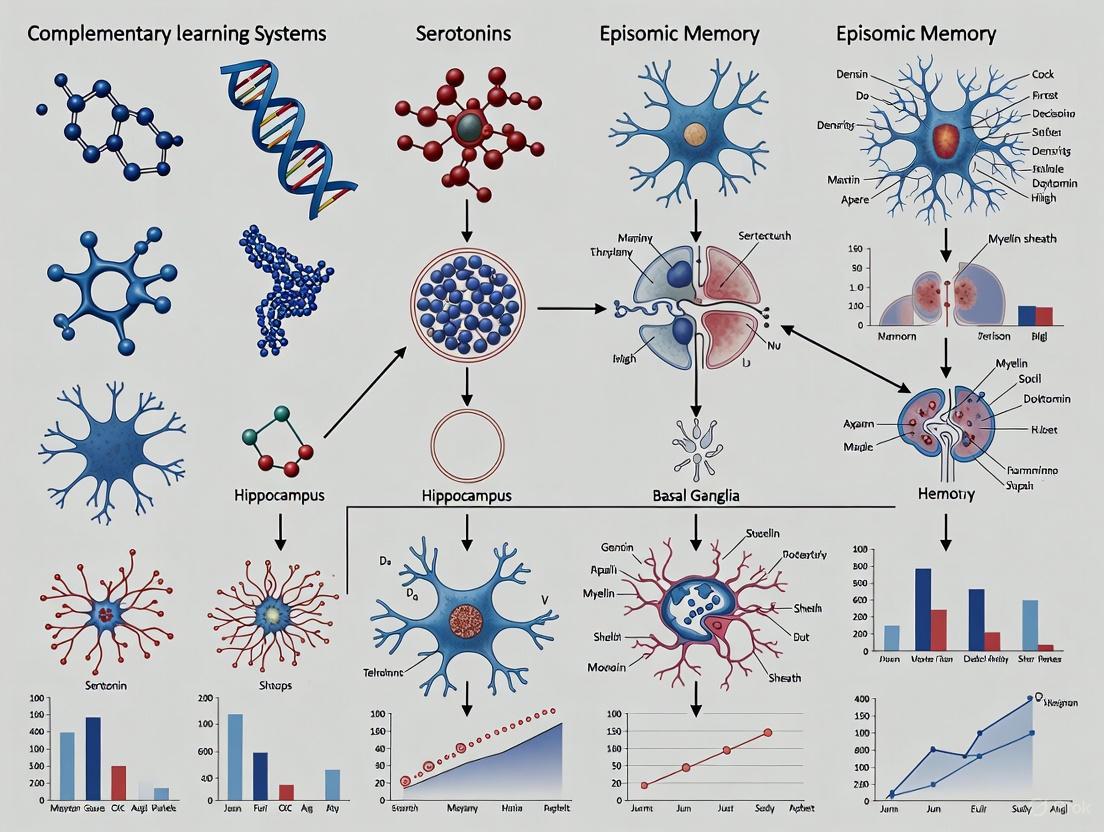
This article synthesizes current research on Complementary Learning Systems (CLS) theory and its interplay with episodic memory, addressing a critical gap between natural and artificial intelligence.
Complementary Learning Systems and Episodic Memory: A Neural Framework for Generalization in Intelligence and Clinical Translation
Abstract
This article synthesizes current research on Complementary Learning Systems (CLS) theory and its interplay with episodic memory, addressing a critical gap between natural and artificial intelligence. We explore the foundational neuroscience, highlighting how the rapid, specific learning of the hippocampal system complements the slow, structured learning of the neocortex to support robust generalization. For an audience of researchers and drug development professionals, we detail methodological applications in machine learning and clinical models, troubleshoot challenges like overfitting and system rigidity, and validate these concepts through comparative analysis of human and computational intelligence. The review concludes with forward-looking implications for leveraging these brain-inspired principles to overcome data inefficiency in AI and develop novel therapeutic strategies for memory disorders.
The Brain's Blueprint: Deconstructing the Complementary Learning Systems Theory and Episodic Memory Architecture
The brain's ability to simultaneously memorize specific experiences while extracting generalizable knowledge represents a fundamental tension in cognitive neuroscience. Traditional memory theories have struggled to explain why some memories undergo systems consolidation from hippocampal to neocortical substrates while others remain permanently hippocampal-dependent [1]. This article introduces a transformative framework—Generalization-Optimized Complementary Learning Systems (Go-CLS)—which posits that memory transfer occurs selectively when it enhances generalization capabilities, thereby resolving the critical memorization-generalization trade-off [1].
This paradigm shift reconceptualizes systems consolidation as an optimization process rather than a mandatory biological pathway. By formalizing this principle through mathematical neural network theory, we can establish quantitative criteria for when memory consolidation benefits adaptive behavior and when it potentially harms generalization through overfitting to noisy experiences [1]. This framework provides new insights for researchers investigating cognitive disorders, memory impairments, and therapeutic interventions targeting hippocampal-neocortical interactions.
Theoretical Foundations: From Standard Theory to Go-CLS
Evolution of Complementary Learning Systems Theory
The standard theory of systems consolidation posits that memories initially require the hippocampus before completely transferring to the neocortex for long-term storage [1]. This perspective is embodied in the complementary learning systems (CLS) hypothesis, which proposes that coupling fast (hippocampal) and slow (neocortical) learning systems enables effective integration of new information with existing knowledge [1]. However, this framework cannot explain why some memories remain forever hippocampal-dependent, as demonstrated in numerous experiments [1].
Recent theoretical advances, including multiple trace theory and trace transformation theory, suggest consolidation depends on memory content but lack quantitative criteria for predicting what content will consolidate and why this benefits behavior [1]. The Go-CLS framework addresses this limitation by introducing a mathematical principle: memories consolidate only when doing so improves generalization performance in unpredictable environments [1].
Formalizing the Teacher-Student-Notebook Framework
The Go-CLS framework implements a mathematically rigorous model comprising three core components [1]:
- Teacher: Represents the environment, implemented as a linear feedforward network that generates input-output pairs through fixed weights with additive output noise
- Student: Represents the neocortex, implemented as a size-matched linear feedforward network with learnable weights
- Notebook: Represents the hippocampus, implemented as a sparse Hopfield network that stores experiences via pattern-separated codes
This formalization enables precise quantification of memorization versus generalization performance under different environmental conditions and consolidation regimes.
Figure 1: Go-CLS Architecture showing information flow between environment (teacher), neocortex (student), and hippocampus (notebook) during encoding, consolidation, and recall phases.
Key Properties of Episodic Memory Systems
Episodic memory in biological systems combines five distinctive properties that enable adaptive behavior [2]. When operationalized for artificial systems, these properties provide a framework for evaluating memory architectures:
Table 1: Essential Properties of Episodic Memory Systems
| Property | Biological Basis | Computational Function | Status in Standard CLS |
|---|---|---|---|
| Long-term Storage | Lifetime knowledge retention | Maintain performance across interactions | Partially implemented |
| Explicit Reasoning | Reflective memory access | Answer queries about stored information | Limited |
| Single-shot Learning | Rapid encoding of unique events | Capture information from single exposures | Well implemented |
| Instance-specific Memories | Distinct temporal contexts | Reason about specific past actions | Well implemented |
| Contextual Relations | Binding of contextual details | Retrieve memories using contextual cues | Limited |
Computational Mechanisms and Experimental Validation
Quantifying the Memorization-Generalization Trade-Off
The Go-CLS framework formalizes the memorization-generalization trade-off through mathematical analysis of neural network dynamics. Memorization performance is measured as the squared difference between teacher outputs and student predictions averaged across past experiences, while generalization performance measures this difference across possible future experiences [1]. Simulations reveal that unlimited notebook reactivations (standard consolidation) optimize student memory recall but can severely degrade generalization when teachers produce noisy outputs [1].
In these experiments, the signal-to-noise ratio (SNR) of the teacher network's output controls environmental predictability. The critical finding is that standard systems consolidation continually improves both memorization and generalization only in perfectly predictable (noiseless) environments. In less predictable environments, excessive consolidation causes the neocortex to overfit to unpredictable environmental elements, thereby harming generalization [1].
Table 2: Impact of Environmental Predictability on Consolidation Outcomes
| Teacher SNR | Memorization Performance | Generalization Performance | Optimal Consolidation |
|---|---|---|---|
| Noiseless (High SNR) | Improves monotonically | Improves monotonically | Unlimited reactivations |
| Moderate Noise | Improves to asymptote | Improves then deteriorates | Limited reactivations |
| High Noise | Improves to asymptote | Rapid deterioration | Minimal reactivations |
Experimental Protocol: Teacher-Student-Notebook Simulation
To validate the Go-CLS framework, researchers can implement the following experimental protocol [1]:
Model Components:
- Teacher Network: Implement as a linear feedforward network with fixed weights Wteacher, generating outputs y = Wteacher * x + ε, where ε represents Gaussian noise with variance controlled by SNR parameter
- Student Network: Implement as a linear feedforward network with learnable weights W_student, initialized randomly
- Notebook Network: Implement as a sparse Hopfield network with Hebbian plasticity for encoding and pattern completion for recall
Training Procedure:
- Experience Generation: Teacher generates input-output pairs {(xi, yi)} from training distribution
- Hippocampal Encoding: Notebook stores experiences by associating student activity patterns with random sparse notebook activity patterns using Hebbian plasticity
- Systems Consolidation: For each epoch:
- Notebook reactivates stored experiences through pattern completion
- Student updates internal weights using gradient descent learning based on reactivated experiences
- Evaluate memorization (past experiences) and generalization (novel experiences) performance
- Termination: Continue until performance metrics stabilize or maximum epochs reached
Key Parameters:
- Teacher SNR: {0.1, 1.0, 10.0} to vary environmental predictability
- Number of notebook reactivations: {10, 100, 1000, unlimited} to model consolidation intensity
- Student learning rate: Typically 0.01 with Adam optimizer
- Notebook sparsity: 10% activity for pattern separation
Figure 2: Experimental workflow for validating Go-CLS principles through computational simulation of teacher-student-notebook framework.
The Scientist's Toolkit: Research Reagent Solutions
Table 3: Essential Computational Tools for CLS Research
| Research Tool | Function | Application in CLS | Implementation Example |
|---|---|---|---|
| Linear Feedforward Networks | Models neocortical learning | Student network implementation | PyTorch/TensorFlow with linear layers |
| Sparse Hopfield Networks | Models hippocampal memory | Notebook network implementation | Binary neurons with Hebbian learning rules |
| Gradient Descent Optimization | Adjusts synaptic weights | Student weight updates | Adam optimizer with learning rate 0.01 |
| Signal-to-Noise Ratio Controls | Manipulates environmental predictability | Teacher network output variance | Additive Gaussian noise with controlled variance |
| Pattern Completion Algorithms | Recalls stored memories | Notebook reactivation mechanism | Energy minimization through recurrent dynamics |
Implications for Memory Research and Therapeutic Development
Reconceptualizing Systems Consolidation
The Go-CLS framework fundamentally reshapes our understanding of systems consolidation by introducing a normative principle: memory transfer occurs selectively when it improves generalization [1]. This explains why only a subset of hippocampal memories consolidate to neocortical substrates—consolidation is regulated based on its utility for future behavior rather than occurring as an automatic process [1].
This theoretical advancement accounts for numerous experimental observations that have challenged standard consolidation theory, including the permanent hippocampal dependence of certain memories [1]. From a therapeutic perspective, this suggests memory disorders might involve dysregulation of consolidation regulation mechanisms rather than consolidation processes themselves.
Applications in Artificial Intelligence and Neurological Disorders
The Go-CLS framework has significant implications for both artificial intelligence development and therapeutic interventions for memory disorders:
AI and LLM Applications: Recent research on episodic memory for large language model (LLM) agents highlights how biological memory principles can enhance artificial intelligence [2]. Current approaches—including in-context memory, external memory, and parametric memory methods—each capture different properties of episodic memory but fall short of the integrated capabilities observed in biological systems [2]. The Go-CLS framework provides a unified foundation for developing more sophisticated memory architectures in artificial agents.
Therapeutic Implications:
- Memory Disorders: Go-CLS suggests novel approaches to conditions like Alzheimer's disease by focusing on generalization capabilities rather than mere memorization performance
- Cognitive Rehabilitation: Therapeutic strategies could optimize consolidation regulation mechanisms rather than attempting to enhance all memory transfer
- Drug Development: Targets might include neuromodulatory systems that regulate the balance between hippocampal and neocortical contributions to memory
The Generalization-Optimized Complementary Learning Systems framework represents a significant advance in understanding how brains resolve the fundamental memorization-generalization trade-off. By establishing that memory consolidation occurs selectively when it enhances generalization, this theory provides a unified explanation for diverse experimental observations and offers new directions for both artificial intelligence development and therapeutic interventions for memory disorders.
Future research should focus on identifying the biological mechanisms that implement consolidation regulation, developing quantitative models to predict consolidation outcomes for specific memory types, and translating these principles to enhance artificial intelligence systems. The Go-CLS framework ultimately positions generalization optimization as the governing principle of memory organization, providing a robust foundation for future discoveries across neuroscience, psychology, and artificial intelligence.
The complementary learning systems (CLS) framework posits that memory relies on two distinct yet interacting neural circuits: a fast-learning hippocampal system for rapid encoding of episodic memories and a slow-learning neocortical system for the gradual integration of knowledge [3]. This whitepaper examines the neural mechanisms underlying two distinct learning processes—hippocampal fast mapping (FM) and neocortical slow integration—that operationalize this framework. Recent research reveals that FM can produce rapid, neocortex-like integration of new information, challenging the traditional view of a strictly slow cortical consolidation process [4]. We synthesize neuroanatomical, behavioral, and computational evidence detailing how these systems interact, presenting quantitative data comparisons, experimental protocols, and key research reagents to guide future investigation and therapeutic development.
The Complementary Learning Systems (CLS) theory provides a foundational model for understanding memory organization in the brain. It proposes a division of labor between the hippocampus and neocortex to resolve the stability-plasticity dilemma [3] [1].
- Hippocampal System: Specialized for rapid, one-shot learning of specific episodes and events. Its sparse, pattern-separated coding scheme minimizes interference between similar memories, enabling high-fidelity recording of unique experiences [3] [1].
- Neocortical System: Specialized for slow, incremental learning that extracts the statistical structure of the environment across many experiences. This gradual process builds structured knowledge representations (semantic memory) and skills but is susceptible to catastrophic interference when new information conflicts with existing knowledge [3] [1].
According to the standard model of systems consolidation, memories are initially encoded by the hippocampus and subsequently transferred to the neocortex through a slow, sleep-dependent process involving repeated reactivation [3] [1]. However, the discovery of fast mapping (FM) has revealed a potential shortcut to this protracted timeline, facilitating near-immediate integration of new information into cortical networks under specific conditions [4].
Hippocampal Fast Mapping: Mechanisms and Neural Substrates
Fast mapping is an inferential learning procedure wherein a novel word's meaning is deduced by contrasting it with a known item within a shared context. This process mimics the naturalistic word-learning environment of children [4].
Experimental Protocol for Fast Mapping
A typical FM paradigm, as detailed in Coutanche et al. [4], involves the following methodology:
- Participants: Fifty adult participants, native English speakers, with no known learning impairments.
- Stimuli: Sixteen unfamiliar animals (e.g., low-familiarity species) paired with sixteen novel, phonologically-related words (e.g., "torato" derived from "tomato").
- Procedure:
- Participants are presented with an image of a novel animal alongside a familiar animal (e.g., a cricket).
- A perceptual question containing the novel name is posed (e.g., "Are the torato’s antennae pointing up?").
- The learner must retrieve the known item ("cricket") and rule it out to infer that the new word ("torato") refers to the novel animal.
- Control Condition: An Explicit Encoding (EE) procedure, where participants are directly told the name of the novel animal (e.g., "This is a torato").
- Testing: Declarative memory is assessed via recognition tests. Lexical integration is measured by tracking the emergence of lexical competition, where a newly learned word (e.g., "torato") slows down recognition of its existing neighbor ("tomato") in a speeded task.
Neural Signatures of Fast Mapping
FM learning demonstrates a distinct neural and behavioral profile compared to EE, suggesting a different route to integration [4].
Table 1: Behavioral and Neural Profiles of Fast Mapping vs. Explicit Encoding
| Feature | Fast Mapping (FM) | Explicit Encoding (EE) |
|---|---|---|
| Declarative Memory Strength | Strong | Strong |
| Lexical Competition Emergence | Immediate (within same day) | Delayed (typically after sleep) |
| Semantic Priming Emergence | On the day following training | Not observed on the following day |
| Proposed Primary Substrate | Potential for direct cortical integration | Standard hippocampal-consolidation pathway |
| Critical Learning Factor | Retrieval and ruling-out of a known related concept | Direct associative pairing |
Neocortical Slow Integration: The Standard Consolidation Pathway
In contrast to FM, the standard pathway for integrating new memories into cortical networks is a prolonged process governed by slow-wave oscillations and hippocampal-neocortical dialogue during sleep [5] [6].
The Role of Sleep Oscillations
Slow neocortical oscillations (<1 Hz) during non-REM sleep play a pivotal role in coordinating the transfer of information from the hippocampus to the neocortex [5] [6].
- UP States: Widespread depolarization of neocortical neurons, associated with increased synaptic activity and spiking. This state is highly permissive for synaptic plasticity.
- DOWN States: Widespread hyperpolarization and neural silence. The rhythmic transition between UP and DOWN states is thought to temporally coordinate other sleep-related oscillations [5].
- Sleep Spindles (10-16 Hz): Bursts of oscillatory activity that facilitate information transfer between thalamic and cortical regions.
- Hippocampal Sharp-Wave Ripples: High-frequency bursts in the hippocampus that replay waking experiences. The neocortical slow oscillation effectively packages hippocampal ripples and thalamocortical spindles into its UP states, creating optimal conditions for synaptic modification in the cortex [5] [6].
A Modern Computational View: Generalization-Optimized Consolidation
A recent computational reformulation of the CLS theory, the Generalization-optimized Complementary Learning Systems (Go-CLS) framework, provides a normative rationale for why only a subset of memories undergoes systems consolidation [1]. This theory posits that the brain's goal is not merely accurate memorization but effective generalization to new situations. Unregulated consolidation of all hippocampal memories can cause the neocortex to overfit to noisy or unpredictable details of specific experiences, thereby harming its ability to generalize. Therefore, memories are selectively consolidated only when doing so improves generalization performance, which depends on the predictability and statistical structure of the learned information [1].
Table 2: Key Oscillations in Systems Consolidation
| Oscillation | Frequency Range | Primary Origin | Proposed Function in Consolidation |
|---|---|---|---|
| Slow Oscillation | <1 Hz | Neocortex | Master coordinator; temporally couples hippocampal and thalamocortical events [5] |
| Delta Waves | 1-4 Hz | Thalamocortical | Reflects the DOWN state of the slow oscillation; rhythmic output can pace cortical slow oscillations [5] |
| Sleep Spindles | 10-16 Hz | Thalamus | Facilitates synaptic plasticity in cortical microcircuits; modulated by slow oscillation UP states [5] |
| Sharp-Wave Ripples | 80-200 Hz | Hippocampus | Replays sequences of waking experience; information is read out to cortex during spindle-slow oscillation complexes [5] [6] |
Bridging Systems: Fast Hippocampal-Neocortical Dialogues
The interaction between fast and slow systems is not limited to overnight consolidation. Intracranial EEG studies reveal a dynamic, moment-to-moment dialogue during memory retrieval itself [7].
Neural Mechanisms During Memory Search
When individuals search for a specific memory within a continuous narrative, retrieval is not a uniform process but is structured around event boundaries [7].
- Slow Neocortical States: High-level cortical regions maintain stable neural activity patterns ("states") that represent an ongoing event. These states remain steady during an event and abruptly shift at its boundary.
- Fast Hippocampal Bridging: At these event boundaries during memory search, the hippocampus exhibits a rapid power decrease, which predicts and facilitates the transition to the next stable neocortical state. Information flows from the hippocampus to the neocortex precisely at these transitions, providing the specific details needed to update the cortical event model [7].
This suggests a sophisticated division of labor: the neocortex provides generalized event knowledge, while the hippocampus contributes specific, non-generalizable details at critical transition points to bridge between cortical states.
The Scientist's Toolkit: Research Reagent Solutions
This section details key methodological components and their functions for investigating FM and slow integration.
Table 3: Essential Research Reagents and Methodologies
| Research Reagent / Method | Function in Experimental Protocol |
|---|---|
| Hermit Words & Novel Neighbors | e.g., "tomato" (hermit) and "torato" (novel neighbor). Used to measure lexical integration via competitive slowing in lexical decision tasks [4]. |
| Unfamiliar Visual Stimuli | Images of unfamiliar animals or objects. Ensures participants learn new associations without leveraging pre-existing semantic knowledge [4]. |
| Intracranial EEG (iEEG) | Records neural oscillations (e.g., slow, spindle, ripple) and information flow with high spatiotemporal resolution in humans, typically in clinical patients [7]. |
| fMRI with Pattern Analysis | Tracks the reinstatement of distributed neural activity patterns in the neocortex and hippocampus during memory encoding and retrieval [7]. |
| Lexical Decision Task (LDT) | A psycholinguistic task where participants classify letter strings as words or non-words. Reaction times to existing words (e.g., "tomato") reveal competition from newly learned neighbors (e.g., "torato") [4]. |
| Computational Modeling (Go-CLS) | Neural network models formalizing the teacher-student-notebook framework to test predictions about when systems consolidation aids or harms generalization [1]. |
Integrated Discussion and Future Directions
The evidence demonstrates that the brain employs multiple strategies for memory formation and integration. Fast mapping offers a behavioral manipulation that can accelerate the cortical integration of new word-like information, potentially by leveraging inferential reasoning and existing cortical schemas during encoding [4]. In contrast, the slow, oscillation-dependent consolidation process remains the standard route for integrating detailed episodic memories and refining cortical knowledge structures over time [5] [6] [1].
The emerging Go-CLS framework resolves a key tension by proposing that the extent of systems consolidation is gated by its utility for generalization, preventing neocortical overfitting [1]. This explains why not all memories fully consolidate and provides a normative principle for understanding the conditions under which FM might promote direct cortical integration—namely, when the inferred information is consistent with the predictive structure of the environment.
For drug development and clinical research, these insights highlight potential avenues for cognitive enhancement and rehabilitation. Therapeutic strategies could aim to:
- Modulate sleep oscillations to enhance slow integration.
- Develop behavioral paradigms based on FM principles to facilitate rehabilitation in populations with hippocampal impairment or general learning difficulties.
- Use computational models like Go-CLS to predict which memory types and learning schedules will yield the most robust and generalizable long-term knowledge. Future work should focus on elucidating the precise synaptic mechanisms of FM and developing non-invasive biomarkers to track the neural trajectories of memories formed through these distinct pathways.
The Role of the Medial Temporal Lobe and Hippocampal Subfields in Episodic Encoding
This technical review examines the specialized functional organization of the medial temporal lobe (MTL) and hippocampal subfields in episodic memory encoding. Converging evidence from neuroimaging, lesion studies, and electrophysiological recordings indicates that distinct MTL regions and hippocampal subfields perform complementary computations that transform sensory inputs into enduring episodic memories. The hippocampus proper serves as a convergence zone where information about objects ("what") and their spatial-temporal context ("where") integrate to form coherent event representations, supported by distinct processing streams through the parahippocampal region. Furthermore, hippocampal subfields (CA1, CA3, dentate gyrus, and subiculum) exhibit specialized roles in pattern separation, pattern completion, and memory persistence. This review synthesizes recent findings on the neural mechanisms underlying these processes, with particular emphasis on dynamic functional connectivity, population coding in neural subspaces, and the vulnerability of specific subfields to pathological protein aggregation in neurodegenerative diseases. The clinical implications for diagnostic biomarkers and therapeutic development are discussed throughout.
Episodic memory enables individuals to encode, store, and retrieve personally experienced events within their specific spatiotemporal contexts [8]. This cognitive capacity relies on a sophisticated neural architecture centered in the medial temporal lobe (MTL), which includes the hippocampus and surrounding parahippocampal cortices. The hippocampus itself is not a uniform structure but consists of multiple interconnected subfields—the cornu Ammonis (CA1, CA2, CA3, CA4), dentate gyrus (DG), and subicular complex—each with distinct connectivity profiles, physiological characteristics, and functional contributions to memory formation [9] [10].
A fundamental organizational principle of the MTL memory system involves parallel processing streams that converge within the hippocampus [11]. The "what" stream, primarily involving the perirhinal cortex, processes information about objects and their features, while the "where" stream, relying on the parahippocampal cortex, processes spatial and contextual information [11] [12]. These distinct information types converge within the hippocampus to form unified representations of events in their spatiotemporal context [11]. This review will examine the specific contributions of MTL structures and hippocampal subfields to episodic encoding, with emphasis on recent advances in understanding their functional specialization, coordinated dynamics, and relevance to neurodegenerative conditions.
Functional Organization of the Medial Temporal Lobe
Parallel Cortical Input Streams
The medial temporal lobe receives highly processed information from unimodal and polymodal association cortices through two major parallel pathways that maintain relative segregation until reaching the hippocampus:
- The "What" Stream: The perirhinal cortex (PRC) receives predominant input from ventral visual stream areas processing object features and identity, creating a convergence zone for object information [11] [12]. This stream is critical for processing item-specific information and supports familiarity-based recognition memory [13].
- The "Where" Stream: The parahippocampal cortex (PHC) receives predominant input from dorsal visual stream areas and posterior parietal cortices processing spatial information and context, creating a convergence zone for spatial and contextual information [11] [12]. This stream is critical for processing environmental context and spatial relationships.
These distinct cortical inputs project to different portions of the entorhinal cortex (lateral vs. medial divisions, respectively), which serves as the major interface between the hippocampus and neocortex [11]. The entorhinal cortex in turn provides the predominant cortical input to the hippocampal formation through the perforant path.
Information Convergence in the Hippocampus
The hippocampus serves as the final convergence point where information about objects ("what") and their spatial-temporal context ("where") are bound into unified event representations [11]. This convergent architecture enables the creation of distinct, context-rich memory traces that support the retrieval of specific episodes within their original context. Hippocampal lesions disrupt this binding process, impairing the ability to remember associations between items and their contexts while sometimes sparing memory for the items themselves [11] [12].
Table: Functional Specialization of Medial Temporal Lobe Regions in Episodic Memory
| Region | Primary Function | Input Sources | Contribution to Memory |
|---|---|---|---|
| Perirhinal Cortex | Object processing | Ventral visual stream | Item memory, familiarity judgments |
| Parahippocampal Cortex | Spatial/contextual processing | Dorsal visual stream, parietal cortex | Contextual association, spatial memory |
| Entorhinal Cortex | Gateway to hippocampus | Perirhinal, parahippocampal cortices | Information integration, grid cell representations |
| Hippocampus Proper | Memory binding | Entorhinal cortex (direct/indirect) | Associative memory, spatiotemporal context |
Hippocampal Subfield Specialization in Encoding Processes
Distinct Roles in Memory Processing
High-resolution neuroimaging and lesion studies have revealed specialized functions for hippocampal subfields in episodic encoding:
Dentate Gyrus (DG) and CA3: These input regions are critical for pattern separation—the process of transforming similar input patterns into more distinct neural representations, thereby reducing interference between overlapping memories [9] [14]. The sparse coding scheme in DG granule cells and powerful associative networks in CA3 support this computational function [14]. Recent research using virtual environments in mice demonstrates that DG interneurons show unique response profiles to novelty compared to CA1-3 interneurons, with somatostatin-expressing interneurons in the DG increasing activity during rest and in novel environments [14].
CA1: This output region is crucial for generating persistent activity that maintains information across delays, supporting both working memory and the encoding of information into long-term memory [15]. CA1 volume shows significant correlations with both visual and verbal episodic memory performance [9]. In Alzheimer's disease, CA1 exhibits selective vulnerability to neurofibrillary tangle pathology and shows significant atrophy [10].
Subiculum: As the major output structure of the hippocampus, the subiculum maintains information and may play a role in memory retrieval [9]. Subiculum volume strongly correlates with delayed recall performance on both visual and verbal memory tasks [9]. Post-mortem studies indicate that subiculum atrophy, along with CA1, shows the strongest association with cognitive impairment in Alzheimer's disease [10].
Table: Hippocampal Subfield Contributions to Episodic Memory
| Subfield | Primary Role | Encoding Function | Pathological Vulnerability |
|---|---|---|---|
| Dentate Gyrus (DG) | Pattern separation | Creates distinct representations from similar inputs | Affected in Parkinson's disease with dementia [10] |
| CA3 | Pattern completion, rapid encoding | Associative memory, recurrent networks | Early amyloid-β deposition in AD [10] |
| CA1 | Persistent activity, output generation | Maintains information across delays | Selective vulnerability to neurofibrillary tangles in AD [9] [10] |
| Subiculum | Hippocampal output integration | Memory retrieval, information maintenance | Atrophy strongly correlates with cognitive impairment in AD [9] [10] |
Theta Rhythm Coordination of Encoding
The hippocampal theta rhythm (4-8 Hz) provides a temporal framework that separates encoding and retrieval processes within each cycle [16]. According to the theta phase separation model, encoding occurs when septal GABAergic inhibition is at a minimum, allowing entorhinal inputs to strongly influence CA3 pyramidal cells [16]. In contrast, retrieval predominates when inhibition is maximal, allowing internal recall dynamics to drive CA3 activity [16]. This phasic coordination prevents interference between external inputs (encoding) and internal recall (retrieval), enabling the hippocampus to simultaneously process current experience while accessing stored memories.
Experimental Approaches and Methodologies
Behavioral Paradigms for Assessing Episodic Memory
Several sophisticated behavioral paradigms have been developed to isolate specific components of episodic memory in both humans and animal models:
Receiver Operating Characteristic (ROC) Analysis: This approach has been successfully adapted for rodents to dissociate recollection and familiarity processes [11]. In odor recognition tasks, rats sample a series of odors during a study phase, then after a delay must distinguish "old" from "new" odors across systematically manipulated bias conditions [11]. The resulting ROC curves exhibit both asymmetrical (recollection) and curvilinear (familiarity) components, strikingly similar to human recognition memory patterns [11].
Associative Recognition Paradigms: To specifically engage recollection processes, researchers developed a version of associative recognition for rats using odor-medium pairs [11]. Animals must distinguish between original pairings and rearranged pairings of the same elements, a task that depends heavily on hippocampal function and produces ROC functions dominated by the recollection component [11].
Naturalistic Memory Encoding Tasks: Recent studies have used movie viewing with subsequent narrative recall to examine memory encoding under more ecological conditions [17]. Participants view dramatic films while fMRI is acquired, then subsequently provide detailed verbal recalls of the narrative. This approach allows researchers to quantify event novelty, memorability, and neural responses during complex, dynamic experiences [17].
Neuroimaging and Neurophysiological Techniques
High-Resolution fMRI: Using high-field scanners (3T or higher) with specialized sequences enables visualization of hippocampal subfield activity during memory tasks [9] [15]. For example, in delayed match-to-sample tasks with novel scenes, sustained activation in DG/CA3 and CA1 during the delay period predicts subsequent memory strength, suggesting a role for persistent activity in these regions in supporting both working memory and long-term encoding [15].
Targeted Dimensionality Reduction (TDR): This analytical approach extends principal component analysis by identifying low-dimensional neural subspaces associated with specific cognitive processes [17]. Applied to fMRI data during movie viewing, TDR reveals partially overlapping hippocampal subspaces for encoding novel social information (character co-occurrences and relationship valence) that align with memorability subspaces, suggesting coordinated computation of novelty and memory formation [17].
Two-Photon Calcium Imaging: In rodent models, this technique allows recording of activity from genetically identified neuronal populations during behavior [14]. For example, imaging parvalbumin- and somatostatin-expressing interneurons in different hippocampal subfields as mice explore novel and familiar virtual environments has revealed subfield-specific interneuron dynamics in response to novelty [14].
Quantitative Findings in Health and Disease
Structural Correlates of Memory Performance
Volumetric analyses of hippocampal subfields reveal distinct relationships with memory performance:
- In cognitively normal older adults (mean age 78.9 years), total hippocampal volume significantly correlates with both visual (Complex Figure Delayed Recall: β=0.31, p=0.001) and verbal (FCSRT Delayed Recall: β=0.27, p=0.007) episodic memory performance [9].
- Subiculum volume shows significant associations with both visual (β=0.27, p=0.002) and verbal (β=0.24, p=0.010) delayed recall [9].
- CA1 volume is similarly associated with visual (β=0.26, p<0.002) and verbal (β=0.20, p=0.025) memory performance [9].
These findings confirm the importance of output regions (CA1 and subiculum) in successful episodic memory retrieval and suggest that subfield-specific atrophy may serve as an early marker of cognitive decline.
Neuropathological Burden and Subfield Vulnerability
Post-mortem MRI and neuropathological analysis reveal differential vulnerability of hippocampal subfields to proteinopathies:
- In Alzheimer's disease, significant atrophy is observed in CA1 (27% volume reduction compared to controls), subiculum, and entorhinal cortex, with strong associations between p-tau pathology and volume loss in these regions [10].
- Phospho-tau pathology has the strongest effect on subfield atrophy, most pronounced in the subiculum (β=-0.570, p<0.001), but explains only 22-44% of volumetric variance, suggesting additional mechanisms contribute to atrophy [10].
- In Parkinson's disease, p-tau pathology rather than α-synuclein correlates with lower total hippocampal volume (r=-0.68, p=0.045), particularly in Parkinson's disease with dementia (r=-0.99, p=0.013) [10].
- Across diseases, volume loss in the subiculum (r=-0.68, p=0.001) and entorhinal cortex (r=-0.73, p=0.004) shows the strongest associations with cognitive impairment, highlighting their potential value as monitoring biomarkers in therapeutic trials [10].
Table: Neuropathological Correlates of Hippocampal Subfield Atrophy in Neurodegenerative Disease
| Subfield | Primary Pathology | Volume Reduction | Correlation with Cognition |
|---|---|---|---|
| Entorhinal Cortex | Early tau deposition (Braak I-II) | ~25% in AD | r = -0.73 with cognitive impairment [10] |
| CA1 | Neurofibrillary tangles, amyloid-β | ~27% in AD | β = 0.26 with visual memory [9] |
| Subiculum | Neurofibrillary tangles | Significant in AD | r = -0.68 with cognitive impairment [10] |
| CA2-3/DG | α-synuclein (Lewy bodies) | Prominent in PD/PDD | Associated with dementia in PD [10] |
The Scientist's Toolkit: Research Reagent Solutions
Table: Essential Research Reagents and Methodologies for Investigating Hippocampal Memory Function
| Reagent/Method | Application | Function/Utility |
|---|---|---|
| GCaMP6f/mRuby2 (AAV1.CAG.FLEX.mRuby2.GSG.P2A.GCaMP6f.WPRE.pA) | Two-photon calcium imaging of specific interneuron populations [14] | Simultaneous expression of red fluorescent structural marker and green calcium indicator for activity recording |
| SOM-Cre/PV-Cre transgenic mice | Cell-type-specific targeting of somatostatin or parvalbumin interneurons [14] | Enables selective recording and manipulation of specific GABAergic interneuron subtypes |
| DREADDs (Designer Receptors Exclusively Activated by Designer Drugs) | Chemogenetic silencing of specific neuronal populations [14] | Allows temporally precise inhibition of defined cell types during behavior |
| FreeSurfer hippocampal subfield segmentation | Automated volumetric analysis of hippocampal subfields from structural MRI [9] [10] | Provides standardized measurement of CA1, CA2-3, CA4-DG, subiculum, and other subfield volumes |
| Receiver Operating Characteristic (ROC) analysis | Dissociation of recollection and familiarity processes in rodents and humans [11] | Quantifies contributions of different memory processes to recognition performance |
| Targeted Dimensionality Reduction (TDR) | Identification of neural subspaces associated with specific cognitive processes [17] | Extracts low-dimensional neural representations related to novelty, memorability, and retrieval |
| Naturalistic movie stimuli with narrative recall | Ecological assessment of episodic memory formation [17] | Engages multiple memory processes concurrently under dynamic, socially relevant conditions |
The medial temporal lobe and hippocampal subfields constitute a highly specialized system for episodic memory encoding, characterized by both parallel processing of different information types and convergent integration within the hippocampus. The distinct functional contributions of hippocampal subfields—with DG/CA3 supporting pattern separation and rapid encoding, CA1 generating persistent activity, and the subiculum facilitating output integration—provide a neural basis for the formation and retrieval of detailed episodic memories.
Future research should further clarify how dynamic functional connectivity between hippocampal subfields and neocortical regions supports the transformation of experiences into enduring memories across development and aging. Particular attention should be paid to how age and sex shape hippocampal connectivity and subregional contributions to memory, as these factors significantly modulate hippocampus-neocortex connectivity and associated morphological structure [8]. Additionally, investigating how the alignment of neural subspaces for novelty encoding and memorability supports coordinated memory processes represents a promising direction for understanding population-level computation in the hippocampus [17].
The differential vulnerability of hippocampal subfields to pathological processes in neurodegenerative diseases underscores the potential clinical utility of subfield-specific imaging biomarkers. As research progresses, targeted interventions that preserve the specialized functions of hippocampal subfields may emerge as promising therapeutic strategies for memory disorders.
Latent learning, a concept with roots in early cognitive science, describes the ability to acquire information that is not immediately relevant to a current task but can be leveraged flexibly for future tasks. This whitepaper explores the critical gap in latent learning capabilities between artificial intelligence systems and natural intelligence, drawing on contemporary research that formalizes this learning paradigm and proposes episodic memory mechanisms as a solution. We present quantitative benchmarks demonstrating specific failures in current machine learning systems and show how oracle retrieval systems can overcome these limitations by complementing parametric learning. The findings have significant implications for developing more data-efficient AI systems capable of human-like generalization.
In both natural and artificial intelligence, a fundamental challenge exists in building systems that can generalize beyond their immediate training objectives. Latent learning—the acquisition of knowledge not explicitly required for a current task but potentially valuable for future tasks—represents a key differentiator between human and machine intelligence [18]. While humans routinely learn latently, most artificial intelligence systems fail to acquire or flexibly reuse information not directly relevant to their training loss functions [19].
This paper examines the computational principles underlying latent learning and its relationship to complementary learning systems theory, which proposes that episodic memory complements parametric learning to enable flexible knowledge reuse [18]. We provide a technical analysis of recent empirical work formalizing latent learning benchmarks and demonstrate how retrieval-based architectures can bridge this generalization gap. The insights have broad applicability across machine learning domains, from language modeling to robotic navigation.
Theoretical Foundations and Cognitive Basis
Historical Perspectives and Modern Interpretations
The concept of latent learning originated in behavioral psychology with Blodgett (1929) and Tolman (1948), who observed that rats exploring mazes without reinforcement latently learned spatial information that they could later exploit when motivated by hunger or thirst [18]. This early work demonstrated that learning could occur without immediate behavioral reinforcement or task relevance—a fundamental challenge for reinforcement learning paradigms that tie knowledge acquisition directly to reward signals.
Modern computational perspectives reframe latent learning as a form of prospective learning where systems acquire information based on its potential future utility rather than just its immediate application [18]. This prospective orientation is particularly valuable in non-stationary environments where task distributions may change over time.
Complementary Learning Systems Theory
The Complementary Learning Systems (CLS) theory provides a neurobiological framework for understanding how latent learning might be implemented in natural intelligence [18]. CLS posits that the brain maintains two somewhat separate learning systems:
- A slow-learning, parametric system in the neocortex that gradually extracts statistical regularities across experiences
- A fast-learning, episodic system in the hippocampus that rapidly encodes specific experiences
According to recent interpretations, this complementarity enables not just knowledge consolidation but also more flexible use of past experiences compared to cortical learning, which may be more tightly coupled to the original learning context [18]. The hippocampal system appears crucial for organizing knowledge into structures that support flexible recombination and application.
Empirical Benchmarks and Quantitative Assessment
Recent research has established rigorous benchmarks to evaluate latent learning capabilities in artificial systems [19]. These benchmarks systematically test the ability to acquire and reuse knowledge that was present during training but not necessary for the training objectives.
Benchmark Tasks and Performance Metrics
Table 1: Latent Learning Benchmarks and Key Performance Indicators
| Benchmark | Task Description | Standard Parametric Performance | Retrieval-Augmented Performance | Performance Gap |
|---|---|---|---|---|
| Codebooks | Using latent codebook indices not explicitly trained for encoding | Low (near chance) | High (significantly above chance) | Large |
| Simple Reversals | Generalizing from "X is Y's son" to "Y is X's parent" | Low without explicit context | High with retrieved examples | Substantial |
| Semantic Structure | Reasoning over naturalistic text with reduced associative cues | Moderate (with strong cues) to Low (without cues) | High across cue conditions | Context-dependent |
| Latent Gridworld Navigation | Navigating to objects encountered but not used as training goals | Below ceiling performance | Substantially improved but below ceiling | Moderate |
Experimental Protocols and Methodologies
Codebooks Benchmark Protocol
The codebooks benchmark evaluates whether models can leverage latent information about symbol mappings that were available but not required during training [19].
Training Phase:
- Models receive codebook definitions (symbol-to-symbol mappings)
- Training examples only utilize a subset of possible mappings
- Models learn to encode sequences using trained mappings
Testing Phase:
- Models must encode sequences using latent mappings (never explicitly used in training)
- Baseline condition: No additional context
- Retrieval condition: Relevant codebook definitions provided in context
Evaluation Metric:
- Accuracy on sequence encoding using latent mappings
- Comparison between baseline and retrieval-augmented conditions
Simple Reversals Protocol
This benchmark tests the "reversal curse" where models fail to generalize relationships in reverse direction [18] [19].
Training Phase:
- Models trained on directional relationships (e.g., "Plato taught Aristotle")
- No explicit training on reverse relationships
Testing Phase:
- Models queried on reverse relationships (e.g., "Who taught Aristotle?")
- Baseline: No contextual support
- Retrieval: Original relationship provided in context
Evaluation Metric:
- Accuracy on reverse relationship queries
- Comparison between conditions
Latent Gridworld Navigation Protocol
Inspired by rodent latent learning studies, this benchmark evaluates navigation to previously encountered but never targeted objects [19].
Training Phase:
- Reinforcement learning or behavioral cloning agents navigate to specific goal objects
- Agents frequently pass by other objects that are never designated as goals
- No reward or supervision signals for latent objects
Testing Phase:
- Agents tasked with navigating to previously encountered but never targeted objects
- Efficiency measured by path length and success rate
Evaluation Metric:
- Success rate in reaching latent goals
- Path efficiency compared to optimal routes
Computational Architecture and Signaling Pathways
The integration of episodic memory with parametric learning systems follows specific computational pathways that enable latent learning capabilities.
Complementary Learning System Architecture
Figure 1: Complementary Learning System Architecture enabling latent learning through interaction between episodic and parametric memory systems
Retrieval-Augmented Latent Learning Pathway
The signaling pathway for retrieval-augmented latent learning involves specific computational transformations that enable flexible reuse of past experiences.
Figure 2: Retrieval-augmented pathway for latent learning showing how episodic memories are retrieved and integrated to enable flexible task performance
Essential Research Reagents and Computational Tools
Table 2: Research Reagent Solutions for Latent Learning Experiments
| Research Reagent / Tool | Function | Implementation Example |
|---|---|---|
| Oracle Retrieval System | Provides ideal relevant past experiences during training and testing | Prepend relevant episodes/documents to model context without gradient propagation [19] |
| Transformer Architecture | Base parametric learning system | Standard decoder-only or encoder-decoder transformers with attention mechanisms [18] |
| Episodic Memory Buffer | Stores specific learning experiences for later retrieval | FIFO buffer, vector database, or hippocampal-inspired indexing system [18] |
| In-Context Learning Sequences | Trains ability to use information from context | Training examples that require learning from demonstrations within the same context [19] |
| Latent Learning Benchmarks | Evaluates latent learning capabilities | Codebooks, simple reversals, semantic structure, and gridworld navigation tasks [19] |
| IMPALA Agent | Reinforcement learning baseline for navigation tasks | Distributed actor-clear architecture for scalable RL [19] |
Critical Findings and Technical Implications
Key Empirical Results
Across multiple benchmarks, several consistent patterns emerge regarding latent learning capabilities:
Systematic Failures in Standard Parametric Models: Baseline transformer models exhibit high performance on standard generalization tasks but consistently fail on latent learning tests, demonstrating an inability to leverage information that was present but not required during training [19].
Retrieval Bridges the Latent Learning Gap: Models equipped with oracle retrieval mechanisms show substantially improved performance on latent learning tasks, achieving above-chance performance where baseline models fail completely [19].
Importance of In-Context Learning Capability: The effectiveness of retrieval mechanisms depends critically on the model's ability to learn from in-context examples. Without within-example in-context learning during training, retrieval provides limited benefits for latent learning [18] [19].
Navigation Task Complexity: In gridworld navigation tasks, retrieval substantially improves performance on latent goals, though absolute performance remains below ceiling, indicating the complexity of multi-step reasoning and action planning even with memory support [19].
Theoretical Implications for AI Development
The empirical findings have several important implications for artificial intelligence development:
Fundamental Limitation of Parametric Learning: Pure parametric learning appears fundamentally limited in its ability to encode and flexibly reuse information not directly relevant to training tasks, suggesting inherent constraints in this learning paradigm [18].
Complementary Benefits of Episodic Memory: Episodic memory provides a crucial complement to parametric learning by reinstating relevant experiences into context, enabling forms of generalization inaccessible to pure parametric learners [18].
Role of Associative Learning: The effectiveness of both parametric and retrieval-based approaches depends on the strength of associative cues in the training data, suggesting that data diversity and augmentation remain important even in retrieval-augmented systems [19].
Latent learning represents a critical capability distinguishing natural and artificial intelligence. The research reviewed demonstrates that current parametric learning systems fail to acquire and flexibly reuse knowledge beyond immediate task demands, but that episodic memory mechanisms can substantially bridge this gap. The complementary learning systems perspective provides a fruitful framework for developing more capable and data-efficient AI systems.
Important future research directions include developing more scalable and efficient episodic memory systems, investigating the interaction between data diversity and latent learning in large-scale models, exploring hybrid training-time and test-time approaches, and extending latent learning benchmarks to more complex real-world domains [18] [19]. These advances will move artificial systems closer to the flexible, prospective learning capabilities that characterize natural intelligence.
The functional connectivity between the hippocampus and neocortex forms a core large-scale network essential for episodic memory—the ability to encode, store, and retrieve personally experienced events. Within the complementary learning systems (CLS) framework, this interaction solves a fundamental computational trade-off: the hippocampus supports rapid, single-shot learning of specific episodes using pattern-separated representations, while the neocortex slowly extracts generalized statistical regularities across experiences using overlapping representations [20] [1]. This paper synthesizes recent neuroimaging and computational modeling advances to provide an in-depth technical guide to the organization, measurement, and function of these large-scale networks. We detail the stable yet dynamic functional architectures that enable memory processing, provide explicit methodologies for their investigation, and present a novel computational framework—Generalization-Optimized CLS (Go-CLS)—that reconceptualizes systems consolidation as a process that selectively transfers memories to optimize future behavioral generalization.
Functional Connectivity Profiles of Hippocampal-Neocortical Networks
Stable Large-Scale Networks and Their Functional Properties
Functional connectivity (FC) mapping reveals that the hippocampus participates in large-scale networks that exhibit remarkable stability across rest and task states, yet show specific, behaviorally relevant modulations during distinct memory processes.
Table 1: Large-Scale Hippocampal-Neocortical Networks in Memory Processing
| Network Component | Anatomical Specificity | Functional Role | Connectivity During Encoding | Connectivity During Retrieval |
|---|---|---|---|---|
| Anterior Hippocampus | Anterior longitudinal axis | Affective, conceptual processing | Sparse, task-general increases [21] | Strong with medial prefrontal cortex [21] [22] |
| Posterior Hippocampus | Posterior longitudinal axis | Spatial, detailed perceptual processing | Sparse, task-general increases [21] | Strong with retrosplenial/parahippocampal cortex [21] [22] |
| Medial Prefrontal Cortex | Particularly anterior medial regions | Schema integration, memory consolidation | Not significantly increased | Significantly increased [21] |
| Inferior Parietal Cortex | Angular/supramarginal gyri | Attentional allocation, conscious recollection | Not significantly increased | Significantly increased [21] |
| Parahippocampal Cortex | Posterior medial temporal lobe | Contextual association, scene processing | Not significantly increased | Significantly increased [21] |
| Default Mode Network | Posterior cingulate, medial prefrontal | Self-referential thought, memory integration | Stable baseline connectivity | Increased integration during vivid recall [23] |
Conjunctive analysis of multiple episodic memory tasks (total n=751 participants) demonstrates that whole-brain hippocampal-cortical FC maps are qualitatively similar during resting state, memory encoding, and retrieval [21]. This core architecture is superimposed by state-dependent modulations: during retrieval, the hippocampus significantly increases its connectivity with a recollection network comprising medial prefrontal, inferior parietal, and parahippocampal cortices [21]. Conversely, encoding-related connectivity changes are sparser and more dependent on contextual factors [21].
The hippocampus exhibits distinct functional gradients along its longitudinal axis. The anterior hippocampus shows stronger connectivity with default mode and frontoparietal control networks, while the posterior hippocampus preferentially connects with visual and dorsal attention networks [24]. This gradient organization aligns with the representation-modulation axis of the isocortex, linking hippocampal subregions to distinct cortical systems [24].
Network Dynamics Supporting Memory Quality
The quality of retrieved memories correlates with specific reorganization of hippocampal network properties. During vivid memory retrieval compared to dim retrieval, the right hippocampus specifically exhibits:
- Shorter path length - increased communication efficiency with the network
- Higher centrality measures - becomes a more convergent structure for information integration [23]
These topological changes facilitate efficient information transfer and convergence within the episodic retrieval network. The right hippocampus shows more dramatic reorganization than any other brain region in the 90-region network, confirming its role as a convergence zone or bottleneck during successful memory retrieval [23].
Methodologies for Mapping Hippocampal-Neocortical Networks
Experimental Protocols for Functional Connectivity Analysis
Table 2: Experimental Protocols for Hippocampal-Cortical Connectivity Mapping
| Methodological Aspect | Protocol Specifications | Key Parameters | Analytical Approaches |
|---|---|---|---|
| fMRI Acquisition | Multiband EPI sequence on 3T Siemens Prisma | TR=2s, TE=30ms, 3mm³ voxels, multiband factor=2, 60 axial slices [22] | Preprocessing: motion correction, normalization, temporal filtering |
| Task Paradigms | Episodic encoding and retrieval; resting state; naturalistic viewing | Block or event-related designs; 12+ minute movie clips [21] [22] | General Linear Model (GLM); psychophysiological interactions (PPI) |
| Functional Localizer | Block design with faces, scenes, objects | 9s blocks, 4 images/block, 600ms stimulus duration [22] | ROI definition based on selective activation |
| Connectivity Modeling | Seed-based correlation; task-residualized FC | Hippocampal seeds (anterior/posterior); whole-brain voxel-wise analysis [21] [25] | Fisher Z-transformed correlation matrices; graph theory metrics |
| Structural Connectivity | Diffusion MRI tractography | HCP-style acquisition protocols [22] [26] | Probabilistic tractography; SC-FC bandwidth analysis |
The SC-FC Bandwidth metric quantifies how effectively structural pathways mediate functional connectivity. This multiplex network analysis reveals that only 10% of FC edges have direct structural support, while 44% are mediated by 2-step and 39% by 3-step structural paths [26]. High-bandwidth SC-FC triangles predominantly occur in the somatomotor network, while high-bandwidth SC-FC quads localize to the default mode network [26].
Figure 1: Experimental workflow for mapping hippocampal-cortical networks, integrating multiple neuroimaging modalities and analytical approaches.
Visualization and Analysis Tools for Network Neuroscience
Advanced visualization platforms like Brain Modulyzer enable interactive exploration of hierarchical modular organization in functional brain networks [27]. This tool integrates:
- Multiple coordinated views: Heat maps, node-link diagrams, and anatomical layouts
- Brushing and linking: Interactive selection across visualization modalities
- Dynamic community detection: Identification of network modules at multiple hierarchical levels
- Graph metric computation: Calculation of path length, centrality, and modularity measures
These capabilities allow researchers to relate abstract network topology to anatomical space, crucial for interpreting how hippocampal-cortical networks reorganize during successful memory retrieval [23] [27].
Computational Architecture of Complementary Learning Systems
Neural Network Implementation of CLS Theory
The CLS framework has been formally implemented in neural network models that incorporate known hippocampal anatomy and physiology:
Table 3: Complementary Learning Systems Neural Network Implementation
| Network Component | Biological Correlate | Representational Properties | Learning Rate | Functional Role |
|---|---|---|---|---|
| Trisynaptic Pathway | DG-CA3-CA1 | Sparse, pattern-separated | Very high | Episodic memory encoding; avoids interference [20] |
| Monosynaptic Pathway | EC-CA1 | Dense, overlapping | Moderate | Statistical learning; regularity extraction [20] |
| Neocortical Student | Neocortical association areas | Distributed, overlapping | Slow | Generalization across experiences [1] |
| Hippocampal Notebook | Hippocampal formation | Sparse, pattern-separated | Instantaneous | Episodic memory storage [1] |
The trisynaptic pathway (TSP: EC→DG→CA3→CA1) employs sparse connectivity (25% from EC to DG/CA3; 5% mossy fiber projection) and high inhibition to create pattern-separated representations that minimize interference during rapid episodic encoding [20]. In contrast, the monosynaptic pathway (MSP: ECCA1) has denser connectivity and lower inhibition, permitting overlapping representations that support statistical learning of temporal regularities [20].
Figure 2: Hippocampal circuitry implementing complementary learning systems, showing distinct pathways for episodic memory and statistical learning.
Generalization-Optimized Complementary Learning Systems (Go-CLS)
The recently introduced Go-CLS framework formalizes systems consolidation as a process that optimizes generalization rather than maximizing memory transfer [1]. This framework models:
- Teacher network: Environment that generates input-output pairs with fixed weights and additive noise
- Student network: Neocortical circuits with learnable weights that slowly adapt
- Notebook network: Hippocampal sparse Hopfield network that stores experiences
In this formulation, unlimited hippocampal-neocortical transfer causes the student to overfit to noisy environmental data, impairing generalization. The theory mathematically demonstrates that consolidation should only occur when it improves performance on future inputs, explaining why some memories remain permanently hippocampus-dependent [1].
Table 4: Research Reagent Solutions for Hippocampal-Cortical Connectivity Studies
| Resource Category | Specific Tools | Function/Purpose | Example Applications |
|---|---|---|---|
| Neuroimaging Datasets | Human Connectome Project (HCP); CamCAN; StudyForrest | Large-sample, multimodal brain data for connectivity analysis | Resting-state FC, diffusion tractography, lifespan changes [22] [25] [24] |
| Analysis Software | CONN toolbox; Brain Modulyzer; SUIT cerebellar atlas | FC analysis, visualization, and anatomical localization | Seed-based connectivity, community detection, cerebellar mapping [27] [25] |
| Computational Models | Go-CLS framework; Hip.proj (Emergent) | Theory testing and simulation of learning systems | Predicting consolidation patterns, modeling generalization [20] [1] |
| Experimental Paradigms | Naturalistic viewing; Structure-learning task; Memory vividness rating | Ecologically valid cognitive engagement | Movie-watching FC, transitive inference, quality-based network analysis [22] [23] [28] |
| Connectivity Metrics | SC-FC Bandwidth; Graph theory measures; Gradient mapping | Quantifying network topology and structure-function relationships | Path length, centrality, hierarchical modularity [23] [26] [24] |
Discussion and Future Directions
The functional connectivity between hippocampus and neocortex during memory processing reveals a sophisticated architecture that balances stability with dynamic reorganization. The stable hippocampal-cortical networks along the anterior-posterior axis provide a consistent scaffold for memory function, while retrieval-related increases in hippocampal connectivity with recollection areas demonstrate targeted network modulation supporting successful memory [21] [24].
The Go-CLS framework represents a significant theoretical advance by explaining why only a subset of memories undergoes systems consolidation [1]. This generalization-optimized approach resolves the long-standing paradox of why some memories remain permanently hippocampus-dependent, as unlimited consolidation would cause neocortical overfitting to noisy environmental data. Future research should investigate how this principle operates in clinical conditions characterized by memory impairment, potentially informing novel therapeutic approaches.
The development of multimodal analysis techniques like SC-FC Bandwidth provides crucial insights into how anatomical pathways constrain functional communication [26]. Similarly, interactive visualization tools like Brain Modulyzer enable researchers to explore the hierarchical modular organization of hippocampal-cortical networks [27]. These methodological advances, combined with large-scale neuroimaging datasets and sophisticated computational models, continue to refine our understanding of how large-scale brain networks support episodic memory through complementary learning systems.
From Theory to Practice: Computational Models, AI Applications, and Biomarker Development
Neural Network Formalizations of Systems Consolidation and Generalization
The neural mechanisms through which the brain organizes memories to support both precise recall and flexible generalization represent a central question in cognitive neuroscience. The complementary learning systems (CLS) theory provides a foundational framework, positing that the brain employs two specialized systems: a fast-learning hippocampal system for rapid encoding of episodic details, and a slow-learning neocortical system for extracting generalized knowledge [1] [28]. However, a critical unresolved question within this framework is why only a subset of memories undergoes systems consolidation—the process by which memories initially dependent on the hippocampus become stabilized in neocortical circuits.
Recent advances in neural network modeling have shed new light on this selective consolidation process. These formalizations reveal a fundamental tension: unregulated transfer of hippocampal memories to neocortex can cause overfitting to specific experiences, thereby impairing generalization to novel situations [1]. This article synthesizes cutting-edge computational frameworks that reconceptualize systems consolidation as a process optimized for generalization performance rather than comprehensive memory transfer. We explore how these models account for partial hippocampal-cortical memory transfer and provide normative principles for understanding memory organization across brain systems, with significant implications for therapeutic development targeting memory disorders.
Theoretical Foundations of Complementary Learning Systems
Core Computational Principles
The complementary learning systems (CLS) framework is built upon several foundational computational principles that justify the neural architecture of memory. First, it addresses the stability-plasticity dilemma—the challenge of integrating new information without disrupting existing knowledge. Slow, incremental weight changes in neocortical networks allow for the accumulation of statistical regularities over time, while rapid learning in hippocampal circuits captures unique episodes without interfering with structured knowledge [28]. Second, the framework leverages the representational specializations of different brain regions: hippocampus employs sparse, pattern-separated codes that minimize interference during rapid encoding, whereas neocortex develops distributed, overlapping representations that support generalization and inference [1] [29].
A third principle concerns the complementary functions of these systems in supporting behavior. The hippocampal system excels at memorization—the accurate retention of specific experiences with their contextual details. In contrast, the neocortical system specializes in generalization—extracting systematic relationships that apply across related experiences [1]. This functional division is not rigid; rather, the systems interact dynamically through processes like hippocampal replay, where reactivation of hippocampal memories guides the gradual reorganization of neocortical circuits [1] [30].
From Biological Principles to Neural Network Formalizations
Early CLS theories established the conceptual framework for understanding why complementary systems are necessary, but they lacked precise mathematical formalizations of how these systems interact to optimize generalization. Recent neural network models have addressed this gap by providing rigorous mathematical frameworks that specify the conditions under which memory transfer between systems enhances behavioral performance.
These formalizations typically conceptualize an animal's experiences as structured neuronal activity patterns that the hippocampus rapidly encodes and the neocortex gradually learns to produce internally [1]. Within this framework, systems consolidation corresponds to the plasticity of neocortical internal synapses guided by hippocampal reactivations [1]. The key innovation in recent models is the postulation that memories only consolidate when it aids generalization, resolving the previously overlooked tension between memory transfer and overfitting [1].
Table 1: Core Components of Complementary Learning Systems Theory
| System | Neural Substrate | Learning Rate | Primary Function | Representational Properties |
|---|---|---|---|---|
| Fast Learning System | Hippocampus | Rapid | Episodic memory, Memorization | Sparse, pattern-separated, high specificity |
| Slow Learning System | Neocortex | Gradual | Semantic memory, Generalization | Distributed, overlapping, shared structure |
The Go-CLS Framework: Generalization-Optimized Systems Consolidation
Formalization of the Teacher-Student-Notebook Framework
The Generalization-optimized Complementary Learning Systems (Go-CLS) framework introduces a mathematical neural network model that formalizes systems consolidation around the principle of generalization optimization [1]. This model consists of three interconnected components:
- Teacher Network: Represents the environment, generating input-output pairs through fixed weights with additive output noise
- Student Network: Models the neocortex, a size-matched feedforward network with learnable weights
- Notebook Network: Simulates the hippocampus, implemented as a sparse Hopfield network that stores experiences [1]
In this formalization, learning begins when the teacher activates student neurons. The notebook encodes this student activity by associating it with random patterns of sparse notebook activity using Hebbian plasticity, modeling hippocampal pattern-separated coding for memory indexing [1]. The recurrent dynamics of the notebook network implement pattern completion, allowing full notebook indices to be reactivated from partial cues. Systems consolidation is modeled as plasticity of the student's internal synapses guided by notebook reactivations, similar to how hippocampal replay contributes to systems consolidation [1].
Generalization as an Optimization Target
A fundamental innovation of the Go-CLS framework is its mathematical definition of generalization performance as the expected error for any possible future input, whether these inputs have been seen in the past or not [1]. This definition, widespread in statistics and machine learning, resonates with the intuitive notion that generalizations apply regularities inferred from specific instances to new circumstances.
Within this framework, the standard theory of systems consolidation—characterized by limitless notebook reactivations that optimize student memory recall—proves problematic in noisy environments. While this approach continually improves both memorization and generalization in perfectly predictable environments, it severely degrades generalization performance for less predictable environments by leading the neocortex to overfit to unpredictable elements [1]. This explains why unregulated hippocampal-neocortical transfer can be detrimental and provides a normative principle for understanding why systems consolidation is selective.
Table 2: Key Findings from Go-CLS Simulation Experiments
| Teacher Predictability | Notebook Recall Accuracy | Notebook-Mediated Generalization | Student Generalization After Consolidation | Overfitting Observed |
|---|---|---|---|---|
| Noiseless (High SNR) | High from beginning | Poor for all teachers | Monotonic improvement | No |
| Moderate Noise (Medium SNR) | High from beginning | Poor for all teachers | Eventual degradation | Yes |
| High Noise (Low SNR) | High from beginning | Poor for all teachers | Severe degradation | Yes |
Experimental Protocols and Methodologies
Teacher-Student-Notebook Implementation
The experimental implementation of the Go-CLS framework involves specific methodological components:
Teacher Network Configuration: The teacher is implemented as a linear feedforward network that generates input-output pairs ((x, y)) through fixed weights (WT) with additive output noise (ε), such that (y = WT x + ε) [1]. The signal-to-noise ratio (SNR) is systematically varied across simulations to control teacher predictability, creating environments ranging from fully deterministic to highly stochastic.
Student Network Learning: The student network, modeling neocortical circuits, is implemented as a size-matched linear feedforward network with learnable weights (W_S). Learning occurs through gradient descent, where notebook-reactivated student output is compared with the student's internal prediction to calculate error signals for weight updates [1].
Notebook Network Operation: The notebook is implemented as a sparse Hopfield network that encodes experiences through Hebbian plasticity. Pattern completion allows reactivation of stored memories from partial cues, with notebook-to-student connections enabling reactivated representations to drive student learning [1]. The number of notebook reactivations is optimized for either memory transfer or generalization in different experimental conditions.
Naturalistic Event Processing Paradigm
Complementing the abstract formalizations of the Go-CLS framework, research has developed more naturalistic experimental paradigms to study episodic memory encoding and retrieval in ecologically valid contexts:
Event Structure Design: Events involve sequences of states drawn from underlying event schemas, with participants' goal being to predict upcoming states [30]. This approach moves beyond traditional list-learning paradigms to capture how memory operates during continuous experience.
Neural Network Architecture: The model incorporates a Long-Short-Term Memory module (LSTM) for active maintenance and integration of information over time, simulating neocortical function [30]. This is connected to an episodic memory module (simulating hippocampus) that stores snapshots of neocortical activity patterns and reinstates these patterns to the neocortical network.
Episodic Memory Retrieval Mechanism: Retrieval is implemented via a leaky competing accumulator process (LCA), where memories compete for retrieval based on match to current neocortical state [30]. The degree of memory activation is multiplicatively gated by an EM gate layer, giving the neocortical network control over when episodic retrieval occurs.
Diagram 1: Go-CLS Architecture showing information flow between hippocampal and neocortical systems with gating mechanisms that enable selective consolidation.
Transitive Inference Testing Paradigm
To evaluate generalization performance in structured environments, researchers have developed transitive inference tasks that probe relational reasoning:
Structured Learning Task: Participants learn about relationships between items (e.g., "popularity" or "competence" of faces) through pairwise comparisons, with items arranged in an implicit relational structure [28].
Training Phasing: Participants first learn within-group relationships over extended training (multiple days), followed by between-group relationships incorporating "hub" items on the same day as testing [28].
fMRI Integration: During transitive inference testing with unseen pairs, neural activity is recorded to identify brain regions supporting different inference strategies, with repetition-suppression analyses revealing hippocampal engagement during hub retrieval [28].
Quantitative Modeling Results
Performance Across Environmental Statistics
Simulations of the Go-CLS framework reveal how generalization performance depends critically on environmental statistics and consolidation policies:
In perfectly predictable environments (noiseless teachers), standard systems consolidation with unlimited reactivations continually improves both memorization and generalization, with student generalization error decreasing monotonically [1]. This scenario aligns with classical CLS models that assumed fully reliable input-output mappings.
However, in noisy or unpredictable environments, the same consolidation policy leads to markedly different outcomes. While notebook recall remains accurate and student memorization of past examples improves, student generalization eventually degrades as the network overfits to noise present in the training examples [1]. This overfitting phenomenon is well-appreciated in statistics and machine learning but has been overlooked in many neuroscientific models of memory consolidation.
The Go-CLS framework resolves this issue by optimizing the number of notebook reactivations for generalization rather than memorization. This optimization yields a selective consolidation policy where memories consolidate only when it aids generalization, accounting for the observed partial hippocampal-cortical transfer in biological systems [1].
Neural Network Performance in Feature Selection
Recent benchmarking studies have quantitatively evaluated neural network approaches to feature selection—a capability central to generalization in high-dimensional environments:
Non-linear Feature Detection Challenges: Even simple synthetic datasets with non-linear relationships (e.g., RING, XOR patterns) can significantly challenge most deep learning-based feature selection methods [31].
Comparative Performance: Tree-based methods like Random Forests generally outperform neural network approaches in detecting non-linear features, particularly when relevant features are diluted among many irrelevant noisy variables [31]. This performance gap highlights ongoing challenges in neural network approaches to generalization.
Saliency Map Limitations: Gradient-based feature attribution methods for neural networks, such as Saliency Maps, show limited reliability in identifying truly predictive features in complex datasets [31]. This has implications for understanding how biological neural systems might identify statistically reliable patterns worth consolidating.
Table 3: Performance Comparison of Feature Selection Methods on Non-linear Problems
| Method Category | Example Algorithms | RING Dataset Performance | XOR Dataset Performance | Computational Efficiency |
|---|---|---|---|---|
| Traditional Statistical | Lasso, Elastic Net | Poor (linear assumptions) | Poor (linear assumptions) | High |
| Tree-Based | Random Forests, TreeShap | Good | Good | Medium-High |
| Deep Learning-Based | CancelOut, DeepPINK, LassoNet | Variable | Variable | Low |
| Feature Attribution | Saliency Maps, Integrated Gradients | Limited reliability | Limited reliability | Medium |
Research Reagents and Computational Tools
Essential Methodological Components
Research in neural network formalizations of memory consolidation relies on specific computational tools and methodological approaches:
Synthetic Benchmark Datasets: Standardized datasets like RING, XOR, RING+OR, RING+XOR+SUM, and DAG provide controlled environments with known ground truth for evaluating feature detection capabilities [31]. These datasets systematically vary the complexity and nature of non-linear relationships between features.
Neural Network Architectures: Feedforward networks with linear transformations model core student-teacher interactions [1], while LSTM modules capture temporal integration in more naturalistic paradigms [30]. Hopfield networks implement pattern separation and completion for episodic memory functions [1] [29].
Training and Optimization Methods: Gradient descent learning with error-corrective updates simulates slow neocortical learning [1], while reinforcement learning algorithms optimize policies for episodic encoding and retrieval [30]. Meta-learning approaches enable models to learn how to use episodic memory effectively [30].
Specialized Experimental Paradigms
Structure-Learning Transitive Inference Tasks: These paradigms involve multi-session training with implicit relational structures (e.g., 2D grids of faces with popularity hierarchies) that test the integration of separately learned cognitive maps [28].
Naturalistic Stimulus Presentation: Movies, audio narratives, and continuous event sequences provide ecologically valid contexts for studying memory encoding and retrieval without explicit instructions [30].
Model-Based fMRI Integration: Combining computational models with neuroimaging allows identification of neural correlates specific to map-like representations in vmPFC/EC and episodic retrieval in hippocampus [28].
Implications for Memory Research and Therapeutics
Theoretical Advances
The neural network formalizations of systems consolidation reviewed here provide several significant theoretical advances:
Resolution of the Selective Consolidation Puzzle: By demonstrating the generalization costs of unregulated memory transfer, these models explain why systems consolidation applies only to a subset of hippocampal memories [1]. This resolves a long-standing puzzle in memory research regarding the persistence of hippocampal dependence for certain memories.
Normative Principles for Memory Organization: The optimization of generalization performance provides a normative principle for reconceptualizing numerous observations in memory research [1]. This moves the field beyond descriptive accounts toward principled explanations of memory organization.
Dual-Mechanism Accounts of Inference: The frameworks explain how both slow cortical learning and fast hippocampal retrieval can support transitive inferences in different contexts [28]. This accounts for behavioral and neural evidence of multiple strategies for relational reasoning.
Pathophysiological Implications and Therapeutic Opportunities
Disruptions in the balance between hippocampal and neocortical memory systems may contribute to various neuropsychiatric conditions:
Overconsolidation Disorders: Conditions characterized by excessive generalization, such as post-traumatic stress disorder and anxiety disorders, might reflect dysregulated consolidation policies that transfer noisy or threat-related memories too readily to neocortical circuits.
Underconsolidation Conditions: Disorders featuring impaired generalization, including certain forms of amnesia and semantic dementia, may involve disrupted hippocampal-neocortical dialogue preventing appropriate knowledge extraction.
Novel Therapeutic Targets: Computational models suggest potential interventions that might rebalance complementary learning systems, including pharmacological approaches targeting replay processes during sleep, behavioral interventions optimizing training schedules, and neurostimulation approaches modulating hippocampal-neocortical interactions.
The neural network formalizations of systems consolidation and generalization represent a significant advance in understanding how memory systems organize information to support adaptive behavior. By providing mathematically rigorous accounts of the conditions under which memory transfer enhances generalization, these models offer principled explanations for selective consolidation and hippocampal-neocortical interactions. Future research should further clarify how biological implementations optimize these computational principles and how therapeutic approaches might target dysregulations in these systems for cognitive enhancement and treatment of memory disorders.
Episodic Memory as a Solution to AI's Latent Learning and Generalization Failures
Current artificial intelligence systems exhibit a critical weakness compared to natural intelligence: their failure to demonstrate latent learning – the ability to learn information that is not immediately relevant to the present task but could prove valuable for future tasks [18]. This limitation manifests in various generalization failures, from the reversal curse in language models (inability to infer reversed relationships from training data) to poor performance in novel navigation tasks [18] [19]. Parametric learning systems, which embed knowledge statically within network weights, struggle to repurpose specific prior experiences for substantially different future challenges [18]. This whitepaper examines how episodic memory mechanisms, inspired by cognitive science and neuroscience, can complement parametric learning to address these fundamental limitations.
The complementary learning systems (CLS) theory provides a foundational framework for understanding this approach, positing that neural systems combine fast-learning episodic memory (hippocampal) with slow-learning generalized representations (neocortical) [32] [1]. Computational modeling reveals that unregulated information transfer between these systems can cause overfitting, suggesting that consolidation should be optimized for generalization rather than comprehensive memory transfer [1]. This paper synthesizes recent research on implementing episodic memory in AI systems, presents quantitative benchmarks of its efficacy, details experimental methodologies, and provides practical resources for researchers developing next-generation learning architectures.
Theoretical Framework: Complementary Learning Systems
Neural Basis of Episodic Memory
Episodic memory enables the encoding, storage, and retrieval of personally experienced events within their spatiotemporal contexts [8]. Neuroimaging studies identify that successful episodic encoding engages cortical regions responsible for online processing of the stimulus event, while retrieval involves lateral parietal cortex, dorsolateral, and anterior prefrontal cortex [33]. The medial temporal lobe (MTL), particularly the hippocampus, plays a crucial role in rapid memory formation and serves as an index for distributed cortical traces [33] [8].
Research demonstrates that the hippocampus and neocortex play complementary roles in memory processing. The hippocampus rapidly encodes new experiences with high fidelity using pattern-separated representations, while the neocortex gradually extracts statistical regularities across experiences through slow, interleaved learning [32] [1]. This division of labor is supported by dynamic functional connectivity between hippocampal and neocortical regions, with structural pathways facilitating their communication [8].
Computational Rationale for Complementary Systems
From a computational perspective, the CLS framework resolves the stability-plasticity dilemma – the tension between preserving existing knowledge (stability) and incorporating new information (plasticity) [34]. Artificial neural networks typically suffer from catastrophic forgetting because distributed knowledge representations in shared weights are overwritten during new learning [34]. Biological systems avoid this through architectural separation: the hippocampus provides high plasticity for rapid learning without disrupting neocortical knowledge, while the neocortex offers stability for long-term storage [34] [1].
Formalizing this relationship, the Generalization-optimized Complementary Learning Systems (Go-CLS) framework proposes that memories consolidate to the neocortex only when doing so improves generalization [1]. This explains why some memories remain hippocampus-dependent rather than transferring completely to cortical circuits – unregulated consolidation can cause overfitting to noisy or unpredictable elements of experience [1].
Experimental Evidence: Episodic Memory in AI Systems
Quantitative Benchmarks of Performance Improvement
Recent research has empirically validated that episodic memory mechanisms can significantly improve performance on latent learning tasks. The table below summarizes key quantitative findings from implemented systems:
Table 1: Performance Improvements with Episodic Memory Mechanisms
| Benchmark | Baseline Performance | With Oracle Retrieval | Task Description |
|---|---|---|---|
| Codebooks | Recall of definitions but failure to encode using latent indices | Above-chance performance on latent encoding [19] | Using latent codebook indices not explicitly trained for encoding |
| Simple Reversals | Failure on reversed relations without explicit context | Successful generalization to reversed relations [18] [19] | Inferring "Y is X's parent" from training on "X is Y's son" |
| Semantic Structure | Limited generalization with reduced associative cues | Pronounced advantage with sufficient in-context learning examples [19] | Reasoning over naturalistic text including reversals and syllogisms |
| Gridworld Navigation | Poor performance on latent navigation goals | Substantial improvement, though below ceiling performance [19] | Navigating to objects encountered but never used as training goals |
Table 2: Neural Evidence for Complementary Learning Systems
| Study Type | Finding | Implication for AI Architecture |
|---|---|---|
| fMRI vocabulary learning | Hippocampal activity during naming predicted 54.8% of variance in retention after 6 months [32] | Hippocampal-like rapid encoding predicts long-term knowledge retention |
| Functional connectivity | Faster naming correlated with more language-semantic area activation and less episodic memory region engagement [32] | Successful consolidation shows shift from episodic to semantic system reliance |
| Systems consolidation modeling | Unregulated memory transfer to neocortex caused overfitting to noisy data [1] | Transfer should be gated by generalization utility, not completeness |
Essential Components for Effective Implementation
Research has identified critical components necessary for episodic memory to effectively enhance generalization:
Within-example in-context learning: Models require training sequences that explicitly contain "learn-and-apply in the same context" patterns to effectively use retrieved memories [19]. Without this capacity, retrieval provides limited benefit for latent learning challenges.
Oracle retrieval mechanism: Studies implementing "oracle" retrieval – manually providing relevant past experiences in context – demonstrate that the limitation often lies not in the inability to use relevant information but in identifying what information to retrieve [18] [19].
Dual-process architecture: Separation between fast (hippocampal-like) and slow (neocortical-like) learning systems prevents interference, with controlled information transfer between them [34] [1].
Experimental Protocols and Methodologies
Benchmarking Latent Learning Capabilities
Researchers have developed standardized protocols for evaluating latent learning in AI systems:
Codebooks Benchmark Protocol:
- Stimuli Generation: Create a dictionary (codebook) of symbol→symbol mappings, plus encoding sequences using these mappings
- Training Regimen: Expose models to codebook definitions and examples using only a subset of possible mappings
- Testing Protocol: Evaluate on encoding tasks using held-out mapping pairs not employed during training
- Retrieval Condition: Implement oracle retrieval by prepending relevant codebook definitions to context during testing
Gridworld Navigation Protocol:
- Environment Setup: Construct spatial navigation domains containing multiple object types
- Training Phase: Train agents to navigate to specific goal objects using reinforcement learning or behavioral cloning
- Probe Trials: Test ability to navigate to "latent" objects that were frequently encountered but never served as goals during training
- Retrieval Implementation: Provide agents with relevant past navigation episodes during testing via oracle retrieval
Neuroimaging Validation Protocols
fMRI Native Vocabulary Acquisition Protocol [32]:
- Participant Screening: Recruit right-handed native speakers with normal cognitive screening scores
- Stimuli Categorization: Create three stimulus sets: (a) previously known items, (b) untrained/unknown items, (c) newly trained items
- Training Regimen: Implement 3-week training on novel native words using meaningful line drawings and definitions
- Scanning Procedure: Conduct fMRI during picture naming tasks with randomized presentation of all three stimulus types
- Data Analysis: Measure BOLD activity in predefined hippocampal and language network ROIs during successful naming trials
- Longitudinal Follow-up: Assess retention 6 months post-training to correlate initial neural activity with long-term retention
Implementation Architectures and Signaling Pathways
Complementary Learning System Architecture
The following diagram illustrates the core architecture and information flow in a complementary learning system, modeled after hippocampal-neocortical interactions:
Computational Architecture of Complementary Learning Systems
Memory Consolidation Workflow
The diagram below details the process of systems consolidation, where memories are selectively transferred from episodic to parametric systems based on generalization utility:
Generalization-Optimized Memory Consolidation Pathway
Research Reagents and Computational Tools
Table 3: Essential Research Components for Episodic Memory Research
| Component | Function | Implementation Example |
|---|---|---|
| Oracle Retrieval Mechanism | Isolates retrieval effectiveness from memory selection challenges | Prepending relevant past experiences to model context during testing [18] |
| Sparse Hopfield Networks | Models pattern separation and completion in hippocampal function | Network storing associations between random sparse patterns and student representations [1] |
| Transformer Architectures | Base parametric learning system with emergent in-context learning abilities | Standard decoder-only transformers fine-tuned on specific benchmarks [18] [19] |
| Elastic Weight Consolidation (EWC) | Mitigates catastrophic forgetting in parametric systems | Applying regularization to protect important weights from previous tasks [34] |
| Experience Replay Buffers | Maintains access to past experiences for interleaved training | Storing subsets of previous training examples for mixing with new data [34] |
| Parameter-Efficient Fine-Tuning | Preserves foundational knowledge while adapting to new tasks | Adding small adapters to frozen pre-trained models for task-specific adjustments [34] |
The integration of episodic memory mechanisms represents a promising path toward more general and data-efficient artificial intelligence systems. By complementing parametric learning with flexible retrieval capabilities, AI systems can overcome fundamental limitations in latent learning and generalization. Current research demonstrates that oracle retrieval substantially improves performance across diverse benchmarks, though significant challenges remain in developing scalable and efficient retrieval mechanisms that approximate human memory flexibility.
Future research should prioritize several key areas: First, developing more biologically plausible memory indexing and retrieval mechanisms that operate efficiently at scale. Second, exploring the interactions between data diversity, associative cues, and latent learning in large-scale models. Third, creating more sophisticated benchmarks that capture the complexity of real-world generalization challenges. Finally, investigating how targeted memory consolidation protocols can optimize generalization while minimizing computational overhead.
The convergence of evidence from cognitive neuroscience, computational modeling, and artificial intelligence research suggests that episodic memory is not merely a luxury but a fundamental component of robust intelligence. As AI systems continue to advance, architectures that embrace the complementary relationship between episodic and parametric memory systems will likely demonstrate superior generalization, adaptability, and efficiency – moving us closer to artificial intelligence with human-like learning capabilities.
Retrieval-Augmented Generation (RAG) and Oracle Retrieval Systems as Artificial Hippocampi
The quest to endow artificial intelligence with human-like memory capabilities represents one of the most fascinating frontiers in modern computer science. Central to this endeavor is Retrieval-Augmented Generation (RAG), a technique that enhances large language models (LLMs) by providing access to dynamic external knowledge, much like how human memory supplements our innate knowledge [35]. This paper establishes a novel framework for understanding RAG systems through the lens of hippocampal function, positioning them as artificial hippocampi within complementary learning systems (CLS) theory. The CLS theory, a well-established neuroscientific framework, posits that the brain employs two specialized systems for learning: a rapid-acquisition hippocampal system for encoding specific episodes, and a slow-integration neocortical system for extracting generalizable knowledge [1] [36]. We demonstrate how this biological architecture provides a powerful blueprint for addressing fundamental limitations in current AI systems, particularly their inability to efficiently integrate new experiences after pre-training while avoiding catastrophic forgetting of previously learned information [37].
The hippocampus itself solves this challenge through specialized anatomical pathways. The trisynaptic pathway (TSP) provides pattern separation for storing distinct episodes without interference, while the monosynaptic pathway (MSP) supports statistical learning of regularities across experiences [20]. This elegant separation enables both detailed memorization and flexible generalization—capabilities that remain challenging for artificial systems. By mapping RAG architectures to this neurobiological framework, we not only gain insight for improving AI systems but also establish computational models for testing neuroscientific theories of human memory. The following sections explore this mapping in detail, examining how Oracle's implementation of RAG provides a foundational artificial hippocampus and how the innovative HippoRAG framework advances this paradigm through more explicit emulation of hippocampal indexing theory.
Theoretical Foundations: Complementary Learning Systems and Hippocampal Indexing
Complementary Learning Systems (CLS) Theory
The Complementary Learning Systems theory provides a computational framework for understanding how memories are organized across brain regions to optimize both memorization and generalization [1]. This theory resolves a fundamental tension in learning systems: the conflict between the need to rapidly acquire new information without disrupting existing knowledge (a hippocampal specialty) and the need to gradually extract general patterns and regularities across experiences (a neocortical strength) [20]. The standard CLS model posits that the hippocampus serves as a rapid-learning system that encodes specific episodes using pattern-separated representations that minimize interference, then gradually teaches these experiences to the neocortex during offline periods through processes like hippocampal replay [1]. This division of labor allows the brain to avoid catastrophic forgetting while building rich semantic knowledge networks.
Recent advancements in CLS theory have introduced the concept of Generalization-Optimized Complementary Learning Systems (Go-CLS), which proposes that memories consolidate from hippocampus to neocortex only when doing so improves generalization capabilities [1]. This refinement explains why some memories remain hippocampus-dependent while others transfer to cortical regions—a selection process driven by generalization utility rather than mere time passage. When applied to artificial intelligence, this principle suggests that external memory systems should be designed to selectively reinforce patterns that enhance performance on future tasks, not merely to store all available information.
Hippocampal Memory Indexing Theory
The hippocampal indexing theory, proposed by Teyler and Discenna, offers a mechanistic account of how hippocampal-neocortical interactions support memory formation and retrieval [37]. According to this theory, the hippocampus does not store the complete content of memories but rather creates an index of neocortical activity patterns—essentially serving as a pointer system to representations distributed across the cortex [37]. This indexing function enables two crucial processes: pattern separation, which ensures distinct experiences are stored with minimal interference, and pattern completion, which allows full memories to be retrieved from partial cues [37].
During memory encoding, perceptual experiences are processed by the neocortex into high-level features, which are then routed through parahippocampal regions to the hippocampus for indexing [37]. The hippocampus creates associations between concurrently active neocortical patterns, forming a network of pointers. During retrieval, partial cues from the environment are similarly processed by the neocortex and routed to the hippocampus, which uses its densely connected network (particularly in the CA3 subregion) to reactivate the complete index, thereby triggering recall of the associated neocortical patterns [37]. This architecture enables efficient storage and powerful associative retrieval, allowing humans to connect related memories across different contexts and timeframes—a capability that traditional RAG systems struggle to emulate.
RAG as Artificial Hippocampus: Architectural Mapping
Core Components of Biological and Artificial Memory Systems
The correspondence between biological memory systems and RAG architectures reveals a striking functional convergence. The table below delineates this mapping:
Table 1: Component Mapping Between Biological Memory and RAG Architectures
| Biological Component | Function | RAG Equivalent | Implementation |
|---|---|---|---|
| Neocortex | Processes perceptual input, stores knowledge representations, supports reasoning | Large Language Model (LLM) | Pre-trained foundation models (e.g., GPT, Cohere) [37] [38] |
| Hippocampus | Forms associative indexes of neocortical activity patterns | Vector Database/Knowledge Graph | Oracle Autonomous Database 23ai with vector search [39] or HippoRAG knowledge graph [37] |
| Parahippocampal Regions | Routes information between neocortex and hippocampus | Embedding Models | OCI Generative AI Embedding Service or retrieval encoders [39] [37] |
| Entorhinal Cortex | Gateway providing input to and receiving output from hippocampus | Retrieval Service | Oracle Integration Retriever Service [39] |
| Pattern Separation | Creates distinct representations for similar experiences | Vector Embeddings | Dense vector representations of text chunks [35] |
| Pattern Completion | Retrieves complete memories from partial cues | Semantic Search/Synonymy Detection | Cosine similarity search or Personalized PageRank on knowledge graphs [37] |
Oracle RAG: A Foundational Artificial Hippocampus
Oracle's implementation of RAG provides a cloud-based architecture that exemplifies the core principles of an artificial hippocampus. The system operates through two synchronized processes designed to mimic hippocampal encoding and retrieval [39]:
Retrieval Process (Memory Encoding): Corporate data in various formats (PDF, TXT, CSV) is received by Oracle Integration Retriever service, which chunks the documents using OCI Functions. These chunks are then transformed into vector embeddings using OCI Generative AI Embedding service, and finally stored in Oracle Autonomous Database 23ai along with the original chunked data [39].
Augmentation and Generation Process (Memory Retrieval): When users submit queries, the Generate service receives the query and invokes an Augment service to obtain context. The Augment service converts the query to vector embeddings, performs semantic search against the vector database to retrieve relevant context, and passes this context to the LLM, which generates a final response [39].
This architecture mirrors the hippocampal indexing process, where experiences are encoded as vector embeddings (pattern separation) and retrieved through similarity matching (pattern completion). The continuous update capability of the vector database parallels the ongoing encoding function of the hippocampus, allowing the system to incorporate new information without retraining the underlying LLM [35].
Diagram 1: Oracle RAG as Artificial Hippocampus
HippoRAG: Explicit Emulation of Hippocampal Circuitry
HippoRAG represents a more direct implementation of hippocampal indexing theory, specifically designed to address the multi-hop reasoning limitations of traditional RAG [37]. Whereas standard RAG systems rely on vector similarity matching that often fails to capture complex relational structures, HippoRAG explicitly constructs a knowledge graph that serves as an artificial hippocampal index, enabling more sophisticated pattern completion during retrieval [37].
The system's architecture closely mirrors the three components of human long-term memory:
- Neocortex (LLM): Processes raw text into structured knowledge through open information extraction (OpenIE), identifying entities and relationships [37].
- Hippocampus (Knowledge Graph): Stores associative pointers between concepts as a schemaless graph, enabling efficient traversal and connection of related ideas [37].
- Parahippocampal Regions (Retrieval Encoders): Connect similar concepts through synonymy edges, facilitating pattern completion when queries use different terminology than stored knowledge [37].
This neurobiologically-inspired architecture enables HippoRAG to perform multi-hop reasoning in a single retrieval step by leveraging graph algorithms that spread activation across associated concepts, effectively mimicking the pattern completion capabilities of the hippocampal CA3 network [37].
Diagram 2: HippoRAG Architecture and Information Flow
Quantitative Performance Analysis
Experimental Results and Benchmarking
HippoRAG has been rigorously evaluated on standard multi-hop question answering benchmarks, demonstrating significant advantages over traditional RAG approaches. The table below summarizes key performance metrics across different datasets:
Table 2: Performance Comparison of HippoRAG vs. Baseline RAG Methods on Multi-Hop QA
| Method | MuSiQue (F1) | 2WikiMultiHopQA (F1) | HotpotQA (F1) | Retrieval Cost (Relative) | Retrieval Speed (Relative) |
|---|---|---|---|---|---|
| Standard RAG | Baseline | Baseline | Baseline | 1x | 1x |
| Iterative Retrieval (IRCoT) | +3 points | ~ | ~ | 10-30x higher | 6-13x slower |
| HippoRAG | +20 points | +3 points | Comparable | 1x | 1x |
| HippoRAG + IRCoT | Additional +20% | Additional +4% | Improved | 10-30x higher | 6-13x slower |
Performance data extracted from HippoRAG research [37]
The results demonstrate HippoRAG's remarkable efficiency and effectiveness. On the challenging MuSiQue dataset, single-step retrieval with HippoRAG achieves a 20-point improvement in F1 score over standard RAG methods, while maintaining equivalent retrieval cost and speed [37]. This represents a significant advancement, as traditional approaches to multi-hop reasoning typically require iterative retrieval processes that are 10-30 times more expensive and 6-13 times slower [37]. Furthermore, when combined with iterative retrieval methods like IRCoT, HippoRAG provides additional performance gains of up to 20% on certain datasets, suggesting complementary strengths between the approaches [37].
Path-Finding Multi-Hop Question Answering
Beyond standard benchmarks, HippoRAG demonstrates unique capabilities in "path-finding multi-hop questions"—a more challenging scenario where information must be connected across multiple passages with no direct overlap [37]. Traditional RAG systems struggle with these tasks because they rely on surface-level similarity matching rather than deep semantic associations. HippoRAG's knowledge graph architecture enables it to traverse connective paths between concepts even when they are not explicitly co-mentioned in any single document [37].
This path-finding capability mirrors the human ability to make novel connections between seemingly unrelated concepts—a crucial aspect of creative reasoning and scientific discovery. The performance advantage in these scenarios suggests that HippoRAG's hippocampal inspiration provides not just incremental improvement but a qualitatively different approach to knowledge integration.
Experimental Protocols and Methodologies
HippoRAG Implementation Protocol
Offline Indexing Phase
The HippoRAG indexing process transforms a corpus of text passages into a structured knowledge graph that serves as the artificial hippocampal index [37]:
Knowledge Graph Construction:
- Input: Collection of text passages (corpus)
- Processing: Instruction-tuned LLM performs Open Information Extraction (OpenIE) using 1-shot prompting
- Output: Set of noun phrase nodes (N) and relation edges (E) extracted as triples (Entity A, Relation, Entity B)
- Example: From "Professor Thomas researches Alzheimer's at Stanford," extract (Thomas, researches, Alzheimer's) and (Stanford, employs, Thomas)
Synonymy Edge Addition:
- Algorithm: Compute embeddings for each node using retrieval encoders
- Parameters: Create additional edges between nodes with cosine similarity above threshold τ
- Purpose: Enable pattern completion for similar concepts with different surface forms
Passage Mapping:
- Data Structure: Construct |N| × |P| matrix P where P[i,j] = appearance count of node i in passage j
- Function: Maintains connection between hippocampal index and original memory traces
Online Retrieval Phase
The retrieval process mimics hippocampal pattern completion from partial cues [37]:
Query Processing:
- Step 1: Extract named entities from query using LLM (neocortical processing)
- Step 2: Encode entities using retrieval encoders and link to knowledge graph nodes (query nodes)
Graph Search:
- Algorithm: Personalized PageRank (PPR) with query nodes as seeds
- Parameters: Bias random walk to explore neighborhoods of query nodes
- Output: Node activation scores representing relevance
Passage Ranking:
- Calculation: Multiply PPR node scores by passage mapping matrix P
- Result: Passage relevance scores for final retrieval
Oracle RAG Implementation Protocol
Corporate Knowledge Base Setup
The Oracle RAG implementation provides a production-ready framework for organizational knowledge management [39]:
Data Ingestion:
- Input Formats: PDF, TXT, CSV, XML, JSON via REST, File, or sFTP protocols
- Preprocessing: Document chunking using OCI Functions with LangChain
Vector Encoding:
- Service: OCI Generative AI Embedding service
- Models: Support for Cohere and other embedding models
- Output: Vector representations for each text chunk
Storage Configuration:
- Database: Oracle Autonomous Database 23ai with AI Vector Search
- Indexing: Create vector indexes for similarity search
Query Processing Workflow
The retrieval and generation process implements the hippocampal indexing pattern [39]:
Context Retrieval:
- Step 1: Convert user query to vector embeddings using OCI Generative AI
- Step 2: Perform semantic search against vector database
- Step 3: Return top-k relevant text chunks as context
Response Generation:
- Step 4: Combine retrieved context with original query
- Step 5: Generate response using OCI Generative AI Generation service
- Step 6: Return final answer to user application
The Scientist's Toolkit: Research Reagents for Artificial Hippocampus Development
Table 3: Essential Research Components for Artificial Hippocampus Systems
| Research Reagent | Function | Implementation Examples | Biological Analogue |
|---|---|---|---|
| Instruction-Tuned LLMs | Entity and relationship extraction from text; query understanding | GPT-4, Cohere Command | Neocortical pattern recognition and semantic processing |
| Retrieval Encoders | Dense vector representations for semantic similarity | OpenAI text-embedding-3-small, OCI Embedding Models | Parahippocampal region pattern transformation |
| Vector Databases | Storage and retrieval of embedded representations | Oracle Autonomous Database 23ai, Chroma, Pinecone | Hippocampal index storage mechanism |
| Knowledge Graph Frameworks | Structured representation of entity relationships | HippoRAG OpenIE pipeline, Neo4j | Hippocampal associative network |
| Graph Algorithms | Spreading activation and subgraph identification | Personalized PageRank | Hippocampal CA3 pattern completion |
| Evaluation Benchmarks | Quantitative assessment of multi-hop reasoning | MuSiQue, 2WikiMultiHopQA, HotpotQA | Behavioral memory assays |
The conceptualization of RAG systems as artificial hippocampi represents a significant advancement in both artificial intelligence and computational neuroscience. By explicitly designing external memory systems according to principles refined through millions of years of evolution, we can overcome fundamental limitations in current LLMs while simultaneously developing testable computational models of human memory. The evidence presented demonstrates that hippocampal-inspired architectures like HippoRAG can achieve substantial improvements in knowledge integration and multi-hop reasoning while maintaining computational efficiency [37].
Future research should explore several promising directions. First, the development of more sophisticated memory consolidation algorithms that selectively transfer information from temporary to long-term storage based on generalization utility, mirroring the Go-CLS principle [1]. Second, the creation of dynamic indexing mechanisms that continuously reorganize knowledge graphs based on usage patterns and predictive utility. Third, the integration of emotional valence and salience detection to prioritize memory retention and retrieval—a crucial aspect of biological memory systems. Finally, we must address scaling challenges to apply these architectures to internet-scale knowledge while maintaining efficient retrieval.
As these architectures evolve, they will not only enhance artificial intelligence capabilities but also provide powerful computational frameworks for testing neuroscientific theories of human memory. This virtuous cycle between AI engineering and neuroscience promises to accelerate progress in both fields, ultimately leading to more intelligent systems and deeper understanding of our own cognitive processes.
Leveraging CLS Principles for Robust Drug Discovery and Clinical Trial Design
The Complementary Learning Systems (CLS) theory posits that the brain utilizes two distinct yet interacting systems for optimal learning and memory: a fast-learning hippocampal system for rapid encoding of specific episodes, and a slow-learning neocortical system for extracting generalized knowledge and regularities [20] [1]. This neural architecture solves a fundamental computational trade-off—the tension between memorizing specific experiences without interference and extracting general patterns across those experiences. Within drug discovery and clinical development, this framework offers a powerful paradigm for reengineering research pipelines to balance rapid innovation with robust, generalizable therapeutic outcomes.
This whitepaper establishes a novel bridge between cognitive neuroscience and pharmaceutical science by translating CLS principles into practical frameworks for drug development. We demonstrate how the computational trade-offs identified in neural systems directly mirror central challenges in therapeutic development: leveraging rapid, high-throughput data while ensuring reliable, generalizable clinical outcomes. By adopting this bio-inspired approach, research organizations can build more resilient development pipelines that naturally mitigate against overfitting to noisy experimental data and enhance translational predictivity.
Theoretical Foundations: Core CLS Principles and Their Computational Analogues
The Complementary Learning Systems Framework in Neural Computation
The CLS framework originally proposed that the hippocampus and neocortex play complementary roles in learning and memory [20]. The hippocampus specializes in rapid encoding of individual experiences using sparse, pattern-separated representations that minimize interference between similar memories. Conversely, the neocortex employs slow learning of statistical regularities across experiences using overlapping, distributed representations that support generalization [1]. This division of labor solves the fundamental stability-plasticity dilemma, allowing organisms to adapt quickly to new information without catastrophically interfering with existing knowledge.
Recent advancements have revealed that this complementarity exists even within the hippocampus itself, with different pathways supporting distinct computational functions. The trisynaptic pathway (TSP), involving connections from entorhinal cortex to dentate gyrus to CA3 to CA1, supports pattern separation—creating distinct representations for highly similar inputs, which is crucial for storing individual episodes without interference. In contrast, the monosynaptic pathway (MSP), directly connecting entorhinal cortex to CA1, exhibits properties more similar to neocortex, supporting statistical learning and extraction of regularities across experiences [20]. This refined understanding enables more nuanced applications to drug discovery pipelines.
Generalization-Optimized Systems Consolidation
A recent breakthrough in CLS theory introduces the Generalization-Optimized Complementary Learning Systems (Go-CLS) framework, which formalizes systems consolidation as a process optimized for generalization rather than mere information transfer [1]. This mathematical framework reveals that unregulated memory transfer from fast to slow systems causes overfitting when experiences contain significant noise or unpredictability—a critical insight for drug development where experimental noise is ubiquitous.
The Go-CLS framework provides a normative principle for determining which memories should consolidate based on their utility for future generalization. In unpredictable environments, excessive consolidation of noisy memories degrades generalization performance, creating a selective barrier that preserves the slow learning system's ability to identify meaningful patterns [1]. This principle directly addresses a fundamental challenge in pharmaceutical research: distinguishing signal from noise across discovery and development phases.
Mapping CLS Principles to Drug Discovery Pipelines
Computational and Experimental Analogues to Neural Systems
The table below maps core components of the CLS framework to their functional analogues in modern drug discovery pipelines:
| CLS Component | Neural Function | Drug Discovery Analogue | Key Implementation Technologies |
|---|---|---|---|
| Fast-Learning System (Hippocampus) | Rapid encoding of specific episodes; pattern separation | High-throughput screening; AI-guided molecular design; rapid SAR exploration | AI-powered virtual screening [40]; high-throughput experimentation (HTE) [40]; molecular docking [40] |
| Slow-Learning System (Neocortex) | Slow extraction of regularities; generalization | Predictive model building; mechanism-of-action understanding; clinical translation | QSP modeling [41]; AI-powered trial simulations [41]; RWE integration [42] |
| Monosynaptic Pathway | Statistical learning of regularities | Pattern recognition across compound libraries; structure-activity relationship analysis | Machine learning QSAR models [40]; pharmacophore analysis [40]; ADMET prediction [40] |
| Trisynaptic Pathway | Pattern separation of specific episodes | Individual compound optimization; hit-to-lead progression | CETSA for target engagement [40]; scaffold enumeration [40]; deep graph networks [40] |
| Systems Consolidation | Memory transfer optimized for generalization | Pipeline progression decisions; translation from preclinical to clinical | Biomarker validation [41]; Phase II go/no-go decisions [43]; RWE generation [42] |
| Reactivation/Replay | Memory reinstatement for consolidation | Data revisit and refinement; model validation across studies | AI-powered digital twins [41]; virtual patient platforms [41]; clinical trial simulations [41] |
A CLS-Informed Framework for Therapeutic Development
The diagram below illustrates how CLS principles create an integrated learning architecture across drug discovery and development stages:
Implementing CLS Principles in Preclinical Discovery
Pattern Separation in Compound Screening and Optimization
The hippocampal trisynaptic pathway employs pattern separation to minimize interference between highly similar neural representations, enabling distinct encoding of similar experiences [20]. This computational principle directly translates to compound screening and optimization, where distinguishing structurally similar compounds with distinct biological activities is crucial. Modern AI-driven approaches implement this through deep graph networks that generate molecular representations maximizing discrimination between compounds with subtle structural differences but divergent pharmacological properties [40]. These systems can rapidly enumerate thousands of virtual analogs while maintaining distinct representations for each, enabling potency improvements of several thousand-fold as demonstrated in MAGL inhibitor development [40].
Implementation of this CLS principle requires specialized experimental and computational approaches:
Experimental Protocol: Pattern Separation in Hit-to-Lead Optimization
- Input Representation: Encode chemical structures as graph representations with atoms as nodes and bonds as edges
- Pattern Separation Layer: Apply graph neural networks with dedicated separation layers (e.g., graph convolutional networks with neighborhood sampling)
- Representation Learning: Train models to maximize distance in embedding space between compounds with divergent activity profiles
- Virtual Enumeration: Generate candidate compounds using scaffold enumeration and retrosynthetic analysis
- Experimental Validation: Synthesize and test prioritized compounds in high-throughput biological assays
- Iterative Refinement: Use results to refine separation criteria and representation learning
This approach mirrors the dentate gyrus function in hippocampal circuitry, creating separated representations that prevent interference during rapid learning of structure-activity relationships.
Statistical Learning for Target Identification and Validation
The hippocampal monosynaptic pathway supports statistical learning of environmental regularities, functioning as an intermediate system that shares computational properties with neocortical learning [20]. In drug discovery, this principle translates to approaches that identify meaningful patterns across diverse datasets, including the integration of multi-omics data, chemical libraries, and phenotypic screening results. AI platforms now routinely perform target prediction by integrating pharmacophoric features with protein-ligand interaction data, achieving hit enrichment rates exceeding 50-fold compared to traditional methods [40].
The following table outlines key research reagents and platforms that enable statistical learning in preclinical discovery:
| Research Tool Category | Specific Technologies/Platforms | CLS Function | Application in Drug Discovery |
|---|---|---|---|
| Target Engagement Assays | CETSA (Cellular Thermal Shift Assay) [40] | Validation of specific experiences | Confirm direct binding in intact cells and tissues; quantify dose-dependent stabilization |
| AI-Powered Screening | Molecular docking (AutoDock) [40]; QSAR modeling [40] | Statistical regularity extraction | Prioritize compounds based on predicted efficacy and developability; triage large libraries |
| Pattern Recognition Algorithms | Deep graph networks [40]; pharmacophore analysis [40] | Pattern separation & completion | Generate virtual analogs; optimize pharmacological profiles; perform scaffold enumeration |
| Functional Validation Platforms | High-throughput experimentation (HTE) [40] | Rapid experience encoding | Compress hit-to-lead timelines from months to weeks; rapid design-make-test-analyze cycles |
| Multi-omics Integration Tools | Proteomics, transcriptomics, epigenetics | Cross-modal statistical learning | Identify novel targets; understand mechanism of action; predict compound efficacy |
CLS-Informed Clinical Development Strategies
Generalization-Optimized Trial Design and Portfolio Strategy
The Go-CLS framework provides a principled approach to one of the most challenging aspects of clinical development: determining which preclinical findings warrant progression to clinical trials and how to design studies that maximize generalizable knowledge [1]. Traditional development approaches often overfit to highly controlled preclinical models, leading to translational failures when therapeutics encounter the noise and variability of human populations. By implementing generalization-optimized consolidation gates, organizations can significantly improve success rates and resource allocation.
Implementation Framework: Generalization-Optimized Progression Gates
- Predictability Assessment: Quantify the signal-to-noise ratio across preclinical models using meta-analytic approaches
- Consolidation Thresholding: Establish progression criteria based on generalizability metrics rather than single-model efficacy
- Representation Sampling: Ensure candidate therapies are tested in model systems that represent the variability of human populations
- Cross-Validation: Apply computational cross-validation across diverse datasets to estimate real-world performance
- Adaptive Learning: Continuously refine progression criteria based on historical success rates and failure analyses
This approach directly addresses the Go-CLS finding that unregulated consolidation of noisy memories (equivalent to over-optimistic preclinical data) systematically degrades generalization performance (clinical success) [1].
Integrating Real-World Evidence and Clinical Trial Data
The CLS framework emphasizes that effective learning systems balance specific, veridical memories (individual clinical trials) with generalized knowledge (integrated evidence bases). Modern regulatory frameworks increasingly recognize this principle through acceptance of real-world evidence (RWE) to complement traditional clinical trial data [42]. The 2025 ICH M14 guideline establishes standards for pharmacoepidemiological safety studies using real-world data, creating a pathway for evidentiary integration that mirrors neural systems consolidation [42].
The diagram below illustrates how CLS principles create an integrated evidence generation framework:
Experimental Protocols and Methodologies
Protocol for Generalization-Optimized Candidate Selection
Objective: Implement a quantitative framework for progression decisions that balances specific efficacy signals with generalizability across systems.
Methodology:
- Data Collection Phase:
- Compile efficacy data across minimum of 3 distinct model systems (e.g., cell lines, primary cells, animal models)
- Include data on relevant safety and pharmacokinetic parameters
- Record methodological details and assay conditions for variability assessment
Generalizability Scoring:
- Calculate consistency of effect sizes across systems (weighted by model relevance)
- Quantify signal-to-noise ratio within each system
- Compute cross-system predictivity using machine learning approaches
Decision Matrix Application:
- Establish minimum thresholds for both efficacy and generalizability scores
- Apply portfolio balancing to ensure diversity of risk profiles
- Implement stage-gate review with cross-functional expertise
Iterative Learning:
- Track decision outcomes across portfolio
- Refine scoring algorithms based on predictive accuracy
- Update model system selection based on historical validation
This protocol directly implements the Go-CLS principle that consolidation (pipeline progression) should be optimized for generalization (clinical success) rather than mere memorization (preclinical efficacy) [1].
CLS-Informed Clinical Trial Protocol Design
Clinical trial protocols function as the formal specification of the "learning experience" for the drug development system. A well-designed protocol incorporates CLS principles by balancing the need for specific, high-information data collection with generalizable knowledge generation.
Key Elements of CLS-Informed Protocol Design:
Structured Objectives and Endpoints:
- Define primary objectives aligned with clear clinical decisions
- Specify corresponding endpoints with minimal measurement noise
- Establish secondary objectives for exploratory learning
- Follow SPIRIT guidelines for protocol completeness [44]
Stratified Randomization:
- Identify potential confounding factors through prior knowledge
- Implement stratification in randomization to ensure group similarity
- Balance randomization ratios based on preclinical evidence strength
Adaptive Monitoring Rules:
- Pre-specify interim analysis timepoints and stopping boundaries
- Define both efficacy and futility stopping rules
- Implement Bayesian predictive probabilities for early decision-making [43]
Generalizability-Optimized Eligibility:
- Balance inclusion criteria to ensure representative populations
- Avoid excessively restrictive criteria without scientific justification
- Consider pragmatic elements to enhance real-world relevance [45]
This structured approach to protocol design ensures that clinical trials function as optimized learning experiences within the broader drug development system, generating both specific findings about the investigational product and generalizable knowledge about the disease biology and therapeutic approach.
Regulatory Strategy and Future Directions
Navigating Evolving Regulatory Frameworks
Regulatory agencies are increasingly adopting frameworks that align with CLS principles, particularly through emphasis on cumitive evidence assessment and lifecycle approaches to therapeutic evaluation [42]. The ICH E6(R3) Good Clinical Practice guideline, effective July 2025, shifts trial oversight toward risk-based, decentralized models that enable more efficient learning across the development continuum [42]. Similarly, regulatory modernization initiatives including the EU's Pharma Package introduce modulated exclusivity and regulatory sandboxes for novel therapies, creating pathways that better accommodate iterative knowledge generation [42].
Successful navigation of this evolving landscape requires pharmaceutical organizations to:
- Embed Regulatory Agility into development planning through continuous regulatory intelligence and early health authority engagement
- Implement Integrated Evidence Generation plans that combine clinical trial data, real-world evidence, and translational science
- Develop AI Literacy across regulatory functions to effectively leverage model-based approaches while ensuring appropriate validation [42]
- Foster Cross-Functional Collaboration between regulatory, clinical development, and data science teams to optimize evidence generation
Emerging Opportunities at the CLS-Drug Development Interface
The integration of CLS principles with advancing technologies creates compelling opportunities for transforming drug development:
AI-Powered Clinical Trial Simulations: Virtual patient platforms and digital twins can simulate thousands of individual disease trajectories, enabling refinement of trial designs before participant enrollment [41]. These approaches can reduce placebo group sizes while maintaining statistical power, as demonstrated in Alzheimer's trials [41].
Dynamic Evidence Packages: Combining traditional clinical trial data with RWE and digital biomarkers creates multidimensional evidence bases that support more nuanced understanding of therapeutic effects [42].
Learning System Organizations: Pharmaceutical companies can structure their research organizations to explicitly implement complementary learning, with dedicated functions for rapid exploration (equivalent to hippocampal learning) and systematic knowledge integration (equivalent to neocortical learning).
Generalization-optimized Portfolio Strategy: Allocate resources across pipeline based on generalizability metrics rather than point estimates of efficacy, creating more resilient and productive development portfolios.
By embracing these opportunities, drug development organizations can fundamentally enhance their ability to deliver meaningful therapeutics to patients while more efficiently allocating scarce research resources.
The study of neurodegenerative diseases is undergoing a transformative shift, moving from a focus on isolated pathological markers to an integrated understanding of system-level brain failures. Semantic dementia (SD), a subtype of frontotemporal dementia characterized by the progressive loss of conceptual knowledge, provides a unique window into the fundamental interdependence of memory systems. Semantic dementia offers a particularly revealing model for understanding how the breakdown of structured knowledge systems illuminates their normal functional interdependence, especially within the framework of complementary learning systems. The exponential growth in artificial intelligence (AI) applications for neurodegenerative disease research, with over 379 publications in 2024 alone and more than half of total output published since 2023, reflects the field's rapid evolution toward computational approaches [46]. This growth is driven by advancements in deep learning and multimodal data integration, enabling researchers to model complex system interactions that were previously intractable.
Research into SD sits at the confluence of several disciplinary streams, including computational neuroscience, neuropsychology, and network theory. The clinical presentation of SD—with its relatively focal anterior temporal lobe atrophy and progressive erosion of semantic knowledge—provides a crucial test case for theories about how the brain organizes conceptual information and how this organization breaks down in neurodegeneration. By framing this investigation within the context of complementary learning systems theory, we can elucidate how the interdependence between rapid hippocampal learning and slow neocortical consolidation becomes disrupted in SD, leading to the characteristic dissociation between impaired semantic memory and relatively preserved episodic recall [47] [18]. This paper integrates recent computational models, proteomic discoveries, and network-based analyses to build a comprehensive framework for understanding system interdependence in neurodegeneration.
Theoretical Framework: Complementary Learning Systems and Semantic Memory
The complementary learning systems (CLS) framework provides an essential theoretical foundation for understanding the cognitive architecture disrupted in semantic dementia. This framework posits that memory function depends on the coordinated operation of two partially separable systems: a fast-learning hippocampal system that supports rapid encoding of episodic experiences, and a slow-learning neocortical system that gradually extracts statistical regularities across experiences to form structured semantic knowledge [47] [18]. In this architecture, the hippocampal formation serves as an autoassociative network that rapidly binds features of specific experiences, while neocortical regions, particularly the anterolateral temporal cortices targeted in SD, develop generative models that capture the underlying statistical structure of events [47].
Recent computational models have refined our understanding of how these systems interact. The generative model of memory construction and consolidation proposes that hippocampal replay trains generative models in neocortical regions to (re)create sensory experiences from latent variable representations [47]. This process of systems consolidation gradually transforms detailed episodic memories into more abstracted, schema-based representations. The model successfully simulates key memory phenomena, including effects of memory age, hippocampal lesions, semantic memory, imagination, and schema-based distortions such as boundary extension [47].
Table 1: Key Components of the Complementary Learning Systems Framework Relevant to Semantic Dementia
| System Component | Neuroanatomical Substrate | Computational Function | Manifestation in Semantic Dementia |
|---|---|---|---|
| Hippocampal Formation | Hippocampus proper, dentate gyrus, subiculum | Rapid encoding of episodic memories via autoassociative networks | Relatively preserved, supporting intact recent episodic memory |
| Semantic Hub | Anterior temporal lobe (particularly left-lateralized) | Integration of cross-modal features into coherent concepts | Severely degraded, causing loss of conceptual knowledge |
| Medial Prefrontal Cortex | Anterior cingulate, prefrontal areas | Schema-based prediction and generalization | Altered activity patterns, attempts at compensatory processing |
| Entorhinal Cortex | Medial temporal lobe | Latent variable representation of experience | Potential alternate pathway for residual semantic processing |
Within this framework, SD represents a selective disruption of the neocortical semantic system, particularly the anterior temporal lobes that serve as convergent hubs for integrating cross-modal information into coherent concepts. The progressive atrophy in these regions disrupts the generative models that support conceptual knowledge, while largely sparing the hippocampal system that supports episodic memory. This dissociation provides compelling evidence for the partial independence of these systems, while the progressive nature of the disorder reveals their intricate interdependence in supporting coherent cognitive function [47].
Computational Models of Neurodegeneration: From Protein Spreading to Network Failure
Computational modeling has emerged as a powerful approach for formalizing theories about neurodegeneration mechanisms and testing them against empirical data. Traditionally, models have focused on either neuronal dynamics or biological mechanisms of disease progression, but there is growing recognition that these domains interact through complex feedback loops [48].
Integrated Network Models of Neurodegeneration
A fundamental challenge in modeling neurodegeneration involves bridging the gap between molecular pathology and system-level dysfunction. Network models have revealed that neurodegenerative diseases, including SD, exhibit stereotyped propagation patterns that follow anatomical connectivity rather than adhering strictly to functional boundaries [48]. These models suggest that disease propagation occurs through prion-like mechanisms where misfolded proteins spread transneuronally, with neuronal activity actually accelerating this process [48].
Table 2: Computational Modeling Approaches in Neurodegeneration Research
| Model Type | Key Features | Insights for Semantic Dementia | Limitations |
|---|---|---|---|
| Prion-like Spreading Models | Simulates template-driven protein misfolding and transneuronal spread | Explains stereotyped progression patterns from temporal poles | Underrepresents feedback from neural activity to pathology |
| Neural Mass Models | Models population-level neuronal dynamics using mean-field approximation | Predicts functional connectivity changes from structural damage | Often treats pathology as static input rather than dynamic process |
| Graph Theory Approaches | Applies topological indices (Szeged, Wiener, Mostar) to brain networks | Detects early structural alterations in network organization | May oversimplify complex biological processes to topological features |
| Generative Memory Models | Uses variational autoencoders to simulate memory construction and consolidation | Explains semantic memory impairment as generative model failure | Computational complexity limits whole-brain implementation |
The relationship between clinical symptoms and degenerative anatomy can be modeled using dimensionality reduction techniques applied to functional neuroimaging data. Recent research has demonstrated that a low-dimensional representation (with the first 10 dimensions explaining 51% of variance in glucose uptake) can capture key features of the association between dementia symptoms and brain anatomy [49]. This approach reveals a global information processing model for mental functions that links neuroanatomy, cognitive neuroscience, and clinical neurology. When applied to SD, such models show selective degeneration of functional modes associated with conceptual processing, consistent with the known predilection for anterior temporal lobe involvement [49].
Graph-Based Analysis of Brain Network Abnormalities
Graph theory provides powerful mathematical tools for quantifying alterations in brain network organization in neurodegeneration. A recent framework for analyzing Alzheimer's disease uses six distance-based topological indices—Szeged index, Graovac-Ghorbani index, Padmakar-Ivan index, Mostar index, Wiener index, and Normalized Graovac-Ghorbani index—to characterize structural properties of brain networks derived from MRI data [50]. The framework constructs brain graphs using the Brightness Distance Matrix (BDM) method, which captures spatial relationships between pixels, then models these graphs using the Watts-Strogatz small-world model to normalize topological indices [50].
When applied to machine learning classification, these normalized indices achieve up to 89.45% accuracy in distinguishing disease states using a refined neural network model [50]. This demonstrates the value of topological indices as interpretable biomarkers for disease staging. In SD, such approaches likely reveal disruptions in networks connecting the anterior temporal lobes with modality-specific association areas, explaining the characteristic breakdown of cross-modal integration while sparing primary sensory and motor networks.
Diagram 1: Neurodegenerative Cascade in Semantic Dementia. This diagram illustrates the proposed bidirectional feedback between pathological processes and network dysfunction in semantic dementia.
Experimental Approaches and Methodologies
Proteomic Profiling in Neurodegeneration Research
Large-scale proteomic studies have revolutionized our ability to discover biomarkers and understand disease mechanisms in neurodegeneration. The Global Neurodegeneration Proteomics Consortium (GNPC) has established one of the world's largest harmonized proteomic datasets, comprising approximately 250 million unique protein measurements from multiple platforms across more than 35,000 biofluid samples (plasma, serum, and cerebrospinal fluid) [51]. This consortium includes data from Alzheimer's disease, Parkinson's disease, frontotemporal dementia (including semantic dementia), and amyotrophic lateral sclerosis, enabling identification of both disease-specific and transdiagnostic signatures.
The GNPC methodology involves:
- Standardized sample collection using uniform protocols across participating sites
- Multi-platform proteomic profiling using technologies including SomaScan, Olink, and mass spectrometry
- Cross-site data harmonization to address batch effects and technical variability
- Integrated statistical analysis to identify differentially abundant proteins associated with clinical severity, genetic risk factors (like APOE ε4), and patterns of organ aging [51]
This approach has revealed robust plasma proteomic signatures of APOE ε4 carriership that are reproducible across multiple neurodegenerative diseases, suggesting shared pathways that may modulate vulnerability [51]. For SD specifically, such proteomic profiles likely reflect the unique molecular pathology underlying frontotemporal lobar degeneration (often with TDP-43 inclusions) and its distinction from Alzheimer's pathology.
Graph-Based Network Analysis Framework
The detection of brain network abnormalities using graph invariants provides a systematic methodology for quantifying neurodegeneration-associated topological alterations. The following experimental protocol outlines the key steps for implementing this approach:
Table 3: Research Reagent Solutions for Graph-Based Network Analysis
| Research Reagent | Specifications/Parameters | Primary Function | Application in Semantic Dementia |
|---|---|---|---|
| Structural MRI Data | T1-weighted, 1mm³ resolution minimum | Provides anatomical basis for network construction | Enables visualization of anterior temporal lobe atrophy patterns |
| Brightness Distance Matrix Algorithm | Pixel intensity threshold: 0.1-0.9 of max intensity | Constructs brain graphs from structural images | Maps structural connectivity alterations in temporal lobe networks |
| Watts-Strogatz Model | Rewiring probability: 0.01-0.5 | Normalizes topological indices for small-world networks | Provides normalized metrics for network disruption in SD |
| Topological Indices | Szeged, Wiener, Mostar, Padmakar-Ivan indices | Quantifies network organization features | Detects early structural network changes before volumetric atrophy |
| Machine Learning Classifiers | Neural networks, SVM, decision trees | Classifies disease states based on topological features | Differentiates SD from other dementia syndromes |
Experimental Protocol: Graph-Based Analysis of Structural Networks in Semantic Dementia
Image Acquisition and Preprocessing
- Acquire high-resolution T1-weighted structural MRI images (minimum 1mm³ isotropic resolution)
- Perform standard preprocessing including noise reduction, intensity normalization, and spatial registration to standardized template
- Apply anatomical parcellation using established atlases (e.g., AAL, Desikan-Killiany) to define regions of interest
Brain Graph Construction Using Brightness Distance Matrix
- Calculate brightness values for each pixel based on intensity values
- Compute spatial distances between pixels exceeding intensity threshold (typically 0.1-0.9 of maximum intensity)
- Construct adjacency matrix where connection weights represent brightness distance relationships
- Apply proportional thresholding (e.g., retaining top 10-30% of connections) to create sparse, weighted graphs
Topological Index Calculation
- Calculate six distance-based topological indices: Szeged, Graovac-Ghorbani, Padmakar-Ivan, Mostar, Wiener, and Normalized Graovac-Ghorbani
- Implement algorithms for each index based on graph theory formulations
- Normalize indices using Watts-Strogatz small-world model with parameters matched to empirical network properties (number of nodes, average degree, rewiring probability)
Statistical Analysis and Classification
- Compare topological indices between SD patients and healthy controls using appropriate statistical tests (accounting for multiple comparisons)
- Train machine learning classifiers (e.g., neural networks, support vector machines) using normalized indices as input features
- Evaluate classification performance using cross-validation and independent test sets
- Relate topological alterations to clinical measures of semantic impairment [50]
Generative Model of Memory Consolidation
To investigate the specific mechanisms of semantic memory impairment in SD, researchers can implement a generative model of memory construction based on the complementary learning systems framework. This approach models how hippocampal replay trains generative networks in neocortical regions, and how this process becomes disrupted in SD.
Experimental Protocol: Computational Modeling of Semantic Memory Impairment
Model Architecture Specification
- Implement a modern Hopfield network (MHN) as the hippocampal autoassociative network for rapid encoding
- Design variational autoencoders (VAEs) as generative networks in neocortical regions (anterior temporal lobe for semantic processing)
- Establish connectivity between networks reflecting known neuroanatomical pathways
Training Protocol
- Train the model on a corpus of multimodal stimuli (visual, verbal, conceptual) to establish baseline semantic representations
- Implement hippocampal replay mechanisms to simulate memory consolidation during offline periods
- Apply progressive "lesioning" to anterior temporal lobe components to model neurodegenerative process in SD
Testing and Validation
- Assess model performance on semantic tasks (category fluency, semantic similarity judgments, attribute verification) before and after lesioning
- Compare performance patterns to behavioral data from SD patients
- Analyze latent representations to identify which conceptual dimensions are most vulnerable to degradation [47]
Diagram 2: Complementary Learning Systems Architecture. This diagram shows the information flow between key components of the memory system, with the anterior temporal lobe playing a central role in semantic processing.
Discussion and Future Directions
The investigation of semantic dementia through the lens of system interdependence reveals fundamental principles of brain organization and its disintegration in neurodegeneration. The complementary learning systems framework provides a powerful theoretical structure for understanding how the progressive atrophy in anterior temporal lobes selectively disrupts the slow-learning neocortical system responsible for semantic integration, while largely sparing the hippocampal system supporting episodic memory [47] [18]. This dissociation offers compelling evidence for the partial independence of these systems, while the profound cognitive consequences of this disruption underscore their intricate functional interdependence.
Future research directions emerging from this synthesis include:
Advanced Deep Learning Architectures: The development of more sophisticated generative models, potentially incorporating transformer architectures that share computational principles with hippocampal-neocortical interactions, could provide deeper insights into the mechanisms of semantic representation and their vulnerability in SD [46] [18].
Multi-Omics Integration: Combining proteomic data from initiatives like the GNPC with transcriptomic, metabolomic, and neuroimaging data will enable more comprehensive models of the molecular pathways underlying system vulnerability in SD [46] [51].
Explainable AI Systems: As AI applications in neurodegeneration research grow, developing interpretable models that can elucidate the specific features contributing to classification decisions will be essential for translating computational insights into biological understanding [46].
Dynamic Network Modeling: Creating models that capture the bidirectional relationships between neuronal activity and disease progression—including how neural activity influences protein spreading and how pathology alters network dynamics—represents a crucial frontier for understanding disease mechanisms and identifying therapeutic targets [48].
Latent Learning Approaches: Drawing inspiration from cognitive science, developing artificial intelligence systems capable of latent learning—acquiring information that is not immediately relevant but may be useful in future tasks—could provide important insights into the flexible memory processes impaired in SD and related disorders [18].
The study of semantic dementia exemplifies how detailed investigation of specific neurodegenerative syndromes can reveal fundamental principles of brain organization. By integrating computational modeling, network neuroscience, and molecular profiling, researchers are developing increasingly sophisticated frameworks for understanding the complex interdependence of brain systems and their coordinated failure in neurodegeneration. These approaches not only advance our theoretical understanding but also promise to identify novel biomarkers and therapeutic targets for these devastating disorders.
Overcoming System Limitations: Catastrophic Forgetting, Overfitting, and Clinical Rigidity
Within the framework of complementary learning systems (CLS), systems consolidation is essential for transforming labile, hippocampal-dependent memories into stable, neocortical representations. Traditionally viewed as a mechanism for enhancing generalization, this process can, under specific conditions, produce an overfitting-like phenomenon at a systems level, where overly rigid neural representations impair cognitive flexibility and generalization. This technical review synthesizes evidence from computational neuroscience, neuroimaging, and machine learning to argue that excessive or maladaptive consolidation can strengthen non-essential, context-specific details at the expense of abstract, generalizable knowledge. We present quantitative benchmarks of this effect, detailed experimental protocols for its investigation, and visualizations of the underlying neural pathways. The discussion is framed within the broader thesis that a delicate balance between episodic retention and semantic extraction is crucial for adaptive behavior, with significant implications for designing robust artificial intelligence systems and therapeutic interventions for memory disorders.
The Complementary Learning Systems (CLS) theory posits that the brain maintains two primary subsystems for learning: a fast-learning hippocampal system for rapid encoding of episodic details, and a slower-learning neocortical system for the gradual extraction of generalized knowledge [52] [32]. Systems consolidation describes the time-dependent process by which memories, initially dependent on the hippocampus, are progressively reorganized and stabilized in the neocortex, becoming less reliant on the hippocampal index [52] [53].
While this process is fundamental to long-term memory formation, a paradox emerges when consolidation excessively strengthens specific, co-activated neural patterns. This can lead to a state analogous to overfitting in machine learning, where a model learns the training data—including its noise and idiosyncrasies—too well, consequently performing poorly on new, unseen data [54] [55]. In neural terms, an overfitted memory representation is one that has become so rigidly fixed to the specific conditions of its initial encoding that it loses the flexibility required for adaptive application in novel contexts. This manuscript explores the conditions under which systems consolidation transitions from a beneficial process of knowledge stabilization to a maladaptive process that harms generalization.
Core Concepts and Definitions
Overfitting in Statistical and Neural Contexts
In machine learning, overfitting occurs when a model learns the training dataset too well, including its noise and random fluctuations, leading to poor performance on new, unseen data [55]. Such a model typically has high complexity (or variance) and low bias, perfectly mapping the training data points but failing to capture the underlying generalizable pattern [55].
Translating this to a neural context, we can define neural overfitting as a phenomenon where the systems consolidation process results in a memory trace that is overly specific to the exact sensory context, cognitive state, or environmental contingencies present during learning. This overly specific trace then demonstrates poor "generalization error" when recalled in situations that differ from the original learning event.
The Complementary Learning Systems Framework
The CLS framework provides the structure for understanding how this overfitting can occur at a systems level. Its key components are:
- Fast-Learning Episodic System (Hippocampus): Acquires new information rapidly, forming sparse, distinct representations that serve as an index to neocortical activity patterns [52] [32]. This system is specialized for one-shot learning but is susceptible to interference.
- Slow-Learning Semantic System (Neocortex): Gradually extracts statistical regularities and general knowledge from multiple experiences through interleaved learning, minimizing interference with existing knowledge [52] [18].
- Systems Consolidation: The process guided by the hippocampus, whereby neocortical connections are progressively strengthened through mechanisms like neural replay, leading to a memory trace that becomes increasingly independent of the hippocampus over time [52] [53].
Quantitative Evidence of Consolidation-Driven Overfitting
Evidence from neuroimaging and behavioral studies provides quantitative benchmarks for how maladaptive consolidation can impair generalization. The following table synthesizes key findings from clinical and experimental research.
Table 1: Quantitative Evidence of Consolidation-Driven Generalization Deficits
| Study Paradigm | Neural Correlate / Behavioral Metric | Impact on Generalization | Reference |
|---|---|---|---|
| Native Vocabulary Learning (fMRI) | Hippocampal activity during naming of newly learned words | Negative correlation with retrieval speed (r ~ -0.5); predicts long-term retention | [32] |
| Retrograde Amnesia in MTL Patients | Temporal gradient of memory loss | Sparing of remote memories; impairment of recent memories (1-3 years) | [52] |
| Visual Working Memory Consolidation | Precision of orientation recall | Precision constant at short encoding times (<100ms); increases linearly with longer encoding | [56] |
| Machine Learning Model Development (Medical Imaging) | F1 Score with data leakage | Artificial inflation of scores by 5.0% to 71.2% | [57] |
The data in Table 1 highlights a critical trade-off. In the vocabulary learning study, while hippocampal engagement initially supports memory formation, its prolonged activity during retrieval is a marker of failed or incomplete consolidation, correlating with slower, less fluent performance [32]. Similarly, in visual working memory, the initial "all-or-none" consolidation stage creates a coarse representation, and only with sufficient resources does a more precise, detailed memory form—a process that, if disrupted, can lead to a permanently impoverished or overly generalized trace [56].
Experimental Protocols for Investigating Neural Overfitting
To systematically study this phenomenon, researchers can employ the following detailed protocols, which manipulate consolidation opportunities and measure generalization outcomes.
Protocol 1: Native Vocabulary Learning with fMRI
This protocol is designed to trace the neural shift from hippocampal to neocortical dependency and its relationship to behavioral flexibility [32].
- Objective: To determine the relationship between consolidation status, neural representation, and generalization ability in native vocabulary learning.
- Stimuli: Three sets of items: 1) Previously known, high-frequency names (e.g., "dragonfly"); 2) Untrained/unknown low-frequency items (e.g., "binnacle"); 3) Newly trained items from Set 2.
- Training Regimen: Participants are trained on Set 2 items over 3 weeks using associative learning (picture-name pairs), with performance criteria for successful learning.
- fMRI Task: Post-training, participants perform a picture-naming task in the scanner with items from all three sets. The design is event-related, with jittered inter-stimulus intervals.
- Key Measures:
- Behavioral: Naming accuracy and reaction time (RT).
- Neural: BOLD activity in a priori ROIs: Hippocampus (episodic network) and Inferior Frontal Gyrus/Anterior Temporal Lobe (language network).
- Generalization Probe: Participants are asked to use the newly learned words in novel sentence contexts or to name perceptually altered versions of the trained objects.
- Analysis: Correlate hippocampal and neocortical activity with RTs for newly learned items. Test the hypothesis that higher hippocampal activity correlates with slower RTs and poorer performance on generalization probes, while higher neocortical language network activity correlates with faster RTs and better generalization.
Protocol 2: Visual Working Memory Consolidation with Precision Modeling
This protocol probes the time-course of memory formation to distinguish between all-or-none and coarse-to-fine consolidation models [56].
- Objective: To determine how the amount of resource allocation during consolidation influences the precision and categorical nature of the resulting memory.
- Stimuli: Sinusoidal gratings with orientations randomly selected from 0° to 180°, presented in a circular aperture.
- Pre-Test (Thresholding): A preliminary change detection task is used to determine the minimal encoding time required for each participant to achieve a specific accuracy level (e.g., 75% correct). Encoding times are titrated across trials (e.g., 7ms to 308ms).
- Main Task (Orientation Recall): In the main experiment, a single orientation is presented for one of several encoding durations (spanning sub-threshold to supra-threshold levels based on the pre-test). A mask is presented after the stimulus disappears. After a delay, participants recall the orientation using a continuous report dial.
- Key Measures: Response error for each trial. Data is fit with a standard mixture model that estimates two parameters:
- Memory Rate: The probability that the orientation was successfully consolidated.
- Memory Precision: The inverse of the standard deviation of the recall error for trials where memory was successful.
- Generalization Probe: Test memory for orientations that are categorically similar but perceptually distinct from the trained examples.
- Analysis: Plot memory rate and precision as a function of encoding time. The "two-stage process" hypothesis predicts that memory rate will increase first, with precision remaining constant (all-or-none stage), followed by a linear increase in precision (coarse-to-fine stage). Overfitting is suggested if extended consolidation leads to high precision for trained orientations but poor recall of novel, categorically similar ones.
Visualizing the Neural Pathways of Consolidation and Overfitting
The following diagrams, generated using Graphviz DOT language, illustrate the core concepts and pathways related to the complementary learning systems and the potential for maladaptive consolidation.
The Complementary Learning Systems (CLS) Framework
The Two-Stage Process of VWM Consolidation
The Scientist's Toolkit: Essential Research Reagents and Materials
To implement the experimental protocols outlined in Section 4, the following key resources and methodologies are required.
Table 2: Essential Reagents and Methodologies for Consolidation Research
| Item / Method | Function in Research | Specific Application Example |
|---|---|---|
| Functional Magnetic Resonance Imaging (fMRI) | Measures neural activity indirectly via the BOLD signal, localizing brain regions involved in tasks. | Tracing the shift from hippocampal to neocortical activity during retrieval of consolidated memories [32]. |
| Standard Mixture Modeling | A computational model that decomposes recall error data into distinct cognitive parameters. | Quantifying memory precision and memory rate in visual working memory tasks [56]. |
| Thresholding Procedure | A psychophysical pre-test to determine participant-specific perceptual or memory thresholds. | Titrating encoding times for memory stimuli to control consolidation opportunity individually [56]. |
| Associative Learning Paradigm | Presents pairs of stimuli (e.g., image-sound) to create new semantic associations. | Training participants on novel vocabulary items (e.g., "Ancient Farming Equipment" names) [32]. |
| Retrograde Amnesia Assessment | Evaluates memory for events that occurred before a brain injury or disease onset. | Establishing the temporal gradient of memory loss to infer consolidation timelines [52]. |
The evidence synthesized herein demonstrates that systems consolidation, while crucial for memory stability, is a double-edged sword. When it operates sub-optimally—whether through excessive strengthening of specific traces, insufficient exposure to variable contexts, or disruptions in the hippocampal-neocortical dialogue—it can produce neural representations that are overfitted to their encoding conditions, thereby harming cognitive generalization [32] [53]. This perspective enriches the CLS theory by introducing a formal trade-off between stability and flexibility.
Future research should focus on several key areas:
- Identifying Biomarkers: Using high-resolution fMRI and MEG to identify neural signatures of over-consolidated memories before they become behaviorally maladaptive.
- Intervention Strategies: Developing cognitive or pharmacological interventions that can "regularize" overfitted memories, perhaps by promoting reconsolidation in novel contexts to broaden their applicability.
- Cross-Disciplinary Applications: Applying these principles to artificial intelligence, specifically in improving the design of continual learning systems that are resistant to catastrophic forgetting and overfitting [18].
Understanding when and how systems consolidation harms generalization is not only a central question in memory neuroscience but also a critical endeavor for developing next-generation AI and novel therapies for neuropsychiatric disorders characterized by inflexible behavior.
Catastrophic Forgetting in Neural Networks and the Biological Solution
Catastrophic forgetting (CF) represents a fundamental limitation in artificial neural networks (ANNs), where learning new tasks catastrophically interferes with and degrades performance on previously learned tasks [58] [59]. This phenomenon stands in stark contrast to biological intelligence, where synapses effortlessly balance memory retention and flexibility without such catastrophic interference [60]. The core of the problem lies in the fundamental difference between static machine learning paradigms and the dynamic, continuous learning capabilities of biological systems. When ANN parameters are updated to minimize loss on new data distributions, these updates often overwrite the knowledge encoded in weights that were crucial for previous tasks [59]. This interference effect becomes particularly pronounced in sequential learning scenarios, where models must adapt to evolving data streams without access to previous datasets.
The human brain exhibits remarkable resistance to catastrophic forgetting through mechanisms that artificial systems strive to emulate. Biological synapses maintain a sophisticated balance between stability and plasticity via metaplasticity—the ability to modulate their own plasticity based on prior experiences [60]. This biological capability has inspired several computational approaches that assign importance measures to parameters, effectively protecting crucial weights from drastic modification during subsequent learning phases. Despite these advances, artificial systems continue to struggle with the extremes of both catastrophic forgetting and its converse—catastrophic remembering, where rigid parameter protection prevents adaptation to new tasks [60]. Understanding and resolving this tension represents one of the most significant challenges for developing truly continuous learning systems.
Biological Foundations: Learning from Natural Intelligence
Complementary Learning Systems in the Brain
The biological brain avoids catastrophic forgetting through complementary learning systems (CLS) that seamlessly integrate multiple memory mechanisms [18]. This framework, originally proposed by McClelland et al. (1995), posits that the brain maintains separate but interacting systems for rapid encoding of specific experiences and gradual acquisition of structured knowledge. The hippocampal formation serves as a rapid-learning system that quickly acquires episodic details without disrupting cortical representations, while the neocortex undergoes slow, interleaved learning that extracts statistical regularities across experiences [18]. This division of labor allows the brain to add new knowledge while preserving old information through mechanisms that artificial systems attempt to replicate.
The CLS theory provides crucial insights for addressing catastrophic forgetting in artificial networks. The hippocampal system exhibits properties similar to an episodic memory buffer, storing specific experiences in a way that prevents interference with consolidated knowledge. During offline periods such as sleep, the brain reactivates and replays these hippocampal memories, gradually transferring them to the neocortical system in a process called consolidation [18]. This replay mechanism effectively recreates the statistical benefits of interleaved training on past and present experiences—a strategy that has been productively adapted for artificial continual learning systems. The biological solution thus hinges on architectural separation combined with coordinated reactivation protocols rather than relying on a single homogeneous learning mechanism.
Latent Learning and Episodic Memory
Latent learning represents another key biological capability that artificial systems struggle to replicate. First documented by Blodgett (1929) and Tolman (1948), latent learning refers to the ability to acquire information that is not immediately relevant to the current task but may prove valuable for future tasks [18]. In experimental settings, rats exploring mazes without reinforcement nevertheless learn the spatial layout, enabling them to efficiently navigate to reward locations when motivation is later introduced. This capacity for prospective learning allows biological systems to extract potential future utility from experiences beyond their immediate task demands—a capability largely absent in task-optimized artificial networks.
The medial temporal lobe, particularly the hippocampus, appears crucial for latent learning [18]. Lesion studies demonstrate that hippocampal damage impairs latent learning capabilities, suggesting that episodic memory systems support the encoding of task-irrelevant information that may later facilitate adaptation to novel challenges. This hippocampal contribution to latent learning aligns with its role in forming cognitive maps—structured representations that organize experiences into flexible frameworks supporting novel inferences [18]. For artificial intelligence, this suggests that systems capable of genuine continual learning may require similar architectural components dedicated to acquiring and flexibly redeploying knowledge across shifting task domains.
Computational Mechanisms: Bridging Biology and Artificial Intelligence
Nested Learning and Architectural Solutions
Nested Learning represents a paradigm shift that reframes single machine learning models as systems of interconnected, multi-level optimization problems [58]. By viewing model architecture and optimization algorithms as different "levels" of optimization—each with its own internal information flow ("context flow") and update frequency—this approach provides a new dimension for designing AI systems resistant to catastrophic forgetting [58]. The fundamental insight recognizes that the separation between architecture and training algorithm is artificial; both represent different temporal scales of the same underlying learning process. This perspective enables the design of learning components with deeper computational depth that naturally resist interference between tasks.
The Nested Learning paradigm has been instantiated in practical architectures like Hope—a self-modifying variant of the Titans architecture that implements a continuum memory system (CMS) [58]. Hope creates a memory spectrum with modules updating at different specific frequency rates, forming a richer and more effective memory system for continual learning compared to standard Transformers, which typically employ only two levels of parameter updates (short-term sequence modeling and long-term feedforward knowledge) [58]. Through its self-referential process, Hope can essentially optimize its own memory, creating an architecture with infinite, looped learning levels that demonstrates superior memory management in long-context reasoning tasks and lower perplexity in language modeling compared to modern recurrent models and standard transformers [58].
Bayesian Continual Learning and Metaplasticity
Metaplasticity from Synaptic Uncertainty (MESU) represents a Bayesian approach to continual learning that directly implements biological principles of uncertainty-guided plasticity [60]. This method models each synaptic weight as a probability distribution rather than a single point estimate, maintaining both a mean value representing the weight's current estimate and a variance capturing the uncertainty in this estimate [60]. The Bayesian formulation enables a principled combination of learning and forgetting without explicit task boundaries, mirroring how biological synapses might maintain "error bars" on weight values to gauge uncertainty and adjust learning rates accordingly.
The MESU framework employs a truncated posterior approach that strategically forgets outdated information while retaining knowledge from recent tasks [60]. This is formalized through a free-energy objective that balances learning and forgetting components:
- Learning component: Minimizes divergence from previous parameters while fitting new data
- Forgetting component: Selectively reduces influence of older tasks beyond a specified window
This approach connects metaplasticity, Bayesian inference, and Hessian-based regularization, theoretically approximating the Hessian-based importance measures used in methods like Elastic Weight Consolidation while operating without task boundaries [60]. In experiments across 200 sequential Permuted-MNIST tasks, MESU surpasses established synaptic-consolidation methods in final accuracy, ability to learn late tasks, and out-of-distribution detection [60].
Episodic Memory and Retrieval-Augmented Systems
Episodic memory mechanisms provide a powerful strategy for combating catastrophic forgetting by complementing parametric learning with non-parametric storage and retrieval [18]. This approach directly implements the complementary learning systems theory from neuroscience, maintaining an external memory of past experiences that can be reactivated during learning. Research demonstrates that systems equipped with oracle retrieval mechanisms can use learning experiences more flexibly, exhibiting improved generalization across many challenges where standard parametric learning fails [18]. This aligns with findings that transformer language models, while struggling to make certain generalizations outside their parametric knowledge, can often solve these same problems when relevant information is provided in context.
The effectiveness of episodic memory systems depends on several key components [18]:
- Within-example in-context learning: The ability to acquire and use information within a single example is crucial for effectively leveraging information across retrieved examples
- Oracle retrieval mechanisms: Perfect retrieval of relevant past experiences demonstrates the theoretical upper bound of what episodic memory can provide
- Separation of storage and computation: By storing specific experiences separately from parametric knowledge, systems can avoid interference while maintaining access to crucial details
These principles underlie the success of Retrieval Augmented Generation (RAG) and related approaches, but when viewed through the lens of latent learning, they suggest even broader potential for episodic memory to address fundamental generalization gaps in artificial intelligence [18].
Experimental Frameworks and Comparative Analysis
Quantitative Performance Comparison
Table 1: Comparative Performance of Continual Learning Methods on Standard Benchmarks
| Method | Type | Permuted MNIST | Rotated MNIST | CIFAR-100 | Task Boundaries Required | Episodic Memory Required |
|---|---|---|---|---|---|---|
| EWC [59] | Regularization-based | ~85% accuracy | ~80% accuracy | ~40% accuracy | Yes | No |
| MESU [60] | Bayesian | Surpasses EWC | Not specified | Consistently outperforms conventional techniques | No | No |
| Hope Architecture [58] | Architectural | Not specified | Not specified | Not specified | Not specified | Not specified |
| TAMR [61] | Memory Replay | Not specified | Not specified | Superior accuracy on NIDS datasets | Not specified | Yes |
| MetaGDPO [62] | Optimization | Not specified | Not specified | Improves reasoning in models <8B parameters | Not specified | No |
Table 2: Biological Inspirations and Their Computational Implementations
| Biological Mechanism | Computational Implementation | Key Algorithmic Features | Limitations |
|---|---|---|---|
| Synaptic Consolidation [59] [60] | Elastic Weight Consolidation (EWC) [59] | Importance-weighted parameter updates; Hessian-based importance estimation | Requires task boundaries; susceptible to catastrophic remembering |
| Bayesian Synapses [60] | Metaplasticity from Synaptic Uncertainty (MESU) | Gaussian weight distributions; uncertainty-scaled learning rates | Computational overhead from weight sampling |
| Complementary Learning Systems [18] | Episodic Memory + Parametric Learning | Retrieval-augmented generation; experience replay | Optimal retrieval remains challenging; storage costs |
| Metaplasticity [60] | MESU and similar Bayesian approaches | Learning rates based on parameter uncertainty | Complex implementation; hyperparameter sensitivity |
| Latent Learning [18] | Task-agnostic experience encoding | Storing potentially useful information regardless of immediate utility | Determining what to store for future use |
Experimental Protocols and Methodologies
Evaluating Elastic Weight Consolidation (EWC)
The EWC methodology employs a systematic approach to evaluate catastrophic forgetting in supervised learning settings [59]:
Benchmark Selection: Utilize standardized continual learning benchmarks including PermutedMNIST and RotatedMNIST, which apply pixel permutations or image rotations to create distinct tasks from the original MNIST dataset.
Baseline Establishment: Compare EWC against:
- L2 regularization
- Stochastic gradient descent (SGD) without regularization
- Naive fine-tuning without forgetting mitigation
Hyperparameter Analysis: Systematically vary key parameters including:
- EWC regularization strength
- Dropout rates
- Learning rate schedules
Evaluation Metrics: Measure both:
- Retention performance on previous tasks
- Learning efficiency on new tasks
This protocol confirms EWC significantly reduces forgetting compared to naive training while slightly compromising new task learning efficiency, validating its potential as a viable solution for lifelong learning in neural networks [59].
MetaGDPO for Model Distillation
The MetaGDPO approach addresses catastrophic forgetting during knowledge distillation from large to small models through a comprehensive methodology [62]:
Data Curation:
- Collect 5K instances covering multiple reasoning tasks
- Annotate metacognitive knowledge required to solve each question
- Filter data based on task knowledge and model's inherent skills
- Retain complex questions combining multiple knowledge units
- Select representative questions for each knowledge unit according to base model proficiency
Training Procedure:
- Implement Group Direct Preference Optimization (GDPO)
- Sample response groups from strong teacher models
- Compute advantages for each response
- Update small models based on preferences of nearby responses in sorted groups
- Reduce inter-group preference computation from O(G²) to O(G)
Evaluation Framework:
- Test across 12 benchmarks including mathematical reasoning (AIME24) and general knowledge
- Measure performance degradation across multiple dimensions
- Compare against traditional fine-tuning approaches
This protocol demonstrates significant improvement in alleviating catastrophic forgetting while enhancing reasoning capabilities in models smaller than 8B parameters [62].
Table 3: Essential Experimental Resources for Continual Learning Research
| Resource Type | Specific Examples | Function/Purpose | Biological Analog |
|---|---|---|---|
| Benchmark Datasets | PermutedMNIST [59], RotatedMNIST [59], CIFAR-100 [60], NSL-KDD [61] | Standardized evaluation under controlled task sequences | Environmental experiences |
| Architectural Frameworks | Hope (Titans variant) [58], Transformer models [62] | Implement continuum memory systems and self-modifying capabilities | Neocortical-hippocampal system |
| Regularization Methods | EWC [59], MESU [60], MetaGDPO [62] | Mitigate interference through parameter importance weighting | Synaptic consolidation |
| Memory Components | Task-Aware Memory Replay (TAMR) [61], Episodic Memory Buffers [18] | Store and replay past experiences | Hippocampal memory replay |
| Evaluation Metrics | Retention accuracy, forward/backward transfer, learning efficiency [59] [60] | Quantify forgetting and adaptation capabilities | Behavioral performance measures |
Integrated Diagram: Biological and Computational Learning Systems
Diagram 1: Complementary Learning Systems Framework. This diagram illustrates the conceptual relationship between biological learning mechanisms and their computational implementations, showing how hippocampal-neocortical interactions inspire architectural and algorithmic approaches to mitigate catastrophic forgetting.
Diagram 2: Continuum Memory System Architecture. This workflow diagram shows how the continuum memory system integrates multiple memory timescales with parametric learning and episodic retrieval to enable continual learning while mitigating catastrophic forgetting.
The solution to catastrophic forgetting in neural networks increasingly appears to lie in embracing biological principles rather than developing purely algorithmic fixes. The most promising approaches—Nested Learning, Bayesian metaplasticity, and episodic memory systems—all share a common theme: they reject the notion of homogeneous, single-scale learning in favor of multi-level, complementary systems that mirror the brain's architectural solutions [58] [18] [60]. This biological perspective reframes catastrophic forgetting not merely as a technical limitation to be patched, but as a fundamental architectural deficiency in current artificial learning systems.
Future research directions should focus on tighter integration of these biological principles into unified frameworks. Promising avenues include combining the architectural innovations of Nested Learning with the uncertainty quantification of Bayesian methods, while incorporating more sophisticated episodic memory mechanisms that better approximate hippocampal function [58] [18] [60]. Additionally, developing better understanding of how to balance the tradeoffs between retention and adaptability without explicit task boundaries remains a crucial challenge. As these biologically-inspired approaches mature, they offer the potential to move artificial systems closer to the seamless continual learning capabilities that natural intelligence demonstrates, ultimately enabling AI that can accumulate knowledge flexibly across a lifetime of experiences without sacrificing what has been previously learned.
Addressing Under- and Over-Generalization in Degraded Cortical Systems
Generalization—the ability to apply learned information to novel contexts—is a fundamental cognitive process that becomes impaired in various neurological disorders. This whitepaper examines the neural mechanisms underlying dysfunctional generalization patterns in degraded cortical systems, focusing on the critical interplay between complementary learning systems. We synthesize evidence from computational models, neuroimaging studies, and patient research to elucidate how imbalances between hippocampal and neocortical systems lead to both under-generalization (excessive specificity) and over-generalization (excessive breadth). The framework presented here has significant implications for developing targeted therapeutic interventions for memory disorders, stroke rehabilitation, and neurodevelopmental conditions.
The brain faces a fundamental computational challenge: it must extract stable representations from specific experiences while maintaining flexibility to adapt to new situations. This balancing act between memory specificity and appropriate generalization is mediated by complementary learning systems (CLS) involving coordinated interactions between hippocampal, neocortical, and other brain regions [1] [28]. In degraded cortical systems—resulting from stroke, neurodegeneration, or neurodevelopmental conditions—this delicate balance is disrupted, leading to either under-generalization (characterized by inflexible, overly specific responses) or over-generalization (characterized by inappropriate application of learned information to dissimilar contexts).
The CLS framework provides a computational explanation for how the brain navigates this trade-off [20] [1]. The hippocampus supports rapid learning of individual episodes using sparse, pattern-separated representations that minimize interference, while the neocortex slowly extracts statistical regularities across experiences using overlapping representations that facilitate generalization [1] [28]. Systems consolidation mechanisms mediate the transfer of information from hippocampal to neocortical systems, but this process must be carefully regulated because unregulated transfer can cause overfitting and impair generalization in unpredictable environments [1].
Neural Architecture of Generalization
Complementary Learning Systems Framework
The brain employs distinct but interacting systems for memory processing that operate on different timescales and with different computational principles:
Hippocampal System: Specialized for rapid encoding of individual episodes using pattern-separated representations that minimize interference [20] [28]. The trisynaptic pathway (entorhinal cortex → dentate gyrus → CA3 → CA1) supports precise episodic memory through sparse, conjunctive representations [20].
Neocortical System: Specialized for slow learning of statistical regularities across experiences, using overlapping representations that support generalization [1] [28]. This system develops integrated representations that capture the underlying structure of the environment.
Monosynaptic Pathway: A direct pathway from entorhinal cortex to CA1 that exhibits more overlapping representations and appears specialized for statistical learning, acting as a bridge between hippocampal and cortical computation [20].
Figure 1: Neural architecture of complementary learning systems showing hippocampal-cortical interactions and specialized pathways for different learning types.
Neural Correlates of Generalization
Neuroimaging studies reveal that generalization engages a distributed network of brain regions:
- Frontoparietal Networks: Support goal-based learning and executive processes that guide generalization [63]
- Medial Temporal Lobe Structures: Critical for relational binding and flexible expression of memories [20] [64]
- Striatal Circuits: Involved in procedural learning and habit formation with varying generalization properties [63]
- Ventromedial Prefrontal Cortex (vmPFC) and Entorhinal Cortex: Represent cognitive maps that support transitive inferences and structural knowledge [28]
Mechanisms of Dysfunctional Generalization
Under-Generalization: Excessive Specificity
Under-generalization manifests as an inability to apply learned information beyond the specific training context. This pattern is observed in several neurological conditions:
Stroke-Related Apraxia: Damage to praxis networks impairs semantic knowledge of manipulable objects, with patients showing specific deficits in comprehending and manipulating tools despite preserved knowledge of non-manipulable objects [65]. Lesion-symptom mapping reveals that damage to left hemisphere frontoparietal networks specifically disrupts manipulable object knowledge.
Hippocampal Degeneration: In Alzheimer's disease and other medial temporal lobe disorders, impaired pattern completion and relational binding lead to overly specific memory representations that fail to generalize appropriately [20] [64].
Autism Spectrum Disorder: Differences in hippocampal-prefrontal interactions may contribute to reduced generalization of learning across contexts, with increased reliance on specific details rather than abstracted regularities [66].
Over-Generalization: Excessive Breadth
Over-generalization involves inappropriate application of learned information to dissimilar contexts, potentially due to degraded pattern separation or impaired statistical regularities extraction:
Noisy Cortical Representations: When cortical circuits fail to filter out noise during systems consolidation, they may develop overly broad representations that capture spurious rather than meaningful regularities [1]. This is particularly problematic in unpredictable environments where the signal-to-noise ratio is low.
Impaired Pattern Separation: Reductions in dentate gyrus function can decrease the distinctiveness of memory representations, causing overlapping representations for dissimilar items [20].
Atypical Semantic Memory Organization: In some neurodevelopmental disorders, atypical category boundaries can lead to over-inclusive conceptual representations [66].
Table 1: Behavioral Markers of Dysfunctional Generalization in Neurological Populations
| Generalization Pattern | Clinical Population | Behavioral Manifestation | Neural Correlates |
|---|---|---|---|
| Under-Generalization | Left hemisphere stroke | Specific deficits in manipulable object knowledge; preserved non-manipulable knowledge [65] | Lesions to frontoparietal praxis networks; reduced fractional anisotropy in action observation/execution pathways |
| Under-Generalization | Autism spectrum disorder | Reduced generalization of category knowledge; atypical typicality effects in recognition memory [66] | Altered hippocampal-prefrontal interactions; delayed recollection-based ERP components (500-800ms) |
| Over-Generalization | Medial temporal lobe degradation | Impaired discrimination of similar items; false recognition of lures [20] | Reduced dentate gyrus/CA3 pattern separation; disrupted monosynaptic pathway function |
| Over-Generalization | Neocortical degradation | Overly broad semantic categories; inappropriate application of learned rules [1] | Noisy cortical representations; impaired signal-to-noise ratio in perceptual processing |
Experimental Paradigms and Assessment Methods
Quantifying Generalization in Research Settings
Researchers employ specialized paradigms to measure generalization across perceptual, motor, and cognitive domains:
Intermanual Transfer Tasks: Assess generalization of motor learning between hands, distinguishing between goal-based (effector-independent) and movement-based (effector-dependent) transfer [63]. These paradigms reveal that goal-based transfer engages parietal and prefrontal cortices, while movement-based encoding strongly involves primary motor cortex (M1).
Semantic Similarity Judgment Tasks: Evaluate conceptual knowledge by requiring participants to judge the relationship between words or concepts. This method has revealed specific deficits in manipulable object knowledge in patients with praxis network damage [65].
Transitive Inference Paradigms: Test the ability to make inferences about relationships between items that have not been directly experienced together. These tasks engage both hippocampal retrieval mechanisms and cortical structure-learning systems [28].
Statistical Learning Tasks: Measure the extraction of regularities from continuous input streams, engaging the monosynaptic pathway of the hippocampus for rapid statistical learning [20].
Table 2: Experimental Protocols for Assessing Generalization Mechanisms
| Experimental Paradigm | Procedure | Measured Variables | Neural Correlates |
|---|---|---|---|
| Structural Learning Task [28] | Multi-day training on pairwise comparisons within implicit 2D structure, followed by between-group inference tests | Transitive inference accuracy; reaction times; hub retrieval frequency | vmPFC and entorhinal cortex map-like representations; hippocampal hub retrieval (repetition suppression) |
| Semantic Typicality Memory Task [66] | Encoding of typical/atypical items under categorical/perceptual instructions, followed by old/new recognition with Remember/Know/Guess judgments | Recognition accuracy; response bias; ERP components (300-500ms familiarity, 500-800ms recollection) | Early frontal old/new effect (familiarity); late parietal old/new effect (recollection) |
| Intermanual Transfer [63] | Motor sequence training with one hand, followed by testing with both trained and untrained hands | Sequence accuracy; timing precision; transfer percentage | Primary motor cortex (movement-based); frontoparietal networks (goal-based); SMA |
| Texture Discrimination [63] | Perceptual training on visual textures at specific locations/orientations, followed by testing at untrained locations/orientations | Discrimination thresholds; retention intervals; specificity/generalization gradients | Primary visual cortex; higher visual areas; sleep-dependent consolidation |
The Scientist's Toolkit: Research Reagent Solutions
Table 3: Essential Research Materials and Methods for Generalization Studies
| Research Tool | Function/Application | Key Utility |
|---|---|---|
| Voxel-Based Lesion-Symptom Mapping (VLSM) | Statistical mapping of lesion locations to behavioral deficits | Identifies critical brain regions necessary for specific generalization abilities [65] |
| Resting-State Functional Connectivity (RSFC) | Measures correlated neural activity between brain regions at rest | Assesses network integrity and compensatory reorganization after brain damage [65] |
| Fractional Anisotropy (FA) | Diffusion tensor imaging metric of white matter integrity | Quantifies structural connectivity degradation in praxis and semantic networks [65] |
| Event-Related Potentials (ERPs) | Millisecond-temporal resolution measures of neural activity during cognitive tasks | Dissociates familiarity (300-500ms) from recollection (500-800ms) processes in memory [66] |
| Pattern Similarity Analysis | fMRI analysis method measuring neural representation overlap | Quantifies representational specificity/generalization in cortical and hippocampal regions [28] |
| Computational Modeling (Go-CLS) | Neural network models of hippocampal-neocortical interactions | Predicts systems consolidation patterns based on generalization optimization [1] |
Computational Framework: Generalization-Optimized Learning
The Generalization-optimized Complementary Learning Systems (Go-CLS) framework provides a mathematical foundation for understanding how the brain regulates memory transfer to optimize generalization [1]. This model formalizes systems consolidation as a process that only occurs when it improves generalization performance:
Figure 2: Generalization-optimized complementary learning systems framework regulating memory transfer based on environmental predictability.
Key principles of the Go-CLS framework:
Predictability-Driven Consolidation: Memory transfer from hippocampus to neocortex occurs only when the environmental statistics are sufficiently predictable to support generalization [1].
Overfitting Prevention: In noisy or unpredictable environments, limiting systems consolidation prevents the neocortex from overfitting to spurious regularities [1].
Dual-Pathway Inference: Both hippocampal (notebook-mediated) and neocortical (student-internal) pathways remain available for making predictions, with their relative engagement optimized for the current environmental structure [1].
Therapeutic Implications and Future Directions
Understanding the neural mechanisms of dysfunctional generalization opens new avenues for therapeutic development:
Neuromodulatory Approaches: Pharmacological interventions that specifically target hippocampal pattern separation or cortical integration processes could help rebalance generalization in memory disorders.
Cognitive Rehabilitation Strategies: Training protocols designed to systematically vary task parameters could enhance appropriate generalization in stroke patients by engaging both hippocampal and cortical learning systems [63] [65].
Neurostimulation Techniques: Targeted stimulation of hippocampal-cortical networks could potentially modulate the transfer of information between memory systems to optimize generalization [1].
Personalized Learning Paradigms: For neurodevelopmental populations, educational approaches could be tailored based on individual differences in generalization tendencies and underlying neural circuitry [66].
Future research should focus on developing more sophisticated computational models that can predict individual patterns of generalization dysfunction based on specific neural degradation profiles, ultimately enabling personalized interventions that restore the balance between memory specificity and adaptive generalization.
Optimizing Hippocampal-Neocortical Dialogue Through Replay and Offline Consolidation
The formation of enduring memories is not instantaneous but depends on a complex, offline consolidation process that unfolds hours or days after initial learning. This process is fundamentally governed by a hippocampal-neocortical dialogue, a dynamic interplay between fast-learning hippocampal circuits and slow-learning neocortical networks, orchestrated during offline states such as sleep. The Complementary Learning Systems (CLS) theory provides the dominant framework for understanding this process, positing that the hippocampus rapidly encodes episodic experiences, while the neocortex gradually integrates this information into long-term storage through interleaved learning that minimizes interference [67] [32]. Neural replay—the spontaneous, often time-compressed reactivation of activity patterns representing behavioral sequences—is the primary mechanism hypothesized to drive this dialogue [67] [68]. This technical guide synthesizes current research to provide a detailed overview of the mechanisms, experimental evidence, and protocols for investigating and optimizing this critical process, with implications for cognitive research and therapeutic development.
Quantitative Foundations of Replay and Consolidation
A growing body of research has quantified how experiential factors modulate replay dynamics, thereby prioritizing certain memories for consolidation. The tables below summarize key quantitative findings from recent experimental studies.
Table 1: Influence of Behavioral Experience on Hippocampal Replay Rates
| Behavioral Context | Track Familiarity | Number of Laps Run | Effect on Sleep Replay Rate (events/sec) | Experimental Reference |
|---|---|---|---|---|
| Novel Tracks (POST1) | Novel | 16 laps (Track 1) | 0.0310 ± 0.01 | [69] |
| Novel | 1-8 laps (Track 2) | 0.0185 ± 0.0077 | [69] | |
| Familiar Tracks (POST2) | More Familiar | ~15 min run | 0.0265 ± 0.010 | [69] |
| Less Familiar | ~15 min run | 0.0366 ± 0.011 | [69] |
Table 2: Neurophysiological Correlates of Memory Consolidation in Humans
| Consolidation Factor | Measured Parameter | Correlation with Memory Outcome | Experimental Reference |
|---|---|---|---|
| Retrieval Practice with Feedback | Recall Change Rate (Nap vs. Wake) | No significant benefit from nap (p > 0.05) | [70] |
| Retrieval Practice without Feedback | Recall Change Rate (Nap vs. Wake) | Significant benefit from nap (p < 0.001) | [70] |
| Sleep Spindles | Fast Spindle Density | Positive correlation with reduced forgetting | [70] |
| Systems Consolidation (fMRI) | Hippocampal activity during naming | Inverse correlation with naming speed; predicts 6-month retention | [32] |
Experimental Protocols for Investigating Replay and Consolidation
To empirically study hippocampal-neocortical dialogue, researchers employ sophisticated behavioral, neural recording, and analysis protocols. Below are detailed methodologies from key studies.
Spatial Behavior and Sleep Replay in Rodents
This protocol is designed to investigate how the salience and familiarity of experiences influence the prioritization of memories for hippocampal replay during sleep [69].
- Animal Subjects and Surgery: Male rats are implanted with chronic microdrives carrying tetrodes to record large ensembles of hippocampal place cells [69].
- Apparatus: Two distinct linear tracks with different geometries, textures, and spatial cues are used. A rest box in a remote location serves as the sleep/rest enclosure [69].
- Behavioral Protocol:
- PRE Sleep: A 1-hour baseline sleep session in the rest box.
- RUN1 (First Exposure): The rat runs spatial trajectories on two novel linear tracks. Track 1 always involves 16 laps, while Track 2 involves a variable, lesser number of laps (1-8 laps) across different experimental days.
- POST1 Sleep: A 2-hour rest/sleep session in the rest box following RUN1.
- RUN2 (Re-exposure): The rat runs again on the same two tracks for a fixed duration (~15 minutes per track).
- POST2 Sleep: A final 1-hour rest/sleep session following RUN2.
- Neural Data Analysis:
- Place Cell Mapping: Place cells are identified based on their spatially tuned firing fields on the tracks.
- Replay Detection: Candidate replay events are identified during offline periods based on multi-unit activity (MUA) bursts (z-score threshold of 3). Significant replay events are those with ripple-band power (z > 3) and a statistically significant weighted correlation score (p < 0.05) compared to shuffle distributions. A naïve Bayes decoder reconstructs spatial trajectories from neural firing sequences [69].
- Sleep Classification: Periods are classified as putative sleep if the animal's mean speed is below 4 cm/s and the z-scored MUA of the most active units is above zero [69].
Human Motor Skill Consolidation with MEG
This protocol uses magnetoencephalography (MEG) to detect waking replay and its relationship to rapid skill consolidation in humans [68].
- Participants: Human subjects are trained on a sequential motor skill task.
- Behavioral Paradigm: Skill acquisition is interspersed with short, waking rest periods. This design strengthens wakeful consolidation.
- Neural Recording: MEG is recorded throughout both practice and rest periods.
- Data Analysis:
- Replay Identification: Neural activity during rest periods is analyzed for the presence of sequential reactivations of the practiced skill sequence.
- Temporal Compression: The identified replay events are found to be temporally compressed by approximately 20-fold relative to the actual execution speed of the skill [68].
- Correlation with Consolidation: The rate of this fast, waking replay is correlated with the magnitude of individual skill consolidation improvement across subjects.
Retrieval Practice and Sleep-Dependent Consolidation with EEG
This protocol examines how the strength of initial encoding, modulated by retrieval practice, influences the need for sleep-dependent consolidation [70].
- Participants and Design: Participants are assigned to a nap group or a wake group in a between-subjects design.
- Learning Phase: Participants learn weakly associated word pairs (e.g., Chinese word pairs) under three conditions:
- Restudy (RS): Simple re-exposure to the word pair.
- Retrieval Practice with Feedback (RP): Attempting to recall the target word, followed by corrective feedback.
- Retrieval Practice without Feedback (NRP): Attempting to recall without feedback.
- Retention Interval: The nap group undergoes a 90-minute polysomnographically monitored sleep opportunity, while the wake group remains awake.
- Testing: Recall is tested after the 90-minute interval and again at 24 hours.
- EEG Analysis: Sleep-specific neurophysiological markers are extracted from the nap group, including:
- Fast Spindle Density: The number of fast (11-16 Hz) sleep spindles per unit time.
- Spindle-Slow Oscillation Coupling (ndPAC): The coupling between spindle activity and the up-states of neocortical slow oscillations [70].
Mechanisms and Models of Hippocampal-Neocortical Dialogue
The experimental findings are supported by computational models and theoretical frameworks that describe the underlying mechanisms.
A Bi-Directional Interaction Model
A key computational model explores the dynamics of bi-directional interactions between the hippocampus and neocortex during memory consolidation [67].
Diagram 1: Bi-directional interaction model during sleep
This model posits a virtuous cycle during offline periods: spontaneous reactivation in the neocortex during slow-wave sleep (SWS) UP states can trigger time-compressed sequential replay in the hippocampus. This hippocampal replay, in turn, drives coordinated replay in the neocortex. The repeated, coordinated activation of hippocampal and neocortical neurons during these replay events strengthens the synaptic connections between them via spike-timing-dependent plasticity (STDP), leading to the consolidation of memory traces in the neocortex [67]. The salience of an experience (based on recency, novelty, or emotional charge) biases the probability that its memory trace will be reactivated during this limited offline window [67].
The Prioritization of Memory Replay
The brain actively prioritizes which memories to replay, and this is not a passive process. As quantified in the experimental data, two key factors govern this prioritization:
- Experience Duration and Novelty: During sleep following exposure to novel environments, the rate of replay for a given track increases proportionally with the number of times the animal traversed that spatial trajectory. More experience leads to more replay [69].
- Familiarity: In contrast, when an animal is re-exposed to environments with differing levels of prior familiarity, the less familiar track is replayed at a higher rate during subsequent sleep. This suggests the brain prioritizes consolidating newer or less stable memories [69].
A critical finding is that the cumulative number of awake replay events during the experience itself, which is influenced by both novelty and duration, is a parsimonious predictor of which memories are prioritized for sleep replay [69].
From Hippocampal Dependence to Neocortical Independence
The CLS framework describes a shift in the neural substrates supporting memory retrieval over time, a process dependent on successful consolidation.
Diagram 2: Neural substrate shift from hippocampal to neocortical
fMRI studies of vocabulary learning provide direct neural evidence for this shift. When retrieving newly learned words, brain activity is supported by a combination of the hippocampus (and other episodic memory regions) and classic language-semantic areas in the neocortex. The division of labor between these networks shifts with consolidation status: faster retrieval is associated with greater activation in language-semantic areas (e.g., left inferior frontal gyrus and anterior temporal lobe) and lesser activation in the hippocampus. Furthermore, higher hippocampal activity during the retrieval of a new memory predicts more than half of the variation in its retention six months later, highlighting its role in the ongoing consolidation process [32].
Table 3: Key Research Reagents and Solutions for Memory Consolidation Studies
| Resource/Solution | Primary Function/Application | Example Use Case |
|---|---|---|
| Chronic Microdrives/Tetrodes | Long-term recording from large ensembles of hippocampal neurons in freely behaving animals. | Tracking place cell sequences and replay events across multiple sleep-wake cycles [69]. |
| Polysomnography (PSG) & EEG | Monitoring sleep stages and extracting neurophysiological biomarkers of consolidation (e.g., spindles, slow oscillations). | Correlating fast spindle density with reduced forgetting in retrieval practice experiments [70]. |
| Functional MRI (fMRI) | Non-invasive mapping of brain activity to identify networks supporting memory encoding, consolidation, and retrieval. | Tracking the shift from hippocampal to neocortical activation during vocabulary recall [32]. |
| Magnetoencephalography (MEG) | High-temporal-resolution recording of neural activity to detect fast, time-compressed replay in humans. | Identifying ~20x compressed waking replay of motor skills during rest [68]. |
| Naïve Bayes Decoder | A computational tool to reconstruct an animal's spatial position or virtual trajectory from neural population activity. | Decoding the content of hippocampal replay events during sleep [69]. |
| Conditional Knockout Models (e.g., Aeg-1fl/flCre+) | Studying the role of specific genes in hippocampal-neocortical function by targeting deletion to specific brain regions. | Investigating the impact of Aeg-1 deletion on dendritic morphology, synaptic function, and learning behavior [71]. |
Balancing Pattern Separation and Completion for Adaptive Memory Recall
The hippocampus is a critical brain structure for episodic memory, which involves the ability to recall unique events in detail. Two complementary computational processes—pattern separation and pattern completion—are fundamental to this function. Pattern separation refers to the process of reducing similarity between overlapping input patterns, creating distinct memory representations to minimize interference. In contrast, pattern completion refers to the retrieval of complete memory representations from partial or degraded cues [72]. The balance between these processes allows for adaptive memory recall: pattern separation enables the discrimination of similar experiences, while pattern completion enables successful recall despite incomplete information. Understanding the neural mechanisms underlying this balance is crucial for research into hippocampal-dependent memory function and its impairment in various neurological and psychiatric conditions. This technical guide examines the distinct yet complementary roles of hippocampal subfields in supporting these processes within the complementary learning systems framework.
Neural Mechanisms and Hippocampal Circuitry
Hippocampal Subfield Specialization
The hippocampal formation consists of specialized subfields that form a integrated circuit supporting mnemonic processing. The dentate gyrus (DG) is predominantly associated with pattern separation. Sparse activity in DG granule cells, driven by strong local inhibition and competitive learning mechanisms, transforms similar cortical input patterns into more distinct, orthogonalized representations [73] [72]. This process reduces overlap between similar memories, thereby minimizing interference.
Downstream from the DG, the CA3 region plays a dual role in both pattern separation and completion. CA3 receives weakly pattern-separated input directly from the entorhinal cortex via the perforant path, and strongly pattern-separated input from DG via mossy fibers [72]. The extensive recurrent collateral network of CA3 forms an autoassociative network that supports pattern completion, allowing recall of complete memories from partial cues [73]. Computational models suggest that the DG input to CA3 is crucial for biasing CA3 toward pattern separation during encoding, whereas the recurrent collaterals support pattern completion during retrieval [73] [72].
The CA1 region, which receives input from both CA3 and direct entorhinal cortex projections, appears more involved in signal comparison and contextual modulation, contributing to temporal pattern separation and source memory [74].
Extra-Hippocampal Contributions
Beyond the hippocampal formation, adjacent medial temporal lobe cortical areas provide specialized inputs and process different aspects of memory. The perirhinal cortex (PRC), part of the ventral "what" stream, contributes to object feature processing and has been shown to engage during mnemonic discrimination of similar objects [74]. The parahippocampal cortex (PHC), part of the dorsal "where" stream, processes spatial and contextual information and shows activation during source memory retrieval [74]. The angular gyrus, a posterior parietal region, is also associated with retrieval of episodic detail [74].
Figure 1: Hippocampal Circuitry for Memory Processes. The diagram illustrates information flow through hippocampal subfields, highlighting the specialized roles of the dentate gyrus in pattern separation and CA3 in both pattern separation and completion through its recurrent collaterals.
Quantitative Data and Experimental Evidence
Key Findings from Human and Animal Studies
Table 1: Neural Correlates of Pattern Separation and Completion
| Brain Region | Process | Experimental Evidence | Methodology |
|---|---|---|---|
| Dentate Gyrus (DG) | Pattern Separation | Increased high-resolution fMRI activity during correct rejection of similar lures [74] | High-resolution fMRI (1.8 mm) during mnemonic discrimination task |
| CA3 | Pattern Separation & Completion | Attractor dynamics shown in electrophysiological recordings [72] | In vivo electrophysiology in rodents during environmental modification |
| Perirhinal Cortex (PRC) | Pattern Separation | Engagement during mnemonic discrimination of similar objects [74] | High-resolution fMRI during object discrimination task |
| Parahippocampal Cortex (PHC) | Source Memory | Increased activity for correct source judgments [74] | fMRI with source memory paradigm |
| Angular Gyrus | Source Memory | Association with retrieval of episodic detail [74] | fMRI during contextual recollection tasks |
Table 2: Effects of Experimental Manipulations on Pattern Separation
| Manipulation | Effect on Pattern Separation | Impact on Pattern Completion | Reference |
|---|---|---|---|
| DG Lesions | Impaired spatial pattern separation [72] | Unaffected or enhanced | [72] |
| CA3 Lesions | Variable effects | Impaired recall from partial cues [72] | [72] |
| Adult Neurogenesis Ablation | Impaired behavioral pattern separation [72] | Not reported | [72] |
| Aging | Reduced pattern separation behaviorally and neurally [72] | Shift toward pattern completion | [72] |
| Mossy Fiber Inactivation | Impaired new learning [72] | Recall intact | [72] |
Experimental Protocols for Assessing Pattern Separation and Completion
Behavioral Mnemonic Similarity Task (MST)
Purpose: To quantitatively assess pattern separation abilities in humans and animal models by measuring the ability to distinguish between highly similar stimuli.
Human Protocol:
- Study Phase: Participants incidentally encode common objects presented in one of four screen quadrants (226 items, 3s presentation, 1s ISI) while making indoor/outdoor judgments [74].
- Test Phase: Participants view 300 trials consisting of:
- Targets: Identical studied objects (74 items)
- Lures: Similar but not identical objects (150 items)
- Foils: Completely novel objects (74 items)
- Response Requirements: For each test item, participants indicate whether it is "old," "similar," or "new."
- Source Memory Component: Following "old" or "similar" responses, participants indicate the original quadrant location (3s response window) [74].
Analysis: Pattern separation performance is measured by the correct rejection rate of similar lures (identifying them as "similar" rather than "old"). Source memory is measured by accuracy of quadrant judgments.
Rodent Spatial Pattern Separation Task
Purpose: To assess spatial pattern separation abilities in rodent models.
Protocol:
- Apparatus: Radial arm maze or open field arena with specific object configurations.
- Habituation: Animals explore the environment with objects placed at specific locations.
- Training: Animals learn object-place associations through rewarded trials.
- Testing: Object locations are systematically manipulated to be closer together (e.g., 15cm vs. 60cm separation) to increase spatial similarity [72].
- DG Lesion Studies: Animals with selective DG lesions show impairments at small separations but perform normally at larger separations [72].
Analysis: Discrimination index calculated based on exploration time of moved versus unmoved objects at varying separations.
High-Resolution fMRI Protocol for Hippocampal Subfields
Purpose: To measure neural activity associated with pattern separation and completion in human hippocampal subfields.
Imaging Parameters (based on [74]):
- Scanner: 3.0 Tesla Philips Achieva
- Coil: 32-channel sensitivity encoding
- Structural Scan: 3D MP-RAGE (0.75 mm isotropic voxels)
- Functional EPI: TR=3000 ms, TE=26 ms, flip angle=70°, 43 slices, 1.8×1.8 mm in-plane resolution, 1.8 mm slice thickness with 0.2 mm gap
- Runs: 2 study phases (387 s each), 4 test phases (468 s each)
Analysis Approach: Hippocampal subfield segmentation (DG/CA3, CA1, subiculum) with analysis of BOLD response during different trial types (lure discrimination, source memory).
The Scientist's Toolkit: Research Reagent Solutions
Table 3: Essential Research Tools for Investigating Pattern Separation and Completion
| Reagent/Technique | Function | Example Application |
|---|---|---|
| High-Resolution fMRI | Measures neural activity in hippocampal subfields | Distinguishing DG/CA3 pattern separation signals from CA1 source memory signals [74] |
| DREADDs (Designer Receptors Exclusively Activated by Designer Drugs) | Chemogenetic manipulation of specific neuronal populations | Selective inhibition of DG granule cells to test necessity for pattern separation |
| Immediate-Early Gene Imaging (e.g., c-fos, Arc) | Maps recently activated neurons | Quantifying neuronal ensemble overlap across similar experiences [72] |
| Optogenetics | Precise temporal control of specific neuronal populations | Selective inhibition of mossy fiber terminals during encoding vs. retrieval [72] |
| Neurogenesis Ablation (e.g., focal X-irradiation) | Selective reduction of adult-born granule cells | Testing role of adult neurogenesis in pattern separation [72] |
| Transgenic Mouse Models (e.g., NR1-KO) | Selective gene deletion in specific hippocampal subfields | CA3-NR1 knockout shows impaired pattern completion [72] |
| Mnemonic Similarity Task (MST) | Behavioral assessment of pattern separation | Human and rodent versions for cross-species translation [74] [72] |
Figure 2: Experimental Workflow for Assessing Pattern Separation and Completion. The diagram illustrates the sequence of experimental procedures from encoding to neural analysis, including potential intervention points for experimental manipulations.
The balance between pattern separation and completion in the hippocampus enables adaptive memory recall that is both precise and robust. The dentate gyrus plays a critical role in pattern separation, reducing interference between similar memories, while CA3 supports both pattern separation and completion through its unique connectivity. CA1 and cortical regions such as the parahippocampal cortex and angular gyrus contribute to contextual and source memory aspects. This neural architecture allows for successful navigation of the fundamental challenge in memory: maintaining distinct representations of similar experiences while allowing flexible retrieval from partial cues. Disruption of this balance may underlie memory impairments in various neurological and psychiatric conditions, making these processes important targets for therapeutic development.
Cross-Domain Validation: From Human fMRI to Machine Learning Benchmarks
Transitive inference (TI), the cognitive capacity to deduce novel relationships from previously acquired knowledge, represents a cornerstone of logical reasoning. A growing body of neuroimaging evidence suggests that this capacity is supported by a dynamic interplay between multiple neural systems. This whitepaper synthesizes findings from functional magnetic resonance imaging (fMRI) and electrophysiological studies to articulate a dual-system model of TI. The model posits that TI engages both a medial temporal lobe (MTL) system, crucial for the initial binding and flexible expression of relational memories, and a prefrontal-parietal system, which supports the structured representation, maintenance, and manipulation of cognitive schemas. We present quantitative meta-analytic findings, detail the oscillatory mechanisms within the prefrontal cortex, and provide comprehensive methodologies and resources to guide future research and therapeutic development in cognitive neuroscience.
The Complementary Learning Systems (CLS) theory provides a foundational framework for understanding how the brain acquires, consolidates, and generalizes new knowledge [32]. This theory proposes an initial, rapid encoding of information via sparse representations in the medial temporal lobes (MTL) and hippocampus, which is followed by a slower, interleaved process of consolidation that gradually shifts the representational load to neocortical regions [32]. Within this framework, transitive inference can be conceptualized as a higher-order cognitive process that relies on the synergistic interaction of these two systems. The MTL system is hypothesized to support the rapid learning of individual premises and their flexible recombination for inference, while neocortical circuits, particularly in the prefrontal cortex (PFC), are critical for building and manipulating the organized mental schemas or "cognitive maps" that facilitate inferential reasoning [75] [76]. This whitepaper examines the fMRI and physiological evidence for this division of labor during structure learning and inference.
Neural Correlates of Transitive Inference: A Meta-Analytic View
A large-scale meta-analysis of 32 fMRI studies provides robust evidence for a distributed network of brain regions engaged during transitive inference tasks [75]. The analysis identified consistent activation across three primary TI paradigms: spatial inference, hierarchical inference, and associative inference.
Table 1: Core Brain Regions Engaged in Transitive Inference (Meta-Analysis of 32 fMRI Studies) [75]
| Brain Region | Broad Functional Role | Engagement in TI Paradigms |
|---|---|---|
| Hippocampus (HP) | Memory integration, cognitive mapping | Shared across hierarchical & associative inference |
| Prefrontal Cortex (PFC) | Schema building, cognitive control | Left-lateralized engagement; all paradigms |
| Medial Prefrontal Cortex (mPFC) | Schema-related processing | Shared across hierarchical & associative inference |
| Posterior Parietal Cortex (PPC) | Visual-spatial processing, attention | Hierarchical inference |
| Putamen | Procedural learning, reinforcement | All TI paradigms |
| Retrosplenial Cortex (RSC) | Scene construction, episodic memory | Associative inference |
This meta-analysis confirms that TI is not subserved by a single region but by a coordinated network. The hippocampus, mPFC, and PPC may constitute a "shared neural basis" for TI, potentially forming a core circuit for integrating learned premises into a structured model [75]. The findings also reveal paradigm-specific specializations; for instance, the retrosplenial cortex is particularly implicated in associative inference, while motor planning regions like the supplementary motor area are more engaged in hierarchical inference tasks [75].
The Prefrontal Cortex: Orchestrating Inference through Oscillatory Dynamics
Beyond identifying activated regions, understanding the neural computations underlying TI requires examining the dynamics of local field potentials. Recent research in non-human primates has elucidated a critical interplay between beta (β) and gamma (γ) oscillations in the PFC during inferential reasoning [76].
The PFC exhibits two distinct modulatory phases during the problem-solving period:
- An initial phase of phasic gamma synchronization coupled with beta desynchronization following the presentation of a pair for comparison.
- A subsequent sustained phase of tonic beta synchronization coupled with gamma desynchronization that persists until a response is made [76].
Crucially, the power of these oscillatory bands is tightly correlated with task complexity, as measured by the Symbolic Distance Effect. The beta band shows a constant, negative relationship with symbolic distance throughout the trial, suggesting a sustained role in maintaining the cognitive set or schema. In contrast, the gamma band exhibits a flexible, dual relationship: it is negatively correlated with symbolic distance during the inference period, but positively correlated at the moment of choice, suggesting its role may shift from complex computation to response selection [76]. This anti-phase beta-gamma interplay is significantly more pronounced in correctly solved trials, highlighting its fundamental role in successful logical inference [76].
Table 2: Roles of Prefrontal Oscillatory Bands in Transitive Inference [76]
| Oscillatory Band | Observed Dynamics | Hypothesized Cognitive Function |
|---|---|---|
| Beta (β) | Tonic synchronization during delay period; power negatively correlated with symbolic distance. | Maintenance of cognitive schema; top-down control; inhibition of premature responses. |
| Gamma (γ) | Tonic desynchronization during delay; flexible correlation with symbolic distance. | Active cognitive computation; focus of attention; response selection. |
The Episodic Memory Foundation: Retrieval of Content and Context
The CLS model emphasizes that new learning, including the acquisition of premises for TI, is initially supported by the episodic memory system. fMRI studies dissecting episodic retrieval highlight the roles of specific MTL and frontal subregions in processing the content and context of memories, which is a prerequisite for making inferences across them.
A key study testing memory for objects, their spatial locations, and temporal order found preferential activation in the right parahippocampal gyrus during the retrieval of spatial information [77]. Furthermore, the retrieval of contextual information (both spatial and temporal) was associated with activation in the right dorsolateral prefrontal cortex (DLPFC) [77]. These findings support theories that the hippocampal complex is essential for retrieving the spatial context that defines an episode, while frontal regions support the strategic retrieval and monitoring of contextual details. This neural dissociation for retrieving different elements of an episode provides a foundation for understanding how these elements are later recombined and compared during transitive inference.
Experimental Protocols and Methodologies
To facilitate replication and future research, this section details key methodological components from the cited studies.
Hierarchical Inference Task Protocol
The core experimental paradigm for studying TI, as used in non-human primate [76] and human studies, involves:
- Training Phase: Subjects are trained on a series of premise pairs (e.g., A>B, B>C, C>D, D>E, E>F) where they learn to select the higher-ranked item to receive a reward.
- Testing Phase: Subjects are presented with novel, non-adjacent pairs (e.g., B vs. D). The key behavioral metric is the Symbolic Distance Effect (SDE), where accuracy increases and reaction time decreases as the symbolic distance between items in a pair increases (e.g., B>E is easier than B>C) [76].
- fMRI Acquisition: During testing, blood-oxygen-level-dependent (BOLD) signals are measured. A typical block-design fMRI analysis involves modeling the different trial types (e.g., different symbolic distances) against a baseline, using a general linear model (GLM) while accounting for temporal autocorrelation [78].
- Control for Strategies: Analyses must control for non-inferential strategies, such as "anchoring" to always-rewarded items, by examining performance on pairs composed only of middle-rank items [76].
Addressing Multi-Site fMRI Heterogeneity
Combining data from multiple research sites increases statistical power but introduces inter-site heterogeneity due to differing scanners and protocols. Robust harmonization frameworks are essential for building generalizable models.
- Dual-Expert fMRI Harmonization (DFH) Framework: This method uses a domain-generic student model and multiple domain-specific teacher models trained on different source-target site pairs [79].
- Process: A deep collaborative learning module performs cross-domain knowledge distillation, simultaneously aligning feature distributions from multiple target sites to the labeled source domain. This results in a student model with strong generalizability to unseen data [79].
- Validation: This approach has been successfully applied to multi-site resting-state fMRI data for major depressive disorder classification, significantly improving diagnostic accuracy across sites [79].
Visualizing the Dual-System Engagement in Transitive Inference
The following diagram synthesizes the neural pathways and their interactions during transitive inference, as derived from the evidence presented.
Figure 1: Neural Circuitry and Oscillatory Dynamics of Transitive Inference. This model illustrates the flow of information between the MTL (green) and prefrontal-parietal (red/blue) systems during TI. The anti-correlated interplay between beta and gamma oscillations within the PFC is a key computational feature. HP: Hippocampus; DLPFC: Dorsolateral Prefrontal Cortex; mPFC: Medial Prefrontal Cortex.
This table catalogs critical methodological components and tools for investigating the neural bases of transitive inference, based on the analyzed studies.
Table 3: Key Research Reagents and Methodological Solutions for TI fMRI Research
| Item/Tool | Function/Application | Example from Literature |
|---|---|---|
| SDM Meta-Analysis | A coordinate-based meta-analytic technique for synthesizing neuroimaging data across multiple studies. | Used to integrate results from 32 fMRI studies, identifying consistent activation in HP, PFC, and PPC [75]. |
| Dual-Expert fMRI Harmonization (DFH) | A deep learning framework to mitigate inter-site data heterogeneity in multi-center fMRI studies. | Applied to rs-fMRI data from 3 sites for major depressive disorder diagnosis, improving model generalizability [79]. |
| Graph Convolutional Network (GCN) | A neural network architecture for processing graph-structured data, such as brain connectivity networks. | Used as a feature extractor in the DFH framework to capture topological characteristics of fMRI time-series [79]. |
| Symbolic Distance Effect (SDE) | A key behavioral metric indicating the use of an integrated mental schema; harder to compare closer ranks. | Primary behavioral correlate of TI; used to validate task engagement and correlate with neural oscillations [76]. |
| Region of Interest (ROI) Analysis | A hypothesis-driven method focusing statistical analysis on predefined brain regions. | Crucial for testing specific predictions about HP or PFC activity; requires independent anatomical/functional localizer [78]. |
| Complementary Learning Systems (CLS) Theory | A theoretical framework positing complementary roles for MTL (fast learning) and neocortex (slow consolidation). | Provides the overarching thesis for interpreting hippocampal and neocortical contributions to TI and structure learning [32]. |
The convergence of evidence from fMRI meta-analyses, electrophysiology, and theory-driven experiments solidifies the model of transitive inference as an emergent property of at least two interacting neural systems. The MTL system, centered on the hippocampus, provides the foundational substrate for encoding and flexibly retrieving the relational memories that form the premises for inference. The prefrontal-parietal system, characterized by specific oscillatory dynamics between beta and gamma bands, supports the higher-order functions of schema construction, maintenance, and manipulation necessary for deriving novel inferences. Future research should focus on characterizing the real-time, trial-by-trial communication between these systems using techniques like concurrent fMRI and EEG, and on exploring how these circuits are disrupted in neuropsychiatric and neurodegenerative disorders characterized by reasoning deficits. The methodologies and resources outlined herein provide a robust toolkit for these endeavors.
The "Reversal Curse" describes a fundamental limitation in the logical reasoning capabilities of autoregressive large language models (LLMs), particularly those based on the Generative Pre-trained Transformer (GPT) architecture. This phenomenon is characterized by a model's inability to deduce the reverse of a factual statement it has been trained on. For instance, if a model learns the fact "Jimmy Carter is the 39th president of the United States" during training, it subsequently struggles to correctly complete the prompt "The 39th president of the United States is _" [80]. This failure in basic logical deduction persists despite the statement containing the same core information, merely presented in a different order.
This curse represents a significant challenge for using generative LLMs in tasks requiring reliable factual recall and logical inference, such as knowledge graph construction [80]. The persistence of this issue in otherwise highly capable models points to deeper architectural limitations in how these systems internalize and represent knowledge. Understanding this curse provides critical insights into the fundamental differences between human and machine learning approaches to knowledge representation [81].
Theoretical Framework: Complementary Learning Systems and Episodic Memory
The Complementary Learning Systems (CLS) theory provides a powerful framework for understanding the Reversal Curse. Originally developed in neuroscience, CLS posits that the human brain employs two distinct but interacting systems for learning: a rapid-learning hippocampal system for memorizing individual episodes, and a slow-learning cortical system for extracting general regularities across experiences [20].
Hippocampal-Cortical Interactions in Human Learning
Within the hippocampus itself, research has revealed further specialization that mirrors the challenges observed in LLMs. The monosynaptic pathway (MSP), connecting entorhinal cortex directly to region CA1, supports statistical learning of regularities, while the trisynaptic pathway (TSP), connecting entorhinal cortex to CA1 through dentate gyrus and CA3, specializes in learning individual episodes with minimal interference [20]. This intra-hippocampal specialization allows humans to simultaneously learn specific experiences while extracting general patterns—a capability that appears deficient in transformer-based LLMs suffering from the Reversal Curse.
The computational trade-off between these systems is fundamental: overlapping representations benefit regularity extraction but cause interference for specific memories, while separated representations benefit specific memory storage but hinder generalization [20]. Current LLM architectures, particularly autoregressive models, appear to optimize for one type of learning at the expense of the other, leading to failures like the Reversal Curse.
The Binding Problem in Artificial Neural Networks
The Reversal Curse can be understood as a manifestation of the long-standing binding problem in cognitive science, neuroscience, and AI, which concerns how neural networks combine distributed information to form integrated percepts and knowledge [81]. Research suggests two primary causes for the Reversal Curse stemming from transformers' limitations in conceptual binding:
Representational Inconsistency: Transformers fail to bind representations of the same underlying entity when it switches roles between subject and object positions in statements [81]. This leads to fragmented knowledge representations that cannot support reversible inference.
Conceptual Entanglements: During gradient-based optimization, transformers struggle to maintain separation between distinct concepts, causing representational entanglements that hinder generalization of reversible relationships [81].
Experimental Evidence: Systematic Studies of the Reversal Curse
Core Phenomenon and Model Comparisons
Initial investigations into the Reversal Curse demonstrated that while autoregressive GPT models exhibit this failure consistently, bidirectional encoder models like BERT do not suffer from the same limitation [80]. This fundamental difference points to architectural causes rather than mere data limitations. The bidirectional context processing in BERT appears to naturally support reversible inference, while the unidirectional, autoregressive nature of GPT models creates an architectural bias against it.
Experimental evidence comes from carefully controlled studies where models were trained on factual statements and then tested on their reversed counterparts. The results consistently showed that GPT-style models perform barely above chance on reversed queries, despite nearly perfect performance on forward-direction queries [80] [81].
Table 1: Model Performance Comparison on Reversal Tasks
| Model Architecture | Forward Direction Accuracy | Reverse Direction Accuracy | Vulnerable to Reversal Curse |
|---|---|---|---|
| Autoregressive (GPT) | High (~98%) | Near Random (~50%) | Yes |
| Bidirectional (BERT) | High (~96%) | High (~94%) | No |
Complex Deductive Reasoning Failures
Beyond simple fact reversal, researchers have investigated more complex deductive reasoning capabilities in both encoder and decoder models. When trained to perform set operations like union and intersection, both BERT and GPT models could handle operations involving two sets but showed significant struggles with operations requiring reasoning across three sets [80]. This suggests that the Reversal Curse is part of a broader pattern of limitations in logical reasoning capabilities, rather than an isolated phenomenon.
Table 2: Performance on Complex Set Operations
| Model Type | Two-Set Operations | Three-Set Operations | Performance Drop |
|---|---|---|---|
| BERT | 92% success | 47% success | 45% |
| GPT-style | 89% success | 42% success | 47% |
Methodologies: Experimental Protocols for Studying the Reversal Curse
Standardized Testing Protocol
To systematically evaluate the Reversal Curse across different models, researchers have developed standardized testing methodologies:
Fact Pair Generation: Create a set of relation pairs {(ri, ri^(-1)) | i=1,...,N} and two disjoint sets of entities (for learning and testing) [81].
Training Phase: Expose models to factual statements in one direction only (e.g., "Tom Smith's wife is Mary Stone") using the learning entity set.
Testing Phase: Evaluate model performance on both forward-direction queries (same as training) and reverse-direction queries (e.g., "Mary Stone's husband is _") using the held-out test entity set.
Control Conditions: Include symmetric relations and trivial reversals to distinguish true logical understanding from surface-level patterns.
This protocol ensures that any successful performance on reversed queries requires genuine reversible inference rather than shallow pattern matching.
Concept-Level vs. Surface-Form Experiments
Critical insights into the Reversal Curse come from experiments distinguishing between learning at the concept level versus surface form level. When inputs are represented at the abstract concept level (e.g., (e1, r, e2) tuples), standard transformers can learn reversal without specialized modifications [81]. This demonstrates that the curse is not an absolute limitation of transformer architecture, but rather emerges from the interaction between architecture and surface-level processing.
Diagram Title: Concept-Level Representation Overcoming Reversal Curse
Research Reagent Solutions: Experimental Toolkit
Table 3: Essential Research Components for Reversal Curse Studies
| Research Component | Function & Purpose | Implementation Example |
|---|---|---|
| Entity-Relation Datasets | Provides structured factual knowledge for training and evaluation | Randomly paired entity sets for (subject, relation, object) triples [81] |
| Disjoint Entity Splits | Ensures rigorous generalization testing by separating learning and test entities | ℰA (training entities) vs. ℰB (testing entities) with no overlap [81] |
| Bidirectional Architectures | Baseline models resistant to Reversal Curse | BERT-style encoder models with masked language modeling [80] |
| Autoregressive Architectures | Models vulnerable to Reversal Curse for comparative studies | GPT-style decoder models with causal attention masking [80] |
| Concept-Level Representations | Abstract representations to isolate architectural capabilities | (e1, r, e2) tuples bypassing surface form limitations [81] |
| JEPA Frameworks | Alternative architectures addressing binding problems | Joint-Embedding Predictive Architectures for improved concept binding [81] |
Pathways Toward Solutions: Architectural Innovations
Joint-Embedding Predictive Architectures (JEPA)
Inspired by the binding problem hypothesis, researchers have explored JEPA-based approaches that perform autoregressive prediction at the concept level rather than surface form level [81]. This architectural innovation directly addresses the representational inconsistency underlying the Reversal Curse by maintaining consistent concept representations across different contextual roles.
Experimental results demonstrate that JEPA-based designs can, for the first time, break the Reversal Curse with non-trivial performance without resorting to specialized data augmentation or non-causal masking [81]. However, these approaches still face challenges with conceptual entanglements that scale with model depth.
Memory-Enhanced Recognition Modules
Incorporating special memory layers into concept recognition modules has shown promise in further improving generalization by supporting disentangled concept representations [81]. These memory layers help maintain separation between distinct concepts during learning, addressing the entanglement issues that hinder reversal generalization in standard transformers.
Diagram Title: Memory-Enhanced Architecture for Reverse Inference
Code-Enhanced Reasoning Frameworks
Emerging research suggests that equipping standard LMs with iterative code execution capabilities can achieve reasoning performance comparable to or surpassing specialized reasoning models, potentially offering alternative pathways to address limitations like the Reversal Curse [82]. The CodeAdapt approach combines code-execution capabilities with minimal in-context learning, creating a hybrid reasoning system that distributes cognitive work between natural language processing and symbolic computation [82].
Implications and Future Research Directions
The Reversal Curse represents more than just a technical limitation—it reveals fundamental gaps in how current LLMs represent and manipulate knowledge. For scientific and pharmaceutical applications where precise relational reasoning is essential, this curse poses significant challenges for reliable AI assistance in drug discovery, literature synthesis, and knowledge management [83].
Future research directions should focus on:
Developing improved architectural inductive biases for reversible reasoning without extensive data augmentation [81]
Integrating CLS principles into LLM training regimens to better balance specific memory formation and regularity extraction [20]
Exploring hybrid neuro-symbolic approaches that combine neural representation learning with explicit symbolic reasoning [82]
Advancing evaluation methodologies to better detect and quantify reversible reasoning capabilities across different model classes
The resolution of the Reversal Curse may require fundamentally rethinking transformer architectures and training approaches to incorporate mechanisms for maintaining consistent, disentangled concept representations that support bidirectional inference—potentially taking greater inspiration from the complementary learning systems observed in biological intelligence [20].
The pursuit of artificial intelligence has increasingly revealed a fundamental dichotomy in how biological and computational systems acquire and utilize knowledge. While contemporary AI, particularly large language models (LLMs), demonstrates remarkable proficiency within specific task domains trained on massive datasets, human learning operates through more flexible, latent mechanisms that enable knowledge acquisition without immediate reward signals or specific task objectives. This distinction is particularly evident when examining the cognitive architecture through the lens of complementary learning systems and episodic memory research, which provides a theoretical framework for understanding how humans seamlessly integrate experiences into structured knowledge. The core limitation of AI systems lies in their task-obsessed nature—they optimize for narrow objectives through extensive training on curated datasets, whereas humans exhibit latent learning capabilities, absorbing environmental structure and relationships without explicit training or immediate utility [84] [85].
This comparative analysis examines the neurocomputational foundations of human latent learning contrasted with the architectural constraints of artificial intelligence systems. We investigate the neural mechanisms underlying the human brain's ability to form rich world models through incidental experience, and analyze how current AI paradigms, despite their impressive performance on benchmark tasks, remain fundamentally limited by their dependence on explicit training objectives and massive, labeled datasets. By framing this discussion within complementary learning systems theory and episodic memory research, we identify critical gaps in artificial intelligence architectures and propose biologically-inspired directions for developing more flexible, efficient learning systems [86] [87].
Neurobiological Foundations of Human Latent Learning
Neural Mechanisms of Episodic Memory Formation
Human latent learning is fundamentally supported by sophisticated neural systems for episodic memory—the ability to encode, consolidate, and retrieve unique personal experiences with rich contextual detail. Research utilizing single-unit recordings in the human hippocampus has revealed that episodic memories are represented through sparse, pattern-separated coding schemes where individual memories are distributed across relatively few neurons, and each neuron participates in representing relatively few memories. This efficient coding strategy minimizes interference between similar experiences while maximizing storage capacity [88].
Critical to this process is neuronal allocation, a non-random process where neurons with higher excitability during encoding are preferentially recruited to memory traces. Studies demonstrate that only remembered items eliciting a relative increase in firing at encoding were associated with sparse, pattern-separated neural codes at retrieval, an effect specific to the hippocampus. This provides a mechanistic basis for how the brain automatically extracts and preserves meaningful environmental patterns without explicit training objectives [88].
The complementary learning systems theory posits that the brain employs separate but interacting systems for rapid learning of specifics (hippocampal system) and gradual extraction of statistical regularities (neocortical system). This division enables humans to quickly acquire new information without catastrophic interference with existing knowledge, while progressively developing structured representations that support generalization and inference [87].
Incidental Learning and Knowledge Extraction
Unlike task-optimized AI systems, human learning frequently occurs incidentally during experiences without explicit reward signals or defined objectives. This latent learning capability enables the extraction of environmental statistics, relationship networks, and causal structures through mere exposure. Neuroimaging studies reveal that this process involves coordinated activity across hippocampal, prefrontal, and parietal regions that automatically detect and encode patterns, temporal sequences, and spatial relationships without conscious effort or specific task goals [88] [87].
The human brain achieves this through dynamic encoding mechanisms that prioritize novel, surprising, or motivationally significant information, while simultaneously building semantic structures that represent the underlying regularities of experience. This dual process of specific retention and general abstraction forms the foundation of human cognitive flexibility, allowing for knowledge application across diverse contexts beyond original learning conditions [88].
Architectural Limitations in Artificial Intelligence Systems
The Task-Specific Optimization Paradigm
Current AI systems, particularly large language models and foundation models, operate predominantly through a task-obsessed paradigm where learning is driven by explicit optimization objectives and massive training datasets. These systems excel at pattern recognition within their training distribution but exhibit significant limitations in flexibility, efficiency, and generalization compared to human learning [84] [85].
The fundamental architecture of these systems creates inherent constraints. Deep learning models require extensive labeled datasets and clear objective functions to guide optimization, in contrast to human capacity for knowledge acquisition from limited examples without explicit feedback. This difference stems from architectural dissimilarities—biological neural networks employ sophisticated memory systems, neuromodulatory regulation, and complementary learning pathways that current AI architectures lack [86] [89].
Episodic Memory Deficits in AI Architectures
Recent attempts to augment LLMs with external memory systems highlight the architectural gap between artificial and biological intelligence. While memory-augmented LLMs (MA-LLMs) can store and retrieve information, their memory operations lack core properties of human episodic memory, including dynamic memory updating, event segmentation, selective encoding and retrieval, temporal contiguity, and competition at retrieval [90] [87].
The standard transformer architecture underlying most contemporary LLMs suffers from fixed context windows that limit temporal integration, while their attention mechanisms lack the content-addressable, associative properties of biological memory systems. Consequently, these models struggle with forming integrated event representations, binding related elements across extended contexts, and dynamically updating knowledge structures based on new experiences—all capabilities central to human latent learning [87] [89].
Table 1: Comparative Analysis of Learning Capabilities
| Learning Dimension | Human Latent Learning | Current AI Systems |
|---|---|---|
| Knowledge Acquisition | Incidental, without explicit training | Requires explicit training objectives |
| Data Efficiency | Learns from few examples | Requires massive datasets |
| Architectural Basis | Sparse coding in hippocampus | Dense vector representations |
| Memory Mechanisms | Pattern separation & completion | Attention mechanisms & context windows |
| Energy Consumption | ~20 watts | Massive energy requirements |
| Generalization | Flexible cross-domain transfer | Limited to training distribution |
Experimental Paradigms and Methodologies
Investigating Human Sparse Coding Mechanisms
Research into human latent learning mechanisms has employed sophisticated neurophysiological approaches to elucidate the neural basis of episodic memory formation. The following experimental protocol exemplifies methodologies used to investigate sparse coding in the human hippocampus:
Objective: To determine how individual episodic memories are represented by sparse codes in the human hippocampus and examine the relationship between neural excitability during encoding and subsequent memory retrieval [88].
Participants: Epilepsy patients undergoing intracranial monitoring for seizure localization, providing unique access to single-unit recordings from hippocampal and amygdala regions.
Task Design: Participants completed a recognition memory test involving:
- Encoding Phase: Presentation of novel images for subsequent memory assessment
- Retrieval Phase: Distinction between previously encountered targets and newly presented foils
- Behavioral Measures: Hit rates, false alarm rates, and d-prime calculations for memory sensitivity
Neural Recording & Analysis:
- Single-unit recordings from hippocampus and amygdala during both encoding and retrieval phases
- Normalization of spike counts across items and neurons
- Quantile-quantile (Q-Q) plots to compare distributions of normalized spike counts for targets versus foils
- Statistical analysis of distribution skewness to identify sparse coding signatures
- Examination of firing rate relationships between encoding and retrieval periods
Key Findings: The research demonstrated that remembered items were associated with sparse, pattern-separated neural codes in the hippocampus, with evidence that excitability at encoding influenced neuronal recruitment into memory traces [88].
Evaluating Memory Mechanisms in AI Systems
To assess episodic memory capabilities in artificial systems, researchers have developed benchmark tasks that evaluate performance on human-like memory functions:
Objective: To determine how well memory-augmented large language models (MA-LLMs) capture key properties of human episodic memory, including dynamic updating, event segmentation, and temporal context [87].
Architecture Assessment:
- Retrieval-Augmented Generation (RAG) Analysis: Examination of how external memory stores are accessed and integrated during task performance
- Temporal Context Modeling: Evaluation of ability to maintain and utilize event sequences and temporal relationships
- Event Segmentation Capability: Assessment of how systems parse continuous experience into meaningful discrete events
- Memory Interference Testing: Measurement of susceptibility to catastrophic interference when learning sequentially
Benchmark Tasks:
- Narrative comprehension and question-answering requiring integration across distant events
- Continual learning scenarios assessing knowledge retention and updating
- Temporal reasoning tasks evaluating understanding of event sequences
- Few-shot learning measurements assessing ability to acquire new information from limited examples
Evaluation Metrics:
- Performance comparison to human behavioral data on identical tasks
- Neural alignment measures using encoding models to predict brain activity
- Quantitative assessment of memory capacity and retention duration
- Measurement of energy efficiency during learning and retrieval operations
Table 2: Experimental Approaches in Learning Research
| Methodology | Human Neuroscience | AI Evaluation |
|---|---|---|
| Primary Techniques | Single-unit recording, fMRI, behavioral tasks | Benchmark tasks, ablation studies, performance metrics |
| Key Metrics | Firing rates, pattern separation, retrieval success | Accuracy, precision, recall, computational efficiency |
| Stimulus Materials | Images, words, narratives | Text corpora, question-answering datasets, reasoning tasks |
| Memory Assessment | Direct neural measurement during retrieval | Performance on tasks requiring stored information |
| Temporal Scope | Milliseconds to years | Context window limitations |
Computational Models and Diagrammatic Representations
Human Hippocampal Sparse Coding Mechanism
The following diagram illustrates the neural mechanisms underlying sparse coding of episodic memories in the human hippocampus, based on single-unit recording studies:
Sparse Coding in Human Hippocampus
AI's Task-Obsessed Learning Limitations
The following diagram contrasts the task-obsessed learning paradigm of current AI systems with human latent learning capabilities:
AI vs Human Learning Architectures
Research Reagents and Methodological Tools
Table 3: Essential Research Resources for Learning Mechanism Investigation
| Research Resource | Function/Application | Field |
|---|---|---|
| Intracranial EEG Recordings | Single-unit neural activity measurement during memory tasks | Human Neuroscience |
| Functional MRI | Non-invasive brain activity mapping during cognitive tasks | Human Neuroscience |
| Recognition Memory Tasks | Behavioral assessment of episodic memory performance | Cross-Disciplinary |
| Benchmark QA Datasets | Standardized evaluation of AI memory capabilities | AI Research |
| Transformer Architectures | Base models for memory-augmented AI systems | AI Research |
| Retrieval-Augmented Generation | Architecture for external memory in AI systems | AI Research |
| Neuromorphic Hardware | Energy-efficient brain-inspired computing platforms | Cross-Disciplinary |
Discussion and Future Directions
Bridging the Architectural Divide
The comparative analysis reveals fundamental differences in how biological and artificial systems approach learning and knowledge representation. Human latent learning leverages sparse coding schemes, complementary memory systems, and energy-efficient computation to extract environmental structure without explicit training objectives. In contrast, current AI systems excel within narrow task domains but require massive datasets, explicit optimization objectives, and substantially greater computational resources [88] [85].
Promising research directions are emerging to bridge this gap. Neuroscience-inspired AI architectures incorporating sparse coding, episodic memory mechanisms, and complementary learning systems show potential for developing more flexible and efficient artificial learning systems. Similarly, using AI models as computational frameworks for testing neuroscientific hypotheses creates productive synergy between fields [86] [89].
Toward Biologically-Plausible AI Architectures
Future progress in developing AI systems with human-like learning capabilities will likely require deeper integration of neuroscientific principles. Key architectural innovations may include:
Implementation of Sparse Coding Schemes: Developing AI models that utilize sparse, pattern-separated representations to reduce interference and increase memory capacity [88].
Complementary Learning Systems: Designing AI architectures with separate but interacting components for rapid learning of specifics and gradual knowledge extraction, mimicking hippocampal-neocortical interactions [87].
Energy-Efficient Neuromorphic Computing: Leveraging brain-inspired computing paradigms, such as neuromorphic processors and spiking neural networks, to reduce the massive energy demands of current AI systems [91] [89].
Dynamic Memory Updating: Developing memory mechanisms that support continuous learning without catastrophic forgetting, enabling knowledge integration across diverse timescales and contexts [87].
These biologically-informed approaches hold promise for creating AI systems that move beyond task-obsessed optimization toward the flexible, efficient learning capabilities that characterize human intelligence. By embracing the architectural principles underlying human latent learning, the next generation of AI systems may achieve unprecedented levels of generalization, adaptability, and efficiency—transforming not only artificial intelligence but also our understanding of biological cognition [86] [89].
The Generalization-Optimized Complementary Learning Systems (Go-CLS) framework represents a significant theoretical advance in computational neuroscience, resolving a fundamental tension in classical systems consolidation theories. Traditional models, such as the standard complementary learning systems (CLS) theory, posit that memories originate in the hippocampus and gradually transfer completely to the neocortex, but they cannot explain why a substantial subset of memories remains permanently hippocampal-dependent [1]. The Go-CLS framework introduces a normative principle: memory transfer between the hippocampus and neocortex is regulated to optimize generalization performance rather than to achieve complete transfer. This principle acknowledges that unregulated consolidation can cause the neocortex to overfit to noisy or unpredictable elements of experiences, ultimately impairing adaptive behavior in novel situations [1]. By formalizing this trade-off mathematically, Go-CLS provides a unified account of when and why memory transfer occurs, offering predictive criteria for which memories will consolidate based on their utility for future generalization.
This framework conceptualizes an animal's experiences as structured neuronal activity patterns that the hippocampus rapidly encodes and the neocortex gradually learns to reproduce. The core computational architecture consists of three elements: a teacher (the environment generating input-output mappings), a student (the neocortex with slowly adapting weights), and a notebook (the hippocampus for fast encoding of specific episodes) [1]. Systems consolidation is modeled as the plasticity of the student's internal synapses, guided by reactivations from the hippocampal notebook. The framework's key innovation is its optimization target: instead of minimizing past recall error (memorization), it minimizes expected future prediction error (generalization), fundamentally reconceptualizing the purpose of memory reorganization.
Core Computational Architecture and Signaling Pathways
The Go-CLS framework implements a tripartite architecture where information flows between specialized systems to balance memorization and generalization. The signaling pathways between these components enable the evaluation of a memory's predictive value and regulate its consolidation accordingly.
Figure 1: Go-CLS Core Architecture and Information Flow
The architecture depicted in Figure 1 operates through specific signaling mechanisms:
Experience Encoding Pathway: Environmental stimuli (Inputs) activate the Student (neocortex) and generate teaching signals (Outputs). The Notebook (hippocampus) rapidly binds these patterns into sparse, pattern-separated indices via Hebbian plasticity [1].
Memory Reactivation Pathway: The Student provides partial cues to the Notebook, which performs pattern completion to reactivate full memory indices. These reactivations flow back to the Student, providing targets for offline learning [1].
Weight Update Pathway: The Student compares its internal predictions with Notebook-reactivated outputs to calculate error signals. Gradient descent learning then adjusts internal weights to minimize future prediction error rather than past recall error [1].
This architecture ensures that only memories with high generalization value undergo systems consolidation, as determined by their contribution to reducing future prediction errors when reactivated.
Quantitative Framework and Predictive Metrics
The Go-CLS framework formalizes memory transfer decisions through mathematical optimization. Generalization performance is mathematically defined as the expected error for any possible future input, whether previously encountered or not [1]. This contrasts with memorization performance, which measures accuracy only on previously experienced inputs.
Key Mathematical Variables and Their Interpretation
Table 1: Core Mathematical Variables in Go-CLS Framework
| Variable | Description | Biological Correlate | Impact on Transfer |
|---|---|---|---|
| SNR (Signal-to-Noise Ratio) | Predictability of teacher output given input | Environmental regularity | High SNR promotes transfer |
| Reactivation Count (N) | Number of hippocampal replay events | Sharp-wave ripple frequency | Transfer increases with N, but only up to optimum |
| Student Capacity | Number of learnable weight parameters | Neocortical representational resources | Higher capacity enables more transfer |
| Notebook Size | Number of storable pattern-index pairs | Hippocampal volume/density | Larger size improves initial recall accuracy |
| Generalization Error | Expected error on novel inputs | Behavioral adaptability | Transfer decision aims to minimize this quantity |
The framework models the Student as a linear feedforward network with learnable weights, the Teacher as a fixed network generating input-output pairs with additive noise, and the Notebook as a sparse Hopfield network implementing pattern separation and completion [1]. The critical innovation is the optimization objective: while standard consolidation minimizes the squared difference between teacher output and student prediction averaged across past experiences, Go-CLS minimizes this difference averaged across possible future experiences [1].
Quantitative Simulation Results
Table 2: Impact of Teacher Predictability on Consolidation Outcomes
| Teacher Type | Signal-to-Noise Ratio | Optimal Reactivation Count | Maximum Generalization | Overfitting Risk |
|---|---|---|---|---|
| Noiseless | Infinite | Unlimited (No overfitting) | Monotonically improves | None |
| Moderately Noisy | >1 but <∞ | Finite optimum | Reaches maximum then declines | High without regulation |
| Highly Noisy | ≈1 | Very low or zero | Minimal improvement | Severe without regulation |
Simulations reveal that in noiseless, perfectly predictable environments, standard systems consolidation continually improves both memorization and generalization. However, for less predictable environments, excessive consolidation severely degrades generalization performance by causing the neocortex to overfit to unpredictable environmental elements [1]. This explains why only a subset of hippocampal memories undergoes consolidation—a critical prediction that distinguishes Go-CLS from classical theories.
Experimental Protocols and Methodologies
Teacher-Student-Notebook Simulation Protocol
Objective: To quantify the conditions under which systems consolidation improves generalization versus causing harmful overfitting.
Materials:
- Computational framework for implementing linear feedforward networks (Teacher, Student)
- Sparse Hopfield network implementation (Notebook)
- Environment simulator with controllable signal-to-noise ratio
Procedure:
- Teacher Network Configuration: Initialize fixed weights for teacher network. Configure output noise level to achieve target SNR (noiseless, moderate, high noise).
- Experience Generation: Teacher generates input-output pairs (experiences) through fixed weights with additive output noise.
- Notebook Encoding: Hippocampal notebook encodes student activity patterns by associating them with random sparse notebook activity using Hebbian plasticity.
- Memory Reactivation: Implement pattern completion in notebook network through recurrent dynamics. Student provides partial cues that drive pattern completion.
- Systems Consolidation Phase: Adjust internal student weights using gradient descent learning guided by notebook reactivations.
- Performance Assessment: Periodically evaluate both memorization (accuracy on past experiences) and generalization (accuracy on novel inputs) throughout learning.
Key Measurements:
- Generalization error as a function of training epochs
- Memorization accuracy across different SNR conditions
- Optimal reactivation count for maximum generalization
This protocol demonstrates that generalization error decreases monotonically for noiseless teachers but follows a U-shaped curve for noisy teachers, with initial improvement followed by degradation due to overfitting [1].
Episodic Generalization and Optimization (EGO) Protocol
Objective: To investigate how episodic memory and context-dependent control enable human-like generalization across reinforcement learning, event segmentation, and category learning domains.
Materials:
- Neural network architecture with episodic memory module, semantic pathway, and recurrent context module
- Task batteries spanning multiple cognitive domains
- Measures of transfer efficiency and data efficiency
Procedure:
- Module Configuration: Implement episodic memory module for rapid stimulus-response learning, semantic pathway for slow statistical learning, and recurrent context module for maintaining task-relevant information.
- Cross-Domain Training: Expose framework to diverse tasks including sequential prediction (reinforcement learning), event boundary detection, and category formation.
- Contextual Biasing: Use context representations to recall relevant memories from episodic store and bias semantic processing toward context-appropriate features.
- Generalization Testing: Evaluate performance on novel tasks that share structure with trained tasks, measuring both accuracy and learning speed.
This protocol reveals how episodic memory bootstraps the learning of abstract context representations that control inference and behavior, enabling human-like data efficiency and generalization breadth [92].
The Scientist's Toolkit: Research Reagent Solutions
Table 3: Essential Research Materials for Go-CLS Investigation
| Reagent/Resource | Function/Application | Technical Specifications |
|---|---|---|
| Linear Feedforward Network | Models neocortical student learning | Size-matched to teacher; trainable weights; gradient descent learning |
| Sparse Hopfield Network | Implements hippocampal notebook function | Pattern separation/completion; sparse activity patterns; Hebbian plasticity |
| Signal-to-Noise Control | Manipulates environmental predictability | Additive Gaussian noise; controllable variance; measurable SNR impact |
| Reactivation Triggering Mechanism | Controls memory replay frequency | Cue-based pattern completion; programmable reactivation schedules |
| Generalization Benchmark Suite | Quantifies transfer performance | Novel input generators; cross-environment validation tasks |
| EGO Framework Components | Tests multi-domain generalization | Episodic memory module; semantic pathway; recurrent context module |
These research reagents enable the implementation and validation of the Go-CLS framework across computational, behavioral, and neurobiological investigations.
Integration with Broader Memory Research
The Go-CLS framework bridges previously disparate research traditions in memory and generalization. It extends the original Complementary Learning Systems theory by providing a normative principle for determining when consolidation should occur, addressing a long-standing gap in explaining partial hippocampal-cortical transfer [1]. Furthermore, it aligns with the Episodic Generalization and Optimization (EGO) framework's emphasis on how episodic memory and control interactions support efficient knowledge transfer across tasks [92].
The framework also resolves apparent contradictions between classical consolidation theories. Unlike standard consolidation theory, which predicts complete transfer, and multiple trace theory, which emphasizes content-dependent consolidation without quantitative criteria, Go-CLS provides a mathematically precise principle based on generalization optimization [1]. This enables testable predictions about which memory types and environmental conditions favor consolidation versus hippocampal retention.
From a clinical perspective, Go-CLS suggests that maladaptive memory transfer could contribute to conditions where overgeneralization occurs, such as in anxiety disorders, or undergeneralization, as in some forms of cognitive rigidity. The framework provides a normative basis for developing interventions that optimize the balance between memory specificity and generalization.
Benchmarking Cognitive Map Formation in Biological and Artificial Neural Networks
The concept of a cognitive map—an internal representation of relational knowledge that supports flexible behavior—has been a central organizing principle in neuroscience since Tolman's initial proposals. Traditional models have often treated cognitive map formation as a specialized process, tightly linked to specific neural circuits like the hippocampus and entorhinal cortex. However, recent advances in artificial neural networks (ANNs) and machine learning provide new normative frameworks for understanding how such representations can emerge from general computational principles. This technical guide synthesizes current research on cognitive map formation across biological and artificial systems, with a specific focus on the role of complementary learning systems (CLS) and episodic memory. We examine how these systems interact to support the acquisition, consolidation, and flexible application of structured knowledge, providing benchmarking methodologies and experimental protocols for cross-disciplinary research.
Theoretical Foundations: Cognitive Maps and Complementary Learning Systems
Defining Cognitive Maps Across Domains
The cognitive map concept has evolved substantially since its initial formulation. In spatial navigation, it refers specifically to neural representations of physical space, instantiated through place cells, grid cells, and border cells. However, recent theoretical work has expanded this concept to include non-spatial domains, suggesting that the hippocampus and associated medial temporal lobe (MTL) structures may encode relational maps of abstract information, including social hierarchies and task states.
Formally, a spatial cognitive map can be defined as a (vector-valued) function û that minimizes a specific objective function [93]:
where u(x_t) is a target spatial representation at true location x_t, û(z_t) is the learned representation, L is a loss function measuring similarity between representations, and R is a regularization term imposing biological constraints on the learned û [93]. This normative framework provides a mathematical foundation for understanding how diverse spatial representations might emerge from optimization principles.
The Complementary Learning Systems Framework
The CLS theory proposes that learning and memory depend on two interacting systems [32]:
- A fast-learning system in the hippocampus and MTL that rapidly acquires new information in sparse, separated representations
- A slow-learning system in the neocortex that gradually integrates knowledge into structured representations through interleaved learning and replay
Recent evidence demonstrates that this division of labor extends to vocabulary acquisition in adults, where newly learned words initially depend on hippocampal activation, while well-consolidated vocabulary primarily engages neocortical language networks [32]. This neural division of labor supports both rapid acquisition of new information and gradual development of generalized knowledge structures.
Figure 1: The Complementary Learning Systems (CLS) framework. The fast-learning hippocampal system rapidly encodes new experiences, while the slow-learning neocortical system gradually consolidates knowledge through offline replay, supporting flexible application of both recently acquired and well-established information.
Episodic Memory as a Bridge for Latent Learning
Latent learning—acquiring information that is not immediately relevant but potentially useful for future tasks—represents a crucial capability of biological intelligence that remains challenging for artificial systems. Recent research suggests that episodic memory plays a key role in supporting latent learning by enabling flexible reuse of past experiences [18]. This perspective helps explain why current AI systems often fail to generalize knowledge across reversed relationships (the "reversal curse") or apply information in novel contexts, as they typically learn only task-relevant information without retaining potentially useful latent knowledge.
Biological Mechanisms of Cognitive Map Formation
Neural Correlates of Spatial Representations
The mammalian brain contains specialized cell types that collectively form a neural substrate for spatial cognitive maps:
Table 1: Neural Correlates of Spatial Representations in Biological Systems
| Cell Type | Location | Functional Properties | Remapping Characteristics |
|---|---|---|---|
| Place Cells | Hippocampus (CA1, CA3) | Spatially selective firing fields | Global, rate, and geometric remapping in response to environmental changes |
| Grid Cells | Medial Entorhinal Cortex | Hexagonally-tuned periodic firing | Moderate remapping; scale and orientation changes |
| Border Cells | Medial Entorhinal Cortex | Fire at environmental boundaries | Stable across similar boundary configurations |
| Head Direction Cells | Multiple areas | Direction-specific firing | Stable preferred directions across environments |
Place cells exhibit particularly dynamic remapping capabilities, including global remapping (complete reorganization of firing patterns), rate remapping (changes in firing rate but preserved location specificity), and geometric remapping (systematic transformations in response to environmental shape changes) [93]. These remapping phenomena suggest that hippocampal representations balance stability with flexibility, maintaining core spatial relationships while adapting to changing contexts.
Hippocampal-Neocortical Interactions in Knowledge Consolidation
The CLS framework predicts that newly acquired information initially depends on hippocampal representations but gradually shifts to neocortical storage over time. Direct neural evidence supports this prediction: fMRI studies of vocabulary learning show that retrieval of newly learned words activates both hippocampal regions and traditional language networks, with a shifting balance toward neocortical language areas as consolidation progresses [32]. Furthermore, the degree of hippocampal engagement during initial learning predicts long-term retention, highlighting its crucial role in memory formation.
Artificial Neural Network Models of Cognitive Maps
Normative Models of Spatial Representation
Recent normative models demonstrate how cognitive map-like representations can emerge in ANNs trained on navigation tasks. One approach frames spatial cognition as an optimization problem where a network learns to reconstruct position while path integrating [93]. Crucially, these models can generate diverse spatial tuning profiles without explicit architectural constraints:
Table 2: Comparison of ANN Approaches to Cognitive Map Formation
| Model Type | Architecture | Training Objective | Emergent Representations | Remapping Capabilities |
|---|---|---|---|---|
| Position Decoding Model [93] | RNN with non-trainable decoding | Accurate position reconstruction + path integration | Place-like units, border-tuned units | Global, rate, and geometric remapping |
| Self-Supervised Predictive Model [94] | Laminar cortical model with parallel pathways | Predict incoming sensory input | Context-dependent predictive representations | Robust to noisy/occluded input |
| Tiny RNN Approach [95] | Small recurrent networks (1-4 units) | Predict animal/human choices in reward tasks | Interpretable cognitive strategies | Captures variable learning rates, perseveration |
These normative models reveal that diverse spatial representations can emerge from optimization principles rather than requiring specialized, pre-wired circuitry. For instance, when networks are trained to decode position from internal representations, output units naturally develop place-like tuning while upstream units often exhibit border cell-like properties [93].
Tiny Recurrent Networks as Interpretable Cognitive Models
Small recurrent neural networks with just 1-4 units provide a powerful framework for modeling cognitive processes while maintaining interpretability. These "tiny RNNs" have been shown to outperform classical cognitive models in predicting animal and human choices across various reward-learning tasks, including reversal learning and two-stage decision tasks [95]. The small size of these networks facilitates interpretation using dynamical systems concepts, enabling researchers to visualize the cognitive strategies they discover.
The superior performance of tiny RNNs stems from their increased flexibility compared to classical models with similar numbers of dynamical variables. Despite having more parameters (enabling richer computational strategies), their small state space maintains interpretability while capturing key aspects of biological decision-making, including variable learning rates, state-dependent perseveration, and novel forms of value updating [95].
Benchmarking Methodologies and Experimental Protocols
Cross-System Benchmarking Framework
Effective benchmarking of cognitive map formation requires standardized evaluation across multiple dimensions. We propose a comprehensive framework that assesses representational quality, functional capabilities, and alignment with biological systems:
Table 3: Cognitive Map Benchmarking Framework
| Benchmark Category | Specific Metrics | Biological Validation | ANN Evaluation |
|---|---|---|---|
| Representational Quality | Spatial tuning specificity, Population sparsity, Dimensionality | Electrophysiological recording fidelity | Unit activation analysis, Decodability |
| Functional Performance | Path integration accuracy, Goal-directed navigation efficiency, Generalization across environments | Behavioral task performance | Task success rates, Sample efficiency |
| Dynamic Adaptability | Remapping flexibility, Context-dependent modulation, Interference resistance | Recording during environmental manipulation | Ablation studies, Context shift tests |
| Computational Efficiency | Energy consumption, Learning speed, Memory requirements | Neural activity measures | Parameter counts, Training iterations |
Protocol 1: Assessing Remapping in Artificial Networks
Objective: Quantify the remapping capabilities of ANN models in response to environmental changes, analogous to biological place cell remapping.
Procedure:
- Train the model to perform navigation or spatial memory tasks in multiple distinct environments
- Record unit activations across all environments during testing
- Calculate pairwise correlation matrices of population activity vectors between environments
- Classify remapping type based on correlation patterns:
- Global remapping: Near-zero correlations between environments
- Rate remapping: Moderate correlations with differing activation magnitudes
- No remapping: High correlations across environments
Validation Metric: Compare classification results with biological remapping phenomena reported in hippocampal literature [93].
Protocol 2: Evaluating Latent Learning Capabilities
Objective: Assess whether systems can acquire task-irrelevant information that supports future learning, a hallmark of biological intelligence.
Procedure:
- Exploration Phase: Expose the system to environments containing task-irregular information (e.g., resource locations, structural regularities)
- Testing Phase: Introduce novel tasks where latent information becomes relevant
- Comparison: Measure performance against controls without exploration experience
Scoring: Calculate latent learning index as performance difference between pre-exposed and control systems [18].
Figure 2: Experimental protocol for assessing latent learning capabilities. Systems are first exposed to environments containing task-irrelevant information, then tested on novel tasks where this latent information becomes relevant, enabling quantification of prospective learning abilities.
The Scientist's Toolkit: Research Reagent Solutions
Table 4: Essential Research Reagents for Cognitive Map Studies
| Reagent/Method | Function | Example Applications | Considerations |
|---|---|---|---|
| Tiny RNNs (1-4 units) [95] | Discover interpretable cognitive strategies from behavioral data | Modeling individual differences in reward learning tasks | Balance between flexibility and interpretability |
| Pairwise Interaction Statistics [96] | Map functional connectivity from neural time series | Benchmarking 239 FC methods for network neuroscience | Choice of statistic dramatically affects FC organization |
| Self-Supervised Predictive Models [94] | Model cortical predictive processing | Investigating layer-specific computation in sensory cortex | Recapitulates biological learning rules |
| Position Decoding Framework [93] | Normative model of place cell formation | Studying remapping and spatial representation | Learns place cells without grid cell input |
| Oracle Retrieval Systems [18] | Study role of episodic memory in generalization | Testing latent learning capabilities | Approximates hippocampal memory indexing |
| Minimodels [97] | Interpretable models of individual neurons | Mapping visual feature selectivity in V1 | Neuron-specific feature combination |
Integrated Perspectives and Future Directions
The convergence of evidence from biological and artificial systems points to several fundamental principles of cognitive map formation. First, structured representations emerge naturally from optimization for specific behavioral functions, particularly prediction and navigation. Second, the division of labor between fast, flexible learning systems and slow, integrative systems appears to be a general organizational principle supporting both stability and plasticity. Third, episodic memory mechanisms play a crucial role in supporting latent learning and flexible knowledge application.
Future research should focus on developing more sophisticated benchmarking approaches that specifically assess the relational structure of learned representations, rather than merely evaluating task performance. Additionally, integrating richer episodic memory mechanisms into artificial systems may help bridge the latent learning gap between biological and artificial intelligence. Finally, developing more sophisticated analysis tools for interpreting the representational geometry of both biological and artificial networks will be essential for meaningful cross-system comparisons.
The ongoing dialogue between neuroscience and artificial intelligence continues to yield profound insights into the fundamental principles of cognitive map formation. By leveraging the experimental control offered by ANNs while maintaining close connections to biological reality, researchers can develop increasingly sophisticated models of how brains build, maintain, and flexibly employ structured knowledge of the world.
Conclusion
The synergy between Complementary Learning Systems and episodic memory is not merely a biological curiosity but a fundamental principle for building robust, generalizable intelligence, both natural and artificial. The key takeaway is that effective learning requires a dual-approach: a fast, episodic system for capturing specific experiences and a slow, cortical system for extracting structured knowledge. This framework explains critical failures in current AI, such as the inability to perform latent learning, and offers a clear path forward through brain-inspired architectures incorporating episodic memory retrieval. For biomedical research, this underscores the importance of both systems in clinical outcomes, as seen in semantic dementia, where damage to one system forces compensatory, often maladaptive, reliance on the other. Future directions must focus on developing more sophisticated computational models of hippocampus-neocortex interaction, translating these principles into clinical tools for early diagnosis of memory disorders, and engineering AI that, like the brain, can learn prospectively and apply its knowledge with human-like flexibility. This promises to enhance not only our understanding of cognition but also the efficacy of therapeutic interventions and the next generation of intelligent systems.
References
- 1. Organizing memories for generalization in complementary ... [https://www.nature.com/articles/s41593-023-01382-9]
- 2. 1 Introduction [https://arxiv.org/html/2502.06975v1]
- 3. Why there are complementary learning systems in ... - PubMed [https://pubmed.ncbi.nlm.nih.gov/7624455/]
- 4. Fast Mapping Rapidly Integrates Information into Existing ... [https://pmc.ncbi.nlm.nih.gov/articles/PMC4244253/]
- 5. Interaction between neocortical and hippocampal networks ... [https://pmc.ncbi.nlm.nih.gov/articles/PMC2180396/]
- 6. Article Integration and Segregation of Activity in Entorhinal- ... [https://www.sciencedirect.com/science/article/pii/S0896627306008221]
- 7. Fast-timescale hippocampal processes bridge between slowly ... [https://pmc.ncbi.nlm.nih.gov/articles/PMC11844493/]
- 8. Episodic memory neural mechanisms: patterns ... [https://www.sciencedirect.com/science/article/pii/S0278262625001149]
- 9. Roles of hippocampal subfields in verbal and visual ... [https://pmc.ncbi.nlm.nih.gov/articles/PMC6343125/]
- 10. Hippocampal subfields: volume, neuropathological ... [https://pmc.ncbi.nlm.nih.gov/articles/PMC12124080/]
- 11. Towards a functional organization of episodic memory in the ... [https://pmc.ncbi.nlm.nih.gov/articles/PMC3227798/]
- 12. The Episodic Memory System: Neurocircuitry and Disorders [https://www.nature.com/articles/npp2009126]
- 13. Evolving perspectives of medial temporal memory function [https://www.frontiersin.org/journals/cognition/articles/10.3389/fcogn.2024.1497281/full]
- 14. Subfield-specific interneuron circuits govern the ... [https://www.nature.com/articles/s41467-024-44882-3]
- 15. Hippocampal subfield and medial temporal cortical ... [https://www.frontiersin.org/journals/systems-neuroscience/articles/10.3389/fnsys.2015.00030/full]
- 16. Hippocampal memory encoding and retrieval [https://en.wikipedia.org/wiki/Hippocampal_memory_encoding_and_retrieval]
- 17. Coordinated representations for naturalistic memory ... [https://www.nature.com/articles/s41467-025-55833-x]
- 18. Latent learning: episodic memory complements parametric ... [https://arxiv.org/html/2509.16189v1]
- 19. Latent Learning and Episodic Memory in AI [https://www.emergentmind.com/papers/2509.16189]
- 20. Complementary learning systems within the hippocampus [https://pmc.ncbi.nlm.nih.gov/articles/PMC5124075/]
- 21. Hippocampal-cortical functional connectivity during ... [https://www.sciencedirect.com/science/article/pii/S1053811923004603]
- 22. Mapping the functional and structural connectivity of the ... [https://pmc.ncbi.nlm.nih.gov/articles/PMC10878195/]
- 23. Hippocampal Contributions to the Large-Scale Episodic ... [https://pmc.ncbi.nlm.nih.gov/articles/PMC6075474/]
- 24. Correspondence of functional connectivity gradients across ... [https://www.nature.com/articles/s42003-023-04796-0]
- 25. Mapping hippocampal-cerebellar functional connectivity ... [https://www.nature.com/articles/s42003-025-08972-2]
- 26. Structural-functional connectivity bandwidth of the human ... [https://www.sciencedirect.com/science/article/pii/S1053811922007807]
- 27. Interactive Visual Analysis of Functional Brain Connectivity [https://pmc.ncbi.nlm.nih.gov/articles/PMC5585064/]
- 28. Complementary Structure-Learning Neural Networks for ... [https://pmc.ncbi.nlm.nih.gov/articles/PMC8491570/]
- 29. Pattern Separation and Completion for Continual Learning [https://arxiv.org/abs/2507.11393]
- 30. A neural network model of when to retrieve and encode ... [https://pmc.ncbi.nlm.nih.gov/articles/PMC9000961/]
- 31. A quantitative benchmark of neural network feature ... [https://www.nature.com/articles/s41598-024-82583-5]
- 32. Direct neural evidence for the contrastive roles of ... [https://pmc.ncbi.nlm.nih.gov/articles/PMC9376875/]
- 33. The neural basis of episodic memory: evidence from ... [https://pmc.ncbi.nlm.nih.gov/articles/PMC1693015/]
- 34. Learning to Forget: Why Catastrophic Memory Loss Is AI's ... [https://gregrobison.medium.com/learning-to-forget-why-catastrophic-memory-loss-is-ais-most-expensive-problem-d764f5ee36b7]
- 35. What Is Retrieval-Augmented Generation (RAG)? [https://www.oracle.com/artificial-intelligence/generative-ai/retrieval-augmented-generation-rag/]
- 36. A complementary learning systems approach to temporal ... [https://www.sciencedirect.com/science/article/pii/S0893608019303338]
- 37. HippoRAG: Neurobiologically Inspired Long-Term Memory ... [https://arxiv.org/html/2405.14831v1]
- 38. LLMs Get a Memory Boost with HippoRAG [https://dzone.com/articles/llms-get-a-memory-boost-with-hipporag]
- 39. Implement retrieval augmented generation by using Oracle ... [https://docs.oracle.com/en/solutions/implement-rag-oci/index.html]
- 40. Top 5 Drug Discovery Trends 2025 Driving Breakthroughs [https://www.pelagobio.com/cetsa-drug-discovery-resources/blog/drug-discovery-trends-2025/]
- 41. The latest trends in drug discovery [https://www.cas.org/resources/cas-insights/2025-drug-discovery-trends]
- 42. Regulatory strategy reimagined: Three trends accelerating ... [https://www.drugdiscoverytrends.com/regulatory-strategy-reimagined-three-trends-accelerating-drug-development/]
- 43. Principles of Good Clinical Trial Design - PMC [https://pmc.ncbi.nlm.nih.gov/articles/PMC7390662/]
- 44. Protocol design for clinical trials - the complete checklist [https://clinicaltrialrisk.org/clinical-trial-design/protocol-design-for-clinical-trials-the-complete-checklist/]
- 45. Clinical Trial Protocol: The Definitive Guide with Examples [https://ccrps.org/clinical-research-blog/clinical-trial-protocol-the-definitive-guide-with-examples]
- 46. Artificial intelligence in neurodegenerative diseases research [https://pmc.ncbi.nlm.nih.gov/articles/PMC12327369/]
- 47. A generative model of memory construction and ... [https://www.nature.com/articles/s41562-023-01799-z]
- 48. Bridging Neuronal Dynamics and Disease Progression [https://arxiv.org/html/2509.05151v1]
- 49. A computational model of neurodegeneration in ... [https://www.nature.com/articles/s41467-022-29047-4]
- 50. Detection of brain network abnormalities by graph ... [https://www.nature.com/articles/s41598-025-26259-8]
- 51. The Global Neurodegeneration Proteomics Consortium [https://www.nature.com/articles/s41591-025-03834-0]
- 52. Memory Consolidation - PMC [https://pmc.ncbi.nlm.nih.gov/articles/PMC4526749/]
- 53. Has the concept of systems consolidation outlived its ... [https://pmc.ncbi.nlm.nih.gov/articles/PMC9720899/]
- 54. The Overfitting Crisis - by John Munn [https://medium.com/@johnmunn/the-overfitting-crisis-4be8716370f4]
- 55. Overfitting, Model Tuning, and Evaluation of Prediction ... - NCBI [https://www.ncbi.nlm.nih.gov/books/NBK583970/]
- 56. The two-stage process in visual working memory ... [https://www.nature.com/articles/s41598-020-70418-y]
- 57. Generalizability of Machine Learning Models: Quantitative ... [https://pmc.ncbi.nlm.nih.gov/articles/PMC9885377/]
- 58. Introducing Nested Learning: A new ML paradigm for ... [https://research.google/blog/introducing-nested-learning-a-new-ml-paradigm-for-continual-learning/]
- 59. Overcoming catastrophic forgetting in neural networks [https://arxiv.org/abs/2507.10485]
- 60. Bayesian continual learning and forgetting in neural networks [https://www.nature.com/articles/s41467-025-64601-w]
- 61. Adaptive Memory Replay for Network Intrusion Detection [https://www.sciencedirect.com/science/article/pii/S1389128625006784]
- 62. Alleviating Catastrophic Forgetting with Metacognitive ... [https://arxiv.org/html/2511.12113v1]
- 63. Generalization of perceptual and motor learning: a causal link ... [https://pmc.ncbi.nlm.nih.gov/articles/PMC3787068/]
- 64. The shared and unique neural correlates of personal ... [https://elifesciences.org/articles/83645]
- 65. Degradation of praxis brain networks and impaired ... [https://pmc.ncbi.nlm.nih.gov/articles/PMC10274171/]
- 66. Neural correlates of semantic typicality during episodic ... [https://www.nature.com/articles/s41598-025-19086-4]
- 67. A model of bi-directional interactions between ... [https://pmc.ncbi.nlm.nih.gov/articles/PMC9606815/]
- 68. Consolidation of human skill linked to waking hippocampo- ... [https://www.sciencedirect.com/science/article/pii/S2211124721005398]
- 69. The role of experience in prioritizing hippocampal replay [https://www.nature.com/articles/s41467-023-43939-z]
- 70. Offline consolidation mechanisms of the retrieval practice ... [https://www.nature.com/articles/s41539-025-00349-8]
- 71. Hippocampus- and neocortex-specific deletion of Aeg-1 ... [https://www.nature.com/articles/s41419-025-07508-0]
- 72. Pattern separation in the hippocampus [https://www.sciencedirect.com/science/article/abs/pii/S0166223611001020]
- 73. The mechanisms for pattern completion and ... [https://www.frontiersin.org/journals/systems-neuroscience/articles/10.3389/fnsys.2013.00074/full]
- 74. Pattern Separation and Source Memory Engage Distinct ... [https://pmc.ncbi.nlm.nih.gov/articles/PMC6975302/]
- 75. An SDM meta-analysis on 32 fMRI studies [https://www.sciencedirect.com/science/article/pii/S1053811922004736]
- 76. Prefrontal cortex contribution in transitive inference task ... [https://www.nature.com/articles/s42003-024-07418-5]
- 77. An fMRI Study of Episodic Memory: Retrieval of Object, ... [https://pmc.ncbi.nlm.nih.gov/articles/PMC3172698/]
- 78. Guidelines for reporting an fMRI study - PMC - PubMed Central [https://pmc.ncbi.nlm.nih.gov/articles/PMC2287206/]
- 79. Addressing multi‐site functional MRI heterogeneity through ... [https://pmc.ncbi.nlm.nih.gov/articles/PMC10318248/]
- 80. Exploring the reversal curse and other deductive logical ... [https://www.sciencedirect.com/science/article/pii/S2666389924001636]
- 81. Is the Reversal Curse a Binding Problem? Uncovering ... [https://arxiv.org/html/2504.01928v1]
- 82. Code-enabled language models can outperform reasoning ... [https://arxiv.org/html/2510.20909v1]
- 83. Exploring the role of large language models in the scientific ... [https://www.nature.com/articles/s44387-025-00019-5]
- 84. A Comparative Analysis: Humans and AI Across Different ... [https://www.marktechpost.com/2024/05/01/a-comparative-analysis-humans-and-ai-across-different-tasks/]
- 85. Human- versus Artificial Intelligence - PMC - PubMed Central [https://pmc.ncbi.nlm.nih.gov/articles/PMC8108480/]
- 86. A deep learning framework for neuroscience - PMC [https://pmc.ncbi.nlm.nih.gov/articles/PMC7115933/]
- 87. Towards large language models with human-like episodic ... [https://www.sciencedirect.com/science/article/abs/pii/S1364661325001792]
- 88. Neuronal allocation and sparse coding of episodic ... [https://www.nature.com/articles/s41598-025-21967-7]
- 89. Foundation and Large-Scale AI Models in Neuroscience [https://arxiv.org/html/2510.16658v1]
- 90. Towards large language models with human-like episodic ... [https://pubmed.ncbi.nlm.nih.gov/40713240/]
- 91. Look to the human brain for a glimpse of AI's future [https://www.techmonitor.ai/comment-2/ai-future-human-brain]
- 92. Episodic Generalization and Optimization - PMC [https://pmc.ncbi.nlm.nih.gov/articles/PMC11142636/]
- 93. Learning place cells and remapping by decoding the ... [https://elifesciences.org/articles/99302]
- 94. Self-supervised predictive learning accounts for cortical ... [https://www.nature.com/articles/s41467-025-61399-5]
- 95. Discovering cognitive strategies with tiny recurrent neural ... [https://www.nature.com/articles/s41586-025-09142-4]
- 96. Benchmarking methods for mapping functional connectivity ... [https://www.nature.com/articles/s41592-025-02704-4]
- 97. New computational model could help shed light on how we ... [https://www.janelia.org/news/new-computational-model-could-help-shed-light-on-how-we-see]