Decoding Autonoetic Consciousness: Neural Correlates, Clinical Biomarkers, and Therapeutic Implications
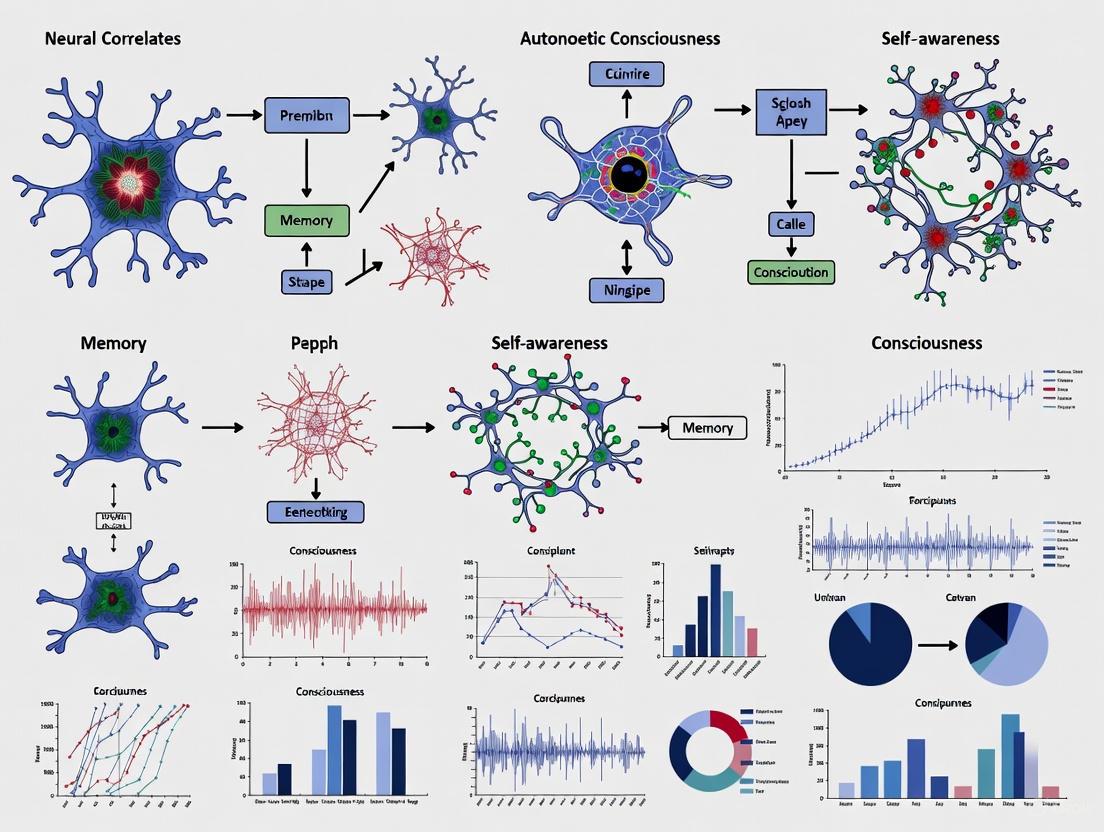
Autonoetic consciousness, the conscious awareness that enables mental time travel and subjective re-experiencing of personal events, is a defining feature of episodic memory.
Decoding Autonoetic Consciousness: Neural Correlates, Clinical Biomarkers, and Therapeutic Implications
Abstract
Autonoetic consciousness, the conscious awareness that enables mental time travel and subjective re-experiencing of personal events, is a defining feature of episodic memory. This article synthesizes current research on its neural correlates, examining neurophysiological biomarkers like the spectral exponent (SE) from EEG for objective diagnosis in disorders of consciousness. We explore foundational theories, methodological approaches for measurement beyond behavioral limitations, and optimization strategies to overcome diagnostic challenges. The analysis validates comparative frameworks against established measures and discusses implications for developing targeted interventions in neurodegenerative diseases and drug development. For researchers and clinical professionals, this review provides a comprehensive roadmap for translating neuroscientific discoveries into clinical applications.
The Architecture of Self-Experience: Defining Autonoetic Consciousness and Its Core Neural Networks
The study of autonoetic consciousness represents a pivotal shift in memory research, moving beyond purely behavioral measures to account for the rich subjective experience of remembering. First coined by Endel Tulving in 1985, autonoetic consciousness refers to the unique human capacity to mentally travel back in time to re-experience past events as personally witnessed, while simultaneously maintaining awareness of one's present self [1] [2]. This concept emerged as a critical component in Tulving's evolving distinction between episodic memory (memory for personally experienced events) and semantic memory (memory for facts and knowledge) [3]. Tulving's initial 1972 distinction focused on computational and functional differences between memory systems, but his 1985 refinement introduced phenomenological experience as a defining characteristic, arguing that episodic memory is fundamentally correlated with autonoetic consciousness [4]. This framework has since generated extensive research and debate within cognitive neuroscience, particularly regarding its neural correlates, measurement validity, and necessity for episodic memory.
Theoretical Foundations: Tulving's Tripartite Consciousness Model
Tulving proposed a taxonomy of human consciousness consisting of three distinct but interrelated forms [5]:
Anoetic, Noetic, and Autonoetic Consciousness
Anoetic consciousness: The most basic form, described as "not-knowing" consciousness. It involves implicit/tacit awareness of one's self and the world in the immediate moment, without symbolic representation. This form is associated with procedural memory and is thought to be present across many animal species [5].
Noetic consciousness: The capacity of "knowing" facts about the world in the absence of any direct recollection. This form of consciousness enables awareness of information, concepts, and facts without personal temporal context and is associated with semantic memory [1].
Autonoetic consciousness: The highest form, characterized by "self-knowing" awareness. It allows individuals to mentally represent and reflect upon their own existence across subjective time—remembering the past, experiencing the present, and anticipating the future with self-awareness [1] [5].
This tripartite model represents a significant departure from what Tulving termed the Doctrine of Concordance—the implicit assumption that cognitive processes, behavior, and conscious experience are highly correlated and mappable to one another [6]. Tulving challenged this doctrine, pointing to domains where conscious experience does not accompany measured cognitive processes and situations where consciousness does not correlate with observable behavior [6].
Relationship to Memory Systems
Tulving associated each form of consciousness with distinct memory systems, creating an influential framework for memory research [5]:
Table: Tulving's Consciousness-Memory Framework
| Type of Consciousness | Associated Memory System | Characteristic Experience | Knowledge Type |
|---|---|---|---|
| Anoetic (not-knowing) | Procedural Memory | Implicit/tacit awareness in the moment | Non-knowing (tacit) knowledge |
| Noetic (knowing) | Semantic Memory | Awareness of facts and concepts | Factual knowledge about the world |
| Autonoetic (self-knowing) | Episodic Memory | Mental time travel through personal events | Self-knowledge across time |
Core Markers and Cognitive Components of Autonoetic Consciousness
Contemporary research has sought to identify the specific cognitive markers that constitute autonoetic experience. Factor analyses of subjective experience ratings across different types of memory and future thinking have revealed several core components [2]:
Primary Markers
Re-experiencing/Pre-experiencing: The sense of reliving past events or pre-living future events is consistently identified as a fundamental marker of autonoetic consciousness. This includes the subjective feeling of sensory and emotional reconstitution of experiences [2].
Mental Time Travel: The ability to mentally project oneself to specific moments in subjective time appears across all types of autobiographical memory, though interestingly, not consistently for future imagination tasks [2].
Self-Referential Perspective: Autonoetic experiences are strongly characterized by a first-person perspective during recollection, maintaining the original field perspective rather than adopting an observer perspective [2].
Supporting Cognitive Features
Vivid Mental Imagery: The quality and vividness of visual imagery, particularly when represented as a "continuously playing video" rather than still photographs, is strongly associated with autonoetic experience [2].
Contextual Detail: Rich contextual details about time, space, and sensory elements contribute to the sense of autonoetic awareness during recollection [2].
Table: Experimentally Validated Markers of Autonoetic Consciousness
| Marker Type | Specific Component | Measurement Approach | Association with Autonoesis |
|---|---|---|---|
| Core Marker | Re-experiencing | Direct rating scales ("I felt I was re-experiencing the event") | Strong and consistent across studies |
| Core Marker | Mental Time Travel | Direct rating scales ("I traveled back to the time the event occurred") | Strong for memory, variable for future thinking |
| Imagery Quality | Vividness | Rating scales for clarity and intensity of mental image | Strong predictor |
| Imagery Perspective | First-person viewpoint | Perspective assessment during recollection | Strongly associated |
| Temporal Specificity | Event-specific details | Text analysis of memory descriptions | Predicts autobiographical memory richness |
Measurement Approaches and Experimental Paradigms
Traditional Methods: Remember/Know Paradigm
The Remember/Know (R/K) paradigm has served as a long-standing proxy for measuring autonoetic consciousness [6] [2]. In this approach:
- Participants encode stimuli (e.g., word lists) and later indicate whether they "Remember" (autonoetic awareness with contextual details) or "Know" (noetic awareness without contextual details) that items were previously encountered [2].
- This paradigm shaped the dual-process theory of memory, linking "Remember" responses to recollection and "Know" responses to familiarity [2].
- However, significant limitations have emerged: instructions strongly influence responses, the distinction may reflect confidence levels rather than subjective experience, and interpretations vary between experts and non-experts [2].
Contemporary Assessment Methods
Recent research has developed more direct and nuanced approaches to measuring autonoetic consciousness:
Direct Experience Probes: Questions directly assessing re-experiencing ("To what extent did you feel you were re-experiencing the original event?") and mental time travel ("Did you mentally travel back in time to the event?") [2].
Autobiographical Interview Scoring: Systematic analysis of detailed memory descriptions for internal (episodic) versus external (semantic) details [2].
Multidimensional Scaling: Factor analyses of multiple experience ratings have identified distinct components of autonoetic experience beyond simple Remember/Know distinctions [2].
The Scientist's Toolkit: Essential Research Methods
Table: Key Methodological Approaches in Autonoetic Consciousness Research
| Method Category | Specific Tool/Paradigm | Primary Function | Key Considerations |
|---|---|---|---|
| Behavioral Measure | Remember/Know Paradigm | Distinguishes recollection from familiarity | Vulnerable to instructional effects and confidence confounds |
| Self-Report Measure | Autobiographical Memory Questionnaire | Assesses sensory, emotional, and contextual details | Provides multidimensional assessment of subjective experience |
| Neuroimaging Approach | fMRI during autobiographical recall | Identifies neural correlates of autonoetic experience | Highlights medial prefrontal, hippocampal, and parietal regions |
| Clinical Assessment | Assessment of Autonoetic Consciousness | Evaluates re-experiencing in patient populations | Sensitive to deficits in neurological and psychiatric conditions |
| Experimental Design | Laboratory-based episode encoding | Controls encoding conditions for later experience ratings | Allows manipulation of variables affecting autonoetic experience |
Critical Debates and Theoretical Challenges
The field continues to grapple with fundamental questions about the nature and necessity of autonoetic consciousness:
Is Autonoetic Consciousness Necessary for Episodic Memory?
A significant critique questions whether autonoetic consciousness constitutes a necessary component of episodic memory [4]. Some researchers advocate returning to a functional/computational characterization where phenomenology represents a contingent feature rather than defining element [4]. Evidence includes:
- Observations that episodic memory tasks can be performed without reported autonoetic experience
- Concerns about circular reasoning when defining episodic memory by autonoetic consciousness and vice versa
- Suggestions that the relationship between episodic memory and autonoetic consciousness may be more flexible than initially proposed [4]
Neural and Behavioral Dissociations
Research reveals numerous dissociations challenging simple concordance between cognitive processes, behavior, and conscious experience [6]:
- Amnesic patients showing preserved implicit memory without conscious recollection
- Cases where objective recollection occurs without conscious ownership of memories [6]
- Situations where strong feelings of recollection occur without accurate objective recall [6]
Conceptual Framework of Autonoetic Consciousness
Neural Correlates and Neurobiological Foundations
Converging evidence from neuroimaging and patient studies indicates that autonoetic consciousness depends on a distributed neural network:
Core Neural Substrates
Medial Temporal Lobe (especially hippocampus): Critical for contextual binding and temporal organization of episodic memories [1] [3].
Medial Prefrontal Cortex: Involved in self-referential processing and autobiographical integration [1].
Posterior Cingulate Cortex and Retrosplenial Cortex: Participate in memory integration and self-projection [1].
Lateral Parietal Cortex: Supports subjective experience of remembering and mental imagery [1].
Clinical and Patient Evidence
Studies of neurological conditions reveal selective impairments in autonoetic consciousness:
- Patients with behavioral variant Frontotemporal Dementia (bvFTD) show marked autonoetic deficits correlated with reduced metabolism in left anterior medial frontal cortex, middle frontal cortex, and posterior cingulate regions [1].
- Alzheimer's disease typically involves progressive deterioration of autonoetic capacities alongside hippocampal and cortical pathology.
- Case studies like Clive Wearing and Kent Cochrane (K.C.) demonstrate preserved semantic memory despite profound episodic/autonoetic deficits [7].
Future Directions in Autonoetic Consciousness Research
The field continues to evolve with several promising research trajectories:
Refining Measurement Approaches
Moving beyond simple Remember/Know distinctions toward multidimensional assessment of subjective experience that captures the richness of autonoetic consciousness without confounding variables like confidence [2].
Computational and Neurocognitive Modeling
Developing explicit models that account for the relationships between cognitive processes, neural mechanisms, and subjective experience in episodic memory [4].
Clinical and Translational Applications
Investigating how autonoetic consciousness is affected across neurological and psychiatric conditions, and developing interventions targeting these specific deficits [1] [2].
Comparative Evolutionary Approaches
Carefully examining which aspects of autonoetic consciousness might be present in non-human animals, while acknowledging the profound methodological challenges in assessing subjective experience across species [5] [8].
The ongoing tension between subjective experience and objective measurement continues to drive theoretical and methodological innovation, ensuring that autonoetic consciousness remains a vibrant and conceptually rich domain at the intersection of cognitive neuroscience, philosophy of mind, and clinical practice.
This technical guide examines the core cognitive markers of autonoetic consciousness—the distinctive form of self-knowing awareness that enables mental time travel. Drawing on recent empirical research, we analyze the triangulated relationship between re-experiencing past events, pre-experiencing future events, and the overarching capacity for mental time travel. Evidence indicates these components share common neural substrates yet demonstrate dissociable characteristics in their cognitive and temporal dynamics. This whitepaper provides researchers and drug development professionals with a comprehensive framework of assessment methodologies, neural correlates, and experimental protocols for investigating these fundamental markers of episodic cognition, with particular relevance for neurodegenerative conditions where these capacities are compromised.
Autonoetic consciousness, a concept pioneered by Endel Tulving, represents the capacity for self-awareness in subjective time, allowing individuals to mentally project themselves across temporal contexts [2] [9]. This form of consciousness is operationally defined through three primary cognitive markers: the ability to re-experience past episodes, pre-experience future scenarios, and mentally travel through time. These capacities collectively form the core of what researchers term "mental time travel" (MTT) [9] [10].
The neurocognitive system supporting these functions enables humans to mentally reconstruct personal events from the past (episodic memory) and imagine possible future scenarios (episodic foresight) [9]. This system is now understood as a general episodic cognition network rather than a dedicated memory system, facilitating both retrospective and prospective simulation [11]. Recent factor analytic studies have established that re-experiencing and pre-experiencing consistently emerge as core markers of autonoetic consciousness across different event types, while mental time travel appears consistently for memory events but not all future simulations [2].
Understanding these markers has significant implications for identifying and tracking cognitive decline in neurodegenerative diseases, particularly Alzheimer's disease and related dementias where autonoetic capacities are frequently impaired early in disease progression [12] [13]. The following sections provide a comprehensive technical overview of the neural correlates, assessment methodologies, and experimental protocols for investigating these fundamental aspects of human consciousness.
Neural Correlates of Autonoetic Consciousness
The neural architecture supporting autonoetic consciousness involves a distributed network primarily located in posterior cortical regions, with specific contributions from medial temporal and prefrontal areas. Neuroimaging evidence consistently identifies what has been termed a "temporo-parietal-occipital hot zone" as crucial for conscious experience, with specific content being supported by subsets of neurons within this zone [14].
Core Brain Networks
The autobiographical memory retrieval network, which supports both past and future-directed mental time travel, includes the medial temporal lobe (especially the hippocampus), medial parietal regions (precuneus and posterior cingulate), temporo-parietal junction, and medial prefrontal cortex [10]. Research indicates that the ventral medial prefrontal cortex and posterior cingulate cortex show particularly strong activation when imagining future events relevant to personal goals, suggesting their involvement in personal goal processing—a critical feature of episodic future thinking [9].
A meta-analysis of brain imaging studies on theory of mind, autobiographical memory, and prospection revealed direct overlap in several key regions: the left parahypocampal gyrus (BA 36), medial parietal regions (precuneus, posterior cingulate bilaterally—BA 31), left temporo-parietal junction (BA 39), and medial prefrontal cortex (frontal pole—BA 10) [10]. This convergence supports theories proposing that these tasks require either scene construction or self-projection across different temporal contexts.
Electrophysiological Signatures
Electroencephalography (EEG) studies provide finer temporal resolution of the neural dynamics during autonoetic processes. Research examining the electrophysiological correlates of remembering and imagining personal events at different temporal distances has identified two key event-related potential (ERP) components:
- Late Parietal Component (LPC): Observed between 500-800ms after stimulus onset, this component reflects episodic binding processes and the retrieval of contextual information associated with an event [15].
- Late Frontal Effect (LFE): Emerging around 600ms and lasting up to 2000ms post-stimulus, this component reflects ongoing evaluation and monitoring of retrieved or simulated content [15].
These electrophysiological markers demonstrate differential modulation based on temporal distance, with distinct patterns for past versus future simulation, suggesting that while past and future event simulations share core neural circuitry, they engage this circuitry in temporally distinct ways [15].
Figure 1: Neural architecture and temporal dynamics of autonoetic consciousness, showing core cognitive markers, their primary neural correlates, and associated electrophysiological signatures.
Core Cognitive Markers: Definitions and Distinctions
Re-experiencing as a Marker
Re-experiencing represents the phenomenological sense of reliving or mentally recreating a previously experienced event, with awareness that the remembered event is one that was personally encountered [2]. This marker is characterized by vivid sensory details, emotional resonance, and a sense of subjective time in which the individual feels mentally transported back to the original occurrence.
Factor analyses have consistently identified re-experiencing as a core latent variable underlying autonoetic consciousness across different types of memory events [2]. The quality of mental imagery, particularly vivid, visual imagery from a first-person perspective, is strongly associated with this sense of re-experiencing [2]. When individuals represent remembered events as "continuously playing videos" rather than still photographs, they report stronger re-experiencing and autonoetic awareness [2].
Pre-experiencing as a Marker
Pre-experiencing refers to the capacity to mentally simulate possible future events with a sense of "pre-living" what might occur [11]. This prospective aspect of autonoetic consciousness shares many characteristics with re-experiencing but is distinguished by its future orientation and inherently constructive nature.
Research indicates that pre-experiencing future events relies on similar cognitive and neural systems as re-experiencing past events, but with some distinct characteristics. Future events tend to be less detailed in contextual and sensorial aspects but carry a more positive emotional valence compared to past events [15]. The temporal distance of simulated future events significantly modulates their phenomenological properties, with nearer events typically containing more episodic details [15].
Mental Time Travel as an Overarching Framework
Mental time travel represents the overarching capacity to mentally project oneself into the past (retrospection) or future (prospection) [9] [10]. This capacity relies on the ability to flexibly navigate mental representations of both remembered and imagined events and has been used as a direct proxy for autonoetic consciousness [2].
The relationship between mental time travel and the other markers is hierarchical, with re-experiencing and pre-experiencing serving as the phenomenological manifestations of this capacity in specific temporal directions. Importantly, mental time travel appears consistently across all types of memory events in factor analyses, but not consistently for all future imagination tasks, suggesting some dissociation between temporal directions [2].
Quantitative Assessment and Experimental Paradigms
Standardized Behavioral Measures
Researchers have developed several standardized approaches to quantify the core markers of autonoetic consciousness:
The Remember/Know Paradigm: This classic procedure distinguishes between autonoetic (Remember) and noetic (Know) awareness by asking participants to indicate whether they recall specific contextual details about an item's presentation (Remember) or simply recognize it as familiar without contextual details (Know) [2]. However, recent evidence suggests this paradigm may conflate autonoetic awareness with memory strength or confidence, limiting its specificity [2].
Direct Phenomenological Probes: More recent approaches directly ask participants to rate the degree to which they mentally re-experienced or pre-experienced events, using standardized scales for qualities such as vividness, emotional intensity, sensory details, and sense of mental time travel [2]. These probes typically use Likert scales ranging from 1 (not at all) to 7 (completely) for each dimension.
Temporal Distance Manipulations: Experimental paradigms systematically varying the temporal distance of remembered or imagined events (near vs. far) have proven effective in dissociating different components of autonoetic consciousness [15]. These manipulations reveal that temporal distance modulates both the Late Parietal Component (LPC) and Late Frontal Effect (LFE) differently for past and future event simulation.
Table 1: Electrophysiological Correlates of Mental Time Travel Across Temporal Distances
| Temporal Direction | ERP Component | Near Events Effect | Far Events Effect | Functional Interpretation |
|---|---|---|---|---|
| Past | Late Parietal Component (LPC) | Enhanced episodic details | Reduced episodic details | Reflects episodic binding processes |
| Past | Late Frontal Effect (LFE) | Greater monitoring | Reduced monitoring | Reflects post-simulation evaluation |
| Future | Late Parietal Component (LPC) | Enhanced episodic details | Significantly reduced details | Greater semantic processing for far future |
| Future | Late Frontal Effect (LFE) | High monitoring demands | High monitoring demands | Sustained evaluation across all future events |
Neuroimaging Approaches
Multiple neuroimaging modalities have been employed to investigate the neural correlates of autonoetic consciousness markers:
Functional MRI (fMRI): Both task-based and resting-state fMRI have identified the core network supporting mental time travel, with studies comparing past and future event simulation showing extensive overlap in activation patterns [12] [10]. Effective connectivity analyses further reveal how information flows between network components during autonoetic tasks.
Positron Emission Tomography (PET): Amyloid PET imaging with tracers such as Pittsburgh Compound-B (PiB) has been used to investigate how Alzheimer's pathology affects the neural networks supporting autonoetic consciousness, particularly in preclinical and prodromal stages [12].
Electroencephalography (EEG) and Event-Related Potentials (ERPs): These approaches provide millisecond-level temporal resolution of the neural dynamics during mental time travel, capturing distinct components associated with episodic binding (LPC) and monitoring processes (LFE) [15].
Figure 2: Comprehensive experimental workflow for assessing core markers of autonoetic consciousness, spanning event generation, phenomenological assessment, neural recording, and data analysis phases.
The Scientist's Toolkit: Research Reagent Solutions
Table 2: Essential Methodologies and Analytical Tools for Autonoetic Consciousness Research
| Research Tool | Primary Function | Application in Autonoetic Research | Key References |
|---|---|---|---|
| Remember/Know Paradigm | Distinguish autonoetic vs. noetic awareness | Assess subjective experience during memory retrieval; measure autonoetic consciousness | [2] |
| Autobiographical Interview | Quantify episodic and semantic details | Systematically assess detail richness in past and future event narratives | [2] [15] |
| Phenomenological Rating Scales | Measure subjective experience qualities | Assess re-experiencing, pre-experiencing, vividness, emotional intensity | [2] |
| fMRI with ROI Analysis | Localize neural activity | Identify activation in core MTT network (hippocampus, mPFC, precuneus) | [12] [10] |
| EEG/ERP with LPC/LFE Analysis | Temporal dynamics of cognition | Capture episodic binding (LPC) and monitoring processes (LFE) during MTT | [15] |
| Factor Analysis | Identify latent variables | Uncover core markers underlying subjective experience across event types | [2] |
| Temporal Distance Manipulation | Modulate episodic/semantic contributions | Examine how event remoteness affects autonoetic experience | [15] |
Clinical Applications and Neurodegenerative Disease Implications
The core markers of autonoetic consciousness show particular relevance for understanding and tracking neurodegenerative diseases, especially Alzheimer's disease (AD) and mild cognitive impairment (MCI). Deficits in mental time travel capacity often represent early cognitive markers of pathology, sometimes preceding more generalized cognitive decline [12] [13].
Alzheimer's Disease and Autonoetic Impairment
In Alzheimer's disease, the degeneration of medial temporal lobe structures, particularly the hippocampus, directly impacts the neural substrates necessary for autonoetic consciousness [12]. Patients with AD show significant impairments in both episodic memory (re-experiencing) and episodic future thinking (pre-experiencing), with these deficits correlating with the extent of hippocampal atrophy and cortical amyloid deposition [12].
Research using the Remember/Know paradigm has demonstrated that patients with AD show disproportionate reduction in "Remember" responses compared to "Know" responses, suggesting specific impairment in autonoetic awareness rather than general memory deficits [2]. These findings align with neuroimaging evidence showing disrupted functional connectivity within the default mode network, which overlaps considerably with the mental time travel network [12] [13].
Predictive Biomarkers and Early Detection
The sensitive assessment of autonoetic consciousness markers shows promise for early detection of neurodegenerative conditions. Studies combining neuroimaging with cognitive assessment suggest that subtle changes in mental time travel capacity may precede overt clinical symptoms in individuals at risk for AD [12] [13].
Multimodal approaches that combine subjective phenomenological measures with objective neural correlates offer the greatest predictive power. For example, assessing both the richness of autobiographical narratives and the corresponding neural activity during mental time travel tasks can identify individuals with mild cognitive impairment who are most likely to progress to Alzheimer's dementia [13].
Table 3: Neuroimaging Biomarkers Relevant to Autonoetic Consciousness in Neurodegeneration
| Imaging Modality | Measured Parameter | Association with Autonoetic Markers | Clinical Utility |
|---|---|---|---|
| Structural MRI | Hippocampal volume | Correlates with re-experiencing capacity | Early detection of medial temporal lobe degeneration |
| Amyloid PET | Cortical amyloid burden | Predicts decline in future thinking | Detection of Alzheimer's pathology in preclinical stages |
| FDG-PET | Glucose metabolism in temporo-parietal regions | Associated with overall MTT capacity | Tracking disease progression and treatment response |
| fMRI (resting state) | Default mode network connectivity | Predicts autobiographical detail generation | Assessing network integrity supporting autonoetic consciousness |
| DTI | White matter integrity in fornix and cingulum | Correlates with episodic detail richness | Evaluating disconnection of MTT network components |
The triangulated framework of re-experiencing, pre-experiencing, and mental time travel provides a robust operational definition of autonoetic consciousness with significant implications for basic cognitive neuroscience and clinical applications. Factor analytic approaches have established these as core markers that share common neural substrates while demonstrating distinct characteristics and temporal dynamics.
Future research should focus on developing more sensitive behavioral paradigms that dissociate these components with greater precision, particularly through manipulations of temporal distance and emotional valence. The integration of multimodal neuroimaging with detailed phenomenological assessment will further elucidate how distributed neural networks give rise to the unified experience of self-projection in time.
For drug development professionals, these cognitive markers offer sensitive endpoints for clinical trials targeting neurodegenerative conditions. Interventions that preserve or enhance autonoetic capacities could significantly impact quality of life, even in the presence of other cognitive deficits. The continued refinement of assessment protocols will enable more precise tracking of disease progression and therapeutic effects across the spectrum of cognitive health and neurological disorders.
Within the study of autonoetic consciousness—the capacity for mental time travel and self-projection—a primary goal is to identify its specific neural correlates (NCC). Research increasingly indicates that these correlates are not localized to a single brain region but emerge from the dynamic interaction of specific thalamocortical systems and large-scale cortical networks [16]. This whitepaper synthesizes current evidence to elaborate on the thesis that autonoetic consciousness is supported by a core system integrating thalamocortical circuits, which regulate cortical plasticity and information flow, with large-scale cortical networks, which exhibit structured, cyclical dynamics to sequentially activate essential cognitive functions. The integration of these systems provides a substrate for the complex phenomenology of self-projection.
Anatomical and Functional Foundations of Thalamocortical Systems
The thalamus is not a mere relay station but a critical hub that actively shapes information destined for the cortex. Its connections are organized into distinct circuits that support fundamental computational functions.
Key Thalamocortical Pathways
Two major thalamocortical pathways are particularly relevant for processing self-relevant information:
- The Posterior Vestibular Pathway: This pathway involves direct projections from vestibular nuclei neurons to the ventral posteriolateral (VPL) thalamus and onward to vestibular cortical areas [17]. It is crucial for computing essential representations of self-motion and spatial orientation, forming a fundamental component of the bodily self [17]. Neurons in this pathway perform nonlinear transformations on afferent input, contributing to our subjective awareness of motion and potentially to the spatial context of self-projection [17].
- The Anterior Pathway: Comprising projections from the anterodorsal thalamic nucleus (ADN) to the retrosplenial and entorhinal cortices, this pathway is an essential component of the head direction cell network [17]. It provides a neural representation of heading direction during movement that is critical for spatial navigation and, by extension, for projecting the self into spatial scenarios [17].
Functional Roles of Thalamocortical Circuits
Beyond anatomical connectivity, specific thalamocortical circuit types modulate cortical function in ways that directly support conscious experience:
- Narrow (Core/First-Order) Circuits: These circuits are characterized by relatively tight convergence of inputs and narrow divergence of cortical outputs, often linking primary sensory thalamic nuclei with corresponding primary sensory cortical areas [18]. They are primarily driven by ascending sensory information and are thought to regulate the flow of specific sensory content to the cortex [18].
- Broad (Matrix/Higher-Order) Circuits: These circuits exhibit broad cortical input convergence and output divergence, connecting with multiple sensory, associational, and motor cortical areas [18]. Driven largely by descending cortical signals, they are implicated in recruiting cognitive processing across distributed cortical areas, particularly when sensory information is incongruent with prior expectations [18]. This function is vital for the monitoring processes inherent in autonoetic consciousness.
Figure 1. Schematic of key thalamocortical circuit organization. Narrow circuits relay specific sensory information, while broad circuits integrate information across cortical areas.
Large-Scale Cortical Networks in Self-Projection
Self-projection engages multiple large-scale cortical networks that interact in a structured, temporal sequence. Recent magnetoencephalography (MEG) studies have revealed that the activation of these networks follows a robust cyclical pattern at timescales of 300-1,000 ms, grouping states with similar function and spectral content at specific phases of the cycle [19].
Core Networks and Their Functions
- Default Mode Network (DMN): The DMN, including the posterior cingulate/precuneus, medial prefrontal cortex, and inferior parietal lobe, is central to maintaining conscious states and supporting internal awareness [16]. It shows heightened activity during autobiographical recall, future planning, and theory of mind tasks—core aspects of self-projection.
- Frontoparietal Network (FPN): This network is crucial for executive control and working memory, guiding the conscious manipulation of self-relevant information during mental time travel [16].
- Salience Network: Involved in detecting subjectively relevant stimuli, this network helps gate access to the self-projection system by identifying internal and external events worthy of conscious consideration [16].
The cyclical activation of these networks [19] ensures that each cognitive function necessary for self-projection is periodically activated within a reasonable timeframe, creating a temporal structure for autonoetic experience.
Integrated Mechanisms: From Anatomy to Phenomenology
The confluence of thalamocortical and large-scale cortical network dynamics gives rise to the complex phenomenology of self-projection.
Hierarchical Development and Plasticity
Human thalamocortical structural connectivity develops in line with a hierarchical axis of cortical plasticity, progressing from sensorimotor to association regions [20]. This developmental trajectory aligns with the emergence of autonoetic capacities. Associative cortical regions with protracted developmental plasticity exhibit heightened sensitivity to the socioeconomic environment, suggesting that self-projection abilities are shaped by experience-dependent mechanisms operating through thalamocortical pathways [20].
Nonlinear Transformations and Perceptual Optimization
Vestibular thalamocortical neurons provide a neural substrate for perceptual discrimination thresholds that deviate from Weber's law [17]. These neurons exhibit contrast gain control, whereby neural response gains decrease as a power law with increasing stimulus amplitude [17]. This optimization allows for enhanced discrimination of self-motion at higher amplitudes, contributing to a stable perceptual foundation for self-projection.
Temporal Dynamics and Information Integration
The thalamocortical system supports recurrent processing between higher and lower cortical areas, which is considered necessary for conscious perception [16]. This recurrent processing, when synchronized with the cyclical activation of large-scale cortical networks [19], may provide the temporal framework for integrating sensory information, memory traces, and future projections into a coherent experience of self across time.
Experimental Approaches and Methodologies
Investigating the neural substrates of self-projection requires multimodal approaches that span anatomical, functional, and causal domains.
Table 1: Key Methodologies for Investigating Thalamocortical Systems and Large-Scale Networks
| Methodology | Application | Key Insights |
|---|---|---|
| Diffusion MRI Tractography | Mapping structural connectivity between thalamus and cortex [20] | Revealed hierarchical maturation of thalamocortical pathways along sensorimotor-association axis |
| Functional MRI (fMRI) | Measuring blood-oxygen-level-dependent (BOLD) signals in resting-state and task conditions [16] | Identified large-scale networks (DMN, FPN, Salience) and their coordination |
| Magnetoencephalography (MEG) | Tracking neural activity with high temporal resolution [19] | Demonstrated cyclical activation of large-scale cortical networks (300-1000 ms cycles) |
| Electroencephalography (EEG) | Recording electrical activity, including event-related potentials like P300 [16] | Captured thalamocortical synchronization events associated with conscious perception |
| Transcranial Magnetic Stimulation with EEG (TMS-EEG) | Causally probing cortical excitability and effective connectivity [16] | Showed breakdown of effective connectivity in unconscious states |
| Intracranial Recordings | Measuring single-neuron activity in awake, behaving subjects [16] | Provided detailed characterization of vestibular thalamocortical neuron response properties [17] |
Representative Experimental Protocol: Thalamocortical Connectivity Development
A recent large-scale study investigated thalamocortical structural connectivity development using diffusion MRI data from three youth samples (total n = 2,676, ages 8-23) [20]:
- Tractography Atlas Creation: Researchers created a high-resolution tractography atlas of thalamocortical connections using a group-average diffusion template from the Human Connectome Project Young Adult dataset (n = 1,065) [20].
- Connection Identification: This atlas was applied as an anatomical prior to identify analogous thalamocortical connections in person-specific data from developmental cohorts [20].
- Microstructural Quantification: Fractional anisotropy (FA) was quantified in every thalamic connection for each participant as a measure of white matter microstructural integrity [20].
- Developmental Trajectory Analysis: Statistical models were used to characterize the relationship between age and FA along the sensorimotor-association cortical axis, controlling for appropriate confounding variables [20].
Figure 2. Workflow for assessing thalamocortical structural connectivity development.
Research Reagent Solutions
Table 2: Essential Research Reagents and Materials for Thalamocortical Research
| Reagent/Material | Function/Application | Specific Examples/Properties |
|---|---|---|
| High-Resolution Diffusion MRI Data | Reconstructing white matter pathways via tractography | Multi-shell acquisition protocols; HCP-style data with high spatial and angular resolution [20] |
| Cortical Parcellation Atlases | Defining regions of interest for connectivity analysis | HCP-Multimodal Parcellation (HCP-MMP) with >200 cortical regions [20] |
| Automated Tractography Pipelines | Standardized identification of thalamocortical pathways | Population-based tractography atlases applied as priors for individual connection identification [20] |
| Electrophysiology Recording Systems | Measuring single-neuron activity in alert behaving subjects | Extracellular recordings from vestibular thalamocortical neurons during self-motion stimulation [17] |
| Natural Vestibular Stimulation Paradigms | Applying ecologically relevant motion stimuli | Motion platforms delivering translational and rotational accelerations reflecting everyday activities [17] |
Clinical and Translational Implications
Understanding these neural substrates has significant implications for neuropsychiatric disorders involving disrupted self-projection.
- Disorders of Consciousness (DOC): Patients with unresponsive wakefulness syndrome show low levels of brain activation, while minimally conscious state patients display more widespread activation [16]. The DMN, frontoparietal network, and thalamus have been consistently identified as critical regions supporting consciousness, with disruptions in these networks serving as diagnostic and prognostic markers [16].
- Computational Psychiatry: Bio-inspired artificial neural networks incorporating thalamocortical connectivity may address current AI limitations and provide testable theories of biological cognition [18]. Such models could help simulate pathologies of self-projection and identify novel therapeutic targets.
- Neuropharmacology: The role of thalamocortical circuits in regulating cortical excitation/inhibition balance [20] highlights potential targets for modulating plasticity. Agents that influence thalamocortical-PV interneuron interactions could potentially modulate windows of developmental plasticity relevant to the emergence of autonoetic consciousness.
The neural substrates of self-projection involve sophisticated interactions between specialized thalamocortical systems and large-scale cortical networks. The thalamus plays an active role in regulating cortical plasticity and information flow, while large-scale networks exhibit structured cyclical dynamics that provide a temporal framework for autonoetic experience. Future research integrating detailed neuroanatomy, developmental trajectories, and temporal dynamics will further elucidate the complex mechanisms supporting our ability to project ourselves across time and perspective. This integrated framework offers a foundation for developing targeted interventions for disorders where self-projection is compromised.
Autonoetic consciousness is the capacity for self-awareness in subjective time, enabling individuals to mentally travel back to relive personal past events or project themselves forward to pre-live potential future experiences [2] [21]. This form of consciousness constitutes a defining feature of episodic memory and is fundamentally intertwined with specific qualities of mental imagery [2]. Recent empirical research has established that vivid, visual imagery experienced from a first-person perspective serves as a core manifestation of autonoetic consciousness, providing the cognitive foundation for the subjective sense of "reliving" [2] [22].
The investigation into mental imagery's role represents a critical frontier in consciousness research, with significant implications for understanding and addressing neurodegenerative conditions. This technical guide synthesizes current evidence on the neural correlates, experimental methodologies, and research applications of mental imagery in autonoetic consciousness, providing researchers with a comprehensive framework for advancing both basic science and therapeutic development.
Theoretical Framework and Defining Constructs
Autonoetic Consciousness and Mental Time Travel
Autonoetic consciousness, a concept pioneered by Endel Tulving, encompasses the awareness that a remembered event is one we personally experienced [2]. It is characterized by subjective temporality - the feeling of mentally traveling through time - and self-referential processing that binds experiences to one's personal identity [21]. This form of consciousness contrasts with noetic consciousness, which involves factual knowledge without self-referential temporal projection [2].
The Mental Time Travel (MTT) capacity supported by autonoetic consciousness depends critically on the episodic memory system, which enables "the conscious re-experiencing of past experiences" [21]. This capacity is subserved by the hippocampus and related medial temporal lobe structures that facilitate the construction of coherent mental scenes across temporal domains [23] [21].
The First-Person Perspective as a Phenomenological Distinction
Mental imagery perspective fundamentally shapes the qualitative experience of remembering:
- First-person perspective (field perspective): Events are recalled as if re-experienced through one's own eyes, associated with stronger sensory and emotional reliving [24].
- Third-person perspective (observer perspective): Events are recalled as if watching oneself from an external vantage point, associated with greater self-distancing and reflection [25] [24].
This distinction is not merely phenomenological but reflects fundamental differences in cognitive processing styles. First-person imagery facilitates understanding events based on experiential reactions evoked by features of the pictured scene, whereas third-person imagery facilitates understanding events in line with pre-existing conceptual belief systems [25].
Table 1: Core Constructs in Autonoetic Consciousness Research
| Construct | Definition | Neural Correlates |
|---|---|---|
| Autonoetic Consciousness | Self-aware consciousness of personal experiences across subjective time | Hippocampus, medial prefrontal cortex, posterior cingulate cortex [23] [26] |
| Mental Time Travel | Mental projection into personal past or future | Hippocampal formation, precuneus, temporo-parietal junction [21] |
| First-Person Perspective | Imagery from one's own visual viewpoint | Somatosensory cortex, insular cortex, right TPJ [24] |
| Third-Person Perspective | Imagery from an external observer's viewpoint | Medial prefrontal cortex, precuneus, lateral parietal cortex [24] |
Quantitative Evidence: First-Person Imagery and Autonoetic Consciousness
Recent empirical investigations have systematically established the foundational role of vivid, first-person visual imagery in supporting autonoetic consciousness.
Factor Analytic Studies of Cognitive Markers
A comprehensive 2024 study by Zaman et al. conducted Exploratory Factor Analysis on subjective experience ratings across multiple event types (autobiographical memories, future events, and experimentally encoded videos) in 342 healthy participants [2] [22]. This research identified that:
- Re-experiencing (for past events) and Pre-experiencing (for future events) consistently emerged as core markers of autonoetic consciousness across different event types [2].
- Mental Time Travel was identified as a core marker for all types of memory events, though interestingly not for imagining the future [2].
- Crucially, the analysis demonstrated - for the first time - that specific features of mental imagery consistently associated with autonoetic consciousness: "vivid, visual imagery from a first-person perspective" [2] [22].
The regression analyses further revealed that this factor structure of autonoetic consciousness predicted the richness of autobiographical memory texts, establishing a direct link between first-person imagery quality and the detailed nature of personal narratives [2].
Visual Perspective and Reliving Metrics
Multiple investigations have quantified the relationship between visual perspective and subjective experience metrics:
Table 2: Quantitative Relationships Between Imagery Perspective and Autonoetic Experience
| Study Paradigm | First-Person Advantage | Effect Magnitude | Domain |
|---|---|---|---|
| Autobiographical Memory Recall | Higher sense of reliving [2] | Significant association with autonoetic factors [2] | Episodic Memory |
| Spatial Egocentric Imagery | Stronger functional connectivity in early visual and posterior temporal areas [24] | Small but significant network subnetwork | Spatial Cognition |
| Resting-State Self-Related Thoughts | Association with personal past experiences and future thinking [26] | MCI patients: M=8.14 vs Healthy Young: M=10.50 (ARSQ) [26] | Mind-Wandering |
| Observer vs Field Memories | Decreased activity in insulae and left somato-motor cortex [24] | Significant decreases in BOLD response | Neural Correlates |
Neural Correlates: The Brain Basis of First-Person Imagery
Neuroimaging evidence has elucidated distinct neural networks supporting first-person perspective imagery and its contribution to autonoetic consciousness.
Hippocampal-Cortical Connectivity Networks
A 2020 functional connectivity study using immersive virtual reality demonstrated that first-person body view during encoding modulates post-encoding connectivity between the right hippocampus (rHC) and right parahippocampus (rPHC) [23]. Specifically:
- Seeing one's own body during scene encoding enhanced post-encoding connectivity between rHC and rPHC [23].
- Body view during encoding impacted the correlation between rHC/rPHC connectivity with a sensorimotor fronto-parietal network (including primary somatosensory and primary motor cortices) and autonoetic consciousness after encoding [23].
- These findings suggest that first-person visual body perception during encoding biases the hippocampal formation to communicate with neocortical regions involved in processing multisensory bodily signals and self-consciousness [23].
The Bodily Self and Viewpoint-Specific Subsystems
Integrating evidence from multiple neuroimaging studies, St. Jacques (as referenced in [24]) has proposed a neurocognitive model comprising two interacting subsystems:
- The bodily self subsystem: Includes somatosensory cortex, insular cortex, and right temporoparietal junction (TPJ)
- The viewpoint-specific mental imagery subsystem: Includes angular gyrus and precuneus
This model explains how first-person perspective imagery incorporates somatic and self-referential information to create the embodied sense of reliving characteristic of autonoetic consciousness.
Diagram 1: Neural correlates of autonoetic consciousness showing key subsystems
Default Mode Network and Self-Referential Processing
The default mode network (DMN) plays a crucial role in supporting self-related thoughts during mind-wandering, including autobiographical reminiscence and future planning [26]. Key DMN regions consistently implicated in autonoetic consciousness include:
- Posterior cingulate cortex
- Medial prefrontal cortex
- Inferior parietal lobule
- Lateral temporal cortex
- Hippocampus [26]
Research with Mild Cognitive Impairment (MCI) patients has demonstrated that diminished self-related thoughts about personal past experiences and future thinking correlate with dysfunction within these intrinsic neural networks [26].
Experimental Protocols and Methodologies
Virtual Reality and Functional Connectivity Protocol
The 2020 study by Spinelli et al. [23] developed an innovative protocol combining immersive virtual reality with resting-state fMRI to investigate how first-person body view modulates neural connectivity supporting autonoetic consciousness.
Experimental Workflow:
- Encoding Phase: Participants encoded scenes in immersive VR under two conditions: with or without first-person view of their own body
- fMRI Acquisition: Resting-state fMRI data acquired post-encoding
- Memory Testing: Scene recognition task followed by autonoetic consciousness ratings
- Connectivity Analysis: Seed-based functional connectivity using right hippocampus and right parahippocampus as regions of interest
Key Measurements:
- Functional connectivity between hippocampal formation and sensorimotor fronto-parietal network
- Correlation between connectivity strength and autonoetic consciousness ratings
- Modulatory effect of body view on post-encoding connectivity patterns
Diagram 2: Experimental workflow for VR-fMRI connectivity study
Factor Analysis of Autonoetic Consciousness Markers
Zaman et al. (2024) [2] [22] employed a multi-method approach to identify core markers of autonoetic consciousness:
Participant Population:
- 342 young, healthy participants across two studies
Memory Elicitation Protocol:
- Written Descriptions: Participants provided written descriptions of:
- Two autobiographical memories
- Two plausible future events
- Experimentally encoded video content
- Subjective Ratings: Participants rated their subjective experience during remembering and imagining across multiple dimensions
Analytical Approach:
- Exploratory Factor Analysis to identify latent variables underlying autonoetic consciousness
- Regression Analysis to examine how factor structure predicts memory richness
First- vs Third-Person Imagery Functional Connectivity Protocol
An exploratory fMRI study [24] directly compared neural correlates of first-person and third-person visual imagery:
Task Design:
- Imagery Tasks: Imaginary tennis and house navigation tasks
- Perspective Conditions: First-person vs third-person perspective for the same tasks
- Participant Sample: 26 participants
Imaging Parameters:
- Task-based fMRI during imagery performance
- Whole-brain activation and task-based functional connectivity analysis
- Network-based statistics to identify perspective-dependent connectivity patterns
Key Finding: Stronger functional connectivity in early visual and posterior temporal areas during first-person perspective, suggesting closer sensory recruitment loops [24].
The Scientist's Toolkit: Essential Research Reagents and Materials
Table 3: Essential Research Materials for Investigating Imagery and Autonoetic Consciousness
| Research Tool | Specifications | Research Application |
|---|---|---|
| Immersive Virtual Reality Systems | Head-mounted displays with body tracking capabilities | Controlled manipulation of first-person body view during encoding [23] |
| Functional MRI Scanners | 3T or higher with multiband sequences; resting-state and task-based protocols | Measuring functional connectivity in hippocampal-cortical networks [23] [24] |
| High-Density EEG Systems | 64+ channels with microstate analysis capabilities | Tracking temporal dynamics of self-related thoughts during mind-wandering [26] |
| Amsterdam Resting-State Questionnaire (ARSQ) | 30-item self-report measure of mind-wandering content | Assessing self-related thoughts about past and future during rest [26] |
| Autobiographical Memory Tasks | Cued recall of personal events with perspective and vividness ratings | Eliciting naturalistic episodic memories with first-person imagery [2] |
| Spatial Imagery Paradigms | Imaginary tennis and house navigation tasks [24] | Standardized assessment of perspective-taking in mental imagery |
| Factor Analysis Software | R, SPSS, or MPlus with EFA capabilities | Identifying latent variables underlying autonoetic consciousness [2] |
Clinical Applications and Neurodegenerative Disease Research
The assessment of mental imagery qualities in autonoetic consciousness has significant translational applications, particularly in early detection and monitoring of neurodegenerative conditions.
Mild Cognitive Impairment and Alzheimer's Disease
Research has demonstrated that alterations in self-related thoughts during mind-wandering represent early markers of cognitive decline:
- MCI patients show significantly reduced self-related thoughts about personal past experiences compared to healthy controls (MCI: M=8.14 vs Healthy Young: M=10.50 on ARSQ) [26].
- hdEEG microstate analysis reveals reduced neural activity in microstate C (associated with self-related thoughts) in MCI patients compared to healthy controls [26].
- These alterations localize to brain regions implicated in episodic autobiographical memory and the default mode network [26].
Neurophysiological Biomarkers
EEG microstate analysis has emerged as a promising biomarker approach:
- Microstate C: Associated with self-related thoughts, shows reduced temporal parameters in MCI patients [26].
- Microstate A: Shows increased neural activity in MCI patients compared to healthy controls [26].
- These microstate alterations reflect dysfunction within the self-related memory network and may serve as early detection markers for neurodegenerative disease [26].
Future Research Directions and Methodological Considerations
Several promising avenues for future research emerge from current findings:
Therapeutic Applications
- Imagery Perspective Interventions: Manipulating visual perspective to increase reliance on internal states among clinical populations with attenuated access to internal states [25].
- VR-Based Rehabilitation: Using immersive virtual reality with first-person body view to strengthen hippocampal-cortical connectivity supporting autonoetic consciousness.
- Neurofeedback Approaches: Using real-time fMRI or EEG to train self-regulation of networks supporting vivid first-person imagery.
Methodological Advancements
- Multimodal Integration: Combining fMRI, EEG, and behavioral measures to capture temporal dynamics and spatial specificity of autonoetic consciousness.
- Longitudinal Designs: Tracking changes in mental imagery qualities and neural correlates across disease progression or intervention outcomes.
- Ecological Momentary Assessment: Developing mobile technologies to assess first-person imagery qualities in real-world contexts.
Vivid, visual imagery from a first-person perspective represents a fundamental manifestation of autonoetic consciousness, supported by distinct neural networks involving the hippocampal formation, sensorimotor cortices, and default mode network regions. Advanced neuroimaging methodologies combined with innovative behavioral paradigms have established quantitative relationships between first-person imagery qualities and the subjective sense of "reliving" that characterizes autonoetic consciousness.
The systematic investigation of these relationships provides not only fundamental insights into human consciousness but also clinically relevant biomarkers for neurodegenerative conditions and novel targets for therapeutic development. As research in this field advances, the precise manipulation and assessment of mental imagery qualities will continue to illuminate the complex interplay between neural systems and subjective experience that constitutes the foundation of human self-awareness across time.
Consciousness represents one of the most substantial challenges for 21st-century science, particularly in understanding how subjective experiences relate to physical brain processes [27]. Within this domain, Endel Tulving's tripartite taxonomy of human consciousness provides a critical framework for investigating different forms of awareness and their distinct neurobiological bases [5]. This taxonomy partitions consciousness into anoetic (non-knowing, implicit awareness in the moment), noetic (knowing, awareness of facts and concepts), and autonoetic (self-knowing, explicit self-awareness across time) forms [5] [1]. The distinction between autonoetic and noetic consciousness is particularly crucial for understanding human memory, self-awareness, and temporal perspective, each supported by dissociable neural systems and cognitive processes.
The clinical implications of this distinction extend across numerous neurological and psychiatric conditions, including frontotemporal dementia, schizophrenia, and depression, where selective impairments in autonoetic consciousness can profoundly disrupt an individual's sense of self-continuity and personal identity [1]. Furthermore, the ability to measure these consciousness forms objectively has become increasingly urgent due to advances in artificial intelligence and ethical concerns surrounding animal welfare, medical decision-making for patients with disorders of consciousness, and neuropharmacological development [27]. This technical review examines the theoretical foundations, neural correlates, measurement approaches, and clinical implications of distinguishing autonoetic from noetic consciousness within the broader context of consciousness science research.
Theoretical Foundations and Definitions
Tulving's Tripartite Consciousness Taxonomy
Tulving's taxonomy establishes a crucial hierarchy of conscious awareness, with each level associated with distinct memory systems and cognitive capabilities:
Anoetic consciousness represents the most fundamental form, described as "non-knowing" awareness of the immediate present without explicit reference to oneself or one's past [5]. This form of consciousness is tied to procedural memory systems and enables implicit, moment-to-moment interaction with the environment without higher-order conceptual representation [5] [1].
Noetic consciousness enables an organism to be "knowingly" aware of objects, events, and relations among them in their absence, providing capacity for factual knowledge about the world [5] [28]. This consciousness form is semantically oriented and associated with what Tulving termed noetic consciousness, allowing cognitive operation on information detached from immediate perception [5] [1]. William James described these as "states of insight into depths of truth unplumbed by the discursive intellect" that carry "a curious sense of authority" [28] [29].
Autonoetic consciousness represents the highest level, characterized by "self-knowing" awareness that allows mental time travel through subjective time [2] [1]. This form provides the sense of a protracted existence across time, enabling individuals to relive past experiences and pre-live potential future scenarios as a continuous self [1] [30]. Autonoetic consciousness is intimately linked to episodic memory and is described as providing the "warmth and intimacy" that James associated with personal recollection [1].
Functional and Phenomenological Distinctions
The functional distinctions between autonoetic and noetic consciousness manifest in several critical domains. Autonoetic consciousness enables mental time travel - the capacity to mentally project oneself backward to re-experience past events or forward to pre-experience potential future scenarios [2] [30]. This capacity relies on the ability to mentally represent protracted existence and maintain a sense of identity across temporal contexts [1]. In contrast, noetic consciousness supports factual understanding and knowledge about the world without necessitating mental time travel or self-projection [1].
Phenomenologically, autonoetic consciousness is characterized by the sense of re-experiencing or reliving past events, with vivid sensory details and emotional resonance, often from a first-person perspective [2]. Noetic awareness, meanwhile, manifests as factual knowledge without this subjective sense of self in time - knowing that something happened without mentally traveling back to the original experience [1]. The autonoetic experience is what provides the qualitative feeling of "remembering," while noetic awareness provides the feeling of "knowing" [2].
Table 1: Core Characteristics of Autonoetic and Noetic Consciousness
| Feature | Autonoetic Consciousness | Noetic Consciousness |
|---|---|---|
| Temporal Orientation | Mental time travel through subjective time | Present-oriented factual knowledge |
| Self-Reference | Explicit self-awareness and identity across time | Minimal or implicit self-reference |
| Phenomenological Quality | Re-experiencing, reliving, sense of self in time | Factual knowing, familiarity without recollection |
| Associated Memory System | Episodic memory | Semantic memory |
| Metacognitive Dimension | Autonoetic awareness (self-knowing) | Noetic awareness (knowing) |
| Evolutionary Function | Personal future planning, self-continuity | General knowledge acquisition, factual reasoning |
Neural Correlates and Underlying Mechanisms
Core Brain Networks Supporting Autonoetic Consciousness
Neuroimaging evidence consistently identifies a distributed neural network supporting autonoetic consciousness, primarily centered on medial temporal and frontal regions. Meta-analyses of autobiographical memory retrieval, which engages autonoetic consciousness, reveal consistent activation in the posterior cingulate cortex, hippocampus, precuneus, temporo- parietal junction, angular gyrus, and medial prefrontal cortex [31]. The central role of the hippocampus is particularly crucial for constructing detailed mental scenes that enable mental time travel, a core feature of autonoetic consciousness [2] [1].
The Constructive Episodic Simulation Hypothesis proposes that imagining future events relies on mechanisms similar to remembering the past, drawing on episodic memory information to construct novel scenarios [1]. This process depends on what has been termed the "constructive system of the brain," including the anterior hippocampus, medial prefrontal associative cortices, and associative parietal regions including the precuneus [1]. These regions work cooperatively to support the self-projection and scene construction necessary for autonoetic experience [31].
Neural Substrates of Noetic Consciousness
Noetic consciousness, being associated with semantic memory and factual knowledge, engages distinct but partially overlapping neural systems. Meta-analyses link noetic awareness to the posterior and anterior cingulate cortexes, middle and inferior frontal gyri, thalamus, middle and superior temporal gyri, inferior frontal and fusiform gyri, and parahippocampal cortex [31]. The stronger involvement of lateral prefrontal regions in noetic consciousness reflects the greater executive demands of semantic retrieval and conceptual processing [31].
The neural distinction between autonoetic and noetic consciousness is evidenced by neuropsychological studies of patients with frontal and medial temporal damage. For instance, patients with frontotemporal dementia show marked impairments in autonoetic consciousness correlated with reduced metabolism in the left anterior medial frontal cortex, left middle frontal cortex near the superior frontal sulcus, right postcentral gyrus, left inferior parietal cortex, and posterior cingulate cortex [1]. These regions form critical nodes in the network supporting self-referential mental time travel.
Diagram 1: Neural correlates of autonoetic and noetic consciousness
Neurocognitive Models of Consciousness Differentiation
Advanced neurocognitive models propose that autonoetic consciousness emerges from the integrated activity of the default mode network (particularly its medial temporal and medial prefrontal subsystems) working in concert with the hippocampal memory system [31]. This integration enables the construction of mentally simulated scenes that include the self as a continuous entity across time [2]. The level of consciousness appears linked to graded maturation of cortical areas during ontogeny, with more advanced levels of autonoetic awareness developing as prefrontal regions mature and establish more complex connectivity patterns [1].
The transition from anoetic to noetic to autonoetic consciousness may reflect a neural continuum, with each level supported by increasingly sophisticated cortical networks [1]. Anoetic forms of consciousness provide the foundational support for higher-order forms, creating a dynamic system where primitive affective consciousness can still be experienced even as more complex autonoetic capacities develop [1]. This hierarchical organization has important implications for understanding disorders of consciousness and the effects of neurological damage on self-experience.
Table 2: Neural Systems Supporting Consciousness Forms
| Brain Region | Autonoetic Consciousness | Noetic Consciousness | Functional Contribution |
|---|---|---|---|
| Hippocampus | Critical | Moderate | Mental scene construction, episodic recollection |
| Medial Prefrontal Cortex | Critical | Moderate | Self-referential processing, identity continuity |
| Posterior Cingulate | Critical | Significant | Autobiographical information integration |
| Precuneus | Critical | Moderate | First-person perspective, mental imagery |
| Anterior Cingulate | Moderate | Critical | Attention allocation, response monitoring |
| Lateral Prefrontal Cortex | Moderate | Critical | Executive control, semantic retrieval |
| Temporoparietal Junction | Significant | Moderate | Perspective-taking, contextual processing |
| Inferior Temporal Regions | Moderate | Critical | Semantic representation, conceptual knowledge |
Measurement Approaches and Experimental Protocols
Traditional Paradigms: Remember/Know Procedure
The Remember/Know (R/K) paradigm has served as a long-standing proxy for distinguishing autonoetic from noetic consciousness in memory research [2]. In this procedure, participants encode stimuli (typically word lists) and are later instructed to report whether they "Remember" (autonoetic awareness with recollection of the encoding context) or "Know" (noetic awareness with familiarity without specific recollection) that the stimulus was previously encountered [2]. This paradigm has shaped dual-process theories of memory that assert recognition is facilitated through both recollection (Remember responses) and familiarity (Know responses).
However, significant methodological concerns have emerged regarding the R/K procedure. Empirical findings indicate that experts and non-experts in psychology have different understandings of Remember versus Know responses, and slight variations in instructions significantly affect response allocation [2]. Furthermore, evidence suggests these responses may reflect confidence levels rather than distinct subjective experiences, with Remember responses representing a stronger memory signal and Know responses a weaker signal according to signal detection frameworks [2].
Contemporary Assessment Approaches
More recent approaches directly target the core phenomenological features of autonoetic consciousness. These include asking participants whether they re-experience the original event or mentally travel back in time to the original encoding context during retrieval [2]. These direct probe questions avoid the conceptual ambiguities of the Remember/Know distinction and more closely align with classical definitions of autonoetic consciousness [2].
The Assessment of Autonoetic Consciousness represents another approach that evaluates the quality of mental imagery during recollection, particularly whether events are mentally represented as continuously playing videos with vivid sensory details from a first-person perspective [2]. Research consistently demonstrates that access to autonoetic consciousness significantly depends on mental imagery quality, with vivid visual imagery from a first-person perspective being strongly associated with the sense of re-experiencing [2].
Factor Analysis and Multidimensional Scaling
Advanced statistical approaches have identified the latent variables underlying autonoetic consciousness across different event types. Exploratory Factor Analysis of subjective experience ratings has consistently identified Re-experiencing (for past events) and Pre-experiencing (for future events) as core markers of autonoetic consciousness, alongside Mental Time Travel for memory events [2]. This factor structure effectively predicts the richness of autobiographical memory texts, providing validation for this multidimensional approach to measuring autonoetic consciousness [2].
The development of specialized instruments like the Noetic Signature Inventory (NSI) has advanced the measurement of noetic experiences, defined as subjective experiences of intuitively accessing knowledge beyond physical senses and without intellectual analysis [28]. The NSI identifies twelve factors of noetic experiences: Inner Knowing, Embodied Sensations, Visualizing to Access or Affect, Inner Knowing Through Touch, Healing, Knowing the Future, Physical Sensations from Other People, Knowing Yourself, Knowing Other's Minds, Apparent Communication with Non-physical Beings, Knowing Through Dreams, and Inner Voice [28].
Diagram 2: Experimental workflow for assessing autonoetic consciousness
Clinical Implications and Applications
Neurological and Psychiatric Disorders
The distinction between autonoetic and noetic consciousness has profound implications for understanding various neurological and psychiatric conditions. In frontotemporal dementia (FTD), patients show marked impairments in autonoetic consciousness correlated with reduced metabolism in left anterior medial frontal cortex, left middle frontal cortex, right postcentral gyrus, left inferior parietal cortex, and posterior cingulate cortex [1]. These autonoetic deficits disrupt the sense of self-continuity and personal identity that depends on mentally representing one's protracted existence across time [1].
In schizophrenia, research has identified specific impairments in mental time travel abilities, particularly in the sense of self-continuity across time [1]. This autonoetic disturbance manifests as disrupted narrative identity and difficulties projecting oneself into the future, contributing to the disordered sense of self that characterizes the condition [1]. Similarly, in depression and anxiety disorders, abnormalities in autonoetic consciousness appear as overgeneral autobiographical memory and difficulties generating specific future simulations, potentially maintaining negative affective states [1].
Assessment and Diagnostic Applications
The differentiation of autonoetic and noetic consciousness provides clinicians with refined tools for assessing memory and consciousness disorders. Standardized assessments like the Episodic Test of Autobiographical Memory (TEMPau) and Temporal Extended Autobiographical Memory Task (TEEAM) evaluate how easily individuals can mentally travel through time and the richness of their subjective experience during recollection [30]. These tools can detect subtle impairments in autonoetic consciousness that may not be apparent on standard neuropsychological tests focused on factual recall.
Case studies of exceptional memory functioning highlight the clinical utility of this distinction. Research on autobiographical hypermnesia (hyperthymesia) reveals individuals with extraordinary autonoetic capacities who can relive moments of their lives with exceptional intensity and vividness, sometimes from multiple perspectives [30]. Studying these atypical cases provides insights into both the neural mechanisms of autonoetic consciousness and potential approaches for rehabilitating autonoetic deficits in clinical populations.
Pharmacological and Therapeutic Implications
Understanding the neurobiological bases of autonoetic and noetic consciousness opens new avenues for pharmacological interventions and consciousness-modulating therapies. Research on anesthetic agents reveals their specific effects on different consciousness forms, with general anesthesia primarily suppressing autonoetic awareness while preserving some anoetic functions [32]. This differential effect provides a model for understanding the pharmacological dissociation of consciousness forms.
Emerging research on psychedelic-assisted psychotherapy suggests these substances may modulate autonoetic consciousness by reducing rigid self-focus while enhancing connective and transcendent experiences [29] [28]. The noetic quality of mystical experiences during psychedelic sessions - described as "states of insight into depths of truth unplumbed by the discursive intellect" - may facilitate therapeutic breakthroughs by altering habitual patterns of autonoetic self-narrative [28] [29].
Table 3: Clinical Disorders and Consciousness Disturbances
| Clinical Condition | Autonoetic Consciousness | Noetic Consciousness | Primary Clinical Manifestations |
|---|---|---|---|
| Frontotemporal Dementia | Severely impaired | Relatively preserved | Loss of self-continuity, disrupted personal identity |
| Alzheimer's Disease | Progressively impaired | Variable impairment | Episodic memory loss, temporal disorientation |
| Schizophrenia | Disrupted | Relatively preserved | Disordered self-experience, fragmented autobiography |
| Major Depression | Overgeneral/biased | Mildly impaired | Overgeneral memory, negative future simulation |
| PTSD | Hypermnesia/intrusive | Variable | Trauma re-experiencing, fragmented narrative |
| Autobiographical Hypermnesia | Enhanced | Typically normal | Exceptional episodic recollection, vivid mental time travel |
Research Methods and Technical Approaches
Experimental Paradigms and Protocols
Research distinguishing autonoetic from noetic consciousness employs specialized experimental protocols designed to isolate specific consciousness forms. Autobiographical memory approaches use cues (e.g., words, pictures) to elicit personal memories which participants then rate on various dimensions of subjective experience, including sensory details, emotional intensity, visual perspective, and sense of re-experiencing [2] [31]. Laboratory-based approaches maintain stricter experimental control by presenting stimuli during encoding sessions and later testing memory using Remember/Know procedures or similar subjective report measures [31].
Mental time travel paradigms represent another key approach, requiring participants to either remember specific past events or imagine plausible future scenarios while providing detailed descriptions that are coded for episodic richness (temporal, spatial, and perceptual information) and subjective experience ratings [2] [30]. These paradigms reveal the core commonalities between remembering the past and imagining the future that characterize autonoetic consciousness.
Neuroimaging and Neurostimulation Methods
Functional neuroimaging techniques, particularly fMRI and PET, have been essential for identifying the neural correlates distinguishing autonoetic from noetic consciousness. These approaches typically contrast brain activity during autobiographical or episodic memory retrieval (engaging autonoetic consciousness) with semantic or factual retrieval (engaging noetic consciousness) [31]. Meta-analyses of these studies reveal both distinct and overlapping neural systems, with autonoetic conditions more strongly engaging medial temporal and prefrontal regions while noetic conditions show greater lateral prefrontal involvement [31].
Emerging methods include wearable brain imaging for more naturalistic assessment of consciousness states and causal interventions using transcranial magnetic stimulation (TMS) or direct current stimulation (tDCS) to temporarily modulate nodes in the networks supporting different consciousness forms [27]. These approaches enable stronger causal inferences about the necessity of specific brain regions for autonoetic versus noetic experiences.
Table 4: Essential Research Methods and Reagents for Consciousness Studies
| Method/Reagent | Application | Function in Research |
|---|---|---|
| Remember/Know Paradigm | Behavioral assessment | Distinguishes recollection-based (autonoetic) from familiarity-based (noetic) recognition |
| Autobiographical Interview | Behavioral assessment | Quantifies episodic and semantic content in personal memories |
| Subjective Experience Ratings | Phenomenological assessment | Measures re-experiencing, mental time travel, vividness, and perspective |
| fMRI with BOLD contrast | Neuroimaging | Maps neural correlates of autonoetic vs. noetic states via hemodynamic response |
| PET with FDG tracer | Neuroimaging | Measures regional metabolic activity associated with different consciousness forms |
| Transcranial Magnetic Stimulation | Neuromodulation | Provides causal evidence through temporary disruption of specific brain regions |
| The Noetic Signature Inventory | Phenomenological assessment | Quantifies twelve factors of noetic experiences beyond conventional senses |
| Autobiographical Memory Cues | Stimulus presentation | Elicits personal memories for analysis of autonoetic characteristics |
Future Directions and Research Agenda
The field of consciousness research is gradually transitioning from primarily identifying neural correlates to developing and testing comprehensive theories that can account for both functional and phenomenological properties of consciousness [27]. Future breakthroughs will likely result from increasing attention to testable theories, adversarial collaborations, large-scale multi-laboratory studies, and novel methods including computational neurophenomenology and naturalistic experimental designs using extended reality or wearable brain imaging [27].
A key development would be a validated test for consciousness that could determine which systems - including infants, patients with disorders of consciousness, nonhuman animals, organoids, and artificial intelligence systems - possess different forms of consciousness [27]. Such a test would have profound ethical, legal, and clinical implications, particularly for medical decision-making and animal welfare considerations [27].
Research on autonoetic and noetic consciousness will continue to illuminate the complex relationship between memory, self-awareness, and temporal perspective while providing critical insights into numerous neurological and psychiatric conditions. As measurement techniques become more sophisticated and theoretical frameworks more comprehensive, this distinction will likely play an increasingly important role in both basic consciousness science and clinical applications.
Beyond Behavior: Advanced Methodologies for Measuring Neural Correlates in Clinical and Research Settings
The search for objective, electrophysiological biomarkers to assess states of consciousness represents a critical frontier in clinical neuroscience, moving beyond subjective behavioral assessments that are prone to misdiagnosis. The spectral exponent (SE), derived from resting-state electroencephalography (EEG), has emerged as a powerful tool for quantifying neural dynamics related to consciousness. This parameter measures the decay slope of the EEG power spectral density (PSD) in log-log space, capturing the balance of aperiodic (or 1/f-like) neural activity [33] [34]. Unlike traditional EEG metrics that focus solely on oscillatory power within predefined frequency bands, the SE provides a parsimonious index of the brain's excitation-inhibition (E/I) balance and overall cortical dynamics [35] [36].
The application of SE analysis is particularly valuable for stratifying states of consciousness in clinical populations where behavioral assessments are challenging. In disorders of consciousness (DoC), such as the vegetative state/unresponsive wakefulness syndrome (VS/UWS) and minimally conscious state (MCS), misdiagnosis rates can reach 30-40% based on behavioral scales like the Coma Recovery Scale-Revised (CRS-R) [37]. The spectral exponent offers an objective, quantifiable measure that can complement behavioral observations, providing insights into the underlying neurophysiological integrity of thalamocortical networks essential for conscious awareness [37] [34]. This technical guide explores the methodology, experimental findings, and practical applications of SE analysis within the broader context of autonoetic consciousness research.
Theoretical Foundations and Neurophysiological Significance
The Aperiodic Component of Neural Activity
The EEG power spectrum comprises two distinct components: periodic activity, which manifests as oscillatory "peaks" at specific frequencies (e.g., alpha, beta rhythms), and aperiodic activity, which follows a characteristic 1/f-like distribution where power decreases exponentially as frequency increases [35] [36]. This aperiodic component forms the foundational background of the EEG power spectrum and can be parameterized by two key metrics: the exponent (slope of the decay) and the offset (broadband shift of power across frequencies) [36]. The spectral exponent (β or χ) quantifies the steepness of this decay, with more negative values indicating a steeper slope and greater dominance of lower frequencies [33] [34].
Linking the Spectral Exponent to Neural Mechanisms
Computational models and empirical studies suggest that the spectral exponent serves as a proxy for the E/I balance in cortical circuits. Studies utilizing computational simulations have demonstrated that a shift toward greater inhibition relative to excitation results in a steeper (more negative) spectral slope, particularly evident in the 30-50 Hz range [38]. This relationship has been validated through pharmacological interventions, where GABAergic anesthetics like propofol—which enhance inhibitory neurotransmission—consistently produce a steeper spectral slope [34] [38].
The spectral exponent is closely related to the clinical concept of EEG slowing, a well-established marker of pathological brain states [33]. In conditions such as stroke, anesthesia-induced unconsciousness, and DoC, the brain exhibits increased low-frequency activity and decreased high-frequency activity, manifesting as a steeper spectral slope [33] [37] [34]. This slowing reflects a fundamental shift in cortical dynamics, often associated with reduced thalamocortical integration and impaired information processing capacity—key determinants of conscious level [37] [34].
Methodological Framework for SE Analysis
Data Acquisition and Preprocessing
The application of spectral exponent analysis requires careful attention to experimental protocols and data quality. The following methodology has been validated across multiple studies of consciousness stratification [33] [37] [34]:
- EEG Recording Parameters: Resting-state EEG should be acquired with eyes closed for a minimum of 5-10 minutes to ensure sufficient data for reliable analysis. Studies typically utilize standard electrode configurations (19-32 channels) with sampling rates ≥250 Hz to adequately capture the frequency range of interest (1-40 Hz) [37] [39].
- Preprocessing Steps: Raw EEG data should undergo careful preprocessing, including filtering (e.g., 0.5-70 Hz bandpass), bad channel identification and interpolation, and artifact removal for ocular, muscular, and line noise contaminants. Independent component analysis (ICA) is particularly effective for isolating and removing non-neural artifacts [37].
- Data Segmentation: Clean, continuous data should be segmented into epochs of 2-4 seconds duration. Epochs with residual artifacts should be excluded through visual inspection or automated methods (e.g., amplitude thresholds, abnormal spectra) [34].
Spectral Exponent Calculation Workflow
The calculation of the spectral exponent involves a multi-step process to isolate the aperiodic component from the oscillatory components of the EEG power spectrum:
- Power Spectral Density Estimation: Compute the PSD for each EEG epoch using Welch's method (50% overlapping windows) or multitaper approaches to achieve optimal frequency resolution and variance reduction [33] [34].
- Parameterization of Neural Power Spectra: Apply algorithms such as the FOOOF (Fitting Oscillations & One Over F) toolbox to parameterize the power spectrum into aperiodic and periodic components [35]. This process involves:
- Modeling the aperiodic component as a linear function in log-log space: L = b - χ × log10(f)
- Identifying oscillatory peaks as deviations from this aperiodic background
- Frequency Range Selection: Determine the appropriate frequency range for analysis. While broadband approaches (1-40 Hz) are common, evidence suggests that narrowband approaches (1-20 Hz) may provide superior sensitivity for consciousness discrimination by excluding high-frequency artifacts and residual thalamic bursting activity [37].
Table 1: Key Parameters for Spectral Exponent Calculation
| Parameter | Recommended Setting | Rationale |
|---|---|---|
| Frequency Range | 1-20 Hz (narrowband) | Optimizes consciousness discrimination; minimizes high-frequency contamination [37] |
| PSD Estimation | Welch's Method (2s windows, 50% overlap) | Balances frequency resolution and variance reduction [33] |
| Aperiodic Fitting | FOOOF algorithm (peak threshold: 2 SD) | Robust separation of periodic and aperiodic components [35] |
| Minimum Data Quality | ≥180s artifact-free data | Ensures statistical reliability of slope estimation [33] |
Figure 1: Workflow for Spectral Exponent Calculation from Raw EEG Data
Experimental Protocols and Validation Studies
Consciousness Stratification in Clinical Populations
The discriminative power of the spectral exponent has been rigorously evaluated across multiple consciousness disorders. A 2025 study investigating DoC patients (n=15) demonstrated that narrowband SE (1-20 Hz) effectively differentiated DoC patients from both brain-injured controls (p=0.0006) and healthy controls (p<0.0001) [37]. Crucially, SE showed significant positive correlations with clinical behavioral scores, including the CRS-R index (r=0.590, p=0.021) and visual subscale (r=0.684, p=0.005), establishing its validity as an objective biomarker of consciousness level [37].
In stroke populations, SE has proven valuable for monitoring recovery trajectories. A 2022 study of mono-hemispheric stroke patients (n=18) found significantly more negative SE values over the affected hemisphere compared to the unaffected hemisphere in the sub-acute phase [33] [40]. Importantly, SE renormalization (flattening of the slope) over two months of rehabilitation significantly correlated with clinical improvement on the National Institute of Health Stroke Scale (NIHSS; R=0.63, p=0.005), suggesting its utility as a predictive biomarker of functional recovery [33] [40].
Pharmacological Studies and Arousal States
The sensitivity of SE to pharmacological manipulation further supports its relationship with consciousness. Colombo et al. (2019) demonstrated that different anesthetic agents produce distinct effects on the spectral exponent [34]. While GABAergic agents like propofol and xenon produced a steeper (more negative) broadband spectral slope consistent with unconsciousness, ketamine—which dissociates unresponsiveness from unconsciousness—maintained a wake-like spectral exponent, particularly in the 1-20 Hz range [34]. This finding underscores the ability of SE to track conscious state beyond mere responsiveness.
Similarly, studies of sleep states have revealed that the spectral exponent differentiates wakefulness from all stages of sleep, including rapid eye movement (REM) sleep which traditionally displays a "wake-like" EEG pattern [38]. The spectral slope in the 30-50 Hz range becomes steeper during both non-REM and REM sleep compared to wakefulness, suggesting its utility as a general marker of reduced arousal level independent of oscillatory patterns [38].
Table 2: Spectral Exponent Values Across States of Consciousness
| Consciousness State | Spectral Exponent Pattern | Clinical/Experimental Correlation |
|---|---|---|
| Normal Wakefulness | Flatter slope (less negative) | Baseline for conscious state [34] |
| Propofol Anesthesia | Steeper slope (more negative) | Marks loss of consciousness; enhanced inhibition [34] [38] |
| REM Sleep | Steeper slope in 30-50 Hz range | Differentiates from wakefulness despite "active" EEG [38] |
| Acute Stroke | Steeper slope in affected hemisphere | Correlates with clinical deficit (NIHSS) [33] |
| Chronic DoC (VS/UWS) | Steepest slope patterns | Correlates with CRS-R scores; distinguishes from MCS [37] |
| Post-Stroke Recovery | Flattening of slope over time | Predicts functional improvement [33] |
The Scientist's Toolkit: Essential Research Reagents and Materials
Table 3: Essential Materials for SE Research
| Item | Specifications | Research Function |
|---|---|---|
| EEG System | 19-32 channels; sampling rate ≥250 Hz; compatible recording software | High-quality data acquisition with sufficient temporal resolution [37] |
| Preprocessing Tools | EEGLAB, MNE-Python, FieldTrip | Data cleaning, artifact removal, and initial visualization [37] |
| Spectral Analysis Software | FOOOF toolbox, Brainstorm, custom MATLAB/Python scripts | Parameterization of power spectra into aperiodic and periodic components [35] |
| Clinical Assessment Scales | CRS-R, NIHSS, GCS | Behavioral correlation and validation of consciousness measures [33] [37] |
| Statistical Packages | R, SPSS, MATLAB Statistics Toolbox | Quantitative analysis of SE relationships with clinical and demographic variables [33] [36] |
Integration with Autonoetic Consciousness Research
The spectral exponent provides a uniquely valuable tool for investigating autonoetic consciousness—the capacity for self-awareness and mental time travel that enables individuals to situate themselves in subjective time [41]. Research using standardized low-resolution electromagnetic tomography (sLORETA) has identified that mental time travel (re-experiencing past events and pre-experiencing future events) engages a fundamental network involving frontal and temporal regions [41]. The spectral exponent, as a marker of efficient cortical information processing, may reflect the integrity of these networks necessary for autonoetic consciousness.
The relationship between SE and autonoetic consciousness is conceptually framed by the excitation-inhibition balance hypothesis. Optimal conscious experience, including rich autonoetic capabilities, is thought to require a delicate E/I balance that supports both integrated information processing and differentiated neural activity [34] [36]. Shifts toward either excessive excitation or inhibition may disrupt this balance, impairing higher-order conscious functions. In conditions such as DoC, where autonoetic consciousness is profoundly compromised, the spectral exponent typically shows a steeper slope, reflecting a shift toward inhibitory dominance and reduced neural integration [37] [34].
Figure 2: Theoretical Pathway Linking Neural Excitation-Inhibition Balance to Autonoetic Consciousness
The spectral exponent of EEG aperiodic activity represents a robust, physiologically grounded biomarker for consciousness stratification with significant advantages over traditional EEG metrics. Its relationship to fundamental cortical processes—particularly E/I balance—provides a mechanistic bridge between molecular neuroscience and conscious experience. The methodological frameworks outlined in this guide provide researchers with standardized approaches for implementing SE analysis across diverse clinical and experimental contexts.
Future research directions should focus on multi-modal integration of SE with other neuroimaging techniques, longitudinal tracking of consciousness recovery, and the development of standardized diagnostic thresholds for clinical application. Furthermore, exploring the specific relationship between SE and dimensions of autonoetic consciousness will enhance our understanding of the neural correlates of self-projection and mental time travel. As these evidence-based applications expand, the spectral exponent promises to become an indispensable tool in both basic consciousness research and clinical practice.
This technical guide provides a comprehensive overview of functional Magnetic Resonance Imaging (fMRI) and Fluorodeoxyglucose Positron Emission Tomography (FDG-PET) as pivotal tools for investigating large-scale brain network dynamics, with a specific focus on applications in autonoetic consciousness research. Autonoetic consciousness—the conscious feeling of mentally traveling back in time to relive past events—represents a complex cognitive function whose neural correlates are increasingly elucidated through advanced neuroimaging. We detail the fundamental principles, methodological considerations, and experimental protocols for both modalities, emphasizing their complementary strengths in quantifying functional connectivity and cerebral metabolic activity. The integration of these approaches provides a powerful framework for delineating the network-level substrates of autonoetic consciousness, with significant implications for understanding its alteration in neurological and psychiatric disorders and for developing targeted therapeutic interventions.
The human brain operates as a complex system of interacting large-scale networks, rather than through the isolated function of discrete regions. Research now overwhelmingly indicates that whole-brain functional and network activations can be indexed to provide insight into the mechanisms behind human behaviors and cognitive functions [42]. Mapping these network dynamics is fundamental to understanding higher-order cognitive processes, including autonoetic consciousness (ANC)—the capacity for self-aware mental time travel that allows one to relive past experiences and project oneself into the future.
Autonoetic consciousness is a defining feature of episodic memory and is frequently assessed using the Remember/Know (R/K) paradigm, where 'Remember' responses reflect autonoetic consciousness accompanied by contextual details, while 'Know' responses indicate familiarity-based recognition (noetic consciousness) [43] [44] [45]. The neural basis of ANC involves distributed brain networks, with neuroimaging studies consistently implicating frontal regions, the hippocampal formation, and the posterior cingulate cortex [43] [46] [45]. Disruption of these networks and consequent ANC impairment are observed in conditions including Alzheimer's disease (AD) and behavioral variant frontotemporal dementia (bv-FTD) [43] [45].
This whitepaper details how fMRI and FDG-PET, as cornerstone neuroimaging modalities, are leveraged to map the dynamic network interactions subserving ANC and other complex cognitive functions.
Fundamental Principles and Technical Comparison
Blood Oxygenation Level-Dependent Functional Magnetic Resonance Imaging (BOLD-fMRI)
BOLD-fMRI is the most widely used method for studying functional brain dynamics in vivo. It measures signal changes arising from the hemodynamic response function (HRF)—a cascade of cellular and chemical events that link neural activity to local changes in the balance of oxyhemoglobin and deoxyhemoglobin in the blood supply [47].
- Mechanism: Oxygenated hemoglobin is diamagnetic (repelled by a magnetic field), while deoxygenated hemoglobin is paramagnetic (attracted by a magnetic field). Neuronal activity triggers a localized increase in blood flow that surpasses oxygen consumption, leading to a higher ratio of oxyhemoglobin to deoxyhemoglobin and an increase in the MRI signal [47].
- Temporal and Spatial Resolution: BOLD-fMRI offers high temporal resolution (on the order of seconds) and spatial resolution of approximately one millimeter [48].
- Nature of Signal: It provides an indirect, semi-quantitative index of neuronal activity that is influenced by cerebrovascular factors and cannot be directly compared across brain regions or individuals [48].
[18F]Fluorodeoxyglucose Positron Emission Tomography (FDG-PET)
FDG-PET imaging measures cerebral glucose metabolism, a direct marker of synaptic activity. The brain consumes about 25% of the body's total glucose demand, making glucose metabolism a key indicator of brain function [47].
- Mechanism: The radiotracer [18F]-FDG is taken up by neurons in a hexokinase-mediated reaction similar to glucose. As FDG-6-phosphate becomes metabolically trapped within cells, its accumulation provides a quantitative measure of the regional cerebral metabolic rate of glucose (CMRGlc) [47] [48].
- Temporal and Spatial Resolution: Traditional static FDG-PET has a spatial resolution of about 4 mm but poor temporal resolution, effectively integrating activity over 10-40 minutes. Recent advances in functional PET (fPET) using continuous tracer infusion have improved temporal resolution to one minute or less [48].
- Nature of Signal: FDG-PET provides a fully quantitative, absolute measure of glucose metabolic activity, primarily localized to synapses [48].
Comparative Analysis of fMRI and FDG-PET
Table 1: Technical comparison of BOLD-fMRI and FDG-PET for mapping brain network dynamics.
| Feature | BOLD-fMRI | FDG-PET |
|---|---|---|
| Primary Measure | Hemodynamic response (blood oxygenation) [47] | Cerebral glucose metabolic rate [47] |
| Relationship to Neural Activity | Indirect surrogate; reflects peri-synaptic local field potentials [48] | Direct surrogate of synaptic activity [48] |
| Temporal Resolution | High (seconds) [47] | Lower; traditional: >10 min, fPET: ~60 sec [48] |
| Spatial Resolution | High (~1 mm) [48] | Lower (~4 mm) [48] |
| Quantification | Semi-quantitative; not comparable across regions/individuals [48] | Fully quantitative; absolute metabolic rates [47] |
| Key Advantages | Non-invasive, no radiation, high spatiotemporal resolution, excellent for connectivity | Direct metabolic measurement, quantifiable, less confounded by non-neuronal factors |
| Principal Limitations | Confounded by vascular factors, indirect measure [48] | Radiation exposure, lower resolution, limited temporal sampling in static mode |
Methodologies for Assessing Network Dynamics
Functional Connectivity Analyses
Functional connectivity (FC) assesses the temporal coherence of neural signals between distributed brain regions.
- fMRI-FC (Haemodynamic Connectivity): This is the most common FC approach, revealing canonical resting-state networks (RSNs) like the default mode network (DMN) and dorsal attention network (DAN) [48]. These networks exhibit non-random, structured transitions, with recent evidence from MEG showing they activate in robust cyclical patterns at timescales of 300-1000 ms [49].
- PET-based Connectivity: Traditionally, "metabolic covariance" was measured as the across-subject correlation of static FDG-PET signals [48]. The advent of fPET now enables metabolic connectivity—the intra-subject temporal coherence of glucose uptake. Studies show fPET metabolic connectivity can be similar to fMRI-FC in some networks (e.g., frontoparietal) but dissimilar in others (e.g., subcortical) [48].
Data-Driven Analytical Approaches
Several advanced analytical methods are employed to decode brain-behavior relationships from network data:
- Graph Theory: Quantifies the topological organization of brain networks (e.g., efficiency, connectivity strength) [42].
- Connectome-Based Predictive Modeling (CPM): A data-driven approach to identify all neural connections related to a specific behavior without prior bias [42].
- Multivariate Pattern Analysis (MVPA): Uses machine learning to classify cognitive states or identify representational similarities/dissimilarities in brain network activity [42].
- Brain Network Dynamics: Analyzes the moment-to-moment variability of network representations in relation to behavior [42].
- Hidden Markov Models (HMMs): Used to identify reoccurring, discrete brain states with unique spatial configurations of power and coherence from electrophysiological data [49].
Diagram 1: Workflow for analyzing large-scale brain network dynamics from fMRI and fPET data. TINDA = Temporal Interval Network Density Analysis [49].
Experimental Protocols for Key Applications
Simultaneous fMRI/fPET for Resting-State Network Dynamics
Protocol Overview: Acquisition of simultaneous BOLD-fMRI and fFDG-PET data during wakeful rest to investigate the coupling and interactions between haemodynamic and metabolic signals [48].
- Participant Preparation: Participants should fast for at least 5-6 hours to stabilize blood glucose levels. Insert peripheral venous catheters in each forearm—one for FDG infusion and one for blood sampling [47] [48].
- Tracer Administration (fPET): Use a constant infusion of [18F]-FDG (e.g., average dose 233 MBq) over the entire scan duration (e.g., 95 minutes) via an MR-compatible infusion pump. Infusion onset is locked to the start of the PET scan [48].
- Blood Sampling: Collect plasma samples at regular intervals (e.g., 10-minute intervals) throughout the scan to measure plasma radioactivity levels for quantitative kinetic modeling [48].
- Simultaneous Data Acquisition: Acquire data on a hybrid PET/MR scanner. Instruct participants to rest with eyes open, thinking of nothing in particular, and to minimize head movement [48].
- Data Analysis:
- fMRI: Preprocess data (realignment, normalization, smoothing) and perform standard seed-based or independent component analysis (ICA) for haemodynamic connectivity.
- fPET: Use kinetic modeling (e.g., two-tissue compartment model) to calculate the dynamic cerebral metabolic rate of glucose (CMRGlc). Analyze metabolic connectivity via temporal correlation of fPET time series between regions.
- Multimodal Fusion: Correlate fMRI and fPET connectivity maps or use advanced fusion techniques to investigate synergies between glucose uptake and the haemodynamic response [48].
Task-Based fFDG-PET for Functional Activation
Protocol Overview: A double-boli fFDG-PET design to measure task-evoked changes in glucose metabolism on an intra-subject level, suitable for activation studies such as motor tasks [47].
- Activation Paradigm: Implement a block design. For example, a 40-minute finger-tapping paradigm: 20 minutes of baseline (rest) after the first injection, followed by 20 minutes of continuous finger-tapping activation after the second injection [47].
- Tracer Administration: Utilize a double-boli setup. Administer the first FDG injection at scan initiation (baseline period) and a second injection at the beginning of the activation period. This creates similar FDG tracer conditions for both phases and provides a high tissue response [47].
- Data Acquisition: Acquire data on a PET/MR scanner. For validation, acquire BOLD-fMRI during the same session with a similar activation paradigm (e.g., alternating 30-second blocks of activation and rest) [47].
- Kinetic Modeling: Analyze dynamic [18F]-FDG data using a two-tissue compartment double-boli kinetic model with an image-derived input function to obviate the need for arterial blood sampling. This model calculates the relative change in the cerebral metabolic rate of glucose between baseline and activation conditions on a voxel level [47]. This method has demonstrated local increases in the glucose metabolic rate of 36.3–87.9% (mean 62.0%) in the primary motor cortex during finger-tapping [47].
Correlating Metabolic Activity with Autonoetic Consciousness
Protocol Overview: Using static FDG-PET to map the neural correlates of autonoetic consciousness by correlating resting-state cerebral metabolic rates of glucose (CMRGlc) with performance on episodic memory tasks [43] [44] [45].
- Memory Task: Administer an episodic learning and recognition task (e.g., using the Grober and Buschke procedure) combined with the Remember/Know (R/K) paradigm immediately before or after the PET scan [43] [44].
- PET Acquisition: Perform a static FDG-PET scan at rest. Participants should be in a fasting state. Administer a single bolus of [18F]-FDG and acquire data after a standard uptake period (e.g., 30-40 minutes post-injection) [43].
- Statistical Analysis: Use statistical parametric mapping (SPM) to perform voxel-wise correlations between CMRGlc and the number of Remember (R) and Know (K) responses during the recognition task, covarying for overall cognitive performance [43] [44]. This approach has identified correlations between R responses (autonoetic consciousness) and metabolism in bilateral frontal areas, and between K responses (familiarity) and metabolism in the left parahippocampal gyrus and lateral temporal cortex in Alzheimer's disease patients [43].
The Scientist's Toolkit: Essential Research Reagents and Materials
Table 2: Key research reagents, materials, and equipment for fMRI and FDG-PET studies.
| Item | Function/Application | Technical Notes |
|---|---|---|
| Hybrid PET/MR Scanner | Simultaneous acquisition of fMRI and PET data. | Essential for concurrent multimodal imaging; eliminates inter-scan variability [47] [48]. |
| [18F]-FDG Radiotracer | PET tracer for measuring cerebral glucose metabolism. | Must be produced on-site or sourced from a nearby cyclotron facility due to short half-life (110 min) [47]. |
| MR-Compatible Infusion Pump | Continuous administration of FDG tracer for fPET. | Enables constant infusion or hybrid bolus/infusion protocols for high temporal resolution fPET [48]. |
| High-Channel Head Coil | Radiofrequency coil for MRI signal reception. | Improves signal-to-noise ratio and spatial resolution for fMRI [47]. |
| Virtual Reality (VR) System | Presentation of immersive stimuli for ecological encoding. | Used to manipulate first-person body view during episodic memory encoding tasks [23] [46]. |
| Response Collection Device | Recording participant behavioral responses in-scanner. | Button boxes, eye-tracking systems, or other interfaces for in-scan cognitive task performance. |
Application in Autonoetic Consciousness Research
Neuroimaging studies have delineated specific large-scale network impairments associated with autonoetic consciousness deficits in neurological disorders.
- Alzheimer's Disease (AD): In mild AD, impaired autonoetic consciousness (fewer 'Remember' responses) correlates with reduced glucose metabolism in bilateral frontal areas, while preserved familiarity ('Know' responses) correlates with metabolism in the left parahippocampal gyrus and lateral temporal cortex [43] [44]. This suggests ANC disruption in AD is subserved by dysfunction in a widespread network beyond the medial temporal lobe.
- Frontotemporal Dementia (bv-FTD): Patients with bv-FTD show declines in autonoetic consciousness and metamemory monitoring. These impairments are associated with hypometabolism in the anterior medial prefrontal cortex, left dorsolateral prefrontal cortex, and the posterior cingulate cortex [45]. This underscores the critical role of fronto-parietal-cingulate networks in self-referential processes necessary for ANC.
- Network Modulation by Bodily Self-Consciousness: Studies combining fMRI with immersive VR show that viewing one's own body during encoding enhances post-encoding functional connectivity between the right hippocampus (rHC) and right parahippocampus (rPHC). Furthermore, the strength of connectivity between the rHC/rPHC and a sensorimotor fronto-parietal network correlates with autonoetic consciousness, depending on body view [23] [46]. This reveals how multisensory bodily signals integrate with memory networks to support the subjective experience of recollection.
Diagram 2: Neural correlates of autonoetic consciousness identified through FDG-PET and fMRI studies. rHC = right hippocampus; rPHC = right parahippocampus; PCC = posterior cingulate cortex.
The integration of fMRI and FDG-PET provides a powerful, multi-modal framework for elucidating the large-scale network dynamics that underpin complex cognitive functions like autonoetic consciousness. While fMRI offers unparalleled spatiotemporal resolution for mapping functional connectivity, FDG-PET provides a direct, quantitative measure of brain metabolic activity underlying these network interactions.
Future directions in this field include:
- Widespread adoption of simultaneous fMRI/fPET to directly investigate the coupling and temporal discordance between haemodynamic and metabolic signals during cognitive tasks.
- Application of data-driven machine learning and dynamic network models to predict individual differences in autonoetic consciousness and identify novel network-based biomarkers for neurological and psychiatric conditions.
- Leveraging these multi-modal imaging signatures as quantitative endpoints in clinical trials for drugs aiming to ameliorate cognitive deficits in disorders like Alzheimer's disease and frontotemporal dementia.
By combining their complementary strengths, fMRI and FDG-PET will continue to be indispensable tools for deconstructing the network-level organization of the human brain and its relationship to subjective experience, ultimately bridging the gap between brain dynamics and consciousness.
Transcranial Magnetic Stimulation combined with Electroencephalography (TMS-EEG) has emerged as a powerful translational technology for directly assessing brain circuitry in vivo. By applying a controlled magnetic perturbation to the cortex and recording the ensuing electrophysiological response, TMS-EEG provides direct insight into corticothalamic integration—a key determinant of conscious state. This technical guide details the application of TMS-EEG and the derived Perturbational Complexity Index (PCI) for quantifying consciousness levels, framing this methodology within the broader research on neural correlates of autonoetic consciousness. We provide comprehensive experimental protocols, quantitative benchmarks, and technical specifications to enable researchers to implement this paradigm in basic and clinical neuroscience research.
The combination of Transcranial Magnetic Stimulation (TMS) with electroencephalography (EEG) offers an in-vivo method for investigating the function and integrity of brain circuits across various behavioral states [50]. When applied within established safety guidelines, TMS provides a non-invasive means to trigger or modulate neural activity, while EEG records the resulting electrophysiological dynamics at millisecond temporal resolution [50].
The core principle of TMS-EEG as a probe for consciousness rests on its ability to measure the brain's capacity to generate complex, integrated responses to direct perturbations. According to leading theories, consciousness depends on a balance between functional integration and differentiation in thalamocortical networks [51]. The Perturbational Complexity Index (PCI), derived from TMS-EEG data, quantifies this balance by measuring the spatiotemporal complexity of cortical responses to TMS pulses [52]. This makes it particularly relevant for research on autonoetic consciousness—the self-referential, "mental time travel" that characterizes episodic memory retrieval [53].
Technical Foundations of TMS-EEG
TMS Mechanism and Equipment
TMS was introduced in 1985 as a neurophysiological tool to study corticospinal pathway integrity [50]. The technique operates on Faraday's principle of electromagnetic induction: time-varying currents in a TMS coil placed on the scalp generate a brief magnetic pulse (typically ~1-2 Tesla) that penetrates the skull without attenuation, inducing a secondary electric current in underlying neural tissue [50].
Table 1: TMS Equipment Specifications and Parameters
| Component | Specifications | Functional Significance |
|---|---|---|
| Pulse Shape | Monophasic or biphasic | Biphasic pulses generally have lower threshold for neuronal activation |
| Coil Type | Figure-of-eight or circular | Figure-of-eight provides more focal stimulation; circular provides broader activation |
| Stimulator Output | Up to ~3 Tesla at scalp surface | Determines depth and extent of cortical activation |
| Pulse-Width | Typically 100-300 μs | Affects the neural elements activated |
The induced current can cause direct depolarization of neural structures or modify tissue excitability, depending on stimulation parameters [50]. When applied to motor cortex, TMS can generate measurable motor-evoked potentials (MEPs) in peripheral muscles, providing an objective measure of corticospinal integrity. For non-motor regions, EEG provides the critical readout of cortical responsiveness.
EEG Mechanism and Technical Integration
EEG measures electrical activity generated by synchronized postsynaptic potentials in cortical pyramidal neurons. When combined with TMS, EEG captures the TMS-evoked potentials (TEPs)—a series of positive and negative deflections occurring at specific latencies after the TMS pulse [50]. Key TEP components include N15, P30, N45, P60, N100, P180, and N280, each potentially reflecting different excitatory and inhibitory circuit activations [50].
The primary technical challenge in TMS-EEG is managing the significant artifacts induced by the TMS pulse itself. These include:
- Electromagnetic artifact: The large electromagnetic field induced during TMS can saturate EEG amplifiers.
- Peripheral artifacts: The TMS click sound produces auditory potentials, and coil vibration can generate somatosensory artifacts.
- Scalp muscle activation: The TMS pulse can cause cranial muscle activation, contaminating the neural signal.
Effective countermeasures include using specialized TMS-EEG amplifiers with rapid saturation recovery, implementing masking noise to cover the TMS click, and applying independent components analysis (ICA) to remove residual artifacts [54].
Perturbational Complexity Index: Methodology and Quantification
Theoretical Basis
PCI is founded on the principle that conscious awareness requires both functional integration (the brain operates as a unified system) and differentiation (the brain can access a large repertoire of different states) [51]. It measures the algorithmic complexity of the spatiotemporal pattern of cortical activation triggered by TMS perturbation, normalized by the strength of the initial response [52].
PCI bridges theoretical measures of consciousness like Integrated Information Theory (Φ), which faces computational intractability for real-brain data, with clinically feasible applications [51]. Unlike Φ, which is heavily dependent on the current state of a system, PCI provides a more robust measure of conscious capacity rather than momentary content [51].
PCI Calculation and Parameters
The standard PCI calculation involves:
- Applying TMS to cortical targets (typically premotor or parietal regions)
- Recording high-density EEG (60+ channels) during the perturbation
- Preprocessing to remove artifacts and extract TMS-evoked potentials
- Calculating the Lempel-Ziv complexity of the spatiotemporal response pattern
Table 2: Optimal PCIst Parameters for Disorders of Consciousness (DOC) Applications
| Parameter | Optimal Value | Rationale |
|---|---|---|
| Data Length | 300 ms | Captures the critical integration window post-TMS |
| Data Delay | 101-300 ms | Excludes initial artifact-dominated period |
| Sampling Rate | ≥250 Hz | Preserves essential temporal features |
| Frequency Bands | 5-8 Hz (theta), 9-12 Hz (alpha) | Most discriminative for consciousness level |
| Computational Method | Fast PCI (PCIst) | Reduces computational cost while maintaining accuracy |
Research with 30 healthy participants and 181 DOC patients demonstrated that PCIst at 9-12 Hz shows the highest performance in both diagnosis and prognosis of DOC patients [52]. The measure successfully discriminates between unresponsive wakefulness syndrome (UWS) and minimally conscious state (MCS), with significant differences from healthy controls [52].
Experimental Protocols for TMS-EEG in Consciousness Research
Basic TMS-EEG Setup
A standardized TMS-EEG protocol requires the following components:
- TMS System: A TMS stimulator with biphasic pulse capability and a figure-of-eight coil for focal stimulation.
- EEG System: High-density EEG (64-128 channels) with specialized TMS-compatible amplifiers featuring rapid recovery from saturation.
- Artifact Mitigation:
- Subject Preparation: Proper scalp preparation to reduce impedance, comfortable positioning to minimize movement.
Protocol for Consciousness Assessment
For assessing levels of consciousness in clinical or research populations:
Stimulation Parameters:
- Intensity: 90-120% of resting motor threshold
- Location: Typically prefrontal or parietal cortex
- Pulses: 100-200 single pulses delivered with random inter-stimulus intervals (4-6s)
EEG Recording Parameters:
- Sampling rate: ≥1000 Hz (allows for better artifact removal)
- Filter settings: 0.1-500 Hz bandpass during acquisition
- Reference: Common average or linked mastoids
Behavioral Monitoring:
- For awake participants: vigilance monitoring to ensure stable state
- For patients: simultaneous clinical behavioral assessment using standardized scales (e.g., CRS-R)
Data Preprocessing Pipeline:
- Downsampling to 250-500 Hz
- Bad channel identification and interpolation
- TMS artifact removal (1-10 ms post-TMS)
- High-pass filtering (>0.5 Hz) to remove slow drifts
- ICA for ocular and residual artifact removal
- Epoch extraction (-1000 to +1000 ms around TMS pulse)
TMS-EEG Experimental Workflow
The Scientist's Toolkit: Essential Research Reagents and Equipment
Table 3: Essential Materials for TMS-EEG Research
| Item | Function | Technical Specifications |
|---|---|---|
| TMS Stimulator | Generates controlled magnetic pulses | Biphasic pulse capability, output up to 3T |
| EEG System | Records electrical brain activity | 64+ channels, TMS-compatible amplifiers |
| TMS-Compatible EEG Cap | Houses electrodes for signal acquisition | Rotatable electrode leads to minimize TMS artifact |
| Conductive Gel | Ensures proper electrode-scalp contact | Standard EEG electrolyte gel |
| Acoustic Masking System | Minimizes auditory evoked potentials | Customized noise covering TMS click spectrum |
| Neuronavigation System | Precisely targets cortical regions | MRI-based individual targeting |
| Data Analysis Software | Processes TMS-EEG data | MATLAB-based toolboxes (e.g., TESA, EEGLAB) |
Linking PCI to Autonoetic Consciousness Research
Autonoetic consciousness refers to the capacity to mentally travel back in time to re-experience personal past events, representing the standard experiential mode of the episodic memory system [53]. Event-related potential studies have distinguished the neural signatures of autonoetic awareness (remembering) from noetic awareness (knowing), with autonoetic awareness associated with widespread, late (600-1000 ms) bifrontal and left parietotemporal positivity [53].
TMS-EEG approaches this form of consciousness by measuring the brain's capacity to integrate information across distributed networks—a prerequisite for the rich conscious experience characteristic of autonoetic consciousness. The complexity of TMS-evoked responses, as quantified by PCI, reflects the brain's ability to sustain and integrate information across specialized modules, creating the unified conscious scene necessary for mental time travel [52] [51].
Theoretical Path from Perturbation to Consciousness
The late positive components observed in ERP studies of autonoetic consciousness (600-1000 ms) correspond temporally with the window in which PCI captures the integration of information across distributed networks. This temporal overlap suggests that PCI may be measuring the physiological infrastructure necessary for autonoetic experience.
Applications and Future Directions
TMS-EEG with PCI analysis has demonstrated particular value in:
- Diagnosing disorders of consciousness: PCI robustly discriminates between unresponsive wakefulness syndrome and minimally conscious state [52]
- Tracking treatment response: Changes in PCI correlate with recovery of consciousness
- Pharmacological studies: TMS-EEG can probe how neuropharmacological agents alter cortical excitability and connectivity
Future developments aim to make TMS-EEG more accessible through technological innovations. Recent initiatives are developing smaller, lighter, and cheaper TMS devices to increase patient access to non-invasive clinical brain stimulation [55]. Similarly, new software solutions like EEG-IntraMap are being developed to give existing clinical EEG systems enhanced capability to discern patterns of activity deep in the brain [55].
For research on autonoetic consciousness, future directions include:
- Developing task-based TMS-EEG protocols that engage specific episodic memory networks
- Combining PCI with fMRI to link electrophysiological complexity with network dynamics
- Applying pharmacological TMS-EEG to probe neurotransmitter systems involved in autonoetic experience
TMS-EEG represents a powerful translational technology for directly assessing corticothalamic integration through perturbational complexity. The derivation of PCI from TMS-EEG data provides a scientifically grounded, quantitative measure of conscious state that shows particular promise for clinical applications in disorders of consciousness. When framed within research on autonoetic consciousness, this methodology offers a physiological window into the brain's capacity for generating the rich, self-referential conscious experience required for mental time travel. As the technology continues to evolve toward greater accessibility and precision, TMS-EEG is poised to make increasingly significant contributions to both basic consciousness research and clinical practice.
The quest to identify robust neural correlates of autonoetic consciousness—the capacity for self-referential mental time travel—demands tools capable of quantifying subtle neurophysiological dynamics. The spectral exponent (SE), a biomarker quantifying the decay slope of electroencephalography (EEG) aperiodic activity, has emerged as a promising candidate for probing consciousness states. SE captures spatiotemporal dynamics of neural noise by measuring the attenuation rate of power spectral density (PSD) in log–log coordinates, reflecting the underlying excitation–inhibition (E-I) balance within thalamocortical networks [37]. Computational models indicate that heightened inhibitory synaptic activity suppresses high-frequency oscillations, thereby accelerating PSD decay—a mechanism linked to diminished consciousness levels [37].
Within this framework, a critical methodological question arises: does frequency range selection significantly influence the diagnostic sensitivity of SE in distinguishing conscious states? This technical guide provides an in-depth analysis comparing broadband (1-40 Hz) versus narrowband (1-20 Hz) SE for assessing disorders of consciousness (DoC), with specific implications for research on autonoetic consciousness. Evidence indicates that narrowband analysis specifically targeting the 1-20 Hz range provides superior sensitivity to the thalamocortical integration processes believed to underlie conscious awareness [37].
Theoretical Foundations of the Spectral Exponent
Neural Origins and Physiological Significance
The spectral exponent quantifies the aperiodic component of neural signals, often referred to as the "1/f" or pink noise characteristic of EEG data. This aperiodic activity reflects the balanced dynamics of excitatory and inhibitory synaptic currents, with steeper slopes (more negative SE values) indicating a shift toward inhibitory dominance [37]. In consciousness research, this E-I balance is crucial as conscious awareness requires precise coordination between distributed neural assemblies.
The spectral exponent is calculated by measuring the decay slope of the power spectral density in log–log coordinates, typically using the Fitting Oscillations & One Over F (FOOOF) algorithm or similar methods that separate aperiodic components from periodic oscillatory activity [37].
Relevance to Autonoetic Consciousness
Autonoetic consciousness involves the sophisticated integration of self-referential information across time—a process dependent on intact thalamocortical circuits and frontoparietal networks. The SE's sensitivity to E-I balance makes it particularly relevant for investigating these networks, as optimal information integration requires a specific balance between excitatory and inhibitory signaling. Altered SE values may reflect the compromised network integration underlying deficits in autonoetic consciousness across various neuropsychiatric conditions [37] [56].
Comparative Analysis: Broadband vs. Narrowband SE
Technical Specifications and Methodological Considerations
Broadband SE (1-40 Hz) analysis incorporates both low-frequency and high-frequency neural activity, providing a comprehensive view of neural population dynamics. However, this approach introduces specific confounds:
- Residual thalamic bursting activity in Type C DoC patients introduces high-frequency (>20 Hz) spectral peaks that distort broadband SE estimation [37]
- Dendritic low-pass filtering imposes a characteristic spectral "knee point" (~20 Hz) in neural population dynamics, constraining signal transmission fidelity beyond this threshold [37]
- Muscle artifacts and environmental noise disproportionately affect higher frequency ranges (>20 Hz), potentially confounding results
Narrowband SE (1-20 Hz) focuses specifically on the frequency range most relevant to conscious processing, offering several advantages:
- Selective targeting of frequencies dominated by thalamocortical interactions
- Reduced contamination from high-frequency artifacts unrelated to consciousness
- Enhanced sensitivity to the slow cortical potentials that reflect large-scale network integration
Diagnostic Performance in Disorders of Consciousness
Recent research directly comparing broadband and narrowband SE approaches has demonstrated significant differences in diagnostic performance:
Table 1: Diagnostic Performance of Broadband vs. Narrowband SE in DoC
| Metric | Broadband SE (1-40 Hz) | Narrowband SE (1-20 Hz) |
|---|---|---|
| HC vs. DoC Discrimination | Moderate significance | High significance (p < 0.0001) |
| BI vs. DoC Discrimination | Limited significance | High significance (p = 0.0006) |
| MCS vs. VS/UWS Discrimination | Moderate differentiation | Superior differentiation (p = 0.0014) |
| Correlation with CRS-R Index | Weak correlation | Strong positive correlation (r = 0.590, p = 0.021) |
| Correlation with Visual Subscale | Moderate correlation | Strong positive correlation (r = 0.684, p = 0.005) |
| Robustness to Structural Lesions | Variable | High |
The enhanced performance of narrowband SE is attributed to its selective targeting of frequency ranges most relevant to consciousness-specific neural dynamics, particularly those mediated by thalamocortical circuits [37]. Furthermore, narrowband SE in the 1-20 Hz range demonstrates stronger correlation with behavioral measures of consciousness, including the Coma Recovery Scale-Revised (CRS-R) index and visual subscale scores, highlighting its clinical relevance [37].
Implications for Autonoetic Consciousness Research
The frequency-specific advantages of narrowband SE analysis extend directly to research on autonoetic consciousness:
- Self-referential processing involves theta (4-8 Hz) and alpha (8-12 Hz) oscillations within the default mode network, well-captured by the 1-20 Hz range
- Mental time travel requires coordination between frontal and medial temporal regions at slower frequencies (<20 Hz)
- Metacognitive awareness correlates with anterior prefrontal theta-gamma coupling, where the theta component falls within the narrowband range
The superior performance of narrowband SE for consciousness assessment suggests it may likewise offer enhanced sensitivity for detecting subtle impairments in autonoetic consciousness that might be missed by broadband approaches.
Experimental Protocols for SE Analysis
EEG Data Acquisition Parameters
Standardized data collection is essential for reliable SE calculation:
- Equipment: High-impedance EEG systems with 32+ channels recommended for sufficient spatial sampling
- Sampling Rate: Minimum 500 Hz to adequately capture frequency content up to 40 Hz
- Impedance: Maintain electrode-skin impedance below 10 kΩ throughout recording
- Reference: Linked ears or average reference appropriate for resting-state analysis
- Environment: Electrically shielded room with minimized ambient noise
- Duration: 10-15 minutes of resting-state data (eyes closed) provides stable spectral estimates
- Subject State: Monitor vigilance to avoid drowsiness, which independently alters SE values
Preprocessing Pipeline
A standardized preprocessing workflow ensures reproducible SE estimates:
Figure 1: EEG Preprocessing Workflow for Spectral Exponent Analysis
Spectral Exponent Calculation
The computational pipeline for SE estimation involves:
- Power Spectral Density Estimation: Use Welch's method with 2-second Hann windows, 50% overlap, and FFT resolution of 1 Hz
- Aperiodic Component Fitting: Apply the FOOOF algorithm across the specified frequency range (1-40 Hz for broadband, 1-20 Hz for narrowband)
- Parameter Extraction: Obtain the spectral exponent (slope), offset, and any oscillatory peaks
- Quality Control: Exclude spectra with poor fit (R² < 0.90) or excessive artifacts
Statistical Analysis Framework
For comparative studies of broadband vs. narrowband SE:
- Group Comparisons: Implement non-parametric tests (Kruskal-Wallis H with Bonferroni correction) for group differences
- Correlation Analysis: Calculate Spearman's rank correlation with CRS-R scores
- ROC Analysis: Determine optimal SE thresholds for diagnostic classification
- Bayesian Statistics: Complement frequentist approaches with Bayesian ANOVA to quantify evidence strength
Research Reagent Solutions
Table 2: Essential Tools for SE Analysis in Consciousness Research
| Tool/Category | Specific Examples | Research Application |
|---|---|---|
| EEG Hardware | High-density EEG systems (64-256 channels) with active electrodes | High-quality data acquisition with minimal noise |
| Analysis Software | EEGLAB, FieldTrip, MNE-Python, BrainVision Analyzer | Preprocessing, visualization, and spectral analysis |
| Spectral Parameterization | FOOOF toolbox, IRASA method | Separation of aperiodic and periodic components |
| Statistical Packages | R, Python (scikit-learn, Pingouin), MATLAB Statistics Toolbox | Advanced statistical analysis and machine learning |
| Consciousness Assessment | CRS-R, PCI, LoC-NDA | Behavioral correlation with neural measures |
| Data Sharing Platforms | OpenNeuro, EEGBase | Reproducibility and collaborative research |
Advanced Methodological Considerations
Spatial Heterogeneity of SE
The spectral exponent demonstrates regional variation across the cortex, with posterior regions typically showing flatter slopes (less negative values) compared to anterior regions. This spatial heterogeneity reflects regional differences in E-I balance and may be particularly relevant for autonoetic consciousness, which involves specific networks:
- Default Mode Network: Key for self-referential thought; posterior cingulate and medial prefrontal regions
- Frontoparietal Control Network: Critical for cognitive control and metacognition
- Medial Temporal Lobe: Essential for episodic memory and mental time travel
Region-of-interest analyses targeting these networks may enhance sensitivity to autonoetic consciousness specifically.
Dynamic SE Analysis
Traditional SE analysis assumes stationarity across the recording period, but consciousness is dynamic. Time-varying SE estimation using sliding windows can capture:
- Momentary fluctuations in consciousness levels
- State transitions between different levels of awareness
- Cyclical patterns in thalamocortical excitability
For autonoetic consciousness research, this approach could reveal how the capacity for self-projection varies over time, potentially correlating with metacognitive reports.
Multimodal Integration
SE analysis gains explanatory power when integrated with complementary modalities:
- fMRI/fNIRS: Link SE values to resting-state functional connectivity measures
- TMS-EEG: Combine SE with perturbational complexity measures
- Structural MRI: Relate SE to gray matter integrity in thalamocortical regions
For autonoetic consciousness, this multimodal approach could reveal how local E-I balance (captured by SE) supports large-scale network integration underlying self-referential cognition.
The comparative analysis of broadband versus narrowband spectral exponent reveals a clear methodological advantage for narrowband SE (1-20 Hz) in consciousness research. Its superior diagnostic sensitivity, stronger correlation with behavioral measures, and enhanced robustness to confounding factors make it particularly suitable for investigating the neural correlates of autonoetic consciousness.
The frequency-specific advantages of narrowband analysis stem from its selective targeting of thalamocortical dynamics most relevant to conscious processing, while excluding high-frequency artifacts that distort broadband measures. For researchers exploring the neurophysiological basis of self-referential mental time travel, adopting narrowband SE protocols provides a more precise tool for quantifying the E-I balance underlying these sophisticated cognitive operations.
Future directions should focus on developing task-specific SE protocols that probe autonoetic consciousness directly, potentially during episodic simulation or self-projection tasks, and establishing normative SE values across different states of consciousness to better identify pathological deviations in clinical populations.
The clinical assessment of consciousness, particularly higher-order forms like autonoetic consciousness, represents a significant challenge in modern neurology and neuroscience. Autonoetic consciousness refers to the capacity for self-awareness and mental time travel, enabling individuals to re-experience past events and project themselves into future scenarios [1]. This complex cognitive function relies on integrated neural networks rather than isolated brain regions, making its assessment at the bedside particularly difficult, especially in patients with disorders of consciousness (DoC) [5] [57]. Traditional behavioral assessment scales, while essential, often fail to detect covert awareness or predict potential for recovery, leading to misdiagnosis rates of up to 40% in some studies [57]. The translation of multimodal monitoring frameworks to bedside practice addresses this critical gap by integrating advanced neuroimaging, neurophysiology, and data analytics to probe the neural correlates of consciousness beyond behavioral manifestations.
The clinical imperative for such integrated frameworks stems from several factors: the need for early and accurate prognosis to guide therapeutic decisions, the ethical requirement to detect covert consciousness in non-communicative patients, and the practical challenge of tracking treatment response in patients with fluctuating consciousness levels. This technical guide outlines practical methodologies for implementing multimodal assessment frameworks that can bridge the gap between theoretical research on autonoetic consciousness and clinical application at the bedside, with particular relevance for researchers and drug development professionals working on therapeutic interventions for DoC.
Neural Correlates of Consciousness: From Theory to Measurable Signals
A Taxonomy of Consciousness for Clinical Translation
Consciousness manifests across a spectrum from basic arousal to complex self-awareness, each level with distinct neural correlates that can be monitored through specific modalities:
- Anoetic consciousness: Immediate, sensory-driven awareness without temporal context, associated with brainstem, hypothalamic, and basal ganglia function, measurable through pupillary reflexes, auditory startle responses, and basic EEG arousal patterns [5] [1].
- Noetic consciousness: Factual knowledge and awareness of the world without self-projection, dependent on temporal and parietal cortical networks, detectable through semantic processing tasks and resting-state metabolic activity [1].
- Autonoetic consciousness: Self-reflective awareness enabling mental time travel, mediated by a network including the medial prefrontal cortex, posterior cingulate, precuneus, hippocampus, and lateral parietal and temporal regions [1]. This highest form of consciousness represents the primary target for advanced monitoring frameworks.
Table 1: Neural Correlates of Consciousness Levels and Their Assessment Modalities
| Consciousness Level | Core Neural Substrates | Bedside Assessment Modalities | Clinical Indicators |
|---|---|---|---|
| Anoetic | Brainstem, hypothalamus, basal ganglia, primary sensory cortices | Pupillary reflexes, blink reflexes, spontaneous eye opening, basic EEG patterns | Arousal cycles, reflex responses to noxious stimuli |
| Noetic | Temporal lobes, parietal association cortices, semantic memory networks | Language processing paradigms (ERP/N400), semantic oddball tasks, resting-state fMRI | Context-appropriate facial expressions, contingent emotional responses |
| Autonoetic | Medial prefrontal cortex, posterior cingulate, precuneus, hippocampus, lateral parietal regions | Mental imagery tasks, autobiographical memory probes, fMRI default mode network connectivity | Command-following through neuroimaging, willful modulation of brain activity |
The Constructive Episodic Simulation Hypothesis and Clinical Monitoring
The Constructive Episodic Simulation Hypothesis provides a crucial theoretical framework for understanding autonoetic consciousness, proposing that the same neural systems used to remember past experiences are recruited to imagine future events [1]. This framework has direct clinical implications, as it suggests that assessing mental time travel capabilities through either past-oriented or future-oriented paradigms can provide insights into autonoetic capacity. The core system underlying this capacity includes the anterior hippocampus, medial prefrontal associative cortices, and associative parietal regions including the precuneus [1]. In clinical practice, this translates to monitoring functional connectivity between these regions using resting-state fMRI and task-based activation during autobiographical memory recall or future imagination tasks.
Multimodal Monitoring Technologies: Practical Implementation
Electroencephalography (EEG) and Event-Related Potentials
EEG provides a non-invasive, portable method for monitoring cortical activity with high temporal resolution, making it ideal for bedside consciousness monitoring [57]. Practical implementation recommendations include:
- High-density montages (64-128 channels) combined with artificial intelligence and source localization analyses to improve spatial resolution and diagnostic accuracy [57].
- Active paradigms requiring willful modulation of brain activity, such as motor imagery or mental calculation tasks, which demonstrate high specificity for detecting conscious awareness [57].
- Passive paradigms using multisensory stimulation to elicit event-related potentials (ERPs), with the P300 component showing particular utility for differentiating between unresponsive wakefulness syndrome (UWS) and minimally conscious state (MCS) patients [57].
- Resting-state measurements analyzing spectral power, complexity, and functional connectivity patterns that can categorize DoC patients without requiring task performance [57].
For optimal assessment of higher-order consciousness, language-processing paradigms that examine the cortical tracking of speech through EEG measures provide particularly sensitive markers. The clinical implementation of these techniques has been enhanced by machine learning classifiers that can automatically detect signatures of consciousness with increasing accuracy [57].
Advanced Neuroimaging Modalities
Structural and functional neuroimaging provides critical information about the integrity of neural networks supporting consciousness:
- Magnetic Resonance Imaging (MRI): Volumetric analyses quantify regional atrophy patterns that constrain recovery potential, with specific focus on hippocampal volume (critical for autonoetic function), medial prefrontal cortex, and posterior cingulate regions [58]. Quantitative volumetry tools like FreeSurfer, NeuroQuant, and volBrain enable precise measurement of disease progression [58].
- Functional MRI (fMRI): Resting-state functional connectivity analyses examine communication between nodes of the default mode network (crucial for autonoetic consciousness), frontoparietal networks, and thalamocortical circuits [57]. Active fMRI paradigms detecting command-following through mental imagery tasks provide unambiguous evidence of covert consciousness [59] [57].
- Fluorodeoxyglucose Positron Emission Tomography (FDG-PET): Measures cerebral metabolic rates, with preserved glucose metabolism in frontoparietal networks suggesting retained conscious capacity even in clinically unresponsive patients [57]. FDG-PET demonstrates high sensitivity and specificity for differentiating UWS from MCS patients when optimal technical conditions are met [57].
Table 2: Technical Parameters and Clinical Applications of Monitoring Modalities
| Technology | Core Parameters | Technical Features | Acute Phase Application | Subacute/Recovery Phase Application |
|---|---|---|---|---|
| EEG/ERP | Sampling frequency: 250-500 Hz; Spatial resolution: 2-3 cm | High temporal resolution; Portable; Real-time processing | Seizure detection; Consciousness level monitoring; Early prognosis | Assessment of cognitive processing; Detection of covert awareness; Sleep architecture evaluation |
| fMRI | Spatial resolution: 1-3 mm³; Temporal resolution: 1-2 seconds | Whole-brain coverage; Connectivity analysis; Active and passive paradigms | Structural integrity assessment; Network connectivity evaluation | Covert consciousness detection; Prognostication; Treatment response monitoring |
| FDG-PET | Spatial resolution: 4-5 mm; Measures glucose metabolism | Reflects cumulative activity over 30+ minutes; Minimally affected by sedation | Differentiation of UWS vs. MCS; Identification of preserved cortical function | Prognostication; Assessment of treatment effects on cerebral metabolism |
| Quantitative MRI Volumetry | Voxel size: ~1 mm³; Sequences: 3D T1, T2, FLAIR | Automated segmentation; Longitudinal comparison; Multi-sequence integration | Baseline volumetric assessment; Structural abnormality detection | Monitoring atrophy progression; Evaluating neuroprotective therapies |
Integrative Monitoring and Clinical Examination
While advanced technologies provide crucial data, standardized clinical examination remains foundational to consciousness assessment:
- Serial standardized examinations using the Coma Recovery Scale-Revised (CRS-R) or FOUR Scale with good inter-rater reliability [60].
- Brainstem reflex assessment including pupillary, corneal, vestibulo-ocular, and cough reflexes to evaluate integrity of ascending arousal systems [60].
- Motor response characterization differentiating reflexive from voluntary movements, with localization to noxious stimulation representing a positive prognostic sign [60].
- Sleep-wake cycle monitoring through continuous EEG to identify circadian rhythms and sleep architecture, which correlate with recovery potential [57].
Practical recommendations include implementing daily sedation holidays when clinically feasible to enable more accurate neurological assessment, and maintaining detailed documentation of examination changes to distinguish transient fluctuations from true evolution of consciousness [60].
Experimental Protocols for Consciousness Monitoring
Active Paradigm Implementation
Active paradigms designed to detect willful brain modulation without motor output provide the most direct evidence of consciousness:
fMRI Mental Imagery Protocol:
- Preparation: Acquire high-resolution structural scans (3D T1-weighted) for anatomical reference and functional localization.
- Task Design: Implement block-design paradigms alternating between 30-second periods of instruction ("Imagine playing tennis") and rest ("Relax") [57].
- Data Acquisition: Use T2*-weighted echo-planar imaging (EPI) with whole-brain coverage, TR=2000ms, TE=30ms, voxel size=3×3×3mm³.
- Analysis Approach: Employ general linear model (GLM) to identify activation in pre-defined regions of interest (supplementary motor area for motor imagery, parahippocampal gyrus for spatial navigation).
- Clinical Interpretation: Consistent task-appropriate activation across multiple blocks demonstrates preserved willful modulation capacity, indicating at least minimal consciousness.
EEG-Based Communication Paradigm:
- Setup: High-density EEG system (64+ channels) with impedance maintained below 10 kΩ.
- Task Instruction: Train patients to associate specific mental tasks with "yes" and "no" responses (e.g., motor imagery for "yes," mental calculation for "no").
- Signal Processing: Time-frequency decomposition to identify event-related (de)synchronization in sensorimotor rhythms during attempted communication.
- Clinical Validation: Establish significance through multiple trials with known answers (autobiographical questions) before progressing to novel communication.
Resting-State Connectivity Protocols
Resting-state analyses provide consciousness assessment without task demands:
fMRI Resting-State Functional Connectivity:
- Data Acquisition: 10-minute eyes-closed resting state with standard EPI parameters, instructing patients to remain awake without focusing on specific thoughts.
- Preprocessing: Include motion correction, slice-timing correction, spatial smoothing (6mm FWHM), and band-pass filtering (0.01-0.1 Hz).
- Seed-Based Analysis: Place seeds in key nodes of consciousness networks (posterior cingulate for default mode network, thalamus for thalamocortical loops).
- Connectivity Quantification: Calculate correlation coefficients between seed regions and whole-brain voxels, comparing to healthy controls and diagnostic groups.
EEG Microstate Analysis:
- Recording Parameters: High-density EEG (128 channels) during 15 minutes of resting state, sampling rate ≥1000 Hz.
- Preprocessing: Apply artifact removal, average reference, and band-pass filtering (1-40 Hz).
- Analysis Pipeline: Identify prototypical microstate classes through k-means clustering, calculate parameters including duration, occurrence, and coverage.
- Clinical Correlation: Compare microstate parameters to established norms, with specific attention to microstate classes C and D which correlate with frontoparietal network integrity.
Data Integration and Analytical Approaches
Machine Learning and Multimodal Data Fusion
The complexity of consciousness necessitates advanced analytical approaches that integrate across modalities:
- Multimodal classification combining EEG spectral features, fMRI connectivity measures, and clinical behavioral scores to improve diagnostic accuracy beyond single-modality assessments [61] [57].
- Time-series analysis capturing dynamic fluctuations in consciousness levels, using hidden Markov models to identify state transitions and predict windows of responsiveness [57].
- Deep learning approaches employing convolutional neural networks to identify spatial-temporal patterns in neuroimaging data that elude conventional analysis [62].
Practical implementation requires establishing standardized preprocessing pipelines, feature extraction methods, and cross-validation approaches to ensure generalizability across patient populations and clinical centers.
Visualization and Interpretation Guidelines
Effective visualization of multidimensional consciousness data requires adherence to perceptual principles:
- Color map selection avoiding rainbow schemes that can introduce perceptual distortions, instead using perceptually uniform colormaps like viridis or plasma [63].
- Multipanel displays integrating structural anatomy with functional overlays, connectivity matrices with network graphs, and temporal dynamics with spectral content.
- Standardized reporting following recently published international guidelines for neuroimaging in DoC to ensure consistency across studies and clinical applications [57].
Table 3: Essential Resources for Consciousness Monitoring Research
| Resource Category | Specific Tools/Reagents | Primary Function | Implementation Considerations |
|---|---|---|---|
| Data Acquisition | High-density EEG systems (64-256 channels); 3T MRI scanners with multiband EPI sequences; FDG-PET radiopharmaceuticals | Signal capture with optimal spatial/temporal resolution; Metabolic activity quantification | Portability for bedside assessment; Compatibility with ICU equipment; Radiation exposure management |
| Analysis Software | FreeSurfer, FSL, SPM for structural analysis; EEGLAB, FieldTrip for electrophysiology; Connectome Workbench for visualization | Automated processing; Quantitative feature extraction; Multimodal data integration | Open-source availability; Standardized pipelines; Computational resource requirements |
| Experimental Paradigms | CRS-R behavioral assessment; Auditory oddball paradigms; Motor imagery tasks; Autobiographical memory probes | Standardized consciousness evaluation; Elicitation of characteristic neural responses | Adaptation for clinical populations; Multiple difficulty levels; Control for sensory deficits |
| Reference Databases | Healthy control datasets; Template spaces (MNI152); Disease-specific normative values; Automated segmentation atlases | Comparison standards; Anatomical normalization; Quantitative reference ranges | Population-matched controls; Age-appropriate norms; Multi-site compatibility |
The integration of multimodal assessment frameworks for bedside consciousness monitoring represents a paradigm shift in neurocritical care and neurology. By combining advanced neuroimaging, neurophysiology, and data analytics, clinicians and researchers can now probe the neural correlates of consciousness with unprecedented precision, detecting covert awareness and predicting recovery potential even in the absence of behavioral markers. The translation of these technologies to routine clinical practice requires standardized protocols, validated analytical pipelines, and interdisciplinary collaboration between neuroscientists, clinicians, and data scientists. As these frameworks continue to evolve, they offer the promise of more accurate diagnosis, personalized treatment approaches, and improved outcomes for patients with disorders of consciousness across the spectrum from basic arousal to autonoetic self-awareness.
Multimodal Consciousness Assessment Workflow
Overcoming Diagnostic Challenges: Optimizing Assessment and Addressing Measurement Limitations
Disorders of Consciousness (DoC), encompassing conditions such as coma, the Unresponsive Wakefulness Syndrome (UWS)/Vegetative State (VS), and the Minimally Conscious State (MCS), present a profound challenge in clinical neuroscience [64]. Accurate behavioral assessment is critically limited by its fundamental reliance on a patient's motor capacity to demonstrate awareness [65]. Studies indicate that traditional neurological examinations and widely used tools like the Glasgow Coma Scale (GCS) fail to detect consciousness in up to 43% of patients, who are misdiagnosed as being in a UWS/VS despite retaining conscious awareness [64] [66]. This high misdiagnosis rate stems from an inability to differentiate true unconsciousness from cognitive-motor dissociation (CMD), a condition where patients are conscious and environmentally connected but entirely unable to produce willful motor responses [67]. This whitepaper details advanced assessment methodologies that circumvent motor-dependent responses, thereby providing a more direct window into the neural correlates of consciousness, including autonoetic (self-recollecting) consciousness, for researchers and drug development professionals.
Beyond Behavior: A Framework for Covert Consciousness
The conventional diagnosis of DoC relies on observing overt behavioral responses to stimuli and commands. This approach is confounded by motor impairments, aphasia, fluctuating arousal, and other deficits common after severe brain injury [65]. The framework of Consciousness-Environmental Connectedness-Responsiveness (C-EC-R) is crucial for understanding these dissociations [67]. A patient may possess consciousness (subjective experience) and environmental connectedness (awareness of the external world) without behavioral responsiveness, a state labeled as CMD or Non-Behavioral MCS (MCS*) [65] [67].
Table 1: Categories of Covert Consciousness in DoC Patients
| Category | Acronym | Definition | Neural Evidence |
|---|---|---|---|
| Cognitive-Motor Dissociation | CMD | Behavioral unresponsiveness paired with voluntary, task-driven brain activity (e.g., mental imagery). | Active fMRI or EEG paradigms showing willful modulation of brain activity [65] [67]. |
| Covert Cortical Processing | CCP | Behavioral unresponsiveness with preserved, stimulus-driven cortical processing in response to passive sensory or linguistic stimuli. | Passive fMRI or EEG paradigms showing appropriate hierarchical processing in relevant cortical networks [65]. |
| Non-Behavioral MCS | MCS* | An overarching term for patients showing neural evidence of consciousness (either CMD or CCP) while behaviorally diagnosed as UWS/VS. | Any appropriate neural response compatible with consciousness in the absence of behavioral signs [37] [65]. |
Electrophysiological Biomarkers: Objective Indices of Consciousness
Electroencephalography (EEG) offers a portable, cost-effective tool for quantifying consciousness at the bedside. Recent research has moved beyond traditional visual EEG analysis to focus on quantitative biomarkers that reflect the underlying integrity of thalamocortical circuits.
The Spectral Exponent (SE)
The spectral exponent (SE) is a novel EEG biomarker that quantifies the decay slope (1/f characteristics) of the aperiodic component of the power spectrum, reflecting the excitation-inhibition (E-I) balance in cortical networks [37]. Steeper, more negative SE values indicate a shift toward inhibitory dominance, which is associated with diminished consciousness.
A 2025 study demonstrated that the narrowband SE (1-20 Hz) provides superior diagnostic sensitivity compared to broadband metrics [37]. Key findings are summarized below:
Table 2: Diagnostic Performance of the Spectral Exponent (1-20 Hz)
| Comparison | Statistical Significance | Correlation with CRS-R |
|---|---|---|
| Healthy Controls vs. DoC | p < 0.0001 | CRS-R Index: r = 0.590, p = 0.021 [37] |
| Brain-injured Controls vs. DoC | p = 0.0006 | Visual Subscale: r = 0.684, p = 0.005 [37] |
| MCS vs. VS/UWS | p = 0.0014 | --- |
Experimental Protocol: EEG Spectral Exponent Acquisition and Analysis
Objective: To acquire and compute the spectral exponent from resting-state EEG data for the stratification of DoC patients. Materials: 32-channel EEG system, conductive gel, a quiet recording room. Procedure:
- Participant Preparation: Seat the patient in a bed or recliner at a 45-degree angle. Apply the EEG cap according to the 10-20 international system. Ensure electrode impedances are below 5 kΩ.
- Data Acquisition: Record approximately 20 minutes of resting-state EEG data with eyes closed. If the patient has fluctuating arousal, multiple shorter sessions may be conducted. The sampling rate should be at least 500 Hz.
- Pre-processing: Process data using tools like EEGLAB or MNE-Python. Apply a high-pass filter at 0.5 Hz and a low-pass filter at 45 Hz. Remove bad channels and segment the data into non-overlapping 2-second epochs. Identify and reject epochs containing artifacts (e.g., muscle movement, eye blinks) using automated algorithms and manual inspection.
- Power Spectral Density (PSD) Calculation: For each clean epoch and channel, compute the PSD using the Welch method (e.g., 1-second Hanning windows with 50% overlap).
- Spectral Exponent Fitting: In the log-log power domain, fit a linear function to the PSD in the 1-20 Hz frequency range. The slope of this line is the spectral exponent. Average the exponent values across all epochs and channels to obtain a robust, global measure for each participant.
- Statistical Analysis: Compare group-level SE values using non-parametric tests (e.g., Kruskal-Wallis H test) and correlate with behavioral scores (e.g., CRS-R) using Spearman's rank correlation.
Figure 1: Experimental workflow for deriving the EEG Spectral Exponent.
Active and Passive Neuroimaging Paradigms
Functional magnetic resonance imaging (fMRI) provides a platform for detecting covert awareness through both active, willful task performance and passive, stimulus-driven processing.
Active Paradigms: Command Following Without Movement
Objective: To detect voluntary, task-specific brain activation in the absence of motor output, demonstrating unequivocal conscious awareness. Protocol (fMRI Mental Imagery):
- Instruction: Prior to scanning, instruct the patient to perform specific mental tasks in response to commands. Common tasks include:
- Motor Imagery: Imagining squeezing the right hand and then the left hand.
- Spatial Navigation: Imagining navigating through one's home or walking around a familiar street.
- Tennis Playing: Imagining playing a vigorous game of tennis (activates the supplementary motor area).
- Task Design: Use a block design (e.g., 30-second "Rest" blocks alternating with 30-second "Imagery" blocks) during fMRI data acquisition.
- Data Analysis: Analyze the blood-oxygen-level-dependent (BOLD) signal. Look for statistically significant activation in pre-defined regions of interest (e.g., the premotor cortex for motor imagery, the parahippocampal gyrus for spatial navigation) during the imagery blocks compared to rest blocks. The ability to willfully modulate brain activity on command is considered evidence of covert consciousness [66].
Passive Paradigms: Assessing Cortical Processing and Network Integrity
Objective: To evaluate the functional integrity of brain networks supporting consciousness and higher cognition without requiring patient cooperation. Protocol (Naturalistic Movie fMRI):
- Stimuli: Use a highly engaging, narrative-based movie (e.g., an Alfred Hitchcock clip) as a complex, naturalistic stimulus. A scrambled, meaningless version of the same movie serves as a control baseline [66].
- Data Acquisition: Acquire fMRI data while the patient views the movie and control stimuli, and during a resting-state period.
- Data Analysis: Analyze the functional time-courses of key large-scale brain networks:
- Default Mode Network (DMN): Associated with internal awareness and self-referential thought.
- Dorsal Attention Network (DAN) & Executive Control Network (ECN): Associated with external awareness and attention.
- Interpretation: In healthy individuals, a compelling external stimulus drives increased DAN/ECN activity and decreased DMN activity, creating a strong juxtaposition (anti-correlation) between these networks. The presence of this pattern in DoC patients suggests preserved dynamic switching between internal and external awareness, indicating a richer preserved conscious experience [66].
Figure 2: Logic of passive fMRI assessment for network integrity.
The Scientist's Toolkit: Essential Research Reagents & Materials
Table 3: Key Reagents and Tools for Advanced DoC Research
| Item | Function in Research |
|---|---|
| High-Density EEG System (32+ channels) | Acquires electrophysiological data with high temporal resolution for computing biomarkers like the Spectral Exponent and Event-Related Potentials (ERPs) [37]. |
| 3T fMRI Scanner | Provides high-resolution functional imaging for conducting both active (mental imagery) and passive (movie-watching, resting-state) paradigms to assess network dynamics [66]. |
| Coma Recovery Scale-Revised (CRS-R) | The gold-standard behavioral assessment tool; essential for validating and correlating novel biomarkers against a clinical standard [64] [37]. |
| Transcranial Magnetic Stimulation with EEG (TMS-EEG) | A combined technique to measure brain complexity and causal connectivity (e.g., via Perturbational Complexity Index - PCI) by actively perturbing the cortex and measuring the response [37]. |
| Naturalistic Stimuli (e.g., narrative movies) | Used in passive fMRI/EEG paradigms to robustly engage attention and cognitive processes in a manner that is resilient to fluctuations in patient arousal [66]. |
Implications for Autonoetic Consciousness Research
The investigation of autonoetic consciousness—the self-recollecting ability to mentally travel in time and re-experience past episodes—represents a frontier in DoC research [68]. Standard behavioral assessment is utterly incapable of probing this capacity in non-communicative patients. The tools described herein provide a pathway.
The Default Mode Network (DMN) is critically implicated in both autonoetic consciousness and dreaming [69]. While the DMN's medial temporal and dorsal medial prefrontal subsystems are active during dreaming (a state of imaginative simulation largely devoid of autonoetic consciousness), the higher-order anterior prefrontal networks necessary for full self-recollective experience are typically deactivated [69]. Research using passive paradigms to assess DMN integrity and its interaction with fronto-parietal networks could help determine if patients retain the neural architecture for autonoetic consciousness, even if they cannot express it [66]. This is highly relevant for drug development, where a therapeutic goal might be to restore not just wakefulness, but rich, self-referential conscious experience. The spectral exponent and related EEG biomarkers could serve as objective, longitudinal measures of the recovery of this complex brain function in response to pharmacological interventions.
The pursuit of neural correlates of autonoetic consciousness—the capacity for self-referential mental time travel—requires tools sensitive to the brain's complex dynamics. The spectral exponent, a parameter quantifying the decay rate of the electroencephalogram (EEG) power spectral density (PSD), has emerged as a promising biomarker of conscious state. Research demonstrates its remarkable ability to differentiate between conscious and unconscious states even during behavioral unresponsiveness induced by anesthetic agents [34]. However, the accurate calculation of this exponent is critically dependent on uncontaminated neural signals. High-frequency artifacts, originating from both internal (e.g., muscle activity) and external (e.g., equipment) sources, can severely distort the PSD's slope, leading to erroneous conclusions. This technical guide provides an in-depth framework for optimizing frequency parameters to overcome these artifacts, specifically within the context of autonoetic consciousness research.
Theoretical Foundations: The Spectral Exponent and Neural Dynamics
Defining the Spectral Exponent
The spectral exponent (β) describes the "1/f-like" decay of the EEG power spectrum. In a pure 1/fβ process, the PSD follows the power-law relationship ( S(f) = 1/f^β ), where ( f ) is frequency and ( β ) is the spectral index [70]. This parameter reflects the complex, scale-invariant properties of neural activity, which arise from the nonlinear interactions of myriad physiological systems [70]. A steeper (more negative) exponent indicates a predominance of lower frequencies, which is associated with states of unconsciousness under certain anesthetics. In contrast, a flatter exponent, reflecting more high-frequency power, is linked to conscious states, including the rich subjective experience characteristic of autonoetic consciousness [34].
Neurobiological Correlates of the Spectral Exponent
The spectral exponent is not a mere mathematical abstraction; it is grounded in the brain's underlying neurobiology. It is thought to reflect the balance between excitatory and inhibitory (E/I) neural processes [34]. Alterations in this balance, induced by pharmacological agents or pathological states, manifest as changes in the exponent's value. For instance, the preservation of a wake-like exponent during ketamine-induced unresponsiveness correlates with the subjective reports of conscious experience that often accompany its use, starkly contrasting with the steepened exponent seen during propofol or xenon-induced unconsciousness [34]. This makes the spectral exponent a potent tool for investigating the presence of autonoetic consciousness, which depends on the integrated functioning of specific neural networks.
Identifying and Characterizing High-Frequency Artifacts
Successful artifact mitigation begins with accurate identification. The following table catalogs common high-frequency artifacts that compromise spectral exponent calculation.
Table 1: Common High-Frequency Artifacts in Neural Recordings
| Artifact Type | Typical Frequency Range | Primary Source | Key Characteristics |
|---|---|---|---|
| Muscle Artifact (EMG) | 20 Hz and above [71] | Scalp, jaw, and neck muscle tension | Broadband, high-frequency "hump" in the PSD; non-rhythmic [72]. |
| Power Line Noise | 50/60 Hz and harmonics (e.g., 100/120 Hz, 150/180 Hz) [72] | Alternating current from electrical mains | Very narrow, precise peaks at harmonic frequencies. |
| Scanner Vibrations | ≥ 30 Hz [71] | MRI scanner helium pump and systems | Periodic artifact; scanner-dependent. |
| Ballistocardiogram (BCG) | Predominantly < 25 Hz, but can have broader spectral influence [71] | Head movement from cardiac pulsatility in MRI | Periodic artifact synchronized with the heartbeat. |
| Imaging Artifact | Broadband, up to several hundred Hz [71] | Rapid switching of MRI gradient coils | High-amplitude, deterministic, and periodic with the image acquisition. |
Visualizing the Artifact Identification Workflow
A systematic approach to evaluating the power spectrum is crucial for pinpointing contaminating signals before exponent calculation.
Preprocessing for Artifact Reduction: A Prerequisite
Before spectral exponent estimation, raw signals often require robust preprocessing to mitigate artifacts.
Advanced Artifact Reduction Techniques
- Carbon-Wire Loops (CWL) for MR Artifacts: A physical reference system using six carbon-wire loops, which are isolated from the scalp and exclusively capture MR-induced artifacts. This signal is then used for regression-based cleanup, a method shown to be superior for improving spectral contrast in the alpha and beta bands and recovering evoked responses [71].
- Average Artifact Subtraction (AAS) for Imaging Artifacts: This method creates a template of the imaging artifact by averaging the EEG signal over several fMRI volume or slice periods. The deterministic and periodic nature of the imaging artifact makes this approach effective, though it assumes stationarity and can leave residuals if the subject moves [71].
- Ballistocardiogram (BCG) Correction: BCG artifacts are typically corrected using artifact template subtraction methods (e.g., AAS) aligned to the cardiac cycle (via ECG or pulse oximeter recording), or using advanced techniques like independent component analysis (ICA) [71].
Core Methodology: Optimizing Frequency Parameters for Exponent Calculation
Bandwidth Selection and Theta-Truncation
The choice of the frequency band over which the power-law decay is fitted is paramount. A common and effective approach is to perform a broad-band fit (e.g., 1–40 Hz) after first identifying and "theta-truncating"—removing oscillatory peaks such as the prominent alpha rhythm (~8-13 Hz). This process isolates the non-oscillatory, aperiodic background for a more reliable exponent estimate [34]. The specific band should be chosen based on the research question and the artifact profile.
Table 2: Optimized Frequency Bands for Different Research Contexts
| Research Context | Recommended Frequency Band | Rationale and Artifact Mitigation Strategy |
|---|---|---|
| General Consciousness Assessment | 1–40 Hz (broad-band) [34] | Provides a holistic view of neural dynamics. Requires robust removal of EMG (>20 Hz) and line noise. |
| Focus on Low-Frequency Dynamics | 1–20 Hz [34] | Avoids most EMG contamination. Essential if high-frequency artifacts cannot be sufficiently cleaned. |
| Investigating Ketamine-like States | 20–40 Hz (high-frequency sub-band) [34] | Ketamine specifically flattens the high-frequency decay. Demands impeccable artifact removal. |
| Studies with Significant EMG | 1–25 Hz | Conservative approach that sacrifices high-frequency neural data to ensure artifact-free exponent estimation. |
Empirical Validation of Parameter Selection
The efficacy of this optimized approach is validated by its application in discriminating states of consciousness. Lendner et al. (2020) demonstrated that a steepened broad-band spectral exponent reliably indexed unconsciousness induced by propofol and xenon, whereas a preserved wake-like exponent was observed during ketamine, consistent with the preserved consciousness reported by subjects [34]. Furthermore, the spectral exponent showed a high correlation with the Perturbational Complexity Index (PCI), a validated TMS-EEG measure of consciousness, corroborating its validity as a marker of conscious state [34].
The Scientist's Toolkit: Research Reagent Solutions
Table 3: Essential Materials and Tools for Spectral Exponent Research
| Item / Reagent | Function / Purpose | Technical Notes |
|---|---|---|
| High-Density EEG System (≥64 channels) | Acquisition of neural signals with sufficient spatial sampling. | Essential for source reconstruction and ICA-based artifact removal. |
| Carbon-Wire Loop (CWL) System | Physical reference for MR-induced artifacts in simultaneous EEG-fMRI [71]. | Superior to purely post-processing methods for recovering spectral contrast. |
| Cardiac Pulse Sensor | Recording heartbeat for BCG artifact correction. | Critical for synchronizing BCG artifact removal algorithms. |
| AAS & ICA Algorithms | Computational removal of imaging and BCG artifacts [71]. | Standard in toolboxes like EEGLAB and Brainstorm. |
| Notch Filter | Removal of narrowband power line interference (e.g., 50/60 Hz) [72]. | Use with a narrow bandwidth (e.g., 2 Hz) to minimize signal distortion. |
| Welch's Power Spectral Density Estimator | Calculating the PSD from the preprocessed time series [72]. | Use 4s windows with 50% overlap for a stable estimate [72]. |
| Robust Fitting Algorithm (e.g., AWC) | Estimating the spectral exponent β from the PSD. | The Averaged Wavelet Coefficient (AWC) method is recommended over Detrended Fluctuation Analysis (DFA) for greater accuracy and lower variance with physiological time series [70]. |
Visualizing the Optimized Spectral Exponent Workflow
Integrating the concepts above, the following diagram outlines the complete, optimized workflow from raw data to a validated spectral exponent, incorporating critical quality control checkpoints.
Application in Autonoetic Consciousness Research
The optimized calculation of the spectral exponent provides a robust tool for probing the neural correlates of autonoetic consciousness. Within Tulving's tripartite taxonomy, autonoetic consciousness is linked to episodic memory, distinct from noetic (semantic) and anoetic (procedural) awareness [5]. A key hypothesis is that the neural dynamics supporting autonoetic experience are characterized by a specific configuration of spectral exponents—likely flatter in the high-frequency range—reflecting the complex, integrated cortical processing required for mental time travel. By applying the artifact-resistant protocols outlined in this guide, researchers can reliably detect these subtle spectral signatures, differentiating the neural correlates of autonoetic consciousness from other forms of cognition and advancing our understanding of the self's unique temporal structure.
The scientific investigation of autonoetic consciousness—the conscious awareness of one's self in subjective time, enabling mental time travel and vivid re-experiencing of past events—is fundamentally intertwined with the subject's state of arousal [2] [1]. Transient arousal fluctuations represent brief, often spontaneous changes in the activation of cortical and subcortical networks that directly influence how stimuli are processed across all vigilance states [73]. These microstates of brain activity have been shown to significantly confound neural measurements, particularly resting-state functional magnetic resonance imaging (rsfMRI) connectivity, leading to potential misinterpretations of brain network dynamics if not properly accounted for [74] [75]. For researchers investigating the neural correlates of autonoetic consciousness, managing these arousal variations is not merely methodological but essential for isolating the specific brain activities underlying conscious experience from non-neural physiological artifacts.
Understanding arousal dynamics is particularly crucial when studying autonoetic consciousness because this highest-order form of self-awareness emerges from coordinated activity primarily within the default mode network and requires precise thalamocortical interactions [1] [69]. Recent research has established that spontaneous arousal fluctuations follow a systematic, orderly sequence of autonomic and neural events that can be quantified and monitored [75] [73]. This technical guide provides comprehensive methodologies for detecting, measuring, and controlling these transient arousal changes to ensure consistent consciousness monitoring in experimental settings, with specific application to research on autonoetic consciousness.
Neural and Physiological Foundations of Transient Arousal
Arousal level represents a continuum of cortical and subcortical network activation that influences stimulus processing across all vigilance states [8] [73]. At the neural level, central drivers of arousal include the noradrenergic locus coeruleus (LC), cholinergic nucleus basalis of Meynert, serotonergic dorsal raphae, and orexin/hypocretin-producing neurons in the lateral hypothalamus [73]. These systems demonstrate infraslow fluctuations (ISFs) during non-rapid eye movement (NREM) sleep, with periods typically lasting 30-60 seconds, representing vigilant and consolidated periods of sleep [73].
The relationship between arousal fluctuations and measurable physiological signals is well-established. Pupil size dynamics have emerged as a particularly reliable indicator of activity in arousal-regulating systems, especially LC-NA activity, under constant lighting conditions [73]. Simultaneously, global fMRI signal changes characterized by brief signal reductions in salience and default-mode networks and the thalamus, followed by a biphasic global change with sensory-motor dominance, have been correlated with these arousal shifts [75]. These fMRI cascades are mostly observed during eyes-closed conditions and are accompanied by significant EEG and autonomic changes indicative of arousal modulations [75].
Table 1: Physiological Correlates of Transient Arousal Fluctuations
| Physiological Signal | Neural Correlate | Temporal Characteristics | Relationship to Arousal |
|---|---|---|---|
| Pupil Size [73] | Locus Coeruleus (LC) activity | Infraslow fluctuations (30-60s) | Positive correlation: larger pupil indicates higher arousal |
| Heart Rate [73] | Autonomic nervous system activity | Continuous with respiratory modulation | Positive correlation: increased HR indicates higher arousal |
| Global fMRI Signal [75] | Widespread cortical co-activation | Biphasic cascade (several seconds) | Specific pattern during arousal shifts |
| EEG Spectral Slope [73] | Cortical population activity | Continuous | Steeper slope indicates lower arousal |
| Sleep Spindles [73] | Thalamocortical oscillations | Transient bursts (0.5-2s) | Negative correlation: spindles indicate low arousal periods |
For consciousness researchers, the critical challenge lies in distinguishing neural activity specifically related to autonoetic consciousness from generalized arousal effects. The anterior prefrontal cortex (particularly dorsal lateral and ventral lateral prefrontal cortices, and lateral frontal pole) are necessary for autonoetic consciousness to emerge, but these areas are relatively deactivated during sleep states where arousal fluctuations are commonly studied [69]. This creates a complex measurement environment where conscious experience must be dissociated from mere arousal changes.
Experimental Protocols for Arousal Monitoring
Multimodal Neuroimaging Approach
Comprehensive arousal monitoring requires simultaneous acquisition of multiple physiological signals during neuroimaging sessions. The following protocol, adapted from recent studies, enables robust detection of transient arousal fluctuations during consciousness monitoring experiments [75] [73]:
Apparatus and Setup:
- fMRI Acquisition: Use 3T scanner with multiband echo-planar imaging for high temporal resolution (e.g., 0.72s TR, 2mm isotropic voxels)
- Physiological Monitoring: Concurrent acquisition of ECG, respiratory depth via chest belt, and peripheral vascular tone
- Pupillometry: Infrared pupillometer with eye taped open (using safe medical tape) and vitamin A ointment to prevent dryness during extended recordings
- EEG Integration: Synchronized EEG recording with fMRI-compatible equipment
- Environmental Control: Constant dim lighting conditions except for infrared light source for pupillometry
Procedure:
- Perform equipment calibration while participant is awake, establishing individual baseline measures
- Maintain consistent positioning across all monitoring modalities to minimize motion artifacts
- For sleep studies, allow participants to follow their natural sleep cycle while maintaining monitoring
- For wakeful studies, implement eyes-closed resting state conditions with intermittent auditory stimuli to assess arousal responses
- Record continuous data for at least 45 minutes per session to capture multiple infraslow fluctuation cycles
Data Processing Pipeline:
- Preprocessing: Apply standard fMRI preprocessing (distortion correction, motion correction, registration to structural data)
- Global Signal Calculation: Compute mean signal averaged over all gray matter voxels
- Framewise Displacement (FD): Calculate as the sum of absolute values of six differentiated realignment parameters
- DVARS: Compute root mean square of differentiated fMRI time courses across the whole brain
- Pupil Size Normalization: Calculate as ratio between pupil radius and iris radius to account for individual differences
- Arousal Index Derivation: Apply template-matching methods to compute drowsiness indices based on spatial correlations between fMRI coactivation patterns and predefined templates
Arousal-Controlled Experimental Design
For studies specifically targeting autonoetic consciousness, incorporating tasks that engage self-referential processing while monitoring arousal provides optimal conditions. The following protocol integrates arousal monitoring with assessment of autonoetic capabilities:
Stimuli and Paradigm:
- Autobiographical Memory Recall: Present personalized cues to elicit episodic memories with autonoetic consciousness
- Future Imagination Tasks: Engage prospective mental time travel to activate similar networks as episodic recall
- Control Conditions: Include semantic memory tasks that engage noetic consciousness without autonoetic components
- Randomized Presentation: Counterbalance task order to control for arousal drift across the experimental session
Arousal Stabilization Techniques:
- Environmental Consistency: Maintain constant temperature, lighting, and acoustic environment
- Participant Preparation: Standardize instructions, pre-experiment rest periods, and caffeine/alcohol restrictions
- Vigilance Monitoring: Implement simple reaction time tests at intervals to assess alertness levels
- Physiological Baseline Recording: Collect 10 minutes of resting data before task initiation for individual normalization
Table 2: Research Reagent Solutions for Arousal Monitoring
| Research Tool | Function | Application in Consciousness Research |
|---|---|---|
| Infrared Pupillometry System [73] | Tracks pupil size dynamics as proxy for LC-NA activity | Monitors arousal fluctuations during resting state and task-based fMRI |
| Multimodal fMRI-EEG Setup [75] | Simultaneously records neural and autonomic indicators | Correlates cortical activity with arousal measures in real-time |
| Framewise Displacement (FD) Algorithm [74] | Quantifies head motion from fMRI realignment parameters | Identifies arousal-related movement artifacts in fMRI data |
| DVARS Calculation [74] | Measures rate of fMRI signal change across whole brain | Detects global signal changes associated with arousal shifts |
| Template-Matching Arousal Indices [74] | Derives drowsiness index from spatial correlation patterns | Standardizes arousal quantification across participants |
| ECG with Heart Rate Variability Analysis [73] | Monitors cardiovascular activation | Provides autonomic nervous system indicator of arousal state |
Data Analysis and Interpretation Framework
Identifying Arousal-Related Artifacts in Consciousness Data
The association between head motion parameters and rsfMRI connectivity arises from their co-modulation at transient arousal shifts, rather than representing a direct causal relationship [74]. Proper interpretation requires distinguishing true neural correlates of consciousness from arousal-related confounds:
Critical Analysis Steps:
- Temporal Alignment: Precisely synchronize all physiological signals with neuroimaging data using common timestamps
- Arousal Event Detection: Identify periods of significant arousal change using threshold-based approaches (e.g., FD > 0.2mm, pupil size changes > 2 standard deviations)
- Connectivity Analysis Before and After Arousal Events: Compare functional connectivity patterns during stable versus fluctuating arousal states
- Granger Causality Testing: Determine directional influences between arousal indicators and neural activity patterns
Statistical Controls:
- Include motion parameters and global signal as covariates in general linear models
- Implement volume censoring (scrubbing) for high-motion time points while accounting for potential removal of genuine neural signals
- Use mixed-effects models that account for within-subject arousal variability across sessions
- Apply conservative multiple comparison corrections appropriate for correlated physiological measures
Special Considerations for Autonoetic Consciousness Research
Studies targeting autonoetic consciousness face particular challenges because the neural substrates supporting this highest form of self-awareness—primarily anterior prefrontal regions including dorsal lateral and ventral lateral prefrontal cortices and lateral frontal pole—are highly susceptible to arousal state changes [69]. The following specialized approaches are recommended:
Protocol Adaptations:
- Vigilance Titration: Adjust task difficulty based on ongoing arousal measures to maintain consistent engagement
- Subjective Report Integration: Collect trial-by-trial ratings of re-experiencing, mental time travel, and vividness alongside physiological measures
- Individual Differences Accounting: Account for baseline arousal set points that vary across participants
- State Verification: Include simple attention checks throughout experiments to confirm maintained alertness
Visualization of Arousal Monitoring Workflows
Experimental Workflow for Arousal Monitoring in Consciousness Studies
Network Relationships Between Arousal Systems and Consciousness
Effective management of transient arousal fluctuations represents a critical methodological frontier in consciousness research, particularly for studies of autonoetic consciousness where precise neural measurements are essential. The integrated approaches outlined in this technical guide—combining multimodal monitoring, sophisticated analysis techniques, and specialized experimental designs—provide researchers with comprehensive tools to distinguish true correlates of conscious experience from arousal-related confounds.
Future developments in this field will likely focus on real-time arousal regulation using neurofeedback approaches, individualized arousal baselines for more precise normalization, and advanced computational models that can better disentangle the complex relationships between autonomic nervous system activity and conscious states. For drug development professionals, these methodologies offer pathways to more accurately assess how pharmacological agents affect conscious experience independently of their general arousal effects. Through rigorous application of these protocols, researchers can advance our understanding of autonoetic consciousness with greater precision and reliability.
The neural correlates of autonoetic consciousness—the capacity for self-awareness and mental time travel that allows humans to re-experience past episodes and pre-experience future scenarios—represent one of the most compelling frontiers in neuroscience research [1]. This sophisticated form of consciousness is closely linked to episodic memory and is thought to depend on a distributed neural network including medial temporal lobes, prefrontal cortices, and posterior parietal regions [5] [1]. Investigating these correlates requires methodological approaches capable of capturing the dynamic, large-scale network interactions that support conscious experience. The integration of Transcranial Magnetic Stimulation with electroencephalography (TMS-EEG) has emerged as a powerful technique for probing cortical reactivity and connectivity with millisecond temporal precision [76] [77]. However, the combination of these methodologies with multimodal data integration frameworks presents significant standardization challenges that must be addressed to advance our understanding of autonoetic consciousness.
The fundamental challenge in this domain lies in reconciling the complementary nature of multimodal data—including TMS-EEG, structural and functional MRI, genetic information, and behavioral measures—while accounting for their inherent heterogeneity in spatial and temporal scales, physical units, and underlying biological meaning [78]. This integration is further complicated by the technical difficulties associated with TMS-EEG methodology itself, including artifact contamination, state-dependent variability, and the lack of standardized analytical pipelines [79] [77]. This technical guide examines these standardization challenges within the specific context of autonoetic consciousness research, providing detailed methodological frameworks and practical solutions for researchers pursuing the neural basis of self-projective consciousness.
TMS-EEG Methodology: Standardization Protocols for Consciousness Research
Core Technical Considerations and Experimental Design
TMS-EEG combines the neuromodulatory capacity of TMS with EEG's temporal resolution to enable real-time analysis of brain network dynamics [77]. When applying this technology to study autonoetic consciousness, several design considerations must be addressed:
Target Selection: For autonoetic consciousness research, key targets include the dorsolateral prefrontal cortex (DLPFC) due to its involvement in self-referential processing and episodic retrieval, and the posterior parietal cortex for its role in memory integration [76] [1]. The selection should be guided by neuronavigation systems using individual structural MRI data to ensure precision [77].
Stimulation Parameters: For probing conscious states, single-pulse TMS is often preferred over repetitive protocols to avoid unintended carry-over effects on cognitive processes [76]. Intensity should be set at 80-120% of resting motor threshold, balancing the need for measurable EEG responses with minimization of peripheral co-stimulation that can confound consciousness measures [76] [79].
State Control: Neural states significantly influence TMS-evoked potentials (TEPs) [77]. Studies of autonoetic consciousness should control for vigilance, arousal, and ongoing cognitive processes through careful experimental design, potentially incorporating closed-loop approaches that synchronize stimulation with specific EEG oscillatory phases [77].
Table 1: Key TMS-EEG Parameters for Autonoetic Consciousness Research
| Parameter | Recommended Setting | Rationale | Consciousness Research Consideration |
|---|---|---|---|
| Stimulation Type | Single-pulse TMS | Minimal carry-over effects on cognitive processes | Preserves endogenous autonoetic states |
| Intensity | 80-120% resting motor threshold | Balance response quality and artifact minimization | Sufficient to perturb distributed consciousness networks |
| Inter-trial Interval | ≥3 seconds | Prevents neural adaptation and carry-over effects | Allows return to baseline consciousness state |
| Coil Type | Figure-of-eight | Superior spatial focality | Targets specific nodes in consciousness networks |
| Neuronavigation | MRI-based with optical tracking | Millimeter precision | Essential for targeting DLPFC and parietal nodes |
Artifact Mitigation and Data Quality Control
A primary standardization challenge in TMS-EEG is managing numerous artifacts that can contaminate the neural signal, particularly when studying subtle conscious states:
Sensory Confounds: TMS produces multisensory inputs (coil click, scalp sensation) that generate evoked potentials unrelated to cortical reactivity [79]. For consciousness studies, where subtle neural differences are expected, control conditions using electrical scalp stimulation or sham TMS with acoustic masking are essential to disentangle true cortical responses from sensory artifacts [79].
Physiological Artifacts: Ocular, muscle, and movement artifacts can profoundly influence TEPs. TMS-compatible EEG systems with specialized amplifiers that minimize saturation artifacts are critical [79]. Additional strategies include:
- Using muscle relaxants to reduce scalp muscle activation
- Implementing independent component analysis (ICA) for ocular and muscle artifact removal
- Applying baseline correction to individual trials
- Visual inspection of all trials to reject contaminated segments [79]
The reproducibility of TMS-EEG biomarkers for consciousness research requires strict adherence to these artifact mitigation strategies across laboratories and experimental sessions [77].
Multimodal Data Integration: Computational Frameworks
Technical Approaches for Multimodal Fusion
The integration of TMS-EEG data with other modalities (structural/functional MRI, genetic data, behavioral measures) is essential for comprehensive mapping of autonoetic consciousness networks. Three primary technical approaches facilitate this integration:
Early Fusion: Combining raw or preprocessed data from multiple modalities at the input stage [78] [80]. For example, concatenating TEP features with fMRI connectivity measures before model training. This approach preserves potential cross-modal interactions but requires careful handling of different temporal resolutions and dimensionalities [78].
Late Fusion: Processing each modality separately with specialized models, then merging outputs at the decision level [81] [80]. For instance, building separate classifiers based on TMS-EEG connectivity metrics and structural MRI measures, then combining predictions through weighted averaging. This approach respects modality-specific characteristics but may miss important cross-modal interactions [81].
Intermediate Fusion: Creating joint embedding spaces where different modalities can interact through attention mechanisms or shared representations [78] [80]. Methods like multimodal variational autoencoders or canonical correlation analysis (CCA) learn latent variables that capture shared variance across modalities, effectively identifying cross-modal relationships relevant to conscious states [78].
Table 2: Multimodal Data Integration Techniques for Consciousness Research
| Integration Method | Key Algorithms | Advantages | Limitations |
|---|---|---|---|
| Early Fusion | Concatenation, Multi-channel VAEs | Captures cross-modal interactions early | Susceptible to modality dominance; Requires spatial/temporal alignment |
| Late Fusion | Weighted averaging, Stacked generalization | Leverages modality-specific expertise | May miss important cross-modal interactions |
| Intermediate Fusion | CCA, Partial Least Squares, Multimodal transformers | Identifies shared latent factors | Complex implementation; Higher computational demand |
| Model-Based Fusion | Graph Neural Networks, Attention mechanisms | Flexible modeling of complex relationships | Requires large datasets; Risk of overfitting |
Alignment Challenges and Solutions
A critical standardization issue in multimodal consciousness research is the alignment of data across spatial, temporal, and semantic dimensions:
Spatial Alignment: TMS-EEG data must be co-registered with structural MRI to accurately localize stimulation sites and resulting network activations [79]. This requires stereotactic neuronavigation systems that track head and coil position relative to individual anatomy [77]. For group analyses, data should be transformed to standard stereotactic space (e.g., MNI) while accounting for inter-individual anatomical variability in consciousness-related networks [82].
Temporal Alignment: The millisecond-scale dynamics of TMS-EEG must be reconciled with the slower hemodynamic responses of fMRI and the potentially static nature of genetic data [78]. Dynamic causal modeling (DCM) and joint independent component analysis (jICA) provide frameworks for linking these disparate temporal scales [78] [82].
Semantic Alignment: Perhaps most challenging for consciousness research is establishing common representational frameworks across behavioral measures of autonoetic experience (e.g., remember-know paradigms, mental time travel tasks) and their neural correlates [5] [1]. Latent variable models that identify joint patterns of variation across data modalities offer promising approaches for this challenge [78].
The following diagram illustrates the multimodal data integration workflow for autonoetic consciousness research:
Experimental Protocols for Autonoetic Consciousness Research
TMS-EEG Protocol for Assessing Network Resistance in Memory Processing
Building on protocols developed by Bracco et al., the following methodology examines how autonoetic consciousness networks develop resistance to perturbation during offline memory processing [76]:
Experimental Setup:
- Participants: 20-30 healthy adults, screened for neurological/psychiatric conditions
- Equipment: TMS-compatible EEG system (64+ channels), two biphasic TMS machines with figure-of-eight coils, neuronavigation system, Faraday cage or electrically shielded room
- Stimulation Targets: Right DLPFC (autonoetic consciousness network) and left primary motor cortex M1 (control region)
- TMS Parameters: Single-pulse, 80% resting motor threshold, inter-trial interval 3-5 seconds, 100 pulses per condition per region
Procedure:
- Baseline TMS-EEG Recording (10 minutes): Resting-state TMS-EEG over DLPFC and M1
- Behavioral Task (20 minutes): Participants complete an episodic memory task involving encoding of complex scenes with autobiographical relevance
- Post-Task TMS-EEG Recording (10 minutes): Immediate post-encoding TMS-EEG using identical parameters to baseline
- Control Condition: Separate session with non-episodic motor task to control for non-specific TMS effects
Data Analysis Pipeline:
- Preprocessing: EEG data filtering (1-100 Hz), TMS artifact removal, ICA for ocular and muscle artifacts, bad channel interpolation
- TEP Extraction: Epoch from -500ms to +500ms around TMS pulse, baseline correction (-500 to -50ms)
- Network Metrics: Global mean field power (GMFP), TMS-induced oscillations in theta (4-8Hz) and gamma (30-50Hz) bands
- Resistance Index: Calculation of normalized TEP power difference (baseline to post-task) as measure of network resistance
The following workflow diagram illustrates this experimental protocol:
The Scientist's Toolkit: Essential Research Reagents and Equipment
Table 3: Essential Research Toolkit for TMS-EEG Studies of Autonoetic Consciousness
| Item | Specifications | Function in Consciousness Research |
|---|---|---|
| TMS Device | Biphasic, figure-of-eight coil, capable of single-pulse and paired-pulse protocols | Cortical perturbation of consciousness networks |
| EEG System | TMS-compatible, 64+ channels, specialized amplifiers to reduce TMS artifact | Recording neural responses with millisecond precision |
| Neuronavigation System | MRI-based, optical tracking, accuracy <5mm | Precise targeting of DLPFC and parietal nodes |
| Electrical Shield | Faraday cage or electrically shielded room | Minimizes environmental electromagnetic noise |
| Acoustic Masking | Noise-emitting earphones with white noise | Controls for auditory confounds from TMS click |
| ERP Recording | Standard EEG setup for event-related potentials | Baseline measure of neural correlates of consciousness |
| Structural MRI | T1-weighted, high-resolution (1mm³) | Individualized coil placement and source localization |
| Behavioral Task | Episodic memory paradigm with autobiographical component | Elicitation of autonoetic conscious states |
The investigation of autonoetic consciousness through TMS-EEG and multimodal data integration represents a promising but methodologically complex endeavor. Addressing the standardization challenges outlined in this guide—from TMS-EEG artifact mitigation to cross-modal alignment—is essential for generating reproducible, interpretable findings. Future methodological development should focus on closed-loop TMS-EEG approaches that adapt stimulation parameters in real-time based on ongoing neural activity [77], advanced multimodal fusion algorithms that can handle the unique characteristics of consciousness-related data [78] [82], and shared computational frameworks that enable cross-laboratory replication and validation. By establishing robust, standardized protocols for TMS-EEG and multimodal integration, researchers can accelerate progress in understanding one of the most distinctive aspects of human consciousness—the capacity for self-projection across time.
In the investigation of high-order cognitive processes such as autonoetic consciousness—the capacity for mental time travel and self-referential experience—the thalamocortical system plays an indispensable role. A significant methodological challenge in this domain involves disentangling transient, functional dynamics of thalamocortical circuits from the effects of permanent structural damage. This technical guide synthesizes contemporary neuroimaging evidence to demonstrate that functional connectivity alterations can exist independently of structural pathology, outlines precise experimental protocols for their differentiation, and discusses the critical implications for research on the neural correlates of consciousness and the development of targeted neurotherapeutics.
Thalamocortical networks form the fundamental architecture for neural communication between subcortical and cortical regions, facilitating the integration of sensory information, attention, and memory processes essential for conscious experience. Within consciousness research, autonoetic consciousness represents a sophisticated form of self-knowing awareness that enables individuals to mentally travel through time, re-experience past episodes, and pre-experience future events [2]. This capacity emerges from complex interactions between thalamic nuclei and widespread cortical networks, particularly the default mode and frontoparietal systems.
The central challenge in this field lies in determining whether observed behavioral or cognitive deficits result from structural lesions (permanent tissue damage) or functional dysrhythmia (temporally dynamic disruptions in neural communication) [83] [84]. This distinction carries profound implications for diagnostic approaches and therapeutic interventions, as functional network alterations may be amenable to neuromodulation or pharmacological intervention even in the absence of structural damage.
Theoretical Framework: Consciousness Hierarchies and Thalamic Integration
Contemporary models conceptualize consciousness as a multi-tiered hierarchy ranging from primal, unaware states to sophisticated self-reflective awareness:
- Anoetic consciousness: Foundational, raw perceptual and affective experiences without self-reference or temporal dimension, heavily dependent on subcortical-thalamic networks [85].
- Noetic consciousness: Factual knowledge about the world that emerges through learning and memory processes.
- Autonoetic consciousness: The highest-order awareness that enables mental time travel and self-reflection, supported by integrated thalamocortical and frontoparietal networks [2] [85].
The thalamus serves as the critical relay and integration hub in this hierarchy, with specific subregions facilitating distinct aspects of information processing. For instance, anterior-medial thalamic subregions show preferential connectivity with default mode network regions supporting self-referential thought, while posterior subregions connect with sensory-processing cortical areas [86].
Figure 1: Hierarchical model of consciousness progression from foundational anoetic states to sophisticated autonoetic awareness, with associated neural substrates.
Empirical Evidence: Dissociations Between Functional and Structural Thalamic Pathology
Case Study: Episodic Migraine Without Structural Deficit
Research on episodic migraine (EM) provides compelling evidence for functional disruption in the absence of structural damage. A 2022 study systematically investigated 16 thalamic subregions in 27 EM patients and 30 healthy controls using multimodal MRI. Key findings demonstrated:
- Significant functional hypoconnectivity between anterior-medial-posterior thalamic subregions and cortical regions involved in pain processing and the default mode network [86].
- No significant differences in grey matter volume (GMV) for the whole thalamus or any subregions between patients and controls (P > 0.05, Bonferroni corrected) [86].
- No microstructural alterations detected via diffusion tensor imaging (DTI) parameters [86].
This dissociation indicates that the thalamocortical dysrhythmia underlying migraine pathology is primarily functional rather than structural in nature.
Case Study: Chronic Low Back Pain and Dynamic Network States
Research on chronic low back pain (cLBP) has revealed distinct thalamocortical dynamic states associated with clinical pain intensity. A 2020 study examining 90 cLBP patients and 74 healthy controls identified:
- Two reoccurring dynamic connectivity states with different associations with chronic and temporary pain [83].
- Aberrant connectivity between specific thalamic nuclei (VL/VPL) and the postcentral gyrus in the less frequent connectivity state [83].
- Connectivity alterations between the thalamus and default mode network during temporary pain exacerbation [83].
These dynamic functional alterations occurred without evidence of corresponding structural pathology, suggesting maladaptive plasticity in functional network dynamics independent of structural damage.
Case Study: Epilepsy with Paradoxical Structural-Functional Relationships
Research on secondarily generalized extratemporal lobe seizures revealed a paradoxical relationship between structural and functional connectivity over time:
- Decreased gray matter density in the thalamus and frontal cortices alongside reduced white matter fractional anisotropy in the anterior corona radiata [84].
- A negative correlation between disease duration and thalamic densities, but a positive correlation between disease duration and functional thalamocortical connectivity strength [84].
This inverse relationship demonstrates the complex, non-linear interplay between structural and functional connectivity in neurological disorders.
Table 1: Comparative Analysis of Functional vs. Structural Thalamocortical Alterations Across Disorders
| Disorder | Functional Connectivity Findings | Structural Findings | Clinical-Cognitive Correlates |
|---|---|---|---|
| Episodic Migraine [86] | Decreased rsFC between anterior-medial-posterior thalamus and DMN/pain regions | No significant GMV or DTI differences in thalamic subregions | Correlated with HAMA anxiety and BFI personality scores |
| Chronic Low Back Pain [83] | Aberrant dFC between VL/VPL thalamus and PoCG/insula; altered DMN connectivity | Not specifically reported in thalamocortical network | Associated with clinical pain intensity |
| SeLECTs Epilepsy [87] | Increased dFC variability in 9/16 thalamic subregions; altered thalamocortical temporal dynamics | Not the focus of investigation | Correlated with cognitive impairments; potential classification biomarker |
| Extratemporal Lobe Epilepsy [84] | Increased thalamocortical functional connectivity with disease duration | Decreased thalamic GM density and WM FA with disease duration | Paradoxical structural-functional relationship |
Methodological Framework: Experimental Protocols for Differentiation
Multimodal Neuroimaging Acquisition Protocol
Comprehensive assessment requires integrated multimodal imaging to capture complementary aspects of thalamocortical integrity:
- High-Resolution T1-Weighted Structural Imaging: Utilize 3D BRAVO sequences (TR = 8.5 ms, TE = 3.2 ms, flip angle = 12°, FOV = 256 mm × 256 mm, slice thickness = 1 mm) for precise thalamic volumetry and morphometry [86].
- Resting-State Functional MRI: Acquire BOLD data using gradient-echo single-shot echo planar imaging (TR = 2000 ms, TE = 30 ms, flip angle = 90°, FOV = 240 mm × 240 mm, 4 mm slice thickness, 240 volumes) to assess functional connectivity [86].
- Diffusion Tensor Imaging: Employ spin-echo single-shot echo planar imaging (TR = 5260 ms, TE = 99 ms, 25 diffusion gradient directions with b = 1000 s/mm² plus five b = 0 references) to evaluate white matter integrity [86].
- Dynamic Functional Connectivity Analysis: Implement sliding window approaches to capture time-varying connectivity patterns, identifying reoccurring connectivity states and their temporal characteristics [83].
Thalamic Subregion Parcellation and Analysis
The thalamus's functional and structural heterogeneity necessitates fine-grained subregional analysis:
- Apply connectivity-based parcellation approaches, such as the Human Brainnetome Atlas, to segment the thalamus into 16 distinct subregions (8 per hemisphere) based on their unique connectivity profiles [86] [88].
- Calculate functional connectivity maps, grey matter volume, and DTI parameters (fractional anisotropy, mean diffusivity) for each subregion individually [86].
- Use seeds placed in specific thalamic nuclei (e.g., ventral lateral/posterolateral nucleus, mediodorsal nucleus) to investigate circuit-specific alterations [83] [84].
Figure 2: Experimental workflow for differentiating functional and structural thalamocortical properties using multimodal neuroimaging and subregion parcellation.
Dynamic Connectivity and Statistical Analysis
- Dynamic Functional Connectivity (dFC): Employ sliding window correlation analysis to compute time-varying connectivity between thalamic seeds and whole-brain voxels, assessing variability in connection strength over time [87] [83].
- Graph Theory Metrics: Calculate global and local efficiency of information transfer in thalamocortical networks to quantify integration and segregation properties [83].
- Machine Learning Classification: Utilize Support Vector Machine (SVM) classifiers to determine whether dFC variability patterns can distinguish patient groups from healthy controls, validating the potential diagnostic utility of functional markers [87].
- Correlation Analyses: Examine relationships between neuroimaging metrics (FC, GMV, dFC variability) and clinical measures (pain intensity, cognitive scores, personality inventories) [86].
Table 2: Key Methodological Resources for Thalamocortical Circuit Investigation
| Resource Category | Specific Tool/Technique | Research Application |
|---|---|---|
| Neuroimaging Software | FSL, SPM, CONN, DPABI | Data preprocessing, statistical analysis, and visualization of neuroimaging data |
| Parcellation Atlases | Human Brainnetome Atlas, Yeo 7-Network Atlas | Fine-grained thalamic subregion definition and functional network identification |
| Dynamic FC Tools | DynamicBC, MATLAB-based sliding window algorithms | Calculation of time-varying functional connectivity and state analysis |
| Multimodal Integration | SPM12 VBM toolkit, FSL's TBSS, FreeSurfer | Integrated analysis of structural, functional, and diffusion data |
| Clinical Assessments | Hamilton Anxiety Scale (HAMA), Big Five Inventory (BFI), Pain Bothersomeness Scale | Correlation of neural measures with clinical and cognitive variables |
Implications for Autonoetic Consciousness Research
The dissociation between functional connectivity and structural integrity in thalamocortical networks has profound implications for consciousness research:
- Methodological Considerations: Studies investigating the neural correlates of autonoetic consciousness must employ multimodal designs that can distinguish whether alterations in mental time travel capabilities stem from structural damage or functional dysregulation [2] [85].
- Theoretical Models: The hierarchical model of consciousness, progressing from anoetic to autonoetic levels, must account for the possibility that functional thalamocortical dysrhythmia can disrupt higher-order consciousness without underlying structural pathology [85].
- Neuroplasticity Implications: The demonstrated dissociations suggest that therapeutic approaches targeting functional network dynamics (e.g., neurofeedback, neuromodulation) may restore autonoetic capacities even when structural integrity is compromised [83].
The precise differentiation between functional thalamocortical dynamics and structural damage effects represents a critical methodological frontier in neuroscience research. Evidence from migraine, chronic pain, and epilepsy studies consistently demonstrates that functional connectivity alterations can occur independently of structural pathology, with distinct clinical and cognitive correlates. The integrated multimodal framework outlined in this guide—combining high-resolution structural imaging, resting-state and dynamic functional connectivity, diffusion tensor imaging, and advanced statistical approaches—provides a robust foundation for disentangling these complex relationships in future research on autonoetic consciousness and related higher-order cognitive functions.
Validating Biomarkers and Comparative Analysis: From Laboratory Measures to Clinical Applications
The clinical assessment of Disorders of Consciousness (DoC) primarily relies on behavioral scales such as the Coma Recovery Scale-Revised (CRS-R), which is susceptible to misdiagnosis rates of 30-40% due to factors like fluctuating arousal and intact motor pathway dependence. This whitepaper explores the establishment of behavioral correlation mapping between a novel electrophysiological biomarker—the spectral exponent (SE)—and standardized clinical behavioral scores (CRS-R). We detail the methodologies for quantifying this relationship, present comprehensive quantitative data, and situate these findings within the broader research on the neural correlates of autonoetic consciousness, highlighting the potential for objective biomarkers to circumvent the limitations of behavioral assessment.
Consciousness is phenomenologically defined as the subjective integration of self-awareness and environmental perception, arising from the spatiotemporal coordination of thalamocortical systems and distributed large-scale cortical networks [37]. In clinical practice, the Coma Recovery Scale-Revised (CRS-R) serves as the diagnostic gold standard for differentiating states such as Unresponsive Wakefulness Syndrome (UWS) and the Minimally Conscious State (MCS) through standardized behavioral protocols [37].
However, the CRS-R's diagnostic utility is fundamentally limited by several confounders:
- Vulnerability to transient arousal fluctuations
- Reliance on intact motor pathways for response generation
- Inter-rater variability in detecting subtle signs of awareness
These limitations collectively result in significant misclassification rates, underscoring the urgent need for objective biomarkers that can dissociate arousal-awareness dynamics and circumvent motor-dependent behavioral proxies [37]. Furthermore, recent evidence indicates that patient positioning during assessment—such as lying in bed versus upright sitting—can significantly impact CRS-R scores, adding another variable that complicates behavioral diagnosis [89].
The Spectral Exponent as a Neural Correlate of Consciousness
Theoretical Foundations and Physiological Significance
The spectral exponent (SE) is a neurophysiological biomarker that quantifies the decay slope of electroencephalography (EEG) aperiodic activity, often referred to as the "1/f" characteristic of the power spectrum [37]. This aperiodic component reflects the background, scale-free neural activity that is distinct from oscillatory peaks (e.g., alpha or beta rhythms).
The SE captures spatiotemporal dynamics of neural noise by measuring the attenuation rate of power spectral density (PSD) in log-log coordinates [37]. From a neurophysiological perspective, the SE is thought to reflect the excitation-inhibition (E-I) balance within cortical networks. Computational models indicate that heightened inhibitory synaptic activity suppresses high-frequency oscillations, thereby accelerating PSD decay (resulting in a more negative SE), a pattern associated with diminished consciousness levels [37].
Frequency Band Optimization: Broadband vs. Narrowband
Critical to the translational potential of SE is frequency band optimization. Research has identified that narrowband SE (1-20 Hz) demonstrates superior diagnostic sensitivity compared to broadband (1-40 Hz) or high-frequency (20-40 Hz) measures for several reasons:
- Minimizes distortion from residual thalamic bursting activity in Type C DoC patients which introduces high-frequency spectral peaks
- Aligns with dendritic low-pass filtering characteristics that impose a spectral "knee point" around 20 Hz [37]
- Selectively indexes thalamocortical circuit integrity essential for conscious processing
Methodological Framework for Behavioral Correlation Mapping
Participant Recruitment and Inclusion Criteria
The foundational study for this correlation mapping recruited 15 DoC patients, nine conscious brain-injured controls (BI), and 23 healthy controls (HC) [37]. Standardized inclusion criteria for DoC patients included:
- Diagnosis as VS/UWS, MCS, or EMCS via repeated CRS-R assessments within 1 week
- Age range 16-80 years
- Stable vital signs with time since injury duration >28 days
- Absence of large skull defects or scalp deformities
- No sedative use within 12 hours prior to EEG recording
Exclusion criteria encompassed malignant space-occupying lesions, frequent involuntary limb movements, skin lesions at electrode sites, and persistent eye closure unresponsive to arousal protocols [37].
Experimental Protocol and Data Acquisition
Table 1: Core Experimental Protocol for Simultaneous EEG and Behavioral Assessment
| Protocol Component | Specifications | Rationale |
|---|---|---|
| EEG Recording | 32-channel resting-state EEG | Ensures comprehensive cortical coverage |
| Recording Duration | 10 minutes during wakefulness | Captures stable state and minimizes fatigue |
| CRS-R Administration | Performed in proximity to EEG recording | Maximizes temporal correlation between measures |
| Patient Positioning | Standardized upright position (when feasible) | Controls for position-induced score variation [89] |
| Behavioral Rating | CRS-R total score and subscales | Allows correlation with both global and modality-specific functions |
Spectral Exponent Computation Workflow
The computational pipeline for deriving the spectral exponent involves several critical stages, visualized in the following experimental workflow:
Figure 1: Experimental workflow for spectral exponent computation and behavioral correlation mapping.
The detailed methodology for each step includes:
- EEG Preprocessing: Artifact removal, band-pass filtering, and bad channel interpolation
- Power Spectral Density Estimation: Using Welch's method or multitaper approaches
- Spectral Parameterization: Employing algorithms like the Fitting Oscillations & One Over F (FOOOF) tool to separate periodic oscillatory components from the aperiodic 1/f background [90]
- Spectral Exponent Extraction: Quantifying the slope of the aperiodic component in log-log space
- Statistical Correlation Analysis: Linear or rank-based correlation tests between SE values and CRS-R scores
Quantitative Results: Correlation Data and Diagnostic Performance
Correlation Between Spectral Exponent and CRS-R Scores
Table 2: Correlation Coefficients Between Spectral Exponent and CRS-R Measures
| Spectral Exponent Band | CRS-R Measure | Correlation Coefficient (r) | P-value | Clinical Interpretation |
|---|---|---|---|---|
| Narrowband (1-20 Hz) | CRS-R Total Score | 0.590 | 0.021 | Strong positive correlation |
| Narrowband (1-20 Hz) | Visual Subscale | 0.684 | 0.005 | Very strong positive correlation |
| Broadband (1-40 Hz) | CRS-R Total Score | Not significant | >0.05 | Limited diagnostic utility |
| High-frequency (20-40 Hz) | CRS-R Total Score | Inconsistent | >0.05 | Unreliable correlation |
Data adapted from [37] demonstrates that narrowband SE (1-20 Hz) shows statistically significant positive correlations with both global consciousness levels (CRS-R total score) and specific sensory modalities (visual subscale). The particularly strong correlation with visual function highlights the potential clinical utility for assessing patients who may retain covert visual processing despite behavioral unresponsiveness.
Diagnostic Differentiation Performance
Table 3: Spectral Exponent Performance in Consciousness State Discrimination
| Group Comparison | Frequency Band | P-value | Statistical Test |
|---|---|---|---|
| HC vs. DoC | Narrowband (1-20 Hz) | <0.0001 | Bonferroni-corrected Kruskal-Wallis H test |
| BI vs. DoC | Narrowband (1-20 Hz) | 0.0006 | Bonferroni-corrected Kruskal-Wallis H test |
| MCS vs. VS/UWS | Narrowband (1-20 Hz) | 0.0014 | Bonferroni-corrected Kruskal-Wallis H test |
The narrowband SE demonstrates robust discriminatory power across multiple diagnostic group comparisons, effectively differentiating healthy controls from DoC patients, conscious brain-injured controls from DoC patients, and most critically, MCS from VS/UWS patients [37]. This differentiation is clinically significant as it addresses the most challenging diagnostic boundary in DoC assessment.
The Scientist's Toolkit: Essential Research Reagents and Materials
Table 4: Essential Research Materials for Spectral Exponent-CRS-R Correlation Studies
| Research Tool | Specifications | Primary Function |
|---|---|---|
| EEG System | 32+ channels, high-impedance capability | Captures electrophysiological signals with sufficient spatial resolution |
| CRS-R Toolkit | Standardized assessment kit | Provides validated behavioral measures for correlation mapping |
| Spectral Decomposition Algorithm | FOOOF or similar parameterization tool | Separates periodic and aperiodic neural components |
| Verticalization Equipment | Tilt tables, standing frames | Standardizes patient positioning to control for arousal effects [89] |
| Statistical Analysis Software | Python, R, or MATLAB with specialized toolboxes | Performs correlation analyses and predictive modeling |
Integration with Autonoetic Consciousness Research
The relationship between spectral exponent and conscious state extends beyond basic arousal to intersect with research on autonoetic consciousness—the capacity for self-aware mental time travel and metacognitive reflection. The neural correlates identified in SE studies align with key networks implicated in autonoetic consciousness:
Thalamocortical Integration: The SE's sensitivity to thalamocortical circuit integrity [37] mirrors the dependence of autonoetic consciousness on integrated information flow between thalamic relays and widespread cortical territories, particularly frontoparietal networks.
Default Mode Network (DMN) Interactions: While not directly measured in SE studies, the DMN is crucial for self-referential processing and autobiographical memory retrieval—core components of autonoetic consciousness. The SE's correlation with conscious level may reflect DMN integrity, as psychedelic research shows that altered states of consciousness involve disrupted DMN activity [91].
Bodily Self-Consciousness (BSC) Connections: The insula and posterior cingulate cortex, identified as crucial for interoceptive processing and BSC [92], may contribute to the SE signature, potentially linking visceral awareness and the embodied self to the conscious state quantified by the SE.
The following diagram illustrates the proposed relationship between spectral exponent findings and the neural correlates of autonoetic consciousness:
Figure 2: Proposed theoretical framework linking spectral exponent findings to neural correlates of autonoetic consciousness. Solid lines indicate established relationships; dashed lines represent hypothesized connections requiring further research.
Behavioral correlation mapping between the spectral exponent and CRS-R scores represents a significant advancement in the objective quantification of consciousness states. The robust correlation between narrowband SE (1-20 Hz) and clinical behavioral measures, particularly the visual subscale, offers a promising path toward reducing diagnostic errors in DoC assessment.
Future research directions should include:
- Validation in larger multicenter cohorts to establish standardized normative values
- Longitudinal tracking of SE dynamics alongside recovery trajectories
- Integration with multimodal neuroimaging (fMRI, PET) to refine neuroanatomical correlates
- Exploration of SE in pharmacological studies investigating consciousness-altering compounds [91] [93]
- Application in animal models to enable causal manipulation studies of the relationship between E/I balance and conscious state [8] [92]
The spectral exponent emerges not merely as a diagnostic tool but as a quantitative lens through which to investigate the fundamental neurophysiological principles governing consciousness, from basic arousal to the complex manifestations of autonoetic consciousness. By providing an objective, physiology-based metric that correlates with behavioral expression, this approach promises to advance both clinical practice and theoretical understanding in consciousness research.
The clinical assessment of Disorders of Consciousness (DoC) has long relied on behavioral scales such as the Coma Recovery Scale-Revised (CRS-R), which are susceptible to misdiagnosis rates as high as 40% due to their dependence on patients' motor function and clinician subjectivity [94] [14] [95]. In contrast, electroencephalography (EEG)-derived biomarkers offer an objective measure of neural function, with studies demonstrating diagnostic accuracy exceeding 90% by leveraging advanced analytical techniques such as nonlinear dynamics and machine learning [94] [96]. This whitepaper synthesizes current evidence to argue that EEG biomarkers provide superior diagnostic and prognostic accuracy compared to standardized behavioral scales, thereby offering a more reliable foundation for clinical decision-making and research into the neural correlates of autonoetic consciousness.
Disorders of Consciousness (DoC), including the Unresponsive Wakefulness Syndrome (UWS) and the Minimally Conscious State (MCS), result from severe damage to the neural networks regulating arousal and awareness [94]. The accurate differentiation between these states is not merely academic; it carries profound implications for prognosis, treatment, and ethical management. For decades, the clinical standard for diagnosis has hinged on behavioral observation, primarily through the Coma Recovery Scale-Revised (CRS-R) [94] [95]. This scale assesses auditory, visual, motor, and verbal responses to stimuli to determine the level of consciousness.
However, a critical limitation plagues this approach: its fundamental reliance on a patient's ability to produce a motor response. This dependency leads to a staggeringly high misdiagnosis rate, estimated at up to 40% [14] [95]. Patients may possess covert consciousness but be unable to demonstrate it through movement due to peripheral motor pathway damage, aphasia, or other confounding factors [96]. This diagnostic inaccuracy underscores an urgent need for objective, neurophysiological biomarkers that can bypass the motor system and directly interrogate the brain's functional state. The pursuit of such biomarkers is intrinsically linked to the broader neuroscientific quest to identify the Neural Correlates of Consciousness (NCC)—the minimal neuronal mechanisms sufficient for any specific conscious experience [14]. Progress in DoC diagnostics thus directly informs fundamental research on autonoetic consciousness, the capacity for self-referential mental time travel.
Current Standard: Behavioral Scales and Their Limitations
The Coma Recovery Scale-Revised (CRS-R) is the most validated and widely recommended behavioral tool for assessing DoC patients. It provides a standardized framework for evaluating behaviors ranging from reflexive to volitional.
Table 1: Key Behavioral Scales in DoC Assessment
| Scale Name | Primary Function | Key Components Assessed | Major Limitations |
|---|---|---|---|
| Coma Recovery Scale-Revised (CRS-R) | Diagnose level of consciousness & differentiate UWS from MCS [94] | Auditory, Visual, Motor, Oromotor/Verbal, Communication, Arousal [94] | High misdiagnosis rate (~40%); reliant on motor output; susceptible to examiner subjectivity [96] [95] |
| Glasgow Outcome Scale (GOS) | Assess global recovery and functional outcome [95] | Death, Persistent Vegetative State, Severe Disability, Moderate Disability, Good Recovery | Less sensitive to specific levels of consciousness; broad categorical outcomes |
Despite its structured nature, the CRS-R's limitations are significant:
- Motor Dependence: The scale cannot distinguish a patient who is unconscious from one who is conscious but paralyzed, a condition akin to locked-in syndrome [96].
- Subjectivity and Fluctuations: Scores can be influenced by the examiner's experience and the patient's fluctuating arousal levels, leading to inter-rater variability [94].
- Inability to Detect Covert Consciousness: A significant proportion of patients (15-20%) who are behaviorally unresponsive demonstrate neural markers of consciousness in neuroimaging studies, a phenomenon known as cognitive motor dissociation [95]. Standard behavioral scales are inherently blind to this covert awareness.
Emerging Paradigm: EEG Biomarkers as Objective Neural Correlates
Electroencephalography (EEG) offers a non-invasive, portable, and high-temporal-resolution method to directly measure brain activity. Research has moved beyond simple visual inspection of EEG traces to quantitative analyses (qEEG) that extract specific biomarkers of consciousness.
Key EEG Biomarker Categories
The diagnostic power of EEG lies in a multi-feature approach that captures different aspects of the conscious brain's complex activity.
Table 2: Key EEG Biomarkers in DoC Diagnosis and Prognosis
| Biomarker Category | Specific Measures | Physiological Correlation | Diagnostic/Prognostic Value |
|---|---|---|---|
| Spectral Power | Power in Delta, Theta, Alpha, Beta, Gamma bands [94] | Neural synchrony & desynchrony; DoC patients show increased low-frequency (Delta/Theta) and decreased high-frequency (Alpha/Beta) power [94] | Discriminates MCS from UWS; higher alpha power predicts better outcome [95] |
| Functional Connectivity | wSMI, PLI, Coherence [96] [95] | Information sharing & integration between brain regions; long-range connectivity is degraded in UWS [96] | High accuracy (83.3%) in predicting clinical outcome; stronger in MCS vs. UWS [95] |
| Signal Complexity | Permutation Entropy (PeEn), Lempel-Ziv Complexity [96] [95] | Diversity of neural activity patterns; conscious wakefulness is a high-entropy state [96] | Reduced entropy in UWS; predicts clinical outcome; correlates with consciousness level [95] |
| Auditory Evoked Potentials | Mismatch Negativity (MMN), N1 component [94] | Preservation of auditory processing and pre-attentive change detection [94] | Presence of MMN correlates with CRS-R score and predicts recovery [94] |
| Nonlinear Dynamics | Spatiotemporal Correlation Entropy (SC), Neuromodulation Intensity (NI) [94] | Complex, nonlinear interactions in neural networks [94] | SC-Theta, SC-Alpha, NI-Alpha significantly correlated with consciousness level [94] |
Experimental Protocols for Key EEG Paradigms
A. Resting-State EEG Protocol
- Purpose: To capture the brain's spontaneous, intrinsic activity without external tasks [94] [95].
- Methodology: EEG data is typically recorded for 5-20 minutes while the patient is in a quiet, eyes-closed resting state [94] [95]. A standard 19-electrode setup according to the 10-20 system is used, referenced to linked earlobes [95].
- Data Processing: Data are filtered (e.g., 1-30 Hz bandpass) and cleansed of artifacts (e.g., using automated rejection in EEGLAB) [95]. Subsequent analysis extracts biomarkers like spectral power, functional connectivity (e.g., wSMI), and signal complexity (e.g., Permutation Entropy).
B. Auditory Oddball Evoked Potential Protocol
- Purpose: To assess the integrity of the auditory processing pathway and pre-attentive cognitive processes [94].
- Methodology: The "oddball" paradigm presents a sequence of frequent "standard" tones (e.g., 1000 Hz) interspersed with rare "deviant" tones (e.g., 1200 Hz). A typical setup involves 900 stimuli presented pseudorandomly with a stimulus onset asynchrony of 1000 ms [94].
- Data Processing: EEG responses are time-locked to the stimulus onset and averaged separately for standard and deviant tones. The difference wave (deviant minus standard) is used to isolate the Mismatch Negativity (MMN) component, a key marker of auditory discrimination that correlates with consciousness levels [94].
Quantitative Comparison of Diagnostic Accuracy
Direct comparisons reveal a significant accuracy advantage for EEG biomarkers over traditional behavioral scales.
Table 3: Comparative Diagnostic Accuracy of Behavioral vs. EEG Methods
| Assessment Method | Reported Accuracy | Sample Size (Patients) | Key Findings |
|---|---|---|---|
| Behavioral Scale (CRS-R) | ~60% (Misdiagnosis rate ~40%) [95] | N/A (across multiple studies) | High rate of false negatives for MCS; limited by motor dependence [14] |
| Multimodal EEG (SVM Model) | 92.4% [94] | 157 | Combined resting-state and auditory-evoked nonlinear features (SC-Theta, SC-Alpha, NI-Alpha) [94] |
| EEG Functional Connectivity (Machine Learning) | 83.3% (for non-traumatic etiology) [95] | 33 | wSMI-based functional connectivity was the best predictor of 6-month clinical outcome [95] |
| EEG Dynamic Brain States | High correlation with consciousness level [96] | 237 | Probability of high-entropy brain states strongly correlated with consciousness level; predictive of recovery [96] |
The data consistently shows that models incorporating multiple EEG features, particularly those measuring connectivity and complexity, can achieve diagnostic accuracy exceeding 90%, far surpassing the effective accuracy of behavioral scales alone [94].
The Scientist's Toolkit: Research Reagent Solutions
Translating EEG research into clinical application requires a standardized set of tools and analytical methods.
Table 4: Essential Research Tools for EEG-Based Consciousness Assessment
| Tool / Reagent | Function / Purpose | Example Use Case |
|---|---|---|
| High-Density EEG System | High spatial sampling of scalp electrical activity; enables detailed connectivity analysis [96] | Recording resting-state or evoked activity with 64+ channels for source localization and network analysis. |
| Standard Clinical EEG (10-20 System) | Accessible, bedside-friendly recording; facilitates translational clinical research [95] | Acquiring data in intensive care or rehabilitation settings for outcome prediction using 19 electrodes. |
| EEG Analysis Software (EEGLAB, FieldTrip) | Open-source toolboxes for preprocessing, artifact removal, and advanced signal analysis [95] | Filtering data, calculating power spectra, and running independent component analysis (ICA). |
| Weighted Symbolic Mutual Information (wSMI) | Algorithm to measure robust, non-linear functional connectivity between EEG signals [96] | Quantifying the diversity and strength of brain network interactions to discriminate UWS and MCS. |
| Machine Learning Classifiers (SVM) | Multivariate pattern analysis for classifying patient states or predicting outcomes [94] [95] | Integrating multiple EEG features (e.g., connectivity, entropy) into a diagnostic model with high accuracy. |
| Transcranial Magnetic Stimulation (TMS-EEG) | Perturbation-based measure of cortical effective connectivity and complexity [14] | Assessing the brain's capacity for integrated and differentiated information processing (a hallmark of consciousness). |
Neural Pathways and Experimental Workflows
The following diagrams, generated using Graphviz, illustrate the primary auditory consciousness pathway and the generalized workflow for developing an EEG-based diagnostic model.
Diagram 1: Neural Pathway of Auditory Consciousness
This pathway illustrates that conscious auditory perception requires the progression of neural activity from primary sensory areas (Heschl's gyrus, Superior Temporal Gyrus) to secondary associative areas (Superior Temporal Sulcus - STS, Middle Temporal Gyrus - MTG) and the ventral attention network [97]. Unaware processing is characterized by activity largely confined to the primary sensory regions [97].
Diagram 2: EEG Biomarker Diagnostic Workflow
This workflow outlines the standardized pipeline for developing a high-accuracy diagnostic tool, from raw data acquisition to clinical classification [94]. Key steps include the extraction of multiple complementary EEG features and their optimization to avoid overfitting before being fed into a supervised machine learning model [94] [95].
The evidence is compelling: EEG biomarkers demonstrate superior diagnostic and prognostic accuracy compared to behavioral scales alone. By providing an objective, physiology-based measure of brain function, EEG overcomes the critical limitations of motor-dependent behavioral assessment. The integration of multimodal EEG features—particularly those assessing brain network connectivity and signal complexity—into machine learning models offers a path toward bedside tools with over 90% diagnostic accuracy [94] [96].
For the research community focused on the neural correlates of autonoetic consciousness, these advancements are pivotal. Reliable discrimination between UWS and MCS is a prerequisite for probing the more subtle neural architectures underlying self-awareness and mental time travel. The EEG biomarkers discussed here, especially those reflecting the brain's capacity for complex, integrated information processing, provide a quantifiable proxy for the conscious state itself. Future work must focus on standardizing these protocols across clinics, validating them in large, multi-center trials, and integrating them with other modalities like fMRI to build a comprehensive, hierarchical model of human consciousness.
The quest to identify the neural correlates of autonoetic consciousness—the capacity for self-aware mental time travel—increasingly relies on objective neurophysiological biomarkers that can transcend the limitations of behavioral assessment. The spectral exponent (SE), derived from resting-state electroencephalography (EEG), has emerged as a promising candidate for quantifying consciousness levels in patients with disorders of consciousness (DoC) [98] [37]. This parameter quantifies the decay slope (1/f characteristics) of the EEG power spectral density, capturing the balance of neural population dynamics fundamental to conscious processing [37]. Research confirms that diminished consciousness levels correlate with a steepening of the 1/f slope (more negative SE values), a phenomenon attributed to a shift in the excitation-inhibition balance toward inhibitory dominance within thalamocortical circuits [98] [37].
This technical guide details the methodologies and experimental protocols for the longitudinal tracking of spectral exponent changes, positioning it within a broader research framework investigating autonoetic consciousness. Impairments in autonoetic consciousness represent a core deficit in DoC patients, and objective biomarkers like the SE are crucial for diagnosing covert awareness, predicting recovery potential, and monitoring therapeutic interventions [99]. The trajectory of SE normalization has been shown to parallel behavioral recovery, offering a quantifiable window into the restoration of complex conscious capacities, including self-awareness [98].
Experimental Protocols for Spectral Exponent Analysis
Participant Recruitment and Diagnostic Stratification
Longitudinal studies require carefully selected cohorts to track meaningful recovery trajectories. The following inclusion and exclusion criteria ensure a homogeneous participant group suitable for detecting SE changes over time [98] [37].
- Inclusion Criteria:
- Diagnosis of Unresponsive Wakefulness Syndrome (UWS/VS), Minimally Conscious State (MCS), or Emergence from MCS (EMCS) confirmed through repeated Coma Recovery Scale-Revised (CRS-R) assessments.
- Post-traumatic brain injury duration >28 days (prolonged DoC).
- Age range: 16-80 years.
- Stable vital signs without sedative use for ≥12 hours before EEG recording.
- Exclusion Criteria:
- Large skull defects or scalp deformities that compromise EEG signal quality.
- Malignant space-occupying lesions.
- Frequent involuntary movements or facial spasms that generate excessive artifacts.
- Persistent eye closure (>48 hours) unresponsive to arousal protocols.
Comparative control groups are essential for benchmarking. Studies should include conscious brain-injured controls (BI) and healthy controls (HC) to differentiate SE changes specific to consciousness from those related to non-specific brain injury [98] [37].
EEG Data Acquisition and Preprocessing
Standardized acquisition and preprocessing are critical for reliable SE calculation across multiple time points.
- EEG Acquisition:
- System: 32-channel EEG system.
- State: Resting-state, eyes-closed condition where feasible.
- Duration: Minimum 5-10 minutes of continuous data.
- Sampling Rate: ≥500 Hz to adequately capture high-frequency components.
- Impedance: Keep electrode-scalp impedance below 10 kΩ.
- Preprocessing Pipeline:
- Filtering: Band-pass filter between 0.5-1 Hz (high-pass) and 45-50 Hz (low-pass).
- Artifact Removal: Manual or automated (e.g., ICA) removal of ocular, muscular, and cardiac artifacts.
- Bad Channel Interpolation: Identify and interpolate noisy channels.
- Epoching: Segment data into consecutive, non-overlapping epochs (e.g., 4-second windows).
Spectral Exponent Calculation Workflow
The spectral exponent is calculated by fitting a linear function to the aperiodic component of the power spectrum in log-log space. The following protocol ensures consistency [98] [37].
- Power Spectral Density (PSD) Estimation: Compute the PSD for each EEG channel and epoch using a Welch periodogram (e.g., 4-second Hanning windows, 50% overlap).
- Frequency Band Selection:
- Broadband SE: Calculate across 1–40 Hz.
- Narrowband SE: Calculate separately for 1–20 Hz and 20–40 Hz ranges. Evidence indicates narrowband 1–20 Hz SE offers superior diagnostic sensitivity for consciousness discrimination by avoiding contamination from high-frequency thalamic bursting activity present in some DoC patients [98].
- Aperiodic Component Fitting: Use an algorithm (e.g., FOOOF, IRASA) to parameterize the PSD into aperiodic and periodic components. The aperiodic component is modeled as ( L = b - \chi \cdot log(F) ), where ( \chi ) is the spectral exponent.
- Averaging: Average the exponent values across epochs and channels to obtain a global or region-specific SE for each recording session.
Table 1: Key Parameters for Spectral Exponent Calculation
| Parameter | Recommended Setting | Rationale |
|---|---|---|
| EEG Channel Count | 32 channels | Balances spatial resolution with clinical practicality [98] [37]. |
| Frequency Range | Primary: 1-20 HzSecondary: 1-40 Hz, 20-40 Hz | Narrowband 1-20 Hz is optimal for consciousness assessment [98]. |
| PSD Estimation | Welch's method | Reduces variance of the spectral estimate. |
| Aperiodic Fitting | FOOOF algorithm | Robustly separates aperiodic & periodic components. |
Figure 1: Spectral Exponent Calculation Workflow. The process transforms raw EEG signals into a quantitative biomarker for consciousness.
Quantitative Data and Longitudinal Validation
Cross-Sectional Differentiation and Behavioral Correlations
Initial validation studies demonstrate the SE's efficacy in stratifying states of consciousness. Key quantitative findings from recent research are summarized below [98] [37].
Table 2: Spectral Exponent Differences Across Consciousness States and Correlation with Clinical Scales
| Comparison / Correlation | Frequency Band | Statistical Result | Clinical Interpretation |
|---|---|---|---|
| HC vs. DoC | 1–20 Hz | p < 0.0001 | SE robustly differentiates healthy individuals from patients with DoC. |
| BI vs. DoC | 1–20 Hz | p = 0.0006 | SE change is specific to impaired consciousness, not general brain injury. |
| MCS vs. VS/UWS | 1–20 Hz | p = 0.0014 | SE can sensitively discriminate between minimal and no conscious awareness. |
| CRS-R Total Score | 1–20 Hz | r = 0.590, p = 0.021 | Higher SE (flatter slope) correlates strongly with better behavioral function. |
| CRS-R Visual Subscale | 1–20 Hz | r = 0.684, p = 0.005 | SE is particularly linked to visual processing, a key marker of awareness. |
The strong correlation with the CRS-R visual subscale is notable, as visual function is a core component of environmental awareness and a critical diagnostic marker for distinguishing MCS from VS/UWS [98]. The high-frequency (20-40 Hz) SE has shown inconsistent results, reinforcing the primacy of the 1-20 Hz range for conscious state assessment [98] [37].
Longitudinal Trajectories and Recovery Monitoring
Longitudinal case reports provide compelling evidence for the SE's utility in tracking recovery. In one documented case, behavioral recovery from MCS to EMCS was accompanied by a systematic reduction in SE negativity—a flattening of the 1/f slope—across several recording sessions [98]. This paralleled improvement in CRS-R scores, indicating a normalization of thalamocortical dynamics underlying the recovery of conscious awareness [98] [99].
Biophysical modeling studies using EEG-based simulations offer a mechanistic explanation for these trajectories. They identify a primary deficit in excitatory corticothalamic synaptic strength in unconscious patients. The recovery of physiological brain rhythms is driven by synaptic plasticity in this excitatory circuitry, which manifests electrophysiologically as the reappearance of alpha/theta spectral peaks and a flattening of the aperiodic slope [99]. The extent of this modeled recovery is correlated with cerebral glucose metabolism (measured by FDG-PET), linking the SE to underlying metabolic capacity and potential for plasticity [99].
Figure 2: Pathophysiological Model of SE Changes. Recovery is linked to synaptic plasticity in excitatory thalamocortical pathways.
The Scientist's Toolkit: Essential Reagents and Materials
Successful execution of a longitudinal SE study requires specific tools and methodologies. The following table details the core components of the research toolkit.
Table 3: Research Reagent Solutions for Spectral Exponent Analysis
| Tool Category | Specific Tool / Reagent | Function and Application |
|---|---|---|
| EEG Acquisition | 32-channel EEG system with compatible electrodes & paste | High-fidelity recording of scalp electrical potentials. Electrode gel ensures low impedance. |
| Data Preprocessing | EEGLAB / MNE-Python | Software toolboxes for filtering, artifact removal, epoching, and channel interpolation. |
| Spectral Parameterization | FOOOF (Fitting Oscillations & One-Over-F) | Python package to decompose neural power spectra into aperiodic (1/f) and periodic components. |
| Biophysical Modeling | Custom code based on corticothalamic mean-field models | Simulates neural population dynamics to infer underlying synaptic parameters from EEG [99]. |
| Clinical Assessment | Coma Recovery Scale-Revised (CRS-R) | Gold-standard behavioral scale for diagnosing and stratifying DoC patients; essential for validation. |
| Statistical Analysis | R or Python (with SciPy, statsmodels) | Software for performing Kruskal-Wallis tests, Bayesian ANOVA, and correlation analyses. |
Discussion and Future Directions
The longitudinal tracking of the spectral exponent provides a robust, quantifiable, and clinically feasible biomarker for objectifying the recovery of consciousness. Its correlation with both behavioral scales and underlying biophysical models of thalamocortical function makes it a powerful tool for autonoetic consciousness research [98] [99].
Future work should focus on validating these findings in larger, multi-center cohorts and integrating SE with other multimodal neuroimaging techniques, such as FDG-PET and fMRI, to create a comprehensive picture of brain recovery [98] [37]. Furthermore, the SE's sensitivity to synaptic strength suggests its potential application in clinical trials for drugs or interventions aimed at promoting neuroplasticity in patients with DoC, offering a quantifiable endpoint for assessing therapeutic efficacy [99].
Accurately diagnosing patients with Disorders of Consciousness (DOC) represents one of the most challenging frontiers in clinical neuroscience. The differentiation between the Minimally Conscious State (MCS) and Vegetative State/Unresponsive Wakefulness Syndrome (VS/UWS) is particularly crucial, as it directly impacts therapeutic decisions, prognostic judgments, and ethical considerations [100]. Behavioral misdiagnosis rates between these conditions remain alarmingly high, approaching ~40% in some cases, primarily because standardized behavioral scales like the Coma Recovery Scale-Revised (CRS-R) can be improperly administered or may not capture subtle signs of conscious awareness [100]. This diagnostic challenge has motivated the intensive search for objective neurophysiological biomarkers that can complement behavioral assessments.
Within the broader context of neural correlates of autonoetic consciousness research—which investigates the capacity for self-awareness and mental time travel—the study of DOC patients provides a unique window into the hierarchical organization of human consciousness [1]. According to Endel Tulving's tripartite taxonomy, human consciousness can be partitioned into anoetic (instinctive/implicit awareness), noetic (factual/conceptual knowledge), and autonoetic (self-aware mental time travel) dimensions [5] [1]. Patients with DOC offer critical insights into how severe brain injury affects these different layers of conscious experience, with MCS patients potentially retaining more complex cognitive functions than their behavioral responses might suggest [100] [101].
Neurophysiological Biomarkers for Differential Diagnosis
Metabolic and Network Biomarkers
Fluorodeoxyglucose Positron Emission Tomography (FDG-PET) has emerged as a powerful tool for assessing cerebral metabolism in DOC patients. A 2024 study identified a distinctive DOC-related pattern (DOCRP) characterized by bilaterally decreased metabolism in the medial and lateral frontal lobes, parieto-temporal lobes, cingulate gyrus, and caudate, coupled with relatively increased metabolism in the cerebellum and brainstem [102]. This pattern demonstrated significant utility in differentiating MCS from VS/UWS, with an area under the curve (AUC) of 0.821, sensitivity of 85.7%, and specificity of 75.0% [102]. Particularly noteworthy was its perfect discriminatory power (AUC = 1.000) in the subgroup of patients who survived global hypoxic-ischemic brain injury [102].
Table 1: Diagnostic Performance of Neuroimaging Biomarkers for MVS vs. VS/UWS Differentiation
| Biomarker Technique | AUC Value | Sensitivity | Specificity | Key Brain Regions Involved |
|---|---|---|---|---|
| FDG-PET (DOCRP) | 0.821 | 85.7% | 75.0% | Frontoparietal network, cingulate, caudate [102] |
| FDG-PET (hypoxic subgroup) | 1.000 | N/R | N/R | Same as above [102] |
| EEG Non-linear Dynamics (Pain Stimulation) | N/R | N/R | N/R | Primary sensory area, prefrontal cortex [103] |
Electrophysiological Biomarkers
Electroencephalography (EEG) provides a portable, bedside-adaptable alternative to neuroimaging techniques. Beyond conventional EEG analysis, non-linear dynamic analysis (NDA) of EEG signals has shown particular promise in discriminating consciousness states. Approximate entropy (ApEn) measures signal complexity and irregularity, which reflects underlying cortical dynamics and network interactions, while cross-approximate entropy (C-ApEn) assesses the asynchrony between two related time series from different cortical areas [103].
Studies have demonstrated that both ApEn and C-ApEn values are significantly lower in VS/UWS patients compared to MCS patients under painful stimulation conditions [103]. The frontal region, periphery of the primary sensory area (S1), and forebrain structures appear to be key modulators of consciousness disorders. Research indicates that impaired interconnection of residual cortical functional islands correlates with poorer prognosis, while activation in the affected periphery of the S1 and increased interconnection between affected local cortical areas around S1 and unaffected pathways connecting S1 to prefrontal and temporal areas predicts more favorable outcomes [103].
Experimental Protocols and Methodologies
FDG-PET Imaging Protocol for DOC Assessment
Objective: To quantify cerebral glucose metabolism and identify DOC-related metabolic patterns that differentiate MCS from VS/UWS.
Patient Preparation:
- Ensure patient is in resting state with minimized environmental stimulation
- Maintain standard clinical precautions for FDG administration
- Confirm intravenous access for radiopharmaceutical injection
Image Acquisition:
- Administer F-18-FDG intravenously (standard dose: 185-370 MBq)
- Maintain resting state during uptake period (30-45 minutes)
- Acquire PET images using standardized protocol (typically 10-15 minute acquisition)
- Perform low-dose CT for attenuation correction (if using PET/CT system)
Data Analysis:
- Preprocess images using standardized normalization procedures
- Perform voxel-based statistical analysis (e.g., SPM or similar platform)
- Calculate DOCRP expression values for each patient
- Establish diagnostic cutoff values based on receiver operating characteristic (ROC) analysis [102]
Figure 1: FDG-PET Imaging and Analysis Workflow for DOC Assessment
EEG with Non-Linear Dynamic Analysis Protocol
Objective: To assess cortical excitability and interconnections of residual cortical functional islands through non-linear analysis of EEG signals.
EEG Recording Parameters:
- Use 16-channel EEG system based on the 10-20 international system
- Set sampling rate to 500 Hz with bandwidth of 0.3-100 Hz
- Employ earlobe electrode as reference
- Apply 50-Hz notch filter for electrical noise removal
Experimental Conditions:
- Resting state: Record 5 minutes of EEG under eyes-closed conditions
- Pain stimulation: Apply painful stimulation to both legs using Han acupoint nerve stimulator (HANS) at specific acupuncture points (Shuigou, Quchi, Waiguan, Neiguan, Hegu, Zusanli, Yongquan, Sanyinjiao, Taichong) while recording EEG for 5 minutes [103]
Data Processing:
- Select artifact-free epochs (32,768 consecutive data points, 65.536 seconds)
- Re-reference montages to affected (A) and unaffected (U) hemispheres based on MRI/CT findings
- Calculate ApEn for individual channels to assess local complexity
- Compute C-ApEn between electrode pairs to assess functional connectivity
- Separate C-ApEn into local (e.g., CA-PA, CA-FA, CA-MTA) and distant (e.g., CA-FPA, CA-OA) connectivity measures [103]
Statistical Analysis:
- Compare ApEn and C-ApEn values between UWS and MCS groups using independent-sample t-tests
- Correlate non-linear indices with clinical outcomes (e.g., modified Glasgow Outcome Scale)
- Perform ROC analysis to determine discriminatory power of EEG measures
Theoretical Framework: Connecting DOC Biomarkers to Autonoetic Consciousness
The search for biomarkers differentiating MCS from VS/UWS aligns with broader investigations into the neural correlates of autonoetic consciousness. According to Tulving's taxonomy, autonoetic consciousness represents the highest form of self-awareness, enabling mental time travel through episodic memory and future planning [1]. This capacity is closely linked to the default mode network (DMN), which includes key regions such as the medial prefrontal cortex, posterior cingulate cortex, and parietal areas [1].
Notably, the DOC-related pattern identified in FDG-PET studies shows remarkable overlap with core regions of the DMN, particularly the decreased metabolism in the medial and lateral frontal lobes and cingulate gyrus [102]. This suggests that the impairment in autonoetic consciousness—the inability to mentally represent one's protracted existence across time—may be a central differentiator between MCS and VS/UWS patients [1].
The hierarchical relationship between consciousness states can be understood through this theoretical lens: VS/UWS patients may primarily operate at an anoetic level (implicit awareness without self-representation), MCS patients may access noetic consciousness (factual awareness without mental time travel), while emergence from MCS requires the recovery of at least basic autonoetic capacities [1] [101].
Figure 2: Theoretical Relationship Between Tulving's Consciousness Taxonomy and DOC States
The Scientist's Toolkit: Essential Research Reagents and Materials
Table 2: Essential Research Materials and Analytical Tools for DOC Biomarker Research
| Category | Specific Tool/Reagent | Function/Application | Example Use in DOC Research |
|---|---|---|---|
| Neuroimaging Agents | F-18-FDG (Fluorodeoxyglucose) | PET radiotracer for measuring cerebral glucose metabolism | Quantifying regional cerebral metabolic rates in DOC patients [102] |
| Electrophysiology Systems | 16-channel Wireless Digital EEG | Portable electrophysiological recording system | Bedside assessment of cortical activity under resting and stimulated conditions [103] |
| Stimulation Devices | Han Acupoint Nerve Stimulator (HANS) | Standardized pain stimulation device | Evoking cortical responses during EEG recording to assess functional connectivity [103] |
| Analytical Software | Statistical Parametric Mapping (SPM) | Voxel-based statistical analysis of neuroimaging data | Identifying significant metabolic differences between DOC patient groups [102] |
| Non-linear Analysis Tools | Approximate Entropy (ApEn) Algorithms | Quantification of EEG signal complexity and regularity | Assessing cortical network integrity and functional connectivity in residual islands [103] |
| Clinical Assessment Scales | Coma Recovery Scale-Revised (CRS-R) | Behavioral assessment of consciousness level | Providing behavioral diagnosis against which biomarkers are validated [100] |
Discussion and Future Directions
The integration of neurophysiological biomarkers with behavioral assessment represents a paradigm shift in the diagnosis and prognosis of DOC patients. The emerging evidence suggests that FDG-PET-based metabolic patterns and EEG-derived non-linear indices can significantly improve diagnostic accuracy between MCS and VS/UWS [102] [103]. This is particularly valuable for identifying patients with cognitive-motor dissociation (CMD)—those who retain conscious awareness but lack the motor capacity to demonstrate it behaviorally [101].
From the perspective of autonoetic consciousness research, these biomarkers may help map the neural prerequisites for different levels of conscious experience. The consistent involvement of frontoparietal networks and midline structures in both DOC biomarkers and autonoetic consciousness networks suggests a shared neural substrate [102] [1]. Future research should explore whether specific metabolic patterns or connectivity profiles can predict the potential for recovery of autonoetic capacities in DOC patients.
Several challenges remain before these biomarkers can be fully incorporated into standard clinical practice. The cost and accessibility of PET imaging limit its widespread use, while EEG analysis techniques require further standardization across centers [100]. Additionally, the relationship between metabolic patterns, electrophysiological indices, and recovery of specific cognitive functions needs longitudinal investigation.
As research progresses, multimodal approaches combining several biomarkers will likely provide the most comprehensive assessment of consciousness states. Furthermore, connecting these biomarkers to interventions—both pharmacological and neuromodulatory—represents a critical frontier for improving outcomes in this challenging patient population.
The scientific study of consciousness presents a fundamental challenge: how to validate neural correlates of consciousness (NCC) across diverse states where consciousness is altered or absent. The search for cross-paradigm consistent biomarkers—those that reliably track conscious states regardless of how they are induced—represents a crucial frontier in neuroscience research. This technical guide examines the validation of consciousness biomarkers across three primary paradigms of unconsciousness: pharmacological (anesthesia), physiological (sleep), and pathological (disorders of consciousness). Framed within autonoetic consciousness research—which investigates the capacity for self-referential mental time travel—this review establishes a framework for establishing biomarker validity that transcends induction methods and centers on fundamental principles of neural dynamics and information processing.
The critical theoretical framework for this pursuit lies in distinguishing between root causes (the specific mechanisms that induce unconsciousness, such as GABAA receptor agonism for propofol) and proximate causes (the final common pathway that results in unconsciousness, such as impaired information integration) [104]. This distinction allows researchers to reconcile the diversity of induction methods with the unity of conscious experience, seeking biomarkers that reflect the proximate cause rather than the root cause of unconsciousness. The emerging consensus suggests that conscious awareness requires both differentiated and integrated neural activity, with posterior cortical "hot zones" playing a particularly important role in generating conscious experiences [14].
Theoretical Foundations: From Cognitive Unbinding to Criticality
The Cognitive Unbinding Paradigm
The cognitive unbinding paradigm proposes that unconsciousness results from an impaired synthesis of specialized cognitive activities in the brain [104]. This framework suggests that various induction methods of unconsciousness (pharmacological, physiological, and pathological) converge upon a common proximate cause: the disruption of neural information integration necessary for conscious representation. According to this model, specialized cognitive processing can persist during unconscious states, but the binding of this information into a unified conscious representation becomes disrupted.
The paradigm generates five key predictions that can guide biomarker validation: (1) neural activity persists despite unconsciousness; (2) primary sensory processing continues; (3) inter-modal processing is disrupted; (4) temporal coordination of neural activity is impaired; and (5) information synthesis areas/networks show disrupted function [104]. These predictions provide testable hypotheses for biomarker development across unconsciousness paradigms.
Criticality and Integrated Information Theory
Consciousness appears to be supported by neural dynamics operating at or near criticality—a dynamical regime poised between order and chaos that maximizes computational capacity and information processing [105]. At criticality, neural systems exhibit scale-free activity patterns with power-law distributions, maximal complexity, and optimal responsiveness to perturbations.
The integrated information theory (IIT) provides a complementary framework, proposing that consciousness corresponds to the capacity of a system to integrate information [104]. IIT predicts that unconscious states should exhibit reduced Φ (a measure of integrated information), reflecting a breakdown in the balance between functional differentiation and integration. Both criticality and information integration theories converge on the prediction that conscious states support more complex, differentiated, yet integrated patterns of neural activity compared to unconscious states.
Table 1: Theoretical Frameworks for Consciousness Biomarkers
| Framework | Core Principle | Predicted Biomarker Signature | Key Researchers |
|---|---|---|---|
| Cognitive Unbinding | Impaired synthesis of specialized cognitive modules | Disrupted cross-modal integration and temporal coordination | Mashour [104] |
| Integrated Information Theory | Consciousness as integrated information | Reduced Φ and breakdown of differentiation-integration balance | Tononi [104] [14] |
| Criticality Theory | Consciousness supported at critical dynamics | Deviation from power-law distributions and reduced complexity | Sarasso et al. [105] |
| Global Workspace | Consciousness requires global information availability | Reduced fronto-parietal feedback and information broadcasting | Dehaene [106] |
Neural Correlates of Consciousness Across Paradigms
Posterior Cortical Hot Zone
Recent evidence converges on a posterior cortical "hot zone" including temporal, parietal, and occipital areas as a primary candidate for the full neural correlates of consciousness [14]. Unlike earlier emphasis on fronto-parietal networks involved in reporting and monitoring, content-specific NCC appear localized to sensory and association areas within this posterior region. This posterior hot zone appears critical for generating specific conscious contents regardless of whether consciousness is induced through physiological, pharmacological, or pathological means.
Electrophysiological Signatures
Traditional electrophysiological markers of consciousness, such as gamma-band oscillations and the P3b event-related potential, have shown limited cross-paradigm consistency. These signatures often correlate more closely with processes associated with consciousness (such as attention or novelty detection) than with conscious experience itself [14]. More promising cross-paradigm markers include:
- Perturbational Complexity Index (PCI): Measures the complexity of cortical responses to transcranial magnetic stimulation, showing high sensitivity in detecting consciousness across sleep, anesthesia, and disorders of consciousness [105] [14].
- Avalanche Criticality: Quantifies how neural activity propagates as "avalanches" through cortical networks, with conscious states exhibiting characteristic power-law distributions [105].
- Chaoticity: Measures the brain's position along the chaos-stability continuum, with conscious states typically positioned closer to the "edge of chaos" [105].
Table 2: Cross-Paradigm Performance of Consciousness Biomarkers
| Biomarker | Anesthesia | Sleep | Pathological | Technical Requirements |
|---|---|---|---|---|
| Perturbational Complexity Index (PCI) | High accuracy for propofol, xenon [105] | High accuracy in SWS vs. REM [14] | 95% accuracy in DoC [14] | TMS-EEG coregistration |
| Avalanche Criticality | Reduced in propofol/xenon; preserved in ketamine [105] | Reduced in slow-wave sleep [105] | Not fully established | High-density EEG (>64 channels) |
| Functional Connectivity | Disrupted corticocortical connectivity [104] | Breakdown of effective connectivity [14] | Reduced connectivity in posterior hot zone [14] | Resting-state fMRI/EEG |
| Lempel-Ziv Complexity | Reduced in unconscious states [105] | Reduced in deep sleep | Correlates with consciousness levels | Standard EEG preprocessing |
Experimental Protocols for Cross-Paradigm Validation
Protocol 1: TMS-EEG for Perturbational Complexity
The Perturbational Complexity Index (PCI) has emerged as one of the most reliable cross-paradigm biomarkers of consciousness [105] [14]. The standardized protocol involves:
Equipment Setup: Combine TMS apparatus with high-density EEG (64-256 channels) and electromyography to monitor muscle activity and artifacts.
Stimulation Parameters: Apply TMS pulses to prefrontal or premotor cortex using intensities 10-20% above motor threshold with 5-10 minute intervals between pulses to avoid carry-over effects.
EEG Acquisition: Record with sampling rate ≥1000 Hz, impedances <5 kΩ, and careful artifact rejection using automated and manual procedures.
Signal Processing: Apply band-pass filtering (0.5-45 Hz), remove TMS artifacts, and exclude trials with significant noise or muscle artifacts.
Complexity Calculation: Compute PCI by (1) generating a binary state matrix of significant activations, (2) compressing this matrix using Lempel-Ziv complexity, and (3) normalizing by the number of activated channels [105].
This protocol has successfully discriminated conscious from unconscious states across propofol anesthesia, slow-wave sleep, and disorders of consciousness with approximately 95% accuracy [14].
Protocol 2: Avalanche Criticality from Resting-State EEG
Avalanche criticality analysis provides a less invasive alternative to TMS-EEG that can be applied to existing resting-state data [105]:
Data Acquisition: Record resting-state EEG with eyes closed for ≥5 minutes using high-density systems (64+ channels) with sampling rate ≥500 Hz.
Preprocessing: Apply standard preprocessing including filtering, artifact removal, and re-referencing to average reference.
Binarization: Z-score signals from each electrode and apply a threshold of 2.0 standard deviations to detect significant events, optimizing for divergence from Gaussian distribution.
Avalanche Detection: Identify spatiotemporal avalanches using an inter-event interval of 8ms, defining avalanches as sequences of events where no two consecutive events are separated by more than this interval.
Criticality Assessment: Calculate power-law exponents for avalanche size and duration distributions using maximum likelihood estimation. Validate power-law fits against alternative distributions (exponential, log-normal, stretched exponential) using goodness-of-fit tests.
This approach has revealed that propofol and xenon anesthesia drive the brain away from criticality, while ketamine—which preserves conscious experience despite unresponsiveness—maintains near-critical dynamics similar to wakefulness [105].
Protocol 3: Functional and Effective Connectivity Analysis
Connectivity analyses examine how unconscious states disrupt information integration across brain networks:
Data Acquisition: Collect resting-state fMRI (TR=2s, TE=30ms, 3mm isotropic voxels) or high-density EEG during eyes-closed rest.
Functional Connectivity: Calculate pairwise correlations between brain regions defined using standard atlases (e.g., AAL, Brainnetome). For EEG, compute phase-based connectivity measures in key frequency bands.
Effective Connectivity: Use dynamic causal modeling (fMRI) or Granger causality/transfer entropy (EEG) to assess directed influences between brain regions, with emphasis on fronto-parietal and thalamo-cortical networks.
Graph Theory Analysis: Construct brain networks and calculate graph metrics including modularity, clustering coefficient, characteristic path length, and small-worldness.
These analyses consistently show that unconscious states across paradigms exhibit reduced integration, particularly in feedback connections from frontal to posterior regions, and disrupted balance between integration and segregation [104] [14].
Statistical Framework for Biomarker Validation
Quantitative Imaging Biomarker Validation
The validation of consciousness biomarkers can adopt frameworks from quantitative imaging biomarker (QIB) research, which emphasizes rigorous characterization of measurement properties [107] [108]. This approach requires:
- Bias Assessment: Quantifying the systematic difference between biomarker measurements and ground truth references.
- Precision Evaluation: Measuring the closeness of agreement between repeated biomarker measurements.
- Linearity and Proportionality: Establishing how biomarker values scale with underlying conscious states.
For consciousness biomarkers, this validation faces the unique challenge of establishing ground truth in the absence of objective consciousness measures. The solution involves convergent validation across multiple paradigms and correlation with behavioral measures when available.
Cross-Paradigm Consistency Testing
A biomarker demonstrates cross-paradigm consistency when it shows similar performance across anesthesia, sleep, and pathological unconsciousness. Statistical testing involves:
- Effect Size Comparison: Calculating Cohen's d or similar measures for each paradigm and testing for homogeneity across paradigms.
- ROC Analysis: Determining area under the curve (AUC) for classifying conscious vs. unconscious states within each paradigm.
- Mixed-Effects Modeling: Assessing biomarker performance across paradigms while accounting for within-subject and between-paradigm variance.
Table 3: Statistical Performance of Cross-Paradigm Biomarkers
| Biomarker | Anesthesia (AUC) | Sleep (AUC) | Pathological (AUC) | Cross-Paradigm p-value |
|---|---|---|---|---|
| PCI | 0.98 [105] | 0.96 [14] | 0.95 [14] | >0.05 (consistent) |
| Avalanche Criticality | 0.89 [105] | 0.85* | 0.82* | >0.05 (consistent) |
| Fronto-parietal Connectivity | 0.84 | 0.79 | 0.81 | >0.05 (consistent) |
| Lempel-Ziv Complexity | 0.87 [105] | 0.83* | 0.80* | >0.05 (consistent) |
*Estimated values based on similar methodologies
The Scientist's Toolkit: Research Reagent Solutions
Table 4: Essential Research Materials and Tools
| Item | Function | Example Specifications |
|---|---|---|
| High-Density EEG Systems | Recording electrical brain activity with high spatial resolution | 64-256 channels, sampling rate ≥1000 Hz, impedance monitoring |
| TMS Apparatus | Non-invasive brain stimulation to measure causal effects | Figure-8 coil, MRI-guided navigation, EMG monitoring |
| Pharmacological Agents | Inducing controlled altered states of consciousness | Propofol (GABAA agonist), Ketamine (NMDA antagonist) |
| Polysomnography Systems | Monitoring sleep stages and physiological signals | EEG, EOG, EMG, respiration, blood oxygenation |
| MRI/fMRI Systems | Structural and functional brain imaging | 3T scanners, echo-planar imaging capability, 32-channel head coils |
| Analysis Software | Processing neural data and computing biomarkers | EEGLAB, FieldTrip, SPM, FSL, custom MATLAB/Python scripts |
| Power Analysis Tools | Determining sample sizes for adequately powered studies | G*Power, simulation-based approaches for complex designs |
Applications in Autonoetic Consciousness Research
The cross-paradigm validation framework has particular significance for research on autonoetic consciousness—the capacity for self-referential mental time travel that constitutes the highest form of conscious experience. While standard consciousness biomarkers target general levels of consciousness (conscious vs. unconscious), autonoetic consciousness requires additional neural mechanisms, primarily involving the prefrontal cortex and its interactions with medial temporal lobe memory systems.
The cross-paradigm approach enables researchers to:
- Distinguish general conscious state from specific autonoetic capacities
- Identify neural patterns unique to self-referential cognition across conscious states
- Develop targeted interventions for pathologies specifically affecting autonoetic consciousness
Future research should aim to develop dual-layer biomarkers that separately assess general conscious state and autonoetic capacities, potentially through task-based paradigms administered during varying levels of consciousness induced through different paradigms.
The quest for cross-paradigm consistent biomarkers of consciousness represents both a practical necessity and theoretical imperative for consciousness science. The converging evidence from anesthesia, sleep, and pathological studies indicates that conscious states are universally characterized by integrated information processing, critical neural dynamics, and complex responses to perturbation. The biomarkers showing the strongest cross-paradigm consistency—particularly the perturbational complexity index and avalanche criticality measures—provide validated tools for assessing conscious states regardless of how they are induced.
Future research directions should focus on:
- Developing more accessible biomarkers that maintain cross-paradigm consistency without requiring TMS
- Establishing continuous measures of consciousness level rather than binary classifications
- Validating biomarkers in special populations where consciousness assessment is most challenging
- Integrating multiple biomarkers into composite indices that leverage their complementary strengths
The cross-paradigm validation framework established in this review provides a rigorous methodology for advancing both basic consciousness science and clinical applications, moving the field toward biomarkers that truly reflect the fundamental properties of conscious states rather than paradigm-specific artifacts.
Conclusion
The investigation into autonoetic consciousness has progressed from theoretical constructs to identifiable neural correlates with significant clinical applications. The validation of neurophysiological biomarkers, particularly narrowband spectral exponent analysis, provides an objective foundation for diagnosing disorders of consciousness beyond behavioral limitations. These advances enable more precise differentiation between vegetative state/unresponsive wakefulness syndrome and minimally conscious state patients, addressing critical diagnostic challenges. For biomedical research and drug development, these biomarkers offer quantifiable endpoints for therapeutic trials targeting cognitive recovery in neurodegenerative conditions. Future directions should focus on validating these measures in larger cohorts, developing standardized protocols for clinical implementation, and exploring targeted interventions that modulate specific thalamocortical networks. The continued integration of neuroscientific discovery with clinical practice promises to transform diagnosis and treatment for patients with impaired autonoetic consciousness, ultimately enabling more personalized and effective therapeutic strategies.
References
- 1. Autonoetic Consciousness - an overview [https://www.sciencedirect.com/topics/neuroscience/autonoetic-consciousness]
- 2. What is autonoetic consciousness? Examining ... [https://www.sciencedirect.com/science/article/abs/pii/S0010027724002208]
- 3. An historical perspective on Endel Tulving's episodic- ... [https://www.sciencedirect.com/science/article/abs/pii/S0028393220300373]
- 4. Episodic memory without autonoetic consciousness - PMC [https://pmc.ncbi.nlm.nih.gov/articles/PMC11496718/]
- 5. What the functions of consciousness are depends on what ... [https://pmc.ncbi.nlm.nih.gov/articles/PMC12612701/]
- 6. Tulving's (1989) Doctrine of Concordance Revisited - PMC [https://pmc.ncbi.nlm.nih.gov/articles/PMC12101318/]
- 7. Tulving's Long Term Memory AO1 AO2 AO3 [https://www.psychologywizard.net/tulvings-long-term-memory-ao1-ao2-ao3.html]
- 8. Awareness and consciousness in humans and animals [https://www.frontiersin.org/journals/systems-neuroscience/articles/10.3389/fnsys.2022.941534/full]
- 9. Mental time travel [https://en.wikipedia.org/wiki/Mental_time_travel]
- 10. Retro- and prospection for mental time travel: Emergence of ... [https://pmc.ncbi.nlm.nih.gov/articles/PMC2949575/]
- 11. Is mental time travel real time travel? [https://philosophymindscience.org/index.php/phimisci/article/download/8953/8730]
- 12. Neuroimaging markers for the prediction and early diagnosis ... [https://pmc.ncbi.nlm.nih.gov/articles/PMC3275347/]
- 13. Identifying Imaging Markers for Predicting Cognitive ... [https://www.frontiersin.org/journals/neuroscience/articles/10.3389/fnins.2019.00668/full]
- 14. Neural correlates of consciousness: progress and problems [https://www.nature.com/articles/nrn.2016.22]
- 15. The role of temporal distance of the events ... [https://www.nature.com/articles/s41598-022-05902-8]
- 16. sciencedirect.com/topics/neuroscience/ neural - correlates -of... [https://www.sciencedirect.com/topics/neuroscience/neural-correlates-of-consciousness]
- 17. Neural substrates of perception in the vestibular thalamus ... [https://pmc.ncbi.nlm.nih.gov/articles/PMC10011815/]
- 18. Adding thalamocortical function to artificial neural networks [https://www.frontiersin.org/journals/integrative-neuroscience/articles/10.3389/fnint.2023.1108271/full]
- 19. Large-scale cortical functional networks are organized in ... [https://pubmed.ncbi.nlm.nih.gov/40866607/]
- 20. Human thalamocortical structural connectivity develops in ... [https://www.nature.com/articles/s41593-025-01991-6]
- 21. Bridging consciousness to our narrative brain: evolutionary ... [https://www.frontiersin.org/journals/psychology/articles/10.3389/fpsyg.2025.1691355/full]
- 22. What is autonoetic consciousness? Examining what ... [https://pubmed.ncbi.nlm.nih.gov/39216189/]
- 23. First-person body view modulates the neural substrates of ... [https://www.sciencedirect.com/science/article/pii/S1053811920308569]
- 24. Brain Functional Connectivity During First- and Third- ... [https://www.mdpi.com/2411-5150/9/2/30]
- 25. Looking Within: Visual Imagery Perspective Shifts Reliance ... [https://link.springer.com/article/10.1007/s10608-025-10628-8]
- 26. Self-related thought alterations associated with intrinsic ... [https://www.nature.com/articles/s41598-025-97240-8]
- 27. Consciousness science: where are we, where ... [https://www.frontiersin.org/journals/science/articles/10.3389/fsci.2025.1546279/full]
- 28. The Noetic Signature Inventory: Development, Exploration ... [https://pmc.ncbi.nlm.nih.gov/articles/PMC9240696/]
- 29. Qualitative analysis of first-person accounts of noetic ... [https://pmc.ncbi.nlm.nih.gov/articles/PMC9364752/]
- 30. Mental Time Travel: A New Case of Autobiographical ... [https://parisbraininstitute.org/news/mental-time-travel-new-case-autobiographical-hypermnesia]
- 31. Autobiographical Memory: A Scoping Meta-Review of ... [https://pmc.ncbi.nlm.nih.gov/articles/PMC12110366/]
- 32. The science of consciousness [https://news.mit.edu/2025/science-of-consciousness-1118]
- 33. EEG spectral exponent as a synthetic index for the ... [https://pmc.ncbi.nlm.nih.gov/articles/PMC9038588/]
- 34. The spectral exponent of the resting EEG indexes ... [https://www.sciencedirect.com/science/article/pii/S1053811919300242]
- 35. Electroencephalogram aperiodic power spectral slope can be ... [https://pmc.ncbi.nlm.nih.gov/articles/PMC9707315/]
- 36. Aperiodic component of EEG power spectrum and ... [https://www.nature.com/articles/s41598-024-66049-2]
- 37. The Neural Correlates of Consciousness: A Spectral ... [https://pmc.ncbi.nlm.nih.gov/articles/PMC12026104/]
- 38. An electrophysiological marker of arousal level in humans [https://elifesciences.org/articles/55092]
- 39. Resting-state EEG microstates as electrophysiological ... [https://www.frontiersin.org/journals/neuroscience/articles/10.3389/fnins.2023.1257511/full]
- 40. EEG spectral exponent as a synthetic index for the ... [https://www.sciencedirect.com/science/article/pii/S1388245722001936]
- 41. A LORETA study of mental time travel: Similar and distinct ... [https://www.sciencedirect.com/science/article/abs/pii/S105381001000125X]
- 42. Behavioral Studies Using Large-Scale Brain Networks [https://pmc.ncbi.nlm.nih.gov/articles/PMC9244405/]
- 43. Autonoetic consciousness in Alzheimer's disease [https://pubmed.ncbi.nlm.nih.gov/16846667/]
- 44. Autonoetic consciousness in Alzheimer's disease [https://www.sciencedirect.com/science/article/abs/pii/S0197458006002168]
- 45. Frontal and posterior cingulate metabolic impairment in ... - PMC [https://pmc.ncbi.nlm.nih.gov/articles/PMC6870238/]
- 46. First-person body view modulates the neural substrates of ... [https://pubmed.ncbi.nlm.nih.gov/32931940/]
- 47. Functional FDG-PET: Measurement of Task Related Neural ... [https://pmc.ncbi.nlm.nih.gov/articles/PMC10572846/]
- 48. Simultaneous BOLD-fMRI and constant infusion FDG-PET ... [https://www.nature.com/articles/s41597-020-00699-5]
- 49. Large-scale cortical functional networks are organized in ... [https://www.nature.com/articles/s41593-025-02052-8]
- 50. Frontiers | Characterizing and Modulating Brain Circuitry through Transcranial Magnetic Stimulation Combined with Electroencephalography [https://www.frontiersin.org/journals/neural-circuits/articles/10.3389/fncir.2016.00073/full]
- 51. A novel perturbation based compression complexity ... [https://pmc.ncbi.nlm.nih.gov/articles/PMC6383034/]
- 52. Application of Fast Perturbational Complexity Index to the ... [https://pubmed.ncbi.nlm.nih.gov/35213312/]
- 53. Event-related brain potential correlates of two states ... [https://pmc.ncbi.nlm.nih.gov/articles/PMC20891/]
- 54. Transcranial Magnetic Stimulation & Electroencephalography (TMS-EEG) | Brainbox [https://brainbox-neuro.com/techniques/tms-eeg]
- 55. Brain imaging and stimulation technologies receive 2025 [https://neuroscience.stanford.edu/news/brain-imaging-and-stimulation-technologies-receive-2025-neurosciencetranslate-awards]
- 56. EEG-Based Machine and Deep Learning Approaches for ... [https://www.sciencedirect.com/science/article/pii/S2667174325002083]
- 57. Update on neuroimaging in disorders of consciousness [https://pmc.ncbi.nlm.nih.gov/articles/PMC8938964/]
- 58. Quantitative brain volumetry in neurological disorders [https://pmc.ncbi.nlm.nih.gov/articles/PMC12243520/]
- 59. Functional neuroimaging in disorders of consciousness [https://pubmed.ncbi.nlm.nih.gov/39997570/]
- 60. Multimodal monitoring: practical recommendations (dos ... [https://www.frontiersin.org/journals/neurology/articles/10.3389/fneur.2023.1135406/full]
- 61. Advancements in the application of multimodal monitoring and ... [https://pmc.ncbi.nlm.nih.gov/articles/PMC12589062/]
- 62. The colors of our brain: an integrated approach for ... [https://pmc.ncbi.nlm.nih.gov/articles/PMC9107439/]
- 63. Over the rainbow: Guidelines for meaningful use of colour ... [https://www.sciencedirect.com/science/article/pii/S1053811921009010]
- 64. Altered mental status at the extreme: Behavioral evaluation ... [https://pmc.ncbi.nlm.nih.gov/articles/PMC12519884/]
- 65. Disorders of Consciousness, Language and ... [https://psychologicabelgica.com/articles/10.5334/pb.1381]
- 66. Do Patients Thought to Lack Consciousness Retain the ... [https://www.frontiersin.org/journals/neurology/articles/10.3389/fneur.2018.00492/full]
- 67. Mechanisms Underlying Disorders of Consciousness [https://pmc.ncbi.nlm.nih.gov/articles/PMC8266690/]
- 68. Episodic memory and autonoetic consciousness: a first- ... [https://pmc.ncbi.nlm.nih.gov/articles/PMC1088519/]
- 69. The relationship between dreaming and autonoetic ... [https://dreams.ucsc.edu/Library/domhoff_2023.html]
- 70. A comparative analysis of spectral exponent estimation ... [https://pmc.ncbi.nlm.nih.gov/articles/PMC3947294/]
- 71. Evaluation and comparison of most prevalent artifact reduction ... [https://pmc.ncbi.nlm.nih.gov/articles/PMC10406266/]
- 72. Tutorial 10: Power spectrum and frequency filters [https://neuroimage.usc.edu/brainstorm/Tutorials/ArtifactsFilter]
- 73. Pupil size reveals arousal level fluctuations in human sleep [https://www.nature.com/articles/s41467-025-57289-5]
- 74. Transient Arousal Modulations Contribute to Resting-State ... [https://pmc.ncbi.nlm.nih.gov/articles/PMC7566661/]
- 75. An orderly sequence of autonomic and neural events at ... [https://www.sciencedirect.com/science/article/pii/S1053811922008412]
- 76. Protocol to assess changes in brain network resistance to ... [https://pmc.ncbi.nlm.nih.gov/articles/PMC11851284/]
- 77. State-Dependent Transcranial Magnetic Stimulation ... [https://www.mdpi.com/2076-3425/15/7/731]
- 78. Integration of Multimodal Data - Machine Learning for ... - NCBI [https://www.ncbi.nlm.nih.gov/books/NBK597470/]
- 79. TMS combined with EEG: Recommendations and open ... [https://www.sciencedirect.com/science/article/pii/S1935861X23016960]
- 80. What are the key techniques in multimodal AI data ... [https://milvus.io/ai-quick-reference/what-are-the-key-techniques-in-multimodal-ai-data-integration]
- 81. Multimodal data integration using machine learning ... [https://www.nature.com/articles/s43018-022-00388-9]
- 82. Multimodal Brain Data Integration and Computational ... [https://www.frontiersin.org/research-topics/67539/multimodal-brain-data-integration-and-computational-modelingundefined]
- 83. Distinct thalamocortical network dynamics are associated ... [https://www.nature.com/articles/s41467-020-17788-z]
- 84. Altered structural and functional thalamocortical networks ... [https://www.sciencedirect.com/science/article/pii/S2213158216302182]
- 85. The Emergence of Primary Anoetic Consciousness in ... [https://pmc.ncbi.nlm.nih.gov/articles/PMC3879583/]
- 86. Functional connectivity and structural changes of thalamic ... [https://pmc.ncbi.nlm.nih.gov/articles/PMC9463803/]
- 87. Dynamic functional connectivity variability in the ... [https://pubmed.ncbi.nlm.nih.gov/40983040/]
- 88. Insights from Self-Limited Epilepsy with Centrotemporal ... [https://www.sciencedirect.com/science/article/abs/pii/S0920121125001664]
- 89. Differences in Coma Recovery Scale-Revised performance ... [https://www.frontiersin.org/journals/neurology/articles/10.3389/fneur.2025.1683275/full]
- 90. Distinct Spectral Profiles of Awake Resting EEG in ... [https://link.springer.com/article/10.1007/s10548-023-01024-0]
- 91. Neural mechanisms underlying psilocybin's therapeutic potential [https://pmc.ncbi.nlm.nih.gov/articles/PMC9247433/]
- 92. Understanding the neural bases of bodily self-consciousness [https://pmc.ncbi.nlm.nih.gov/articles/PMC10316713/]
- 93. Pharmacological, neural, and psychological mechanisms ... [https://www.sciencedirect.com/science/article/pii/S0149763422002822]
- 94. Assess the level of consciousness in patients with disorders of ... [https://pmc.ncbi.nlm.nih.gov/articles/PMC12645389/]
- 95. Accuracy of EEG Biomarkers in the Detection of Clinical ... [https://www.mdpi.com/2227-9059/10/8/1897]
- 96. Detection of EEG dynamic complex patterns in disorders ... [https://www.nature.com/articles/s42003-025-08666-9]
- 97. Neural correlates of consciousness in an auditory no-report ... [https://www.sciencedirect.com/science/article/pii/S096098222501334X]
- 98. The Neural Correlates of Consciousness: A Spectral ... [https://www.mdpi.com/2076-3425/15/4/377]
- 99. Individual trajectories for recovery of neocortical activity in ... [https://journals.plos.org/ploscompbiol/article?id=10.1371/journal.pcbi.1013659]
- 100. Diagnostic Developments in Differentiating Unresponsive ... [https://pmc.ncbi.nlm.nih.gov/articles/PMC8793804/]
- 101. Disorders of consciousness [https://www.medlink.com/articles/disorders-of-consciousness]
- 102. Disorder of consciousness related pattern could distinguish ... [https://www.sciencedirect.com/science/article/pii/S0361923024001564]
- 103. Outcome Prediction in Unresponsive Wakefulness ... [https://www.frontiersin.org/journals/neurology/articles/10.3389/fneur.2021.510424/full]
- 104. Cognitive Unbinding: A Neuroscientific Paradigm of ... [https://pmc.ncbi.nlm.nih.gov/articles/PMC3870022/]
- 105. Critical dynamics in spontaneous EEG predict anesthetic ... [https://www.nature.com/articles/s42003-024-06613-8]
- 106. The Neural Correlates of Consciousness and Attention [https://pmc.ncbi.nlm.nih.gov/articles/PMC6842945/]
- 107. Quantitative Imaging Biomarkers: The Application of ... [https://pmc.ncbi.nlm.nih.gov/articles/PMC3553365/]
- 108. Quantitative Imaging Biomarkers: A Review of Statistical ... [https://pmc.ncbi.nlm.nih.gov/articles/PMC4263694/]