Deep Brain Detection: fMRI vs. fNIRS - A Comparative Analysis of Capabilities and Limitations for Biomedical Research
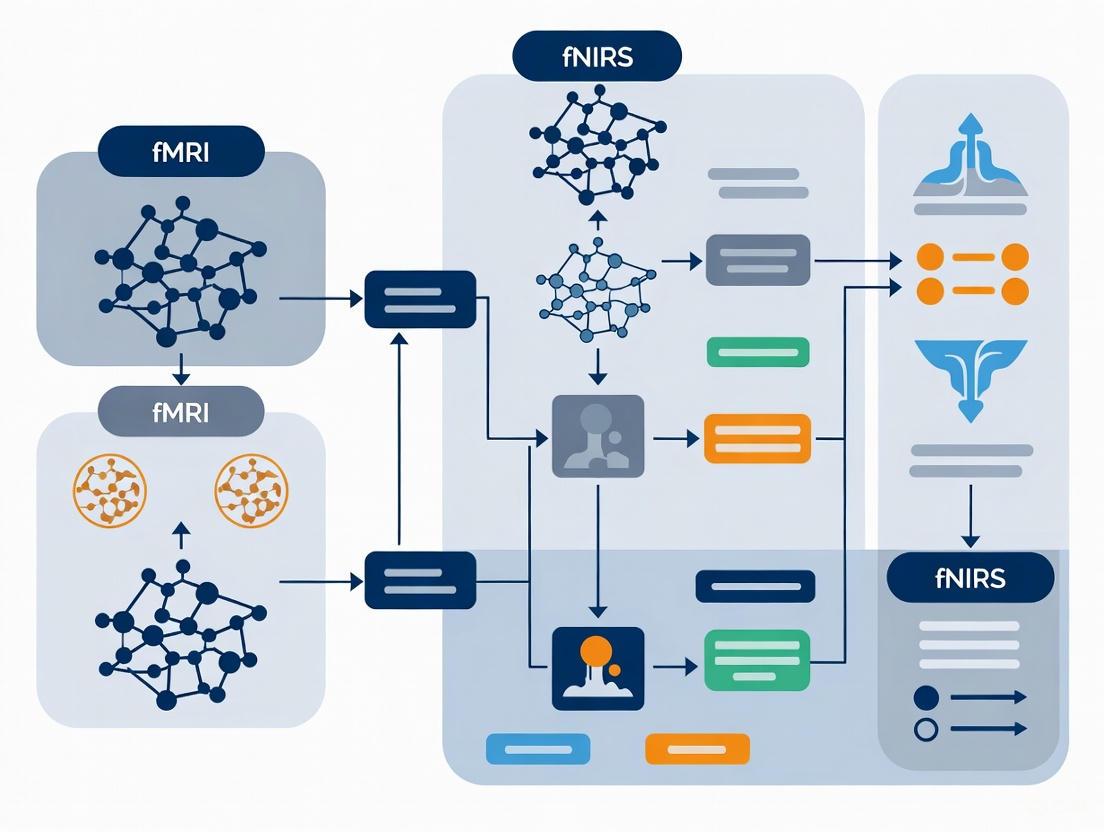
This article provides a comprehensive analysis of the deep brain detection capabilities of functional Magnetic Resonance Imaging (fMRI) and functional Near-Infrared Spectroscopy (fNIRS) for researchers and drug development professionals.
Deep Brain Detection: fMRI vs. fNIRS - A Comparative Analysis of Capabilities and Limitations for Biomedical Research
Abstract
This article provides a comprehensive analysis of the deep brain detection capabilities of functional Magnetic Resonance Imaging (fMRI) and functional Near-Infrared Spectroscopy (fNIRS) for researchers and drug development professionals. We explore the foundational principles of each technology, highlighting fMRI's high spatial resolution for subcortical imaging and fNIRS's superiority for naturalistic, cortical studies. The review covers advanced methodological integrations, including simultaneous data collection and computational inference techniques to overcome inherent limitations. We address critical troubleshooting aspects such as motion artifacts, hardware compatibility, and signal quality, and provide a rigorous validation of the modalities' correlation and clinical diagnostic power. This synthesis aims to guide tool selection and application in both fundamental neuroscience and clinical trials.
Unpacking the Core Technologies: The Fundamental Principles of fMRI and fNIRS
Functional Magnetic Resonance Imaging (fMRI), specifically through its Blood Oxygenation Level-Dependent (BOLD) contrast mechanism, represents the gold standard for non-invasive deep brain mapping in humans and animal models. While functional Near-Infrared Spectroscopy (fNIRS) has emerged as a complementary hemodynamic monitoring tool, fundamental physical and technical constraints limit its utility to superficial cortical structures. This guide provides an objective comparison of these technologies, detailing their operational principles, quantifying their performance characteristics, and presenting experimental data that validates fMRI's unparalleled spatial resolution and depth penetration for investigating subcortical neural networks.
The quest to non-invasively visualize active brain regions has revolutionized cognitive neuroscience and clinical practice. Among hemodynamic-based neuroimaging techniques, fMRI has maintained its status as the preeminent method for localizing brain function with high spatial resolution. The core of this capability lies in the BOLD signal, an indirect measure of neural activity that exploits the magnetic susceptibility of deoxygenated hemoglobin [1] [2]. Simultaneously, fNIRS has developed as a portable, flexible alternative that measures cortical hemodynamics through optical principles [3] [4]. However, as this guide will demonstrate through direct comparisons and experimental data, fNIRS faces inherent biophysical limitations that restrict its sampling to the brain's cortical surface, leaving fMRI as the undisputed champion for comprehensive deep brain mapping.
Technical Foundations: Photons vs. Magnetism
The fMRI BOLD Signal Mechanism
fMRI does not measure neural activity directly but instead detects localized hemodynamic changes that correlate with brain activation. The BOLD signal originates from the different magnetic properties of oxygenated hemoglobin (diamagnetic) and deoxygenated hemoglobin (paramagnetic) [2] [5]. During neural activation, a local increase in cerebral blood flow delivers oxygenated blood that exceeds metabolic demand, resulting in a net decrease in deoxygenated hemoglobin concentration in venules and capillaries. This reduction in paramagnetic molecules creates a more homogeneous magnetic field, leading to an increased MRI signal—the positive BOLD response [1]. This signal is inherently linked to the brain's neurovascular coupling, a complex process involving neurons, astrocytes, and vascular cells that ensures active brain regions receive adequate blood supply [1].
The fNIRS Optical Measurement Principle
fNIRS relies on the relative transparency of biological tissues to near-infrared light (700-900 nm) and the differential absorption properties of hemoglobin species [3] [4]. By emitting near-infrared light at multiple wavelengths through the scalp and measuring its attenuation at detector positions several centimeters away, fNIRS can estimate concentration changes in oxygenated (HbO) and deoxygenated (HbR) hemoglobin in superficial cortical vessels using the modified Beer-Lambert law [3]. The detected light follows a banana-shaped path between emitter and detector, sampling a volume extending to the cortical surface but with rapidly diminishing sensitivity to deeper brain structures [6] [4].
Figure 1: Signaling Pathways and Measurement Principles. Both fMRI and fNIRS measure the hemodynamic response to neural activity but exploit different physical principles—magnetic susceptibility for fMRI and light absorption for fNIRS.
Quantitative Performance Comparison
The fundamental differences in measurement physics translate to distinct performance characteristics, particularly regarding spatial resolution, depth sensitivity, and signal quality, as systematically quantified in simultaneous recording studies.
Table 1: Comprehensive Technical Comparison of fMRI and fNIRS
| Performance Parameter | fMRI/BOLD | fNIRS | Experimental Evidence |
|---|---|---|---|
| Spatial Resolution | 1-3 mm (high) [2] | 1-3 cm (low) [5] | Huppert et al., 2009: fMRI enables precise localization; fNIRS suffers from light scattering [6] |
| Depth Penetration | Full brain (deep structures) [7] | 1-2 cm (cortical surface only) [5] | Cui et al., 2011: fNIRS limited to superficial cortex; fMRI visualizes subcortical networks [6] |
| Temporal Resolution | 1-2 seconds (slow) [2] | 0.1-0.01 seconds (fast) [8] | Strangman et al., 2002: fNIRS provides higher sampling rate but measures slower hemodynamic response [6] |
| Signal-to-Noise Ratio (SNR) | High [6] | Significantly weaker [6] | Cui et al., 2011: fMRI SNR superior; fNIRS SNR decreases with source-detector distance [6] |
| Sensitivity to Deep Brain Structures | Excellent (subcortical nuclei, brainstem) [9] [7] | None [5] | Yang et al., 2020: Graphene fiber DBS-fMRI enables full activation mapping of basal ganglia-thalamocortical network [7] |
| Portability/Ecological Validity | Limited (scanner environment) [2] | High (ambulatory systems) [8] [5] | Canning & Scheutz, 2013: fNIRS enables brain monitoring during natural movement and social interaction [8] |
The empirical data from simultaneous fMRI-fNIRS studies reveals a critical trade-off. While fNIRS offers practical advantages for real-world monitoring, its capacity to map brain function is fundamentally constrained to superficial layers. fMRI maintains superior spatial resolution and depth penetration, enabling comprehensive whole-brain mapping, including critical subcortical structures.
Table 2: Brain Region Accessibility Across Modalities
| Brain Region | fMRI Accessibility | fNIRS Accessibility |
|---|---|---|
| Prefrontal Cortex | Excellent | Excellent |
| Primary Motor Cortex | Excellent | Good |
| Primary Visual Cortex | Excellent | Good |
| Subthalamic Nucleus | Excellent [7] | Not Accessible |
| Globus Pallidus | Excellent [9] | Not Accessible |
| Amygdala | Excellent | Not Accessible |
| Hippocampus | Excellent | Not Accessible |
| Thalamus | Excellent [7] | Not Accessible |
| Cerebellum | Excellent | Limited/Poor |
Experimental Validation: Direct Comparison Studies
Simultaneous fMRI-fNIRS Recording Protocol
To quantitatively compare these modalities, researchers have developed sophisticated simultaneous recording methodologies:
- Equipment: 3T MRI scanner with custom radiofrequency coils; continuous-wave fNIRS system with optical sources and detectors arranged on a flexible cap [6].
- Subject Preparation: Participants fitted with MRI-compatible fNIRS probes over regions of interest (e.g., prefrontal, motor cortices) using international 10-20 system for positioning [6].
- Experimental Design: Multiple cognitive and motor tasks (finger tapping, go/no-go, N-back working memory) performed in block or event-related designs [6].
- Data Acquisition: Simultaneous collection of BOLD fMRI time series and fNIRS attenuation measurements at multiple wavelengths (e.g., 690 nm and 830 nm) [6].
- Signal Processing: fMRI preprocessing (motion correction, spatial smoothing); fNIRS conversion to HbO/HbR concentration changes via modified Beer-Lambert law with pathlength correction [3] [6].
- Statistical Analysis: Correlation analysis between BOLD signals and HbO/HbR time courses; general linear modeling for spatial localization; quantification of signal-to-noise ratios across modalities [6].
Figure 2: Experimental Workflow for Simultaneous fMRI-fNIRS Validation Studies. This protocol enables direct quantitative comparison of temporal correlation, spatial specificity, and signal quality between modalities.
Key Experimental Findings
Direct comparison studies consistently demonstrate fMRI's superior capability for deep brain mapping:
- Temporal Correlation: HbO signals show the highest correlation with BOLD signals (e.g., r = 0.80-0.95 in motor cortex), as both reflect the increased blood oxygenation and volume following neural activation [6].
- Spatial Specificty: The elliptical photon sampling volume of fNIRS correlates best with BOLD activation in superficial cortical gray matter, with rapidly diminishing sensitivity beyond 2-3 cm depth [6].
- Deep Brain Activation: Studies combining deep brain stimulation with fMRI successfully map entire networks, including subthalamic nucleus, globus pallidus, and thalamocortical pathways—regions completely inaccessible to fNIRS [9] [7].
The Scientist's Toolkit: Essential Research Reagents
Table 3: Essential Materials and Solutions for Advanced fMRI Research
| Item/Reagent | Function/Application | Specifications |
|---|---|---|
| Graphene Fiber (GF) Microelectrodes | MRI-compatible deep brain stimulation; minimal artifact [7] | Diameter: ~75 μm; Impedance: 15.1 kΩ at 1 kHz; Charge-injection-capacity: 889.8 mC cm⁻² |
| High-Charge Capacity Electrodes | Functional electrical stimulation during fMRI | Materials: Titanium nitride, Iridium oxide; Charge-injection-limit: >2 mC cm⁻² [7] |
| MRI-Compatible Amplification Systems | Signal acquisition in high magnetic fields | Fiber-optic or carbon-fiber systems resistant to electromagnetic interference |
| Analysis Software Suite | BOLD signal processing and visualization | Packages: SPM, FSL, AFNI; Capabilities: General linear modeling, connectivity analysis [10] |
| Multimodal Data Integration Tools | Combining fMRI with other modalities | Software: AtlasViewer (fNIRS), HOMER3 (fNIRS), NIRS Toolbox [3] |
The experimental evidence unequivocally establishes fMRI-BOLD as the gold standard for high-resolution deep brain mapping, offering unparalleled access to subcortical structures with millimeter-level spatial precision. fNIRS serves as a complementary technology with distinct advantages in portability, tolerance for movement, and monitoring of superficial cortical regions. The choice between these technologies should be guided by the specific research question: fMRI for comprehensive whole-brain mapping requiring deep access and high spatial resolution, and fNIRS for ecological studies of cortical function where participant mobility and scanner incompatibility present limitations. For the foreseeable future, fMRI remains an indispensable tool for advancing our understanding of deep brain networks in health and disease.
Understanding the intricate functions of the human brain requires advanced neuroimaging techniques that can capture the dynamics of neural activity. Among the most prominent methods for measuring brain function are functional Near-Infrared Spectroscopy (fNIRS) and functional Magnetic Resonance Imaging (fMRI), both of which rely on detecting hemodynamic responses—changes in blood oxygenation and volume that accompany neural activity [2] [11]. While these techniques share a common physiological basis, they differ fundamentally in their technical approaches, capabilities, and limitations. This guide provides a detailed objective comparison between fNIRS and fMRI, with particular emphasis on their abilities to measure cortical activity and probe deeper brain structures. We present experimental data and methodologies to help researchers, scientists, and drug development professionals select the most appropriate technology for their specific neuroscientific investigations, particularly within the context of fNIRS's limitations in deep brain detection compared to fMRI's comprehensive whole-brain coverage.
Fundamental Principles and Measurement Techniques
Physiological Basis: The Hemodynamic Response
Both fNIRS and fMRI operate on the principle of neurovascular coupling, the well-established relationship between neural activity and subsequent changes in local blood flow, volume, and oxygenation [12]. When a brain region becomes active, it triggers a complex physiological cascade: an initial increase in oxygen consumption is rapidly followed by a substantial increase in cerebral blood flow (CBF) that delivers oxygenated blood beyond immediate metabolic demands [2]. This process results in characteristic changes in the concentrations of oxygenated hemoglobin (HbO/HbO2) and deoxygenated hemoglobin (HbR/HHb) in the local vasculature, forming the hemodynamic response function (HRF) that both techniques measure, albeit through different physical mechanisms [2] [12].
Technical Measurement Mechanisms
fNIRS utilizes the relative transparency of biological tissues to near-infrared light (650-1000 nm) [12]. Within this optical window, light can penetrate the scalp, skull, and brain tissue, where it is predominantly absorbed by the chromophores HbO and HbR [2]. Using modified Beer-Lambert law, fNIRS calculates concentration changes of these hemoglobin species based on differential absorption spectra at multiple wavelengths [13]. The technique typically employs sources emitting near-infrared light and detectors placed on the scalp surface, with measurements reflecting hemodynamic changes in the cortical gray matter beneath the optode array [2].
fMRI, in contrast, leverages the magnetic properties of hemoglobin. Oxyhemoglobin is diamagnetic (repelled from an applied magnetic field), while deoxygenated hemoglobin is paramagnetic (attracted to an external magnetic field) [2] [5]. These differential magnetic properties affect the MR signal, particularly the T2* relaxation rate. During neural activation, the localized increase in oxygenated blood reduces the concentration of paramagnetic deoxyhemoglobin, enhancing the MR signal intensity in what is known as the Blood Oxygen Level Dependent (BOLD) contrast [2]. This BOLD signal provides an indirect measure of neural activity that is heavily weighted toward venous blood oxygenation changes [2].
Table 1: Fundamental Measurement Principles Comparison
| Feature | fNIRS | fMRI |
|---|---|---|
| Primary Measurement | Concentration changes of HbO and HbR | Blood Oxygen Level Dependent (BOLD) signal |
| Physical Basis | Differential light absorption in near-infrared spectrum | Magnetic susceptibility differences between HbO/HbR |
| Measured Parameters | Separate HbO and HbR concentration changes | Composite signal influenced by HbO/HbR ratio |
| Physiological Origin | Microvasculature (arterioles, capillaries, venules) | Primarily venous compartments |
| Signal Interpretation | Direct measurement of hemoglobin species | Indirect composite signal requiring modeling |
Diagram 1: Fundamental signaling pathway of neurovascular coupling measured by fNIRS and fMRI. While both techniques measure hemodynamic responses, their physical detection mechanisms differ significantly.
Technical Specifications and Performance Comparison
Comprehensive Capabilities Assessment
The complementary strengths and limitations of fNIRS and fMRI stem from their fundamental physical principles and technical implementations. fMRI provides unparalleled spatial resolution and whole-brain coverage, including deep subcortical structures, making it ideal for mapping distributed neural networks [5] [11]. However, this comes at the cost of portability, accessibility, and tolerance to movement. fNIRS addresses many of these limitations with its portable, wearable design that enables brain imaging in naturalistic settings and with populations challenging to study in the MRI environment [2] [5].
Table 2: Technical Specifications and Performance Comparison
| Parameter | fNIRS | fMRI |
|---|---|---|
| Spatial Resolution | 1-3 cm [11] | 1-3 mm [5] |
| Temporal Resolution | 0.1-10 Hz [11] | 0.3-2 Hz (typically 0.5-2 s TR) [11] |
| Penetration Depth | Superficial cortex (2-3 cm) [5] [11] | Whole brain (including subcortical) |
| Portability | Fully portable/wearable systems available [2] [5] | Fixed installation, requires magnetic shielding |
| Motion Tolerance | High tolerance to movement artifacts [2] | Highly sensitive to motion, requires head immobilization |
| Population Flexibility | Suitable for infants, children, patients with implants [5] | Contraindicated for many implants, challenging for claustrophobic patients |
| Operational Costs | Relatively affordable, minimal ongoing costs [5] | Very high equipment and maintenance costs [2] [5] |
| Naturalistic Testing | Excellent for real-world environments [2] [11] | Limited to simulated environments within scanner |
Critical Limitation: Depth Sensitivity and Regional Coverage
The most significant technical distinction between these modalities for brain research lies in their depth sensitivity and regional coverage capabilities. fNIRS is fundamentally limited to measuring hemodynamic changes in the superficial cortical layers, typically reaching depths of 2-3 cm below the scalp [5] [11]. This limitation arises from the rapid scattering and absorption of near-infrared light as it passes through biological tissues, which prevents sufficient photons from reaching deeper structures and returning to detectors with measurable signal [2]. Consequently, fNIRS cannot reliably assess activity in subcortical regions such as the amygdala, hippocampus, thalamus, or basal ganglia [5].
In contrast, fMRI provides comprehensive whole-brain coverage, enabling simultaneous measurement of cortical and subcortical structures with high spatial precision [11]. The magnetic fields used in fMRI penetrate biological tissues uniformly, allowing visualization of deep brain regions that are critical for emotion, memory, reward processing, and many other fundamental neurological functions [11]. This capability makes fMRI indispensable for research requiring assessment of distributed brain networks that integrate cortical and subcortical elements.
Experimental Validation and Spatial Correspondence
Methodological Approaches for Cross-Validation
Substantial research has been conducted to validate fNIRS measurements against the established gold standard of fMRI, particularly for cortical activation. These validation studies typically employ one of two methodological approaches: synchronous acquisition (simultaneous fNIRS-fMRI recording) or asynchronous acquisition (separate sessions using identical paradigms) [2] [14]. Synchronous designs provide perfect temporal correspondence but present technical challenges regarding electromagnetic compatibility between systems [11]. Asynchronous designs avoid hardware interference issues but require careful control of performance and physiological variables across sessions [14].
A representative experimental protocol for assessing spatial correspondence involves motor tasks (execution or imagery) due to their well-characterized neuroanatomy and robust hemodynamic responses [14]. In such studies, participants typically perform block-design paradigms (e.g., 30-second blocks of motor activity alternating with baseline) during both fNIRS and fMRI recordings [14]. fNIRS optodes are positioned over motor cortical areas (primary motor and premotor cortices) based on international 10-10 or 10-20 systems, with source-detector separations typically ranging from 2.5-3.5 cm to ensure sufficient cortical penetration while maintaining adequate signal-to-noise ratio [14]. fMRI acquisition parameters typically include whole-brain coverage with 3-4 mm isotropic voxels, while fNIRS data is sampled at higher temporal rates (e.g., 5-10 Hz) [14].
Diagram 2: Experimental workflow for assessing spatial correspondence between fNIRS and fMRI during motor tasks, following established protocols from multimodal validation studies.
Key Experimental Findings on Spatial Correspondence
Research has demonstrated generally good spatial correspondence between fNIRS and fMRI measurements in cortical regions. A 2023 multimodal study by Santos et al. examined spatial correspondence during motor execution and imagery tasks, finding that subject-specific fNIRS signals (HbO, HbR, and HbT) could successfully identify activation clusters in separately acquired fMRI data [14]. Group-level activation was observed in individually-defined primary motor (M1) and premotor cortices (PMC) for all hemoglobin species, with no statistically significant differences in spatial correspondence between chromophores [14].
Other studies have reported strong temporal correlations between fMRI BOLD signals and fNIRS hemoglobin measurements, though correlation coefficients show considerable variation across investigations (ranging from 0 to 0.8) [14]. This variability may stem from differences in experimental design, signal processing approaches, and anatomical regions examined. Huppert et al. reported higher spatial cortical correlation with HbO using image reconstruction methods based on cortical surface topology, though noted reduced sensitivity in subcortical areas for fNIRS [14].
The Scientist's Toolkit: Essential Research Solutions
Key Reagents and Equipment for fNIRS Research
Table 3: Essential Research Materials and Solutions for fNIRS Experiments
| Item | Function/Purpose | Technical Specifications |
|---|---|---|
| fNIRS Instrumentation | Continuous wave (CW) systems most common for task-based studies [14] | Multiple wavelengths (760, 850 nm typical), sampling rate ≥5 Hz [14] |
| Optode Arrays | Scalp interface for light emission and detection | Source-detector separation: 2.5-3.5 cm (adults); material compatible with sterilization |
| Short-Distance Detectors | Measures superficial signals for physiological noise correction [14] | 8 mm separation for registering extracerebral hemodynamics [14] |
| 3D Digitization System | Records precise optode positions for anatomical co-registration | Infrared or electromagnetic tracking with ≤2 mm accuracy |
| Anatomical Registration Software | Co-registers fNIRS channels with brain anatomy | Integration with MRI templates or individual anatomy (e.g., AtlasViewer) |
| Hemodynamic Analysis Tools | Converts light intensity to hemoglobin concentrations | Modified Beer-Lambert law implementation with age-appropriate DPF values |
| Experimental Paradigm Software | Presents stimuli and records behavioral responses | Precision timing synchronization with fNIRS data acquisition |
Applications and Clinical Translation
Context-Appropriate Implementation
The complementary strengths of fNIRS and fMRI determine their optimal applications in research and clinical settings. fMRI remains the gold standard for comprehensive brain mapping studies requiring precise spatial localization of both cortical and subcortical activity [5] [11]. Its unparalleled spatial resolution and whole-brain coverage make it ideal for pre-surgical planning, detailed functional neuroanatomy studies, and investigations of distributed brain networks [11].
fNIRS has found particularly valuable applications in populations and settings where fMRI is impractical or impossible [2] [5]. These include:
- Infant and child development studies where movement tolerance and child-friendly testing environments are essential [2]
- Psychiatric and neurological populations with limited ability to remain motionless [5]
- Rehabilitation research involving active movement, exercise, or real-world interactions [2] [11]
- Longitudinal monitoring requiring repeated measurements in clinical or naturalistic settings [12]
- Patients with implants contraindicated for MRI (pacemakers, deep brain stimulators, etc.) [12]
In clinical neuroscience and drug development, fNIRS offers promising approaches for monitoring treatment effects, assessing cortical function in vulnerable populations, and measuring brain activity during ecologically valid tasks that approximate real-world functioning [15] [12]. The technology has shown particular utility in monitoring cerebral oxygenation in critical care settings, mapping language and motor functions in neurosurgical planning, and tracking neuroplastic changes during rehabilitation [12].
fNIRS and fMRI represent complementary rather than competing technologies in the neuroimaging arsenal. fNIRS provides an unparalleled combination of portability, motion tolerance, and accessibility for measuring cortical hemodynamics in diverse populations and settings, serving as a bridge between highly controlled laboratory environments and real-world brain function [2] [5] [11]. However, its fundamental limitation in assessing subcortical structures remains a significant constraint for research requiring comprehensive brain coverage [5] [11]. fMRI maintains its position as the gold standard for detailed spatial mapping of entire brain networks, including deep gray matter structures inaccessible to optical methods [11]. The strategic selection between these modalities should be guided by specific research questions, target populations, and methodological requirements, with growing interest in multimodal approaches that leverage their complementary strengths [2] [11].
HERE IS THE DRAFT OF YOUR ARTICLE
Inherent Spatial Limitations: Why fNIRS is Confined to the Cortical Surface
Functional Near-Infrared Spectroscopy (fNIRS) has emerged as a powerful tool for non-invasive neuroimaging, prized for its portability, cost-effectiveness, and tolerance of motion. However, its application is fundamentally bounded by a key physical constraint: an inability to probe subcortical brain structures. This guide details the biophysical principles and technical factors that confine fNIRS to the cortical surface, providing an objective comparison with deep-brain imaging modalities like fMRI and outlining the experimental methodologies that define these limits.
The Biophysical Barrier: Light Scattering and Absorption in Biological Tissues
The confinement of fNIRS to the cortical surface is not a limitation of current technology but a fundamental consequence of how near-infrared light interacts with biological tissues. The technique relies on the relative transparency of tissue to light in the near-infrared spectrum (700-900 nm), a region known as the "optical window" [16] [4]. Within this window, light is absorbed less by water and other background chromophores, allowing it to penetrate deeper than other wavelengths.
However, this penetration is finite and constrained by two primary phenomena:
- Scattering: Near-infrared light is highly scattered by cellular membranes, organelles, and other tissue components. This scattering prevents light from traveling in a straight path. Instead, photons take a diffuse, "banana-shaped" trajectory between the source and detector on the scalp [16].
- Absorption: The primary chromophores absorbing near-infrared light are oxygenated hemoglobin (HbO) and deoxygenated hemoglobin (HbR). The difference in their absorption spectra allows fNIRS to measure hemodynamic changes [16] [4]. The effective penetration depth is a function of the source-detector separation, typically set at 3-4 cm for adults. At this distance, the detected light has sampled a volume that reaches the superficial layers of the cerebral cortex but does not extend to subcortical structures [11] [17]. Beyond this depth, the intensity of the reflected light becomes too weak to detect reliably, as an exponential amount of light is lost to scattering and absorption.
Diagram 1: Photon Migration and Depth Limitation in fNIRS. Light from the source diffuses through head layers, with the effective path forming a "banana-shape". The penetration depth is limited to the cerebral cortex.
fNIRS vs. fMRI: A Technical Comparison of Spatial Capabilities
The spatial limitations of fNIRS become starkly apparent when compared to functional Magnetic Resonance Imaging (fMRI), the gold standard for non-invasive deep brain imaging. The following table summarizes the critical differences in their spatial capabilities, driven by their underlying physical principles.
Table 1: Spatial Performance Comparison of fNIRS and fMRI
| Feature | fNIRS | fMRI |
|---|---|---|
| Fundamental Principle | Measures hemodynamics via near-infrared light absorption [16] | Measures blood oxygenation level-dependent (BOLD) signal via magnetic fields [11] [17] |
| Primary Spatial Limitation | Limited penetration depth of light [11] [17] | No fundamental depth limitation; whole-brain coverage [11] [17] |
| Spatial Resolution | ~1-3 cm [11] [17] | Millimeter-level (e.g., 1-2 mm) [11] [17] |
| Imaged Brain Structures | Superficial cerebral cortex only [11] [17] | Entire brain, including cortical and subcortical structures (e.g., hippocampus, amygdala, thalamus) [11] [17] |
| Temporal Resolution | High (millisecond to second-level) [11] [17] | Lower (limited by hemodynamic response, ~0.33-2 Hz sampling) [11] [17] |
| Portability & Environment | Portable; suitable for naturalistic, bedside, and movement-friendly settings [16] [11] [17] | Non-portable; requires restrictive, controlled scanner environment [11] [17] |
As the data indicates, the choice between fNIRS and fMRI involves a direct trade-off. fNIRS offers superior temporal resolution and ecological validity for studying cortical processes in real-world scenarios. In contrast, fMRI provides unparalleled spatial resolution and whole-brain access, including subcortical areas, but at the cost of temporal resolution and portability.
Experimental Evidence: Protocol and Data Demonstrating Cortical Limitation
The cortical limitation of fNIRS is not merely theoretical but is consistently observed in experimental practice. The following exemplifies a standard experimental protocol and its findings.
Sample Experimental Protocol: Resting-State Functional Connectivity in DOC Patients
- Aim: To investigate whole-brain functional connectivity in patients with Disorders of Consciousness (DOC) and differentiate between minimally conscious state (MCS) and unresponsive wakefulness syndrome (UWS) [18].
- Methodology:
- Participants: DOC patients (MCS and UWS) and healthy controls (HC).
- fNIRS System: A high-density system with 24 sources and 24 detectors configured over the scalp, creating 63 measurement channels [18].
- Source-Detector Separation: ~3 cm, the standard distance for adult cortical measurements [18].
- Procedure: A 5-minute resting-state scan was performed. Data was preprocessed to remove noise and artifacts.
- Analysis: Functional connectivity was computed between all channel pairs. Regions of Interest (ROIs) were defined based on standard brain atlases, including the prefrontal cortex, premotor cortex, and sensorimotor cortex—all superficial cortical areas [18].
- Key Findings: The study successfully identified distinct functional connectivity patterns in the measured cortical regions that could differentiate MCS from UWS patients with high accuracy [18]. The complete absence of data from subcortical structures like the thalamus or brainstem in the analysis underscores the technical constraint; these regions were simply outside the measurable volume.
Advancements and Persistent Limits: High-Density fNIRS
Research into High-Density (HD) fNIRS arrays, which use overlapping source-detector separations, has improved the technique's spatial resolution and sensitivity within the cortex. A 2025 study statistically compared HD and traditional sparse arrays, demonstrating that HD configurations provide superior localization and detection of activation in the dorsolateral prefrontal cortex during cognitive tasks [19]. However, it is critical to note that this enhancement in cortical mapping does not equate to an increase in penetration depth. HD-fNIRS still operates within the same fundamental biophysical limits and remains confined to the cortical surface [19].
The Scientist's Toolkit: Essential Reagents and Materials
Table 2: Key Research Reagent Solutions for fNIRS Cortical Imaging
| Item | Function in Research |
|---|---|
| Continuous-Wave (CW) fNIRS System | The most common type of fNIRS hardware. It emits light at constant intensity and measures attenuation to calculate changes in hemoglobin concentration [4]. |
| High-Density (HD) Probe Cap | A cap holding a dense array of sources and detectors, enabling overlapping measurement channels for improved cortical spatial resolution and signal-to-noise ratio [19]. |
| Short-Separation Channels | Dedicated detectors placed very close (~8 mm) to sources. They measure systemic physiological noise from the scalp, which can be regressed out from standard channels to improve signal quality [19]. |
| Digitization Hardware | A system to record the 3D spatial coordinates of the optodes on the scalp. This is crucial for co-registering fNIRS data with anatomical MRI scans to verify the cortical regions being measured [20]. |
| Anatomical Atlas (e.g., Brodmann Areas) | Standard brain maps used to assign fNIRS channels to specific cortical regions of interest (ROIs) for group-level analysis and reporting [18]. |
The confinement of fNIRS to the cortical surface is an immutable characteristic rooted in the physics of light-tissue interaction. While this precludes the study of subcortical activity, fNIRS carves out a critical niche as a versatile tool for investigating cortical brain function in scenarios where fMRI is impractical. For researchers requiring deep brain access, fMRI remains the indispensable modality. The ongoing development of fNIRS, particularly through high-density arrays and sophisticated signal processing, continues to refine our window into the cerebral cortex, but this window's view, by fundamental law, remains a superficial one.
Understanding the intricate functions of the human brain requires sophisticated neuroimaging tools, each with distinct capabilities and limitations. Functional Magnetic Resonance Imaging (fMRI) and functional Near-Infrared Spectroscopy (fNIRS) have emerged as cornerstone hemodynamic-based techniques for studying brain activity. While both methods measure the hemodynamic response related to neural activity, they differ fundamentally in their spatial and temporal characteristics, shaping their applications across basic neuroscience and clinical practice. This guide provides a direct, data-driven comparison of fMRI and fNIRS, focusing on their respective strengths in spatial versus temporal resolution. We synthesize evidence from validation studies, detail experimental protocols, and contextualize these findings within the broader research on deep brain detection capabilities, providing researchers and drug development professionals with a practical framework for selecting and utilizing these technologies.
Technical Comparison: fMRI vs. fNIRS
Both fMRI and fNIRS measure hemodynamic changes subsequent to neural activity but utilize fundamentally different physical principles to do so. fMRI relies on the different magnetic properties of oxygenated hemoglobin (diamagnetic) and deoxygenated hemoglobin (paramagnetic) [5]. Using magnetic resonance imaging and radiofrequency pulses, it generates the Blood-Oxygen-Level-Dependent (BOLD) signal, which primarily reflects changes in deoxygenated hemoglobin [2]. In contrast, fNIRS is an optical technique that leverages the distinct absorption characteristics of oxygenated (HbO) and deoxygenated hemoglobin (HbR) to near-infrared light (650-1000 nm) [5] [2]. By emitting NIR light and measuring its attenuation, fNIRS can calculate relative concentration changes of both HbO and HbR [21].
Table 1: Core Technical Specifications of fMRI and fNIRS
| Feature | fMRI | fNIRS |
|---|---|---|
| Spatial Resolution | Millimeter (1-2 mm) [11] | Centimeter (1-3 cm) [11] |
| Temporal Resolution | ~0.3-2 Hz (limited by hemodynamic lag) [11] | Up to ~100 Hz (typically 10 Hz) [11] |
| Penetration Depth | Full brain (cortical and subcortical) [5] | Superficial cortex (1.5-2 cm) [5] [11] |
| Primary Measured Signal | BOLD (sensitive to deoxygenated hemoglobin) [2] | Concentration changes of oxygenated (HbO) and deoxygenated hemoglobin (HbR) [5] |
| Portability | No (requires fixed scanner) | Yes (fully portable systems available) [5] |
| Typical Cost | Very High ($1000+ per scan) [21] | Relatively Low (often a one-time investment) [5] |
The divergence in their measurement principles directly leads to a classic trade-off between spatial and temporal capabilities. fMRI's exceptional spatial resolution and whole-brain coverage, including deep structures like the amygdala and hippocampus, make it the gold standard for localizing neural activity [11]. However, its temporal resolution is constrained by the slow hemodynamic response, which lags behind neural activity by 4-6 seconds [11]. Conversely, fNIRS provides a much higher temporal sampling rate, allowing it to capture more rapid physiological fluctuations and the finer temporal dynamics of the hemodynamic response [5] [11]. Its critical limitation is its restriction to the brain's superficial cortical layers, preventing its use in studying subcortical function [5] [11].
Quantitative Data from Validation Studies
Numerous studies have quantitatively compared the signals and performance of fMRI and fNIRS, both in sequential and simultaneous recording setups. These investigations consistently demonstrate a strong correlation between the signals, validating fNIRS as a robust measure of cortical hemodynamics, while also highlighting its spatial limitations.
Table 2: Key Findings from Combined fMRI-fNIRS Studies
| Study / Task | Key Finding on Spatial Correspondence | Key Finding on Signal Correlation |
|---|---|---|
| Motor & Visual Tasks (Group Level) [22] | fNIRS overlapped up to 68% of fMRI activation areas. Positive Predictive Value (PPV): 51%. | Strong temporal correlation observed, supporting fNIRS as a valid measure of cortical hemodynamics. |
| Motor & Visual Tasks (Within-Subject) [22] | fNIRS overlapped an average of 47.25% of fMRI activation. Positive Predictive Value (PPV): 41.5%. | |
| Cognitive Task Battery [6] | Spatial correlation strength depended on scalp-to-brain distance and signal-to-noise ratio. | NIRS signals (especially HbO) were "often highly correlated" with fMRI measurements. |
| SMA Activation [23] | fNIRS showed reliable spatial specificity for detecting supplementary motor area (SMA) activation. | Task-related modulations in fMRI were consistently reflected in fNIRS signals (both HbO and HbR). |
A 2024 study focusing on clinical translation assessed the spatial correspondence of cortical activity measured with whole-head fNIRS and fMRI during motor and visual tasks. The results showed a good true positive rate, meaning fNIRS reliably detected areas that were also active in fMRI [22]. The overlap was more pronounced in group-level analyses (up to 68%) than in individual-level analyses (47.25%), underscoring fNIRS's strength in identifying group-wise activation patterns in superficial cortical regions [22]. The lower Positive Predictive Value in within-subject analyses suggests fNIRS can sometimes detect significant activity in regions without corresponding fMRI signals, potentially due to its sensitivity to different physiological confounds or its broader measurement area [22].
Another comprehensive study comparing NIRS and fMRI across multiple cognitive tasks confirmed that while fNIRS signals have a significantly weaker signal-to-noise ratio (SNR), they are often highly correlated with fMRI measurements [6]. The correlation was influenced by the anatomical distance between the scalp and the brain, as well as the task's inherent SNR [6]. This relationship is illustrated in the following diagram of the signal correlation mechanism:
Diagram 1: Signal correlation mechanism between fNIRS and fMRI.
Experimental Protocols for Multimodal Validation
The reliable correlation between fNIRS and fMRI signals, as summarized above, is established through carefully controlled experimental protocols. A typical multimodal validation study involves a within-subjects design where participants perform the same tasks during both fNIRS and fMRI recordings, which can be conducted sequentially or simultaneously.
- Participant Preparation: Participants are fitted with an MRI-compatible fNIRS cap. Optodes are positioned over target regions (e.g., prefrontal, motor, or parietal cortices) based on standard head coordinates (e.g., 10-20 system).
- Hardware Setup: The fNIRS system uses specialized MRI-compatible modules, including long optical fibers and non-metallic optodes, to function within the high magnetic field without causing interference or safety hazards [24].
- Task Paradigm: Participants perform blocked or event-related tasks while simultaneous data is acquired.
- Example: Finger Tapping Task: Alternating 15-second tapping epochs with 20-second rest epochs. During tapping, a visual cue (e.g., flashing checkerboard) instructs participants to tap their fingers vigorously [6].
- Example: Cognitive Tasks: Protocols like Go/No-Go or N-back working memory tasks are used to engage higher-order cognitive functions [6].
- Synchronization: A trigger signal from the stimulus presentation computer is sent simultaneously to both the fMRI and fNIRS systems to synchronize the recorded data with task events.
- Session 1 (fMRI):
- Participants first undergo an anatomical MRI scan for precise localization.
- They then perform tasks (e.g., motor execution, motor imagery) during functional MRI acquisition.
- Head movement is minimized using padding.
- Session 2 (fNIRS):
- Conducted in a separate lab setting, ideally within a short time frame.
- The fNIRS cap is placed on the participant, and optode positions are coregistered to the individual's anatomical MRI or a standard brain atlas using 3D digitization techniques [5] [23].
- Participants perform the identical tasks from the fMRI session.
- Data Analysis:
- The fMRI BOLD response is extracted from the cortical regions corresponding to the fNIRS channel locations.
- fNIRS data is converted into concentration changes of HbO and HbR.
- Spatial specificity is assessed by comparing the topography of fNIRS activation maps with fMRI activation maps. Task sensitivity is evaluated by comparing the hemodynamic response functions and their correlation with the task paradigm across both modalities [23].
The following workflow diagram illustrates the consecutive validation protocol:
Diagram 2: Consecutive fMRI-fNIRS validation workflow.
Research Reagent Solutions for Multimodal Imaging
Successfully conducting combined fMRI-fNIRS research requires specific hardware and software solutions. The following table details key components of a multimodal imaging toolkit.
Table 3: Essential Materials for Combined fMRI-fNIRS Experiments
| Item Name | Function / Description | Key Considerations |
|---|---|---|
| MRI-Compatible fNIRS System [24] | A specialized fNIRS device designed to operate safely and effectively inside the MRI scanner room without causing electromagnetic interference or being damaged by the magnetic field. | Systems include non-magnetic optodes and sufficiently long optical fibers (e.g., 5-8 meters). Examples include modules for NIRx NIRSport/NIRScout systems [24]. |
| 3D Digitization Probe [5] [23] | A device used to accurately measure the 3D spatial coordinates of fNIRS optodes on the participant's head relative to anatomical landmarks. | Enables precise coregistration of fNIRS data with the individual's anatomical MRI scan, drastically improving spatial accuracy. |
| Coregistration & Analysis Software [5] [23] | Software packages (e.g., AtlasViewer, fOLD, SPM, Homer2) used to map fNIRS channel locations onto cortical surfaces and perform joint statistical analysis. | Allows for integrating fNIRS data with anatomical atlases or individual MRI data, bridging the spatial resolution gap. |
| Digital Trigger Interface [24] | A hardware component that receives timing signals from the stimulus presentation computer and sends synchronized trigger pulses to both the fMRI and fNIRS systems. | Ensures precise temporal alignment of the recorded brain data with task events, which is crucial for data fusion and analysis. |
The comparative analysis of fMRI and fNIRS reveals a clear complementarity rooted in the spatial-temporal resolution trade-off. fMRI remains the undisputed gold standard for whole-brain imaging with high spatial resolution, essential for investigating deep brain structures and generating detailed functional maps. fNIRS, with its superior temporal resolution, portability, and tolerance for movement, offers a powerful alternative for studying cortical dynamics in naturalistic settings and with populations inaccessible to fMRI. The consistent finding of a strong correlation between their hemodynamic signals, as evidenced by multiple validation studies, solidifies fNIRS's role as a reliable tool for functional brain imaging. For researchers and clinicians, the choice between these technologies is not a question of which is superior, but which is optimal for the specific scientific question or clinical application at hand. The future of neuroimaging lies not in the exclusive use of one modality, but in the strategic combination of fMRI and fNIRS to leverage their respective strengths, thereby providing a more complete and nuanced understanding of human brain function.
In the pursuit of understanding brain function, researchers and clinicians are perpetually caught between two competing demands: the need for high-fidelity data and the need for ecological validity. Functional Magnetic Resonance Imaging (fMRI), long considered the gold standard for in-vivo brain imaging, excels in the first category but fails in the second. Functional Near-Infrared Spectroscopy (fNIRS), its portable counterpart, presents an inverse profile [5] [17]. This guide objectively compares the performance of these two hemodynamic-based modalities, framing the analysis within a critical research context: the challenge of achieving deep-brain detection capability. The central thesis is that the choice between fMRI and fNIRS is not merely logistical but fundamental, dictated by the trade-off between spatial resolution and portability, which in turn dictates the very nature of the scientific or clinical questions one can address.
Technical Comparison: fMRI vs. fNIRS
Both fMRI and fNIRS measure the hemodynamic response, a proxy for neural activity that involves local changes in cerebral blood flow and oxygenation. However, their underlying physical principles, and consequently their performance characteristics, differ profoundly [5].
- fMRI detects brain activity by exploiting the different magnetic properties of oxygenated hemoglobin (diamagnetic) and deoxygenated hemoglobin (paramagnetic). It measures the Blood-Oxygen-Level-Dependent (BOLD) signal, which primarily reflects changes in deoxygenated hemoglobin [5] [17].
- fNIRS uses near-infrared light (650-1000 nm) to penetrate the scalp and skull. It measures relative concentration changes in oxygenated (HbO) and deoxygenated (HbR) hemoglobin based on their distinct light absorption spectra [5] [3].
The following table summarizes the objective performance differences stemming from these core technologies.
Table 1: Technical and Operational Comparison of fMRI and fNIRS
| Feature | fMRI | fNIRS |
|---|---|---|
| Spatial Resolution | High (millimeter-level) [17] | Low (1-3 cm) [5] [17] |
| Temporal Resolution | Low (~0.33-2 Hz, limited by hemodynamics) [17] | High (up to 100s of Hz) [25] |
| Portability | None; requires a shielded lab [5] | High; fully portable and wireless systems available [5] [17] |
| Measurement Depth | Whole brain, including deep structures (e.g., amygdala, hippocampus) [17] | Superficial cortex only (max depth ~2-3 cm) [5] [25] |
| Tolerance to Motion | Low; highly sensitive to artifacts [5] | High; relatively robust to motion artifacts [5] [26] |
| Participant Limitations | Unsuitable for individuals with metal implants, claustrophobia, or difficulty remaining still (e.g., infants) [5] | Suitable for all populations, including infants, children, and those with implants [5] [25] |
| Operational Environment | Controlled, loud MRI suite [5] | Flexible; lab, clinic, classroom, or real-world settings [5] [17] |
| Cost | Very high (equipment and per-scan costs) [5] | Relatively affordable (often a one-time investment) [5] |
The Portability Divide in Application
The technical specifications in Table 1 directly translate into a stark divide in application domains, which can be categorized by setting and required brain coverage.
Table 2: Application Suitability Across Environments and Research Goals
| Application Context | Ideal Modality | Rationale & Supporting Evidence |
|---|---|---|
| Mapping Deep Brain Networks (e.g., limbic system, thalamus) | fMRI | fNIRS's physical limitations make it incapable of directly measuring subcortical activity [17] [25]. |
| High-Precision Surgical Planning | fMRI | Unparalleled spatial resolution and whole-brain coverage are essential [17]. |
| Studying Social Interaction (Hyperscanning) | fNIRS | Portability enables simultaneous measurement of multiple interacting brains in natural poses [17] [27]. |
| Neurodevelopment in Infants & Children | fNIRS | Tolerance to movement and lack of physical restrictions make longitudinal studies feasible [5] [28]. |
| Rehabilitation & Motor Learning | fNIRS | Allows brain monitoring during active movement, walking, and physical therapy [5] [14]. |
| Real-World Cognitive Tasks (e.g., driving, classroom learning) | fNIRS | Enables measurement of brain function in ecologically valid, naturalistic settings [17] [28]. |
The Deep-Brain Detection Challenge
A core thesis in neuroimaging technology is fNIRS's fundamental limitation regarding deep-brain structures. The physics of light scattering and absorption in biological tissue confines fNIRS measurements to the cerebral cortex [25]. This is a significant constraint, as many critical cognitive and affective processes involve subcortical regions like the amygdala, hippocampus, and striatum.
Innovative research is exploring computational methods to bridge this gap. For example, a 2015 study used a Support Vector Regression (SVR) learning algorithm to predict deep-brain activity from cortical fNIRS signals [25]. The methodology involved:
- Simultaneous Data Acquisition: Collecting concurrent fNIRS and fMRI data from participants performing cognitive tasks.
- Model Training: Using the SVR algorithm to learn the relationship between the cortical activity patterns measured by fNIRS and the corresponding deep-brain activity measured by fMRI.
- Validation: The model's predictions for deep-brain activity were compared against the actual fMRI signals. The results showed that the top 15% of fNIRS-based predictions achieved a high correlation (0.7) with the fMRI benchmark [25].
This workflow demonstrates a potential pathway to infer deep-brain activity, extending fNIRS applications in cognitive and clinical neuroscience research [25].
Experimental Validation: A Multimodal Approach
The scientific community validates fNIRS by comparing it directly with fMRI in simultaneous or asynchronous recordings. A 2023 study provides a robust example, investigating the spatial correspondence between the two modalities during motor tasks [14].
Experimental Protocol: Motor Execution and Imagery
- Participants: 9 healthy volunteers.
- Paradigm: A block design with Motor Action (MA) involving bilateral finger tapping and Motor Imagery (MI) of the same sequence.
- Data Acquisition:
- fMRI: Acquired asynchronously using a 3T scanner, focusing on motor-related areas.
- fNIRS: Used a portable NIRSport2 system with 54 channels covering bilateral motor areas, including 8 short-distance detectors to mitigate superficial confounds [14].
- Analysis: Subject-specific fNIRS signals (HbO, HbR, HbT) were used as predictors to model the previously acquired fMRI data. The goal was to see if fNIRS cortical signals could identify corresponding activation clusters in the fMRI data [14].
- Key Finding: The study successfully identified group-level activation in primary and premotor cortices in the fMRI data modeled from fNIRS signals. There were no statistically significant differences in spatial correspondence between the different hemoglobin chromophores [14]. This demonstrates that fNIRS can reliably transfer neuronal information from well-defined cortical paradigms to fMRI with high spatial fidelity.
The Scientist's Toolkit: Key Reagents & Materials
Table 3: Essential Materials for Multimodal fNIRS-fMRI Research
| Item | Function in Research |
|---|---|
| Continuous Wave (CW) fNIRS System | The most common type of fNIRS device; uses light sources of constant intensity to provide relative measures of hemoglobin concentration changes [3]. |
| Short-Distance Detectors (SDD) | Placed ~8mm from a source to measure systemic physiological noise from the scalp. This signal is used to regress out confounding superficial artifacts from the cerebral fNIRS signal [14]. |
| fNIRS Cap & 3D Digitizer | A head cap holding optodes in a pre-defined array. A 3D digitizer records the precise scalp locations of each optode for coregistration with anatomical MRI data and accurate brain mapping [5]. |
| AtlasViewer / HOMER3 | Software packages for visualizing fNIRS data on brain models (AtlasViewer) and for comprehensive data preprocessing and analysis (HOMER3) [5] [3]. |
| Support Vector Regression (SVR) | A machine learning algorithm used in computational methods to infer deep-brain activity from cortical fNIRS measurements, helping to overcome fNIRS's depth limitation [25]. |
The divide between fMRI and fNIRS is not a chasm to be closed but a landscape to be navigated with strategic intent. fMRI remains the undisputed tool for mapping the entire brain with high spatial resolution, making it indispensable for studies where deep-structure involvement is central or for precise clinical localization. Conversely, fNIRS establishes its critical value by enabling valid neuroimaging in real-world, dynamic contexts that are simply inaccessible to the fMRI scanner. The future of cognitive and clinical neuroscience does not lie in one modality superseding the other, but in the continued refinement of both, along with the development of sophisticated computational methods that leverage their complementary strengths. For researchers and drug development professionals, the decision matrix is clear: prioritize the deep-brain and spatial precision question with fMRI, and prioritize the ecological and portability question with fNIRS.
Bridging the Gap: Integrative Methods and Clinical Applications in Brain Research
Synchronous vs. Asynchronous Multimodal Integration of fMRI and fNIRS
Understanding the intricate functions of the human brain requires multimodal neuroimaging approaches that integrate complementary technologies. Functional Magnetic Resonance Imaging (fMRI) and functional Near-Infrared Spectroscopy (fNIRS) are two hemodynamic-based techniques that offer distinct advantages and limitations for brain research [2]. fMRI provides high spatial resolution for visualizing both cortical and subcortical structures, while fNIRS offers superior temporal resolution, portability, and higher tolerance for motion [11] [2]. The integration of these modalities can be achieved through either synchronous (simultaneous) or asynchronous (sequential) data acquisition approaches, each with specific methodological considerations, applications, and trade-offs. This comparison guide examines these integration strategies within the broader context of overcoming fNIRS's fundamental limitation: its inability to directly measure hemodynamic activity in deep-brain regions [25].
Fundamental Technical Comparison of fMRI and fNIRS
fMRI and fNIRS are both non-invasive techniques that measure hemodynamic responses related to neural activity, but they leverage different physical principles and offer complementary profiles of strengths and weaknesses [2].
fMRI measures the Blood Oxygen Level Dependent (BOLD) contrast, which arises from differences in the magnetic susceptibility of oxygenated (diamagnetic) and deoxygenated (paramagnetic) blood [2]. This allows for high-resolution spatial mapping of brain activity across the entire brain, including deep structures, with millimeter-level precision [11]. However, fMRI requires expensive, immobile equipment, has limited temporal resolution (constrained by the hemodynamic response), and is highly sensitive to motion artifacts, restricting its use in naturalistic settings [11] [2].
fNIRS utilizes near-infrared light (650-950 nm) to measure concentration changes in oxygenated (HbO) and deoxygenated hemoglobin (HbR) within the cortical surface [11] [12]. Its advantages include portability, higher temporal resolution (often millisecond-level), cost-effectiveness, and greater resilience to motion artifacts [11] [2]. The primary limitation of fNIRS is its confinement to superficial cortical regions due to the limited penetration depth of near-infrared light, making it unsuitable for direct investigation of subcortical structures [11] [25]. Its spatial resolution is also typically lower than that of fMRI [11].
Table 1: Fundamental Characteristics of fMRI and fNIRS
| Feature | fMRI | fNIRS |
|---|---|---|
| Measured Signal | Blood Oxygen Level Dependent (BOLD) contrast | Concentration changes of HbO and HbR |
| Spatial Resolution | High (millimeter-level) [11] | Low to Moderate (1-3 cm) [11] |
| Temporal Resolution | Low (0.33-2 Hz, limited by hemodynamics) [11] | High (up to hundreds of Hz) [12] |
| Portability | No (requires MRI scanner) | Yes [2] |
| Tolerance to Motion | Low | High [2] |
| Depth Sensitivity | Whole-brain (cortical and subcortical) [11] | Superficial cortex (up to 2-3 cm) [25] |
| Key Strength | Unparalleled spatial resolution and whole-brain coverage [11] | Ecological validity, suitability for extended monitoring and specific populations [2] |
| Primary Limitation | Cost, operational constraints, and low temporal resolution [11] | Limited spatial resolution and inability to probe subcortical activity [11] [25] |
Integration Methodologies: Synchronous vs. Asynchronous
The combination of fMRI and fNIRS can be categorized into two primary modes of integration: synchronous and asynchronous.
Synchronous Integration
Synchronous integration involves the simultaneous data acquisition of both fMRI and fNIRS while the participant performs a task [11]. This approach allows for a direct, within-subject and within-session comparison of the hemodynamic signals, enabling the investigation of neurovascular coupling and the validation of fNIRS signals against the gold-standard spatial localization of fMRI [11] [29].
Key Advantages:
- Direct Signal Correlation: Enables precise temporal alignment and correlation of the fMRI BOLD signal with fNIRS-measured HbO and HbR concentrations [14].
- Validation: Serves as a crucial method for confirming the utility and accuracy of fNIRS technology in human brain research [11].
- Complex Paradigms: Facilitates the study of brain dynamics where timing is critical, providing a rich, multimodal dataset from a single experimental session.
Key Challenges:
- Hardware Incompatibility: fNIRS hardware must be MRI-compatible to avoid electromagnetic interference and ensure safety within the high-field environment [11].
- Experimental Limitations: The constraints of the MRI scanner (supine position, loud noise, restricted movement) limit the ecological validity of the tasks that can be performed [2].
- Data Fusion Complexity: Aligning and fusing the two distinct data types with different spatial and temporal characteristics requires sophisticated processing pipelines [11].
Asynchronous Integration
Asynchronous integration involves collecting fMRI and fNIRS data in separate sessions, often using similar or identical task paradigms [11] [14]. This approach is often used to translate fMRI-defined paradigms to fNIRS setups for later use in naturalistic or clinical settings.
Key Advantages:
- Optimized Conditions: Each modality can be used in its optimal environment—fMRI in the scanner and fNIRS in a more naturalistic lab or bedside setting [14].
- Overcoming Hardware Constraints: Eliminates the technical challenges of making fNIRS equipment MRI-compatible.
- Paradigm Translation: Allows researchers to identify regions of interest (ROIs) with fMRI and then use fNIRS to target those same cortical areas in follow-up studies involving movement, patient populations, or longitudinal monitoring [14].
Key Challenges:
- Intersession Variability: Physiological state, task performance, and learning effects may differ between sessions, complicating direct comparison.
- Spatial Co-registration: Precisely aligning the fNIRS probe placement with the previously acquired fMRI activation maps requires careful co-registration, often using digitized optode positions or individual anatomical scans [14] [20].
Table 2: Comparison of Synchronous and Asynchronous Integration Approaches
| Aspect | Synchronous Integration | Asynchronous Integration |
|---|---|---|
| Data Acquisition | Simultaneous [11] | Sequential [14] |
| Hardware Requirements | MRI-compatible fNIRS equipment [11] | Standard fNIRS equipment |
| Ecological Validity | Limited by scanner environment [2] | High for the fNIRS session [14] |
| Primary Application | Direct signal validation, neurovascular coupling studies [11] [29] | Translating fMRI paradigms to fNIRS, clinical longitudinal monitoring [14] |
| Data Fusion Complexity | High (temporal alignment, artifact removal) [11] | Moderate (spatial co-registration across sessions) [14] |
| Key Challenge | Electromagnetic interference and safety [11] | Intersession variability and probe placement accuracy [20] |
Experimental Protocols and Data Analysis
A Representative Synchronous Protocol
A synchronous study typically involves participants completing a task while inside the MRI scanner with an fNIRS cap fitted. For example, a visual working memory task can be used [29].
Methodology:
- Setup: An MRI-compatible fNIRS system with sources and detectors is placed on the participant's head, covering regions of interest like the prefrontal or parietal cortices.
- Stimuli Presentation: Visual stimuli are presented via an MRI-compatible projection system.
- Simultaneous Recording: Both fMRI (BOLD signal) and fNIRS (HbO and HbR concentrations) data are acquired concurrently throughout the task blocks and rest periods.
- Analysis: The fNIRS data can be processed using an image reconstruction technique to transform channel-based signals into voxel-based activation maps, which are then directly correlated with the fMRI BOLD activation maps on a voxel-wise basis [29].
A Representative Asynchronous Protocol
An asynchronous study on motor execution and imagery illustrates this approach [14].
Methodology:
- fMRI Session: Participants undergo fMRI while performing motor tasks (e.g., finger tapping). Individual fMRI activation maps are used to define subject-specific Regions of Interest (ROIs), such as the primary motor cortex (M1) and premotor cortex (PMC).
- fNIRS Session: In a separate session, an fNIRS probe is placed over the motor cortex. The participant then performs the same motor tasks. The fNIRS probe placement is co-registered to the individual's anatomy using digitized optode positions.
- Analysis: Subject-specific fNIRS signals (HbO, HbR, total Hb) from the motor ROIs are used as predictors in a General Linear Model (GLM) to analyze the separately acquired fMRI data. This tests the ability of fNIRS-based cortical signals to identify corresponding brain regions in fMRI data [14].
Visualizing Integration Workflows and Deep-Brain Inference
The following diagrams illustrate the logical workflow for asynchronous integration and a computational solution for inferring deep-brain activity.
Diagram 1: Workflow for Asynchronous fMRI-fNIRS Integration. This chart outlines the sequential steps for combining data from separate fMRI and fNIRS sessions, highlighting the crucial role of spatial co-registration.
Overcoming the Depth Limitation of fNIRS
A significant frontier in multimodal neuroimaging is the use of advanced computational methods to overcome fNIRS's inability to measure subcortical activity directly.
The Inference Approach: This method leverages functional connectivity between cortical areas (measured by fNIRS) and deep-brain regions [25]. A machine learning model, such as Support Vector Regression (SVR), is trained on simultaneous fMRI-fNIRS data to learn the relationship between cortical fNIRS signals and fMRI-measured activity in specific deep-brain regions (e.g., fusiform cortex) [25].
Workflow: Once trained, the model can be applied to fNIRS-only data to predict deep-brain activity, effectively extending the functional coverage of fNIRS [25]. This approach demonstrates that inferring subcortical activity from cortical measurements is feasible, opening new possibilities for using fNIRS in scenarios where fMRI is impractical.
Diagram 2: Inferring Deep-Brain Activity from fNIRS. This diagram illustrates the two-stage computational method for predicting subcortical brain activity using cortical fNIRS measurements and a model trained on simultaneous fMRI-fNIRS data.
The Scientist's Toolkit: Essential Research Reagents and Materials
Table 3: Key Materials and Tools for Combined fMRI-fNIRS Research
| Item | Function/Purpose | Key Considerations |
|---|---|---|
| MRI-Compatible fNIRS System | Allows safe and artifact-free operation within the MRI scanner environment for synchronous studies [11]. | Must be non-magnetic and non-conductive. Systems like the Hitachi ETG-4000 have been used [25]. |
| High-Density fNIRS Arrays | Improves spatial resolution and depth sensitivity through overlapping, multidistance channels (HD-DOT) [19]. | Increases setup complexity and data processing load but enhances localization accuracy towards fMRI-level resolution [19] [30]. |
| Digitization System | Precisely records the 3D locations of fNIRS optodes relative to cranial landmarks (e.g., nasion, inion) [14] [20]. | Critical for accurate co-registration of fNIRS data with individual anatomical MRI scans, improving spatial accuracy. |
| Short-Distance Detectors | Placed close (e.g., 8 mm) to source optodes to measure and regress out hemodynamic signals from the scalp and skull [14]. | Significantly improves the specificity of fNIRS to cerebral signals by suppressing confounding superficial physiology [14]. |
| Computational Modeling Software | For image reconstruction (channel-to-voxel transformation) and implementing machine learning algorithms for deep-brain inference [25] [29]. | Tools like Homer3, SPM, or custom scripts in MATLAB/Python are essential for advanced data fusion and analysis [14] [25]. |
| Support Vector Regression (SVR) | A machine learning algorithm used to model the relationship between cortical fNIRS signals and deep-brain fMRI activity [25]. | Provides a validated method for inferring subcortical hemodynamic activity, extending the functional utility of fNIRS [25]. |
The choice between synchronous and asynchronous integration of fMRI and fNIRS is dictated by the specific research question and experimental constraints. Synchronous acquisition is the gold standard for direct signal validation and studying neurovascular coupling, despite its technical challenges. Asynchronous integration offers a practical pathway for translating well-controlled fMRI paradigms to the ecological and clinical advantages of fNIRS. Both strategies, augmented by advancements in high-density optode arrays and sophisticated computational methods like deep-brain inference, are pushing the boundaries of multimodal neuroimaging. This synergistic combination is paving the way for a more comprehensive understanding of brain function in health and disease, ultimately enhancing diagnostic and therapeutic strategies in neuroscience.
Inferring Deep-Brain Activity from Cortical fNIRS Signals Using Machine Learning
Functional near-infrared spectroscopy (fNIRS) has emerged as a powerful neuroimaging technology that measures cortical hemodynamic activity through the differential absorption of near-infrared light by oxygenated and deoxygenated hemoglobin [2]. Its portability, cost-effectiveness, and tolerance for motion make it suitable for naturalistic settings and populations inaccessible to traditional neuroimaging [25] [2]. However, a fundamental limitation constrains its application: fNIRS primarily measures cortical surface activity due to the limited penetration depth of near-infrared light, typically reaching a maximum depth of 2-3 cm in the adult brain [25]. This physical constraint renders subcortical regions, such as the thalamus, amygdala, and hippocampus—which are critical for sensory processing, memory, emotion, and consciousness—inaccessible to direct fNIRS measurement [11] [31].
Concurrently, functional magnetic resonance imaging (fMRI) stands as the gold standard for non-invasive deep-brain imaging, providing high spatial resolution visualization of both cortical and subcortical structures via the blood oxygen level-dependent (BOLD) signal [2] [11]. Despite its superior spatial resolution and whole-brain coverage, fMRI suffers from low temporal resolution, high cost, immobility, and sensitivity to motion artifacts, restricting its use in naturalistic environments and longitudinal monitoring [11]. This technological dichotomy presents a critical challenge: how to leverage the practical advantages of fNIRS while obtaining crucial information about deep-brain function. Machine learning (ML) approaches have recently emerged as a transformative solution, enabling the inference of subcortical activity from cortical fNIRS signals, thereby potentially bridging this neuroscientific gap [25] [31].
Machine Learning Approaches for Deep-Brain Inference
Foundational Methods and Theoretical Basis
The computational inference of deep-brain activity from cortical signals is predicated on the well-established principle of functional connectivity in the brain. Numerous studies have demonstrated robust anatomical and functional connections between deep-brain areas and specific cortical regions [25]. This connectivity suggests that neural activity in subcortical structures is temporally correlated with activity in corresponding cortical networks, creating a predictable relationship that machine learning models can learn and replicate.
Support Vector Regression (SVR) represents one of the earliest ML approaches applied to this challenge. In a seminal study, researchers used SVR to predict deep-brain activity from cortical fNIRS measurements acquired during three cognitive tasks (go/no-go, fearful/scrambled faces, and complex visual tasks) [25]. The model was trained using simultaneously acquired fNIRS-fMRI data, where cortical fNIRS signals served as input and fMRI-derived subcortical activity served as training targets. This proof-of-concept demonstrated that cortical activity alone could predict deep-brain hemodynamic responses with significant accuracy, achieving correlation coefficients up to 0.7 for the top 15% of predictions [25].
Advanced Graph-Based Architectures
Recent advancements have introduced more sophisticated Graph Convolutional Networks (GCNs), which leverage the inherent network structure of the brain to improve prediction accuracy [31]. Unlike traditional models that process features independently, GCNs treat the brain as a graph where nodes represent distinct brain regions and edges represent the structural or functional connections between them. This architecture allows the model to incorporate topological relationships into its predictions, mimicking the brain's actual connectivity patterns.
Comparative studies demonstrate that GCNs outperform conventional methods like Support Vector Machines (SVMs) and fully connected Artificial Neural Networks (ANNs) in predicting cortical-thalamic functional connectivity from fNIRS data [31]. The graph-based approach exhibits particular strength in identifying connection patterns as binary classification tasks and regressing quantified connection strengths. Furthermore, GCN models show remarkable resilience to noise in fNIRS data—a critical advantage for real-world applications where signal quality varies [31].
Table 1: Comparison of Machine Learning Models for Deep-Brain Activity Inference
| Model Type | Architecture | Key Advantages | Performance Metrics | Limitations |
|---|---|---|---|---|
| Support Vector Regression (SVR) | Linear/Non-linear regression | Effective with limited data, robust to overfitting | Top 15% predictions achieved accuracy of 0.7 [25] | Limited scalability to large graphs |
| Graph Convolutional Networks (GCN) | Graph-based neural network | Incorporates brain connectivity topology, noise-resistant | Outperformed SVM/ANN in connection identification [31] | Requires substantial data for training |
| Support Vector Machine (SVM) | Classification/Regression | Effective for high-dimensional data | Benchmark for comparison with GCN models [31] | Does not model structural relationships |
| Artificial Neural Networks (ANN) | Fully connected feedforward network | Universal function approximator | Baseline performance for GCN comparison [31] | Ignores spatial brain architecture |
Experimental Protocols and Methodologies
Data Acquisition and Preprocessing
Successful inference of deep-brain activity requires rigorous experimental protocols and data processing pipelines. Typical studies employ simultaneous fNIRS-fMRI acquisition to generate paired datasets for model training and validation [25] [31]. The fNIRS systems typically utilize continuous-wave technology with sources emitting two wavelengths (e.g., 695/830 nm or 730/850 nm) to distinguish oxygenated and deoxygenated hemoglobin concentrations [25] [18]. Optodes are arranged according to international 10-10 or 10-20 systems, covering regions of interest like the prefrontal, motor, and parietal cortices with source-detector distances of approximately 3 cm [32] [18].
The preprocessing pipeline for fNIRS data generally includes:
- Signal Quality Assessment: Calculation of Coefficient of Variation (CV) to identify channels with poor signal quality (typically CV > 20% indicates bad channels) [18].
- Motion Artifact Correction: Implementation of spline interpolation or similar algorithms to correct for movement artifacts [31].
- Band-Pass Filtering: Application of 0.01-0.2 Hz bandpass filters to reduce physiological noise from cardiac cycles, respiration, and very low-frequency drift [32] [31].
- Hemoglobin Conversion: Use of the modified Beer-Lambert law to convert light intensity changes to oxygenated (HbO) and deoxygenated (HbR) hemoglobin concentration changes [32].
Simultaneously acquired fMRI data undergoes standard preprocessing including slice-time correction, motion realignment, and coregistration with structural images. The BOLD signals from subcortical regions are extracted to serve as ground truth labels for model training.
Model Training and Validation
The machine learning workflow involves several critical stages:
- Feature Extraction: Cortical fNIRS connectivity features are computed, typically using Pearson or partial correlations between channels or regions of interest [31].
- Graph Construction: For GCN models, brain graphs are created with nodes representing brain regions and edges representing structural or functional connections [31].
- Model Training: Models are trained to map cortical fNIRS features to subcortical fMRI signals using the simultaneously acquired dataset.
- Validation: Model performance is quantified using correlation coefficients between predicted and actual subcortical activity, classification accuracy, or area under the curve (AUC) metrics [25] [31].
Studies typically employ cross-validation strategies, including leave-one-subject-out approaches, to ensure generalizability and avoid overfitting [32] [31]. The models are often tested across different brain states (resting-state vs. task-based) to evaluate robustness.
Comparative Performance: fNIRS+ML vs. Alternative Neuroimaging Technologies
Spatial and Temporal Resolution
The integration of machine learning with fNIRS creates a hybrid neuroimaging approach with distinctive performance characteristics compared to established technologies. While traditional fNIRS is limited to superficial cortical regions, the ML-enhanced version significantly expands its effective depth sensitivity to include subcortical structures [31]. However, this inferred deep-brain activity does not achieve the same spatial resolution as direct fMRI measurements, which remains the gold standard for anatomical localization of subcortical functions [11].
Table 2: Performance Comparison of Neuroimaging Technologies for Deep-Brain Assessment
| Technology | Spatial Resolution | Temporal Resolution | Deep-Brain Access | Portability | Naturalistic Setting Use |
|---|---|---|---|---|---|
| fNIRS + ML | Moderate (1-3 cm) [11] | High (milliseconds) [11] | Indirect inference [31] | High [2] | Excellent [25] |
| fMRI | High (millimeters) [11] | Low (seconds) [11] | Direct measurement [11] | None | Limited |
| HD-fNIRS | Improved over sparse arrays [19] | High (milliseconds) [19] | Limited to cortex [19] | Moderate | Good |
| Sparse fNIRS | Low (>3 cm) [19] | High (milliseconds) [19] | None [19] | High | Excellent |
| EEG | Very Low (centimeters) | Very High (milliseconds) | Limited | High | Good |
Practical Implementation Factors
Beyond technical specifications, practical considerations significantly influence technology selection for specific research or clinical applications. fNIRS with machine learning inference offers distinct advantages in operational flexibility, cost-effectiveness, and patient accessibility. The portability of fNIRS systems enables bedside monitoring in clinical settings [18] and brain function assessment in naturalistic environments [25] where fMRI cannot be deployed. This makes the approach particularly valuable for monitoring critically ill patients, children, and individuals with conditions that prevent MRI scanning [31].
The combined hardware and operational costs of fNIRS with computational analysis remain substantially lower than fMRI, which requires expensive infrastructure and maintenance [2]. However, this cost advantage must be balanced against the current limitations in spatial accuracy and the requirement for extensive training datasets to develop robust inference models. As machine learning algorithms continue to advance and more training data becomes available, this balance may shift further in favor of computational approaches.
The Scientist's Toolkit: Essential Research Reagents and Materials
Table 3: Essential Materials for fNIRS Deep-Brain Inference Research
| Item | Function | Example Specifications |
|---|---|---|
| fNIRS System | Measures cortical hemodynamic activity | Continuous-wave system with 2 wavelengths (e.g., 730/850 nm); 8+ sources and detectors [18] [31] |
| MRI-Compatible fNIRS | Enables simultaneous fMRI-fNIRS acquisition | Optodes with non-magnetic materials; fiber-optic extensions for scanner environment [25] |
| Processing Software | Data preprocessing and analysis | Homer2/3, NIRSLab, NIRS-KIT toolboxes for signal processing [18] [31] |
| Machine Learning Frameworks | Model development and training | Python (PyTorch, TensorFlow) or MATLAB with GCN, SVR implementations [31] |
| Anatomical Registration | fNIRS channel localization | 10-10/10-20 system mapping; MRIcro for Brodmann area assignment [18] |
| Experimental Paradigms | Eliciting targeted brain responses | Resting-state, finger-tapping, cognitive tasks (Stroop, go/no-go) [19] [25] |
The integration of machine learning with fNIRS technology represents a paradigm shift in neuroimaging, effectively overcoming the traditional depth limitation of optical techniques. While direct measurement of subcortical activity remains beyond its physical reach, the computational inference of deep-brain signals from cortical recordings demonstrates remarkable feasibility and continues to improve in accuracy [25] [31]. This approach creates a novel neuroimaging modality that combines the practical advantages of fNIRS—portability, tolerance for motion, and lower cost—with expanded capability to assess subcortical brain functions.
The comparative analysis reveals that while ML-enhanced fNIRS does not match the spatial resolution of fMRI for deep-brain structures, it offers superior temporal resolution and unparalleled flexibility for naturalistic studies [11]. This makes it particularly valuable for clinical applications requiring bedside monitoring [18], developmental studies with pediatric populations [31], and research investigating brain function in real-world contexts [25]. Future advancements will likely focus on refining graph neural network architectures, incorporating multimodal data fusion, and developing more personalized models that account for individual neuroanatomical differences. As these computational techniques mature, they promise to further blur the boundaries between traditional neuroimaging modalities, ultimately providing researchers and clinicians with powerful new tools for exploring the deepest mysteries of brain function.
Understanding the intricate functions of the human brain and its pathological changes requires advanced neuroimaging techniques capable of capturing both the structural and functional correlates of disease. Functional Magnetic Resonance Imaging (fMRI) and Functional Near-Infrared Spectroscopy (fNIRS) have emerged as two prominent non-invasive technologies for studying brain activity in neurological disorders. Both modalities measure hemodynamic responses related to neural activity, yet they differ fundamentally in their operational principles, capabilities, and limitations [5] [2]. fMRI is considered the gold standard for in-vivo brain imaging due to its high spatial resolution and whole-brain coverage, enabling detailed investigation of deep brain structures [5] [11]. In contrast, fNIRS utilizes near-infrared light to measure cortical hemodynamic changes, offering superior portability, higher tolerance to motion artifacts, and greater ease of use in clinical settings [33] [2]. This comparison guide objectively evaluates the performance of these complementary technologies within the context of stroke, Alzheimer's disease, and Parkinson's disease research, with particular attention to their differential capabilities in probing superficial cortical versus deep brain structures.
Technical Comparison: fMRI versus fNIRS
Fundamental Operating Principles
fMRI relies on the different magnetic properties of oxygenated hemoglobin (diamagnetic) and deoxygenated hemoglobin (paramagnetic). Using magnetic resonance imaging and radio frequency pulses, it creates high-resolution images reflecting the Blood Oxygen Level Dependent (BOLD) response, which primarily reflects changes in deoxygenated hemoglobin due to increased blood flow in active brain regions [5] [2]. The BOLD signal is an indirect measure of neural activity that lags behind the electrical activity by 1-5 seconds, with a typical spatial resolution of 1-3 mm and temporal resolution of 1-3 seconds [11].
fNIRS relies on the different absorption characteristics of oxygenated and deoxygenated hemoglobin to near-infrared light (650-1000 nm). Using NIR light at different wavelengths, it measures relative concentration changes in both hemoglobin species [5] [3]. The technique is based on the modified Beer-Lambert law, which relates light attenuation to chromophore concentration [3]. fNIRS provides higher temporal resolution (up to 10 Hz or higher) but lower spatial resolution (approximately 1-3 cm) compared to fMRI, and is limited to measuring cortical regions within 1-3 cm of the surface due to limited light penetration depth [34] [11].
Table 1: Technical Specifications Comparison between fMRI and fNIRS
| Parameter | fMRI | fNIRS |
|---|---|---|
| Spatial Resolution | 1-3 mm | 1-3 cm |
| Temporal Resolution | 1-3 seconds | 0.1-0.5 seconds |
| Penetration Depth | Whole brain (cortical and subcortical) | Superficial cortex (1-3 cm) |
| Measured Parameters | BOLD signal (primarily deoxygenated hemoglobin) | Oxygenated and deoxygenated hemoglobin |
| Portability | Stationary, requires magnetic shielding | Portable, wireless systems available |
| Patient Tolerance | Limited (claustrophobia, noise, immobility required) | High (quiet, tolerates some movement) |
| Cost | High equipment and operational costs | Relatively affordable, often one-time investment |
| Safety Considerations | Metal implants, magnetic field exposure | Virtually no known risks or contraindications |
Key Strengths and Limitations
fMRI's primary advantage lies in its comprehensive whole-brain coverage and excellent spatial resolution, enabling precise localization of activity across both cortical and subcortical structures [5] [11]. This makes it invaluable for investigating deep brain structures affected in neurological disorders, such as the hippocampus in Alzheimer's disease or the substantia nigra in Parkinson's disease. However, fMRI requires subjects to remain completely still in a loud, confined environment, which presents challenges for studying naturalistic behaviors or testing patients with movement disorders, claustrophobia, or metal implants [5] [2].
fNIRS addresses several of fMRI's practical limitations through its portability, relatively silent operation, and greater tolerance for movement [33] [2]. These characteristics make it particularly suitable for studying dynamic tasks, monitoring rehabilitation progress, and testing populations that cannot undergo fMRI scanning (e.g., individuals with pacemakers, deep brain stimulators, or those who are bedridden) [5] [33]. The main limitations of fNIRS include its inability to measure subcortical structures and relatively poor spatial resolution compared to fMRI [5] [11]. Additionally, fNIRS does not provide anatomical information without complementary structural imaging [5].
Clinical Applications in Alzheimer's Disease and Mild Cognitive Impairment
Detection and Differentiation Capabilities
fNIRS has demonstrated significant potential in identifying early dementia-related changes and distinguishing between mild cognitive impairment (MCI) and Alzheimer's disease (AD). A comprehensive review of 58 fNIRS studies revealed that both resting-state and task-based paradigms can detect reduced brain activation in the frontal, temporal, and parietal lobes in AD and MCI patients, along with significant reductions in tissue oxygenation index and functional connectivity [34]. During cognitive tasks, diminished activation across multiple brain regions alongside reduced functional connectivity intensity and signal complexity effectively differentiates AD and MCI patients from healthy controls [34].
Recent technological advances in time-domain fNIRS (TD-fNIRS) have further improved diagnostic accuracy. One study with 50 MCI patients and 51 healthy controls employed machine learning classifiers to distinguish MCI from healthy controls using neural activity during cognitive tasks (Verbal Fluency, N-Back) [35]. The classifier performance was strongest when neural metrics were included (AUC = 0.92), significantly outperforming models using only self-report (AUC = 0.76) or self-report plus behavioral data (AUC = 0.79) [35]. This highlights fNIRS's potential as an objective biomarker for early cognitive decline.
Comparative Experimental Approaches
fMRI Approaches in AD research typically focus on mapping functional connectivity networks, particularly the default mode network (DMN), which shows early disruption in Alzheimer's pathology. fMRI studies have identified reduced functional connectivity in the hippocampus, posterior cingulate cortex, and prefrontal regions in MCI and AD patients. The high spatial resolution of fMRI enables precise localization of these network disruptions across both cortical and subcortical structures.
fNIRS Protocols commonly employ both resting-state measurements and task-based paradigms targeting cognitive domains known to be affected in early AD, such as executive function and memory. The typical experimental setup involves placing fNIRS optodes over prefrontal and parietal regions while patients perform cognitive tasks such as verbal fluency tests or N-back working memory tasks [34] [35]. The portability of fNIRS allows for repeated measurements in clinical settings, facilitating monitoring of disease progression and treatment response.
Table 2: Representative fNIRS Findings in Alzheimer's Disease and Mild Cognitive Impairment
| Study Design | Population | Key Findings | Clinical Implications |
|---|---|---|---|
| Resting-state fNIRS [34] | AD, MCI, Healthy Controls | Reduced brain activation in frontal, temporal, and parietal lobes; Reduced functional connectivity | Identification of early functional changes preceding structural deterioration |
| Task-based fNIRS (N-Back, Verbal Fluency) [35] | MCI (n=50), HC (n=51) | Significant group differences in task-related brain activation; Machine learning classification AUC = 0.92 | Potential for objective diagnostic biomarker distinguishing MCI from healthy aging |
| Combined resting-state and task-based [34] | AD, MCI | Diminished activation across multiple regions during tasks; Reduced FC intensity and signal complexity | Differentiation between MCI and AD possible based on activation patterns |
| Machine Learning with fNIRS features [34] | AD, MCI | Classification accuracy up to 90% for distinguishing MCI and AD | High diagnostic accuracy with potential for clinical implementation |
Clinical Applications in Parkinson's Disease
Motor and Cognitive Function Assessment
Parkinson's disease presents unique challenges for neuroimaging due to the characteristic motor symptoms that complicate remaining motionless during scanning. fNIRS has emerged as a valuable tool for investigating both motor and cognitive aspects of PD. A study of 20 PD patients and 20 matched controls using fNIRS during a finger-tapping task revealed delayed hypoactivation in the motor cortex with the dominant hand and delayed hyperactivation with the non-dominant hand [33]. These altered activation patterns correlated with clinical variables, suggesting fNIRS's potential as a neuroimaging biomarker for PD [33].
Regarding cognitive impairment in PD, a study examining 45 PD patients across different cognitive stages (normal cognition, mild cognitive impairment, and dementia) found distinctive activation patterns during a Stroop task [36]. PD patients with mild cognitive impairment (PD-MCI) showed significant hypoactivation in the dorsolateral prefrontal cortex (DLPFC), primary motor cortex (M1), and premotor cortex (PMC), while PD dementia patients demonstrated increased activation in the medial prefrontal cortex, orbitofrontal cortex, and DLPFC [36]. Increased DLPFC activation was significantly correlated with poorer executive function outcomes.
Functional Connectivity Findings
Functional connectivity analysis using fNIRS has revealed important network alterations in PD. PD patients with normal cognition and those with MCI showed significantly enhanced interhemispheric connectivity compared to healthy controls, with the PD-MCI group exhibiting the most pronounced interhemispheric connectivity [36]. This may reflect compensatory mechanisms in earlier disease stages. In contrast, PD dementia patients exhibited reduced connectivity among the premotor cortex, ventrolateral prefrontal cortex, and orbitofrontal cortex compared to the PD-MCI group [36], suggesting a breakdown of compensatory networks with disease progression.
Resting-state functional connectivity studies using fNIRS have identified significant differences in PD patients, with one study reporting a statistically significant decrease in interhemispheric connectivity in PD patients compared with control participants [33]. These connectivity alterations may serve as potential biomarkers for diagnosing PD and monitoring its progression.
Methodological Protocols and Experimental Designs
Standardized Experimental Paradigms
Across neurological disorders, several experimental paradigms have been successfully implemented with both fMRI and fNIRS:
Motor Tasks: Finger-tapping protocols are widely used to assess motor cortex function. A typical design involves blocks of motor activity (10-15 seconds) alternating with rest periods (20-30 seconds) [6] [33]. This design reliably activates the primary motor cortex and is useful for studying stroke recovery and motor symptoms in Parkinson's disease.
Cognitive Tasks:
- N-Back Task: Assesses working memory by requiring subjects to indicate when the current stimulus matches one presented "n" steps back [35]. This robustly activates prefrontal and parietal regions.
- Verbal Fluency Task: Involves generating words belonging to a specific category or beginning with a specific letter [35]. This engages language and executive function networks.
- Stroop Task: Measures executive function and inhibitory control using incongruent color-word stimuli [36]. This reliably activates the prefrontal cortex.
Resting-State Measurements: Participants are instructed to remain still with their eyes open or closed for several minutes while spontaneous brain activity is recorded [34]. This allows investigation of functional networks without task demands.
Signal Processing and Data Analysis
fNIRS data processing typically involves several stages: First, the raw light intensity signals are converted to optical density measurements. Motion artifacts are identified and corrected using algorithms such as wavelet-based filtering or principal component analysis. The optical density data is then converted to concentration changes of oxygenated and deoxygenated hemoglobin using the modified Beer-Lambert law [3]. Finally, statistical analysis identifies significant task-related hemodynamic responses or functional connectivity between regions.
fMRI data processing involves image reconstruction, realignment to correct for head motion, spatial normalization to a standard template, spatial smoothing, and statistical analysis using general linear models to identify task-related activation or functional connectivity patterns.
Table 3: Key Research Reagent Solutions for fMRI and fNIRS Studies
| Tool/Resource | Function/Purpose | Example Applications |
|---|---|---|
| fNIRS Systems (Brite MKII) [33] | Portable fNIRS device with dual-wavelength LEDs for measuring cortical hemodynamics | Monitoring motor cortex activation during movement in Parkinson's disease |
| TD-fNIRS Systems (Kernel Flow2) [35] | Time-domain fNIRS with whole-head coverage for improved sensitivity to brain activation | Classifying mild cognitive impairment with machine learning approaches |
| HOMER3 Software [3] | MATLAB-based toolbox for fNIRS data processing and analysis | Converting raw fNIRS signals to hemoglobin concentration changes |
| AtlasViewer [5] [3] | Software for visualizing fNIRS data on brain models and probe design | Coregistering fNIRS channels with anatomical brain regions |
| 3D Digitizers (Patriot) [33] | Precise recording of optode positions on the head | Ensuring accurate spatial registration of fNIRS measurements |
| Short Separation Detectors [3] | Superficial signal measurement for correcting physiological artifacts | Removing scalp blood flow contributions from fNIRS signals |
| Simultaneous fMRI-fNIRS Setup [6] [11] | Integrated systems for multimodal brain imaging | Validating fNIRS measurements against fMRI gold standard |
Integrated Visualization of Neuroimaging Principles
fMRI and fNIRS offer complementary strengths for studying neurological disorders, with the choice of technique depending on the specific research question and clinical context. fMRI remains indispensable for investigating deep brain structures and providing detailed whole-brain maps, making it ideal for localization-focused studies and understanding network-level disruptions across the entire brain [5] [11]. In contrast, fNIRS excels in scenarios requiring ecological validity, repeated measurements, or assessment of patients unable to undergo fMRI scanning [33] [2]. The portability, lower cost, and higher motion tolerance of fNIRS make it particularly suitable for monitoring rehabilitation progress, studying naturalistic behaviors, and longitudinal tracking of disease progression in clinical settings [34] [33].
The integration of both technologies in multimodal approaches represents the most powerful strategy for advancing our understanding of neurological disorders [2] [11]. Combined fMRI-fNIRS studies leverage fMRI's spatial precision and depth resolution with fNIRS's temporal resolution and practical advantages, enabling more comprehensive characterization of brain function across different patient populations and experimental conditions. As both technologies continue to evolve, their synergistic application will undoubtedly yield new insights into the pathophysiology and treatment of stroke, Alzheimer's disease, Parkinson's disease, and other neurological conditions.
The quest to understand the neural underpinnings of psychiatric disorders has long driven innovation in neuroimaging. Functional Magnetic Resonance Imaging (fMRI) has served as the gold standard for mapping brain activity with high spatial resolution, yet its operational constraints limit its applicability in naturalistic research settings and among specific clinical populations [11] [5]. In contrast, functional Near-Infrared Spectroscopy (fNIRS) has emerged as a wearable neuroimaging technology that offers significant practical advantages for psychiatric research, particularly for monitoring the prefrontal cortex—a brain region critically implicated in cognitive control, emotional regulation, and the pathophysiology of numerous psychiatric conditions [37] [38]. This guide provides an objective comparison of fNIRS performance relative to fMRI, framing the analysis within the broader thesis of deep brain detection capabilities versus practical research utility.
Technical Comparison: fNIRS vs. fMRI
Fundamental Operating Principles
fNIRS Technology: fNIRS is a non-invasive optical imaging technique that utilizes near-infrared light (650-950 nm) to measure cortical hemodynamic activity. It detects changes in oxygenated hemoglobin (HbO) and deoxygenated hemoglobin (HbR) concentrations based on their distinct light absorption properties [39] [40]. Near-infrared light penetrates biological tissues effectively, with detectors capturing backscattered light after it has traversed a "banana-shaped" path through the cortex, typically reaching depths of 1-3 cm [39].
fMRI Technology: fMRI measures brain activity indirectly through the Blood Oxygen Level Dependent (BOLD) signal, which primarily reflects changes in deoxygenated hemoglobin due to its paramagnetic properties [6] [5]. The technique relies on powerful magnetic fields and radiofrequency pulses to generate high-resolution images of both cortical and subcortical brain structures [11].
Table 1: Fundamental Technical Specifications Comparison
| Parameter | fNIRS | fMRI |
|---|---|---|
| Physiological Basis | Changes in HbO and HbR concentrations [39] | BOLD signal (primarily reflecting HbR changes) [6] |
| Measurement Type | Relative concentration changes [5] | Relative signal changes [5] |
| Light Source/Magnetic Field | Near-infrared light (650-950 nm) [40] | Strong magnetic field (1.5-7 Tesla) [11] |
| Penetration Depth | Superficial cortex (1-3 cm) [11] | Whole brain (cortical and subcortical) [11] |
| Spatial Resolution | 1-3 cm [11] | Millimeter-level (1-2 mm) [11] |
| Temporal Resolution | Up to 10 Hz (100 ms) [39] | Typically 0.3-2 Hz (0.5-3 s) [11] |
Performance Characteristics in Research Settings
Both technologies measure the hemodynamic response to neural activity but differ significantly in their operational characteristics, leading to distinct advantages and limitations for psychiatric research applications.
Table 2: Performance and Practical Considerations for Psychiatric Research
| Characteristic | fNIRS | fMRI |
|---|---|---|
| Spatial Resolution | Limited to superficial cortex; 1-3 cm resolution [11] [5] | High resolution (mm) throughout brain [11] |
| Temporal Resolution | Superior (up to 10 Hz) [39] | Limited by hemodynamic response (0.3-2 Hz) [11] |
| Portability | Fully portable/wearable systems available [11] [5] | Stationary, requires dedicated facility [11] |
| Motion Tolerance | High tolerance to movement [39] [41] | Highly sensitive to motion artifacts [11] |
| Participant Population | Suitable for infants, children, clinical populations [5] [41] | Challenging for special populations [5] |
| Environment | Naturalistic settings, bedside monitoring [11] [37] | Restricted to scanner environment [11] |
| Cost | Relatively affordable [39] [5] | Expensive equipment and maintenance [39] [5] |
| Comfort & Noise | Quiet operation, minimal distraction [38] [5] | Loud scanner noise, can be distressing [5] |
| Metallic Implants | Compatible [5] | Generally contraindicated [5] |
Figure 1: Decision framework for selecting between fNIRS and fMRI based on research requirements. fNIRS excels in ecological validity and practical application, while fMRI provides comprehensive anatomical coverage.
Experimental Validation and Protocol Design
fNIRS Validation Against fMRI
Multiple studies have directly compared fNIRS measurements with fMRI to validate its efficacy for cognitive and clinical assessment:
Motor Task Validation: A 2024 study by Jalalvandi et al. combined fNIRS and fMRI during wrist movements and found strong correlation between the two modalities, supporting fNIRS as a reliable alternative when fMRI is impractical [5].
Cognitive Task Validation: Huppert et al. performed simultaneous fNIRS and fMRI measurements during parametric median nerve stimulation, demonstrating good correspondence between the techniques and validating source-localized fNIRS for assessing brain activity [5].
Prefrontal Cortex Specificity: Klein et al. provided fMRI-based validation of fNIRS for measuring activation in the supplementary motor area (SMA) during both movement execution and imagination, confirming fNIRS capability for tasks relevant to psychiatric research such as mental imagery and planning [5].
Standardized Experimental Protocol for Prefrontal Cortex Assessment
The following methodology represents a validated approach for assessing prefrontal cortex function in psychiatric populations using fNIRS:
Participant Preparation and fNIRS Setup
- Select participants meeting DSM-5 criteria for the disorder of interest, ensuring capacity to provide informed consent [37].
- Utilize a high-density fNIRS device (e.g., NIRSIT with 24 light sources and 32 detectors creating 204 channels) [37].
- Position optodes over the prefrontal cortex according to the international 10-20 system, ensuring proper scalp contact [37].
- Set source-detector distances between 1.5-3.5 cm to optimize sensitivity to cerebral versus extracerebral hemodynamics [37].
Experimental Paradigm Design
- Implement a block design consisting of:
- 5-minute resting baseline: Participant sits quietly with fixation cross [37]
- Task blocks: 2-5 minute periods of cognitive task performance
- Control condition blocks: Matched for non-specific cognitive demands
- Include appropriate task paradigms:
Data Acquisition Parameters
- Sampling rate: ≥8 Hz [37]
- Wavelengths: 780 nm and 850 nm for optimal HbO/HbR differentiation [37]
- Record HbO and HbR concentration changes relative to baseline
Figure 2: Standardized workflow for fNIRS studies in psychiatric research, from participant recruitment to clinical interpretation.
Research Reagent Solutions: Essential Materials for fNIRS Experiments
Table 3: Essential Materials and Equipment for fNIRS Research
| Item | Specification | Research Function |
|---|---|---|
| fNIRS Device | High-density system (e.g., 24 sources, 32 detectors) [37] | Measures hemodynamic responses through light emission/detection |
| Optodes | Source and detector probes with 1.5-3.5 cm spacing [37] | Deliver light to cortex and detect returning signals |
| Headgear | Adjustable cap with precise optode positioning [37] | Maintains consistent optode placement and scalp contact |
| Digitization System | 3D spatial digitizer [20] | Records precise optode positions for anatomical co-registration |
| Calibration Standards | Optical phantoms with known properties [20] | Validates system performance and signal quality |
| Data Acquisition Software | Manufacturer-specific (e.g., CobiStudio) [41] | Controls device parameters and records hemodynamic data |
| Stimulus Presentation Software | E-Prime, PsychoPy, or Presentation [6] | Prescribes precise timing of experimental paradigms |
| Anatomical Mapping | AtlasViewer or similar brain mapping software [5] | Correlates fNIRS channels with underlying cortical regions |
Quantitative Data and Reproducibility Metrics
Signal Characteristics and Reliability
Hemodynamic Response Profiles: Studies consistently show that HbO signals provide superior signal-to-noise ratio compared to HbR measurements, with HbO demonstrating higher reproducibility across multiple testing sessions [20].
Test-Retest Reliability: Research examining fNIRS reproducibility across multiple sessions reveals that:
Correlation with fMRI: Simultaneous fNIRS-fMRI studies demonstrate strong correlation between the modalities, though correlation strength is influenced by signal-to-noise ratio and scalp-to-cortex distance in the target brain region [6].
Clinical Application Data
Drug Addiction Research: fNIRS studies of individuals with substance use disorders reveal distinct orbitofrontal cortex (OFC) activation patterns: methamphetamine abusers showed highest OFC activation, followed by mixed drug abusers, with heroin abusers demonstrating lowest activation [37].
Executive Function Assessment: fNIRS successfully discriminates cognitive load during n-back working memory tasks, with increasing prefrontal activation corresponding to higher cognitive demands [38].
Integrated Approach: Combining fNIRS and fMRI
The limitations of both technologies have led to increased interest in multimodal integration:
Synchronous Data Acquisition: Simultaneous fNIRS-fMRI measurements leverage fMRI's high spatial resolution for precise anatomical localization while utilizing fNIRS' superior temporal resolution to capture neural dynamics [11] [17].
Complementary Clinical Applications: The portability of fNIRS allows for bedside monitoring of treatment response in clinical populations, while fMRI provides detailed baseline assessment of both cortical and subcortical structures [11] [17].
Technical Challenges: Hardware incompatibilities (electromagnetic interference), experimental limitations, and data fusion complexities remain significant hurdles for widespread adoption of simultaneous recording [11] [17].
fNIRS represents a transformative technology for psychiatric research, particularly for investigating prefrontal cortex function in real-world contexts and among populations inaccessible to conventional neuroimaging. While acknowledging its limitation to superficial cortical regions, the technology's portability, tolerance to movement, and applicability in naturalistic settings position it as an indispensable tool for advancing our understanding of the neural basis of psychiatric disorders. The continued development of standardized protocols, improved spatial resolution, and sophisticated multimodal integration approaches will further solidify fNIRS' role in the future of psychiatric research and drug development.
Traditional neuroimaging has largely relied on a "single-brain" approach, studying individuals in isolation under highly controlled laboratory conditions. While this has yielded valuable insights, it falls short for understanding the complex, dynamic neural processes underlying real-world social interaction. A paradigm shift is underway toward "second-person neuroscience," which emphasizes studying brain activity during real-time social exchanges [42]. The key methodology enabling this shift is hyperscanning—the simultaneous recording of brain activity from two or more individuals [42]. This approach allows researchers to move beyond correlating individual brain activations with tasks and instead measure the inter-brain synchronization (IBS) that emerges during social interactions, capturing the neural harmonization between people [42]. Within this new framework, functional Near-Infrared Spectroscopy (fNIRS) has emerged as a particularly powerful tool, overcoming critical limitations of the traditional gold standard, functional Magnetic Resonance Imaging (fMRI), especially for studying naturalistic social behaviors [17] [11].
Technical Comparison: fNIRS vs. fMRI for Hyperscanning
fMRI and fNIRS are both hemodynamic-based modalities, meaning they measure changes in blood oxygenation related to neural activity. However, their fundamental technical differences make them uniquely suited to different research environments, particularly for hyperscanning.
Table 1: Technical Comparison of fMRI and fNIRS for Hyperscanning Studies
| Feature | fMRI | fNIRS |
|---|---|---|
| Primary Signal | Blood-Oxygen-Level-Dependent (BOLD) signal [2] | Concentration changes in oxygenated (HbO) and deoxygenated hemoglobin (HbR) [3] [2] |
| Spatial Resolution | High (millimeter-level) [17] [11] | Low (1-3 cm) [17] [5] [11] |
| Temporal Resolution | Slow (hemodynamic response lags 4-6 s; sampling rate 0.33-2 Hz) [17] [11] | Superior (can achieve millisecond-level precision) [17] [11] |
| Portability | No; requires immobile scanner [5] [2] | Yes; fully portable and wearable systems available [17] [5] [11] |
| Tolerance to Motion | Low; highly sensitive to motion artifacts [17] [43] | High; robust to motion artifacts [17] [5] [2] |
| Penetration Depth | Whole brain, including deep structures (e.g., amygdala, hippocampus) [17] [11] | Superficial cortical regions only (1-2 cm depth) [3] [17] [5] |
| Research Environment | Artificial, restrictive scanner environment [5] [2] | Naturalistic, real-world settings [42] [17] [11] |
| Hyperscanning Feasibility | Logistically challenging and expensive [42] | High; facilitated by portability and lower cost [42] |
| Key Strength for Social Neuroscience | Spatial localization of deep brain structures [17] | Studying real-time, naturalistic social interactions [42] [17] |
The core limitation of fMRI in social interaction research is its restrictive environment. Participants must lie still in a loud, confined scanner, far from the conditions of a natural social encounter [5] [2]. While fNIRS cannot probe subcortical regions central to social-emotional processing (e.g., amygdala), its portability and robustness make it the leading tool for embodied hyperscanning paradigms [44]. fNIRS excels at measuring cortical activity during free movement and in real-world contexts, which is indispensable for the "4E" research framework that emphasizes the interconnectedness of brain, body, and environment [44].
Quantitative Validation: Spatial Correspondence and Sensitivity
For fNIRS to be a credible tool for hyperscanning, its sensitivity to cortical activity must be validated. Direct comparison and combination with fMRI have been key to this validation, demonstrating strong spatial correspondence for cortical activation.
Table 2: Spatial and Functional Correspondence Between fNIRS and fMRI
| Study Focus | Experimental Paradigm | Key Quantitative Finding | Implication |
|---|---|---|---|
| Spatial Correspondence [22] | Motor (finger tapping) and Visual (checkerboard) tasks | • Group Level: fNIRS overlapped with up to 68% of fMRI activation areas (True Positive Rate).• Within Subject: fNIRS showed an average overlap of 47.25% with fMRI. | Whole-head fNIRS shows promising clinical utility for functional assessment of superficial cortex [22]. |
| Sensitivity to Cognitive Load [43] | Verbal n-back working memory task | fNIRS detected linear scaling of activation in bilateral prefrontal cortex with increasing working memory load (1-back to 3-back). | fNIRS is sensitive to graded changes in cognitive demand, a prerequisite for studying complex social cognition [43]. |
| Functional Connectivity [43] | Resting-state vs. n-back working memory task | fNIRS detected increased fronto-parietal functional connectivity during the task compared to rest, and with increasing cognitive load. | fNIRS can measure dynamic changes in functional brain networks, relevant for inter-brain network synchronization during social tasks. |
These studies confirm that while fNIRS does not replicate fMRI maps exactly, it provides a reliable measure of task-related cortical hemodynamics. The positive predictive value of fNIRS relative to fMRI was found to be 51% at the group level and 41.5% within subjects, indicating that fNIRS sometimes detects activity in areas without significant fMRI signal, which may be due to task-correlated physiological noise or differences in sensitivity to hemoglobin species [22].
Experimental Protocols in Social Interaction Hyperscanning
Hyperscanning with fNIRS involves specific protocols for setup, data acquisition, and analysis to quantify Inter-Brain Synchronization (IBS).
This protocol is designed to test the hypothesis that abstract concepts, which are more variable and complex, require greater social negotiation and linguistic exchange, potentially leading to higher neural synchrony [42].
- Participants: Dyads (e.g., parent-child, pairs of adults) [42].
- Task: Participants engage in a conversational paradigm, discussing either abstract concepts (e.g., "justice," "freedom") or concrete concepts (e.g., "cup," "scissors") [42].
- fNIRS Setup: Each participant wears a multi-channel fNIRS cap. Placement typically targets brain regions associated with social cognition and language processing, such as the left inferior frontal gyrus (LIFG), superior temporal sulcus/gyrus (STS/STG), and temporoparietal junction (TPJ) [42]. Short-separation detectors (e.g., 8mm from the source) are incorporated to measure and subsequently remove the signal from scalp blood flow, ensuring the remaining signal originates from brain activity [3].
- Data Acquisition: Hemodynamic signals (oxy-Hb and deoxy-Hb concentrations) are recorded simultaneously from both brains at a high sampling rate (often > 10 Hz) [42].
- IBS Analysis: The primary metric is the Inter-Brain Synchronization (IBS) of the oxygenated hemoglobin (HbO) signal, which is typically more sensitive to cerebral blood flow changes. IBS is quantified using wavelet transform coherence (WTC) or cross-correlation (CC) analyses between homologous brain regions of the two interacting participants (e.g., one participant's LIFG signal with the other participant's LIFG signal) [42]. The analysis focuses on whether IBS is significantly higher during abstract concept discussions compared to concrete ones.
Protocol 2: Embodied Hyperscanning with Mobile Brain/Body Imaging (MoBI)
This protocol integrates motion capture with fNIRS to study the brain-body dynamics of social interaction in a naturalistic setting [44].
- Participants: Dyads interacting physically (e.g., cooperative carrying, mirroring movements) [44].
- Task: Participants perform a joint action task in a room-sized space, allowing for free movement. An example is a "joint-action task" where preceding linguistic interaction on an abstract topic has been shown to enhance participants' motor synchronization [42].
- fNIRS & MoBI Setup: Participants wear portable, wireless fNIRS systems and inertial measurement units (IMUs) or markers for optical motion capture. The fNIRS system targets motor and social brain regions like the premotor cortex, supplementary motor area (SMA), and TPJ [42] [5].
- Data Acquisition: Brain activity (HbO/HbR) and full-body kinematics (e.g., acceleration, joint angles) are recorded synchronously.
- Analysis: The analysis investigates two levels of synchrony: 1) Inter-Brain Synchrony (IBS) as in Protocol 1, and 2) Inter-Corporeal Synchrony (e.g., correlation of body movements between dyads). The final step is to model the relationship between neural and behavioral synchrony to understand how brain-to-brain coupling supports coordinated social behavior [44].
Figure 1: Experimental workflow for embodied fNIRS hyperscanning, integrating neural and behavioral data collection and analysis.
The Scientist's Toolkit: Key Research Reagent Solutions
Successful fNIRS hyperscanning research requires a suite of hardware, software, and methodological "reagents."
Table 3: Essential Toolkit for fNIRS Hyperscanning Research
| Tool / Solution | Function & Explanation |
|---|---|
| Portable/Wireless fNIRS System [17] [11] | The core hardware for data acquisition in naturalistic settings. Enables free movement and data collection outside the lab. MRI-compatible versions exist for simultaneous fMRI-fNIRS studies [24]. |
| Short-Separation Detectors [3] | Specialized detectors placed close (~8mm) to a light source. They are critical for measuring and regressing out the confounding signal from scalp blood flow, isolating the cerebral hemodynamic signal [3]. |
| Anatomical Registration Software (e.g., AtlasViewer) [3] [5] | Software that co-registers fNIRS optode locations with a standard brain atlas (e.g., using 3D digitization). This solves the lack of inherent anatomical information in fNIRS and ensures correct functional localization [3] [5]. |
| Analysis Toolboxes (e.g., HOMER3, NIRS Toolbox) [3] | Open-source MATLAB toolkits for processing fNIRS data. They provide pipelines for converting raw light intensity into hemoglobin concentrations, filtering physiological noise, and performing statistical analysis [3]. |
| Hyperscanning IBS Metrics [42] | Analytical methods like wavelet transform coherence (WTC) and cross-correlation (CC) to quantify the temporal alignment of neural signals (HbO/HbR) between two brains [42]. |
| Motion Capture System [44] | Used in embodied hyperscanning to synchronously record body movements (kinematics) with brain activity, allowing the study of inter-corporeal and inter-brain synchrony [44]. |
Integrated Signaling and Analysis Pathways
The journey from social interaction to a quantifiable neural synchrony metric involves a well-defined signaling and computational pathway. The process begins with a dyadic social task, which engages specific neural systems in each participant's brain. This neural activity triggers a localized hemodynamic response, increasing blood flow to active areas. fNIRS probes measure the resulting changes in oxygenated and deoxygenated hemoglobin concentrations by shining near-infrared light into the tissue and detecting its attenuation after passing through the brain [3]. The raw light intensity signals are then converted into relative hemoglobin concentration changes using the Modified Beer-Lambert Law [3]. These signals undergo rigorous preprocessing, including filtering for cardiac and respiratory noise and, crucially, regression of superficial scalp signals using data from short-distance detectors [3]. Finally, the cleaned hemodynamic signals from homologous brain regions of the two interacting participants are fed into coherence or correlation analyses to compute the final Inter-Brain Synchronization metric [42].
Figure 2: The fNIRS signaling pathway, from social interaction to the Inter-Brain Synchronization metric.
Hyperscanning for social interaction and naturalistic studies represents a novel and rapidly evolving paradigm in cognitive neuroscience. While fMRI remains the gold standard for high-spatial-resolution mapping of deep brain structures, its restrictive nature limits its application in dynamic, real-world social studies. fNIRS, with its portability, motion tolerance, and suitability for hyperscanning, has carved out a critical niche, enabling researchers to "bring the laboratory to the real world" [42]. Quantitative validation shows strong spatial correspondence with fMRI for cortical activation [22] [43], solidifying its role as a powerful tool for the "second-person neuroscience" approach. The future of this field lies in embracing the full complexity of social cognition by integrating diverse methods—such as combining fNIRS with motion capture in the MoBI framework [44]—and advancing data fusion techniques to provide a more holistic understanding of the brain-body-environment connection in social behavior.
Navigating Technical Challenges and Optimizing Data Quality
Overcoming fMRI Artifacts from Metallic Implants and Deep Brain Stimulation Electrodes
Functional Magnetic Resonance Imaging (fMRI) stands as a gold standard for in-vivo brain imaging, yet it faces a significant limitation: severe artifacts caused by metallic implants. The presence of metals such as those used in deep brain stimulation (DBS) electrodes creates substantial magnetic susceptibility differences, distorting the local magnetic field and leading to signal loss, spatial misregistration, and failed fat suppression [45]. These artifacts stem from the fundamental operating principle of fMRI, which relies on a homogeneous magnetic field to accurately map brain activity through the blood-oxygen-level-dependent (BOLD) response. As neuromodulation therapies like DBS become increasingly common for conditions including Parkinson's disease, essential tremor, and psychiatric disorders, researchers encounter growing challenges in studying brain function and network dynamics in these patient populations using conventional fMRI.
Functional Near-Infrared Spectroscopy (fNIRS) has emerged as a viable alternative neuroimaging technology that operates on fundamentally different physical principles, offering immunity to metal-induced artifacts. fNIRS measures cortical brain activity by detecting changes in hemoglobin concentrations using near-infrared light, presenting a portable, accessible, and metal-compatible approach to functional brain imaging [5]. This guide provides a comprehensive technical comparison of these modalities, experimental data validating fNIRS performance, and detailed methodologies for researchers working with implant populations.
Technical Comparison: fNIRS vs. fMRI in the Presence of Metal
Fundamental Mechanisms of Metal Artifacts in fMRI
Metallic implants—including DBS electrodes, spinal hardware, cranial plates, and other surgical implants—disrupt fMRI image quality through several well-documented mechanisms. The primary issue arises from the magnetic susceptibility difference between metal (paramagnetic) and surrounding tissue (diamagnetic), creating B0 field inhomogeneity that perturbs the resonance frequency of protons [45]. This disruption manifests in four characteristic artifact patterns:
- Signal Loss/Void: Attenuated signal amplitude resulting from excitation failure, intravoxel dephasing, or severe resonance frequency shifts that move signal outside the selected voxel [45].
- Signal Translation and Pile-Up: Spatial misregistration occurs when the conventional image reconstruction process incorrectly assigns signals to translated positions, sometimes superimposing multiple voxels into one location [45].
- Failure of Fat Suppression: B0 field inhomogeneity perturbs water and fat resonance frequencies, causing conventional fat-suppression techniques to fail [45].
Artifact severity depends on multiple factors including implant composition (titanium alloys produce less severe artifacts than stainless steel), implant size and geometry, orientation relative to the magnetic field, and magnetic field strength (with 3T systems experiencing approximately twice the artifact severity of 1.5T systems) [45].
fNIRS Technical Immunity to Metal Interference
Unlike fMRI, fNIRS relies on optical rather than magnetic principles, making it inherently insensitive to metal-induced artifacts. The technology utilizes near-infrared light (650-1000 nm) that diffuses through biological tissues, with differential absorption by oxygenated and deoxygenated hemoglobin enabling calculation of hemodynamic responses [5] [16]. Since this optical measurement principle does not depend on maintaining a homogeneous magnetic field, the presence of metal implants does not generate the artifacts that plague fMRI. This fundamental difference makes fNIRS particularly suitable for studying patients with various implants, including DBS systems, cochlear implants, dental work, and orthopedic hardware [5].
Table 1: Technical Comparison of fMRI and fNIRS in the Context of Metallic Implants
| Parameter | fMRI with Metallic Implants | fNIRS with Metallic Implants |
|---|---|---|
| Metal Artifact Susceptibility | High - Severe image distortion near metal [45] | None - No interference from metal [5] |
| Measurement Principle | Magnetic susceptibility of hemoglobin [5] | Optical absorption of hemoglobin [5] |
| Spatial Resolution | High (1-3 mm) when artifacts absent [5] | Limited (2-3 cm) due to light scattering [5] |
| Temporal Resolution | ~1-2 seconds [5] | High (<100 ms) [5] |
| Penetration Depth | Whole brain | Superficial cortex (1-3 cm) [5] |
| Portability | No - Requires fixed scanner [5] | Yes - Mobile/wearable systems [5] |
| DBS Patient Compatibility | Limited due to artifacts [45] [46] | Full compatibility [5] |
| Acoustic Noise | High (85-110 dB) - may interfere with tasks [5] | Quiet operation |
Experimental Validation: fNIRS Performance in Clinical Populations
Detecting Covert Consciousness in Disorders of Consciousness
fNIRS has demonstrated particular utility in studying patients with disorders of consciousness (DoC), where accurate assessment is crucial for diagnosis and prognosis. In a 2025 study involving 70 prolonged DoC patients, fNIRS combined with a motor imagery task successfully identified seven patients with cognitive motor dissociation (CMD) - patients who demonstrated command-following in brain activity despite behavioral unresponsiveness [47]. The experimental protocol employed a hand-open-close motor imagery task with fNIRS recording hemodynamic responses across frontal, parietal, temporal, and occipital regions. Using support vector machine classification with seven features extracted from hemodynamic responses, researchers achieved accurate identification of CMD patients, who subsequently showed more favorable outcomes at 6-month follow-up (3/4 vs. 1/31, P = 0.014) [47]. This application demonstrates fNIRS's capability to detect meaningful brain activity in challenging patient populations where fMRI might be contraindicated or impractical.
Another 2025 resting-state fNIRS study with 52 DoC patients revealed distinct functional connectivity patterns that differentiated minimally conscious state (MCS) patients from those in vegetative state/unresponsive wakefulness syndrome (VS/UWS) [18]. The research found significantly reduced functional connectivity in VS/UWS patients, particularly between prefrontal cortex, premotor cortex, sensorimotor regions, and Wernicke's area. When classifying MCS versus VS/UWS patients, functional connectivity between specific channels achieved 76.92% accuracy with an AUC of 0.818, while auditory network connectivity achieved 73.08% accuracy with an AUC of 0.803 [18]. These findings highlight fNIRS's capability to provide objective biomarkers of consciousness level without metal-related limitations.
Mapping Cerebral Responses in Alzheimer's Disease and Chronic Pain
fNIRS has also proven effective in studying neurodegenerative populations, as demonstrated in a 2025 exploratory study investigating brain changes related to apathy and pain in patients with Alzheimer's Disease and Related Dementias (ADRD) [48]. The research revealed significant correlations between oxyhemoglobin concentrations and neuropsychiatric symptoms across different brain regions, with distinctive patterns based on cognitive function level. Specifically, significant negative correlations between oxyhemoglobin and apathy emerged in the right prefrontal cortex for low cognitive function patients (p = .04), while positive correlations appeared in the right somatosensory region for higher cognitive function patients (p = .04) [48]. These findings suggest fNIRS can provide valuable biomarkers for neuropsychiatric symptoms in populations where metal implants might otherwise complicate neuroimaging.
Experimental Protocols and Methodologies
fNIRS Motor Imagery Protocol for Command Following Assessment
The following protocol, adapted from successful implementation in DoC patients [47], provides a robust methodology for assessing cognitive motor dissociation:
- Participant Preparation: Position participants in a comfortable seated or reclined position (~30° elevation). Secure fNIRS headcap with optodes covering prefrontal, motor, and parietal regions according to the international 10-20 system.
- Baseline Recording: Acquire a 5-minute resting-state baseline before task initiation to establish hemodynamic baseline.
- Task Paradigm: Implement a block design consisting of:
- 20-second "imagery" condition: Verbally instruct participant to imagine repeatedly opening and closing both hands.
- 20-second "rest" condition: Instruct participant to relax and stop imagery.
- Repeat this cycle 5 times for a total task duration of 3 minutes 20 seconds.
- Include 50-second pre-baseline and post-baseline periods for signal stabilization.
- Data Acquisition: Use continuous-wave fNIRS systems with wavelengths of 730 nm and 850 nm, sampling at ≥10 Hz. Maintain source-detector distance of 3 cm for adult populations.
- Data Processing:
- Convert raw intensity signals to optical density.
- Apply bandpass filter (0.01-0.2 Hz) to remove physiological noise.
- Convert to hemoglobin concentration changes using Modified Beer-Lambert Law.
- Extract features including mean, variance, skewness, kurtosis, and slope of HbO and HbR during task versus rest conditions.
- Analysis: Employ support vector machines or other machine learning classifiers to identify command-following based on extracted features.
Resting-State Functional Connectivity Protocol
For assessing functional networks in patients with implants, the following resting-state protocol has demonstrated efficacy [18]:
- Setup: Arrange high-density fNIRS optodes covering prefrontal, motor, parietal, and occipital regions to capture major resting-state networks.
- Data Acquisition: Record 5-10 minutes of resting-state data with participants in a quiet, alert state with eyes open or closed.
- Preprocessing:
- Trim initial 10 seconds to eliminate stabilization artifacts.
- Calculate coefficient of variation (CV) for each channel, excluding channels with CV > 20% as poor quality.
- Convert to hemoglobin concentrations.
- Apply correlation-based signal improvement (CBSI) to reduce motion artifacts.
- Functional Connectivity Analysis:
- Compute Pearson correlation coefficients between all channel pairs for HbO signals.
- Construct connectivity matrices representing whole-brain functional networks.
- Perform graph theory analysis to calculate network metrics (node degree, betweenness centrality, clustering coefficient).
- Compare connectivity strength within predefined networks (default mode, frontoparietal, auditory, sensorimotor).
Advanced Applications: Combining fNIRS with DBS Recordings
Emerging research explores the combination of fNIRS with DBS electrode recordings for advanced neuromodulation applications. While DBS electrodes can stream local field potentials (LFPs) from deep brain structures with high spatial and temporal specificity, they cannot directly measure cortical hemodynamics [49]. fNIRS provides complementary measurement of cortical hemodynamic responses, enabling researchers to study cortico-subcortical interactions in patients with implanted DBS systems.
This combined approach is particularly promising for DBS electrode-guided neurofeedback, where patients learn to self-regulate pathological brain activity. Studies in Parkinson's disease patients have demonstrated that individuals can learn to modulate beta-oscillations (13-30 Hz) recorded via DBS electrodes, with some evidence supporting improved motor outcomes [49]. fNIRS can simultaneously monitor cortical engagement during these neurofeedback sessions, providing a more comprehensive picture of network dynamics than either modality alone.
The Scientist's Toolkit: Essential Research Materials
Table 2: Research Reagent Solutions for fNIRS-DBS Studies
| Item | Function/Application | Specifications |
|---|---|---|
| Continuous-wave fNIRS System | Measure hemodynamic responses in cortical regions | 2+ wavelengths (730nm, 850nm), 10Hz+ sampling, 3cm source-detector distance [47] |
| High-Density fNIRS Caps | Whole-brain coverage for functional connectivity | 20+ sources, 20+ detectors, 60+ channels, international 10-20 placement [18] |
| 3D Digitization System | Precise optode localization for spatial registration | Electromagnetic digitizer (e.g., Patriot, Polhemus) with MNI coordinate conversion [47] |
| fNIRS Analysis Software | Data processing and visualization | HOMER2, NIRS-KIT, BrainNet Viewer, AtlasViewer for spatial mapping [18] |
| DBS Programming Interface | Access implanted neurostimulator recordings | Clinical programmer with local field potential streaming capability (250Hz sampling) [49] |
| Signal Processing Tools | Multimodal data integration and analysis | MATLAB with custom scripts for fNIRS-DBS correlation analysis |
| Short-Channel Regression Setup | Enhanced signal specificity by removing superficial artifacts | Additional optodes at 8-15mm separation for scalp hemodynamic recording [50] |
fNIRS represents a powerful alternative to fMRI for studying brain function in patients with metallic implants, offering artifact-free imaging, portability, and accessibility. While the technique provides inferior spatial resolution compared to artifact-free fMRI and remains limited to cortical regions, its unique advantages make it particularly suitable for DBS patients and other implant populations. The experimental protocols and validation studies summarized in this guide demonstrate that fNIRS can reliably detect command-following in disorders of consciousness, differentiate awareness levels based on functional connectivity, and monitor cortical responses during DBS interventions.
Future developments in fNIRS technology, including high-density arrays, improved depth resolution, and advanced signal processing techniques like transformer-based deep learning for signal denoising [50], will further enhance its research capabilities. Additionally, the integration of fNIRS with DBS electrophysiology represents a promising direction for closed-loop neuromodulation systems that adapt to both cortical and subcortical dynamics. As these technologies evolve, fNIRS is poised to become an increasingly indispensable tool for researchers studying brain function in populations previously excluded from neuroimaging research due to metallic implants.
MRI-Compatible Graphene Fiber Electrodes for Unbiased Full-Brain Activation Mapping
Functional magnetic resonance imaging (fMRI) serves as a powerful tool for mapping brain-wide activity through the blood-oxygenation-level-dependent (BOLD) signal. However, a significant technological limitation has persisted: the inability to simultaneously perform direct deep brain stimulation (DBS) and acquire artifact-free fMRI scans. Traditional metal electrodes, such as those made from platinum-iridium (PtIr), create substantial magnetic susceptibility artifacts that obstruct functional and structural mapping of large brain volumes surrounding the electrodes [51]. This artifact problem has biased activation maps by obscuring local responses at the stimulation site and nuclei close to implanted electrode tracks, leaving critical gaps in our understanding of brain-wide network modulation [51].
The emerging competition between fMRI and functional near-infrared spectroscopy (fNIRS) for brain mapping further highlights the need for improved technologies. While fNIRS offers portability, affordability, and better participant tolerance [5], it suffers from limited spatial resolution and an inability to probe deep brain structures [5]. This review examines how MRI-compatible graphene fiber (GF) electrodes address the fundamental limitations of both traditional fMRI electrodes and alternative neuroimaging modalities, enabling unprecedented full-brain activation mapping during direct electrical stimulation.
Technology Comparison: GF Electrodes Versus Traditional and Alternative Approaches
Performance Comparison of Neural Interfacing Technologies
Table 1: Comparative analysis of neural recording and stimulation technologies for functional brain mapping.
| Technology | Spatial Resolution | Temporal Resolution | Tissue Penetration/Depth | MRI Compatibility | Primary Limitations |
|---|---|---|---|---|---|
| Graphene Fiber (GF) Electrodes | High (micron-scale electrodes) | High (electrical recording) | Deep brain structures | Excellent (little-to-no artifact at 9.4T) | Requires surgical implantation |
| Traditional Metal (PtIr) Electrodes | High (micron-scale electrodes) | High (electrical recording) | Deep brain structures | Poor (significant artifacts obscure brain regions) | Magnetic susceptibility causes blind spots in fMRI |
| fNIRS | Low (2-3 cm, limited by light diffusion) | Moderate (better than fMRI, worse than electrical) | Superficial cortical regions only | Good (portable, no known interference) | Cannot measure deep brain structures; limited spatial resolution |
| fMRI (BOLD signal) | High (millimeter-scale) | Slow (limited by hemodynamic response) | Whole brain | Native (gold standard for imaging) | Indirect measure of neural activity; expensive; poor temporal resolution |
| Carbon Fiber (CF) Electrodes | High (micron-scale electrodes) | High (electrical recording) | Deep brain structures | Moderate (better than metals, worse than GF) | Higher impedance and lower charge injection than GF |
Quantitative Electrochemical Performance Metrics
Table 2: Electrochemical properties of electrode materials for neural interfacing [51].
| Electrode Material | Impedance at 1kHz (kΩ) | Charge Storage Capacity (CSCc) (mC cm⁻²) | Charge Injection Limit (CIL) (mC cm⁻²) | Stability Under Pulsing | Stimulation Artifact |
|---|---|---|---|---|---|
| Graphene Fiber (GF) | 15.1 ± 3.67 | 889.8 ± 158.0 | 10.1 ± 2.25 | Stable (>19 days continuous pulsing) | Minimal |
| Platinum-Iridium (PtIr) | 126 ± 53.8 | 2.1 ± 0.7 | ~1-2 | Moderate | Significant |
| PEDOT Coated Electrodes | Variable (low) | Very High | ~15-20 | Poor (degradation, delamination) | Low |
| Carbon Nanotube (CNT) Fiber | Moderate | High | Moderate-High | Good | Low |
| Titanium Nitride | Moderate | Moderate | Moderate | Good | Moderate |
Graphene Fiber Electrode Fabrication and Experimental Implementation
GF Electrode Fabrication Protocol
The fabrication of GF electrodes begins with a dimension-confined hydrothermal process using aqueous graphite oxide (GO) suspensions sealed in a glass pipeline and baked at 230°C for 2 hours [51]. This process creates GFs with diameters of approximately 75μm, characterized by a porous structure with individual graphene sheets aligned along the fiber's axis [51]. The fabrication workflow proceeds through these critical stages:
- Insulation: Individual GFs are insulated with a Parylene-C film approximately 5μm thick [51].
- Assembly: Insulated fibers are aligned in parallel and affixed together to create bipolar electrode configurations.
- Interface Connection: One end of the GF pair is soldered to a custom-made MRI-compatible connector using high-purity copper.
- Site Exposure: The GF tips are mechanically cut to expose cross-sectional electrically active sites, leveraging the natural high porosity and roughness of the exposed cross-sections for enhanced surface area [51].
This fabrication approach yields electrodes with approximately eight times lower impedance at 1kHz compared to PtIr electrodes of the same diameter (15.1 kΩ vs. 126 kΩ) and a 2-3 order of magnitude higher cathodal charge-storage capacity (889.8 mC cm⁻² vs. 2.1 mC cm⁻²) [51].
Experimental Protocol for DBS-fMRI with GF Electrodes
The validation of GF electrodes for full-brain activation mapping involves a carefully designed experimental protocol:
- Animal Model Preparation: Parkinsonian rat models are prepared with stereotactic implantation of GF electrodes targeting deep brain structures such as the subthalamic nucleus (STN) [51].
- Simultaneous DBS-fMRI Acquisition: Animals undergo fMRI scanning at high field strength (9.4T) while receiving electrical stimulation through GF electrodes [51].
- Stimulation Parameters: Bipolar stimulation is applied with carefully controlled current amplitudes, pulse widths, and frequency variations (typically 0-150 Hz) to characterize frequency-dependent network responses [51].
- Data Processing: BOLD signals are processed using standard fMRI analysis pipelines, with particular attention to regions traditionally obscured by metal electrode artifacts [51].
Diagram 1: Experimental workflow for DBS-fMRI studies using graphene fiber electrodes.
Signaling Pathways Revealed by Unbiased Mapping
Network Modulation Through Orthodromic and Antidromic Signaling
GF electrode technology has enabled the revelation of comprehensive brain-wide network modulation during STN-DBS in Parkinsonian rats. The unbiased mapping demonstrates robust BOLD responses along the basal ganglia-thalamocortical network in a frequency-dependent manner, with activation patterns suggesting modulation through both orthodromic (forward-directed) and antidromic (backward-propagating) signal propagation [51]. This represents a significant advancement, as previous studies using traditional metal electrodes could not detect responses from regions near the stimulation site due to artifact obstruction [51].
The frequency-dependent response patterns are particularly revealing, with different network elements showing preferential activation at specific stimulation frequencies. This frequency tuning provides insights into the therapeutic mechanisms of DBS and suggests that STN-DBS modulates both motor and non-motor pathways simultaneously [51]. The ability to capture this full activation pattern represents a paradigm shift in how researchers can investigate neuromodulation therapies.
Diagram 2: Signaling pathways modulated by STN deep brain stimulation revealed through GF electrode mapping.
The Scientist's Toolkit: Essential Research Reagents and Materials
Table 3: Essential research materials for DBS-fMRI studies with graphene fiber electrodes.
| Item | Specification/Function | Experimental Role |
|---|---|---|
| Graphene Fiber Electrodes | ~75μm diameter, Parylene-C insulated | Primary neural interface for stimulation and recording |
| MRI-Compatible Connector | High-purity copper, custom-designed | Interface between GF electrodes and stimulation equipment |
| Parylene-C | ~5μm thickness, conformal coating | Electrical insulation for GF electrodes |
| Graphite Oxide Suspension | Aqueous solution for hydrothermal synthesis | Precursor material for GF fabrication |
| 9.4T MRI System | High-field preclinical scanner | High-resolution BOLD fMRI acquisition |
| Stereotactic Frame | Digital or manual precision alignment | Accurate targeting of deep brain structures |
| Pulse Generator System | MRI-compatible, precision current control | Delivery of controlled electrical stimulation parameters |
| Animal Model | Parkinsonian rat (6-OHDA or other models) | Disease model for therapeutic mechanism investigation |
| Analysis Software | Brain AnalyzIR, SPM, FSL, AFNI | BOLD signal processing and statistical analysis |
Comparative Evidence: GF Electrodes Versus fNIRS for Cortical Mapping
While GF electrodes enable unprecedented deep brain mapping during stimulation, understanding their performance relative to non-invasive alternatives like fNIRS is valuable for technology selection. Recent simultaneous fNIRS-fMRI studies demonstrate that fNIRS can achieve 75-98% classification accuracy in brain fingerprinting applications when optimal conditions are met [52]. However, this accuracy is highly dependent on spatial coverage and number of runs, with fNIRS fundamentally limited to superficial cortical regions [5].
In fibromyalgia research, fNIRS has identified potential biomarkers in the prefrontal and motor cortices, with Δ-HbO* values at left PFC showing sensitivity of at least 80% in discriminating patients from controls [53]. Nevertheless, the limitation to cortical surfaces remains a significant constraint compared to the whole-brain access provided by GF-enabled fMRI. For comprehensive network analysis that includes deep structures, GF electrode technology offers distinct advantages, while fNIRS may be preferable for clinical applications requiring portability and tolerance in sensitive populations [5] [54].
The development of MRI-compatible graphene fiber electrodes represents a transformative advancement in functional neuroimaging. By eliminating the critical artifact problem that has plagued traditional metal electrodes, this technology enables researchers to obtain complete, unbiased maps of brain-wide network activation during direct electrical stimulation. The exceptionally high charge-injection capacity and stability of GF electrodes further support their utility for chronic stimulation studies, opening new avenues for investigating therapeutic mechanisms in Parkinson's disease, epilepsy, depression, and other neurological disorders [51].
The comparison with fNIRS highlights a fundamental trade-off in neuroimaging technology selection: fNIRS offers practical advantages for clinical deployment and specific cortical mapping applications [5] [53], while GF-enabled fMRI provides unparalleled access to deep brain structures and whole-network dynamics. As both technologies continue to evolve, their complementary strengths suggest a future where multimodal approaches combining GF-based deep brain interfacing with non-invasive cortical monitoring could provide the most comprehensive understanding of brain function and dysfunction. The full activation pattern mapping capability of GF electrodes already offers important insights into DBS therapeutic mechanisms that were previously obscured by technological limitations [51].
Mitigating fNIRS Signal Contamination from Scalp Blood Flow and Motion
Functional near-infrared spectroscopy (fNIRS) has emerged as a powerful neuroimaging tool that measures cerebral hemodynamics through the differential absorption properties of near-infrared light by oxygenated (HbO) and deoxygenated (HbR) hemoglobin [2] [5]. Unlike functional magnetic resonance imaging (fMRI), which serves as the gold standard for spatial localization of neural activity through blood-oxygen-level-dependent (BOLD) contrast, fNIRS offers portability, higher tolerance for participant movement, and significantly lower operational costs [2] [5]. However, this technique faces a fundamental limitation: the measured fNIRS signal incorporates hemodynamic changes not only from cortical brain activity but also from extracerebral tissues, particularly scalp blood flow, and from motion-induced artifacts [55] [56]. These contaminations can generate false positives—signals misinterpreted as cerebral activity—or false negatives, where true brain activation is obscured [55]. This article objectively compares the efficacy of current methodologies for mitigating these confounding factors, framing the discussion within the broader thesis of fNIRS as a complementary technology to fMRI for brain mapping, with particular relevance for dynamic and naturalistic research paradigms.
Scalp Hemodynamics: A Systemic Confound
The neurovascular coupling mechanism that fNIRS seeks to measure is specifically tied to neuronal activity. However, the fNIRS signal is profoundly contaminated by systemic physiological noise originating from the scalp. Research indicates that hemodynamic fluctuations in extra-cranial tissues can be 10-20 times higher than those originating from cerebral tissue [55]. These superficial changes are not random; they can be task-evoked, induced by cognitive stress, pain, changes in body temperature, or emotional responses, thereby creating a confounding signal that is temporally correlated with the experimental paradigm [55]. This makes distinguishing genuine cortical activation from superficial hemodynamic changes a primary challenge in fNIRS research.
Motion Artifacts: A Dynamic Challenge
Motion artifacts (MAs) represent another significant source of signal degradation. These artifacts occur due to imperfect contact between the optodes and the scalp, resulting from head movements (nodding, shaking), facial muscle movements (raising eyebrows), jaw movements (talking, eating), or full-body movements [57] [58] [59]. MAs manifest in the signal as spikes, baseline shifts, and slow drifts, whose dynamic range often overlaps with the genuine hemodynamic response, making them difficult to isolate with simple filtering [60] [59]. The propensity for motion artifacts is particularly problematic in populations where fNIRS has a distinct advantage over fMRI, such as infants, children, and clinical patients with motor impairments [2] [59].
The Depth Sensitivity Limitation
The core of the contamination problem lies in the physics of light propagation in biological tissues. In continuous-wave fNIRS systems, which are most common, light from a source optode travels through both superficial tissues (skin, skull) and cerebral cortex before reaching a detector optode typically placed 3-4 cm away. The sensitivity of this measurement to the cerebral tissue is limited and coexists with a much higher sensitivity to the hemodynamics in the overlying layers [55] [56]. While often suggested as more robust to superficial contamination, even the deoxygenated hemoglobin (HbR) signal measured at large source-detector separations has been shown to be significantly affected by temporal changes in superficial blood flow [55].
Experimental Methodologies for Signal Improvement
Researchers have developed a multi-faceted arsenal of techniques to combat signal contamination, ranging from hardware-based solutions to sophisticated algorithmic post-processing.
Table 1: Classification of Primary fNIRS Contamination Mitigation Strategies
| Method Category | Key Examples | Underlying Principle | Key Strengths | Major Limitations |
|---|---|---|---|---|
| Hardware-Based: Multi-Distance Probes | Short-Separation Channels (SSC) [56] | Uses additional detectors 0.5-1.0 cm from sources to measure only superficial signals. | Provides a direct regressor for scalp hemodynamics; considered a gold-standard correction method. | Requires more probe hardware; increases setup complexity; limited by head anatomy. |
| Hardware-Based: Motion Stabilization | Accelerometers/Inertial Measurement Units (IMUs) [57] [58] | Provides an independent, time-synchronized measure of head motion. | Enables motion-artifact removal algorithms like ABAMAR; feasible for real-time application. | Adds another sensor system; does not directly measure optode-scalp decoupling. |
| Algorithmic: Motion Artifact Correction | Wavelet Filtering [60] [59] | Decomposes signal; identifies and removes MA-related coefficients before reconstruction. | Highly effective for spikes & drifts; fully automated; does not require MA detection. | May attenuate physiological signals of interest if their frequency content overlaps. |
| Correlation-Based Signal Improvement (CBSI) [60] | Assumes HbO and HbR are negatively correlated from neural activity, positively from MAs. | Effectively removes large spikes and baseline shifts; can be fully automated. | Relies on a strong physiological assumption that may not always hold true. | |
| Algorithmic: Physiological Noise Removal | Principal Component Analysis (PCA) [61] | Decomposes multi-channel data into orthogonal components; removes high-variance "noise" components. | Does not require additional hardware; uses data from existing channels. | Can lead to over-correction and removal of neural signal (cerebral bleeding). |
The Short-Distance Probe Methodology
A powerful experimental protocol for removing scalp hemodynamics involves the use of short-distance channels. A seminal study by Funane et al. (2016) demonstrated a robust method combining a small number of short-distance channels with a General Linear Model (GLM) [56].
- Objective: To validate a method that effectively reduces global scalp-hemodynamic interference using a minimal number of short-distance channels, making it practical for broad application.
- Protocol: Researchers collected simultaneous fNIRS and fMRI data during a motor task. They placed 4 short-distance channels (0.5-1.0 cm separation) and 43 long-distance channels (3 cm separation) over motor-related areas. The fMRI data served as a spatial ground truth for cerebral activity.
- Data Analysis: Principal Component Analysis (PCA) was applied to the short-channel data to extract a global scalp-hemodynamic component. This component was then used as a regressor of no interest in a GLM to remove its influence from the long-channel data.
- Outcome: The method successfully eliminated false positive activations, yielding fNIRS-derived activation maps that closely matched the fMRI results, even when scalp-hemodynamics showed strong task-related modulation [56].
The WCBSI Motion Correction Algorithm
In the domain of algorithmic motion correction, a recent study proposed and validated a hybrid approach combining Wavelet filtering and CBSI (WCBSI) [60].
- Objective: To develop and evaluate an improved motion artifact correction algorithm that consistently outperforms existing methods.
- Protocol: Twenty participants performed a hand-tapping task while deliberately moving their head to create MAs of varying severity. A "ground truth" hemodynamic response was established from a separate condition with only the tapping task (no induced head movement).
- Data Analysis: The performance of WCBSI was compared against seven established algorithms (Spline, PCA, tPCA, CBSI, Wavelet, etc.) using four quantitative metrics: Pearson's correlation coefficient (R), root mean square error (RMSE), mean absolute percentage error (MAPE), and the difference in area under the curve (ΔAUC).
- Outcome: The WCBSI algorithm was the only one to exceed average performance significantly (p < 0.001) and had a 78.8% probability of being the top-ranked algorithm across all performance measures, demonstrating its superior efficacy in correcting motion artifacts without attenuating the true hemodynamic signal [60].
Table 2: Quantitative Performance Comparison of Motion Correction Algorithms (Adapted from [60])
| Algorithm | Relative Performance Ranking (1=Best) | Key Performance Characteristics |
|---|---|---|
| WCBSI (Wavelet + CBSI) | 1 | Superior performance across all metrics (R, RMSE, MAPE, ΔAUC); most consistent. |
| CBSI | 2 | Effective for spike removal and baseline shifts; fully automated. |
| Wavelet | 3 | Effective for spikes and drifts; does not require artifact detection. |
| Spline Interpolation | 4 | Good for high-amplitude spikes; performance depends on accurate MA detection. |
| tPCA | 5 | Reduces over-correction compared to standard PCA; complex parameter setting. |
| PCA | 6 | Can reduce global noise; high risk of over-correction and signal loss. |
The Scientist's Toolkit: Essential Research Reagents and Materials
Table 3: Key Research Reagent Solutions for fNIRS Contamination Mitigation
| Item / Solution | Function / Application | Specific Examples / Notes |
|---|---|---|
| fNIRS System with Multi-Distance Capability | Enables placement of short-separation channels (SSCs) for regressing out scalp hemodynamics. | Systems from NIRx, Artinis, etc., with flexible probe holders. |
| Auxiliary Motion Tracking | Provides independent measurement of head motion to inform artifact removal algorithms. | Accelerometers, IMUs, 3D motion capture systems [57] [58]. |
| Specialized Probe Fixation | Minimizes the occurrence of motion artifacts by ensuring stable optode-scalp contact. | Collodion-fixed prism-based optical fibers, vacuum-padded headrests, customized helmets [57] [58]. |
| Software Toolboxes with Advanced Algorithms | Provides implemented and validated algorithms for signal processing and contamination removal. | HOMER3, nirsLAB, BNIRS; contain implementations of WCBSI, PCA, Spline, etc. [60]. |
| MRI-Compatible fNIRS Probes | Allows for simultaneous fMRI/fNIRS data collection for validation and multimodal research. | Critical for validating fNIRS signals against the gold-standard spatial resolution of fMRI [11]. |
Integrated Workflow and Decision Pathway
The following diagram synthesizes the experimental methodologies and the "Scientist's Toolkit" into a logical workflow for mitigating fNIRS contamination, guiding researchers from problem identification to solution selection.
Mitigating contamination from scalp blood flow and motion is not merely a procedural step but a fundamental requirement for producing valid and interpretable fNIRS data. As the experimental protocols and data presented here demonstrate, a combination of hardware design and sophisticated algorithmic correction is necessary to isolate the cortical hemodynamic signal. Techniques like short-distance regression and the WCBSI algorithm have shown quantifiable efficacy, bringing fNIRS closer to its potential as a robust tool for cognitive neuroscience and clinical monitoring.
This pursuit of signal purity situates fNIRS within the broader thesis of its comparison with fMRI. fMRI remains superior in spatial resolution and depth penetration, providing unambiguous whole-brain coverage, including subcortical structures [2] [11]. However, fNIRS excels in ecological validity, portability, and accessibility—attributes that are nullified if its signal is unreliable. Therefore, the ongoing development and validation of contamination mitigation methods are what enable fNIRS to function as a powerful complementary technology to fMRI. It allows the neuroscientific community to leverage the high-fidelity spatial maps of fMRI in controlled settings while using fNIRS to answer critical research questions in real-world, dynamic environments and with populations that have long been inaccessible to functional neuroimaging.
Functional Near-Infrared Spectroscopy (fNIRS) has emerged as a powerful neuroimaging tool that measures cortical brain activity through hemodynamic responses, presenting a portable alternative to functional Magnetic Resonance Imaging (fMRI). However, as fNIRS transitions from specialized labs to widespread neuroscientific and clinical applications, questions regarding its standardization and reproducibility have become increasingly pressing. Unlike fMRI, which has established methodological conventions through decades of use, fNIRS still lacks universally accepted protocols for probe placement and data processing. This deficiency directly impacts the reliability and comparability of findings across different research sites and studies, particularly as fNIRS finds applications in drug development where consistent measurement is critical for evaluating treatment efficacy.
The core of the reproducibility challenge lies in fNIRS's technical limitations, especially when compared to fMRI's whole-brain coverage and standardized spatial referencing. A recent large-scale initiative, the fNIRS Reproducibility Study Hub (FRESH), comprehensively evaluated this issue by having 38 independent research teams analyze the same fNIRS datasets. Their findings revealed that while nearly 80% of teams agreed on group-level results for strongly hypothesized effects, agreement at the individual level was considerably lower, with variability primarily stemming from how different pipelines handled poor-quality data, modeled responses, and conducted statistical analyses [62]. This evidence underscores that standardization is not merely an academic exercise but a fundamental requirement for advancing fNIRS as a reliable tool in neuroscience research and clinical applications.
Technical Comparison: fNIRS versus fMRI Capabilities
Fundamental Operational Principles
fMRI and fNIRS are both hemodynamic-based imaging techniques but operate on fundamentally different physical principles. fMRI measures the Blood Oxygen Level Dependent (BOLD) response, which detects magnetic field distortions caused by changes in deoxygenated hemoglobin concentration during neural activity [5]. This method provides indirect measurement of brain activity through neurovascular coupling, typically with temporal resolution of 0.3-2 Hz (limited by the hemodynamic response lag of 4-6 seconds) but exceptional spatial resolution capable of mapping entire brain structures, including deep subcortical regions [11].
In contrast, fNIRS utilizes near-infrared light (650-950 nm) to measure concentration changes in both oxygenated (HbO) and deoxygenated hemoglobin (HbR) based on their distinct absorption spectra [5] [8]. Light sources and detectors placed on the scalp create measurement channels where the path of light between them forms a "banana-shaped" trajectory penetrating superficial cortical layers [6]. The technique provides higher temporal resolution (often exceeding 10 Hz) but is fundamentally limited to measuring cortical regions due to light penetration constraints, with spatial resolution typically ranging from 1-3 cm [11].
Table 1: Fundamental Technical Specifications Comparison
| Parameter | fNIRS | fMRI |
|---|---|---|
| Spatial Resolution | 1-3 cm | 1-3 mm |
| Temporal Resolution | Up to 100 Hz (typically 10 Hz) | 0.3-2 Hz |
| Penetration Depth | Superficial cortex (2-3 cm) | Whole brain (including subcortical) |
| Measured Parameters | HbO, HbR concentration changes | BOLD signal (deoxyhemoglobin sensitive) |
| Environment | Portable, naturalistic settings | Restricted to scanner environment |
| Subject Mobility | High (including wireless systems) | Extremely limited |
| Population Flexibility | Excellent for infants, children, implants | Limited for claustrophobic, metallic implants |
Quantitative Performance Comparisons
Direct comparative studies reveal how these technical differences translate to practical performance variations. A comprehensive simultaneous fNIRS-fMRI study across multiple cognitive tasks found that while fNIRS signals often highly correlate with fMRI measurements, fNIRS exhibits significantly weaker signal-to-noise ratio (SNR) [6]. This SNR limitation is particularly pronounced in brain regions more distal from the scalp and significantly affects data quality and interpretability.
Reproducibility metrics further highlight the methodological challenges. Test-retest studies examining within-subject reproducibility across multiple sessions found that oxyhemoglobin (HbO) measurements demonstrate higher reproducibility than deoxyhemoglobin (HbR) [20]. Additionally, source localization techniques that incorporate anatomical information improve reliability compared to traditional channel-based analyses [20]. The spatial specificity of fNIRS remains inferior to fMRI, with one study reporting that although fNIRS detected activation over the contralateral primary motor cortex during finger tapping tasks that corresponded to surface fMRI activity, it showed additional significant channels that didn't correspond to fMRI activity, indicating potential false positives or different sensitivity profiles [54].
Table 2: Reproducibility and Performance Metrics from Comparative Studies
| Metric | fNIRS Findings | fMRI Benchmark | Study Context |
|---|---|---|---|
| Within-Subject Reproducibility | HbO > HbR; Source localization improves reliability | Established test-retest reliability | Multi-session (10+) visual/motor tasks [20] |
| Brain Fingerprinting Accuracy | 75-98% (depends on runs/regions) | 99.9% accuracy | Resting-state functional connectivity [52] |
| Spatial Concordance | Motor cortex: High correspondence; Language tasks: Additional discordant channels | Gold standard for localization | Simultaneous fNIRS-fMRI motor/language tasks [54] |
| Group-Level Analytical Agreement | ~80% among analysis teams | Not assessed in cited studies | FRESH multi-analysis team study [62] |
| Critical Influencing Factors | Data quality, analysis pipeline, researcher experience | Less pipeline-dependent | FRESH initiative [62] |
Standardization Challenges in Probe Placement
Anatomical Localization and Spatial Precision
The core challenge in fNIRS probe placement stems from the need to accurately target specific cortical regions without the comprehensive anatomical reference provided by structural MRI. While fMRI automatically co-registers functional data with high-resolution anatomical images, fNIRS typically relies on external landmarks using the 10-20 international system for electrode placement, which provides only approximate cortical localization [52]. This approximation introduces substantial variability, as the relationship between scalp landmarks and underlying cortical anatomy differs across individuals due to variations in head size, shape, and cortical folding patterns.
Studies investigating reproducibility have directly linked optode placement shifts with decreased spatial overlap across measurement sessions [20]. Even minor displacements of optodes between sessions significantly reduce the consistency of detected activation patterns, complicating longitudinal studies essential for monitoring treatment effects in neurological disorders or drug development contexts. The problem is exacerbated in populations with neurological conditions that might alter structural anatomy, such as stroke survivors with cortical atrophy or brain shifting.
Methodological Approaches to Placement Standardization
Advanced approaches to improve placement reliability include using individual MRI data for neuronavigation-guided optode positioning, though this requires resources that may not be available in all settings. When individual structural imaging isn't feasible, utilizing probabilistic atlases that map the relationship between 10-20 coordinates and cortical regions provides a reasonable compromise [52]. Digitalization of optode positions using magnetic motion tracking sensors represents another methodological advancement, creating a permanent record of probe placement that facilitates replication in follow-up sessions and more accurate spatial registration for group analyses [52].
The FRESH reproducibility study identified researcher experience as a significant factor in analytical outcomes, and this expertise extends to probe placement proficiency [62]. Teams with higher self-reported analysis confidence, which correlated with years of fNIRS experience, demonstrated greater agreement in results, indirectly suggesting that skilled practitioners develop more effective placement strategies through accumulated practice [62].
Data Processing Pipeline Variability
Preprocessing and Artifact Removal
The fNIRS data processing pipeline encompasses multiple stages where methodological choices directly impact results, creating substantial variability across studies. Preprocessing begins with converting raw light intensity signals to optical density and then to hemoglobin concentration changes using the modified Beer-Lambert law [52]. At this initial stage, researchers must make decisions about quality thresholds, with common practices including excluding channels with low signal-to-noise ratio (typically SNR < 8) and removing entire runs with more than 50% problematic channels [52].
Motion artifacts represent a particularly challenging confound in fNIRS data, especially in studies involving naturalistic movements or vulnerable populations. Comparative studies have evaluated numerous motion correction algorithms, with hybrid approaches combining spline interpolation with wavelet decomposition demonstrating effectiveness for addressing both baseline shifts and spike artifacts [52]. Additional physiological confounds include cardiovascular pulsations, respiration, and systemic blood pressure oscillations, which can be mitigated through band-pass filtering (typically 0.01-0.2 Hz) or more advanced approaches like principal component analysis to remove global physiological noise [52].
Analytical Modeling and Statistical Approaches
Beyond preprocessing, significant variability exists in how researchers model hemodynamic responses and conduct statistical analyses. The FRESH initiative identified that the specific approaches to modeling responses and conducting statistical testing were among the primary sources of variability across analysis teams [62]. This includes choices about the general linear model design, incorporation of short-separation regression to remove superficial contamination, and statistical correction methods for multiple comparisons.
Individual analytical decisions can collectively lead to substantially different conclusions, particularly when data quality is suboptimal. The FRESH project found that agreement was higher for hypotheses strongly supported by existing literature, suggesting that analytical flexibility has greater consequences for exploratory research [62]. This variability directly impacts fNIRS's utility in drug development, where detecting subtle treatment effects requires exceptional methodological consistency.
Experimental Protocols for Methodological Validation
Simultaneous fNIRS-fMRI Validation Paradigms
Research establishing comparative validity between fNIRS and fMRI typically employs simultaneous acquisition during carefully designed tasks. A standard protocol involves participants performing blocked designs of motor tasks (e.g., finger tapping) and cognitive tasks (e.g., working memory paradigms) while both modalities record neural activity [6] [54]. For motor tasks, participants might alternate between 15-second tapping epochs and 20-second rest epochs, with the expected activation in the contralateral motor cortex providing a clear prediction for validation [6].
The semantic decision tone decision task provides another validation paradigm, engaging bilateral temporal lobe regions associated with auditory processing and language comprehension [54]. These well-established functional localizer tasks enable researchers to directly compare spatial activation patterns and temporal hemodynamic responses between techniques. Successful protocols typically include careful participant screening, standardized instructions, and consistent timing across sessions, with sample sizes in validation studies typically ranging from 12-29 participants [6] [54] [52].
Reproducibility Assessment Protocols
Test-retest reliability studies employ different methodological approaches, typically having participants complete identical experimental protocols across multiple sessions separated by days or weeks. A comprehensive reproducibility study had four participants complete at least ten separate sessions of motor and visual tasks while fNIRS signals were recorded from 102 channels covering the entire head [20]. This dense sampling across time enables quantitative assessment of within-subject consistency using metrics like the percentage of significant task-related activity recurring across sessions.
Recent advances in reproducibility assessment include "brain fingerprinting" approaches that test whether individuals can be identified based on their unique functional connectivity patterns across sessions. One simultaneous fNIRS-fMRI study achieved 75-98% classification accuracy with fNIRS depending on the number of runs and brain regions analyzed, approaching the 99.9% accuracy achieved with fMRI under optimal conditions [52]. This methodology demonstrates that despite its limitations, fNIRS can capture stable individual-specific neural features when appropriate experimental designs and analysis techniques are employed.
Essential Research Reagent Solutions
Table 3: Essential Research Materials and Analytical Tools
| Item Category | Specific Examples | Function/Purpose |
|---|---|---|
| fNIRS Hardware | NIRScout (NIRx), FOIRE-3000 (Shimadzu) | Signal acquisition with MRI compatibility |
| Optode Digitization | Fastrak (Polhemus), 3D digital cameras | Spatial registration of optode positions |
| Analysis Software | Homer2, AtlasViewer, SPM12, in-house MATLAB scripts | Data processing, visualization, and statistical analysis |
| Spatial Registration | AtlasViewer, Colin27 model, individual MRI data | Co-registration of fNIRS data with standard or individual anatomy |
| Motion Correction | Spline interpolation, wavelet decomposition, PCA | Artifact removal from movement and physiology |
| Quality Metrics | Signal-to-Noise Ratio (SNR), framewise displacement | Objective assessment of data quality for inclusion/exclusion |
The methodological comparison between fNIRS and fMRI reveals a clear trade-off: fNIRS offers superior portability, accessibility, and temporal resolution but at the cost of spatial precision, depth penetration, and standardized implementation. The evidence from reproducibility studies indicates that while fNIRS can produce reliable results, particularly for group-level analyses with strong a priori hypotheses, its sensitivity to methodological variations in probe placement and data processing necessitates rigorous standardization efforts.
For researchers and drug development professionals, these findings suggest several best practices: First, adopt detailed documentation and sharing of processing pipelines to enhance transparency. Second, implement careful probe placement procedures using digitization and anatomical referencing whenever possible. Third, develop analysis plans with predetermined processing steps to avoid analytical flexibility. Finally, recognize that while fNIRS shows promise for cortical monitoring in naturalistic settings and with challenging populations, fMRI remains superior for investigating deep brain structures or when millimeter-level spatial precision is required.
As technological advancements continue, including improved hardware designs, more sophisticated artifact removal algorithms, and machine learning approaches for data fusion, fNIRS's reliability and reproducibility will likely improve. However, the current evidence underscores that understanding and mitigating its methodological limitations is essential for appropriate application and interpretation across neuroscience research and clinical drug development.
Addressing Patient Heterogeneity and Cognitive Deficits in Clinical Study Design
Clinical studies investigating neurological disorders and cognitive deficits face a critical challenge: patient heterogeneity requires neuroimaging tools that can accommodate diverse populations and experimental settings. Functional magnetic resonance imaging (fMRI) has long been the gold standard for in-vivo brain imaging, but its practical limitations restrict application across many patient populations. Functional near-infrared spectroscopy (fNIRS) has emerged as a complementary technology that addresses several of these limitations, particularly for studies involving movement, specific patient populations, or naturalistic environments [5] [2]. This comparison guide objectively evaluates the performance of fMRI and fNIRS for clinical research involving cognitively impaired and heterogeneous patient populations, providing researchers with evidence-based guidance for modality selection.
Technical Comparison: fMRI vs. fNIRS
Fundamental Measurement Principles
fMRI relies on the different magnetic properties of oxygenated hemoglobin (diamagnetic) and deoxygenated hemoglobin (paramagnetic). Using magnetic resonance imaging and radio frequency pulses, it measures the blood-oxygen-level-dependent (BOLD) response, which reflects changes in deoxygenated hemoglobin due to increased blood flow when brain regions become active [5] [2].
fNIRS utilizes the different absorption characteristics of oxygenated and deoxygenated hemoglobin to near-infrared light (650-1000 nm). By emitting NIR light at different wavelengths and measuring light attenuation, it calculates relative concentration changes in both oxygenated and deoxygenated hemoglobin [5] [8].
Both techniques measure the hemodynamic response to neural activity, capturing local changes in cerebral blood flow that occur 2-4 seconds after brain activation, and both provide relative measurements requiring baseline recording [5].
Comprehensive Performance Comparison
Table 1: Technical and operational comparison between fMRI and fNIRS
| Parameter | fMRI | fNIRS |
|---|---|---|
| Spatial Resolution | High (millimeter-level) [17] [2] | Low (1-3 cm) [17] [11] |
| Temporal Resolution | Limited (0.33-2 Hz) due to hemodynamic response lag [17] [11] | Superior (up to 10+ Hz) [17] [63] |
| Penetration Depth | Whole brain (cortical and subcortical) [17] [2] | Superficial cortical regions only (2-3 cm) [5] [17] |
| Portability | No (requires fixed scanner) [5] [2] | Yes (fully portable systems) [5] [17] |
| Tolerance to Motion | Low (highly sensitive to motion artifacts) [5] [17] | High (relatively robust to motion) [5] [2] |
| Participant Limitations | Not suitable for patients with metal implants, claustrophobia, or difficulty remaining still [5] | Suitable for populations with implants, children, infants, and movement disorders [5] |
| Operational Environment | Restricted to scanner facilities [5] [2] | Flexible (lab, bedside, naturalistic settings) [17] [2] |
| Cost | High (expensive equipment and maintenance) [5] [2] | Relatively affordable (often one-time investment) [5] |
| Acquisition Speed | Limited by hemodynamic response (4-6 second lag) [17] | Faster sampling but same hemodynamic lag [8] |
Table 2: Population-specific considerations for clinical studies
| Population | fMRI Suitability | fNIRS Suitability |
|---|---|---|
| Pediatric | Low (difficulty remaining still) [5] [54] | High (robust to movement, portable) [5] [54] |
| Elderly/Cognitively Impaired | Moderate to low (claustrophobia, movement issues) [2] | High (comfortable, minimal restraint) [35] |
| Patients with Metal Implants | Contraindicated [5] | Suitable [5] |
| Movement Disorders | Low (extreme sensitivity to motion) [2] | High (tolerates moderate movement) [2] |
| Naturalistic Studies | Not feasible [17] [2] | Ideal [17] [11] |
Experimental Evidence and Validation Studies
Methodological Approaches for Comparative Studies
Simultaneous fNIRS-fMRI Recordings: The most rigorous validation approach involves simultaneous data acquisition using compatible fNIRS systems adapted for MRI environments with long optical fibers and MRI-compatible optodes [52] [24]. This method enables direct correlation of BOLD signals with hemoglobin concentration changes under identical neural activation conditions.
Experimental Protocol for Motor Tasks: A standardized finger-tapping paradigm has been widely employed for modality comparison. Participants perform contralateral hand movement tasks while simultaneous fNIRS-fMRI data is collected. The fNIRS probes are typically positioned over the primary motor cortex (C3/C4 locations based on 10-20 system), with fMRI providing whole-brain coverage [24] [54].
Data Processing Pipeline: fMRI data undergoes preprocessing including motion correction, normalization, and band-pass filtering (0.009-0.08 Hz). fNIRS processing includes conversion of light intensity to optical density, motion artifact correction using hybrid algorithms (spline interpolation with wavelet decomposition), pruning of low-SNR channels, and filtering [52] [63].
Analysis Methods: General linear models (GLM) are applied to both datasets for task-related activation detection. Functional connectivity analyses employ Pearson correlation coefficients between regions of interest to generate resting-state functional connectivity (rsFC) maps [52] [54].
Key Comparative Findings
Spatial Concordance: Studies demonstrate strong spatial correlation between fNIRS and fMRI activation patterns during motor tasks. In finger-tapping experiments, fNIRS channels over the contralateral primary motor cortex show significant activation corresponding to surface fMRI activity [24] [54]. One study reported that fNIRS-based validation of the supplementary motor area (SMA) during motor execution and imagination showed strong correspondence with fMRI localization [5].
Temporal Correspondence: The hemodynamic response curves measured by both modalities show similar characteristics, though fNIRS provides finer temporal sampling. Simultaneous measurements reveal correlations between the fMRI BOLD signal and fNIRS-derived deoxygenated hemoglobin (HbR) concentrations [24].
Brain Fingerprinting Accuracy: A 2023 study investigating brain fingerprinting (identifying participants based on functional connectivity patterns) found classification accuracy with fNIRS ranged from 75% to 98%, approaching the 99.9% accuracy achieved with fMRI, depending on the number of runs and brain regions used [52].
Clinical Application Evidence: In mild cognitive impairment (MCI) research, fNIRS has demonstrated strong diagnostic capability. A 2025 study incorporating time-domain fNIRS achieved an AUC of 0.92 for distinguishing MCI from healthy controls when neural metrics were included in machine learning models, significantly outperforming models using only behavioral or self-report data [35].
Signaling Pathways and Experimental Workflows
Diagram 1: Hemodynamic response measurement pathways for fMRI and fNIRS
Diagram 2: Simultaneous fNIRS-fMRI experimental workflow
Research Reagent Solutions for Multimodal Neuroimaging
Table 3: Essential materials and solutions for simultaneous fNIRS-fMRI research
| Item | Function/Purpose | Technical Specifications |
|---|---|---|
| MRI-Compatible fNIRS System | Simultaneous data acquisition in scanner environment | Long optical fibers (≥4m), magnetic field-resistant components, minimal electromagnetic interference [52] [24] |
| fNIRS Optodes | Light transmission and detection | MRI-compatible materials, specific wavelengths (760 & 850 nm), optimal source-detector distance (2.8-3.5 cm) [52] [63] |
| Digitization System | Spatial registration of fNIRS optodes | 3D magnetic motion tracking sensor (e.g., Fastrak, Polhemus), 10-20 system alignment [52] |
| AtlasViewer Software | Co-registration with anatomical templates | Mapping optode positions to Colin27 model or MNI space [52] |
| General Linear Model (GLM) | Statistical analysis of task-related activation | Modeling hemodynamic response, contrast estimation for both modalities [54] |
| Motion Correction Algorithms | Artifact reduction in both modalities | Spline interpolation with wavelet decomposition for fNIRS; Framewise displacement & DVARS for fMRI [52] |
| Signal Quality Metrics | Data validation and pruning | Scalp-coupled index (SCI) for fNIRS; Framewise displacement threshold (0.5mm) for fMRI [52] [63] |
Discussion and Clinical Applications
Addressing Patient Heterogeneity
The complementary strengths of fMRI and fNIRS provide researchers with flexible approaches to address patient heterogeneity in clinical studies. fNIRS enables inclusion of pediatric populations, patients with metal implants, and individuals with movement disorders who would be excluded from fMRI research [5] [54]. This expanded recruitment capability is crucial for studying representative patient populations and reducing selection bias in clinical trials.
For cognitive deficit research, fNIRS has demonstrated particular utility in mild cognitive impairment (MCI) and Alzheimer's disease studies. The technology's portability enables bedside monitoring in clinical settings, facilitating longitudinal assessment of therapeutic interventions [35]. Studies have successfully employed verbal fluency and n-back tasks during fNIRS recording to identify neural correlates of cognitive decline with classification performance (AUC=0.92) sufficient for potential diagnostic applications [35].
Integrated Approaches for Comprehensive Assessment
Multimodal integration of fMRI and fNIRS leverages their complementary strengths: fMRI provides whole-brain coverage including subcortical structures, while fNIRS adds superior temporal resolution, portability, and tolerance for movement [17] [2] [11]. This combination is particularly valuable for studying complex cognitive processes and naturalistic behaviors that cannot be captured in restrictive scanner environments [17] [11].
Future technical developments aim to address current limitations, particularly fNIRS's restricted depth sensitivity. Emerging approaches combine fNIRS with other modalities or employ machine learning methods to infer subcortical activity from cortical measurements [17]. Hardware innovations continue to improve MRI-compatible fNIRS systems, standardization of protocols, and data fusion methodologies [17] [11].
fMRI remains the gold standard for detailed spatial mapping of brain activity, particularly for deep structures and precise localization requirements. However, fNIRS provides a complementary technology that dramatically expands research possibilities for heterogeneous patient populations and naturalistic study designs. The choice between modalities should be guided by specific research questions, patient characteristics, and experimental constraints rather than assuming superiority of either technology.
For clinical studies addressing cognitive deficits and patient heterogeneity, fNIRS offers distinct advantages in accessibility, participant tolerance, and ecological validity. Meanwhile, simultaneous multimodal approaches provide the most comprehensive assessment by leveraging the respective strengths of both technologies. As both modalities continue to evolve, their integrated use promises to advance our understanding of brain function in diverse populations and complex real-world contexts.
Empirical Validation and Diagnostic Efficacy in Clinical and Research Settings
Functional Near-Infrared Spectroscopy (fNIRS) and functional Magnetic Resonance Imaging (fMRI) are two prominent non-invasive neuroimaging techniques that leverage the brain's hemodynamic response to map neural activity. Whereas fMRI measures the Blood-Oxygen-Level-Dependent (BOLD) signal, fNIRS measures changes in oxygenated (HbO) and deoxygenated hemoglobin (HbR) concentrations using near-infrared light. Understanding the quantitative relationship between these signals is critical for researchers and clinicians, particularly when considering fNIRS as a more portable, cost-effective alternative to fMRI for cortical brain mapping. This guide provides an objective, data-driven comparison of these modalities, focusing on their correlational strength, the factors affecting it, and the experimental contexts in which they are validated.
Technical Foundations and the Hemodynamic Response
Both fMRI and fNIRS measure hemodynamic changes subsequent to neural activity, but they do so by probing different physical properties of blood [2] [5].
- fMRI-BOLD Mechanism: The BOLD signal is an indirect measure of brain activity based on the magnetic susceptibility of hemoglobin. Deoxygenated hemoglobin (deoxy-Hb) is paramagnetic and creates magnetic field inhomogeneities that reduce the MRI signal. During neural activation, a surplus of oxygenated blood leads to a local decrease in deoxy-Hb, reducing this disruptive effect and resulting in an increase in the BOLD signal. Thus, the BOLD signal is inversely related to the concentration of deoxy-Hb [2].
- fNIRS Hemodynamic Measurement: fNIRS uses near-infrared light (650-1000 nm) to directly measure concentration changes in both oxygenated (HbO) and deoxygenated hemoglobin (HbR) based on their distinct optical absorption spectra. Active brain regions see an increase in cerebral blood flow, typically leading to an increase in HbO and a decrease in HbR [5] [12].
The following diagram illustrates the relationship between neural activity and the subsequent hemodynamic responses measured by fMRI and fNIRS.
The relationship between the signals can be conceptually understood through models like the "balloon model," which describes the interplay between blood flow, volume, and oxygen metabolism. The BOLD signal is approximately related to the concentration of deoxy-Hb, while fNIRS provides direct, separate measurements of both HbO and HbR, offering a more complete picture of the hemodynamic response [2] [64].
Quantitative Comparison of fNIRS and fMRI Signals
Empirical studies, particularly those involving simultaneous data acquisition, provide the most direct evidence for comparing these modalities. The correlation between fNIRS and fMRI signals is not fixed but is influenced by the specific fNIRS parameter (HbO vs. HbR), the brain region studied, and the experimental task.
Table 1: Summary of Key Quantitative Correlations from Empirical Studies
| Study / Task | Brain Region | fNIRS Parameter | Correlation with BOLD fMRI | Notes |
|---|---|---|---|---|
| Multiple Cognitive Tasks (Cui et al., 2011) [6] | Frontal & Parietal | HbO | Highly Variable (Significant correlations found) | Signal-to-noise ratio (SNR) and scalp-to-cortex distance significantly impacted correlation strength. |
| Motor Task (Strangman et al., 2002) [6] | Motor Cortex | HbO | Strongest Correlation | HbO was found to correlate more robustly with the BOLD signal than HbR, attributed to its higher SNR. |
| Wrist Movements (Jalalvandi et al., 2025) [65] | Primary Motor Cortex | HbO/HbR | Strong Correlation (p < 0.05) | Both modalities detected activation in M1. fNIRS was validated as a viable alternative for subjects unable to undergo fMRI. |
| General Cognitive Tasks (Cui et al., 2011) [6] | Cortical Regions | HbO | Often Highly Correlated | After accounting for systematic errors, strong correlations were found, with HbO providing the strongest link. |
A critical finding across multiple studies is that the HbO signal typically demonstrates a stronger and more robust correlation with the positive BOLD signal than the HbR signal [6] [64]. This is often attributed to the higher signal-to-noise ratio (SNR) of the HbO measurement in fNIRS. However, this relationship is not universal, and the correlation strength can be highly variable across individuals and brain regions [6].
Factors Influencing Signal Correlation
The quantitative relationship between fNIRS and fMRI is modulated by several key factors:
- Signal-to-Noise Ratio (SNR): fNIRS generally has a lower SNR compared to fMRI, which can weaken observed correlations. Tasks with stronger activation patterns (e.g., motor tasks) tend to yield higher correlations than those with subtler cognitive effects [6].
- Anatomical Distance: The physical distance between the scalp and the cortical surface (e.g., due to skull thickness or CSF volume) is a major factor. Brain regions closer to the scalp (like the motor cortex) show better fNIRS-fMRI correlation than those with greater anatomical depth or more complex topography [6].
- Spatial Specificity: The fMRI BOLD response provides high-resolution spatial localization. In contrast, the fNIRS signal is derived from a diffuse "banana-shaped" path between optical source and detector, leading to lower and more diffuse spatial resolution [6] [66].
- Physiological Noise: Both signals are contaminated by physiological fluctuations from cardiac, respiratory, and blood pressure cycles. These noise sources can dominate the fNIRS signal, particularly in the superficial layers of the head, and must be carefully removed to reveal the underlying neural-coupled hemodynamics [67].
Experimental Protocols for Simultaneous fNIRS-fMRI
Simultaneous acquisition is the gold standard for direct, quantitative comparison of fNIRS and fMRI signals. The following workflow outlines a standard protocol for such studies [6] [24].
Key Methodology Details
- fNIRS Configuration: Studies typically use continuous-wave fNIRS systems with wavelengths around 765 nm and 855 nm [65] or within the 650-1000 nm range [5]. A 48-channel setup is common for adequate cortical coverage [65].
- fMRI Parameters: Data is often collected on a 3T scanner using a standard head coil. A T2*-weighted gradient-echo EPI sequence is standard for capturing the BOLD signal [65].
- Probe Placement and Co-registration: Accurately mapping fNIRS optode locations to the underlying brain anatomy is critical. This is often achieved using 3D digitizers or by leveraging coregistration with structural MRI scans to place virtual fNIRS channels on the cortical surface [66].
- Signal Processing: fNIRS data processing involves converting light intensity changes to HbO and HbR concentrations using the Modified Beer-Lambert Law. Filtering is essential to remove systemic physiological noise, often using band-pass filters (e.g., 0.01-0.09 Hz) or more advanced techniques like wavelet analysis [67]. fMRI data is processed through standard pipelines (e.g., in SPM12) for motion correction, spatial normalization, and statistical analysis [65].
The Scientist's Toolkit: Essential Research Reagents and Materials
Table 2: Key Materials and Equipment for Combined fNIRS-fMRI Research
| Item | Function / Application | Example Specifications / Notes |
|---|---|---|
| MRI-Compatible fNIRS System | Measures hemodynamic activity inside the MRI scanner. | Must use non-magnetic components and long, fiber-optic cables to avoid interference (e.g., NIRx NIRSport/scout systems) [24]. |
| fNIRS Optodes (MRI-Safe) | Sources and detectors placed on the scalp. | Made from plastic or other non-metallic materials. Often housed in a flexible cap for stable placement [24]. |
| 3D Digitizer | Records precise 3D locations of fNIRS optodes on the head. | Critical for co-registering fNIRS measurement channels with anatomical MRI data and standard brain atlases [66]. |
| Short-Separation Detectors | Placed ~0.5-1.0 cm from a source. | Measures systemic physiological noise from superficial tissues (scalp, skull). Used to regress this noise out of the standard long-separation signal [67]. |
| Analysis Software (SPM, NIRS-SPM, AtlasViewer) | Statistical analysis and image processing. | SPM12 for fMRI analysis; NIRS-SPM for fNIRS statistical mapping; AtlasViewer for probe placement and visualization [65] [5]. |
The body of evidence confirms a significant and often strong quantitative correlation between fNIRS signals and the fMRI BOLD response, particularly for the HbO parameter measured over superficial cortical regions. This validates fNIRS as a reliable tool for functional brain imaging in contexts where fMRI is impractical, such as with infants, patients with implants, or during naturalistic movement [65] [5].
However, the correlation is not perfect and is moderated by several factors. fNIRS possesses inherent limitations, most notably its restricted penetration depth, confining its use to the cerebral cortex, and its lower spatial resolution compared to fMRI [6] [12]. Furthermore, the fNIRS signal is more susceptible to contamination from systemic physiological noise, necessitating rigorous signal processing and the use of specialized hardware like short-separation channels for accurate interpretation [67].
In conclusion, the choice between fNIRS and fMRI is not a matter of superiority but of context. For high-resolution, whole-brain mapping of deep structures, fMRI remains the gold standard. For portable, robust, and cost-effective monitoring of cortical brain function in realistic or clinical settings, fNIRS is a powerful and quantitatively validated alternative. Future advancements in high-density optode arrays, signal processing, and multimodal integration will further solidify fNIRS's role in neuroscience and clinical diagnostics [12] [66].
Signal-to-Noise Ratio (SNR) Performance Across Modalities and Brain Regions
Functional magnetic resonance imaging (fMRI) and functional near-infrared spectroscopy (fNIRS) have become cornerstone techniques in neuroscience research for non-invasively measuring brain activity. Both modalities rely on hemodynamic responses linked to neural activity through neurovascular coupling, yet they differ fundamentally in their physical principles, technical implementations, and resulting performance characteristics. The signal-to-noise ratio (SNR)—a crucial metric determining the sensitivity and reliability of brain activity detection—varies significantly between these modalities across different brain regions and experimental conditions. Understanding these SNR differences is particularly critical within the context of deep brain detection capabilities, where fMRI's whole-brain coverage contrasts sharply with fNIRS's limitation to superficial cortical regions. This comparison guide objectively examines the SNR performance characteristics of both modalities, providing researchers and drug development professionals with experimental data and methodological insights to inform their neuroimaging tool selection.
Technical Foundations and Physical Principles
Fundamental Operating Principles
Functional Magnetic Resonance Imaging (fMRI) relies on the blood oxygen level dependent (BOLD) contrast, which exploits the different magnetic properties of oxygenated and deoxygenated hemoglobin. Deoxygenated hemoglobin is paramagnetic and creates magnetic field inhomogeneities that reduce the MR signal intensity, while oxygenated hemoglobin is diamagnetic and increases signal intensity [2]. When neural activity increases in a brain region, the localized hemodynamic response delivers oxygenated blood beyond metabolic demands, resulting in a measurable signal increase [2]. fMRI provides whole-brain coverage with excellent spatial resolution (typically <4 mm), enabling visualization of both cortical and subcortical structures, including deep brain regions such as the hippocampus, amygdala, and thalamus [11].
Functional Near-Infrared Spectroscopy (fNIRS) employs near-infrared light (650-950 nm) transmitted through the scalp and skull into brain tissue. After undergoing absorption and scattering, the non-absorbed light components are detected at a distance from the source [68]. The technique quantifies concentration changes in oxygenated (Δ[HbO]) and deoxygenated (Δ[HbR]) hemoglobin based on their distinct absorption spectra using the modified Beer-Lambert law [68]. fNIRS is limited to measuring cortical regions superficial to the skull due to the limited penetration depth of near-infrared light (typically <1.5-2 cm from the scalp) [11].
Signaling Pathways and Physiological Origins
The following diagram illustrates the fundamental signaling pathways and physiological origins of the signals detected by fMRI and fNIRS:
Figure 1: Neural-Hemodynamic Signaling Pathways for fMRI and fNIRS. Both modalities ultimately detect hemodynamic changes resulting from neural activity, but through different physical mechanisms and with sensitivity to different aspects of the hemodynamic response. fNIRS directly measures both oxygenated (HbO) and deoxygenated (HbR) hemoglobin concentration changes, while fMRI BOLD signal primarily reflects HbR changes through their effect on magnetic field homogeneity.
Comparative SNR Performance Characteristics
Quantitative SNR Performance Across Brain Regions
Table 1: SNR and Spatial Resolution Characteristics Across Modalities and Brain Regions
| Brain Region | Modality | Spatial Resolution | Temporal Resolution | Penetration Depth | Key SNR Factors | Experimental Evidence |
|---|---|---|---|---|---|---|
| Prefrontal Cortex | fNIRS | 1-3 cm | ~10 Hz | Superficial cortex (<2 cm) | High motion artifact susceptibility; scalp blood flow contamination | DOC studies show 76.92% classification accuracy for MCS vs. VS/UWS [18] |
| Prefrontal Cortex | fMRI | 1-4 mm | 0.3-2 Hz | Whole brain | Physiological noise dominance with high-SNR arrays | Physiological noise dominates 32-channel arrays even at high resolutions [69] |
| Motor Cortex | fNIRS | 1-3 cm | ~10 Hz | Superficial cortex | Good task sensitivity and spatial correspondence | 47.25% average spatial overlap with fMRI within-subject [22] |
| Motor Cortex | fMRI | 1-4 mm | 0.3-2 Hz | Whole brain | Thermal noise dominant at standard resolutions | Thermal noise dominates for single-channel and 12-channel coils [69] |
| Visual Cortex | fNIRS | 1-3 cm | ~10 Hz | Superficial cortex | Good reproducibility for HbO | HbO more reproducible than HbR across sessions [20] |
| Visual Cortex | fMRI | 1-4 mm | 0.3-2 Hz | Whole brain | High BOLD sensitivity | Gold standard for visual activation studies |
| Subcortical Regions | fNIRS | Not accessible | Not accessible | Not accessible | Limited by light penetration | Fundamental physical limitation [11] |
| Subcortical Regions | fMRI | 1-4 mm | 0.3-2 Hz | Whole brain | Physiological noise dominance | Capable of imaging hippocampus, amygdala, thalamus [11] |
Noise Characteristics and Dominant SNR Limitations
Table 2: Noise Sources and Their Impact on SNR Across Modalities
| Noise Category | fMRI Manifestation | fNIRS Manifestation | Relative Impact | Mitigation Strategies |
|---|---|---|---|---|
| Physiological Noise | Cardiac, respiratory, and low-frequency oscillations; proportional to signal strength [69] | Systemic oscillations from blood pressure, heart rate, respiration [66] | High for both modalities; dominant in high-SNR fMRI setups | RETROICOR for fMRI; short-separation channels, PCA/ICA for fNIRS |
| Thermal Noise | Johnson noise in RF coils; dominates at lower resolutions and with fewer array elements [69] | Minimal contribution | fMRI: dominant at standard resolutions with array coils; fNIRS: typically minor | Increased array elements; cooling; optimized electronics |
| Motion Artifacts | Head movement causing spin history effects, image misregistration | Optode movement, coupling changes with scalp, movement hemodynamics | High for both; fNIRS generally more tolerant [2] | Rigid head immobilization (fMRI); secure cap placement, motion correction algorithms (fNIRS) |
| Systemic Noise | Scanner drift, instability in B₀ field | Instrumental noise, light source intensity fluctuations | Moderate for fMRI; high for fNIRS from extracerebral circulation | Background field correction (fMRI); short-separation channels, systemic component reconstruction (fNIRS) |
| Environmental Interference | RF interference from external sources | Ambient light contamination, electronic interference | Typically well-controlled in shielded scanner rooms | Faraday shielding (fMRI); proper optode-scalp coupling, ambient light exclusion (fNIRS) |
The balance between physiological and thermal noise in fMRI follows a well-characterized relationship formalized by Kruger and Glover [69]:
Figure 2: fMRI Noise Dominance Regimes and tSNR Limitations. As image SNR (SNR₀) increases through higher field strength, more array elements, or larger voxels, fMRI time-series transition from thermal-noise-dominated to physiological-noise-dominated regimes, with significant implications for achievable tSNR. In physiological noise dominance, further improvements in detection sensitivity do not translate to better tSNR but can be traded for higher spatial resolution through parallel imaging acceleration [69].
Experimental Protocols and Validation Studies
Protocol for DOC Differential Diagnosis Using fNIRS
A recent study demonstrating the clinical application of fNIRS for differentiating disorders of consciousness (DOC) provides a representative protocol for assessing SNR performance in challenging patient populations [18]:
Population and Sample Size: 52 DOC patients (26 minimally conscious state [MCS] and 26 vegetative state/unresponsive wakefulness syndrome [VS/UWS]) compared with 49 healthy controls [18].
fNIRS Acquisition Parameters:
- Device: NirSmart-6000A continuous-wave system (Danyang Huichuang Medical Equipment Co., Ltd., China)
- Wavelengths: 730 nm and 850 nm
- Sampling Rate: 11 Hz
- Optode Configuration: 24 sources and 24 detectors forming 63 effective channels
- Source-Detector Distance: 3 cm (range: 2.7-3.3 cm)
- Recording Duration: 5-minute resting state
- ROIs: Prefrontal cortex, premotor cortex, Wernicke's area, sensorimotor cortex, visual cortex
Signal Quality Control: Coefficient of Variation (CV) threshold of 20% for channel exclusion, with CV calculated as (σ/μ)·100%, where σ is standard deviation and μ is mean of raw intensity data [18].
Analysis Pipeline: Functional connectivity features based on ROI, channel, and network analyses; Pearson correlation with Coma Recovery Scale-Revised (CRS-R) scores; receiver operating characteristic analysis and linear support vector machines for classification performance [18].
Key SNR-Related Findings: The functional connectivity between channel 4 and channel 29 showed the highest classification accuracy between MCS and VS/UWS (76.92%, AUC=0.818), while the auditory network features achieved 73.08% accuracy (AUC=0.803) [18].
Protocol for Motor and Visual Task Validation
A comprehensive within-subject reproducibility study provides insights into fNIRS SNR characteristics across multiple sessions [20]:
Experimental Design: Four participants completed at least ten separate testing sessions with motor and visual tasks while fNIRS signals were measured from 102 channels spanning the entire head [20].
Key SNR Findings:
- Oxyhemoglobin (HbO) demonstrated significantly higher reproducibility across sessions than deoxygenated hemoglobin (HbR)
- Source localization improved reliability of capturing brain activity compared to channel-level analysis
- Increased shifts in optode placement between sessions correlated with reduced spatial overlap
- The use of digitized optode positions for anatomy-specific source localization enhanced reproducibility [20]
Spatial Correspondence Validation Protocol
A same-day fMRI-fNIRS comparison study established quantitative measures of spatial correspondence between the modalities [22]:
Population: 22 healthy adults undergoing same-day fMRI and whole-head fNIRS during motor (finger tapping) and visual (flashing checkerboard) tasks [22].
Analysis Approach: Regions of significant task-related activity compared on cortical surface within and across subjects [22].
Spatial Correspondence Results:
- Group Level: fNIRS showed up to 68% overlap with fMRI detection
- Within-Subject: Average overlap of 47.25% with fMRI
- Positive Predictive Value: 51% at group level, 41.5% within-subject [22]
The Scientist's Toolkit: Essential Research Reagents and Materials
Table 3: Essential Materials and Analytical Tools for Cross-Modal SNR Studies
| Item Category | Specific Examples | Function in SNR Research | Technical Considerations |
|---|---|---|---|
| fNIRS Hardware | NirSmart-6000A system (continuous-wave); time-resolved fNIRS systems | Signal acquisition with specific source-detector configurations | Source-detector distance (typically 3 cm); wavelength selection (730 nm & 850 nm common) [18] |
| fMRI Coil Systems | Single-channel head coils; 12-channel arrays; 32-channel arrays; parallel imaging capabilities | Signal detection with varying sensitivity profiles | Higher channel counts increase physiological noise dominance; parallel imaging reduces thermal noise dominance [69] |
| Physiological Monitoring | Pulse oximeters, respiratory belts, blood pressure monitors | Physiological noise characterization and correction | Essential for separating neural signals from systemic physiological fluctuations in both modalities |
| Motion Tracking Systems | Optical motion capture, inertial measurement units (IMUs), camera-based systems | Motion artifact quantification and correction | Critical for distinguishing true brain activation from movement-related artifacts, especially in fNIRS [66] |
| Source Localization Tools | AtlasViewer, fOLD, NIRS-KIT, BrainNet Viewer | Anatomical registration and spatial normalization | Improved spatial specificity and reproducibility, particularly for fNIRS [18] [20] |
| Signal Processing Platforms | Homer2 toolbox, NIRS-KIT, SPM, FSL, custom MATLAB scripts | Data preprocessing, filtering, and statistical analysis | Standardized pipelines improve reproducibility; real-time processing capabilities needed for neurofeedback [18] [66] |
| Quality Control Metrics | Coefficient of Variation (CV), scalp coupling index, signal-to-noise ratio calculations | Objective assessment of data quality | CV > 20% often used as exclusion criterion for fNIRS channels; tSNR calculations for fMRI [18] [69] |
The SNR performance characteristics of fMRI and fNIRS reflect fundamental trade-offs between spatial resolution, depth penetration, temporal resolution, and operational constraints. fMRI maintains superior spatial specificity and whole-brain coverage, including deep brain structures inaccessible to fNIRS, but faces physiological noise dominance in high-SNR configurations that limits further tSNR gains. fNIRS offers practical advantages for real-world applications, patient populations, and contexts requiring tolerance to motion, but remains limited to superficial cortical regions with variable spatial specificity dependent on optode placement and anatomical registration. The choice between modalities ultimately depends on the specific research question, with fMRI providing comprehensive whole-brain mapping capabilities for hypothesis testing, and fNIRS offering flexible assessment of cortical brain function in naturalistic settings and clinical populations. Future technical developments in array designs, noise suppression techniques, and multimodal integration will continue to push the boundaries of SNR performance for both modalities.
Assessing Diagnostic Accuracy for Disorders of Consciousness (DoC)
Disorders of Consciousness (DoC), including conditions like the Unresponsive Wakefulness Syndrome (UWS)/Vegetative State (VS) and the Minimally Conscious State (MCS), present significant diagnostic challenges in clinical neurology [16] [70]. Accurate differentiation between these states is crucial for determining prognosis, guiding therapeutic interventions, and making ethical care decisions [71]. Conventional behavioral assessment scales, such as the Coma Recovery Scale-Revised (CRS-R), are hampered by a misdiagnosis rate of approximately 40% [16] [70]. This high error rate has driven the development of neuroimaging techniques that can provide objective biomarkers of consciousness [72].
Functional Magnetic Resonance Imaging (fMRI) and Functional Near-Infrared Spectroscopy (fNIRS) have emerged as two powerful tools for assessing brain function in DoC patients [16] [11] [71]. While both measure hemodynamic correlates of neural activity, they offer distinct advantages and face unique limitations [11] [6]. This guide provides a comprehensive, data-driven comparison of fMRI and fNIRS for DoC assessment, examining their technical capabilities, diagnostic performance, experimental protocols, and practical applications in both research and clinical settings.
Technical Comparison of fMRI and fNIRS
fMRI and fNIRS are both hemodynamic-based imaging techniques, but they leverage different physical principles to measure brain activity, resulting in complementary performance characteristics [11] [6].
fMRI detects changes in blood oxygenation through the Blood Oxygen Level Dependent (BOLD) effect, providing high spatial resolution (millimeter-level) and whole-brain coverage, including deep subcortical structures [11] [71]. However, its temporal resolution is limited by the hemodynamic response (typically 4-6 seconds), and it requires expensive, immobile equipment that is sensitive to motion artifacts [11].
fNIRS utilizes near-infrared light (700-900 nm) to measure concentration changes in oxygenated hemoglobin (HbO) and deoxygenated hemoglobin (HbR) in the cortical surface [16] [70]. It offers superior temporal resolution (millisecond-level), portability for bedside monitoring, lower cost, and greater tolerance for patient movement [16] [70]. Its primary limitations include restricted penetration depth (superficial cortical regions only) and lower spatial resolution (1-3 centimeters) [11].
Table 1: Fundamental Technical Specifications of fMRI and fNIRS
| Parameter | fMRI | fNIRS |
|---|---|---|
| Spatial Resolution | Millimeter-level [11] | 1-3 centimeters [11] |
| Temporal Resolution | 0.33-2 Hz (limited by hemodynamic response) [11] | Millisecond-level (high) [11] |
| Penetration Depth | Whole brain, including subcortical structures [11] | Superficial cortex (2-3 cm) [16] [11] |
| Measured Parameters | BOLD signal (primarily reflects deoxy-hemoglobin changes) [6] [64] | HbO, HbR, and total hemoglobin concentrations [16] [70] |
| Portability & Cost | Low portability, high cost [11] | High portability, lower cost [16] [70] |
| Tolerance to Motion/Metal Implants | Sensitive to motion artifacts; incompatible with some implants [16] [70] | Less sensitive to motion; compatible with pacemakers, cochlear implants [16] |
| Primary Clinical Strength | Gold standard for spatial localization and deep brain assessment [11] [71] | Ideal for bedside monitoring, longitudinal studies, and patients with implants [16] [70] |
Diagnostic Performance and Quantitative Accuracy
Meta-analyses and clinical studies demonstrate that both fMRI and fNIRS provide substantial diagnostic value for distinguishing between different states of consciousness, though their applications and performance characteristics differ.
fMRI Diagnostic Performance
A 2024 meta-analysis of 10 studies evaluating fMRI's ability to differentiate UWS/VS from MCS reported a pooled sensitivity of 0.71 (95% CI: 0.62–0.79) and specificity of 0.71 (95% CI: 0.54–0.84) [71]. The area under the summary receiver operating characteristic (SROC) curve was 0.76 (95% CI: 0.72–0.80), indicating moderate overall diagnostic accuracy [71]. These values show significant variability across individual studies, with sensitivity ranging from 0.42 to 0.89 and specificity from 0.20 to 0.96, reflecting differences in experimental paradigms and analytical methods [71].
fNIRS Diagnostic Performance
fNIRS studies, particularly those employing advanced analytical frameworks, have demonstrated promising classification performance. Research using resting-state fNIRS combined with graph theory analysis and machine learning classifiers achieved accuracies of 0.89 and 0.83 for distinguishing MCS from UWS [70]. A novel mathematical approach based on Riemannian geometry, which exploits the complementary nature of HbO and HbR signals, demonstrated remarkable accuracy in classifying brain states, correctly identifying responsiveness in all cases and recognizing unresponsiveness in nine out of ten cases [73].
fNIRS has proven particularly valuable for detecting Cognitive Motor Dissociation (CMD), where patients are behaviorally unresponsive but demonstrate command-following through brain activity. One study identified 7 CMD patients from 70 prolonged DoC patients using fNIRS with a command-driven motor imagery task [47]. These CMD patients showed more favorable outcomes at 6-month follow-up, highlighting the prognostic value of fNIRS-based assessment [47].
Table 2: Comparative Diagnostic Performance in DoC Assessment
| Imaging Modality | Experimental Paradigm | Sensitivity | Specificity | Accuracy/Other Metrics |
|---|---|---|---|---|
| fMRI | Meta-analysis of multiple paradigms | 0.71 (0.62-0.79) [71] | 0.71 (0.54-0.84) [71] | AUC: 0.76 (0.72-0.80) [71] |
| fNIRS | Resting-state with graph theory & machine learning | - | - | Accuracy: 0.83-0.89 [70] |
| fNIRS | Motor imagery with Riemannian geometry analysis | - | - | Responsiveness: 100% correct; Unresponsiveness: 90% correct [73] |
| fNIRS | Command-driven motor imagery for CMD detection | - | - | Identified 7 CMD patients from 70 DoC cases [47] |
Experimental Protocols and Methodologies
fMRI Experimental Paradigms
fMRI studies for DoC assessment primarily employ two paradigms: task-based fMRI and resting-state fMRI (rs-fMRI) [71].
Task-based fMRI involves presenting patients with specific cognitive tasks while measuring brain activation. The most renowned protocol is the motor imagery task (e.g., imagining playing tennis or navigating one's home), pioneered by Owen et al. in a landmark 2006 study that detected covert consciousness in a behaviorally unresponsive patient [71] [47]. Other tasks include mental arithmetic, language processing, and auditory stimulation using the patient's own name [71].
Resting-state fMRI (rs-fMRI) assesses spontaneous fluctuations in brain activity while the patient is at rest, without external stimulation or task demands [71] [72]. This approach analyzes functional connectivity within and between intrinsic brain networks, such as the Default Mode Network (DMN) [71]. Regional homogeneity (ReHo) analysis, which measures the similarity of time series of neighboring voxels, has shown that patients with traumatic brain injury exhibit increased ReHo in the right fusiform gyrus, left middle cingulum, and right inferior frontal gyrus, and reduced ReHo in temporal and frontal regions compared to healthy controls [72].
fNIRS Experimental Paradigms
fNIRS protocols parallel those of fMRI but are adapted for bedside administration.
Active task paradigms require patients to perform mental activities in response to commands. A common protocol is the command-driven hand-open-close motor imagery task, typically using a block design with 20-second task periods alternating with 20-second rest periods, repeated 5 times [47]. Mental arithmetic tasks and subject's own name (SON) tasks have also been employed successfully [70]. These paradigms are particularly valuable for detecting CMD, where patients who cannot execute motor commands nonetheless show characteristic hemodynamic responses in motor and prefrontal cortices [47].
Resting-state fNIRS (rs-fNIRS) provides a task-free assessment of intrinsic brain connectivity [70]. This approach is especially valuable for patients who cannot follow commands or maintain attention. Researchers construct functional brain networks from rs-fNIRS data and apply graph theory analysis to quantify topological properties. Studies have shown that MCS patients exhibit significantly higher global efficiency (Eg) and smaller characteristic path length (Lp) than UWS patients, indicating better preserved brain network organization [70].
Diagram 1: fNIRS motor imagery experimental workflow for CMD detection, based on protocols from [47].
Complementary Applications in Therapeutic Monitoring
Both fMRI and fNIRS provide valuable insights for monitoring therapeutic interventions in DoC patients, including neuromodulation approaches like Deep Brain Stimulation (DBS) and spinal cord stimulation [16] [74].
fNIRS offers unique advantages for tracking hemodynamic changes associated with neuroregulatory treatments, providing real-time feedback on cortical activation patterns that can guide optimization of therapeutic strategies [16]. The portability of fNIRS enables longitudinal bedside monitoring of treatment effects, which is particularly valuable for patients who cannot be transported to MRI facilities [16] [70].
DBS electrode-guided neurofeedback represents an emerging application where electrophysiological recordings from implanted DBS systems could be combined with hemodynamic monitoring [74]. While still primarily research-focused, this approach shows promise for enabling self-regulation of pathological brain circuits in conditions like Parkinson's disease, with potential future applications for DoC [74].
Diagram 2: Neurovascular coupling relationship between fNIRS measurements and fMRI BOLD signal, based on physiological principles from [6] [64].
The Scientist's Toolkit: Essential Research Reagents and Materials
Table 3: Essential Equipment and Analytical Tools for DoC Neuroimaging Research
| Tool/Equipment | Primary Function | Example Applications in DoC Research |
|---|---|---|
| fMRI Scanner (3T recommended) | High-resolution spatial mapping of brain activity | Localizing task-specific activation; identifying deep brain consciousness signatures [11] [71] |
| fNIRS System (Continuous wave) | Bedside hemodynamic monitoring of cortical activity | Longitudinal consciousness assessment; CMD detection in ICU settings [16] [47] |
| Coma Recovery Scale-Revised (CRS-R) | Behavioral assessment reference standard | Clinical correlation with neuroimaging findings; patient stratification [70] [71] |
| 3D Electromagnetic Digitizer | Spatial registration of fNIRS optodes | Mapping fNIRS channels to standard brain coordinates (MNI space) [47] |
| Graph Theory Analysis Software | Quantifying brain network topology | Calculating global efficiency, characteristic path length in resting-state data [70] [72] |
| Machine Learning Toolboxes (SVM, etc.) | Multivariate pattern classification | Differentiating MCS from UWS; detecting command-following [70] [47] |
| Riemannian Geometry Algorithms | Advanced fNIRS signal analysis | Improving brain-state classification accuracy using dual HbO/HbR signals [73] |
fMRI and fNIRS offer complementary capabilities for assessing Disorders of Consciousness, with neither modality representing a universally superior solution. fMRI remains the gold standard for spatial localization and deep brain assessment, with demonstrated diagnostic accuracy (AUC: 0.76) in differentiating MCS from UWS/VS [71]. fNIRS provides distinct advantages in portability, bedside monitoring, and tolerance to movement, with recent studies showing high classification accuracy (83-89%) and particular utility in detecting Cognitive Motor Dissociation [70] [47].
The choice between these modalities should be guided by specific clinical and research needs. fMRI is preferable for comprehensive spatial mapping and deep structure assessment, while fNIRS excels in longitudinal monitoring, patients with contraindications to MRI, and settings requiring ecological validity. Emerging technologies, including combined fMRI-fNIRS systems and advanced analytical approaches like Riemannian geometry, promise to further enhance diagnostic accuracy by leveraging the complementary strengths of both modalities [11] [73]. Future developments in standardized protocols, machine learning algorithms, and multi-modal integration will continue to refine the assessment and therapeutic monitoring of patients with Disorders of Consciousness.
In cognitive neuroscience, reverse inference refers to the practice of inferring that a particular cognitive process is occurring based on observed brain activation patterns. This reasoning approach is inherently limited because brain regions are typically multifunctional—a single area may activate across numerous cognitive tasks. The ventromedial prefrontal cortex, for instance, shows involvement in decision-making, emotion regulation, and social cognition. When we observe activation in this region, we cannot definitively conclude which of these processes is engaged without additional contextual information. The challenge of reverse inference is further compounded by the technical limitations of neuroimaging technologies, particularly when comparing methods with differing capabilities for superficial versus deep brain structure assessment.
This article examines how the complementary strengths and limitations of functional magnetic resonance imaging (fMRI) and functional near-infrared spectroscopy (fNIRS) shape our ability to make accurate inferences about brain function, with particular emphasis on their divergent capabilities for assessing deep brain structures.
Technical Comparison: fMRI and fNIRS Fundamentals
Measurement Principles and Physical Foundations
fMRI measures brain activity indirectly through the blood oxygen level dependent (BOLD) contrast, which exploits the different magnetic properties of oxygenated and deoxygenated hemoglobin. When neuronal activity increases in a brain region, it triggers a hemodynamic response that delivers oxygenated blood in excess of metabolic demand, resulting in a measurable signal change [2] [5].
fNIRS also relies on hemodynamic correlates of neural activity but uses optical principles rather than magnetic properties. It employs near-infrared light (650-1000 nm) to measure concentration changes in oxygenated and deoxygenated hemoglobin based on their distinct absorption spectra [2] [5].
Table: Fundamental Measurement Characteristics of fMRI and fNIRS
| Characteristic | fMRI | fNIRS |
|---|---|---|
| Primary Measured Signal | Blood Oxygen Level Dependent (BOLD) response | Concentration changes in oxygenated hemoglobin (HbO) and deoxygenated hemoglobin (HbR) |
| Measurement Principle | Magnetic susceptibility of hemoglobin species | Light absorption characteristics of hemoglobin species |
| Physiological Basis | Neurovascular coupling; changes in cerebral blood flow, volume, and oxygenation | Neurovascular coupling; changes in cerebral blood flow, volume, and oxygenation |
| Signal Origin | Primarily deoxyhemoglobin content in venules and veins | HbO and HbR in capillaries, arterioles, and venules |
| Temporal Relation to Neural Activity | Latency of 4-6 seconds due to hemodynamic response | Latency of 4-6 seconds due to hemodynamic response |
Spatial Resolution and Depth Penetration Capabilities
The most significant difference between these modalities for reverse inference challenges lies in their spatial resolution and depth penetration capabilities.
fMRI provides excellent spatial resolution (typically 1-3 mm) and can visualize activity throughout the entire brain, including both cortical and subcortical structures such as the hippocampus, amygdala, and thalamus [11]. This whole-brain coverage is invaluable for identifying network-level interactions between superficial and deep brain structures.
fNIRS is fundamentally limited to measuring cortical surface activity, with a maximum penetration depth of 2-3 cm in the adult brain, insufficient for accessing most subcortical structures [25] [11]. The spatial resolution of fNIRS is also lower, typically ranging from 1-3 centimeters [11].
Table: Spatial Resolution and Brain Coverage Comparison
| Spatial Characteristic | fMRI | fNIRS |
|---|---|---|
| Spatial Resolution | 1-3 mm | 1-3 cm |
| Depth Penetration | Full brain (cortical and subcortical) | Superficial cortex (2-3 cm depth) |
| Brain Coverage | Whole-brain | Cortical surface only |
| Ability to Image Subcortical Structures | Excellent | None |
| Typical Field of View | Comprehensive | Regional (prefrontal, motor, visual cortices) |
Diagram 1: Differential Detection Capabilities Impacting Reverse Inference. fNIRS cannot detect subcortical activity, creating potential for incomplete reverse inference.
Experimental Evidence: Quantitative Comparisons and Methodological Approaches
Simultaneous fMRI-fNIRS Validation Studies
Several research groups have conducted simultaneous fMRI-fNIRS recordings to validate and compare the signals from both modalities. In one comprehensive study, researchers scanned participants with simultaneous NIRS and fMRI across multiple cognitive tasks, placing probes over frontal and parietal regions [6]. The results demonstrated that while NIRS signals had significantly weaker signal-to-noise ratio, they were nonetheless highly correlated with fMRI measurements when recorded from proximal cortical areas.
The correlation between fNIRS and fMRI signals was found to be influenced by both the signal-to-noise ratio and the distance between the scalp and the brain [6]. These factors contribute to variability in the correspondence between modalities and must be considered when interpreting results.
Inferring Deep-Brain Activity from Cortical Measurements
The fundamental limitation of fNIRS in assessing deep-brain structures has prompted innovative computational approaches to mitigate this constraint. Zhang et al. (2015) developed a method to infer deep-brain activity using fNIRS measurements of cortical activity [25]. Using simultaneous fNIRS and fMRI, they measured brain activity in participants completing cognitive tasks and applied a support vector regression learning algorithm to predict activity in twelve deep-brain regions from surface fNIRS measurements.
When using fMRI-measured activity from the entire cortex, researchers could predict deep-brain activity in the fusiform cortex with an average correlation coefficient of 0.80 and across all deep-brain regions with an average correlation of 0.67 [25]. Using only fNIRS signals from the cortical surface, the top 15% of predictions achieved an accuracy of 0.7, demonstrating the potential—and limitations—of this computational approach [25].
Table: Experimental Evidence for fNIRS and fMRI Correspondence
| Study Type | Key Finding | Implication for Reverse Inference |
|---|---|---|
| Simultaneous fMRI-fNIRS | NIRS signals show weaker SNR but high correlation with fMRI in cortical regions [6] | fNIRS provides valid cortical activation measures but with more noise |
| Spatial Domain Analysis | fNIRS photon path forms a 'banana-shaped' ellipse between emitter and detector [6] | Accurate probe placement is essential for valid spatial inferences |
| Deep-Brain Prediction | Machine learning can predict deep-brain activity from cortical fNIRS with ~0.7 accuracy [25] | Computational methods may partially mitigate fNIRS depth limitations |
| Prefrontal Cognition | fNIRS reliably detects PFC activation changes during cognitive tasks [75] [76] | fNIRS is valid for executive function assessment in superficial cortex |
| Language Processing | fNIRS replicates fMRI language localization findings in prefrontal and temporal cortices [77] | fNIRS can localize some higher cognitive functions despite depth limitation |
Impact on Reverse Inference: Special Considerations by Cognitive Domain
Emotional Processing and Subcortical Limitations
The reverse inference challenge is particularly acute in emotional processing research, where key structures include both cortical regions (ventromedial prefrontal cortex, anterior cingulate) and subcortical nuclei (amygdala, hippocampus, hypothalamus). While fNIRS can validly assess the cortical components of emotion regulation, its inability to directly measure amygdala activity creates significant inference limitations. If a researcher observes prefrontal activation during an emotion task using fNIRS, they cannot determine how subcortical emotional centers are responding or interacting with cortical regions.
Motor Learning and Basal Ganglia Involvement
Similarly, motor learning involves integrated circuits spanning cortical motor areas and subcortical structures like the basal ganglia and cerebellum. fNIRS can reliably detect activation in motor cortex during movement execution [5], but provides no direct information about basal ganglia involvement, potentially leading to incomplete inferences about the full neural basis of motor learning.
Language and Reading Studies
For language processing, fNIRS has demonstrated better utility. A 2024 study with 82 participants used fNIRS to capture cortical processing during a sentence-level reading comprehension task, successfully replicating prior fMRI findings of activation in prefrontal and temporal cortical regions [77]. This suggests that for cognitive processes primarily implemented in cortex, fNIRS can support reasonable reverse inferences about cognitive states.
Diagram 2: Reverse Inference Completeness Comparison. Missing subcortical information in fNIRS leads to potentially incomplete reverse inference.
The Scientist's Toolkit: Essential Research Reagent Solutions
Table: Key Experimental Materials and Analytical Tools for fMRI/fNIRS Research
| Tool Category | Specific Examples | Research Function |
|---|---|---|
| fNIRS Hardware Systems | ETG-4000 Optical Topography System (Hitachi); NirSport (NIRx) | Multi-channel continuous wave fNIRS data acquisition with multiple wavelengths [25] [77] |
| Simultaneous Recording Equipment | MRI-compatible fNIRS systems; Artinis fNIRS devices | Enable simultaneous fMRI-fNIRS data collection for validation studies [5] [11] |
| Computational Prediction Tools | Support Vector Regression (SVR) algorithms; Machine learning pipelines | Infer deep-brain activity from cortical fNIRS measurements [25] |
| Data Processing Platforms | NIRS Brain AnalyzIR Toolbox; AtlasViewer; Homer2 | Preprocess, analyze, and visualize fNIRS data; anatomical registration [77] |
| Experimental Paradigm Software | E-Prime; Presentation; PsychoPy | Present controlled cognitive tasks with precise timing [25] [6] |
| Anatomical Registration Tools | 3D digitizers; Brain mapping software (e.g., AtlasViewer) | Correlate fNIRS measurement channels with underlying brain anatomy [5] |
The challenge of reverse inference in interpreting brain activation patterns is significantly influenced by the choice of neuroimaging technology. fMRI provides comprehensive whole-brain coverage including subcortical structures, offering a more complete picture for reverse inference, but suffers from practical constraints including cost, portability, and sensitivity to motion artifacts. fNIRS offers superior tolerance for movement, better temporal resolution, and the ability to study brain function in more naturalistic settings, but cannot directly assess deep brain structures, creating potential blind spots in reverse inference.
For researchers and drug development professionals, the decision between these technologies should be guided by the specific cognitive processes under investigation. For primarily cortical functions (e.g., executive function, language processing), fNIRS may provide sufficient information for reasonable inferences. For processes involving significant subcortical-cortical interactions (e.g., emotion, motivation, memory consolidation), fMRI remains essential, though combined approaches may offer optimal balance.
Future directions include the continued development of multimodal integration approaches and advanced computational methods like machine learning to infer deep-brain activity from cortical measurements [25] [11]. As these methods mature, they may help mitigate the reverse inference challenges inherent in any single neuroimaging modality, leading to more accurate interpretations of the relationship between brain activation patterns and cognitive processes.
Reliability and Specificity in Individual-Level vs. Group-Level Brain Mapping
The pursuit of precise brain biomarkers for diagnostic and therapeutic applications hinges on the ability to reliably map brain function at the individual level. While group-level brain mapping has been instrumental in identifying general neural principles, the unique structure and functional organization of each individual's brain necessitates a personalized approach for clinical applications such as precision medicine, drug development, and neuromodulation therapies [78] [79]. This comparison guide objectively evaluates the performance of two key neuroimaging modalities—functional Magnetic Resonance Imaging (fMRI) and functional Near-Infrared Spectroscopy (fNIRS)—in individual-level brain mapping, with particular emphasis on their reliability, specificity, and capabilities for deep brain detection.
The fundamental challenge lies in balancing spatial resolution, temporal resolution, reliability, and ecological validity across imaging modalities. fMRI has established itself as the gold standard for non-invasive deep brain imaging with high spatial resolution, while fNIRS offers advantages in portability, cost-effectiveness, and tolerance for movement [5]. Understanding the technical capabilities and limitations of each modality is crucial for researchers and drug development professionals selecting appropriate tools for biomarker development and validation.
Technical Comparison of fMRI and fNIRS
Table 1: Fundamental technical characteristics of fMRI and fNIRS
| Characteristic | fMRI | fNIRS |
|---|---|---|
| Spatial Resolution | High (millimeter-level) [17] | Low (1-3 cm) [17] [5] |
| Temporal Resolution | Limited (0.33-2 Hz, limited by hemodynamic response) [17] | High (milliseconds to 100ms) [17] [5] |
| Measurement Depth | Whole brain (cortical and subcortical) [17] | Superficial cortical regions only (2-3 cm depth) [25] [17] |
| Portability | Low (requires fixed scanner) [5] | High (wearable systems available) [5] |
| Measurement Basis | BOLD signal (deoxyhemoglobin) [6] [5] | Hemoglobin concentration changes (oxy-Hb and deoxy-Hb) [80] [5] |
| Environment Constraints | Restrictive scanner environment [5] | Naturalistic settings possible [5] |
| Participant Limitations | Not suitable for individuals with metal implants, claustrophobia, or movement disorders [5] | Suitable for infants, children, and most clinical populations [25] [5] |
| Cost | High [5] | Relatively affordable [5] |
Reliability and Specificity in Individual-Level Mapping
The Reliability Challenge in fMRI
A critical concern for clinical applications of fMRI is the test-retest reliability (TRR) of individual-level measurements. While fMRI can produce consistent group-level activation patterns, studies have demonstrated that these group effects may arise from unreliable individual effects—a phenomenon termed the "reliability fallacy" in fMRI [81]. Meta-analyses have found standard measures of reliability for common fMRI-derived metrics to range from poor to fair across a variety of tasks [80].
The reliability of fMRI measurements varies significantly across different brain regions and task paradigms. For instance, one study found that selecting regions based on significant main effects at the group level may yield estimates that fail to reliably capture individual variance in subjective evaluation processes [81]. This highlights the caution required in employing brain activation patterns prematurely for clinical applications such as diagnosis or tailored interventions before their reliability has been conclusively established.
Advancements in fNIRS Reliability
Recent technological advancements in fNIRS, particularly Time-Domain fNIRS (TD-fNIRS), have demonstrated promising improvements in reliability metrics. A 2024 study evaluating Kernel's Flow2 TD-fNIRS system reported high test-retest reliability across multiple time points and different headsets in various experimental conditions [80]. The study found high reliability in resting state features including hemoglobin concentrations, head tissue light attenuation, amplitude of low frequency fluctuations, and functional connectivity. Notably, passive auditory and Go/No-Go inhibitory control tasks each exhibited similar activation patterns across days, with the highest reliability in auditory regions during auditory tasks and right prefrontal regions during Go/No-Go tasks [80].
Table 2: Test-retest reliability comparison across neuroimaging modalities
| Modality | Reliability Scope | Key Findings | Limitations |
|---|---|---|---|
| fMRI | Individual-level metrics range from poor to fair reliability [80] [81] | Good to excellent reliability possible in some resting-state networks and with within-visit repetition [80] | Group-level reliability does not guarantee individual-level reliability; requires extensive data collection for improved reliability [80] [81] |
| EEG | Power spectra more reliable than event-related potentials; varies across frequency bands and electrode locations [80] | Resting state power spectra show higher reliability than task-evoked ERPs [80] | Reliability affected by task type, different operators, cap placements [80] |
| TD-fNIRS (Flow2 system) | High test-retest reliability across multiple time points and headsets [80] | High reliability in resting state features; task-specific activation patterns consistent across days [80] | Limited to cortical regions; comprehensive TRR quantification still emerging [80] |
Deep Brain Detection Capabilities
fMRI's Strength in Deep Brain Imaging
fMRI provides comprehensive whole-brain coverage, enabling visualization of both cortical and subcortical structures including the hippocampus, amygdala, and thalamus [17]. This capability stems from its ability to detect Blood Oxygen Level Dependent (BOLD) signals throughout the brain without depth limitations, making it indispensable for studying deep brain structures involved in memory, emotion, and reward processing [17]. The high spatial resolution (millimeter-level) of fMRI allows for precise localization of activity across the entire brain, facilitating the examination of multiple brain areas and network connections simultaneously [17] [5].
fNIRS Limitations and Computational Workarounds
The fundamental limitation of fNIRS lies in its restricted penetration depth. Due to scattering and absorption of near-infrared light as it passes through biological tissues, fNIRS can typically detect hemodynamic changes at a maximum depth of 2-3 cm in the adult brain—limiting measurements to the cortical surface [25]. This makes direct measurement of subcortical structures impossible with conventional fNIRS systems [25] [5].
To overcome this limitation, computational methods have been developed to infer deep-brain activity using fNIRS measurements of cortical activity. One approach uses support vector regression (SVR) learning algorithms to predict activity in deep-brain regions based on surface fNIRS measurements [25]. In validation studies using simultaneous fNIRS-fMRI, this method achieved prediction accuracy with correlation coefficients up to 0.7 for the top 15% of predictions when using fNIRS signals, compared to 0.67 average correlation across all deep-brain regions when using fMRI-measured cortical activity [25].
Figure 1: fNIRS faces inherent depth limitations but computational methods can infer deep-brain activity, with validation against fMRI.
Methodological Approaches for Individual-Level Mapping
Individualized Brain Parcellation Techniques
Individual brain parcellation has emerged as a crucial methodology for addressing the challenges of individual variability in brain structure and function. These techniques can be broadly categorized into optimization-based and learning-based approaches [79].
Optimization-based methods directly derive individual parcellations based on predefined assumptions such as intra-parcel signal homogeneity, intra-subject parcel homology, and parcel spatial contiguity. These include region-growing algorithms, clustering, template matching, graph partitioning, matrix decomposition, and gradient-based methods [79].
Learning-based methods leverage neural networks and deep learning techniques to automatically learn feature representations of each parcel from training data and infer individual parcellations using the trained model [79]. These approaches can capture high-order and nonlinear correlations between individual-specific information and individual parcellation that might be missed by optimization-based methods.
Validation Metrics for Individual Parcellation
As ground truth parcellation in vivo is challenging to identify, individual parcellation performance is commonly evaluated using indirect metrics including [79]:
- Intra-subject reliability and inter-subject similarity
- Intra-parcel homogeneity and inter-parcel heterogeneity
- Correlation with personal characteristics
- Electrical cortical stimulation coherence
- Application performance in clinical settings
Figure 2: Methodological workflow for individual-level brain mapping, from data acquisition to validation.
Experimental Protocols and Research Reagents
Key Experimental Paradigms
Several well-established experimental protocols have been used to validate and compare neuroimaging modalities:
Go/No-Go Task: This response inhibition task typically consists of rest, go, and no-go epochs. During go epochs, participants respond to frequent stimuli, while during no-go epochs they must inhibit responses to specific stimuli. The protocol has been used in simultaneous fMRI-fNIRS studies to assess prefrontal cortex activation [6] [25].
Resting-State fMRI: Participants are instructed to lie still with their eyes open or closed while not engaging in any specific task. This paradigm captures intrinsic functional connectivity patterns and has been widely used for individual-level brain mapping [82] [79] [83].
Finger Tapping Motor Task: This simple motor paradigm involves alternating epochs of finger movement and rest, typically used to validate sensorimotor cortex activation across modalities [6].
Working Memory Tasks (N-back): Participants monitor a sequence of stimuli and indicate when the current stimulus matches the one from n steps earlier. These tasks engage frontal and parietal regions and are sensitive to individual differences in cognitive capacity [6].
Research Reagent Solutions
Table 3: Essential research reagents and tools for individual-level brain mapping studies
| Research Tool | Function | Example Applications |
|---|---|---|
| Kernel Flow2 TD-fNIRS | Time-domain fNIRS system for improved depth resolution and quantitative hemoglobin measurements [80] | Test-retest reliability studies; individual-level biomarker development [80] |
| Simultaneous fMRI-fNIRS Setup | Integrated systems for multimodal validation of fNIRS against fMRI gold standard [25] [17] | Method validation; deep-brain activity inference algorithms [25] |
| Lausanne250 Brain Atlas | Cortical parcellation atlas with 250 regions used for standardized network analysis [82] | Individual-level connectome mapping; network-based analyses [82] |
| Support Vector Regression (SVR) | Machine learning algorithm for predicting deep-brain activity from cortical fNIRS signals [25] | Overcoming fNIRS depth limitations; computational inference of subcortical activity [25] |
| Reduced Wong Wang Model | Neural mass model for simulating whole-brain dynamics at individual level [82] | Personalizing brain network models; exploring individual differences in dynamics [82] |
| Connectivity Analysis Toolbox (CATO) | Open-source toolbox for preprocessing diffusion and functional MRI data [82] | Standardized pipeline for individual connectome reconstruction [82] |
Integrated Applications in Clinical Neuroscience
The convergence of individualized brain mapping and neuroimaging modalities has enabled significant advances in clinical neuroscience applications:
Neuromodulation Therapies: Techniques such as Transcranial Magnetic Stimulation (TMS) and Deep Brain Stimulation (DBS) rely on precise targeting of specific brain regions or circuits. Individualized brain mapping enhances the precision and effectiveness of these interventions by accounting for individual variability in brain structure and functional organization [78].
Neuropsychiatric Disorder Biomarkers: Individual parcellation plays a crucial role in identifying biomarkers for various neurological and psychiatric disorders. For conditions such as depression, Alzheimer's disease, and ADHD, individual-level mapping has revealed alterations in functional connectivity and network architecture that may serve as diagnostic or therapeutic monitoring biomarkers [78] [79].
Drug Development: The ability to reliably measure individual-level brain responses enables more sensitive assessment of treatment effects in clinical trials. fNIRS, with its portability and lower cost, offers particular promise for longitudinal monitoring of treatment response in naturalistic settings [80].
The choice between fMRI and fNIRS for individual-level brain mapping involves careful consideration of trade-offs between spatial resolution, reliability, ecological validity, and practical constraints. fMRI remains indispensable for studies requiring deep brain access or high spatial precision, despite concerns about individual-level reliability and practical limitations. fNIRS offers advantages in reliability, portability, and accessibility, particularly for cortical mapping, longitudinal studies, and special populations, though it is fundamentally limited to superficial cortical regions.
For clinical applications requiring individual-level precision, such as personalized neuromodulation or biomarker development, a multimodal approach that leverages the complementary strengths of both technologies may be most effective. Computational methods that infer deep-brain activity from cortical measurements show promise for extending fNIRS applications, while continued methodological refinements aim to enhance the reliability of both modalities for individual-level brain mapping in research and clinical practice.
Conclusion
The comparative analysis of fMRI and fNIRS reveals a compelling narrative of complementarity rather than outright competition. fMRI remains the undisputed gold standard for non-invasive deep brain structural and functional mapping, offering unparalleled spatial resolution critical for targeting subcortical structures in both research and clinical applications like Deep Brain Stimulation. Conversely, fNIRS excels as a portable, flexible tool for capturing high-temporal-resolution cortical dynamics in ecologically valid settings, making it indispensable for developmental studies, psychiatric research, and long-term monitoring. The future of deep brain investigation lies in sophisticated multimodal integration, leveraging machine learning to infer subcortical activity from surface recordings and the development of advanced, MRI-compatible materials like graphene to eliminate imaging artifacts. For researchers and drug development professionals, this evolving toolkit promises enhanced diagnostic precision, deeper insights into therapeutic mechanisms, and the ability to conduct large-scale, longitudinal studies that bridge the gap between the laboratory and the real world.
References
- 1. Interpreting BOLD: towards a dialogue between cognitive and ... [https://pmc.ncbi.nlm.nih.gov/articles/PMC5003850/]
- 2. Functional Magnetic Resonance Imaging and Functional Near-Infrared Spectroscopy: Insights from Combined Recording Studies - PMC [https://pmc.ncbi.nlm.nih.gov/articles/PMC5563305/]
- 3. Functional near-infrared spectroscopy - Wikipedia [https://en.wikipedia.org/wiki/Functional_near-infrared_spectroscopy]
- 4. Potential and Limitations in Neuroimaging Studies [https://www.sciencedirect.com/science/article/abs/pii/S0074774205660084]
- 5. Comparison of fNIRS with other neuroimaging modalities [https://www.artinis.com/blogpost-all/comparison-fnirs-vs-fmri]
- 6. A quantitative comparison of NIRS and fMRI across multiple ... [https://pmc.ncbi.nlm.nih.gov/articles/PMC3021967/]
- 7. Full activation pattern mapping by simultaneous deep brain ... [https://www.nature.com/articles/s41467-020-15570-9]
- 8. What we can and cannot (yet) do with functional near ... [https://pmc.ncbi.nlm.nih.gov/articles/PMC4033094/]
- 9. Deep brain stimulation induces BOLD activation in motor and ... [https://pmc.ncbi.nlm.nih.gov/articles/PMC3487590/]
- 10. and condition-specific signatures from fMRI data using ... [https://www.sciencedirect.com/science/article/pii/S1053811918303902]
- 11. Applications and advances of combined fMRI-fNIRs ... [https://www.frontiersin.org/journals/neurology/articles/10.3389/fneur.2025.1542075/full]
- 12. Functional Near-Infrared Spectroscopy and Its Clinical ... [https://www.frontiersin.org/journals/neuroscience/articles/10.3389/fnins.2020.00724/full]
- 13. Performance Monitoring via Functional Near Infrared ... [https://pmc.ncbi.nlm.nih.gov/articles/PMC6920174/]
- 14. Multimodal assessment of the spatial correspondence ... [https://www.nature.com/articles/s41598-023-29123-9]
- 15. Review of Applications of Near-Infrared Spectroscopy in Two ... [https://pmc.ncbi.nlm.nih.gov/articles/PMC9602148/]
- 16. Functional near-infrared spectroscopy for the assessment ... [https://www.frontiersin.org/journals/neurology/articles/10.3389/fneur.2025.1524806/full]
- 17. Applications and advances of combined fMRI-fNIRs ... [https://pmc.ncbi.nlm.nih.gov/articles/PMC11958174/]
- 18. Functional connectivity in whole-brain and network analysis ... [https://translational-medicine.biomedcentral.com/articles/10.1186/s12967-025-07181-z]
- 19. High-density multidistance fNIRS enhances detection of ... [https://pmc.ncbi.nlm.nih.gov/articles/PMC12412631/]
- 20. Reproducibility of fNIRS within Subject for Visual and Motor ... [https://www.sciencedirect.com/science/article/pii/S1053811925004951]
- 21. What is the difference between fMRI, EEG and TD-fNIRS? [https://docs.kernel.com/docs/what-is-the-difference-between-fmri-eeg-and-td-fnirs]
- 22. Spatial correspondence of cortical activity measured with ... [https://www.sciencedirect.com/science/article/pii/S1053811924000648]
- 23. fMRI-based validation of continuous-wave fNIRS ... [https://www.nature.com/articles/s41598-022-06519-7]
- 24. fNIRS - fMRI | Concurrent NIRS MRI Recording ... [https://nirx.net/fnirs-fmri]
- 25. Inferring deep-brain activity from cortical activity using functional near-infrared spectroscopy - PMC [https://pmc.ncbi.nlm.nih.gov/articles/PMC4361422/]
- 26. Graph theoretical approach to functional connectivity in ... [https://pmc.ncbi.nlm.nih.gov/articles/PMC5565675/]
- 27. Applications of graph theory to the analysis of fNIRS data in ... [https://www.frontiersin.org/journals/computational-neuroscience/articles/10.3389/fncom.2022.975743/full]
- 28. A Scoping Review of Functional Near-Infrared ... [https://arxiv.org/html/2411.02650v3]
- 29. Validating an image-based fNIRS approach with fMRI and ... [https://www.sciencedirect.com/science/article/abs/pii/S1053811916307157]
- 30. Multimodal fNIRS–EEG sensor fusion: Review of data-driven ... [https://pmc.ncbi.nlm.nih.gov/articles/PMC12592382/]
- 31. Predicting cortical-thalamic functional connectivity using ... [https://www.nature.com/articles/s41598-024-79390-3]
- 32. Predicting Student Performance Using Machine Learning ... [https://www.frontiersin.org/journals/human-neuroscience/articles/10.3389/fnhum.2021.622224/full]
- 33. Parkinson's disease patients show delayed hemodynamic ... [https://pmc.ncbi.nlm.nih.gov/articles/PMC11135928/]
- 34. Functional near-infrared spectroscopy for identifying mild ... [https://pmc.ncbi.nlm.nih.gov/articles/PMC12425739/]
- 35. A functional neuroimaging biomarker of mild cognitive ... [https://www.nature.com/articles/s44400-025-00018-y]
- 36. Stage-specific functional networks associated with ... [https://www.frontiersin.org/journals/aging-neuroscience/articles/10.3389/fnagi.2025.1562203/full]
- 37. Prefrontal fNIRS-based clinical data analysis of brain ... [https://pmc.ncbi.nlm.nih.gov/articles/PMC8620253/]
- 38. Near-infrared spectroscopy (NIRS) in functional research of ... [https://www.frontiersin.org/journals/human-neuroscience/articles/10.3389/fnhum.2015.00274/full]
- 39. Applications of Functional Near-Infrared Spectroscopy (fNIRS ... [https://pmc.ncbi.nlm.nih.gov/articles/PMC11188690/]
- 40. Application of Functional Near-Infrared Spectroscopy to the ... [https://www.sciencedirect.com/science/article/pii/S1016847823006428]
- 41. fNIRS Monitoring of Infant Prefrontal Cortex During ... [https://www.frontiersin.org/journals/behavioral-neuroscience/articles/10.3389/fnbeh.2021.675366/full]
- 42. Abstractness and Social Interaction Through a New Lens [https://www.frontiersin.org/journals/neuroscience/articles/10.3389/fnins.2025.1724845/full]
- 43. Sensitivity of fNIRS to cognitive state and load [https://www.frontiersin.org/journals/human-neuroscience/articles/10.3389/fnhum.2014.00076/full]
- 44. Embodied hyperscanning for studying social interaction [https://pubmed.ncbi.nlm.nih.gov/39387663/]
- 45. Metal Artifacts in Postoperative Spine MRI [https://i-mri.org/DOIx.php?id=10.13104/imri.2025.0017]
- 46. Deep Brain Stimulation in Parkinson's disease [https://archive.ismrm.org/2025/0440_IqqKZnSUF.html]
- 47. Detecting cognitive motor dissociation by functional near- ... [https://pmc.ncbi.nlm.nih.gov/articles/PMC11997382/]
- 48. Functional near-infrared spectroscopy (fNIRS) detects ... [https://www.sciencedirect.com/science/article/pii/S2666956025000340]
- 49. Opportunities and challenges for deep brain stimulation ... [https://jneuroengrehab.biomedcentral.com/articles/10.1186/s12984-025-01701-0]
- 50. Transformer-based deep learning model for predicting ... [https://pmc.ncbi.nlm.nih.gov/articles/PMC12618017/]
- 51. Full activation pattern mapping by simultaneous deep brain ... [https://pmc.ncbi.nlm.nih.gov/articles/PMC7156737/]
- 52. a simultaneous fNIRS-fMRI study [https://pmc.ncbi.nlm.nih.gov/articles/PMC9896013/]
- 53. The mapping of cortical activation by near-infrared ... [https://www.nature.com/articles/s41598-021-94456-2]
- 54. Comparison of Whole-Head Functional Near-Infrared ... [https://www.sciencedirect.com/science/article/pii/S0887899421001259]
- 55. The Temporal Confounding Effects of Extra-cerebral ... [https://pmc.ncbi.nlm.nih.gov/articles/PMC6983875/]
- 56. Reduction of global interference of scalp-hemodynamics in ... [https://www.sciencedirect.com/science/article/pii/S1053811916303032]
- 57. Motion artifacts removal and evaluation techniques for ... [https://pmc.ncbi.nlm.nih.gov/articles/PMC9576156/]
- 58. Motion artifacts removal and evaluation techniques for ... [https://www.frontiersin.org/journals/neuroscience/articles/10.3389/fnins.2022.878750/full]
- 59. Motion artifacts in functional near-infrared spectroscopy [https://pmc.ncbi.nlm.nih.gov/articles/PMC3762942/]
- 60. Improved Motion Artifact Correction in fNIRS Data by ... [https://www.mdpi.com/1424-8220/23/8/3979]
- 61. Signal Processing in Functional Near-Infrared ... [https://www.frontiersin.org/journals/human-neuroscience/articles/10.3389/fnhum.2017.00641/full]
- 62. fNIRS reproducibility varies with data quality, analysis ... [https://www.nature.com/articles/s42003-025-08412-1]
- 63. Comparing structure–function relationships in brain ... [https://www.nature.com/articles/s41598-024-79817-x]
- 64. A Quantitative Comparison of Simultaneous BOLD fMRI ... [https://www.sciencedirect.com/science/article/pii/S1053811902912279]
- 65. Deciphering brain activation during wrist movements: comparative ... [https://publications.artinis.com/publication/jalalvandi-deciphering-2025/]
- 66. Optimizing spatial specificity and signal quality in fNIRS [https://www.frontiersin.org/journals/neuroergonomics/articles/10.3389/fnrgo.2024.1286586/full]
- 67. Evaluation of fNIRS signal components elicited by ... [https://www.nature.com/articles/s41598-021-02076-7]
- 68. Applications of Functional Near-Infrared Spectroscopy (fNIRS ... [https://pmc.ncbi.nlm.nih.gov/articles/PMC6306799/]
- 69. Physiological noise and signal-to-noise ratio in fMRI with multi ... [https://pmc.ncbi.nlm.nih.gov/articles/PMC3039683/]
- 70. Assessment of residual awareness in patients with disorders ... [https://pmc.ncbi.nlm.nih.gov/articles/PMC11635295/]
- 71. Meta-analysis of the diagnostic value of functional ... [https://pmc.ncbi.nlm.nih.gov/articles/PMC11417101/]
- 72. Functional brain network discrepancies in disorders of ... [https://www.sciencedirect.com/science/article/pii/S2324242625000300]
- 73. Novel Technique Improves Brain-State Detection [https://www.mpg.de/25678245/novel-technique-improves-brain-state-detection]
- 74. Opportunities and challenges for deep brain stimulation ... [https://pmc.ncbi.nlm.nih.gov/articles/PMC12273401/]
- 75. Color-dependent changes in humans during a verbal ... [https://www.nature.com/articles/s41598-021-88059-0]
- 76. The neural response of the prefrontal cortex varies with ... [https://www.sciencedirect.com/science/article/abs/pii/S0278262625001174]
- 77. Cortical cognitive processing during reading captured ... [https://www.nature.com/articles/s41598-024-69630-x]
- 78. Individualized brain mapping for navigated neuromodulation [https://pmc.ncbi.nlm.nih.gov/articles/PMC10932519/]
- 79. Parcellation of individual brains: From group level atlas to ... [https://www.sciencedirect.com/science/article/abs/pii/S0149763425001721]
- 80. Reliability of brain metrics derived from a Time-Domain ... [https://www.nature.com/articles/s41598-024-68555-9]
- 81. Addressing the reliability fallacy in fMRI: Similar group ... [https://pubmed.ncbi.nlm.nih.gov/30930312/]
- 82. Evaluating Individual‐Level Information in Neural Mass ... [https://pmc.ncbi.nlm.nih.gov/articles/PMC12620565/]
- 83. Within-individual precision mapping of brain networks ... [https://www.sciencedirect.com/science/article/pii/S0896627325006646]