How Sleep Transforms Memories: The Hippocampus as Your Nightly Librarian
Discover how your brain actively reorganizes and strengthens memories during sleep through sophisticated neural processes.
Estimated reading time: 8 minutes
Have you ever wondered why a good night's sleep can make the difference between forgetting a new fact and recalling it with ease? The answer lies in a sophisticated overnight process in your brain, led by a seahorse-shaped structure called the hippocampus. This process doesn't just protect memories from being lost; it actively reorganizes and strengthens them, turning fragile new experiences into stable, long-term knowledge.
The Memory Architect: What is the Hippocampus?
The hippocampus is a small, curved structure nestled deep within the brain, and it serves as the cornerstone of declarative memory—our ability to recall everyday facts, events, and knowledge 9 .
Think of it as your brain's skilled librarian and architect combined. During the day, it helps form new memories and binds together disparate details—like the who, what, and where of an event—into a single, cohesive memory trace.
However, the hippocampus has a limited capacity, much like a library with limited shelf space. To avoid filling up, it must transfer memories to the neocortex, the brain's large, wrinkled outer layer, for long-term storage. This transfer doesn't happen while we are awake and busy taking in new information. Instead, it occurs offline, during the quiet, restorative state of sleep 1 2 .
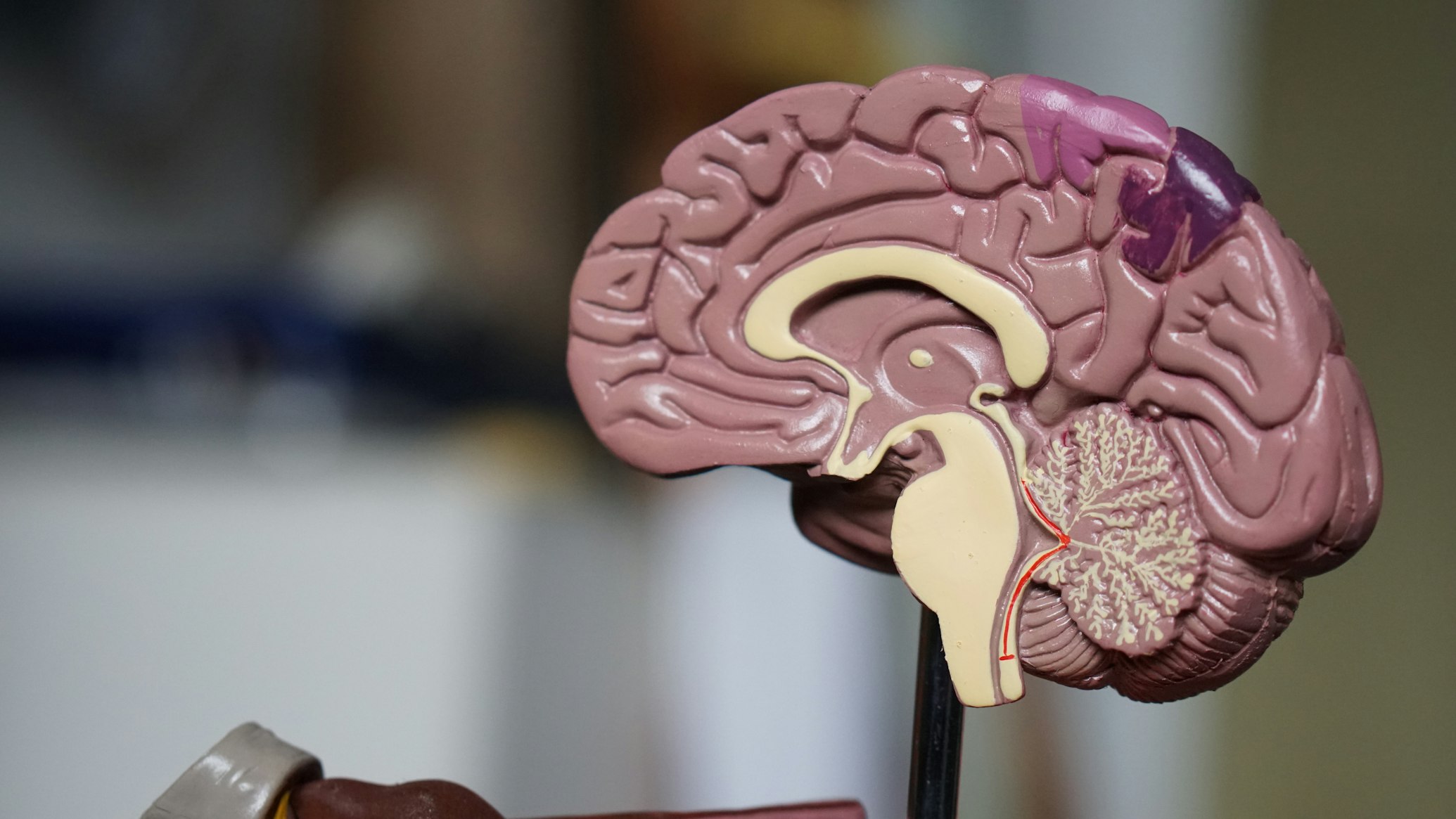
This process, known as systems consolidation, is at the heart of how our memories become permanent. Sleep provides the ideal environment for the hippocampus to communicate with the neocortex, replaying the day's events and systematically strengthening them for future use 1 .
The Brain's Nightly Rhythm: Orchestrating Memory with Oscillations
Sleep is far from a state of neural inactivity. It is a period of intense, coordinated communication between different brain regions, guided by distinct electrical rhythms or "brain waves."
| Brain Oscillation | Sleep Stage | Primary Location | Function in Memory Consolidation |
|---|---|---|---|
| Slow Oscillations (~0.1-4 Hz) | NREM | Cerebral Cortex | Creates a temporal framework and synchronizes widespread brain networks; its "up-states" provide windows for memory reactivation 1 . |
| Sleep Spindles (10-15 Hz bursts) | NREM | Thalamocortical System | Facilitates communication between the hippocampus and cortex; promotes synaptic plasticity and helps integrate new memories into existing knowledge networks 1 8 . |
| Sharp-Wave Ripples (150-250 Hz) | NREM | Hippocampus | Marks the reactivation and "replay" of memory sequences from wakefulness; crucial for selecting and sending memories to the cortex 1 . |
| Theta Waves (5-8 Hz) | REM | Hippocampus | Supports memory integration, abstraction, and emotional tagging; contributes to cognitive flexibility 1 . |
How Brain Rhythms Work Together
The true magic happens in the precise coupling of these rhythms. During deep NREM sleep, the slow oscillations of the cortex act as a master conductor, dictating the tempo. The "up-states" of these slow waves trigger the generation of a sleep spindle, which in turn provides a perfect window for a hippocampal sharp-wave ripple to occur 1 . This elegant, timed sequence allows a memory stored in the hippocampus to be efficiently replayed and transmitted to the cortex for long-term storage.
Brain Wave Synchronization During Sleep
Interactive visualization of brain wave synchronization would appear here
A Groundbreaking Experiment: Boosting Memory with Brain Synchronization
While the correlation between these brain waves and memory has been observed for years, a causal link was definitively established by a pioneering 2023 study published in Nature Neuroscience 8 .
Methodology: A Step-by-Step Approach
Memory Task
Before sleep, participants learned to associate images of famous people with specific animals (e.g., a "pet owner" and their "pet") 8 .
Real-Time Intervention
During early non-REM sleep, the researchers implemented a closed-loop stimulation protocol. They monitored slow waves in the medial temporal lobe (which includes the hippocampus) in real time.
Stimulation Modes
Synchronized Stimulation: In one group, a tiny, harmless electrical pulse was delivered to the prefrontal cortex precisely timed to the "active" phase of the natural slow wave in the hippocampus 8 .
Mixed-Phase Stimulation: In a separate group, the same stimulation was delivered randomly, without regard to the slow-wave phase 8 .
Memory Test
The following morning, participants' memory for the face-animal pairs was tested again and compared to their performance after a night of undisturbed sleep.
Results and Analysis: Synchrony is Key
The results were striking. Participants who received the synchronized stimulation showed a significant improvement in their recognition memory accuracy the next morning compared to their performance after an undisturbed night of sleep 8 . In contrast, those who received the random, mixed-phase stimulation did not show this benefit, and sometimes even experienced a degradation in memory.
| Experimental Group | Stimulation Description | Effect on Memory Accuracy | Scientific Implication |
|---|---|---|---|
| Synchronized Stimulation | Precisely timed to the active phase of hippocampal slow waves. | Significantly Improved 8 | The temporal coupling of oscillations is causally responsible for enhancing memory consolidation. |
| Mixed-Phase Stimulation | Delivered randomly, without synchronization to hippocampal activity. | No Improvement or Slight Degradation 8 | Without precise timing, stimulation does not aid and may even disrupt natural consolidation processes. |
This finding provides direct evidence that the precise temporal coupling of hippocampal and cortical activity is not just a byproduct of sleep, but a fundamental mechanism that causally supports memory consolidation. The study further showed that the synchronized stimulation specifically enhanced sleep spindles and improved the coupling between hippocampal ripples and thalamocortical oscillations, directly strengthening the proposed pathway of active systems consolidation 8 .
Synchronized Stimulation
Memory accuracy significantly improved with precisely timed stimulation.
improvement in recall
Mixed-Phase Stimulation
No significant improvement with randomly timed stimulation.
change in recall
The Scientist's Toolkit: Key Technologies in Sleep and Memory Research
Advancements in our understanding of memory consolidation rely on a sophisticated toolkit that allows scientists to observe, measure, and manipulate brain activity.
| Tool / Technology | Function in Research |
|---|---|
| Intracranial Electroencephalography (iEEG) | Records electrical activity directly from the brain's surface or depths, providing extremely high-resolution data on oscillations like ripples and spindles 8 . |
| Closed-Loop Stimulation Systems | Monitors brain activity in real-time and delivers precisely timed stimuli (electrical, auditory) to enhance or disrupt specific neural events during sleep 7 8 . |
| Targeted Memory Reactivation (TMR) | Uses sensory cues (e.g., sounds or smells) presented during learning and replayed during sleep to selectively strengthen specific memories 7 . |
| Electroencephalography (EEG) | A non-invasive method using scalp electrodes to measure gross brain waves, commonly used to identify sleep stages and track slow oscillations and spindles 1 7 . |
| Real-time fMRI Feedback | Guides non-invasive brain stimulation by providing immediate information on which neural networks are active, allowing for precise targeting 4 . |
Recent Advances
Recent research is making this toolkit even more powerful. A 2025 study on Personalized Targeted Memory Reactivation (TMR) demonstrated that tailoring auditory stimulation during sleep based on an individual's recall performance for different word pairs led to even greater memory benefits, especially for challenging information 7 . This highlights a move toward personalized cognitive enhancement strategies.
iEEG
High-precision brain activity recording directly from neural tissue.
Closed-Loop Systems
Real-time monitoring and stimulation of brain activity during sleep.
TMR
Using sensory cues to selectively strengthen specific memories during sleep.
Conclusion: Harnessing the Power of Sleep
The journey of a memory—from a fleeting daily experience to a permanent part of your knowledge—is a dynamic and active process that unfolds each night. The hippocampus, in close collaboration with the cortex and a symphony of brain rhythms, works tirelessly to sort, strengthen, and integrate your memories.
This knowledge is more than just fascinating; it is empowering. It underscores the profound importance of quality sleep for learning and mental performance. Rather than being a passive state, sleep is an intense period of neural curation and optimization.
The groundbreaking research that uses stimulation to enhance our natural memory processes also opens up exciting future possibilities, suggesting we might one day be able to actively tune and improve this fundamental cognitive function. For now, the best way to support your brain's nightly librarian is to give it the consistent, restful sleep it needs to do its job.
The next time you prepare for an important day, remember that reviewing your notes is only half the battle. The real work of making those memories stick happens after you turn out the light.
Optimizing Your Sleep for Better Memory
Consistent Schedule
Go to bed and wake up at the same time every day, even on weekends.
Optimal Environment
Keep your bedroom dark, quiet, and cool for better sleep quality.
Limit Stimulants
Avoid caffeine, nicotine, and heavy meals close to bedtime.
Wind Down Routine
Develop a relaxing pre-sleep routine to signal your brain it's time to rest.