Interpreting the Black Box: Challenges, Methods, and Best Practices for Machine Learning in Biomedicine
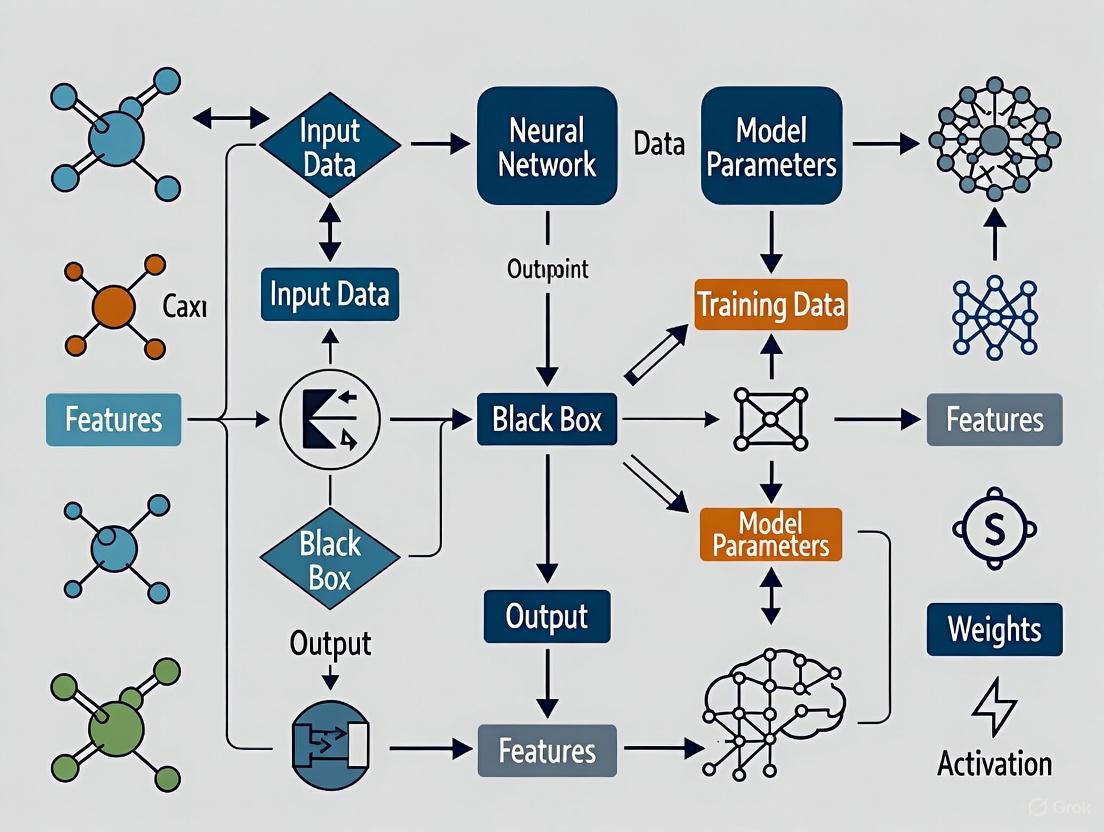
The adoption of complex machine learning (ML) and deep learning (DL) models in biomedical research and drug development is hampered by their 'black box' nature, where internal decision-making processes are...
Interpreting the Black Box: Challenges, Methods, and Best Practices for Machine Learning in Biomedicine
Abstract
The adoption of complex machine learning (ML) and deep learning (DL) models in biomedical research and drug development is hampered by their 'black box' nature, where internal decision-making processes are opaque. This creates critical challenges in trust, validation, and clinical deployment. This article provides a comprehensive analysis for researchers and drug development professionals, exploring the fundamental causes of interpretability issues, reviewing state-of-the-art Explainable AI (XAI) methodologies, and presenting practical troubleshooting strategies. It further offers a comparative evaluation of validation frameworks to guide the selection and auditing of ML models, emphasizing the balance between predictive power and transparency for high-stakes biomedical applications.
The Black Box Problem: Understanding Opacity in Machine Learning Models
Black Box AI refers to artificial intelligence systems whose internal decision-making processes are opaque and difficult for humans to understand, even for the developers who build them [1]. In scientific research, particularly in drug development, this opacity poses significant challenges for validating results, identifying biases, and reproducing findings. These models accept inputs and generate outputs, but the reasoning behind their predictions remains hidden within complex algorithms [2].
The core issue stems from the extreme complexity of modern machine learning architectures, especially deep learning models with millions or billions of parameters that interact in non-linear ways [1]. As one analysis of developer discussions noted, "addressing questions related to XAI poses greater difficulty compared to other machine-learning questions" [3]. For researchers requiring rigorous validation of their methods, this creates a critical trust barrier.
Frequently Asked Questions (FAQs)
What exactly makes an AI model a "black box"? Black box models, particularly deep neural networks, contain numerous "hidden layers" between input and output layers. While developers understand the general data flow, the specific reasoning behind individual decisions remains mysterious because users cannot inspect how the model processes information through these hidden layers [1].
Why can't we use simpler, more interpretable models for all research applications? There's an inherent trade-off between accuracy and explainability. In many research domains, including drug discovery, black box models consistently deliver superior predictive performance for complex tasks like molecular property prediction or protein folding. As noted in the literature, "there are some things that only an advanced AI model can do" [1].
Which AI tools most commonly pose black box challenges in research settings? According to analysis of technical discussions, SHAP, ELI5, AIF360, LIME, and DALEX are among the tools most frequently associated with interpretation challenges. SHAP leads in usage frequency (67.2% of iterations), while DALEX, LIME, and AIF360 present the most significant interpretation difficulties [3].
What types of questions do researchers typically ask about interpreting black box models? Analysis reveals that "how" questions dominate (particularly for visualization and data management), while "what" questions are more common for understanding XAI concepts and model analysis. "Why" questions appear frequently in troubleshooting contexts, reflecting researchers' need to understand underlying AI issues [3].
Troubleshooting Common Black Box Interpretation Issues
Issue 1: SHAP Implementation and Runtime Errors
Problem: Researchers encounter implementation errors when applying SHAP (SHapley Additive exPlanations) to complex neural network models for feature importance analysis.
Solution Methodology:
- Environment Verification: Confirm compatible versions of SHAP, NumPy, and your ML framework (TensorFlow/PyTorch)
- Model Wrapping: Ensure proper wrapping of custom models using SHAP's
KernelExplainerfor non-standard architectures - Background Data Selection: Use representative background datasets (typically 50-100 instances) that accurately reflect your training distribution
- Gradient Handling: For deep learning models, verify gradient computation through backpropagation chains
Expected Outcome: Successful generation of feature importance values explaining individual predictions, enabling identification of key molecular descriptors or biological features driving model decisions.
Issue 2: Visualization Challenges with Model Interpretations
Problem: Generated explanation outputs (partial dependence plots, feature importance charts) lack sufficient clarity for scientific publication or stakeholder communication.
Solution Methodology:
- Color Palette Optimization: Implement scientifically appropriate color schemes with sufficient perceptual distance between categories
- Context-Rich Annotations: Incorporate domain-specific reference points (e.g., known active compounds, established biological thresholds)
- Hierarchical Explanation: Structure visual explanations from global model behavior to local instance-level predictions
- Accessibility Compliance: Ensure visualizations meet scientific publication standards for color contrast and interpretability
Expected Outcome: Publication-ready visual explanations that clearly communicate how input features (molecular properties, genomic markers) influence model predictions to diverse audiences including non-technical stakeholders.
Issue 3: Model Misconfiguration and Usage Errors
Problem: Models produce unexplained performance degradation or erratic behavior when deployed with new data distributions.
Solution Methodology:
- Distribution Shift Detection: Implement statistical tests (Kolmogorov-Smirnov, population stability index) to compare training vs. deployment data distributions
- Prediction Confidence Monitoring: Track confidence scores across deployments to identify regions of high uncertainty
- Adversarial Testing: Systematically probe model decision boundaries with slightly perturbed inputs
- Explanation Consistency: Verify that similar inputs receive both similar predictions and similar explanations
Expected Outcome: Stable, reliable model deployment with documented limitations and appropriate uncertainty quantification for research validation.
Quantitative Analysis of XAI Tools and Challenges
Table 1: Popularity and Difficulty Metrics for XAI Topics Among Researchers
| Topic Category | Percentage of Discussions | Primary Question Types | Difficulty (Unanswered Questions) |
|---|---|---|---|
| Tools Troubleshooting | 38.14% | How, Why | High |
| Feature Interpretation | 20.22% | How, What | Medium |
| Visualization | 14.31% | How (67.5%) | Medium |
| Model Analysis | 13.81% | What (23%) | High |
| Concepts & Applications | 7.11% | What (45%) | Low |
| Data Management | 6.41% | How (66.67%) | Medium |
Table 2: XAI Tool Usage Patterns and Challenge Areas
| XAI Tool | Usage Frequency | Primary Challenge Areas | Typical Resolution Time |
|---|---|---|---|
| SHAP | 67.2% | Implementation errors, visualization | Medium |
| ELI5 | 15.8% | Troubleshooting, model barriers | Low |
| AIF360 | 7.3% | Troubleshooting, fairness metrics | High |
| Yellowbrick | 5.1% | Visualization, plot customization | Low |
| LIME | 3.9% | Model barriers, instability | High |
| DALEX | 0.7% | Model barriers, compatibility | High |
Experimental Protocols for Black Box Interpretation
Protocol 1: Model Interpretation via SHAP Analysis
Purpose: To explain individual predictions from black box models by quantifying each feature's contribution.
Materials:
- Trained predictive model (any architecture)
- Preprocessed test dataset (50-500 instances)
- SHAP library (v0.4.0+)
- Visualization tools (Matplotlib, Plotly)
Methodology:
- Initialize appropriate SHAP explainer for model type:
- TreeExplainer for tree-based models
- DeepExplainer for neural networks
- KernelExplainer for model-agnostic cases
- Compute SHAP values for test instances:
- Generate visualization plots:
- Force plots for individual predictions
- Summary plots for global feature importance
- Dependence plots for feature relationships
- Interpret results in domain context:
- Map features to biological concepts
- Identify critical decision thresholds
- Document counterintuitive relationships
Validation: Compare explanations with domain knowledge and positive controls.
Protocol 2: Model-Agnostic Interpretation with LIME
Purpose: To create locally faithful explanations around individual predictions regardless of model architecture.
Materials:
- Black box model with prediction function
- Local interpretable model (linear, decision tree)
- LIME library (v0.2+)
- Data discretization tools
Methodology:
- Define explanation neighborhood around instance of interest
- Sample perturbed instances from training distribution
- Obtain black box predictions for perturbed samples
- Fit interpretable model to weighted predictions:
- Validate local fidelity through neighborhood prediction accuracy
Interpretation: Identify primary decision drivers within local prediction context and assess explanation stability across similar instances.
Research Reagent Solutions for XAI Experiments
Table 3: Essential Tools for Black Box Interpretation Research
| Tool/Category | Primary Function | Research Application |
|---|---|---|
| SHAP (SHapley Additive exPlanations) | Quantifies feature contribution to predictions | Identifying critical molecular descriptors in drug discovery |
| LIME (Local Interpretable Model-agnostic Explanations) | Creates local explanations around predictions | Understanding individual compound classification decisions |
| ELI5 (Explain Like I'm 5) | Debugging and visualizing ML models | Debugging feature importance in QSAR models |
| AIF360 (AI Fairness 360) | Detecting and mitigating model bias | Ensuring fairness in patient selection algorithms |
| Yellowbrick | Visual analysis and diagnostic tools | Creating publication-ready model explanation figures |
| DALEX | Model-agnostic exploration and explanation | Comparing multiple drug response prediction models |
| Attention Mechanisms | Visualizing feature importance in neural networks | Interpreting focus areas in protein sequence analysis |
| Partial Dependence Plots | Visualizing feature marginal effects | Understanding dose-response relationships in compound screening |
Visualizing Black Box Interpretation Workflows
Diagram 1: XAI Troubleshooting Methodology
Diagram 2: Model Interpretation Process Flow
Addressing black box AI challenges requires systematic approaches combining technical solutions with domain expertise. The methodologies presented here provide researchers with practical frameworks for interpreting complex models while maintaining scientific rigor. As the field evolves, integrating explanation capabilities directly into model development pipelines will be essential for building trust in AI-driven scientific discoveries, particularly in high-stakes domains like drug development where understanding failure modes is as crucial as celebrating successes.
FAQs: Navigating Accuracy vs. Interpretability in Drug Discovery
FAQ 1: Why is there a fundamental trade-off between model accuracy and interpretability?
The trade-off arises because the most accurate models, such as deep neural networks, are often the most complex. They build a hierarchical, internal representation of data that is incredibly effective for prediction but difficult for human experts to decipher. This is known as the "black box" problem [4]. In contrast, simpler models like linear regression or decision trees are more interpretable because their decision-making logic is transparent, but this often comes at the cost of lower predictive performance, especially on complex datasets like those in drug discovery involving molecular properties or protein interactions [4] [5].
FAQ 2: What are the specific risks of using black-box models in pharmaceutical research?
Using black-box models in drug development carries several critical risks:
- Unexplained Failures: An inability to understand why a model fails can stall research and make debugging nearly impossible [4] [5].
- Safety and Efficacy Concerns: In high-stakes fields like healthcare, a wrong prediction without a clear explanation can lead to serious consequences. Regulatory bodies are increasingly demanding transparency to evaluate a drug's safety and effectiveness [6] [7].
- Hidden Biases: Opaque models can inadvertently learn and perpetuate biases present in the training data, such as favoring certain molecular structures for non-scientific reasons. This can compromise the fairness and generalizability of your research [4] [5].
FAQ 3: My complex model is highly accurate on validation data. Why do I still need to explain its predictions?
High validation accuracy does not guarantee that a model has learned the correct underlying structure of the problem. The model might be:
- Learning Spurious Correlations: It might be relying on artifacts in the data that do not represent true cause-and-effect relationships in biology or chemistry.
- Non-Robust: Its performance may degrade significantly when faced with real-world, out-of-sample data [4]. Explainability techniques act as a crucial sanity check. They help verify that the model's decisions are based on scientifically plausible features, thereby building trust and ensuring that the model will perform reliably in practice [7] [5].
FAQ 4: What methodologies can help interpret complex models without sacrificing too much accuracy?
You can adopt several strategies to bridge the interpretability gap:
- Use Explainable AI (XAI) Techniques: Apply model-agnostic methods like SHAP and LIME to explain individual predictions from any black-box model [5].
- Employ Hybrid Models: Consider using systems that combine interpretable models with black-box components, allowing for complex data handling while still providing explanations through more transparent subcomponents [6].
- Leverage Surrogate Models: Train a simple, interpretable model to approximate the predictions of the complex black-box model. The global surrogate model can then be studied to gain insights into the overall behavior of the complex system [8].
- Prioritize Interpretable Architectures: When possible, use models like fairness-aware decision trees, which can enforce transparency and fairness constraints directly during the model-building process [9].
Troubleshooting Guides
Problem: Model Performance is High, But Interpretability is Low
Symptoms: Your deep learning model for predicting drug-target interactions shows a high Area Under the Curve (AUC) but provides no insight into which molecular features drove the decision.
Solution: Implement post-hoc explanation frameworks to illuminate the model's decision-making process.
Step 1: Apply Local Explanation Tools Use LIME to analyze individual predictions. LIME creates a local, interpretable model around a single prediction by slightly perturbing the input data and observing changes in the output [5].
Step 2: Apply Global Explanation Tools Use SHAP to get a consistent, global view of feature importance. SHAP assigns each feature an importance value for a particular prediction based on cooperative game theory [5].
Step 3: Visualize Explanations Create force plots or summary plots provided by SHAP to communicate which features are most important overall and how they push the model's output for specific instances [10] [5].
Experimental Protocol: Using SHAP for a Compound Activity Prediction Model
- Train Your Model: Train your black-box model (e.g., a Graph Neural Network) on your compound activity dataset.
- Initialize the SHAP Explainer: Choose an appropriate explainer. For tree-based models, use
TreeExplainer; for neural networks and other models,KernelExplaineris a good starting point. - Calculate SHAP Values: Compute SHAP values for a representative sample of your test set. This quantifies the marginal contribution of each feature to the prediction for every sample.
- Generate and Analyze Visualizations:
- Create a SHAP summary plot to see global feature importance.
- Select specific compounds of interest and generate SHAP force plots to visualize the contribution of features to that single prediction.
- Validate Scientifically: Correlate the top features identified by SHAP with known biochemical principles or existing literature to ensure the model is learning valid relationships [7] [5].
Problem: Ensuring Regulatory Compliance for Model Interpretability
Symptoms: Your model is part of a regulatory submission, and you need to demonstrate its transparency and adherence to guidelines like those in the EU's AI Act [6].
Solution: Integrate explainability as a core requirement throughout the machine learning lifecycle.
Step 1: Adopt a "White-Box" by Design Mindset Wherever possible, favor interpretable models. For example, use decision trees with fairness constraints built directly into their construction algorithm, which enforces fairness without needing post-processing [9].
Step 2: Use Decomposition Methods Implement methods like Maximum Interpretation Decomposition (MID). This approach, available in the R package
midr, functionally decomposes a black-box model into a low-order additive representation, creating a global surrogate model that is inherently more interpretable [8].Step 3: Comprehensive Documentation Maintain clear documentation of the model's design, data sources, all preprocessing steps, and the explanation techniques used. This creates an audit trail that is essential for regulatory review [6] [11].
Experimental Protocol: Building a Transparent Model with MID
- Develop the Black-Box Model: Train your high-accuracy, complex model on the pharmaceutical dataset.
- Perform Functional Decomposition: Use the
midrpackage to apply Maximum Interpretation Decomposition. This step derives a low-order additive representation of your black-box model by minimizing the squared error between the original model and the surrogate. - Analyze the Surrogate: The output of MID is an interpretable surrogate model. Study its components to understand the global behavior of your original system.
- Report and Submit: Include the results of the MID analysis, the surrogate model's performance, and its interpretations in your regulatory documentation to demonstrate a thorough understanding of the model's mechanics [8].
Quantitative Data in Drug Discovery XAI
Table 1: Global Research Output in Explainable AI for Drug Discovery (Data up to June 2024) [7]
| Country | Total Publications (TP) | Percentage of 573 Publications | Total Citations (TC) | TC/TP (Average Citations per Paper) |
|---|---|---|---|---|
| China | 212 | 37.00% | 2,949 | 13.91 |
| USA | 145 | 25.31% | 2,920 | 20.14 |
| Germany | 48 | 8.38% | 1,491 | 31.06 |
| UK | 42 | 7.33% | 680 | 16.19 |
| South Korea | 31 | 5.41% | 334 | 10.77 |
| India | 27 | 4.71% | 219 | 8.11 |
| Japan | 24 | 4.19% | 295 | 12.29 |
| Canada | 20 | 3.49% | 291 | 14.55 |
| Switzerland | 19 | 3.32% | 645 | 33.95 |
| Thailand | 19 | 3.32% | 508 | 26.74 |
Table 2: Performance Comparison of Advanced ML Paradigms in Drug Discovery [12]
| Machine Learning Paradigm | Key Application in Drug Discovery | Reported Benefit / Advantage |
|---|---|---|
| Deep Learning (CNNs, RNNs, Transformers) | Prediction of molecular properties, protein structures, ligand-target interactions. | Accelerates lead compound identification and optimization. |
| Federated Learning | Secure, multi-institutional collaboration for biomarker discovery and drug synergy prediction. | Integrates diverse datasets without compromising data privacy. |
| Transfer Learning & Few-Shot Learning | Molecular property prediction and toxicity profiling with limited data. | Leverages pre-trained models to overcome data scarcity, reducing development timelines and costs. |
Visual Workflows for XAI Protocols
XAI Technique Selection Workflow
The Scientist's Toolkit: Research Reagent Solutions
Table 3: Essential Software Tools for Explainable AI Research
| Tool / Solution | Function / Purpose | Key Characteristic |
|---|---|---|
| SHAP (SHapley Additive exPlanations) | Explains the output of any ML model by calculating the marginal contribution of each feature to the prediction. | Model-agnostic; provides both local and global explanations. |
| LIME (Local Interpretable Model-agnostic Explanations) | Approximates a black-box model locally around a specific prediction with an interpretable model (e.g., linear regression). | Model-agnostic; designed for local, instance-level explanations. |
| midr R Package | Implements Maximum Interpretation Decomposition (MID) to create a global, low-order additive surrogate model from a black-box. | Provides a functional decomposition for building interpretable global surrogates. |
| TensorFlow Playground | Visual, interactive web application for understanding how neural networks learn. | Educational tool for building intuition about deep learning parameters. |
| Pecan AI | Low-code platform that automates data preparation and model building, incorporating visualization for insight. | Streamlines the ML workflow, making initial exploration and troubleshooting faster. |
Troubleshooting Guides
Troubleshooting Guide 1: Unexplained Performance Discrepancies in Subgroups
Problem: Your model performs well overall but shows significantly different accuracy for different demographic subgroups.
Symptoms:
- Lower precision or recall for specific racial, gender, or age groups
- Disproportionate false positive/negative rates across populations
- Model recommendations contradict clinical intuition for certain patient subgroups
Diagnostic Steps:
- Disaggregate Evaluation Metrics: Calculate performance metrics (accuracy, precision, recall, F1-score, AUROC) separately for each protected subgroup (e.g., by race, gender, age). Compare against majority group performance [13] [14].
- Analyze Training Data Representation: Audit your training dataset for representation bias. Check if minority subgroups constitute a sufficient sample size relative to the complexity of your model to avoid underestimation bias [13].
- Check for Flawed Proxies: Identify if your model relies on proxy variables correlated with protected attributes. A common example is using healthcare costs as a proxy for health needs, which can systematically underestimate illness in Black patients due to historical underutilization of care [15] [16].
- Implement Explainability Techniques: Use tools like SHAP (SHapley Additive exPlanations) or LIT (Learning Interpretability Tool) to generate local explanations for incorrect predictions on underrepresented groups. This can reveal if the model is latching onto spurious correlations or "demographic shortcuts" [17] [18].
Solutions:
- Apply Bias Mitigation Techniques: Use in-processing techniques like adversarial debiasing to incentivize the model to learn balanced predictions, or post-processing techniques to calibrate decision thresholds for different subgroups [14].
- Gather More Representative Data: Prioritize data collection from underrepresented subgroups to create a balanced dataset. If real data is scarce, consider ethical use of synthetic data generation (e.g., GANs) to supplement these groups [15].
- Use Interpretable Models: For high-stakes scenarios, consider replacing black-box models with inherently interpretable models (e.g., logistic regression, decision lists) to enable direct verification of model reasoning and ensure it aligns with clinical or domain knowledge [19].
Troubleshooting Guide 2: Black Box Model Rejection by End-Users
Problem: Clinicians or hiring managers distrust the model's recommendations and develop workarounds, reducing the tool's operational value [16].
Symptoms:
- End-users request overrides or bypass the system
- Low adoption rates despite high technical accuracy
- Users report that the model's output "doesn't make sense" for specific cases
Diagnostic Steps:
- Assess Explanation Fidelity: If using post-hoc explanations, verify their fidelity. Inaccurate or low-fidelity explanations severely limit trust, as they do not faithfully represent what the original model computes [19].
- Conduct User Interviews and Workflow Analysis: Identify the specific points of friction. Understand what information end-users need to build trust, which often goes beyond simple feature importance scores [17].
- Audit for Contextual Misalignment: Check if the model's decision-making process violates known domain constraints or常识 (e.g., recommending a treatment that is contraindicated for a specific subgroup) [19].
Solutions:
- Provide Faithful, Local Explanations: Implement explanation methods that are accurate for individual predictions. For a hiring model, this could mean highlighting the key skills and experiences that led to a candidate's score, ensuring the explanation matches the model's actual logic [17] [19].
- Incorporate Human-in-the-Loop (HITL) Design: Integrate controlled human oversight points. Allow experts to override model recommendations and use these overrides as feedback for continuous learning and model improvement [13] [20] [21].
- Demonstrate Consistency: Use the LIT tool to show users that the model behaves consistently when irrelevant features (like textual style or verb tense in clinical notes) are changed, building confidence in its robustness [18].
Frequently Asked Questions (FAQs)
Q1: What are the most common root causes of bias in machine learning models for healthcare and hiring?
The root causes can be categorized into three main areas [13] [15] [16]:
- Data Bias: Models are trained on historical data that reflects existing societal inequities (historic bias), or data that underrepresents certain populations (representation bias). For example, medical data historically focused on white male patients, leading to models that are less accurate for women and ethnic minorities [16].
- Algorithmic & Design Bias: The model optimization objective may not include fairness constraints, or it may use proxy variables that are correlated with protected attributes (measurement bias). A classic example is an algorithm that uses "healthcare cost" as a proxy for "health need," systematically underestimating the needs of Black patients [15] [16].
- Human & Deployment Bias: Lack of diversity in development teams can lead to blind spots. Furthermore, deployment bias occurs when a model is used in a context or population that is significantly different from its training environment [15].
Q2: Our model is a proprietary black-box system. How can we assess its fairness?
Even with a black-box model, you can perform rigorous fairness audits [20] [21]:
- Outcome Testing (Disparate Impact Analysis): This is a primary method required by new regulations. You analyze the model's input-output behavior by comparing selection rates, false positive rates, and false negative rates across different demographic groups. A significant discrepancy indicates potential bias [20] [21].
- Benchmarking with Diverse Datasets: Test the model on carefully curated benchmark datasets that are representative of the diverse populations you serve. Performance gaps on these benchmarks reveal subgroup-specific weaknesses [14].
- Use Explainable AI (XAI) Techniques: Apply model-agnostic explanation tools like SHAP or LIT. These can provide local explanations for individual predictions and aggregate these to gain global insights into which features the model is using, helping to identify reliance on problematic proxies [17] [18].
Q3: Are there any legal or compliance risks associated with using biased AI models in hiring?
Yes, the legal and compliance landscape is rapidly evolving and poses significant risks [20] [21]:
- Liability under Anti-Discrimination Laws: Tools used for hiring are considered "high-risk" under new regulations like the EU AI Act and the Colorado AI Act. Companies face liability under existing laws like Title VII of the Civil Rights Act and the Age Discrimination in Employment Act (ADEA). The ongoing Mobley v. Workday class-action lawsuit, which alleges discrimination by an AI hiring platform, is a key case to watch [20] [21].
- Mandatory Audits and Transparency: States like California, New York, and Illinois are implementing laws that require mandatory bias audits of AI hiring tools and transparency to candidates about their use [20].
- Best Practices: To mitigate risk, employers should conduct continuous bias audits, retain human oversight to override AI recommendations, and stay updated on changing regulatory standards [20] [21].
The following tables summarize quantitative findings and methodologies from key real-world case studies of algorithmic bias.
Table 1: Documented Case Studies of Algorithmic Bias in Healthcare
| Case Study / Source | AI Application Domain | Quantitative Finding / Nature of Bias | Disadvantaged Group(s) | Primary Bias Type |
|---|---|---|---|---|
| Obermeyer et al., Science [15] [16] | Healthcare Resource Allocation | Used past healthcare costs as a proxy for health needs, systematically underestimating illness severity. | Black Patients | Measurement Bias / Flawed Proxy |
| Kiyasseh et al., npj Digital Medicine [14] | Surgical Skill Assessment (SAIS) | AI showed "underskilling" (downgrading performance) and "overskilling" (upgrading performance) at different rates for different surgeon sub-cohorts. | Specific Surgeon Sub-cohorts | Evaluation Bias |
| London School of Economics (LSE) [16] | LLM for Patient Note Summarization | For identical clinical notes, used less severe language (e.g., "independent") for female patients vs. male patients ("complex," "unable"). | Women | Representation Bias |
| MIT Research [16] | Medical Imaging (Chest X-rays) | Models that best predicted patient race showed the largest "fairness gaps" (diagnostic inaccuracies). | Women, Black Patients | Demographic Shortcut / Aggregation Bias |
Table 2: Documented Case Studies of Algorithmic Bias in Hiring
| Case Study / Source | Context | Key Finding / Allegation | Disadvantaged Group(s) | Primary Bias Type |
|---|---|---|---|---|
| Mobley v. Workday [20] [21] | AI-Powered Resume Screening | Class-action lawsuit alleging systematic discrimination in screening for 100+ jobs based on race, age, and disability. | African American, Older Applicants, Applicants with Disabilities | Disparate Impact |
| University of Washington (2025) [20] | Human-AI Collaboration in Hiring | Recruiters who used biased AI tools demonstrated hiring preferences that matched the AI's skewed recommendations. | Candidates of different races and genders | Automation Bias |
Experimental Protocols for Bias Detection
Protocol 1: Disparate Impact Analysis for Hiring Algorithms
Objective: To quantitatively assess if an AI hiring tool has a significantly different selection rate for protected subgroups.
Materials: Historical applicant data (resumes, applications), protected attribute data (for testing only), model predictions (scores/classifications). Methodology:
- Data Preparation: Anonymize applicant data. Ensure protected attributes (race, gender, age) are stored separately and only used for this audit.
- Model Inference: Run the candidate screening model on the historical dataset to obtain a prediction (e.g., "select" or "reject") for each applicant.
- Calculate Selection Rates: For each protected subgroup (e.g., Group A and Group B), calculate the selection rate (number of selected candidates / total candidates in that subgroup).
- Compute Disparate Impact Ratio: Divide the selection rate of the minority group (Group B) by the selection rate of the majority group (Group A). A ratio below 0.8 (the "80% rule") often indicates evidence of adverse impact [20] [21].
- Statistical Testing: Perform a chi-squared test to determine if the observed differences in selection rates are statistically significant.
Protocol 2: Diagnostic Fairness Audit for Clinical AI Models
Objective: To evaluate the diagnostic performance of a clinical AI model (e.g., for skin cancer or disease prediction) across different racial and ethnic groups.
Materials: A curated benchmark dataset with expert-verified diagnostic labels and demographic metadata. Model prediction outputs (e.g., probability of disease). Methodology:
- Stratified Evaluation: Split the test dataset by racial/ethnic groups (e.g., White, Black, Asian, Hispanic).
- Calculate Group-Wise Metrics: For each subgroup, calculate key diagnostic performance metrics: Area Under the ROC Curve (AUROC), sensitivity (recall), specificity, and positive predictive value (precision) [14] [16].
- Identify Performance Gaps: Compare the metrics across subgroups. A clinically significant drop in AUROC or sensitivity for a particular group indicates that the model is less accurate for that population, which could lead to underdiagnosis [14] [16].
- Error Analysis: Manually review false negative cases from the disadvantaged group. Use XAI tools (e.g., salience maps for imaging models) to understand what features the model used to make an incorrect call, checking for reliance on non-clinical artifacts [18] [16].
The Scientist's Toolkit: Research Reagent Solutions
Table 3: Essential Tools for Interpreting and Auditing Black-Box Models
| Tool / Technique | Type | Primary Function | Key Application in Bias Research |
|---|---|---|---|
| SHAP (SHapley Additive exPlanations) [17] [22] | Explainable AI (XAI) Library | Assigns each feature an importance value for a single prediction, based on cooperative game theory. | Provides local and global interpretability, identifying which features (e.g., specific words in a resume, pixels in an X-ray) most influenced a model's decision. |
| LIT (Learning Interpretability Tool) [18] | Interactive Visualization Platform | A visual, interactive tool for NLP and other models, supporting salience maps, metrics, and counterfactual generation. | Allows researchers to probe model behavior by asking "what if" questions, testing sensitivity to perturbations, and comparing model performance across data slices. |
| TWIX (Task-weighted Iimportance eXplanation) [14] | Bias Mitigation Add-on | An in-processing method that teaches a model to predict the importance of input segments (e.g., video frames) for its decision. | Used in surgical AI to mitigate bias by forcing the model to focus on clinically relevant features rather than spurious correlations, improving fairness. |
| Fairness Audit Framework [20] [21] | Regulatory & Methodology Toolkit | A set of procedures and metrics for measuring disparate impact and other fairness criteria, as mandated by law. | Enables compliance with emerging regulations (e.g., NYC Local Law 144, Colorado AI Act) by providing a standardized way to test for hiring bias. |
| Inherently Interpretable Models (e.g., Sparse Linear Models, Decision Lists) [19] | Modeling Approach | Models designed to be transparent and understandable by their very structure, without needing post-hoc explanations. | Provides a high-fidelity understanding of model reasoning, crucial for high-stakes domains where explanation reliability is paramount. Avoids the pitfalls of unfaithful explanations. |
Experimental and Mitigation Workflow Diagrams
Bias Detection and Mitigation Workflow
AI Hiring Risk and Mitigation Framework
Technical Support Center: Troubleshooting Black Box Models
Frequently Asked Questions (FAQs)
1. What exactly is a "Black Box" AI model? A Black Box AI model is a system where the internal decision-making process is opaque and difficult for humans to understand, even for the developers who built it [1]. Data goes in and results come out, but the inner mechanisms remain a mystery [1]. These models typically involve complex machine learning or deep learning architectures, such as multilayered neural networks with hundreds or thousands of layers, where users can see the input and output layers but cannot interpret what happens in the "hidden layers" in between [1].
2. Why is the "black box" nature of AI models a significant problem for research and drug development? The black box problem is critical in fields like drug development because it creates a lack of transparency and accountability [1]. If a model misdiagnoses a patient or suggests an ineffective drug compound, it is unclear who holds responsibility—the engineers, the company, or the AI itself [1]. Furthermore, the unexplainability of these systems can limit patient autonomy in medical decision-making and introduce potential psychological and financial burdens, as the reasoning behind a high-stakes recommendation remains opaque [23].
3. Is it true that more complex, black box models are always more accurate? No, this is a common myth [19]. There is a widespread belief that a trade-off exists, where higher accuracy necessitates lower interpretability. However, for problems with structured data and meaningful features, there is often no significant performance difference between complex classifiers (like deep neural networks) and simpler, more interpretable classifiers (like logistic regression or decision lists) [19]. The pursuit of accuracy at the cost of explainability can be misguided and potentially harmful for high-stakes decisions.
4. What are "hallucinations" in the context of large language models (LLMs), and why do they occur? "Hallucinations" refer to a phenomenon where a model, such as an LLM, generates a plausible-sounding but factually incorrect or completely nonsensical answer [1]. This can include factual errors, fabricated sources, or logical nonsense. These often occur because the deep learning systems powering these models are so complex that even their creators do not understand exactly what happens inside them, making it difficult to control or prevent erroneous outputs [1].
5. What technological approaches exist to help interpret black box models? Several technological approaches aim to enhance transparency:
- Explainable AI (XAI) and Post-hoc Explanation Methods: Techniques like SHAP (SHapley Additive exPlanations) explain a model's individual predictions by showing how much each feature contributed to the output [24]. LIME (Local Interpretable Model-agnostic Explanations) is another popular method that approximates the black box model locally with an interpretable one [17].
- Hybrid Systems: These integrate explainable models with black box components, allowing for complex data handling while still providing explanations through more transparent sub-components [25].
- Visual Explanation Tools: Methods like Gradient-weighted Class Activation Mapping (GRADCAM) can visually highlight the regions in an image (e.g., a medical scan) that most influenced the AI's prediction, bridging the gap between neural network operations and human comprehension [25].
Troubleshooting Guides
Issue: My model's predictions are accurate but unexplainable, and stakeholders do not trust it.
- Diagnosis: This is the core black box problem, often stemming from the use of highly complex models like deep neural networks or proprietary systems where logic is protected [1] [19].
- Solution: Implement post-hoc explainability techniques.
- For a global understanding of your model's behavior, use SHAP summary plots to see which features are most important overall [24].
- To explain a single, specific prediction (local interpretability), use a SHAP force plot or LIME [24]. This will detail how each feature value pushed the prediction higher or lower for that specific case.
- Recommended Action: When presenting model results to stakeholders, couple the prediction with the explanation generated by these tools to build trust and facilitate understanding.
Issue: My model appears to be exhibiting bias, such as demographic discrimination in screening applications.
- Diagnosis: The model may have learned spurious or unfair correlations from its training data, which is hidden by its opacity [1]. A famous example is an Amazon recruiting tool that penalized resumes containing the word "women's" [1].
- Solution:
- Use model debugging with XAI [26]. Apply SHAP or similar methods to your model's outputs to identify which features are driving predictions for different demographic groups [24].
- Audit the training data for representativeness and historical biases.
- Recommended Action: If bias is detected, consider re-engineering features, collecting more balanced data, or using a different, more interpretable model form that allows for constraints like monotonicity to prevent illogical relationships [19].
Issue: I need to comply with regulatory standards (like GDPR or the EU AI Act) that require explainability.
- Diagnosis: Regulations are increasingly demanding transparency for AI systems, especially in high-stakes domains like healthcare [25] [26].
- Solution:
- Documentation: Meticulously document the data sources, model selection process, and all steps taken to ensure explainability and fairness.
- Adopt Interpretable Models: Where possible, use inherently interpretable models like linear models, decision trees, or case-based reasoning, as their reasoning is self-evident and does not require a separate explanation model [19].
- Recommended Action: Integrate XAI metrics and assessment methods directly into your model development workflow to ensure you can generate the necessary reports for auditors [27].
Quantitative Data on Explainable AI (XAI)
The following table summarizes key quantitative data and projections for the XAI market, highlighting its growing importance.
| Metric | 2024 Value | 2025 Projection | 2029 Projection | CAGR | Source / Context |
|---|---|---|---|---|---|
| XAI Market Size | $8.1 billion | $9.77 billion | $20.74 billion | 20.6% | Driven by regulatory needs and adoption in healthcare, finance, and education. [26] |
| Companies Prioritizing AI | - | 83% | - | - | A majority of companies consider AI a top business priority. [26] |
| Clinician Trust Increase | - | Up to 30% | - | - | Explaining AI models in medical imaging can boost clinician trust by up to 30%. [26] |
Experimental Protocols for Model Interpretation
Protocol 1: Implementing SHAP for Local Explanation
Objective: To understand the reasoning behind a single prediction made by a complex black box model. Materials: A trained machine learning model (e.g., XGBoost, Neural Network), a single data instance for which an explanation is needed, the SHAP Python library. Methodology:
- Initialize an Explainer: Select an explainer suitable for your model (e.g.,
TreeExplainerfor tree-based models,KernelExplainerfor model-agnostic use). - Calculate SHAP Values: Pass your single data instance to the explainer to compute its SHAP values. These values represent the contribution of each feature to the model's output for that specific instance.
- Visualize the Results: Use a
force_plotto visualize the output. The plot will show the base value (the average model output) and how each feature's value pushes the prediction to a higher or final value. Interpretation: The force plot provides a intuitive, visual explanation for why the model made a specific decision, attributing credit to each input feature [24].
Protocol 2: Testing for Multicollinearity in Interpretable Models
Objective: To ensure the interpretability and stability of a linear model by verifying that its predictors are not highly correlated.
Materials: A dataset with defined predictor variables (X), a statistical software package (e.g., Python with statsmodels).
Methodology:
- Calculate Variance Inflation Factor (VIF): For each predictor variable, regress it against all other predictors. The VIF is calculated as
1 / (1 - R²), where R² is from that regression. - Interpret VIF Scores:
VIF = 1: No correlation.1 < VIF < 5: Moderate correlation.VIF > 5: High correlation—this violates the model assumption [24]. Interpretation: High VIF indicates that the coefficients for the correlated variables are unstable and their individual interpretations are unreliable. To fix this, remove one of the correlated variables, combine them, or use dimensionality reduction techniques like PCA [24].
Visualizing the Black Box Problem and Solutions
The following diagram illustrates the core concepts of black box models and the pathways to achieving explainability.
Diagram Title: Black Box Model Interpretation Pathways
The Scientist's Toolkit: Key Research Reagents for XAI
The table below lists essential tools and concepts for researchers working on interpreting machine learning models.
| Tool / Concept | Type | Primary Function | Key Consideration |
|---|---|---|---|
| SHAP | Post-hoc Explanation Library | Explains any model's output by calculating feature contribution using game theory. | Provides both local and global interpretability; can be computationally expensive. [24] |
| LIME | Post-hoc Explanation Library | Creates a local, interpretable model to approximate the predictions of any black box classifier. | Fast for local explanations; approximation may be unstable if the local surrogate is poor. [17] |
| GRADCAM | Visual Explanation Tool | Generates visual explanations for decisions from convolutional neural networks (CNNs). | Specific to CNN-based models; highlights important regions in an image. [25] |
| Inherently Interpretable Models | Model Class | Models like linear regression or decision trees that are transparent by design. | May be perceived as less powerful for some tasks, though the accuracy trade-off is often a myth. [19] |
| Variance Inflation Factor (VIF) | Diagnostic Metric | Quantifies the severity of multicollinearity in linear regression models. | A VIF > 5 indicates high multicollinearity, which destabilizes coefficients and harms interpretability. [24] |
XAI in Action: Techniques for Explaining Model Predictions
Frequently Asked Questions (FAQs)
Q1: What is the fundamental difference between an interpretable model and an explainable black-box model?
An interpretable model is inherently transparent by design—you can understand its reasoning directly from its structure, such as by examining the coefficients in a linear regression or the rules in a decision tree [28] [24]. In contrast, explainable artificial intelligence (XAI) uses post-hoc methods to create secondary, simplified explanations for a complex model whose internal workings remain opaque [28] [17]. This separation means the explanation is an approximation and may not perfectly represent the original model's logic [19].
Q2: Is there always a significant trade-off between model accuracy and interpretability?
No, this is a common misconception. For many problems, especially those with structured data and meaningful features, simpler, interpretable models like logistic regression or shallow decision trees can achieve predictive performance comparable to more complex black boxes like deep neural networks or random forests [19]. The iterative process of working with an interpretable model often allows a data scientist to better understand and refine the data, potentially leading to superior overall accuracy [19].
Q3: When is it absolutely necessary to use an intrinsically interpretable model in drug research?
Intrinsic interpretability is crucial in high-stakes decision-making domains. In drug research, this includes scenarios such as:
- Predicting patient treatment outcomes: Understanding which patient factors lead to a specific prediction is essential for clinical applicability [17].
- Identifying candidate molecules: Researchers need to know which chemical properties or biological activities the model deems important to guide further synthesis and testing [7].
- Regulatory compliance and safety: Models must be auditable and their decisions justifiable to regulatory bodies, requiring full transparency into how predictions are made [7] [19].
Q4: What are the core scope levels of interpretability for a model by design?
The interpretability of a model can be assessed at three primary levels [28]:
- Entirely interpretable: The entire model structure can be easily comprehended by a human (e.g., a very short decision tree or a linear model with only a handful of features).
- Partially interpretable: While the full model is complex, specific components can be interpreted (e.g., examining individual coefficients in a large linear model or single rules in a long decision list).
- Interpretable predictions: The model provides a self-contained explanation for an individual prediction (e.g., the path taken in a decision tree or the nearest neighbors used in a k-NN prediction).
Q5: How can I debug my interpretable model when it behaves unexpectedly?
Debugging involves a systematic review of the model's components and assumptions:
- Inspect model components: For a linear model, check for coefficients with unexpected signs or magnitudes that contradict domain knowledge [24].
- Validate model assumptions: For linear and logistic regression, test for violations of core assumptions like linearity, independence, and homoscedasticity. A failure here can render the model's interpretations unreliable [24].
- Examine problematic predictions: Isolate data points with high prediction error and trace the model's reasoning for those specific cases using its intrinsic structure (e.g., the decision path in a tree) [28].
Troubleshooting Guides
Issue 1: Unstable or Nonsensical Coefficients in Linear Models
| Potential Cause | Diagnostic Check | Recommended Solution |
|---|---|---|
| High Multicollinearity | Calculate Variance Inflation Factor (VIF) for all features. A VIF > 10 indicates severe multicollinearity [24]. | Remove redundant features, combine correlated features into a single predictor, or use regularization (Ridge regression) [24]. |
| Violation of Linearity | Plot residuals against predicted values. A clear pattern (e.g., U-shape) indicates non-linearity [24]. | Apply transformations to the feature (e.g., log, polynomial) or introduce interaction terms to capture non-linear effects. |
| Influential Outliers | Calculate Cook's distance for each data point. | Investigate influential points for data entry errors; if legitimate, consider robust regression techniques. |
Issue 2: Decision Tree is Over-complex and Fails to Generalize
| Potential Cause | Diagnostic Check | Recommended Solution |
|---|---|---|
| Overfitting | Compare performance on training vs. validation set. A large gap indicates overfitting. | Prune the tree by setting a maximum depth or increasing the minimum samples required for a split. Use cross-validation to find the right parameters. |
| Insufficient Data | The tree has very few samples at its leaf nodes. | Collect more data or simplify the tree structure by increasing the min_samples_leaf parameter. |
| Noise in the Data | The tree has many splits that do not offer significant performance gains. | Preprocess data to handle noise, or use ensemble methods like Random Forests which are more robust, acknowledging the trade-off with pure interpretability. |
Issue 3: Model is Interpretable but has Poor Predictive Performance
| Potential Cause | Diagnostic Check | Recommended Solution |
|---|---|---|
| Oversimplified Model | The model has too few parameters to capture the underlying complexity of the data. | Consider a more flexible yet still interpretable model, such as Generalized Additive Models (GAMs) or a RuleFit model that combines linear effects and decision rules [28]. |
| Poor Feature Representation | Features are not informative for the task. | Revisit feature engineering. Create more informative features through domain expertise. |
| The "Rashomon Effect" | Multiple different models (both interpretable and black-box) show similar performance but provide different interpretations [28]. | Acknowledge model multiplicity. Report on a set of well-performing interpretable models rather than a single one to provide a more robust narrative. |
Experimental Protocols & Methodologies
Protocol 1: Validating Assumptions for Linear Models
This protocol ensures that the interpretations from linear models (coefficients, p-values) are reliable.
1. Linearity Check:
- Method: Create partial regression plots (or component-plus-residual plots) for each continuous feature.
- Expected Outcome: The relationship should appear roughly linear. A clear curve suggests a violation.
- Corrective Action: Apply a transformation to the feature (e.g., log, square root) or the target variable.
2. Independence of Errors:
- Method: Use the Durbin-Watson test if data is time-ordered. A value near 2 suggests independence.
- Expected Outcome: Errors are not correlated with each other.
- Corrective Action: If data is sequential, consider using time series models.
3. Homoscedasticity Check:
- Method: Plot residuals versus fitted (predicted) values.
- Expected Outcome: The spread of residuals should be constant across all fitted values (no "fanning" pattern).
- Corrective Action: Transform the dependent variable or use weighted least squares regression.
4. Normality of Errors:
- Method: Plot a Q-Q (Quantile-Quantile) plot of the residuals.
- Expected Outcome: Points should closely follow the diagonal line.
- Corrective Action: For large sample sizes, this assumption is less critical due to the Central Limit Theorem. Transformations of the target variable can help.
5. Multicollinearity Check:
- Method: Calculate the Variance Inflation Factor (VIF) for each predictor.
- Expected Outcome: VIF < 5 is typically acceptable; VIF < 10 is often tolerated.
- Corrective Action: Remove variables with high VIF or use PCA to create uncorrelated components.
Protocol 2: Building and Pruning an Interpretable Decision Tree
This protocol outlines steps to create a decision tree that is both accurate and comprehensible.
1. Pre-Pruning (Setting Constraints):
- Method: Before training, set hyperparameters that limit tree growth.
- Key Parameters:
max_depth: The maximum depth of the tree (e.g., 3-5 for high interpretability).min_samples_split: The minimum number of samples required to split an internal node.min_samples_leaf: The minimum number of samples required to be at a leaf node.max_leaf_nodes: The maximum number of leaf nodes in the tree.
2. Training and Validation:
- Method: Train the tree on a training set and evaluate its performance on a separate validation set.
3. Post-Pruning (Cost-Complexity Pruning):
- Method: Use cost-complexity pruning to remove branches that provide the least gain in performance. Scikit-learn's
DecisionTreeClassifierprovidesccp_alphaparameter for this. A cross-validation loop is used to find the optimalccp_alphathat maximizes validation accuracy.
4. Final Evaluation:
- Method: Evaluate the final pruned tree on a held-out test set.
Decision Tree Pruning Workflow
Table 1: Global Research Output in Explainable AI for Drug Discovery (Data up to June 2024) [7]
| Country | Total Publications | Percentage of 573 Publications | Total Citations | Citations per Publication (TC/TP) |
|---|---|---|---|---|
| China | 212 | 37.00% | 2949 | 13.91 |
| USA | 145 | 25.31% | 2920 | 20.14 |
| Germany | 48 | 8.38% | 1491 | 31.06 |
| United Kingdom | 42 | 7.33% | 680 | 16.19 |
| Switzerland | 19 | 3.32% | 645 | 33.95 |
| Thailand | 19 | 3.32% | 508 | 26.74 |
The Scientist's Toolkit: Essential Reagents for Interpretable ML Research
Table 2: Key "Research Reagents" for Intrinsically Interpretable Modeling
| Item | Function & Explanation |
|---|---|
| Sparse Linear Models | Models that use regularization (Lasso/L1) to drive feature coefficients to zero, creating a simple, short list of the most important predictors. This enhances interpretability by focusing on a minimal feature set [19]. |
| Decision Rules & Lists | A set of IF-THEN statements that make the model's logic explicit and auditable. The RuleFit algorithm, for example, generates a collection of rules from decision trees and combines them with a sparse linear model for a powerful yet interpretable approach [28]. |
| Generalized Additive Models (GAMs) | Models of the form g(y) = f1(x1) + f2(x2) + .... They maintain interpretability because the effect of each feature can be visualized independently, showing its non-linear relationship with the target, which is highly valuable for understanding biological effects [28]. |
| Model-based Boosting | A framework for building interpretable additive models by sequentially adding "weak learners" like linear effects, splines, or small trees. This allows the researcher to control the model's complexity and maintain a transparent structure [28]. |
| SHAP (SHapley Additive exPlanations) | While a post-hoc method, SHAP is invaluable for validating intrinsically interpretable models. It can be used to check if the feature importance from a black-box model aligns with the coefficients of your interpretable model, providing a sanity check [24] [17]. |
Model Selection Logic Flow
Troubleshooting Guides
Guide 1: Resolving SHAP Computation Performance Issues
Problem: Calculating SHAP values is too slow for large datasets or complex models, hindering research progress.
Explanation: SHAP (SHapley Additive exPlanations) calculates the marginal contribution of each feature to the prediction across all possible feature combinations, which is computationally intensive [29] [30]. The computation time grows exponentially with the number of features if implemented naively.
Solution: Leverage model-specific optimizations and hardware acceleration.
- Use TreeSHAP for tree-based models: If using XGBoost, LightGBM, or Random Forest, employ TreeSHAP which reduces complexity from exponential to polynomial time [29].
- Enable GPU acceleration: Libraries like RAPIDS and XGBoost provide GPU support. NVIDIA demonstrated a reduction from 1.4 minutes to 1.56 seconds for SHAP calculation on a dataset with 30K+ samples [29].
- Sample strategically: For global explanations, calculate SHAP values on a representative sample rather than the entire dataset.
- Utilize approximate methods: For very high-dimensional data, consider KernelSHAP with a reduced number of feature perturbations.
Verification: After implementing GPU acceleration, computation time should decrease significantly. Validate that the SHAP values between CPU and GPU implementations remain consistent for a sample of your data.
Guide 2: Addressing Unreliable LIME Explanations
Problem: LIME (Local Interpretable Model-Agnostic Explanations) provides inconsistent explanations for similar instances.
Explanation: LIME works by perturbing input data and fitting a local surrogate model. The explanations can be sensitive to the kernel width and sampling strategy [31] [32]. The default kernel width of 0.75 × √(number of features) may not be optimal for all datasets.
Solution: Systematically optimize LIME parameters and validate explanations.
- Tune kernel width: Experiment with different kernel widths to find one that produces stable explanations. Start with values between 0.5-1.0 × √(number of features).
- Increase sample size: Increase the number of perturbed samples (
num_samplesparameter) to improve the stability of the local model. - Validate across similar instances: Test LIME on multiple similar instances to ensure consistency.
- Cross-validate with domain knowledge: Check if explanations align with domain expertise for known cases.
Verification: Run LIME multiple times on the same instance with different random seeds. The top 3-5 features should remain consistent. If not, increase num_samples or adjust the kernel width.
Guide 3: Handling Non-Intuitive SHAP Force Plots
Problem: SHAP force plots are visually overwhelming with many features, making interpretation difficult.
Explanation: Force plots display how each feature contributes to pushing the model output from the base value to the final prediction. With many features, the plot becomes cluttered and hard to interpret [29] [33].
Solution: Use alternative visualization strategies for high-dimensional data.
- Use decision plots instead: Decision plots show the same information as force plots but in a more readable format for many features [33].
- Filter features: Display only the top N most important features.
- Use hierarchical clustering: Group features with similar effects using SHAP's hierarchical clustering feature ordering.
- Aggregate features: For correlated features, consider creating feature groups.
Verification: Compare the insights from force plots with decision plots for the same instances. The key drivers of the prediction should be identically highlighted in both visualizations.
Guide 4: Mitigating Vulnerabilities to Adversarial Attacks
Problem: Both SHAP and LIME explanations can be manipulated, potentially hiding model biases [34].
Explanation: Post-hoc explanation methods that rely on input perturbations can be "gamed" by adversarial scaffolding techniques. An attacker can craft a model that produces the desired explanations while maintaining biased predictions [34].
Solution: Implement safeguards to detect potential manipulation.
- Audit with multiple methods: Cross-validate explanations using both SHAP and LIME.
- Test on known biased cases: Validate explanations on instances where potential biases are understood.
- Check global consistency: Ensure local explanations align with global model behavior.
- Use inherently interpretable models: For critical applications, consider using interpretable models as benchmarks [19].
Verification: Create synthetic test cases with known biases and verify that explanation methods correctly identify them. For example, in a hiring model, ensure that gender or race features are appropriately flagged if influential.
Frequently Asked Questions
Q1: When should I choose SHAP over LIME, and vice versa?
A1: The choice depends on your specific needs for accuracy, speed, and use case:
Table: SHAP vs. LIME Comparison
| Aspect | SHAP | LIME |
|---|---|---|
| Theoretical Foundation | Game-theoretic Shapley values [30] | Local surrogate models [31] |
| Explanation Scope | Both local and global explanations [29] | Primarily local explanations [32] |
| Computation Speed | Slower, especially for exact calculations [35] | Faster, more lightweight [35] |
| Theoretical Guarantees | Has consistency and local accuracy guarantees [30] | No strong theoretical guarantees [31] |
| Ideal Use Case | When you need mathematically consistent feature attribution | When you need quick local explanations for individual predictions |
Choose SHAP when you need mathematically rigorous explanations with consistency guarantees for both local and global interpretation. Prefer LIME when you need fast explanations for individual predictions and can accept less theoretical foundation [35].
Q2: How can I validate that my SHAP or LIME explanations are correct?
A2: Use multiple validation strategies:
- Domain expertise consultation: Present explanations to domain experts to verify they make sense in context [19].
- Cross-method validation: Compare SHAP and LIME explanations for the same instances – while they may not be identical, the top features should generally align.
- Sensitivity analysis: Slightly perturb input features and observe if explanations change reasonably.
- Baseline testing: Verify explanations on cases with known outcomes.
Q3: What are the limitations of post-hoc explanation methods?
A3: Key limitations include:
- Faithfulness concerns: Explanations are approximations and may not fully capture the model's reasoning [19].
- Local scope: LIME provides only local explanations, which may not represent global model behavior [32].
- Computational demands: SHAP can be computationally expensive for large models or datasets [29].
- Vulnerability to manipulation: Both methods can be gamed by adversarial attacks [34].
- Misinterpretation risk: Users may overinterpret explanations as causal relationships when they are merely correlational.
Q4: Is there a significant accuracy trade-off when using interpretable models instead of black boxes?
A4: Contrary to popular belief, recent research suggests that for structured data with meaningful features, there is often no significant difference in performance between complex black box models and simpler interpretable models [19]. The common belief in an accuracy-interpretability trade-off is often a myth – in many cases, interpretable models can achieve comparable performance while providing transparent reasoning [19].
Methodologies & Experimental Protocols
SHAP Analysis Protocol for Drug Development Data
Purpose: To identify key molecular features influencing compound efficacy predictions in drug discovery pipelines.
Materials:
- Compound dataset with structural features and activity measurements
- Trained predictive model (XGBoost, Random Forest, or Neural Network)
- SHAP library (Python)
Procedure:
- Model Training: Train model using standard protocols with train/validation split.
- SHAP Explainer Selection:
- For tree-based models: Use
TreeExplainerfor exact Shapley values [29] - For other models: Use
KernelExplainerorDeepExplainerfor neural networks
- For tree-based models: Use
- SHAP Value Calculation: Compute SHAP values for validation set (minimum 1000 instances for stable results)
- Global Interpretation: Create summary plots to identify most important features across dataset
- Local Interpretation: Use force plots or decision plots for specific compound predictions [33]
- Dependency Analysis: Plot SHAP dependency plots for top features to understand directional effects
Validation: Compare identified important features with known structure-activity relationships from medicinal chemistry literature.
LIME Explanation Protocol for Clinical Prediction Models
Purpose: To explain individual patient risk predictions for clinical decision support.
Materials:
- Trained clinical prediction model
- Patient dataset with clinical features
- LIME library (Python)
Procedure:
- Instance Selection: Identify specific patient cases requiring explanation
- LIME Explainer Configuration:
- Explanation Generation: For each patient of interest:
- Generate 5000 perturbed samples around the instance
- Fit local surrogate model (linear regression with Lasso regularization)
- Extract top 10 features driving the prediction
- Explanation Validation: Present explanations to clinical experts for face validity assessment
- Stability Testing: Run explanation multiple times with different random seeds to ensure consistency
Validation: Check that explanations align with clinical knowledge and that similar patients receive similar explanations.
Workflow Diagrams
SHAP Analysis Workflow
LIME Explanation Process
Research Reagent Solutions
Table: Essential Tools for Post-hoc Explanation Research
| Tool/Resource | Function | Application Context |
|---|---|---|
| SHAP Library (Python) | Computes Shapley values for any model; provides multiple explainers and visualizations [29] [30] | Model interpretation for both tree-based and neural network models |
| LIME Package (Python) | Generates local explanations by perturbing inputs and fitting local surrogate models [31] [32] | Explaining individual predictions for any black box model |
| XGBoost with GPU | Gradient boosting implementation with GPU acceleration for faster training and SHAP computation [29] | High-performance model training and explanation for large datasets |
| SHAP Decision Plots | Visualization technique for displaying how models arrive at predictions, especially effective with many features [33] | Interpreting complex decisions with multiple feature contributions |
| Model Auditing Framework | Systematic approach to validate explanation faithfulness and detect biases [19] [34] | Ensuring reliability of explanations in high-stakes applications |
Frequently Asked Questions (FAQs)
FAQ 1: What is the fundamental difference between a local and a global explanation? A local explanation zeros in on a single data point or prediction to answer, “How and why did the model arrive at this specific result?” [36]. In contrast, a global explanation looks at the model’s entire decision-making process across a dataset to answer, “How does this model behave overall?” [36] [37]. For example, telling a loan applicant why their application was denied is a local explanation, while describing which features the loan approval model relies on most across all applicants is a global explanation [36].
FAQ 2: When should I use a local explanation method versus a global one? The choice depends on your goal [36] [38]:
- Use local explanations to:
- Use global explanations to:
FAQ 3: Can I use the most important features from a global explanation to justify an individual (local) prediction? Not reliably. A feature that is important globally might not be the main driver for a specific local prediction, and vice versa [36]. For instance, a global analysis might find that credit score is the most important feature for a loan default model. However, a local explanation for a specific applicant might reveal that their high debt-to-income ratio was the primary reason for denial, even though their credit score was moderate [36]. Always use local explanation methods to justify individual outcomes.
FAQ 4: The SHAP method provides both local and global insights. How is that possible? SHAP (SHapley Additive exPlanations) assigns each feature an importance value (a Shapley value) for a given prediction [36] [40]. These values can be interpreted on a per-prediction basis, providing a local explanation for a single instance [37]. By aggregating the absolute Shapley values across many predictions in a dataset, you can generate a global perspective on the model's overall behavior and the average impact of each feature [39].
FAQ 5: Are there methods that combine local and global explanations? Yes, this is an active area of research. Methods like GLocalX take a "local-first" approach. They start by generating local explanations (e.g., in the form of decision rules for individual predictions) and then hierarchically aggregate them to build a global, interpretable model that approximates the complex black-box model [41] [42]. This bridges the gap between precise local justifications and comprehensive global understanding.
Troubleshooting Guides
Problem 1: My Global Explanation is Misleading or Oversimplified
Symptoms: The global feature importance plot shows a clear ranking, but you suspect the model uses features differently for different subgroups of data. The explanation seems to "average out" important but rare patterns.
Diagnosis: This is a common limitation of global methods like Partial Dependence Plots (PDPs), which show average effects and can hide heterogeneous relationships [39]. If features are correlated, methods like Permutation Feature Importance can also produce unreliable results [43].
Solution: Use complementary methods to uncover heterogeneity.
- Use Individual Conditional Expectation (ICE) Plots: While PDPs show the average effect, ICE plots show how the model's prediction for each individual instance changes as a feature varies [39]. This can reveal subgroups where the feature has a different, or even opposite, effect.
- Aggregate Local Explanations: Use a method like SHAP or GLocalX to generate explanations for many individual predictions. Then, examine the distribution of feature effects across your dataset. This can reveal if a feature is consistently important or only critical for a specific cluster of instances [40].
- Stratify Your Analysis: Split your dataset into meaningful subgroups (e.g., by disease type, patient demographic) and generate global explanations for each subgroup to see if the model's logic changes.
Table: Comparing Methods for a Holistic Global View
| Method | Key Strength | Key Weakness | Best Used For |
|---|---|---|---|
| Partial Dependence Plot (PDP) | Intuitive visualization of a feature's average marginal effect [39]. | Hides heterogeneous relationships (e.g., opposite effects for different subgroups) [39]. | Initial, high-level understanding of a single feature's average impact. |
| Individual Conditional Expectation (ICE) | Uncoverse heterogeneous relationships and variation across instances [39]. | Can become cluttered and hard to interpret with many data points [39]. | Diagnosing whether a PDP's average is masking complex behavior. |
| Permutation Feature Importance | Simple, model-agnostic measure of a feature's importance to overall model performance [36]. | Can be unreliable with highly correlated features; requires access to true labels [43] [39]. | Getting a quick, initial ranking of feature relevance for model accuracy. |
| SHAP Summary Plot | Combines feature importance with feature effect, showing both the global importance and the distribution of local effects [40] [39]. | Computationally intensive for large datasets [37]. | A comprehensive, default view of global model behavior based on local explanations. |
Problem 2: My Local Explanations are Unstable or Inconsistent
Symptoms: Two very similar data points receive vastly different local explanations. Small changes in the input data lead to large shifts in the feature importance scores provided by methods like LIME.
Diagnosis: Instability in local explanations can stem from the underlying complexity of the model's decision boundary [36]. For LIME specifically, instability can be caused by the random sampling process used to generate perturbed instances and the sensitivity to the kernel settings that define the local neighborhood [39].
Solution: Implement strategies to verify and stabilize your interpretations.
- Switch to a More Robust Method: If using LIME, consider switching to SHAP. SHAP is based on a solid game-theoretic foundation and provides consistent explanations, meaning that if a model's dependence on a feature increases, the SHAP value for that feature will also increase [40].
- Use Model-Specific Explainers: For tree-based models (e.g., Random Forests, XGBoost), use TreeExplainer (the SHAP implementation for trees). It provides exact Shapley values efficiently, eliminating the sampling variability associated with model-agnostic methods [40].
- Check Explanation Stability: Perform sensitivity analysis by slightly perturbing the input of interest and re-generating the explanation. If the explanation changes dramatically, treat it with caution and consider reporting an aggregate explanation over a small neighborhood of similar points.
Table: Key Reagent Solutions for Explainable AI Experiments
| Research Reagent (Method) | Function | Primary Scope | Considerations for Use |
|---|---|---|---|
| LIME (Local Interpretable Model-agnostic Explanations) | Explains individual predictions by fitting a simple, local surrogate model (e.g., linear regression) around the instance [36] [39]. | Local | Can be unstable; sensitive to kernel and sampling parameters [39]. |
| SHAP (SHapley Additive exPlanations) | Assigns each feature an importance value for a prediction based on cooperative game theory, satisfying desirable properties like local accuracy and consistency [36] [40]. | Local & Global | Computationally expensive; faster, model-specific versions (e.g., TreeSHAP) are available [37] [40]. |
| Partial Dependence Plots (PDP) | Visualizes the global relationship between a feature and the predicted outcome by marginalizing over the other features [36] [39]. | Global | Assumes feature independence; can be misleading with correlated features [39]. |
| GLocalX | Generates a global interpretable model (a set of rules) by hierarchically aggregating many local rule-based explanations [41] [42]. | Local to Global | Provides a comprehensible global surrogate that is built from faithful local pieces. |
Problem 3: Explaining a Complex Model is Computationally Prohibitively Expensive
Symptoms: Generating explanations for an entire dataset takes an impractically long time or requires unsustainable computational resources. This is a common issue with methods like SHAP that involve many model evaluations [37].
Diagnosis: The computational complexity of some explanation methods, especially naive implementations of Shapley values, scales poorly with the number of features and the size of the dataset [40].
Solution: Optimize your approach by selecting efficient algorithms and approximations.
- Leverage Model-Specific Optimizations: Never use the brute-force, model-agnostic version of SHAP (KernelExplainer) on a large dataset with many features. For tree-based models, always use TreeExplainer, which can compute exact Shapley values in polynomial time [40].
- Use Approximate Methods: For very large models or datasets, consider using approximate or model-specific methods that trade a small amount of accuracy for a large gain in speed.
- Sample Your Data: For global explanation purposes, you can often get a reliable understanding of the model's behavior by generating explanations on a representative sample of your data rather than the entire dataset.
- Consider a Global Surrogate: Train an inherently interpretable model (e.g., a shallow decision tree, a logistic regression) to approximate the predictions of your black-box model [39]. This surrogate model is then fast to interpret, though you must measure the fidelity of the approximation.
Experimental Protocol: From Local Explanations to Global Insight with SHAP
This protocol details how to use the SHAP library to generate both local explanations and a robust global summary for a black-box model, a common practice in modern interpretability research [40].
Objective: To explain the predictions of a complex machine learning model (e.g., a gradient boosted tree) at both the individual and population levels.
Materials/Software:
- Python environment
- SHAP library (
pip install shap) - A trained machine learning model (e.g., an XGBoost model)
- The training or hold-out dataset used for explanation
Procedure:
- Initialize the Explainer: Load your trained model and the dataset you wish to explain. Initialize the appropriate SHAP explainer. For tree-based models, this is
TreeExplainer: - Calculate SHAP Values: Compute the SHAP values for the dataset. This is the most computationally intensive step.
- Generate Local Explanations (For a Single Instance):
- Select a single data point from your dataset (
X_single). - Use the
force_plotto visualize the local explanation: - This plot will show how each feature of the instance contributed to pushing the model's output from the base value (the average model output) to the final prediction.
- Select a single data point from your dataset (
- Generate Global Explanations (For the Dataset):
- Summary Plot: Create a plot that combines feature importance with feature effects:
- This plot ranks features by their global importance (mean absolute SHAP value) and shows the distribution of each feature's impact (SHAP value) across all instances, color-coded by feature value.
- Analysis: Interpret the results.
- Local: For the single instance, identify which features had the largest positive and negative impacts.
- Global: From the summary plot, identify the most globally important features. Note if high or low values of a feature generally lead to a higher prediction.
The logical flow of this experimental protocol is outlined below.
Workflow: The GLocalX Methodology
GLocalX is a research-driven methodology that constructs a global explanatory model by aggregating local rules [41] [42]. The following diagram illustrates this iterative process.
Frequently Asked Questions (FAQs)
FAQ 1: Why is interpretability a critical challenge when using machine learning for patient risk stratification?
Interpretability is crucial because many advanced machine learning models, particularly deep learning, operate as "black boxes" [44] [45]. Their internal decision-making processes are complex and difficult to understand, even for their creators. In high-stakes biomedical applications like patient risk stratification, blind trust is insufficient. Clinicians need to understand the "why" behind a prediction—for example, why a patient is stratified as high-risk for mortality—to trust the output and integrate it into their clinical reasoning and treatment plans [44] [46]. A lack of interpretability can hinder clinical adoption, complicate regulatory approval, and obscure model biases or errors.
FAQ 2: We use an ensemble model that achieves high accuracy for predicting 30-day mortality in our ICU patients. How can we explain its predictions to clinicians?
For complex, high-performing models like ensembles, you can use post-hoc (model-agnostic) explanation methods that analyze the model's inputs and outputs without needing to understand its internal mechanics [47]. Two highly effective techniques are:
- SHAP (SHapley Additive exPlanations): Based on game theory, SHAP quantifies the contribution of each feature (e.g., a lab value, medication, or demographic) to a single prediction [45] [47]. For example, you can show a clinician that for a specific patient, elevated blood urea nitrogen (BUN) and age were the top factors driving a high mortality risk score [46].
- LIME (Local Interpretable Model-agnostic Explanations): LIME creates a simple, local approximation of your complex model around a specific prediction. It helps explain why a particular instance was classified in a certain way by highlighting the most influential features for that case [48] [47].
Presenting these explanations in clear visual formats can bridge the gap between model performance and clinical understanding.
FAQ 3: In drug discovery, our AI models identify promising compounds, but it's often unclear what led to a specific recommendation. What strategies can we use to open this black box?
Several strategies can enhance interpretability in AI-driven drug discovery:
- Utilize Explainable AI (XAI) Techniques: Apply methods like SHAP and LIME to your compound screening models. This can reveal which molecular features or substructures the model associates with high binding affinity or desired activity [48] [47].
- Incorporate Transparent Workflows: Partner with platforms that prioritize open and verifiable workflows. Some AI platforms in drug discovery are designed to be completely transparent, using trusted tools so that researchers can trace the data and steps that led to a specific output [49].
- Prioritize Data Traceability: The foundation of a trustworthy model is traceable data. Ensure that every piece of data used to train your model—including experimental conditions and cell states—is meticulously recorded. High-quality, well-annotated data is a prerequisite for generating reliable and interpretable insights [49].
FAQ 4: Our risk prediction model seems to perform well, but we are concerned it might be learning from clinical actions rather than patient physiology. How can we troubleshoot this?
This is a known pitfall where a model learns to "look over the clinician's shoulder" by associating clinician-initiated actions (like ordering a specific test) with the outcome, rather than learning the underlying patient state [50]. To troubleshoot:
- Audit Your Data: Categorize your input features into "clinician-initiated data" (e.g., test orders, specific drug administrations) and "non-clinician-initiated data" (e.g., direct lab results, vital signs, demographic data) [50].
- Benchmark Performance: Train a model using only non-clinician-initiated data (e.g., demographics and lab results available at admission). Then, train another model that also includes clinician-initiated actions from the first 24 hours (e.g., charge codes for procedures) [50].
- Compare Results: If the model with access to clinical actions shows only a marginal performance improvement over the one with only patient state data, it suggests the model's predictive power is heavily reliant on clinician behavior rather than a direct assessment of patient physiology. This indicates a need to refine your feature set and model objective [50].
Troubleshooting Guides
Issue: Model is a "Black Box" Lacking Interpretability
Problem: A high-performance model (e.g., deep neural network, ensemble) is being met with skepticism from stakeholders (clinicians, regulators) because its reasoning cannot be explained.
| Troubleshooting Step | Description & Action |
|---|---|
| 1. Define Scope | Determine if you need a global (overall model behavior) or local (for a single prediction) explanation [47]. |
| 2. Select Technique | For local explanations, use LIME or SHAP. For global feature importance, use SHAP or Permutation Importance [45] [47]. |
| 3. Generate Explanations | Apply the chosen technique. For example, use the SHAP library in Python to calculate Shapley values for your predictions [46]. |
| 4. Visualize & Communicate | Create intuitive visualizations like force plots or summary plots from SHAP to communicate the results effectively to non-technical audiences [47]. |
Issue: Poor Generalizability in Patient Risk Model
Problem: A risk stratification model that performed well on the development data fails when applied to a new patient cohort from a different hospital.
| Troubleshooting Step | Description & Action |
|---|---|
| 1. Verify Data Fidelity | Check for profound differences in data distributions (demographics, clinical practices, coding) between the original and new datasets [50]. |
| 2. Test on Specific Cohorts | Evaluate the model's performance on specific, narrow patient subgroups (e.g., only myocardial infarction patients). A significant performance drop may indicate the model learned broad, non-causal patterns from the training set [50]. |
| 3. External Validation | Retrain and validate the model on an independent, external cohort. This is a critical step to verify robustness and generalizability before clinical deployment [46]. |
Experimental Protocols & Data
Protocol 1: Developing an Interpretable Ensemble Model for Mortality Prediction
This protocol is adapted from a study that developed an ensemble model to predict 30-day mortality in ICU patients with cardiovascular disease and diabetes [46].
1. Data Preprocessing & Cohort Definition
- Data Source: Retrospective data from 1,595 ICU admissions.
- Inclusion Criteria: Adult patients (≥18 years) with a primary diagnosis of cardiovascular disease and diabetes.
- Exclusion Criteria: Patients discharged or died within 24 hours of ICU admission; missing key measurements (e.g., admission glucose, HbA1c).
- Data Imputation: Handle missing values using a method like k-nearest neighbors (k=5), which preserves data relationships better than mean/median imputation [46].
2. Feature Engineering
- Stress Hyperglycemia Ratio (SHR) Calculation: A key metabolic marker calculated as:
SHR = Admission Glucose / eAG, where estimated Average Glucose (eAG) is derived from HbA1c:eAG = (28.7 × HbA1c) - 46.7[46].
3. Model Training & Ensemble Creation
- Algorithm Selection: Train multiple machine learning models, such as:
- eXtreme Gradient Boosting (XGBoost)
- Random Forest (RF)
- Logistic Regression (LR)
- Support Vector Machine (SVM)
- Artificial Neural Network (ANN)
- Data Splitting: Randomly split data into a derivation set (80%) for training and an internal validation set (20%).
- Ensemble Strategy: Select the top three performing individual models based on Area Under the Curve (AUC) and combine them into an ensemble model [46].
4. Model Interpretation
- Apply SHAP Analysis: Use SHAP to explain the ensemble model's predictions. This identifies the most important features and illustrates their relationship with the outcome (e.g., risk increases linearly with rising Blood Urea Nitrogen) [46].
Table 1: Performance Comparison of Mortality Prediction Models (AUC)
| Model Type | Specific Model | Internal Validation AUC | External Validation AUC |
|---|---|---|---|
| Ensemble ML | XGBoost + RF + ANN | 0.912 | 0.891 |
| Individual ML | XGBoost | 0.903 | - |
| Traditional Score | SOFA | 0.741 | - |
| Traditional Score | SAPS II | 0.742 | - |
Protocol 2: Benchmarking Explanatory Methods for Regression Models
This protocol outlines a benchmarking approach to evaluate the quality of different explanation methods, ensuring you choose the most robust one for your model [45].
1. Data Generation
- Create synthetic datasets using known physics equations (e.g., from the Feynman dataset). This provides a "ground truth" against which to measure the accuracy of the explanatory methods [45].
2. Model Selection & Training
- Train a diverse set of regression models, from highly interpretable (e.g., Linear Regression) to complex black boxes (e.g., Neural Networks, Gradient Boosting), including Symbolic Regression models [45].
3. Explanation Generation
- Apply various model-agnostic explanation methods to all trained models:
- SHAP
- Partial Effects (PDP/ALE)
- LIME
- Integrated Gradients
- Permutation Importance [45]
4. Evaluation of Explanations
- Measure the performance of each explainer by comparing its output to the known "ground truth" feature importance from the synthetic data. Evaluate based on robustness (stability under small data changes) and computational cost [45].
Table 2: Benchmarking Results for Explanatory Methods (Summary)
| Explanatory Method | Robustness | Stability | Computational Cost |
|---|---|---|---|
| SHAP | High | High | High |
| Partial Effects (PDP/ALE) | High | High | Low |
| LIME | Moderate | Lower | Moderate |
| Integrated Gradients | Moderate (Unstable on trees) | Variable | High |
The Scientist's Toolkit: Research Reagent Solutions
Table 3: Key Tools for Interpretable AI in Biomedicine
| Tool / Solution | Function | Application Context |
|---|---|---|
| SHAP Library | A Python library that calculates Shapley values to explain the output of any machine learning model. | Quantifying feature importance for individual predictions in risk stratification models [46]. |
| LIME Package | A Python package that creates local, interpretable approximations of black-box models. | Explaining why a specific drug candidate was classified as "active" by a complex screening model [47]. |
| Symbolic Regression | A regression analysis that searches for mathematical expressions describing data relationships. | Generating inherently interpretable, equation-based models from patient data [45]. |
| Trusted Research Environment | A platform (e.g., Sonrai Discovery) that integrates data and AI with transparent, verifiable workflows. | Ensuring traceability and building trust in AI-driven insights for drug discovery projects [49]. |
| Automated Organoid Platforms | Systems (e.g., mo:re MO:BOT) that standardize 3D cell culture for reproducible, human-relevant data. | Generating high-quality, reliable biological data to train and validate predictive models [49]. |
Workflow Diagrams
Interpretable Risk Stratification Workflow
Model Interpretation via SHAP & LIME
Beyond Explanations: Solving Core Challenges in Model Interpretability
Frequently Asked Questions
Q1: What is the fundamental flaw with calculating post-hoc power after my study is complete? Post-hoc power calculations are mathematically redundant and misleading [51]. They use the observed effect size from your study, which creates a one-to-one relationship with your p-value. For instance, a p-value greater than 0.05 will always correspond to a post-hoc power of less than 50%, regardless of the true power of your experiment. This means it cannot distinguish between a truly underpowered study and one that found no effect due to chance [51].
Q2: I use SHAP and LIME to explain my black-box models. Are these explanations reliable? Post-hoc explanation methods like SHAP and LIME are approximations and can be unstable or inaccurate [19] [52]. A key issue is that their explanations often lack perfect fidelity, meaning they can be an inaccurate representation of what the original black-box model actually computes in certain parts of the feature space [19]. It is a myth that you must always sacrifice accuracy for interpretability; often, simpler, inherently interpretable models can achieve similar performance and provide faithful explanations [19].
Q3: What are the common pitfalls when performing a post-hoc analysis of my experimental data? The primary pitfall is circular analysis (or "double-dipping"), where the same data is used to both generate a hypothesis and test it [53]. This practice biases results by capitalizing on random noise in the data, leading to artifactual findings that do not hold up in future experiments. It is crucial to use independent datasets for hypothesis generation and validation [53] [54].
Q4: My automated ML experiment in Azure ML failed. How can I troubleshoot it?
For Automated ML jobs, especially for images and NLP, you should navigate to the failed job in the studio UI [55]. From there, drill down into the failed trial job (a HyperDrive run). The Status section on the Overview tab typically contains an error message. For more detailed diagnostics, check the std_log.txt file in the Outputs + Logs tab to review detailed logs and exception traces [55].
Q5: Are there quantitative ways to evaluate the quality of post-hoc interpretability methods? Yes, recent research proposes frameworks with quantitative metrics for evaluating post-hoc interpretability methods, particularly in time-series classification [56]. Two such metrics are:
- (AUC\tilde{S}_{top}): The area under the top curve, which measures how well the top relevance scores capture the most important features.
- (F1\tilde{S}): A modified F1 score that reflects the method's ability to capture both the most and least important features [56]. These metrics help assess the reliability of interpretability methods without relying on human judgment.
The table below summarizes key quantitative findings and evaluation metrics related to post-hoc analysis pitfalls.
| Pitfall Category | Quantitative Finding / Metric | Interpretation / Implication |
|---|---|---|
| Post-hoc Power [51] | p-value > 0.05 always corresponds to post-hoc power < 50% | Highlights the mathematical redundancy of post-hoc power; it offers no new information beyond the p-value. |
| Evaluation of Interpretability Methods [56] | Metrics: (AUC\tilde{S}_{top}) and (F1\tilde{S}) | Provides a model-agnostic, quantitative framework to evaluate the accuracy of feature relevance identification in post-hoc explanations. |
| Clinical Validation of ML Models [52] | 94% of 516 ML studies failed initial clinical validation tests | Emphasizes the real-world reliability gap of many black-box models, underscoring the need for rigorous testing and explainability. |
Experimental Protocol: Evaluating Post-hoc Interpretability Methods
The following protocol is adapted from methodologies designed to quantitatively evaluate post-hoc interpretability methods for neural networks, particularly in time-series classification [56].
Objective: To quantitatively assess the performance and reliability of a post-hoc interpretability method (e.g., SHAP, Integrated Gradients, DeepLIFT) in identifying features used by a trained black-box model for its predictions.
Materials & Reagents:
- Trained Model: A pre-trained neural network model (e.g., CNN, LSTM, Transformer).
- Test Dataset: A curated dataset with known ground-truth labels.
- Interpretability Methods: The post-hoc explanation algorithms to be evaluated (e.g., from the Captum library).
- Evaluation Framework: Code to compute quantitative metrics (e.g., (AUC\tilde{S}_{top}) and (F1\tilde{S})).
- Synthetic Dataset (Optional but Recommended): A dataset with known, tunable discriminative features, which allows for controlled validation [56].
Methodology:
- Model Training & Validation: Ensure the model is trained and achieves acceptable performance on a hold-out validation set.
- Generate Explanations: For a set of test samples, generate feature relevance scores using the post-hoc interpretability method(s) under investigation.
- Perturbation & Evaluation: Systematically perturb or occlude the top-K most relevant features identified by the explanation method. To avoid distribution shift, use a perturbation that maintains the data distribution (e.g., adding noise with the same statistical properties as the training data) [56].
- Metric Calculation:
- (AUC\tilde{S}_{top}): Calculate the area under the curve that plots the model's prediction score against the fraction of top-features occluded. A steeper drop (higher AUC) indicates the explanation method correctly identified critical features.
- (F1\tilde{S}): Compute the harmonic mean of the precision and recall in identifying both the most and least important features against a known ground-truth (available in synthetic datasets).
- Comparative Analysis: Repeat steps 2-4 for all interpretability methods and model architectures in the study. Rank the methods based on the evaluation metrics.
The Scientist's Toolkit: Key Research Reagents
The table below lists essential computational tools and concepts for conducting rigorous experiments and analyses related to machine learning interpretability.
| Tool / Concept | Function / Purpose |
|---|---|
| SHAP (Shapley Additive Explanations) [17] [52] | A game-theory based method to assign feature importance scores for individual predictions, explaining the output of any machine learning model. |
| LIME (Local Interpretable Model-agnostic Explanations) [52] | Creates a local, interpretable approximation around a single prediction to explain the output of any classifier or regressor. |
| Captum Library [56] | A comprehensive, open-source library for model interpretability built on PyTorch, unifying many gradient and perturbation-based attribution methods. |
| Synthetic Dataset with Tunable Complexity [56] | A dataset with known ground-truth discriminative features, crucial for the quantitative validation of interpretability methods without human bias. |
| Inherently Interpretable Models [19] | Models like sparse linear models, decision trees, or rule-based learners that are transparent by design, providing explanations that are faithful to the computed model. |
The Case for Inherently Interpretable Models in High-Stakes Decision Making
Frequently Asked Questions (FAQs)
1. What is the core problem with using black-box models in high-stakes fields like drug discovery? Black-box models, such as complex deep learning systems, operate as opaque systems where their internal decision-making processes are not accessible or interpretable [17]. In pharmaceutical research, this lack of transparency makes it challenging to evaluate the model's effectiveness and safety, raising significant concerns about their reliability for high-risk decision-making [7]. While explaining these black boxes is popular, the explanations provided are often not faithful to what the original model computes and can be misleading [19].
2. Is there a necessary trade-off between model accuracy and interpretability? No, this is a common misconception. For problems with structured data and meaningful features, there is often no significant performance difference between complex black-box classifiers (e.g., deep neural networks, random forests) and simpler, interpretable models (e.g., logistic regression, decision lists) [19]. The belief in this trade-off has led many researchers to unnecessarily forgo interpretable models. In practice, the ability to interpret results and reprocess data often leads to better overall accuracy, not worse [19].
3. What is the fundamental difference between explaining a black box and using an interpretable model? The key distinction lies in faithfulness. An interpretable model is designed to be understandable from the start, providing explanations that are inherently faithful to what the model computes [19]. In contrast, explainable AI (XAI) methods create a separate, post-hoc model to explain the original black box. This explanation cannot have perfect fidelity; if it did, the original model would be unnecessary [19]. This fidelity gap can limit trust and is particularly dangerous in high-stakes scenarios.
4. When is interpretability absolutely essential in machine learning applications? Interpretability is crucial in high-stakes decision-making environments such as healthcare, criminal justice, and drug development [19] [57]. It becomes essential for debugging models, ensuring fairness and lack of bias, meeting regulatory requirements, facilitating scientific discovery, and building trust and social acceptance for AI systems that deeply impact human lives [17] [57].
5. What are some practical methodologies to achieve interpretability in machine learning? Interpretability can be achieved through two primary approaches. The first is model-based interpretability, which imposes an interpretable structure (like sparsity or linearity) during the learning process [58]. The second is post-hoc interpretability, which aims to achieve interpretability by post-processing an already learned prediction model [58]. A specific technical method is functional decomposition, which breaks down a complex prediction function into simpler, more understandable subfunctions (main effects and interaction effects) [58].
Troubleshooting Guides
Issue 1: Your Model Lacks Transparency and is Met with Skepticism
Problem: Stakeholders are hesitant to trust your model's predictions because they cannot understand the reasoning behind its decisions.
Solution: Implement an inherently interpretable model or a faithful explanation framework.
Methodology: Functional Decomposition of Black-Box Predictions
This approach replaces the complex prediction function with a surrogate model composed of simpler subfunctions, providing insights into the direction and strength of main feature contributions and their interactions [58].
Step 1: Define the Decomposition. Express your model's prediction function, (F(X)), as a sum of simpler functions based on subsets of features, (X = {X1, ..., Xd}): [ F(X)=\mu +\sum{\theta \in {\mathcal{P}}(\Upsilon ):| \theta | =1}{f}{\theta }({X}{\theta })+\sum{\theta \in {\mathcal{P}}(\Upsilon ):| \theta | =2}{f}{\theta }({X}{\theta })+\ldots ] Here, (\mu) is the intercept, (f{\theta}) with (|\theta| = 1) are the main effects, and (f{\theta}) with (|\theta| = 2) are the two-way interactions [58].
Step 2: Compute Subfunctions using Stacked Orthogonality. Use a computational method like combining neural additive modeling with an efficient post-hoc orthogonalization procedure. The "stacked orthogonality" concept ensures that main effects capture as much functional behavior as possible before interaction terms are modeled [58].
Step 3: Visualize and Interpret.
- Main Effects ((|\theta| = 1)): Plot the values of (f{\theta}(Xj)) against the values of a single feature (X_j). This reveals the isolated relationship between that feature and the prediction.
- Two-Way Interactions ((|\theta| = 2)): Visualize using heatmaps or contour plots to understand how two features jointly influence the prediction.
Visualization: Functional Decomposition Workflow
Issue 2: Suspected Bias or Injustice in Model Predictions
Problem: You suspect your model is making predictions based on spurious correlations or biased patterns in the training data, rather than genuine, causal relationships.
Solution: Use interpretability as a debugging tool to detect and diagnose bias.
Methodology: Case-Based Reasoning with Interpretable Models
- Step 1: Identify Incorrect Predictions. Select a set of cases where the model's prediction is either clearly wrong or raises ethical concerns (e.g., denying loans to a protected demographic).
- Step 2: Analyze Feature Attribution. For these specific cases, use an interpretable model or an explanation system (like SHAP or LIME) to identify the top features that drove the decision [17].
- Step 3: Check for Illogical Correlations. Scrutinize whether the model is relying on features that are illogical proxies for the true outcome. A famous example is a wolf vs. husky classifier that incorrectly used the presence of snow as the primary feature for identifying wolves, rather than the animals' actual characteristics [17] [57].
- Step 4: Retrain with Constraints. To fix the issue, retrain your model using techniques that enforce interpretability and fairness constraints, such as sparsity (to focus on a few important features) or monotonicity (to ensure the relationship between a feature and the outcome always goes in one direction) [19].
Issue 3: Inadequate Trust from Stakeholders for AI-Driven Decisions
Problem: End-users, such as doctors or drug safety officers, do not trust the model's output and are reluctant to act on its recommendations.
Solution: Build trust by providing clear, contextual explanations and ensuring model reliability.
Methodology: The "Why, Why, and What" Framework
- Step 1: Explain the "Why". Provide a local explanation for a single prediction. For example, "This drug candidate is predicted to be effective because it has a high binding affinity (Feature A) and low toxicity (Feature B)." Tools like SHAP can generate these explanations [17].
- Step 2: Justify the "Why". Ensure the model's reasoning aligns with established domain knowledge or scientific theory. An interpretable model might reveal a positive association between precipitation and stream biological condition, which a domain expert can then validate as ecologically plausible [58]. This reconciles the model's decision with the user's mental model [57].
- Step 3: Verify the "What". Demonstrate the model's robustness. Show that small changes in the input do not lead to large, unpredictable changes in the output [57]. This proves the model is reliable and not based on fragile, noisy patterns.
Research Activity in Explainable AI for Drug Discovery
The application of XAI in pharmaceutical research has seen a significant upward trend, reflecting its growing importance in the field [7].
Table 1: Annual Publication Trends for XAI in Drug Research
| Time Period | Average Annual Publications | Stage of Research |
|---|---|---|
| 2017 and before | Below 5 | Early Exploration |
| 2019 - 2021 | 36.3 | Rapid Growth |
| 2022 - 2024 (est.) | Exceeds 100 | Steady Development |
Table 2: Top Countries by Research Influence (TC/TP: Total Citations per Publication)
| Country | Total Publications (TP) | TC/TP (Influence) | Notable Research Focus |
|---|---|---|---|
| Switzerland | 19 | 33.95 | Molecular property prediction, drug safety |
| Germany | 48 | 31.06 | Multi-target compounds, drug response prediction |
| Thailand | 19 | 26.74 | Biologics, peptides, and protein applications |
| USA | 145 | 20.14 | Broad interdisciplinary applications |
| China | 212 | 13.91 | High volume of research output |
The Scientist's Toolkit: Key Research Reagent Solutions
Table 3: Essential Tools and Frameworks for Interpretable ML Research
| Tool / Reagent | Function | Brief Explanation |
|---|---|---|
| SHAP (SHapley Additive exPlanations) | Model Explanation | A game theory-based method to explain the output of any machine learning model by quantifying the contribution of each feature to a single prediction [17] [7]. |
| LIME (Local Interpretable Model-agnostic Explanations) | Model Explanation | Creates a local, interpretable model to approximate the predictions of a black-box model in the vicinity of a specific instance [7]. |
| Interpretable "By-Design" Models | Model Creation | A class of models that are inherently interpretable, such as sparse linear models, decision lists, and rule-based systems, which provide their own faithful explanations [19] [58]. |
| Functional Decomposition Framework | Model Analysis | A novel methodology that deconstructs a complex prediction function into simpler subfunctions (main and interaction effects) to provide global insights into model behavior [58]. |
| PDP/ALE Plots | Effect Visualization | Partial Dependence Plots (PDP) and Accumulated Local Effects (ALE) plots are model-agnostic methods for visualizing the relationship between a feature and the predicted outcome [58]. |
Identifying and Mitigating Data Biases that Compromise Model Trustworthiness
Troubleshooting Guide: Common Data Bias Issues
- Question: Why does my diagnostic AI model, trained on collaborative international data, show divergent performance when deployed at a partner site in a low-middle income country (LMIC), even though overall accuracy is high?
- Explanation: This is a classic sign of representation bias or sample bias. The training data likely does not adequately represent the population at the deployment site. This can be due to differences in demographics, genetics, local disease prevalence, healthcare infrastructure, or data collection protocols [59] [60]. The model has learned patterns that are specific to the dominant groups in the training data, leading to poor generalization.
- Solution:
- Audit Your Data: Quantify the representation of different subgroups in your training, validation, and test sets. Key factors include geographic location, ethnicity, sex, age, and socioeconomic status [61] [60].
- Implement Bias Mitigation Techniques: Use algorithm-level methods like adversarial debiasing or reinforcement learning debiasing. These techniques explicitly penalize the model for learning features that correlate with the biased attribute (e.g., the hospital site) [59].
- Apply Fairness Metrics: Evaluate your model using metrics like equalized odds, which requires that true positive and false positive rates are similar across different groups [59] [60].
Problem 2: My model has learned to use a proxy (like a postal code) for a protected attribute (like race).
- Question: My model for predicting clinical trial eligibility is using 'time of patient registration' as a strong feature. I suspect this is a proxy for shift-work patterns, indirectly introducing socioeconomic bias. How can I identify and remove this?
- Explanation: This is an example of proxy bias or prejudice bias, where a non-protected variable is highly correlated with a protected one. The model perpetuates societal or systemic biases present in the historical data [61] [60].
- Solution:
- Use Explainability Tools: Apply SHAP (SHapley Additive exPlanations) or LIME to understand which features are driving individual predictions. This can reveal the surprising importance of seemingly neutral variables [24] [17].
- Conduct Feature Correlation Analysis: Statistically analyze correlations between model features and protected attributes.
- Pre-process Data: Remove features identified as strong proxies. Alternatively, use techniques like data augmentation to create a more balanced dataset that breaks the spurious correlation [62] [61].
Problem 3: I cannot understand why my black-box model made a specific high-stakes prediction.
- Question: Our deep learning model for drug-target interaction predicted a strong binding affinity for a new compound. The regulatory team has asked for the reasoning behind this prediction. How can I provide it?
- Explanation: This is the core black-box problem of complex AI models. Without explainability, it is difficult to trust, debug, or comply with regulatory requirements, especially in critical fields like drug discovery [62] [4] [63].
- Solution:
- Employ Local Explainability Methods: Use LIME or SHAP force plots to generate "local explanations" for the single prediction in question. These tools show how much each input feature (e.g., molecular descriptor) contributed to that specific output [24] [17].
- Generate Counterfactual Explanations: Ask "what-if" questions. For example, "How would the prediction change if this specific molecular feature were altered?" This helps extract biological insight directly from the model [62].
- Use Interpretable By-Design Models: For critical validations, consider using a simpler, inherently interpretable model (like a decision tree or logistic regression) on the same data to see if it confirms the finding [24].
Frequently Asked Questions (FAQs)
What is the difference between model interpretability and explainability?
- Interpretability refers to a model that is inherently understandable by humans. You can directly see how it works, such as by examining the coefficients in a linear regression or the rules in a decision tree [24].
- Explainability refers to the use of external methods and tools to explain the decisions of a complex, opaque "black-box" model after it has made a prediction. This is crucial for deep learning models, Random Forests, and XGBoost [24] [17].
What are the most critical fairness metrics to check for a healthcare model?
The choice depends on the context, but key metrics include [59] [60]:
- Demographic Parity: Do positive outcomes occur at the same rate for different groups?
- Equalized Odds: Does the model have the same true positive and false positive rates across groups?
- Equal Opportunity: A relaxation of equalized odds, requiring only the same true positive rates.
How can I check my training data for gender bias?
- Audit Representation: Check the proportion of male vs. female samples in your dataset. Is it reflective of the real-world population? [62] [60].
- Analyze Performance Disaggregation: Evaluate your model's performance (e.g., accuracy, precision, recall) separately on the "female" subset and the "male" subset of your test data. A significant performance gap indicates bias [61] [60].
- Use Explainability: Apply SHAP summary plots to see if "sex" or features highly correlated with it (e.g., certain medication histories) are among the top drivers of predictions [62].
We have limited diverse data. What are our options for mitigating bias?
- Data Augmentation: Carefully generate synthetic data for underrepresented classes to balance the dataset, ensuring the synthetic data is biologically plausible [62] [61].
- Algorithmic Fairness Techniques: Use in-processing methods like adversarial debiasing, which builds fairness directly into the objective function during model training, making it less reliant on having perfectly balanced data [59].
- Transfer Learning: Consider fine-tuning a model pre-trained on a large, public dataset with a smaller, more targeted dataset from your specific population of interest.
Experimental Protocols & Methodologies
Protocol 1: Implementing a Bias Audit Using SHAP
Purpose: To identify which features a trained model is using for predictions and detect potential proxy biases [24] [17].
Workflow:
Methodology:
- Model Training: Train your black-box model (e.g., XGBoost, Neural Network) as usual.
- SHAP Value Calculation: Use the
shap.Explainer()function (e.g.,TreeExplainerfor tree-based models) on a representative sample of your test data. SHAP values quantify the marginal contribution of each feature to the final prediction for each data point [24]. - Global Interpretation: Create a
shap.summary_plot()to visualize the feature importance and impact across the entire dataset. Features are ranked by their mean absolute SHAP value. - Bias Analysis:
- Look for protected attributes (or features highly correlated with them) high on the importance list.
- Use
shap.dependence_plot()to investigate if the relationship between a potential proxy feature and the model output is different for different subgroups.
Protocol 2: Adversarial Debiasing for Fairness
Purpose: To reduce the model's ability to predict a protected attribute (e.g., hospital site, sex) from the main task predictions, thereby enforcing fairness [59].
Workflow:
Methodology:
- Main Predictor: A neural network that takes input features and predicts the primary target (e.g., COVID-19 diagnosis).
- Adversarial Predictor: A second network that takes the internal representations (features) from the Main Predictor and tries to predict the protected attribute (e.g., HIC vs. LMIC hospital site).
- Gradient Reversal: During training, the gradients from the Adversarial Predictor are reversed before being passed to the Main Predictor. This creates a "contest" where the Main Predictor learns to be accurate for its primary task while simultaneously making its features useless for predicting the protected attribute [59]. This encourages the model to learn features that are generalizable across groups.
The Scientist's Toolkit: Research Reagents & Solutions
Table: Essential Tools for Bias Detection and Mitigation
| Tool / Framework | Type | Primary Function | Relevance to Drug Development |
|---|---|---|---|
| SHAP [24] [17] | Explainability Library | Explains any ML model's output by quantifying each feature's contribution. | Debugging target interaction predictions; justifying compound selection to regulators. |
| LIME [24] [17] | Explainability Library | Creates a local, interpretable model to approximate the black-box model around a single prediction. | Understanding why a specific patient was flagged as high-risk in a clinical trial simulation. |
| Adversarial Debiasing [59] | Algorithmic Framework | A bias mitigation technique that uses an adversarial network to remove dependence on protected attributes. | Ensuring clinical trial enrollment models do not discriminate based on race or socioeconomic proxies. |
| LangChain [64] | AI Application Framework | Provides tools for building complex AI workflows, including memory management and agent orchestration. | Useful for developing automated bias auditing pipelines that handle multi-step conversations with data. |
| PROBAST [60] | Assessment Tool | A structured tool to assess the Risk Of Bias (ROB) in prediction model studies. | Systematically evaluating the methodological quality and potential bias in internal or published AI models for healthcare. |
Best Practices for Achieving Actionable and Reliable Model Insights
Troubleshooting Guide: Addressing Common Challenges in Model Interpretation
FAQ: Frequently Asked Questions on Model Interpretability
1. What is the fundamental difference between interpretability and explainability in machine learning?
While the terms are often used interchangeably, a key distinction exists. Interpretability refers to the degree to which a human can understand the cause of a decision made by a model, often by mapping an abstract concept into an understandable form [57]. Explainability is a stronger term that requires interpretability plus additional context, typically involving the ability to explain a specific prediction locally [57]. Interpretability is about understanding the model's mechanics, while explainability provides the "why" behind individual decisions.
2. When is interpretability absolutely required in a machine learning project?
Interpretability is definitively required in high-stakes domains where decisions have significant consequences [65] [66]. This includes healthcare for medical diagnostics and treatment plans, finance for credit scoring and fraud detection, and legal contexts for compliance with regulations like GDPR, which mandates a "right to explanation" [66] [57]. It is also crucial when you need to debug the model, ensure fairness, detect bias, or build trust with end-users who are impacted by the model's output [67] [57].
3. My complex model has higher accuracy. Why should I consider a simpler, more interpretable model?
There is a well-documented trade-off between model performance (accuracy) and interpretability [65] [66] [68]. While complex models like deep neural networks may offer higher accuracy, they are often black boxes. Simpler models like linear regression or decision trees are more transparent, making it easier to understand how inputs relate to outputs [66] [67]. The choice depends on the use case: for a low-risk movie recommender system, accuracy might be prioritized, but for a medical diagnosis model, interpretability to gain a clinician's trust is often more critical than a small gain in accuracy [65] [57].
4. How can I trust the explanations provided by post-hoc techniques like LIME or SHAP?
Post-hoc techniques are approximations and should be used with a degree of healthy skepticism [65]. Each method has limitations. For instance, LIME's explanations can be unstable, and the definition of the local neighborhood can be arbitrary [68]. SHAP, based on a solid game-theoretic foundation (Shapley values), provides more consistent explanations but is computationally expensive [17] [68]. The best practice is not to rely on a single method but to use these techniques as tools for hypothesis generation and model debugging, correlating findings with domain knowledge [65].
5. What are the characteristics of an "actionable" model insight?
An actionable insight is not just a metric; it is a finding you can use to make a decision or change that will positively impact your system [69] [70]. Key characteristics include:
- Contextual: It is tied to a specific problem or opportunity and leads to concrete steps [69] [71].
- Timely and Strategic: It is based on current data and can be acted upon while still relevant [69].
- Specific and Granular: It identifies a root cause in detail (e.g., "PayPal isn't working" vs. "checkout problem") [71].
- Credible: It comes from a reliable source, is based on sound data, and is statistically significant to avoid bias from small samples [70] [71].
Troubleshooting Common Interpretation Problems
| Problem Description | Potential Root Cause | Recommended Solution |
|---|---|---|
| Unexpected Model Output | The model has learned spurious correlations or biases from the training data [17] [57]. | Use local explanation tools (LIME, SHAP) to analyze incorrect predictions. Identify if specific features (e.g., "snow" for a wolf classifier) are unfairly influencing the outcome [17] [57]. |
| Stakeholders Don't Trust the Model | The model is a "black box," and users do not understand its decision-making process [65] [68]. | Employ global surrogate models or feature importance summaries (e.g., SHAP summary plots) to provide an intuitive overview of the model's overall behavior [68]. |
| Difficulty justifying a specific prediction | Inability to explain "Why this particular answer?" for an individual case [66] [68]. | Apply local surrogate methods like LIME or calculate local SHAP values to decompose the prediction for a single instance into feature contributions [66] [68]. |
| Model performs well on validation data but fails in production | The model relies on features whose relationship with the target variable has changed (data drift) or it has learned a non-robust pattern [67]. | Use interpretability to perform a robustness check. Analyze if small changes in input lead to large changes in prediction and verify that the important features align with domain knowledge [67] [57]. |
| Suspicion of model bias | The training data contains historical biases, leading the model to make unfair decisions against underrepresented groups [66] [57]. | Use model-agnostic interpretability techniques to audit the model. Check if protected features (e.g., race, gender) are heavily influential in predictions, either directly or through proxies [66] [57]. |
Experimental Protocols for Model Interpretation
Protocol 1: Global Model Interpretation Using SHAP
Objective: To understand the overall behavior of a complex black-box model by quantifying the average impact of each feature on its predictions [68].
Methodology:
- Model Training: Train your chosen machine learning model (e.g., a gradient boosting machine or deep neural network).
- SHAP Value Calculation:
- Utilize the SHAP library to compute Shapley values for a representative sample of your training or hold-out dataset.
- Note: Exact calculation is O(n!) and computationally prohibitive. Use optimized approximations provided by SHAP (e.g.,
TreeSHAPfor tree-based models,KernelSHAPorDeepExplainerfor others) [72] [68].
- Global Interpretation:
- Summary Plot: Create a plot that sorts features by their mean absolute SHAP value, showing their overall importance.
- Dependence Plots: For top features, generate dependence plots to visualize the relationship between a feature's value and its impact on the prediction.
Global SHAP Analysis Workflow
Protocol 2: Local Explanation Using LIME
Objective: To explain the prediction for a single instance by approximating the model locally with an interpretable surrogate [68].
Methodology:
- Select Instance: Choose a specific data point whose prediction needs to be explained.
- Perturb Data: Generate a dataset of perturbed samples around the chosen instance.
- Probe Black Box: Get predictions from the complex model for these new, perturbed samples.
- Weight Samples: Assign higher weights to samples that are closer to the original instance.
- Train Surrogate: Fit an interpretable model (e.g., linear regression, decision tree) on the weighted, perturbed dataset.
- Interpret Surrogate: Explain the original prediction by interpreting the local surrogate model.
LIME Local Explanation Workflow
Protocol 3: Bias Detection with Partial Dependence Plots (PDP)
Objective: To detect potential model bias by understanding the marginal effect of a feature (including protected attributes) on the predicted outcome [66] [57].
Methodology:
- Identify Features: Select the features of interest, which could include protected attributes like gender or race.
- Grid Creation: For a given feature, create a grid of values over its distribution.
- Data Manipulation: For each value in the grid, replace the actual feature value in the dataset with this constant value.
- Prediction: Compute the average prediction for each modified dataset.
- Plot: Plot the average predictions against the grid values to visualize the relationship.
The Scientist's Toolkit: Key Research Reagent Solutions
| Item | Function & Application in Interpretation |
|---|---|
| SHAP (SHapley Additive exPlanations) | A unified framework based on game theory that assigns each feature an importance value for a particular prediction. It is used for both local explanations (why for one instance) and global interpretability (overall model behavior) [17] [68]. |
| LIME (Local Interpretable Model-agnostic Explanations) | A model-agnostic technique that explains individual predictions by approximating the black-box model locally with an interpretable surrogate model. It answers "Why did the model make this prediction for this specific case?" [66] [68]. |
| Partial Dependence Plots (PDP) | A global model-agnostic visualization tool that shows the marginal effect of one or two features on the predicted outcome. It helps in understanding the relationship between a feature and the prediction, which is crucial for bias detection [66] [57]. |
| Global Surrogate Models | An interpretable model (e.g., linear model, shallow tree) trained to approximate the predictions of a black-box model. It provides a holistic, approximate understanding of the complex model's logic [68]. |
| Saliency Maps | A visualization technique, primarily for image data, that highlights the regions of an input image that were most influential for the model's prediction. It helps in understanding what the model "looks at" [67]. |
Comparison of Major Interpretation Techniques
| Technique | Scope (Local/Global) | Model-Agnostic? | Key Strengths | Key Limitations |
|---|---|---|---|---|
| SHAP | Both | Yes | Solid theoretical foundation (Shapley values), consistent explanations, provides both local and global views [17] [68]. | Computationally expensive, requires approximation for complex models [68]. |
| LIME | Local | Yes | Intuitive, works on various data types (tabular, text, image), creates simple local explanations [68]. | Explanations can be unstable, sensitive to the definition of the local neighborhood [68]. |
| PDP | Global | Yes | Provides a clear visualization of the average relationship between a feature and the prediction [66]. | Assumes feature independence, can be misleading if features are correlated [57]. |
| Global Surrogate | Global | Yes | Provides a completely interpretable proxy for the black-box model, easy to communicate [68]. | It is only an approximation; the surrogate may not capture the black-box model's logic faithfully [68]. |
| Inherently Interpretable Models (e.g., Linear Models) | Both | No (They are the model) | Fully transparent and simulatable by a human, no trust issues with post-hoc explanations [65] [67]. | Often a trade-off with predictive performance for complex, non-linear problems [65] [66]. |
Measuring Trust: Validation Frameworks and Model Comparison
FAQs: Core Concepts for Researchers
Q1: What are fidelity, stability, and comprehensibility in the context of explaining machine learning models?
These are three core properties used to evaluate the quality of explanations provided for black-box model predictions [73].
- Fidelity measures how well the explanation approximates the prediction of the black-box model. High fidelity means the explanation accurately reflects what the model computes [74].
- Stability refers to how similar the explanations are for similar instances. A stable method will not produce drastically different explanations for two nearly identical data points [75] [74].
- Comprehensibility assesses how well humans can understand the generated explanations. This depends on the explanation's complexity and the audience's background [74].
Q2: Why is evaluating explanation quality a major challenge in machine learning research?
Evaluation is challenging due to the subjective nature of interpretability and the lack of consensus on its exact definition [73]. There is no universal ground truth for a "good" explanation [74]. Furthermore, the plethora of proposed explanation strategies and different interpretation types (rules, feature weights, heatmaps) makes it difficult to agree on a single evaluation metric [73].
Q3: What is the practical difference between a global surrogate model and a local explanation method like LIME?
A global surrogate model is trained to approximate the predictions of a black-box model over the entire dataset. The goal is to explain the model's overall logic, but this can sacrifice local detail [39]. In contrast, local surrogate methods (e.g., LIME) train an interpretable model to approximate the black-box model's behavior only in the vicinity of a specific instance prediction. They are designed to explain individual predictions rather than the whole model [39].
Q4: My team uses SHAP values for explanations in drug property prediction. How can I check their stability?
You can perform a stability analysis by slightly perturbing your input data (e.g., introducing minor noise to the molecular descriptors) and then recomputing the SHAP values. If the resulting feature importance rankings or values change significantly for the same core instance, it indicates potential instability in the explanations [74]. The recent lore_sa method also provides a benchmark for generating stable factual and counterfactual rules, against which you can compare the stability of other methods like SHAP [75].
Troubleshooting Guides: Addressing Common Experimental Issues
Problem: Low Fidelity in Local Explanations
Symptom: The local surrogate explanation (e.g., from LIME) makes predictions that disagree with the black-box model on the same data points [74].
Solution:
- Verify the Proximity Measure: Ensure that the neighborhood generation process used by the local explainer correctly captures the local decision boundary of the black-box model. The genetic algorithm in
lore_sa, for instance, is designed for this purpose [75]. - Increase Sampling Density: Generate more synthetic data points in the local neighborhood of the instance you are trying to explain to create a more accurate local training set for the surrogate model.
- Check for Data Distribution Shift: Confirm that the data used to generate explanations comes from the same distribution as the black-box model's training data. Out-of-distribution samples can lead to unreliable explanations [73].
Problem: Unstable Explanations
Symptom: Two very similar input instances receive vastly different explanations, undermining trust in the model [74].
Solution:
- Employ an Ensemble Approach: Use methods that aggregate multiple explanations to enhance stability. For example,
lore_sagenerates an ensemble of decision trees from different local neighborhoods and merges them into a single, more stable explanatory tree [75]. - Assess Model Robustness: Instability in explanations can sometimes reflect inherent instability or high variance in the underlying black-box model itself. Evaluate the model's robustness to input perturbations.
- Formal Stability Metrics: Quantify stability using computational metrics. For example, measure the Jaccard similarity between the sets of top-k important features from explanations of neighboring instances. A high similarity score indicates high stability [73].
Problem: Explanations are Not Comprehensible to Domain Experts
Symptom: Your drug development team finds the provided explanations (e.g., complex feature interactions) confusing and not actionable.
Solution:
- Tailor the Explanation Format: Choose an explanation vehicle that aligns with your audience's expertise. Logic rules (
IF-THENconditions) are often more intuitive for domain experts than raw feature weights [75]. - Incorporate Domain Constraints: Ensure the explanations respect actionable real-world constraints. For example, a counterfactual explanation suggesting a patient change their age is not actionable. Methods like
lore_sacan incorporate user-defined constraints to ensure meaningful suggestions [75]. - Leverage Human Evaluation: Conduct simple tasks with your team to assess comprehensibility. For instance, present different explanations and ask them to predict the model's outcome based on the explanation alone [74].
Experimental Protocols & Metrics
Protocol 1: Quantifying Explanation Fidelity
Objective: Measure how faithfully a local explanation method replicates the black-box model's predictions.
Methodology:
- Select an Instance: Choose a data point
xfor which you want an explanation. - Generate Local Neighborhood: Create a set of perturbed instances around
x. - Get Predictions: Obtain predictions for these perturbed instances from both the black-box model
band the local surrogate explainers. - Calculate Fidelity: Fidelity is often measured as the agreement between
bandson the local neighborhood. A common metric is local accuracy, which can be formulated as R-squared, measuring how much of the black-box model's decision logic is captured by the surrogate [39].
Table: Common Quantitative Metrics for Evaluating Explanations
| Property | Metric Name | Description | Interpretation |
|---|---|---|---|
| Fidelity | Local Accuracy | How well the surrogate's predictions match the black-box's on local perturbations [39] [74]. | Higher values (closer to 1 for R-squared) are better. |
| Stability | Explanation Robustness/Sensitivity | The degree of change in the explanation for slight changes in the input instance [74]. | Measured by Jaccard similarity or rank correlation of feature importance; higher values are better. |
| Comprehensibility | Explanation Size | The number of features in a rule or the length of an explanation [74] [73]. | Smaller, more concise explanations are generally considered more comprehensible. |
Protocol 2: Human-Centric Evaluation of Comprehensibility
Objective: Determine if the provided explanations are understandable and useful to the target audience (e.g., drug developers).
Methodology (Human-Level Evaluation) [74]:
- Design Task: Create a task where participants (e.g., scientists) are shown the model's input, prediction, and the corresponding explanation.
- Measure Understanding: Ask participants to perform simple tasks, such as:
- Simulation: Predict how the model's output would change if certain input features were modified.
- Selection: Choose the best explanation from a set of alternatives.
- Usefulness: Rate the explanation's helpfulness for their decision-making process.
- Analyze Results: Use the success rates or ratings to quantitatively compare the comprehensibility of different explanation methods.
Table: Essential "Research Reagents" for XAI Experiments
| Item/Tool | Function in the XAI Experimental Context |
|---|---|
| Local Surrogate Methods (e.g., LIME) | Generates local, model-agnostic explanations by approximating the black-box model around a single prediction [39]. |
| SHAP (Shapley Values) | Provides a unified measure of feature importance based on game theory, which can be used for both local and global explanations [39]. |
| Stability Evaluation Framework | A set of procedures and metrics (like Jaccard similarity) to quantitatively assess the robustness of explanations to input perturbations [75] [73]. |
| Human Evaluation Protocol | A designed experiment (e.g., with surveys or tasks) to qualitatively assess the comprehensibility and usefulness of explanations for domain experts [74]. |
Logic Rule Explainer (e.g., lore_sa) |
Produces explanations in the form of intuitive IF-THEN rules and counterfactuals, which can be easier for humans to parse [75]. |
Workflow Visualization
Frequently Asked Questions (FAQs)
Q1: My LLM performs well on general medical QA but fails on specific biomarker-based intervention tasks. What could be wrong? This is a common issue where models lack domain-specific fine-tuning or context. Even state-of-the-art models like GPT-4o show limitations in providing comprehensive, correct, and interpretable recommendations for specialized tasks like longevity interventions despite performing well on general medical benchmarks [76]. The problem may stem from insufficient domain context, as evidenced by research showing that Retrieval-Augmented Generation (RAG) improves performance for open-source models but can sometimes degrade performance for proprietary ones in biomedical applications [76]. Ensure your system prompt explicitly lists validation requirements and consider domain-specific fine-tuning rather than relying solely on general-purpose models.
Q2: How can I detect and mitigate bias in biomedical ML models when benchmarks show high overall accuracy? Benchmark accuracy alone doesn't reveal model biases. Recent research found that LLM performance varies significantly across demographic factors, with models showing different accuracy levels when recommending interventions for different age groups, despite similar benchmark performance [76]. Implement comprehensive bias testing across relevant demographic and clinical subgroups beyond overall benchmark metrics. Use explainable AI (XAI) techniques like SHAP to identify features disproportionately influencing decisions [17] [52]. Additionally, create adversarial test cases specifically designed to surface potential biases not evident in standard benchmarks.
Q3: What should I do when my model achieves near-perfect scores on standard biomedical benchmarks but fails in real-world deployment? This indicates possible benchmark saturation or data contamination. Many publicly available biology and chemistry benchmarks are at or approaching saturation, with frontier LLMs achieving near-maximum performance [77]. When this occurs, benchmarks become less useful for measuring true capability gains. Transition to more challenging and specialized evaluations with thorough quality assurance measures [77]. Consider creating private or semiprivate benchmark datasets to avoid training data contamination, and implement human baselines to better contextualize model performance [77].
Q4: How can I improve interpretability of black-box models for drug discovery applications without sacrificing performance? The trade-off between interpretability and performance is a key challenge. Instead of using post-hoc explanation methods alone, consider approaches that integrate interpretability directly into model architecture. Recent research explores "interpretability by design" through techniques like Structural Reward Models (SRMs) that capture different quality dimensions separately, providing multi-dimensional reward signals that improve both interpretability and alignment with human preferences [78]. Mechanistic interpretability methods like sparse autoencoders and circuit analysis can also provide causal insights beyond what behavioral methods offer [79] [78].
Q5: Why do my fine-tuned models exhibit unexpected behavior on biomedical NLP tasks despite strong benchmark performance? Fine-tuning can sometimes reduce model safety or capabilities. Research has shown that "unsafety-tuning" to remove safety training effectively reduces refusals to harmful requests but can also result in performance drops on knowledge benchmarks [77]. Different fine-tuning methods and data would be needed to increase both safety and capability. Additionally, consider that your fine-tuning approach might be creating overly specialized models that lose general biomedical knowledge. Implement comprehensive testing across multiple benchmark types before and after fine-tuning to identify these regressions.
Troubleshooting Guides
Problem: Declining Benchmark Utility Despite High Scores
Symptoms
- Consistently high scores (≥90%) on standard biomedical benchmarks like BLURB or BioASQ
- Minimal performance differentiation between model versions
- Poor real-world performance despite strong benchmark results
Diagnosis Steps
- Check for benchmark saturation: Compare your model's performance to reported human expert baselines and state-of-the-art results [77].
- Test on more challenging benchmarks: Use more specialized evaluations beyond general biomedical benchmarks.
- Verify with out-of-distribution data: Test performance on data from different sources or time periods than the training set.
Solutions
- Implement human baselines: Establish expert human performance benchmarks for comparison [77].
- Create specialized benchmarks: Develop more challenging and specialized evaluations specific to your use case [77].
- Use private datasets: Maintain private benchmark subsets to avoid data contamination issues [77].
Problem: Inconsistent Performance Across Biomedical Subdomains
Symptoms
- Strong performance on some biomedical tasks (e.g., NER) but poor performance on others (e.g., relation extraction)
- Variable results across different medical specialties or intervention types
- Unstable performance with slight variations in input phrasing or format
Diagnosis Steps
- Conduct ablation studies: Systematically test performance across different input variations and formats [76].
- Analyze domain-specific capabilities: Evaluate performance separately for different biomedical subdomains (e.g., clinical text vs. research literature).
- Test prompt stability: Check how minor phrasing changes affect output quality and consistency.
Solutions
- Implement ensemble approaches: Combine domain-specific fine-tuned models for different subdomains.
- Use specialized prompts: Develop task-specific prompting strategies with explicit requirements [76].
- Add RAG carefully: Implement Retrieval-Augmented Generation with domain-specific knowledge bases, monitoring for potential performance degradation [76].
Problem: Unexplained Model Decisions in High-Stakes Biomedical Applications
Symptoms
- Inability to explain model reasoning for specific predictions
- Discrepancies between feature importance scores and clinical knowledge
- Difficulty validating model decisions against medical literature
Diagnosis Steps
- Apply multiple XAI techniques: Use complementary explainability methods (SHAP, LIME, attention mechanisms) to cross-validate explanations [17] [52].
- Conduct mechanistic interpretability analysis: Use techniques like activation probing and circuit analysis to understand internal model mechanisms [80] [79].
- Test explanation consistency: Verify that similar inputs produce logically consistent explanations.
Solutions
- Implement interpretability by design: Use inherently interpretable model architectures when possible [52] [78].
- Develop domain-specific explanations: Create explanation frameworks that align with biomedical domain knowledge [17].
- Establish explanation validation protocols: Implement rigorous testing of explanation quality and faithfulness [78].
Performance Benchmark Tables
Table 1: Performance of ML Models on Biomedical NLP Benchmarks
| Benchmark | Task Category | Top Performing Model | Performance Metric | Score | Human Baseline |
|---|---|---|---|---|---|
| BLURB [81] | Named Entity Recognition | BioALBERT (large) | F1 Score | ~85-90% | N/A |
| BLURB [81] | Relation Extraction | BioBERT family | F1 Score | ~73% | N/A |
| BLURB [81] | Document Classification | BioBERT/PubMedBERT | micro-F1 | ~70% | N/A |
| BLURB [81] | Sentence Similarity | BioALBERT | Correlation | ~0.90 | N/A |
| PubMedQA [81] | Question Answering | BioBERT (fine-tuned) | Accuracy | ~78% | N/A |
| PubMedQA [81] | Question Answering | GPT-4 (zero-shot) | Accuracy | ~75% | N/A |
Table 2: LLM Performance on Biomedical Intervention Recommendations
| Model | Comprehensiveness | Correctness | Usefulness | Interpretability | Safety | Overall Balanced Accuracy |
|---|---|---|---|---|---|---|
| GPT-4o [76] | High | High | High | High | High | 0.79 |
| GPT-4o mini [76] | Medium | Medium | Medium | Medium | High | 0.59 |
| DSR Llama 70B [76] | Medium | Medium | Medium | Medium | High | 0.44 |
| Qwen 2.5 14B [76] | Low-Medium | Low-Medium | Low-Medium | Low-Medium | High | 0.35 |
| Llama3 Med42 8B [76] | Low | Low-Medium | Low-Medium | Low-Medium | High | 0.26 |
| Llama 3.2 3B [76] | Low | Low | Low | Low | High | 0.16 |
Table 3: Impact of System Prompt Specificity on Model Performance
| Model | Minimal Prompt | Specific Prompt | Role-Encouraging Prompt | Requirements-Specific Prompt | Requirements-Explicit Prompt |
|---|---|---|---|---|---|
| GPT-4o [76] | 0.75 | 0.77 | 0.78 | 0.79 | 0.79 |
| GPT-4o mini [76] | 0.52 | 0.56 | 0.57 | 0.59 | 0.59 |
| DSR Llama 70B [76] | 0.26 | 0.38 | 0.41 | 0.43 | 0.44 |
| Qwen 2.5 14B [76] | 0.25 | 0.30 | 0.32 | 0.34 | 0.35 |
| Llama3 Med42 8B [76] | 0.18 | 0.21 | 0.23 | 0.25 | 0.26 |
Experimental Protocols & Methodologies
Protocol 1: Benchmarking LLMs for Personalized Intervention Recommendations
This protocol is adapted from recent research evaluating LLMs for personalized longevity interventions [76].
Materials and Reagents
- 25 synthetic medical profiles across three age groups
- 1000 diverse test cases covering interventions like caloric restriction, fasting, and supplements
- Domain-specific knowledge base for Retrieval-Augmented Generation
- Validation framework with five key requirements: Comprehensiveness, Correctness, Usefulness, Interpretability/Explainability, and Safety
Procedure
- Profile Generation: Create synthetic medical profiles with variations in syntax, age groups, and intervention types.
- Test Case Construction: Combine profile modules to generate diverse test cases, including distractors to test model robustness.
- Model Configuration: Test both proprietary and open-source models across five system prompts of varying complexity.
- RAG Implementation: Implement Retrieval-Augmented Generation with domain-specific knowledge bases.
- Evaluation: Use LLM-as-a-Judge system with clinician-validated ground truths, measuring performance across five validation requirements.
- Statistical Analysis: Calculate balanced accuracy and perform significance testing across models and conditions.
Validation Criteria
- Comprehensiveness: Response covers all relevant aspects of the query
- Correctness: Information is medically accurate and evidence-based
- Usefulness: Response provides practical, actionable recommendations
- Interpretability: Reasoning is clear and understandable to domain experts
- Safety: Response considers potential risks and contraindications
Protocol 2: Evaluating Biomedical NLP Capabilities
This protocol outlines standardized evaluation for biomedical natural language processing tasks based on established benchmarks [81].
Materials
- BLURB benchmark datasets (13 datasets across 6 task categories)
- Domain-specific pre-trained models (BioBERT, BioALBERT, etc.)
- General-purpose LLMs (GPT-4, Claude, etc.)
- Evaluation metrics specific to each task type (F1, accuracy, correlation)
Procedure
- Task Selection: Choose appropriate tasks from the benchmark suite based on target application.
- Model Preparation: Configure both domain-specific and general-purpose models.
- Evaluation Setup: Implement standardized evaluation pipelines for each task type.
- Performance Measurement: Calculate task-specific metrics and aggregate scores where appropriate.
- Baseline Comparison: Compare results to established human baselines and state-of-the-art models.
- Error Analysis: Conduct detailed analysis of failure cases and limitations.
Experimental Workflow Visualization
Biomedical Benchmarking Workflow
Research Reagent Solutions
| Resource | Type | Function | Example Implementations |
|---|---|---|---|
| BLURB Benchmark [81] | Evaluation Suite | Standardized assessment of biomedical NLP capabilities | 13 datasets across 6 task categories |
| BioALBERT [81] | Domain-Specific Model | Pre-trained model optimized for biomedical text | Named Entity Recognition, Relation Extraction |
| SHAP (SHapley Additive exPlanations) [17] [52] | Explainability Tool | Feature importance analysis for model interpretability | Healthcare diagnostics, Loan approval systems |
| Sparse Autoencoders [78] | Interpretability Method | Mechanistic interpretability through feature discovery | Binary Autoencoder (BAE) for LLM interpretability |
| TDHook [78] | Interpretability Framework | Lightweight library for model interpretability pipelines | Compatible with any PyTorch model |
| Structural Reward Models (SRMs) [78] | Alignment Method | Multi-dimensional reward modeling for interpretable RLHF | Fine-grained preference alignment |
| Retrieval-Augmented Generation (RAG) [76] | Knowledge Enhancement | Augmenting models with external knowledge bases | Biomedical intervention recommendations |
Robust Statistical Protocols for Reliable Model Comparison and Selection
In high-stakes fields like healthcare and drug development, the proliferation of machine learning (ML) and black box models presents a significant challenge. While these models often demonstrate superior predictive accuracy, their inherent lack of interpretability complicates their validation and trustworthy application in critical decision-making processes [17] [19]. This technical support center provides structured protocols to overcome these challenges, enabling researchers to perform reliable model comparison and selection, thereby bridging the gap between model performance and interpretability.
Frequently Asked Questions (FAQs)
Q1: Why should I use simple baseline models when more complex algorithms are available?
Establishing a simple baseline model is a fundamental step in robust model comparison. Models like linear or logistic regression provide a performance benchmark, help verify that your features contain predictive signals, and are inherently interpretable [82]. This practice prevents the unnecessary use of complex models where simpler, more transparent solutions are sufficient. In many real-world scenarios with structured data, the performance gap between complex classifiers and simpler, interpretable ones can be surprisingly small [19].
Q2: How do I select the right evaluation metric for model comparison?
The choice of metric must be directly aligned with your project's real-world goals. Accuracy can be highly misleading, especially for imbalanced datasets [82]. The table below summarizes key metrics and their appropriate use cases.
Table: Key Metrics for Model Evaluation
| Metric | Primary Use Case | Interpretation |
|---|---|---|
| Precision | Critical when false positives are costly (e.g., spam filtering) | Of all positive predictions, how many were correct? [82] |
| Recall (Sensitivity) | Critical when false negatives are dangerous (e.g., disease screening) | Of all actual positives, how many were detected? [82] |
| F1 Score | Seeking a balance between Precision and Recall | Harmonic mean of precision and recall [82] |
| ROC-AUC | Evaluating the overall trade-off between true positive and false positive rates across thresholds [82] | |
| RMSE | Regression problems where large errors are particularly undesirable | Penalizes large errors more heavily [82] |
Q3: What is the practical difference between a black box model and an interpretable one?
An interpretable model is constrained in its form to be understandable by a human, for example, a short decision tree or a linear model with a sparse set of meaningful features. One can directly comprehend how the model makes its decisions. In contrast, a black box model, like a deep neural network or a complex ensemble, is too complex or proprietary for a human to understand its inner workings [19]. Explaining it requires creating a separate, simpler explanation model (e.g., using SHAP or LIME), which is only an approximation and may not be faithful to the original model's logic [19].
Q4: When are traditional statistical methods preferred over machine learning?
Traditional statistical methods, such as linear or logistic regression, are often more suitable when [83]:
- There is substantial prior knowledge on the topic.
- The set of input variables is limited and well-defined.
- The primary goal is inferring relationships between variables (e.g., using odds ratios or hazard ratios) rather than pure prediction.
- The number of observations far exceeds the number of variables.
Q5: How can I ensure my model's performance will generalize to new, real-world data?
Generalization is ensured through rigorous validation techniques. Cross-validation is essential, as it provides a more reliable performance estimate than a single train-test split by using multiple data folds [82]. Furthermore, a model is not truly validated until it is tested on a pilot environment with live data that reflects real-world noise and shifting conditions [82]. Techniques like regularization and using diverse datasets for training also help improve generalization [84].
Troubleshooting Guides
Problem 1: The Model is Overfitting or Underfitting
Symptoms:
- Overfitting: Excellent performance on training data, but poor performance on validation/test data [85].
- Underfitting: Poor performance on both training and validation/test data [85].
Resolution Protocol:
- Audit Your Data: Ensure your dataset is complete, properly pre-processed (handling missing values and outliers), and that features are scaled [85].
- Address Data Imbalance: If your data is skewed towards one class, use resampling or data augmentation techniques [85].
- Apply Cross-Validation: Use k-fold cross-validation to get a robust estimate of model performance and reduce the risk of overfitting to a single data split [82].
- Tune Hyperparameters: Systematically tune model hyperparameters to find the optimal configuration that balances bias and variance [85].
- Simplify the Model: If overfitting persists, consider using a simpler model with higher bias (e.g., linear model instead of a neural network) or increase regularization [86].
Problem 2: Difficulty Interpreting a Complex Model's Predictions
Symptoms: Inability to understand or explain why a model made a specific prediction, which is a critical barrier in regulated fields like drug development [17] [19].
Resolution Protocol:
- Prioritize Interpretable Models: For high-stakes decisions, the best strategy is to use inherently interpretable models (e.g., linear models, decision trees) from the outset [19].
- Utilize Explanation Tools: If a black box model is necessary, use explainable AI (XAI) tools like SHAP or LIME to generate post-hoc explanations [17] [82]. However, be aware that these explanations are approximations and may not be perfectly faithful to the model [19].
- Validate Explanations: Test the explanations provided by XAI tools for stability and consistency to ensure they are reliable [87].
- Perform Feature Importance Analysis: Use methods like Random Forest feature importance or PCA to identify which input features are most driving the predictions [85].
Table: Comparison of Model Types for Interpretability
| Model Type | Interpretability | Typical Use Case |
|---|---|---|
| Linear/Logistic Regression | High | Baseline models, need for clear feature influence [86] |
| Decision Trees | High to Medium | Balance of performance and explainability [86] |
| Tree-Based Ensembles (Random Forest, XGBoost) | Medium | Strong performance on tabular data, with some explainability via feature importance [86] |
| Neural Networks | Low (Black Box) | Complex, unstructured data (images, text) where performance is paramount [86] |
Problem 3: Selecting the Wrong Model for the Task and Data
Symptoms: The model performs poorly despite data cleaning, or is too resource-intensive for a practical deployment.
Resolution Protocol:
- Define Goal and Constraints: Clearly outline the project's requirements for accuracy, interpretability, training time, and prediction speed [82] [86].
- Analyze Data Characteristics: Let the nature of your data guide you. Use tree-based models for structured/tabular data and neural networks for unstructured data like images or text [86]. For small datasets, prefer simpler models to avoid overfitting [86].
- Benchmark Multiple Models: Don't rely on a single algorithm. Follow a structured benchmarking process to compare both traditional statistical and ML methods on the same dataset [88].
- Evaluate Holistically: Compare models based on the chosen metrics, computational cost, and interpretability needs, not just raw accuracy [82].
Experimental Protocols & Visualization
Protocol 1: Systematic Model Benchmarking Workflow
This protocol outlines a standardized method for comparing the performance of different models, ensuring a fair and reproducible evaluation [88] [82].
Protocol 2: Model Troubleshooting and Validation Pathway
This pathway provides a logical sequence for diagnosing and resolving common model performance issues [85].
The Scientist's Toolkit: Essential Research Reagents
Table: Key Computational Tools for Robust Model Comparison
| Tool / Technique | Function | Application in Model Comparison |
|---|---|---|
| Cross-Validation (e.g., k-Fold) | Resampling procedure to evaluate model performance on limited data. | Provides a robust, generalized performance metric and helps detect overfitting [82] [85]. |
| SHAP (SHapley Additive exPlanations) | A game theory-based method to explain the output of any ML model. | Quantifies the contribution of each feature to a single prediction, aiding in interpreting black box models [17] [82]. |
| Benchmarking Framework (e.g., Bahari) | A standardized software framework for comparing ML and statistical methods. | Ensures consistent, reproducible evaluation of multiple models on the same dataset and metrics [88]. |
| Hyperparameter Tuning (e.g., Grid Search) | Systematic search for the optimal model parameters. | Maximizes a model's predictive performance and ensures a fair comparison between algorithms [85]. |
| Principal Component Analysis (PCA) | Dimensionality reduction technique. | Identifies the most informative features, reducing noise and computation time for model training [85]. |
Auditing for Fairness and Regulatory Compliance in Clinical Settings
Frequently Asked Questions (FAQs)
Q1: What are the key regulatory requirements for AI models in clinical trials?
Regulatory frameworks for AI in clinical trials emphasize a risk-based approach. The FDA's 2025 draft guidance establishes a framework evaluating AI models based on their influence on clinical decision-making and the potential consequence of incorrect decisions [89]. The European Medicines Agency (EMA) mandates strict documentation, including pre-specified data curation pipelines, frozen models, and prospective performance testing, particularly for high-impact applications affecting patient safety or primary efficacy endpoints [90]. A core requirement across jurisdictions is transparency and explainability, necessitating that AI outputs be interpretable by healthcare professionals to validate recommendations [89].
Q2: How can I assess if my clinical ML model is biased against specific patient subgroups?
Bias assessment requires evaluating model performance and clinical utility across demographic, vulnerable, risk, and comorbidity subgroups [91]. Key steps include:
- Internal and External Validation: Test your model's generalizability on both the original development dataset and external, independent datasets [91].
- Subgroup Analysis: Calculate performance metrics like AUROC, AUPRC, and Brier scores for all relevant patient subgroups [91].
- Clinical Utility Assessment: Use Decision Curve Analysis and Standardized Net Benefit (SNB) to determine if the model provides equitable benefit across different groups at various decision thresholds [91].
- Identify Bias Sources: Proactively analyze your training data for underrepresentation of minorities and other potential sources of minority bias [92].
Q3: What is the practical difference between an "interpretable" model and an "explainable" black-box model?
The distinction is foundational to building trustworthy clinical AI:
- An Interpretable Model is inherently transparent. It is constrained in form (e.g., a sparse linear model or short decision tree) so that its underlying workings and the reasoning for a specific prediction can be completely understood by a human [19]. Its explanations are faithful to what the model actually computes.
- An Explainable Black-Box Model (e.g., a deep neural network) is one whose internal logic is opaque. "Explanations" are generated by a separate, post-hoc model (e.g., SHAP, LIME) that attempts to approximate the black box's behavior [19]. These explanations can be inaccurate representations of the original model and should be used with caution in high-stakes settings [19].
Q4: My model shows performance disparities across groups. What mitigation strategies are available?
Mitigation is a multi-faceted process:
- Pre-processing: Adjust training data to improve representativeness and balance across subgroups [92].
- In-processing: Modify the learning algorithm itself to incorporate fairness constraints, penalizing models for performance disparities between groups [92].
- Post-processing: Adjust the model's output (e.g., decision thresholds) for different subgroups to achieve more equitable outcomes [91] [92].
- Document and Report: If bias cannot be fully mitigated without harming overall performance, transparently document the limitations and provide guidance on the model's appropriate use context [92].
Troubleshooting Guides
Problem: Model Performance Degrades Significantly in Real-World Clinical Use
This indicates a problem with generalizability, often due to data shift or bias.
| Investigation Step | Methodology & Protocol | Expected Outcome & Acceptance Criteria |
|---|---|---|
| Internal Validation | Perform optimism-corrected validation on the development dataset using bootstrapping (e.g., 2000 iterations) [91]. | Obtain a baseline AUROC/AUPRC. The performance should be stable across bootstrap samples. |
| External Validation | Apply the pre-trained model to a completely external dataset from a different clinical population or institution [91]. | A drop in AUROC of >0.05 may indicate significant generalizability problems [91]. |
| Subgroup Performance Analysis | Calculate performance metrics (AUROC, calibration) for pre-defined demographic and clinical subgroups [91]. | Performance (AUROC) should not deviate significantly (e.g., >0.05) from the overall external cohort performance [91]. |
| Data Audit | Compare the distributions of key input features and outcome prevalence between the training and real-world deployment datasets [91]. | Identify specific features with significant distribution shifts that are causing the performance drop. |
Solution: If performance degrades, consider retraining the model on data from the target population. Research shows retraining on an external cohort can improve AUROC (e.g., from 0.70 to 0.82) [91]. Ensure the new training data is representative of all intended patient subgroups.
Problem: Regulatory Scrutiny Over the "Black-Box" Nature of Your Model
Regulators are concerned with validating models they cannot understand.
Diagnosis and Solution Pathway: The following workflow outlines the key steps for achieving regulatory compliance for a clinical AI model, emphasizing the critical choice between using an inherently interpretable model and explaining a complex black-box model.
Key Actions:
- Justify Model Choice: If using a black-box model, provide a rationale for why a simpler, interpretable model was insufficient for the task [19].
- Provide Explainability Outputs: Use techniques like SHapley Additive exPlanations (SHAP) or LIME to generate local explanations for individual predictions [93]. For global explainability, model-specific or agnostic methods can help identify key contributing features [17] [94].
- Document Extensively: Maintain comprehensive records of model architecture, training data characteristics (size, diversity, bias assessment), hyperparameters, and all validation studies [89]. This is a cornerstone of both FDA and EMA expectations [90].
Problem: Algorithmic Bias is Identified in a Subpopulation
Your model performs poorly for a specific gender, age, or racial group.
| Step | Action | Protocol & Measurement |
|---|---|---|
| 1 | Characterize the Bias | Quantify the performance gap using metrics like difference in AUROC, False Positive Rates, or Equalized Odds across subgroups [91] [92]. |
| 2 | Diagnose the Source | Audit the training data for underrepresentation or class imbalance in the affected subgroup [92]. Analyze whether protected attributes are proxied by other features. |
| 3 | Select Mitigation Strategy | Choose a technically feasible and ethically justifiable approach (see Q4). Evaluate the trade-offs—mitigating bias for one group should not unfairly harm another or severely degrade overall accuracy [92]. |
| 4 | Re-validate | Re-run the fairness evaluation framework (as in the first troubleshooting guide) on the mitigated model to confirm improvement [91]. |
| 5 | Update Documentation | Clearly report the identified bias, steps taken to mitigate it, and any residual limitations for the end-user [92]. |
The Scientist's Toolkit: Research Reagent Solutions
This table details key methodological tools and frameworks essential for conducting robust fairness audits and ensuring regulatory compliance.
| Tool / Reagent | Function & Purpose | Key Considerations |
|---|---|---|
| SHAP (SHapley Additive exPlanations) | Explains the output of any ML model by quantifying the contribution of each feature to a single prediction [93]. | Provides both local and global interpretability. Computationally expensive for large datasets but highly regarded for its theoretical foundations [17]. |
| LIME (Local Interpretable Model-agnostic Explanations) | Creates a local, interpretable surrogate model (e.g., linear model) to approximate the predictions of a black-box model for a specific instance [94]. | Fast and intuitive. However, explanations can be unstable and may not perfectly reflect the black box's behavior [19]. |
| Fairness Assessment Framework | A structured, multi-stage evaluation protocol incorporating internal/external validation, subgroup analysis, and clinical utility assessment [91]. | Moves beyond simple performance parity. Using Standardized Net Benefit (SNB) ensures the model provides equitable clinical value across groups [91]. |
| FDA's Risk-Based Assessment Framework | A regulatory tool to categorize AI models based on their potential impact on patient safety and trial integrity [89]. | Determines the level of scrutiny and evidence required. Covers model influence and decision consequence [89]. |
| "Frozen" Model Protocol | An EMA-mandated practice where the AI model is locked and does not learn during a clinical trial [90]. | Essential for ensuring the integrity of clinical evidence generation. All changes must be documented and validated [90]. |
| Inherently Interpretable Models | Model classes like sparse linear models, decision trees, or rule-based systems that are transparent by design [19]. | Avoids the pitfalls of post-hoc explanation. Should be the first choice for high-stakes clinical decisions where feasible [19]. |
Conclusion
Interpreting black box models is not a single-solution challenge but requires a multifaceted strategy grounded in the specific needs of biomedical research. The key takeaway is that the pursuit of explainability must be integrated from the outset of model development, not as an afterthought. While powerful post-hoc tools like SHAP provide valuable insights, a strong argument exists for prioritizing inherently interpretable models, especially for high-stakes clinical decisions where explanation fidelity is paramount. Future directions must focus on developing standardized evaluation frameworks for explanations, creating domain-specific interpretable models for biomedicine, and establishing clear regulatory guidelines for the transparent and auditable use of ML in drug development and patient care. Ultimately, building trust in AI systems is a prerequisite for their successful and ethical integration into the future of medicine.
References
- 1. Understanding Black Box AI: Challenges and Solutions [https://www.ewsolutions.com/understanding-black-box-ai/]
- 2. AI Black Box Problem: Can We Break the Code on AI's ... [https://www.neilsahota.com/ai-black-box-problem-can-we-break-the-code-on-ais-logic/]
- 3. Exploring the black box: analysing explainable AI ... [https://link.springer.com/article/10.1007/s10664-025-10710-5]
- 4. Top 9 Machine in Learning Challenges 2025 [https://www.netguru.com/blog/machine-learning-problems]
- 5. ML and AI Model Explainability and Interpretability [https://www.analyticsvidhya.com/blog/2025/01/explainability-and-interpretability/]
- 6. Decoding Black Box AI: The Global Push for Explainability ... [https://trendsresearch.org/insight/decoding-black-box-ai-the-global-push-for-explainability-and-transparency/?srsltid=AfmBOordOIvNo7KNnO7i6DciQTuZHQl_2akAIcs2CITq3VZXrGqybdXB]
- 7. Explainable Artificial Intelligence in the Field of Drug Research [https://pmc.ncbi.nlm.nih.gov/articles/PMC12129466/]
- 8. [2506.08338] midr: Learning from Black-Box Models by ... [https://arxiv.org/abs/2506.08338]
- 9. Advancements in Machine : A Synthesis of... - DEV Community Learning [https://dev.to/khanali21/advancements-in-machine-learning-a-synthesis-of-key-research-from-april-2025-go4]
- 10. How to Do Model Visualization in Machine Learning? [https://neptune.ai/blog/visualization-in-machine-learning]
- 11. Data Preparation for Machine Learning: 5 Best Practices ... [https://www.pecan.ai/blog/data-preparation-for-machine-learning-5-best-practices-for-better-insights/]
- 12. Advances in machine learning for optimizing ... [https://www.sciencedirect.com/science/article/pii/S1570164625000153]
- 13. Potential Biases in Machine Learning Algorithms Using ... [https://pmc.ncbi.nlm.nih.gov/articles/PMC6347576/]
- 14. Bias in AI-based models for medical applications [https://www.nature.com/articles/s41746-023-00858-z]
- 15. Algorithmic bias in public health AI: a silent threat to equity in ... [https://pmc.ncbi.nlm.nih.gov/articles/PMC12325396/]
- 16. AI Bias in Healthcare: What Every C-Suite Needs to Know ... [https://www.baytechconsulting.com/blog/ai-bias-healthcare-risk-2025]
- 17. Interpreting Black-Box Models: A Review on Explainable ... [https://link.springer.com/article/10.1007/s12559-023-10179-8]
- 18. Learning Interpretability Tool - People + AI Research [https://pair-code.github.io/lit/]
- 19. Stop Explaining Black Box Machine Learning Models ... [https://pmc.ncbi.nlm.nih.gov/articles/PMC9122117/]
- 20. AI Bias in Recruitment: 2025 Research, Legal Shifts, and ... [https://www.unitedbusinessconsultants.com/post/ai-bias-in-recruitment-2025-research-legal-shifts-and-what-employers-must-do-now]
- 21. AI Hiring Bias and the Workday Class Action: Wake-Up ... [https://www.munckwilson.com/news-insights/ai-hiring-bias-and-the-workday-class-action/]
- 22. Interpretability tools for understanding your machine ... [https://medium.com/edge-analytics/interpretability-tools-for-understanding-your-machine-learning-models-part-1-927324ec873e]
- 23. Medical artificial intelligence and the black box problem [https://www.sciencedirect.com/science/article/pii/S2667102623000578]
- 24. ⭐ **The Ultimate 2025 Guide to Model Interpretability [https://medium.com/@dewasheesh.rana/the-ultimate-2025-guide-to-model-interpretability-29a297adf51a]
- 25. Decoding Black Box AI: The Global Push for Explainability ... [https://trendsresearch.org/insight/decoding-black-box-ai-the-global-push-for-explainability-and-transparency/?srsltid=AfmBOorGi0OMzL4RZN9WO_FD_knH4kpTK1pthSIerdZZ1qGE-ID-U90j]
- 26. Mastering Explainable AI in 2025: A Beginner's Guide to ... [https://superagi.com/mastering-explainable-ai-in-2025-a-beginners-guide-to-transparent-and-interpretable-models/]
- 27. Explainable Artificial Intelligence (XAI): What we know and ... [https://www.sciencedirect.com/science/article/pii/S1566253523001148]
- 28. 4 Methods Overview – Interpretable Machine Learning [https://christophm.github.io/interpretable-ml-book/overview.html]
- 29. Explain Your Machine Model Predictions with... Learning [https://developer.nvidia.com/blog/explain-your-machine-learning-model-predictions-with-gpu-accelerated-shap/]
- 30. Practical guide to SHAP analysis: Explaining supervised ... [https://pmc.ncbi.nlm.nih.gov/articles/PMC11513550/]
- 31. 14 LIME – Interpretable Machine Learning [https://christophm.github.io/interpretable-ml-book/lime.html]
- 32. LIME Explainability: Complete Guide to Local Interpretable ... [https://mbrenndoerfer.com/writing/lime-local-interpretable-model-agnostic-explanations]
- 33. decision plot — SHAP latest documentation [https://shap.readthedocs.io/en/latest/example_notebooks/api_examples/plots/decision_plot.html]
- 34. Fooling LIME and SHAP: Adversarial Attacks on Post hoc ... [https://arxiv.org/abs/1911.02508]
- 35. Exploring LIME (Local Interpretable Model-agnostic ... [https://medium.com/data-and-beyond/exploring-lime-local-interpretable-model-agnostic-explanations-part-1-3934ec6e96dc]
- 36. Local vs. Global Explainability: Why Both Matter for ... [https://www.123ofai.com/post/local-vs-global-explainability]
- 37. What Is AI Interpretability? | IBM [https://www.ibm.com/think/topics/interpretability]
- 38. What is Explainable AI? Benefits & Best Practices [https://www.qlik.com/us/augmented-analytics/explainable-ai]
- 39. Interpretability Methods in Machine Learning: A Brief Survey [https://www.twosigma.com/articles/interpretability-methods-in-machine-learning-a-brief-survey/]
- 40. From Local Explanations to Global Understanding with ... [https://pmc.ncbi.nlm.nih.gov/articles/PMC7326367/]
- 41. From Local to Global Explanations of Black Box AI Models [https://arxiv.org/abs/2101.07685]
- 42. GLocalX - From Local to Global Explanations of Black Box ... [https://www.sciencedirect.com/science/article/pii/S0004370221000084]
- 43. From local counterfactuals to global feature importance [https://www.sciencedirect.com/science/article/pii/S0169260723002158]
- 44. The Black Problem: Why AI Must Box to Explain Itself | Medium Learn [https://iqra18naeem.medium.com/the-black-box-problem-why-ai-must-learn-to-explain-itself-bada9db11dfc]
- 45. in Interpretability : A Key Machine Learning Challenge [https://scisimple.com/en/articles/2025-08-21-interpretability-in-machine-learning-a-key-challenge--a3o1y8j]
- 46. An ensemble machine learning-based risk stratification tool ... [https://pmc.ncbi.nlm.nih.gov/articles/PMC12487267/]
- 47. Explainability and Auditability in ML [https://neptune.ai/blog/explainability-auditability-ml-definitions-techniques-tools]
- 48. Explainable AI, LIME & SHAP for Model Interpretability [https://www.datacamp.com/tutorial/explainable-ai-understanding-and-trusting-machine-learning-models]
- 49. Inside ELRIG's Drug Discovery 2025 [https://www.drugtargetreview.com/article/190237/inside-elrigs-drug-discovery-2025/]
- 50. Machine learning for patient risk stratification [https://www.nature.com/articles/s41746-021-00426-3]
- 51. Post hoc Power is Not Informative - PMC [https://pmc.ncbi.nlm.nih.gov/articles/PMC9452450/]
- 52. AI Black Box: What We're Still Getting Wrong about Trusting ... [https://hyperight.com/ai-black-box-what-were-still-getting-wrong-about-trusting-machine-learning-models/]
- 53. Pitfalls in post hoc analyses of population receptive field data [https://www.sciencedirect.com/science/article/pii/S1053811922006723]
- 54. What is the problem with post-hoc testing? - Cross Validated [https://stats.stackexchange.com/questions/129992/what-is-the-problem-with-post-hoc-testing]
- 55. Troubleshoot automated ML experiments - Azure [https://learn.microsoft.com/en-us/azure/machine-learning/how-to-troubleshoot-auto-ml?view=azureml-api-2]
- 56. Evaluation of post-hoc interpretability methods in time- ... [https://www.nature.com/articles/s42256-023-00620-w]
- 57. 2 Interpretability – Interpretable Machine Learning [https://christophm.github.io/interpretable-ml-book/interpretability.html]
- 58. Achieving interpretable machine learning by functional ... [https://www.nature.com/articles/s44387-025-00033-7]
- 59. Mitigating machine learning bias between high income and ... [https://www.nature.com/articles/s41598-024-64210-5]
- 60. Bias recognition and mitigation strategies in artificial ... [https://pmc.ncbi.nlm.nih.gov/articles/PMC11897215/]
- 61. Bias in AI: Are Current Solutions Enough in 2025? [https://hereandnowai.com/bias-in-ai-models-2025/]
- 62. Making sense of AI: bias, trust and transparency in pharma ... [https://www.drugtargetreview.com/article/183358/making-sense-of-ai-bias-trust-and-transparency-in-pharma-rd/]
- 63. Interpretability research of deep learning: A literature survey [https://www.sciencedirect.com/science/article/abs/pii/S1566253524004998]
- 64. Comprehensive Guide to Data Bias Detection in 2025 [https://sparkco.ai/blog/comprehensive-guide-to-data-bias-detection-in-2025]
- 65. Machine Learning Interpretability: New Challenges and ... [https://vectorinstitute.ai/machine-learning-interpretability-new-challenges-and-approaches/]
- 66. The Importance and Challenges of Interpretability in Machine ... [https://tosinharold.medium.com/unveiling-the-black-box-the-importance-and-challenges-of-interpretability-in-machine-learning-392cf8b88f33]
- 67. Interpretability in Machine Learning: An Overview [https://thegradient.pub/interpretability-in-ml-a-broad-overview/]
- 68. Understanding Black-Box ML Models with Explainable AI [https://www.dynatrace.com/news/blog/explainable-ai/]
- 69. Actionable insights — meaning, examples, and strategic ... [https://business.adobe.com/blog/basics/what-are-actionable-insights-and-what-can-you-do-with-them]
- 70. What are actionable insights? [https://dovetail.com/customer-research/actionable-insights/]
- 71. Actionable customer insights: Examples & Characteristics [https://www.sentisum.com/customer-feedback/actionable-customer-insights]
- 72. Deciphering the Black Box: A Comprehensive Guide to ... [https://medium.com/aimonks/deciphering-the-black-box-a-comprehensive-guide-to-interpreting-deep-learning-models-with-shaps-b5e234183149]
- 73. Exploring Evaluation Methods for Interpretable Machine ... [https://www.mdpi.com/2078-2489/14/8/469]
- 74. 32 Evaluation of Interpretability Methods [https://christophm.github.io/interpretable-ml-book/evaluation.html]
- 75. Stable and actionable explanations of black-box models ... [https://link.springer.com/article/10.1007/s10618-022-00878-5]
- 76. Benchmarking large language models for personalized ... [https://www.nature.com/articles/s41746-025-01996-2]
- 77. Toward Comprehensive Benchmarking of the Biological ... [https://www.rand.org/pubs/research_reports/RRA3797-1.html]
- 78. Decoding the Black Box: Top AI Interpretability Research ... [https://www.aryaxai.com/article/decoding-the-black-box-top-ai-interpretability-research-papers-from-september25]
- 79. Mechanistic Interpretability Workshop at NeurIPS 2025 [https://mechinterpworkshop.com/]
- 80. General Information | Workshop on Actionable Interpretability ... [https://actionable-interpretability.github.io/]
- 81. LLM Benchmarks in Life Sciences: Comprehensive Overview [https://intuitionlabs.ai/articles/large-language-model-benchmarks-life-sciences-overview]
- 82. The Model Selection Showdown: 6 Considerations for ... [https://machinelearningmastery.com/the-model-selection-showdown-6-considerations-for-choosing-the-best-model/]
- 83. Comparison of Conventional Statistical Methods with ... [https://pmc.ncbi.nlm.nih.gov/articles/PMC7560135/]
- 84. Your Essential FAQ Guide to understand ML and AI [https://www.kenility.com/blog/faq-guide-ml/]
- 85. The Lazy Data Scientist's Guide to AI/ML Troubleshooting [https://odsc.medium.com/the-lazy-data-scientists-guide-to-ai-ml-troubleshooting-abaf20479317?source=post_internal_links---------0----------------------------]
- 86. A Practical Guide to Machine Learning Model Selection [https://www.devoteam.com/expert-view/a-practical-guide-to-machine-learning-model-selection/]
- 87. Interpretation of Black Box NLP Models: A Survey [https://arxiv.org/abs/2203.17081]
- 88. A comparative analysis of machine learning and statistical ... [https://www.sciencedirect.com/science/article/abs/pii/S0360132324001100]
- 89. AI Clinical Trials: Complete Guide for 2025 [https://nwai.co/ai-clinical-trials-complete-guide-for-2025/]
- 90. The future of AI regulation in drug development: a comparative ... [https://pmc.ncbi.nlm.nih.gov/articles/PMC12598624/]
- 91. Evaluating the impact of data biases on algorithmic ... [https://pmc.ncbi.nlm.nih.gov/articles/PMC12483547/]
- 92. What makes clinical machine learning fair? A practical ethics ... [https://journals.plos.org/digitalhealth/article?id=10.1371/journal.pdig.0000728]
- 93. Improving clinical trial design using interpretable machine ... [https://www.nature.com/articles/s41598-023-27416-7]
- 94. Designing an Interpretability-Based Model to Explain the ... [https://pmc.ncbi.nlm.nih.gov/articles/PMC9319389/]