Mapping the Neural Substrates of Autobiographical Memory: From Core Networks to Clinical Applications
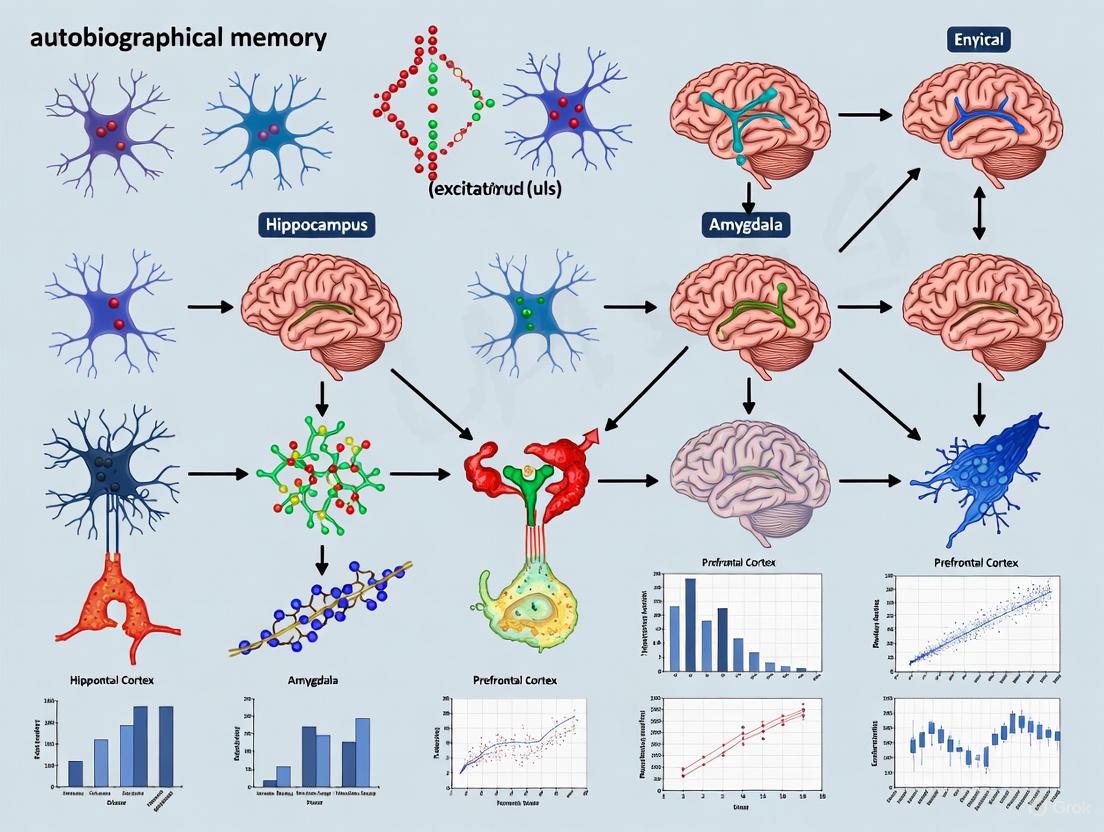
This article synthesizes current neuroimaging and neuropsychological research on the neural architecture of autobiographical memory (AM).
Mapping the Neural Substrates of Autobiographical Memory: From Core Networks to Clinical Applications
Abstract
This article synthesizes current neuroimaging and neuropsychological research on the neural architecture of autobiographical memory (AM). We explore the distinct yet interacting brain networks supporting episodic (EAM) and semantic (SAM) autobiographical memory, highlighting key regions like the hippocampus, medial prefrontal cortex, and posterior cingulate within the Default Mode Network. The content examines methodological advances in investigating these systems, addresses inconsistencies in the literature, and discusses the vulnerability of AM in neurodegenerative diseases like Alzheimer's. Finally, we explore emerging therapeutic applications, including memory reconsolidation interventions for addiction and training protocols for cognitive rehabilitation, providing a comprehensive resource for researchers and drug development professionals.
Deconstructing the Autobiographical Memory System: Core Networks and Functional Anatomy
Autobiographical memory (AM) is a complex, multidimensional construct fundamental to the formation and maintenance of a coherent sense of self. It allows individuals to mentally travel through time to relive past experiences and utilize personal knowledge [1]. Contemporary neuroscientific research has fractionated the declarative self into three functionally independent systems that process personal information at different levels of abstraction: Episodic Autobiographical Memory (EAM), concerning memories of specific events from one's personal past; Semantic Autobiographical Memory (SAM), consisting of general facts and knowledge about one's life; and the Conceptual Self (CS), encompassing summary representations of personal identity, such as beliefs and personality traits [2]. While this whitepaper focuses on EAM and SAM, it is crucial to recognize their operation within this broader hierarchical self-memory system, where information flows between specific experiences and generalized knowledge structures [2]. Understanding the distinct neural substrates and functional characteristics of EAM and SAM is not only essential for basic cognitive neuroscience but also holds significant implications for identifying biomarkers and developing interventions for neurodegenerative diseases such as Alzheimer's [3] [4].
Theoretical Foundations and Definitions
Episodic Autobiographical Memory (EAM)
EAM consists of concrete and specific personal information closely related to unique autobiographical events situated in a specific time and place [2]. It involves the vivid re-experiencing of past events, a process accompanied by autonoetic consciousness, which provides the sense of phenomenal recollection and mental time travel [2] [5]. For example, recalling "the first time I kissed my beloved in a wonderful small village in Italy, it was a warm evening in August..." engages the episodic autobiographical memory system, allowing for the mental reliving of that specific moment [2].
Semantic Autobiographical Memory (SAM)
SAM contains personal information at a more general level, comprising both general knowledge of personal facts (e.g., "My name is X," information about friends and common locations) and general events encompassing both repeated and extended events (e.g., "my first job," "weekends at the country house") [2] [6]. This memory system is associated with noetic consciousness, involving an awareness of general facts about personal events accompanied by a sense of simply "knowing" without the contextual details that characterize EAM [2].
Hierarchical Interdependence
EAM and SAM, while functionally dissociable, are highly interconnected systems that typically operate in concert [2]. According to hierarchical models such as Conway's, these systems are organized from highly abstract self-concepts (CS) through semantic self-knowledge (SAM) to specific, experience-near knowledge of unique events (EAM) [2]. Most episodic autobiographical memories are indirectly accessed via a chain of activation from the conceptual self and semantic autobiographical memory. Conversely, many semantic self-representations emerge from the summary of episodes that yield abstracted scripts and concepts [2]. For instance, general event knowledge is generated by the repetition of similar events, producing a shift from knowledge about specific episodes to general semantic knowledge [2].
Table 1: Core Characteristics of Episodic and Semantic Autobiographical Memory
| Feature | Episodic Autobiographical Memory (EAM) | Semantic Autobiographical Memory (SAM) |
|---|---|---|
| Definition | Memory for specific personal events in a precise spatiotemporal context [2] | General personal knowledge and facts, not tied to a specific event [2] |
| Consciousness | Autonoetic (reliving, mental time travel) [2] | Noetic (knowing) [2] |
| Content Specificity | Concrete, specific, high in sensory-perceptual details [2] | Abstract, general, factual [2] |
| Temporal Context | Tightly bound to a specific moment [2] | Atemporal or loosely connected to time [2] |
| Exemplar | "I remember the taste of the cake at my 10th birthday party." | "I know I had a birthday party when I turned 10." |
Neural Substrates of Autobiographical Memory
Neuroimaging meta-analyses and neuropsychological studies of patients with memory disorders have consistently revealed distinct but overlapping neural networks supporting EAM and SAM [2] [6]. The key finding across studies is a shift from posterior to anterior neural structures associated with the incrementally increasing level of abstraction of self-representations, from episodic to semantic autobiographical knowledge [2].
The Episodic Autobiographical Memory Network
EAM predominantly activates a network of posterior and limbic regions. The hippocampus is a critical structure for EAM, supporting the initial formation and retrieval of specific, detailed event memories [2]. Beyond the hippocampus, a core EAM network includes the posterior cingulate cortex (PCC), precuneus, temporo-parietal junction, angular gyrus, and other medial temporal lobe structures [6]. These posterior regions are involved in processing the rich sensory-perceptual details and contextual information that characterize vivid episodic reliving. The medial prefrontal cortex is also consistently activated, though EAM tends to recruit more rostral portions of this region [2].
The Semantic Autobiographical Memory Network
SAM is associated with a more anteriorly distributed network. While it also engages some posterior and limbic structures (though to a lesser degree than EAM), SAM reliably activates the anterior cingulate cortex, middle and inferior frontal gyri, thalamus, middle and superior temporal gyri, and the fusiform and parahippocampal gyri [2] [6]. The recruitment of lateral temporal and inferior frontal regions aligns with the broader semantic memory network, which is crucial for storing and accessing general conceptual knowledge [7]. The medial prefrontal cortex is activated irrespective of the level of abstraction, but a more caudal part is recruited during conceptual self-processing, while SAM and EAM activate more rostral portions [2].
Clinical Dissociations and Neuropsychological Evidence
The functional independence of EAM and SAM is powerfully demonstrated by neuropsychological case studies. Patients with amnesia, such as the well-known case K.C., show profound deficits in EAM, losing the ability to consciously re-experience past events while often retaining accurate semantic knowledge about their post-accident facts and personality traits [2]. Conversely, studies on semantic dementia, characterized by a gradual breakdown in general semantic knowledge, show the reverse pattern—deficits in SAM with relative sparing of EAM [2]. Furthermore, the conceptual self appears partially independent from both; judgments about one's own personality can be preserved even when both EAM and SAM are altered [2]. In Alzheimer's disease, the progressive loss of both SAM and EAM contributes to an inability to update one's trait self-concept and impacts the integrity of personal identity [2] [4].
Table 2: Neural Correlates of Autobiographical Memory Components
| Brain Region | Episodic AM (EAM) | Semantic AM (SAM) | Functional Role |
|---|---|---|---|
| Hippocampus | Primary activation [2] | Lesser degree of activation [2] | Contextual binding, recollection of unique events |
| Posterior Cingulate Cortex (PCC)/Precuneus | Primary activation [6] | Not typically primary | Self-referential processing, visual imagery, scene construction |
| Medial Prefrontal Cortex (mPFC) | Rostral portions [2] | Rostral portions [2] | Self-relevance, value judgment, theory of mind |
| Anterior Cingulate Cortex (ACC) | Lesser degree | Primary activation [6] | Salience detection, attention during retrieval |
| Lateral Temporal Cortex | Middle/Superior Temporal Gyri (lesser) [6] | Middle/Superior Temporal Gyri (primary) [6] | Semantic knowledge storage (for SAM) |
| Inferior Frontal Gyrus | Lesser degree | Primary activation [6] | Semantic retrieval control, strategic search |
Experimental Paradigms and Methodologies
Research into the neural substrates of autobiographical memory employs diverse experimental paradigms, each with distinct advantages for probing EAM and SAM.
Autobiographical versus Laboratory-Based Methods
Two primary methodological approaches dominate the field: autobiographical methods and laboratory-based methods [6]. Autobiographical methods preserve ecological validity by having participants recall real-life memories from their personal past in response to cues, renouncing experimental control over the original encoding phase [6]. In contrast, laboratory-based methods maintain strict experimental control by presenting participants with standardized stimuli (e.g., word lists, pictures) during encoding and testing memory after a controlled delay [6]. The remember/know paradigm is a common laboratory procedure where participants indicate if they truly "remember" the item with contextual details (linking to episodic memory) or simply "know" that the item was presented without reliving the experience (linking to semantic memory) [6].
Key fMRI Protocols for Dissociating EAM and SAM
Protocol 1: Famous Name Discrimination Task (Semantic Memory)
- Objective: To probe semantic memory networks by distinguishing famous from non-famous names [3].
- Procedure: In an event-related fMRI design, participants are presented with a series of famous and non-famous names and are required to indicate which ones are famous. The task is typically less effortful for older adults than episodic memory tasks and performance is less affected by healthy aging [3].
- Stimuli: Famous names (e.g., "George Clooney") and matched unfamiliar names.
- Control Condition: Discrimination of non-famous names.
- Data Analysis: Event-related design allows for the elimination of error trials from image analyses. Contrast: [Famous Names > Non-Famous Names]. This task activates regions overlapping with the default mode network and is sensitive for predicting future cognitive decline [3].
Protocol 2: Name Recognition Episodic Memory Task
- Objective: To assess episodic memory by testing recognition of recently learned items [3].
- Procedure: Participants are presented with a list of items (e.g., words or names) to memorize during encoding. Later, in the scanner, they perform an old/new recognition task on these items mixed with new, distractor items.
- Stimuli: Previously learned items and novel foils.
- Control Condition: Perception or low-level processing of similar stimuli.
- Data Analysis: Contrast: [Correctly Identified Old Items > Correctly Rejected New Items]. This targets the episodic recollection network but can be complicated by performance variability and increased effort in older or impaired populations [3].
Protocol 3: Think-Aloud Autobiographical Recall
- Objective: To study the real-time, iterative process of autobiographical remembering in a naturalistic setting, including the use of external digital resources [8].
- Procedure: Participants are asked to remember and reconstruct specific autobiographical events (e.g., an important day and a random day from about one year ago) while verbalizing their thought process. They are in their usual home environment with access to all their typical external resources (e.g., smartphones, photo albums) [8].
- Stimuli: Prompt for specific types of personal memories.
- Data Coding: The number of switches between internal memories and external resources is counted. The types of resources used (digital vs. non-digital) are cataloged.
- Application: This paradigm is novel for investigating how digital resources shape autobiographical remembering in the 21st century, revealing that individuals frequently and iteratively combine internal memories with external digital archives [8].
The Scientist's Toolkit: Research Reagents and Materials
Table 3: Essential Resources for Autobiographical Memory Research
| Tool / Resource | Primary Function | Exemplar Use in AM Research |
|---|---|---|
| 3T/7T fMRI Scanner | High-resolution functional neuroimaging | Mapping brain activity during memory retrieval tasks; investigating static and dynamic functional network organization [9] [10]. |
| Survey of Autobiographical Memory (SAM) | Self-report measure of trait mnemonics | Assessing individual differences in self-reported episodic, semantic, spatial, and prospective memory capacities in healthy populations [5]. |
| Autobiographical Memory Interview (AMI) | Structured interview for AM assessment | Quantifying the episodic and semantic components of autobiographical memory in patient populations (e.g., Alzheimer's disease) [5]. |
| tDCS/tACS | Non-invasive brain stimulation | Modulating cortical excitability to test causal roles of specific regions (e.g., visual cortex) in memory processes like reconsolidation and updating [10]. |
| Famous Name Stimulus Sets | Standardized probes for semantic memory | Use in famous name discrimination tasks (FNDT) to activate semantic networks and predict cognitive decline [3]. |
| Penn Word Memory Test | Laboratory-based verbal episodic memory assessment | Measuring verbal episodic memory abilities in large-scale studies (e.g., HCP) [9]. |
| NIH Toolbox Picture Sequence Memory Test | Laboratory-based visual episodic memory assessment | Assessing memory for temporally ordered visual scenes, tapping into memory for spatiotemporal context [9]. |
Implications for Neurodegenerative Disease and Drug Development
The differential vulnerability of EAM and SAM has profound implications for understanding, diagnosing, and treating neurodegenerative diseases. In Alzheimer's disease, systematic reviews reveal consistent autobiographical memory deficits characterized by reduced specificity across all life periods and a tendency toward overgeneralization [4]. While both systems are affected, the pattern of impairment offers clues: altered temporal gradients often show better preservation of remote memories compared to recent ones (Ribot's law), and semantic autobiographical knowledge may be retained longer than specific episodic memories [4]. Critically, fMRI activation patterns during semantic memory tasks (like the Famous Name Discrimination Task) have proven to be more effective than episodic memory tasks or even APOE ε4 status alone in predicting future cognitive decline in healthy elders [3]. This suggests that semantic memory fMRI could serve as a sensitive functional biomarker for prevention clinical trials, potentially identifying at-risk individuals before significant clinical symptoms emerge. The development of targeted cognitive interventions, which may leverage preserved memory systems or use specific cues (e.g., music, odors) to facilitate retrieval, represents a promising non-pharmacological avenue for improving quality of life in patients [4].
This whitepaper provides an in-depth examination of the core neural network underlying autobiographical memory (AM), focusing on the integrated functions of the medial Prefrontal Cortex (mPFC), Hippocampus, and Posterior Cingulate Cortex (PCC). Drawing upon recent neuroimaging meta-analyses and experimental studies, we synthesize the distinct functional contributions and robust interconnectivity of these regions. The mPFC facilitates self-referential processing and temporal control of action, the hippocampus enables episodic encoding and retrieval, and the PCC acts as a central hub coordinating internal and external attention. Framed within autobiographical memory research, this analysis offers clinical insights for neurodegenerative and psychiatric disorders, with implications for biomarker development and therapeutic innovation.
Autobiographical memory (AM) constitutes a complex neurocognitive system responsible for encoding, storing, and retrieving personally experienced events alongside self-relevant knowledge. This system is fundamental to constructing a coherent self-narrative, enabling mental time travel, and maintaining psychological stability across the lifespan [11]. Contemporary neuroscientific research has progressively delineated a core brain network that supports these advanced mnemonic functions, primarily comprising the medial Prefrontal Cortex (mPFC), Hippocampus, and Posterior Cingulate Cortex (PCC).
These regions do not operate in isolation but form a highly integrated, dynamic system. The PCC serves as a centrally connected hub, the mPFC provides self-referential and evaluative processing, and the hippocampus enables the contextual reconstruction of specific events [12] [6] [11]. Understanding the specialized functions and interactions of this triad is paramount for elucidating the neural substrates of autobiographical memory and its pathology in various brain diseases. This whitepaper synthesizes current evidence from neuroimaging, neuropsychology, and cognitive neuroscience to provide a comprehensive technical guide for researchers and drug development professionals.
Regional Functional Anatomy
Medial Prefrontal Cortex (mPFC)
The mPFC is a key node for self-referential thought and social cognition, guiding actions in time and contributing to the organization of autobiographical memories.
- Functional Segregation: The mPFC exhibits a functional gradient along its ventral-dorsal axis. The ventral mPFC (vmPFC) is predominantly involved in bottom-up-driven, affective, and evaluation-related processing, showing stronger connectivity with limbic structures such as the nucleus accumbens and hippocampus. Conversely, the dorsal mPFC (dmPFC) is engaged in top-down-driven, cognitive, and metacognition-related processing, and is more strongly connected with the inferior frontal gyrus and temporo-parietal junction [13].
- Temporal Control of Action: The mPFC is critically involved in deciding when to act, a process fundamental to organizing behavior and memory sequences. It is essential for tasks like simple reaction-time and interval-timing, where it guides actions based on temporal probabilities. This function is heavily influenced by prefrontal dopamine signaling, particularly through D1-type dopamine receptors (D1DRs) [14].
- Role in Autobiographical Memory and Self-Model Stability: The mPFC is a central component of the Default Mode Network (DMN) and is consistently engaged during autobiographical recall. It acts as a filter, prioritizing memory traces that are congruent with the current self-model, thereby supporting a coherent self-narrative and psychological stability [11].
Posterior Cingulate Cortex (PCC)
The PCC is one of the most metabolically active and highly connected regions in the brain, acting as a central node for integrating information across large-scale networks.
- Anatomical Subregions and Connectivity: Cytoarchitectonically, the PCC comprises Brodmann areas 23 and 31. It is useful to distinguish between its dorsal (dPCC) and ventral (vPCC) subregions. The vPCC has dense connections to the medial temporal lobe (including the hippocampus and parahippocampal cortex), ventromedial prefrontal cortex, and other limbic structures. The dPCC shows stronger connections to frontoparietal control networks [15] [12].
- Multiple Network Hub: The PCC is a central node of the DMN, which is active during internally-directed cognition such as autobiographical memory retrieval and mind-wandering [15] [12]. Beyond the DMN, the PCC exhibits functional fingerprints of other networks, including the dorsal attention network and the frontoparietal control network, positioning it as a critical interface for balancing internal and external attention [12].
- Cognitive Functions: The PCC is implicated in successful episodic memory retrieval, with its activity linked to the emotional salience of autobiographical memories [15]. Recent research also highlights its role in social cognition; the vPCC, in particular, is activated when inferring the purpose or intent behind observed actions, a key aspect of theory of mind [16].
Hippocampus
While the provided search results focus less on the hippocampus than the other two regions, they consistently place it as a critical component of the core autobiographical memory network.
- Episodic Memory and Contextual Binding: The hippocampus is indispensable for the encoding, consolidation, and retrieval of episodic details, providing the spatial and temporal context that gives autobiographical memories their specific quality [6] [11].
- Interaction with Prefrontal Cortex and Neocortex: During memory reconstruction, the hippocampus interacts with the prefrontal cortex in a top-down manner, emphasizing schema-congruent details and suppressing contradictory information. This hippocampo-prefrontal interaction is a key mechanism for the selective and goal-directed nature of memory retrieval [11]. The systems-level consolidation theory posits that the hippocampus initially stores memories but gradually transfers them to the neocortex for long-term storage.
Table 1: Functional Profiles of the Core Autobiographical Memory Network
| Brain Region | Key Anatomical Subdivisions | Primary Cognitive Functions | Network Associations |
|---|---|---|---|
| Medial Prefrontal Cortex (mPFC) | Ventral mPFC (vmPFC), Dorsal mPFC (dmPFC) | Self-referential processing, temporal control of action, value assessment, social cognition [14] [13] [11] | Default Mode Network (DMN) [11] |
| Posterior Cingulate Cortex (PCC) | Dorsal PCC (dPCC), Ventral PCC (vPCC) | Integrating internal/external attention, memory retrieval, emotional salience, theory of mind [15] [12] [16] | Default Mode Network (DMN), Dorsal Attention Network, Frontoparietal Control Network [12] |
| Hippocampus | (Anterior, Posterior) | Episodic encoding/retrieval, contextual binding, memory consolidation [6] [11] | Medial Temporal Lobe Memory System, DMN contributor |
Integrated Network Dynamics in Autobiographical Memory
The core regions do not operate in isolation but function as an integrated system. The following diagram illustrates the primary functional pathways and interactions between the mPFC, PCC, and Hippocampus during autobiographical memory processing.
Diagram 1: Integrated Network Dynamics in Autobiographical Memory. This diagram illustrates the primary functional pathways and interactions between the mPFC, PCC, and Hippocampus. The PCC acts as a central hub, communicating salience and attentional state to the mPFC. The mPFC provides top-down, schema-based control to the hippocampus, which in turn supplies detailed episodic content back to the network, collectively supporting the construction of a coherent autobiographical narrative.
The dynamic interplay within this network facilitates the key aspects of autobiographical memory:
- Constructive Retrieval: Memory recall is an active, reconstructive process. The PCC is implicated in initiating retrieval and orienting attention inward [12]. The hippocampus reactivates distributed episodic traces, while the mPFC biases this reconstruction toward information that is consistent with the current self-model, prioritizing internal consistency over factual accuracy [11].
- Self-Model Stability: The entire system, particularly the DMN components (mPFC and PCC), functions to maintain a coherent and stable sense of self. This is achieved by filtering memories through self-referential schemas, often emphasizing congruent details and suppressing or reinterpreting incongruent ones. This process can be understood through the Free Energy Principle as a mechanism for minimizing internal prediction error and conserving metabolic resources [11].
- Neuromodulatory Influences: The system's operation is modulated by neurotransmitters. Prefrontal dopamine is crucial for the temporal control of action, which underlies the sequencing of memories and actions [14]. Acetylcholine has been implicated in attentional processes that gate sensory information during memory formation and retrieval [14].
Experimental Paradigms and Key Findings
Research into this core network employs a variety of sophisticated experimental protocols. The following workflow visualizes a consolidated experimental approach for investigating autobiographical memory using neuroimaging.
Diagram 2: Experimental Workflow for Autobiographical Memory Research. This diagram outlines a consolidated methodology for investigating the core brain network, from participant selection using specialized memory assessments to advanced neuroimaging data analysis.
Key experimental approaches and their findings include:
Autobiographical Memory Tasks (AMT) and Neuroimaging
- Protocol: Participants are cued (e.g., with words or pictures) to recall specific personal past events or imagine future events while undergoing fMRI. Responses are scored for detail and vividness. Paradigms like the Episodic Test of Autobiographical Memory (TEMPau) and the Temporal Extended Autobiographical Memory Task (TEEAM) are used [1].
- Key Findings: These tasks consistently activate the core network (mPFC, PCC, hippocampus). Studies on individuals with Highly Superior Autobiographical Memory (HSAM) reveal that they relive moments with exceptional intensity and show unique neural activity, such as increased recruitment of anterior and posterior midline regions during active forgetting tasks, suggesting a need for compensatory neural resources for memory control [1] [17].
Directed Forgetting Paradigms
- Protocol: Participants are presented with items (e.g., words) and subsequently cued to either remember or forget each item. A surprise memory test follows. This is often conducted inside an fMRI scanner [17].
- Key Findings: This paradigm probes the top-down control of memory. A study comparing HSAM individuals and controls found that while both groups showed similar behavioral forgetting effects, HSAM individuals displayed heightened activity in dorsal and ventral frontoparietal regions during stimulus encoding and in anterior/posterior midline regions during active forgetting, indicating enhanced initial processing and a greater requirement for neural resources to achieve normal forgetting [17].
Action Anticipation and Theory of Mind Tasks
- Protocol: Participants are engaged in tasks that require inferring the intentions or predicting the actions of others, such as in video game combat scenarios during fMRI [16].
- Key Findings: The ventral PCC (vPCC) is specifically activated during the inference of purpose from action observation. The strength of vPCC activation correlates with real-world task proficiency (e.g., gaming skill). Finite impulse response (FIR) analysis further shows that the vPCC has a distinct temporal response profile compared to other theory of mind regions, underscoring its unique role in social cognition and intention prediction [16].
Table 2: Quantitative Meta-Analytic Findings on Neural Activation during Memory Tasks
| Memory Construct | Most Consistently Activated Brain Regions | Key Supporting Meta-Analysis Findings |
|---|---|---|
| Autobiographical Memory (AM) / Episodic AM (EAM) | Posterior Cingulate Cortex, Hippocampus, Precuneus, Temporo-parietal junction, Angular gyrus, medial Prefrontal Cortex [6] | Meta-review confirms that AM and EAM neuroimaging studies largely investigate the same construct, activating a consistent DMN-dominated network [6]. |
| Semantic Autobiographical Memory (SAM) | Posterior Cingulate Cortex, Anterior Cingulate Cortex, Middle/Inferior Frontal Gyri, Thalamus, Middle/Superior Temporal Gyri [6] | SAM activation patterns are distinct from EAM, involving regions associated with conceptual knowledge and language [6]. |
| Theory of Mind / Action Anticipation | Ventral Posterior Cingulate Cortex (vPCC), other Theory of Mind regions (e.g., TPJ, mPFC) [16] | The vPCC shows a unique dynamic response profile, and its activation strength predicts performance in action anticipation tasks [16]. |
The Scientist's Toolkit: Key Research Reagents & Methodologies
Table 3: Essential Reagents and Methodologies for Investigating the Core Network
| Tool Category | Specific Example | Function/Application in Research |
|---|---|---|
| Neuropsychological Assessments | Episodic Test of Autobiographical Memory (TEMPau); Temporal Extended Autobiographical Memory Task (TEEAM) [1] | Quantifies the richness, vividness, and temporal structure of autobiographical memories outside the scanner, providing behavioral correlates for neural data. |
| Functional Neuroimaging | Functional Magnetic Resonance Imaging (fMRI); Positron Emission Tomography (PET) | Measures brain activity through hemodynamic response (fMRI) or glucose metabolism/neuroreceptor binding (PET). Critical for mapping the core network during tasks and rest. |
| Functional Connectivity Analyses | Meta-Analytic Connectivity Modeling (MACM); Resting-State fMRI (rs-fMRI) | MACM maps co-activation across tasks from databases like BrainMap [13]. rs-fMRI identifies intrinsic functional networks (e.g., DMN) via correlated signal fluctuations [12] [13]. |
| Pharmacological Agents | D1-type Dopamine Receptor (D1DR) antagonists; Muscarinic cholinergic antagonists (e.g., scopolamine) [14] | Used to probe the roles of specific neurotransmitter systems (dopamine, acetylcholine) in temporal control, attention, and memory functions of the mPFC and related networks. |
| Computational Modeling | Finite Impulse Response (FIR) Analysis; Dynamic Causal Modeling (DCM) | FIR characterizes the precise timing and shape of the hemodynamic response in regions like the vPCC [16]. DCM models effective connectivity and causal influences between network nodes. |
| Specialized Participant Cohorts | Highly Superior Autobiographical Memory (HSAM); Preclinical Alzheimer's Disease | HSAM provides a model of enhanced memory function and control [1] [17]. Preclinical AD cohorts allow study of network breakdown (e.g., PCC hypometabolism) in early disease [15] [12]. |
Clinical and Translational Implications
Dysfunction within the core mPFC-hippocampus-PCC network is a hallmark of various neurological and psychiatric disorders, offering critical targets for diagnostic and therapeutic development.
- Alzheimer's Disease (AD): The PCC is notably vulnerable, showing reduced metabolism and early amyloid deposition often before clinical diagnosis [15] [12]. This hypometabolism may be part of a broader network failure linked to pathology in connected regions like the medial temporal lobe. The topology of the DMN seems to predict the spread of pathology [15] [12].
- Parkinson's Disease: While patients exhibit bradykinesia, the delay-dependent speeding mediated by the mPFC remains intact, suggesting a dissociation between motor execution and temporal control circuits. This highlights the role of prefrontal dopamine in cognitive versus motor symptoms [14].
- Psychiatric Disorders: Conditions like schizophrenia, autism, depression, and ADHD are associated with abnormalities in the PCC and mPFC [12]. In depression, maladaptive memory patterns may stem from an over-reliance on rigid self-schemas within the mPFC, hindering the integration of positive or disconfirming experiences [11].
- Memory Modulation Therapeutics: Understanding the reconsolidation process—whereby retrieved memories become transiently labile—opens avenues for therapeutic intervention. Targeting the hippocampus-prefrontal interaction during reconsolidation could potentially allow for the disruption of traumatic memories or the enhancement of adaptive ones [11].
The medial Prefrontal Cortex, Hippocampus, and Posterior Cingulate Cortex form a highly integrated core network essential for autobiographical memory, self-referential thought, and the maintenance of psychological identity. The mPFC provides self-referential and temporal structure, the hippocampus supplies episodic detail, and the PCC acts as a central hub coordinating internal and external attention. Their interaction facilitates a dynamic, reconstructive memory process that prioritizes self-model stability.
Future research leveraging multimodal imaging, pharmacological challenges, and the study of exceptional populations like HSAM will continue to refine our understanding of this network. For drug development, targeting the neurotransmitter systems (dopamine, acetylcholine) that modulate this network, or the reconsolidation processes it governs, represents a promising frontier. Similarly, the PCC's early vulnerability in Alzheimer's disease solidifies its role as a critical biomarker for early detection and monitoring of therapeutic efficacy. A deep understanding of this core neural network is thus fundamental to advancing both cognitive neuroscience and clinical neurology.
The Role of the Default Mode Network (DMN) in Self-Referential Mental Time Travel
The Default Mode Network (DMN), a large-scale brain network most active during periods of rest, has been fundamentally implicated in the cognitive processes of self-referential thought and mental time travel—the ability to mentally project oneself into the past and future. This whitepaper synthesizes current neuroanatomical, functional, and clinical evidence to delineate the DMN's role as a core neural substrate for autobiographical memory. We review the network's architecture, its function as an internal simulator for past retrieval and future prospection, and its interactions with other large-scale brain networks. The clinical significance of DMN dysfunction in major neuropsychiatric disorders and its potential as a therapeutic target are also examined. By integrating findings from cytoarchitectural mapping, functional magnetic resonance imaging (fMRI), and lesion-deficit studies, this review provides a comprehensive technical guide for researchers and drug development professionals exploring the neural foundations of self-referential cognition.
The discovery of the Default Mode Network (DMN) revolutionized understanding of brain function during inactive, task-free states. Initially identified by Marcus Raichle and colleagues in 2001, the DMN demonstrates increased metabolic activity when the brain is not engaged in externally-focused, cognitively demanding tasks [18]. Rather than representing a passive state, this activity supports an active, internally-focused mode of cognition crucial for self-referential mental processes. The DMN's discovery overturned the long-held belief that the brain enters a simple resting state during periods of inactivity [19].
Mental time travel describes the human capacity to mentally project oneself into the past to re-experience autobiographical events, or into the future to pre-experience potential scenarios [18]. This process is fundamentally self-referential, relying on a coherent sense of self and personal narrative. The DMN serves as the core neural substrate for mental time travel, facilitating the recall of past experiences, simulation of future scenarios, and creation of a mental image of oneself across temporal contexts [18]. Research indicates that the same brain regions within the DMN activate when individuals engage in both past recollection and future imagination, suggesting a shared neural system for self-projection across time [18].
From an evolutionary perspective, the ability to mentally travel through time provided significant adaptive advantages. Early humans who could recall past encounters and simulate future possibilities better navigated social and environmental challenges, enhancing survival and reproductive success [18]. This capacity for mental simulation enables modern humans to plan for future events, evaluate risks, and solve problems in the face of uncertainty.
Anatomical Architecture of the DMN
Core Structural Components
The DMN comprises a distributed set of interconnected brain regions primarily located in frontal, temporal, and parietal lobes. These regions exhibit strongly correlated fluctuations in neural activity and include [18] [20]:
- Medial Prefrontal Cortex (mPFC): Involved in self-referential thought and the construction of personal narrative.
- Posterior Cingulate Cortex (PCC): Responsible for integrating spatial and interoceptive information, maintaining environmental awareness.
- Inferior Parietal Lobule (IPL): Facilitates spatial integration and merging of various sensory inputs.
- Middle Temporal Lobe: Supports retrieval and recall of past experiences.
- Precuneus: Coordinates functions of other DMN components and contributes to self-awareness.
- Medial Temporal Lobe (MTL) and Hippocampus: Critical for storing and retrieving autobiographical memories.
Table 1: Structural Components and Functional Roles of the Default Mode Network
| Brain Region | Functional Role | Cytoarchitectural Type |
|---|---|---|
| Medial Prefrontal Cortex (mPFC) | Self-referential thought, personal narrative construction | Dysgranular, Agranular |
| Posterior Cingulate Cortex (PCC) | Information integration, environmental awareness | Eulaminate-I (Heteromodal) |
| Inferior Parietal Lobule (IPL) | Spatial and sensory integration | Eulaminate-II/III |
| Middle Temporal Lobe | Retrieval of past experiences | Eulaminate-I/II |
| Precuneus | Network coordination, self-awareness | Eulaminate-I |
| Medial Temporal Lobe/Hippocampus | Autobiographical memory storage/retrieval | Agranular |
Cytoarchitectural Heterogeneity and Functional Specialization
Recent research leveraging postmortem histology and high-field neuroimaging reveals that the DMN is cytoarchitecturally heterogeneous, containing regions specialized for different levels of information processing [20]. The DMN contains five of six cortical types defined by Von Economo, with a distinctive composition that sets it apart from other functional networks [20].
Approximately 90% of the DMN consists of eulaminate cortex, which is higher than the cortex-wide average of 84%. This type of cortex is particularly over-represented in the DMN (18% increase) and is classically known as heteromodal cortex, specialized for processing information from multiple sensory domains [20]. This heterogeneous microarchitectural composition enables the DMN to process information at varying levels of abstraction, from concrete sensory details to abstract self-representations.
The DMN's anatomical organization features regions receptive to input from sensory cortex alongside a core that is relatively insulated from direct environmental input [20]. This unique architecture allows the network to maintain a balance between internal self-referential processes and external environmental monitoring.
Functional Mechanisms of Mental Time Travel
The DMN as an Internal Simulator
The DMN operates as the brain's internal simulator, enabling individuals to disengage from the present moment to explore the past and future [18]. This simulation function relies on the network's ability to access stored autobiographical memories and recombine them into novel future scenarios. The process involves multiple DMN subsystems working in concert:
- Self-referential subsystem (mPFC): Maintains a continuous sense of self across temporal contexts.
- Autobiographical memory subsystem (MTL/hippocampus): Provides access to stored personal experiences.
- Integration subsystem (PCC/precuneus): Combines memory elements with current goals and contextual information.
Neuroimaging studies consistently show that similar DMN activation patterns occur when individuals remember past experiences and imagine future events, supporting the concept of a shared neural system for mental time travel [18] [21].
Temporal Distance and Neural Representation
The DMN exhibits differential activation patterns based on the perceived temporal distance of events. Research by Casadio et al. (2024) demonstrated that when events feel closer in time, brain regions responsible for creating a sense of self show greater activity [18]. Interestingly, recalling recent events (past few weeks) requires more cognitive effort than recalling distant events (past few years), suggesting the brain creates more detailed representations for temporally proximal events [18].
This temporal distance effect reflects a fundamental property of autobiographical memory organization, where recent memories require more detailed contextual reconstruction while distant memories are stored in more abstract, gist-like representations.
Diagram 1: DMN Information Flow in Mental Time Travel. The diagram illustrates how memory elements from the hippocampus are integrated with self-referential processing in the mPFC and contextual information in the PCC to construct a coherent internal narrative.
Experimental Evidence and Methodologies
Neuroimaging Approaches
Research elucidating the DMN's role in mental time travel employs several sophisticated neuroimaging techniques:
Resting-state fMRI: Participants remain still without performing specific tasks while fMRI detects spontaneous fluctuations in brain activity, revealing functional connections between DMN regions [18] [19].
Task-based fMRI: Participants engage in specific cognitive tasks (e.g., autobiographical recall, future simulation) while researchers observe DMN activity patterns, typically showing decreased activity during externally focused tasks [18].
High-field 7-T MRI: Provides enhanced spatial resolution for detailed mapping of DMN subregions and their microarchitectural features [18] [20].
A recent study by Casadio et al. (2024) exemplifies this experimental approach. Participants were asked to imagine themselves in different time periods (past, present, foreseeable future) and judge whether events happened before or after their imagined temporal reference point. fMRI results showed that DMN regions were more active when events were perceived as closer in time, demonstrating the network's role in creating temporal self-location [18].
Lesion-Deficit Studies
Lesion studies provide crucial evidence for establishing causal relationships between brain regions and cognitive functions. A comprehensive voxelwise lesion-deficit study with 92 patients with focal brain lesions demonstrated that damage to DMN regions (mPFC, PCC, IPL, MTL) was associated with significant autobiographical memory impairments [21].
This study revealed distinct neural correlates for semantic autobiographical memory (SAM - context-free personal facts) and episodic autobiographical memory (EAM - context-specific events). SAM deficits were primarily associated with left mPFC and MTL damage, while EAM deficits were linked to right mPFC and MTL damage, with limited overlap in right IPL [21]. These findings provide neuropsychological evidence for the necessary role of DMN regions in self-referential memory processes.
Table 2: Experimental Methodologies for DMN Research
| Methodology | Key Application | Technical Parameters | Output Metrics |
|---|---|---|---|
| Resting-state fMRI | Mapping functional connectivity within DMN | TR/TE: 800/30ms; voxel size: 2-3mm³; 6-10min scan | Correlation coefficients, network graphs |
| Task-based fMRI | Assessing DMN modulation during mental time travel | Event-related or block design; autobiographical memory tasks | BOLD signal change, activation maps |
| High-field 7-T MRI | Cytoarchitectural mapping and fine-scale connectivity | Resolution: <1mm isotropic; multi-band acceleration | Cortical thickness, myelin mapping |
| Lesion-Deficit Analysis | Establishing causal brain-behavior relationships | Voxelwise lesion-symptom mapping; n>80 for power | Statistical maps of critical regions |
Diagram 2: Experimental Workflow for DMN Research. The flowchart outlines key methodologies for investigating the DMN's role in mental time travel, including neuroimaging, lesion studies, and behavioral testing approaches.
Clinical Implications and Therapeutic Potential
DMN Dysfunction in Neuropsychiatric Disorders
Aberrant DMN activity is implicated in numerous neuropsychiatric and neurological disorders, highlighting its clinical significance:
Alzheimer's Disease: DMN regions show early vulnerability to amyloid-beta deposition and metabolic decline, correlating with memory impairments and disorientation [18].
Depression and Anxiety: Overactivation in the DMN is linked to excessive rumination about past events and worrying about future scenarios [18] [19].
Post-Traumatic Stress Disorder (PTSD): Disruptions in DMN connectivity are associated with intrusive memories of traumatic events and impaired contextualization of memories [18].
Schizophrenia: DMN dysfunction may contribute to hallucinations and delusions as boundaries between reality and imagination become blurred [18].
Attention-Deficit/Hyperactivity Disorder (ADHD): Altered DMN connectivity with executive control networks is associated with attentional regulation difficulties [19].
The DMN's vulnerability across disorders may stem from its high metabolic activity, extensive connectivity with other brain regions, and relatively recent evolutionary development compared to more stable sensory systems [18].
DMN as a Therapeutic Target
The DMN presents promising targets for therapeutic interventions in neuropsychiatric disorders:
Neuromodulation Approaches: Non-invasive brain stimulation techniques (TMS, tDCS) targeting key DMN hubs may normalize network connectivity patterns in depression and PTSD.
Pharmacological Interventions: Medications that modulate DMN activity through neurotransmitter systems (serotonin, glutamate) could alleviate maladaptive self-referential processes.
Mindfulness-Based Therapies: Practices that cultivate present-moment awareness may reduce DMN hyperactivation associated with rumination and worry.
Cognitive Rehabilitation: Training programs focused on autobiographical memory and future thinking may enhance adaptive DMN function in neurodegenerative disorders.
Table 3: DMN Dysfunction in Neuropsychiatric Disorders
| Disorder | DMN Abnormalities | Clinical Manifestations |
|---|---|---|
| Alzheimer's Disease | Early amyloid deposition, metabolic decline | Memory loss, temporal disorientation |
| Major Depression | Hyperconnectivity, increased activity | Rumination, negative self-focus |
| PTSD | Disrupted connectivity, hippocampal changes | Intrusive memories, context memory deficits |
| Schizophrenia | Altered DMN-ECN dynamics | Reality monitoring deficits, hallucinations |
| ADHD | Altered DMN-ECN anticorrelation | Mind-wandering, attentional lapses |
Research Toolkit: Essential Methods and Reagents
Core Methodological Approaches
The following experimental approaches are essential for investigating the DMN's role in mental time travel:
Functional Connectivity Analysis: Measures temporal correlations between DMN regions during rest or task performance using seed-based approaches or independent component analysis.
Dynamic Causal Modeling (DCM): Estimates directed influences between DMN regions and their modulation by experimental tasks or cognitive states [20].
Cytoarchitectural Mapping: Uses postmortem histology to characterize cellular organization and laminar structure of DMN regions [20].
Lesion-Symptom Mapping: Correlates focal brain damage with cognitive deficits to establish necessity of specific regions for mental time travel [21].
Research Reagent Solutions
Table 4: Essential Research Materials and Analytical Tools
| Category | Specific Tools/Reagents | Research Application |
|---|---|---|
| Neuroimaging Acquisition | 3T/7T MRI scanners, multiband sequences, high-resolution structural protocols | DMN localization, functional connectivity mapping |
| Behavioral Paradigms | Autobiographical Memory Interview, Future Simulation Task, Temporal Distance Judgment | Assessment of mental time travel capacity |
| Computational Tools | FSL, SPM, CONN, FreeSurfer, BrainSuite | Image processing, statistical analysis, visualization |
| Histological Reagents | Nissl stain, NeuN antibodies, myelin stains | Cytoarchitectural analysis, cortical type classification |
| Lesion Analysis | MRIcron, BCB Toolkit, Automated Lesion Identification | Voxelwise lesion-symptom mapping |
The Default Mode Network serves as the central neural architecture for self-referential mental time travel, integrating autobiographical memory retrieval with future scenario simulation to maintain a coherent sense of self across temporal contexts. Its heterogeneous cytoarchitecture, comprising specialized regions for different levels of information processing, enables the construction of detailed internal narratives that form the foundation of personal identity.
Future research should focus on characterizing developmental trajectories of the DMN across the lifespan, elucidating molecular mechanisms underlying its vulnerability in neuropsychiatric disorders, and developing targeted interventions to normalize DMN function. The integration of multi-scale approaches—from cytoarchitectural mapping to large-scale network analysis—will continue to advance our understanding of this fundamental brain network and its role in human consciousness.
For researchers and drug development professionals, the DMN represents both a biomarker for cognitive dysfunction and a promising therapeutic target for disorders characterized by disruptions in self-referential thought. As methodological innovations continue to enhance our ability to investigate network dynamics, the DMN will undoubtedly remain a focus of neuroscience research with profound implications for understanding and treating disorders of autobiographical memory and mental time travel.
The neural substrates of autobiographical memory (AM), the repository of an individual's personal past, have been extensively investigated, revealing a complex, large-scale brain network. A critical finding within this field is the lateralized specialization of the cerebral hemispheres, with the right hemisphere playing a dominant role in the recall of affect-laden autobiographical experiences. This whitepaper synthesizes clinical, neuropsychological, and functional neuroimaging evidence to delineate the right hemisphere's unique contribution to emotional autobiographical recall, framing this specialization within the broader context of a right-lateralized network for emotion, attention, and self-referential processing. Understanding this specialization is paramount for researchers and clinicians developing interventions for memory-related disorders and for drug development professionals targeting these specific neural circuits.
Theoretical Framework and Neuropsychological Evidence
The right hemisphere's dominance extends beyond autobiographical memory to encompass a suite of interrelated functions. Neuropsychological evidence from patients with focal brain lesions provides compelling support for this specialization.
The Right Hemisphere in Emotion and Attention
A substantial body of literature indicates that the right cerebrum is dominant for the perception, expression, and mediation of nearly all aspects of social and emotional functioning [22]. This emotional intelligence is supported by more extensive interconnections with the limbic system compared to the left hemisphere [22]. Furthermore, the right hemisphere possesses a well-established bias for attentional processes, particularly those with survival relevance such as threat detection [23]. According to the biased competition model, emotional stimuli, especially threatening ones, are prioritized for access to the brain's limited processing resources, a mechanism that is predominantly right-lateralized [23]. This close anatomical and functional interplay between emotion and attention within the right hemisphere creates a neural environment primed for the processing of salient personal memories.
Syndromes of Right Hemisphere Dysfunction
Clinical syndromes resulting from right hemisphere damage further illuminate its critical role. Aprosodia, a deficit in comprehending or producing the emotional intonation of speech (prosody), is a classic consequence of right hemisphere lesions, mirroring the linguistic aphasias seen after left hemisphere damage [23]. This condition underscores the right hemisphere's role in processing the emotional content of communication.
Another telling syndrome is anosognosia, a lack of awareness of one's own neurological deficits, often accompanied by emotional indifference [23]. This is frequently observed alongside hemispatial neglect, an inability to attend to stimuli in the left visual hemifield, which is far more common and severe after right hemisphere lesions [23]. The co-occurrence of these deficits—impaired emotionality, self-awareness, and attention—strongly suggests that the right hemisphere integrates these functions to support a coherent emotional and personal consciousness, which is foundational for autobiographical recall.
Empirical Neuroimaging Evidence
Functional neuroimaging studies have quantitatively mapped the neural correlates of autobiographical memory, consistently revealing a right-lateralized pattern during the ecphory (retrieval) of affect-laden personal memories.
Key Neuroimaging Studies and Findings
Table 1: Summary of Key Neuroimaging Findings on Right-Hemisphere Involvement in Autobiographical Memory.
| Study / Reference | Imaging Technique | Key Right-Hemisphere Activations | Functional Interpretation |
|---|---|---|---|
| Fink et al., 1996 [24] | H₂¹⁵O PET | Right temporomesial (hippocampus, parahippocampus, amygdala), right temporolateral, right prefrontal, right posterior cingulate, right insula | A right-hemispheric network is engaged in the ecphory of affect-laden autobiographical information. |
| Cimino et al., 1991 [25] | Behavioral Assessment | Reduced emotionality and specificity in autobiographical reports | RHD impairs the ability to recall specific and emotional autobiographical episodes, even in response to emotional cues. |
| Scoping Meta-Review, 2025 [6] | fMRI/PET Meta-Analysis | Posterior cingulate cortex, hippocampus, temporo-parietal junction, angular gyrus, medial prefrontal cortex | The episodic component of autobiographical memory (EAM) consistently activates a network with right-hemisphere preponderance. |
The seminal PET study by Fink et al. (1996) provided foundational evidence. Comparing the recall of personal autobiographical episodes to impersonal episodes, they found that autobiographical memory ecphory activated a predominantly right-hemispheric network [24]. This network included the right temporomesial region (encompassing the hippocampus, parahippocampus, and amygdala), the right temporolateral cortex, right prefrontal areas, and the right posterior cingulate [24]. The activation of the amygdala, a core structure for emotional processing, is particularly significant for affect-laden recall.
This right-lateralized activity for autobiographical memory contrasts with the more bilateral or left-lateralized activation observed during the retrieval of general semantic knowledge, supporting the functional distinction between episodic autobiographical memory and semantic memory [24]. A recent scoping meta-review of neuroimaging meta-analyses confirms this pattern, identifying a consistent set of brain regions for episodic autobiographical memory, including the posterior cingulate cortex, hippocampus, and medial prefrontal cortex, which often show a right-sided bias in activation [6].
The Specificity and Emotionality of Recall
The critical role of the right hemisphere is not merely in memory retrieval but in the qualitative nature of what is recalled. A study investigating patients with right hemisphere damage (RHD) found that their autobiographical narratives were judged by independent raters as being less specific and less emotional compared to those of matched controls, even when cued with emotional words [25]. Crucially, the RHD patients' own ratings of their memories' emotionality did not differ from controls, suggesting a dissociation between the internal experience and the ability to produce a detailed, emotionally coherent narrative [25]. This indicates the right hemisphere is essential for imparting richness and emotional granularity to autobiographical recall.
Experimental Protocols and Methodologies
Research into the right hemisphere's role in autobiographical memory employs sophisticated experimental paradigms and neuroimaging techniques.
Autobiographical Memory Activation Paradigms
A common and robust method is the use of cue-word paradigms to elicit autobiographical memories. In a typical protocol, participants are presented with a series of cue words (e.g., "party," "loss," "trip") and instructed to recall a specific personal event related to each cue. The recalled episodes are then recorded and transcribed for subsequent analysis.
- Qualitative Coding: Trained raters, blind to experimental conditions, code the narratives along several dimensions, most importantly specificity (whether the memory is of a specific event occurring at a particular time and place) and emotionality (the degree of emotional content) [25].
- Patient Studies: This paradigm is effectively used with RHD patients, as in Cimino et al. (1991), to quantify deficits in memory quality [25].
Neuroimaging of Autobiographical Retrieval
The gold standard for investigating the functional neuroanatomy of AM is block-design functional Magnetic Resonance Imaging (fMRI) or Positron Emission Tomography (PET).
- Stimulus Design: As in Fink et al. (1996), personalized autobiographical stimuli are created from pre-scan interviews [24]. Sentences depicting specific episodes from the participant's own past (PERSONAL condition) are compared to sentences from another person's biography (IMPERSONAL condition) or a resting baseline.
- Data Acquisition and Analysis: During scanning, participants listen to these sentences. Brain activity is measured via the BOLD signal in fMRI or relative regional cerebral blood flow (rCBF) in PET. Data are pre-processed (realigned, normalized, smoothed) and analyzed using statistical parametric mapping (e.g., SPM) to identify voxels with significantly greater activity during the PERSONAL condition [24]. This consistently reveals the right-lateralized network described above.
The following workflow diagram illustrates the typical stages of a neuroimaging experiment on autobiographical memory.
The Scientist's Toolkit: Research Reagent Solutions
Research in this domain relies on a specific set of "reagents"—standardized tools, paradigms, and analysis techniques.
Table 2: Essential Methodologies for Investigating Right-Hemisphere AM Dominance.
| Research 'Reagent' | Description | Primary Function in Research |
|---|---|---|
| Cue-Word Paradigm (Crovitz) | A behavioral method using single words to prompt autobiographical recall. | Elicits a standardizable set of autobiographical memories for qualitative analysis of specificity and emotionality [25]. |
| Autobiographical Memory Interview | A structured interview (e.g., TEMPau, TEEAM) to probe different life periods. | Assesses the richness, vividness, and temporal distribution of autobiographical memories, used in hypermnesia research [1]. |
| Split Visual-Field Task | Presents stimuli exclusively to the left or right visual field, projecting initially to the contralateral hemisphere. | Isolates the perceptual and cognitive capabilities of each hemisphere; used to test emotional perception biases [26]. |
| Backward Masking Paradigm | A stimulus is presented very briefly (e.g., 20ms) and then masked, preventing conscious awareness. | Investigates non-conscious processing of emotional stimuli (e.g., chimeric faces) and its lateralization [26]. |
| Statistical Parametric Mapping (SPM) | A computational software package (e.g., SPM, FSL) for analyzing brain imaging data. | Statistically identifies significant clusters of brain activation associated with a task (e.g., PERSONAL > IMPERSONAL memory recall) [24]. |
Integrated Neural Network Model
The evidence converges on a model where affect-laden autobiographical recall is subserved by an integrated right-hemisphere dominant network. This network facilitates a process of "mental time travel," allowing an individual to vividly re-experience past events.
The following diagram summarizes the core right-hemisphere network and its functional contributions to affect-laden autobiographical recall.
This network's function can be understood as a processing pathway:
- Initial Processing: Sensory or emotional cues are processed for their salience by the temporomesial cortex, including the amygdala for emotional valence and the hippocampus for episodic specificity [24].
- Self-Referential Integration: The posterior cingulate cortex and precuneus integrate this information into a self-referential context, a critical aspect of autobiographical experience [6] [24].
- Executive and Attentional Control: The prefrontal cortex mediates strategic search, retrieval, and monitoring of the autobiographical information, guided by the right hemisphere's dominance in attention [23].
- Coherent Scene Construction: Finally, the temporo-parietal junction is involved in constructing a coherent spatial-temporal scene of the past event, binding the elements into a vivid, relivable experience [6].
The convergence of neuropsychological lesion studies and functional neuroimaging provides a compelling case for right-hemisphere dominance in the recall of affect-laden autobiographical memories. This specialization is not an isolated function but emerges from the right hemisphere's broader supremacy in emotional processing, attentional allocation, and self-awareness. The identified network—spanning temporomesial, prefrontal, posterior cingulate, and temporo-parietal regions—forms the core neural substrate for vivid, emotional mental time travel.
Future research should leverage this foundational knowledge. For neuroscientists, probing the dynamic interactions within this network using effective connectivity analyses represents a logical next step. For drug development professionals, the right-hemisphere AM network presents a potential biomarker and target for therapeutic intervention. Conditions like post-traumatic stress disorder (PTSD), characterized by overly vivid and intrusive traumatic memories, and major depressive disorder, marked by over-general autobiographical memory, may benefit from treatments designed to modulate the activity of this specific circuit [27]. Emerging research on psychedelics, for instance, suggests these compounds may acutely alter autobiographical recall patterns, potentially facilitating the re-processing of traumatic memories, an effect that may be mediated through interaction with this right-lateralized system [27]. A deeper understanding of right-hemisphere dominance in autobiographical memory will thus continue to illuminate both typical and atypical memory function and guide the development of novel neurotherapeutics.
Autobiographical hypermnesia, also known as hyperthymesia or Highly Superior Autobiographical Memory (HSAM), represents one of the most extraordinary phenomena in cognitive neuroscience. This condition is characterized by an exceptional ability to recall personal past experiences with pinpoint temporal accuracy and extensive sensory detail, standing in stark contrast to typical memory function where details fade and reconstruct over time [1]. For most individuals, autobiographical memory operates as a dynamic, reconstructive process where memories gradually lose sharpness, completely fade, or are partially rewritten through retrieval [1]. However, the rare individuals with hyperthymesia can access such wealth of autobiographical detail that they can link specific events to any given date on the calendar, effectively creating a continuous, vivid mental record of their personal history [1] [28].
The scientific investigation of hyperthymesia provides a crucial window into the neural substrates of autobiographical memory, offering unique insights into how the brain organizes, stores, and retrieves personal experiences. Studying these exceptional cases allows researchers to reverse-engineer the cognitive architecture and neurological mechanisms that enable detailed mental time travel—the capacity to consciously re-experience past events and pre-experience future scenarios [29]. This research has profound implications for understanding memory disorders and developing novel therapeutic approaches, particularly in the context of neurodegenerative diseases like Alzheimer's, where autobiographical memory impairment is a devastating early symptom [30]. The field has evolved from classic lesion studies (e.g., Patient H.M.) that revealed the hippocampal necessity in memory formation to contemporary investigations of enhanced memory function that illuminate the sufficient conditions for superior autobiographical recall [31].
The TL Case: A Paradigm for Investigative Methodology
Case Presentation and Phenomenology
The recent investigation of "TL," a 17-year-old female with autobiographical hypermnesia, represents a significant advancement in the field due to its comprehensive methodological approach and novel findings regarding cognitive organization [1] [29]. Published in 2025, this case study provides unprecedented insight into how hyperthymestic individuals may exert remarkable control over their memory access, contrasting with previous accounts that often portrayed the condition as overwhelming and intrusive [1] [28]. TL demonstrates a sophisticated metacognitive awareness of her own memory architecture, distinguishing between two distinct memory systems: her "black memory" containing encyclopedic, emotionally neutral knowledge primarily acquired academically, and her personal autobiographical memories organized within an elaborate mental spatial framework [1].
What makes TL's case particularly remarkable is her development of a highly structured "memory palace"—a cognitive architecture where memories are systematically organized by theme and chronological order [1] [28]. This mental space includes a "white room" with a low ceiling containing binders of filed memories, specialized rooms for emotional regulation ("pack ice room" for anger management, "problems room" for difficulty reflection), and containers for emotionally challenging content (a chest storing the memory of her grandfather's death) [1]. This organizational system demonstrates proactive mnemonic control mechanisms that enable TL to navigate her extensive autobiographical database with intentionality, potentially offering insights into cognitive strategies that might benefit individuals with memory disorders or traumatic memory intrusions.
Comprehensive Assessment Methodology
The investigation of TL employed a multifaceted assessment approach utilizing both standardized instruments and novel paradigms designed to capture the richness of her mental time travel capacities:
Table 1: Standardized Assessment Instruments in Hyperthymesia Research
| Assessment Tool | Construct Measured | Application in TL Case |
|---|---|---|
| Episodic Test of Autobiographical Memory (TEMPau) | Ease of mental time travel, richness of reported memories | Quantified exceptional reliving intensity and vividness |
| Temporal Extended Autobiographical Memory Task (TEEAM) | Relationship between memories and personal narrative | Documented extensive autobiographical connectivity |
| Future Event Simulation Protocol | Capacity to pre-experience future scenarios | Revealed unusually rich temporal, spatial, and perceptual detail in future projections |
Researchers lacked robust tools to verify the absolute accuracy of hyperthymestic memories, especially for distant periods, as hyperthymestics remain prone to false memories and distortions like typical individuals [1]. However, the assessment outcomes demonstrated that TL relives life moments with exceptional intensity and vividness, employing both field (first-person) and observer (third-person) perspectives to re-examine details from different viewpoints [1]. Crucially, when asked to imagine future events, she generated temporal, spatial, and perceptual information far beyond typical production, reinforcing theoretical models that propose shared cognitive mechanisms for past retrieval and future simulation [1] [28].
Quantitative Frameworks: The CRAM Protocol and Beyond
The Cue-Recalled Autobiographical Memory (CRAM) Test
The CRAM test represents a methodological innovation designed specifically to quantify autobiographical memory content across the lifespan using naturalistic assessment conditions [32] [33]. This paradigm adapts and enhances the traditional cue-word technique by employing words selected from the British National Corpus to closely replicate everyday language cues encountered in reading or conversation [33]. The test collects counts of retrieved details across eight content categories: Things (objects), Feelings (emotional details), People (unique individuals), Places (spatial details), Times (temporal details), Episodes (temporally linked events), Contexts (other contextual details), and other Details (all remaining content, including actions) [33].
The CRAM methodology involves several structured phases: (1) collection of demographic information; (2) presentation of autobiographical memory definition emphasizing brief, specific episodes; (3) randomized presentation of word cues from natural language corpora; (4) temporal dating of memories to life periods using ten equal life intervals; and (5) detailed quantification of content features across the eight categories [33]. This approach enables researchers to move beyond simple memory enumeration to detailed characterization of memory quality and composition, creating a rich dataset for understanding the architecture of autobiographical recollection [32].
Table 2: Quantitative Findings from CRAM Test Implementation
| Memory Dimension | Typical Function | Hyperthymestic Pattern |
|---|---|---|
| Details per recollection | ~20 details/recollection [32] | Extraordinary detail volume (precise quantification not provided) |
| Content degradation | Decreases with age of episode [32] | Minimal degradation over extended periods |
| Temporal distribution | Retention decline, reminiscence bump, childhood amnesia [32] | Extensive coverage across lifespan with precise dating |
| Retrieval frequency | ~20 spontaneous recollections/hour [32] | Potentially elevated frequency (not empirically measured) |
| Memory duration | ~30 seconds per spontaneous memory [32] | Potentially extended duration (not empirically measured) |
Experience Sampling of Autobiographical and Prospective Memory
Complementing the CRAM test, the Spontaneous Probability of Autobiographical Memories (SPAM) protocol employs experience sampling to quantify the naturalistic frequency of autobiographical and prospective memory in everyday settings [32]. This methodology involves random prompts delivered via mobile technology throughout daily life, during which participants record whether they are engaged in autobiographical recollection (past-oriented) or prospective simulation (future-oriented) at that moment [33]. This approach provides ecologically valid data on the temporal orientation of episodic thought, revealing that typically individuals spend approximately 10% of waking hours engaged in autobiographical recollection, with prospective memory showing age-related increases [33].
Neurobiological Substrates and Theoretical Models
Neural Correlates of Hyperthymesia
Current neurobiological evidence, though limited by the rarity of hyperthymestic cases, suggests that this exceptional ability is associated with overactivation of brain networks involved in autobiographical memory processing, particularly including enhancements in visual association areas [1] [28]. Interestingly, no consistent neuroanatomical differences have been identified between hyperthymesics and typical individuals, suggesting that the exceptional ability may arise from functional rather than structural variations [1]. Some researchers have proposed potential connections between hyperthymesia and synesthesia, a neurological condition characterized by cross-modal sensory experiences, noting that while TL does not present with synesthesia, several family members do, suggesting potential shared genetic or neurological factors [28].
The neural basis of typical autobiographical memory provides essential context for understanding hyperthymesia. The medial temporal lobe system, particularly the hippocampus, plays an indispensable role in memory formation and consolidation, as dramatically demonstrated by the classic case of Patient H.M. (Henry Molaison) [31]. Following bilateral medial temporal lobe resection including the hippocampus and amygdala, H.M. developed profound anterograde amnesia with additional retrograde amnesia covering 11 years prior to surgery, clearly establishing the hippocampus as crucial for forming new declarative memories while revealing preserved procedural memory capacities [31]. Contemporary research has expanded this framework to encompass a distributed network model of autobiographical memory involving medial temporal lobes, prefrontal cortices, posterior representational areas, and default mode network components [1].
Theoretical Framework: Mental Time Travel
The concept of mental time travel provides a unifying theoretical framework for understanding autobiographical hypermnesia, emphasizing the continuity between past retrieval and future simulation [29]. This perspective, supported by TL's exceptional capacity for rich future event elaboration, posits that both retrospective and prospective thinking rely on similar cognitive mechanisms involving sensory-perceptual details recombination [1] [28]. The constructive episodic simulation hypothesis suggests that retrieving the past and imagining the future rely on common neural substrates that enable the flexible extraction and recombination of episodic details to simulate novel scenarios [28].
Diagram 1: Cognitive architecture of mental time travel showing shared mechanisms between past retrieval and future simulation.
Methodological Toolkit for Autobiographical Memory Research
Essential Research Instruments and Paradigms
Table 3: Methodological Toolkit for Autobiographical Memory Assessment
| Research Tool | Primary Application | Key Features | Cognitive Domains Assessed |
|---|---|---|---|
| TEMPau | Episodic autobiographical memory assessment | Quantifies ease of mental time travel, richness of memories | Autonoetic consciousness, episodic richness |
| TEEAM | Temporal extended autobiographical memory | Evaluates connection between memories and personal narrative | Self-continuity, narrative coherence |
| CRAM Test | Content analysis of autobiographical memories | Naturalistic word cues, detailed feature quantification | Feature-specific detail, temporal distribution |
| SPAM Protocol | Naturalistic retrieval frequency | Experience sampling in ecological settings | Spontaneous retrieval, temporal orientation |
| GSS2 | Interrogative suggestibility | Measures vulnerability to misleading questions | Memory accuracy, misinformation susceptibility |
| Future Simulation Protocol | Prospective mental time travel | Assessment of future event elaboration | Pre-experience capacity, detail generation |
Standardized Assessment Instruments
The Children Recalling Autobiographical Memory (CRAM) instrument represents a specialized adaptation for developmental populations, validated in samples aged 7-16 years to measure main autobiographical narrative skills (Where, What, When, Who, and How) across both retrospective and prospective memory domains [34]. This tool has demonstrated a one-factor structure with good fit indexes and internal reliability, revealing in empirical applications that children with higher autobiographical memory skills show reduced vulnerability to interrogative suggestibility as measured by the Gudjonsson Suggestibility Scale 2 (GSS2) [34]. This relationship between autobiographical skill development and resistance to suggestion has particularly important implications for forensic contexts where children's testimonial reliability must be evaluated.
The neuropsychological assessment of autobiographical memory has also incorporated experimental paradigms examining the relationship between memory and emotion. Studies have demonstrated that emotional events tend to be preserved with greater vividness and retention over time, with positive or negative valence influencing the narrative structure and qualitative characteristics of memories [34]. This emotional enhancement effect may be particularly relevant for understanding hyperthymesia, where emotional components might contribute to the exceptional retention and retrieval characteristics.
Implications for Memory Disorder Therapeutics
The investigation of autobiographical hypermnesia occurs alongside significant advances in Alzheimer's disease therapeutics, with the 2025 drug development pipeline including 138 agents across 182 clinical trials [30]. This pipeline diversity—encompassing biological disease-targeted therapies (30%), small molecule disease-targeted therapies (43%), cognitive enhancement approaches (14%), and neuropsychiatric symptom treatments (11%)—reflects growing recognition that effective memory disorder treatments may require multi-faceted approaches targeting different aspects of memory pathology [30]. Biomarkers play increasingly crucial roles, serving as primary outcomes in 27% of active trials and enabling more precise targeting of pathological processes [30].
Research into hyperthymesia may inform therapeutic development through several potential mechanisms:
- Identification of protective factors that could be pharmacologically enhanced
- Clarification of cognitive strategies that might be trained in compensatory approaches
- Elucidation of neuroplastic mechanisms that support exceptional memory performance
- Development of more sensitive assessment tools for detecting subtle therapeutic effects
The case of TL demonstrates the potential for sophisticated mnemonic control mechanisms that regulate emotional responses to memories, suggesting possible avenues for addressing the traumatic intrusions that characterize conditions like post-traumatic stress disorder [1]. Her use of mental spatial organization (the "white room" and specialized chambers) represents a naturally evolved cognitive adaptation that parallels therapeutic techniques like the method of loci, suggesting potential targets for cognitive rehabilitation approaches.
Future Research Directions and Unanswered Questions
Despite significant advances in understanding autobiographical hypermnesia, fundamental questions remain unresolved. The neuroanatomical substrates of this exceptional ability require further investigation using advanced neuroimaging techniques with larger sample sizes [1]. The relationship between hyperthymesia and other cognitive exceptionalities, such as synesthesia or savant abilities, represents another promising research direction [28]. Longitudinal studies are essential to understand how hyperthymestic abilities evolve across the lifespan, particularly whether they offer protection against age-related memory decline or potentially exacerbate certain pathological processes [1].
The development of more sophisticated assessment methodologies remains an ongoing priority. Current tools provide quantitative data on memory content and frequency, but more nuanced paradigms are needed to capture the qualitative dimensions of hyperthymestic experience and the dynamic processes of memory organization and retrieval [32] [33]. The CRAM test and experience sampling protocols represent significant methodological advances, but further innovation is needed to fully characterize the temporal dynamics, neural correlates, and cognitive architecture of exceptional autobiographical memory.
Diagram 2: Experimental workflow for the CRAM test showing sequential stages from cue presentation to data analysis.
The investigation of autobiographical hypermnesia continues to yield profound insights into the extreme capabilities of human memory while simultaneously illuminating ordinary memory function. As researcher Laurent Cohen notes, "Studying this atypical cognitive functioning could help us better understand how autobiographical memory works, as well as the neurological disorders that affect it" [1]. With only a handful of cases described in scientific literature, each new individual like TL provides invaluable opportunities to expand our understanding of memory's potential and its neural foundations, potentially paving the way for innovative approaches to treating memory disorders and enhancing cognitive function across the lifespan.
Investigative Tools and Translational Pathways: From fMRI to Therapeutic Interventions
Ecphory denotes the specific cognitive process whereby a retrieval cue triggers the conscious recollection of a past autobiographical event, enabling mental time travel and re-experiencing [35] [36]. This process is a central component of autobiographical memory (AM), defined as the memory for events and lifetime periods from one's own past [37]. The scientific investigation of ecphory provides a critical window into the complex neural architecture that supports our personal past.
Functional neuroimaging techniques, primarily functional Magnetic Resonance Imaging (fMRI) and Positron Emission Tomography (PET), are the cornerstone of this research. They allow for the non-invasive measurement of brain activity, with fMRI detecting changes in blood oxygenation and PET measuring regional cerebral blood flow or metabolic activity [37] [38]. Studying ecphory within the broader context of autobiographical memory research is essential because it moves beyond simple laboratory-based memory tasks to engage ecologically valid, self-referential, and often emotional memories [6] [38]. This article provides an in-depth technical guide to the methodologies, neural substrates, and experimental protocols that define this field, framing its insights within the ongoing pursuit to map the neural substrates of autobiographical memory.
Neural Substrates of Autobiographical Ecphory: A Meta-Analytic Perspective
Quantitative meta-analyses of neuroimaging studies have been instrumental in consolidating findings from individual experiments to identify a consistent, large-scale brain network supporting autobiographical ecphory. This network encompasses frontal, temporal, parietal, and subcortical regions, each contributing specific cognitive operations to the overall process of memory retrieval [37] [6].
The following table synthesizes the key brain regions implicated in autobiographical ecphory, detailing their putative functional roles based on coordinate-based meta-analyses and reviews.
Table 1: Core Neural Substrates of Autobiographical Ecphory
| Brain Region | Putative Functional Role in Ecphory | Key Supporting Evidence |
|---|---|---|
| Medial Prefrontal Cortex (mPFC) | Self-referential processing, evaluation of personal significance, and coherence of the memory narrative [37] [38]. | Consistent activation across AM tasks; linked to emotional appraisal, particularly for positive memories [37]. |
| Hippocampus & Parahippocampal Cortex | Crucial for the successful retrieval of detailed episodic information and the binding of disparate elements into a coherent memory trace [35] [36]. | Activated regardless of memory age, supporting a role in permanent retrieval [35] [38]. |
| Posterior Cingulate Cortex (PCC) & Retrosplenial Cortex | Facilitating mental imagery and orienting attention toward internal representations; a key hub for the vivid reliving of events [35] [38]. | Part of the core recollection network, strongly linked to memory vividness and contextual detail [35]. |
| Precuneus | Visual-spatial imagery and the first-person perspective during re-experiencing [6]. | Frequently identified in meta-analyses of episodic autobiographical memory (EAM) [6]. |
| Lateral Temporal Cortex | Processing of semantic and conceptual knowledge about the world and the self, which guides memory construction [39]. | Associated with the semantic component of autobiographical memory (SAM) [6] [39]. |
| Amygdala | Modulation of the emotional intensity and valence of the recollected event [38]. | Particularly active during the ecphory of emotional AMs, enhancing recollection [38]. |
| Angular Gyrus / Temporo-Parietal Junction | Integrating memory features from different sensory modalities and supporting subjective sense of remembering [6] [35]. | A consistent node in the episodic autobiographical memory network [6]. |
| Dorsal Prefrontal Cortex | Strategic search, monitoring, and verification of retrieved information during memory construction [35] [38]. | Involved in the effortful search phase of ecphory [35]. |
| Basal Ganglia (e.g., Globus Pallidus) | Pleasure and reward processing, especially during the recollection of positive, happy events [37]. | Identified in meta-analyses of happy autobiographical memories [37]. |
A critical theoretical debate illuminated by neuroimaging studies of ecphory concerns the role of the Medial Temporal Lobe (MTL), and the hippocampus in particular, in remote memory. The standard consolidation theory posits a time-limited role for the hippocampus, after which memories are stored permanently in the neocortex [35] [36]. Conversely, multiple trace theory and other contemporary views suggest the hippocampus remains permanently engaged for the retrieval of detailed episodic autobiographical memories [36]. fMRI studies specifically designed to probe remote ecphory have provided compelling evidence for the latter view, demonstrating that the hippocampus is activated during the retrieval of both recent and remote autobiographical memories, with little change in its engagement over time [35] [36] [38].
Experimental Protocols for Eliciting and Measuring Ecphory
Standardized Paradigms for Ecphory Induction
To reliably study ecphory in the scanner, researchers have developed sophisticated paradigms that move beyond simple word-cue techniques.
The Ecphory Task Paradigm: Steinvorth et al. (2006) established a robust fMRI paradigm using individually tailored stimulus sentences derived from participant diaries and interviews with family members [35] [36]. This method ensures the remote character of memories is preserved by avoiding recent retrieval or rehearsal. The trial structure is precisely timed:
- Stimulus/Search Phase: A self-paced period where the participant reads a cue sentence and presses a button as soon as the memory is accessed.
- Reminiscence Phase: A fixed-duration period (e.g., 6 seconds) for actively re-experiencing and elaborating on the memory in as much detail as possible.
- Rating Phase: A brief period (e.g., 2 seconds) for the participant to rate the subjective vividness of the memory, ensuring task compliance and providing a behavioral correlate [35] [36].
Personalized Photo Paradigm: Other approaches involve using personalized photographs as retrieval cues, which participants take themselves to represent specific recent events from their lives. These photos are then presented in the scanner to trigger ecphory of the corresponding event, offering high ecological validity [38].
Control Conditions and Task Design
A critical aspect of experimental design is the selection of appropriate control conditions to isolate the neural activity specific to autobiographical ecphory. Common baselines include:
- Semantic Memory Retrieval: Participants might be asked to visualize and think about well-known objects or public facts. This controls for general retrieval effort, mental imagery, and semantic knowledge access, helping to isolate the self-referential and episodic components of AM [35] [36].
- Fixation/Rest: A cross-hair fixation condition controls for low-level visual processing and baseline brain activity.
- Laboratory Episodic Memory: Retrieval of events encoded in the laboratory, which helps dissociate processes specific to complex, real-world memories from those of simpler, experimenter-controlled memories [38].
Table 2: Key Phases of Autobiographical Ecphory and Their Associated Cognitive Processes and Neural Correlates
| Ecphory Phase | Cognitive Processes | Primary Neural Correlates |
|---|---|---|
| Cue Presentation | Perceptual processing and comprehension of the retrieval cue. | Visual cortex, language processing areas (e.g., left inferior frontal gyrus). |
| Search/Construction | Strategic search, access to personal semantic knowledge, and initial recovery of the memory trace. | Left lateral prefrontal cortex (lPFC), medial PFC, lateral temporal cortex [38]. |
| Elaboration/Re-experiencing | Vivid reliving, mental imagery, emotional response, and a sense of mental time travel. | Hippocampus, parahippocampal cortex, PCC, precuneus, retrosplenial cortex, amygdala [35] [38]. |
| Post-Retrieval Monitoring | Evaluation, verification, and self-reflection on the recovered memory. | Dorsomedial and dorsolateral PFC, anterior PFC [38]. |
The following diagram illustrates the experimental workflow and the corresponding neural dynamics in a typical ecphory task.
The Scientist's Toolkit: Essential Reagents and Materials
Conducting rigorous fMRI and PET studies of autobiographical ecphory requires a suite of specialized tools and resources. The following table outlines key solutions and their functions.
Table 3: Essential Research Reagents and Solutions for Neuroimaging of Autobiographical Ecphory
| Tool/Solution | Function in Research |
|---|---|
| 3T/7T fMRI Scanner | High-field magnetic resonance imaging system for measuring Blood-Oxygen-Level-Dependent (BOLD) signals with high spatial resolution; essential for localizing neural activity during ecphory. |
| PET Scanner with Radioligands | Positron Emission Tomography system used with radioligands (e.g., [¹⁵O]-water for blood flow, [¹⁸F]-FDG for metabolism) to provide complementary data to fMRI, particularly for neurochemical studies. |
| Stimulus Presentation Software | Software platforms (e.g., Presentation, E-Prime) for precise control and timing of personalized cue presentation (text, images, sound) during the scanning session. |
| High-Resolution Structural Scans | T1-weighted MRI sequences (e.g., MPRAGE) acquired for each subject to provide an anatomical reference for functional activation maps and for morphometric analysis. |
| Personalized Memory Cues | Individually tailored stimuli (e.g., sentence prompts from pre-scan interviews, participant-generated photos) that serve as effective triggers for ecphory of specific events. |
| Data Analysis Suites | Software packages (e.g., SPM, FSL, AFNI) for preprocessing (realignment, normalization, smoothing) and statistical analysis of functional neuroimaging data. |
| Coordinate-Based Meta-Analysis Tools | Algorithms like Activation Likelihood Estimation (ALE) implemented in software (e.g., GingerALE) for quantitatively synthesizing results across multiple studies to identify consistent activation foci [37]. |
Advanced Considerations and Clinical Implications
The Episodic-Semantic Gradient in Ecphory
Autobiographical ecphory is not a monolithic process but operates along a gradient from highly specific episodic autobiographical memories (EAM) to more conceptual semantic autobiographical memories (SAM) [6] [39]. Neuroimaging reveals that this gradient is reflected in neural activity. Recalling specific episodes (EAM) upregulates regions supporting contextual and sensory detail, such as the hippocampus, PCC, and precuneus. In contrast, retrieving general personal facts (SAM) engages lateral temporal regions associated with conceptual knowledge [6] [39]. Healthy aging is associated with a shift along this gradient, where older adults show reduced modulation of the default mode network for specific events and increased reliance on semantic processing regions, such as the left temporal pole [39].
The Impact of Pathological Conditions
Investigating ecphory in clinical populations provides a powerful lens for understanding its neural basis and functional importance. In Alzheimer's Disease (AD), autobiographical memory impairment is a hallmark feature, characterized by a loss of specificity and a tendency toward overgeneralization [4]. This deficit is linked to the progressive disruption of the core ecphory network, including atrophy of the hippocampus and medial temporal lobe, dysfunction of the prefrontal cortex, and disintegration of the default mode network [4]. The study of ecphory in AD not only clarifies the pathophysiology of the disease but also holds promise for developing diagnostic biomarkers and targeted interventions, potentially leveraging preserved memory systems like the emotional content of memories or the use of potent cues like music [4].
fMRI and PET studies of autobiographical ecphory have fundamentally advanced our understanding of the complex, large-scale brain network that enables us to mentally travel back in time and re-experience our personal past. Through meticulously designed experimental protocols and sophisticated meta-analyses, a consistent neural architecture has been revealed, encompassing medial and lateral prefrontal regions for construction and control, medial temporal lobes for episodic detail, and a posterior parietal core for vivid reliving. The enduring activation of the hippocampus during the ecphory of remote memories challenges simplistic consolidation models and underscores its permanent role in the retrieval of detailed autobiographical events. As research continues to dissect the episodic-semantic gradient and the alterations of this network in aging and disease, the field moves closer to translating these insights into clinical applications, offering hope for diagnosing and treating disorders of memory where the very fabric of the self is at stake.
Autobiographical memory (AM) is a cornerstone of human identity, and its degradation is a feature of numerous neurological and psychiatric disorders. Contemporary research reveals that targeted training of AM, particularly when facilitated by olfactory cues, can induce significant, measurable neuroplastic changes. These changes are expressed through altered functional connectivity within core neural networks—the default mode network (DMN) and the sensorimotor network (SMN)—and are coupled with modulations of key inflammatory biomarkers. This whitepaper synthesizes current evidence to provide researchers and drug development professionals with a technical guide to the neural substrates, experimental protocols, and biochemical pathways underlying this promising non-pharmacological intervention. The findings underscore a novel, multi-mechanism approach to cognitive enhancement and neuroprotection, bridging high-level cognitive processes with fundamental somatic physiology [40].
Neural Substrates of Autobiographical Memory
Autobiographical memory is subserved by a distributed brain network that closely overlaps with the Default Mode Network (DMN). The recall of personally relevant events engages a sophisticated system that integrates episodic detail with semantic and emotional context.
Core Autobiographical Memory Network
The following table summarizes the key brain regions implicated in autobiographical memory, particularly during the recall of positively valenced events, based on coordinate-based meta-analyses [41] [42].
Table 1: Key Brain Regions in the Autobiographical Memory Network
| Brain Region | Functional Role in AM |
|---|---|
| Posterior Cingulate Cortex | A hub for self-referential processing and scene construction; consistently activated during AM retrieval [41] [42]. |
| Hippocampus/Parahippocampal Gyrus | Critical for memory consolidation, retrieval, and the contextual binding of episodic details [41] [42]. |
| Precuneus | Involved in visuospatial imagery and the first-person perspective, key for mentally re-experiencing events [41] [42]. |
| Medial Prefrontal Cortex | Supports self-referential processing and the attribution of personal significance to memories [41] [42]. |
| Angular Gyrus / Temporo-Parietal Junction | Facilitates the integration of memory and sensory information [41] [42]. |
| Cingulate Cortex | Manages cognitive control and appraisal processes during recollection [41]. |
| Basal Ganglia | Includes subthalamic nucleus and globus pallidus; potentially involved in pleasure reactions associated with happy memories [41]. |
Theoretical Frameworks of Autobiographical Recall
Two primary theoretical frameworks explain the involvement of these networks:
- Scene Construction Theory: This theory posits that retrieving episodic memories is a reconstructive process reliant on the DMN to mentally generate and navigate scenes from the past [40].
- Embodied Memory Theory: This view suggests that memories are recalled through sensorimotor simulations of the original events, implicating the SMN in the re-enactment of past experiences [40].
Experimental Protocols: Olfactory-Cued Autobiographical Memory Training
The following protocol, adapted from a 2022 study, provides a validated model for investigating the effects of olfactory-cued AM training [40].
Participant Selection and Screening
- Sample Size: A minimum of 29 subjects per group (experimental and control) is recommended for adequate power [40].
- Inclusion Criteria: Healthy adult volunteers. A complete blood count and C-reactive protein (CRP) measurement should be conducted to exclude individuals with active infection or inflammation [40].
- Exclusion Criteria: Rhinitis or other conditions impairing smell, depression, anxiety, chronic inflammatory diseases, and standard MRI contraindications [40].
Stimuli and Materials
- Olfactory Cues: Fifteen distinct, common odors such as coffee, vanilla, cinnamon, fresh apples, tobacco, and jasmine fragrance. Odors are presented in small containers with perforated lids to control for intensity [40].
- Memory Assessment: Questionnaires using seven-point Likert scales to measure memory qualities including valence (emotional tone), vividness (sensory clarity), and personal meaning (self-relevance) [40].
Procedure and Workflow
The experimental timeline spans four weeks, incorporating pre-training, training, and post-training sessions as outlined below.
Data Collection and Outcome Measures
- Neuroimaging: Resting-state functional MRI (fMRI) is used to calculate changes in intranetwork connectivity within the DMN and SMN [40].
- Biochemical Analysis: Blood samples are analyzed using a high-sensitivity ELISA kit to quantify changes in Tumor Necrosis Factor α (TNFα) levels, a pro-inflammatory cytokine linked to cognitive performance [40].
- Behavioral Metrics: Questionnaires administered one month post-training assess the transfer of training benefits to daily life, measuring the onset of spontaneous memories and ease of voluntary memory access [40].
Quantitative Outcomes and Neural Mechanisms
The prescribed experimental protocol produces consistent, quantifiable changes in neural and biochemical systems.
Key Experimental Findings
Table 2: Summary of Training-Induced Changes from a 4-Week Protocol [40]
| Outcome Measure | Experimental Group Change | Correlation with Memory Improvement |
|---|---|---|
| DMN Connectivity | Significant increase in resting-state intranetwork connectivity. | Positively correlated with improved cue-evoked recollection. |
| SMN Connectivity | Significant decrease in resting-state intranetwork connectivity. | Negatively correlated with improved voluntary recall. |
| TNFα Levels | Preliminary data indicate a decrease in serum TNFα. | The decrease in TNFα correlated with the decrease in SMN connectivity. |
Underlying Mechanisms of Neuroplasticity
The observed outcomes are supported by fundamental mechanisms of neural plasticity:
- Synaptic Plasticity: Learning and experience induce long-term potentiation (LTP) or depression (LTD) of neurotransmission, accompanied by physical changes in dendritic spines and neuronal circuits [43].
- System-Level Reorganization: Neuroimaging reveals that training induces robust structural and functional plasticity, reflecting experience-dependent modifications in the existing neural architecture [43].
- Olfactory System Plasticity: The olfactory pathway, from the olfactory bulb to the piriform cortex, exhibits high degrees of experience-dependent plasticity. Its direct, strong anatomical connections to the limbic system (amygdala, hippocampus) make it exceptionally effective at evoking and modifying emotional memories [44].
The interplay between the olfactory system, memory networks, and biochemical markers can be visualized as follows:
The Scientist's Toolkit: Essential Research Reagents and Materials
For researchers aiming to replicate or build upon this work, the following table details critical reagents and their applications.
Table 3: Essential Research Reagents and Materials for Olfactory-Cued AM Studies
| Item | Specification / Example | Primary Function in Research |
|---|---|---|
| Olfactory Stimuli Set | 15 distinct, common odorants (e.g., coffee, vanilla, cinnamon, tobacco) [40]. | To provide standardized, ecologically valid cues for triggering autobiographical recall. |
| High-Sensitivity ELISA Kit | For quantifying human TNFα from serum or plasma [40]. | To measure training-induced changes in pro-inflammatory cytokines linked to cognitive function. |
| fMRI Platform | 3T MRI scanner or higher with resting-state fMRI capabilities. | To assess training-induced changes in functional connectivity within the DMN and SMN. |
| Memory Quality Scales | Validated questionnaires with 7-point Likert scales. | To quantitatively assess subjective memory qualities (vividness, valence, personal meaning). |
| Neuroplasticity Modulators | Oxytocin (for social memory studies in models) [45]. | To probe the role of specific neuromodulators in enhancing olfactory-based learning and plasticity. |
| Computational Models | Large-scale models of olfactory circuits (e.g., AON, piriform cortex) [45]. | To simulate and generate hypotheses about circuit-level mechanisms of odor memory formation. |
The convergence of evidence confirms that olfactory-cued autobiographical memory training is a potent paradigm for harnessing experience-dependent neuroplasticity. Its effects are quantifiable through increased DMN connectivity, refined SMN connectivity, and a favorable modulation of the inflammatory milieu. For the pharmaceutical and research communities, these findings open several compelling avenues: the development of therapies for neurodegenerative diseases, the identification of TNFα as a potential biomarker for intervention efficacy, and the refinement of olfactory-based cognitive therapeutics. Future research should focus on longitudinal studies in clinical populations, the synergistic effects of combining AM training with pharmacological agents that enhance plasticity, and further elucidation of the molecular pathways linking neural activity to immune function.
Addiction, or Substance Use Disorder (SUD), is a chronic relapsing condition that can be conceptualized as a disorder of learning and memory. This perspective suggests that both pavlovian and instrumental learning systems become hijacked to support pathological drug-seeking and drug-taking behaviors [46]. In this maladaptive process, originally neutral environmental stimuli (people, places, drug paraphernalia) become powerfully associated with the drug high through pavlovian conditioning, while the actions required to obtain drugs become established as compulsive instrumental memories [47]. These drug-associated memories are exceptionally persistent and can trigger relapse even after long periods of abstinence, making them promising therapeutic targets [48].
The study of maladaptive memories in addiction shares important conceptual ground with autobiographical memory research. Both fields investigate how memories are formed, stabilized, and retrieved, albeit in different contexts. Autobiographical memory research has revealed that networks such as the default mode network (DMN) are crucial for the retrieval of specific, episodic memories [49] [50]. Intriguingly, healthy aging is associated with a shift away from specific episodic autobiographical memories toward more general, semanticized memories, a change accompanied by altered modulation of the DMN [49]. Understanding how these core memory systems function and can be modulated provides a foundational framework for exploring how maladaptive drug memories can be disrupted via the process of reconsolidation.
Memory Reconsolidation: Theoretical Foundations and Key Mechanisms
Memory reconsolidation is a process by which established memories, upon retrieval, become temporarily labile and require a new stabilization process to persist. This reconsolidation window presents a critical opportunity to disrupt or alter well-established maladaptive memories [46] [48].
The process is typically initiated by a reactivation session, which involves brief re-exposure to a learned cue (CS) or context in the absence of the expected outcome (the drug, or US). This creates a prediction error—a mismatch between what is expected and what actually occurs—which is believed to trigger memory destabilization [46]. Once the memory is in this labile state, the application of an amnestic agent (pharmacological or behavioral) can prevent its restabilization, leading to a long-term reduction in the memory's power to influence behavior [46] [47].
Molecular Mechanisms of Reconsolidation
The molecular machinery of reconsolidation shares similarities across different memory systems. Key mechanisms and molecular targets include [46] [47] [48]:
- Protein Synthesis: New protein synthesis is required for the restabilization of memories after retrieval.
- NMDA Receptor (NMDAR) Activation: Glutamate signaling through NMDARs is critical for the induction of reconsolidation.
- Key Signaling Pathways: Pathways involving ERK (Extracellular Signal-Regulated Kinases) and protein kinase A (PKA) are activated.
- Immediate Early Gene Expression: Genes like zif268 are rapidly expressed following memory reactivation and are necessary for reconsolidation.
The following diagram illustrates the core signaling pathway that underpins the memory reconsolidation process.
Neural Circuitry of Drug Memories and Reconsolidation
Different types of drug-associated memories are supported by distinct but interconnected neural circuits within the limbic corticostriatal system. Understanding this neural anatomy is crucial for designing targeted reconsolidation interventions [47].
- Basolateral Amygdala (BLA): Essential for forming and storing pavlovian associations between discrete sensory cues and the affective value of the drug. The BLA is particularly important for memories reactivated by exposure to drug-associated cues (CS-based reactivation) [47].
- Hippocampus: Critical for processing contextual information. The dorsal hippocampus (DH) is necessary for context-drug memories and the context-induced reinstatement of drug-seeking [46] [47].
- Ventral Striatum (Nucleus Accumbens): Integrates information from the BLA and hippocampus and is involved in the conditioned reinforcing properties of drug cues. The core subregion (NAcbC) supports the persistence of pavlovian cue-drug memories [47].
- Dorsal Striatum: Supports instrumental drug-seeking memories. The dorsomedial striatum (DMS) is implicated in goal-directed actions, while the dorsolateral striatum (DLS) underlies habitual drug-seeking [47]. Instrumental memory reconsolidation can be engaged by a change in the expected action-outcome contingency [46].
The table below summarizes the key brain regions involved and their specific roles.
Table 1: Neural Substrates of Drug-Associated Memories and their Role in Reconsolidation
| Brain Region | Memory Type Supported | Role in Reconsolidation |
|---|---|---|
| Basolateral Amygdala (BLA) | Pavlovian cue-drug memories (discrete cues) | Critical for CS-based reactivation; requires NMDAR, PKA, ERK, Zif268 [47]. |
| Central Amygdala (CeA) | Pavlovian cue-drug memories | More involved in US-based (drug-based) reactivation procedures [47]. |
| Dorsal Hippocampus (DH) | Context-drug memories | Necessary for reconsolidation of context-drug memories; involves GluN2A-containing NMDARs [47]. |
| Nucleus Accumbens Core (NAcbC) | Pavlovian cue-drug memories | Supports memory persistence; molecular changes post-reactivation similar to BLA [47]. |
| Dorsomedial Striatum (DMS) | Instrumental goal-directed memories | Reconsolidation can be disrupted by NMDAR antagonism [47]. |
| Dorsolateral Striatum (DLS) | Instrumental habitual memories | Reconsolidation can be disrupted by NMDAR antagonism [47]. |
Experimental Methodologies and Protocols
This section details standard protocols for studying the reconsolidation of different types of drug-associated memories in rodent models, which form the basis for pre-clinical therapeutic development.
Conditioned Place Preference (CPP) for Context-Drug Memory
The CPP procedure assesses the learned preference for an environment paired with a drug.
- Protocol:
- Pre-Test: Rodents are allowed to freely explore a two- or three-chamber apparatus to establish a baseline preference.
- Conditioning: Over several days, the rodent receives an injection of the drug of abuse (e.g., morphine, cocaine) and is confined to one distinct context. On alternating days, it receives a saline injection and is confined to the other context.
- Post-Test: The rodent again has free access to all chambers. A significant increase in time spent in the drug-paired context indicates a conditioned place preference.
- Reactivation: To trigger reconsolidation, the rodent is re-exposed to the previously drug-paired context for a brief period (e.g., 2-5 minutes) in a drug-free state.
- Intervention: An amnestic agent (e.g., NMDAR antagonist, protein synthesis inhibitor) is administered systemically or directly into a target brain region (e.g., hippocampus, BLA) immediately after reactivation.
- Test for Memory Disruption: A final test, conducted 24 hours or more post-intervention, assesses CPP. A significant reduction in preference for the drug-paired context indicates successful disruption of reconsolidation [46] [47].
Cue-Induced Reinstatement in Self-Administration
This model assesses the ability of a drug-associated cue to trigger relapse to drug-seeking behavior.
- Protocol:
- Self-Administration Training: Rodents are trained to perform an operant response (e.g., pressing a lever) to receive an intravenous infusion of a drug, often paired with a discrete light or tone cue.
- Extinction: The drug and the cue are withheld. Lever presses no longer result in drug infusion, leading to a gradual reduction in drug-seeking behavior.
- Reactivation: Prior to the reinstatement test, the rodent is re-exposed to the drug-associated cue (or the context) to destabilize the memory. This session is typically brief and does not involve drug delivery.
- Intervention: An amnestic agent is administered during the reconsolidation window following reactivation.
- Reinstatement Test: The rodent is placed back in the operant chamber, and the previously drug-paired cue is presented. A reduction in cue-induced lever pressing compared to controls indicates a weakening of the original cue-drug memory [46] [48].
The workflow for a typical reconsolidation-blockade experiment is visualized below.
The Scientist's Toolkit: Research Reagents and Solutions
A range of pharmacological and molecular tools are used to investigate and disrupt memory reconsolidation. The following table catalogizes key reagents.
Table 2: Key Research Reagents for Disrupting Drug Memory Reconsolidation
| Reagent / Tool | Molecular Target | Function and Experimental Use |
|---|---|---|
| Anisomycin | Protein synthesis (inhibitor) | A broad-spectrum protein synthesis inhibitor used to establish the requirement for new proteins in memory restabilization post-reactivation [48]. |
| Propranolol | β-adrenergic receptors (βAR antagonist) | A noradrenergic blocker. Used to disrupt reconsolidation of some, but not all, drug memories (e.g., morphine-CPP). Its human applicability is under investigation [48]. |
| MK-801 (Dizocilpine) | NMDA Receptor (non-competitive antagonist) | Blocks the NMDAR ion channel. Used to demonstrate the necessity of NMDAR signaling for the reconsolidation of pavlovian and instrumental drug memories [47] [48]. |
| Zif268 Antisense Oligodeoxynucleotides | zif268 mRNA (knockdown) | Used to transiently reduce the expression of the immediate early gene Zif268 in specific brain regions (e.g., BLA, NAcbC) to block reconsolidation [48]. |
| Rapamycin | mTORC1 (inhibitor) | Inhibits the mTORC1 complex, a key regulator of protein synthesis. Used to disrupt the reconsolidation of alcohol-associated memories [48]. |
| Tetrodotoxin (TTX) | Voltage-gated sodium channels (inhibitor) | A neural activity blocker. Used for temporary, reversible inactivation of specific brain regions (e.g., hippocampus) to assess their necessity in reconsolidation [47]. |
The efficacy of reconsolidation blockade is demonstrated by quantitative reductions in drug-seeking behaviors. The table below synthesizes representative data from key preclinical studies.
Table 3: Quantitative Summary of Reconsolidation Blockade Effects on Drug-Seeking
| Study Paradigm | Amnestic Agent (Target) | Administration Site | Key Quantitative Outcome | Reference |
|---|---|---|---|---|
| Cocaine CPP | Zif268 Antisense ODN (Zif268) | Basolateral Amygdala | CPP score by ~70-80% compared to controls [48]. | |
| Cocaine Seeking (Cue-Induced Reinstatement) | MK-801 (NMDAR) | Basolateral Amygdala | Lever pressing by ~50-60% compared to reactivation-only group [47]. | |
| Alcohol Memory (Conditioned Reinforcement) | Propranolol (βAR) | Systemic | Conditioned reinforcing properties of alcohol cue; blocked acquisition of new response [48]. | |
| Morphine CPP | Propranolol (βAR) | Central Amygdala | CPP score significantly, while dorsal hippocampus infusion had no effect [48]. | |
| Context-Induced Cocaine Seeking | MK-801 (NMDAR) | Dorsal Hippocampus | Context-induced reinstatement by ~60-70% [47]. | |
| Instrumental Cocaine Seeking | MK-801 (NMDAR) | Dorsomedial Striatum | Drug-seeking on test day by ~50% following contingency change reactivation [47]. |
Targeting the reconsolidation of maladaptive drug memories represents a paradigm shift in addiction therapy, moving from a focus on managing symptoms to directly disrupting the learned associations that drive relapse. The evidence from preclinical studies is compelling, demonstrating that pharmacological disruption of specific molecular pathways within defined neural circuits can persistently reduce drug-seeking behaviors [46] [47] [48].
The translation of this approach to clinical populations, however, has yielded mixed results. While some experimental medicine studies with the β-blocker propranolol show reduced cue-induced craving, the effects are often modest and short-lived [48]. Challenges include identifying optimal reactivation procedures to reliably destabilize well-consolidated human drug memories and the heterogeneity of patient populations, including polydrug use [46] [48]. Future research must refine reactivation parameters, explore more specific pharmacological agents, and consider targeting multiple memory associations (both pavlovian and instrumental) simultaneously for a more robust and durable therapeutic effect. By building on the foundational knowledge of memory circuits—including insights from autobiographical memory research—the field moves closer to a novel, memory-based treatment for substance use disorder.
The embodied memory theory posits that cognitive processes, including memory, are deeply rooted in the brain's sensorimotor systems. This framework challenges traditional views by suggesting that remembering is not a purely abstract cognitive reconstruction but a process that reactivates sensory and motor traces from the original experience [51]. Within autobiographical memory research, this implies that recalling personal past events involves a partial re-experiencing of the sensory and motor states present during the initial encoding [6]. The sensorimotor network, comprising brain regions that support sensory processing and motor control, serves as a critical foundation for this embodied memory framework.
Neuroimaging evidence confirms that autobiographical memory retrieval engages not only classic medial temporal lobe memory systems but also a distributed network that includes sensory and motor cortices [6]. This paper explores how leveraging this connection through targeted training protocols can enhance memory encoding, consolidation, and retrieval. By designing interventions that strategically engage the sensorimotor network, researchers and practitioners can develop more effective cognitive training, rehabilitation protocols, and learning frameworks based on the fundamental principle that memory is embodied.
Theoretical Foundation: The Sensorimotor-Association Axis of Memory
The Sensorimotor-Association (S-A) Axis in Brain Organization
Recent large-scale neuroimaging studies have revealed a fundamental principle of brain organization called the sensorimotor-association (S-A) axis [52]. This axis describes a hierarchical gradient spanning from unimodal sensorimotor cortices to transmodal association cortices. The S-A axis encodes a dominant pattern of functional connectivity development and organization:
- Sensorimotor Pole: Lower-ranking regions (e.g., primary visual, somatomotor cortices) support externally oriented processes like perception and movement.
- Association Pole: Higher-ranking regions (e.g., default mode network, frontoparietal networks) support abstract cognition and internally-directed mentation.
Critically, functional connectivity development during childhood and adolescence systematically varies along this axis, with sensorimotor regions exhibiting increasing connectivity and association cortices showing decreasing connectivity with age [52]. This developmental refinement reinforces the cortical hierarchy and highlights the dynamic nature of network specialization.
The Stability-Plasticity Dilemma in Sensorimotor Learning
The brain faces a fundamental challenge known as the stability-plasticity dilemma—synapses must be sufficiently plastic to support new learning while being stable enough to preserve old memories [53]. A proposed resolution to this dilemma suggests that sensorimotor memories are embodied not by fixed synaptic patterns, but by nonstationary synaptic patterns that fluctuate coherently while maintaining consistent input-output mappings [53]. This "hyperplastic" network framework allows for:
- Rapid learning of new skills without overwriting older memories
- Massive redundancy in neural representations to protect against interference
- Noise-tolerant systems that maintain stability despite synaptic turnover
Table 1: Key Theoretical Concepts in Embodied Memory
| Concept | Description | Functional Significance |
|---|---|---|
| Sensorimotor-Association Axis | Hierarchical cortical gradient from sensory/motor to association regions | Provides organizational framework for functional brain development and memory processes [52] |
| Hyperplastic Networks | Neural networks with perpetually fluctuating synaptic strengths | Enables rapid learning while maintaining memory stability through massive redundancy [53] |
| Nonstationary Synaptic Patterns | Coherently fluctuating synaptic connections that maintain consistent mappings | Allows flexible skill execution while preserving memory traces [53] |
| Functional Connectivity Stability | Temporal stability of correlated neural activity patterns | Increases with motor learning and expertise; higher during tasks than rest [54] |
Quantitative Evidence: Neuroimaging and Behavioral Data
Functional Connectivity Changes Across the Lifespan
The temporal stability of functional connectivity patterns follows a U-shaped curve across the human lifespan, with highest stability observed during young adulthood [54]. This stability is not uniform across brain networks but varies systematically along the S-A axis:
- Sensorimotor Network Stability: Shows a U-shaped pattern across lifespan, similar to whole-brain stability [54]
- Task vs. Rest Differences: Temporal stability is highest during sensorimotor tasks, followed by movie-watching, and lowest during rest [54]
- Aging Effects: Older adults show reduced network stability compared to young adults during task conditions [54]
These findings suggest that the sensorimotor network maintains a unique developmental trajectory that directly impacts its functional role in memory processes.
Efficacy of Embodied Learning Interventions
A comprehensive meta-analysis of 46 studies (66 effect sizes) published between 2010-2025 demonstrated that embodied learning has a moderately positive effect (Hedges' g = 0.406) on students' learning performance [55]. Key moderating factors include:
- Educational Level: Greatest impact on high school students
- Discipline: Stronger effects in humanities compared to mathematics
- Embodiment Level: High-level embodied learning has more significant effects than low-level
- Embodiment Type: Active embodied learning outperforms passive approaches
- Experimental Period: Most effective during one-term interventions
- Group Size: Small group settings show enhanced benefits
Table 2: Efficacy of Embodied Learning by Moderating Variables [55]
| Moderating Variable | Category with Greatest Effect | Effect Size (Hedges' g) |
|---|---|---|
| Overall Effect | Across all categories | 0.406 |
| Discipline | Humanities | > Sciences/Math |
| Educational Level | High School | > Other levels |
| Embodiment Level | High-level embodiment | > Low-level |
| Embodiment Type | Active embodiment | > Passive |
| Experiment Period | One term | > Shorter/Longer |
| Group Size | Small groups | > Individual/Large group |
Experimental Protocols for Sensorimotor Network Engagement
Assessing Functional Connectivity Stability
Protocol Objective: Quantify temporal stability of functional connectivity in sensorimotor networks.
Methodology:
- Data Acquisition: Collect resting-state and task fMRI data (sensorimotor task recommended) using standard parameters (e.g., TR=1970ms, TE=30ms, voxel-size=3×3×4.44mm) [54]
- Preprocessing: Implement unwarping, realignment, slice-time correction, coregistration to T1, normalization to MNI space
- Dynamic Functional Connectivity (dFC): Calculate dFC using sliding window approach
- Temporal Stability Metrics:
- Compute Mahalanobis distance between connectivity states
- Calculate angular separation between dFC subspaces
- Derive whole-brain stability indices [54]
Analysis: Compare stability metrics across age groups, task conditions, and between healthy and clinical populations.
Embodied Learning Interventions
Protocol Objective: Enhance memory encoding and retention through sensorimotor engagement.
Methodology:
- Participant Allocation: Randomize participants to embodied vs. traditional learning conditions
- Embodied Learning Activities:
- Role-playing: Physically act out scenarios related to learning content
- Gesture-based Learning: Use symbolic gestures to represent key concepts
- Object Manipulation: Handle physical objects related to abstract concepts
- Simulations: Engage in immersive VR environments that require physical interaction [56]
- Assessment: Measure learning performance through exam scores, knowledge retention tests, and application tasks
Optimal Parameters:
- Duration: One academic term yields greatest effects [55]
- Group Structure: Small groups (3-5 participants) enhance outcomes
- Embodiment Level: Ensure high-level embodiment (full-body engagement) rather than simple motor repetition
Signaling Pathways and Neural Mechanisms
The neural implementation of embodied memory involves coordinated interactions across multiple brain systems. The following diagram illustrates the core signaling pathway from sensory experience to memory consolidation:
Neural Pathways of Embodied Memory Formation
The development of functional connectivity along the sensorimotor-association axis provides the architectural foundation for embodied memory. The following diagram illustrates this hierarchical organization:
Functional Connectivity Development Along S-A Axis
The Scientist's Toolkit: Essential Research Reagents and Materials
Table 3: Essential Research Materials for Sensorimotor Network Studies
| Research Tool | Function/Application | Example Use Cases |
|---|---|---|
| 3T fMRI Scanner | Measure BOLD signal during rest and tasks | Quantifying functional connectivity changes during sensorimotor learning [54] [57] |
| Multiecho EPI Sequence | Acquire fMRI data with reduced artifacts | Improving data quality for dynamic FC analysis [54] |
| Schaefer 200 Atlas | Parcellate cortex into distinct regions | Standardized ROI definition for connectivity analysis [52] |
| Dynamic FC Pipelines | Calculate time-varying connectivity | Assessing temporal stability of network configurations [54] |
| VR/AR Platforms | Create embodied learning environments | Implementing immersive sensorimotor training protocols [55] [56] |
| Generalized Additive Models (GAMs) | Model linear/non-linear developmental changes | Analyzing age-related trajectories in FC strength [52] |
The embodied memory framework provides a powerful approach for developing effective training protocols that leverage the natural connectivity of the sensorimotor network. By aligning intervention design with the fundamental principles of the sensorimotor-association axis and functional connectivity development, researchers can create targeted approaches for enhancing memory encoding and retention across the lifespan.
The evidence for hyperplastic networks with nonstationary synaptic patterns [53] suggests that future training protocols should emphasize variability and adaptability rather than rote repetition. Furthermore, the demonstrated efficacy of high-level embodied learning [55] supports the development of rich, multimodal training environments that fully engage sensorimotor systems. These approaches show particular promise for populations with compromised memory function, including age-related cognitive decline and neurological disorders affecting medial temporal lobe systems.
Future research should focus on precise mapping of how specific sensorimotor engagement parameters (intensity, duration, complexity) optimize memory outcomes across different populations and learning domains. By continuing to bridge theoretical neuroscience with practical intervention design, the embodied memory framework offers exciting possibilities for enhancing human learning and memory through the strategic engagement of our sensorimotor capacities.
The pursuit of biomarkers for neurodegenerative diseases has increasingly focused on the role of neuroinflammation in cognitive decline. Tumor Necrosis Factor-alpha (TNFα), a pro-inflammatory cytokine, has emerged as a significant biochemical correlate of memory performance, with particular relevance to autobiographical memory research. Autobiographical memory—the complex system for recalling personal past experiences—relies on integrated neural networks that appear vulnerable to inflammatory processes. This technical review synthesizes evidence from clinical, neuroimaging, and molecular studies to elucidate the pathways through which TNFα influences memory function, with emphasis on its role within the neural substrates of autobiographical recollection. Understanding these mechanisms provides critical insights for developing targeted therapeutic interventions and diagnostic biomarkers for memory disorders.
Molecular Mechanisms of TNFα Signaling in the Brain
TNFα Structure and Receptor Activation
TNFα exists in two biologically active forms: a 26-kDa membrane-bound form and a 17-kDa soluble form generated through cleavage by TNFα-converting enzyme (TACE/ADAM17). Both forms function as homotrimers and initiate signaling through two distinct receptors: TNF Receptor 1 (TNFR1) and TNF Receptor 2 (TNFR2). TNFR1 contains a death domain in its cytoplasmic segment and activates pathways leading to apoptosis, necroptosis, and NF-κB-mediated inflammation. TNFR2, which lacks a death domain, primarily recruits TNF receptor-associated factors (TRAFs) to activate NF-κB and PI3K-Akt pathways, contributing to cell survival and proliferation [58].
Downstream Signaling Pathways
Table 1: Key TNFα Signaling Pathways and Their Neuronal Effects
| Pathway | Receptor | Key Mediators | Cellular Effects | Impact on Memory |
|---|---|---|---|---|
| Apoptosis | TNFR1 | TRADD, FADD, Caspases | Neuronal cell death | Hippocampal atrophy, impaired consolidation |
| NF-κB Activation | TNFR1/TNFR2 | IKK complex, NF-κB | Pro-inflammatory gene expression | Synaptic dysfunction, altered plasticity |
| PI3K-Akt | TNFR2 | PI3K, Akt, mTOR | Cell survival, metabolism | Neuroprotection, memory enhancement |
| JNK/ MAPK | TNFR1 | JNK, p38 MAPK | Stress response, inflammation | Oxidative stress, impaired LTP |
The cellular outcomes of TNFα signaling depend on receptor distribution, concentration, and temporal pattern of exposure. Chronic TNFα elevation promotes detrimental processes including synaptic dysfunction, impaired long-term potentiation (LTP), and neuronal apoptosis—all critical for memory formation and retrieval. In Alzheimer's disease (AD) models, TNFα stimulates amyloid precursor protein (APP) and β-site APP cleaving enzyme (BACE1) expression, thereby increasing Aβ production while impairing microglial clearance mechanisms [58].
Figure 1: TNFα Signaling Pathways and Memory Outcomes. TNFα activation of TNFR1 promotes neuroinflammation and neuronal death leading to memory impairment, while TNFR2 activation enhances cell survival and memory through PI3K-Akt signaling.
Clinical Evidence: TNFα Levels Across Cognitive States
TNFα Elevation in Cognitive Impairment and Alzheimer's Disease
Substantial clinical evidence demonstrates elevated TNFα levels across the cognitive impairment spectrum. A 2024 study analyzing plasma TNFα in 34 healthy controls (HLT), 30 subjective cognitive impairment (SCI), 30 mild cognitive impairment (MCI), and 39 Alzheimer's disease (AD) patients found significantly increased TNFα in SCI and AD groups compared to HLT. AD patients also showed higher TNFα than MCI patients. Notably, TNFα and Aβ42 levels were negatively correlated in SCI and MCI stages, suggesting complex dynamics between inflammation and amyloid pathology during early disease progression [59].
Table 2: TNFα Levels Across Cognitive States and Correlation with Clinical Parameters
| Cognitive State | TNFα Level vs. Controls | Correlation with Aβ42 | Correlation with MMSE | Key Findings |
|---|---|---|---|---|
| Subjective Cognitive Impairment (SCI) | Significantly increased | Negative correlation | Not significant | Early inflammatory activation |
| Mild Cognitive Impairment (MCI) | Not significantly increased | Negative correlation | Not significant | Inflammatory-amyloid interplay |
| Alzheimer's Disease (AD) | Significantly increased | No correlation | Not significant | Chronic inflammation established |
| Post-COVID-19 Cognitive Impairment | Acute phase predicts impairment | Not studied | Not studied | TNFα predicts anosognosia |
TNFα as a Predictor of Future Cognitive Impairment
Longitudinal studies strengthen the causal interpretation of TNFα in memory decline. Research on post-COVID-19 cognitive impairment demonstrated that acute TNFα levels predict anosognosia for memory deficits 6-9 months post-infection. Higher acute TNFα was associated with decreased functional connectivity in limbic regions, including the hippocampus, temporal pole, and amygdala—areas critical for autobiographical memory [60]. This suggests TNFα may disrupt memory networks rather than merely correlating with impairment.
TNFα Modulation of Autobiographical Memory Networks
Neural Substrates of Autobiographical Memory
Autobiographical memory relies on an integrated network including the medial prefrontal cortex, lateral and medial temporal lobe, precuneus, posterior cingulate cortex, retrosplenial cortex, and temporo-parietal junction—regions largely overlapping with the default mode network (DMN) [40] [61]. The embodied memory theory further implicates sensorimotor networks in autobiographical recall, proposing that recollection involves sensorimotor simulations of events [40].
TNFα Effects on Memory-Related Networks
Research indicates TNFα modulates connectivity within autobiographical memory networks. A 2022 intervention study demonstrated that autobiographical memory training with olfactory cues increased DMN connectivity (associated with improved cue-specific recollection) while decreasing sensorimotor network connectivity (associated with improved voluntary recall). The training-induced reduction in sensorimotor connectivity correlated with decreased TNFα, suggesting inflammation reduction may facilitate network efficiency for memory retrieval [40].
Figure 2: TNFα Modulation of Autobiographical Memory Networks. High TNFα disrupts connectivity in default mode and sensorimotor networks, while autobiographical memory training reduces TNFα and improves network function, enhancing different aspects of memory recall.
TNFα Interactions with Alzheimer's Disease Pathology
Amyloid and Tau Pathways
TNFα interacts with core Alzheimer's pathology through multiple mechanisms. In vitro studies demonstrate TNFα exposure triggers neuroinflammatory processes in human microglial cultures without directly affecting the amyloidogenic pathway, suggesting its role may be more linked to clinical AD manifestation than as a direct driver of amyloidosis [59]. Cerebrospinal fluid studies show relationships between TNFα, Aβ42, and functional connectivity, with increased bilateral anterior middle temporal gyri connectivity associated with higher CSF Aβ42 and Aβ42/pTau181 ratio during both rest and memory tasks [62].
Structural Brain Changes
TNFα-associated memory impairment involves structural changes in medial temporal lobe regions essential for autobiographical memory. Research on postural control—which shares neural substrates with cognitive function—revealed that greater postural sway error was associated with dementia and correlated with reduced gray matter volume in bilateral hippocampi, parahippocampi, entorhinal, and parietal cortices. These regions accounted for over 20% of variance in postural error between dementia and normal cognition groups, highlighting their importance in cognitive-motor integration [63].
Methodological Approaches and Experimental Protocols
Assessment of TNFα and Memory Performance
Table 3: Key Methodological Approaches in TNFα-Memory Research
| Method Category | Specific Techniques | Key Metrics | Considerations |
|---|---|---|---|
| TNFα Measurement | ELISA of plasma/serum, CSF analysis, gene expression (qPCR) | Concentration (pg/mL), fold change in expression | Plasma vs. CSF differences, diurnal variation |
| Memory Assessment | Autobiographical Memory Interview, odor-cued recall, MMSE, CVLT | Specificity, vividness, personal meaning, retention scores | Cultural and age norms for autobiographical memory |
| Neuroimaging | Resting-state fMRI, task-based fMRI, structural MRI | DMN connectivity, sensorimotor network connectivity, gray matter volume | State vs. trait connectivity measures |
| Intervention Paradigms | Autobiographical memory training, olfactory cues, TNFα inhibition | Pre-post changes in TNFα, connectivity, memory performance | Training duration, cue selection |
Autobiographical Memory Training Protocol
A validated protocol for investigating TNFα-memory relationships involves odor-cued autobiographical memory training:
Pre-training Session:
- Morning venous blood collection for TNFα measurement via high-sensitivity ELISA
- Odor-triggered retrieval session (12:00-2:00 PM) using 15 distinct odors
- Participants recall and describe autobiographical memories for each odor
- Assessment of memory qualities (valence, vividness, personal meaning) via 7-point Likert scales
- Resting-state fMRI 6-8 hours post-session to establish baseline connectivity
Training Phase:
- Eight training sessions over four weeks (2×/week, 1 hour/session)
- Presentation of 15 odors with encouragement to elaborate sensory, social, and emotional details
- Control groups engage in non-memory activities (e.g., watching short films)
Post-training Session:
- Identical to pre-training session with repeated blood draws, memory assessment, and fMRI
- Analysis of TNFα changes, connectivity changes, and memory improvements [40]
Research Reagent Solutions Toolkit
Table 4: Essential Research Reagents for TNFα-Memory Investigations
| Reagent Category | Specific Examples | Research Applications | Technical Notes |
|---|---|---|---|
| TNFα Detection | High-sensitivity ELISA kits (Bioassay Technology Laboratory), Multiplex immunoassays | Quantifying TNFα in plasma, serum, CSF | Sensitivity threshold <5 pg/mL for low-level detection |
| TNFα Modulation | TNFα inhibitors (infliximab, adalimumab, etanercept) | Experimental therapeutic interventions | Differential blood-brain barrier penetration |
| Memory Assessment | Autobiographical Memory Interview, Memory Complaint Questionnaire (MAC-Q) | Standardized assessment of autobiographical memory | Assesses multiple life epochs |
| Odor Stimuli | Coffee, vanilla, cinnamon, orange, tobacco, jasmine | Olfactory-cued autobiographical recall | 15 odors provide sufficient variety |
| Neuroimaging | 3T MRI with 32-channel head coil, T2*-weighted gradient echo EPI sequence | Resting-state and task-based functional connectivity | Consistent timing relative to blood collection |
The evidence compellingly positions TNFα as a significant biochemical correlate of memory performance, with particular relevance to autobiographical memory through its modulation of DMN and sensorimotor networks. The association between elevated TNFα and memory impairment across multiple conditions—from subjective cognitive impairment to Alzheimer's disease and post-COVID cognitive dysfunction—suggests this relationship transcends specific disease etiologies. Future research should prioritize longitudinal studies mapping temporal relationships between TNFα fluctuations, network connectivity changes, and autobiographical memory performance, particularly in preclinical stages. The demonstrated capacity of autobiographical memory training to reduce TNFα while improving network efficiency presents a promising non-pharmacological intervention approach. Additionally, further characterization of TNFα inhibitor effects on memory performance in high-risk populations may yield novel therapeutic strategies for preserving autobiographical memory and personal identity in neurodegenerative conditions.
Resolving Inconsistencies and Addressing Pathological Disruption of Memory
The quest to identify robust neural substrates of autobiographical memory (AM) through functional neuroimaging is fraught with a fundamental paradox: the very tools used to synthesize findings—neuroimaging meta-analyses—are themselves characterized by significant methodological fragmentation and inconsistency. Autobiographical memory research, which investigates the complex neural architecture supporting memories of our personal past, is particularly vulnerable to these inconsistencies due to the multifaceted nature of the construct itself, typically divided into episodic (EAM) and semantic (SAM) components [6]. The neuroimaging literature has accumulated numerous meta-analytic studies employing a huge variety of software packages and analytical approaches, each with distinct underlying assumptions, algorithms, and potential pitfalls [64]. This methodological diversity, while in some respects reflecting healthy scientific innovation, creates critical challenges for interpretation and replication, ultimately obscuring consensus on the consistent neural networks supporting autobiographical memory.
The central thesis of this technical guide is that navigating these inconsistencies requires a sophisticated understanding of methodological limitations, current software capabilities, and rigorous reporting standards. Evidence indicates that the prevalence of different meta-analytic methods is rapidly evolving, with a recent survey of 820 papers published between 2019 and 2024 revealing that the most frequently used software was GingerALE (49.6%), followed by SDM-PSI (27.4%) and Neurosynth (11.0%) [64]. The implications of this software diversity are not merely academic; they directly impact the anatomical specificity and reliability of the neural substrates identified for autobiographical memory processes. This guide provides researchers, scientists, and drug development professionals with a comprehensive framework for conducting, interpreting, and evaluating neuroimaging meta-analyses within this fragmented landscape, with particular emphasis on implications for autobiographical memory research.
Methodological Foundations and Current Landscape
Neuroimaging meta-analyses differ fundamentally from those in other disciplines because they are primarily concerned with identifying effect-location in the brain rather than effect-size [65]. This distinction has led to the development of specialized methodologies that can be broadly categorized into two approaches: coordinate-based meta-analysis (CBMA) and image-based meta-analysis (IBMA). Understanding the technical foundations, advantages, and limitations of each approach is essential for contextualizing the inconsistencies in the autobiographical memory literature.
Table 1: Core Methodological Approaches in Neuroimaging Meta-Analysis
| Method Type | Data Input | Primary Methods | Strengths | Weaknesses |
|---|---|---|---|---|
| Coordinate-Based Meta-Analysis (CBMA) | Peak coordinates (foci) from published studies | Activation Likelihood Estimation (ALE), Kernel Density Analysis (KDA), Seed-based d Mapping | Good data accessibility, broad literature coverage, data standardization | Loss of statistical information (data reduction), limited spatial precision, publication bias [64] [65] |
| Image-Based Meta-Analysis (IBMA) | Full statistical maps from individual studies | Mixed-Effects GLM, Fisher's method, Stouffer's method | Prevents information loss, greater power and sensitivity, richer spatial detail | Limited data availability, more arduous data collection process [65] [66] |
The choice between CBMA and IBMA involves significant trade-offs. CBMA methods, particularly GingerALE, dominate the field due to the practical advantage that peak coordinates are more readily available in published literature than full statistical maps [64] [65]. However, this convenience comes at a scientific cost: CBMA suffers from information loss and limited spatial precision because it must infer activation patterns from peak coordinates rather than utilizing the complete statistical information [66]. In contrast, IBMA is considered the "gold standard" for aggregating neuroimaging results as it combines whole-brain statistical maps to identify consistent effects across studies with greater sensitivity [66]. Unfortunately, IBMA remains severely underutilized due to the lack of shared statistical maps, with only one published IBMA having utilized NeuroVault data as of 2025 [66].
The methodological fragmentation extends to software version control, creating subtle but critical inconsistencies. For instance, older versions of GingerALE (prior to version 2.3.6) contained bugs that could inflate false positive rates, while SDM-PSI underwent significant methodological changes between version 6 and prior versions [64]. Alarmingly, a survey found that while 65.9% of papers fully disclosed software names and version numbers, 2.3% reported neither, substantially compromising reproducibility [64]. For autobiographical memory researchers, these technical specifics are not mere details but potential sources of significant variation in identified neural networks for EAM and SAM.
Quantitative Assessment of Current Practices
Recent comprehensive surveys provide critical quantitative insights into the rapidly evolving landscape of neuroimaging meta-analytic practices. A literature survey analyzing 820 papers published between 2019 and 2024 offers the most current snapshot of methodological preferences and reporting standards in the field [64]. The findings reveal not only which software tools dominate current practice but also significant concerns regarding transparency and reproducibility that directly impact the synthesis of autobiographical memory research.
Table 2: Prevalence of Software Use in fMRI Meta-Analyses (2019-2024)
| Software Package | Number of Papers | Percentage of Papers | Most Frequently Used Versions | Critical Version-Specific Notes |
|---|---|---|---|---|
| GingerALE | 407 | 49.6% | 2.3.6, 3.0.2 | Versions prior to 2.3.6 have inflated false positive rates [64] |
| SDM-PSI | 225 | 27.4% | 5.141, 5.15, 6.21, 6.22 | Version 6 uses different meta-analytic methods than prior versions [64] |
| Neurosynth | 90 | 11.0% | Not specified | Automated, database-driven approach [64] |
| Other Software | 131 | 16.0% | Variable | Includes MKDA, NiMARE, and other emerging tools [64] |
The temporal trends in software usage reveal a field in transition. While GingerALE maintains its position as the most widely used tool, emerging platforms like NiMARE (Neuroimaging Meta-Analysis Research Environment) have been developed to consolidate CBMA and IBMA methods with a simple shared interface, with the goal of reducing brand loyalty to any particular algorithm and encouraging between-method comparisons [64]. Its initial release in November 2019 means its impact may not yet be fully reflected in the current quantitative surveys but represents an important direction for future methodological harmonization [64].
A particularly concerning finding for the reproducibility of autobiographical memory meta-analyses is the variability in software version reporting. The survey found that 34.1% of papers did not fully disclose the software version information necessary for exact reproduction [64]. This reporting gap is especially problematic given the significant methodological differences between versions of major software packages. For instance, the meta-analytic method adopted for SDM-PSI version 6 differs fundamentally from those used in prior versions, meaning that analyses conducted with different versions could yield substantially different results even with identical input data [64]. For autobiographical memory researchers seeking to build upon existing meta-analyses to clarify the neural substrates of EAM and SAM, these reporting deficiencies create critical ambiguities in interpreting and synthesifying findings across the literature.
Specific Inconsistencies in Autobiographical Memory Research
The methodological fragmentation in neuroimaging meta-analysis generally manifests with particular severity in autobiographical memory research, where fundamental definitional and construct issues compound methodological variations. A scoping meta-review published in 2025 that synthesized twelve meta-analyses on AM, EAM, and SAM in healthy populations revealed profound inconsistencies at the very conceptual foundation of the field [6].
Definitional and Construct Challenges
The scoping meta-review found that the distinction between autobiographical memory (AM) and episodic autobiographical memory (EAM) is frequently blurred in the meta-analytic literature. In practice, meta-analyses of AM and EAM often investigated the same construct but used different terminology, leading to misinterpretation and confusion in synthesizing findings [6]. Meanwhile, the two available meta-analyses focusing specifically on SAM used different operationalizations of the construct, further complicating integration across studies [6]. This definitional inconsistency means that researchers comparing results across meta-analyses may inadvertently be comparing different cognitive constructs, or constructs with overlapping but non-identical boundaries.
The core theoretical relationship between these constructs—that EAM and SAM are complementary components of the broader AM system—is not consistently reflected in how they are studied experimentally. The scoping review concluded that "AM does not have a separate experimental task nor activation pattern and may not indicate a separate construct but an array of its components" [6]. This suggests that the standard experimental and meta-analytic approaches may not adequately capture the complex, multidimensional nature of autobiographical memory, instead forcing artificial distinctions that do not reflect the underlying cognitive architecture.
Neural Convergence and Divergence
Despite these methodological and conceptual challenges, the meta-analytic evidence does point to consistent neural networks associated with autobiographical memory processes, while also revealing areas of continued divergence. The scoping review employed mean rank classification to identify the most consistently reported regions across meta-analyses [6].
For episodic autobiographical memory (EAM), the most relevant regions identified across meta-analyses include:
- Posterior cingulate cortex
- Hippocampus
- Precuneus
- Temporo-parietal junction
- Angular gyrus
- Medial prefrontal cortex [6]
For semantic autobiographical memory (SAM), the consistent regions identified across meta-analyses include:
- Posterior and anterior cingulate cortexes
- Middle and inferior frontal gyri
- Thalamus
- Middle and superior temporal gyri
- Inferior frontal and fusiform gyri
- Parahippocampal cortex [6]
The scoping review concluded that "variability in reported activation patterns persists, reflecting differences in methodology and assumptions" [6]. This variability presents a significant challenge for researchers attempting to identify the core neural substrates of autobiographical memory or for drug development professionals seeking precise neuroanatomical targets for cognitive enhancement. The persistence of this variability despite multiple meta-analytic approaches suggests that fundamental issues of construct definition and methodological harmonization must be addressed before definitive neural maps can be established.
Experimental Protocols and Methodological Solutions
Protocol for Coordinate-Based Meta-Analysis
For researchers investigating the neural substrates of autobiographical memory, coordinate-based meta-analysis remains the most feasible approach given current data availability. The following protocol provides a rigorous framework for conducting CBMA while minimizing methodological inconsistencies:
Literature Search and Selection: Implement a comprehensive search strategy across multiple databases (e.g., PubMed, Web of Science, Scopus) using Boolean algorithms combining terms related to autobiographical memory ("AM," "autobiographical memory," "episodic autobiographical memory," "EAM," "semantic autobiographical memory," "SAM") with neuroimaging terms ("fMRI," "functional magnetic resonance imaging," "neuroimaging"). Apply strict inclusion/exclusion criteria based on participant characteristics (e.g., healthy adults, specific age ranges), experimental design (e.g., specific AM tasks), and reporting requirements (must report whole-brain coordinates in standardized space) [6] [67].
Data Extraction and Management: Systematically extract peak coordinates (foci) from included studies, noting coordinate space (MNI or Talairach), statistical thresholds, and sample sizes. Create a standardized data extraction sheet to record key study characteristics, including participant demographics, task parameters, and clinical characteristics if relevant.
Software Selection and Version Control: Select appropriate CBMA software (e.g., GingerALE, SDM-PSI) based on research question and methodology. Critically, document the exact software version used (e.g., GingerALE 3.0.2) and justify version selection with reference to known methodological improvements or bug fixes in release notes [64].
Analysis Execution: Convert coordinates to a consistent space (typically MNI) if necessary. Set appropriate analysis parameters, including cluster-level inference thresholds and multiple comparison correction methods. For GingerALE, use updated algorithms that account for within-study and between-study effects [64].
Results Interpretation and Visualization: Interpret resulting activation maps in the context of known methodological limitations of CBMA, particularly the spatial uncertainty inherent in coordinate-based methods. Report findings transparently with complete methodological documentation to enable future reproduction [64] [65].
Protocol for Image-Based Meta-Analysis Using NeuroVault
The emergence of open neuroimaging repositories like NeuroVault now makes IBMA increasingly feasible for autobiographical memory researchers. A 2025 study established a systematic framework for implementing IBMA using NeuroVault data [66]:
Domain and Task Identification: Identify fMRI tasks linked to autobiographical memory using the established connection between NeuroVault and the Cognitive Atlas knowledge base [66].
Multi-Stage Image Selection: Implement a rigorous selection process:
- Preliminary selection leveraging metadata associated with images
- Heuristic selection to remove statistical outliers
- Manual selection verifying analysis contrasts in corresponding articles [66]
Effect Size Calculation and Map Creation: Convert diverse statistical maps to standardized effect size maps, applying appropriate transformations to ensure compatibility across studies.
Meta-Analytic Integration: Employ robust combination methods (e.g., median, trimmed mean, winsorized mean) particularly important for domains like autobiographical memory that may include heterogeneous fMRI tasks and contrasts [66].
Validation Against Reference Standards: Where possible, validate results against task-fMRI group-average effect size maps from established datasets like the Human Connectome Project (HCP) S1200 release [66].
Harmonization Strategies for Autobiographical Memory Research
To address the specific inconsistencies in autobiographical memory meta-analyses, researchers should implement the following harmonization strategies:
Construct Clarification: Explicitly define and justify the specific autobiographical memory construct (AM, EAM, or SAM) under investigation, acknowledging potential overlaps and distinctions. Where possible, use consistent operational definitions aligned with major theoretical frameworks [6].
Task Specification: Document and account for variability in autobiographical memory tasks across studies, including cueing methods (e.g., words, pictures), response modalities (e.g., verbal, button press), and memory timeframes (e.g., recent, remote) that may influence activation patterns.
Multimodal Integration: Combine evidence across multiple imaging modalities where possible. For instance, a 2024 meta-analysis on ADHD demonstrated the value of integrating both resting-state functional imaging and voxel-based morphometry to identify convergent functional and structural abnormalities [68] [69].
Transparent Reporting: Adhere to emerging reporting standards in neuroimaging meta-analysis, including complete documentation of software names, version numbers, analysis parameters, and coordinate spaces to enable exact reproduction [64].
Essential Research Reagents and Tools
The following table summarizes key computational tools and resources essential for conducting rigorous neuroimaging meta-analyses of autobiographical memory.
Table 3: Research Reagent Solutions for Neuroimaging Meta-Analysis
| Tool Name | Type | Primary Function | Application in AM Research |
|---|---|---|---|
| GingerALE | Software Package | Coordinate-based meta-analysis using Activation Likelihood Estimation (ALE) | Identifying consistent activation foci across AM studies [64] |
| SDM-PSI | Software Package | Seed-based d Mapping with Permutation of Subject Images | Hybrid method for coordinate and statistical map analysis [64] |
| NiMARE | Software Package | Neuroimaging Meta-Analysis Research Environment | Consolidated interface for multiple meta-analysis methods [64] |
| NeuroVault | Data Repository | Community platform for sharing statistical maps | Source for image-based meta-analysis of AM [66] |
| Cognitive Atlas | Knowledge Base | Formal ontology of cognitive concepts | Linking AM tasks to NeuroVault images [66] |
| NeuroSynth | Database/Platform | Automated large-scale coordinate-based meta-analyses | Rapid synthesis of AM-related activations [64] |
The fragmentation and inconsistencies in neuroimaging meta-analyses present significant but not insurmountable challenges for autobiographical memory researchers. The path forward requires renewed commitment to methodological rigor, construct clarity, and transparent reporting. The systematic use of robust IBMA methods through platforms like NeuroVault, combined with careful attention to software version control and analytical parameters, offers a promising direction for achieving more reliable synthesis of the neural substrates of autobiographical memory.
For the broader field to progress, researchers must prioritize data sharing of statistical maps to enable more powerful IBMA approaches, while also adopting standardized reporting guidelines that document methodological choices with sufficient detail to enable exact reproduction. The emerging tools and frameworks described in this guide—particularly the systematic approach to NeuroVault data and the harmonized software interfaces like NiMARE—provide practical pathways toward reducing methodological fragmentation. Through concerted effort to address these methodological challenges, the field can achieve more definitive consensus on the neural architecture of autobiographical memory, ultimately advancing both theoretical understanding and clinical applications for memory-related disorders.
The scientific investigation of human memory has long relied on two distinct methodological paths: the highly controlled laboratory-based approach and the ecologically rich autobiographical approach. Laboratory episodic memory research involves presenting participants with impersonal stimuli, such as word lists or pictures, under controlled encoding conditions, with recall tested after short delays [6]. In contrast, autobiographical episodic memory (EAM) research investigates the recall of real-life personal experiences, which are encoded naturally throughout one's lifespan without experimental control, and are intrinsically tied to the self and personal significance [6] [2]. This distinction is not merely methodological but reflects fundamental differences in the neural architecture and cognitive processes underlying these memory types. Understanding this dichotomy is crucial for researchers and drug development professionals aiming to translate laboratory findings into real-world therapeutic applications, particularly for memory disorders affecting autobiographical recall.
The theoretical foundation for this distinction lies in the Self-Memory System (SMS) model, which posits that autobiographical memory arises from the interaction between a knowledge base of personal information and an active "working self" that constrains access to autobiographical knowledge consistent with current goals [2]. Within this framework, EAM contains specific personal information related to autobiographical events definite in time and place, while semantic autobiographical memory (SAM) contains general knowledge of personal facts and repeated events [6] [2]. This review synthesizes current evidence from neuroimaging, neuropsychology, and experimental psychology to elucidate the critical distinctions between laboratory and autobiographical episodic memory, with implications for research methodology and therapeutic development.
Neural Substrates: Dissociable Networks for Different Memory Types
Neuroimaging evidence reveals that laboratory and autobiographical episodic memory rely on distinct but partially overlapping neural networks. A scoping meta-review of neuroimaging studies demonstrates that autobiographical memory retrieval consistently activates a core network including the posterior cingulate cortex, hippocampus, precuneus, temporo-parietal junction, angular gyrus, and medial prefrontal cortex [6]. These regions are associated with self-referential processing, mental time travel, and the integration of sensory and emotional details—processes fundamental to autobiographical recall.
Conversely, laboratory episodic memory tasks for impersonal stimuli show different activation patterns. Direct comparisons of recognition memory for words versus faces reveal strikingly different neural pathways: word recognition predominantly activates left-hemisphere regions including the posterior portion of the left middle and inferior temporal gyri, while face recognition lateralizes to the right hemisphere, engaging the right lingual and fusiform gyri [70]. This demonstrates that even within laboratory memory, neural substrates differ substantially based on stimulus type and processing demands.
Comparative Neural Networks
Table 1: Neural Correlates of Autobiographical Versus Laboratory Episodic Memory
| Brain Region | Role in Autobiographical Memory | Role in Laboratory Memory |
|---|---|---|
| Medial Prefrontal Cortex | Central to self-referential processing, personal significance, and conceptual self-representations [2] | Less consistently activated; involved in monitoring processes [2] |
| Hippocampus | Supports detailed recollection of personal events across lifespan; critical for mental time travel [6] | Primarily engaged in novelty detection and initial encoding of laboratory stimuli [71] |
| Posterior Cingulate Cortex | Integral to autobiographical recollection and self-referential processing [6] | Less activated in standard laboratory tasks [2] |
| Ventromedial Prefrontal Cortex | Strongly associated with autobiographical recollection and self-referential processing [2] | More involved in self-referential encoding than impersonal laboratory recall [2] |
| Right Mid-Dorsolateral Prefrontal Cortex | Less consistently activated in autobiographical retrieval [2] | Prominently activated during strategic retrieval in laboratory episodic memory [2] |
The hierarchical organization of self-representations in the brain further illuminates this distinction. Neuroimaging meta-analyses reveal that EAM predominantly activates posterior and limbic regions including the hippocampus, while laboratory-based memory tasks more frequently engage dorsolateral prefrontal regions supporting strategic control and monitoring functions [2]. This posterior-anterior distinction reflects the differential reliance on sensory-limbic systems for reliving personal experiences versus frontoparietal systems for effortful retrieval of recently encoded impersonal information.
Methodological Divergence: Assessment Protocols and Their Implications
The experimental protocols for investigating laboratory versus autobiographical memory differ fundamentally in their design, implementation, and cognitive demands. These methodological differences directly shape research findings and their interpretation.
Laboratory-Based Episodic Memory Assessment
Laboratory methods maintain strict experimental control over the encoding phase, typically presenting participants with standardized, impersonal stimuli. Common protocols include:
Remember/Know Paradigm: Participants study word lists or images, then indicate whether they actually "remember" the specific encounter with the item or simply "know" it was presented without contextual details [6]. This distinguishes episodic recollection from semantic familiarity.
Directed Forgetting Paradigm: Participants view single words followed by "remember" or "forget" instructions, with subsequent recognition testing measuring the ability to intentionally forget [17]. This assesses cognitive control over memory.
Associative Word-List Tasks: Participants study semantically related word lists, with subsequent testing often revealing false memories for non-presented but semantically associated critical lures [72].
These laboratory tasks typically involve short retention intervals (minutes to hours), experimenter-controlled encoding conditions, and impersonal stimuli that lack personal relevance to participants [6].
Autobiographical Memory Assessment
Autobiographical memory research employs distinctly different methodologies that preserve ecological validity:
Autobiographical Interview: Participants recall personal memories from specific time periods, with responses scored for episodic (internal) and semantic (external) details [1]. This captures the richness of personal recollection.
Temporal Extended Autobiographical Memory Task (TEEAM): Assesses how easily individuals can mentally travel through time and the richness of recalled memories [1]. This evaluates autonoetic consciousness.
Naturalistic Event Sampling: Using smartphone apps like HippoCamera, participants record real-life events, with subsequent memory tests assessing retention of personal experiences [73]. This captures memory for naturalistic experiences.
Involuntary Memory Tasks: Participants perform undemanding vigilance tasks while reporting spontaneously occurring autobiographical memories triggered by incidental cues [74]. This captures involuntary memory retrieval.
These approaches renounce experimental control over encoding to preserve the ecological value of personally meaningful memories formed in response to real-life experiences [6].
Table 2: Methodological Comparison of Memory Assessment Approaches
| Methodological Feature | Laboratory-Based Paradigms | Autobiographical Approaches |
|---|---|---|
| Encoding Control | Experimenter-controlled; standardized materials [6] | Naturalistic; participant-determined experiences [6] |
| Stimulus Type | Impersonal words, pictures, or faces [70] [6] | Personally relevant life experiences [6] |
| Retention Interval | Short (minutes to days) [72] | Long (years to decades) [2] |
| Retrieval Mode | Typically voluntary and effortful [74] | Both voluntary and involuntary [74] |
| Primary Dependent Measures | Recognition accuracy, recall precision, false alarms [17] [72] | Vividness, detail specificity, emotional quality, sense of reliving [1] [73] |
Evidence from Special Populations: HSAM and Neuropsychological Cases
Research with special populations provides compelling evidence for the distinction between laboratory and autobiographical memory. Individuals with Highly Superior Autobiographical Memory (HSAM) demonstrate exceptional recall of personal life events while performing comparably to controls on most standard laboratory memory tests [72]. This dissociation highlights the domain-specificity of their memory enhancement.
Neuroimaging of HSAM individuals reveals that despite their superior autobiographical recall, they show typical behavioral performance on directed forgetting tasks but require increased neural resources in dorsal and ventral frontoparietal regions during stimulus processing and in anterior/posterior midline regions during active forgetting to achieve this typical performance [17]. This suggests their memory superiority may stem from enhanced initial processing rather than impaired forgetting mechanisms.
Neuropsychological cases further illuminate this distinction. Amnesic patients like K.C. possess accurate knowledge about their post-accident facts and personality traits despite having no conscious access to episodic memories from which they could infer that knowledge [2]. Conversely, studies on semantic dementia show the reverse pattern—deficits in semantic autobiographical memory with relative sparing of episodic autobiographical memory [2]. This double dissociation provides compelling evidence for distinct neural systems supporting different memory types.
The Scientist's Toolkit: Key Research Methods and Reagents
Table 3: Essential Methodological Approaches in Memory Research
| Method/Technique | Function/Application | Key Insights Generated |
|---|---|---|
| Functional MRI (fMRI) | Measures brain activity changes during memory retrieval [6] | Identifies distinct neural networks for autobiographical vs. laboratory memory [6] [2] |
| HippoCamera Smartphone App | Captures real-world events and tests naturalistic memory [73] | Reveals role of sleep, novelty, and emotion in real-world memory retention [73] |
| Activation Likelihood Estimation (ALE) | Meta-analytic technique for synthesizing neuroimaging data [2] | Identifies consistent activation patterns across multiple studies [2] |
| Enfacement Illusion Paradigm | Induces ownership for child-like face via visuo-motor synchrony [75] | Demonstrates bodily self-representation impacts access to childhood memories [75] |
| Directed Forgetting fMRI Paradigm | Tests intentional forgetting with neuroimaging [17] | Reveals neural mechanisms of cognitive control over memory [17] |
The Role of Novelty, Emotion, and the Self
Real-world autobiographical memory is shaped by factors that are typically minimized in laboratory settings. Smartphone-based naturalistic studies reveal that novel autobiographical events are remembered with greater vividness and detail than routine events [73]. Interestingly, a "penumbra-like effect" occurs where routine events happening on the same day as novel events are also better remembered, suggesting that novelty enhances memory for contemporaneous experiences [73].
Emotion plays a fundamentally different role in autobiographical versus laboratory memory. In real-world contexts, positive and negative experiences are organized differently in memory, with people more likely to link different parts of positive events together [73]. The emotional dimension of autobiographical memory is further illustrated by cases of autobiographical hypermnesia, where individuals like "TL" organize memories within sophisticated mental spaces, isolating those linked to negative emotions in specific "rooms" to exert cognitive control over distressing recollections [1].
Critically, the self-referential nature of autobiographical memory distinguishes it from laboratory memory. The bodily self appears intrinsically linked to autobiographical recall, as demonstrated by experiments showing that illusory ownership of one's younger face through enfacement illusions facilitates access to childhood episodic autobiographical memories [75]. This suggests that bodily self-representations are inherent in autobiographical memories and can serve as retrieval cues, a dimension entirely absent from standard laboratory paradigms.
Figure 1: The Self-Memory System Model of Autobiographical Recall
Implications for Research and Therapeutics
The distinction between laboratory and autobiographical memory has profound implications for both basic research and therapeutic development. For researchers, this dichotomy suggests that findings from laboratory studies may have limited ecological validity for understanding real-world memory function. The development of more naturalistic assessment tools, such as smartphone-based ecological momentary assessment, represents a promising direction for bridging this gap [73].
For drug development professionals targeting memory disorders, this distinction is crucial. Compounds that enhance performance on laboratory memory tasks may not necessarily improve the autobiographical memory deficits that most impact quality of life in conditions like Alzheimer's disease. The development of assessment batteries that include both laboratory measures and validated autobiographical memory interviews could provide more comprehensive evaluation of therapeutic efficacy.
Future research should focus on developing integrated approaches that maintain experimental rigor while capturing the self-referential, emotional, and contextual dimensions of real-world memory. Technological advances in smartphone-based monitoring, virtual reality, and ambulatory neuroimaging offer promising avenues for such integrated approaches. Additionally, further investigation of special populations like HSAM individuals may reveal mechanisms for enhancing autobiographical memory specifically, with potential applications for cognitive rehabilitation.
Understanding the neural and cognitive distinctions between laboratory and autobiographical episodic memory is essential for advancing both theoretical knowledge and clinical applications. Recognizing these differences enables more nuanced research designs and more targeted therapeutic approaches for memory disorders.
The progressive impairment of autobiographical memory (AM)—the recall of personally experienced events—is a devastating hallmark of Alzheimer's disease (AD) that dismantles an individual's sense of self. This decline is not a random failure of memory systems but is rooted in the selective vulnerability of specific neural networks to Alzheimer's pathology. This whitepaper synthesizes current research on the neural substrates of AM, detailing how the core brain networks subserving memory are preferentially targeted by the pathophysiological processes of AD. We examine the molecular, cellular, and systems-level mechanisms that render the AM network a primary locus of damage, and provide methodologies for investigating this vulnerability, with the aim of informing therapeutic development.
Molecular and Cellular Substrates of Selective Vulnerability
The Principle of Selective Neuronal Vulnerability
A central mystery in AD is why neurofibrillary tangles (NFTs), composed of hyperphosphorylated tau protein, and neurodegeneration follow a stereotyped spatial progression. Pathology originates in the locus coeruleus and entorhinal cortex layer II (ECII), spreads to the hippocampus (especially CA1), and later advances to association cortices, while largely sparing primary sensory areas until late stages [76]. This pattern closely mirrors the worsening of clinical symptoms, and the extent of tau pathology is the best pathological correlate for cognitive decline [76]. This phenomenon, termed selective neuronal vulnerability, suggests that intrinsic molecular properties of certain neurons predispose them to pathological insult [76].
Cell-Type-Specific Vulnerability to Tauopathy
Emerging whole-brain mapping studies provide statistical evidence for cell-type-specific vulnerability (SV-C) and resilience (SR-C) to tau pathology. Integrative meta-analyses of tauopathy mouse models reveal that:
- Hippocampal glutamatergic neurons are the only neuronal class consistently and positively associated with tau deposition, indicating inherent vulnerability [77].
- Cortical glutamatergic and GABAergic neurons show a significant negative association with regional tau pathology, suggesting relative resilience [77].
- Oligodendrocytes emerge as the single most strongly negatively associated cell type, potentially playing a key role in conferring resilience [77].
Table 1: Cell-Type Associations with Tau Pathology in Mouse Models
| Cell Type | Association with Tau Pathology | Interpretation |
|---|---|---|
| Hippocampal Glutamatergic Neurons | Significant Positive Association | Selectively Vulnerable |
| Cortical Glutamatergic Neurons | Significant Negative Association | Relatively Resilient |
| GABAergic Neurons | Significant Negative Association | Relatively Resilient |
| Oligodendrocytes | Strongest Negative Association | Highly Resilient |
Furthermore, the distribution of these cell types is a stronger predictor of end-stage tau pathology than the expression profiles of known AD risk genes, highlighting a dissociation between genetic predisposition and ultimate cellular vulnerability [77]. Gene ontology analyses indicate that the genes most correlated with tau burden are functionally distinct from those that constitutively define vulnerable cells, implying that vulnerability arises from a complex interplay between baseline state and pathological response [77].
Neural Circuits of Autobiographical Memory and Their Breakdown
The Core Autobiographical Memory Network
The brain regions consistently implicated in AM retrieval collectively form a network that largely overlaps with the default mode network (DMN) [50]. Key nodes include:
- Medial Prefrontal Cortex (mPFC): Involved in self-referential processing and post-retrieval monitoring/evaluation of memories [78].
- Hippocampus and Medial Temporal Lobe (MTL): Critical for the reactivation and recombination of distributed memory traces into a coherent episode [78].
- Posterior Cingulate Cortex (PCC) / Precuneus: Associated with visual-spatial imagery and scene construction, vital for mental re-experiencing [50].
- Lateral and Medial Parietal Cortex: Support various aspects of memory detail retrieval and self-projection [78].
This network supports multiple routes to retrieval. Direct (associative) retrieval occurs with specific, personal cues, allowing near-instantaneous access to a memory. In contrast, generative (strategic) retrieval is required for generic cues and involves an iterative search process through layers of autobiographical knowledge (lifetime periods, general events) before accessing a specific episodic memory [78].
Network Dysfunction in Aging and Alzheimer's Disease
The vulnerability of the AM network is evident in both healthy aging and AD. Neuroimaging studies reveal that the core DMN regions are differentially modulated during AM retrieval in younger versus older adults [49].
Table 2: Age-Related Changes in AM Network Activation during Episodic Retrieval
| Brain Region | Younger Adults | Older Adults |
|---|---|---|
| Default Mode Network (DMN) Regions (e.g., mPFC, PCC) | Upregulated with increasing episodic specificity | Fail to upregulate or are downregulated |
| Left Temporal Pole | Not specifically implicated | Upregulated with increasing episodic specificity |
This neural shift corresponds to behavioral changes: older adults' memories are less rich in episodic detail and are supplemented with more conceptual and generic information [49]. This reflects a decline in the episodic specificity of personal memories.
In Alzheimer's disease, this process is catastrophically accelerated. The pathological cascade begins with the entorhinal cortex layer II (ECII), which provides critical cortical input to the hippocampus via the perforant path. The degeneration of these projection neurons severs communication between the neocortex and hippocampus, effectively isolating the hippocampus and disrupting the encoding and retrieval of new experiences [76]. As tau pathology spreads from the EC to the hippocampus (CA1) and then to DMN nodes like the precuneus and mPFC, the entire AM network becomes compromised, leading to the progressive and profound loss of autobiographical memory.
Experimental Methodologies for Investigating AM Vulnerability
Profiling and Mapping Vulnerable Cell Populations
Cell-Type-Specific Molecular Profiling (bacTRAP)
- Objective: To obtain high-quality, genome-wide expression profiles of vulnerable and resistant neuron types across the adult lifespan in wild-type mice [76].
- Protocol:
- Transgenic Mouse Lines: Generate bacterial artificial chromosome (BAC) transgenic mice expressing GFP-tagged ribosomal protein L10a under cell-type-specific promoters (e.g., for vulnerable ECII and CA1 neurons, and resistant CA2, CA3, V1, S1, and DG neurons) [76].
- Polysome Immunoprecipitation: Homogenize brain regions from these mice and immunoprecipitate the GFP-tagged polysomes to isolate actively translated mRNAs specifically from the targeted cell population [76].
- RNA-Sequencing and Analysis: Sequence the immunoprecipitated mRNA and analyze the data to identify neuron-type-specific molecular signatures and pathways enriched in vulnerable cells [76].
Spatial Deconvolution for Whole-Brain Cell-Type Mapping (MISS Algorithm)
- Objective: To infer the whole-brain distributions of numerous neuronal and non-neuronal cell types from bulk spatial transcriptomic data [77].
- Protocol:
- Input Data: Utilize a comprehensive single-cell RNA-seq atlas (e.g., Yao et al.) and a spatially resolved gene expression atlas (e.g., Allen Gene Expression Atlas - AGEA) [77].
- Matrix Inversion and Subset Selection (MISS): Solve a nonnegative matrix inversion problem voxel-by-voxel to deconvolve the bulk spatial expression data into cell-type-specific abundance maps [77].
- Validation and Analysis: Validate inferred maps against known cell-type distributions (e.g., from in situ hybridization). Correlate cell-type densities with regional tau pathology from animal models to identify vulnerable and resilient cell types [77].
Imaging the Autobiographical Memory Network
fMRI Paradigms for Direct vs. Generative Retrieval
- Objective: To characterize the neural correlates and temporal dynamics of different autobiographical retrieval routes [78].
- Stimuli and Task Design:
- Direct Retrieval Condition: Use highly specific, personally relevant cues collected from participants in a pre-scan interview.
- Generative Retrieval Condition: Use generic noun cues (Crovitz cueing paradigm) to initiate a strategic search process.
- Task: Participants retrieve specific autobiographical memories in response to these cues during fMRI scanning. They may indicate the moment of successful retrieval with a button press to delineate search and elaboration phases [78].
- Data Analysis: Employ spatiotemporal partial least squares (ST-PLS) to identify whole-brain patterns of activity correlated with the tasks across the entire retrieval event, without assuming a fixed hemodynamic response shape [78].
Resting-State fMRI and Autobiographical Memory Training
- Objective: To assess training-induced plasticity within the AM network and related circuits [50].
- Intervention: Conduct multi-session AM training using evocative cues (e.g., odors, following Method Acting techniques) to prompt detailed memory recall [50].
- Imaging and Analysis:
- Acquire resting-state fMRI data before and after training.
- Calculate changes in intranetwork functional connectivity (e.g., within the DMN and sensorimotor network).
- Correlate connectivity changes with improvements in behavioral measures like cue-specific recollection and voluntary recall [50].
Table 3: Essential Reagents and Resources for Investigating AM Vulnerability
| Resource / Reagent | Function / Application | Specific Example / Note |
|---|---|---|
| bacTRAP Mouse Lines | Enables cell-type-specific translatome profiling from complex tissue. | Drivers for ECII, CA1, CA2, DG, etc. [76] |
| Spatial Transcriptomics Atlas (e.g., AGEA) | Provides voxel-wise gene expression data for spatial deconvolution. | Allen Mouse Brain Atlas; 200 μm resolution [77] |
| scRNA-seq Reference Atlas | Serves as a signature matrix for deconvolving bulk spatial data. | Yao et al. atlas (1.3M cells from hippocampus & neocortex) [77] |
| PS19 Mouse Model | Models tauopathy; allows study of tau pathology progression. | Expresses human P301S mutant tau [77] |
| Crovitz Cueing Paradigm | Standardized method for eliciting generative AM retrieval in lab settings. | Uses generic nouns as cues (e.g., "river," "key") [78] |
| Spatiotemporal PLS (ST-PLS) | Multivariate analysis technique for identifying task-related brain patterns across time. | Does not assume a fixed HRF shape; ideal for cognitive processes [78] |
Schematic Workflows and Signaling Pathways
Workflow for Mapping Cell-Type-Specific Vulnerability
The following diagram illustrates the integrated computational and experimental pipeline for identifying cell types vulnerable to Alzheimer's pathology.
Neural Circuits of Autobiographical Memory Retrieval
This diagram outlines the key brain regions and their functional interactions during autobiographical memory retrieval, highlighting networks affected in Alzheimer's disease.
The ability to mentally travel through time to retrieve personal past events, a function known as autobiographical memory, is fundamental to maintaining a coherent sense of self and personal identity [61]. A distinctive feature of this memory system is its temporal organization—the non-uniform distribution of memories across the human lifespan. This organization follows predictable patterns, including the recency effect (better recall of recent events), the reminiscence bump (enhanced recall for events from adolescence and early adulthood), and childhood amnesia (poor recall of early childhood events) [61]. The systematic investigation of how neurological conditions disrupt this temporal architecture provides crucial insights into the neural substrates of memory organization and persistence.
The phenomenon of temporal gradients—the differential preservation or loss of memories based on their age—offers a unique window into the dynamic processes of memory consolidation and the vulnerability of neural networks to pathology. In Alzheimer's disease (AD) and certain forms of amnesia, the progressive deterioration of memory follows a predictable temporal pattern, often with more recent memories being disproportionately affected relative to remote ones. This pattern, known as Ribot's temporal gradient, suggests that the vulnerability of memories decreases with their consolidation over time [79]. This whitepaper synthesizes current research on temporal gradients, with a specific focus on insights gleaned from Alzheimer's disease and amnesia research, and places these findings within the broader context of autobiographical memory's neural substrates.
Theoretical Framework and Neural Substrates
Components of Autobiographical Memory
Autobiographical memory is not a unitary construct but comprises dissociable components that rely on partially distinct neural networks:
- Episodic Autobiographical Memory (EAM): Involves the vivid re-experiencing of specific events from one's personal past, situated within a particular spatial and temporal context. It is considered the hallmark of autobiographical recollection, enabling mental time travel [61] [6].
- Semantic Autobiographical Memory (SAM): Consists of general facts and knowledge about one's life and personal identity, devoid of specific contextual details [61] [6].
Neuroimaging meta-analyses reveal that the episodic component heavily recruits a network including the posterior cingulate cortex, hippocampus, precuneus, and medial prefrontal cortex. In contrast, the semantic component engages the posterior and anterior cingulate cortices, middle and inferior frontal gyri, thalamus, and temporal regions [6]. This dissociation is crucial for understanding patterns of memory preservation and loss in neurodegenerative diseases.
The Consolidation Model and Ribot's Law
The dominant framework for understanding temporal gradients is the consolidation theory, which posits that memories undergo a gradual reorganization process over time. Initially, memories are dependent on the hippocampal complex for encoding and retrieval. Through a process called systems consolidation, memories become increasingly dependent on neocortical regions (particularly the medial prefrontal cortex) and less dependent on the hippocampus [80].
This transition from hippocampal to neocortical dependence explains the phenomenon of Ribot's Law—the observation that in conditions involving hippocampal damage, recent memories are more vulnerable than remote ones. As memories consolidate in the cortex, they become more resistant to disruption from medial temporal lobe pathology [79]. The shift from episodic to semantic memory content in Alzheimer's disease may reflect a compensatory overactivation of left prefrontal regions as the brain attempts to adapt to progressive hippocampal dysfunction [61].
Temporal Gradients in Alzheimer's Disease: Clinical and Neuroimaging Evidence
Patterns of Autobiographical Memory Impairment
Systematic analysis of 83 studies reveals consistent autobiographical memory deficits in Alzheimer's patients characterized by several key features [61]:
- Reduced specificity across all life periods, with patients showing a tendency toward overgeneralization of memories.
- Altered temporal gradients, with remote memories showing better preservation than recent ones, consistent with Ribot's Law.
- Modified emotional processing, with some studies indicating a positivity bias in memory recall.
- Differential effectiveness of retrieval cues, with music and odors demonstrating particular promise compared to other cues.
The table below summarizes the key characteristics of autobiographical memory impairment in Alzheimer's disease based on current evidence:
Table 1: Characteristics of Autobiographical Memory Impairment in Alzheimer's Disease
| Aspect of Memory | Pattern in AD | Neural Correlates |
|---|---|---|
| Memory Specificity | Reduced across all life periods; overgeneralization | Hippocampal, prefrontal, and posterior cortical regions |
| Temporal Gradient | Remote > Recent memories (Ribot's Law) | Medial temporal lobe atrophy with relative cortical sparing |
| Emotional Processing | Positivity bias; altered emotional processing | Amygdala-prefrontal circuit dysfunction |
| Memory Components | Episodic component more impaired than semantic | Hippocampal degeneration with partial prefrontal preservation |
| Retrieval Cues | Music and odors particularly effective | Direct limbic pathway activation bypassing hippocampal damage |
Famous Face Naming as a Biomarker of Early AD
The assessment of person-specific semantic knowledge through famous face naming has emerged as a particularly sensitive tool for detecting early Alzheimer's pathology. A 2017 study demonstrated that cognitively normal older adults who exhibited a temporal gradient in famous face naming (better performance for remote famous faces than recent ones) showed significant reductions in cerebral blood flow and gray matter volume in medial temporal lobe regions, including the hippocampus and parahippocampal gyrus [79].
This finding is significant for several reasons:
- It identifies a cognitive marker that may detect Alzheimer's pathology in the preclinical stage.
- It links the behavioral manifestation of a temporal gradient with established neuroimaging biomarkers of AD risk.
- It suggests that famous face naming tasks may be particularly sensitive to the very early brain changes associated with AD, potentially before measurable episodic memory deficits emerge [79].
The neuroimaging protocol for this study included arterial spin labeling (ASL) MRI to measure cerebral blood flow and high-resolution structural scans to measure gray matter volume, providing complementary measures of brain integrity [79].
Experimental Paradigms and Assessment Methodologies
Standardized Assessment Protocols
Research on autobiographical memory in Alzheimer's disease employs a variety of standardized assessment tools designed to probe different aspects of memory across the lifespan:
- Autobiographical Memory Interview (AMI): Assesses both personal semantic and episodic autobiographical memories across three broad time periods: childhood, early adult life, and recent life.
- TEMPau (Episodic Test of Autobiographical Memory) and TEEAM (Temporal Extended Autobiographical Memory Task): Used to assess how easily individuals can mentally travel through time and the richness of the memories they report [1].
- Famous Faces Tests: Evaluate person-identity knowledge across different decades, allowing for the detection of temporal gradients in semantic memory [79].
These assessment tools enable researchers to systematically map the topography of memory impairment and preservation across different life periods and memory types.
Neuroimaging Correlates of Temporal Gradients
Advanced neuroimaging techniques have been instrumental in elucidating the neural basis of temporal gradients in Alzheimer's disease:
- Structural MRI: Consistently shows that the presence of a temporal gradient is associated with reduced gray matter volume in medial temporal lobe structures, particularly the hippocampus and parahippocampal gyrus [79].
- Functional MRI (fMRI): Reveals altered activation patterns in the default mode network (DMN), including the posterior cingulate cortex, precuneus, and medial prefrontal regions, during autobiographical memory retrieval in AD patients [61].
- Arterial Spin Labeling (ASL): Demonstrates regional cerebral blood flow abnormalities in medial temporal lobe regions in individuals exhibiting temporal gradients, suggesting vascular dysregulation in early AD [79].
- Multimodal Approaches: Integration of structural, functional, and vascular imaging provides the most comprehensive assessment of the neural changes associated with autobiographical memory impairment in AD.
Table 2: Neuroimaging Biomarkers Associated with Temporal Gradients in Aging and AD
| Imaging Modality | Key Findings in Temporal Gradients | Research Utility |
|---|---|---|
| Structural MRI | Reduced GMV in MTL regions (hippocampus, parahippocampal gyrus) | Tracks neurodegeneration patterns; correlates with memory performance |
| fMRI | Altered DMN connectivity; prefrontal overactivation | Maps functional reorganization; identifies compensatory mechanisms |
| ASL MRI | Reduced CBF in MTL regions in RTG+ individuals | Early detection of vascular dysregulation; preclinical biomarker |
| Multimodal Imaging | Combined GMV, CBF, and functional connectivity measures | Comprehensive assessment of neural integrity; enhanced predictive power |
| PET Imaging | Amyloid and tau deposition patterns | Links temporal gradients to specific AD pathology |
Molecular Mechanisms and Signaling Pathways
Molecular Timers of Memory Persistence
Recent research has revealed that memory persistence is not governed by a simple molecular switch but by a complex cascade of gene-regulating programs that unfold over time and across brain regions. These molecular timers determine the duration for which memories are maintained:
- Initial timers (e.g., involving Camta1) turn on quickly and fade rapidly, allowing for rapid forgetting of inconsequential information.
- Intermediate timers (e.g., involving Tcf4) act more slowly and provide structural support for memory maintenance.
- Late-acting timers (e.g., involving Ash1l) recruit chromatin remodeling programs that make memories more persistent [81].
This multi-stage process allows the brain to selectively promote important experiences for long-term storage while allowing less relevant ones to fade. In Alzheimer's disease, this coordinated temporal cascade appears to be disrupted, potentially contributing to the accelerated forgetting of recent experiences.
Synaptic Plasticity and Memory Consolidation
At the synaptic level, memory formation depends on changes in synaptic strength through mechanisms such as long-term potentiation (LTP) and long-term depression (LTD). These processes involve:
- Activation of glutamate receptors (NMDA and AMPA receptors) leading to calcium influx and initiation of intracellular signaling cascades.
- Recruitment of protein kinases and phosphatases (e.g., MAPK/ERK and calcineurin) that regulate synaptic strength.
- Gene expression and de novo protein synthesis that support the formation of new synaptic connections [82] [80].
The molecular balance between kinase and phosphatase activity not only determines whether a memory is formed but also its strength and persistence. In Alzheimer's disease, disrupted protein homeostasis, particularly involving amyloid-beta and tau pathology, interferes with these fundamental plasticity mechanisms, preferentially affecting recently formed memories that have not yet undergone full systems consolidation.
The following diagram illustrates the molecular cascade involved in memory persistence and its potential disruption in Alzheimer's disease:
The Scientist's Toolkit: Key Research Reagents and Methodologies
Table 3: Essential Research Tools for Investigating Temporal Gradients in Memory
| Tool/Reagent | Function/Application | Research Context |
|---|---|---|
| CRISPR Screening Platform | Gene manipulation in thalamus and cortex to establish causality in memory persistence | Molecular timer studies; identifies genes critical for memory duration [81] |
| TetTag System | Tags and manipulates neurons activated during learning to characterize memory engrams | Neural ensemble studies; tests necessity/sufficiency of specific neuronal groups for memory [80] |
| Virtual Reality (VR) Behavioral Systems | Controls memory experiences, frequency, and timing in animal models | Standardized memory assessment; controls for confounding variables [81] |
| Arterial Spin Labeling (ASL) MRI | Non-invasive measurement of cerebral blood flow without contrast agents | Links CBF changes to cognitive performance; early AD detection [79] |
| TEMPAu & TEEAM Tasks | Assess mental time travel, memory richness, and relation to personal narrative | Standardized autobiographical memory assessment in humans [1] |
Translational Applications and Future Directions
Diagnostic and Therapeutic Implications
The systematic investigation of temporal gradients in Alzheimer's disease has important translational applications:
- Early Detection: The sensitivity of famous face naming tasks and other temporal gradient measures to preclinical AD changes suggests their potential utility in early detection and screening protocols [79].
- Targeted Interventions: Understanding the molecular timers that govern memory persistence opens new avenues for therapeutic intervention. By targeting specific molecules in the persistence cascade, it may be possible to enhance memory stability in early AD [81].
- Circuit-based Approaches: The identification of the thalamus as a critical hub in selecting memories for long-term storage suggests the possibility of routing memories around damaged circuits in AD through targeted neuromodulation [81].
Methodological Considerations and Future Research
Several methodological challenges and research gaps remain in the study of temporal gradients:
- Standardization of Assessment: There is a need for standardized assessment protocols for autobiographical memory in Alzheimer's disease to facilitate cross-study comparisons and clinical application [61].
- Multimodal Biomarker Integration: Future studies should integrate neuropsychological measures of temporal gradients with multimodal neuroimaging, CSF biomarkers, and genetic risk factors to enhance predictive accuracy.
- Longitudinal Designs: More longitudinal studies are needed to track the evolution of temporal gradients from preclinical to clinical stages of Alzheimer's disease.
- Lifespan Perspective: A neurodevelopmental perspective on temporal processing across the lifespan may provide important insights into how aging and neurodegeneration interact to produce the characteristic patterns of memory preservation and loss [83].
The following diagram illustrates the progression of neurodegeneration in accelerated brain aging and its relationship to temporal gradient emergence:
The systematic investigation of temporal gradients in Alzheimer's disease and amnesia provides crucial insights into the neural organization and dynamics of human memory. The consistent pattern of relative preservation of remote memories alongside impaired recent memory formation reveals fundamental principles of memory consolidation and the differential vulnerability of neural networks to neurodegenerative pathology. Current evidence points to the medial temporal lobe, particularly the hippocampus, as playing a critical role in the initial encoding and retrieval of recent memories, while consolidated remote memories become increasingly dependent on neocortical networks, especially the medial prefrontal cortex.
The integration of neuropsychological assessment paradigms with advanced neuroimaging techniques and molecular neuroscience approaches has significantly advanced our understanding of the mechanisms underlying temporal gradients. These findings have important implications for early detection of Alzheimer's pathology, development of targeted interventions, and the fundamental understanding of memory organization in the human brain. Future research focusing on standardized assessment protocols, multimodal biomarker integration, and circuit-based interventions holds promise for translating these insights into improved clinical outcomes for individuals affected by Alzheimer's disease and related disorders.
The retrieval of autobiographical memory (AM), the recollection of personally experienced events, is a complex process fundamental to human cognition. Recent neuroscientific research has moved beyond characterizing these memories as simple snapshots to understanding them as dynamic reconstructions that lie on a continuum from highly specific, episodic-rich recollections to general, semanticized knowledge [49] [39]. Within this framework, the efficacy of memory retrieval is not fixed but can be significantly optimized through the use of specific sensory cues. This whitepaper synthesizes current research on the neural substrates of AM to provide an in-depth technical examination of how odors and music, in particular, can enhance memory retrieval. We present quantitative data on their efficacy, detail standardized experimental protocols for their application, and situate these findings within the broader context of aging and neural network dynamics, offering actionable insights for researchers and drug development professionals working in cognitive neuroscience and related therapeutic fields.
Neural Substrates of Autobiographical Memory
The Episodic-Specificity Gradient and the Default Mode Network
Autobiographical memories are not monolithic; they exist along a gradient of episodic specificity. At one end are specific AMs—unique events anchored to a particular time and place (e.g., a marriage proposal). At the other end is general semantic knowledge. In between lie general AMs, which represent repeated or extended events (e.g., a weekly commute) [39]. The brain's ability to traverse this gradient is central to efficient memory retrieval.
Functional MRI (fMRI) studies consistently show that a core network of brain regions, notably the default mode network (DMN), is engaged during AM retrieval. Key regions include the:
- Medial Prefrontal Cortex (PFC)
- Posterior Cingulate Cortex (PCC) / Precuneus
- Angular Gyrus
- Lateral Temporal Cortex
- Medial Temporal Lobes (including the Hippocampus) [39]
Critically, in younger adults, the DMN is modulated according to episodic specificity. As the demand for episodically rich detail increases, these individuals upregulate activity in DMN regions. This neural modulation is believed to support the vivid sensory-perceptual and contextual details that characterize specific memories [49] [39].
Age-Related Neural Shifts in Memory Retrieval
Healthy aging is associated with a reliable shift in AM retrieval, moving away from specific episodic details toward more general and semanticized memories [49] [39]. While older adults still engage the core DMN, they show reduced neural modulation in response to varying episodic demands.
- Younger Adults: Upregulate DMN activity with increasing episodic specificity.
- Older Adults: Fail to modulate or even downregulate these same regions, instead upregulating activity in the left temporal pole, an area associated with conceptual and semantic knowledge [49] [39].
This neural convergence explains the behavioral observation that specific AMs in older adults are diminished in episodic richness but supplemented with general information. The reduced specificity is not merely a narrative preference but is rooted in age-related changes in the brain's capacity to effectively recruit neural resources for episodic retrieval [39].
Quantitative Efficacy of Sensory Cues in Memory Retrieval
Odors as Context-Dependent Cues
The principle of context-dependent memory states that retrieval improves when the context at encoding is reinstated at recall. Odors serve as powerful contextual cues, often triggering vivid, emotional autobiographical memories [84].
Table 1: Quantitative Effects of Odor Cues on Memory Performance
| Memory Task | Cue Condition | Key Quantitative Finding | Significance (P-value) | Citation |
|---|---|---|---|---|
| Free Verbal Recall (Delayed) | Congruent Odor at Encoding & Recall | Aided free retrieval of a story at 1-week delayed testing | Not reported | [84] |
| Paired-Associate Memory | High-Familiar Odor Cues | More accurate target recognition vs. low-familiar odors | P < 0.05 (Exact value not reported) | [85] |
| Visuospatial Recall | Congruent Odor at Encoding & Recall | No significant effect on complex figure recall | Not Significant | [84] |
| Priming (Word Completion) | Congruent Odor at Encoding & Recall | No significant effect on word completion task | Not Significant | [84] |
The effectiveness of an odor cue is profoundly influenced by its familiarity. Research using a paired-associate (PA) paradigm demonstrates that odors rated as highly familiar are significantly more effective cues for retrieving associated targets (e.g., shapes) compared to unfamiliar odors [85]. Furthermore, this familiarity can be enhanced through training; a 4-week familiarization regimen for previously unfamiliar odors improved their subsequent effectiveness as cues in a PA memory task [85].
Music as a Multisensory Retrieval and Therapeutic Tool
Music is a multisensory stimulus that engages a diverse network of brain regions, including sensory-motor areas, cognitive control networks, and, crucially, emotional and memory circuits such as the hippocampus [86]. Its efficacy lies in its ability to foster neuroplasticity and retrain impaired brain circuits.
Table 2: Neural and Behavioral Effects of Music Interventions
| Domain | Intervention / Observation | Key Quantitative or Neural Finding | Citation |
|---|---|---|---|
| Pain Management | Listening to preferred music | Modulation of pain responses in cortical regions, brainstem, and spinal cord; lower subjective pain ratings. | [86] |
| Neurological Rehabilitation | Music therapy (e.g., piano lessons) in stroke patients | Task-dependent cortical reorganization and improved motor and cognitive functions. | [86] |
| Cognitive & Social Function | Music-based interventions in Alzheimer's & Parkinson's | Promising therapies for mood, vigilance, social bonding, and overall quality of life. | [86] |
| Neural Engagement | Passive music listening | Co-activation of auditory cortex (A1) with motor, pre-motor, insula, and cerebellum, related to emotional content processing. | [86] |
One of music's most notable features in the context of AM is its ability to trigger memories and emotions spontaneously and effortlessly. Listening to one's preferred music appears to grant easier access to brain functions related to memory and emotion, making it a potent, personalized retrieval cue [86].
Detailed Experimental Protocols
Protocol: Odor-Based Context-Dependent Memory
This protocol is adapted from studies investigating how congruent odor contexts at encoding and retrieval enhance memory [84] [85].
Objective: To test the hypothesis that reinstating an olfactory context from the encoding phase during the recall phase will enhance free recall of verbal information, particularly after a delay.
Materials & Reagents:
- Odor Delivery System: Intranasal Nosa plugs or odorized containers for consistent, ambient presentation.
- Odor Stimuli: A set of distinct, culturally familiar odors (e.g., Vanilla, Sage, Baby powder). Pleasantness should be controlled and highly unpleasant odors avoided [85].
- Memory Stimuli:
- Verbal: A story or prose passage (~250-500 words).
- Visuospatial: The Rey-Osterrieth Complex Figure.
- Non-declarative: A word fragment completion task.
- Data Collection Tools: Response recording sheets or software, and rating scales for odor pleasantness/familiarity.
Procedure:
- Participant Screening: Recruit subjects with normal smell function. Exclude for history of chronic rhinitis, allergy, or asthma. Instruct participants to refrain from eating, smoking, or using fragrances for at least 1 hour before the experiment.
- Encoding Phase: Participants are exposed to a specific odor (e.g., Vanilla) via Nosa plugs or an ambient diffuser. While in this olfactory context, they encode the target materials: reading the story, copying the complex figure, and performing a priming task.
- Immediate Recall Test (5 min after encoding): Recall is tested for all three memory types. For the experimental group, the same encoding odor is present. For control groups, a different odor or no odor is present.
- Delayed Recall Test (1 week after encoding): Participants return and the recall procedure is repeated. The critical comparison is the performance of the group with a congruent odor reinstated versus control groups.
Analysis:
- Analyze free recall data using a mixed-model ANOVA with factors for Group and Testing Session (immediate vs. delayed).
- Expect a significant interaction, driven by the odor-reinstatement group performing better than controls at the delayed test for verbal recall, but not for visuospatial or priming tasks [84].
Odor-Based Memory Experiment Workflow
Protocol: Quantifying Autobiographical Memory with CRAM
The Cue-Recalled Autobiographical Memory (CRAM) test provides a standardized method to quantify the content and temporal distribution of AMs [32] [33].
Objective: To elicit and quantitatively score the content of autobiographical memories across different life periods using naturalistic word cues.
Materials & Reagents:
- CRAM Test Interface: Web-based or computerized platform (available at http://cramtest.info).
- Cue-Word Set: Words selected randomly from a natural language corpus (e.g., the British National Corpus) to mimic everyday cues.
- Data Output: Spreadsheet recording subject demographics, memory age, and feature counts.
Procedure:
- Subject Intake: Collect basic demographic information (age, gender).
- AM Definition and Instructions: Present subjects with a standardized definition of an AM, emphasizing the need for a "brief, self-consistent episode."
- Memory Cueing: Present subjects with a series of word cues (e.g., 7-30 words, depending on test version). For each cue, the subject identifies and labels the first specific AM that comes to mind.
- Dating the Memory: The subject dates each memory by selecting from ten equal temporal bins spanning their life.
- Content Scoring: For a subset of the cued memories, the subject quantifies the content by reporting the number of details recalled in eight feature categories:
- Things (objects)
- Feelings (emotional details)
- People (unique individuals)
- Places (spatial details)
- Times (temporal details)
- Episodes (temporally linked events)
- Contexts (other contextual details)
- Other Details (actions, etc.)
Analysis:
- Total Content: Sum of details across all eight features.
- Feature-Specific Content: Analysis of the distribution of details, which can reveal clusters of AM types (e.g., person-heavy, space-heavy, or evenly distributed) [33].
- Temporal Distribution: Plotting the number or content of memories against life period to reveal the retention function, childhood amnesia, and the reminiscence bump.
The Scientist's Toolkit: Key Research Reagents
Table 3: Essential Materials for Sensory-Memory Research
| Item / Solution | Function in Research | Technical Specification & Rationale |
|---|---|---|
| Intranasal Nosa Plugs | Controlled odor delivery. | Provides a novel, standardized method for presenting olfactory stimuli in a consistent, hands-free manner, minimizing ambient contamination [84]. |
| Normed Odor Stimuli Set | Experimental olfactory cues. | Odors selected from normative databases (e.g., Moss et al., 2016) with pre-rated familiarity and pleasantness. Allows for controlling key confounders and selecting high- vs. low-familiar odors [85]. |
| CRAM (Cue-Recalled AM) Test | Quantifying AM content & distribution. | A standardized psychometric test using naturalistic word cues to elicit, date, and score the feature-specific content of autobiographical memories [32] [33]. |
| fMRI-Compatible Olfactometer | Neural recording during odor cueing. | Precisely controls odorant presentation timing and concentration within the MRI environment, enabling correlation of odor-cued memory retrieval with BOLD signal changes. |
| Experience Sampling Software | Measuring spontaneous AM frequency. | Smartphone-based apps that deliver random prompts during daily life, recording the frequency and duration of spontaneous autobiographical and prospective memory retrieval [33]. |
Integrated Neural Pathways of Sensory Cues
The efficacy of music and odors as retrieval cues can be understood through their distinct yet complementary routes of engaging memory networks.
Neural Pathways of Sensory Cue Processing
- Olfactory Pathway: Odors bypass the thalamic relay and project directly from the olfactory bulb to the piriform cortex and then to limbic structures such as the amygdala and hippocampus. This privileged, direct anatomical connection to the brain's primary emotion and memory centers is thought to underpin the potent, often involuntary, emotional vividness of odor-cued memories [84].
- Music Pathway: Music is processed as a multisensory stimulus. After initial decoding in the auditory cortex (A1), it engages a broad network. Rhythm strongly activates motor and pre-motor circuits (basal ganglia, cerebellum), while melody and harmony engage memory and emotional hubs (hippocampus, striatum, insula). This coordinated large-scale network activation fosters neuroplasticity and facilitates access to autobiographical memories, making music a powerful tool for therapeutic retraining of impaired brain circuits [86].
Both pathways ultimately converge on the Default Mode Network (DMN), which coordinates the (re)construction of the autobiographical memory. The effectiveness of a cue is therefore a function of its ability to efficiently engage this integrated system.
The optimization of memory retrieval through sensory cues is a promising frontier grounded in the neural architecture of autobiographical memory. Odors, particularly when familiar, provide a direct path to the limbic system, enhancing context-dependent recall, especially for verbal information after a delay. Music, as a multimodal stimulus, engages and integrates sensory-motor, cognitive, and emotional networks, promoting neuroplasticity and supporting memory function in both healthy and clinical populations. The quantitative frameworks and experimental protocols detailed herein, such as the CRAM test and standardized odor-cueing paradigms, provide researchers with robust tools to further investigate and harness these effects. For drug development professionals, these findings highlight the potential of non-pharmacological, cue-based strategies as adjuvants to cognitive therapeutics, particularly in aging populations and those with neurological conditions where the specificity of autobiographical memory is compromised. Future research should focus on personalizing cue selection and combining multimodal cues to achieve synergistic effects in memory retrieval and cognitive rehabilitation.
Comparative Analysis and Construct Validation Across Populations and Paradigms
Autobiographical memory (AM), the complex memory system responsible for storing and recalling personal past experiences and self-related information, is a cornerstone of human identity and cognitive function. It is widely conceptualized as comprising two primary components: episodic autobiographical memory (EAM), which contains specific personal events definite in time and place, and semantic autobiographical memory (SAM), which encompasses personal facts, general events, and conceptual self-knowledge [6] [42]. Research into the neural substrates of these constructs is critical for a comprehensive thesis on autobiographical memory, as it bridges cognitive theory with biological underpinnings, informing potential therapeutic targets in neurological and psychiatric disorders.
The investigation of AM and its components presents unique methodological challenges. Unlike laboratory-based memory tasks, autobiographical methods preserve ecological validity by allowing participants to recall personally relevant memories from their own lives, but they renounce experimental control over the encoding phase [6]. This complexity, combined with the proliferation of neuroimaging studies, has led to a fragmented literature where the definitions and operationalizations of EAM and SAM are inconsistently applied. Consequently, meta-analytic validation becomes indispensable for synthesizing findings, establishing consensus, and illuminating genuine divergence in the neural architecture of human memory [6] [42]. This whitepaper provides a technical guide to the current state of this validation, detailing methodologies, summarizing quantitative findings, and providing tools for researchers navigating this field.
Meta-Analytic Framework: Methods for Synthesizing Neuroimaging Data
Scoping Meta-Review Methodology
A scoping meta-review represents the highest level of evidence synthesis, systematically comparing existing meta-analyses to map consistency and inconsistency across the literature. A robust protocol for such a review, based on Joanna Briggs Institute (JBI) guidelines, involves several key stages [6] [42]:
- Protocol Registration: The research plan is pre-registered on an open science platform (e.g., Open Science Framework) to ensure transparency and reproducibility.
- Eligibility Criteria: Defining precise inclusion criteria is crucial. For neural activation studies of AM, this typically includes:
- Study Design: Inclusion only of meta-analyses that quantitatively synthesize primary studies.
- Constructs: Focus on AM, EAM, and/or SAM.
- Imaging Technique: Restriction to studies using functional magnetic resonance imaging (fMRI) or positron emission tomography (PET).
- Population: Initially, focus on healthy individuals to establish a baseline neural model.
- Analysis Scope: Whole-brain analyses are preferred to avoid bias towards specific regions of interest.
- Search Strategy: A systematic search across multiple databases (e.g., PubMed, Web of Science, Scopus, PsychInfo, PsychArticles) using targeted keywords related to the memory constructs and neuroimaging methods.
- Study Selection: A multi-stage screening process (title/abstract, then full-text) conducted by independent researchers to minimize bias.
- Data Charting: An iterative process of extracting relevant data from included meta-analyses, such as definitions of constructs, peak activation coordinates, and sample sizes.
Analytical Approaches for Activation Maps
Once meta-analytic data is collected, several analytical approaches can be employed to generate and validate consensus activation maps:
- Coordinate-Based Meta-Analysis (CBMA): This is the most common method, which uses reported peak activation coordinates from individual studies to identify spatial convergence across experiments. Techniques like Activation Likelihood Estimation (ALE) create statistical maps of consistent brain activity.
- Mean Rank Classification: For scoping meta-reviews that synthesize multiple meta-analyses, neural data can be analyzed by calculating the mean rank of activation frequency for each brain region across the included reports. This helps identify the most consistently reported areas [6].
- Handling of Heterogeneity: Assessing heterogeneity (e.g., using I² statistic) is critical. When high heterogeneity is detected, moderator analyses (e.g., based on the task design, participant age, or analysis techniques) can explore sources of inconsistency [87].
Quantitative Synthesis: Neural Signatures of EAM and SAM
The following tables summarize the quantitative findings from recent meta-analytic work, providing a clear comparison of the neural correlates associated with EAM and SAM.
Table 1: Consensus Neural Substrates of Episodic Autobiographical Memory (EAM)
| Brain Region | Consistency / Mean Rank | Proposed Functional Significance |
|---|---|---|
| Posterior Cingulate Cortex (PCC) | Very High | A core node of the default mode network (DMN), integral to self-referential processing and scene construction [6]. |
| Hippocampus | Very High | Supports relational binding and the mental reconstruction of specific event details, facilitating mental time travel [6]. |
| Precuneus | Very High | Involved in visuospatial imagery and first-person perspective, contributing to the vividness of recollection [6]. |
| Medial Prefrontal Cortex (mPFC) | High | Central to self-referential processing, valuation, and the attribution of personal significance to memories [6]. |
| Temporo-Parietal Junction (TPJ) / Angular Gyrus | High | Supports semantic representation and the integration of memory features into a coherent scene [6]. |
Table 2: Neural Substrates of Semantic Autobiographical Memory (SAM)
| Brain Region | Consistency | Proposed Functional Significance |
|---|---|---|
| Posterior & Anterior Cingulate Cortex | High | Involved in accessing general personal knowledge and self-relevant semantic information [6]. |
| Middle & Inferior Frontal Gyri | Moderate | Support the strategic retrieval and executive control needed to access organized personal knowledge [6]. |
| Thalamus | Moderate | Acts as a relay station, facilitating access to cortical memory stores. |
| Middle & Superior Temporal Gyri | Moderate | Critical for storage and retrieval of general factual knowledge, including personal semantics [6]. |
| Fusiform & Parahippocampal Gyri | Moderate | Process visual-semantic features and contextual associations related to personal facts [6]. |
Table 3: Meta-Analytic Effect Sizes for Autobiographical Memory Impairment in Schizophrenia Spectrum Disorders
| AM Parameter | Hedges' g (Effect Size) | 95% Confidence Interval | Interpretation |
|---|---|---|---|
| Richness of Detail | -1.40 | [-1.63, -1.17] | Large deficit [87] |
| Memory Specificity | -0.97 | [-1.14, -0.80] | Large deficit [87] |
| Conscious Recollection | -0.62 | [-0.81, -0.43] | Moderate-to-Large deficit [87] |
Experimental Protocols for Key Studies
Protocol 1: Eliciting AM in Neuroimaging Studies
Objective: To capture neural activity during the recall of authentic autobiographical memories.
- Cueing Procedure: Participants are presented with cues to trigger memory retrieval. These can be:
- Words: Neutral nouns (e.g., "tree," "party") [87].
- Phrases: Personalized cues generated from pre-scan interviews (e.g., "the time you won the spelling bee").
- Photographs: Pictures provided by the participant from their own life.
- Task Instruction: Participants are instructed to recall a specific, unique event from their past that is related to the cue. They are trained to ensure the memory is of an event that lasted less than 24 hours and occurred at a specific time and place (specific EAM).
- Control Condition(s): To isolate AM-specific activation, control tasks may include:
- Semantic Memory Retrieval: Recalling general knowledge about the cue word.
- Imagery Baseline: Imagining a generic scene related to the cue.
- Data Acquisition: fMRI scans are acquired while participants perform the task, often using a sparse imaging design to reduce scanner noise interference during memory search.
- Post-Scan Interview: Participants describe the retrieved memories, which are then scored for specificity, vividness, emotionality, and sensory detail to correlate with neural data.
Protocol 2: Differentiating EAM and SAM in the Same Task
Objective: To directly compare and contrast the neural correlates of EAM and SAM within a single experimental paradigm.
- Stimulus Presentation: Participants are presented with personal prompts (e.g., "A time you felt proud" for EAM; "Your father's job" for SAM).
- Forced-Choice Paradigm: Participants indicate whether the retrieved memory is a specific episodic event (EAM) or a general personal fact/repeated event (SAM).
- Think/No-Think Paradigm Adaptation: In some designs, after a baseline memory specification, participants can be trained to either recall (Think) or suppress (No-Think) the memory in response to a cue, allowing for the study of memory control networks.
- Data Analysis: fMRI data from trials self-categorized as EAM are contrasted against trials categorized as SAM. This within-subject design powerfully controls for individual differences and isolates the unique neural activity associated with each memory type.
Visualizing the Meta-Analytic Workflow and Neural Systems
The following diagrams, generated using Graphviz DOT language, illustrate the core logical relationships and workflows in meta-analytic validation of AM.
Meta-Review Workflow
Diagram 1: Scoping Meta-Review Process
EAM and SAM Neural Networks
Diagram 2: EAM and SAM Neural Substrates
The Scientist's Toolkit: Research Reagent Solutions
Table 4: Essential Resources for Autobiographical Memory Research
| Resource / Solution | Function & Application | Key Considerations |
|---|---|---|
| Automated Query Databases (e.g., PubMed, Web of Science, PsychInfo) | Enable systematic literature searches using controlled vocabularies (MeSH) and Boolean operators to identify primary studies and meta-analyses. | Comprehensive search strategies are critical to minimize selection bias. |
| Coordinate-Based Meta-Analysis Software (e.g., GingerALE, SDM) | Statistically synthesizes peak activation coordinates from neuroimaging studies to create consensus maps of brain activity. | Corrects for spatial independence between foci; allows for thresholding based on statistical significance. |
| Neuroimaging Data Formatting Tools (e.g., MRIcroN, SPM) | Convert, preprocess, and visualize neuroimaging data. Used to prepare datasets for analysis and create visual representations of activation maps. | Ensures data compatibility and adherence to standardized brain atlases (e.g., MNI, Talairach). |
| Cognitive Psychological Paradigms (e.g., Autobiographical Interview, TEMPau task) | Standardized protocols for eliciting and scoring autobiographical memories in a laboratory setting, differentiating EAM and SAM components. | Provides reliable and valid behavioral metrics (specificity, detail) that can be correlated with neural data. |
| Statistical Packages for Meta-Analysis (e.g., 'metafor' in R) | Perform calculation of effect sizes (e.g., Hedges' g), assess heterogeneity, conduct moderator analyses, and generate forest and funnel plots. | Essential for quantifying the magnitude of effects and exploring sources of variance across studies. |
Meta-analytic validation has been instrumental in clarifying the neural consensus and divergence between EAM and SAM. The evidence confirms a strong consensus around a core "core recollection network" involving the hippocampus, PCC, precuneus, and mPFC for EAM, while SAM engages a more fronto-temporal system supportive of personal semantic knowledge retrieval [6] [42]. However, significant variability persists, largely attributable to methodological differences in task design and construct operationalization rather than fundamental biological divergence.
A critical insight from recent meta-reviews is that the labels "AM" and "EAM" are often used interchangeably in experimental practice, leading to confusion. It is proposed that AM may not be a separate neural construct but rather an array of its EAM and SAM components, a distinction crucial for thesis development and future research [6] [42]. For drug development professionals, this refined map is essential. Targeting memory dysfunction in disorders like Alzheimer's disease or schizophrenia requires understanding which specific memory component (and its underlying neural substrate) is impaired. Future research must prioritize the homogenization of definitions and tasks, the application of advanced analytical techniques like Same-Data Meta-Analysis (SDMA) to handle dependent results [88], and the exploration of dynamic functional connectivity within these networks to move beyond static localization maps.
The study of human memory remains a central challenge in cognitive neuroscience, particularly in translating laboratory findings to real-world clinical applications. A critical division exists between autobiographical memory (AM), which encompasses personal life experiences, and laboratory-based memory, which involves experimentally controlled learning of impersonal stimuli [6] [42]. Understanding the neural dissociations between these memory systems is essential for developing targeted therapeutic interventions for memory disorders, including Alzheimer's disease, where autobiographical memory impairment represents a significant clinical feature [4].
Autobiographical memory provides the foundation for our sense of personal identity and continuity across time, while laboratory paradigms offer controlled environments for isolating specific mnemonic processes [6]. This review synthesizes current neuroimaging evidence, methodological approaches, and experimental protocols to elucidate the distinct neural substrates supporting these complementary memory systems, with particular relevance for researchers and drug development professionals working in neurodegenerative diseases.
Neural Substrates of Autobiographical Versus Laboratory Memory
Core Autobiographical Memory Network
Neuroimaging meta-analyses reveal that autobiographical memory retrieval engages a consistent, distributed neural network, with the most relevant activations occurring in the posterior cingulate cortex, hippocampus, precuneus, temporo-parietal junction, angular gyrus, and medial prefrontal cortex [6] [42]. This network largely overlaps with the default mode network (DMN), which shows heightened activity during self-referential processing and conscious recollection of personal events [39] [4].
The autobiographical memory network facilitates "mental time travel" – the conscious re-experiencing of past events – through integrated subsystems supporting episodic detail reconstruction, self-referential processing, and visual-spatial context [1]. This system enables individuals to vividly relive experiences with emotional and sensory details, distinguishing it from more abstract laboratory memory retrieval.
Laboratory Memory Systems
In contrast, laboratory-based memory paradigms typically engage more circumscribed neural systems dependent on experimental parameters. These protocols often emphasize strategic encoding and retrieval processes that heavily depend on prefrontal control regions, with comparatively reduced medial temporal lobe and posterior cortical engagement relative to autobiographical memory tasks [6].
The remember/know paradigm exemplifies this distinction, where "remember" responses (indicating contextual recollection) link to episodic memory, while "know" responses (indicating familiarity without contextual details) associate with semantic memory systems [6] [42]. Laboratory methods maintain strict control over encoding conditions but sacrifice ecological validity by using simple, impersonal stimuli rather than rich, self-relevant experiences.
The Episodic-Semantic Gradient in Memory
Theoretical frameworks increasingly conceptualize episodic and semantic memory as existing along a continuum rather than as discrete systems [39]. Autobiographical memory contains both episodic autobiographical memory (EAM), comprising specific events definite in time and place, and semantic autobiographical memory (SAM), containing personal facts and generalized events [6] [42].
Table 1: Neural Correlates of Autobiographical Memory Components
| Memory Component | Key Brain Regions | Functional Contributions |
|---|---|---|
| Episodic AM (EAM) | Posterior cingulate cortex, hippocampus, precuneus, medial prefrontal cortex | Mental time travel, sensory detail, emotional re-experiencing, contextual specificity |
| Semantic AM (SAM) | Posterior/anterior cingulate cortex, middle/inferior frontal gyri, thalamus, middle/superior temporal gyri | Personal facts, general self-knowledge, conceptual personal information |
| Laboratory Episodic | Dorsolateral prefrontal cortex, posterior parietal cortex, medial temporal lobe (moderate) | Contextual recall, item recognition, strategic retrieval |
| Laboratory Semantic | Anterior temporal lobe, left inferior frontal gyrus, angular gyrus | Fact retrieval, conceptual knowledge, lexical access |
Methodological Dissociations in Memory Research
Autobiographical Memory Paradigms
Autobiographical memory research employs specialized "autobiographical methods" that sacrifice experimental control over the encoding phase to preserve ecological validity [6]. These approaches use cues (e.g., words, images) to trigger recall of personally experienced events from any life period, with participants typically describing and rating memory characteristics including vividness, emotionality, and sensory details [1] [39].
The Temporal Extended Autobiographical Memory Task (TEEAM) and Episodic Test of Autobiographical Memory (TEMPau) represent standardized assessments that evaluate how easily individuals can mentally travel through time and the richness of recalled memories [1]. These tools capture phenomenological qualities beyond simple accuracy metrics, providing multidimensional memory profiles.
Laboratory Memory Paradigms
Laboratory methods maintain strict control over both encoding and retrieval conditions, typically presenting participants with standardized stimuli (e.g., word lists, object pairs) during scanning sessions [6]. The remember/know procedure exemplifies this approach, asking participants to distinguish between truly recollected items ("remember") and merely familiar items ("know") [6] [42].
Other common paradigms include the Remote Associates Test (RAT) – which evaluates creative problem-solving by having participants find connections between unrelated words – and various paired-associate learning tasks that isolate specific mnemonic processes [89]. These methods enable precise experimental manipulation but lack the personal relevance and complexity of real-world memories.
Experimental Protocols for Memory Research
Functional Neuroimaging of Autobiographical Memory
Protocol Objective: To identify neural correlates of autobiographical memory retrieval using functional magnetic resonance imaging (fMRI).
Participants: Typically 20-30 healthy adults, screened for neurological/psychiatric conditions. Age matching is crucial for comparisons due to known age-related shifts in memory specificity [39].
Stimuli and Task Design:
- Stimulus Preparation: Prior to scanning, participants generate personalized cue words for specific autobiographical memories from different life periods (childhood, early adulthood, recent past). Cues are verified for temporal specificity and emotional qualities.
- Scanning Procedure: During fMRI acquisition, participants receive visual or auditory presentation of cue words in randomized order across 3-5 scanning runs.
- Trial Structure: Each trial begins with a fixation cross (2-6s), followed by cue presentation (5-30s). Participants indicate via button press when a memory comes to mind. After retrieval, participants rate memory qualities (vividness, emotionality, sensory details) [39].
- Control Conditions: Semantic memory retrieval tasks (general knowledge) or laboratory-based memory tasks serve as contrasts to isolate autobiographical-specific processes.
fMRI Parameters:
- Scanner: 3T MRI system with standard head coil
- Sequence: Gradient-echo echo-planar imaging (EPI)
- Parameters: TR=2000-2500ms, TE=30ms, flip angle=70-90°, voxel size=3-4mm isotropic
- Coverage: Whole brain with 32-48 slices
- Preprocessing: Standard pipeline including realignment, normalization, smoothing (6-8mm FWHM)
Analysis Approaches: Univariate contrasts (specific AM > semantic memory), parametric modulation by memory qualities, functional connectivity analyses (PPI, ICA) focusing on DMN regions [39].
Laboratory-Based Memory Paradigm
Protocol Objective: To examine neural mechanisms of controlled memory retrieval using the Remote Associates Test (RAT).
Participants: 20-25 healthy adults, native language speakers, right-handed to control for lateralization effects [89].
Stimuli and Task Design:
- Materials: 60 items from Japanese RAT adapted for fMRI, requiring participants to find common second characters to complete three two-kanji idioms [89].
- Conditions: Three distractor conditions manipulated within-subjects: (1) strongly misleading distractors forming incorrect idioms; (2) weakly related distractors; (3) no distractors.
- Trial Structure: Each trial includes rest (6s), question (max 20s), answer (6s), and solution (6s) phases. Participants press button upon solution and select answers from options.
fMRI Acquisition: Similar parameters as above, with emphasis on capturing brief cognitive events during problem-solving.
Analysis Focus: Event-related responses at problem onset, solution generation, and distractor suppression; contrasts between distractor conditions; bilateral inferior frontal gyrus activation associated with suppression demands [89].
Visualization of Memory Networks and Experimental Workflows
Autobiographical Memory Network
Experimental Protocol for Memory fMRI
Table 2: Key Research Reagent Solutions for Memory Neuroscience
| Resource | Type/Model | Primary Research Function |
|---|---|---|
| 3T fMRI Scanner | Siemens Prisma, GE SIGNA Premier, Philips Achieva | High-resolution functional imaging of memory networks with whole-brain coverage |
| Neuropixels Probes | Neuropixels 2.0 | Large-scale neuronal recording across multiple brain regions in rodent models [90] |
| Autobiographical Memory Assessments | TEMPau, TEEAM | Standardized evaluation of mental time travel ability and memory richness [1] |
| Remote Associates Test | Japanese RAT, English RAT | Laboratory assessment of creative problem-solving with suppression demands [89] |
| Memory Cueing Software | E-Prime, PsychoPy, Presentation | Precise stimulus delivery and response collection during memory retrieval tasks |
| Analysis Platforms | SPM, FSL, AFNI | Statistical parametric mapping of fMRI data and network analysis |
| Allen Brain Atlas | Common Coordinate Framework | Spatial reference for neuronal localization and cross-study comparisons [90] |
Implications for Neurodegenerative Disease and Drug Development
The neural dissociations between autobiographical and laboratory memory systems have profound implications for understanding and treating Alzheimer's disease (AD). Autobiographical memory impairment represents a significant clinical feature of AD, affecting patients' ability to recall personal life events and maintain their sense of self [4]. The 2025 Alzheimer's drug development pipeline includes 138 drugs across 182 clinical trials, with 74% targeting disease processes rather than symptoms [30] [91].
The progression of AD differentially affects autobiographical versus laboratory memory systems. Autobiographical memory deficits in AD are characterized by reduced specificity across all life periods, with patients showing overgeneralization and altered temporal gradients (remote memories better preserved than recent ones) [4]. These clinical observations align with the vulnerability of the DMN to early AD pathology.
Neuroimaging reveals that AD-related autobiographical memory decline associates with disruption of the DMN, hippocampal atrophy, and prefrontal dysfunction [4]. The shift from episodic to semantic memory content in early AD may reflect compensatory overactivation of left prefrontal regions as medial temporal structures deteriorate. These neural patterns offer potential biomarkers for early detection and therapeutic monitoring.
The growing emphasis on disease-targeted therapies – particularly biologics like monoclonal antibodies – highlights the need for sensitive cognitive endpoints that reflect real-world functioning [30]. Autobiographical memory assessments may provide more ecologically valid outcome measures than traditional laboratory tests in clinical trials, potentially detecting treatment effects earlier in the disease course.
The neural dissociations between autobiographical and laboratory memory systems reflect their complementary roles in human cognition. Autobiographical memory engages a distributed DMN network supporting self-referential mental time travel, while laboratory memory paradigms recruit more focused systems dependent on experimental parameters. This distinction has profound methodological implications for memory research and clinical applications.
Understanding these dissociations is increasingly crucial as drug development efforts for Alzheimer's disease expand beyond symptomatic treatment to disease modification. Autobiographical memory represents both a vulnerable system in neurodegeneration and a potential indicator of therapeutic efficacy. Future research integrating multimodal approaches – from brain-wide neuronal recordings to detailed phenomenological assessment – will further elucidate these complex systems and their relevance for maintaining identity in health and disease.
The neural substrates of autobiographical memory (AM) represent a central focus in cognitive neuroscience, yet their validation across diverse populations remains a critical research gap. This whitepaper synthesizes evidence from neurotypical individuals, those with Highly Superior Autobiographical Memory (HSAM), and clinical cases to establish a cross-population framework for understanding AM's neurobiological basis. AM, which encompasses memories of personal experiences and self-related information, forms the core of human identity and is increasingly recognized as a critical factor in various neurological and psychiatric conditions [6]. The investigation of HSAM, a rare condition characterized by the ability to recall autobiographical events with extreme detail and accuracy, provides a unique natural experiment for testing models of mnemonic function [1] [92]. Similarly, clinical populations offer insights into the vulnerability of these systems to pathological processes. This paper integrates quantitative findings, experimental protocols, and neuroanatomical evidence to advance a unified thesis on the neural architecture of autobiographical memory across the cognitive spectrum.
Autobiographical Memory Across Populations
Neurotypical Autobiographical Memory
In neurotypical populations, autobiographical memory comprises episodic (EAM) and semantic (SAM) components [6]. EAM contains specific personal information tied to particular times and places, while SAM encompasses general personal facts and repeated events. Neuroimaging studies consistently identify a core network supporting these functions, including the posterior cingulate cortex, hippocampus, precuneus, temporo-parietal junction, angular gyrus, and medial prefrontal cortex [6]. This network facilitates "mental time travel" – the ability to re-experience past events and imagine future scenarios [1]. The dynamic nature of typical memory allows for natural fading and reconstruction of autobiographical details over time, serving adaptive functions by prioritizing emotionally significant information while discarding peripheral details.
Highly Superior Autobiographical Memory (HSAM)
HSAM represents an extraordinary capacity for autobiographical recall, with individuals able to remember events from their personal past with exceptional detail and temporal precision [92]. First documented in individual AJ (pseudonym) and subsequently identified in approximately a dozen cases worldwide, HSAM operates without conscious mnemonics [92]. Recent research describes this ability as "autobiographical hypermnesia" or "hyperthymesia," characterized by vivid reliving of past experiences with extraordinary intensity [1]. Neuroanatomical investigations have revealed significant morphological differences in HSAM individuals compared to controls, with nine brain structures showing distinct characteristics, though no generalized neuroanatomical differences have been consistently identified across all hypermnesic cases [1] [92].
Table 1: Cognitive Performance Profiles Across Populations
| Cognitive Domain | Neurotypical | HSAM | Clinical Impairments |
|---|---|---|---|
| Autobiographical Recall | Moderate detail with natural fading | Exceptional detail and temporal precision | Often fragmented or overgeneralized |
| Laboratory Memory Tests | Standard performance | Comparable to controls | Typically impaired |
| Public Event Verification | Moderate accuracy | Significantly superior (≥65% accuracy) | Variable depending on condition |
| Emotional Regulation | Standard emotional modulation | Variable, sometimes requiring mental organization strategies | Often dysregulated |
| Neuroanatomical Correlates | Core AM network | Additional morphological differences in 9 structures | Network disruptions or atrophy |
Case studies reveal the intricate mental strategies employed by HSAM individuals. One documented case, a 17-year-old girl referred to as TL, organizes her memories using sophisticated mental representation tools. She describes a "white room" containing binders filed by theme and chronological order, with specific areas designated for isolating memories linked to negative emotions [1]. This organizational system allows her to manage the potentially overwhelming accumulation of autobiographical details, suggesting that some HSAM individuals may develop adaptive control mechanisms.
Clinical Alterations of Autobiographical Memory
Clinical populations demonstrate the vulnerability of autobiographical memory systems to pathological processes. While the search results do not provide extensive details on clinical cases, the literature suggests that conditions such as Alzheimer's disease, depression, and post-traumatic stress disorder disrupt the normal functioning of the core AM network. These disruptions often manifest as overgeneralized memory in depression, fragmentation in PTSD, and progressive degradation in neurodegenerative conditions. The comparison between enhanced function in HSAM and impaired function in clinical conditions provides a powerful cross-population validation approach for identifying essential neural substrates.
Quantitative Data Synthesis
Research across populations yields distinct quantitative profiles that illuminate the specialized nature of HSAM abilities compared to neurotypical functioning and clinical impairments.
Table 2: Quantitative Assessment Results Across Populations
| Assessment Measure | Neurotypical Performance | HSAM Performance | Statistical Significance |
|---|---|---|---|
| Public Events Quiz | Below 50% accuracy | ≥50% accuracy (screening threshold) | p < 0.05 |
| 10 Dates Quiz | Below 65% accuracy | ≥65% accuracy (qualifying threshold) | p < 0.05 |
| Autobiographical Memory Task | Standard detail richness | Exceptional detail intensity and vividness | Significant difference |
| Laboratory Memory Tests | Standardized norms | Comparable to matched controls | Not significant |
| Neuroanatomical Morphology | Reference ranges | 9 structures significantly different | p < 0.05 |
The dissociation between HSAM individuals' extraordinary autobiographical recall and their standard performance on laboratory memory tests is particularly revealing [92]. This pattern suggests that HSAM represents a specialized enhancement rather than a global memory advantage. Neuroanatomical findings further support this specificity, with structural differences localized to regions associated with autobiographical processing rather than widespread morphological changes [92].
Experimental Protocols and Methodologies
HSAM Screening and Assessment
The identification and characterization of HSAM participants follows a multi-step validated protocol:
Public Events Quiz Screening:
- Administration: 30 questions delivered via telephone
- Content: 15 questions requesting dates for significant public events; 15 questions requesting events for specific dates
- Additional requirement: Participants must state the day of the week for each event
- Scoring: 1 point for each correctly identified category (event, day, month, date, year) with 88 total points possible
- Threshold: ≥50% score required to advance to next screening stage [92]
10 Dates Quiz Assessment:
- Administration: 10 computer-generated random dates from age 15 to present, delivered via telephone without time limits
- Required information: Day of week; verifiable public event within ±1 month; personal autobiographical event
- Scoring: 1 point each for correct day, verified public event, and personal event (3 points maximum per date)
- Threshold: ≥65% total score required for HSAM classification [92]
Autobiographical Memory Task (AMT):
- Procedure: Modified cued-recall based on Pohl, Bender, and Lachmann (2005)
- Content: Five specific verifiable personal events (first day at university, first day of elementary school, 18th birthday celebration, first independent residence, last final exam in college)
- Data collection: Participants recall events verbally with maximal detail including dates, weather, names of others present, and location
- Verification: Participants supply corroborating evidence (transcripts, photographs, correspondence, diaries, calendars)
- Scoring: Separate scores for "AMT Verifiable Details" and "AMT Total Details" [92]
Neuroimaging Protocols
Structural neuroimaging in HSAM research employs multiple complementary approaches:
Voxel-Based Morphometry (VBM):
- Grey Matter (VBM-GM): Compares local concentration of grey matter throughout the brain
- White Matter (VBM-WM): Compares local concentration of white matter
- Methodology: Statistical comparison of voxel-wise tissue concentration between groups [92]
Tensor-Based Morphometry (TBM):
- Application: Detects group-related differences in brain shape
- Utility: Identifies morphological variations beyond tissue density [92]
Diffusion Tensor Imaging-Fractional Anisotropy (DTI-FA):
- Measure: Quantifies white matter microstructure integrity
- Application: Compares structural connectivity between HSAM and control participants [92]
Neural Substrates and Signaling Pathways
The neural architecture of autobiographical memory reveals both consistent networks across populations and specialized adaptations in HSAM individuals.
AM Neural Architecture Diagram: This flowchart illustrates the core autobiographical memory network and HSAM-specific morphological differences.
The core autobiographical memory network consistently engages across populations, including the posterior cingulate cortex, hippocampus, precuneus, temporo-parietal junction, angular gyrus, and medial prefrontal cortex [6]. HSAM individuals show additional morphological differences in nine specific brain structures, suggesting possible neural enhancements underlying their exceptional abilities [92]. The preservation of this network in neurotypical individuals and its specific enhancement in HSAM provides cross-population validation of its essential role in autobiographical memory.
Research Reagent Solutions and Methodological Toolkit
Table 3: Essential Research Materials and Analytical Tools
| Research Tool | Function/Application | Specifications/Protocol |
|---|---|---|
| Structural MRI | Neuroanatomical morphology assessment | 3T scanners; Voxel-Based Morphometry analysis |
| Public Events Quiz | HSAM screening and quantification | 30 items; telephone administration; 88-point scoring |
| 10 Dates Quiz | HSAM verification and characterization | 10 random dates; triple-category response scoring |
| Autobiographical Memory Task | Detailed autobiographical recall assessment | 5 verifiable personal events; detail quantification |
| Episodic Test of AM (TEMPau) | Mental time travel assessment | Evaluates ease of mental time travel and memory richness |
| Temporal Extended AM Task | Autobiographical memory richness evaluation | Assesses temporal, spatial, and perceptual details |
| Diffusion Tensor Imaging | White matter microstructure analysis | Fractional Anisotropy quantification; tractography |
| Tensor-Based Morphometry | Brain shape difference detection | Group comparison of regional morphological features |
Discussion and Future Research Directions
The cross-population validation of autobiographical memory neural substrates reveals both remarkable consistency and informative variations. The conserved core network across neurotypical individuals, enhanced morphological specificity in HSAM, and characteristic disruptions in clinical populations collectively validate the essential architecture of autobiographical memory. This tripartite approach strengthens the theoretical framework for understanding the neurobiology of human memory.
Future research should address several critical questions identified in the literature: How does aging affect HSAM individuals' memories? Do mental time-travel abilities depend on developmental age? Can HSAM individuals learn to control the accumulation of memories? [1]. Additionally, the field requires homogenization of notations for episodic and autobiographical memory based on experimental practice, as current variability in terminology and methodology complicates cross-study comparisons [6].
The investigation of autobiographical memory across populations not only advances theoretical knowledge but also holds promise for developing interventions for memory-related clinical conditions. By understanding the mechanisms underlying exceptional memory, researchers may identify targets for enhancing compromised mnemonic function in neurological and psychiatric disorders.
The declarative self, a cornerstone of human identity and consciousness, represents a complex multidimensional construct comprising distinct yet interconnected memory systems. Groundbreaking research in cognitive neuroscience has established that this self is not monolithic but can be fractionated into three functionally independent systems processing personal information at varying levels of abstraction: Episodic Autobiographical Memory (EAM), involving concrete, specific recollections of life events; Semantic Autobiographical Memory (SAM), encompassing factual knowledge about one's personal history; and the Conceptual Self (CS), containing summary representations of personal identity, beliefs, and traits [2]. This hierarchical organization forms a coherent framework through which individuals navigate their personal past, understand their present identity, and project themselves into the future. The validation of this EAM-SAM-CS model represents a significant advancement in understanding the neural architecture of human self-representation, with profound implications for research into neurodegenerative diseases, psychiatric disorders, and cognitive therapeutics.
The theoretical foundation for this tripartite model draws from converging evidence across multiple disciplines. According to leading frameworks proposed by Conway, Klein, and others, these systems are organized hierarchically from highly abstract self-concepts (CS) through semantic self-knowledge (SAM) to specific, experience-near knowledge of unique events (EAM) [2]. This organization is not merely structural but functional—during autobiographical memory retrieval, most episodic memories are indirectly accessed via a chain of activation from the conceptual self and semantic autobiographical knowledge [2]. This hierarchical organization provides a robust framework for investigating the cognitive and neural foundations of human identity.
Neural Substrates of the Hierarchical Self-Memory System
Comprehensive meta-analyses of neuroimaging studies have revealed distinct neural networks supporting each component of the self-memory system, while also identifying key regions that integrate information across levels of abstraction. The emerging picture suggests a posterior-to-anterior gradient corresponding to increasing levels of abstraction in self-representation [2].
Core Neural Networks and Their Functional Contributions
Table 1: Neural Substrates of the Hierarchical Self-Memory System
| Memory System | Core Brain Regions | Functional Specialization | Level of Abstraction |
|---|---|---|---|
| Episodic Autobiographical Memory (EAM) | Hippocampus, posterior cingulate cortex, limbic regions, posterior cortical regions [2] | Concrete, specific events with contextual details; mental time travel [2] | Low (experience-specific) |
| Semantic Autobiographical Memory (SAM) | Anterior temporal regions, lateral prefrontal cortex, with some posterior and limbic involvement [2] | Personal facts, general events, autobiographical knowledge without contextual details [2] | Intermediate (fact-based) |
| Conceptual Self (CS) | Medial prefrontal cortex (caudal part), default mode network components [2] | Personality traits, values, beliefs, summary self-representations [2] | High (abstract) |
| Integrative Regions | Medial prefrontal cortex (rostral portions), posterior cingulate cortex, angular gyrus [2] [93] | Coordination across systems, self-referential processing [2] | Cross-system integration |
The neural dissociation between these systems is particularly evident in the medial prefrontal cortex (MPFC), which activates irrespective of the level of abstraction but demonstrates functional specialization along a caudal-rostral axis. The CS predominantly recruits more caudal portions of the MPFC, while SAM and EAM activate more rostral portions [2]. This refined understanding challenges simplistic localizationist views and reveals a sophisticated neural architecture for self-representation.
Quantitative meta-analyses employing Activation Likelihood Estimation (ALE) and Seed-based d Mapping (SDM) methodologies have further refined our understanding of these networks. The most comprehensive analysis to date, encompassing 50 studies with 963 participants, confirmed consistent recruitment of core AM retrieval regions including the prefrontal cortex, hippocampus and parahippocampal cortex, retrosplenial cortex and posterior cingulate, and angular gyrus [93]. This meta-analysis revealed additional regions, including bilateral inferior parietal lobule and greater activation extent through the PFC, including lateral PFC activation [93]. These findings provide a more representative characterization of the neural correlates of autobiographical memory retrieval across methodological variations.
Functional Specialization and Interconnectivity
The hierarchical organization of the self-memory system is supported by both dissociable and shared neural substrates. EAM predominantly activates posterior and limbic regions, including the hippocampus, which plays a crucial role in contextual binding and mental scene construction [2]. The centrality of the hippocampus to episodic recollection is complemented by a predominantly right-hemispheric network including temporomesial, temporolateral, posterior cingulate, and prefrontal areas during the ecphory of affect-laden autobiographical information [24]. This right-lateralized network appears particularly specialized for the experiential aspects of autobiographical retrieval.
In contrast, the Conceptual Self mainly recruits medial prefrontal structures [2], which support abstract self-representations and trait-based knowledge. SAM occupies an intermediate position, engaging anterior regions while retaining some posterior and limbic connectivity, reflecting its role as an intermediary between specific experiences and abstract self-knowledge [2]. This neural gradient mirrors the conceptual transition from concrete to abstract self-representations.
The default mode network (DMN) emerges as a crucial integrative platform, with key regions including the medial prefrontal cortex, lateral and medial temporal lobe, precuneus, posterior cingulate cortex, retrosplenial cortex, and temporo-parietal junction [50]. These structures are activated not only during autobiographical recall but also during imagination of future events, navigation, theory of mind, and other mental processes requiring scene construction [50]. The DMN's broad involvement supports the view that autobiographical memory is fundamentally a reconstructive process that draws upon distributed neural resources.
Experimental Validation and Methodological Approaches
The validation of the EAM-SAM-CS model has employed diverse methodological approaches, from neuropsychological case studies to advanced neuroimaging techniques. Each approach provides unique insights into the functional independence and integration of these systems.
Neuropsychological Dissociations
Compelling evidence for the tripartite model comes from neuropsychological studies of patients with memory disorders, where selective impairments affect different components of the self-memory system while sparing others. In most amnesic cases, EAM is deficient while SAM and trait knowledge are preserved [2]. The seminal case of patient K.C. demonstrated that accurate and detailed knowledge about post-accident facts and personality traits could be maintained despite having no conscious access to any episodic memories from which he could infer that knowledge [2].
The reverse pattern—deficits of SAM with spared EAM—has been observed in semantic dementia, a condition characterized by gradual breakdown in general semantic knowledge [2]. Similarly, case studies have shown that personality trait-knowledge (CS) can be preserved even when both EAM and SAM are altered [2]. These double dissociations provide strong evidence for the functional independence of these systems despite their normal interconnectivity.
Studies on Alzheimer's disease have revealed how the progressive loss of SAM in addition to EAM deficits leads to an inability to update one's trait self-concept, ultimately impacting the integrity of identity itself [2]. This progression highlights how these systems normally operate in interconnection, with EAM and SAM constituting potential sources for the conceptual self [2].
Neuroimaging and Experimental Paradigms
Modern neuroimaging approaches have developed sophisticated protocols for investigating the self-memory system. These methods typically contrast different types of self-referential processing while controlling for non-self-referential cognition.
Table 2: Key Experimental Paradigms for Investigating the Self-Memory System
| Paradigm Type | Experimental Condition | Control Condition | Key Measurements |
|---|---|---|---|
| PET rCBF Assessment [24] | PERSONAL: Listen to sentences containing episodic information from own past | IMPERSONAL: Listen to sentences from another's autobiography; REST: No stimulation | Relative regional cerebral blood flow (rCBF) changes |
| fMRI Block Design [93] | Cue-novel AM retrieval using Galton-Crovitz word cues | Semantic memory retrieval (category exemplars); Visual/attention tasks | BOLD signal changes during retrieval phases |
| fMRI Event-Related [93] | Retrieval of specific prerehearsed autobiographical memories | Baseline perceptual/attentional tasks | Hippocampal activation, DMN engagement |
| Resting-state fMRI [50] | Autobiographical memory training with olfactory cues | Pre-training baseline; Control groups | Intranetwork connectivity changes in DMN and sensorimotor networks |
A pioneering PET study investigating affect-laden autobiographical memory employed a sophisticated counterbalanced design with 12 sequential rCBF measurements across three conditions: REST (no stimulation control), IMPERSONAL (listening to sentences from another's autobiography), and PERSONAL (listening to sentences containing episodic information from one's own past) [24]. The results demonstrated that autobiographical versus nonautobiographical episodic memory ecphory engaged a predominantly right hemispheric network including temporomesial, temporolateral, posterior cingulate, and prefrontal areas, with the temporomesial activation encompassing hippocampus, parahippocampus, and amygdala [24].
More recent fMRI studies have examined how methodological factors influence activation patterns. Meta-analytic evidence confirms that the core AM network remains robust across different types of retrieval tasks (previously rehearsed cues vs. novel cues) and control tasks (visual/attention vs. semantic retrieval) [93]. However, the type of control task does influence observed activation patterns—studies using semantic retrieval control tasks show decreased activation in semantic memory regions compared to those using visuo-attention controls, reflecting the subtraction of semantic processing activation [93].
Training and Intervention Studies
Innovative training studies have provided insights into the plasticity of the self-memory system. One recent investigation examined how autobiographical memory training with olfactory cues induces functional reorganization within brain networks [50]. The study found that memory training increased resting-state intranetwork default mode network (DMN) connectivity, which associated with improved recollection of cue-specific memories [50]. Conversely, training decreased resting-state connectivity within the sensorimotor network, a decrease that correlated with improved ability for voluntary recall [50].
This dissociation provides support for both the scene construction theory of memory (reflected in DMN changes) and the embodied memory theory (reflected in sensorimotor network changes) [50]. The findings suggest that multiple mechanisms contribute to memory strengthening during training, targeting different aspects of the self-memory system. Preliminary data further indicated that decreased sensorimotor connectivity associated with reduced levels of tumor necrosis factor α (TNFα), an immune modulation previously linked to improved cognitive performance [50].
Research Reagents and Methodological Toolkit
The experimental investigation of the hierarchical self-memory system relies on a sophisticated array of research tools and methodologies. This toolkit enables researchers to precisely manipulate and measure different aspects of self-referential processing.
Table 3: Essential Research Reagents and Methodological Tools
| Tool/Reagent | Primary Function | Research Application | Key Considerations |
|---|---|---|---|
| Galton-Crovitz Cueing Method [93] | Elicit autobiographical memories using word cues | fMRI, PET studies of AM retrieval; Can be used cue-novel or cue-rehearsed | Balance between ecological validity and experimental control |
| Olfactory Cues for AM Training [50] | Evoke emotionally-laden autobiographical memories | Memory training interventions; Network plasticity studies | Strong emotional evocativity; Direct pathway to limbic system |
| Hierarchical MPT Models [94] | Estimate probabilities of latent cognitive processes | Parameter validation via functional dissociation with continuous covariates | Accounts for parameter heterogeneity between participants |
| SDM Meta-Analytic Method [93] | Coordinate-based neuroimaging meta-analysis | Identifying consistent activation patterns across studies | Factors in effect sizes of activation coordinates; Superior to ALE |
| ALE Meta-Analysis [2] | Activation Likelihood Estimation meta-analysis | Neural network identification for EAM, SAM, CS | Established method but doesn't factor in effect sizes like SDM |
| TNFα Biomarker Assays [50] | Measure inflammatory marker linked to cognitive performance | Assessing biochemical correlates of memory training | Levels associate with poor cognitive performance and Alzheimer's progression |
Advanced statistical approaches, particularly Hierarchical Multinomial Processing Tree (MPT) models, have enabled more sophisticated parameter validation through functional dissociation with continuous covariates [94]. These models account for parameter heterogeneity between participants and allow researchers to test selective covariations between interindividual differences in MPT model parameters and continuous covariates [94]. This approach enables validation of parameters in terms of convergent and discriminant validity within a nomological network, moving beyond traditional experimental manipulations.
The Segment Anything Model (SAM) represents an advanced computer vision tool that, while not directly related to autobiographical memory research, exemplifies the type of sophisticated neural network approaches being developed in adjacent fields [95]. Such models demonstrate the potential of neural network approaches for complex pattern recognition tasks, though their direct application to the self-memory system remains exploratory.
Integration and Future Directions
The hierarchical self-memory system model represents a paradigm shift in understanding how personal information is organized in the human brain. Rather than a unitary system, the declarative self comprises functionally isolable but highly interconnected systems processing information at different levels of abstraction [2]. This architecture supports both the stability of personal identity (via the conceptual self and semantic autobiographical knowledge) and the flexibility to incorporate new experiences (via episodic autobiographical memory).
The neural evidence reveals a sophisticated architecture with both dissociable components and integrative hubs. The posterior-to-anterior gradient corresponds to increasing abstraction, while key regions like the medial prefrontal cortex and default mode network nodes serve integrative functions [2] [50]. This arrangement enables efficient information flow between specific experiences and abstract self-representations.
Future research should focus on elucidating the dynamic interactions between these systems, their development across the lifespan, and their alterations in neurological and psychiatric conditions. The emerging evidence for training-induced plasticity in autobiographical memory networks [50] offers promising avenues for cognitive interventions in conditions characterized by self-disturbances, such as Alzheimer's disease, depression, and post-traumatic stress disorder.
Neural Architecture of Hierarchical Self-Memory System
Methodological Approaches for System Validation
The formation and persistence of maladaptive drug-context memories are critical factors underlying cue-induced craving and relapse in substance use disorders. Contemporary research has established the ventral hippocampus to nucleus accumbens (vHPC-NAc) pathway as a central neural substrate for cocaine contextual memory processing. This review synthesizes evidence from rodent models demonstrating that glutamatergic projections from the vHPC to the NAc are indispensable for the reconsolidation of cocaine-associated contextual memories. Circuit-specific manipulation via inhibitory DREADDs abolishes established cocaine place preference, while neuronal ensemble tagging reveals accompanying structural plasticity in both vHPC pyramidal neurons and NAc medium spiny neurons. These findings position the vHPC-NAc circuit as a promising therapeutic target for disrupting the powerful associative memories that drive addiction pathology.
Autobiographical memories constitute the fabric of personal experience, normally serving adaptive functions. However, in substance use disorders, this memory system becomes co-opted to form powerful, persistent associations between drug effects and environmental contexts. The resulting drug-context memories exhibit exceptional resilience and can trigger compulsive drug-seeking behavior long after cessation of use. Understanding the neural circuitry underlying these pathological memories represents a crucial frontier in addiction neuroscience.
Research within the framework of autobiographical memory suggests that cocaine-context memories are encoded within discrete neuronal ensembles in the nucleus accumbens, which are reactivated upon context-induced recall [96]. The ventral hippocampus serves as a primary hub for contextual information processing, while the nucleus accumbens integrates motivational valence. Their convergent activity creates a circuit-specific pathway through which neutral contexts acquire powerful motivational properties through association with cocaine effects. This review examines the experimental validation of this circuit and its implications for developing novel therapeutic interventions.
Circuit Mechanisms: The vHPC-NAc Pathway in Memory Reconsolidation
Functional Connectivity and Necessity
The vHPC-NAc pathway, comprised primarily of glutamatergic projections from the ventral hippocampus to medium spiny neurons in the nucleus accumbens, has been empirically demonstrated as necessary for the reconsolidation of cocaine contextual memories. Using chemogenetic approaches, researchers have established that inhibition of either NAc neurons or the specific vHPC projections to NAc during the reconsolidation window abolishes previously established cocaine conditioned place preference [97] [98]. This foundational finding confirms the circuit's necessity in memory restabilization processes.
The temporal dynamics of this circuit engagement are precisely regulated. Table 1 summarizes key quantitative findings from circuit manipulation studies:
Table 1: Circuit-Specific Manipulations of the vHPC-NAc Pathway and Behavioral Outcomes
| Manipulation Target | Experimental Approach | Behavioral Outcome | Structural Correlates |
|---|---|---|---|
| vHPC→NAc projections | DREADD inhibition post-reactivation | Abolished cocaine CPP | Increased spine density in vHPC pyramidal neurons |
| NAc medium spiny neurons | DREADD inhibition post-reactivation | Abolished cocaine CPP | Increased spine density, length, and complexity |
| vHPC pyramidal neurons | FosTRAP labeling | N/A | Higher dendritic spine density after recall |
| NAc D2-MSNs | In vivo recording during CPP | Increased firing in cocaine-paired location | Strengthened coupling with hippocampal place cells [99] |
Beyond necessity, this circuit exhibits sufficient information encoding properties for contextual drug memory. In vivo recordings demonstrate that cocaine place conditioning strengthens location-specific hippocampal coupling to the nucleus accumbens, with accumbens neurons decoding spatial information from hippocampal inputs [99]. This privileged communication channel allows contextual information from the vHPC to directly influence motivated behavior through the NAc.
Structural Plasticity Underlying Memory Persistence
Reactivation of cocaine-context memories triggers significant structural reorganization within the vHPC-NAc circuit. Through the FosTRAP2-Ai14 system, which allows for the identification and characterization of neurons activated during memory recall, researchers have documented profound neuroplastic changes following cocaine memory reactivation [98] [100].
In nucleus accumbens medium spiny neurons activated by cocaine memory recall, observations include:
- Increased dendritic spine density, particularly of the thin, plastic spine type
- Enhanced dendritic complexity demonstrated through Sholl analysis
- Extended dendritic length and branching compared to non-activated neurons
Simultaneously, vHPC pyramidal neurons projecting to the NAc show:
- Elevated spine density, with the most robust changes in stubby spines
- Synaptic strengthening and eventual maturation of synapses
These coordinated structural adaptations suggest that memory reactivation induces circuit-specific strengthening that may contribute to the persistence of cocaine-context associations. The structural changes provide a potential physical substrate for the enduring nature of drug memories, even after prolonged periods of abstinence.
Molecular Signaling Pathways in Memory Reconsolidation
The reconsolidation of cocaine contextual memories depends on precise molecular signaling events within the vHPC-NAc circuit. The mechanistic target of rapamycin complex 1 (mTORC1) pathway has emerged as a critical regulator of the protein synthesis required for memory restabilization.
mTORC1/p70S6K Signaling Cascade
Upon reactivation of cocaine-context memory, mTORC1 signaling is engaged in both the nucleus accumbens and hippocampus [101]. Phosphorylation of the mTORC1 downstream target p70S6K is significantly enhanced 60 minutes following memory reactivation. This signaling cascade is functionally necessary, as systemic administration of either rapamycin (mTORC1 inhibitor) or PF-4708671 (p70S6K inhibitor) after memory reactivation abolishes established cocaine place preference [101].
The following diagram illustrates this signaling pathway:
Activity-Regulated Transcriptional Programs
Beyond translational control, cocaine memory reconsolidation involves activity-dependent transcriptional mechanisms. The immediate early gene Arc serves as a critical molecular marker and effector of synaptic plasticity during memory processes [96] [101].
Key transcriptional events include:
- Arc mRNA elevation peaking at 60-120 minutes post-reactivation and returning to baseline within 24 hours
- Distinct ensembles of NAc neurons recruited during different stages of memory encoding
- Plasticity-related transcriptional programs that segregate cocaine-recruited engram-like cells beyond basic cell-type composition
These molecular findings reveal a coordinated sequence of translational and transcriptional regulation that supports the structural plasticity observed within the vHPC-NAc circuit following memory reactivation.
Experimental Protocols for Circuit Investigation
Conditioned Place Preference (CPP) Paradigm
The cocaine conditioned place preference procedure serves as the foundational behavioral assay for investigating cocaine-context associations. The standard protocol involves:
Pre-conditioning Phase (Day 1):
- Mice are allowed free access to both chambers of the CPP apparatus with distinct tactile cues (typically grid vs. hole floors)
- Baseline time spent in each chamber is recorded to confirm no pre-existing chamber preference
Conditioning Phase (Days 2-9):
- Mice receive alternating injections of cocaine (3-24 mg/kg, i.p.) or saline
- Following cocaine injection, mice are confined to one distinct chamber for 30 minutes
- Following saline injection, mice are confined to the opposite chamber for 30 minutes
- This alternating pattern continues for 8 days (4 cocaine pairings, 4 saline pairings)
Post-conditioning Test (Day 10):
- Mice are allowed free access to both chambers in a drug-free state
- Time spent in the cocaine-paired vs. saline-paired chamber is quantified
- A significant increase in time spent in the cocaine-paired chamber indicates established place preference
Reactivation and Reconsolidation (Days 11-13):
- Mice are briefly re-exposed to the cocaine-paired context for 3-10 minutes to reactivate the memory
- Pharmacological or circuit manipulations are applied immediately after this reactivation session
- Final preference test is conducted 24-72 hours later to assess memory persistence [98] [102] [101]
Circuit-Specific Neuronal Inhibition
To establish causal relationships between circuit activity and behavioral outcomes, researchers employ designer receptors exclusively activated by designer drugs (DREADDs):
Viral Vector Delivery:
- Cre-dependent inhibitory DREADD (AAV8-hSyn-DIO-hM4D(Gi)-mCherry) injected into either:
- Nucleus accumbens (for inhibition of NAc neurons), OR
- Ventral hippocampus (for inhibition of vHPC neurons projecting to NAc)
- Control animals receive fluorescent reporter only (AAV8-hSyn-DIO-mCherry)
Validation of Projection Specificity:
- Anterograde tracing confirms vHPC terminal fields in NAc
- Retrograde tracing identifies NAc-projecting vHPC neurons
Chemogenetic Inhibition Protocol:
- Clozapine-N-oxide (CNO, 3-5 mg/kg, i.p.) administered immediately after memory reactivation
- CNO activates hM4D(Gi) DREADDs, hyperpolarizing and inhibiting transfected neurons
- Inhibition occurs specifically during the critical reconsolidation window (2-6 hours post-reactivation)
- Behavioral testing occurs 72 hours post-reactivation in a drug-free state [98] [100]
The experimental workflow for circuit-specific interrogation is visualized below:
Neuronal Ensemble Tagging and Structural Analysis
The FosTRAP2 (Targeted Recombination in Active Populations) system enables permanent genetic access to neurons activated during specific behavioral events:
TRAPing Protocol:
- Fos-CreER^T2^ mice receive tamoxifen administration (40-80 mg/kg, i.p.) immediately after memory reactivation
- Tamoxifen induces nuclear translocation of CreER^T2^, leading to permanent expression of tdTomato (Ai14 reporter) in active neurons
- This labels the specific neuronal ensemble activated during memory reactivation
Structural Analysis of TRAPed Neurons:
- Brain tissue is collected 24 hours to 7 days after TRAPing
- DiOlistics or intracellular filling is used for detailed dendritic reconstruction
- Confocal microscopy images are analyzed using Neurolucida or similar software
- Dendritic spine density, morphology, and complexity are quantified [98] [100]
The Scientist's Toolkit: Essential Research Reagents
Table 2: Key Research Reagents for Investigating the vHPC-NAc Pathway
| Reagent/Tool | Application | Function/Mechanism | Example Use |
|---|---|---|---|
| Inhibitory DREADDs (hM4DGi) | Circuit-specific neuronal inhibition | Gi-coupled DREADDs hyperpolarize neurons via CNO activation | Inhibiting vHPC→NAc projections during reconsolidation [98] |
| FosTRAP2 System | Neuronal ensemble labeling | Tamoxifen-inducible CreER^T2^ labels active neurons | Tagging ensembles activated during memory recall [98] |
| Rapamycin | mTORC1 inhibition | Binds FKBP12, inhibits mTORC1 complex formation | Disrupting protein synthesis-dependent reconsolidation [101] |
| PF-4708671 | p70S6K inhibition | Selective inhibitor of S6K1 kinase activity | Blocking mTORC1 downstream signaling [101] |
| AAV Retrograde Vectors | Retrograde access to projecting neurons | Recombinant AAV with retrograde trafficking capability | Labeling vHPC neurons projecting to NAc [103] |
| c-Fos Immunohistochemistry | Neural activity mapping | Antibodies detect immediate-early gene product | Identifying brain regions activated during CPP [102] |
The convergence of evidence from behavioral, circuit-manipulation, molecular, and structural approaches solidifies the position of the vHPC-NAc pathway as a critical neural substrate for cocaine contextual memory reconsolidation. This circuit exhibits necessity and sufficiency in mediating the restabilization of drug-context associations, with accompanying structural and molecular plasticity mechanisms that may account for the persistence of these memories.
Future research directions should focus on:
- Temporal precision of circuit engagement across different memory phases
- Cell-type specific contributions within the heterogeneous NAc neuronal populations
- Epigenetic mechanisms governing lasting transcriptional changes in engram ensembles
- Translation potential of circuit-based interventions for addiction treatment
The experimental protocols and tools detailed herein provide a roadmap for continued circuit-specific validation of memory processes, with implications extending beyond addiction to broader autobiographical memory research. As techniques for precise circuit manipulation advance, so too will our capacity to target pathological memories while preserving adaptive memory function.
Conclusion
The neural substrates of autobiographical memory form a complex, right-lateralized network anchored in the DMN, with the hippocampus playing a central role in episodic detail and the medial prefrontal cortex supporting self-referential processing. Key takeaways include the critical distinction between EAM and SAM, the network's vulnerability in Alzheimer's disease, and its potential for targeted intervention through reconsolidation and training. Future research must prioritize standardized methodologies to resolve lingering inconsistencies. For biomedical research, promising directions include developing biomarkers based on AM network integrity, pharmacologically targeting reconsolidation to treat addiction and PTSD, and designing cognitive training protocols that leverage sensory cues and network plasticity to slow decline in neurodegenerative diseases.
References
- 1. Mental Time Travel: A New Case of Autobiographical ... [https://parisbraininstitute.org/news/mental-time-travel-new-case-autobiographical-hypermnesia]
- 2. Neural substrates of the self‐memory system: New insights ... [https://pmc.ncbi.nlm.nih.gov/articles/PMC6870171/]
- 3. Comparison of semantic and episodic memory BOLD fMRI ... [https://pmc.ncbi.nlm.nih.gov/articles/PMC3584558/]
- 4. Autobiographical memory in Alzheimer's disease [https://www.frontiersin.org/journals/neurology/articles/10.3389/fneur.2025.1546984/full]
- 5. The survey of autobiographical memory (SAM): A novel ... [https://www.sciencedirect.com/science/article/abs/pii/S001094521200264X]
- 6. Autobiographical Memory: A Scoping Meta-Review of ... [https://pmc.ncbi.nlm.nih.gov/articles/PMC12110366/]
- 7. Neural substrates of semantic memory [https://pubmed.ncbi.nlm.nih.gov/17697418/]
- 8. Mediated autobiographical remembering in the digital age [https://cognitiveresearchjournal.springeropen.com/articles/10.1186/s41235-025-00627-4]
- 9. The Neural Dynamics of Individual Differences in Episodic ... [https://pmc.ncbi.nlm.nih.gov/articles/PMC7171291/]
- 10. Understanding episodic memory dynamics: Retrieval and ... [https://www.sciencedirect.com/science/article/pii/S1053811925001727]
- 11. Neural systems of memory reconstruction and self-stability [https://www.sciencedirect.com/science/article/abs/pii/S0732118X25000777]
- 12. The role of the posterior cingulate cortex in cognition and ... [https://pmc.ncbi.nlm.nih.gov/articles/PMC3891440/]
- 13. Segregation of the human medial prefrontal cortex in social ... [https://www.frontiersin.org/journals/human-neuroscience/articles/10.3389/fnhum.2013.00232/full]
- 14. Medial prefrontal cortex and the temporal control of action [https://pmc.ncbi.nlm.nih.gov/articles/PMC8875599/]
- 15. Posterior cingulate cortex [https://en.wikipedia.org/wiki/Posterior_cingulate_cortex]
- 16. Neural substrates of attack event prediction in video games [https://www.sciencedirect.com/science/article/pii/S1053811925002319]
- 17. Altered brain activity during active forgetting in highly ... [https://www.sciencedirect.com/science/article/pii/S2589004225008685]
- 18. Time Travel in the Brain: The Default Mode Network's Role ... [https://greymattersjournaltu.org/issue-9-/project-five-jkmzy-lbml6]
- 19. The Journey of the Default Mode Network - PubMed Central [https://pmc.ncbi.nlm.nih.gov/articles/PMC12025022/]
- 20. The architecture of the human default mode network ... [https://pmc.ncbi.nlm.nih.gov/articles/PMC11893468/]
- 21. Damage to the default mode network disrupts ... [https://pmc.ncbi.nlm.nih.gov/articles/PMC4350487/]
- 22. Emotion, Music, Visual-Spatial Skills, Body Image, Dreams ... [http://brainmind.com/RightHemisphere.html]
- 23. Emotion-Attention Interaction in the Right Hemisphere - PMC [https://pmc.ncbi.nlm.nih.gov/articles/PMC8394055/]
- 24. Neural Networks Involved in Autobiographical Memory [https://pmc.ncbi.nlm.nih.gov/articles/PMC6579004/]
- 25. influence of right hemisphere damage on emotionality and ... [https://pubmed.ncbi.nlm.nih.gov/2009169/]
- 26. The right-hemisphere and valence hypotheses: could they ... [https://pmc.ncbi.nlm.nih.gov/articles/PMC2569811/]
- 27. Psychedelics and autobiographical memory – six open ... [https://link.springer.com/article/10.1007/s00213-025-06771-5]
- 28. Mental Time Travel: Scientists Explore the Mysteries of Autobiographical Hypermnesia [https://scitechdaily.com/mental-time-travel-scientists-explore-the-mysteries-of-autobiographical-hypermnesia/]
- 29. Autobiographical hypermnesia as a particular form of mental time travel - PubMed [https://pubmed.ncbi.nlm.nih.gov/40746242/]
- 30. Alzheimer's disease drug development pipeline: 2025 - PMC [https://pmc.ncbi.nlm.nih.gov/articles/PMC12131090/]
- 31. Henry Gustav Molaison: The Curious Case of Patient H.M. [https://www.simplypsychology.org/henry-molaison-patient-hm.html]
- 32. Quantitative Measurements of Autobiographical Memory ... [https://pmc.ncbi.nlm.nih.gov/articles/PMC3448603/]
- 33. Autobiographical Memory Content and Recollection ... [https://journalofcognition.org/articles/10.5334/joc.105]
- 34. Evaluating autobiographical skills and their relationship ... [https://www.frontiersin.org/journals/psychology/articles/10.3389/fpsyg.2024.1321305/full]
- 35. Ecphory of autobiographical memories: An fMRI study ... [https://www.sciencedirect.com/science/article/abs/pii/S1053811905007093]
- 36. Ecphory of Autobiographical Memories: an fMRI Study on ... [https://pmc.ncbi.nlm.nih.gov/articles/PMC1513614/]
- 37. The Functional Neuroimaging of Autobiographical Memory ... [https://www.mdpi.com/2227-9032/12/7/711]
- 38. Functional neuroimaging of autobiographical memory [https://www.sciencedirect.com/science/article/abs/pii/S1364661307000782]
- 39. Neural substrates of specific and general autobiographical ... [https://www.sciencedirect.com/science/article/abs/pii/S0028393223002889]
- 40. Neural Networks Implicated in Autobiographical Memory ... [https://pmc.ncbi.nlm.nih.gov/articles/PMC9718351/]
- 41. The Functional Neuroimaging of Autobiographical Memory ... [https://pubmed.ncbi.nlm.nih.gov/38610134/]
- 42. Autobiographical Memory: A Scoping Meta-Review of ... [https://www.mdpi.com/2076-3425/15/5/515]
- 43. Neural plasticity of development and learning - PMC [https://pmc.ncbi.nlm.nih.gov/articles/PMC6871182/]
- 44. Plasticity in the Olfactory System - PubMed Central - NIH [https://pmc.ncbi.nlm.nih.gov/articles/PMC1868530/]
- 45. Reinforced Odor Representations in the Anterior Olfactory ... [https://www.eneuro.org/content/12/7/ENEURO.0143-25.2025]
- 46. Drug memory reconsolidation: from molecular mechanisms ... [https://www.nature.com/articles/s41398-023-02666-1]
- 47. Targeting drug memory reconsolidation: a neural analysis [https://www.sciencedirect.com/science/article/abs/pii/S1471489220300588]
- 48. Reconsolidation blockade for the treatment of addiction [https://pmc.ncbi.nlm.nih.gov/articles/PMC6097762/]
- 49. Neural substrates of specific and general autobiographical ... [https://pubmed.ncbi.nlm.nih.gov/38092333/]
- 50. Neural Networks Implicated in Autobiographical Memory ... [https://www.eneuro.org/content/9/6/ENEURO.0137-22.2022]
- 51. Dynamic of Sensori-motor Interactions in Embodied ... [https://www.frontiersin.org/research-topics/2724/dynamic-of-sensori-motor-interactions-in-embodied-cognition/magazine]
- 52. Functional connectivity development along the ... [https://www.nature.com/articles/s41467-024-47748-w]
- 53. A theory for how sensorimotor skills are learned and retained ... [https://pmc.ncbi.nlm.nih.gov/articles/PMC3876265/]
- 54. Stability of sensorimotor network sculpts the dynamic ... [https://pmc.ncbi.nlm.nih.gov/articles/PMC9930636/]
- 55. The effect of embodied learning on students ... [https://pmc.ncbi.nlm.nih.gov/articles/PMC12411960/]
- 56. The Power of Embodied Cognition in Corporate Training [https://www.workwisedesign.com/post/embodied-cognition-corporate-training]
- 57. A Quantitative Data-Driven Analysis Framework for Resting ... [https://www.frontiersin.org/journals/neuroscience/articles/10.3389/fnins.2021.768418/full]
- 58. The Role of TNF-α in Alzheimer's Disease: A Narrative Review [https://pmc.ncbi.nlm.nih.gov/articles/PMC10778385/]
- 59. TNF-α Levels Are Increased in Patients with Subjective ... [https://pmc.ncbi.nlm.nih.gov/articles/PMC10886257/]
- 60. Acute TNFα levels predict cognitive impairment 6–9 ... [https://www.sciencedirect.com/science/article/pii/S0306453023000823]
- 61. Autobiographical memory in Alzheimer's disease: a systematic ... [https://pmc.ncbi.nlm.nih.gov/articles/PMC12207997/]
- 62. Alzheimer's Biomarkers are Correlated with Brain ... [https://www.frontiersin.org/journals/aging-neuroscience/articles/10.3389/fnagi.2016.00015/full]
- 63. Shared Neural Substrates of Cognitive Function and Postural ... [https://pmc.ncbi.nlm.nih.gov/articles/PMC7138697/]
- 64. Which software packages did researchers use to meta ... [https://www.frontiersin.org/journals/human-neuroscience/articles/10.3389/fnhum.2025.1580808/full]
- 65. Neuroimaging Meta-Analyses - Research Guides [https://libguides.princeton.edu/neuroimaging_meta]
- 66. Advancing image-based meta-analysis through systematic ... [https://www.nature.com/articles/s41598-025-20328-8]
- 67. a meta-analysis of resting-state fMRI [https://www.frontiersin.org/journals/neuroscience/articles/10.3389/fnins.2025.1576932/full]
- 68. A multimodal neuroimaging meta-analysis of functional ... [https://www.sciencedirect.com/science/article/abs/pii/S0278584624002677]
- 69. A multimodal neuroimaging meta-analysis of functional ... [https://pubmed.ncbi.nlm.nih.gov/39615871/]
- 70. Direct comparison of the neural substrates of recognition ... [https://pubmed.ncbi.nlm.nih.gov/10356060/]
- 71. Rich autobiographical memory recall benefits from both ... [https://pubmed.ncbi.nlm.nih.gov/40951297/]
- 72. Scientific Reports on Highly Superior Autobiographical ... [https://cnlm.uci.edu/hsam/scientific-reports/]
- 73. How Dreams, Novelty, and Emotions Can Shape Memories [https://www.cogneurosociety.org/how-memories-lessons-from-smartphone-studies/]
- 74. Involuntary autobiographical memories in and outside the ... [https://researchprofiles.herts.ac.uk/en/publications/involuntary-autobiographical-memories-in-and-outside-the-laborato/]
- 75. Illusory ownership of one's younger face facilitates access ... [https://www.nature.com/articles/s41598-025-17963-6]
- 76. Selective neuronal vulnerability in Alzheimer's disease [https://pmc.ncbi.nlm.nih.gov/articles/PMC7580783/]
- 77. Searching for the cellular underpinnings of the selective ... [https://www.nature.com/articles/s42003-025-07575-1]
- 78. Routes to the past: Neural substrates of direct and generative ... [https://pmc.ncbi.nlm.nih.gov/articles/PMC3254828/]
- 79. Temporal gradient during famous face naming is ... [https://www.sciencedirect.com/science/article/abs/pii/S0028393217304232]
- 80. Memory persistence: from fundamental mechanisms to ... [https://www.nature.com/articles/s41398-024-02808-z]
- 81. How the Brain Chooses What to Remember and What to ... [https://scitechdaily.com/how-the-brain-chooses-what-to-remember-and-what-to-forget/]
- 82. Neural Correlates and Molecular Mechanisms of Memory and ... [https://pmc.ncbi.nlm.nih.gov/articles/PMC10931689/]
- 83. Towards a neurodevelopmental cognitive perspective of ... [https://www.nature.com/articles/s42003-024-06641-4]
- 84. Odor-based context-dependent memory: influence of ... [https://pmc.ncbi.nlm.nih.gov/articles/PMC9053110/]
- 85. Familiarity enhances the effectiveness of odors as cues in ... [https://link.springer.com/article/10.3758/s13421-025-01790-1]
- 86. The transformative power of music: Insights into ... [https://pmc.ncbi.nlm.nih.gov/articles/PMC10765015/]
- 87. A Meta-Analysis of Autobiographical Memory Studies in ... [https://pmc.ncbi.nlm.nih.gov/articles/PMC4681554/]
- 88. Statistical inference for same data meta-analysis in ... [https://pmc.ncbi.nlm.nih.gov/articles/PMC12319750/]
- 89. an fMRI study of the Remote Associates Test [https://www.frontiersin.org/journals/human-neuroscience/articles/10.3389/fnhum.2025.1607193/full]
- 90. A brain-wide map of neural activity during complex behaviour [https://www.nature.com/articles/s41586-025-09235-0]
- 91. 2025 Alzheimer's Drug Pipeline Shows Growth and Diversity [https://www.dementiaresearcher.nihr.ac.uk/2025-alzheimers-drug-pipeline-shows-growth-and-diversity/]
- 92. Behavioral and neuroanatomical investigation of Highly ... [https://pmc.ncbi.nlm.nih.gov/articles/PMC3764458/]
- 93. Neural correlates of autobiographical memory retrieval [https://www.sciencedirect.com/science/article/abs/pii/S0010945223001193]
- 94. Parameter validation in hierarchical MPT models by ... [https://www.sciencedirect.com/science/article/abs/pii/S0022249620300493]
- 95. Segment Anything Model (SAM) [https://docs.ultralytics.com/models/sam/]
- 96. Cocaine-context memories are transcriptionally encoded in ... [https://pubmed.ncbi.nlm.nih.gov/40603300/]
- 97. The ventral hippocampus and nucleus accumbens as neural ... [https://pubmed.ncbi.nlm.nih.gov/41271626/]
- 98. The ventral hippocampus and nucleus accumbens as ... [https://www.nature.com/articles/s41398-025-03734-4]
- 99. Cocaine Place Conditioning Strengthens Location-Specific ... [https://www.sciencedirect.com/science/article/pii/S0896627318303234]
- 100. The ventral hippocampus and nucleus accumbens as neural ... [https://pubmed.ncbi.nlm.nih.gov/38076811/]
- 101. Reactivation of cocaine contextual memory engages ... [https://www.frontiersin.org/journals/pharmacology/articles/10.3389/fphar.2022.976932/full]
- 102. Neural correlates of cocaine-induced conditioned place ... [https://www.frontiersin.org/journals/behavioral-neuroscience/articles/10.3389/fnbeh.2023.1174189/full]
- 103. Ventral Hippocampal Inputs Preferentially Drive ... [https://pmc.ncbi.nlm.nih.gov/articles/PMC6096040/]