Multivoxel Pattern Analysis for Memory Representations: From Neural Decoding to Clinical Applications
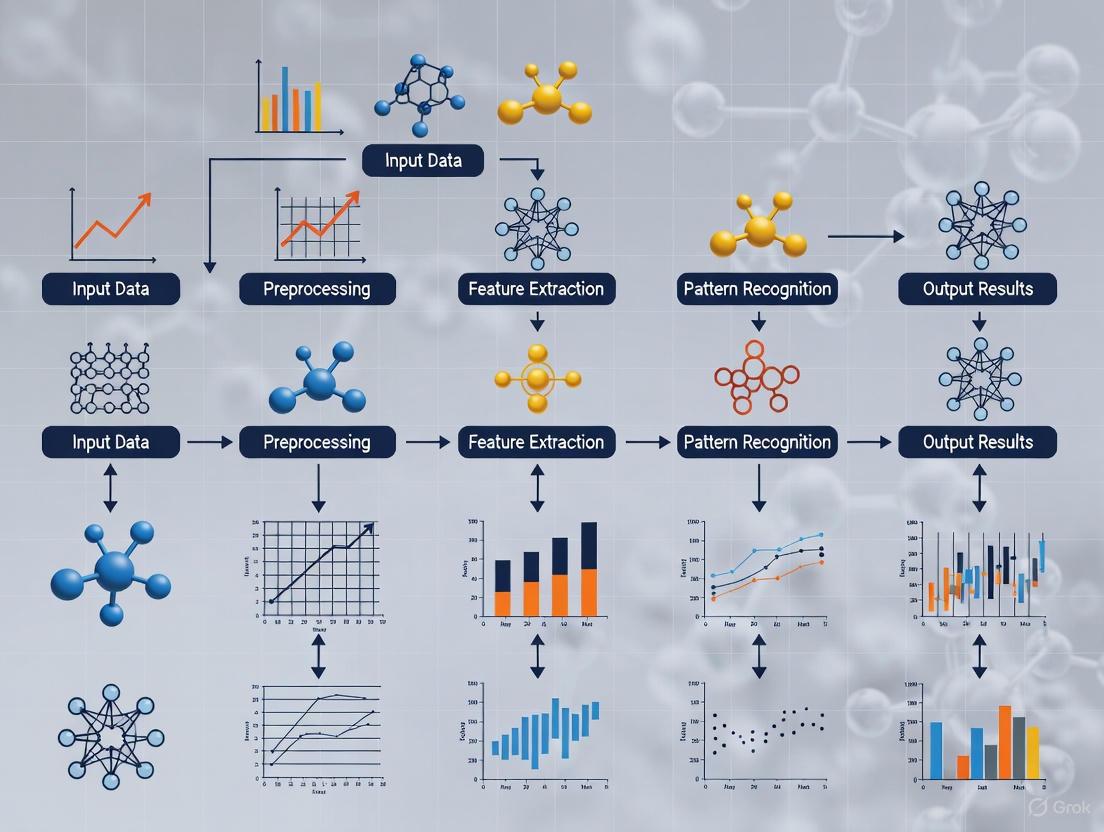
This article provides a comprehensive examination of multivoxel pattern analysis (MVPA) as a powerful tool for investigating distributed neural representations of memory.
Multivoxel Pattern Analysis for Memory Representations: From Neural Decoding to Clinical Applications
Abstract
This article provides a comprehensive examination of multivoxel pattern analysis (MVPA) as a powerful tool for investigating distributed neural representations of memory. Tailored for researchers, scientists, and drug development professionals, we explore the foundational principles of MVPA, contrasting it with traditional univariate fMRI approaches and establishing its theoretical basis for studying memory engrams and reinstatement. The review details methodological workflows—from trial estimation and feature selection to classifier training with Support Vector Machines (SVM)—and presents practical applications in decoding episodic memory states. We address critical troubleshooting considerations for optimizing MVPA in memory studies, including data preprocessing, dimensionality reduction, and cross-validation strategies. Finally, we validate MVPA's utility by comparing its sensitivity to univariate methods and showcasing its emerging role as a biomarker in clinical populations with memory impairments, such as major depressive disorder and opioid use disorder. This synthesis aims to equip researchers with the knowledge to implement MVPA and highlights its potential for transforming memory research and therapeutic development.
Theoretical Foundations: How MVPA Reveals Distributed Memory Codes
In functional neuroimaging, the predominant approach to data analysis has historically been the mass-univariate method, typified by the General Linear Model (GLM). This framework treats each voxel in the brain independently, testing for condition-specific effects one voxel at a time [1]. While powerful for identifying which brain regions are globally engaged during a task, this approach inherently disregards the information embedded in the covariance between voxels. It operates on the principle of functional segregation, seeking to localize cognitive functions to specific anatomic regions. However, a fundamental challenge in neuroscience is that the brain is a distributed processing system, with even basic tasks requiring the coordinated activity of neurons across multiple regions [1]. The information underlying complex cognitive functions, including memory, is often encoded in distributed spatial patterns of neural activity rather than isolated, peak responses in dedicated modules.
Multivariate Pattern Analysis (MVPA) represents a paradigm shift, moving beyond the "where" question to address "how" information is represented in the brain. The foundational insight of MVPA is that the pattern of activity across a population of voxels—even those showing only weak or moderate responses—can carry meaningful information about a stimulus, task, or cognitive state [2]. The origins of MVPA in fMRI are often traced to a seminal 2001 paper by Haxby et al., which investigated the distributed representation of faces and objects in the ventral temporal cortex [2] [1]. This study demonstrated that object categories are encoded as distinct patterns of neural activity and that these distinctive patterns persist even when the most category-selective voxels are excluded from analysis. This finding stood in stark contrast to a strong modular account of brain function and highlighted the superior sensitivity of multivariate methods for decoding the information content of neural population codes.
Core Principles: Contrasting Mass-Univariate and Multivariate Approaches
The distinction between mass-univariate analysis and MVPA is not merely a technical choice but reflects different models of cortical organization and information representation. The table below summarizes the fundamental differences between these two analytical frameworks.
Table 1: Core Differences Between Mass-Univariate Analysis and MVPA
| Feature | Mass-Univariate Analysis (GLM) | Multivariate Pattern Analysis (MVPA) |
|---|---|---|
| Unit of Analysis | Individual voxels tested independently | Patterns of activity across multiple voxels analyzed jointly |
| Primary Question | Where does a specific condition evoke significant activity? | What information is encoded in a region's distributed activity pattern? |
| Handling of Covariance | Treats covariance between voxels as a nuisance | Leverages covariance between voxels as the source of information |
| Sensitivity | Sensitive to the mean activation level of a region | Sensitive to the distributed pattern, even with weak mean activation |
| Model of Representation | Functional specialization / modularity | Distributed population coding |
| Typical Output | Statistical parametric maps | Classification accuracy, pattern similarity, model performance |
MVPA is not a single algorithm but a diverse family of methods united by the common principle of analyzing neural responses as patterns [2]. These methods are specifically designed to identify spatial and/or temporal patterns in the data that differentiate between cognitive tasks, perceptual states, or subject groups [1]. The enhanced sensitivity of MVPA is particularly valuable for detecting subtle, yet behaviorally relevant, neural signals that are spatially intermixed and would be missed by analyses that focus on the overall activation level of a region [3].
Key MVPA Variants and Experimental Protocols
Several MVPA variants have been developed to address different research questions. The following sections outline the purpose and provide a detailed experimental protocol for four major types of MVPA.
Decoding
- Conceptual Overview: Decoding, or pattern classification, is the most common form of MVPA. It uses machine learning classifiers (e.g., Support Vector Machines, linear discriminant analysis) to determine if a brain region's activity pattern contains enough information to predict a stimulus, cognitive state, or behavior. The classifier is trained on a subset of brain data with known conditions and then tested on a held-out dataset to assess its predictive accuracy [4] [1].
- Detailed Experimental Protocol:
- Experimental Design: A block, event-related, or hybrid design is used to present stimuli or tasks. A hybrid blocked fast-event-related design has been shown to be optimal for MVPA, combining the rest periods of a block design with the randomly alternating trials of a rapid event-related design to mitigate participant anticipation and strategy while allowing for feedback periods [5].
- fMRI Data Acquisition: Standard BOLD fMRI data is collected. The design must include multiple independent examples (trials) of each condition of interest to enable training and testing of the classifier.
- Preprocessing: Data undergoes standard preprocessing (motion correction, slice-time correction, normalization, smoothing). Note that excessive smoothing can blur fine-grained spatial patterns.
- Feature Selection: A region of interest (ROI) is defined (anatomically or functionally), or a searchlight approach is used to move a small spherical classifier across the entire brain.
- Pattern Assembly: For each trial or time point, a pattern of activity (a vector of beta weights or raw signal) is extracted from the selected voxels.
- Classification:
- Patterns and their associated condition labels are split into training and test sets using cross-validation.
- A classifier is trained on the training set to learn the mapping between activity patterns and conditions.
- The trained classifier predicts the conditions in the held-out test set.
- Validation: Classification accuracy is calculated as the proportion of correctly predicted test trials. Accuracy is statistically compared against chance level.
Representational Similarity Analysis (RSA)
- Conceptual Overview: RSA investigates the structure of neural representations by comparing the similarity of activity patterns evoked by different conditions. Instead of decoding categories, it characterizes the "representational space" by creating a neural Representational Dissimilarity Matrix (RDM), which quantifies how dissimilar each condition is from every other condition based on their neural activity patterns. This neural RDM can then be compared to RDMs derived from computational models, behavioral data, or other brain regions to test hypotheses about what information is being represented [4].
- Detailed Experimental Protocol:
- Stimulus Set: A set of stimuli or conditions is designed to systematically probe a representational space (e.g., different categories of memory items, faces with varying emotions).
- fMRI Data Acquisition & Preprocessing: Same as for decoding.
- Pattern Estimation: For each condition, a stable pattern of activity is estimated from the voxels within an ROI or searchlight.
- Construct Neural RDM: For all pairs of conditions, the dissimilarity between their activity patterns is calculated (e.g., using 1 - Pearson correlation or Euclidean distance). This results in a symmetric matrix where each cell represents the neural dissimilarity between two conditions.
- Model Comparison: RDMs from competing theoretical models (e.g., a semantic model vs. a perceptual model of memory representations) are created. The models' RDMs are compared to the neural RDM using a second-order similarity measure (e.g., Kendall's Tau or Spearman's rank correlation). The model that best correlates with the neural RDM is considered the better account of the information represented in that brain region.
Pattern Expression
- Conceptual Overview: This method investigates how a specific, pre-defined neural representation is expressed in the brain under different contexts or over time. A "reference pattern" is first identified (e.g., a pattern associated with a specific memory during encoding) and its expression is then measured in other parts of the dataset (e.g., during a subsequent retrieval period or rest). This is particularly useful for tracking the reactivation of memory traces [4].
- Detailed Experimental Protocol:
- Define a Reference Pattern: A neural activity pattern is established from a "localizer" task or a specific experimental phase (e.g., the average pattern for a successfully encoded memory).
- Apply the Reference Pattern: The similarity (e.g., dot product) between this reference pattern and brain activity patterns is measured in a separate set of data (e.g., during a post-encoding rest period or during a retrieval test).
- Correlate with Behavior: The magnitude of pattern expression (similarity) is then correlated with behavioral outcomes. For instance, one can test whether the strength of a memory pattern's reactivation during rest predicts subsequent recall accuracy.
Voxel-Wise Encoding Models
- Conceptual Overview: Encoding models take a fundamentally different approach. Instead of predicting the stimulus from the brain activity (decoding), they aim to predict brain activity from a detailed model of the stimulus or cognitive state. These models characterize the "tuning" of individual voxels or patterns to specific features (e.g., visual Gabor filters, semantic features). A well-fit encoding model can effectively predict how the brain will respond to novel stimuli [4] [1].
- Detailed Experimental Protocol:
- Stimulus Feature Specification: A set of features that quantitatively describe the stimuli is defined. For memory, this could be a semantic model where each word is represented as a vector in a high-dimensional semantic space.
- Model Training: For each voxel, a model (e.g., linear regression) is trained to map the stimulus features to the voxel's activation profile across a large set of training stimuli.
- Model Testing: The quality of the encoding model is tested by using it to predict brain activity for a set of novel, held-out stimuli. The correlation between the predicted and actual brain activity is measured.
- Inference: The spatial distribution of well-predicted voxels reveals which brain regions represent the feature space described by the model.
The logical relationships and applications of these MVPA variants in a research context can be visualized as a workflow.
Successful implementation of MVPA requires a combination of software tools, computational resources, and methodological knowledge. The following table details key components of the MVPA research toolkit.
Table 2: Research Reagent Solutions for MVPA
| Tool / Resource | Function / Purpose | Examples & Notes |
|---|---|---|
| MVPA Software Suites | Provides integrated pipelines for classification, RSA, and related analyses. | PyMVPA, PRoNTo, The Decoding Toolbox, CoSMoMVPA, MVPA-light. Many offer integration with popular fMRI analysis platforms. |
| General-Purpose Programming Languages | Offer maximum flexibility for custom analysis design and implementation. | Python (with scikit-learn, NumPy, SciPy) and R (with caret, e1071 packages) are most common. MATLAB with custom scripts is also widely used. |
| Classifier Algorithms | The core engine for decoding analyses; learns the mapping between brain patterns and experimental conditions. | Support Vector Machines (SVM) are most popular due to robustness in high-dimensional spaces. Others include Linear Discriminant Analysis (LDA), Logistic Regression, and k-Nearest Neighbors (k-NN). |
| High-Performance Computing (HPC) | Provides the computational power needed for intensive calculations, especially for whole-brain searchlight analysis. | University HPC clusters, cloud computing services (AWS, Google Cloud). Essential for processing large datasets in a feasible time. |
| Visualization Tools | Critical for interpreting and presenting complex multivariate results. | Includes brain map renderers (e.g., BrainNet Viewer, PyCortex) and statistical plotting libraries (e.g., Matplotlib in Python, ggplot2 in R). |
MVPA in Action: Application to Memory Representations Research
The application of MVPA has profoundly impacted memory research by providing a window into the content and dynamics of memory representations. While traditional univariate analyses could identify regions involved in memory processes (e.g., hippocampus during encoding), MVPA can decode the specific content of a memory being encoded or retrieved. For instance, MVPA can distinguish neural activity patterns associated with different categories of studied items (e.g., faces vs. houses) in the medial temporal lobe and ventral temporal cortex, even when overall activation levels are similar [2] [1].
Furthermore, MVPA is uniquely suited to track the fate of memory traces over time. Using pattern expression and similarity analyses, researchers have been able to demonstrate the reactivation of memory traces during post-encoding rest periods and sleep, linking the strength of this reactivation to subsequent memory performance. RSA allows for testing sophisticated models of the structure of memory representations, such as how the semantic relatedness between words is reflected in the similarity of their associated neural patterns. This moves beyond simple category decoding to understand the organizing principles of memory storage.
A critical consideration for MVPA in clinical and pharmacological settings is its potential as a sensitive biomarker. In developmental and clinical neuroimaging, MVPA techniques have shown promise for identifying distributed patterns of brain activity or structure that can distinguish healthy from diseased brains, predict disease onset, or differentiate treatment responders from non-responders [1]. For memory disorders like Alzheimer's disease, MVPA could potentially detect subtle alterations in the neural codes for memory before overt behavioral symptoms or gross volumetric changes become apparent.
MVPA represents a fundamental advancement in the analysis of neuroimaging data, shifting the focus from localized regional activation to the information content of distributed patterns. Its superior sensitivity makes it an indispensable tool for modern cognitive neuroscience, particularly for probing complex and latent cognitive states like memory representations. As the field moves toward more data-driven approaches and the integration of neuroimaging with other data types, the principles and methods of MVPA will continue to be central to unlocking the neural codes of human cognition.
The Reinstatement Framework describes a core process in systems neuroscience whereby the reactivation of specific memory traces, or engrams, in the hippocampus triggers the corresponding reactivation of distributed memory representations in the neocortex. This hippocampo-neocortical dialogue is fundamental to episodic memory retrieval. Modern neuroscientific investigations, leveraging tools like multivoxel pattern analysis (MVPA), are delineating the mechanisms of this process across multiple scales, from cellular ensembles in rodents to large-scale networks in humans. This framework posits that the hippocampus does not store the entire memory content but acts as an index that points to and reactivates the neocortical sites where specific sensory and contextual details are stored [6]. Understanding reinstatement is crucial for research into memory updating, consolidation, and the cognitive deficits observed in neuropsychiatric disorders, offering potential targets for therapeutic intervention.
Key Experimental Evidence for the Reinstatement Framework
The Reinstatement Framework is supported by convergent evidence from rodent models, which allow for causal manipulations of engram ensembles, and human intracranial and fMRI studies, which provide detailed temporal and spatial dynamics of neural activity during memory retrieval.
Cellular-Level Evidence from Rodent Models: Engram Reconstruction
A pivotal 2025 study by Lei et al. provided direct evidence for a dynamic reinstatement process involving the reconstruction of hippocampal engrams during the recall of remote memories [7] [8].
- Core Finding: The recall of a systems-consolidated, remote memory does not simply reactivate the original hippocampal engram formed during learning. Instead, it recruits a new ensemble of hippocampal engram cells for all subsequent retrievals [7] [8].
- Mechanism of Recruitment: The silencing of the original engram cells, facilitated by adult hippocampal neurogenesis, enables the recruitment of new engram cells. This new ensemble integrates newly experienced contextual information into the existing remote memory trace, a process termed systems reconsolidation [7].
- Circuit Coordination: The medial prefrontal cortex (mPFC) projects to and coordinates the activity between the new hippocampal engram and the valence-related engram in the basolateral amygdala (BLA), thereby integrating contextual and emotional information [7].
Table 1: Key Findings from Engram Reconstruction Study
| Aspect | Finding | Functional Significance |
|---|---|---|
| Hippocampal Role | Re-engaged during remote memory recall (Systems Reconsolidation) | Creates a labile state for memory updating [7] [8] |
| Engram Fate | Original engram silenced; new engram recruited | Prevents interference, allows incorporation of new information [7] |
| Role of Neurogenesis | Necessary for silencing original engrams | Facilitates the recruitment of new engram cells [7] |
| Cross-System Integration | mPFC coordinates hippocampus and amygdala activity | Integrates updated context with original memory valence [7] |
Systems-Level Evidence from Human Studies: Coordinated Reinstatement
Confirming the predictions of the framework, a 2019 human intracranial EEG (iEEG) study demonstrated tightly coordinated reinstatement between the hippocampus and neocortex during episodic memory retrieval [9].
- Temporal Dissociation: The study revealed a double dissociation in the timing and content of reinstatement. The hippocampus showed early reinstatement of item-context associations, while the lateral temporal cortex (LTC) showed later reinstatement of item-specific information [9].
- Mechanism of Coordination: The quality of item-specific reinstatement in the LTC was predicted by the magnitude of gamma-band phase synchronization between the hippocampus and LTC. This suggests that inter-regional oscillatory coupling is a mechanism for coordinating reinstatement [9].
- Representational Format: The hippocampus primarily reinstated bound item-context representations (e.g., an object in a specific location), whereas neocortical areas reinstated more invariant item information, consistent with the hippocampus acting as an index for neocortical content [9].
Table 2: Characteristics of Representational Reinstatement in Human Hippocampus and Neocortex
| Characteristic | Hippocampus | Lateral Temporal Cortex (LTC) |
|---|---|---|
| Representational Content | Item-context associations | Item-specific information |
| Timing of Reinstatement | Early (~0-0.5s post-stimulus) | Later (~1-3s post-stimulus) |
| Key Frequency Band | Not Specified | Gamma (30-100 Hz) |
| Theoretical Role | Index or pointer | Storage of sensory details |
| Dependence on Coordination | Initiates reinstatement | Reinstatement quality depends on hippocampal-LTC gamma synchronization [9] |
Experimental Protocols for Investigating Reinstatement
The following protocols detail the methodologies used in the key studies cited, providing a template for investigating the reinstatement framework.
Protocol: Tracing Engram Ensembles Across Memory States
This protocol is adapted from Lei et al. (2025) for investigating systems reconsolidation in rodent models [7].
Objective: To trace the fate of hippocampal engram ensembles from memory acquisition through systems reconsolidation and test memory updating.
Materials and Reagents:
- Triple-event labeling tool: A genetically engineered system for labeling neurons active during three distinct events (e.g., acquisition, remote recall, and a new context).
- Activity-dependent promoters: such as c-Fos-tTA or TRAP for labeling engram ensembles.
- Two-photon microscope: for longitudinal in vivo imaging of engram ensemble activity.
- Contextual Fear Conditioning (CFC) apparatus: consisting of distinct contexts.
- Viral vectors: for expression of actuators (e.g., opsins) or sensors (e.g., GCaMP).
Procedure:
- Label Acquisition Engram: Subject mice to CFC in Context A. Use the activity-dependent system to label the hippocampal (e.g., DG, CA1) engram ensemble formed during this training.
- Systems Consolidation: House mice in their home cage for a remote time period (e.g., 21 days).
- Label Recall Engram: On day 21, re-expose mice to Context A to trigger remote memory recall. Simultaneously, label the reactivated engram ensemble using a distinct reporter.
- Memory Updating Test: Expose mice to a novel, safe Context B. Test fear response in both the original (A) and new (B) contexts to assess generalization and updating.
- In Vivo Imaging: Throughout the procedure, use two-photon calcium imaging to track the activity of both the original and recall-recruited engram ensembles.
- Functional Manipulation: Use opto- or chemogenetics to inhibit either the original or new engram ensemble during specific phases to test their necessity for recall and updating.
Analysis:
- Quantify the overlap between engram ensembles from different phases.
- Correlate the activity of new engram cells with behavioral expression of updated memory.
- Use immunohistochemistry (e.g., for c-Fos) to validate ensemble activity and neurogenesis (e.g., for doublecortin) [7].
Protocol: Human iEEG for Tracking Reinstatement Dynamics
This protocol is adapted from the 2019 Nature Communications study for use in epilepsy patients with implanted electrodes [9].
Objective: To simultaneously track the content and timing of representational reinstatement in the hippocampus and neocortex during episodic memory retrieval.
Materials and Reagents:
- Intracranial EEG (iEEG) electrodes: implanted in the hippocampus and lateral temporal cortex (LTC).
- Virtual Reality (VR) system: for a spatial navigation memory task.
- Computational resources: for multivariate pattern analysis (MVPA) and time-frequency analysis.
Procedure:
- Task Design: Participants perform a VR task. During encoding, they navigate a room and encounter objects in specific locations. During retrieval, they are presented with objects in either the same (congruent) or a different (incongruent) context and must make a memory judgment.
- Data Acquisition: Simultaneously record iEEG from hippocampus and LTC during both encoding and retrieval phases.
- Representational Feature Extraction: For each brain region, construct feature vectors by concatenating time-frequency resolved power values (e.g., 1-100 Hz) in sliding time windows (e.g., 500 ms) across all electrode contacts in that region.
- Calculate Encoding-Retrieval Similarity (ERS): For each trial, compute the similarity (e.g., using Spearman's Rho) between the feature vector at a given retrieval time window and all feature vectors from the encoding period. This generates a temporal ERS map.
- Statistical Contrasting: Identify significant reinstatement by contrasting ERS maps for:
- Item-context association: Congruent vs. Incongruent trials.
- Item-specific information: Same Item vs. Different Item trials.
- Phase Synchronization Analysis: Compute phase-locking value (PLV) in the gamma band between hippocampus and LTC electrodes. Correlate PLV with the strength of neocortical item reinstatement.
Analysis:
- Use cluster-based permutation tests to identify significant time-frequency clusters in ERS contrasts.
- Employ regression models to test if hippocampal reinstatement strength or hippocampal-LTC gamma synchronization predicts LTC reinstatement strength [9].
Visualization of the Reinstatement Framework
The following diagrams illustrate the core concepts and experimental workflows of the reinstatement framework.
Diagram: Systems Reconsolidation and Engram Reconstruction
Diagram 1: Engram Dynamics in Systems Reconsolidation. This workflow depicts how remote memory recall triggers a shift from the original hippocampal engram to a new one, facilitated by neurogenesis and coordinated by mPFC-amygdala circuits to enable memory updating [7] [8].
Diagram: Human Hippocampal-Neocortical Reinstatement
Diagram 2: Temporal Dynamics of Human Memory Reinstatement. This sequence illustrates the content-specific and temporally dissociated reinstatement process, initiated by the hippocampus and followed by neocortical item reinstatement, coordinated via gamma-band synchronization [9].
The Scientist's Toolkit: Research Reagent Solutions
This table outlines essential reagents and tools for designing experiments on the reinstatement framework, with a focus on the protocols described above.
Table 3: Essential Research Reagents for Investigating Memory Reinstatement
| Reagent / Tool | Function | Example Use Case |
|---|---|---|
| Activity-Dependent Labeling Systems (c-Fos-tTA, TRAP) | Tags neurons that are active during a specific behavioral event with fluorescent reporters or actuators. | Labeling engram ensembles during memory acquisition, recall, or updating in rodent models [7] [6]. |
| Triple-Event Labeling Tool | Allows for sequential labeling of three distinct, experience-dependent neuronal populations. | Tracing engram ensembles across learning, remote recall, and exposure to a novel context [7]. |
| Two-Photon Calcium Imaging | Enables longitudinal, high-resolution imaging of neural activity in live, behaving animals. | Tracking the activity dynamics of labeled engram ensembles over days and weeks [7]. |
| Opto-/Chemogenetics (DREADDs, Channelrhodopsin) | Allows for precise excitation or inhibition of specific neural populations. | Testing the causal necessity of original vs. new engram ensembles for memory recall and updating [7] [6]. |
| Multivoxel Pattern Analysis (MVPA) | A computational technique for detecting distributed patterns of brain activity in fMRI data that represent specific stimuli or cognitive states. | Decoding the content of memory representations (e.g., items, contexts) from human fMRI or iEEG data [4] [9]. |
| Representational Similarity Analysis (RSA) | Quantifies the similarity between neural activity patterns, relating them to computational models or behavioral data. | Testing if neural representations during retrieval resemble those from encoding, or differ between brain regions [4] [9]. |
| Intracranial EEG (iEEG) | Records electrophysiological activity directly from the human brain, providing high temporal resolution. | Measuring the precise timing of reinstatement and inter-regional synchronization during memory retrieval [9]. |
| Virtual Reality (VR) Paradigms | Creates controlled, immersive, and ecologically valid environments for memory tasks. | Presenting complex episodic memories with dissociable item and context components during human neuroimaging [9]. |
In cognitive neuroscience, memory is not conceived as a unitary or static entity but as a dynamic process involving distinct representational states. The differentiation between active and latent memory representations provides a powerful framework for understanding how information is maintained, accessed, and used across time. From a causal perspective, a genuine memory representation must maintain a verifiable causal connection to a past event [10]. Active representations are characterized by their immediate availability for cognitive operations, typically sustained through persistent neural activity. In contrast, latent representations (also termed "activity-silent," "passive," or "silent" states) contain information that is not directly accessible but can be reactivated through specific manipulations, maintained potentially through short-term synaptic plasticity rather than sustained firing [11] [12]. This application note explores how Multivoxel Pattern Analysis (MVPA) can be leveraged to identify, distinguish, and investigate these distinct mnemonic states within the context of memory research, with particular emphasis on establishing causal linkages between neural activity and mnemonic function.
The theoretical foundation for this approach rests on what has been termed the reinstatement framework, which provides a mechanistic basis for the causal linkage between an experience, the memory trace encoding it, and the subsequent episodic memory of that experience. This framework highlights the crucial role of hippocampal engrams in encoding patterns of neocortical activity that, when reactivated, constitute the neural representation of an episodic memory [10]. MVPA offers the necessary analytical sensitivity to detect the subtle, distributed pattern changes associated with these representational states, making it an indispensable tool for contemporary memory neuroscience.
Theoretical Foundations: A Causal Account of Memory Representations
Defining Characteristics of Active and Latent States
The distinction between active and latent memory representations transcends mere phenomenological description and incorporates fundamental differences in neural mechanisms, cognitive function, and causal efficacy. Active states are defined by their direct causal influence on ongoing cognition and behavior, supported by persistent neural activity in specific brain networks. These representations are readily accessible for conscious recall, cognitive manipulation, and guiding action, making them the "working" component of working memory [11].
Latent states, meanwhile, represent information that is stored but not currently in a state of active processing. These representations are maintained through potential synaptic mechanisms rather than sustained neural firing, offering a metabolically efficient form of storage [11]. The causal connection to past events remains intact in latent states, though it requires specific triggers (such as a "ping" or TMS pulse) to become behaviorally manifest. This transition between states is dynamic and task-dependent, allowing the cognitive system to flexibly manage its limited attentional and working memory resources [11].
The Reinstatement Framework and Causal Linkage
The causal perspective on memory representations demands that a genuine memory maintains a demonstrable connection to the specific past event it purports to represent. The reinstatement framework provides a mechanistic account of how this causal linkage is established and maintained [10]. According to this framework:
- Hippocampal engrams during encoding capture patterns of neocortical activity associated with an experience
- These encoded patterns serve as a blueprint for subsequent reactivation
- During retrieval, partial cues can trigger the hippocampal network to reinstate the original neocortical patterns
- This reinstatement constitutes the neural basis of episodic recollection
Critically, the reinstatement framework accommodates the fact that retrieved episodic information only partially determines the content of an active memory representation, which typically comprises a combination of retrieved information with semantic, schematic, and situational information [10]. This explains both the reconstructive nature of memory and the potential for gradual distortion over time, especially for remote memories where re-encoding operations create an extended causal chain from the original experience to the currently accessible memory trace.
Table 1: Neural and Functional Characteristics of Active and Latent Memory Representations
| Characteristic | Active Representations | Latent Representations |
|---|---|---|
| Neural Mechanism | Persistent neural activity | Short-term synaptic plasticity, activity-silent maintenance |
| Metabolic Cost | High | Low |
| Cognitive Accessibility | Immediately available for recall and manipulation | Requires reactivation (e.g., via retro-cue, TMS, or visual impulse) |
| Temporal Dynamics | Sustained throughout retention period | Can be maintained during delays after neural activity returns to baseline |
| Functional Role | Online processing, immediate guidance of behavior | Robust maintenance of prospectively relevant information |
| MVPA Detectability | Directly decodable from pattern analysis | May require reactivation for reliable detection |
MVPA Approaches for Detecting Memory States
Core MVPA Methodologies
Multivoxel Pattern Analysis encompasses a suite of techniques that leverage distributed patterns of brain activity to infer mental representations and processes. For memory research, several MVPA approaches have proven particularly valuable:
- Decoding: Classifiers are trained to distinguish between neural activity patterns associated with different experimental conditions or stimulus categories. Successful decoding indicates that a brain region contains information about the decoded dimension [13].
- Representational Similarity Analysis (RSA): Characterizes neural representations by comparing patterns of activity associated with different items or conditions, creating a neural representational space that can be related to behavioral measures or computational models [13].
- Cross-decoding: Tests whether classifiers trained on one set of conditions (e.g., perception) can generalize to another (e.g., memory retrieval), revealing common neural representations across domains [13].
- Pattern Expression and Voxel-wise Encoding Models: These approaches either measure the expression of specific activity patterns or model the relationship between stimulus features and neural responses [4].
These methods are particularly well-suited to investigating the active versus latent distinction because they can detect information in neural activity patterns even when overall activation levels do not differ between conditions—a crucial capability for identifying latent representations that may not involve sustained increases in regional activity [13].
Establishing Causal Links with MVPA
MVPA strengthens causal accounts of memory through several methodological strengths:
- Item-specific analysis: Unlike mass-univariate approaches that often average across trials, MVPA can track specific representations across time, allowing researchers to establish that the same neural pattern present during encoding reappears during retrieval [13].
- Reinstatement detection: Cross-decoding approaches can directly test whether neural patterns during retrieval resemble those during encoding, providing evidence for the causal reinstatement of earlier brain states [14].
- State reactivation: By applying classifiers trained on perception to memory delay periods, MVPA can detect when latent representations are brought into an active state [15].
These capabilities make MVPA uniquely positioned to address fundamental questions about the causal relationships between experience, neural representation, and subsequent memory.
Experimental Protocols for Investigating Active and Latent States
Retro-Cue Working Memory Paradigm
The retro-cue paradigm has emerged as a powerful tool for investigating the active-latent distinction in visual working memory. This protocol leverages cueing during the maintenance delay to manipulate the state of memory representations.
Procedure:
- Encoding: Present a memory array (e.g., 2-4 colored squares) for 500ms [11].
- Initial Delay: Implement a 1s retention period with central fixation [11].
- Retro-Cue: Display a directional cue (arrow or color indicator) for 200ms that indicates which item(s) will be probed first. This cues the indicated item(s) into an active state while uncued items transition to a latent state [11].
- Secondary Encoding (Optional): In some paradigms, a second memory array (1-2 items) may be presented 1.5s after the first retro-cue, creating a complex working memory scenario with both active and latent components [11].
- Probe Phase: Present test stimuli at intervals to assess memory for both cued (active) and uncued (latent) items.
Key Manipulations:
- Active Load: Vary the number of items that must be maintained in an active state [11].
- Spatial Configuration: Manipulate the distance between memory items, as spatial proximity can affect the dissociation between active and latent states [11].
- Timing Parameters: Adjust delay durations to examine the temporal dynamics of state transitions.
Neural Measures:
- fMRI with MVPA to decode content-specific representations during delay periods.
- iEEG to measure spectral power changes (increased HFA with decreased LFA) associated with successful memory [14].
This paradigm has revealed that active and latent memories may draw on independent cognitive resources when items are spatially distinct, but this dissociation breaks down for items in close proximity [11].
Visual Impulse ("Ping") Reactivation Protocol
The visual impulse paradigm provides a method for reactivating latent representations, allowing researchers to study the transition from latent to active states.
Procedure:
- Cue Phase: Present a feature-based cue (e.g., orientation or color) indicating which attribute participants should attend to in the upcoming target [15].
- Delay Period: Implement an extended delay (5.5-7.5s) during which participants maintain the cued information.
- Ping Manipulation: In experimental trials, present a brief (100ms) visual impulse (often a neutral stimulus such as a uniform circle) 2.5s after cue offset [15].
- Target Presentation: Display the test stimulus requiring a response based on the maintained information.
- Comparison Conditions: Include no-ping trials as a control condition.
Neural Measures:
- fMRI with cross-task decoding: Train classifiers on perceptual representations and test on delay-period activity [15].
- Functional connectivity between early visual cortex and frontoparietal regions.
- Pattern similarity analysis to compare neural representations during perception and maintenance.
This approach has demonstrated that visual impulses can transform non-sensory template representations into sensory-like formats during attentional preparation, revealing the latent sensory representations that are not directly decodable in no-ping conditions [15].
Free-Recall with Intracranial EEG
Combining free-recall tasks with intracranial EEG (iEEG) offers unprecedented temporal and spatial resolution for studying the neural signatures of successful memory formation and retrieval.
Procedure:
- Stimulus Presentation: Present lists of words (typically 12-15 items) for 1600ms each, with 750-1000ms inter-stimulus intervals [14].
- Distractor Task: Implement a 20s arithmetic task following list presentation to prevent rehearsal of recency items [14].
- Retrieval Phase: Signal recall period with auditory tone and visual cue, allowing 30-45s for free recall of list items [14].
- Response Recording: Digitally record vocal responses for subsequent scoring.
Neural Measures:
- iEEG spectral power across multiple frequency bands.
- Multivariate classifiers trained to predict memory success based on distributed spectral power patterns [14].
- Cross-decoding to identify common neural signatures of successful encoding and retrieval.
This protocol has revealed that similar patterns of increased high-frequency activity in prefrontal, medial temporal, and inferior parietal cortices—accompanied by widespread decreases in low-frequency power—predict successful memory function during both encoding and retrieval [14].
Table 2: Comparison of Experimental Paradigms for Studying Active and Latent Memory
| Paradigm | Primary Memory Process | State Manipulation | Key Neural Correlates | MVPA Approaches |
|---|---|---|---|---|
| Retro-Cue Working Memory | Working memory maintenance | Retro-cue directs attention to specific items during delay | Sustained content-specific patterns in sensory and parietal cortices | Decoding of maintained information; Pattern similarity across states |
| Visual Impulse Reactivation | Attentional preparation | Visual impulse reactivates latent sensory templates | Enhanced sensory cortex decoding after ping; Altered V1-frontoparietal connectivity | Cross-task decoding (perception to attention); Representational similarity analysis |
| Free-Recall with iEEG | Episodic memory encoding and retrieval | Natural variation in memory success | Increased HFA with decreased LFA in prefrontal-MTL-parietal network | Multivariate classification of successful states; Cross-decoding encoding/retrieval |
Analytical Framework: MVPA for State Discrimination
Multivariate Classification of Memory States
The core analytical approach for distinguishing active and latent states involves training multivariate classifiers to identify patterns of neural activity associated with different mnemonic conditions:
Classification Pipeline:
- Feature Selection: Identify relevant neural features (voxels in fMRI, channels in iEEG/EEG, frequency bands in electrophysiology).
- Model Training: Use machine learning classifiers (e.g., L2-penalized regression, SVM) to distinguish conditions of interest (e.g., high vs. low memory load, cued vs. uncued items, successful vs. failed retrieval).
- Validation: Employ cross-validation to assess generalizability, using independent data not included in training.
- Interpretation: Examine feature weights to identify brain regions contributing most to classification.
For the active-latent distinction, classifiers can be trained to:
- Distract between neural activity during maintenance of active versus latent representations [11]
- Identify when latent representations are reactivated [15]
- Predict memory success based on neural states during encoding or retrieval [14]
Cross-Decoding and Representational Similarity Analysis
Cross-decoding approaches provide particularly powerful tests for the active-latent distinction by examining whether neural patterns are shared across different cognitive states:
Cross-Decoding Logic:
- Train classifiers to distinguish stimulus categories during perception
- Test whether these classifiers can distinguish the same categories during memory maintenance or retrieval
- Successful cross-decoding indicates common neural representations across states
Representational Similarity Analysis (RSA): RSA moves beyond simple classification to characterize the structure of neural representational spaces:
- Compute representational dissimilarity matrices (RDMs) for neural data by correlating activity patterns across conditions
- Create model RDMs based on cognitive theories or behavioral data
- Compare neural and model RDMs to test theoretical predictions
RSA can reveal whether the representational structure of active memories resembles that of latent memories or perceptual representations, providing insight into the format of information in different mnemonic states [13].
Table 3: Research Reagent Solutions for MVPA Memory Studies
| Research Tool | Function | Example Application | Key Considerations |
|---|---|---|---|
| Multi-voxel Pattern Analysis (MVPA) | Decodes information from distributed neural activity patterns | Identifying content-specific representations during memory delays | Enhanced sensitivity compared to mass-univariate approaches; Requires careful feature selection [4] |
| Representational Similarity Analysis (RSA) | Quantifies similarity structure of neural representations | Testing whether memory representations resemble perceptual representations | Model-based approach allows direct theory testing; Can integrate across imaging modalities [13] |
| Intracranial EEG (iEEG) | Records neural activity with high spatiotemporal resolution | Identifying spectral signatures of successful memory formation and retrieval | Clinical populations only; Excellent for localization and high-frequency activity [14] |
| Functional Connectivity MVPA (fc-MVPA) | Data-driven analysis of functional connectivity patterns | Identifying network alterations in clinical populations with memory deficits | Model-free approach; Can reveal novel network signatures [16] |
| Visual Impulse Stimulation | Reactivates latent neural representations | Converting latent memory templates to active sensory-like formats | Useful for probing representational states without behavioral reports [15] |
| Hierarchical Drift Diffusion Modeling (HDDM) | Computational modeling of decision processes | Linking memory states to decision dynamics in value-based choices | Integrates neural measures with computational accounts of behavior [17] |
Visualizing the Causal Framework and Analytical Workflow
Causal Framework of Memory Representations
MVPA Analytical Workflow for State Detection
The distinction between active and latent memory representations provides a productive framework for understanding the dynamic nature of mnemonic function. MVPA offers a powerful set of tools for investigating this distinction, allowing researchers to track specific representational content across different cognitive states and establish causal links between neural patterns and memory performance. The experimental protocols and analytical approaches outlined here provide a foundation for designing studies that can dissect the neural mechanisms underlying these distinct representational formats.
Future directions in this field include:
- Integrating MVPA with computational models to formalize theories of state transitions
- Developing real-time decoding approaches to manipulate memory states experimentally
- Combining neurostimulation with MVPA to test causal hypotheses about representation maintenance
- Applying these approaches to clinical populations to understand memory deficits in terms of disrupted state dynamics
As MVPA methodologies continue to evolve, they will undoubtedly provide increasingly sophisticated insights into the fundamental nature of memory representations and their causal role in cognition.
In memory research, a fundamental challenge is to move beyond simply identifying where in the brain a memory is stored and towards understanding how that memory is represented at the neural population level. Traditional functional magnetic resonance imaging (fMRI) analysis methods, predominantly the mass-univariate General Linear Model (GLM), have a significant limitation: they treat the covariance in activity between neighboring voxels as uninformative noise, effectively discarding it during analysis [18]. This approach overlooks the rich information embedded in the fine-grained spatial patterns of brain activity that constitute the neural population code for a memory trace.
Multivoxel Pattern Analysis (MVPA) represents a paradigm shift by treating this voxel covariance not as noise, but as the primary signal of interest [18] [4]. It operates on the principle that information is distributed across populations of neurons, and that even subtle, coordinated activity changes across many voxels can be computationally decoded to reveal the content of cognitive states, including specific memories [19]. This Application Note details how MVPA leverages voxel covariance to elucidate memory representations, providing the theoretical rationale, supporting evidence, and practical protocols for its application in cognitive neuroscience and drug development research.
Theoretical Foundation: From Mass-Univariate to Multivariate Analysis
The Limitation of the Mass-Univariate Framework
The standard GLM approach analyzes each voxel's time course independently, testing for linear correlations with a predefined model of the experimental task [18]. It is expressed as: Y = Xβ + ϵ where Y is the BOLD signal at a single voxel, X is the design matrix, β represents the model parameters, and ϵ is the error term [18]. Statistical inference then creates a map of "activated" regions. However, this method is blind to the information that may be present in the combined, patterned activity across multiple voxels, a pattern that may be more representative of a memory engram than the strong activation of any single region.
MVPA as a Supervised Classification Problem
MVPA reframes fMRI analysis as a pattern classification problem [18]. The "features" are the fMRI signals (e.g., beta weights or raw activity) from a cluster of voxels, and the "classes" are the experimental conditions (e.g., memory for face A vs. face B). A classifier, such as a Support Vector Machine (SVM), is trained to identify the unique spatial pattern of activity associated with each condition [18]. Once trained, the classifier can be tested on new data to determine if it can accurately decode the memory state from the brain's activity pattern alone. The success of this decoding provides direct evidence that the distributed pattern contains information about the memory.
Table 1: Core Differences Between GLM and MVPA Approaches
| Feature | General Linear Model (GLM) | Multivoxel Pattern Analysis (MVPA) |
|---|---|---|
| Unit of Analysis | Single Voxel | Pattern across Multiple Voxels |
| Voxel Covariance | Treated as noise, often smoothed | Treated as the primary signal |
| Model Dependency | Model-based; requires a reference function | Model-free; data-driven |
| Primary Output | Statistical parametric maps of activation | Classifier accuracy in decoding states |
| Sensitivity | High for strong, focal activation | High for subtle, distributed patterns |
Key Evidence: Voxel Covariance Carries Memory-Specific Information
Empirical studies consistently demonstrate that the information decoded by MVPA is often not accessible through univariate analyses, underscoring the functional significance of voxel covariance.
A compelling example comes from fear generalization research. In a study of spider fear, individuals with high fear were more likely to behaviorally classify ambiguous flower-spider morphs as spiders [19]. While univariate analyses showed generally heightened activation in fear-related brain regions in high-fear individuals, they could not account for the specific biased categorization of ambiguous stimuli [19]. This finding suggests that the neural representation of the ambiguous stimulus in high-fear individuals more closely resembles that of a true spider—a difference that likely resides in the fine-grained pattern of activity across voxels, which MVPA is designed to detect.
Furthermore, research in Major Depressive Disorder (MDD) has utilized functional connectivity MVPA (fc-MVPA) to link distributed network patterns to cognitive deficits, including memory impairment [16]. A 2025 study by our group identified six whole-brain clusters with altered functional connectivity in MDD, including the left cerebellar crus I and dorsal anterior cingulate cortex [16]. Post-hoc analyses revealed 24 specific patterns of disrupted connectivity, some of which correlated with performance on memory tasks in healthy controls—associations that were absent in MDD patients [16]. This demonstrates that the covariance structure of large-scale brain networks, measurable with MVPA, is a biomarker for cognitive and memory dysfunction.
The following diagram illustrates the fundamental workflow of an MVPA approach to decoding memory representations, highlighting how distributed patterns are used for classification.
Experimental Protocols for Memory Research
This section provides detailed methodologies for implementing MVPA in studies of memory.
Protocol: Basic MVPA Decoding of Memory Content
Objective: To determine whether distinct memory contents (e.g., memories for faces vs. scenes) can be decoded from fMRI activity patterns.
Materials:
- 3T or higher MRI scanner.
- Standard pre-processing software (e.g., FSL, SPM).
- MVPA software toolbox (e.g., PyMVPA, LIBSVM, The Decoding Toolbox).
Procedure:
- Experimental Design:
- Employ a block or event-related design where participants encode or recall distinct categories of stimuli (e.g., faces, scenes, objects). Use a sufficient number of trials per condition (>20) to ensure robust pattern estimation.
- Stimulus Presentation: Present stimuli using software like PsychoPy or E-Prime. Ensure precise timing synchronization with the scanner.
fMRI Data Acquisition:
- Acquire T1-weighted anatomical scans (1 mm isotropic).
- Acquire T2*-weighted BOLD fMRI scans (e.g., TR=2000 ms, TE=30 ms, voxel size=3-4 mm isotropic) [16].
Data Preprocessing:
- Perform standard steps: slice-time correction, motion correction, and spatial smoothing with a small kernel (e.g., 4-6 mm FWHM). Note: Excessive smoothing can blur fine-grained patterns.
- Normalize data to a standard stereotaxic space (e.g., MNI).
- For each trial or block, extract parameter estimates (beta weights) using a GLM, creating a single activation map per condition per subject.
MVPA Execution:
- Feature Selection: Define a region of interest (ROI) based on an anatomical atlas (e.g., hippocampus, ventral temporal cortex) or a functional localizer.
- Training: Train a linear Support Vector Machine (SVM) classifier on a subset of the data ("training set") to distinguish between the spatial activity patterns of two memory conditions (e.g., Face memory vs. Scene memory) [18].
- Testing & Validation: Test the trained classifier on the held-out data ("test set"). Use cross-validation (e.g., k-fold, leave-one-run-out) to obtain an unbiased estimate of decoding accuracy [18].
- Statistical Analysis: Compare decoding accuracy against chance level (e.g., 50% for two classes) using a t-test. Group-level inference can be performed using one-sample t-tests on individual subject accuracies.
Protocol: Functional Connectivity MVPA (fc-MVPA) for Network-Level Memory Signatures
Objective: To identify whole-brain functional connectivity patterns that differentiate memory performance or clinical groups, moving beyond localized activity.
Materials:
- As in Protocol 4.1, plus connectivity analysis tools (e.g., CONN toolbox, in-house scripts).
Procedure:
- Data Acquisition & Preprocessing:
- Acquire resting-state or task-based fMRI data.
- Preprocess data with additional steps to reduce confounds: regression of nuisance signals (white matter, CSF, motion parameters), and band-pass filtering (0.008-0.09 Hz) for resting-state analysis.
fc-MVPA Analysis (Data-Driven):
- The whole-brain fMRI data is subjected to a dimensionality reduction technique, such as Principal Component Analysis (PCA) [16].
- The analysis identifies clusters of voxels that show significant differences in their whole-brain functional connectivity patterns between groups (e.g., Healthy Controls vs. MDD) or conditions [16].
- These clusters serve as seed regions for post-hoc seed-based correlation analysis to characterize the specific networks that are altered.
Correlation with Behavior:
- Extract connectivity strength measures from the identified aberrant networks.
- Correlate these connectivity values with neurocognitive scores (e.g., composite memory score from the CNS-VS battery) [16]. The disruption of typical brain-behavior relationships is a key finding in clinical populations [16].
Table 2: Key Reagents and Computational Tools for MVPA
| Category | Item | Function/Description |
|---|---|---|
| Software & Libraries | PyMVPA | A Python package specifically designed for MVPA, providing a high-level interface for analysis [18]. |
| LIBSVM | A widely-used library for implementing Support Vector Machines, integrated into many toolboxes [18]. | |
| SPSS, R, Python (Pandas/NumPy) | For general statistical analysis and data manipulation of behavioral and results data [20]. | |
| Experimental Tools | PsychoPy | Open-source software for precise stimulus presentation and behavioral data collection. |
| Computerized Neurocognitive Assessment (e.g., CNS-VS) | Standardized battery to assess memory and other cognitive domains for correlation with neural data [16]. | |
| Data | High-Resolution fMRI BOLD Data | The primary raw data; blood-oxygen-level-dependent signal reflecting neural activity. |
| T1-Weighted Anatomical Scans | High-resolution images for co-registration and normalization of functional data. |
Visualization and Data Interpretation
Effective visualization is critical for interpreting the high-dimensional data generated by MVPA. The following diagram outlines the specific workflow for the fc-MVPA protocol described above.
Key Outputs and Interpretation:
- Classification Accuracy: The primary metric. Significance indicates that the brain region(s) analyzed contain decodable information about the experimental condition.
- Weight Maps: The classifier assigns a weight to each voxel. Visualizing these weights can reveal which voxels most strongly contribute to the discrimination, though caution is needed in their neurobiological interpretation.
- Representational Similarity Analysis (RSA): An extension of MVPA that compares the similarity of neural activity patterns to a model of cognitive representations, providing insight into the structure of memory space [4].
- Network Correlation Plots: For fc-MVPA, scatter plots showing the correlation between functional connectivity strength and memory performance powerfully illustrate disrupted brain-behavior relationships in clinical populations [16].
The covariance between voxels is not noise but a critical feature of the brain's population code for memory. MVPA provides a powerful, sensitive toolkit to read this code, revealing how memories are represented in distributed neural patterns and how these representations are disrupted in disease. For drug development, MVPA offers a potential biomarker to track the efficacy of cognitive-enhancing therapeutics by quantifying restoration of normative neural patterns, moving beyond mere behavioral endpoints to direct neural validation.
Multivoxel pattern analysis (MVPA) has revolutionized the field of cognitive neuroscience by providing a suite of powerful analytical tools to investigate how information is represented in distributed patterns of brain activity. Unlike traditional univariate analyses that examine overall signal amplitude averaged across a brain region, MVPA leverages the rich information contained in the spatial configuration of activity across multiple voxels simultaneously [21] [22]. For memory researchers, this approach offers unprecedented insight into the neural population codes that support the formation, maintenance, and retrieval of memories.
The core premise of MVPA is that different cognitive states—including different memories—elicit distinct, decodable patterns of neural activity [13]. This framework has proven particularly valuable for testing sophisticated cognitive theories about the format, durability, and transformation of memory representations [13]. Within the MVPA framework, three primary variants have emerged as essential tools for neuroscience research: decoding models, representational similarity analysis (RSA), and encoding models. Each offers unique strengths for probing different aspects of memory representations and their underlying neural mechanisms.
Core MVPA Variants: Theoretical Foundations and Comparative Analysis
Decoding Models
Theoretical Foundation and Implementation Decoding, often considered the most direct form of MVPA, operates as a classifier that predicts cognitive states or stimulus categories from distributed patterns of brain activity [21] [13]. In a typical decoding analysis, a machine learning classifier is trained to distinguish between experimental conditions (e.g., different memory categories) based on their multi-voxel activity patterns within a subset of the data. The trained model is then tested on independent data to determine if it can accurately decode the conditions solely from brain activity patterns [21]. This approach demonstrates that a brain region contains information about the decoded dimension.
In memory research, decoding has been powerfully employed to track the contents of memory even in the absence of external stimuli. For instance, several studies have successfully decoded which specific item a participant is holding in working memory during delay periods, revealing the neural underpinnings of memory maintenance [13]. Similarly, decoding approaches have been used to detect the reactivation of specific memories during retrieval tasks [23].
Strengths and Limitations The primary strength of decoding lies in its ability to identify whether specific information is represented in a brain region, offering superior sensitivity compared to univariate methods [21] [4]. However, successful decoding does not necessarily reveal how that information is represented—the format or structure of the neural representation [21]. Additionally, decoding analyses typically require categorizing stimuli into discrete classes, which may not fully capture the continuous nature of many memory representations [21].
Representational Similarity Analysis (RSA)
Theoretical Foundation and Implementation Representational Similarity Analysis (RSA) moves beyond simple classification to characterize the internal structure of neural representations by examining the geometric relationships between activity patterns evoked by different conditions [21] [22]. Rather than asking "what" information is represented, RSA investigates "how" that information is structured in representational space.
The core computational tool in RSA is the Representational Dissimilarity Matrix (RDM), which quantifies the pairwise dissimilarities between activity patterns for all tested conditions [22] [24]. In fMRI research, RDMs are typically created by calculating the dissimilarity (e.g., 1 - correlation) between multi-voxel activity patterns for each pair of conditions or stimuli [22]. These neural RDMs can then be compared to theoretical models of mental representations or to behavioral data, enabling researchers to test specific hypotheses about the dimensions that structure memory representations [22] [13].
A particularly powerful application of RSA in memory research involves comparing neural representations across different modalities, species, or timepoints [21] [24]. For example, Kriegeskorte and colleagues pioneered this approach by comparing neural representations in human and monkey inferior temporal cortex, revealing conserved representational hierarchies across species [24].
Strengths and Limitations RSA's primary advantage is its ability to characterize the internal structure of neural representations without requiring an explicit mapping between voxels and model features [21] [24]. This makes it ideal for testing cognitive theories about the organization of memory representations [13]. However, RSA is typically less sensitive than decoding for detecting whether specific information is present in a brain region, and its results can be influenced by the choice of dissimilarity metric [24].
Encoding Models
Theoretical Foundation and Implementation Encoding models take an inverse approach to decoding by predicting brain activity patterns from computational models of stimulus features or cognitive states [13] [24]. Whereas decoding models predict mental states from brain activity, encoding models predict brain activity from features of stimuli or hypothesized mental representations.
In practice, encoding models estimate the relationship between stimulus features (e.g., visual properties, semantic features, or model-derived representations) and the corresponding brain activity patterns [13]. These models can then be evaluated by their ability to predict brain activity in response to novel stimuli. In memory research, encoding models have been used to determine which feature spaces best capture the neural representations of remembered items, shedding light on the format of memory storage [13].
Strengths and Limitations Encoding models provide a direct bridge between computational models of cognition and neural implementation, offering strong interpretability for testing cognitive theories [13]. They can handle continuous, high-dimensional feature spaces and naturally accommodate complex, naturalistic stimuli. However, they require explicit feature specification and can be computationally intensive, particularly with complex feature models [13] [24].
Table 1: Comparative Analysis of Key MVPA Variants
| Feature | Decoding Models | Representational Similarity Analysis | Encoding Models |
|---|---|---|---|
| Primary Question | What information is represented? | How is information structured? | What features drive neural responses? |
| Analytical Approach | Classify conditions from brain activity | Compare neural representational geometries | Predict brain activity from feature models |
| Key Output | Classification accuracy | Representational Dissimilarity Matrix (RDM) | Feature weight maps, prediction accuracy |
| Theoretical Scope | Condition discrimination | Representational structure | Feature representation |
| Memory Research Applications | Content-specific reactivation, memory decoding | Memory space organization, integration | Feature-based memory models |
Experimental Protocols for Memory Research
Protocol 1: Decoding Memory Contents
Experimental Design This protocol examines whether specific memory contents can be decoded from neural activity patterns during memory retrieval [13]. Participants study a set of items (e.g., images, words) during an encoding phase. During retrieval, they are presented with cues and attempt to recall the associated items while fMRI data is collected. The analysis focuses on classifying which specific item is being recalled based on distributed activity patterns.
Step-by-Step Procedure
- Data Acquisition: Acquire high-resolution fMRI data during the retrieval task using standard EPI sequences (TR=2s, TE=30ms, voxel size=3×3×3mm³) [25]
- Preprocessing: Perform standard preprocessing including slice-time correction, motion correction, spatial smoothing (FWHM 4-6mm), and normalization to standard space
- Beta Estimation: Use a general linear model (GLM) with separate regressors for each trial type to estimate condition-specific beta weights for each voxel [22]
- Feature Selection: Select voxels within a priori regions of interest (e.g., hippocampus, medial temporal lobe, prefrontal cortex) based on the research question
- Classifier Training: Train a linear support vector machine (SVM) classifier using leave-one-run-out cross-validation to distinguish between activity patterns associated with different memory categories [25]
- Statistical Analysis: Assess whether classification accuracy exceeds chance level using permutation tests or t-tests against chance performance
Troubleshooting Tips
- Ensure sufficient trial numbers (typically 15-30 trials per condition) for reliable pattern estimation
- For low trial numbers, consider using cross-validated Mahalanobis distance rather than correlation-based metrics [24]
- Address potential confounds by including motion parameters and other nuisance regressors in the GLM
Protocol 2: RSA for Memory Integration
Experimental Design This protocol investigates how related memories become integrated in neural representational space [23]. Participants learn overlapping paired associates (AB and BC pairs) and are later tested on inferred relationships (AC). The analysis examines whether neural representations of related memories become more similar through integration.
Step-by-Step Procedure
- Data Acquisition and Preprocessing: Follow similar acquisition and preprocessing steps as in Protocol 1
- Pattern Estimation: Estimate activity patterns for each condition of interest (e.g., individual memory items) using a GLM with separate regressors for each condition
- RDM Construction: Calculate pairwise dissimilarities between all conditions using an appropriate distance metric (e.g., cross-validated Mahalanobis distance, correlation distance) to create neural RDMs [24]
- Model RDM Specification: Create theoretical model RDMs representing hypothesized representational structures (e.g., categorical organization, temporal structure, semantic similarity)
- Model Comparison: Compare neural RDMs to model RDMs using rank correlation (Spearman's ρ) or other appropriate similarity measures [22]
- Statistical Inference: Assess statistical significance using bootstrapping procedures or permutation tests that account for the non-independence of dissimilarity values [24]
Troubleshooting Tips
- Use cross-validated distance measures to reduce bias in dissimilarity estimates [24]
- For whole-brain analyses, consider searchlight approach to map representational structures across the brain
- When comparing across participants, use appropriate random-effects statistics for RDM comparisons
Table 2: Key Analytical Decisions in MVPA for Memory Research
| Analytical Step | Options | Recommendations for Memory Research |
|---|---|---|
| Pattern Estimation | Beta weights, % signal change, t-values | Beta weights from single-trial GLMs for trial-wise estimates [22] |
| Similarity/Distance Metric | Correlation, Euclidean distance, Mahalanobis distance | Cross-validated Mahalanobis for accuracy; correlation for stability [24] |
| Classification Algorithm | Linear SVM, Pattern Correlation, Logistic Regression | Linear SVM for robustness to noise [25] |
| Statistical Inference | Permutation tests, Bootstrap, T-tests | Permutation tests for classification; bootstrap for RDM comparisons [24] |
| Multiple Comparisons Correction | FDR, FWE, Cluster-based | FDR for searchlight analyses; FWE for ROI-based [25] |
Visualization and Computational Tools
MVPA Analytical Workflow
The following diagram illustrates the core analytical workflows for the three main MVPA variants in memory research:
RSA Workflow for Memory Integration Analysis
The following diagram details the specific workflow for conducting RSA to investigate memory integration:
Table 3: Essential Tools and Software for MVPA in Memory Research
| Tool Category | Specific Tools | Key Functionality | Application in Memory Research |
|---|---|---|---|
| Analysis Software | rsatoolbox (Python) [24], CoSMoMVPA, The Decoding Toolbox | RSA implementation, searchlight analysis, cross-validation | Comparing neural representational spaces, whole-brain mapping of memory representations |
| Programming Environments | Python (NumPy, SciPy, scikit-learn), MATLAB | Data manipulation, statistical analysis, machine learning | Custom analysis pipelines, novel methodological development |
| fMRI Preprocessing | fMRIPrep, SPM, FSL, AFNI | Data quality control, motion correction, normalization | Standardized preprocessing ensuring data quality for pattern analysis |
| Statistical Packages | Nilearn (Python), R | Advanced statistical testing, multiple comparisons correction | Validating statistical significance of decoding and RSA results |
| Visualization Tools | PyPlot, Seaborn, BrainNet Viewer | RDM visualization, brain mapping, result presentation | Communicating representational geometries and brain-wide patterns |
Advanced Applications in Memory Research
Tracking Representational Change in Memory Formation
Recent research has leveraged MVPA to track how neural representations transform during memory formation. For instance, a 2025 study by [12] used RSA to measure "representational change" (RC) during insight-driven learning. The researchers quantified how activity patterns in ventral occipito-temporal cortex reconfigured when participants achieved insight solutions to visual problems. They found that stronger representational changes during learning predicted better subsequent memory, linking dynamic representational transformations to memory formation success [12].
This approach demonstrates how RSA can capture the reorganization of neural representations as new memories form—a process that would be invisible to traditional univariate analyses. By examining the geometric relationships between activity patterns before and after learning, researchers can quantify the degree of representational change supporting memory formation.
Cross-Modal Memory Integration
MVPA has uniquely enabled the investigation of how memories integrate information across different modalities and episodes. The cross-decoding approach—training a classifier on one type of representation and testing it on another—has been particularly valuable here [13]. For example, researchers have demonstrated that activity patterns during memory retrieval resemble those during initial perception, suggesting partial reinstatement of perceptual representations during recall [13].
Similarly, studies of memory integration have used RSA to show how overlapping memories develop similar neural representations. As participants learn related information, the neural representations of associated items become more similar in representational space, providing a neural signature of memory integration [23]. This representational convergence supports the flexible extraction of inferential relationships beyond directly experienced associations.
Future Directions and Clinical Applications
The application of MVPA in memory research continues to evolve, with several promising directions emerging. The integration of MVPA with computational models of memory is becoming increasingly sophisticated, allowing researchers to test formal mathematical models of memory processes against neural data [13]. Similarly, the combination of MVPA with pharmacological interventions offers new opportunities for understanding the neurochemical basis of memory representations and developing novel cognitive enhancers.
For drug development professionals, MVPA approaches offer potential biomarkers for evaluating cognitive-enhancing compounds. By providing sensitive measures of memory representation quality and organization, MVPA could detect subtle treatment effects that might be missed by behavioral measures alone. Furthermore, the ability to track representational changes during learning and memory integration offers new targets for therapeutic intervention in memory disorders.
As MVPA methodologies continue to advance, they promise to yield increasingly precise characterizations of the neural codes that support human memory, bridging the gap between cognitive theory, neural implementation, and clinical application.
Methodological Pipeline and Applications in Memory Research
Multivoxel pattern analysis (MVPA) has revolutionized cognitive neuroscience by enabling researchers to decode cognitive states and mental content from distributed patterns of brain activity. Within the specific domain of memory representations research, MVPA provides a powerful methodological framework for moving beyond simple localization of memory-related activity and towards a detailed understanding of the informational content and format of memory traces. Unlike traditional univariate analyses that examine the average activity within a region, MVPA leverages pattern classification algorithms to detect subtle, distributed information across multiple voxels simultaneously [26]. This approach has proven particularly valuable for studying memory representations, as it can detect when the same neural pattern is reinstated during encoding and retrieval, track the transformation of memories over time, and distinguish between different types of memory content even within the same brain region.
The core analytical philosophy underlying modern MVPA implementations, particularly in toolboxes like MNE-Python, follows the machine learning API of scikit-learn, with estimators implementing fit, transform, fit_transform, and inverse_transform methods [27]. This standardization has facilitated more rigorous and reproducible analysis pipelines while connecting neuroscientific analyses to established machine learning practices. For memory researchers, this framework enables the investigation of fundamental questions about the nature of memory representations: How stable are neural patterns associated with specific memories over time? To what extent do memory representations overlap with perceptual representations? How do memory representations transform between different cortical systems during consolidation?
This protocol provides a comprehensive guide to implementing MVPA for memory representations research, with particular emphasis on the methodological considerations specific to investigating mnemonic content. We integrate contemporary best practices with specialized protocols for memory research, providing both theoretical background and practical implementation details.
Theoretical Foundation and Key Concepts
MVPA in Memory Research
In memory research, MVPA enables scientists to address questions that were previously intractable with univariate methods. For instance, researchers can now determine whether the neural pattern elicited when encoding a specific face is reactivated when successfully recalling that face, providing direct evidence for the reinstatement hypothesis of memory retrieval [26]. Similarly, MVPA can detect whether memories for different categories of objects (e.g., tools vs. animals) are represented in distinct neural patterns, even within the same cortical region.
The fundamental advantage of MVPA for memory research lies in its sensitivity to distributed representations. Memories are rarely stored in discrete, isolated brain regions but rather as patterns distributed across multiple brain systems. MVPA captures this distributed nature by considering the unique configuration of activity across many voxels simultaneously, much like how the meaning of words emerges from specific combinations of letters rather than individual letters themselves [26].
Core Analytical Approaches
Two primary MVPA approaches dominate memory research: decoding analyses and Representational Similarity Analysis (RSA). Decoding analyses, which include classification and regression, attempt to identify what memory content or cognitive state elicited a given neural response—essentially reversing the traditional direction of inference from P(brain|condition) to P(condition|brain) [26]. RSA, on the other hand, characterizes neural representations by comparing representational geometries between brain regions, computational models, or behavioral measures [28].
Table 1: Core MVPA Approaches in Memory Research
| Approach | Condition Labels | Learning Type | Primary Research Question | Example Memory Application |
|---|---|---|---|---|
| Classification | Discrete | Supervised | Can we decode which specific memory is being retrieved? | Decoding category-specific memory retrieval (faces vs. scenes) |
| Regression | Continuous | Supervised | Can we decode continuous properties of memories? | Decoding the vividness or strength of a memory |
| RSA | Either | Unsupervised | How similar are memory representations across different conditions or brain regions? | Comparing neural representations during encoding and retrieval |
| Temporal Generalization | Discrete | Supervised | How do memory representations transform over time? | Tracking the stability of memory representations across a delay period |
Experimental Design Considerations for Memory Studies
Trial Structure and Timing
Careful experimental design is paramount for successful MVPA studies of memory. The trial structure must balance several competing demands: sufficient trials for robust pattern estimation, appropriate timing to separate cognitive processes, and ecological validity. For fMRI studies of memory, we recommend a minimum of 20-30 trials per condition for initial studies, though complex designs with multiple conditions may require more [26].
For event-related fMRI designs commonly used in memory research, consider the following timing parameters:
- Stimulus presentation: 1-4 seconds depending on stimulus complexity
- Encoding period: Allow sufficient time for deep encoding (2-6 seconds)
- Delay period: Varies by research question (5-30+ seconds)
- Retrieval period: 2-5 seconds for simple recognition, longer for recall
The specific timing parameters should be optimized for your research question through pilot testing. For studies investigating working memory representations, shorter delays (5-20 seconds) are typical, while long-term memory studies may incorporate delays of minutes, hours, or even days between encoding and retrieval.
Condition Selection and Counterbalancing
When designing memory studies, carefully consider the conditions needed to address your research question. For investigations of memory specificity, include multiple exemplars within categories. For studies of memory transformation, include time as a factor. Proper counterbalancing of stimulus assignment to conditions across participants is essential to control for low-level visual or semantic features that might drive classification accuracy rather than mnemonic content per se.
Data Acquisition and Preprocessing
Acquisition Parameters
Optimal fMRI acquisition parameters for MVPA differ somewhat from univariate approaches. Higher spatial resolution is generally preferred as it provides more voxels for the pattern analysis, though this must be balanced with the need for adequate signal-to-noise ratio and whole-brain coverage. For standard 3T scanners, we recommend:
- Voxel size: 2-3 mm isotropic
- TR: 1-2 seconds
- TE: Optimized for BOLD contrast at your field strength
- Flip angle: Typically 70-90 degrees
- Multiband acceleration: Can be used to reduce TR while maintaining coverage
These parameters should be adjusted based on your specific scanner capabilities and research goals. For memory studies focusing on specific medial temporal lobe structures, consider oriented acquisitions to improve signal in these regions.
Preprocessing Pipeline
Preprocessing for MVPA requires careful consideration of how each step might affect the multivariate patterns of interest. The standard pipeline includes:
- Slice timing correction: To account for acquisition time differences between slices
- Realignment: To correct for head motion
- Coregistration: Alignment of functional and structural images
- Spatial normalization: Warping to standard template space
- Spatial smoothing: Typically with a smaller kernel than univariate analyses (4-6mm FWHM)
Critical consideration: While spatial smoothing improves signal-to-noise ratio, excessive smoothing can blur fine-grained patterns that MVPA seeks to detect. For memory studies focused on hippocampal patterns, some researchers forgo smoothing entirely or use minimal smoothing (2-4mm FWHM).
Recent developments in preprocessing pipelines highlight significant variability in results depending on the chosen software package [29]. This variability poses particular challenges for memory research where subtle effects are common. We recommend consistent use of one pipeline throughout a study and transparency about pipeline choices in publications.
Core Analysis Workflow
The following diagram illustrates the complete MVPA workflow for memory research, from raw data to statistical inference:
Activity Pattern Estimation
The first analytical step involves estimating activity patterns for each condition of interest. For fMRI data, this is typically accomplished using a General Linear Model (GLM) approach where separate regressors are defined for each experimental condition. The resulting beta weights for each voxel and condition form the activity patterns that serve as input to subsequent MVPA.
For memory studies, careful consideration should be given to which time points are included in the pattern estimation. For investigations of memory encoding, patterns are typically estimated from activity during stimulus presentation. For retrieval studies, patterns are estimated from the retrieval period activity. Some innovative memory studies estimate patterns from delay periods to examine maintenance processes.
Representational Similarity Analysis
RSA has emerged as a particularly powerful approach for memory research as it allows researchers to relate neural representations to theoretical models of memory representation. The RSA workflow involves:
- Calculate Representational Dissimilarity Matrix (RDM): For each brain region and model, compute the dissimilarity between all pairs of conditions
- Compare RDMs: Relate neural RDMs to model RDMs using correlation or other similarity measures
- Statistical inference: Determine whether the relationship is statistically significant using appropriate methods
Table 2: Distance Metrics for RDM Construction
| Metric | Formula | Use Cases | Advantages | Limitations |
|---|---|---|---|---|
| Correlation Distance | 1 - r | General purpose, widely used | Invariant to mean and scale | Sensitive to noise correlations |
| Euclidean Distance | √[Σ(xᵢ - yᵢ)²] | Low-dimensional representations | Intuitive geometric interpretation | Sensitive to overall activation level |
| Mahalanobis Distance | √[(x-y)ᵀΣ⁻¹(x-y)] | High-noise data, accounting for covariance | Accounts for noise covariance | Requires sufficient data to estimate covariance |
| Cross-validated Distance | Based on cross-validated discrimination | Noisy data, small samples | Removes positive bias from noise | Computationally intensive |
The rsatoolbox in Python provides implementations of these and other distance metrics, along with appropriate statistical inference methods [28]. For memory studies, RSA can be used to test whether neural representations during retrieval resemble those during encoding (providing evidence for reinstatement) or whether they match computational models of memory representation.
Multivariate Decoding
Decoding analyses attempt to predict the experimental condition from the pattern of brain activity. The standard approach involves:
- Feature selection: Defining which voxels to include (ROI-based, searchlight, or whole-brain)
- Classifier training: Using a subset of data to train a pattern classifier
- Classifier testing: Evaluating performance on held-out data
- Statistical evaluation: Determining whether classification performance exceeds chance
For memory studies, common classifiers include Linear Support Vector Machines (SVM), Logistic Regression, and Linear Discriminant Analysis (LDA). The choice depends on the number of features, samples, and specific research question.
Critical consideration for memory research: When using cross-validation for memory studies, ensure that data are partitioned such that independence is maintained across folds. For studies with multiple trials of the same stimulus, ensure that different occurrences of the same stimulus are not split across training and testing sets, as this can inflate classification accuracy.
Specialized Protocols for Memory Research
Protocol 1: Cross-modal Memory Representations
This protocol adapts methods from a recent study of supramodal working memory representations [30] to investigate cross-modal memory integration.
Research Question: Are memory representations supramodal (consistent across sensory modalities) or cross-modal (emerging specifically when associating information across modalities)?
Experimental Design:
- Implement within-modal memory tasks (e.g., visual-visual, tactile-tactile)
- Implement cross-modal memory tasks (e.g., visual-tactile, tactile-visual)
- Use identical stimuli across modalities (e.g., braille patterns presented visually and tactually)
Analysis Steps:
- Estimate activity patterns during delay periods for all tasks
- Calculate neural RDMs for each task in candidate regions (e.g., superior parietal cortex, prefrontal cortex)
- Test for common representations across modalities (supramodal)
- Test for representations specific to cross-modal tasks (cross-modal)
Statistical Approach: Use random-effects analysis across participants with non-parametric permutation testing, correcting for multiple comparisons across brain regions.
Protocol 2: Temporal Dynamics of Memory Representations
This protocol uses temporal generalization analysis to investigate how memory representations transform over time.
Research Question: How do memory representations change during different phases of memory processing (encoding, maintenance, retrieval)?
Experimental Design:
- Use high-temporal resolution methods (MEG/EEG) or fast fMRI
- Include sufficient trials for time-resolved analysis
- Design tasks with clear temporal separation of cognitive processes
Analysis Steps:
- Extract patterns at each time point
- Train classifiers at each time point and test at all other time points
- Create temporal generalization matrices
- Identify when representations are stable versus changing
Implementation: The Amsterdam Decoding and Modeling (ADAM) toolbox in MATLAB provides specialized functions for temporal generalization analysis [31].
The Researcher's Toolkit for MVPA Memory Studies
Table 3: Essential Software Tools for MVPA in Memory Research
| Tool Name | Platform/Language | Primary Function | Key Features for Memory Research | Documentation Resource |
|---|---|---|---|---|
| rsatoolbox | Python | Representational Similarity Analysis | State-of-the-art distance measures, inference methods for representation comparisons | [28] |
| The Decoding Toolbox | MATLAB | ROI and searchlight analysis | User-friendly interface, comprehensive searchlight implementation | [32] |
| MNE-Python | Python | MEG/EEG decoding | Temporal generalization, connectivity with scikit-learn | [27] |
| MVPA-Light | MATLAB | General MVPA framework | Extensive classifier options, efficient execution | [33] |
| ADAM Toolbox | MATLAB | EEG/MEG decoding | Temporal generalization, forward encoding models | [31] |
Statistical Inference and Interpretation
Multiple Comparisons Correction
MVPA presents unique challenges for multiple comparisons correction due to the massive number of tests performed (across voxels, time points, or both). Common approaches include:
- Cluster-based permutation testing: Identifying contiguous clusters of significant effects and testing their significance through permutation
- Family-wise error rate (FWER) correction: Controlling the probability of at least one false positive
- False discovery rate (FDR) control: Controlling the expected proportion of false positives
For searchlight analyses and whole-brain MVPA, cluster-based permutation testing is generally recommended as it balances sensitivity and specificity.
Cross-Validation Schemes
Appropriate cross-validation is critical for obtaining unbiased performance estimates. Common schemes include:
- k-fold cross-validation: Data divided into k folds, with each fold used as test set once
- Leave-one-run-out: For blocked designs, entire runs are left out as test sets
- Stratified cross-validation: Preserving class proportions in each fold
For memory studies with temporally correlated data (e.g., within the same scanning run), care must be taken to avoid inflating classification accuracy due to temporal autocorrelation. Leaving entire runs out for testing is often the safest approach.
Advanced Applications in Memory Research
Connecting MVPA to Behavior
MVPA becomes particularly powerful for memory research when connected to behavioral measures. Approaches include:
- Neural-behavioral correlations: Relating classification accuracy or representational similarity to memory performance
- Representational similarity analysis with behavioral data: Using behavioral confusion matrices as model RDMs
- State-trace analysis: Using MVPA to identify latent memory states that mediate behavior
Longitudinal and Developmental Memory Studies
MVPA can be extended to investigate how memory representations change over development or through learning:
- Cross-sectional developmental designs: Comparing representations across age groups
- Longitudinal designs: Tracking changes in representations within individuals over time
- Training studies: Examining representational changes following mnemonic training
These designs require careful consideration of anatomical alignment across sessions and appropriate statistical models for repeated measures.
MVPA provides a powerful and flexible framework for investigating the neural representations underlying human memory. The protocols outlined here offer a foundation for implementing these methods in memory research, with special consideration for the unique challenges posed by mnemonic representations. As the field advances, we anticipate further development of methods specifically tailored to the dynamic, transformative nature of memory representations across time, brain systems, and experience.
Future directions for MVPA in memory research include integration with computational models of memory, application to individual differences in memory ability, and development of methods for tracking memory transformation in real-time. By continuing to refine these methods and apply them to fundamental questions about memory, researchers can uncover the principles governing how experiences are encoded, maintained, and retrieved in the human brain.
Multivoxel pattern analysis (MVPA) has emerged as a powerful alternative to traditional univariate fMRI analysis methods by leveraging distributed patterns of brain activity across multiple voxels to infer neural representations. Unlike mass-univariate general linear model (GLM) approaches that assume covariance between neighboring voxels is uninformative noise, MVPA treats this spatial covariance as a rich source of information about cognitive states and mental content [18]. In memory representations research, this methodological shift has been transformative, allowing scientists to decode the specific content being maintained or retrieved from distributed neural activity patterns, even when overall activation levels in a region show no significant differences between conditions [34] [35].
The core advantage of MVPA lies in its sensitivity to distributed representations. Where univariate methods might identify that a brain region is involved in a memory task, MVPA can reveal what specific information is being represented in that region [18]. This capability is particularly valuable for investigating memory representations, as it allows researchers to track how specific memories are encoded, maintained, and retrieved across different brain systems. Furthermore, MVPA enables novel approaches such as representational similarity analysis (RSA), which compares proposed model representations with actual voxel representations to assess how well different theoretical accounts align with neural data [35].
Theoretical Foundations and Key Concepts
MVPA as a Supervised Classification Problem
MVPA fundamentally approaches fMRI data analysis as a supervised classification problem where a classifier learns the relationship between spatial patterns of fMRI activity and experimental conditions [18]. In this framework, each "example" represents a given trial in the experimental run, and the "features" represent the corresponding fMRI signals in a cluster of voxels. The different experimental conditions constitute the "classes" that the classifier must learn to discriminate [18]. The process requires splitting data into training and test sets: the classifier is trained to model the relationship between features and class labels in the training set, and then evaluated on held-out test data to determine its performance in capturing these relationships [18].
This approach stands in stark contrast to the GLM framework, which operates on a mass-univariate, model-based paradigm searching for linear correlations between the fMRI time course and a reference model defined by the experimenter [18]. While GLM analyses have proven valuable for identifying task-related brain areas, they cannot detect information distributed across multiple voxels in a way that does not produce mean activation differences between conditions [18].
Comparative Analysis of MVPA vs. Univariate Approaches
Table 1: Comparison between Univariate GLM and MVPA Approaches
| Analysis Feature | Univariate GLM Approach | MVPA Approach |
|---|---|---|
| Unit of Analysis | Single voxel | Multiple voxels (patterns) |
| Spatial Information | Treated as noise | Treated as signal |
| Model Dependence | High (requires reference model) | Low (model-free) |
| Primary Output | Activation maps | Classification accuracy, discriminability |
| Sensitivity to Distributed Representations | Low | High |
| Information Detected | Where conditions differ in activation | What information is represented in patterns |
| Assumptions about Covariance | Covariance is noise | Covariance is informative |
Core Methodological Approaches
Support Vector Machines (SVMs) in fMRI Analysis
Mathematical Basis of SVMs
Support Vector Machines represent one of the most widely used classifiers in MVPA due to their high performance, ability to handle large high-dimensional datasets, and flexibility in modeling diverse data sources [18]. In their simplest linear form for two-class problems, SVMs aim to estimate a decision boundary (a hyperplane) that separates with maximum margin a set of positive examples from a set of negative examples [18].
Each example is an input vector xᵢ (i = 1,…, N) containing M features (fMRI signals from M voxels) and is associated with one of two classes yᵢ = -1 or +1. The SVM produces a discriminant function f with the largest possible margin:
f(x) = w·x + b
where w is the normal weight vector of the separating hyperplane, b is a bias term, and the dot product represents the projection of the input pattern onto the weight vector [18]. The weight vector w indicates the contribution of each voxel to the classification, with larger absolute values indicating voxels that are more important for discriminating between the classes.
Implementation Considerations for Memory Research
When applying SVMs to memory research, several implementation factors require careful consideration. The high dimensionality of fMRI data (thousands of voxels) with relatively few examples (trials) creates the "curse of dimensionality" problem, necessitating appropriate feature selection and regularization [36]. For studies of memory representations, trial estimation becomes crucial—researchers must create reliable activation estimates for individual trials or events, which typically involves using least-squares estimation to fit a separate GLM for each trial [36].
Cross-validation strategies are essential for obtaining unbiased performance estimates. Common approaches include run-level cross-validation (training on all runs but one, testing on the left-out run) and N-fold cross-validation [37]. The resulting classification accuracy provides a measure of how reliably distributed activity patterns discriminate between experimental conditions, such as different categories of remembered stimuli [34].
Searchlight Mapping Approach
Fundamental Principles
The searchlight mapping approach provides a whole-brain multivariate alternative to region-of-interest (ROI)-based analyses [37]. In this method, each voxel in the brain is visited sequentially, and instead of analyzing only that voxel's data, multiple voxels in its neighborhood are included to form a set of features for joint multivariate analysis [37]. The neighborhood is typically defined as a sphere encompassing voxels within a specified Euclidean distance from the central voxel [37]. The result of the multivariate analysis at each location (e.g., classification accuracy or multivariate statistic) is stored at the central voxel, generating a whole-brain map of local pattern information [37].
This approach offers an optimal balance between whole-brain coverage and sensitivity to local distributed patterns. By analyzing partially overlapping neighborhoods throughout the brain, it can systematically identify regions containing discriminative pattern information without requiring prior definition of ROIs [37].
Analysis Variants and Implementation
Three primary multivariate analysis methods can be employed within each searchlight:
- Support Vector Machine (SVM) Classifier: Applies SVM classification to the voxels within each sphere, storing cross-validated accuracy values at each central voxel [37].
- Multivariate t-test (Hotelling's T²): A MANOVA-based approach that tests for multivariate differences between conditions within each searchlight, producing F-statistic maps [37].
- Integrating t-values: A simpler descriptive method that combines squared t-values from a standard univariate contrast within the sphere, equivalent to measuring the Euclidean distance between activity patterns [37].
The choice of sphere radius represents a critical parameter, with smaller radii (e.g., 1-2 voxels) generally providing more precise localization but potentially missing broader distributed patterns [37]. For MANOVA-based searchlights, smaller radii are often recommended due to the stability requirements of covariance matrix estimation [37].
ROI-Based Approaches
Theoretical Rationale
ROI-based approaches to MVPA focus multivariate analysis on predefined regions of interest, typically derived from anatomical boundaries, functional localizers, or combination approaches [34]. This method offers several advantages for memory representations research, including increased statistical power by restricting multiple comparisons, direct testing of hypotheses about specific brain regions, and more straightforward interpretation relative to established functional neuroanatomy [34].
In memory research, ROIs are often defined based on their established roles in memory processes—such as the hippocampus, parahippocampal gyrus, and prefrontal cortical regions—allowing targeted investigation of how these structures represent specific memory content [34] [38]. The approach is particularly valuable when researchers have clear hypotheses about which brain systems support the mnemonic processes under investigation.
Implementation and Advanced Techniques
Successful ROI-based MVPA requires careful region definition. Functional localizers using independent tasks can identify regions selectively responsive to specific stimulus categories (e.g., fusiform face area, parahippocampal place area) [34]. For memory-specific investigations, ROIs are often defined based on activation during encoding or retrieval phases in separate runs or tasks.
When dealing with large ROIs or whole-brain patterns, recursive feature elimination (RFE) can be employed to identify the most discriminative voxels [36]. This technique iteratively trains classifiers and removes the least informative features (voxels), gradually refining the spatial pattern to those voxels that contribute most to classification accuracy [36].
Integrated Experimental Protocols
Comprehensive MVPA Protocol for Memory Representations
Step 1: Experimental Design and Data Acquisition
Design event-related fMRI experiments with careful consideration of trial structure for subsequent pattern analysis. For working memory studies of visual categories, use a delayed matching paradigm with initial encoding, delay/maintenance period, and recognition phases [34]. Insert cues during the delay period to investigate selective maintenance of task-relevant information [34]. Include a sufficient number of trials per condition (typically 20-40) to ensure reliable pattern estimation while maintaining participant engagement and performance stability [34].
Acquire high-quality fMRI data using optimized sequences for BOLD sensitivity. For a 3T scanner, recommended parameters include: TR = 1.5-2s, TE = 30ms, flip angle = 80°, FOV = 220×220 mm, matrix size = 64×64, voxel size = 3-3.5mm isotropic [34]. Acquire 24-40 axial-oblique slices covering the entire brain, with slice orientation optimized to cover temporal and prefrontal regions critical for memory processing.
Step 2: Preprocessing and Trial Estimation
Preprocess functional images using standard pipelines including slice timing correction, head motion correction, normalization to standard stereotaxic space (e.g., MNI), and spatial smoothing (typically 4-8mm FWHM Gaussian kernel) [34]. Note that while excessive smoothing can impair MVPA performance by blurring fine-grained patterns, moderate smoothing may improve signal-to-noise ratio.
For trial estimation, fit a separate GLM to each participant's data with separate regressors for each trial or event of interest [36]. This generates parameter estimates (beta weights) for each voxel at each trial, creating the feature vectors for subsequent pattern analysis. For block designs, extract mean activation patterns for each block.
Step 3: Region of Interest Definition
Define ROIs using a combination of anatomical and functional criteria. For category-specific memory representations, employ functional localizer scans using independent 1-back tasks with stimulus categories of interest (e.g., faces, scenes) [34]. Identify regions showing selective responses to different categories (e.g., fusiform gyrus for faces, parahippocampal gyrus for scenes) [34]. Alternatively, use memory-related activation from the main task to define ROIs, though this requires independent data to avoid circular analysis.
Table 2: Key Research Reagent Solutions for MVPA Memory Studies
| Reagent/Resource | Function in MVPA Research | Implementation Example |
|---|---|---|
| Functional Localizer Tasks | Defines category-selective ROIs | 1-back task with faces/scenes to identify FFA/PPA [34] |
| Trial Estimation Algorithms | Extracts single-trial activation patterns | Least-squares separate (LSS) model for trial-wise beta estimates [36] |
| Classifier Software Libraries | Implements SVM and other algorithms | LIBSVM, PyMVPA, SVM-light [18] |
| Cross-Validation Frameworks | Provides unbiased performance estimates | Leave-one-run-out or N-fold cross-validation [37] |
| Searchlight Implementation | Enables whole-brain multivariate mapping | BrainVoyager, custom scripts with sphere definition [37] |
| Multiple Comparison Correction | Controls false positives in searchlight maps | Permutation testing, cluster-size thresholding [37] |
Step 4: Pattern Analysis Implementation
For ROI-based analysis, extract activity patterns (beta series or contrast maps) for all voxels within each ROI. Train and test classifiers using appropriate cross-validation schemes, ensuring training and test sets remain independent. For searchlight analysis, move a spherical searchlight throughout the brain, performing multivariate analysis at each location. For studies of memory representations during maintenance periods, focus analysis on delay periods after stimulus offset but before probe presentation [34].
Step 5: Statistical Evaluation and Interpretation
Assess classifier performance using appropriate statistical tests against chance-level accuracy (typically 50% for two-class problems). For group-level inference, use non-parametric permutation tests for searchlight analyses [37]. For ROI-based analyses, employ mixed-effects models with participants as random factors. Interpret significant classification as evidence that a region contains information about the discriminated conditions in its distributed activity patterns.
Protocol for Cross-Modal Memory Representations
For investigating supramodal and cross-modal memory representations as in recent high-profile studies [38], implement specialized protocols:
Design within-modal (e.g., visual-to-visual, tactile-to-tactile) and cross-modal (e.g., visual-to-tactile, tactile-to-visual) working memory tasks using equivalent stimulus material across modalities (e.g., braille patterns presented both visually and tactually) [38]. During fMRI scanning, employ event-related designs with sample presentation, delay period, and probe presentation phases.
To test for supramodal representations, train classifiers on patterns from one modality and test on another modality [38]. Significant cross-modal classification indicates representation that transcends sensory modality. Compare representations across parietal and prefrontal regions to distinguish between supramodal representations (consistent across modalities) and cross-modal representations (specific to modality integration tasks) [38].
Figure 1: Experimental workflow for cross-modal memory representation studies
Data Analysis and Interpretation Framework
Quantitative Analysis and Visualization
MVPA results require specialized quantitative analysis approaches. For ROI-based analyses, report classification accuracies with confidence intervals, along with effect sizes such as Cohen's d. For searchlight analyses, create whole-brain maps of classification accuracy or multivariate statistics, thresholded using appropriate multiple comparison corrections [37].
Visualization should include both brain maps and quantitative comparisons across conditions and regions. For memory representations, time-resolved analysis can track how information content evolves throughout trial phases (encoding, maintenance, retrieval) [34]. Representational similarity analysis (RSA) provides powerful visualization by relating neural representational geometries to computational models and behavioral data [35].
Interpretation in Memory Research Context
When interpreting MVPA results in memory research, several conceptual considerations emerge. Successful classification indicates that a region contains information about the discriminated conditions, but does not necessarily indicate that the region actively represents that information for memory purposes—it might simply reflect bottom-up processing [34]. Combining MVPA with manipulation during maintenance periods (e.g., distraction, interference) can help establish a genuine role in active maintenance [34].
Furthermore, the absence of significant classification does not necessarily indicate that a region contains no task-relevant information—the information might be encoded in a way not detectable by the specific classifier or analysis approach used [35]. Convergent evidence from multiple analysis approaches (e.g., different classifiers, RSA) provides more compelling evidence about the nature of memory representations [35].
Advanced Applications and Future Directions
Model-Based fMRI and MVPA Integration
Recent advances integrate cognitive modeling with MVPA approaches to test formal theories about memory representations [35]. Cognitive models operationalize hypothesized mental representations and processes, generating trial-by-trial predictions that can be related to neural activity patterns. For example, clustering models of concept learning have been applied to multiple fMRI studies of memory organization, providing a theoretical link across different experimental paradigms [35].
Representational similarity analysis (RSA) serves as a powerful bridge between cognitive models and MVPA by correlating model-based and neural representational dissimilarity matrices [35]. This approach allows direct testing of whether a cognitive model provides the correct representational format for neural data, going beyond simple decoding to evaluate specific theoretical accounts of memory representation [35].
Emerging Methodological Developments
The field of MVPA continues to evolve with several promising developments. Deep learning approaches are being applied to fMRI data, with convolutional neural networks (CNNs) used for automatic feature extraction and classification [39]. While these methods can automatically discover relevant features, they typically require large datasets and careful regularization to avoid overfitting [39].
Longitudinal MVPA approaches are emerging to track how memory representations change over time, both within experimental sessions and across longer-term learning [40]. These methods must account for the inherent correlation in repeated measures data while modeling systematic changes in representational structure [40].
Finally, real-time decoding of memory states has potential applications in neurofeedback and clinical interventions, though this approach requires additional methodological considerations for online analysis and interpretation [39]. As these advanced methods mature, they will further expand our ability to investigate the neural basis of memory representations in increasingly sophisticated and theoretically grounded ways.
Multivoxel pattern analysis (MVPA) has emerged as a powerful technique for decoding memory representations from functional magnetic resonance imaging (fMRI) data, offering significant advantages over traditional univariate approaches. While univariate analysis examines activity levels in individual voxels independently, MVPA leverages distributed patterns of activity across multiple voxels to detect subtle neural representations that are undetectable at the single-voxel level [34]. This methodological shift is particularly valuable for memory research, where representations are often distributed across multiple brain regions rather than localized to single areas. The enhanced sensitivity of MVPA has been demonstrated in various memory domains, including working memory maintenance and episodic memory retrieval [34] [41].
The core premise of MVPA is that despite the noisy nature of fMRI signals at the individual voxel level, distributed patterns across voxel populations can reliably encode information about cognitive states, including memory representations. However, this promise comes with a significant challenge: the "curse of dimensionality" or "small-n-large-p problem," where the number of features (voxels) vastly exceeds the number of observations (time points or trials) [42]. Without appropriate feature engineering, MVPA models risk overfitting—performing well on training data but generalizing poorly to new data. Thus, strategic feature engineering through voxel selection, dimensionality reduction, and masking becomes essential for developing robust, interpretable, and generalizable models of memory representation.
Voxel Selection Strategies for Memory Studies
Anatomically-Guided Voxel Selection
Anatomically-guided voxel selection leverages prior knowledge about brain structure to focus analysis on regions implicated in memory processes. This approach typically uses brain atlases to define regions of interest (ROIs) based on anatomical landmarks. The Automated Anatomical Labelling Atlas (AAL3) is a commonly used resource that provides detailed parcellation of the brain into anatomical regions [43]. This method is particularly valuable when researchers have strong hypotheses about specific memory-related regions, such as the hippocampus for episodic memory or parahippocampal gyrus for spatial memory.
In practice, anatomically-guided selection involves registering individual fMRI data to a standard template (e.g., MNI space), then applying atlas definitions to extract voxels within specified ROIs. This approach significantly reduces dimensionality by restricting analysis to relevant regions rather than the whole brain. For memory studies, key anatomical regions often include the medial temporal lobe (especially hippocampus and parahippocampal gyrus), prefrontal cortex, and parietal regions, all known to support various memory processes [44].
Functionally-Guided Voxel Selection
Functionally-guided voxel selection uses independent localizer tasks or functional localizers to identify voxels that respond preferentially to specific stimulus categories or cognitive processes. This approach is particularly valuable for memory studies investigating category-specific representations, such as faces, scenes, or objects. For example, a localizer task might present blocks of faces, scenes, tools, or other categories to identify voxels that show category-selective responses [34] [45].
In one MVPA study of visual working memory, researchers used a localizer task with face and scene stimuli to define category-selective regions including the fusiform gyrus (FG) for faces, parahippocampal gyrus (PHG) for scenes, and other ventral temporal and occipital regions [34]. The functional localizer task typically employs a 1-back working memory format with multiple blocks of category-specific stimuli, allowing identification of voxels with selective responses to particular categories. These functionally defined regions then serve as ROIs for the main memory task analysis.
Table 1: Functionally-Defined Regions for Memory Studies
| Brain Region | Functional Specialization | Memory Process | Localizer Task Example |
|---|---|---|---|
| Fusiform Gyrus (FG) | Face processing | Face working memory, Face recognition | 1-back task with face stimuli |
| Parahippocampal Gyrus (PHG) | Scene processing | Spatial memory, Scene recognition | 1-back task with scene stimuli |
| Occipitotemporal Face Area (OFA) | Early face processing | Face working memory | Face vs. object discrimination |
| Retrosplenial Cortex (RSC) | Spatial context, Episodic memory | Contextual memory, Scene recognition | Scene encoding and retrieval |
Data-Driven Voxel Selection
Data-driven approaches select voxels based on statistical properties of the data itself, without relying on anatomical or functional priors. Common methods include univariate feature selection using statistical tests (e.g., t-tests, ANOVA) to identify voxels that show significant effects related to the experimental conditions [42]. For memory studies, this might involve identifying voxels that differentiate between remembered and forgotten items during encoding, or between correct and incorrect responses during retrieval.
Filter methods represent another data-driven approach, ranking features according to statistical measures of their relevance. The Pearson correlation coefficient, for example, can rank voxels by calculating linear correlations between individual voxel activity and experimental conditions or behavioral outcomes [42]. Similarly, mutual information can capture non-linear relationships between voxel activity and memory conditions.
Wrapper methods represent a more sophisticated approach that uses the performance of a classification algorithm itself to evaluate subsets of features. These methods search through possible feature subsets, evaluating each based on cross-validation performance. Though computationally intensive, wrapper methods can identify voxel subsets that optimize classification accuracy for specific memory tasks.
Dimensionality Reduction Techniques
Linear Dimensionality Reduction
Principal Component Analysis (PCA) is one of the most widely used linear dimensionality reduction techniques in neuroimaging. PCA transforms the original high-dimensional voxel space into a new coordinate system where the axes (principal components) are ordered by the amount of variance they explain in the data. This allows researchers to retain the most informative dimensions while discarding noisy, redundant dimensions. For memory studies, PCA can effectively capture distributed patterns across multiple voxels that represent mnemonic information while reducing the influence of noise [46].
Independent Component Analysis (ICA) is another linear technique that separates multivariate signals into statistically independent components. Unlike PCA, which finds orthogonal components that explain maximal variance, ICA finds components that are statistically independent, which may better capture biologically distinct neural networks. ICA has been successfully applied to identify networks supporting memory encoding and retrieval, and can be used as a dimensionality reduction step before pattern classification [47].
Nonlinear Dimensionality Reduction and Deep Learning Approaches
Autoencoders represent a powerful nonlinear dimensionality reduction approach based on neural network architecture. An autoencoder consists of an encoder that compresses the high-dimensional input into a low-dimensional latent representation, and a decoder that reconstructs the input from this representation. By training the network to minimize reconstruction error, the model learns an efficient compressed representation that captures the most important features of the data [46].
In stroke research, autoencoders have been used to find low-dimensional representations of fMRI data that preserve clinically relevant features while significantly reducing dimensionality. The latent representations emerging from autoencoders enhanced diagnostic classification and prediction of recovery, demonstrating the clinical utility of this approach [46]. For memory studies, autoencoders could similarly capture complex, nonlinear patterns of brain activity associated with different memory states.
Other nonlinear techniques include t-distributed Stochastic Neighbor Embedding (t-SNE) and Uniform Manifold Approximation and Projection (UMAP), which are particularly useful for visualization of high-dimensional neural data in two or three dimensions. While these are less commonly used as a preprocessing step for MVPA, they can provide valuable insights into the structure of memory representations.
Table 2: Dimensionality Reduction Techniques for fMRI Memory Studies
| Technique | Type | Key Parameters | Advantages | Limitations |
|---|---|---|---|---|
| Principal Component Analysis (PCA) | Linear | Number of components | Computationally efficient, Preserves global structure | Limited to linear relationships |
| Independent Component Analysis (ICA) | Linear | Number of components | Identifies statistically independent sources | Assumption of statistical independence may not hold for neural data |
| Autoencoders | Nonlinear | Architecture, Latent dimension, Loss function | Captures complex nonlinear relationships, Flexible architectures | Computationally intensive, Requires large datasets |
| Factor Analysis | Linear | Number of factors | Models common and unique variance | Rotation ambiguity, Implementation complexity |
Advanced Masking Strategies in Self-Supervised Learning
Region-Aware Masking Strategies
Region-aware masking represents an advanced approach that moves beyond random masking to incorporate anatomical or functional knowledge into the masking process. Rather than applying random masking uniformly across the brain, region-aware masking selectively masks spatiotemporal segments corresponding to specific anatomical or functional ROIs. This encourages the model to focus on reconstructing meaningful brain dynamics within targeted regions, thereby enhancing its ability to learn localized and functionally relevant features [43].
In one implementation, researchers used the AAL3 atlas to identify predefined anatomical regions and selectively masked a subset of these ROIs in the input 4D fMRI volumes. This ROI-guided masking extended existing approaches by preserving voxel-level spatial fidelity while encouraging the model to reconstruct localized and functionally meaningful signals. The approach demonstrated that masking anatomical regions during model pretraining not only enhanced interpretability but also yielded more robust and discriminative representations for classifying individuals with ADHD from healthy controls [43].
Region-aware masking can be implemented with different strategies targeting major anatomical domains, including the frontal, temporal, parietal, occipital lobes, cerebellum, limbic regions, and subcortical structures. The proportion of brain volume masked varies substantially across different anatomical regions, with larger domains (e.g., frontal lobe at 29.06% of total brain voxels) masking a considerable portion of the signal, while smaller regions (e.g., subcortical structures at 3.86%) involve proportionally less masking [43].
Spatiotemporal Masking Approaches
Spatiotemporal masking strategies extend beyond spatial masking to incorporate the temporal dimension of fMRI data. NeuroSTORM, a foundation model for fMRI, implements several spatiotemporal masking strategies including: (1) random masking (randomly selected voxels in both space and time), (2) tube masking (random spatial voxels masked consistently across all time points), and (3) window masking (contiguous 3D spatial blocks with randomly masked time points) [43].
These spatiotemporal approaches are particularly relevant for memory studies, as memory processes unfold over time with distinct temporal dynamics during encoding, maintenance, and retrieval phases. By masking specific temporal segments in addition to spatial regions, models can learn to predict brain activity patterns across time, potentially capturing the dynamic processes supporting memory formation and retrieval.
Integrated Experimental Protocols
Protocol 1: Comprehensive MVPA for Visual Working Memory
This protocol outlines the steps for conducting MVPA to investigate category-specific representations in visual working memory, based on methods from [34].
Task Design:
- Employ a delayed recognition paradigm with a cue inserted during the delay period to study selective maintenance.
- Present two pictures (e.g., a face and a scene) sequentially in counterbalanced order, each for 800 ms, with a 200-ms gap.
- After a 2.5-second delay, present a cue word (e.g., "face," "scene") for 1 second indicating which picture category is relevant for the upcoming recognition test.
- Follow with a 9.5-second delay before presenting the probe stimulus for recognition judgment.
fMRI Acquisition:
- Acquire anatomical and functional MR images with a 3T scanner.
- Use the following parameters for EPI images: 24 axial-oblique 5-mm slices/volume, TR = 1.5 s, TE = 30 ms, flip angle = 80 degrees, FOV = 220×220 mm, matrix = 64×64.
- Acquire 245 volumes per run to ensure sufficient data for pattern analysis.
ROI Definition Using Localizer Task:
- Implement a 1-back working memory localizer task with 8 task blocks (4 face blocks and 4 scene blocks) separated by resting fixation blocks.
- Present eight pictures sequentially within each block (800 ms each with 1.2 s gap).
- Define ROIs based on contrasts from the localizer task: fusiform gyrus (FG), occipitotemporal face area (OFA), and posterior superior temporal sulcus (STS) from Face>Scene contrast; parahippocampal gyrus (PHG), transverse occipital sulcus (TOS), and retrosplenial cortex (RSC) from Scene>Face contrast.
MVPA Implementation:
- Extract activation patterns from each ROI during the cue phase of the working memory task.
- Train and test classifiers (e.g., linear SVM) using activation patterns to differentiate the selected picture category.
- Use cross-validation to assess classification accuracy and determine whether spatial activation patterns during selective maintenance match those during visual perception.
Protocol 2: Self-Supervised Pretraining with Region-Aware Masking
This protocol outlines the procedure for implementing self-supervised pretraining with region-aware masking for memory studies, adapted from [43].
fMRI Data Preprocessing:
- Register all fMRI volumes to the Montreal Neurological Institute (MNI152) template space.
- Resample to an isotropic voxel resolution of 2 mm × 2 mm × 2 mm for spatial consistency.
- Crop or pad all 3D volumes to a fixed spatial shape of 96 × 96 × 96 to standardize input dimensions.
- Perform temporal normalization by resampling time series to a uniform repetition time using linear interpolation.
- Apply z-score normalization across non-background voxels and store as per-frame tensors.
Region-Aware Masking Implementation:
- Use the AAL3 atlas resampled and aligned to match the fMRI volumes.
- Select predefined anatomical regions for masking based on research hypotheses (e.g., medial temporal lobe regions for memory studies).
- Implement tube masking strategy where the same anatomical regions are masked throughout the entire time sequence.
- Mask approximately 10% of the total brain volume, with the specific proportion varying based on the targeted anatomical region.
Model Pretraining:
- Use NeuroSTORM or similar foundation model architecture with encoder-decoder design.
- Train the model to reconstruct the masked segments of the input sequence without supervision.
- Use mean squared error (MSE) between the masked and predicted fMRI volumes as the reconstruction loss.
- Employ AdamW optimizer with a learning rate of 5e-5 for optimization.
- Train for sufficient epochs (e.g., 20) with appropriate batch size (e.g., 24) to ensure convergence.
Downstream Fine-Tuning:
- Freeze pretrained encoder weights after self-supervised pretraining.
- Train a lightweight output head on top of the fixed representations for specific memory classification tasks.
- Use appropriate evaluation metrics (accuracy, precision, recall, F1 score) to assess model performance on memory tasks.
The Scientist's Toolkit: Essential Research Reagents and Materials
Table 3: Essential Research Reagents and Solutions for fMRI Memory Studies
| Item | Function/Application | Example Implementation |
|---|---|---|
| AAL3 Atlas | Anatomical reference for region definition and masking | Provides standardized anatomical parcellation for ROI definition and region-aware masking [43] |
| fMRI Preprocessing Pipeline | Data standardization and quality control | Includes slice timing correction, motion correction, normalization, and spatial smoothing [34] |
| Functional Localizer Tasks | Definition of functional regions of interest | 1-back tasks with category-specific stimuli to identify face-selective, scene-selective regions [34] |
| MVPA Classification Algorithms | Pattern classification and decoding | Linear Support Vector Machines (SVMs) for decoding category information from activation patterns [34] |
| Self-Supervised Learning Frameworks | Pretraining foundation models | NeuroSTORM framework for self-supervised learning on 4D fMRI volumes [43] |
| Dimensionality Reduction Tools | Feature reduction and visualization | PCA, autoencoders for reducing voxel dimensionality while preserving relevant information [42] [46] |
| Cross-Validation Schemes | Model evaluation and preventing overfitting | Leave-one-subject-out or k-fold cross-validation to assess generalizability [42] |
Workflow Visualization
Feature Engineering Workflow for fMRI Memory Studies: This diagram illustrates the integrated pipeline for processing fMRI data in memory studies, encompassing voxel selection, dimensionality reduction, and masking strategies before final MVPA application.
Feature engineering represents a critical component of successful MVPA for memory research, directly addressing the dimensionality challenges inherent in fMRI data. The strategic integration of voxel selection, dimensionality reduction, and masking strategies enables researchers to develop more robust, interpretable, and generalizable models of memory representation. Anatomical and functional voxel selection provide hypothesis-driven approaches that incorporate neuroscientific knowledge, while data-driven methods adapt to specific datasets and tasks. Dimensionality reduction techniques, from traditional linear methods to advanced deep learning approaches, help mitigate the curse of dimensionality while preserving meaningful information about memory representations.
Looking forward, several emerging trends promise to advance feature engineering for memory studies. Foundation models pretrained on large-scale fMRI datasets offer the potential for transfer learning, where models developed on large populations can be fine-tuned for specific memory tasks with smaller samples [43]. Integrated multimodal approaches that combine fMRI with other imaging modalities (e.g., MEG) or behavioral data may provide more comprehensive characterizations of memory processes [48]. Additionally, developing more biologically plausible masking strategies and dimensionality reduction techniques that align with known neural mechanisms may enhance both performance and interpretability. As these methods continue to evolve, feature engineering will remain essential for unlocking the full potential of MVPA to illuminate the neural basis of human memory.
Application Notes
Multivoxel pattern analysis (MVPA) represents a paradigm shift in cognitive neuroscience, moving beyond traditional univariate analyses to decode distributed neural activity patterns that underlie complex memory states. This approach offers enhanced sensitivity to fine-grained neural representations, allowing researchers to differentiate between successfully encoded memories, reconstructed experiences, and various episodic memory states. By treating patterns of brain activity as informative signals, MVPA provides a powerful framework for investigating the neural basis of episodic memory, which is crucial for understanding memory-related disorders and developing targeted interventions [4] [49].
Case Study 1: Differentiating Memory Encoding States in Temporal Lobe Epilepsy
Background and Objectives: Temporal lobe epilepsy (TLE) often involves hippocampal pathology that significantly impacts memory function. This case study employed MVPA to examine how face and word encoding patterns differ between TLE patients and healthy individuals, with particular focus on differentiating neural representations of successful versus unsuccessful memory encoding states [49].
Key Findings: The analysis revealed distinct neural patterns for face and word encoding across groups. In healthy controls, medial temporal regions bilaterally supported both face and word encoding, while lateral temporal regions showed expected lateralization—right for faces and left for words. The fusiform gyri were involved in both tasks across all participants. Classifier accuracy (CA) served as a key quantitative metric for assessing memory encoding efficiency [49].
Patients with hippocampal sclerosis (HS) demonstrated significantly altered encoding patterns. For face encoding, both left HS (LHS) and right HS (RHS) groups showed bilateral CA reductions in the parahippocampal gyrus, with additional hippocampal CA reduction specifically in LHS patients. For word encoding, RHS patients exhibited CA reductions in right medial and bilateral lateral temporal regions, while LHS patients showed reductions only in the left superior temporal gyrus. These distinct patterns enable researchers to differentiate memory states and predict potential surgical outcomes [49].
Interpretation: The bilateral network involvement in memory encoding, even for traditionally lateralized functions, highlights the complex reorganization that occurs in epilepsy. MVPA successfully identified specific neural signatures of compromised memory encoding, providing valuable biomarkers for predicting memory decline following surgical interventions such as anterior temporal lobe resection or laser interstitial thermotherapy [49].
Case Study 2: Insight-Driven Memory Formation and Representational Change
Background and Objectives: This study investigated how insight during problem-solving enhances subsequent memory formation, focusing on representational changes in visual cortex and hippocampal engagement during creative problem-solving with Mooney images (high-contrast, difficult-to-recognize images of real-world objects) [12].
Key Findings: The research demonstrated that insight solutions are associated with:
- Stronger representational changes (RC) in ventral occipito-temporal cortex (VOTC) regions, including posterior and anterior fusiform gyrus and inferior temporal gyrus areas
- Increased hippocampal and amygdala activity during insight solutions
- Enhanced functional connectivity within a solution network comprising VOTC, amygdala, and hippocampus
- Better subsequent memory for insight solutions compared to non-insight solutions, even after a 5-day delay [12]
Quantitative Behavioral Results: The study provided robust behavioral evidence for the memory advantage of insight. Participants recognized 67.0% of Mooney images after a 5-day delay, with response times significantly faster for high-insight solutions (2.7s) compared to low-insight solutions (5.1s). Accuracy was significantly higher for high-insight trials (OR = 1.31, 95% CI [1.63, 2.09]), demonstrating the memory enhancement effect of insight [12].
Interpretation: These findings suggest that insight triggers a synergistic mechanism where representational change in domain-specific cortex and emotional/surprise responses mediated by the hippocampus and amygdala collectively enhance memory encoding. This provides a neural explanation for the well-established behavioral observation that insight solutions are better remembered [12].
Table 1: Key MVPA Findings from Episodic Memory Case Studies
| Study Population | Cognitive Task | Key Brain Regions Identified | MVPA Approach | Primary Findings |
|---|---|---|---|---|
| Temporal Lobe Epilepsy Patients [49] | Face and word encoding | Medial and lateral temporal regions, fusiform gyrus, parahippocampal gyrus | Pattern classification of encoding states | Reduced classifier accuracy in HS patients; bilateral encoding network disruptions |
| Healthy Adults [12] | Insight problem-solving with Mooney images | VOTC, hippocampus, amygdala | Representational similarity analysis | Stronger representational change predicts better subsequent memory; insight enhances encoding |
| Major Depressive Disorder [16] | Resting-state assessment | Cerebellar crus I, precuneus, fronto-parietal networks | Functional connectivity MVPA | Altered rsFC in networks relevant to neurocognitive function, including memory |
Table 2: Quantitative MVPA Results from Case Studies
| Metric | TLE Study [49] | Insight Study [12] | MDD Study [16] |
|---|---|---|---|
| Primary Outcome Measure | Classifier accuracy for encoding patterns | Representational change magnitude | Functional connectivity strength |
| Group Differences | Bilateral CA reductions in HS patients | Significant insight-related RC increase | 24 altered rsFC patterns in MDD |
| Memory Correlation | Predictive of surgical memory outcomes | RC positively associated with subsequent memory | Association with composite memory scores |
| Network Findings | Altered lateralization patterns | Enhanced VOTC-hippocampus connectivity | Disrupted DMN-CEN-SN interactions |
Experimental Protocols
Protocol 1: MVPA for Memory Encoding States in Clinical Populations
Objective: To identify neural patterns differentiating successful versus unsuccessful memory encoding in temporal lobe epilepsy patients using MVPA.
Materials and Equipment:
- 3T MRI scanner with standard head coil
- T1-weighted structural imaging sequence
- T2*-weighted echo-planar imaging (EPI) sequence for fMRI
- Face and word stimuli presented using E-Prime or Presentation software
- Computational resources for MVPA (Python with scikit-learn, PyMVPA, or custom MATLAB scripts)
Procedure:
- Participant Preparation: Recruit TLE patients with hippocampal sclerosis and matched healthy controls. Obtain informed consent following institutional guidelines.
- Stimulus Design:
- Utilize a block design with alternating face encoding, word encoding, and baseline blocks
- Present grayscale images of faces and words in randomized order
- Implement a subsequent memory test administered outside the scanner
- fMRI Data Acquisition:
- Acquire high-resolution T1-weighted anatomical scan (1mm isotropic)
- Collect functional scans with TR=2000ms, TE=30ms, flip angle=75°, 4mm isotropic voxels
- Acquire approximately 300 volumes per run (~10 minutes)
- Data Preprocessing:
- Perform slice timing correction and head motion realignment
- Coregister functional and anatomical images
- Normalize to standard MNI space
- Apply spatial smoothing (6mm FWHM Gaussian kernel)
- MVPA Implementation:
- Extract trial-specific beta estimates using a general linear model
- Create feature vectors for each trial comprising voxel values within ROIs
- Train linear support vector machines to classify:
- Face vs. word encoding trials
- Subsequently remembered vs. forgotten items
- Use cross-validation to assess classifier performance
- Compute classifier accuracy as primary metric
- Statistical Analysis:
- Compare classifier accuracy between groups using permutation tests
- Conduct searchlight analysis to identify regions with maximal discriminative power
- Correlate classifier accuracy with behavioral memory measures
Troubleshooting Tips:
- Address head motion through rigorous exclusion criteria (>3mm translation)
- Counterbalance stimulus presentation across participants
- Ensure adequate trial numbers for robust MVPA (>20 trials per condition)
- Validate ROI selection based on anatomical landmarks
Protocol 2: Representational Change Analysis for Insight-Driven Memory
Objective: To measure representational changes during insight problem-solving and their relationship to subsequent memory.
Materials and Equipment:
- 3T MRI scanner with 32-channel head coil
- Mooney images (two-tone, difficult-to-recognize object images)
- Response recording device (fiber-optic button box)
- Eyetracking system for fixation monitoring
- Post-scanning memory assessment materials
Procedure:
- Participant Screening: Recruit healthy right-handed adults with normal or corrected-to-normal vision.
- Insight Task Design:
- Present Mooney images in event-related design
- Allow maximum 15s for solution generation per trial
- Collect insight ratings (suddenness, emotion, certainty) on 4-point scales after each solution
- Include catch trials to maintain attention
- fMRI Acquisition Parameters:
- High-resolution T1-weighted MP-RAGE sequence (1mm isotropic)
- Multiband EPI sequence with TR=800ms, TE=30ms, 2mm isotropic voxels
- Field map acquisition for distortion correction
- Post-Scan Memory Assessment:
- Conduct recognition test 5 days after scanning
- Include confidence ratings for memory judgments
- Adminire cued recall for object names
- Representational Similarity Analysis (RSA):
- Preprocess data using standard pipeline with additional distortion correction
- Define VOTC ROIs based on functional localizers or anatomical atlases
- Extract multivoxel activity patterns for each trial
- Calculate representational dissimilarity matrices (RDMs) for pre-solution and post-solution periods
- Compute representational change as the difference between pre- and post-solution RDMs
- Relate representational change magnitude to insight ratings and subsequent memory
- Functional Connectivity Analysis:
- Compute psychophysiological interactions between VOTC, hippocampus, and amygdala
- Compare connectivity strength between high-insight and low-insight trials
- Relate connectivity measures to memory performance
Quality Control Measures:
- Monitor eyetracking to ensure central fixation
- Implement quality assurance protocols for fMRI data (SNR, motion assessment)
- Use catch trials to verify task engagement
- Apply rigorous exclusion criteria for excessive motion or poor behavioral performance
Visualization of Methodological Approaches
MVPA Workflow for Episodic Memory Research
Neural Circuits in Episodic Memory Encoding and Retrieval
The Scientist's Toolkit: Research Reagent Solutions
Table 3: Essential Materials and Analytical Tools for MVPA Memory Research
| Reagent/Resource | Specifications | Application in Protocol | Performance Metrics |
|---|---|---|---|
| 3T MRI Scanner | 32-channel head coil, multiband EPI capability | Whole-brain BOLD signal acquisition during cognitive tasks | Spatial resolution: 2-4mm isotropic; Temporal resolution: TR=0.8-2.0s |
| Multiband EPI Sequence | Acceleration factor 4-8, TE=30ms | High-temporal resolution fMRI data collection | Reduced distortion, improved SNR |
| MVPA Software Package | PyMVPA, scikit-learn, Custom MATLAB scripts | Pattern classification and representational similarity analysis | Cross-validated classification accuracy |
| Anatomical Atlas | AAL, Harvard-Oxford, Juelich atlases | Region of interest definition for targeted analysis | Standardized anatomical localization |
| Stimulus Presentation Software | E-Prime, Presentation, Psychopy | Precise timing of experimental paradigms | Millisecond timing accuracy |
| Mooney Images | Two-tone, difficult-to-recognize objects | Insight problem-solving paradigm | Solution rate ~43%; High-insight trials ~65% of correct solutions |
| fMRI Preprocessing Pipeline | FSL, SPM, AFNI | Data quality optimization and standardization | Motion correction, normalization, smoothing |
| Linear Support Vector Machine | Regularization parameter C=1 | Classification of neural patterns associated with memory states | Generalization accuracy, confusion matrices |
| Representational Similarity Analysis | Crossnobis dissimilarity estimator | Quantification of neural representational changes | Representational change magnitude correlated with memory |
| Functional Connectivity Toolbox | CONN, Nilearn | Network-level analysis of memory systems | Correlation strength between regions |
Advanced Methodological Considerations
Data Quality Assurance
Successful implementation of MVPA for episodic memory research requires rigorous attention to data quality. Key considerations include:
- Motion management: Implement real-time motion correction and apply rigorous exclusion criteria (>3mm translation)
- Signal-to-noise optimization: Use multiband acquisition sequences to improve temporal resolution while maintaining adequate spatial resolution
- Field inhomogeneity correction: Acquire field maps for distortion correction, particularly critical for medial temporal lobe imaging
- Trial quantity: Ensure sufficient trials per condition (>20) for robust pattern estimation
Analytical Validation
- Cross-validation schemes: Implement stratified k-fold cross-validation with appropriate separation of training and test data
- Multiple comparison correction: Use permutation-based cluster correction or false discovery rate control for searchlight analyses
- Effect size reporting: Include confidence intervals for classifier accuracy and effect sizes for group comparisons
- Replication: Validate findings across independent datasets when possible
The protocols and applications detailed herein provide a comprehensive framework for implementing MVPA in episodic memory research, offering enhanced sensitivity for differentiating memory states and identifying neural representations of successful encoding. These approaches show particular promise for clinical applications in memory-related disorders and pharmaceutical development targeting cognitive enhancement.
The identification of memory-related biomarkers is a critical frontier in improving the diagnosis, prognosis, and treatment of psychiatric and neurological disorders. Memory dysfunction is a transdiagnostic feature across conditions such as Alzheimer's disease (AD) and Major Depressive Disorder (MDD), often serving as an early indicator of disease progression [50] [51]. The application of advanced analytical techniques, particularly multivoxel pattern analysis (MVPA), within a clinical neuroscience framework enables researchers to decode distributed neural representations of memory processes that traditional univariate methods may overlook [16] [4]. This protocol details the practical integration of neuroimaging, fluid biomarkers, and multivariate analysis to identify and validate memory-related biomarkers, providing a structured approach for researchers and drug development professionals.
Key Memory-Related Biomarkers and Assessment Modalities
The following tables summarize core biomarkers and the tools used to assess them across different disorders, highlighting the multi-modal approach necessary for comprehensive profiling.
Table 1: Key Memory-Related Biomarkers in Psychiatric and Neurological Disorders
| Disorder | Biomarker Category | Specific Biomarkers | Association with Memory |
|---|---|---|---|
| Alzheimer's Disease (AD) & Parkinson's Disease (PD) | Fluid Biomarkers (Plasma/Neuronal EVs) | Aβ42, Aβ42/Aβ40 ratio, T-tau, p-tau181, GFAP, α-synuclein | Lower Aβ42 and higher tau in neuronal EVs associated with amnestic deficits and cognitive impairment severity [52] [50]. |
| Major Depressive Disorder (MDD) | Functional Connectivity | DMN hyperconnectivity, CEN hypoconnectivity, Salience Network disruption | Correlated with impairments in composite memory, executive function, and processing speed [16]. |
| Bipolar Disorder (BD) | Task-based fMRI Activation | DLPFC, supramarginal gyrus activation during N-back tasks | Strongly associated with cognitive test scores across psychomotor speed, verbal memory, and fluency [53]. |
| Parkinson's Disease (PD) | Genetic/Proteomic Blood Biomarkers | RAB7A, NPC2, TGFB1, GAP43, ARSB, PER1, GUSB, MAPT | Blood gene expression profiles track short-term memory retention and predict future cognitive impairment [50]. |
Table 2: Common Neuropsychological and Functional Assessment Tools
| Assessment Tool | Domain Measured | Application in Protocols |
|---|---|---|
| Hopkins Verbal Learning Test (HVLT) | Verbal learning and retention | Primary endpoint for short-term memory in biomarker discovery studies [50]. |
| Rey Auditory Verbal Learning Test (RAVLT) | Verbal memory | Used in multivariate studies linking cognitive performance to brain activation patterns [53]. |
| Trail Making Test (TMT) A & B | Processing speed, executive function | Part of cognitive test batteries to correlate with functional network integrity [16] [53]. |
| Functioning Assessment Short Test (FAST) | Daily functioning | Evaluates real-world functional impact of cognitive deficits in mood disorders [53]. |
| Montgomery–Åsberg Depression Rating Scale (MADRS) | Depression severity | Used for patient stratification (e.g., MDD vs. HC) in fc-MVPA studies [16]. |
Experimental Protocols
Protocol 1: Functional Connectivity MVPA for Identifying Network Correlates of Memory in MDD
This protocol uses a data-driven, whole-brain functional connectivity Multi-Voxel Pattern Analysis (fc-MVPA) to identify resting-state network signatures of neurocognitive function in MDD without relying on a priori regions of interest [16].
1. Participant Selection and Clinical Characterization
- Recruit participants meeting DSM criteria for MDD and matched healthy controls (HC).
- Inclusion Criteria (MDD): MADRS score ≥24, indicating moderate-to-severe symptoms.
- Exclusion Criteria: Other major neurological or psychiatric comorbidities.
- Administer the Computerized Neurocognitive Assessment Vital Signs (CNS-VS) battery outside the scanner to assess domains including composite memory, executive function, and processing speed [16].
2. MRI Data Acquisition
- Acquire T1-weighted anatomical images at 1 mm isotropic resolution.
- Acquire resting-state fMRI (rs-fMRI) data over ~10 minutes (300 volumes) using parameters: TR=2000 ms, TE=30 ms, FA=75°, and 4.0 mm isotropic voxels on a 3T scanner [16].
3. fc-MVPA Data Preprocessing and Dimensionality Reduction
- Preprocess data: realignment, normalization, smoothing.
- Apply a whole-brain, data-driven fc-MVPA approach to reduce data dimensionality at both individual and group levels using principal component analysis (PCA). This mitigates the computational intensity of voxel-level correlations [16].
4. Cluster Identification and Post-Hoc Seed-Based Analysis
- fc-MVPA identifies clusters of voxels showing significant rsFC differences between MDD and HC groups.
- Use these significant clusters (e.g., left cerebellar crus I, dorsal anterior cingulate cortex) as seeds for post-hoc seed-based connectivity analysis to delineate 24 specific abnormal connectivity patterns in MDD [16].
5. Correlation with Neurocognitive Performance
- Correlate the identified aberrant rsFC patterns with CNS-VS domain scores.
- In healthy controls, specific connections show significant correlations with memory and executive function; this relationship is typically absent or disrupted in MDD, indicating a brain-cognition association breakdown [16].
Protocol 2: A Multivariate Approach Integrating Multimodal Neuroimaging and Behavior in Bipolar Disorder
This protocol employs Canonical Correlation Analysis (CCA) to uncover complex, multivariate relationships between a wide array of neuroimaging features and behavioral measures in BD, moving beyond single-modality assessments [53].
1. Participant and Data Pooling
- Pool baseline data from multiple studies with consistent inclusion criteria, MRI acquisition protocols, and behavioral assessments. A sample size of over 150 remitted BD patients provides robust statistical power [53].
2. Multimodal Imaging Data Collection and Feature Extraction
- Structural MRI: Process T1-weighted images using FreeSurfer to extract cortical thickness for 68 cortical regions, combined and averaged to 34 variables.
- Task-fMRI: Administer a verbal N-back working memory task. First-level analysis models the hemodynamic response to the task. A group-level analysis in healthy controls identifies 11 working memory-related activation peaks. Extract parameter estimates from these regions for the working memory-load contrast.
- Resting-state fMRI: Preprocess data and compute functional connectivity matrices.
3. Behavioral and Cognitive Phenotyping
- Collect data on three domains:
- Clinical: Illness duration, number of episodes, current subsyndromal symptoms (HDRS, YMRS).
- Daily Functioning: FAST and WSAS scores.
- Cognition: A comprehensive battery including RAVLT (verbal memory), TMT (processing speed/executive function), and verbal fluency tests, yielding 15 cognitive variables [53].
4. Canonical Correlation Analysis (CCA)
- Perform CCA to investigate the multivariate relationship between the 56 imaging variables and the 23 behavioral variables.
- The analysis identifies a strong correlation (r=0.84) between a linear combination of imaging features and a linear combination of behavioral features.
- Primary Finding: Cognitive test scores across multiple domains are the strongest behavioral drivers, associated with a neuroimaging variate dominated by task activation in the dorsolateral prefrontal cortex (DLPFC) and supramarginal gyrus [53].
Protocol 3: Validation of Blood and Neuronal Extracellular Vesicle (EV) Biomarkers for Memory
This protocol outlines a method for discovering and validating blood-based gene expression and neuronal EV biomarkers for short-term memory, with potential application in AD and other disorders [52] [50].
1. Longitudinal Cohort for Biomarker Discovery
- Recruit a psychiatric patient cohort enriched for memory dysfunction.
- Conduct longitudinal testing visits (3-6 months apart). At each visit:
- Administer the HVLT to assess memory retention.
- Collect whole blood in PAXgene tubes for RNA stabilization [50].
2. Biomarker Discovery and Prioritization
- Within-Subject Analysis: Identify genes with a ≥1.2-fold change in expression between visits with high vs. low memory performance.
- Prioritization: Use a Convergent Functional Genomics (CFG) approach to prioritize discovered genes based on previous evidence linking them to AD and memory-related pathways [50].
3. Independent Validation in Test Cohorts
- Test the top candidate biomarkers in independent cohorts for two purposes:
- Predicting State (Low Memory): Assess ability to classify subjects with low memory retention (HVLT retention score ≤40).
- Predicting Trait (Future Impairment): Assess ability to predict which subjects will later receive a clinical diagnosis of Mild Cognitive Impairment (MCI) or AD based on neuropsychological testing [50].
4. Assay of Plasma and Neuronal EV Biomarkers
- Isolate neuronal EVs from plasma using immunoprecipitation with neuron-specific antibodies (e.g., anti-TUJ1).
- Characterize EVs via nanoparticle tracking analysis (NTA), Western blot (for markers like TSG101), and transmission electron microscopy.
- Measure biomarkers (e.g., α-syn, Aβ42, T-tau) in plasma and neuronal EV isolates using Single-Molecule Array (Simoa) technology or chemiluminescence immunoassay for high sensitivity [52].
Visualizing Workflows and Signaling Pathways
MVPA for Memory Biomarker Discovery Workflow
Blood Biomarker Validation Pipeline
The Scientist's Toolkit: Research Reagent Solutions
Table 3: Essential Reagents and Materials for Biomarker Discovery
| Item | Function/Application | Example Use Case |
|---|---|---|
| PAXgene Blood RNA Tubes | Stabilizes intracellular RNA in whole blood immediately after collection. | Preserves RNA integrity for gene expression profiling in longitudinal studies of memory [50]. |
| Anti-TUJ1 (Anti-β-III-Tubulin) Antibody | Neuronal-specific marker for immunocapture of neuronal-origin extracellular vesicles (EVs) from plasma. | Isolating neuron-derived EVs to assess CNS-specific protein biomarkers (e.g., α-syn, p-tau181) [52]. |
| Simoa (Single-Molecule Array) Assay Kits | Ultra-sensitive digital immunoassay technology for quantifying low-abundance proteins in plasma and EV lysates. | Measuring biomarkers like Aβ42, T-tau, and GFAP at sub-femtomolar concentrations [52]. |
| Affymetrix Microarrays / RNA-Seq Kits | Genome-wide profiling of gene expression from blood-derived RNA. | Discovering novel blood gene expression biomarkers (e.g., RAB7A, GSK3B) that track with memory retention scores [50]. |
| fMRI Analysis Software (FSL, FreeSurfer) | Processing and analysis of structural, task-based, and resting-state fMRI data. | Extracting cortical thickness and functional activation/connectivity features for multivariate analysis [16] [53]. |
| High-Throughput Multi-Omic Platforms | Simultaneous profiling of genomics, transcriptomics, proteomics, and metabolomics from a single sample. | Uncovering multi-layer biological signatures of memory dysfunction for precision medicine [54]. |
Optimizing MVPA: Overcoming Computational and Analytical Challenges
In memory representations research, a model that perfectly recalls training data but fails to decode novel neural patterns represents a fundamental scientific failure. This scenario, known as overfitting, occurs when a model learns the noise and specific idiosyncrasies of a particular dataset rather than the underlying neural principles of memory encoding and retrieval [55]. Multivoxel pattern analysis (MVPA) for fMRI data has emerged as a powerful technique for investigating the information contained in distributed patterns of neural activity to infer the functional role of brain areas and networks in memory processes [18]. Unlike mass-univariate approaches that assume covariance across neighboring voxels is non-informative, MVPA treats fMRI analysis as a supervised classification problem where classifiers capture relationships between spatial patterns of fMRI activity and experimental conditions related to memory tasks [18].
The integrity of MVPA findings in memory research depends entirely on proper data partitioning strategies that prevent information leakage and ensure results reflect true neurocognitive mechanisms rather than statistical artifacts. Proper data splitting and cross-validation methodologies provide the foundation for distinguishing genuine memory-related neural representations from spurious correlations, making them essential methodological components for developmental cognitive neuroscience research on memory [4].
Theoretical Foundation: Data Partitioning Principles for Neuroimaging
The Purpose of Data Splitting
In MVPA for memory studies, the fundamental goal is to build a model that can decode memory states from novel fMRI data collected under similar experimental conditions. To achieve this, the available data must be partitioned into distinct subsets, each serving a specific purpose in the model development and evaluation pipeline [56]:
- Training Set: Used to fit the model parameters and learn the relationships between distributed neural patterns and memory conditions. The model learns the underlying neural representations from this data.
- Validation Set: Used for tuning hyperparameters and model selection during development. This set helps researchers assess how different model configurations perform and guides decisions without introducing bias.
- Test Set: Provides an unbiased evaluation of the final model's generalization capability. This set must remain completely untouched until the final evaluation phase to ensure an accurate assessment of how the model would perform on truly novel memory data [56].
This tripartite division is methodologically crucial because repeatedly testing models on the same data leads to overoptimistic performance estimates that fail to replicate in subsequent studies. This is particularly problematic in memory research, where the goal is often to identify neural representations that generalize across stimuli, contexts, and individuals.
Determining Optimal Split Ratios
The optimal partitioning of data into training, validation, and test sets involves balancing statistical considerations with practical constraints of data collection in neuroimaging studies:
Table 1: Common Data Splitting Ratios and Their Applications in Memory Research
| Split Ratio | Best-Suited Scenarios | Advantages | Limitations |
|---|---|---|---|
| 70/15/15 | Moderate sample sizes (n=100-500) | Balanced variance across subsets | Suboptimal for small neuroimaging datasets |
| 80/10/10 | Larger neuroimaging datasets | Maximizes training data | Potentially higher variance in validation |
| 60/20/20 | Smaller-scale memory studies | More reliable performance estimates | Less data for model training |
| 99/0.5/0.5 | Very large datasets (n>10,000) | Efficient use of massive samples | Requires extremely large total n |
For many memory studies using fMRI, the 80/10/10 split represents a practical balance, though this should be adjusted based on the absolute sample size and complexity of the memory paradigm [57]. With very large datasets, smaller percentages for validation and testing may be sufficient because the absolute number of examples in these sets remains large enough to provide stable performance estimates [57].
The partitioning strategy should also consider the complexity of the classification problem. Research suggests that the validation set size should be inversely proportional to the square root of the number of free adjustable parameters in the model [57]. For instance, with 32 adjustable parameters, approximately 17.7% of data should be reserved for validation.
Cross-Validation Methodologies for Memory Studies
k-Fold Cross-Validation
k-Fold cross-validation represents a more robust approach to model evaluation, particularly valuable when sample sizes are limited—a common challenge in neuroimaging studies of memory [58]. The procedure follows these steps [55] [59]:
- Randomly partition the dataset into k approximately equal folds (typically k=5 or k=10)
- For each fold:
- Retain the current fold as the validation data
- Train the model on the remaining k-1 folds
- Compute the performance metric on the held-out fold
- Calculate the final performance estimate as the average across all k folds
Table 2: Comparison of Cross-Validation Techniques for Memory fMRI Studies
| Method | Procedure | Best for Memory Studies | Considerations |
|---|---|---|---|
| k-Fold | Divides data into k folds; each serves as test set once | Standard memory decoding tasks | Avoids high variance; computationally efficient |
| Stratified k-Fold | Preserves class distribution in each fold | Imbalanced memory conditions | Crucial for unequal trial numbers across conditions |
| Leave-One-Out | Uses single sample as test set, rest for training | Very small datasets | High computational cost; high variance [58] |
| Repeated k-Fold | Repeated k-fold with different random partitions | Maximizing reliability | Better stability estimates; increased computation |
| Time Series Split | Maintains temporal order in splits | Memory studies with temporal dependencies | Prevents data leakage in time-sensitive designs |
Special Considerations for Memory fMRI Data
Memory studies present unique challenges that necessitate specialized cross-validation approaches. For studies investigating memory consolidation or retrieval over time, standard random splits may introduce data leakage by allowing the model to indirectly access future information [60]. In such cases, time-series cross-validation methods that respect temporal ordering are essential.
When using blocked experimental designs common in memory research, special care must be taken to ensure that trials from the same block are not split across training and validation sets, as this can artificially inflate performance metrics due to temporal autocorrelation. Instead, entire blocks should be assigned to folds rather than individual trials.
For developmental memory studies or cross-sectional designs comparing different populations, it is critical that all folds contain representative samples from each population group to prevent confounding population differences with memory-related neural patterns.
Experimental Protocols for MVPA in Memory Research
Comprehensive Data Splitting Protocol for Memory Decoding
Objective: To implement a robust data partitioning strategy for MVPA that ensures generalizable decoding of memory representations from fMRI data.
Materials:
- Preprocessed fMRI data from memory task
- Trial information with condition labels
- Computing environment with Python and scikit-learn
Procedure:
Data Preparation:
- Extract trial-level beta estimates or whole-brain activation patterns for each memory condition
- Remove any non-gray matter voxels to reduce feature dimensionality
- Standardize features across voxels (z-scoring) using training data only
Initial Data Partitioning:
- Perform an initial 80/20 split of the data into training+validation and held-out test sets
- Ensure the test set remains completely untouched until final model evaluation
- Implement stratified splitting to maintain proportional representation of memory conditions across splits
Nested Cross-Validation for Model Development:
- Within the training+validation set, implement k-fold cross-validation (typically k=5 or k=10)
- For each fold, perform feature selection and hyperparameter tuning using only the training portion of that fold
- Evaluate each model configuration on the validation portion of the fold
- Select the best-performing model configuration based on average performance across folds
Final Model Evaluation:
- Train the final model with the optimized hyperparameters on the entire training+validation set
- Evaluate the model once on the held-out test set to obtain an unbiased estimate of generalization performance
- Report both cross-validation performance and test set performance with appropriate confidence intervals
Advanced Protocol: Time-Series Cross-Validation for Longitudinal Memory Studies
Objective: To implement temporal cross-validation for memory studies with inherent temporal dependencies, such as longitudinal designs or studies of memory consolidation.
Special Considerations:
- This protocol is essential when analyzing learning curves, memory consolidation over time, or any design where temporal autocorrelation may inflate performance estimates
- Prevents data leakage by ensuring training data always precedes validation data in time
Procedure:
Data Organization:
- Order trials or sessions chronologically
- Ensure temporal metadata is preserved for all data points
Forward Chaining Implementation:
- Start with a minimal initial training set (e.g., first 20% of timepoints)
- Gradually expand the training set to include more recent data while maintaining future data for validation
- For each split, train the model on all available past data and validate on the immediately subsequent timepoints
Performance Aggregation:
- Compute performance metrics for each validation period
- Analyze potential performance trends over time to assess model stability
- Report both time-specific and aggregate performance metrics
The Scientist's Toolkit: Essential Research Reagents for MVPA
Table 3: Essential Computational Tools for MVPA in Memory Research
| Tool Category | Specific Solutions | Function in Memory Research | Implementation Considerations |
|---|---|---|---|
| Classification Algorithms | Linear SVM, Logistic Regression | Decoding memory states from neural patterns | Linear SVMs particularly effective for high-dimensional fMRI data [18] |
| Feature Selection | ANOVA F-test, Recursive Feature Elimination | Identifying voxels informative for memory discrimination | Reduces dimensionality; improves interpretability |
| Cross-Validation Implementations | scikit-learn KFold, StratifiedKFold, TimeSeriesSplit | Robust performance estimation | Choice depends on experimental design and sample size |
| Performance Metrics | Accuracy, F1-score, AUC-ROC | Quantifying decoding performance | Use multiple metrics for comprehensive evaluation |
| Data Preprocessing Tools | Scikit-learn StandardScaler, Pipeline | Normalization and preprocessing | Prevent data leakage by fitting preprocessing on training data only [55] |
Implementation Framework and Code Templates
Standard k-Fold Cross-Validation Implementation
The following Python code demonstrates a standardized implementation of k-fold cross-validation for memory decoding studies:
Comprehensive Data Splitting with Held-Out Test Set
For studies requiring a final held-out test set evaluation:
Proper data splitting and cross-validation methodologies are not merely technical considerations but fundamental components of rigorous memory neuroscience. The protocols outlined in this document provide a framework for implementing robust validation strategies that ensure MVPA findings reflect genuine neural representations of memory rather than statistical artifacts or methodological confounds.
As memory research continues to evolve with larger datasets, more complex experimental designs, and increasingly sophisticated analytical approaches, adherence to these validation principles will be essential for building a cumulative science of memory representations. By implementing these standardized protocols, researchers can enhance the reliability, reproducibility, and translational potential of their findings in both basic cognitive neuroscience and applied clinical contexts.
In multivoxel pattern analysis (MVPA) for memory representations research, high-dimensional data poses a significant challenge. Neuroimaging datasets typically consist of activity patterns across thousands of voxels (features) with relatively few observations (trials or subjects), creating a high-dimensional space where the number of features far exceeds the number of samples [61]. This imbalance leads to the "curse of dimensionality," where data becomes sparse, increasing the risk of overfitting and reducing the generalization capability of predictive models [62] [63]. Managing this dimensionality is therefore crucial for building robust, interpretable models of memory representations.
High-dimensional neuroimaging data exhibits specific characteristics that complicate analysis. First, feature redundancy occurs because adjacent voxels often contain correlated information, and non-informative features (noise) can obscure meaningful neural signals [61] [64]. Techniques for dimensionality reduction, primarily feature selection and Principal Component Analysis (PCA), address these issues by identifying the most relevant features or creating compact representations of the original data [62] [65]. In memory research, where MVPA decodes distributed neural patterns, these techniques enable researchers to focus on meaningful neural representations while improving computational efficiency and model performance [61] [66].
Theoretical Foundations of Dimensionality Reduction
Feature Selection Approaches
Feature selection methods identify and retain the most relevant subset of original features from high-dimensional data. These techniques are broadly categorized into three approaches [63]:
- Filter Methods: Evaluate features based on statistical properties (e.g., correlation, variance) independent of any machine learning model. They are computationally efficient and effective for initial feature screening.
- Wrapper Methods: Select feature subsets based on their performance on a specific predictive model. Though computationally intensive, they often yield better performance by considering feature interactions.
- Embedded Methods: Integrate feature selection directly into the model training process (e.g., regularization techniques like LASSO), offering a balance between efficiency and performance.
Principal Component Analysis (PCA)
PCA is a linear dimensionality reduction technique that transforms correlated variables into a smaller set of uncorrelated variables called principal components [67] [65]. These components are linear combinations of the original variables ordered such that the first component (PC1) captures the maximum variance in the data, the second component (PC2) captures the next highest variance while being orthogonal to PC1, and so on [68] [65]. The mathematical foundation of PCA relies on eigenvalue decomposition of the covariance matrix, where eigenvectors represent the directions of maximum variance (principal components) and eigenvalues quantify the amount of variance captured by each component [68] [69].
Comparative Analysis of Techniques
Table 1: Comparison of Dimensionality Reduction Techniques for MVPA in Memory Research
| Technique | Mechanism | Advantages | Limitations | Optimal Use Cases in Memory Research |
|---|---|---|---|---|
| Filter Methods (e.g., Variance Thresholding, WFISH [64]) | Selects features based on statistical measures | Fast computation; Model-independent; Scalable to very high dimensions | Ignores feature interactions; May select redundant features | Initial feature screening in high-dimensional fMRI data; Identifying differentially active voxels |
| Wrapper Methods (e.g., TMGWO, BBPSO [62]) | Uses model performance to evaluate feature subsets | Captures feature interactions; Optimizes for specific model | Computationally intensive; Risk of overfitting | Final model tuning with manageable feature sets; When computational resources are sufficient |
| Embedded Methods (e.g., LASSO, Elastic Net [63]) | Built-in feature selection during model training | Balance of efficiency and performance; Model-specific optimization | Tied to specific algorithms; May require specialized implementation | Regularized models for memory decoding; When interpretation of feature importance is needed |
| PCA [68] [65] | Transforms data to orthogonal components | Handles multicollinearity; Noise reduction; Data compression | Linear assumptions; Loss of interpretability; Sensitive to scaling | Data exploration; Visualizing memory representations; Preprocessing before classification |
Table 2: Performance Comparison of Feature Selection Methods on Classification Accuracy (%)
| Method | Breast Cancer Dataset | Sonar Dataset | Gene Expression Data | Key Findings |
|---|---|---|---|---|
| TMGWO-SVM [62] | 96.0% | - | - | Superior accuracy with minimal features (4 features) |
| BBPSO [62] | - | - | - | Enhanced search behavior with adaptive chaotic jump strategy |
| WFISH-RF [64] | - | - | Lower classification error | Outperforms traditional Fisher score in high-dimensional gene data |
| No Feature Selection | 94.7% (TabNet) [62] | - | - | Lower performance compared to optimized feature selection |
| SSHSVM-FS [62] | - | - | Improved performance on medical datasets | Effective for colon, leukemia, and lymphoma datasets |
Experimental Protocols
Protocol 1: Dimensionality Reduction Pipeline for MVPA in Memory Studies
Purpose: To systematically reduce dimensionality of fMRI data for improved decoding of memory representations while preserving neural patterns of interest.
Materials and Reagents:
- Software Requirements: PyMVPA or The Decoding Toolbox [61]; Scikit-learn (Python) [69]
- Data Requirements: Preprocessed fMRI data (motion-corrected, slice time-corrected, spatially smoothed) [61]
- Hardware Recommendations: High-performance computing resources for wrapper methods and large-scale MVPA
Procedure:
- Data Preprocessing [61]:
- Perform motion correction, slice timing correction, and spatial smoothing
- Apply temporal filtering to remove low-frequency drifts
- Format data into matrix structure: rows = voxels, columns = timepoints
Feature Selection/Reduction:
- Option A: Filter-Based Feature Selection
- Calculate variance across voxels and remove low-variance features (threshold: 0.1)
- Apply weighted Fisher score (WFISH) for supervised selection [64]
- Retain top 10-15% of voxels based on discriminative power
- Option B: PCA Implementation [65] [69]
- Standardize data (mean=0, variance=1) using StandardScaler
- Compute covariance matrix of standardized data
- Perform eigenvalue decomposition to obtain eigenvectors and eigenvalues
- Select components explaining ≥95% cumulative variance (typically 50-100 components for fMRI)
- Option A: Filter-Based Feature Selection
Model Training & Validation:
Troubleshooting Tips:
- If classification accuracy decreases post-reduction, adjust variance threshold or number of components
- For computational constraints with wrapper methods, implement hybrid approach [63]
Protocol 2: MVPA with PCA for Memory Reinstatement Studies
Purpose: To detect neural patterns of memory reinstatement during encoding and retrieval using PCA-reduced representations.
Materials and Reagents:
- fMRI Data: Task-based fMRI from memory experiments (encoding-retrieval design)
- Software: PyMVPA with custom scripts for representational similarity analysis (RSA)
Procedure:
- Data Preparation:
- Extract trial-wise activation patterns for each condition of interest
- Z-score normalize activation patterns within each voxel across trials
PCA Transformation:
- Apply PCA separately to encoding and retrieval datasets
- Determine optimal number of components using scree plot elbow [65]
- Project original high-dimensional patterns onto principal components
Representational Similarity Analysis:
- Compute neural pattern similarity between encoding and retrieval states
- Corrogate similarity measures with behavioral integration scores [66]
- Statistical testing using permutation-based approaches
Expected Outcomes: Higher pattern similarity for successfully reinstated memories, particularly in content-selective cortical regions and hippocampus [66].
Visualization of Methodological Workflows
MVPA Preprocessing with Dimensionality Reduction
MVPA Preprocessing with Dimensionality Reduction Pathway
PCA Workflow for Neural Data Compression
PCA Workflow for Neural Data Compression
Table 3: Research Reagent Solutions for MVPA and Dimensionality Reduction
| Resource | Type | Function | Example Applications in Memory Research |
|---|---|---|---|
| PyMVPA [61] | Software Package | Python-based MVPA framework with dimensionality reduction tools | Decoding memory states from fMRI patterns; Representational similarity analysis |
| The Decoding Toolbox [61] | Software Package | MATLAB-based MVPA with user-friendly interface | Whole-brain searchlight analysis for memory representations |
| Scikit-learn [69] | Library | Python machine learning with PCA, feature selection, and classifiers | Implementing custom dimensionality reduction pipelines |
| WFISH [64] | Algorithm | Weighted Fisher score for feature selection in high-dimensional biological data | Identifying discriminative voxels in memory task fMRI data |
| TMGWO [62] | Algorithm | Two-phase mutation grey wolf optimization for feature selection | Optimizing voxel selection for memory classification tasks |
| FactoMineR [67] | R Package | Multivariate exploratory data analysis and PCA | Visualizing high-dimensional memory representations in lower-dimensional space |
Effective management of high-dimensional data through feature selection and PCA is essential for advancing MVPA research in memory representations. These techniques enable researchers to overcome the curse of dimensionality while preserving meaningful neural patterns associated with memory encoding, retrieval, and reinstatement [66]. As memory research increasingly focuses on dynamic and distributed representations, hybrid approaches that combine filter methods for initial screening with wrapper methods or PCA for final optimization offer promising avenues [63].
Future methodological developments should address current limitations, particularly in handling non-linear relationships in neural data and improving the interpretability of reduced representations. Integration of these dimensionality reduction techniques with emerging analysis approaches will continue to enhance our ability to decode the complex neural architecture of human memory.
Multivoxel pattern analysis (MVPA) has become a cornerstone technique for cognitive neuroscience, enabling researchers to decode mental content from distributed patterns of brain activity rather than relying on single-voxel responses [26]. However, the very foundation of MVPA creates a significant statistical challenge: the curse of dimensionality. This phenomenon occurs when the number of features (voxels) vastly exceeds the number of observations (trials or samples), creating high-dimensional spaces where data becomes sparse and models risk overfitting [70].
In functional magnetic resonance imaging (fMRI) research, this challenge is particularly acute. A typical fMRI scan may contain over 100,000 voxels, while experimental designs often yield only几十至几百 trials per participant [16]. This imbalance threatens the reliability and generalizability of MVPA findings in memory representation research. This Application Note provides structured frameworks and practical protocols for navigating this challenge, enabling robust MVPA while maintaining statistical integrity.
Core Concepts and Quantitative Framework
The MVPA Dimensionality Landscape
MVPA examines the information carried in spatial patterns of neural responses across multiple voxels simultaneously, effectively reversing the traditional inferential approach by asking P(condition|brain) rather than P(brain|condition) [26]. This paradigm shift offers enhanced sensitivity to distributed representations but introduces the central challenge of this document: managing the extreme dimensionality of voxel-level data.
Table 1: Dimensionality Characteristics in Common fMRI Study Designs
| Study Type | Typical Voxel Count | Typical Trial Count | Voxel:Sample Ratio | Primary Dimensionality Challenge |
|---|---|---|---|---|
| Event-related fMRI | 100,000-200,000 | 40-120 trials/condition | 1,000:1 to 5,000:1 | Extreme feature-to-sample imbalance |
| Blocked Designs | 100,000-200,000 | 10-30 blocks/condition | 5,000:1 to 20,000:1 | Limited condition observations |
| Resting-state fc-MVPA | 100,000-200,000 | 200-400 timepoints | 500:1 to 1,000:1 | Temporal autocorrelation |
Impact of Dimensionality on Memory Research
The curse of dimensionality manifests specifically in memory representation studies through several mechanisms. High-dimensional spaces cause distance metrics to become less meaningful, as the relative difference between nearest and farthest neighbors diminishes [70]. This directly impacts representational similarity analysis (RSA), a fundamental MVPA approach for memory research. Furthermore, with insufficient samples, classifiers may memorize noise patterns specific to the training set rather than learning generalizable neural patterns, compromising cross-validation accuracy [26].
Methodological Solutions and Experimental Protocols
Dimensionality Reduction Protocols
Protocol 1: Principal Component Analysis (PCA) for MVPA
Purpose: To linearly transform high-dimensional voxel data into a lower-dimensional space while preserving maximal variance.
Materials:
- Preprocessed fMRI beta estimates or t-value patterns
- Computing environment with PCA implementation (e.g., Scikit-learn, MATLAB)
Procedure:
- Data Organization: Structure data into a matrix ( X ) of dimensions ( n \times p ), where ( n ) = number of trials/observations and ( p ) = number of voxels.
- Feature Standardization: Standardize each voxel to zero mean and unit variance to prevent dominance by high-variance voxels.
- Covariance Computation: Calculate the covariance matrix ( \Sigma ) of the standardized data.
- Eigen-Decomposition: Perform eigen-decomposition of ( \Sigma ) to obtain eigenvectors (principal components) and eigenvalues (variance explained).
- Component Selection: Apply the cumulative variance explained method, retaining components explaining 90-95% of total variance, or use the elbow method of scree plot analysis.
- Data Projection: Project original data onto selected components: ( X_{\text{reduced}} = X \times W ), where ( W ) contains the top ( k ) eigenvectors.
Validation: Compare cross-validated classification accuracy between raw and PCA-reduced data; optimal reduction maintains or improves accuracy while reducing dimensionality by 70-90% [70] [16].
Protocol 2: Searchlight Analysis for Whole-Brain Mapping
Purpose: To localize informative regions while managing dimensionality through distributed, focused analyses.
Materials:
- Whole-brain fMRI activation patterns
- Searchlight implementation (e.g., PyMVPA, CosMoMVPA)
- Valid voxel mask
Procedure:
- Sphere Definition: Define a spherical searchlight (typically 3-4 voxel radius) centered on each valid voxel.
- Local Pattern Extraction: For each center voxel, extract activation patterns across trials for all voxels within the sphere.
- Local MVPA: Perform classification or RSA on the local pattern for each sphere.
- Accuracy Mapping: Map the cross-validated accuracy of each local analysis to its center voxel.
- Statistical Assessment: Use non-parametric permutation testing to determine significant clusters [71].
Considerations: Searchlights containing any invalid voxels (signal dropout, <10% gray matter probability) should be excluded from analysis [71].
Advanced MVPA Approaches
Protocol 3: Trial-Level Representational Similarity Analysis (tRSA)
Purpose: To assess representational strength at individual trial level, enabling more flexible modeling of multi-level variance.
Materials:
- Single-trial fMRI response patterns
- Computational environment for linear mixed effects modeling
Procedure:
- Similarity Computation: For each trial, compute similarity between neural response pattern and model pattern.
- Multi-Level Modeling: Implement linear mixed effects models with random effects for subjects and stimuli.
- Variance Partitioning: Account for condition-level, subject-level, stimulus-level, and trial-level variance sources.
- Hypothesis Testing: Test specific hypotheses about representational strength using appropriate contrast matrices.
Advantages: tRSA demonstrates increased sensitivity to true effects with no loss of precision compared to classic RSA, particularly when trial counts vary across conditions or subjects [72].
Table 2: Research Reagent Solutions for MVPA Implementation
| Reagent/Resource | Function | Implementation Examples |
|---|---|---|
| Leave-One-Subject-Out (LOSO) Cross-Validation | Provides generalized error estimation for between-subject designs | Iteratively train on N-1 subjects, test on left-out subject [71] |
| Gaussian Naïve Bayes (GNB) Classifier | Fast classification assuming feature independence | Exploit computational efficiency for searchlight permutation testing [71] |
| Elastic Net Regularization | Combined L1 and L2 regularization for feature selection | Whole-brain neural decoding with automatic feature selection [73] |
| Non-Parametric Permutation Testing | Robust significance testing without distributional assumptions | Cluster-size correction for multiple comparisons [71] |
Integrated Workflow for Memory Representation Studies
The following integrated protocol demonstrates how to combine these approaches in a coherent workflow for studying memory representations, balancing voxel count and sample size constraints.
Protocol 4: Comprehensive MVPA for Memory Representations
Purpose: To implement a complete analytical pipeline for decoding memory representations while effectively managing dimensionality.
Materials:
- Preprocessed fMRI data from memory task (e.g., encoding-retrieval paradigm)
- High-performance computing resources
- MVPA software suite (e.g., PyMVPA, custom scripts)
Procedure:
- Data Preparation and Quality Control
- Extract trial-level beta estimates using general linear models
- Remove voxels with signal dropout in any subject
- Apply temporal compression by averaging trial estimates within runs to improve signal-to-noise ratio [71]
Dimensionality Assessment and Reduction
- Calculate voxel-to-sample ratio
- For ratios exceeding 1,000:1, apply PCA to reduce dimensionality
- Validate that reduced data maintains cognitive relevance through reconstruction error analysis
Hierarchical MVPA Implementation
- Conduct whole-brain searchlight analysis to localize informative regions
- Apply ROI-based MVPA to regions identified in searchlight analysis
- Implement trial-level RSA to assess trial-specific representational strength
Statistical Validation and Interpretation
- Use non-parametric permutation testing for all analyses
- Apply family-wise error correction across multiple comparisons
- Interpret results in context of cognitive models of memory representation
Case Example: In studying working memory representations of braille patterns across tactile and visual modalities, researchers successfully identified supramodal representations in superior parietal cortex using searchlight MVPA, demonstrating how distributed patterns can be decoded despite high dimensionality [30].
Effectively balancing voxel count and sample size remains a fundamental challenge in MVPA studies of memory representations. The protocols presented here provide a structured approach to navigating the curse of dimensionality through strategic dimensionality reduction, optimized experimental designs, and robust statistical frameworks. By implementing these methods, researchers can enhance the reliability and interpretability of their findings, advancing our understanding of how memories are represented in distributed neural patterns while maintaining statistical rigor.
Multivoxel pattern analysis (MVPA) has revolutionized the study of memory representations by enabling researchers to decode cognitive states from distributed patterns of brain activity. Unlike univariate analyses that focus on individual voxel responses, MVPA leverages pattern information across multiple voxels, offering increased sensitivity to detect subtle, distributed neural representations. For memory researchers, this allows for the tracking of specific memory content, such as the differentiation of tactile working memory representations in parietal regions [74]. The selection of an appropriate software package is a critical step in implementing a robust MVPA pipeline. This Application Note provides a comparative analysis of three prominent tools—AFNI's 3dsvm, The Decoding Toolbox (TDT), and BrainVoyager—focusing on their application in memory research. We detail their technical capabilities, provide structured protocols for key experiments, and visualize their analytical workflows to guide researchers in selecting and implementing the optimal tool for their specific research questions.
Toolbox Comparison and Technical Specifications
The choice of MVPA software significantly influences the design, execution, and interpretation of memory decoding experiments. The following table summarizes the core attributes of AFNI's 3dsvm, The Decoding Toolbox (TDT), and BrainVoyager, providing a foundation for tool selection.
Table 1: Comparative Overview of MVPA Software Packages
| Feature | AFNI's 3dsvm | The Decoding Toolbox (TDT) | BrainVoyager |
|---|---|---|---|
| Primary Environment | AFNI command-line [75] | MATLAB, integrates with SPM [76] | Standalone, C++ with GUI; supports Python, COM interfaces [77] |
| Core Analysis Type | Support Vector Machines (SVM) [75] | Multi-class classification, SVC, logistic regression, pattern correlation, Representational Similarity Analysis [76] | SVM with Recursive Feature Elimination (RFE) [77] |
| Typical Analysis Scope | Region of Interest (ROI) and searchlight [75] | Whole-brain, ROI, and searchlight analyses [76] | Volume and surface-based MVPA [77] |
| Key Strengths | Integrated into full AFNI suite; good for users familiar with AFNI [75] | User-friendly, shallow learning curve, extensive logging, high modularity and versatility [75] [76] | High performance (C++), multi-modal (fMRI, DTI, EEG, MEG), integrated surface-based analysis [77] |
| Ideal User Profile | Researchers already working within the AFNI ecosystem | Beginners and MATLAB users seeking a gentle introduction to MVPA [75] | Researchers requiring high-speed processing, multi-modal integration, or sophisticated surface-based analysis |
Experimental Protocols for Memory Research
Protocol 1: ROI-Based Decoding of Stimulus Category (Haxby Dataset)
Objective: To replicate the classic Haxby et al. (2001) finding of distributed representations of object categories (e.g., faces, houses) in ventral temporal cortex, a paradigm applicable to studying neural correlates of semantic memory [75] [32].
Materials and Reagents:
- fMRI Data: Beta maps or preprocessed BOLD data from an experiment with multiple stimulus categories and runs.
- Stimulus Categories: Bottle, cat, chair, face, house, scissors, scrambledpix, shoe [32].
- Software: The Decoding Toolbox (TDT) running in MATLAB.
- Region of Interest (ROI): A predefined mask (e.g., ventral temporal mask
mask4_vt.nii) [32].
Procedure:
- Data Preparation: Generate beta maps for each condition in each run using a standard GLM in SPM. Organize these maps in a dedicated directory (e.g.,
SPM_Results_1) [32]. - Toolbox Configuration: Download and add TDT and SPM to the MATLAB path. Use the
decoding_template.mscript as a starting point [32]. - Parameter Setting: Modify the template script with the following key parameters:
cfg.analysis = 'ROI';cfg.results.dir = [pwd '/SPM_Results_1'];cfg.files.mask = 'path/to/mask4_vt.nii';- Define all eight
labelnamevariables corresponding to the stimulus categories. cfg.results.output = {'confusion_matrix'};[32]
- Execution: Run the modified script. The analysis will employ a default leave-one-run-out cross-validation scheme.
- Analysis: The primary output,
results.confusion_matrix.output{1}, is visualized as a heatmap. High accuracy along the diagonal indicates successful decoding of category-specific patterns [32].
Protocol 2: Whole-Brain Searchlight for Tactile Working Memory
Objective: To identify brain regions where distributed activity patterns contain information about the content of tactile working memory during a delay period, analogous to the study by [74].
Materials and Reagents:
- fMRI Data: Preprocessed BOLD data from a tactile working memory task with encoding and maintenance phases.
- Software: The Decoding Toolbox (TDT).
- Brain Mask: A whole-brain mask to define the search space.
Procedure:
- Data Preparation: Use beta maps reflecting brain activity during the late maintenance phase of the working memory task.
- Toolbox Configuration: Start from the ROI script and save it as a new searchlight script.
- Parameter Setting: Modify the analysis parameters:
cfg.analysis = 'searchlight';cfg.files.mask = [];% Comment out to use implicit brain mask.cfg.searchlight.radius = 5;% Define radius in voxels.cfg.searchlight.spherical = 1;% Use a spherical searchlight.cfg.results.output = {'accuracy_minus_chance'};[32]
- Execution: Run the script. The searchlight will move through all voxels in the brain, performing a decoding analysis at each location.
- Analysis: The result is a whole-brain accuracy map (
res_accuracy_minus_chance.nii). Voxels with positive values indicate above-chance decoding accuracy. This map can be overlaid on an anatomical image and statistically assessed to identify regions like the superior parietal lobe (SPL), where decoding accuracy may correlate with task performance [74].
Protocol 3: Group-Level Inference with AFNI's 3dMVM
Objective: To perform a group-level statistical analysis on classification accuracy maps, testing for the effect of a between-subjects factor (e.g., genotype) and a within-subject factor (e.g., memory condition).
Materials and Reagents:
- Input Data: Subject-level accuracy maps (e.g., from a searchlight analysis) in AFNI, NIfTI, or surface format.
- Design File: A text file (
dataTable.txt) specifying the experimental design and input files. - Software: AFNI's
3dMVMprogram.
Procedure:
- Data Preparation: For each subject, prepare an accuracy map for each condition of interest.
- Install Dependencies: Ensure required R packages (
afex,phia,snow) are installed usingrPkgsInstall -pkgs ALLin the terminal [78]. - Command Construction: Construct a
3dMVMcommand script. A simplified example for a 2x2 mixed design is shown below. - Execution: Run the script in the terminal, e.g.,
tcsh -x GroupScript.txt |& tee diary.txt[78]. - Analysis: The output will include statistical maps for main effects and interactions, which can be corrected for multiple comparisons using AFNI's
3dClustSimor similar tools.
Workflow Visualization
The following diagram illustrates the generalized MVPA workflow, from data preparation to inference, which is common across the different software packages.
Generalized MVPA Workflow for Memory Research.
The Scientist's Toolkit: Essential Research Reagents
Table 2: Key Materials and Software for MVPA Experiments
| Item Name | Function/Application | Example/Note |
|---|---|---|
| SPM (Statistical Parametric Mapping) | Preprocessing fMRI data and generating 1st-level GLM beta estimates. | Serves as a common preprocessing pipeline; beta maps are a standard input for TDT [32]. |
| Ventral Temporal (VT) Mask | A predefined Region of Interest (ROI) for category selectivity studies. | Used to replicate the Haxby experiment; defines the spatial search space for an ROI analysis [32]. |
| Haxby Dataset | A standard public dataset for testing and validating MVPA pipelines. | Contains fMRI data from viewing multiple object categories; a benchmark for method development [75] [32]. |
| LibSVM | A library for Support Vector Machines; a core classification engine. | Often integrated internally by toolboxes like TDT and FRIEND for performing the actual pattern classification [79]. |
| FRIEND Toolbox | A toolbox for real-time fMRI pattern decoding and neurofeedback. | Enables real-time BCI applications, such as neurofeedback based on decoded brain states [79]. |
| AFNI's 3dMVM | A group-level analysis program for multivariate modeling. | Used for flexible ANOVA/ANCOVA-style inference on classification accuracy maps or other subject-level statistics [78]. |
Within the framework of a broader thesis on multivoxel pattern analysis (MVPA) for memory representations research, robust performance validation of predictive models is paramount. MVPA leverages machine learning to decode cognitive states from distributed patterns of neural activity, typically measured using functional magnetic resonance imaging (fMRI) [18]. This application note details the use of Receiver Operating Characteristic (ROC) curves and classification accuracy metrics to validate the performance of classifiers in this specific research context. These tools are essential for evaluating how well a model distinguishes between different neural representations, such as those underlying various memory processes, and for selecting an optimal decision threshold that balances sensitivity and specificity according to the research goals [80] [81].
Theoretical Foundations
Key Performance Metrics
In a binary classification problem, such as determining whether a brain pattern corresponds to a remembered or forgotten item, predictions can be categorized into a confusion matrix. This matrix defines the core components for calculating performance metrics [81] [82].
Table 1: Core Components of a Confusion Matrix for Binary Classification
| Term | Definition | Context in fMRI-MVPA |
|---|---|---|
| True Positive (TP) | The model correctly predicts the positive class. | The model correctly identifies a brain pattern as belonging to "memory retrieval." |
| True Negative (TN) | The model correctly predicts the negative class. | The model correctly identifies a brain pattern as belonging to "no retrieval." |
| False Positive (FP) | The model incorrectly predicts the positive class. | The model misclassifies a "no retrieval" pattern as "memory retrieval" (Type I error). |
| False Negative (FN) | The model incorrectly predicts the negative class. | The model misclassifies a "memory retrieval" pattern as "no retrieval" (Type II error). |
From these components, fundamental metrics are derived:
- Accuracy: The overall proportion of correct predictions.
Accuracy = (TP + TN) / (TP + TN + FP + FN)[82]. While intuitive, accuracy can be misleading with imbalanced class distributions (e.g., many more "forgotten" than "remembered" trials) [83] [82]. - Precision: The proportion of positive predictions that are correct.
Precision = TP / (TP + FP). This metric is crucial when the cost of false alarms is high [82]. - Recall (Sensitivity/True Positive Rate): The proportion of actual positive cases correctly identified.
Recall = TP / (TP + FN). This is critical when missing a positive event is costly [82]. - Specificity (True Negative Rate): The proportion of actual negative cases correctly identified.
Specificity = TN / (TN + FP)[81]. - False Positive Rate: The proportion of actual negative cases incorrectly classified as positive.
FPR = 1 - Specificity = FP / (FP + TN)[81] [82].
The ROC Curve and AUC
The ROC curve is a graphical plot that illustrates the diagnostic ability of a binary classifier across all possible classification thresholds [80] [81]. It is created by plotting the True Positive Rate (Sensitivity) against the False Positive Rate (1 - Specificity) at various threshold settings [84].
The Area Under the ROC Curve (AUC), also known as the ROC AUC score, is a single scalar value that summarizes the classifier's performance across all thresholds [80] [84]. The AUC represents the probability that the model will rank a randomly chosen positive instance higher than a randomly chosen negative instance [80]. Its value ranges from 0 to 1:
- AUC = 1.0: Perfect classifier.
- AUC = 0.5: Performance equivalent to random guessing.
- AUC < 0.5: Performance worse than random guessing [80] [82].
A primary advantage of ROC AUC is that it is threshold-agnostic, providing an overall measure of the model's discriminative power independent of any single decision boundary [80].
Experimental Protocols for MVPA
MVPA Classifier Training and Validation Workflow
The following workflow is standard for implementing and validating a classifier in fMRI-based MVPA research [18].
Protocol: Model Training and ROC Analysis
1. Data Preparation and Feature Engineering
- Input Data: Use preprocessed fMRI BOLD time series data [18].
- Feature Construction: For each trial or time point, extract the spatial pattern of activity across a pre-defined set of voxels (a region of interest or the whole brain) to create a feature vector [18].
- Label Assignment: Assign each trial a binary label based on the experimental condition (e.g., 1 for "Remembered," 0 for "Forgotten").
- Design Matrix: Construct a matrix where rows represent trials and columns represent voxels (features).
2. Model Training with Cross-Validation
- Split Data: Partition the data into training and test sets using a method like k-fold cross-validation. This is critical to avoid overfitting and provide an unbiased performance estimate [18].
- Train Classifier: Use a supervised learning algorithm, such as a Support Vector Machine (SVM), on the training data. SVMs are popular in MVPA for their effectiveness with high-dimensional data [18].
- The goal of the SVM is to find a hyperplane that separates the data classes with the maximum margin [18].
3. Generate Predictions and ROC Curve
- Obtain Prediction Scores: For each instance in the test set, use the trained classifier to output a continuous decision value (e.g., the distance from the hyperplane in an SVM), which reflects the model's confidence that an instance belongs to the positive class [84].
- Vary Threshold: Systematically vary the classification threshold applied to these decision values. At each threshold, calculate the corresponding TPR and FPR [80] [84].
- Plot Curve: Plot the resulting (FPR, TPR) pairs to generate the ROC curve.
4. Calculate AUC and Select Optimal Threshold
- Compute AUC: Calculate the Area Under the ROC Curve, typically using the trapezoidal rule [84].
- Threshold Selection: The optimal operational threshold is not automatically the one that maximizes AUC. Choose a threshold based on the research context by identifying the point on the ROC curve closest to (0,1) or by weighing the relative costs of false positives and false negatives [80].
- Point A (High Specificity): Choose a threshold that yields a low FPR, minimizing false alarms. Suitable when falsely classifying a "no retrieval" pattern as "retrieval" is particularly undesirable [80].
- Point C (High Sensitivity): Choose a threshold that yields a high TPR, minimizing misses. Suitable when the goal is to capture all potential "retrieval" events, even at the cost of some false alarms [80].
- Point B (Balance): Choose a threshold that offers a balance between TPR and FPR [80].
Data Presentation and Interpretation
Table 2: Interpretation Guide for ROC AUC Scores
| AUC Value Range | Interpretation | Implication for MVPA Memory Research |
|---|---|---|
| 0.90 - 1.00 | Excellent discrimination | The model is highly effective at distinguishing between the neural patterns of different memory states. |
| 0.80 - 0.90 | Good discrimination | The model has good predictive power and is likely capturing meaningful neural signals. |
| 0.70 - 0.80 | Fair discrimination | The model has some predictive power, but may be missing important features or be affected by noise. |
| 0.50 - 0.70 | Poor discrimination | The model's ability to discriminate is barely better than chance. Results should be interpreted with extreme caution. |
| 0.50 | No discrimination | Performance is equivalent to random guessing. The model has failed to learn the relationship between brain activity and memory state. |
Comparative Model Performance
Table 3: Example Performance Metrics for Three Classifiers on a Memory Task Task: Classifying patterns of hippocampal activity as "Successful Encoding" vs. "Failed Encoding."
| Classifier Model | Accuracy | Precision | Recall | ROC AUC |
|---|---|---|---|---|
| Support Vector Machine (Linear) | 0.85 | 0.82 | 0.88 | 0.92 |
| Random Forest | 0.83 | 0.85 | 0.80 | 0.89 |
| Linear Discriminant Analysis | 0.78 | 0.75 | 0.82 | 0.85 |
The Scientist's Toolkit
Table 4: Essential Research Reagents and Computational Tools for fMRI-MVPA
| Item / Tool | Function / Description | Example Use in Protocol |
|---|---|---|
| Preprocessed fMRI Data | The primary input; BOLD signal time series from multiple voxels. | Source data for constructing feature vectors (voxel patterns) for each trial [18]. |
| Binary Condition Labels | Ground truth data for supervised learning. | Assigning class labels (e.g., 1/0) to each trial's feature vector for classifier training [18]. |
| Support Vector Machine (SVM) | A supervised classification algorithm that finds an optimal separating hyperplane. | The core classifier used to learn the relationship between spatial brain patterns and experimental conditions [18]. |
| Cross-Validation Framework | A resampling method used to evaluate model performance on limited data. | Splitting data into training/validation folds to prevent overfitting and reliably estimate true performance [18]. |
| ROC Analysis Library | Software tools for calculating metrics and generating curves. | Generating the ROC curve from classifier decision values and computing the AUC score (e.g., using scikit-learn in Python) [84]. |
Visualization and Decision Logic
The following diagram illustrates the core trade-off captured by the ROC curve and the logic for selecting an appropriate classification threshold based on research objectives.
Validation and Comparative Efficacy: MVPA vs. Traditional fMRI Analysis
Functional magnetic resonance imaging (fMRI) research has traditionally relied on mass-univariate analysis, typically implemented using a General Linear Model (GLM). This method tests hypotheses about task-related activation at each voxel (a 3D pixel in the brain image) independently, identifying brain regions where the average activity differs significantly between experimental conditions [85] [86]. While this approach has been foundational in cognitive neuroscience, it possesses an inherent limitation: it fails to detect information that is distributed across multiple voxels in the form of subtle, co-varying activity patterns.
Multi-Voxel Pattern Analysis (MVPA) represents a fundamentally different approach that simultaneously analyzes activity across many voxels. This multivariate technique is designed to identify distributed spatial patterns of brain activity that characterize different cognitive states, experimental conditions, or stimulus categories [4] [36]. Rather than asking whether activity in a single voxel differs between conditions, MVPA asks whether patterns of activity across a group of voxels contain information that can distinguish between those conditions. This methodological shift provides MVPA with several key advantages, including enhanced sensitivity to distributed neural representations and the ability to decode mental states from brain activity patterns.
In memory research, where representations are often widely distributed across neural populations, MVPA offers a particularly powerful tool for investigating how memories are encoded, maintained, and retrieved. This application note details the theoretical foundations, experimental protocols, and practical implementations for demonstrating MVPA's superior sensitivity compared to mass-univariate GLM in memory representation research.
Theoretical Foundations of MVPA's Enhanced Sensitivity
Differential Sensitivity to Variance Components
The enhanced sensitivity of MVPA stems from its fundamental ability to leverage different components of variance in fMRI data compared to univariate methods:
Sensitivity to Voxel-Level Variability: MVPA excels at detecting patterns where the effect of an experimental condition varies across voxels within a region. Even when all voxels are coding the same underlying psychological dimension, MVPA can detect these effects if there is reliable variability in how strongly different voxels respond to that dimension [85]. This voxel-level variability is often "averaged out" in mass-univariate analyses, which focus on mean activation across regions.
Insensitivity to Subject-Level Variability: Unlike univariate methods, which are sensitive to variability in mean activation across subjects, MVPA neutralizes this subject-level variance through its pattern-classification approach [85]. This allows MVPA to detect stimulus-specific information even when overall activation levels vary substantially between individuals.
Detection of Multidimensional Representations: MVPA can detect information represented across multiple neural populations within a region, where each population codes for different features or dimensions of a stimulus. For example, a region might represent "scariness" not through uniform activation but through distinct patterns across voxels that separately code for related dimensions like size and predacity [85].
Neural Representation and Information Coding
The theoretical advantage of MVPA becomes particularly evident when considering how information is represented in neural populations:
Distributed Population Codes: Neural representations in the brain are typically distributed across populations of neurons rather than concentrated in single units. MVPA is ideally suited to detect these distributed codes by identifying consistent patterns across multiple voxels, each of which contains signals from thousands of neurons [86].
Stimulus-Specific vs. Non-Specific Signals: fMRI BOLD signals represent an amalgamation of stimulus-specific processing and task-related but non-stimulus-specific neural activity. MVPA can isolate the stimulus-specific components even when they are small relative to non-specific signals, whereas univariate analyses primarily reflect the larger, non-specific components [87].
Table 1: Key Theoretical Differences Between MVPA and Mass-Univariate GLM
| Analytical Characteristic | Mass-Univariate GLM | Multi-Voxel Pattern Analysis |
|---|---|---|
| Primary Unit of Analysis | Individual voxels | Patterns across multiple voxels |
| Sensitivity to Variance | Subject-level variability | Voxel-level variability |
| Information Detected | Mean activation differences | Distributed, co-varying patterns |
| Neural Code Targeted | Unidimensional coding | Multidimensional coding |
| Stimulus-Specific Signals | Often obscured by non-specific signals | Can isolate specific from non-specific |
Experimental Evidence Demonstrating MVPA Advantages
Direct Sensitivity Comparisons
Empirical studies directly comparing MVPA and mass-univariate analyses consistently demonstrate MVPA's superior sensitivity for detecting fine-grained neural representations:
Working Memory and Mental Imagery: A reanalysis of data from a working memory and mental imagery task revealed that while overall BOLD activation in early visual cortex remained near baseline levels, MVPA could reliably decode the orientation of maintained or imagined gratings. This decoding capability correlated with small but reliable univariate differences in BOLD response between preferred and non-preferred orientations at the voxel level, which were detectable through pattern classification but not through standard mass-univariate tests [87].
Intentional Forgetting Paradigms: Research on directed forgetting demonstrated that MVPA could track memory activation states in the ventral temporal cortex during attempts to deliberately forget visual stimuli. These pattern-classification measures revealed that successful intentional forgetting was associated with moderate levels of memory activation—a finding that could not be detected through standard univariate analysis of the same data [88].
Self vs. Other Memory Suppression: In a memory suppression study comparing self-related and other-related memories, MVPA could distinguish between neural representations of these two memory types during suppression attempts, while univariate analyses showed no significant differences. The multivariate approach revealed that the limbic system and empathy network particularly contributed to distinguishing between self-related and other-related recognition following memory suppression [89].
Quantitative Comparisons of Sensitivity
Table 2: Empirical Demonstrations of MVPA's Superior Sensitivity
| Experimental Context | MVPA Performance | Univariate Results | Key Implication |
|---|---|---|---|
| Working Memory Maintenance [87] | Reliable decoding of oriented gratings despite low overall BOLD | No significant univariate activation above baseline | MVPA detects information absent in mean signal |
| Memory Suppression [89] | Accurate classification of self vs. other memories during suppression | No significant differences between conditions in activation | MVPA detects fine-grained representational differences |
| Intentional Forgetting [88] | Tracking of memory activation states predicting subsequent forgetting | Limited detection of processes leading to forgetting | MVPA provides mechanistic insights into memory control |
Experimental Protocols for Memory Representation Research
Basic MVPA Protocol for Memory Decoding
This protocol outlines the standard procedure for implementing MVPA to decode memory representations from fMRI data:
Experimental Design Phase
- Implement a blocked or event-related design with multiple trials per condition of interest
- For memory studies, include conditions such as encoding, maintenance, retrieval, and suppression phases
- Ensure sufficient trials (typically 20-40 per condition) to train and test pattern classifiers
Data Acquisition and Preprocessing
- Acquire high-resolution structural images and T2*-weighted functional images
- Implement standard preprocessing steps: slice-time correction, motion correction, spatial smoothing (typically with smaller kernels than univariate analyses, e.g., 4-6mm FWHM), and high-pass filtering
- Normalize data to standard stereotactic space
Feature Selection and ROI Definition
- Define regions of interest (ROIs) based on anatomical landmarks or functional localizers
- Alternatively, use searchlight approach to systematically analyze patterns throughout the brain [36]
- For whole-brain analyses, implement recursive feature elimination to identify the most informative voxels [36]
Pattern Classification and Cross-Validation
- Extract activation patterns for each trial or condition within ROIs
- Implement a linear support vector machine or similar classifier [36]
- Use cross-validation procedures to train classifier on subset of data and test on independent subset
- Assess classification accuracy against chance performance
Statistical Analysis and Interpretation
- Use non-parametric tests to evaluate whether classification accuracy exceeds chance levels
- Compare classification performance between ROIs or experimental conditions
- Conduct representational similarity analysis to examine relationships between neural representations
Advanced Protocol: Comparing MVPA and Univariate Sensitivity
This protocol specifically addresses the direct comparison between MVPA and mass-univariate approaches:
Data Processing and Analysis Streams
- Process the same dataset through both analytical pipelines simultaneously
- For univariate analysis: Implement standard GLM with appropriate regressors for conditions of interest
- For MVPA: Use trial-wise estimates of activation patterns for classifier training
Sensitivity Comparisons
- Identify regions where MVPA detects significant information but univariate analysis shows no significant activation differences
- Quantify the effect sizes for both approaches in key memory regions (hippocampus, PFC, parietal cortex)
- Compute receiver operating characteristics to compare sensitivity-specificity tradeoffs
Variance Component Analysis
- Partition variance in activation patterns into subject-level, voxel-level, and trial-level components
- Demonstrate how each method weights these variance components differently [85]
- Correlate classification accuracy with magnitude of voxel-level variability
Representational Specificity Assessment
- Test whether MVPA can distinguish between similar memory representations (e.g., different contextual details)
- Compare with univariate analyses that may only detect broader category differences
- Examine the information content independent of overall activation levels [87]
Research Reagents and Tools
Table 3: Essential Research Tools for MVPA Implementation
| Tool Category | Specific Solutions | Function in MVPA Research |
|---|---|---|
| fMRI Analysis Platforms | BrainVoyager QX [36], SPM, FSL, AFNI | Provide implementations of MVPA algorithms and univariate GLM for direct comparison |
| MVPA Software Packages | PyMVPA, CoSMoMVPA, PRoNTo, The Decoding Toolbox | Offer specialized multivariate pattern classification and representational similarity analysis |
| Programming Environments | MATLAB, Python, R | Enable custom implementation of MVPA pipelines and comparative analyses |
| Classifier Algorithms | Linear Support Vector Machines, Linear Discriminant Analysis, Logistic Regression | Distinguish patterns of activity associated with different experimental conditions |
| Feature Selection Methods | Recursive Feature Elimination [36], Searchlight Approach [36] | Identify voxels or regions containing discriminative information |
| Validation Approaches | Cross-Validation, Bootstrap Methods, Permutation Testing | Assess statistical significance and generalizability of classification results |
Analytical Considerations and Best Practices
Critical Methodological Considerations
When implementing MVPA and comparing its sensitivity to mass-univariate approaches, several critical considerations ensure valid and interpretable results:
Spatial Scale of Analysis: The sensitivity advantage of MVPA depends on appropriate spatial scale selection. Searchlight mapping provides whole-brain coverage but may miss distributed patterns, while ROI-based approaches offer greater anatomical precision but require a priori region selection [36].
Avoiding Circular Analysis: Implement strict separation of training and testing datasets through cross-validation to prevent double-dipping and inflated accuracy estimates. Independent datasets should be used for feature selection and classification when possible.
Multivariate vs. Univariate Information: Significant MVPA decoding does not necessarily indicate a multivariate code, as classifiers can detect consistent univariate differences across voxels. Targeted tests are needed to distinguish between these possibilities [85] [87].
Interpretational Frameworks: Differences between MVPA and univariate results should not automatically be interpreted as evidence for multidimensional representations without explicit modeling of the hypothesized feature space [85].
Implementation Recommendations
Based on empirical evidence and theoretical considerations, we recommend these practices for demonstrating MVPA's superior sensitivity:
Complementary Analytical Approaches: Rather than positioning MVPA as a replacement for univariate analysis, implement both approaches as complementary methods that answer different questions about neural representations [4].
Formal Variance Partitioning: Explicitly partition variance into subject-level, voxel-level, and trial-level components to demonstrate how each method weights these components differently [85].
Information-Based Mapping: Use information-based functional mapping to identify regions containing decodable information regardless of activation magnitude, providing a more direct comparison of sensitivity [36].
Representational Specificity: Design experiments that specifically test whether brain regions contain information that is not reflected in mean activation levels, providing clear evidence for MVPA's added value [87].
MVPA provides consistently superior sensitivity compared to mass-univariate GLM for detecting distributed memory representations in fMRI data. This advantage stems from MVPA's ability to leverage voxel-level variability in neural responses and its sensitivity to distributed population codes that are characteristic of memory representations in the brain. The experimental protocols and analytical frameworks presented here provide researchers with practical tools for implementing these comparative analyses in their memory research programs.
For researchers investigating complex memory representations, particularly those distributed across neural populations or reflected in subtle activation patterns, MVPA offers a essential analytical tool that complements traditional univariate approaches. By implementing the protocols and considerations outlined in this application note, researchers can more fully leverage the information content of fMRI data to advance our understanding of memory systems and their dysfunction in clinical populations.
Major Depressive Disorder (MDD) is a prevalent and debilitating psychiatric condition whose diagnosis has historically relied on subjective clinical assessment. The search for objective neurobiological markers has identified it as a connectome disorder, characterized by altered functional connectivity (FC) across large-scale brain networks [90]. In this context, functional connectivity Multivariate Pattern Analysis (fc-MVPA) has emerged as a powerful, data-driven neuroimaging technique. Unlike traditional univariate methods, fc-MVPA can detect complex, spatially distributed patterns of FC that differentiate MDD patients from healthy individuals with high accuracy, offering a promising path for clinical translation [91] [92] [93]. This Application Note details the experimental protocols and key findings that validate fc-MVPA as a robust tool for identifying FC biomarkers in MDD.
Clinical Validation & Quantitative Evidence
fc-MVPA has been clinically validated across multiple independent cohorts, demonstrating its ability to reliably distinguish individuals with MDD from healthy controls (HCs) based on whole-brain resting-state FC patterns.
Table 1: Classification Performance of fc-MVPA in Distinguishing MDD from Healthy Controls
| Study Sample | Sample Size (MDD/HC) | Classification Accuracy | Sensitivity | Specificity | Primary Citation |
|---|---|---|---|---|---|
| Sample Set 1 | 29 / 33 | 91.9% | 89.6% | 93.9% | [91] [92] |
| Sample Set 2 | 46 / 57 | 86.4% | 84.8% | 87.7% | [91] [92] |
| CAN-BIND-1 Cohort | 147 / 98 | N/A (Identified key clusters) | N/A | N/A | [94] [16] |
Beyond group-level classification, fc-MVPA has revealed clinically distinct subtypes within MDD. A large multi-site study (n=1276 MDD, 1104 HC) used a tolerance-interval approach to identify individual-level extreme functional connections. This revealed two neurobiological subtypes with distinct FC abnormality patterns, which were reproducible across study sites and enhanced case-control classification performance [90].
Core fc-MVPA Protocol for MDD Research
The following protocol outlines the standard workflow for applying fc-MVPA to resting-state fMRI (rs-fMRI) data to investigate FC in MDD.
Detailed Experimental Procedures
Protocol 3.1.1: Data Acquisition and Preprocessing
- Data Acquisition: Acquire T1-weighted anatomical and resting-state fMRI scans. For rs-fMRI, a standard protocol involves ~10 minutes of scanning (e.g., 300 volumes) with eyes closed or fixated, using parameters like TR=2000ms, TE=30ms, and 4.0 mm isotropic voxels [16].
- Preprocessing Pipeline: Preprocessing is typically performed using software like SPM, CONN, or fMRIPrep. Key steps include:
- Slice Timing Correction: Accounts for acquisition time differences between slices.
- Realignment & Motion Correction: Corrects for head motion; participants with excessive motion (e.g., >2mm translation or 2° rotation) should be excluded.
- Normalization: Spatially normalizes individual brains to a standard template (e.g., MNI space).
- Spatial Smoothing: Applies a Gaussian kernel (e.g., 6-8mm FWHM) to increase signal-to-noise ratio.
- Nuisance Regression: Removes confounding signals from white matter, cerebrospinal fluid, and motion parameters. Global signal regression is optional and a subject of debate [90].
Protocol 3.1.2: Feature Construction and Dimensionality Reduction
- Functional Connectivity Matrix: For each subject, compute a whole-brain voxel-wise connectivity matrix by calculating Pearson's correlation coefficients between the time series of every pair of voxels (or between pre-defined ROIs). The resulting correlation values are typically Fisher Z-transformed [93] [90].
- Dimensionality Reduction: To manage the computational load of voxel-wise data (e.g., billions of connections), fc-MVPA often employs a searchlight approach or principal component analysis (PCA). The searchlight approach iteratively performs MVPA on small, spherical brain regions, while PCA reduces the feature space by identifying dominant patterns of covariance [93] [16].
Protocol 3.1.3: Multivariate Pattern Analysis and Inference
- Classifier Training & Validation: A linear Support Vector Machine (SVM) is a commonly used classifier [18] [92]. The dataset is split into training and test sets. The classifier is trained on the training set to find the hyperplane that best separates MDD and HC based on their FC patterns. Performance is evaluated on the held-out test set using accuracy, sensitivity, and specificity. Cross-validation (e.g., 10-fold) is essential for robust performance estimation [91].
- Statistical Inference: The significance of classification accuracy is assessed against chance level (e.g., 50%) using permutation testing (e.g., 1000-5000 iterations). This involves randomly shuffling class labels and re-running the classification to build a null distribution of accuracy [93]. Results can be family-wise error (FWE) corrected for multiple comparisons across the brain.
Key Neurobiological Findings in MDD
fc-MVPA studies have consistently identified specific brain networks and regions that contribute most to classifying MDD.
Table 2: Key Brain Networks and Regions Implicated in MDD by fc-MVPA Studies
| Brain Network/Region | Functional Alteration in MDD | Associated Cognitive/Symptom Domain |
|---|---|---|
| Default Mode Network (DMN) | Hyperconnectivity, especially in precuneus/posterior cingulate [91] [92] [16] | Maladaptive rumination, negative self-referential thought [16] |
| Salience Network (SN) | Altered connectivity with anterior cingulate and fronto-insular cortex [91] [92] | Impaired detection of emotionally salient stimuli [16] |
| Central Executive Network (CEN) | Hypoconnectivity [16] | Executive dysfunction, cognitive control deficits [94] [16] |
| Cerebellum (Crus I) | Most robust and extensive cluster of aberrant FC [94] [16] | Neurocognitive deficits; disrupted brain-cognition links [94] |
| Frontoparietal Network | Altered connectivity with visual network [90] | Potential substrate for neurobiological subtypes [90] |
| Sensorimotor Networks | Altered dynamic states and connectivity [95] | Psychomotor retardation, somatic symptoms [16] |
Furthermore, fc-MVPA has elucidated dynamic functional connectivity alterations. A large study (n=314 MDD, n=498 HC) using a Hidden Markov Model (HMM) found that MDD patients spend more time in a brain state characterized by weak global functional connectivity and strong activity in somatosensory and salience networks. The temporal stability of this state was associated with depression severity, providing a dynamic model for the inflexible negative mood and cognition in MDD [95].
The Scientist's Toolkit
Table 3: Essential Research Reagents and Tools for fc-MVPA in MDD
| Category / Item | Specification / Example | Primary Function in Protocol |
|---|---|---|
| MRI Scanner | 3 Tesla MRI Scanner | High-resolution acquisition of T1-weighted and echo-planar imaging (EPI) for fMRI data. |
| Analysis Software | SPM12, CONN Toolbox, FSL, PyMVPA, LIBSVM | Data preprocessing, statistical modeling, and implementation of MVPA algorithms and classifiers. |
| Classifier | Linear Support Vector Machine (SVM) | Multivariate pattern classification to distinguish MDD from HC based on FC patterns. |
| Clinical Instrument | Structured Clinical Interview for DSM (SCID), Hamilton Depression Rating Scale (HAMD) | Confirmation of MDD diagnosis and quantification of symptom severity. |
| Brain Atlas | Craddock 200, Harvard-Oxford Atlas | Parcellation of the brain into regions for ROI-based analyses and data reduction. |
| Neurocognitive Battery | CNS-Vital Signs (CNS-VS) | Assessment of cognitive domains (memory, speed, executive function) for correlation with FC. |
fc-MVPA represents a significant advancement in the quest for objective biomarkers in psychiatry. The technique has been clinically validated to identify MDD with high accuracy across independent samples and to uncover neurobiologically distinct subtypes within the disorder, accounting for its well-known heterogeneity [91] [90]. The core fc-MVPA protocol, leveraging whole-brain FC and multivariate classifiers like SVM, provides a robust framework for detecting subtle, system-level disruptions in brain network dynamics [95] [93]. The consistent implication of the DMN, SN, CEN, and cerebellum offers a refined neurobiological model of MDD, linking specific networks to clinical and cognitive symptoms. As a data-driven and computationally rigorous method, fc-MVPA holds strong potential not only to enhance diagnostic precision but also to pave the way for developing network-targeted, personalized treatment strategies for major depressive disorder.
Application Notes: MVPA for Prognostic Assessment in OUD
Multivoxel pattern analysis (MVPA) represents a significant advancement over traditional univariate neuroimaging approaches for identifying neural prognostic markers in opioid use disorder (OUD). By detecting distributed spatial activity patterns across multiple brain voxels, MVPA can identify subtle neural signatures that predict clinical outcomes with greater sensitivity than conventional methods that examine average activation within regions of interest.
Neural Predictors of OUD Severity and Treatment Response
Emerging evidence demonstrates that MVPA-derived neural markers provide superior prognostic value for predicting OUD treatment outcomes compared to conventional clinical assessments. In a study of recently detoxified OUD patients, distributed cortical hypoactivity patterns during emotional inhibitory control tasks significantly predicted drug use severity and subsequent opioid craving during treatment with extended-release naltrexone (XR-NTX). Specifically, MVPA revealed that hypoactivity in frontoparietal networks and the dorsal attention system during response inhibition to aversive stimuli contributed most strongly to predicting greater opioid use severity [96].
Notably, while both clinical severity measures and MVPA brain patterns correlated with baseline craving, only the MVPA-derived neural signature significantly predicted craving levels during XR-NTX treatment, demonstrating the unique prognostic utility of neural pattern classification beyond standard clinical assessment [96]. This suggests that MVPA can identify brain-based prognostic markers that transcend what is captured by conventional clinical metrics alone.
Methodological Advantages for OUD Assessment
The application of MVPA to OUD prognosis offers several distinct advantages. The distributed nature of the predictive patterns aligns well with the multifaceted pathophysiology of OUD, which affects multiple functional brain networks rather than discrete localized regions. Furthermore, MVPA's capacity to detect subtle spatial patterns that would be averaged out in univariate approaches makes it particularly suitable for identifying complex neural signatures of addiction severity and treatment response [96] [16].
Functional connectivity MVPA (fc-MVPA) approaches have demonstrated particular utility in identifying network-level disturbances in substance use and mood disorders. In major depressive disorder, fc-MVPA has revealed disrupted connectivity patterns involving the default mode, central executive, salience, and sensorimotor networks that correlate with cognitive impairments [16]. These network-based disturbances are highly relevant to OUD, given the overlapping neural circuitry and cognitive deficits shared across addiction and mood disorders.
Table 1: Key Findings on MVPA Predictors of OUD Severity and Treatment Outcomes
| Predictor Variable | Neural Correlates | Prognostic Value | Clinical Significance |
|---|---|---|---|
| Drug Use Severity | Distributed cortical hypoactivity during inhibitory control, especially in frontoparietal and dorsal attention networks [96] | High prediction accuracy for severity levels | Identifies patients with more severe addiction phenotype |
| Treatment Response | Hypoactivity patterns in cognitive control networks during emotional inhibition [96] | Predicts subsequent craving during XR-NTX treatment | May guide medication selection and adjunct interventions |
| Craving | MVPA patterns more predictive than clinical measures alone [96] | Superior to conventional clinical assessment | Provides objective neural marker of relapse vulnerability |
Experimental Protocols: MVPA for OUD Prognosis
Affective Go/No-Go Task Protocol for OUD Prognostication
Purpose: To assess neural correlates of emotional inhibitory control that predict OUD severity and treatment outcomes.
Task Design:
- Stimuli: Appetitive and aversive visual images
- Task Structure: Participants respond to frequently presented appetitive stimuli ("go" trials) while inhibiting responses to infrequently presented aversive stimuli ("no-go" trials)
- Imaging Parameters: fMRI acquisition during task performance, optimized for blood-oxygen-level-dependent (BOLD) signal detection in cortical and subcortical regions
- Trial Timing: Event-related design with jittered inter-trial intervals to allow for hemodynamic response decomposition
Procedure:
- Pre-scan Preparation: Participants complete clinical assessments including opioid use history, craving measures, and addiction severity scales
- Task Training: Practice session outside scanner to ensure task understanding
- fMRI Acquisition: Task performance during continuous fMRI scanning
- Post-scan Assessment: Immediate debriefing and additional clinical measures
MVPA Analysis Pipeline:
- Preprocessing: Standard preprocessing including motion correction, normalization, and spatial smoothing
- Feature Selection: Whole-brain voxel-wise patterns or region-of-interest (ROI) based on a priori networks
- Pattern Classification: Multivariate algorithms (e.g., support vector machines) trained to distinguish neural activity patterns associated with different clinical outcomes
- Cross-Validation: Leave-one-subject-out or k-fold cross-validation to assess generalizability
- Significance Testing: Permutation testing to determine statistical significance of classification accuracy
Functional Connectivity MVPA (fc-MVPA) Protocol
Purpose: To identify distributed network connectivity patterns predictive of OUD treatment response.
Data Acquisition:
- Scan Type: Resting-state fMRI (rs-fMRI)
- Scan Duration: ∼10 minutes (300 volumes)
- Parameters: TR = 2000 ms, TE = 30 ms, FA = 75°, 4.0 mm isotropic voxels
- Preprocessing: Harmonization across sites, head motion correction, band-pass filtering, nuisance regression
Analysis Workflow:
- Dimensionality Reduction: Principal component analysis (PCA) to reduce voxel-wise correlation matrices
- Cluster Identification: Data-driven identification of functional clusters showing altered connectivity in OUD
- Seed-Based Analysis: Post-hoc seed-based connectivity using significant clusters from fc-MVPA
- Clinical Correlation: Relationship between connectivity patterns and treatment outcomes (e.g., craving, retention, substance use)
Diagram 1: Comprehensive MVPA Prognostic Marker Development Workflow
Integration with Memory Representation Research
The application of MVPA to OUD prognosis shares fundamental methodological principles with memory representation research, particularly in its focus on distributed neural patterns rather than localized activations. In memory research, MVPA has successfully decoded content-specific representations in visual cortex and medial temporal lobe regions during memory encoding and retrieval.
The representational change mechanism identified in insight-driven memory formation—whereby rapid reorganization of neural representations strengthens memory traces—parallels the distributed cortical hypoactivity patterns identified in OUD [12]. Both domains utilize MVPA to detect pattern changes that predict subsequent behavioral outcomes, whether in memory performance or addiction treatment response.
Cross-Domain Methodological Synergies
Table 2: MVPA Methodological Convergence Across Memory and OUD Research Domains
| Analytical Feature | Memory Research Applications | OUD Prognostic Applications |
|---|---|---|
| Representational Similarity | Tracks neural pattern changes during learning and retrieval [12] | Maps neural pattern disturbances associated with addiction severity [96] |
| Network Connectivity | Identifies hippocampal-cortical interactions supporting memory [12] | Reveals frontoparietal network disruptions predicting treatment outcome [96] |
| Multivariate Classification | Decodes memory content from distributed activity patterns [34] | Classifies patients by clinical severity based on neural signatures [96] |
| Predictive Modeling | Forecasts subsequent memory performance from encoding patterns [12] | Predicts treatment craving and potential relapse risk [96] |
Table 3: Key Research Materials for MVPA Studies in OUD
| Resource Category | Specific Examples | Research Function |
|---|---|---|
| Neuroimaging Platforms | 3T fMRI scanners with standardized sequences [16] | High-quality BOLD signal acquisition for multivariate pattern detection |
| Experimental Tasks | Affective Go/No-Go [96], Mooney image identification [12], delayed recognition [34] | Paradigms eliciting neural processes relevant to OUD (inhibitory control, emotional processing) |
| Analysis Software | SPM, FSL, custom MVPA toolkits (e.g., PyMVPA, PRoNTo) [16] | Preprocessing, statistical analysis, and multivariate pattern classification |
| Clinical Assessments | Addiction Severity Index, craving scales, urine toxicology [96] [97] | Objective measurement of treatment outcomes and validation of neural predictors |
| Pharmacotherapies | Extended-release naltrexone (XR-NTX), methadone, buprenorphine [96] [97] | Standardized treatment contexts for assessing prognostic utility of MVPA markers |
Diagram 2: Essential Research Resource Pipeline for OUD Prognostic Marker Development
Clinical Translation and Commercial Applications
The development of MVPA-based prognostic markers for OUD holds significant promise for personalized addiction treatment. Potential applications include:
- Treatment Matching: Identifying patients most likely to respond to specific pharmacotherapies (e.g., XR-NTX vs. buprenorphine) based on pre-treatment neural signatures
- Relapse Risk Stratification: Detecting neural patterns associated with high vulnerability to craving and relapse
- Treatment Monitoring: Tracking neural changes during treatment as potential biomarkers of therapeutic response
- Clinical Trial Enrichment: Selecting patient subgroups based on neural characteristics for targeted intervention trials
Critical methodological considerations for clinical translation include standardization of acquisition parameters across sites, development of robust automated analysis pipelines, and establishment of normative reference databases for multivariate brain patterns in healthy and clinical populations.
The integration of MVPA with other data modalities (e.g., genetic, epigenetic, behavioral) may further enhance prognostic accuracy through multimodal prediction algorithms. Additionally, the development of real-time fMRI neurofeedback approaches based on MVPA patterns represents a promising therapeutic application for self-regulation of craving-related neural circuits.
Multivariate pattern analysis (MVPA) represents a paradigm shift in the analysis of neuroimaging data, moving beyond traditional methods that examine voxels in isolation. Unlike mass-univariate approaches, which identify localized brain regions activated during a task, MVPA leverages the distributed information contained in patterns of brain activity across multiple voxels. This methodology is uniquely suited for probing the complex, population-level neural codes that underpin cognitive functions, including memory [4] [13]. The core assumption of MVPA is that mental representations and processes are reflected in these distributed activity patterns, allowing researchers to infer cognitive states from brain activity and test algorithmic-level theories of cognition [13]. By characterizing these neural representations, MVPA provides a powerful tool for uncovering how distributed brain networks support and relate to cognitive processes, offering enhanced sensitivity to subtle, yet behaviorally relevant, neural signals.
Core MVPA Methodologies and Their Application to Memory Research
MVPA encompasses a family of techniques, each with distinct strengths for interrogating neural representations. The table below summarizes the primary MVPA variants and their relevance to studying memory.
Table 1: Key MVPA Methodologies and Applications in Memory Research
| Methodology | Conceptual Overview | Application to Memory Representations |
|---|---|---|
| Decoding | Uses classifiers to distinguish brain states associated with different experimental conditions or stimuli based on distributed activity patterns [4]. | Classify neural patterns corresponding to different memory items (e.g., faces vs. objects), test for reactivation of specific memories during recall, or predict memory success/failure from encoding activity [13]. |
| Representational Similarity Analysis (RSA) | Quantifies the geometric relationship between activity patterns evoked by different items or conditions, creating a neural representational dissimilarity matrix (RDM) [4] [13]. | Compare neural similarity structures of memory representations to models derived from behavior or computational theories; examine how the structure of neural memory space changes with learning or aging. |
| Pattern Expression | Measures the extent to which a pre-defined neural activity pattern (a "template") is expressed in a new brain state [4]. | Quantify the reinstatement of a specific encoding-related activity pattern during memory retrieval, providing a direct neural marker of memory reactivation. |
| Voxel-wise Encoding Models | Builds models that predict brain activity patterns from features of stimuli or cognitive states, often using computational models [4] [13]. | Model how specific feature dimensions of a memory (e.g., perceptual, semantic) are encoded in voxel populations; identify brain regions where model-predicted features match actual neural activity. |
A particularly powerful design for testing cognitive theories is cross-decoding, which examines whether a classifier trained to distinguish conditions in one context (e.g., during perception) can generalize to another (e.g., during memory retrieval). This approach has been used to demonstrate that perceptual aspects of an event are reinstated in the brain during its retrieval, providing direct neural evidence for theories of memory that emphasize reinstatement of encoding contexts [13].
Experimental Protocols for MVPA of Memory Representations
Protocol: A Cross-Decoding Experiment for Memory Reactivation
Objective: To test the hypothesis that retrieval of a memory involves the reactivation of sensory-specific patterns present during encoding.
Materials & Procedures:
- Stimuli: A set of items from different sensory categories (e.g., visual images of objects and auditory sounds).
- fMRI Acquisition: Standard T1-weighted anatomical scan and T2*-weighted echo-planar imaging (EPI) sequence for functional scans (e.g., TR=2000ms, TE=30ms, voxel size=4.0mm³) [16].
- Experimental Design: A hybrid blocked/event-related design is recommended for its high decoding accuracy and ability to randomly alternate trials, reducing participant adaptation and strategy [5].
- Encoding Phase: Present stimuli in a randomized, rapid event-related fashion. Participants perform a deep encoding task (e.g., "Is this object living or non-living?").
- Retrieval Phase: After a delay, test memory with a recognition test. Present old and new items in a randomized order. Participants indicate "old"/"new."
- Preprocessing: Standard preprocessing steps including slice-time correction, motion correction, normalization to a standard template, and spatial smoothing (with a minimal kernel to preserve high-frequency spatial information).
MVPA Analysis:
- Feature Selection: Define regions of interest (ROIs) based on anatomical atlases or functional localizers for sensory regions (e.g., visual cortex, auditory cortex).
- Pattern Creation: For each trial, extract the activity pattern (beta estimates or raw activity) across all voxels within the ROI.
- Classifier Training: Train a linear support vector machine (SVM) classifier within each sensory ROI to distinguish between visual and auditory stimuli using data from the encoding phase only.
- Cross-Decoding Test: Apply the trained classifier to activity patterns from the retrieval phase for correctly remembered items only. Above-chance classification of the stimulus category during retrieval indicates category-specific reactivation.
- Control Analysis: Perform the same analysis on patterns from forgotten items or a baseline region not involved in sensory processing to confirm specificity.
Protocol: RSA for Investigating Memory Representation Structure
Objective: To characterize the similarity structure of neural memory representations and compare it to computational models of memory.
Materials & Procedures:
- Stimuli: A set of items that can be characterized along multiple feature dimensions (e.g., faces varying in identity and emotion).
- fMRI Acquisition & Design: Same as Protocol 3.1. A slow event-related design can be used to allow the hemodynamic response to return to baseline between trials, providing a clean estimate of the pattern for each item.
- Behavioral Data Collection: Collect similarity ratings for all pairs of stimuli from participants outside the scanner to create a behavioral model RDM.
MVPA Analysis:
- Neural RDM Construction: For a given ROI, calculate the dissimilarity (e.g., 1 - Pearson correlation) between the activity pattern for every pair of items. This forms a neural RDM.
- Model RDM Construction: Create model RDMs that represent theoretical predictions. For example, a model RDM where items of the same identity are similar and items of different identities are dissimilar.
- Comparison: Correlate the neural RDM with the model RDM(s) using a second-order similarity analysis (e.g., Spearman's rank correlation). A significant correlation indicates that the model's hypothesized representational structure is reflected in the neural data.
- Model Comparison: Use cross-validated methods or Bayesian comparison to determine which of several competing models best accounts for the neural data.
Visualizing the MVPA Workflow for Memory Research
The following diagram illustrates the logical flow and key decision points in a typical MVPA study of memory, integrating the methodologies described above.
Table 2: Key Research Reagent Solutions for MVPA Studies
| Reagent / Resource | Function in MVPA Research | Specification Notes |
|---|---|---|
| 3T MRI Scanner | High-field magnetic resonance imaging for acquiring BOLD signal data with sufficient spatial resolution and signal-to-noise ratio for detecting distributed patterns [16]. | Standardized acquisition sequences (e.g., TR=2000ms, ~4mm isotropic voxels) across multiple study sites are critical for consistency, especially in multi-center trials [16]. |
| Neuroimaging Software Libraries | Provide the computational backbone for data preprocessing, pattern extraction, and statistical analysis. | Common choices include SPM, FSL, AFNI, and nistats for univariate analysis and preprocessing. Specialized toolboxes like The Decoding Toolbox, PyMVPA, and nilearn are essential for MVPA. |
| Linear Support Vector Machine (SVM) | A robust and widely-used classification algorithm for decoding analyses, effective in high-dimensional spaces like fMRI data [5]. | Preferred for its simplicity and good performance. Parameters like the regularization (C) parameter must be optimized, typically via cross-validation. |
| Representational Similarity Analysis (RSA) Toolbox | A software framework for computing representational dissimilarity matrices (RDMs) and comparing them to model RDMs [13]. | Enables rigorous testing of cognitive models against neural data. The RSA toolbox for MATLAB is a common implementation. |
| Gray Matter Mask | A binary mask used to restrict MVPA analysis to voxels within the brain's gray matter, reducing computational intensity and focusing on neurally relevant signals [16]. | Can be generated from individual T1 anatomical scans using segmentation algorithms. This is a key step in whole-brain fc-MVPA to manage data volume [16]. |
| Computational Cognitive Models | Formal models that generate precise, quantitative predictions about the structure of mental representations, which can be tested against neural data using RSA [13]. | For memory, these could be models of semantic space, perceptual feature space, or episodic memory structure. They provide the crucial theoretical link for interpretation. |
The escalating global burden of complex neurological disorders, particularly Alzheimer's disease (AD), underscores the critical need for a transformation in diagnostic and therapeutic development. Alzheimer's disease represents an immense public health challenge, with current estimates suggesting that 46.8 million people worldwide have dementia, a figure projected to rise to 131.5 million by 2050 in the absence of effective therapies [98]. This healthcare crisis has prompted global leaders to establish an ambitious goal of preventing or effectively treating Alzheimer's disease by 2025 [98]. Within this pressing context, Multivoxel Pattern Analysis (MVPA) has emerged as a revolutionary computational approach that leverages advanced neuroimaging data to identify subtle, distributed brain activity patterns that traditional univariate analyses overlook.
MVPA represents a fundamental shift from hypothesis-driven to data-driven biomarker discovery. Unlike conventional methods that require a priori selection of regions of interest, MVPA employs machine learning algorithms to decode cognitive states and disease processes from distributed patterns of brain activity across thousands of voxels simultaneously [4] [16]. This methodology offers enhanced sensitivity to detect nuanced neural representations, making it uniquely suited for identifying early biomarkers in neurodegenerative diseases where pathological processes begin years before clinical symptoms manifest [99]. The application of MVPA extends across multiple neuroimaging modalities, including functional magnetic resonance imaging (fMRI), resting-state fMRI (rs-fMRI), and structural MRI, enabling a comprehensive mapping of the relationship between brain network alterations and cognitive function [16] [99].
The integration of MVPA within biomarker development pipelines is particularly timely given the parallel advancements in precision medicine. Across therapeutic areas, there is growing momentum toward biomarker-driven drug development strategies previously concentrated in oncology [100]. In neurology, the recent availability of FDA-cleared tests measuring phospho-Tau/B Amyloid 1-42 ratios demonstrates the feasibility of implementing biomarker-based diagnostics in clinical practice [100]. MVPA strengthens this paradigm by providing a robust analytical framework for identifying multidimensional biomarker signatures that can guide early intervention, patient stratification, and treatment monitoring in complex neurological disorders.
MVPA Fundamentals: From Voxel Patterns to Biological Insight
Core Methodological Principles
Multivoxel Pattern Analysis comprises a suite of computational techniques designed to extract meaningful information from distributed patterns of brain activity. The foundational principle of MVPA is that cognitive processes and disease states are represented across multiple voxels rather than being localized to single brain regions [4]. This approach considers the coordinated activity patterns across thousands of measurement units (voxels), allowing for the detection of subtle neural signals that would be lost in conventional mass-univariate analyses that treat each voxel independently [4] [16].
MVPA operates through several distinct analytical frameworks, each designed to address specific research questions. Decoding approaches use pattern classification algorithms to distinguish between experimental conditions or clinical groups based on distributed brain activity patterns [4]. Representational Similarity Analysis (RSA) examines the relationship between neural activity patterns and experimental conditions by comparing representational geometries [4]. Pattern Expression techniques quantify the extent to which a predefined activity pattern is expressed in new brain data [4]. Finally, Voxel-wise Encoding Models aim to predict neural activity patterns from stimulus features or cognitive states, essentially building a forward model of brain representation [4].
The implementation of MVPA typically involves a structured pipeline beginning with preprocessing of neuroimaging data (motion correction, normalization, etc.), followed by feature selection, model training on a subset of data, and rigorous cross-validation to assess model generalizability [99]. For functional connectivity MVPA (fc-MVPA), the analysis examines correlation patterns between each voxel and every other voxel in the brain, often employing dimensionality reduction techniques like Principal Component Analysis (PCA) to manage computational complexity while preserving essential information about network organization [16].
Technical Advantages Over Conventional Approaches
MVPA offers several distinct advantages for biomarker development compared to traditional neuroimaging analyses. Its enhanced sensitivity stems from the integration of weak but consistent signals across multiple voxels, enabling detection of neural effects that fail to survive correction for multiple comparisons in mass-univariate frameworks [4]. This increased statistical power is particularly valuable for identifying early biomarkers in prodromal disease stages when pathological changes are subtle and distributed.
The data-driven nature of MVPA reduces reliance on pre-specified hypotheses about localization, allowing novel disease signatures to emerge from the data itself [16]. This capability is critical for complex disorders like Alzheimer's disease and major depressive disorder (MDD), which involve distributed network disruptions rather than isolated regional abnormalities [16] [99]. Additionally, MVPA's multivariate approach can disentangle overlapping neural representations of different cognitive processes, elucidating how disease-related disruptions in these representations contribute to specific clinical symptoms [101].
The methodological flexibility of MVPA enables integration with machine learning and artificial intelligence approaches, creating powerful predictive models for individual patient prognosis and treatment response [100] [99]. As biomarker development increasingly focuses on personalized medicine applications, MVPA provides the analytical foundation for moving beyond group-level differences to individual-level predictions with direct clinical relevance.
Quantitative Evidence: MVPA Applications in Neurodegenerative and Neuropsychiatric Disorders
Alzheimer's Disease Detection and Classification
Research applying MVPA to Alzheimer's disease has demonstrated exceptional capability in distinguishing between disease stages based on distributed patterns of brain activity and connectivity. Multiple studies utilizing public datasets such as the Alzheimer's Disease Neuroimaging Initiative (ADNI) and Open Access Series of Imaging Studies (OASIS) have established robust classification frameworks with clinically relevant accuracy metrics.
Table 1: MVPA Performance in Classifying Alzheimer's Disease Stages
| Study Dataset | Classification Task | Methodology | Key Features | Performance Metrics |
|---|---|---|---|---|
| ADNI & OASIS [99] | Binary: AD vs. Normal Control | MVPA with hybrid machine learning | Functional connectivity patterns | High accuracy rates (specific metrics not provided in search results) |
| ADNI & OASIS [99] | Multi-class: Normal vs. MCI vs. AD | Multimodal data fusion with MVPA | Integrated fMRI and clinical measures | Effective differentiation between stages |
| fMRI studies [99] | Early detection: MCI progression | Resting-state fc-MVPA | Default mode network connectivity | Prediction of conversion from MCI to AD |
The progression of Alzheimer's disease follows a characteristic trajectory from Normal Control through Mild Cognitive Impairment (MCI) to full Alzheimer's dementia, with MVPA proving particularly valuable for identifying the subtle transitions between these stages [99]. In the prodromal MCI stage, MVPA can detect specific functional connectivity alterations that predict future conversion to Alzheimer's dementia, creating a critical window for early intervention [99]. Current research focuses on optimizing feature selection techniques, such as LASSO regularization, to identify the most informative connectivity features while reducing dimensionality [99].
Major Depressive Disorder Network Pathology
MVPA applications in Major Depressive Disorder (MDD) have revealed complex alterations in brain network architecture that underlie both mood and cognitive symptoms. A comprehensive whole-brain functional connectivity MVPA (fc-MVPA) analysis of the CAN-BIND-1 dataset (147 MDD patients, 98 healthy controls) identified six neural clusters with significantly altered resting-state functional connectivity in MDD [16].
Table 2: MDD-Related Connectivity Alterations Identified via fc-MVPA
| Brain Cluster | Network Affiliation | Connectivity Change in MDD | Associated Cognitive Domain |
|---|---|---|---|
| Left Cerebellar Crus I | Cerebello-Cortical Circuits | Most robust and extensive alteration | Multiple domains via network connections |
| Right Precuneus | Default Mode Network (DMN) | Hyperconnectivity | Self-referential thought |
| Left Superior Lateral Occipital Cortex | Visual Networks | Hypoconnectivity | Visual processing |
| Right Ventral Caudate | Striatal Networks | Hypoconnectivity | Reward processing |
| Left Superior Parietal Lobule | Central Executive Network | Hypoconnectivity | Executive function |
| Left Dorsal Anterior Cingulate Cortex | Salience Network | Hypoconnectivity | Cognitive control |
Post-hoc analyses using these fc-MVPA-derived clusters as seeds identified 24 patterns of altered functional connectivity in MDD, spanning the default mode, central executive, salience, and sensorimotor networks [16]. Crucially, five of these connectivity patterns correlated significantly with performance on the Computerized Neurocognitive Assessment Vital Signs (CNS-VS) battery in healthy controls, but these brain-cognition relationships were disrupted in MDD patients [16]. This finding suggests that MVPA-derived connectivity biomarkers can capture the neural underpinnings of cognitive dysfunction that represents a core component of depressive illness.
Naturalistic Memory Processing
Beyond clinical applications, MVPA has provided unprecedented insights into fundamental cognitive processes, particularly memory function. Research examining hippocampal neural subspaces during naturalistic movie viewing and subsequent narrative recall has elucidated how the brain coordinates novelty encoding, memory formation, and retrieval processes [101].
Using Targeted Dimensionality Reduction (TDR), an MVPA extension that identifies neural subspaces associated with specific cognitive processes, researchers demonstrated that novelty encoding and memory formation occur in partially overlapping hippocampal neural subspaces [101]. Specifically, neural states along a shared novelty-memorability coding axis showed an inverse relationship, with less novel events exhibiting higher subsequent recall performance [101]. This alignment between novelty and memorability subspaces was specific to encoding, while retrieval engaged distinct neural subspaces, revealing how the hippocampus dynamically coordinates multiple memory processes [101].
These findings illustrate how MVPA can dissect complex neural computations that underlie cognitive functions, providing a template for understanding how these processes become disrupted in neurological and psychiatric disorders. The naturalistic paradigms employed in such studies enhance ecological validity while maintaining analytical rigor, bridging a critical gap between laboratory-based cognitive neuroscience and real-world brain function.
Experimental Protocols: Implementing MVPA in Biomarker Research
Functional Connectivity MVPA (fc-MVPA) Protocol for Major Depressive Disorder
This protocol outlines the procedure for identifying MDD-related connectivity biomarkers using the whole-brain fc-MVPA approach applied to the CAN-BIND-1 dataset [16].
Sample Preparation and Data Acquisition
- Participant Selection: Recruit MDD participants meeting DSM criteria with moderate-to-severe symptoms (MADRS ≥ 24) and age-/sex-matched healthy controls. Sample size: approximately 150 patients/100 controls for adequate power.
- Inclusion/Exclusion Criteria: Specify age range (e.g., 18-60), medication status, comorbidities, and contraindications for MRI.
- Image Acquisition: Acquire T1-weighted anatomical images (1mm isotropic) and resting-state fMRI (rs-fMRI) scans (10 minutes, 300 volumes, TR=2000ms, TE=30ms, 4.0mm isotropic voxels) using standardized sequences across all study sites.
- Cognitive Assessment: Administer neurocognitive batteries (e.g., CNS-VS) outside the scanner to assess memory, executive function, processing speed, and attention.
Data Preprocessing Pipeline
- Structural Processing: Perform tissue segmentation, spatial normalization to standard template, and surface reconstruction.
- Functional Preprocessing: Implement motion correction, slice-timing correction, spatial smoothing (6mm FWHM), and band-pass filtering (0.01-0.1 Hz).
- Nuisance Regression: Remove signals from white matter, cerebrospinal fluid, and motion parameters.
- Quality Control: Exclude participants with excessive head motion (>3mm translation or >3° rotation) and inspect data for artifacts.
fc-MVPA Analytical Procedure
- Dimensionality Reduction: Apply Principal Component Analysis (PCA) to reduce voxel-wise correlation matrices while preserving variance (typically 85-90%).
- Seed Vector Creation: Compute whole-brain connectivity maps for each voxel by correlating its time series with all other gray matter voxels.
- Cluster Identification: Use data-driven approaches to identify neural clusters with maximal group discrimination power.
- Post-hoc Connectivity Analysis: Employ significant clusters as seeds in conventional seed-based connectivity analysis to characterize network alterations.
- Brain-Cognition Correlation: Examine relationships between connectivity measures and neurocognitive domain scores.
Validation and Statistical Analysis
- Implement cross-validation (e.g., leave-one-out or k-fold) to assess classifier generalizability.
- Apply permutation testing to establish statistical significance of classification accuracy.
- Use correlation analyses with Bonferroni correction for multiple comparisons to examine brain-cognition relationships.
Figure 1: fc-MVPA Protocol Workflow for MDD Biomarker Discovery
Targeted Dimensionality Reduction Protocol for Memory Research
This protocol details the application of Targeted Dimensionality Reduction (TDR) for investigating neural subspaces underlying naturalistic memory processes, as implemented in hippocampal fMRI studies [101].
Stimulus Design and Experimental Paradigm
- Naturalistic Stimulus: Select or create a movie stimulus with rich narrative structure and evolving social relationships (approximately 45 minutes duration divided into episodes).
- Event Segmentation: Have independent annotators segment the movie into distinct events based on changes in topics, characters, or relationships.
- Narrative Annotation: Create detailed annotations of social information for each event, including character co-occurrence matrices and relationship valence scores.
- Recall Task: Following each episode, participants provide uninterrupted verbal recall of the narrative in chronological order without external cues.
fMRI Data Acquisition and Preprocessing
- Scanning Parameters: Acquire T1-weighted anatomical images and fMRI data during both movie viewing and recall periods using standardized sequences.
- Recall Transcription: Transcribe and time-stamp verbal recall narratives for alignment with encoding events.
- Hippocampal Masking: Create precise hippocampal region of interest (ROI) masks using automated segmentation with manual verification.
Neural Subspace Analysis with TDR
- Regressor Creation:
- Compute novelty measures for each event by correlating current event features with cumulative prior information.
- Calculate memorability scores as the ratio of recall transcript words matching movie annotations for each event.
- Define retrieval periods based on recall initiation timings.
Targeted Dimensionality Reduction:
- Extract hippocampal BOLD time courses around event boundaries (-6 to +14 seconds).
- Fit general linear models (GLM) with novelty, memorability, and retrieval regressors.
- Apply PCA to the estimated neural responses for each cognitive process to identify neural subspaces.
Subspace Alignment Quantification:
- Compute alignment indices between novelty, memorability, and retrieval subspaces.
- Assess statistical significance of subspace alignments via permutation testing.
- Examine neural state dynamics along shared coding axes in relation to behavioral performance.
Interpretation and Visualization
- Create low-dimensional visualizations of neural states within identified subspaces.
- Correlate neural alignment measures with individual differences in memory performance.
- Map functional subspaces onto hippocampal longitudinal axis to examine organizational principles.
Figure 2: TDR Protocol for Memory Process Investigation
The Scientist's Toolkit: Essential Research Reagent Solutions
Table 3: Key Research Resources for MVPA Biomarker Development
| Resource Category | Specific Solution | Function in MVPA Research |
|---|---|---|
| Neuroimaging Data | ADNI & OASIS Datasets [99] | Provide standardized, multimodal neuroimaging data for Alzheimer's disease classification and biomarker development |
| Clinical Trial Data | CAN-BIND-1 Dataset [16] | Offers comprehensive fMRI and neurocognitive data for major depressive disorder biomarker discovery |
| Analytical Software | Targeted Dimensionality Reduction (TDR) [101] | Identifies neural subspaces associated with specific cognitive processes from fMRI data |
| Computational Tools | Whole-brain fc-MVPA [16] | Enables data-driven discovery of connectivity biomarkers without a priori hypotheses |
| Biomarker Assays | Phospho-Tau/B Amyloid 1-42 Ratio Test [100] | Provides clinically validated fluid biomarker reference for Alzheimer's pathology |
| Validation Frameworks | Hybrid Machine Learning Classifiers [99] | Combines multiple algorithms for robust classification of disease states using MVPA features |
Implementation Roadmap: From Research to Clinical Application
The translation of MVPA-derived biomarkers into clinically applicable tools requires systematic progression through developmental stages. The National Alzheimer's Project Act (NAPA) has established a comprehensive milestone framework that aligns with MVPA biomarker validation, with specific targets spanning from 2013 to 2027 [102]. This roadmap includes the development and testing of 3-5 novel PET ligands and/or CSF/blood biomarkers for Alzheimer's pathology assessment (2014-2018), initiation of Phase II drug trials using imaging biomarkers for proof of target engagement (2017-2021), and commencement of Phase III trials using biomarkers for patient selection and target engagement (2019-2023) [102].
For MVPA specifically, the clinical translation pathway involves sequential validation stages. Initially, MVPA biomarkers must demonstrate technical reliability through test-retest reproducibility and multisite consistency. Subsequent validation requires establishing clinical correlation with gold-standard diagnostic measures and pathological confirmation where possible. The most critical stage involves demonstrating prognostic value for predicting disease progression or treatment response in longitudinal studies. Finally, randomized controlled trials must establish clinical utility for improving patient outcomes when MVPA biomarkers guide diagnostic or therapeutic decisions.
Substantial infrastructure developments are necessary to support this translational pipeline. The creation of Translational Centers applying quantitative and systems pharmacology to drug development (2014-2018), implementation of standardized outcome measures for data comparison (2014), and establishment of partnerships for rapid data sharing and analysis represent essential foundational elements [102]. Additionally, regulatory science must advance alongside technical innovations, with clarification of FDA pathways for biomarker qualification and companion diagnostic approval, particularly for complex multivariate signatures derived from MVPA [100].
The future clinical implementation of MVPA biomarkers will likely involve integration with other data modalities, including genetic, proteomic, and digital health metrics. This multimodal approach aligns with the precision medicine paradigm that is expanding beyond oncology into neurological and psychiatric disorders [100]. Artificial intelligence will play an increasingly important role in analyzing these complex datasets, with AI algorithms already being applied to integrate flow cytometry, spatial biology, and genomic data in real-time across therapeutic areas [100]. As these technological capabilities mature, MVPA-derived biomarkers promise to transform the diagnostic and therapeutic landscape for some of medicine's most challenging neurological and psychiatric disorders.
Conclusion
Multivoxel pattern analysis represents a paradigm shift in cognitive neuroscience, offering unprecedented sensitivity for investigating the distributed neural representations that underlie memory. By moving beyond the limitations of mass-univariate techniques, MVPA allows researchers to decode specific memory content, track the reinstatement of neural patterns, and understand the complex, network-level interactions that constitute a memory trace. Its methodological robustness, when properly optimized, provides a powerful framework for linking brain activity to cognitive states. The demonstrated utility of MVPA in clinical populations—from identifying connectivity fingerprints in depression to predicting treatment-response craving in addiction—underscores its immense potential as a translational tool. Future directions will likely involve the integration of MVPA with other multimodal data, the refinement of individual-level predictive models, and its increased application in longitudinal studies to track memory changes in aging and therapeutic interventions. For drug development professionals, MVPA offers a promising path toward identifying objective neural biomarkers for target engagement and treatment efficacy, ultimately paving the way for more personalized and effective therapies for memory-related disorders.
References
- 1. Applications of Multivariate Pattern Classification Analyses ... [https://pmc.ncbi.nlm.nih.gov/articles/PMC2773173/]
- 2. Multivariate pattern analysis of fMRI: The early beginnings [https://pmc.ncbi.nlm.nih.gov/articles/PMC3389290/]
- 3. Multivariate Pattern Analysis - an overview [https://www.sciencedirect.com/topics/psychology/multivariate-pattern-analysis]
- 4. Multi-voxel pattern analysis for developmental cognitive ... [https://www.sciencedirect.com/science/article/pii/S1878929325000507]
- 5. Optimizing fMRI experimental design for MVPA-based BCI ... [https://www.sciencedirect.com/science/article/pii/S1053811918320615]
- 6. An Integrated Index: Engrams, Place cells, and Hippocampal Memory - PMC [https://pmc.ncbi.nlm.nih.gov/articles/PMC7486247/]
- 7. Reconstructing a new hippocampal engram for systems reconsolidation and remote memory updating - ScienceDirect [https://www.sciencedirect.com/science/article/abs/pii/S0896627324008353]
- 8. Reconstructing a new hippocampal engram for systems reconsolidation and remote memory updating - PubMed [https://pubmed.ncbi.nlm.nih.gov/39689709/]
- 9. Coordinated representational reinstatement in the human hippocampus and lateral temporal cortex during episodic memory retrieval | Nature Communications [https://www.nature.com/articles/s41467-019-09569-0]
- 10. The cognitive neuroscience of memory representations [https://www.sciencedirect.com/science/article/pii/S014976342500418X]
- 11. Spatial Configuration Effects on the Dissociation between ... [https://www.mdpi.com/2076-328X/13/8/636]
- 12. Insight predicts subsequent memory via cortical ... [https://www.nature.com/articles/s41467-025-59355-4]
- 13. Testing cognitive theories with multivariate pattern analysis ... [https://pmc.ncbi.nlm.nih.gov/articles/PMC7616245/]
- 14. Similar patterns of neural activity predict memory function ... [https://pmc.ncbi.nlm.nih.gov/articles/PMC5789770/]
- 15. Dual-format attentional template during preparation in human ... [https://elifesciences.org/reviewed-preprints/103425v2/reviews]
- 16. Multi-voxel pattern analysis for characterizing functional ... [https://pmc.ncbi.nlm.nih.gov/articles/PMC12302774/]
- 17. Mitigating Choice Overload: The Interactive Effects of Set ... [https://www.sciencedirect.com/science/article/pii/S1053811925005452]
- 18. Multivoxel Pattern Analysis for fMRI Data: A Review - PMC [https://pmc.ncbi.nlm.nih.gov/articles/PMC3529504/]
- 19. First Steps in Using Multi-Voxel Pattern Analysis to ... [https://www.frontiersin.org/journals/human-neuroscience/articles/10.3389/fnhum.2016.00222/full]
- 20. Top 6 Visualizations for Quantitative Data Analysis Methods [https://chartexpo.com/blog/quantitative-data-analysis-methods]
- 21. A Guide to Representational Similarity Analysis for Social ... [https://pmc.ncbi.nlm.nih.gov/articles/PMC7057283/]
- 22. Tutorial 9: MVPA-RSA [http://www.newbi4fmri.com/tutorial-9-mvpa-rsa]
- 23. Remembering the past affects new learning: The temporal ... [https://www.sciencedirect.com/science/article/pii/S0028393225000831]
- 24. A Python Toolbox for Representational Similarity Analysis [https://elifesciences.org/reviewed-preprints/107828]
- 25. Decoding the Formation of New Semantics - PubMed Central [https://pmc.ncbi.nlm.nih.gov/articles/PMC4519547/]
- 26. Tools of the Trade Multivoxel pattern analysis in fMRI [https://pmc.ncbi.nlm.nih.gov/articles/PMC7308652/]
- 27. Decoding (MVPA) — MNE 1.11.0 documentation [https://mne.tools/stable/auto_tutorials/machine-learning/50_decoding.html]
- 28. A Python Toolbox for Representational Similarity Analysis [https://elifesciences.org/reviewed-preprints/107828v1]
- 29. Choice of Voxel-based Morphometry processing pipeline ... [https://www.nature.com/articles/s42003-022-03880-1]
- 30. Supramodal and cross-modal representations of working ... [https://www.nature.com/articles/s41467-025-59825-9]
- 31. From ERPs to MVPA Using the Amsterdam Decoding and ... [https://www.frontiersin.org/journals/neuroscience/articles/10.3389/fnins.2018.00368/full]
- 32. MVPA Analysis with The Decoding Toolbox - Andy's Brain Book! [https://andysbrainbook.readthedocs.io/en/latest/ML/ML_Short_Course/ML_05_Haxby_MVPA.html]
- 33. Classification of event-related MEG data using MVPA-Light [https://www.fieldtriptoolbox.org/tutorial/stats/mvpa_light/]
- 34. Multi-voxel pattern analysis of selective representation ... [https://pmc.ncbi.nlm.nih.gov/articles/PMC3622112/]
- 35. Model-based fMRI analysis of memory [https://www.sciencedirect.com/science/article/abs/pii/S2352154620300322]
- 36. Multi-Voxel Pattern Analysis (MVPA) [https://www.brainvoyager.com/bvqx/doc/UsersGuide/MVPA/MultiVoxelPatternAnalysisMVPA.html]
- 37. The Multivariate Searchlight [https://www.brainvoyager.com/bvqx/doc/UsersGuide/MVPA/TheMultivariateSearchlight.html]
- 38. Supramodal and cross-modal representations of working ... [https://pmc.ncbi.nlm.nih.gov/articles/PMC12078642/]
- 39. Deep Learning Methods to Process fMRI Data and Their ... [https://www.frontiersin.org/journals/neuroinformatics/articles/10.3389/fninf.2018.00023/full]
- 40. Longitudinal fMRI analysis: A review of methods - PMC [https://pmc.ncbi.nlm.nih.gov/articles/PMC3117465/]
- 41. Goal-Directed Modulation of Neural Memory Patterns [https://pmc.ncbi.nlm.nih.gov/articles/PMC6605328/]
- 42. A review of feature reduction techniques in neuroimaging - PMC [https://pmc.ncbi.nlm.nih.gov/articles/PMC4040248/]
- 43. Region-Aware Reconstruction Strategy for Pre-training ... [https://arxiv.org/html/2511.00443v1]
- 44. A Guide to Designing a Memory fMRI Paradigm for Pre ... [https://pmc.ncbi.nlm.nih.gov/articles/PMC6962296/]
- 45. A Functional MRI Paradigm for Efficient Mapping of ... [https://www.frontiersin.org/journals/human-neuroscience/articles/10.3389/fnhum.2020.591721/full]
- 46. A low dimensional embedding of brain dynamics enhances ... [https://www.nature.com/articles/s41598-023-42533-z]
- 47. Voxel Extraction and Multiclass Classification of Identified ... [https://pmc.ncbi.nlm.nih.gov/articles/PMC10527683/]
- 48. THINGS-data, a multimodal collection of large-scale ... [https://elifesciences.org/articles/82580]
- 49. Multi-voxel pattern analysis of face and word encoding ... [https://www.sciencedirect.com/science/article/pii/S1525505025003865]
- 50. Blood biomarkers for memory: toward early detection of risk ... [https://www.nature.com/articles/s41380-019-0602-2]
- 51. Mild cognitive impairment in Parkinson's disease: current ... [https://www.frontiersin.org/journals/cognition/articles/10.3389/fcogn.2024.1369538/full]
- 52. Alzheimer's Disease Related Biomarkers Were Associated ... [https://pmc.ncbi.nlm.nih.gov/articles/PMC11352303/]
- 53. Multivariate patterns among multimodal neuroimaging and ... [https://www.nature.com/articles/s41386-024-02047-2]
- 54. Insights from Biomarkers & Precision Medicine 2025 [https://www.signifyresearch.net/insights/biomarkers-billions-and-breakthroughs-insights-from-biomarkers-precision-medicine-2025/]
- 55. 3.1. Cross-validation: evaluating estimator performance [https://scikit-learn.org/stable/modules/cross_validation.html]
- 56. What are some best practices for splitting a dataset into ... [https://milvus.io/ai-quick-reference/what-are-some-best-practices-for-splitting-a-dataset-into-training-validation-and-test-sets]
- 57. Is there a rule-of-thumb for how to divide a dataset into ... [https://stackoverflow.com/questions/13610074/is-there-a-rule-of-thumb-for-how-to-divide-a-dataset-into-training-and-validatio]
- 58. Cross-Validation in Machine Learning: How to Do It Right [https://neptune.ai/blog/cross-validation-in-machine-learning-how-to-do-it-right]
- 59. Cross Validation in Machine Learning [https://www.geeksforgeeks.org/machine-learning/cross-validation-machine-learning/]
- 60. Time Series Cross-Validation: Best Practices [https://medium.com/@pacosun/respect-the-order-cross-validation-in-time-series-7d12beab79a1]
- 61. Unlocking Brain Secrets with MVPA [https://www.numberanalytics.com/blog/ultimate-guide-mvpa-neuroimaging]
- 62. Optimizing high dimensional data classification with a ... [https://www.nature.com/articles/s41598-025-08699-4]
- 63. Feature selection for High-dimensional data [https://www.geeksforgeeks.org/machine-learning/feature-selection-for-high-dimensional-data/]
- 64. Optimized feature selection in high-dimensional gene ... [https://www.sciencedirect.com/science/article/pii/S1568494625006404]
- 65. What Is Principal Component Analysis (PCA)? [https://www.ibm.com/think/topics/principal-component-analysis]
- 66. Frontiers | Interactions between Memory and New Learning: Insights... [https://www.frontiersin.org/journals/systems-neuroscience/articles/10.3389/fnsys.2016.00046/full]
- 67. Principal Component Analysis (PCA): A Crucial Tool In ... [https://www.interactivebrokers.com/campus/ibkr-quant-news/principal-component-analysis-pca-a-crucial-tool-in-data-classification/]
- 68. 24 PCA I (Summer 2025) [https://ds100.org/course-notes/pca_1/pca_1.html]
- 69. Principal Component Analysis (PCA) [https://www.geeksforgeeks.org/data-analysis/principal-component-analysis-pca/]
- 70. Unlocking Neural Patterns: Dimensionality Reduction [https://www.numberanalytics.com/blog/neural-dimensionality-reduction-guide]
- 71. Multi-voxel pattern analysis [https://bio-protocol.org/exchange/minidetail?id=4148819&type=30]
- 72. Trial-level Representational Similarity Analysis [https://elifesciences.org/reviewed-preprints/106694]
- 73. Brain-wide decoding of numbers and letters: Converging ... [https://www.sciencedirect.com/science/article/abs/pii/S0010945225001595]
- 74. Decoding tactile working memory content reveals ... [https://www.sciencedirect.com/science/article/pii/S0278262625001150]
- 75. Introduction to Multi-Voxel Pattern Analysis with The ... [https://www.andysbrainblog.com/andysbrainblog/2020/12/20/introduction-to-multi-voxel-pattern-analysis]
- 76. The Decoding Toolbox (TDT): a versatile software package ... [https://www.frontiersin.org/journals/neuroinformatics/articles/10.3389/fninf.2014.00088/full]
- 77. Brain Innovation - Products - BrainVoyager [https://www.brainvoyager.com/products/brainvoyager.html]
- 78. AFNI program: 3dMVM - NIH [https://afni.nimh.nih.gov/pub/dist/doc/program_help/3dMVM.html]
- 79. Real-Time fMRI Pattern Decoding and Neurofeedback Using ... [https://journals.plos.org/plosone/article?id=10.1371/journal.pone.0081658]
- 80. Classification: ROC and AUC | Machine Learning [https://developers.google.com/machine-learning/crash-course/classification/roc-and-auc]
- 81. Receiver operating characteristic [https://en.wikipedia.org/wiki/Receiver_operating_characteristic]
- 82. Evaluation Metrics in Machine Learning [https://www.geeksforgeeks.org/machine-learning/metrics-for-machine-learning-model/]
- 83. Evaluation Metrics for ML Models in Drug Discovery [https://www.elucidata.io/blog/evaluation-metrics-for-ml-models-in-drug-discovery]
- 84. How to explain the ROC curve and ROC AUC score? [https://www.evidentlyai.com/classification-metrics/explain-roc-curve]
- 85. What Do Differences Between Multi-voxel and Univariate ... [https://pmc.ncbi.nlm.nih.gov/articles/PMC4115449/]
- 86. Applications of multivariate pattern classification analyses ... [https://www.frontiersin.org/journals/human-neuroscience/articles/10.3389/neuro.09.032.2009/full]
- 87. Decoupling of BOLD amplitude and pattern classification of ... [https://www.sciencedirect.com/science/article/abs/pii/S1053811917307942]
- 88. More Is Less: Increased Processing of Unwanted Memories ... [https://pmc.ncbi.nlm.nih.gov/articles/PMC6495131/]
- 89. Neural underpinnings of a two-phase memory suppression ... [https://pmc.ncbi.nlm.nih.gov/articles/PMC11735992/]
- 90. Individualized resting-state functional connectivity ... [https://www.nature.com/articles/s41398-025-03268-9]
- 91. A multivariate pattern analysis in two independent samples [https://pubmed.ncbi.nlm.nih.gov/28499208/]
- 92. Whole-brain resting-state functional connectivity identified ... [https://www.sciencedirect.com/science/article/abs/pii/S0165032717300861]
- 93. Brain-wide connectome inferences using functional ... [https://pmc.ncbi.nlm.nih.gov/articles/PMC9707802/]
- 94. Multi-voxel pattern analysis for characterizing functional ... [https://www.sciencedirect.com/science/article/pii/S221315822500110X]
- 95. Altered brain dynamic in major depressive disorder [https://pmc.ncbi.nlm.nih.gov/articles/PMC10352359/]
- 96. Multivariate pattern analysis links drug use severity to ... [https://www.sciencedirect.com/science/article/pii/S2213158221002503]
- 97. Impact of Chronic Pain on Treatment Prognosis for Patients ... [https://pmc.ncbi.nlm.nih.gov/articles/PMC4573077/]
- 98. Drug development in Alzheimer's disease: the path to 2025 [https://pmc.ncbi.nlm.nih.gov/articles/PMC5028936/]
- 99. Multivariate pattern analysis of medical imaging-based ... [https://www.frontiersin.org/journals/medicine/articles/10.3389/fmed.2024.1412592/full]
- 100. How AI & Biomarkers Are Reshaping the Next Frontier in ... [https://www.precisionformedicine.com/blog/how-ai-biomarkers-are-reshaping-the-next-frontier-in-drug-development]
- 101. Coordinated representations for naturalistic memory ... [https://www.nature.com/articles/s41467-025-55833-x]
- 102. NAPA Research Milestones for Goal #1 -- To Treat or ... [https://aspe.hhs.gov/collaborations-committees-advisory-groups/napa/napa-documents/napa-research-milestones/napa-research-milestones-goal-1]