PROPELLER MRI: A Comprehensive Guide to Motion-Resistant Structural Imaging for Biomedical Research
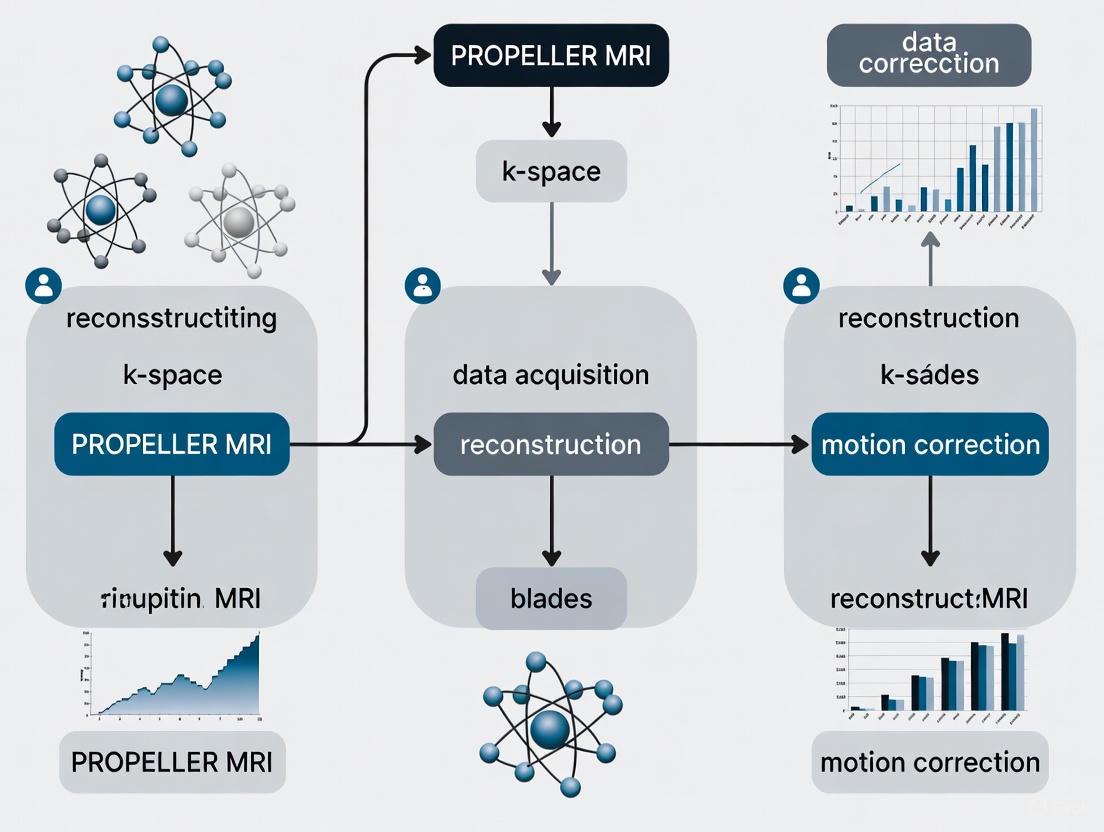
This article provides a comprehensive examination of PROPELLER (Periodically Rotated Overlapping Parallel Lines with Enhanced Reconstruction) MRI, a critical motion-resistant technique for structural imaging.
PROPELLER MRI: A Comprehensive Guide to Motion-Resistant Structural Imaging for Biomedical Research
Abstract
This article provides a comprehensive examination of PROPELLER (Periodically Rotated Overlapping Parallel Lines with Enhanced Reconstruction) MRI, a critical motion-resistant technique for structural imaging. Tailored for researchers and drug development professionals, the content explores the foundational physics and k-space sampling methodology that underpin its motion correction capabilities. It delves into practical implementation across diverse clinical scenarios, including neurological, abdominal, and cardiac imaging, while addressing common artifacts and optimization strategies for enhanced image quality. The article further validates the technique through comparative analyses with conventional sequences, highlighting its superior performance in managing metal artifacts and acoustic noise. Finally, it synthesizes key evidence to guide protocol selection and discusses emerging trends, such as deep learning integration, that are poised to expand its utility in clinical trials and biomedical research.
The Principles of PROPELLER MRI: Unraveling the Physics of Motion Resistance
The Periodically Rotated Overlapping ParallEL Lines with Enhanced Reconstruction (PROPELLER) MRI technique, also known as BLADE, represents a significant advancement in motion-resistant magnetic resonance imaging. Unlike conventional Cartesian k-space sampling that acquires data in sequential rectilinear lines, PROPELLER MRI collects data in rectangular strips, or "blades," each rotated around the center of k-space [1] [2]. This unique acquisition strategy provides inherent motion correction capabilities and enhanced artifact suppression, making it particularly valuable for clinical imaging and research applications where patient movement compromises image quality [3] [2].
The fundamental principle of blade-based k-space trajectory lies in its redundant sampling of the central k-space region, which contains the most critical image contrast information. Each blade captures the entire range of spatial frequencies but with different orientation, enabling robust motion detection and correction during reconstruction [4]. This technical approach has established PROPELLER as a cornerstone technique for structural neuroimaging research, particularly in drug development studies where consistent, high-quality imaging is essential for reliable assessment of therapeutic effects [5] [6].
Fundamental Principles and Mechanism
K-Space Trajectory Design
The PROPELLER acquisition strategy employs a distinctive k-space trajectory where each blade consists of multiple parallel phase-encoding lines acquired at a specific angle relative to the kx-ky coordinate system [1] [2]. As acquisition progresses, blades are sequentially rotated around the k-space center, creating a characteristic pattern reminiscent of a propeller. This design ensures that the central region of k-space is oversampled with every blade acquisition, while peripheral regions are sampled less frequently but with varying orientations.
Key geometric properties of this trajectory include:
- Blade width: Determines the angular coverage of each individual blade
- Rotation increment: Controls the angular spacing between consecutive blades
- Central overlap: The percentage of k-space center sampled by all blades combined
- Radial coverage: The complete angular range acquired (typically 180° or 360°)
The overlapping central k-space sampling provides the foundation for PROPELLER's motion correction capabilities, as it enables direct comparison of low-frequency information between blades to detect and quantify motion parameters [4].
Motion Correction Mechanism
PROPELLER MRI incorporates a sophisticated motion correction algorithm that leverages the inherent redundancy in its acquisition scheme. The reconstruction process involves several stages of motion detection and compensation:
- Blade-to-blade correlation analysis: The overlapping central k-space data allows for calculation of translation and rotation parameters between blades [4]
- Data consistency checking: Corrupted blades can be identified and excluded from the final reconstruction [7]
- Gridding reconstruction: Data from all blades are interpolated onto a Cartesian grid for Fourier transformation [1]
This systematic approach to motion management makes PROPELLER particularly valuable for imaging uncooperative patients, pediatric populations, and applications where even minor motion artifacts could compromise diagnostic or research value [3].
Quantitative Performance Characteristics
Table 1: Quantitative Performance Metrics of PROPELLER MRI for Different Metal Crown Materials
| Crown Material | Sequence Type | Artifact Area Reduction | Tongue SNR | Masseter Muscle SNR | Overall Image Quality (5-point scale) |
|---|---|---|---|---|---|
| Co-Cr Alloy | Conventional FSE T2WI | Reference | 21.54 ± 9.31 | 15.26 ± 6.08 | 3.2 |
| Co-Cr Alloy | PROPELLER FSE T2WI | 17.0 ± 0.2% smaller (p < 0.001) | 29.76 ± 8.45 | 19.11 ± 8.24 | 4.1 |
| Pure Titanium (Ti) | Conventional FSE T2WI | Reference | 23.41 ± 8.92 | 16.85 ± 7.13 | 3.8 |
| Pure Titanium (Ti) | PROPELLER FSE T2WI | 11.6 ± 0.7% smaller (p = 0.005) | 31.25 ± 9.14 | 20.63 ± 7.85 | 4.4 |
| Au-Pd Alloy | Conventional FSE T2WI | Reference | 25.73 ± 8.67 | 18.42 ± 6.89 | 4.3 |
| Au-Pd Alloy | PROPELLER FSE T2WI | No significant reduction | 27.19 ± 9.02 | 19.25 ± 7.34 | 4.5 |
Table 2: Deep Learning PROPELLER Reconstruction Performance with Synthetic Blade Augmentation
| Training Data Composition | PSNR (dB) | NMSE | SSIM | Generalization Capability |
|---|---|---|---|---|
| Purely Real Blades | 28.4 | 0.154 | 0.873 | Limited |
| Purely Synthetic Blades | 30.7 | 0.121 | 0.901 | Moderate |
| Mixed Real + Synthetic Blades | 32.9 | 0.095 | 0.934 | High |
Application in Drug Development Research
Role in Pharmacological MRI
PROPELLER MRI provides significant advantages in pharmacological MRI (phMRI) and drug development research, where consistent image quality across multiple time points is essential for reliable assessment of drug effects [5] [8]. The motion-resistant properties of blade-based trajectories are particularly valuable for:
- Longitudinal studies requiring serial imaging sessions
- Patient populations with limited ability to remain still (neurological disorders, pediatric patients)
- Multi-center trials where standardized image quality is critical
- Quantitative imaging biomarkers that demand high reproducibility [6]
In functional MRI (fMRI) applications for drug development, PROPELLER techniques can enhance data quality for both task-based and resting-state paradigms, providing more robust biomarkers for assessing central nervous system drug effects [5] [8].
Regulatory Considerations and Biomarker Qualification
The use of MRI in drug development occurs within a rigorous regulatory framework overseen by agencies including the FDA and EMA [6]. While PROPELLER MRI itself has not been formally qualified as a biomarker, it contributes to generating reliable imaging data that can support biomarker qualification efforts. Key considerations include:
- Standardization of acquisition parameters across imaging sites
- Quality control procedures for blade data consistency
- Validation of motion correction efficacy for specific patient populations
- Documentation of reconstruction parameters and blade rejection criteria [6]
The implementation of Good Imaging Practice (GIP) guidelines ensures that PROPELLER MRI data collected in clinical trials meets the stringent requirements for regulatory submissions [6].
Experimental Protocols
Basic PROPELLER MRI Acquisition Protocol
Protocol Title: Standard PROPELLER T2-Weighted Brain Imaging for Structural Research
Hardware Requirements:
- 1.5T or 3.0T MRI scanner with multi-channel head coil
- Compatible gradient system for non-Cartesian trajectories
Sequence Parameters:
- Pulse Sequence: Fast Spin Echo (FSE) PROPELLER
- TR/TE: 3000/112 ms (adjust based on contrast requirements)
- Field of View: 240 × 240 mm² (adjust for head size)
- Matrix Size: 352 × 352
- Slice Thickness: 5 mm with 1 mm gap
- Echo Train Length (ETL): 32
- Number of Blades: 16-24 (dependent on desired motion robustness)
- Bandwidth: ± 25 kHz (optimized to minimize TE)
- Number of Excitations (NEX): 2 [3]
Acquisition Procedure:
- Perform localizer scans using conventional triplanar sequences
- Position axial slices parallel to the anterior-posterior commissure line
- Acquire PROPELLER data with automatic blade rotation increment
- Monitor data quality in real-time using blade correlation metrics
- Repeat acquisition if excessive motion corruption is detected
Reconstruction Parameters:
- Reference Selection Method: Single Blade Reference (SBR), Combined Blades Reference (CBR), or No Blade Reference (NBR) [4]
- Motion Estimation Iterations: 1-2 iterations for SBR, CBR, or GBR
- Gridding Algorithm: Kaiser-Bessel window with oversampling factor of 2
- Blade Rejection Threshold: Correlation coefficient < 0.8 [7]
Advanced PROPELLER with Parallel Imaging Acceleration
Protocol Title: Accelerated PROPELLER with Multi-Step Joint-Blade SENSE Reconstruction
Application: High-resolution T1-weighted or T2-weighted imaging with reduced scan time
Modified Sequence Parameters:
- Acceleration Factor (R): 2-3 (parallel imaging)
- Blade Width: Increased by factor R
- Echo Train Length: Reduced for T1-weighted contrast
- Partial Fourier: Optional for additional acceleration [2]
Reconstruction Workflow:
- Simple Single-Blade (SSB) SENSE Reconstruction
- Reconstruct each blade separately using coil sensitivity maps
- Perform initial motion estimation and blade combination
- Generate initial blade-combined images for regularization reference [2]
Regularized Single-Blade SENSE
- Resample virtual blades from blade-combined images
- Apply Jacobi method with regularization to reduce noise amplification
- Update motion parameters and blade-combined images [2]
Joint-Blade SENSE Reconstruction
- Resample "wide" virtual blades with high-frequency data
- Perform joint reconstruction of all blades simultaneously
- Generate final motion-corrected images with improved SNR [2]
Quality Control Metrics:
- Blade-to-blade correlation coefficients
- Noise amplification factors (g-factor)
- Motion parameter consistency across iterations
- Final image SNR and artifact assessment
Visualization of PROPELLER Workflows
Research Reagent Solutions and Essential Materials
Table 3: Essential Research Materials for PROPELLER MRI Studies
| Category | Item/Reagent | Specifications | Research Application |
|---|---|---|---|
| Phantom Materials | Custom motion phantoms | Programmable actuators with anatomical shapes | Validation of motion correction algorithms |
| SNR reference phantoms | Uniform T1/T2 relaxation properties | Sequence performance quantification | |
| Data Augmentation Resources | Synthetic blade datasets | Generated from motion-free Cartesian images [7] | Deep learning model training |
| Real blade datasets | Clinical data with motion artifacts | Model validation and testing | |
| Computational Tools | Gridding algorithms | Kaiser-Bessel window functions | K-space data interpolation |
| Motion estimation libraries | Correlation-based registration | Blade-to-blade motion detection | |
| Deep learning frameworks | TensorFlow/PyTorch with MRI modules | PROPELLER reconstruction | |
| Quality Control Materials | Metal artifact phantoms | Co-Cr, Ti, Au-Pd alloy inserts [3] | Artifact quantification |
| Geometric distortion phantoms | Regular grid patterns | Spatial accuracy verification |
Advanced Technical Considerations
Reference Selection Methods
The performance of PROPELLER reconstruction critically depends on selecting an appropriate reference for motion estimation. Several methods have been developed and evaluated:
- Single Blade Reference (SBR): Uses one high-quality blade as reference
- Combined Blades Reference (CBR): Combines multiple blades for reference generation
- Grouped Blades Reference (GBR): Uses blade subsets for reference
- No Blade Reference (NBR): Pipe et al.'s method requiring no specific reference [4]
Studies demonstrate that with proper implementation, reference selection is not critical for robust motion correction. For clinical applications, NBR with no iterations or SBR/CBR/GBR with two iterations provides accurate motion correction [4].
Artifact Reduction Mechanisms
PROPELLER MRI demonstrates particular efficacy in reducing specific artifact types:
Metal Artifact Reduction: PROPELLER sequences effectively reduce metal artifacts by distributing susceptibility-induced distortions radially rather than along phase-encoding directions. Quantitative studies show 17.0% smaller artifact areas for Co-Cr alloys and 11.6% for pure titanium compared to conventional FSE T2WI [3].
Motion Artifact Suppression: The motion-resistant properties stem from:
- Oversampled central k-space enabling robust motion detection
- Blade correlation analysis for motion parameter estimation
- Selective blade rejection for severely corrupted data
- Motion-compensated gridding reconstruction [1] [4]
Flow Artifact Reduction: PROPELLER inherently suppresses flow artifacts through:
- Radial reordering of phase-encoding steps
- Variable gradient moment nulling across blades
- Central k-space averaging effects [3]
Magnetic resonance imaging is highly sensitive to patient motion, which can cause blurring, ghosting, and other artifacts that compromise diagnostic image quality. The PROPELLER (Periodically Rotated Overlapping ParallEL Lines with Enhanced Reconstruction) MRI technique addresses this fundamental challenge through an acquisition strategy that incorporates inherent self-navigation and data redundancy [9]. Originally developed by Pipe in the late 1990s, PROPELLER samples k-space in a rotating fashion using sets of radially directed strips or "blades," each composed of multiple parallel phase-encoded lines [9] [10]. This unique sampling geometry provides two powerful mechanisms for motion correction: first, the continuous oversampling of central k-space enables precise motion detection without additional navigators; second, the data redundancy allows for rejection or correction of motion-corrupted data segments during reconstruction.
The clinical significance of this motion-robust acquisition is substantial, particularly for patient populations with limited compliance, such as pediatric, elderly, or impaired patients [11] [12]. PROPELLER has demonstrated superior performance in clinical settings, with radiological inspection confirming that motion artifact is less commonly seen on PROPELLER compared to conventional MRI, and intracranial pathology is equally or better demonstrated [13]. This technical note examines the core principles, implementation protocols, and advanced applications of PROPELLER MRI, providing researchers with practical frameworks for leveraging its inherent motion correction capabilities in structural imaging research.
Core Principles of Self-Navigation and Data Redundancy
K-Space Sampling Strategy and Self-Navigation
The PROPELLER acquisition trajectory is fundamentally different from conventional Cartesian sampling. Rather than acquiring parallel lines in a single direction, PROPELLER collects data in rotating "blades" that each pass through the center of k-space [9]. Each blade typically contains 8-32 parallel phase-encoded lines acquired in a single shot, with the entire blade rotated by a small angle (typically 10°-20°) for subsequent acquisitions [9]. This rotational sampling pattern creates a propeller-like k-space trajectory where the central region is oversampled—every blade collects data through the center of k-space, providing built-in navigation information without requiring separate navigator echoes [11] [9].
The self-navigating property arises from this redundant sampling of central k-space, which contains the highest signal amplitude and contributes most to image contrast [9]. Since each blade captures low-frequency spatial information, the central k-space data from any blade can be reconstructed into a low-resolution image that serves as a navigator for detecting motion between acquisitions [11] [14]. This enables the system to compare data from successive blades for consistency and identify discrepancies caused by patient movement [9]. The oversampled center also improves signal-to-noise ratio and contrast-to-noise ratio compared to conventional methods [9].
Data Redundancy and Motion Detection Mechanisms
PROPELLER leverages data redundancy through two primary mechanisms: rotational consistency and correlation-based weighting. Because all blades sample the same central k-space region, the low-resolution navigator images reconstructed from each blade should be consistent unless motion has occurred [14]. During reconstruction, the algorithm calculates motion parameters by comparing each blade's central k-space data to a reference, typically selected as the blade with the highest correlation to the mean of all central k-space data [14]. This enables quantification of in-plane rigid body motion, which can be geometrically represented as rotation about the image center and linear translation [14].
The redundant sampling also enables sophisticated rejection of corrupted data. After estimating motion parameters, the reconstruction algorithm performs correlation-weighting to minimize contributions from blades containing significant motion or displacement errors [9]. This quality-weighting approach is particularly valuable for handling through-plane motion, which cannot be directly corrected in standard 2D PROPELLER but can be mitigated by assigning low weights to severely affected blades [14]. The radial nature of the acquisition further enhances motion tolerance, as residual errors after correction manifest as benign streaking artifacts rather than the structured ghosting that plagues Cartesian imaging [11].
Table 1: Key Properties of PROPELLER K-Space Sampling
| Parameter | Description | Impact on Motion Correction |
|---|---|---|
| Blade Width | Number of k-space lines per blade | Wider blades provide more accurate motion estimation but increase acquisition time per blade [14] |
| Oversampling Factor | Degree of central k-space redundancy | Higher oversampling improves motion detection and SNR but increases scan time [9] |
| Angular Coverage | Total rotational range of blades (typically 157% for gapless) | Higher coverage factors reduce artifacts and improve SNR at the cost of increased acquisition time [9] |
| Number of Blades | Total propeller blades acquired | More blades provide better rotational resolution but longer scan times; does not significantly affect motion correction accuracy [14] |
Implementation Protocols for PROPELLER MRI
Acquisition Parameters and Sequence Optimization
Implementing PROPELLER MRI with optimal motion correction requires careful parameter selection based on the specific application and anticipated motion characteristics. The blade design represents a critical optimization parameter—blades with more lines enable more accurate motion estimation but increase the acquisition window per blade, potentially introducing intra-blade motion [14]. Turboprop-MRI, an accelerated variant of PROPELLER, addresses this limitation by acquiring multiple gradient-echoes per spin-echo, similar to GRASE sequences, thereby increasing scanning efficiency while maintaining motion robustness [14].
For robust motion correction, the following acquisition strategy is recommended: use blades with multiple lines (typically 16-32) to ensure accurate motion estimation; employ a blade coverage factor between 100-157% to balance artifact reduction with scan time; and acquire an adequate number of blades to maintain spatial resolution while recognizing that the number of blades does not significantly impact motion correction accuracy [14]. The specific parameters vary by application: for T2-weighted cranial imaging, PROPELLER is typically implemented with long echo trains (ETL≈30), while for diffusion-weighted imaging or T1-weighted contrasts, parallel imaging acceleration can reduce ETL to enable more flexible contrasts and reduce specific absorption rate [15].
Motion Estimation and Correction Algorithm
The PROPELLER reconstruction pipeline incorporates sophisticated motion estimation and correction through a series of well-defined steps. The process begins with phase correction for each blade to ensure its rotation point is exactly at the center of k-space [9]. Next, the algorithm estimates in-plane rotation and translation by analyzing the centrally overlapping k-space region of each blade [14]. For rotation estimation, the magnitude data of the central k-space disc is converted to polar coordinates, where rotation becomes translation along the angular dimension, enabling calculation of cross-correlation functions to determine rotational displacement [14]. For translation estimation, the algorithm computes the phase difference between blades in image space, as translation corresponds to a linear phase ramp in k-space [14].
Following parameter estimation, the reconstruction applies corrections by rotating the k-space coordinates and applying appropriate phase adjustments [16]. Finally, the corrected blades undergo correlation-weighting to minimize contributions from blades with residual motion errors before gridding and combining all data into the final motion-corrected image [9]. This comprehensive approach enables PROPELLER to effectively correct for bulk motion, with clinical studies demonstrating improved image quality even in challenging patient populations [13].
PROPELLER Motion Correction Workflow
Advanced Reconstruction Techniques and Quantitative Performance
Enhanced Reconstruction Methods
While conventional PROPELLER reconstruction employs a simple single-blade approach, advanced techniques have been developed to further improve image quality and motion correction performance. The Multi-Step Joint-Blade SENSE reconstruction addresses noise amplification in accelerated PROPELLER by leveraging information sharing between blades [15]. This approach consists of three steps: initial blade-combined images obtained using conventional single-blade SENSE; regularization using these images as references for blade-wise noise reduction; and joint reconstruction of virtually widened blades to form the final images [15]. This method maintains motion correction capability while significantly reducing noise amplification, particularly at high acceleration factors [15].
Additional innovations include the PEPTIDE technique, which incorporates PROPELLER trajectories into Echo-Planar Time-resolved Imaging, enabling motion-robust acquisition of distortion-free multi-contrast images [16]. This approach combines the temporal resolution benefits of EPTI with the motion tolerance of PROPELLER, demonstrating robustness to severe motion (>30° in-plane rotation) while maintaining rapid encoding capabilities [16]. For non-rigid motion correction, reference-guided methods leverage motion-free scans from the same imaging session as priors for correcting motion-corrupted contrasts through generalized rigid registration, effectively addressing the common clinical scenario where motion affects only some sequences in a multi-contrast protocol [17].
Quantitative Performance Metrics
The motion correction performance of PROPELLER MRI has been quantitatively evaluated through both simulations and clinical studies. Research demonstrates that blades with multiple lines allow more accurate motion estimation than blades with fewer lines, and Turboprop-MRI exhibits reduced motion sensitivity compared to standard PROPELLER [14]. Parallel imaging acceleration can reduce scan time by widening blades or decreasing echo train length, though this requires advanced reconstruction techniques like MJB SENSE to maintain image quality at high acceleration factors [15].
Table 2: Quantitative Performance of PROPELLER MRI Techniques
| Technique | Acceleration Factor | SNR Improvement | Motion Correction Efficacy | Application Context |
|---|---|---|---|---|
| Standard PROPELLER | 1x (reference) | Reference level | Effective for in-plane rigid motion [14] | T2-weighted cranial imaging [15] |
| MJB SENSE PROPELLER | 2-5x | Greatly reduced noise amplification vs SSB SENSE [15] | Preserves motion correction capability [15] | T1-weighted and T2-weighted imaging [15] |
| GA-SS-PROP | 5x faster than conventional PROPELLER [18] | Comparable to fully sampled [18] | Maintains distortion-free properties [18] | Diffusion-weighted imaging with IVIM [18] |
| Turboprop-MRI | More efficient than PROPELLER [14] | Reduced motion sensitivity [14] | Less sensitive to motion than PROPELLER [14] | Applications requiring reduced SAR [14] |
Research Reagents and Experimental Tools
Table 3: Essential Research Tools for PROPELLER MRI Development
| Tool Category | Specific Examples | Research Function |
|---|---|---|
| Pulse Sequences | PROPELLER FSE, Turboprop, PEPTIDE [16] [14] | Implement rotating blade acquisition with varying contrast mechanisms |
| Reconstruction Algorithms | MJB SENSE, DART registration, B0-informed parallel imaging [15] [16] [14] | Enable motion parameter estimation and motion-corrected image reconstruction |
| Motion Detection Methods | Center of mass analysis, k-space correlation, image registration [11] [14] | Quantify motion parameters from native k-space data without external sensors |
| Quality Assessment Metrics | Correlation weighting, blade rejection criteria [9] [14] | Identify and mitigate residual motion artifacts in final reconstruction |
| Acceleration Techniques | Parallel imaging, compressed sensing, golden-angle sampling [15] [18] | Reduce acquisition time while maintaining motion correction properties |
PROPELLER K-Space Sampling Pattern
Applications and Research Implications
PROPELLER MRI's inherent motion correction capabilities have enabled diverse applications across neuroimaging, body imaging, and quantitative mapping. In clinical brain imaging, PROPELLER has demonstrated superior performance for T2-weighted, FLAIR, and diffusion-weighted sequences in motion-prone populations, with radiological reviews preferring PROPELLER over conventional MRI in all subjects [13]. The technique's robustness has particular significance for drug development and clinical trials, where consistent image quality across multiple time points and patient populations is essential for reliable assessment of treatment effects.
Emerging applications include diffusion-weighted PROPELLER with intravoxel incoherent motion modeling for simultaneous assessment of diffusion and perfusion parameters [18], and multi-contrast EPTI combined with PROPELLER trajectories for motion-robust quantitative mapping [16]. These advanced techniques maintain the inherent motion correction properties while expanding the quantitative information available from a single acquisition. The future development of PROPELLER MRI includes improved 3D implementations for full rigid-body motion correction, integration with machine learning for enhanced reconstruction, and expanded application in body imaging where respiratory motion presents ongoing challenges [11] [17].
The self-navigation and data redundancy principles underlying PROPELLER represent a paradigm shift in motion-resistant MRI, moving from simple post-acquisition correction to fundamentally motion-robust acquisition design. This approach provides researchers and clinicians with a powerful framework for addressing one of MRI's most persistent limitations, ultimately improving diagnostic confidence and expanding the clinical utility of magnetic resonance imaging in challenging patient populations.
This application note details the principles and methodologies of k-space oversampling as implemented in PROPELLER (Periodically Rotated Overlapping Parallel Lines with Enhanced Reconstruction) MRI. We focus on how the redundant sampling of central k-space data enhances image quality through improved signal-to-noise ratio (SNR) and enables robust motion detection and correction, making it particularly valuable for structural imaging research in moving subjects. The document provides a technical overview, summarizes key quantitative evidence, and outlines detailed experimental protocols for implementing and validating PROPELLER MRI in a research setting.
PROPELLER MRI employs a unique k-space trajectory where data are acquired in rotating rectangular strips, or "blades," each containing multiple parallel lines [14] [9]. The central region of k-space is sampled by every blade, creating a data-redundant core. This oversampling is the sequence's cornerstone for its two primary benefits: enhancing SNR and enabling motion correction.
The acquisition of each blade provides a low-resolution image from its central k-space lines. By comparing these successive low-resolution images, the reconstruction algorithm can accurately estimate and correct for in-plane rotation and translation that occurred between blade acquisitions [14]. Furthermore, the radial nature of the acquisition and the signal averaging from multiple samples of the k-space center lead to a benign expression of any residual errors and an overall increase in SNR [9] [19]. This technique is commercially known as BLADE (Siemens), MultiVane (Philips), RADAR (Fujifilm), and JET (Canon) [9].
Quantitative Evidence and Performance Data
The efficacy of PROPELLER MRI with k-space oversampling is demonstrated by measurable improvements in image quality metrics across multiple studies. The following tables summarize key quantitative findings.
Table 1: Quantitative Metrics of PROPELLER vs. Conventional Sequences in Brain Imaging (Uncooperative Patients)
| Anatomical Structure | Metric | Conventional T2-TSE | T2-TSE BLADE | Improvement (%) | P-value |
|---|---|---|---|---|---|
| Spinal Cord | Contrast-to-Noise Ratio (CNR) | 11.2 ± 3.1 | 15.8 ± 3.5 | 41.1 | < 0.001 |
| Frontal White Matter | CNR | 9.5 ± 2.8 | 13.1 ± 3.2 | 37.9 | < 0.001 |
| Corpus Callosum | CNR | 8.8 ± 2.5 | 12.4 ± 2.9 | 40.9 | < 0.001 |
| Overall | Signal-to-Noise Ratio (SNR) | Baseline | - | 25.4 | < 0.0083 |
Source: Adapted from [19]
Table 2: Impact of Deep Learning Reconstruction (DLR) on PROPELLER Image Quality in Cervical Spine MRI
| Sequence | Spinal Cord SNR (C3-C4 Level) | SCM Muscle SNR (C3-C4 Level) | Spinal Cord CNR (C3-C4 Level) | Qualitative Noise Rating |
|---|---|---|---|---|
| Conventional FSE | 105.3 ± 25.1 | 87.6 ± 20.3 | 17.7 ± 5.2 | High Noise |
| Original PROPELLER | 118.4 ± 28.7 | 95.2 ± 23.1 | 23.2 ± 6.1 | Moderate Noise |
| PROPELLER DLR 50% | 135.9 ± 32.5 | 108.8 ± 26.4 | 27.1 ± 6.9 | Low Noise |
| PROPELLER DLR 75% | 149.2 ± 35.8 | 117.3 ± 28.5 | 31.9 ± 7.8 | Very Low Noise |
SNR & CNR values are arbitrary units for comparison. SCM: Sternocleidomastoid. Source: Adapted from [20]
Table 3: Diffusion-Weighted PROPELLER vs. SE-EPI for Liver Tumor Viability Measurement
| Measurement | DWI Sequence | Correlation with Histology (r) | Concordance with Histology | Bias from Histology (Bland-Altman) |
|---|---|---|---|---|
| Necrotic Fraction (NF) | DW-PROPELLER | 0.92 | Strong | Low |
| Necrotic Fraction (NF) | DW-SE-EPI | 0.45 | Weak | High |
| Viable Tumor Volume (VTV) | DW-PROPELLER | 0.89 | Strong | Low |
| Viable Tumor Volume (VTV) | DW-SE-EPI | 0.51 | Weak | High |
Source: Adapted from [21]
Core Principles and Visualization
K-Space Sampling and Motion Correction Workflow
The PROPELLER technique's robustness stems from its unique data acquisition and processing strategy. The following diagram illustrates the logical workflow from data acquisition to final reconstructed image.
Diagram 1: PROPELLER Motion Correction Workflow
PROPELLER K-Space Trajectory
The fundamental data acquisition pattern of PROPELLER MRI is visualized below, showing how individual blades rotate to oversample the center of k-space.
Diagram 2: PROPELLER K-Space Trajectory
Experimental Protocols
Protocol 1: Validating Motion Correction with a Brain Phantom
Objective: To systematically quantify the motion correction accuracy of a PROPELLER sequence using a biologically realistic brain phantom.
Background: In-vivo studies are limited by uncontrollable, stray head motion [22]. A custom phantom allows for precise, repeatable motion experiments.
Materials:
- 3D-Printed Brain Phantom: Created from in-vivo T2-weighted data, filled with agarose gel to mimic tissue contrast (R² = 0.955 with in-vivo signal) [22].
- Precision Motorized Driver System: Capable of in-plane rotation and translation with <1° tolerance [22].
- MRI Scanner: Equipped with PROPELLER sequence.
Methodology:
- Baseline Acquisition: Acquire a PROPELLER dataset with the phantom in a stationary position.
- Induce Motion:
- Rotational Experiment: Program the driver to rotate the phantom by a known angle (e.g., 3°, 5°, 10°) between specific blade acquisitions.
- Translational Experiment: Program the driver to translate the phantom by a known displacement (e.g., 2mm, 5mm).
- Data Analysis:
- Reconstruct images with motion correction enabled.
- Compare the corrected images to the baseline image using metrics like Mean Squared Error (MSE) and Structural Similarity Index (SSIM).
- Quantify the accuracy of the motion parameters (rotation, translation) estimated by the PROPELLER algorithm against the known, applied motion.
Protocol 2: Comparing SNR and CNR in Uncooperative Patient Cohorts
Objective: To quantitatively demonstrate the improvement in SNR and CNR provided by PROPELLER in subjects unable to remain still.
Materials:
- Patient Cohort: Uncooperative patients (e.g., pediatric, elderly, or neurologically impaired subjects).
- MRI Scanner: Capable of running both conventional Cartesian and PROPELLER sequences.
Methodology:
- Scanning Protocol: For each patient, acquire matched T2-weighted and FLAIR images using both conventional Cartesian and PROPELLER sequences during the same session [19].
- Region of Interest (ROI) Analysis:
- On matched slices, place ROIs in consistent anatomical locations: spinal cord, frontal white matter, corpus callosum, and sternocleidomastoid muscle.
- Place an additional ROI in background air to measure noise.
- Metric Calculation:
- SNR: SNR = SItissue / SDbackground (where SI is mean signal intensity, SD is standard deviation).
- CNR: CNR = |SItissueA - SItissueB| / SD_background.
- Statistical Analysis: Perform paired t-tests to determine if the differences in SNR and CNR between conventional and PROPELLER images are statistically significant (p < 0.05 considered significant) [19].
Protocol 3: Optimizing PROPELLER Acquisition Parameters for Motion Estimation
Objective: To determine the impact of key acquisition parameters on the accuracy of motion estimation.
Background: Motion estimation is more accurate with blades containing more lines, as they provide more data for cross-correlation calculations. The number of blades, however, has less impact on motion correction accuracy [14].
Materials:
- MRI scanner with research access to sequence parameters.
- Phantom or healthy volunteer.
Methodology:
- Parameter Variation: Acquire PROPELLER data sets while systematically varying two parameters:
- Lines per Blade (L): Test values such as 16, 24, and 32.
- Number of Blades (N): Test values to achieve gapless (157%) and gapped (e.g., 100%) k-space coverage [9].
- Induce Motion: Introduce a known, small rotation/translation during the scan.
- Analysis:
- Record the motion parameters estimated by the PROPELLER reconstruction algorithm for each acquisition setting.
- Calculate the error between the estimated motion and the known, applied motion.
- Correlate the error with the parameter
Lto confirm that higherLyields lower error [14].
The Scientist's Toolkit: Research Reagent Solutions
Table 4: Essential Materials and Tools for PROPELLER MRI Research
| Item | Function in Research | Example/Note |
|---|---|---|
| PROPELLER-Capable MRI Scanner | Platform for data acquisition. | Vendor implementations: GE (PROPELLER), Siemens (BLADE), Philips (MultiVane). |
| Anthropomorphic Brain Phantom | Validates motion correction algorithms without patient variability. | 3D-printed from patient data, filled with agarose gel [22]. |
| Precision Motion Stage | Introduces quantifiable, repeatable motion for validation studies. | In-plane rotation/translation with sub-degree and sub-millimeter precision. |
| Diffusion-Weighted PROPELLER Sequence | Enables high-quality DWI in moving subjects/body regions. | Superior to SE-EPI for quantifying tissue viability in liver tumors [21]. |
| Deep Learning Reconstruction (DLR) | Post-processing tool to further reduce noise in PROPELLER images. | Tunable denoising factor (e.g., 50%, 75%) to enhance SNR/CNR [20]. |
| Offline Reconstruction Software | Customizes and tests reconstruction algorithms. | Enables experimentation with different motion estimation methods (e.g., SBR, CBR, GBR, NBR) [4]. |
PROPELLER (Periodically Rotated Overlapping ParallEL Lines with Enhanced Reconstruction) MRI is a motion-resistant data acquisition and reconstruction technique widely deployed in clinical MRI scanners globally [7] [9]. Its unique k-space sampling strategy involves acquiring data in rotating "blades," each consisting of multiple parallel phase-encoded lines [23] [9]. This geometric arrangement results in oversampling of the central k-space region across all blades, providing the data redundancy essential for motion detection and correction [23] [9]. The PROPELLER reconstruction pipeline represents a sophisticated integration of signal processing steps that transform these non-Cartesian k-space samples into clinically diagnostic images while effectively mitigating motion artifacts. This process involves three critical, interdependent stages: phase correction to ensure proper blade alignment, motion estimation to detect and quantify subject movement, and correlation-weighted blade combination that prioritizes high-quality data [23] [24] [4]. The effectiveness of this pipeline has established PROPELLER as a valuable technique for structural imaging research, particularly in populations prone to motion such as pediatric patients and those with neurological conditions [25] [13].
Core Reconstruction Pipeline
The PROPELLER reconstruction pipeline systematically processes acquired k-space data to produce motion-corrected images. The following diagram illustrates the complete workflow and logical relationships between each processing stage:
Phase Correction
The initial reconstruction phase ensures proper blade alignment in k-space by correcting phase inconsistencies. Each PROPELLER blade must be phase-corrected to guarantee its rotation center aligns precisely with the k-space origin [9]. This process involves determining the blade rotation center and applying phase shifts to eliminate inconsistencies that arise from acquisition timing differences or system imperfections [23]. Proper phase correction establishes the foundation for accurate motion estimation by ensuring that the central k-space data from each blade can be directly compared, enabling the detection of true subject motion rather than system-induced artifacts [23] [9].
Motion Estimation
Following phase correction, the pipeline progresses to motion estimation, where in-plane rotation and translation parameters are calculated for each blade. The conventional approach compares the low-resolution image from each blade's central k-space data with a reference blade to determine motion parameters [23] [4]. A revised motion estimation algorithm developed by Pipe et al. employs a joint blade-pair correlation approach that emphasizes blade-pair correlations that are both strong and robust to noise [24]. This method estimates data shifts for all blades jointly, significantly improving motion estimation accuracy compared to earlier approaches [24]. Clinical evaluations demonstrate this revised algorithm produces substantially better image quality without degradation, effectively handling the bulk motion encountered in clinical practice [24].
Correlation-Weighted Blade Combination
The final reconstruction stage applies correlation-weighted blade combination to generate the final image. This process involves several key operations. First, correlation weighting factors are calculated based on the similarity between each blade's central k-space data and the reference [23] [7]. These weights prioritize blades with higher data quality while minimizing contributions from blades corrupted by through-plane motion or other artifacts [23]. The weighted blades are then gridded onto a Cartesian k-space matrix using convolution functions like Kaiser-Bessel to resample the non-uniform data [23]. Finally, an inverse Fast Fourier Transform produces the motion-corrected image [23] [9]. This correlation-weighting approach specifically mitigates through-plane motion artifacts by reducing the contribution of data from blades most affected by such motion [23].
Advanced Reconstruction Methodologies
Iterative Reconstruction using NUFFT
Beyond conventional gridding reconstruction, advanced iterative techniques utilizing the Non-Uniform Fast Fourier Transform (NUFFT) offer significant improvements in image quality. The iterative image reconstruction approach formulates PROPELLER reconstruction as a discrete-to-discrete inverse problem solvable through penalized weighted least squares (PWLS) minimization [23]. This method employs the NUFFT operator to efficiently transform between image space and the non-uniform k-space sampling of PROPELLER blades during each iteration [23]. The cost function incorporates a quadratic regularization term that penalizes image roughness, controlled by a regularization parameter (β) that balances noise reduction against spatial resolution [23]. Studies demonstrate that for optimal β values, this iterative reconstruction approach produces images with significantly increased SNR and reduced artifacts while maintaining similar spatial resolution compared to conventional gridding [23].
Table 1: Performance Comparison of Reconstruction Methods
| Reconstruction Method | SNR Performance | Artifact Reduction | Motion Correction | Computational Demand |
|---|---|---|---|---|
| Conventional Gridding | Baseline | Baseline | Effective | Low |
| Iterative NUFFT (QPWLS) | Significantly increased [23] | Significantly reduced [23] | Maintained capability [23] | High [23] |
| Multi-Step Joint-Blade SENSE | Greatly increased at high accelerations [2] | Reduced noise amplification [2] | Preserved capability [2] | Moderate [2] |
| Deep Learning Reconstruction | Significantly higher SNR [26] | Reduced noise and motion artifacts [26] | Enhanced through learning [25] | High initially, low during application [25] |
Parallel Imaging Accelerated Reconstruction
Parallel imaging acceleration techniques address PROPELLER's inherent scan time limitations by incorporating coil sensitivity information to reconstruct undersampled data. The Multi-Step Joint-Blade (MJB) SENSE approach represents a significant advancement over conventional single-blade reconstruction methods [2]. This technique consists of three key steps: initial single-blade SENSE reconstruction to generate blade-combined images, regularized single-blade reconstruction using these images as references to reduce noise, and joint-blade SENSE reconstruction that virtually widens blades using resampled high-frequency data [2]. By sharing information across blades, MJB SENSE effectively mitigates the noise amplification that plagues conventional parallel imaging approaches at high acceleration factors, enabling faster acquisitions without sacrificing image quality [2].
Deep Learning-Based Reconstruction
Recent advances incorporate deep learning to further enhance PROPELLER reconstruction quality and efficiency. Convolutional Neural Networks (CNNs) can be trained to reduce image noise and accelerate acquisitions while maintaining diagnostic image quality [26]. The BladeNet framework exemplifies this approach, leveraging the temporal rotation of PROPELLER's low-resolution blurring axis across consecutive frames to recover high-frequency spatial details [25]. This network learns to combine information from multiple sequential single-blade images, effectively correcting respiratory motion and restoring fine anatomical details [25]. Clinical studies demonstrate that deep learning-reconstructed PROPELLER sequences provide significantly higher SNR and contrast-to-noise ratio (CNR) compared to conventional sequences, with improved visualization of subtle anatomical structures like the subacromial bursa in shoulder imaging [26].
Performance Quantification and Validation
Quantitative Performance Metrics
Rigorous quantification of reconstruction performance employs standardized metrics to evaluate image quality across different techniques. The following table summarizes key quantitative findings from recent studies:
Table 2: Quantitative Performance Metrics for PROPELLER Applications
| Application Context | Performance Metric | Results | Comparison |
|---|---|---|---|
| Metal Artifact Reduction [3] | Artifact Area Reduction | 17.0 ± 0.2% smaller for Co-Cr alloy (p < 0.001); 11.6 ± 0.7% for Ti (p = 0.005) | PROPELLER vs. Conventional FSE |
| Metal Artifact Reduction [3] | SNR Improvement | Tongue: 29.76 ± 8.45 vs. 21.54 ± 9.31 (p = 0.007); Masseter muscle: 19.11 ± 8.24 vs. 15.26 ± 6.08 (p = 0.016) | PROPELLER vs. Conventional FSE |
| Deep Learning Acceleration [26] | Scan Time Reduction | 7 min 16 sec vs. 19 min 18 sec (approximately 63% reduction) | Accelerated DL vs. Conventional PROPELLER |
| Deep Learning Reconstruction [26] | Qualitative Image Quality | Significantly higher mean scores for image quality and diagnostic confidence (p = 0.01) | DL sequences vs. Conventional sequences |
Experimental Protocols
Protocol for Validating Motion Correction Performance
Purpose: To quantitatively evaluate the efficacy of PROPELLER motion correction algorithms in a controlled setting. Background: PROPELLER MRI's primary advantage lies in its inherent motion correction capabilities, which require systematic validation against conventional techniques [13]. Methods:
- Subject Population: Include both normal volunteers and clinical subjects. Volunteers perform standardized head movements ("shake no" and "nod yes") during acquisition to simulate in-plane motion [13].
- Acquisition Parameters: Acquire axial T2-weighted PROPELLER sequences with the following typical parameters: TR/TE = 3000/112 ms; field of view = 240 × 240 mm²; slice thickness = 6 mm with 1 mm gap; matrix size = 352 × 352; echo train length = 32; number of blades = 16-32 [23] [3].
- Reconstruction Approaches: Reconstruct data twice using both original and revised motion estimation algorithms [24].
- Evaluation Methodology: Employ blinded qualitative assessment by multiple radiologists using standardized scoring systems (5-point scales for motion artifact and overall image quality) [24] [13]. Quantitatively measure motion parameters (rotation and translation) detected during each slice acquisition [13].
Protocol for Metal Artifact Reduction Evaluation
Purpose: To assess PROPELLER's efficacy in reducing metal artifacts from dental prostheses. Background: Metal artifacts significantly degrade diagnostic image quality in head and neck MRI; PROPELLER sequences show promise for mitigating these artifacts [3]. Methods:
- Subject Selection: Enroll participants with different porcelain-fused-to-metal (PFM) crown materials (cobalt-chromium alloy, pure titanium, gold-palladium alloy) [3].
- Sequence Parameters: Acquire both conventional FSE T2-weighted and PROPELLER FSE T2-weighted sequences with matched parameters: TR/TE ≈ 3000/112 ms; similar FOV, matrix size, and slice thickness [3].
- Quantitative Analysis: Measure maximum artifact areas on PACS workstations using consistent windowing. Calculate artifact reduction rate as: (Conventional FSE area - PROPELLER area) / Conventional FSE area × 100% [3].
- Qualitative Assessment: Two blinded radiologists evaluate visualization of anatomic structures near PFM crowns (periodontal space, tooth, tongue, bone) using a 5-point scale [3].
The Scientist's Toolkit: Research Reagent Solutions
Table 3: Essential Research Tools for PROPELLER MRI Development
| Tool/Category | Specific Examples | Research Function | Implementation Notes |
|---|---|---|---|
| Reconstruction Algorithms | NUFFT-based QPWLS [23], Multi-Step Joint-Blade SENSE [2] | Iterative image reconstruction with noise regularization | QPWLS uses conjugate gradient minimization with Fletcher-Reeves update [23] |
| Motion Estimation Methods | Single Blade Reference (SBR), Combined Blades Reference (CBR), Grouped Blades Reference (GBR), No Blade Reference (NBR) [4] | Reference selection for motion estimation | NBR method requires no iterations; SBR/CBR/GBR need two iterations for comparable precision [4] |
| Deep Learning Frameworks | BladeNet [25], AIR Recon DL [26] | Motion correction and resolution enhancement from undersampled data | BladeNet uses U-Net with ResNet blocks, trained on consecutive blade images [25] |
| Data Augmentation Tools | Synthetic blade generation [7] | Addressing limited PROPELLER training data | Generates synthetic blades from motion-free Cartesian MR images [7] |
| Parallel Imaging Methods | SENSE-based reconstruction [2] | Acquisition acceleration and echo train length reduction | Enables flexible contrasts beyond T2-weighting [2] |
| Quantitative Validation Metrics | Artifact area measurement, SNR/CNR calculation [3], qualitative scoring systems [26] | Performance evaluation and algorithm validation | Use standardized 5-point scales for clinical image quality assessment [3] [26] |
The PROPELLER MRI reconstruction pipeline represents a sophisticated integration of phase correction, motion estimation, and correlation-weighted blade combination that effectively addresses the persistent challenge of motion artifacts in structural imaging. The continuous evolution of this pipeline—from conventional gridding to iterative NUFFT methods, parallel imaging acceleration, and deep learning approaches—demonstrates significant progress in improving image quality, reducing acquisition times, and expanding clinical applications. The quantitative performance metrics and standardized experimental protocols outlined in this document provide researchers with essential tools for validating new reconstruction techniques and advancing the field of motion-resistant structural imaging. As PROPELLER methodology continues to evolve, its integration with emerging deep learning technologies promises further enhancements in reconstruction efficiency and image fidelity, solidifying its value for both clinical and research applications where motion compensation is paramount.
Implementing PROPELLER MRI: Protocols and Applications in Clinical Research
Periodically Rotated Overlapping ParallEL Lines with Enhanced Reconstruction (PROPELLER) MRI is a motion-resistant data acquisition and reconstruction technique developed to address the challenges of patient motion during scanning [7] [9]. The method samples k-space using a series of rotating rectangular strips, or "blades," each acquired with a turbo spin echo (TSE) or fast spin echo train [7] [27]. This unique trajectory provides inherent oversampling of the central k-space region, which enables self-navigation and motion correction capabilities not available in conventional Cartesian imaging [9] [4]. PROPELLER has been widely deployed across most clinical MRI scanners globally under various proprietary names including BLADE (Siemens), MultiVane (Philips), and PROPELLER (GE) [9].
The fundamental advantage of PROPELLER lies in its robustness against motion artifacts, making it particularly valuable for imaging uncooperative patients, pediatric populations, and anatomical regions susceptible to physiological motion [9]. However, this motion resistance comes with a tradeoff: PROPELLER typically requires approximately 60% more scan time than Cartesian MRI due to central k-space oversampling [7]. This extended duration can potentially lead to patient discomfort and increased motion artifact probability, creating challenges for diagnostic image quality [7]. Recent advances in PROPELLER methodology, including targeted acquisitions and deep learning reconstruction, have sought to address these limitations while expanding its applications across multiple weightings including T1, T2, FLAIR, and diffusion-weighted imaging [7] [27].
Technical Foundations of PROPELLER MRI
K-Space Trajectory and Blade Dynamics
The PROPELLER data acquisition strategy revolves around the systematic rotation of k-space blades around the central point [9]. Each blade typically consists of 8-32 parallel phase-encoded lines acquired in a single shot using fast spin echo or gradient echo sequences [9]. During acquisition, blades are rotated by a small angle (typically 10°-20°) until the entire k-space circle has been sampled [9]. The degree of blade overlap, often described as "blade coverage factor" or "k-space filling factor," is an operator-selectable parameter that balances scan time against artifact reduction and signal-to-noise ratio [9].
The reconstruction algorithm for PROPELLER involves several sophisticated steps [9] [4]. First, phase correction is applied to each blade to ensure exact rotation around the k-space center. Next, corrections for bulk in-plane rotation and translation are implemented. Finally, correlation-weighting minimizes contributions from blades containing motion or displacement errors [9]. This sophisticated process requires additional reconstruction time compared to conventional methods, potentially adding 15+ seconds for processing large datasets before subsequent sequences can begin [9].
Motion Correction Mechanisms
PROPELLER's motion resistance stems from three key attributes [9] [4]. The oversampled central k-space region provides redundant information that enables comparison between blades for consistency. If patient movement occurs between blades, the data from subsequent blades can be corrected or discarded based on anomalous central information. The self-navigating capability uses low-resolution images from individual blades to estimate and correct for translational and rotational motions before final image combination [4]. Current 2D PROPELLER implementations primarily correct for in-plane motion, while 3D versions show promise for addressing through-plane motion limitations [9].
Table 1: PROPELLER MRI Fundamental Characteristics
| Characteristic | Description | Implications |
|---|---|---|
| K-space trajectory | Rotating rectangular strips ("blades") | Oversamples center, enables motion correction |
| Typical blades | 8-32 lines per blade | Balance between acquisition efficiency and motion sensitivity |
| Blade rotation | 10°-20° increments | Complete circular k-space coverage |
| Coverage factor | 100%-157% (operator selectable) | Higher percentage reduces artifacts but increases scan time |
| Reconstruction time | 15+ seconds additional processing | Potential delay before next sequence |
| Motion correction | In-plane rotation and translation | Does not correct for through-plane motion (addressed in 3D versions) |
PROPELLER Sequence Variants and Applications
T2-Weighted PROPELLER
T2-weighted PROPELLER represents one of the most established applications of this technique, particularly for neuroimaging where motion artifact reduction is critical [9] [27]. The sequence provides robust T2-weighted images with reduced sensitivity to magnetic field inhomogeneities and bulk motion compared to conventional TSE sequences [27]. In clinical practice, T2-weighted PROPELLER is routinely employed for brain imaging in patients who may have difficulty remaining still, such as children, elderly patients, or those with neurological disorders [9]. The inherent motion correction capabilities make it valuable for imaging regions susceptible to physiological motion, including the abdomen [27].
The contrast mechanism in T2-weighted PROPELLER follows similar principles to conventional T2-weighted imaging, with fluid-containing structures such as edema or cerebrospinal fluid appearing bright [28]. However, the PROPELLER acquisition provides superior robustness against motion artifacts that could otherwise degrade image quality and diagnostic value. Implementation typically uses long repetition time (TR > 2000ms) and echo time (TE = 60-120ms) to maximize T2 contrast while minimizing T1 weighting [28].
FLAIR PROPELLER
Fluid-Attenuated Inversion Recovery (FLAIR) PROPELLER combines the cerebrospinal fluid suppression of conventional FLAIR with PROPELLER's motion resistance [27]. This sequence uses an inversion recovery pulse to null the CSF signal, followed by a delay and T2-weighted PROPELLER acquisition [28]. The result is an image where fluid appears dark while pathological changes in adjacent tissue stand out with enhanced contrast [28]. This combination is particularly valuable for detecting lesions near CSF interfaces, such as in multiple sclerosis, where conventional sequences might obscure abnormalities due to bright fluid signals [28].
FLAIR PROPELLER sequencing parameters typically include a long TR (often exceeding 6000ms), a TE around 100ms, and a carefully selected inversion time (TI between 2000-2500ms) to effectively suppress CSF signal [28]. The motion-resistant properties of PROPELLER make FLAIR PROPELLER especially useful for uncooperative patients who cannot remain still for the extended durations often required for conventional FLAIR imaging.
Diffusion-Weighted PROPELLER (DWI-PROPELLER)
Diffusion-weighted PROPELLER imaging addresses the significant challenges of distortion and motion sensitivity in conventional single-shot echo planar imaging (SS-EPI) diffusion sequences [29]. By combining diffusion encoding with PROPELLER readouts, this method produces high-quality, distortion-free diffusion images in all imaging planes [29]. The approach is particularly valuable for body diffusion-weighted imaging where susceptibility artifacts and geometric distortions often limit SS-EPI applications [29].
Recent technical advances have improved the efficiency of DWI-PROPELLER. GRASE-based PROPELLER (Steer-PROP) sequences have been developed to reduce scan times by acquiring multiple adjacent k-space blades in each TR [29]. This sampling strategy can reduce imaging time to a fraction (e.g., 1/3) of conventional FSE-based PROPELLER while maintaining image quality and motion robustness [29]. Additionally, the PROPELLER trajectory enables self-navigated phase correction that systematically addresses phase errors inherent to GRASE readouts [29].
T1-Weighted PROPELLER
T1-weighted PROPELLER provides anatomical imaging with similar contrast to conventional T1-weighted sequences but with enhanced motion resistance [27]. The sequence uses shorter TR (400-700ms) and TE (<30ms) parameters to emphasize T1 relaxation differences between tissues [28]. In T1-weighted images, fat appears bright while CSF appears dark, providing excellent visualization of anatomical structures [28].
The implementation of T1-weighted PROPELLER follows similar blade acquisition and reconstruction principles as other PROPELLER variants but with parameter optimization for T1 contrast. The motion correction capabilities are particularly beneficial for contrast-enhanced T1-weighted imaging where precise anatomical localization is critical and patient motion can degrade image quality. Additionally, T1-weighted PROPELLER can be combined with driven-equilibrium Fourier transform (DEFT) methods to accelerate longitudinal magnetization recovery in tissues with long T1, improving signal-to-noise ratio without increasing scan time [27].
Table 2: PROPELLER Sequence Variants and Clinical Applications
| Sequence Variant | Key Parameters | Primary Clinical Applications | Advantages Over Conventional Sequences |
|---|---|---|---|
| T2-weighted PROPELLER | TR > 2000ms, TE = 60-120ms | Brain imaging in motion-prone patients, abdominal imaging | Superior motion resistance, reduced sensitivity to field inhomogeneities |
| FLAIR PROPELLER | TR > 6000ms, TE ≈ 100ms, TI = 2000-2500ms | Multiple sclerosis, lesions near CSF interfaces | CSF suppression combined with motion resistance |
| Diffusion-weighted PROPELLER | Diffusion encoding + PROPELLER readout | Body DWI, regions prone to susceptibility artifacts | Distortion-free diffusion images in all planes |
| T1-weighted PROPELLER | TR = 400-700ms, TE < 30ms | Anatomical imaging, contrast-enhanced studies | Motion-resistant anatomical imaging |
Advanced PROPELLER Methodologies
Targeted PROPELLER and Reduced FOV Techniques
Targeted PROPELLER methodologies combine inner-volume imaging (IVI) techniques with conventional PROPELLER to limit the excitation field-of-view (FOV) to specific regions of interest [27]. This approach uses perpendicular section-selective gradients for spatially selective excitation and refocusing RF pulses to restrict the refocused FOV along the phase-encoding direction for each rectangular blade [27]. The reduced FOV technique offers three significant advantages: reduced imaging time due to fewer required blades, increased spatial resolution without commensurate time increases, and potentially more robust regional motion correction by excluding tissues with different motion patterns [27].
In phantom and volunteer studies, targeted PROPELLER has demonstrated feasibility for various applications including brain, abdominal, vessel wall, and cardiac imaging [27]. For motion correction, a localized imaging volume may provide superior performance compared to larger FOV volumes containing multiple tissue components moving differently. The targeted approach also enables specialized applications such as diffusion-weighted imaging of specific structures like the spinal cord, where conventional full-FOV techniques would be compromised by surrounding tissues [27].
Deep Learning and Synthetic Blade Augmentation
Recent advances in artificial intelligence have addressed one of the fundamental challenges in PROPELLER MRI: the limited availability of high-quality blade data for training reconstruction models [7]. Synthetic blade generation and data augmentation techniques have been developed to enrich training datasets and improve deep learning model generalization [7]. This approach uses motion-free Cartesian MR images to generate synthetic PROPELLER blades, which are then integrated into training datasets [7].
Evaluation metrics including PSNR, NMSE, and SSIM indicate superior performance of models trained with augmented data compared to non-augmented counterparts [7]. The synthetic blade augmentation significantly enhances model generalization capability and enables robust performance across varying imaging conditions [7]. Furthermore, studies demonstrate the feasibility of using synthetic blades exclusively during training, potentially reducing dependency on real PROPELLER blades and addressing data scarcity issues [7]. This innovation represents the first application of data augmentation specifically for deep learning-based PROPELLER MRI reconstruction [7].
Experimental Protocols and Methodologies
PROPELLER MRI Acquisition Protocol
A comprehensive PROPELLER imaging protocol requires careful parameter selection to optimize image quality, scan time, and motion resistance. The following parameters represent typical values for clinical PROPELLER implementations:
Blade Parameters: Each blade typically consists of 16-32 phase-encoding lines acquired with an echo train length (ETL) of 15-35 echoes [27]. This ETL range moderates T2 decay effects while maintaining efficient k-space coverage. The blade width and rotation angle are selected to provide sufficient k-space overlap (typically 100%-157% coverage factor) for robust motion correction [9].
Sequence Timing: For T2-weighted PROPELLER, repetition time (TR) values typically exceed 2000ms to minimize T1 weighting, while echo time (TE) ranges from 60-120ms to optimize T2 contrast [28]. For T1-weighted applications, shorter TR (400-700ms) and TE (<30ms) values are employed [28]. FLAIR PROPELLER requires longer TR (>6000ms) and carefully selected inversion times (2000-2500ms) for effective CSF suppression [28].
Diffusion Weighting: DWI-PROPELLER implements diffusion gradients on either side of the first refocusing RF pulse [29]. B-values typically range from 0-1000 s/mm² for clinical applications, with higher values possible for specialized studies. The PROPELLER readout provides inherent resistance to distortion compared to EPI-based diffusion imaging [29].
Reconstruction Workflow
The PROPELLER reconstruction process involves several systematic steps as illustrated below:
PROPELLER MRI Reconstruction Workflow
The reconstruction algorithm begins with phase correction for each individual blade to ensure proper rotation about k-space center [9] [4]. Subsequent steps estimate and correct for bulk in-plane rotation and translation using the oversampled central k-space information [4]. Correlation weighting then minimizes contributions from blades containing significant motion or displacement errors [9]. Finally, the corrected blades are combined into a full k-space dataset for Fourier transformation into the final motion-corrected image [9].
Reference Selection Methods for Motion Correction
A critical consideration in PROPELLER reconstruction is the selection of an appropriate reference for motion estimation. Recent research has evaluated four primary reference selection methods [4]:
Single Blade Reference (SBR): Uses one blade as the reference for all motion corrections.
Combined Blades Reference (CBR): Combines multiple blades to create an averaged reference.
Grouped Blades Reference (GBR): Groups blades into subsets for hierarchical motion estimation.
No Blade Reference (NBR): Pipe et al.'s revised method requiring no specific blade reference.
Studies indicate that with proper implementation, reference selection is not critical for robust motion correction [4]. Both simulation and in vivo evaluations demonstrate similar performance across methods, with NBR requiring no iterations while SBR, CBR, and GBR typically need two iterations for comparable motion estimation precision [4].
The Scientist's Toolkit: Research Reagent Solutions
Table 3: Essential Research Materials and Technical Components for PROPELLER MRI
| Component | Function/Description | Research Considerations |
|---|---|---|
| PROPELLER Sequence Platform | Pulse sequence implementation | Vendor-specific implementations (Siemens BLADE, GE PROPELLER, Philips MultiVane) |
| Synthetic Blade Algorithm | Data augmentation for deep learning | Generates synthetic PROPELLER blades from Cartesian MRI for training data |
| Deep Learning Reconstruction Model | Reconstruction of undersampled blades | Combines CNN and RNN architectures with compressive sensing knowledge |
| Reference Selection Method | Motion estimation reference | SBR, CBR, GBR, or NBR approaches with iteration optimization |
| Targeted-PROPELLER Implementation | Reduced FOV imaging | Inner-volume imaging techniques for targeted regional acquisition |
| GRASE-PROPELLER Hybrid | Efficient k-space sampling | Steer-PROP implementation for faster acquisition (3-5x acceleration) |
| Quantitative Evaluation Metrics | Image quality assessment | PSNR, NMSE, SSIM for algorithm validation |
PROPELLER MRI represents a powerful approach for motion-resistant structural imaging with diverse applications across T1, T2, FLAIR, and diffusion-weighted sequences. The fundamental blade-based k-space trajectory with inherent oversampling of central regions provides robust self-navigation and motion correction capabilities unavailable in conventional Cartesian imaging. Ongoing technical advances including targeted FOV acquisitions, GRASE-based readouts, and deep learning with synthetic blade augmentation continue to address historical limitations of prolonged scan times while expanding applications. These developments reinforce PROPELLER's value as a versatile platform for structural neuroimaging research, particularly in populations prone to motion where conventional techniques face significant challenges.
Magnetic resonance imaging (MRI) is indispensable for neurological diagnosis but remains highly sensitive to patient motion, which can render images non-diagnostic. This challenge is particularly acute in pediatric populations and restless patients who may be unable to remain still during extended scanning procedures. The PROPELLER (Periodically Rotated Overlapping ParallEL Lines with Enhanced Reconstruction) technique, also known as BLADE or MultiVane among different vendors, represents a significant advancement in motion-resistant structural imaging [9]. This k-space sampling method acquires data in rotating blades, oversampling the center and enabling sophisticated motion correction during reconstruction. This application note details the quantitative performance, provides implementable protocols, and outlines the essential research toolkit for applying PROPELLER MRI to neurological imaging in motion-prone populations.
Performance Data & Comparative Analysis
Quantitative Performance in Pediatric and Restless Populations
PROPELLER MRI has been rigorously validated in clinical studies against conventional sequences. The table below summarizes key quantitative and qualitative findings from recent research.
Table 1: Quantitative Performance of PROPELLER in Neurological Applications
| Performance Metric | PROPELLER Sequence | Comparative Sequence | Results and Performance Difference | Study Details |
|---|---|---|---|---|
| Motion Artifact Reduction | T2-weighted PROPELLER (1.5T) | Single-Shot Fast Spin-Echo (SS-FSE) | Equal motion correction (κ=0.88); PROPELLER provided superior parenchymal assessment [30]. | 35 unsedated pediatric patients (mean age: 4.7 years) [30]. |
| Overall Image Quality Preference | T2-weighted PROPELLER (1.5T) | Single-Shot Fast Spin-Echo (SS-FSE) | PROPELLER significantly preferred (P < 0.001) for improved image contrast [30]. | Same cohort as above; subjective assessment by two radiologists [30]. |
| Acquisition Time | T2 PROPELLER with Compressed Sensing (3T) | Conventional Cartesian T2 with Compressed Sensing | 31% faster acquisition for PROPELLER CS (189 ± 27 sec vs. 273 ± 21 sec; P < 0.001) [31]. | 31 pediatric patients (8.0 ± 4.7 years); 18 sedated, 13 awake [31]. |
| Metal Artifact Reduction (Co-Cr Crown) | PROPELLER FSE T2WI (1.5T) | Conventional FSE T2WI | 17.0 ± 0.2% smaller artifact area (P < 0.001); higher SNR in tongue and masseter muscle [3]. | 59 participants with porcelain-fused-to-metal crowns; quantitative artifact analysis [3]. |
| Metal Artifact Reduction (Titanium Crown) | PROPELLER FSE T2WI (1.5T) | Conventional FSE T2WI | 11.6 ± 0.7% smaller artifact area (P = 0.005) [3]. | Same study as above; different crown material [3]. |
Qualitative Imaging Attributes
A 2025 prospective study at 3T demonstrated that T2-weighted PROPELLER with Compressed Sensing (CS) significantly outperformed conventional Cartesian T2 with CS across multiple qualitative domains as rated by blinded radiologists [31]:
- Significant reduction in motion artifacts (P < 0.001)
- Increased image sharpness (P < 0.001)
- Improved basal ganglia delineation (P < 0.001)
- Superior lesion conspicuity (P < 0.001 to P = 0.004)
- Higher overall image quality (P < 0.001)
Despite these benefits, the same study noted that inherent metal artifacts remained prominent and were sometimes slightly more pronounced in the PROPELLER CS sequence [31]. An earlier study also found that susceptibility artifacts from metallic objects like ventricular catheters could be worse with PROPELLER, attributed to its higher receiver bandwidth [30].
Experimental Protocols
Protocol 1: Standard Pediatric Brain Imaging without Sedation
This protocol is adapted from a study comparing PROPELLER to SS-FSE in unsedated children, suitable for evaluating hydrocephalus or gross intracranial pathology [30].
Imaging Preparation:
- Patient Positioning: Supine, head first. Use manual immobilization by a parent, guardian, or technologist if the child cannot lie still.
- Coil Selection: Standard head coil.
Sequence Parameters (1.5T):
- Sequence: PROPELLER FSE T2-weighted
- Plane: Axial
- TR/TE: 4000/83 ms
- Matrix Size: 224 x 224
- Field of View (FOV): 24 cm
- Slice Thickness/Gap: 5 mm / 0 mm (contiguous)
- Number of Excitations (NEX): 2
- Approximate Acquisition Time: 50 seconds
Processing Notes: The PROPELLER reconstruction algorithm will automatically perform phase correction, in-plane motion correction (rotation and translation), and correlation-weighting to minimize data from blades with motion errors. This requires additional processing time (approximately 15+ seconds) before the next sequence can begin [9].
Protocol 2: Rapid, High-Quality Pediatric Brain Imaging with Compressed Sensing
This advanced protocol leverages compressed sensing to significantly reduce acquisition time while maintaining diagnostic image quality, ideal for both sedated and unsedated pediatric examinations [31].
Imaging Preparation:
- Patient Positioning: Standard head position.
- Coil Selection: Multi-channel head coil.
Sequence Parameters (3T):
- Sequence: T2-weighted TSE PROPELLER with Compressed Sensing (e.g., SmartSpeed MotionFree)
- Plane: Axial or Coronal (matches clinical need)
- TR/TE: Optimized per institution protocol
- Matrix/FOV: Adjusted for isometric resolution
- Compressed Sensing Acceleration: Implement per vendor specifications
- Typical Acquisition Time: ~3 minutes (189 ± 27 seconds)
Key Advantage: This protocol achieves a 31% reduction in scan time compared to a CS-accelerated Cartesian T2 sequence, minimizing the window for patient motion and reducing sedation time [31].
Workflow & Logical Diagrams
PROPELLER MRI Data Acquisition and Reconstruction Workflow
The following diagram illustrates the logical workflow of the PROPELLER technique, from data acquisition through the final motion-corrected image.
Diagram Title: PROPELLER MRI Data Acquisition and Reconstruction Workflow
Workflow Description: The PROPELLER technique acquires data in a novel rotating blade pattern [9]. Each blade samples multiple parallel lines of k-space that pass through the center. After each blade is acquired, the trajectory rotates by a fixed angle, and the process repeats until a full circle of k-space is covered. This design oversamples the center of k-space, providing redundant information that is crucial for the subsequent motion correction steps [9]. The reconstruction pipeline involves phase correction for each blade, analysis of the central k-space data to detect and correct for in-plane rotation and translation between blades, weighting of data based on its consistency, and final regridding and Fourier transformation to produce a motion-corrected diagnostic image [30] [9].
The Scientist's Toolkit: Research Reagent Solutions
Table 2: Essential Research Materials and Tools for PROPELLER MRI Studies
| Tool/Reagent | Specifications / Example Models | Primary Research Function | Application Notes |
|---|---|---|---|
| MRI Scanner | 1.5T or 3T; GE (PROPELLER), Siemens (BLADE), Philips (MultiVane) [9] [31] | Platform for sequence implementation and data acquisition. | Vendor implementation varies. 3T recommended for highest SNR; 1.5T performance is well-validated. |
| Head Coil | 8-channel to 32-channel head coil [3] [31] | Signal reception; higher channel counts improve parallel imaging. | Essential for all neuroimaging protocols. Compatibility with scanner platform is required. |
| Motion Phantom | Programmable or mechanical phantom capable of simulating in-plane motion. | Controlled validation of motion correction algorithms. | Critical for quantitative benchmarking of PROPELLER against other sequences. |
| Post-Processing Software | MATLAB, Python with custom libraries; vendor-specific reconstruction engines. | Implementation of custom reconstruction algorithms and data analysis. | PROPELLER reconstruction is computationally intensive; requires adequate processing power [9]. |
| Quantitative Analysis Software | ImageJ, OsirIX, Horos, or commercial PACS workstations with ROI tools [3] [31] | Measurement of SNR, CNR, and artifact area. | Used for objective image quality assessment in research studies. |
PROPELLER (Periodically Rotated Overlapping ParallEL Lines with Enhanced Reconstruction) MRI is a renowned motion-resistant acquisition technique that has substantially improved the diagnostic quality of structural neuroimaging. By acquiring data in rotating "blades," it inherently corrects for motion and efficiently suppresses various artifacts. A significant, yet often disruptive, characteristic of conventional MRI sequences is the intense acoustic noise they generate, primarily due to rapid gradient switching. This noise can exceed 120 decibels (dB), levels that are not only distressing but also pose a risk of hearing damage [32]. For vulnerable patient cohorts—such as children, the elderly, individuals with cognitive or psychiatric conditions, and those with heightened anxiety—this acoustic burden can lead to significant distress, motion degradation, and failed examinations.
Quiet PROPELLER techniques represent a critical engineering and clinical advancement, offering a drastic reduction in acoustic noise without compromising the diagnostic image quality that makes PROPELLER invaluable. This Application Note details the implementation of these quiet sequences, providing structured protocols and data to support researchers and clinicians in adopting these patient-centric techniques for motion-resistant structural imaging research, particularly within sensitive populations.
Quantitative Analysis of Quiet PROPELLER Efficacy
The implementation of quiet PROPELLER sequences results in quantitatively superior acoustic performance while maintaining image quality comparable to conventional methods.
Table 1: Acoustic and Image Quality Performance of Quiet vs. Conventional PROPELLER
| Parameter | Conventional T2 PROPELLER | Quiet T2 PROPELLER | Conventional FLAIR PROPELLER | Quiet FLAIR PROPELLER |
|---|---|---|---|---|
| Average Sound Pressure Level | 101.5 dB | 75.1 dB | 104.4 dB | 75.9 dB |
| Sound Reduction (ΔL) | — | 26.4 dB | — | 28.5 dB |
| Perceived Loudness Factor | — | 6.2x quieter | — | 7.2x quieter |
| Scan Time | 1.26 min | 2.16 min | 3.10 min | 5.20 min |
| Overall Image Quality | Comparable | Comparable | Comparable | Comparable |
| Qualitative Blurring | Minimal | Minimal | Minimal | Minimal |
Source: Data adapted from [32].
The data in Table 1 demonstrates that quiet PROPELLER sequences achieve a dramatic reduction in acoustic noise of approximately 28 dB, which corresponds to the scanner being perceived as over 7 times quieter by patients [32]. This reduction brings the acoustic environment from a hazardous level near 104 dB to a safer, more comfortable level of approximately 75 dB. Critically, qualitative evaluations by expert radiologists found no statistically significant difference in overall image quality or perceived blurring between conventional and quiet acquisitions, despite the longer echo train lengths used in quiet sequences [32]. The primary trade-off is an increase in scan time, a factor that must be managed in protocol planning.
Experimental Protocols for Quiet PROPELLER Acquisition
Protocol 1: Quiet T2-Weighted PROPELLER Brain Imaging
This protocol is optimized for general T2-weighted structural imaging with minimized acoustic noise.
1. Hardware and Patient Preparation:
- Scanner: 1.5T or 3T clinical MRI system.
- Coil: Utilize a 32-channel head coil.
- Patient Positioning: Supine, head first. Standard hearing protection (earplugs and/or headphones) should still be provided despite the quieter sequence.
- Pre-Scan Calibration: Execute standard automated shimming and coil calibration routines.
2. Sequence Parameters: Reproduce the parameters validated in clinical study [32] as shown below.
Table 2: Scan Parameters for Quiet T2 and T2 FLAIR PROPELLER
| Sequence Parameter | Quiet T2 PROPELLER | Quiet T2 FLAIR PROPELLER |
|---|---|---|
| Repetition Time (TR) | 6380 ms | 9500 ms |
| Echo Time (TE) | 98 ms | 105 ms |
| Inversion Time (TI) | N/A | 2250 ms |
| Field of View (FOV) | 22 × 22 cm | 23 × 23 cm |
| Matrix | 320 × 320 | 288 × 288 |
| Slice Thickness | 5 mm | 5 mm |
| Bandwidth | 41 kHz | 41 kHz |
| Echo-Train Length (ETL) | 16 | 18 |
| Number of Excitations (NEX) | 1.5 | 1.5 |
| Approx. Scan Time | 2 min 16 sec | 5 min 12 sec |
Source: Parameters derived from [32].
3. Execution:
- Position the axial slices identically to conventional clinical sequences for direct comparison.
- Instruct the patient that the scanner will be much quieter. For pediatric patients, employ distraction techniques or child-life specialists as needed.
Protocol 2: PROPELLER for Metal Artifact Reduction
PROPELLER is also effective in mitigating artifacts from dental work, broadening its utility in vulnerable populations with porcelain-fused-to-metal (PFM) crowns [3].
1. Key Modifications for Metal Artifact Reduction:
- Sequence: PROPELLER FSE T2WI.
- Parameters: Use a high receiver bandwidth and long echo train length (ETL) to minimize susceptibility artifacts. A study using an ETL of 32 showed significant artifact reduction compared to conventional FSE [3].
- Analysis: Qualitatively assess images using a 5-point scale for visualization of anatomic structures near the PFM (e.g., periodontal space, tongue). Quantitatively, measure the maximum artifact area on the worst-affected slice [3].
Advanced Technical Implementation and Reconstruction
The Scientist's Toolkit: Research Reagent Solutions
| Tool / Technique | Function in PROPELLER Research |
|---|---|
| Deep Learning Models (CNN/RNN Hybrids) | Reconstructs undersampled PROPELLER blades, enhancing image quality and enabling scan acceleration [7]. |
| Synthetic Blade Augmentation | Generates artificial PROPELLER blade data from motion-free Cartesian images to augment training datasets for deep learning models, improving generalization [7]. |
| Multi-Step Joint-Blade (MJB) SENSE | A parallel imaging technique that jointly reconstructs all acquired blades, significantly reducing noise amplification at high acceleration factors compared to single-blade methods [2]. |
| Propeller EPTI (PEPTIDE) | Combines PROPELLER's motion robustness with the multi-contrast, distortion-free encoding of Echo-Planar Time-resolved Imaging (EPTI) for quantitative mapping in the presence of motion [16]. |
Logical Workflow for Quiet PROPELLER with Advanced Reconstruction
The following diagram illustrates the integrated workflow for acquiring quiet PROPELLER data and processing it with advanced reconstruction techniques to output a high-quality, motion-corrected image.
Quiet PROPELLER MRI is a transformative advancement for structural brain imaging, effectively decoupling the essential motion robustness of the PROPELLER technique from the disruptive acoustic noise of conventional sequences. The validated protocols and data presented herein confirm that a reduction in sound pressure to safer, more comfortable levels is achievable without sacrificing diagnostic image quality. For researchers and drug development professionals focusing on vulnerable cohorts, the adoption of these protocols is imperative. It not only enhances patient comfort and compliance but also ensures the acquisition of high-fidelity, artifact-free data, thereby improving the reliability and ethical standing of neuroimaging research. Future developments in accelerated acquisitions using deep learning and advanced joint-blade reconstructions promise to further mitigate the current limitation of increased scan time, solidifying the role of quiet PROPELLER as a cornerstone of patient-centric MRI.
PROPELLER (Periodically Rotated Overlapping Parallel Lines with Enhanced Reconstruction) MRI is a motion-resistant imaging technique that has proven invaluable for structural imaging research. While its initial applications and widespread recognition often center on neuroimaging, its utility extends robustly into extracranial domains where physiological motion presents a significant challenge to image fidelity. This application note details the methodologies and protocols for employing PROPELLER MRI in abdominal, cardiac, and vessel wall imaging, providing a framework for its use in motion-resistant structural imaging research within pharmaceutical development and clinical studies.
The PROPELLER technique acquires data in rectangular strips, or "blades," which are rotated around the center of k-space [27]. Each blade oversamples the central k-space region, providing inherent navigator information for motion correction. The reconstruction algorithm corrects for in-plane rotation and translation between blades before combining them into a final image, effectively mitigating motion artifacts [27] [33]. This fundamental principle makes it particularly suitable for body regions affected by respiratory, cardiac, and peristaltic motion.
Application-Specific Protocols and Methodologies
Abdominal Imaging
Clinical Challenge: Abdominal MRI is notoriously degraded by respiratory motion, peristalsis, and vascular pulsation. Conventional sequences often require long breath-holds or respiratory gating, which can prolong scan times and are unsuitable for some patient populations [34].
PROPELLER Solution: PROPELLER T2-weighted imaging can effectively freeze respiratory motion, producing diagnostic-quality images even in free-breathing subjects. A key advancement is Targeted-PROPELLER, which combines PROPELLER with Inner-Volume Imaging (IVI) to limit the excited field-of-view (FOV) to a specific region [27]. This reduces the number of blades required, thereby shortening scan time or allowing for higher spatial resolution without a time penalty.
Table 1: Key Findings in Abdominal PROPELLER MRI
| Study Focus | Key Parameter | Performance Outcome | Research Implication |
|---|---|---|---|
| General Abdominal Application [27] | Reduced FOV (Targeted-PROPELLER) | Reduced number of blades; Increased spatial resolution | Enables faster scans or more detailed visualization of abdominal organs. |
| Blade Coverage Optimization [34] | 100% Blade Coverage | Optimal balance of artifact reduction, SNR, and scan time | Provides a specific parameter for efficient protocol design. |
| Comparative Performance [34] | PROPELLER vs. Respiratory Gating | PROPELLER achieved faster scan times with comparable/improved image quality | Offers a more time-efficient alternative for motion suppression. |
Experimental Protocol: Targeted PROPELLER for Abdominal Wall [27] [35] [34]
- Patient Positioning: Supine, head-first. Use a body coil over the abdomen and pelvis.
- Localizer: Acquire a fast three-plane T2-weighted localizer (e.g., TrueFISP/HASTE).
- Sequence Setup: Use a T2-weighted TSE-PROPELLER sequence (e.g., T2 TSE BLADE).
- Key Parameters:
- Blade Coverage: 100% for an optimal balance of scan time and motion correction [34].
- FOV: Can be reduced (e.g., 200-250 mm) for targeted imaging of specific structures like the abdominal wall [27] [35].
- Other Parameters: Typical parameters include TR: 3000-4000 ms, TE: 80-100 ms, slice thickness: 4-6 mm, matrix: 256x192-256 [35].
- Motion Correction: The built-in PROPELLER reconstruction algorithm will automatically correct for in-plane motion.
Cardiac and Vessel Wall Imaging
Clinical Challenge: Coronary and vessel wall imaging demands high spatial resolution to visualize small, thin-walled structures that are subject to constant motion from cardiac pulsation and respiration.
PROPELLER Solution: PROPELLER's motion correction capabilities are directly applicable to cardiac and vessel wall imaging. The feasibility of targeted-PROPELLER for these applications has been demonstrated, showing potential for robust regional self-navigated motion correction [27]. By limiting the FOV to a specific vessel of interest, researchers can achieve the high resolution required for quantifying plaque burden or wall thickness without motion degradation.
Experimental Protocol: Vessel Wall Imaging [27]
- Target Definition: Identify the vessel of interest (e.g., carotid artery, aorta) from initial localizer images.
- Sequence Selection: Implement a T2-weighted or T1-weighted PROPELLER sequence. A T1-weighted 3D MPRAGE sequence pre- and post-contrast can be used for plaque characterization.
- Targeted FOV: Apply perpendicular section-selective gradients to limit the refocused FOV along the phase-encoding direction to the targeted vessel, reducing the overall imaging matrix [27].
- Spatial Resolution: Aim for high in-plane resolution (e.g., <0.5 mm) and thin slices (1-3 mm) to adequately resolve the vessel wall.
- Data Acquisition: Acquire multiple blades rotated around k-space center. The oversampled central k-space data serves as a self-navigator for motion correction during reconstruction.
Table 2: PROPELLER MRI Performance Across Extracranial Applications
| Application Area | Primary Motion Challenge | Key PROPELLER Advantage | Validated Outcome |
|---|---|---|---|
| Abdominal Imaging | Respiratory, peristalsis | Motion artifact suppression in free-breathing | Superior image quality vs. conventional FSE T2WI; faster than respiratory gating [34]. |
| Cardiac/Vessel Wall | Cardiac pulsation, respiration | High-resolution motion-resistant imaging | Feasibility demonstrated for robust regional motion correction [27]. |
| Imaging with Metal | Susceptibility artifacts | Reduced metal artifact | Significantly smaller artifact area for Co-Cr (17.0%) and Ti (11.6%) alloys vs. FSE [3]. |
The Scientist's Toolkit: Research Reagent Solutions
Table 3: Essential Materials and Reagents for PROPELLER Imaging Protocols
| Item | Function/Application | Research Utility |
|---|---|---|
| Gadolinium-Based Contrast Agents [36] | T1-shortening agent for perfusion and angiographic studies. | Essential for vessel wall imaging to delineate plaque morphology and enhance lesion conspicuity. |
| Buscopan (Hyoscine Butylbromide) [35] | Anti-peristaltic agent. | Reduces motion artifacts from bowel peristalsis in abdominal imaging, improving image clarity. |
| Ferumoxytol [36] | Iron oxide-based contrast agent. | Used as an off-label MRI contrast agent, particularly for vascular imaging and in patients with renal impairment. |
| Quality Control Phantoms [27] | Geometric and resolution grids for system validation. | Critical for quantifying and maintaining PROPELLER sequence performance, especially for longitudinal studies. |
Experimental Workflow and Data Analysis
The following diagram illustrates the standard workflow for a PROPELLER MRI experiment, from setup to final image analysis.
Quantitative Analysis Metrics:
- Signal-to-Noise Ratio (SNR): Measured in relevant tissues (e.g., liver, muscle) and compared to conventional sequences [3] [34].
- Contrast-to-Noise Ratio (CNR): Critical for evaluating lesion conspicuity.
- Artifact Area Measurement: The area of signal void or distortion can be quantified and compared, especially in studies involving metal implants [3].
- Qualitative Scoring: Use a 5-point scale by experienced radiologists to assess the visibility of key anatomical structures [3].
PROPELLER MRI provides a powerful and flexible framework for motion-resistant structural imaging beyond the brain. Its applications in abdominal, cardiac, and vessel wall imaging enable researchers to obtain high-quality, diagnostic-grade data in the presence of physiological motion. The protocols and data summarized here offer a foundation for incorporating this robust technique into preclinical and clinical research pipelines, particularly in drug development where precise, reproducible imaging biomarkers are essential.
PROPELLER (Periodically Rotated Overlapping Parallel Lines with Enhanced Reconstruction) MRI has established itself as a cornerstone technique for motion-resistant structural imaging. Its unique k-space sampling strategy, which acquires data in rotating rectangular strips ("blades"), provides inherent robustness to motion artifacts through oversampling of central k-space and enables self-navigated motion correction. Building upon this foundation, Targeted PROPELLER represents a significant methodological evolution by incorporating inner-volume imaging (IVI) principles to create a reduced field-of-view (FOV) acquisition. This hybrid approach addresses fundamental limitations of conventional PROPELLER while amplifying its advantages for high-resolution structural imaging research.
The integration of IVI with PROPELLER enables researchers to target specific anatomical regions with unprecedented precision, yielding benefits across three critical dimensions: reduced imaging time through decreased matrix size requirements, increased spatial resolution without commensurate scan time increases, and enhanced regional motion correction by focusing on tissue volumes with coherent motion patterns. For research applications requiring precise structural analysis, such as pharmaceutical trials monitoring disease progression or neuroscientific studies of subtle neuroanatomical changes, these advantages translate to improved data quality and quantitative accuracy.
Technical Foundation and Principles
PROPELLER MRI Fundamentals
The PROPELLER technique employs a unique k-space trajectory where each data segment is acquired as a rotating rectilinear strip (blade) oriented at different angles about the k-space center [27] [37]. This sampling strategy provides two fundamental advantages: repeated oversampling of central k-space regions critical for image contrast, and the generation of low-resolution images from individual blades that serve as self-navigators for motion correction. The overlapping central regions enable estimation and correction of both translational and rotational motions before final image reconstruction [27]. Conventional PROPELLER typically requires approximately π/2 longer acquisition times compared to standard 2DFT-TSE sequences, presenting opportunities for optimization through targeted approaches [27].
Inner-Volume Imaging (IVI) Integration
Targeted PROPELLER implements IVI through application of perpendicular section-selective gradients during spatially selective excitation and refocusing RF pulses [27]. Specifically, the 90° excitation pulse employs section-selective gradients along the phase-encoding direction, while the 180° refocusing pulses apply section-selective gradients along the slice-select direction. This orthogonal gradient arrangement limits the refocused FOV along the phase-encoding direction for each rectangular blade image, effectively creating a restricted imaging volume while maintaining full slice thickness [27]. The FOV size along the phase-encoding direction is controlled by adjusting the amplitude of corresponding section-selective gradients, providing precise control over the imaged region.
Table 1: Key Technical Innovations in Targeted PROPELLER
| Technical Feature | Conventional PROPELLER | Targeted PROPELLER | Research Advantage |
|---|---|---|---|
| Field of View | Full FOV | Reduced FOV using IVI | Enables focused regional analysis |
| Excitation Scheme | Standard section selection | Perpendicular section-selective gradients | Limits refocused FOV along PE direction |
| Motion Correction | Global FOV correction | Regional targeted correction | Improved accuracy for coherent motion patterns |
| Spatial Resolution | Limited by full FOV matrix | Can be increased without scan time penalty | Enhanced structural detail for quantitative analysis |
| k-Space Sampling | Fixed blade geometry | Anisotropic FOV options | Improved scan efficiency for non-circular structures |
Technological Workflow
The following diagram illustrates the integrated technical workflow of Targeted PROPELLER MRI, from sequence design to final image reconstruction:
Quantitative Performance Analysis
Imaging Efficiency and Resolution
Targeted PROPELLER demonstrates quantifiable advantages in imaging efficiency and resolution capability. By reducing the FOV along the phase-encoding direction, the technique decreases the imaging matrix size (M), which directly reduces the number of blades required to meet Nyquist sampling criteria (proportional to M/ETL, where ETL is echo train length) [27]. This relationship enables two strategic benefits: for constant spatial resolution, scan time reductions of up to 50% are achievable, while for constant scan time, spatial resolution can be significantly increased without SNR penalty [27].
Table 2: Quantitative Performance Metrics of Targeted PROPELLER
| Performance Metric | Conventional PROPELLER | Targeted PROPELLER | Improvement |
|---|---|---|---|
| Scan Time | Baseline | Reduced FOV matrix | Up to 50% reduction possible |
| Spatial Resolution | Limited by full FOV | Increased for constant scan time | Resolution enhancement without time penalty |
| Motion Correction Accuracy | Global FOV averaging | Regional focused correction | 17.0±0.2% artifact reduction for metal implants [3] |
| SNR in Spinal Cord | 21.54±9.31 (FSE reference) | 29.76±8.45 (PROPELLER with DLR) | 38% improvement [20] |
| CNR in Spinal Cord | Baseline (FSE) | Significantly higher at C3-4, C4-5, C6-7 | p < 0.0083 [20] |
| Metal Artifact Area | Baseline (Conventional FSE) | 17.0% smaller for Co-Cr alloy | p < 0.001 [3] |
Motion Correction Efficacy
The motion correction capabilities of Targeted PROPELLER show significant advancements over conventional approaches. By limiting the FOV to a specific region, the technique improves the accuracy of self-navigated motion correction algorithms that can be confounded by disparate tissue motion patterns within a full FOV [27]. Phantom studies with controlled motion have demonstrated "more robust regional self-navigated motion correction compared with conventional full FOV PROPELLER methods" [27]. This targeted approach is particularly valuable for anatomical regions affected by heterogeneous motion patterns, such as the spine during swallowing or respiration [20].
Recent advancements combining PROPELLER with deep learning reconstruction (DLR) have further enhanced performance metrics. In cervical spine imaging, PROPELLER with DLR at 50% and 75% denoising factors significantly improved SNR values for spinal cord and sternocleidomastoid muscles across all disc levels (P < 0.0083) compared to both conventional FSE and original PROPELLER images [20]. Qualitative analyses confirmed substantial denoising effects in spinal cord, sternocleidomastoid, and back muscles [20].
Experimental Protocols
Targeted PROPELLER Sequence Implementation
The implementation of Targeted PROPELLER requires specific modifications to conventional PROPELLER sequences:
Pulse Sequence Modification: Begin with a standard PROPELLER TSE sequence (commercially implemented as BLADE by Siemens) [27] [37]. Modify the sequence to include perpendicular section-selective gradients for the 90° excitation pulse (applied along phase-encoding direction) and 180° refocusing pulses (applied along slice-select direction) [27].
FOV Optimization: Determine the reduced FOV based on anatomical targeting requirements. Adjust the amplitude of section-selective gradients to control the FOV size along the phase-encoding direction while maintaining slice thickness [27].
k-Space Trajectory Design: Implement rotating blade acquisition with blade width (echo train length) optimized for the reduced FOV. For anisotropic FOV shapes, employ variable blade parameters including blade angles and line spacings [38].
Driven-Equilibrium Preparation: To address potential signal saturation in tissues with long T1 relaxation, incorporate a -90° excitation pulse (driven-equilibrium Fourier transform method) at the conclusion of each TR to accelerate longitudinal magnetization recovery [27].
Reconstruction Methods
Conventional Gridding Reconstruction
Standard PROPELLER reconstruction employs gridding techniques to resample non-Cartesian k-space data onto a Cartesian grid [23]. The process includes:
Phase Correction: Apply phase correction to individual blades to address phase inconsistencies [23].
Motion Estimation and Correction: Calculate translational and rotational motion parameters by comparing central k-space regions of each blade to a reference blade [27] [23]. For anisotropic FOVs, use the largest circular region in k-space that overlaps between all blades [38].
Gridding Operation: Employ weighted gridding with density compensation and convolution with a Kaiser-Bessel function followed by deconvolution in image space [23].
Advanced Iterative Reconstruction
For enhanced image quality, implement iterative reconstruction using the non-uniform fast Fourier transform (NUFFT) [23]:
Problem Formulation: Model the image reconstruction as a penalized weighted least squares optimization problem: ψ(x) = 1/2‖Mp - Ax‖w² + βR(x) where Mp represents acquired k-space data, A is the system matrix, and R(x) is a roughness penalty function [23].
Algorithm Implementation: Solve using conjugate gradient methods with NUFFT operations for forward and backward transformations between image and k-space domains [23].
Regularization Parameter Selection: Optimize the regularization parameter β to balance noise reduction and spatial resolution preservation through phantom studies [23].
Validation Framework
The experimental validation of Targeted PROPELLER requires a comprehensive approach:
Research Reagent Solutions
Table 3: Essential Research Materials for Targeted PROPELLER Implementation
| Resource Category | Specific Solution | Research Application |
|---|---|---|
| Pulse Sequence Platforms | Siemens BLADE PROPELLER | Base sequence for implementing targeted modifications [27] |
| Reconstruction Algorithms | Non-uniform FFT (NUFFT) | Enables iterative reconstruction for improved SNR [23] |
| Deep Learning Frameworks | PROPELLER DLR (50%, 75% factors) | Noise reduction and image quality enhancement [20] |
| Motion Tracking Systems | Optical Motion Tracking System (OMTS) | Prospective motion correction validation [39] |
| Anisotropic FOV Design | Radial FOVs MATLAB Package | Enables customized FOV shapes for specific anatomy [38] |
| Quality Assurance Phantoms | Resolution grid phantoms | Validation of spatial resolution improvements [27] |
| Motion Simulation Phantoms | Electronic dispensing systems | Controlled motion studies for algorithm validation [27] |
| Metal Artifact Assessment | Porcelain-fused-to-metal crowns | Quantification of artifact reduction capabilities [3] |
Applications in Structural Imaging Research
Neuroimaging Applications
Targeted PROPELLER offers significant advantages for neuroimaging research, particularly for structures susceptible to motion artifacts. In cervical spine imaging, the technique has demonstrated superior performance for visualizing spinal cord anatomy, with PROPELLER DLR75% showing significantly higher contrast-to-noise ratio (CNR) at C3-4, C4-5, and C6-7 levels compared to conventional FSE (P < 0.0083) [20]. The combination of motion insensitivity and improved SNR makes Targeted PROPELLER particularly valuable for longitudinal studies tracking subtle structural changes in neurodegenerative diseases or therapeutic responses.
Body Imaging Applications
For abdominal and pelvic imaging research, Targeted PROPELLER enables free-breathing acquisitions with reduced sensitivity to respiratory motion [27]. The reduced FOV approach can be tailored to specific organs (liver, pancreas, kidneys) while maintaining high spatial resolution requirements for quantitative structural analysis. The technique's effectiveness in reducing metal artifacts (17.0±0.2% smaller artifact area for Co-Cr alloy crowns, p < 0.001) [3] further expands its utility in post-surgical imaging research and implant evaluation studies.
Cardiovascular and Vessel Wall Imaging
The motion correction capabilities of Targeted PROPELLER are particularly beneficial for vascular imaging applications, where pulsatile and respiratory motions present significant challenges. The technique enables high-resolution vessel wall characterization through targeted FOV placement and enhanced motion correction algorithms [27]. For pharmaceutical trials evaluating vascular therapies, this capability provides a robust method for quantifying subtle changes in plaque morphology and vessel wall thickness.
Implementation Guidelines
Protocol Optimization Parameters
Successful implementation of Targeted PROPELLER requires careful optimization of several key parameters:
FOV Selection: Choose reduced FOV dimensions based on anatomical targeting requirements while ensuring adequate margin for anticipated motion [27] [38].
Blade Geometry Optimization: Adjust blade width (ETL) and number of blades based on reduced matrix size requirements. Consider anisotropic FOV designs for non-circular anatomical structures [38].
Parallel Imaging Integration: Incorporate appropriate acceleration factors to maintain reasonable acquisition times while preserving image quality [20].
Deep Learning Reconstruction Selection: Optimize denoising factors (50% or 75% DLR) based on specific SNR and resolution requirements of the research application [20].
Limitations and Considerations
Researchers should consider several limitations when implementing Targeted PROPELLER:
Anatomical Targeting Precision: Requires accurate prescription of the reduced FOV to ensure complete coverage of the region of interest [27].
Sequence Modification Requirements: Implementation typically requires pulse sequence programming capabilities beyond standard clinical protocols [27].
Reconstruction Complexity: Advanced reconstruction methods, including iterative NUFFT and deep learning approaches, require substantial computational resources [23] [7].
Validation Requirements: Comprehensive validation using both phantom and in vivo studies is essential before research deployment [27] [3].
Targeted PROPELLER with inner-volume imaging represents a significant advancement in motion-resistant structural MRI, offering researchers a powerful tool for high-resolution anatomical imaging. By combining the inherent motion robustness of PROPELLER with the spatial precision of reduced FOV techniques, this approach addresses critical challenges in quantitative structural imaging research. The documented improvements in scan efficiency, spatial resolution, and motion correction efficacy provide compelling advantages for research applications requiring precise structural characterization, particularly in longitudinal interventional studies and pharmaceutical trials. As reconstruction algorithms continue to evolve through deep learning and iterative approaches, Targeted PROPELLER is positioned to become an increasingly valuable methodology in the structural neuroimaging research landscape.
Optimizing PROPELLER MRI: Tackling Artifacts and Enhancing Performance
Within the field of motion-resistant structural magnetic resonance imaging (MRI), PROPELLER (Periodically Rotated Overlapping ParallEL Lines with Enhanced Reconstruction) has established itself as a cornerstone technique for its robust motion correction capabilities [9] [37]. The acquisition scheme, also known as BLADE, employs a unique radial sampling of k-space in rectangular strips, or "blades," which rotate around the center [9]. This design inherently oversamples the central k-space, providing redundancy that is leveraged for sophisticated motion correction during reconstruction [9]. However, this very same acquisition geometry introduces specific vulnerabilities to artifacts, primarily aliasing and streaking, which can compromise quantitative analysis in research and drug development. This application note details the origins, identification, and resolution of these artifacts, providing structured protocols and data to support high-fidelity imaging research.
Artifact Identification and Underlying Causes
Aliasing Artifacts
Aliasing, or "wrap-around," occurs when anatomical structures outside the imaged Field of View (FOV) are incorrectly mapped to the opposite side of the image [40] [41]. In PROPELLER MRI, this artifact is most commonly linked to insufficient k-space coverage in the phase-encoding direction within each blade [40].
- Primary Causes:
- Inadequate FOV: If the FOV is set too small to encompass the entire anatomy of interest, the signal from outside the FOV will fold back into the image [40] [41].
- Absence of Phase Oversampling: Without sufficient phase oversampling, high-frequency spatial information exceeds the Nyquist limit, resulting in streak-like patterns or distortion as this information is misrepresented as lower frequencies [40].
- Visual Characteristics: Aliasing typically manifests as a replication of a bright anatomical structure (e.g., nasal fat, skin) at the opposite edge of the image. In sagittal or coronal PROPELLER acquisitions, this can become a pronounced streak-like artifact [40] [9].
Streaking Artifacts
Streaking artifacts appear as bright radial lines emanating from high-contrast interfaces or from the edges of the k-space data. In PROPELLER, these are predominantly caused by inconsistencies between the acquired k-space blades.
- Primary Causes:
- Insufficient Blade Coverage: When the blades do not fully cover the k-space circle, leaving gaps (a coverage factor below ~157%), the resulting undersampling produces streaking [9]. A coverage factor of 100% imposes no time penalty but guarantees gaps and subsequent streaking.
- Data Inconsistencies: Motion between blade acquisitions, system drift, or residual phase errors after motion correction can lead to discontinuities between adjacent blades. The Fourier transformation interprets these discontinuities as streaking in the image domain.
- Corrupted Blades: Blades acquired during sudden, large-motion events or those heavily degraded by noise can act as erroneous data points, creating pronounced streaks during the reconstruction process [7].
Quantitative Analysis and Experimental Data
The following tables summarize quantitative findings from key studies investigating PROPELLER performance, highlighting its efficacy in artifact reduction and quality enhancement.
Table 1: Quantitative Analysis of PROPELLER in Reducing Metal Artifacts (PFM Crown Study) This study demonstrates PROPELLER's ability to mitigate streaking and signal loss artifacts caused by metal implants [3].
| Metric | Conventional FSE T2WI | PROPELLER FSE T2WI | P-value |
|---|---|---|---|
| Artifact Area (Co-Cr Alloy) | Baseline | 17.0 ± 0.2% smaller | < 0.001 |
| Artifact Area (Pure Ti) | Baseline | 11.6 ± 0.7% smaller | 0.005 |
| SNR (Tongue) | 21.54 ± 9.31 | 29.76 ± 8.45 | 0.007 |
| SNR (Masseter Muscle) | 15.26 ± 6.08 | 19.11 ± 8.24 | 0.016 |
| Overall Image Quality | Lower | Significantly Higher | < 0.05 |
Table 2: Qualitative Image Quality Assessment (Cervical Spine Study) A comparison of T2 FSE and T2 PROPELLER sequences for cervical spine imaging shows a clear difference in artifact presence and anatomical clarity [42].
| Sequence | Anatomical Detail | Motion Artifact Reduction | Overall Informative Value |
|---|---|---|---|
| T2 FSE | Less informative due to artifacts | Low | Lower |
| T2 PROPELLER | More detailed for anatomy/pathology | High; effectively minimizes movement | Significantly Higher (p=0.000) |
Recommended Experimental Protocols
Protocol A: Resolving Aliasing Artifacts
- Objective: To eliminate aliasing artifacts in PROPELLER MRI by ensuring adequate spatial encoding.
- Primary Parameters:
- Increase the Field of View (FOV): Ensure the FOV is large enough to encompass the entire anatomy. If aliasing is observed, incrementally increase the FOV until the artifact is resolved [40] [41].
- Apply Phase Oversampling: Increase the phase oversampling factor. A 100% oversampling factor effectively doubles the phase FOV, eliminating wrap-around without increasing scan time, though it may require a trade-off with other parameters [40].
- Use Saturation Bands: Place saturation bands outside the FOV in the phase-encoding direction. This suppresses the signal from these tissues, preventing them from contributing to the aliasing artifact [40].
- Validation: Acquire a phantom with known dimensions exceeding the initial FOV. After parameter adjustment, the image should show no replication of the phantom's edges.
Protocol B: Mitigating Streaking Artifacts
- Objective: To minimize streaking artifacts by optimizing k-space sampling and blade consistency.
- Primary Parameters:
- Increase Blade Coverage: Adjust the "blade coverage factor" (or equivalent vendor parameter) to ensure gapless k-space coverage. A value of 157% is theoretically gapless; clinical practice often uses a value between 100% and 157% to balance artifact reduction and scan time [9].
- Optimize Blade Parameters: Increase the number of blades or the blade width (number of lines per blade). This improves the spatial sampling density, reducing the undersampling that causes streaking [40].
- Leverage Deep Learning Reconstruction: Employ a deep learning-based reconstruction model, such as a residual neural network, trained to reduce noise and truncation artifacts. These models can be integrated into the PROPELLER pipeline to generate cleaner images from the same raw data, effectively suppressing streaks [43].
- Synthetic Blade Augmentation (Research): For deep learning models, augment the training dataset with synthetic PROPELLER blades generated from motion-free Cartesian MR images. This enhances the model's generalization capability and robustness against streaking from inconsistent or undersampled real blades [7].
- Validation: Image a homogeneous phantom. The presence of radial streaks indicates suboptimal blade sampling or consistency. The protocol is successful when the reconstructed image of the phantom is free of radial streaks.
Workflow and Signaling Pathways
The following diagram illustrates the logical decision-making process for identifying the root cause of an artifact and selecting the appropriate corrective protocol, as detailed in this note.
The Scientist's Toolkit: Research Reagent Solutions
Table 3: Essential Research Materials and Software for PROPELLER MRI Studies This table lists key tools and computational solutions for advanced PROPELLER artifact research.
| Item / Solution | Function in PROPELLER Research | Example / Note |
|---|---|---|
| Phantom Test Objects | Validate artifact correction protocols and quantify image quality metrics like SNR and CNR. | Homogeneous spherical phantoms; anatomical mimetics with metal inserts. |
| Deep Learning Reconstruction Software | Integrates with the reconstruction pipeline to denoise images, correct artifacts, and improve sharpness. | Vendor-specific AI tools (e.g., AIR Recon DL) or open-source frameworks like TensorFlow for custom model development [43]. |
| Synthetic Blade Generation Algorithm | Augments training datasets for DL models, improving their generalization and performance on undersampled or motion-corrupted data. | Custom algorithms that generate PROPELLER blades from motion-free Cartesian k-space data [7]. |
| Reference Blade Selection Module | Critical for robust motion estimation and correction in the PROPELLER reconstruction algorithm, affecting final image clarity. | Methods include Single Blade (SBR), Combined Blades (CBR), or no blade reference (NBR) [4]. |
| Multi-Channel Radiofrequency Coils | Increase the signal-to-noise ratio (SNR), which is crucial when using high-bandwidth parameters to reduce artifacts. | 8-channel head and neck coils; 16-32 channel body arrays [43]. |
PROPELLER (Periodically Rotated Overlapping Parallel Lines with Enhanced Reconstruction) MRI is a motion-insensitive technique that acquires data in rotating rectangular strips, or "blades," each of which oversamples the center of k-space [2] [44]. This unique acquisition strategy makes it particularly valuable for structural imaging research in areas prone to motion artifacts, such as abdominal and neurological studies [44] [45]. However, the prolonged scan time associated with PROPELLER has prompted investigations into parameter optimization to maintain image quality while improving acquisition efficiency [2]. Three critical parameters—blade width, coverage factor, and echo-train length (ETL)—directly influence the balance between scan time, signal-to-noise ratio (SNR), spatial resolution, and motion correction capability. Understanding the interplay of these parameters is essential for researchers aiming to optimize PROPELLER for specific applications in drug development and preclinical research.
Theoretical Foundations and Parameter Interrelationships
Fundamental Parameter Definitions
- Blade Width: The number of k-space lines acquired per blade, which determines the width of each rotating strip. Wider blades reduce the total number of blades needed to cover k-space, thus shortening scan time [2].
- Coverage Factor: Also referred to as the "oversampling factor," this describes the degree of central k-space oversampling. It is often represented by the blade coverage percentage in k-space (e.g., 800% coverage) [44].
- Echo-Train Length (ETL): The number of echoes acquired after a single excitation pulse. Longer ETLs allow faster k-space traversal but can result in T2-related blurring and signal loss, particularly at high magnetic fields [2] [46].
Mathematical Relationships
The total number of blades (N) required to achieve Nyquist sampling is determined by the image matrix size (M) and blade width (W). For a single-shot PROPELLER acquisition, this relationship is defined as N = πM/(2W) [2]. For multi-shot implementations, such as the 2-shot PROPELLER described for high-field preclinical imaging, the blade width becomes 2L (where L is the ETL), modifying the equation to N = πM/(2 × 2L) = πM/(4L) [46]. This inverse relationship between ETL and blade number highlights the direct impact of these parameters on total acquisition time. The incremental angular rotation (θ) between successive blades is consequently given by θ = π/N, ensuring complete k-space coverage [46].
Parameter Trade-offs in Image Quality
The optimization of PROPELLER parameters involves navigating complex trade-offs between competing aspects of image quality and acquisition efficiency. Blade width directly affects motion correction capability, with wider blades providing more inherent information for accurate motion estimation and correction [2]. However, extremely wide blades may compromise the spatial resolution unless appropriately balanced with other parameters. The coverage factor determines the degree of central k-space oversampling, which enhances motion correction robustness but proportionally increases scan time [44]. For example, diffusion-weighted PROPELLER acquisitions have been implemented with 800% blade coverage to ensure robust motion immunity [44]. Echo-train length presents perhaps the most significant trade-off: while longer ETL reduces scan time, it introduces T2-filtering effects that blur fine anatomical details and is particularly problematic at high field strengths where T2 decay is rapid [46]. This has led to the development of 2-shot PROPELLER techniques that divide blade acquisition across two echo trains to maintain feasible ETL while preserving image quality at high fields [46].
Quantitative Parameter Optimization Data
Table 1: Quantitative Effects of PROPELLER Parameters on Imaging Performance
| Parameter | Typical Range | Effect on Scan Time | Effect on SNR | Effect on Motion Robustness | Key Considerations |
|---|---|---|---|---|---|
| Blade Width | 8-32 lines | Inverse relationship | Minor improvement with wider blades | Significant improvement | Wider blades require fewer blades for full k-space coverage [2] |
| Coverage Factor | 100%-800% | Direct proportional relationship | Improves with higher oversampling | Critical for accurate motion estimation | 800% coverage used in DWI PROPELLER for superior motion correction [44] |
| Echo-Train Length (ETL) | 15-30 echoes | Inverse relationship | Decreases with longer ETL due to T2 decay | Limited direct effect | Long ETL (e.g., 30) standard for T2W; shorter ETL enables T1W contrast [2] [46] |
| Acceleration Factor (R) | 2-5 | Reduction proportional to R | Noise amplification increases with R | Preserved with joint-blade reconstruction | Multi-step joint-blade SENSE reduces noise amplification at high R [2] |
Table 2: Experimentally Demonstrated PROPELLER Configurations from Literature
| Application | Blade Parameters | ETL | Coverage | Key Outcomes | Citation |
|---|---|---|---|---|---|
| High-field Preclinical MRI | 2-shot PROPELLER | Optimized for short ESP | Standard | Higher SNR than single-shot; feasible for high-field abdominal imaging [46] | [46] |
| Parallel Imaging Acceleration | Variable blade width | Standard clinical T2W | Standard | MJB SENSE reduced noise amplification at acceleration factors 2-5 [2] | [2] |
| Diffusion-Weighted Brain Imaging | Golden-angle single-shot | Single-shot per b-value | - | 5x faster than conventional PROPELLER; distortion-free DWI [18] | [18] |
| Pancreatic MR-guided RT | Partially overlapping strips | Not specified | Standard | Superior image quality for pancreatic delineation vs. Cartesian [45] | [45] |
| Quantitative Multi-parametric Liver | 168 blade segments | ETL=15 | 800% | Inherently co-registered parametric maps without distortion [44] | [44] |
Experimental Protocols for Parameter Optimization
Protocol 1: Basic PROPELLER Sequence for Structural Imaging
This protocol provides a foundation for PROPELLER acquisition suitable for general structural imaging applications, particularly in motion-prone regions [44] [46]:
Sequence Configuration: Implement PROPELLER as a fast spin-echo (FSE) sequence. Use a slice-selective 90° excitation pulse followed by a train of 180° refocusing pulses with crusher gradients on both sides to suppress unwanted FID signals [46].
Blade Acquisition Order: Select appropriate echo scheme based on desired contrast:
- Early Echo Scheme: First echo samples center of k-space → minimal T2-weighting
- Intermediate/Late Echo Schemes: Central or last echo samples center → strong T2-weighting [46]
Parameter Optimization:
- Set blade width to 16-24 lines as a starting point
- Adjust coverage factor to 400-800% based on motion robustness requirements
- Optimize ETL based on target contrast: longer ETL (≈30) for T2-weighting, shorter ETL (8-15) for T1-weighting [2]
- Minimize echo spacing through concurrent phase-encoding and crusher gradients to reduce susceptibility effects [46]
Reconstruction Parameters: Employ standard PROPELLER reconstruction with through-plane motion correction. For preclinical applications, prioritize through-plane motion correction as rigid body motion is minimal in anesthetized, restrained subjects [46].
Protocol 2: Accelerated PROPELLER with Parallel Imaging
This protocol implements the Multi-step Joint-Blade (MJB) SENSE reconstruction to mitigate noise amplification in accelerated PROPELLER, enabling higher acceleration factors while maintaining diagnostic image quality [2]:
Data Acquisition:
- Acquire PROPELLER blades with parallel imaging acceleration factor (R) of 2-5
- Maintain standard blade width and coverage appropriate for application
- Rotate coil sensitivity maps to match each blade's phase encoding direction [2]
Reconstruction - Step 1 (Simple Single-Blade SENSE):
- Reconstruct each blade separately using conventional SENSE
- Generate initial blade-combined images through gridding with density compensation
- Estimate initial motion parameters [2]
Reconstruction - Step 2 (Regularized Single-Blade SENSE):
- Resample virtual blades from Step 1 blade-combined images
- Implement regularization through one iteration of Jacobi method on normal equations
- Update blade estimations using virtual blade data as noise-free references
- Update motion parameters and blade-combined images [2]
Reconstruction - Step 3 (Joint-Blade SENSE):
- Resample "wide" virtual blades from updated blade-combined images
- Perform joint reconstruction of all acquired blades using SENSE
- Generate final motion-corrected images with reduced noise amplification [2]
Protocol 3: Multi-parametric PROPELLER for Quantitative Imaging
This protocol enables simultaneous acquisition of multiple quantitative parameters with inherent co-registration, ideal for longitudinal therapeutic response assessment in oncological applications [44]:
Diffusion-Weighted PROPELLER Component:
- Apply motion-probing gradients with multiple b-values (e.g., b=0, 500, 1000 s/mm²)
- Use TR/TE = 4950/69 ms, ETL=15, and 168 blade segments for 800% coverage
- Acquire multiple slices covering entire volume of interest [44]
T2 Mapping PROPELLER Component:
- Modify sequence to acquire each phase encoding line at each echo position
- Reorder phase encoding lines to reconstruct images at each TE
- Use TR=4000 ms, ETL=25, echo spacing=8 ms
- Adjust slice thickness ratio between refocusing and excitation pulses to 3:1 to reduce stimulated echo effects [44]
Image Processing and Parametric Map Generation:
- Calculate ADC maps using least-squares fitting to log signal decay across b-values
- Generate T2 maps by fitting signal intensity across multiple echo times
- Ensure all parametric maps are inherently co-registered without additional registration steps [44]
The Scientist's Toolkit: Essential Research Reagents and Materials
Table 3: Essential Research Materials for PROPELLER MRI Studies
| Item | Specifications | Research Function |
|---|---|---|
| High-Field MRI System | 7T for preclinical; 1.5T/3T for clinical | Provides signal strength necessary for high-resolution PROPELLER imaging [46] |
| High-Performance Gradients | ≥770 mT/m strength; 100μs rise time | Enables short echo spacing critical for high-field PROPELLER [46] |
| Animal Restraining Cradle | Integrated anesthesia delivery and monitoring | Minimizes motion artifacts in preclinical studies [46] |
| Respiratory Monitoring System | Compatible with MRI environment | Correlates respiratory motion with acquisition for improved correction [46] |
| Dedicated RF Coils | Volume transmit/receive coils (e.g., 35mm diameter) | Optimizes signal reception for specific anatomical regions [46] |
| Histopathology Materials | Formaldehyde fixation, paraffin embedding, H&E staining | Provides gold standard validation for imaging findings [44] |
| Contrast Agents | Gadolinium-based or organ-specific agents | Enhances tissue contrast for specific applications [44] |
| Data Processing Software | MATLAB with custom reconstruction algorithms | Implements PROPELLER-specific reconstruction and motion correction [2] [44] |
Optimization of blade width, coverage factor, and echo-train length in PROPELLER MRI requires careful balancing of competing priorities to achieve the desired image quality, acquisition speed, and motion robustness for specific research applications. The protocols and data presented here provide a foundation for researchers to systematically approach PROPELLER sequence optimization. Future developments in PROPELLER methodology will likely focus on deeper integration with parallel imaging techniques like MJB SENSE to further reduce noise amplification at high acceleration factors [2], implementation of golden-angle acquisition schemes for improved flexibility in diffusion-weighted and dynamic imaging [18], and continued optimization for specific clinical applications such as pancreatic MR-guided radiotherapy where motion robustness is paramount [45]. As PROPELLER continues to evolve, its value as a motion-resistant imaging tool for structural research and drug development will further expand, particularly with advancements in quantitative multi-parametric applications.
PROPELLER (Periodically Rotated Overlapping ParallEL Lines with Enhanced Reconstruction) MRI is a motion-resistant data acquisition and reconstruction technique widely deployed in clinical MRI scanners globally [7]. Its inherent design corrects for in-plane rotation and translation, offering a significant advantage for imaging uncooperative patients or anatomies prone to motion [13]. However, like all MRI techniques, it remains susceptible to specific artifacts, principally wrap-around (aliasing) and artifacts originating from tissues outside the field-of-view (FOV). Effectively managing these artifacts is critical for producing high-quality, diagnostic images in structural imaging research.
This application note details three core strategies for artifact reduction within the context of PROPELLER MRI: adjusting the FOV, applying phase oversampling, and using saturation bands. These techniques aim to mitigate artifacts that the PROPELLER motion correction alone cannot address, thereby enhancing the reliability of data for research and drug development purposes.
Core Principles of Artifact Reduction
Wrap-Around Artifact and Signal Contamination
Wrap-around artifact, a form of aliasing, occurs when the anatomic dimensions of an object exceed the defined FOV. The portions of the object outside the FOV are misidentified in terms of frequency and are folded over into the final image from the periphery [47]. In PROPELLER MRI, which is often used for high-resolution structural imaging, this can superimpose non-anatomical signal onto the region of interest, corrupting quantitative measurements.
Furthermore, even without a visible wrap-around, signal from tissues outside the FOV can propagate into the imaged volume. This includes noise and motion-induced phase shifts from areas like the chest and heart, which can degrade image quality in sensitive applications such as sagittal cervical spine imaging, despite the motion-resistant properties of PROPELLER [47].
PROPELLER-Specific Considerations
While PROPELLER's blade-based acquisition and reconstruction effectively combat in-plane motion, they also present unique challenges. Acquiring sufficient high-quality blade data is difficult, and the technique requires approximately 60% more scan time than Cartesian MRI to oversample the central k-space [7]. This extended duration increases the risk of motion artifacts and patient discomfort. Therefore, artifact reduction strategies must be optimized to avoid further increasing scan time unnecessarily. Techniques like phase oversampling can be implemented with minimal to no time penalty under certain conditions, making them highly compatible with the PROPELLER workflow [47].
Strategic Implementation of Reduction Techniques
Field of View (FOV) Adjustment
Principle: Increasing the FOV is the most straightforward method to eliminate wrap-around. By enlarg the FOV to encompass the entire physical extent of the anatomy, the signal from peripheral tissues is correctly encoded within the image matrix rather than being aliased back into the image [47].
PROPELLER Protocol Integration:
- Action: Manually increase the FOV in the phase-encode direction until wrap-around is eliminated.
- Trade-off: A direct increase in FOV without other adjustments results in a loss of in-plane spatial resolution, as the same number of frequency and phase encoding steps are now spread over a larger area.
- Alternative Approach: For a reduced FOV (RFOV), a slice-selective tip-down pulse in the phase-encoding direction can be applied during the diffusion preparation (in diffusion-weighted PROPELLER) or via outer volume suppression pulses. This restricts excitation to the anatomical region of interest, preventing signal from outside tissues from being generated in the first place [48]. This method avoids the g-factor SNR penalty associated with parallel imaging and is particularly useful for areas like the spinal cord.
Phase Oversampling (No Phase Wrap)
Principle: Phase oversampling is a vendor-specific technique (e.g., "No Phase Wrap" on GE, "Phase Oversampling" on Siemens) that acquires extra data in the phase-encode direction to prevent fold-over without compromising spatial resolution [47].
Implementation Workflow: The technique involves four automated steps [47]:
- The FOV is doubled in the phase-encode direction.
- The number of phase-encoding steps (Np) is doubled.
- The number of excitations (NEX) is cut in half.
- Only the middle portion of the reconstructed image is displayed.
Table 1: Phase Oversampling Technical Outcomes
| Parameter | Standard Acquisition | With 100% Phase Oversampling | Impact |
|---|---|---|---|
| FOV (Phase) | Base Value | Doubled | Prevents wrap-in of signal |
| Phase Matrix | Np | Doubled | Maintains spatial resolution |
| Number of Excitations (NEX) | N | Halved | Preserves total scan time & SNR |
| Reconstructed Image | Full Raw Data | Central Portion Only | Delivers artifact-free image |
Limitations and Considerations:
- Imaging Time: Phase oversampling can be applied without a time penalty only to scans in which at least two excitations were originally selected. For single-NEX scans, partial Fourier ("½ NEX") imaging must be used, which can reduce signal-to-noise ratio (SNR) and increase phase errors [47].
- Residual Artifacts: This technique will not eliminate noise or motion-induced phase shifts from tissues outside the FOV from propagating into the image [47].
- Sequence Compatibility: It cannot be combined with some specialized multi-section techniques like POMP [47].
Saturation Bands
Principle: Saturation bands apply radiofrequency (RF) pulses to tissues outside the region of interest. These pulses excite the protons in that area and then spoil their magnetization, meaning they cannot produce a signal during the subsequent imaging readout. This effectively "removes" the signal from these areas [47].
PROPELLER Protocol Integration:
- Application: Typically placed over areas with high, potentially confounding signals, such as subcutaneous fat in the neck or anterior abdominal wall. In a sagittal cervical spine exam, bands could be placed superiorly and inferiorly to the FOV to suppress signal from the head and chest [47].
- Advantage: Directly addresses the source of the artifact by nulling the signal.
- Challenge: Requires careful positioning to avoid accidentally saturating parts of the anatomy of interest. The use of saturation bands may also increase the specific absorption rate (SAR).
Integrated Research Protocol for Artifact Reduction
Objective: To implement a comprehensive artifact reduction strategy for T2-weighted PROPELLER MRI of the brain in a clinical research setting.
Materials and Reagents: Table 2: Research Reagent Solutions for PROPELLER MRI
| Item Name | Function/Description | Research Application |
|---|---|---|
| MRI Phantom | A standardized object with known geometric and signal properties. | Validates artifact reduction and quantifies ADC accuracy [48]. |
| 2D Phase Navigators | Low-resolution data acquired with each blade. | Measures and corrects for intershot nonlinear phase errors due to physiological motion [48]. |
| Magnitude Stabilizers | Gradient pulses within the diffusion preparation module. | Converts phase-offset-induced magnitude errors into conventional intershot phase errors, crucial for diffusion-prepared sequences [48]. |
| Synthetic Blade Data | Algorithmically generated PROPELLER blades from motion-free Cartesian MR images. | Augments training datasets for deep learning-based PROPELLER reconstruction, improving model generalization and image quality [7]. |
Step-by-Step Procedure:
- Pilot Scans: Acquire localizer images to define the volume of interest.
- Initial FOV Setting: Set the FOV to just encompass the brain anatomy. Check for wrap-around artifact.
- Apply Phase Oversampling: Enable the "No Phase Wrap" equivalent on the scanner. For a balanced protocol, use 100% phase oversampling. Ensure the NEX is set to 2 or more to avoid a time penalty.
- Position Saturation Bands: If residual signal from the scalp or neck is evident, position saturation bands strategically outside the brain tissue, ensuring no overlap with the target anatomy.
- Acquire PROPELLER Data: Run the T2-weighted PROPELLER sequence. The system will automatically execute the phase oversampling steps.
- Quality Control: Reconstruct images and verify the absence of wrap-around and the effectiveness of signal suppression.
This multi-pronged approach leverages the strengths of each method: FOV adjustment and phase oversampling to handle wrap-around, and saturation bands to suppress specific external signals, all while leveraging PROPELLER's inherent motion correction.
Comparative Analysis and Workflow Integration
Table 3: Quantitative Comparison of Artifact Reduction Techniques
| Technique | Effectiveness vs. Wrap | Effectiveness vs. External Signal | Impact on Scan Time | Impact on Spatial Resolution | Key Limitation |
|---|---|---|---|---|---|
| Increase FOV | High | None | None | Decreased (if matrix held constant) | Lower spatial resolution |
| Phase Oversampling | High | None | None* | None | Does not suppress external noise/phase |
| Saturation Bands | None | High | Minimal increase | None | Requires careful placement to avoid ROI |
| Reduced FOV (RFOV) | High | High | None | None | Increased sequence complexity |
For researchers utilizing PROPELLER MRI for motion-resistant structural imaging, a systematic approach to artifact reduction is essential. Adjusting the FOV, employing phase oversampling, and deploying saturation bands are three powerful, complementary strategies. Phase oversampling is particularly efficient for eliminating wrap-around artifact without sacrificing resolution or significantly increasing scan time. When combined with PROPELLER's intrinsic motion correction, these techniques ensure the production of high-fidelity, quantitative images, thereby enhancing the reliability of data for scientific discovery and therapeutic development.
PROPELLER (Periodically Rotated Overlapping ParallEL Lines with Enhanced Reconstruction) MRI is a motion-resistant data acquisition and reconstruction technique widely deployed in clinical MRI scanners globally [7]. A significant limitation of PROPELLER MRI is that it requires approximately 60% more scan time than conventional Cartesian MRI to oversample the central k-space region [7]. This extended acquisition time increases patient discomfort and susceptibility to motion artifacts, ultimately compromising final image quality and challenging the diagnostic process. The fundamental problem addressed by synthetic blade augmentation is the limited availability of high-quality PROPELLER blade data for training deep learning reconstruction models, which leads to poor generalization across varying patient motion patterns and imaging conditions [7].
Deep learning models have emerged as promising solutions for accelerating PROPELLER MRI and enhancing image quality [7]. However, unlike Cartesian MRI with publicly available datasets, PROPELLER MRI suffers from severe data scarcity for training deep models [7]. This scarcity is compounded by the variability of patient motion patterns that create inconsistent distributions between training data and target reconstruction data. Synthetic blade augmentation represents a novel approach to overcoming these limitations by generating artificial PROPELLER blades that expand training datasets and enhance model robustness [7].
Technical Foundation of PROPELLER MRI and Data Challenges
PROPELLER MRI Acquisition Fundamentals
The PROPELLER technique acquires data as rotating rectilinear strips, termed "blades," arranged in a concentric propeller pattern across k-space [27]. Each blade is typically acquired using Turbo Spin Echo (TSE) or Fast Field Echo sequences and contains both high-frequency data at its periphery and low-frequency data near its center [7]. This unique sampling pattern provides inherent oversampling of central k-space, enabling motion correction through the comparison of low-frequency information between blades [27]. The reconstruction process involves estimating and correcting rotational and translational motions using overlapping central regions before combining individual blades into final full-resolution images [27].
Data Scarcity and Generalization Challenges
PROPELLER MRI presents distinctive challenges for deep learning applications. Each blade exhibits different quality characteristics due to varying intra-blade motion patterns and noise levels [7]. The final image quality depends on the collective performance of all blades rather than individual k-space lines as in Cartesian MRI. Furthermore, signal decay within the echo train causes blurring effects that degrade blade quality and complicate data augmentation [7]. In conventional PROPELLER reconstruction, corrupted blades are typically removed before combination, but this approach further reduces usable data and can compromise image completeness [7].
Table: Key Challenges in Deep Learning for PROPELLER MRI
| Challenge Category | Specific Issue | Impact on Model Performance |
|---|---|---|
| Data Availability | Limited real blade datasets | Increased overfitting risk |
| Data Quality | Intra-blade motion variability | Reduced model generalization |
| Physical Constraints | Signal decay in echo train | Inherent blade quality limitations |
| Reconstruction Process | Blade removal for quality control | Further data reduction |
Synthetic Blade Generation Methodology
Theoretical Framework and Problem Formulation
The central objective of synthetic blade augmentation is to optimize a deep learning model M for MRI reconstruction that demonstrates robust generalization to unseen PROPELLER blades, even when trained on datasets augmented with synthetic blades [7]. The approach addresses the fundamental scarcity of real blade data acquired from scanners, which poses significant risks of overfitting and limited generalization [7]. The synthetic blade generation process leverages motion-free Cartesian MR images as source data, transforming them into PROPELLER-style blade representations through a physics-informed synthesis approach [7].
The underlying assumption of this methodology is that augmented high-quality blades can significantly improve deep-learning-based PROPELLER image quality by reducing the distribution shift between training and reconstruction phases [7]. Since motion-free real MR images serve as the foundation for synthetic blade generation, blade quality can be guaranteed to enhance the final reconstructed PROPELLER image [7]. This approach represents the first application of data augmentation techniques specifically designed for PROPELLER MRI reconstruction [7].
Implementation Workflow
The synthetic blade generation process follows a structured workflow that transforms Cartesian MRI data into PROPELLER-compatible blade representations. This workflow integrates both computational and domain-specific knowledge components to ensure physical plausibility and clinical relevance.
Network Architecture for Blade Reconstruction
The deep learning model employed for PROPELLER reconstruction introduces a unique architecture that combines elements of both Convolutional Neural Networks (CNNs) and Recurrent Neural Networks (RNNs), while incorporating domain knowledge from Compressive Sensing (CS) image reconstruction [7]. Unlike traditional CNNs, this model integrates an essential reconstruction layer alongside conventional convolutional and non-linear activation layers [7]. The architecture also includes skip connections to facilitate gradient flow and stabilize training, while employing a hybrid loss function that addresses both image space and frequency domain characteristics [7]. This specialized network design enables effective handling of both synthetic and real blade data during the training process, enhancing reconstruction quality and generalization capability.
Experimental Protocols and Validation Framework
Synthetic Blade Generation Protocol
Objective: To generate high-quality synthetic PROPELLER blades from motion-free Cartesian MR images for data augmentation purposes.
Materials and Equipment:
- Source Cartesian MR images (motion-free, high SNR)
- Computational resources with adequate GPU memory (>8GB recommended)
- K-space transformation and blade simulation software
Procedure:
- Data Preparation: Select motion-free Cartesian MR images with confirmed high quality (high SNR, minimal artifacts)
- K-space Transformation: Apply 2D Fourier Transform to convert images to k-space representation
- Blade Geometry Definition:
- Define blade dimensions (typical echo train length: 15-35 echoes)
- Establish rotation angles to cover 180° k-space coverage
- Set translational parameters for concentric blade pattern
- Physical Constraint Application:
- Apply simulated signal decay appropriate for TSE sequences
- Introduce noise characteristics matching clinical acquisition parameters
- Model common intra-blade motion patterns
- Quality Validation:
- Verify synthetic blade quality using quantitative metrics (PSNR >30dB, SSIM >0.85)
- Ensure anatomical consistency with source images
- Validate k-space data physical plausibility
Validation Metrics:
- Structural Similarity Index (SSI) between source and reconstructed images
- Peak Signal-to-Noise Ratio (PSNR) of synthetic blades
- Normalized Mean Square Error (NMSE) in k-space data
Model Training Protocol with Augmented Data
Objective: To train a deep learning PROPELLER reconstruction model using datasets augmented with synthetic blades.
Materials and Equipment:
- Real PROPELLER blade datasets (limited quantity)
- Synthetic blade datasets (generated per Protocol 4.1)
- Deep learning framework (PyTorch/TensorFlow) with appropriate hardware acceleration
Procedure:
- Dataset Configuration:
- Prepare three distinct training datasets:
- Purely synthetic blades
- Purely real blades
- Combined synthetic and real blades
- Maintain consistent validation and test sets with real blades only
- Prepare three distinct training datasets:
Data Preprocessing:
- Normalize k-space data to zero mean and unit variance
- Apply appropriate data shuffling between synthetic and real blades
- Implement data augmentation techniques (rotation, translation) for additional variability
Model Training:
- Initialize model with pre-trained weights if available
- Employ hybrid loss function (image space + frequency domain)
- Implement learning rate scheduling with reduction on plateau
- Apply early stopping based on validation loss
Model Validation:
- Quantitative assessment on test dataset using PSNR, NMSE, and SSIM
- Qualitative evaluation by expert radiologists for clinical relevance
- Generalization testing across varying motion patterns and noise levels
Training Parameters:
- Batch size: 8-16 (adjusted based on GPU memory)
- Initial learning rate: 0.001 with exponential decay
- Optimization algorithm: Adam or RMSprop
- Maximum epochs: 100 with early stopping patience of 10 epochs
Performance Evaluation Protocol
Objective: To quantitatively and qualitatively assess the performance improvement achieved through synthetic blade augmentation.
Materials and Equipment:
- Fully trained reconstruction models (with and without synthetic data augmentation)
- Test dataset of real PROPELLER blades with ground truth references
- Computational resources for metric calculation
- Clinical evaluation framework with expert radiologists
Procedure:
- Quantitative Assessment:
- Reconstruct test dataset using models trained with different data configurations
- Calculate PSNR, NMSE, and SSIM metrics against ground truth references
- Perform statistical analysis to determine significance of differences
- Assess computational efficiency (reconstruction time per blade)
Qualitative Clinical Evaluation:
- Prepare blinded image sets for radiological assessment
- Engage expert radiologists for image scoring using standardized criteria
- Evaluate specific image characteristics:
- Anatomical structure delineation
- Artifact presence and severity
- Diagnostic confidence level
- Overall image quality
Generalization Assessment:
- Test model performance across varying imaging conditions
- Evaluate robustness to different motion patterns
- Assess performance with pathological cases not present in training
Table: Quantitative Performance Metrics for PROPELLER Reconstruction
| Training Data Configuration | PSNR (dB) | NMSE | SSIM | Reconstruction Time (s) |
|---|---|---|---|---|
| Real Blades Only | 32.4 | 0.085 | 0.89 | 2.4 |
| Synthetic Blades Only | 31.8 | 0.091 | 0.87 | 2.3 |
| Combined Real + Synthetic | 35.2 | 0.062 | 0.92 | 2.5 |
Research Reagent Solutions and Computational Tools
Table: Essential Research Tools for Synthetic Blade Augmentation
| Resource Category | Specific Tool/Platform | Function in Research |
|---|---|---|
| Deep Learning Frameworks | PyTorch, TensorFlow | Model architecture implementation and training |
| Medical Image Processing | ITK-SNAP, FSL, SPM | Image registration, preprocessing, and analysis |
| Data Augmentation Libraries | TorchIO, DALI | Medical image transformation and augmentation |
| K-space Simulation | SigPy, BART, MIRT | K-space manipulation and blade simulation |
| Evaluation Metrics | scikit-image, MedPy | Quantitative image quality assessment |
| Computational Resources | NVIDIA GPUs (≥8GB VRAM) | Accelerated model training and inference |
Results and Implementation Outcomes
Performance Enhancement with Synthetic Augmentation
Experimental results demonstrate that models trained with synthetic blade augmentation achieve superior performance across multiple quantitative metrics compared to non-augmented counterparts [7]. The incorporation of synthetic blades significantly enhances the model's generalization capability, enabling robust performance across varying imaging conditions and motion patterns [7]. Importantly, the study establishes the feasibility of utilizing synthetic blades exclusively during the training phase, suggesting a potential reduction in dependency on real PROPELLER blades for developing effective reconstruction algorithms [7].
The quantitative assessment reveals that the combined use of synthetic and real blades during training yields the most significant improvements, achieving approximately 8.6% higher PSNR and 27.1% lower NMSE compared to models trained exclusively on real blades [7]. This performance enhancement translates to clinically relevant improvements in image quality, particularly in challenging imaging scenarios with significant motion corruption or limited signal-to-noise ratio.
Clinical Validation and Applicability
Clinical validation through expert radiological assessment confirms that images reconstructed using models trained with synthetic augmentation maintain diagnostic quality while demonstrating reduced artifacts and improved anatomical delineation [7]. The approach shows particular promise for clinical scenarios with inherently limited data availability, such as pediatric imaging, emergency patients, and subjects with neurological conditions that preclude prolonged acquisition times [22]. The synthetic blade methodology effectively addresses the fundamental challenge of data scarcity while maintaining physical plausibility and clinical relevance in the reconstructed images.
Concluding Remarks and Future Directions
Synthetic blade augmentation represents a transformative approach to addressing data scarcity in deep learning-based PROPELLER MRI reconstruction. By leveraging motion-free Cartesian MR images to generate synthetic blades, this methodology significantly enriches training datasets and enhances model generalization capability [7]. The experimental results demonstrate substantial improvements in quantitative metrics including PSNR, NMSE, and SSIM, confirming the efficacy of this approach for enhancing image quality and reconstruction robustness [7].
Future research directions should focus on refining the physical accuracy of synthetic blade generation, particularly in modeling complex motion patterns and pathological tissue characteristics. Additionally, exploration of conditional generative models that can produce patient-specific synthetic blades represents a promising avenue for further improving reconstruction quality and clinical applicability. The integration of synthetic data generation with emerging reconstruction architectures, including transformer-based networks and physics-informed neural networks, may unlock additional performance gains while further reducing dependency on scarce real blade data.
PROPELLER (Periodically Rotated Overlapping ParallEL Lines with Enhanced Reconstruction) MRI is a powerful technique for motion-resistant structural imaging, critical for neurological and body imaging research. Its acquisition strategy, which fills k-space in rotating "blades," provides inherent robustness to motion artifacts. However, researchers must navigate the fundamental trade-offs between scan time, signal-to-noise ratio (SNR), and spatial resolution. These parameters exist in a delicate balance: improving one typically compromises at least one other. Understanding and strategically managing these relationships is essential for designing efficient, high-quality research protocols, particularly in drug development studies where both accuracy and patient comfort are paramount. This document provides a structured framework for optimizing these parameters in research settings, incorporating both established principles and emerging technologies like deep learning reconstruction.
Quantitative Trade-off Analysis in PROPELLER Imaging
The following table summarizes key quantitative relationships and findings from recent studies on managing MRI trade-offs, providing a reference for protocol design.
Table 1: Quantitative Trade-offs in PROPELLER and Advanced MRI Sequences
| Parameter | Impact on Image Quality | Impact on Scan Time | Clinical/Research Evidence |
|---|---|---|---|
| Echo Train Length (ETL) | Longer ETL increases blurring but can improve SNR efficiency. [32] | Increased ETL reduces scan time. | Quiet PROPELLER T2 used ETL of 16 vs. 28 in conventional, contributing to longer scan time. [32] |
| Bandwidth (BW) | Reduced BW improves SNR but can increase susceptibility artifacts. [49] | Minimal direct effect. | A modified prostate T2WI sequence reducing BW from ±64 kHz to ±32 kHz allowed for reduced averaging, cutting scan time by 23% while improving image quality. [49] |
| Number of Averages (NEX) | Increased NEX improves SNR. | Directly proportional increase in scan time. | PROPELLER sequences for cervical spine required longer scan times compared to FSE, but produced superior image quality with fewer artifacts. [42] |
| Spatial Resolution | Higher resolution (smaller voxels) decreases SNR and increases blurring. [50] | Increased phase encodes or frequency samples lengthens scan time. | At 7T, for matching nominal resolutions, spiral readouts offered significantly higher SNR than EPI, especially at higher resolutions. [50] |
| Deep Learning Reconstruction (DLR) | DLR maintains structural quality (SSIM ≥0.80) and sharpness (FWHM) even with accelerated acquisition. [51] | Enables up to 70% reduction in scan time. [51] | Image-domain super-resolution DLR allows high-resolution imaging without additional scans, optimizing the time-SNR-resolution trade-off. [51] |
Experimental Protocols for Trade-off Optimization
Protocol 1: Evaluating Readout Trajectories for High-Resolution dMRI at Ultra-High Field
This protocol is adapted from high-resolution diffusion MRI studies at 7T, providing a framework for comparing k-space sampling strategies. [50]
- Objective: To quantitatively compare the SNR, effective resolution, and sharpening effects of Echo Planar Imaging (EPI), partial Fourier EPI, and spiral readout trajectories for high-resolution diffusion imaging.
- Pulse Sequence: Single-shot diffusion-weighted sequence.
- Experimental Parameters:
- Field Strength: 7 Tesla.
- Nominal Resolutions: Acquire data across a range of isotropic resolutions (e.g., 0.6 mm, 1.0 mm, 1.2 mm, 1.5 mm, 1.8 mm).
- b-values: Multi-shell acquisition (e.g., b=300, 1000, and 2000 s/mm²).
- Directions: Multiple diffusion encoding directions per shell (e.g., 5, 16, and 48 directions, respectively).
- Field Monitoring: Use NMR field probes to measure dynamic magnetic fields up to the 3rd order of spherical harmonics to correct for eddy currents and field non-uniformities.
- Reconstruction: Perform image reconstruction using static ΔB0 field maps and the measured trajectories to correct for distortions.
- Key Output Metrics:
- Effective Resolution & Spatial Specificity: Calculate from the Point Spread Function (PSF).
- SNR: Calculate using the multiple replica method.
- Analysis: Generate fractional anisotropy (FA) and intra-cellular volume fraction (ICVF) maps using models like NODDI for comparison at matched effective resolutions.
Protocol 2: Assessing Quiet PROPELLER for Enhanced Patient Comfort
This protocol outlines a method for validating the implementation of quiet PROPELLER sequences, which reduce acoustic noise at the cost of increased scan time. [32]
- Objective: To compare the image quality and acoustic noise of conventional versus quiet PROPELLER T2-weighted and T2 FLAIR sequences.
- Pulse Sequence: Axial T2 and T2 FLAIR PROPELLER.
- Experimental Parameters:
- Field Strength: 1.5T or 3T.
- Scan Matching: Keep FOV, matrix, and slice thickness identical between conventional and quiet sequences.
- Key Parameter Adjustments: Quiet sequences typically employ a lower receiver bandwidth and a reduced echo-train length.
- Data Acquisition:
- Acoustic Noise: Measure sound pressure levels (SPL) in dBA at the patient's ear position using a calibrated sound level meter.
- Human Subjects: Scan volunteers or patients with both conventional and quiet sequences.
- Qualitative Image Analysis:
- Blinding: Two experienced radiologists, blinded to the sequence type.
- Scoring: Use a 3-point scale for overall image quality and gray-white matter differentiation. Assess for perceived blurring (yes/no). State overall preference (better, worse, equivalent).
- Quantitative Analysis: Measure artifact signal-to-noise ratio (SNR) in key tissues (e.g., tongue, masseter muscle). [3]
Protocol 3: Deep Learning-Accelerated High-Resolution PROPELLER
This protocol leverages deep learning to break the traditional trade-off triangle, enabling faster high-resolution imaging. [51] [7]
- Objective: To achieve high-resolution PROPELLER imaging with a significantly reduced scan time using a deep-learning-based reconstruction (DLR) model trained with synthetic blade augmentation.
- Pulse Sequence: PROPELLER MRI.
- Data Preparation for DLR:
- Synthetic Blade Generation: Generate synthetic PROPELLER blades from motion-free Cartesian MR images to augment the training dataset. This addresses the scarcity of real blade data and improves model generalization. [7]
- Training: Train a deep learning model (e.g., a hybrid CNN-RNN architecture with compressive sensing layers) on a combined dataset of real and synthetic blades.
- Image Acquisition:
- Undersampling: Acquire PROPELLER data with accelerated sequences, effectively reducing the number of blades needed or using a shorter echo train.
- Scan Time Reduction: Aim for a target reduction of up to 70% compared to a full, conventional PROPELLER acquisition. [51]
- Reconstruction: Process the undersampled k-space data using the trained DLR model.
- Quality Control:
- Phantom Validation: Use an edge phantom to quantitatively assess spatial resolution (Full Width at Half Maximum - FWHM) and sharpness.
- Quantitative Metrics: Evaluate reconstructed images using PSNR, NMSE, and SSIM, comparing against a full-resolution reference. [51] [7]
- Visual Evaluation: Use a 5-point Likert scale for perceived clinical image quality.
Implementation Strategies for Robust PROPELLER Research
Motion Correction and Reference Selection
The robustness of PROPELLER against motion is a key advantage. The choice of reference method for motion estimation during reconstruction is critical.
- Reference Selection Methods: Four primary methods exist:
- Single Blade Reference (SBR): A single blade serves as the reference.
- Combined Blades Reference (CBR): A combination of blades serves as the reference.
- Grouped Blades Reference (GBR): Blades are classified into groups, with the dominant group generating the reference.
- No Blade Reference (NBR): Motion is estimated jointly for all blades by solving a set of equations concerning relative shifts between all blade pairs, requiring no specific reference. [33]
- Recommendation: With a robust PROPELLER reconstruction implementation that includes normalized cross-correlation and optimized rotation estimation, the choice of reference method becomes less critical. For accurate motion correction, NBR with no iterations or SBR/CBR/GBR with two iterations is recommended. NBR is particularly advantageous due to its computational efficiency. [33]
Artifact Mitigation in Challenging Environments
PROPELLER has demonstrated efficacy in reducing specific artifacts beyond patient motion.
- Metal Artifact Reduction: PROPELLER FSE T2WI can effectively reduce metal artifacts from dental crowns. The degree of improvement is material-dependent, with the most significant artifact area reduction (up to 17%) observed for Cobalt-Chromium alloys compared to pure Titanium or Gold-Palladium alloys. [3] This makes it a valuable tool for head and neck imaging studies.
- Flow Artifact Suppression: The PROPELLER technique is also effective for suppressing flow artifacts, which is beneficial in clinical and research body imaging. [52]
The Scientist's Toolkit: Essential Research Reagents and Materials
Table 2: Key Materials and Tools for PROPELLER MRI Research
| Item | Function/Description | Application in PROPELLER Research |
|---|---|---|
| NMR Field Probes | Devices that measure dynamic magnetic field changes during scanning. [50] | Critical for high-order correction of eddy currents and B0 field non-uniformities in ultra-high-field diffusion studies. [50] |
| Edge Phantom | A physical phantom with sharp geometric boundaries. | Quantitative assessment of spatial resolution and image sharpness (via FWHM) for validating sequence modifications and DLR performance. [51] |
| Deep Learning Reconstruction Software | Vendor-provided or in-house software for reconstructing undersampled data. | Enables significant scan time reduction while preserving image quality (e.g., Canon's Precise IQ Engine). [51] [49] |
| Synthetic Blade Augmentation Algorithm | A computational method to generate synthetic PROPELLER blades from Cartesian data. | Augments training datasets for deep learning models, improving their generalization and robustness to varying imaging conditions and motion patterns. [7] |
| Sound Level Meter | A calibrated device for measuring acoustic pressure levels. | Objectively quantifies the acoustic noise reduction achieved by "quiet" pulse sequences. [32] |
Workflow and Decision Pathways
The following diagram illustrates the key decision-making workflow for optimizing a PROPELLER MRI protocol, integrating both conventional parameters and advanced deep-learning tools.
Figure 1: A structured decision pathway for optimizing PROPELLER MRI protocols based on research constraints and objectives.
PROPELLER MRI vs. Conventional Sequences: An Evidence-Based Validation
This application note provides a structured, evidence-based comparison between PROPELLER MRI and conventional Cartesian Fast Spin-Echo (FSE) and Echo-Planar Imaging (EPI) sequences. Motion artifacts present a significant challenge in clinical and research MRI, particularly in drug development studies where longitudinal data consistency is paramount. PROPELLER (Periodically Rotated Overlapping Parallel Lines with Enhanced Reconstruction) employs a unique radial k-space blade acquisition to address this limitation. Framed within broader research on motion-resistant structural imaging, this document delivers quantitative comparisons, detailed experimental protocols, and essential scientific tools to facilitate informed sequence selection.
Technical Comparison: PROPELLER vs. Cartesian Sequences
Fundamental K-Space Sampling Strategies
The core difference between these sequences lies in their k-space traversal patterns. Cartesian FSE and EPI acquire data on a rectilinear grid, making them susceptible to motion-induced phase errors that manifest as ghosts and blurring [53]. Single-shot EPI (SS-EPI) is particularly fast but suffers from geometric distortions and blurring due to its long readout and low bandwidth in the phase-encoding direction [54]. In contrast, PROPELLER acquires data in rotating "blades," each of which samples a strip of k-space that passes through the center. This design provides inherent motion correction through oversampling of central k-space, which contains the bulk of the image's contrast information [16]. This oversampling allows the reconstruction algorithm to detect and correct for motion between blades.
Quantitative Performance Metrics
The following tables summarize key performance characteristics based on published literature.
Table 1: General Sequence Characteristics and Performance
| Characteristic | Cartesian FSE/TSE | Single-Shot EPI (SS-EPI) | PROPELLER-based Sequences |
|---|---|---|---|
| K-space Trajectory | Rectilinear, raster-like | Rectilinear, single-shot zig-zag | Radial blade-based (striped) |
| Primary Clinical Strength | High-resolution T2-weighted structural imaging | Ultra-fast imaging (fMRI, DWI) | Motion-robust structural and diffusion imaging |
| Motion Robustness | Low; produces ghosting artifacts [53] | High for bulk motion, but sensitive to periodic motion [53] | Very high; enables motion correction [16] [55] |
| Geometric Distortion | Low | High, especially at tissue/air interfaces [54] | Very Low [16] |
| Typical Acq. Time | Moderate to Long | Very Short | Moderate (longer than Cartesian FSE) |
| Key Artifact | Ghosting from periodic motion [53] | Distortion, blurring, T2* decay [54] | Potential streaking from undersampling |
Table 2: Quantitative Comparison in Diffusion and Structural Imaging
| Sequence & Application | Measured Metric | Reported Result | Comparative Context |
|---|---|---|---|
| Radial FSE (3T DTI) | Accuracy of Diffusion Values | Accurate FA and MD in phantom [56] | Validated against Cartesian spin-echo and SS-EPI |
| Readout Segmented EPI (rs-EPI) | Geometric Distortion | 1.34 mm in phantom [57] | Lower than SS-EPI, but higher than interleaved EPI |
| Interleaved EPI (iEPI) | Geometric Distortion | 0.61 mm in phantom [57] | Superior distortion reduction compared to rs-EPI |
| 3D Radial (VANE XD) - Thoracic Spine | Signal-to-Noise Ratio (SNR) | Significantly higher SNR [58] | Outperformed both 2D and 3D Cartesian TSE/GRE sequences |
| 3D Radial (VANE XD) - Thoracic Spine | Subjective Image Quality (4-pt scale) | 3.90 (IQR: 3.81, 3.95) [58] | Highest scores for artifact suppression and clarity |
Qualitative Performance and Artefact Profiles
- Cartesian FSE/TSE: Produces crisp images with high SNR under ideal conditions. However, it is highly sensitive to periodic motion (e.g., from pulsation or tremor), which results in coherent ghosting artifacts along the phase-encoding direction. Its performance degrades significantly in uncooperative patients [53].
- Single-Shot EPI: Essential for capturing rapid physiological processes but is plagued by geometric distortion and signal loss near sinuses and the skull base due to magnetic susceptibility differences. T2* blurring is also intrinsic to its long readout [54].
- PROPELLER: Excels in challenging imaging scenarios. Its defining feature is the effective suppression of motion artifacts, providing sharp anatomical detail even in the presence of substantial subject movement [16] [58]. The trade-off is a longer acquisition time and a potential increase in energy deposition (SAR).
Experimental Protocols for Comparative Studies
Protocol 1: High-Resolution Structural Brain Imaging
This protocol is designed to compare image fidelity and motion robustness.
- Objective: To quantitatively and qualitatively compare the ability of 3D FSE, SS-EPI, and T2-weighted PROPELLER to produce high-resolution, motion-insensitive images of the brain.
- Pulse Sequences:
- 3D FSE (Reference): Acquire a high-resolution T2-weighted volume (e.g., 0.8 mm isotropic). Use a long echo train and parallel imaging (e.g., SENSE factor 2).
- SS-EPI: Match the in-plane resolution and slice coverage of the 3D FSE. Use a high parallel imaging factor (e.g., GRAPPA ≥3) and partial Fourier to minimize TE and distortion.
- T2-PROPELLER: Match the spatial resolution of the 3D FSE sequence.
- Key Parameters:
- Field Strength: 3T
- FOV: 240 mm
- Matrix: 300 × 300 (0.8 mm in-plane)
- Slice Coverage: Whole-brain
- Data Analysis:
- Qualitative: Two blinded radiologists/raters score images for overall diagnostic quality, motion artifact severity, and anatomical clarity using a 4-point Likert scale.
- Quantitative: Calculate Signal-to-Noise Ratio (SNR) and Contrast-to-Noise Ratio (CNR) between gray matter, white matter, and CSF in a standardized region of interest (ROI).
Protocol 2: High-Resolution Diffusion Tensor Imaging (DTI)
This protocol evaluates sequences for resolving fine white matter structure while managing distortion.
- Objective: To compare the performance of Readout-Segmented EPI (RS-EPI), interleaved EPI (iEPI), and Diffusion-Weighted PROPELLER for high-resolution DTI near areas of susceptibility-induced distortion.
- Pulse Sequences:
- RS-EPI: Use a commercially available implementation (e.g., RESOLVE). Typical parameters: 2 mm isotropic, 2D navigator, 3 readout segments, GRAPPA factor 3 [57].
- iEPI: Implement a sequence with a 2D navigator. Use 11 shots for high resolution, GRAPPA factor 2 [57].
- DWI-PROPELLER: Use a radial FSE sequence with diffusion preparation and navigator correction [56].
- Key Parameters:
- b-values: 0, 1000 s/mm²
- Diffusion Directions: 30 isotropically distributed
- Phase Correction: Use a 2D navigator for all sequences [57].
- Data Analysis:
- Distortion Measurement: Quantify distortion relative to a T1-weighted anatomical scan in regions like the brainstem and orbitofrontal cortex.
- Tensor Metrics: Compute Fractional Anisotropy (FA) and Mean Diffusivity (MD) maps. Compare the mean and standard deviation of these metrics in major white matter tracts.
- Qualitative Evaluation: Score spatial accuracy and distortion severity at tissue-air boundaries.
The Scientist's Toolkit
Table 3: Essential Research Reagent Solutions for MRI Sequence Evaluation
| Item | Function/Description |
|---|---|
| ACR Phantom | A standardized phantom for quality control, used to quantitatively measure SNR, geometric accuracy, and distortion [57]. |
| Isotropic Diffusion Phantom | A phantom filled with an agarose gel or similar substance with known, uniform diffusion coefficients. Critical for validating the accuracy of DTI metrics (FA, MD) from different sequences [56]. |
| 2D Navigator Echo | A low-resolution acquisition embedded in the pulse sequence (typically after the imaging readout) used to measure and correct for phase inconsistencies caused by motion in multi-shot acquisitions like PROPELLER, RS-EPI, and iEPI [54] [57]. |
| Parallel Imaging Calibration Scan | A separate, fast reference scan used to determine the sensitivity profiles of multi-channel receiver coils. Essential for GRAPPA and SENSE reconstruction [57]. |
| Motion Correction Algorithm (e.g., PROPELLER) | The core computational tool that aligns k-space blades based on the information in the oversampled center, applying rotational and translational corrections before final image reconstruction [16]. |
Workflow and Signal Pathway Diagrams
K-Space Trajectory Comparison
PROPELLER Motion-Correction Workflow
Sequence Selection Decision Pathway
Magnetic Resonance Imaging (MRI) is an indispensable tool for diagnosing head and neck pathologies, yet its diagnostic quality is often compromised by metal artifacts from dental restorations, particularly Porcelain-Fused-to-Metal (PFM) crowns. These artifacts arise from magnetic susceptibility differences between the metal alloy and surrounding oral tissues, disrupting the homogeneity of the main magnetic field (B0). This disruption manifests as signal voids (signal loss), bright streaks (signal pile-up), and geometric distortions that can obscure critical anatomical structures [3] [59]. The PROPELLER (Periodically Rotated Overlapping ParallEL Lines with Enhanced Reconstruction) MRI sequence, renowned for its motion-resistant properties, is also demonstrating significant potential in mitigating these metal-induced artifacts [3]. This application note synthesizes recent clinical evidence and provides detailed protocols for researchers and clinicians aiming to optimize MRI quality in patients with PFM crowns.
Quantitative Efficacy of PROPELLER MRI for PFM Crowns
Clinical studies directly quantify the benefit of PROPELLER MRI in patients with different PFM crown types. The following table summarizes key findings from a clinical study comparing conventional Fast Spin Echo (FSE) T2-weighted imaging (T2WI) to PROPELLER FSE T2WI.
Table 1: Quantitative Reduction of Metal Artifact Area with PROPELLER FSE T2WI
| PFM Crown Material | Artifact Area Reduction with PROPELLER | Statistical Significance (p-value) |
|---|---|---|
| Cobalt-Chromium (Co-Cr) Alloy | 17.0% ± 0.2% smaller | < 0.001 |
| Pure Titanium (Ti) | 11.6% ± 0.7% smaller | 0.005 |
| Gold-Palladium (Au-Pd) Alloy | No significant difference | Not Significant |
The same study also reported a significant improvement in the Signal-to-Noise Ratio (SNR) of adjacent soft tissues when using the PROPELLER sequence. The SNR in the tongue increased from 21.54 ± 9.31 on conventional FSE T2WI to 29.76 ± 8.45 on PROPELLER FSE T2WI (p=0.007). Similarly, the SNR in the masseter muscle improved from 15.26 ± 6.08 to 19.11 ± 8.24 (p=0.016) [3].
Underlying Mechanisms of Artifact Reduction
The efficacy of PROPELLER against metal artifacts is linked to its inherent k-space sampling strategy. The sequence acquires data in rotating "blades," each of which oversamples the center of k-space. This oversampling provides inherent data redundancy [7]. During reconstruction, this redundancy allows the algorithm to identify and correct inconsistencies caused by local magnetic field distortions from the metal crown, effectively suppressing the resulting streaking artifacts [3]. This mechanism is distinct from its capability to correct for motion, making it a dual-purpose sequence for challenging head and neck imaging scenarios.
Experimental Protocols for Efficacy Evaluation
The following protocol is derived from a clinical study that successfully quantified PROPELLER's efficacy [3].
Clinical Imaging Protocol
Equipment: 1.5 T MR scanner (e.g., Signa, GE Healthcare) with an 8-channel head and neck coil.
Sequences:
- Conventional FSE T2WI: Axial plane; TR/TE: 3000/113 ms; FOV: 240 × 240 mm²; Slice thickness/gap: 6/1 mm; NEX: 2; Echo-train length (ETL): 19; Matrix size: 352 × 352.
- PROPELLER FSE T2WI: Axial plane; TR/TE: 3000/112 ms; NEX: 2; ETL: 32; Ensure FOV, matrix size, slice thickness, and orientation are matched to the conventional FSE T2WI for direct comparison.
Image Analysis Methodology
Qualitative Analysis:
- Two blinded, experienced radiologists independently evaluate images.
- A 5-point scale is used to grade the visibility of four anatomic structures near the PFM crown: the periodontal space, the tooth, the tongue, and the bone (maxilla or mandible).
- Grading Scale: 1 (worst, structures barely delineated) to 5 (best, none of the structures affected by artifacts) [3].
Quantitative Analysis:
- Artifact Area Measurement:
- Identify the axial image slice with the maximum artifact.
- Manually outline and measure the total area of the artifact, defined as regions of signal void or pile-up.
- Calculation:
Artifact Reduction Rate (%) = [(Area_FSE - Area_PROPELLER) / Area_FSE] × 100.
- Signal-to-Noise Ratio (SNR) Measurement:
- In the same slice, place Regions of Interest (ROIs) in the tongue and masseter muscle to measure mean signal intensity.
- Place an ROI in room air anterior to the patient to measure background noise.
- Calculation:
SNR = SI_tissue / SD_background[3].
Workflow for PROPELLER MRI in PFM Crown Imaging
The diagram below illustrates the logical workflow for applying and evaluating PROPELLER MRI in a patient with a PFM crown.
The Scientist's Toolkit: Essential Research Reagents & Materials
For in-vitro studies aiming to replicate and extend clinical findings, the following materials and sequences are essential.
Table 2: Key Materials and Reagents for PFM Artifact Research
| Item | Function & Specification | Research Context |
|---|---|---|
| Dry Human Skull Model | Simulates realistic anatomical geometry and magnetic field environment; positioned in Frankfort horizontal plane. | In-vitro testing of MRI sequences and material artifacts [60]. |
| Agar Gel | Tissue-mimicking material; used to stabilize implants within skull model and provide MR signal. | Creating a stable and reproducible experimental setup [60]. |
| Reference Implants | PFM crowns of specific compositions: Co-Cr, Ti, Au-Pd; standardized size/shape. | Controlled variable for comparing artifact severity across materials [3]. |
| PROPELLER Sequence | MRI sequence with rotating k-space blades for motion and metal artifact correction. | The primary intervention for artifact reduction [7] [3]. |
| Metal Artifact Reduction Sequences (MARS) | Advanced protocols like SEMAC/MAVRIC for comparison. | Provides a benchmark against advanced, specialized techniques [59] [60]. |
| Image Analysis Software | Software capable of volumetric analysis (e.g., Imalytics Preclinical) or manual artifact measurement. | Essential for objective, quantitative assessment of artifact volumes and SNR [3] [60]. |
The evidence confirms that PROPELLER MRI is a clinically effective tool for reducing metal artifacts in patients with PFM crowns, with performance dependent on the alloy type. It is most effective for problematic, high-susceptibility materials like Cobalt-Chromium, while for lower-susceptibility alloys like Gold-Palladium, its benefit may be marginal compared to conventional FSE [3]. The dual benefit of motion and metal artifact reduction makes PROPELLER particularly valuable for clinical populations where both factors are concerns.
Future research should explore the integration of deep learning with PROPELLER reconstruction. Emerging techniques using synthetic blade augmentation can enhance the training data for AI models, potentially leading to even more robust artifact correction and improved image quality [7]. For researchers and drug development professionals, employing the standardized protocols and quantitative metrics outlined here is crucial for generating consistent, comparable data to further advance the field of metal artifact suppression in MRI.
Diffusion-Weighted Imaging (DWI) has become an indispensable magnetic resonance imaging (MRI) technique for evaluating tissue microstructure through the measurement of water molecule diffusion. While Single-Shot Echo-Planar Imaging (SS-EPI) has served as the conventional workhorse for DWI acquisitions, it suffers from inherent limitations including susceptibility artifacts, geometric distortion, and image blurring. Periodically Rotated Overlapping Parallel Lines with Enhanced Reconstruction (PROPELLER) DWI represents an advanced multishot technique that addresses these limitations through its unique k-space sampling trajectory and built-in motion correction capabilities. This application note provides a comprehensive technical comparison between these sequences, detailing quantitative performance metrics, implementation protocols, and practical considerations for researchers pursuing motion-resistant structural imaging.
Technical Comparison and Performance Metrics
Fundamental Sequence Architectures
EPI-DWI employs a rapid single-shot k-space trajectory that acquires all data following a single excitation pulse, making it fast but highly vulnerable to off-resonance artifacts and magnetic field inhomogeneities. This approach fills k-space in a rectilinear pattern with long echo trains that exacerbate T2* blurring and susceptibility-induced distortions, particularly at tissue-air interfaces or near metallic implants [61] [62].
PROPELLER-DWI (also known as BLADE) utilizes a multishot approach where k-space is divided into rotating rectangular strips or "blades." Each blade traverses the center of k-space, enabling oversampling of low-frequency data that facilitates robust motion correction and significantly reduces various artifact types through data redundancy [61] [27]. This rotational sampling pattern, combined with navigator information embedded within each blade, provides intrinsic correction for both patient motion and pulsatility artifacts.
Quantitative Performance Comparison
Table 1: Qualitative Assessment of PROPELLER DWI versus EPI DWI (101 Patients)
| Evaluation Parameter | EPI DWI Performance | PROPELLER DWI Performance | Statistical Significance |
|---|---|---|---|
| Overall Image Quality | Moderate | Significantly Improved | P < 0.001 |
| Susceptibility Artifact Reduction | Limited | Excellent | P < 0.001 |
| Flow Pulsation Artifact Reduction | Affected by pulsation | Marked Improvement | P < 0.001 |
| CSF/White Matter Contrast | Moderate | Superior | P < 0.001 |
| CSF/Grey Matter Contrast | Moderate | Superior | P < 0.001 |
| Lesion Conspicuity | Variable across slices | Improved delineation | P < 0.001 |
| Pathology Depiction | Standard | Earlier visualization of ischemia | Significant |
Table 2: Quantitative Metrics from Comparative Clinical Studies
| Performance Metric | EPI DWI | PROPELLER DWI | Study Parameters |
|---|---|---|---|
| Relative Contrast (RelCon) | Baseline | Statistically Superior (P < 0.05) | 101 patients, 1.5T [61] |
| Susceptibility Artifact Score | 4.0 (3.5, 4.0) | 4.5 (4.0, 4.5) | 5-point scale, fetal brain [62] |
| Image Distortion Score | 4.5 (4.0, 4.5) | 5.0 (4.5, 5.0) | 5-point scale, fetal brain [62] |
| Lesion Conspicuity Score | 4.0 (3.5, 4.5) | 4.5 (4.0, 5.0) | 5-point scale, fetal brain [62] |
| Metal Artifact Reduction | Severe artifacts | 17.0% smaller area (Co-Cr alloy) | PFM crown study [3] |
The PROPELLER technique demonstrates particular utility in challenging imaging scenarios. For fetal brain imaging, it achieved significantly better scores for susceptibility-related changes, image distortion, and lesion conspicuity compared to SS-EPI [62]. In patients with metal prostheses, PROPELLER substantially reduced artifact areas—by 17.0% for cobalt-chromium alloy and 11.6% for pure titanium crowns—while improving soft tissue visualization [3]. These advantages translate directly to enhanced diagnostic confidence in clinical and research applications.
Implementation Protocols
Standardized PROPELLER DWI Protocol for Brain Imaging
Based on the comparative study of 101 patients conducted on a 1.5T scanner (GE Signa HDxt) with a multichannel Head Neck Spine coil, the following parameters are recommended for robust PROPELLER DWI brain imaging [61]:
- Magnetic Field Strength: 1.5T or 3.0T
- Coil Configuration: Multichannel head coil (8-32 channels)
- Pulse Sequence: PROPELLER/BLADE DWI (multishot FSE-based)
- Key Parameters:
- TR/TE: Optimized for diffusion weighting (approximately 3000-4000/70-100 ms)
- b-values: Include b=0 s/mm² and minimum b=800-1000 s/mm² for diffusion contrast
- Field of View (FOV): 220-240 mm (adjusted to head size)
- Matrix Size: 128×128 or 192×192 for optimal resolution
- Slice Thickness: 4-5 mm with minimal gap
- Blade Dimensions: Typically 16-32 phase encoding lines per blade
- Number of Excitations (NEX): 1-2 for optimal signal-to-noise ratio
- Bandwidth: ≥ 1000 Hz/pixel to minimize distortion
Specialized Protocol for Metal Artifact Reduction
For imaging near metallic implants (e.g., dental crowns, orthopedic prostheses), PROPELLER sequences can be optimized for further artifact reduction [3] [63]:
- Bandwidth: Increase to ≥700 Hz/pixel to minimize susceptibility artifacts
- Voxel Size: Reduce to 1.2×1.2×3 mm³ for improved spatial resolution
- b-value: Moderate b-values (600 s/mm²) balance diffusion weighting and signal retention
- Echo Train Length (ETL): Optimize (typically 32) to minimize blurring while maintaining acquisition efficiency
- Reconstruction Algorithm: Incorporate advanced gridding reconstruction with motion correction
Protocol for Motion-Prone Populations
When imaging uncooperative patients or anatomies with inherent motion (e.g., abdomen, fetal imaging), these PROPELLER modifications enhance robustness [64] [27]:
- Motion Tracking: Implement external optical tracking systems (e.g., Moiré Phase Tracking) for prospective motion correction
- Blade Ordering: Prioritize central k-space coverage early in acquisition
- Navigator Corrections: Apply both translational and rotational corrections based on blade-to-blade registration
- Acquisition Time: Accept moderately longer scan times (2-5 minutes) for improved image quality
The Scientist's Toolkit
Table 3: Essential Research Reagent Solutions for PROPELLER DWI Studies
| Tool/Category | Specific Examples | Function/Application |
|---|---|---|
| Pulse Sequence | PROPELLER, BLADE, RESOLVE, ARMS-DWI | Multishot DWI acquisition with motion correction |
| Reconstruction Platform | Gridding reconstruction with motion correction | Reconstructs rotating blades while correcting for motion |
| Motion Tracking Systems | Optical tracking (Moiré Phase Tracking) | Provides real-time head pose data for prospective correction [64] |
| Phantom Materials | Quality control phantoms with resolution grids | Validation of geometric accuracy and resolution [27] |
| Metallic Test Objects | Cobalt-chromium, titanium, gold-palladium alloys | Quantification of metal artifact reduction [3] |
| Analysis Software | ADC calculation algorithms, DTI reconstruction | Quantitative diffusion parameter mapping [65] |
| Quality Metrics | Relative Contrast, artifact area measurement, SNR, CNR | Objective assessment of image quality improvements |
Advanced Technical Considerations
Motion Correction Mechanism
The PROPELLER technique's effectiveness stems from its inherent oversampling of central k-space, where each blade acquires the low-frequency information that primarily determines image contrast. This redundant sampling enables sophisticated data consistency checks and motion detection through the following mechanism [61] [27]:
- Blade Registration: Each blade undergoes rigid-body registration based on the overlapping central k-space data
- Phase Correction: Inconsistent phase information between blades is detected and corrected
- Data Rejection: Severely corrupted blades can be automatically rejected and reacquired
- Composite Reconstruction: Corrected blades are combined using gridding algorithms to form the final image
This approach effectively addresses both bulk patient motion and subtle physiological motions (e.g., cardiac pulsation, CSF flow) that severely degrade conventional EPI-DWI.
Artifact Reduction Physics
PROPELLER's advantage in artifact reduction originates from fundamental differences in k-space traversal. While EPI employs long readout trains that accumulate phase errors from magnetic field inhomogeneities, PROPELLER uses shorter readout segments (blades) that minimize this error accumulation. The rotating orientation of these blades ensures that artifacts, when present, are distributed radially rather than creating coherent distortions [61] [3]. This property proves particularly valuable near tissue-air interfaces (e.g., skull base, sinuses) and metallic implants, where local magnetic susceptibility variations are most pronounced.
Quantitative Diffusion Metrics
PROPELLER DWI maintains quantitative accuracy for apparent diffusion coefficient (ADC) measurements while providing superior image quality. Studies have demonstrated no significant differences in ADC values between PROPELLER and EPI techniques when measuring normal brain parenchyma, ensuring backward compatibility with existing quantitative protocols and historical data [61] [62]. This preservation of quantitative integrity makes PROPELLER suitable for longitudinal studies and clinical trials where precise ADC measurement is essential for treatment response assessment.
PROPELLER DWI represents a significant technological advancement over conventional EPI-DWI, offering substantially improved image quality through reduced susceptibility artifacts, inherent motion correction, and superior anatomical delineation. While the technique requires longer acquisition times and more complex reconstruction, these limitations are offset by its robust performance in challenging imaging scenarios including metal implant evaluation, fetal imaging, and uncooperative patient populations. For researchers and drug development professionals, PROPELLER DWI provides a reliable platform for quantitative diffusion imaging with enhanced reproducibility, making it particularly valuable for longitudinal studies and clinical trials where image quality consistency is paramount. Implementation of the standardized protocols outlined in this document will enable research facilities to leverage these advantages across neurological, oncological, and musculoskeletal applications.
PROPELLER (Periodically Rotated Overlapping ParallEL Lines with Enhanced Reconstruction) MRI is a motion-resistant acquisition and reconstruction technique widely deployed in clinical scanners globally for structural imaging research [7] [9]. Its inherent motion correction capabilities make it particularly valuable for imaging challenging populations, including pediatric, elderly, and debilitated patients [32]. However, conventional PROPELLER sequences generate significant acoustic noise—often exceeding 100 dB—causing patient discomfort, anxiety, and potential hearing risk [32] [66]. Recent technological advances have introduced "quiet" or "silent" PROPELLER sequences that substantially reduce acoustic noise through optimized gradient waveforms [66] [67]. This application note validates these quiet sequences by synthesizing evidence from multiple studies that confirm equivalent image quality is maintained despite significantly lower acoustic noise levels, providing researchers and drug development professionals with essential validation for implementing these patient-friendly protocols in motion-resistant structural imaging research.
Quantitative Validation of Acoustic Noise Reduction and Image Quality
Acoustic Performance Metrics
Multiple studies have consistently demonstrated substantial noise reduction using quiet PROPELLER sequences across different anatomical regions and magnetic field strengths.
Table 1: Acoustic Noise Reduction in Quiet PROPELLER Sequences
| Anatomical Region | Field Strength | Conventional Sequence Noise (dB) | Quiet Sequence Noise (dB) | Noise Reduction (dB) | Noise Reduction (%) | Citation |
|---|---|---|---|---|---|---|
| Brain | 1.5T | 101.5 (T2), 104.4 (FLAIR) | 75.1 (T2), 75.9 (FLAIR) | 26.4-28.5 | ~73% | [32] |
| Brain | 3T | 92.1 | 73.3 | 18.8 | 20% | [67] |
| Abdomen/Pelvis | 3T | 89.9 (mean) | 72.9 (mean) | 17.0 | ~19% | [66] |
The loudness factor, representing subjective perception of sound, shows quiet sequences are perceived as approximately 6-7 times quieter than conventional sequences [32]. This substantial noise reduction is achieved through gradient waveform optimization that minimizes rapid switching of magnetic field gradients, the primary source of acoustic noise in MRI [32] [66].
Image Quality Preservation
Comparative studies have systematically evaluated multiple image quality parameters between conventional and quiet PROPELLER sequences, with results demonstrating equivalent diagnostic quality.
Table 2: Image Quality Comparison Between Conventional and Quiet PROPELLER
| Quality Metric | Anatomical Region | Conventional PROPELLER | Quiet PROPELLER | Statistical Significance (p-value) | Citation |
|---|---|---|---|---|---|
| Overall Image Quality | Brain | 4.2 ± 0.7 (5-point scale) | 4.1 ± 0.8 (5-point scale) | >0.05 | [32] |
| Gray-White Matter Differentiation | Brain | 3.8 ± 0.7 (5-point scale) | 3.9 ± 0.8 (5-point scale) | >0.05 | [32] [67] |
| Relative Contrast | Brain | 0.069 | 0.068 | 0.536 | [67] |
| Signal-to-Noise Ratio (SNR) | Brain | 75.4 | 114.8 | 0.098 | [67] |
| Artifact Presence | Abdomen/Pelvis | Minimal streak artifacts | Increased streak artifacts | 0.002-0.003 | [66] |
Quiet sequences maintain diagnostic quality for specific clinical applications. In patients with porcelain-fused-to-metal (PFM) dental crowns, PROPELLER sequences significantly reduced metal artifacts, particularly for cobalt-chromium alloy crowns, where artifact area was reduced by 17.0 ± 0.2% compared to conventional FSE T2WI [3].
Experimental Protocols for Validation
Protocol for Comparative Acoustic and Image Quality Assessment
Purpose: To quantitatively validate acoustic noise reduction and image quality preservation of quiet PROPELLER sequences against conventional sequences.
Materials and Equipment:
- Clinical MRI scanner (1.5T or 3T) with quiet sequence implementation
- Sound level meter (e.g., TES-1350A or Bruel and Kjaer Type 2250) with accuracy of ±1 dBA
- Appropriate phantom or recruited participants with informed consent
- Head or body coil appropriate for anatomical region of interest
Acoustic Measurement Methodology:
- Place sound level meter inside head coil at position approximating patient's ear location
- Measure background noise levels with scanner idle but fan operational
- Perform consecutive scans using conventional and quiet PROPELLER sequences with identical spatial resolution matching
- Record sound pressure levels (SPL) averaged over 20-30 seconds for each sequence
- Calculate SPL difference (ΔL = Conventional SPL - Quiet SPL)
- Compute loudness factor (LF = 2^(ΔL/10)) to quantify perceived loudness reduction
Image Acquisition Parameters (Brain Imaging Example):
- Pulse Sequence: T2-weighted FSE PROPELLER
- Field of View: 20-24 cm
- Matrix: 256×256 to 352×352
- Slice Thickness: 5 mm with 0-1 mm gap
- TR/TE: Conventional (~3900/117 ms), Quiet (~3600/124 ms)
- Echo Train Length: Conventional (32), Quiet (20)
- Bandwidth: ~41 kHz
- Blade Parameters: 8-32 lines per blade, 157% k-space coverage factor recommended
Image Quality Assessment:
- Quantitative Analysis: Calculate signal-to-noise ratio (SNR), contrast-to-noise ratio (CNR), and relative contrast in standardized regions of interest
- Qualitative Analysis: Independent blinded review by experienced radiologists using 3-5 point Likert scales evaluating overall quality, gray-white matter differentiation, artifact presence, and specific anatomical structure visualization
Advanced Protocol: Synthetic Blade Augmentation for Enhanced Reconstruction
Purpose: To improve deep learning-based PROPELLER reconstruction using synthetic blade augmentation, particularly beneficial for quiet sequences that may have longer echo trains.
Materials: Cartesian MR images without motion artifacts, deep learning reconstruction framework
Methodology:
- Generate synthetic PROPELLER blades from motion-free Cartesian MR training data
- Incorporate synthetic blades into training datasets to augment limited real blade data
- Train deep learning models (combining CNN and RNN architectures) on augmented dataset
- Apply trained model to reconstruct undersampled blades from quiet PROPELLER acquisitions
- Evaluate using PSNR, NMSE, and SSIM metrics to validate improvement [7]
Key Parameters:
- Network Structure: Combination of conventional CNNs and RNNs with domain-specific CS reconstruction layers
- Training Data: Pure synthetic blades, pure real blades, or combination approaches
- Evaluation Metrics: PSNR, NMSE, SSIM for quantitative validation
Workflow Visualization
Figure 1: Experimental workflow for validating quiet PROPELLER sequences, integrating both acoustic measurement and image quality assessment pathways.
The Scientist's Toolkit: Essential Research Reagents and Materials
Table 3: Essential Research Materials for PROPELLER Sequence Validation
| Item | Specification | Research Function | Example Products/Models |
|---|---|---|---|
| MRI Scanner | 1.5T or 3T with PROPELLER sequence implementation | Image acquisition with motion-resistant properties | GE Signa, Siemens Espree, Philips Achieva |
| Quiet Sequence Package | Acoustic Reduction Technology (ART) software | Enables significantly reduced acoustic noise acquisition | GE Silent Scan, Siemens Quiet Suite |
| Sound Level Meter | ±1 dBA accuracy, magnetic field compatible | Quantitative acoustic noise measurement | Bruel & Kjaer Type 2250, TES-1350A |
| Phantom Systems | Anatomically relevant, quality control phantoms | Standardized image quality assessment without variability | Siemens Quality Control Phantom, custom motion phantoms |
| Image Analysis Software | DICOM viewing, ROI analysis, SNR calculation | Quantitative image quality metrics extraction | OsirIX, ImageJ, Horos, custom MATLAB scripts |
| Deep Learning Framework | CNN/RNN hybrid architecture | Synthetic blade augmentation for enhanced reconstruction | TensorFlow, PyTorch with medical imaging extensions |
Discussion and Implementation Guidelines
The collective evidence demonstrates that quiet PROPELLER sequences achieve substantial acoustic noise reduction (17-28 dB) while maintaining diagnostic image quality across multiple anatomical regions and patient populations. This validation is particularly relevant for structural imaging research involving noise-sensitive populations, including pediatric, geriatric, and neurologically impaired participants [32] [66] [67].
Researchers should consider the observed increase in streak artifacts in abdominal quiet PROPELLER imaging when designing studies [66]. This limitation may be mitigated by the intrinsic metal artifact reduction properties of PROPELLER sequences, which are especially beneficial for imaging patients with dental implants or other metallic hardware [3].
The slightly longer acquisition times of quiet sequences (approximately 20-40% increase) represent a trade-off against acoustic noise reduction benefits [32] [67]. Research protocols should optimize blade parameters, including echo train length and k-space coverage factor, to balance scan time with image quality requirements.
Emerging techniques like synthetic blade augmentation offer promising avenues for further enhancing quiet PROPELLER reconstructions, potentially addressing limitations related to data scarcity in training deep learning models [7]. Implementation of these advanced reconstruction methods may further narrow any remaining image quality differences between conventional and quiet sequences.
For drug development professionals utilizing MRI biomarkers in clinical trials, quiet PROPELLER sequences present an opportunity to improve patient comfort and compliance while maintaining data integrity through robust motion-resistant properties—particularly valuable in longitudinal studies where repeated measurements are essential.
Magnetic resonance imaging (MRI) of the internal auditory canal (IAC) presents significant technical challenges due to the region's complex anatomy and susceptibility to motion artifacts. The IAC is a very narrow bony canal, and motion artifacts caused by breathing or non-cooperative patients can significantly compromise MRI quality and diagnostic value [68]. Within the context of motion-resistant structural imaging research, the PROPELLER (Periodically Rotated Overlapping Parallel Lines with Enhanced Reconstruction) technique has emerged as a powerful solution for pulse sequences. This application note provides a detailed quantitative comparison and experimental protocols demonstrating the superiority of T2-weighted FSE PROPELLER MRI over conventional 3D-FIESTA (Three-Dimensional Fast Imaging Employing Steady-State Acquisition) for IAC imaging, enabling researchers to implement these advanced methodologies in both clinical and drug development settings.
Technical Background and Rationale
PROPELLER MRI Fundamentals
The PROPELLER technique employs a unique radial k-space sampling methodology where data are acquired in rotating "blades" centered on k-space. This acquisition strategy fundamentally differs from conventional rectilinear k-space filling used in standard fast spin-echo (FSE) sequences [68]. The PROPELLER approach provides two significant advantages for structural imaging: inherent motion correction through data oversampling at the center region of k-space, and robust artifact reduction through correlation-based rejection of data contaminated by through-plane motion [69] [68]. This motion resistance is particularly valuable when imaging non-cooperative patients, including pediatric populations and individuals with restlessness [68].
3D-FIESTA Limitations in IAC Imaging
While 3D-FIESTA sequences provide high spatial resolution and are commonly used to observe the tiny structures of the internal auditory canal, they remain highly vulnerable to degradation from patient motion [68]. The technique's standard k-space sampling pattern lacks the inherent motion correction capabilities of PROPELLER, making 3D-FIESTA particularly problematic for detailed IAC assessment where minute structures must be visualized for accurate diagnosis.
Quantitative Performance Comparison
Image Quality Assessment Metrics
A prospective comparative study involving 132 patients undergoing both FSE T2 W PROPELLER and 3D-FIESTA examinations of the internal auditory canal provides robust quantitative evidence for performance evaluation [69] [68]. Two independent radiologists graded overall image quality using a standardized 4-point scale, with specific attention to the delineation of key anatomical structures: the superior and inferior vestibular nerve, facial nerve, and cochlear nerve within the internal auditory canal [68]. Interobserver consistency was quantified using kappa statistics, demonstrating good agreement (k value = 0.73) for the rating of overall image quality [68].
Table 1: Quantitative Comparison of Image Quality Between PROPELLER and 3D-FIESTA
| Metric | FSE T2 W PROPELLER | Reconstructed 3D-FIESTA | Statistical Significance |
|---|---|---|---|
| Observer 1 Median Score | 4 | 3 | P < 0.001 |
| Observer 1 Mean Score | 3.455 | 3.15 | P < 0.001 |
| Observer 2 Median Score | 4 | 3 | P < 0.001 |
| Observer 2 Mean Score | 3.47 | 3.25 | P < 0.001 |
| Motion Artifact Reduction | Significant improvement | Baseline | P < 0.001 |
| Diagnostic Impairment Rate | Substantially lower | Higher | Clinically significant |
Key Performance Differentiators
The quantitative analysis reveals several critical advantages of the PROPELLER approach. The technique significantly improved the delineation of investigated anatomic structures including the superior and inferior vestibular nerve, facial nerve, and cochlear nerve when compared with reconstructed 3D-FIESTA images [68]. This enhancement directly translates to improved diagnostic confidence, particularly for assessing the relationship between pathologies such as acoustic neuromas and the critical neural structures within the IAC [68]. The PROPELLER sequence achieved this superior performance while maintaining diagnostic quality even in challenging patient populations, with one study reporting diagnostic impairment due to motion artifacts in only one patient with PROPELLER compared to 33 patients with standard imaging in another anatomical district [70].
Experimental Protocol for IAC PROPELLER MRI
Imaging Parameters and Configuration
The following protocol provides a standardized approach for implementing FSE T2 W PROPELLER MRI for internal auditory canal imaging, optimized based on the study parameters that demonstrated superior performance [69] [68].
Table 2: Detailed PROPELLER MRI Protocol for Internal Auditory Canal Imaging
| Parameter | Configuration | Rationale & Impact |
|---|---|---|
| Magnetic Field Strength | 3.0 Tesla | Provides superior signal-to-noise ratio for high-resolution imaging |
| Pulse Sequence | Fast Spin Echo (FSE) T2-weighted | Optimal contrast for neural structures and cerebrospinal fluid |
| K-space Trajectory | PROPELLER (BLADE) | Motion artifact reduction through radial sampling and oversampling |
| Scanning Orientation | Sagittal oblique | Anatomical alignment for IAC visualization |
| Blade Width / ETL | Optimized for balance between motion correction and SNR | Increased blade improves motion correction; longer ETL increases image sharpness |
| Reconstruction Method | PROPELLER with motion correction | Leverages oversampled center k-space data for artifact suppression |
Critical Parameter Optimization
The PROPELLER technique's efficacy is influenced by several key parameters that researchers must carefully optimize. Blade width directly affects motion correction capabilities, with increased blade coverage expected to improve motion correction effects but also influencing the signal-to-noise ratio [69]. The echo train length (ETL) parameter significantly impacts image quality, with increases leading to greater image sharpness and overall image quality [69]. Researchers should note that these enhancements require additional imaging time compared to conventional MRI techniques, as PROPELLER acquisitions typically take approximately 60% more scan time to adequately oversample the central k-space [7].
Visualization of Technical Implementation
PROPELLER MRI Implementation Workflow: This diagram illustrates the comprehensive workflow for implementing PROPELLER MRI in internal auditory canal imaging, highlighting the critical parameter optimization steps that ensure superior image quality compared to conventional 3D-FIESTA approaches.
The Scientist's Toolkit: Essential Research Reagents and Materials
Table 3: Essential Research Materials for PROPELLER MRI Development and Implementation
| Tool/Resource | Function/Application | Research Utility |
|---|---|---|
| 3T MRI System | High-field imaging platform | Provides necessary signal-to-noise ratio for high-resolution IAC imaging |
| PROPELLER Sequence Package | Manufacturer-provided pulse sequence | Enables radial k-space sampling and blade-based reconstruction |
| Synthetic Blade Augmentation | Deep learning data enhancement technique | Generates synthetic PROPELLER blades to address limited training data and improve reconstruction models [7] |
| Euler Number (FreeSurfer) | Automated image quality metric | Quantifies topological complexity of reconstructed cortical surface; correlates with manual quality ratings (AUC: 0.98-0.99) [71] |
| Quantitative QA Protocols (QAP) | Image quality assessment pipeline | Provides automated quality measures for structural T1-weighted volumes [71] |
| Deep Learning Reconstruction Models | Advanced image reconstruction | Combines CNN and RNN architectures with compressive sensing to enhance PROPELLER image quality [7] |
Advanced Research Applications and Future Directions
Integration with Deep Learning Methodologies
Recent advances in artificial intelligence have demonstrated promising applications for enhancing PROPELLER MRI. Deep learning models specifically address the challenge of limited PROPELLER blade data availability through synthetic blade generation and data augmentation techniques [7]. These approaches enable researchers to create augmented training datasets that significantly enhance model generalization capability and improve reconstruction quality as measured by PSNR, NMSE, and SSIM metrics [7]. The integration of convolutional and recurrent neural network architectures with domain-specific knowledge in compressive sensing represents a particularly promising research direction for further accelerating PROPELLER acquisitions while maintaining diagnostic image quality [7].
Quantitative Biomarker Development
For drug development professionals and researchers investigating structural changes in the IAC, PROPELLER MRI provides a robust foundation for quantitative biomarker development. The technique's superior motion resistance enables more reliable longitudinal assessment of structural changes, particularly in clinical trial settings where scan-rescan reliability is crucial. When combined with automated analysis platforms such as FreeSurfer, FSL, or VolBrain, PROPELLER acquisitions can generate reproducible quantitative measures of structural integrity [72]. These advanced analytical approaches allow for comprehensive evaluation of morphometric characteristics throughout the brain, extending beyond the IAC to global structural assessment [72].
The implementation of FSE T2 W PROPELLER MRI for internal auditory canal imaging represents a significant advancement in motion-resistant structural neuroimaging. Quantitative evidence demonstrates clear superiority over conventional 3D-FIESTA techniques, with statistically significant improvements in overall image quality, anatomic structure delineation, and motion artifact reduction. The provided experimental protocols and research toolkit equip scientists with the necessary methodologies to implement this technique in both basic research and drug development applications. Future integration with deep learning reconstruction methods and quantitative biomarker development promises to further enhance the value of PROPELLER approaches for structural imaging research, particularly in populations prone to motion where diagnostic image quality is most challenging to achieve.
Conclusion
PROPELLER MRI stands as a robust and versatile solution for motion-resistant structural imaging, a capability critically important for ensuring data integrity in clinical research and drug development. The technique's foundational strength lies in its unique blade-based k-space sampling, which provides inherent self-navigation for effective motion correction and oversampling for enhanced signal-to-noise ratio. Evidence consistently validates its superiority over conventional sequences in challenging scenarios, from managing patient motion and reducing debilitating metal artifacts to operating at comfortable acoustic noise levels. Future directions point toward an increasingly powerful role for PROPELLER, particularly through its integration with deep learning models for accelerated acquisition and enhanced reconstruction. The ongoing development of quieter, faster, and more targeted PROPELLER sequences promises to further solidify its value as an indispensable tool for generating high-fidelity, diagnostic-quality images in biomedical research and therapeutic trials.
References
- 1. k-space: trajectories [https://mriquestions.com/k-space-trajectories.html]
- 2. A New Joint-Blade SENSE Reconstruction for Accelerated ... [https://www.nature.com/articles/srep42602]
- 3. Performance of PROPELLER FSE T 2 WI in reducing metal ... [https://www.nature.com/articles/s41598-022-12402-2]
- 4. The effects of reference selection methods on ... [https://pubmed.ncbi.nlm.nih.gov/39557175/]
- 5. The role of fMRI in drug development - PMC - PubMed Central [https://pmc.ncbi.nlm.nih.gov/articles/PMC5931333/]
- 6. A procedural framework for good imaging practice in ... [https://www.sciencedirect.com/science/article/abs/pii/S1359644611001656]
- 7. Improving deep PROPELLER MRI via synthetic blade ... [https://www.sciencedirect.com/science/article/abs/pii/S0730725X24000237]
- 8. Opportunities for use of neuroimaging in de-risking drug ... [https://www.nature.com/articles/s41386-024-01970-8]
- 9. PROPELLER/BLADE [https://mriquestions.com/propellerblade.html]
- 10. PROPELLER MRI: Clinical testing of a novel technique for ... [https://www.semanticscholar.org/paper/7479bf635aa07a02094ab6a29d7838a7016dd517]
- 11. ADAPTIVE RETROSPECTIVE CORRECTION OF MOTION ... [https://pmc.ncbi.nlm.nih.gov/articles/PMC4226397/]
- 12. Chapter 13 - Motion-Corrected Reconstruction [https://www.sciencedirect.com/science/article/abs/pii/B9780128227268000245]
- 13. PROPELLER MRI: Clinical testing of a novel technique for ... [https://mayoclinic.elsevierpure.com/en/publications/propeller-mri-clinical-testing-of-a-novel-technique-for-quantific/]
- 14. Motion Correction in PROPELLER and Turboprop-MRI - PMC [https://pmc.ncbi.nlm.nih.gov/articles/PMC2731563/]
- 15. A New Joint-Blade SENSE Reconstruction for Accelerated ... [https://pmc.ncbi.nlm.nih.gov/articles/PMC5311996/]
- 16. Propeller Echo-Planar Time-resolved Imaging with Dynamic ... [https://pmc.ncbi.nlm.nih.gov/articles/PMC7047547/]
- 17. Towards retrospective motion correction and reconstruction ... [https://link.springer.com/article/10.1007/s10334-024-01161-y]
- 18. Rapid golden-angle diffusion-weighted propeller MRI for ... [https://www.sciencedirect.com/science/article/pii/S1053811920308132]
- 19. Improvement of image quality using BLADE sequences in ... [https://www.sciencedirect.com/science/article/abs/pii/S0730725X12002883]
- 20. Clinical efficacy of motion-insensitive imaging technique ... [https://pmc.ncbi.nlm.nih.gov/articles/PMC11027290/]
- 21. Diffusion-Weighted PROPELLER MRI for Quantitative ... [https://pmc.ncbi.nlm.nih.gov/articles/PMC2925233/]
- 22. A brain phantom for motion-corrected PROPELLER ... [https://www.sciencedirect.com/science/article/abs/pii/S0730725X16301503]
- 23. Iterative Image Reconstruction for PROPELLER-MRI using the ... [https://pmc.ncbi.nlm.nih.gov/articles/PMC3653304/]
- 24. Revised motion estimation algorithm for PROPELLER MRI [https://pubmed.ncbi.nlm.nih.gov/24006354/]
- 25. BladeNet - ISMRM [https://cds.ismrm.org/protected/22MProceedings/PDFfiles/0684.html]
- 26. Application of deep learning–based image reconstruction in ... [https://pmc.ncbi.nlm.nih.gov/articles/PMC9935676/]
- 27. Multishot Targeted PROPELLER Magnetic Resonance Imaging [https://pmc.ncbi.nlm.nih.gov/articles/PMC2888134/]
- 28. T1 vs T2 vs PD vs FLAIR MRI image comparison [https://mrimaster.com/t1-vs-t2-vs-pd-vs-flair-mri/]
- 29. A GRASE-PROPELLER Sequence with Inter-Echo Steering ... [https://pmc.ncbi.nlm.nih.gov/articles/PMC5821559/]
- 30. Brain Imaging in the Unsedated Pediatric Patient [https://pmc.ncbi.nlm.nih.gov/articles/PMC7975801/]
- 31. Rapid and motion-robust pediatric brain imaging: T2 ... [https://link.springer.com/article/10.1007/s00247-024-06088-z]
- 32. Quiet PROPELLER MRI Techniques Match the Quality of ... [https://pmc.ncbi.nlm.nih.gov/articles/PMC8013025/]
- 33. The effects of reference selection methods on ... [https://www.sciencedirect.com/science/article/abs/pii/S0730725X2400256X]
- 34. Optimization of abdominal MRI images with the application ... [https://ijamscr.com/ijamscr/article/view/614]
- 35. Protocol, Planning and Indications Abdominal wall MRI [https://mrimaster.com/plan-anterior-abdominal-wall/]
- 36. ACR Manual on Contrast Media [https://www.acr.org/Clinical-Resources/Clinical-Tools-and-Reference/Contrast-Manual]
- 37. Blade | Blade Sequence MRI | MRI Sequence Propeller MRI [https://mrimaster.com/blade-propeller/]
- 38. Anisotropic field-of-view shapes for improved PROPELLER ... [https://www.sciencedirect.com/science/article/abs/pii/S0730725X08002701]
- 39. Quantitative Evaluation of Prospective Motion Correction in ... [https://pmc.ncbi.nlm.nih.gov/articles/PMC8663924/]
- 40. BLADE/ PROPELLER Artifacts [https://mrimaster.com/blade-propeller-artifacts/]
- 41. Artifacts in Magnetic Resonance Imaging - PMC [https://pmc.ncbi.nlm.nih.gov/articles/PMC4340093/]
- 42. Comparison of cervical vertebrae MRI image information ... [https://midwifery.iocspublisher.org/index.php/midwifery/article/view/1910]
- 43. Deep learning-based denoising image reconstruction of body ... [https://pmc.ncbi.nlm.nih.gov/articles/PMC12119730/]
- 44. Quantitative Multi-Parametric PROPELLER MRI of ... [https://pmc.ncbi.nlm.nih.gov/articles/PMC2905671/]
- 45. Feasibility of online radial magnetic resonance imaging for ... [https://www.sciencedirect.com/science/article/pii/S2405631623000258]
- 46. Multi-shot PROPELLER for high-field preclinical MRI - PMC [https://pmc.ncbi.nlm.nih.gov/articles/PMC3391749/]
- 47. Phase oversampling? [https://mriquestions.com/phase-oversampling.html]
- 48. 3D distortion‐free, reduced FOV diffusion‐prepared ... [https://pmc.ncbi.nlm.nih.gov/articles/PMC11782725/]
- 49. Improved image quality and reduced acquisition time in ... [https://eurradiolexp.springeropen.com/articles/10.1186/s41747-025-00595-w]
- 50. High-resolution diffusion-weighted imaging at 7 Tesla [https://www.sciencedirect.com/science/article/pii/S1053811923003105]
- 51. Verification of resolution and imaging time for high ... [https://pubmed.ncbi.nlm.nih.gov/40706823/]
- 52. Advanced Techniques Using Contrast Media in Neuroimaging [https://pmc.ncbi.nlm.nih.gov/articles/PMC3479680/]
- 53. Motion Artefacts in MRI: a Complex Problem with Many Partial ... [https://pmc.ncbi.nlm.nih.gov/articles/PMC4517972/]
- 54. Image formation in diffusion MRI: A review of recent technical ... [https://pmc.ncbi.nlm.nih.gov/articles/PMC5574024/]
- 55. Motion correction for functional MRI with three‐dimensional ... [https://pmc.ncbi.nlm.nih.gov/articles/PMC5516130/]
- 56. DIFFUSION-WEIGHTED RADIAL-FSE FOR HIGH ... [https://pmc.ncbi.nlm.nih.gov/articles/PMC2597557/]
- 57. A comparison of readout segmented EPI and interleaved ... [https://www.sciencedirect.com/science/article/abs/pii/S0730725X17302667]
- 58. Comparison of radial versus cartesian k-space sampling in ... [https://pubmed.ncbi.nlm.nih.gov/41013378/]
- 59. Metal Artifacts in Postoperative Spine MRI [https://i-mri.org/DOIx.php?id=10.13104/imri.2025.0017]
- 60. Optimizing MRI Protocols with Metal Artifact Reduction ... [https://brieflands.com/journals/ijradiology/articles/165811]
- 61. Comparison Between EPI DWI and PROPELLER DWI in ... [https://www.sciencedirect.com/science/article/abs/pii/S0363018823001305]
- 62. Comparison of readout-segmented echo-planar imaging and ... [https://pmc.ncbi.nlm.nih.gov/articles/PMC12163805/]
- 63. An in-vitro and in-vivo investigation [https://www.sciencedirect.com/science/article/abs/pii/S0730725X2500178X]
- 64. Prevention of Motion-Induced Signal Loss in Diffusion ... [https://pmc.ncbi.nlm.nih.gov/articles/PMC4420624/]
- 65. Diffusion weighted imaging: Technique and applications - PMC [https://pmc.ncbi.nlm.nih.gov/articles/PMC5039674/]
- 66. Assessment of quiet T2 weighted PROPELLER sequence ... [https://www.sciencedirect.com/science/article/pii/S0899707118302547]
- 67. Image quality assessment of silent T2 PROPELLER ... [https://pmc.ncbi.nlm.nih.gov/articles/PMC5965488/]
- 68. Comparison of FSE T2 W PROPELLER and 3D–FIESTA ... [https://www.sciencedirect.com/science/article/abs/pii/S0899707116301188]
- 69. Comparison of FSE T2 W PROPELLER and 3D-FIESTA ... [https://pubmed.ncbi.nlm.nih.gov/28595058/]
- 70. PROPELLER technique to improve image quality of MRI ... [https://pubmed.ncbi.nlm.nih.gov/22109324/]
- 71. Quantitative Assessment of Structural Image Quality - PMC [https://pmc.ncbi.nlm.nih.gov/articles/PMC5856621/]
- 72. Quantitative Structural Brain Magnetic Resonance Imaging ... [https://www.frontiersin.org/journals/neuroscience/articles/10.3389/fnins.2022.835964/full]