The Affective Brain
Decoding the Biological Machinery of Emotion and Motivation
More Than a Feeling
Imagine standing at the edge of a cliff, your heart pounding as you peer over the edge. Simultaneously, you feel a mix of fear at the precarious drop and excitement about the breathtaking view.
This emotional cocktail isn't just in your mind—it's the product of intricate networks in your brain, constantly working to interpret your world and drive your actions. For centuries, emotions were considered the realm of poets and philosophers, far removed from the rigorous study of biology. Today, a revolutionary scientific field is changing our understanding of what emotions are and how they arise from biological processes.
Affective neuroscience, the study of the brain mechanisms underlying emotion and motivation, has transformed from a niche interest to a cornerstone of modern brain science 1 5 . This discipline doesn't just ask what we feel, but why we feel and how these feelings guide everything from life-altering decisions to the simple motivation to get out of bed each morning.
By examining the intricate dance between neurons, neurotransmitters, and brain structures, scientists are uncovering how our emotional machinery is built into the very architecture of our brains—an evolutionary gift that has ensured our survival for millennia.
In this article, we'll journey deep into the biological underpinnings of emotion and motivation, exploring the key brain structures, chemical messengers, and revolutionary experiments that are revealing how our affective brain shapes who we are.
The Science of Feeling: Mapping the Emotional Brain
Jaak Panksepp's Affective Neuroscience Theory
The landscape of affective neuroscience was forever changed by the pioneering work of Jaak Panksepp, who coined the term "affective neuroscience" in the 1990s and provided one of the most comprehensive frameworks for understanding emotional systems 2 5 .
Panksepp proposed that mammals, including humans, share seven primary emotional systems hardwired into ancient brain regions. These systems represent evolved "tools for survival" that have been conserved across mammalian species 2 .
Panksepp identified these fundamental systems through careful research involving electrical stimulation of specific brain regions in animals, observing how activating distinct neural circuits elicited characteristic emotional behaviors and responses 2 .

Neuroscientists use various techniques to map emotional centers in the brain
Panksepp's Seven Primary Emotional Systems
| System Name | Primary Function | Associated Behaviors |
|---|---|---|
| SEEKING | Drives curiosity and pursuit of resources | Searching for food, exploring environments |
| FEAR | Promotes avoidance of danger and threat | Fleeing, freezing in response to predators |
| RAGE/ANGER | Responds to restraint and frustration | Fighting, protesting against confinement |
| LUST | Manages sexual desire and reproduction | Courtship, mating behaviors |
| CARE | Promotes nurturing and attachment | Parenting, protecting offspring |
| PANIC/SADNESS | Responds to separation and loss | Distress calls, mourning social isolation |
| PLAY | Facilitates social bonding and learning | Rough-and-tumble play, social engagement |
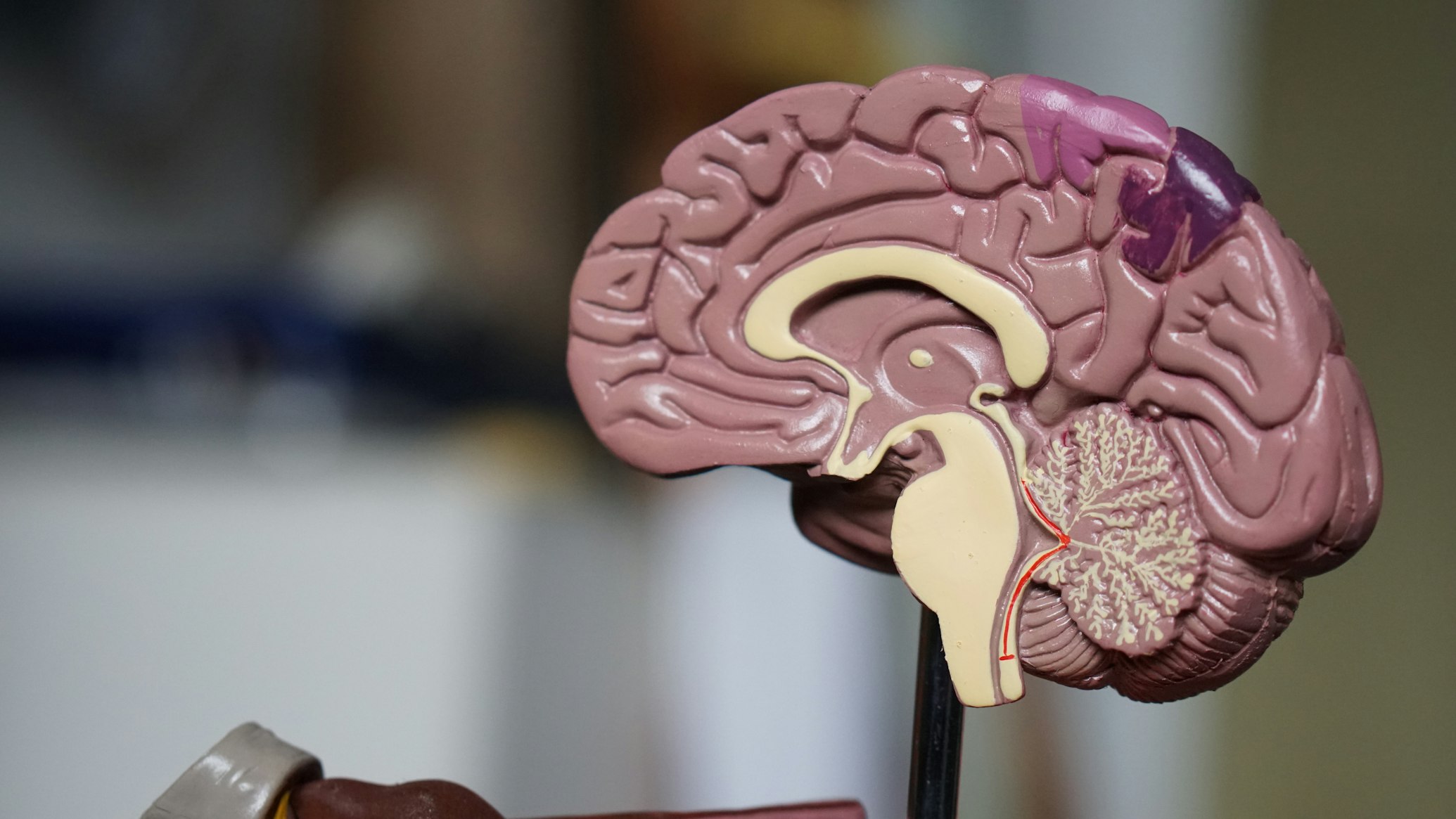
The Brain's Emotional Architecture
While Panksepp's work focused on identifying specific emotional systems, other researchers have mapped where these processes occur in the brain. The limbic system, often called the "emotional brain," consists of interconnected structures that work together to process emotional experiences 5 .
Amygdala
Acts as our emotional alarm system, particularly specialized for detecting threat and processing fear 5 .
Prefrontal Cortex
Serves as the emotional conductor, regulating emotions and behavior by anticipating consequences 5 .
Ventral Striatum
Contains the nucleus accumbens, often called the brain's pleasure center, central to reward processing 5 .
Anterior Cingulate Cortex
Critical for subjective emotional awareness and motivation 5 .

The Chemistry of Desire: Neurotransmitters and Motivation
The Dopamine Reward System
If there's a single neurotransmitter that has captured the spotlight in motivation research, it's dopamine. This chemical messenger plays a crucial role in what scientists call the SEEKING system 2 6 , which drives our curiosity, anticipation, and pursuit of goals.
The dopamine system doesn't merely respond to rewards—it fuels our motivation to seek them out in the first place.
The mesolimbic pathway, which projects from the ventral tegmental area to the ventral striatum, is particularly important for processing incentive salience—the "wanting" aspect of rewards 6 . When this system is activated, it generates a sense of energized anticipation that motivates goal-directed behavior.
Dopamine Pathways in the Brain
This simplified diagram shows the major dopamine pathways involved in motivation and reward processing.
Beyond Dopamine: A Chemical Symphony
While dopamine takes center stage in motivation, our emotional lives are shaped by a complex interplay of multiple chemical systems:
Serotonin System
Plays a key role in mood regulation, and imbalances in this system are implicated in depression and anxiety 6 . Modern antidepressants often target this system to alleviate symptoms.
Opioid System
Mediates pleasure and pain relief, contributing to our experience of positive emotions and social connection 6 . This system is activated during comforting social interactions.
Endocannabinoid System
Influences mood, appetite, and how we experience pleasure, creating feelings of contentment and well-being.
Key Neurotransmitter Systems in Emotion and Motivation
| Neurotransmitter | Primary Role in Emotion/Motivation | Associated Brain Pathways |
|---|---|---|
| Dopamine | Reward anticipation, motivation, pursuit | Mesolimbic, mesocortical |
| Serotonin | Mood regulation, social behavior, anxiety | Raphe nuclei projections |
| Opioids | Pleasure, pain relief, social connection | Multiple limbic pathways |
| GABA | Anxiety reduction, inhibition | Widespread inhibitory pathways |
A Revolutionary Experiment: Making the Brain Transparent
The Challenge of Peering Inside
One of the greatest challenges in neuroscience has been visualizing the intricate networks of the brain without destroying its delicate structure. Traditional methods faced a fundamental limitation: mechanical approaches required slicing brains into thin sections, while optical techniques could only probe less than 1mm deep due to light scattering 7 .
In both cases, researchers couldn't see the full complexity of neural circuits in their natural, three-dimensional arrangement.
The Scale Solution
In 2011, a team led by Atsushi Miyawaki at the RIKEN Brain Science Institute in Japan introduced a groundbreaking solution: an aqueous reagent called Scale that literally turns biological tissue transparent 7 .
This revolutionary chemical treatment offered an ideal means for analyzing the complex organs and networks that sustain living systems, without altering the overall shape or proportions of the sample.

Methodology and Impact
Tissue Preparation
Brain samples from genetically modified mice with fluorescently-labeled neurons were treated with the Scale reagent.
Clearing Process
The reagent gradually rendered the entire brain sample transparent while maintaining the structural integrity and fluorescent markers.
Visualization
Researchers used fluorescence microscopy to obtain vivid 3-D images of neurons and blood vessels deep inside the mouse brain.
The results were stunning. For the first time, scientists could visualize the intricate networks of the cerebral cortex, hippocampus, and white matter in unprecedented detail. They could trace the long axons connecting left and right brain hemispheres and observe the delicate blood vessels in the postnatal hippocampus with extraordinary clarity 7 .
This methodological breakthrough opened new frontiers in affective neuroscience by allowing researchers to map the actual physical circuits involved in emotional processing. The technology has potential applications far beyond the mouse brain, possibly extending to other organs and even human tissue samples in the future 7 .
Comparison of Brain Visualization Techniques
| Technique | Key Advantage | Primary Limitation |
|---|---|---|
| Traditional Sectioning | High resolution at specific sites | Destructive; loses 3D context |
| Standard Optical Imaging | Non-destructive; can be used in living tissue | Limited to surface structures (<1mm depth) |
| Scale Reagent | Preserves 3D structure; enables deep imaging | Currently limited to tissue samples (not living brains) |
| fMRI | Can be used in living humans; good spatial resolution | Indirect measure of neural activity; poor temporal resolution |
The Neuroscientist's Toolkit: Essential Research Reagents
Modern affective neuroscience relies on a sophisticated array of tools and reagents that enable researchers to probe the mysteries of emotion and motivation.
Voltammetric Electrodes
These specialized sensors, including double-barreled electrodes (DBE), allow researchers to measure neurotransmitter release in real-time within specific brain regions of living animals 9 .
Radiolabeled Ligands for PET Imaging
Positron emission tomography (PET) using radiolabeled molecules enables scientists to visualize specific neuroreceptor systems in living humans 6 .
Immunoassays for Protein Aggregation
As research reveals connections between emotional processing and neurodegenerative diseases, assays that detect disease-specific proteins like tau, amyloid-β, and α-synuclein have become crucial 3 .
Genetic Engineering Tools
The creation of genetically modified animals with fluorescent protein markers has revolutionized our ability to visualize specific cell types and neural pathways 7 .
Pharmacological Agents
Receptor-specific agonists and antagonists allow researchers to precisely manipulate neurotransmitter systems, helping to establish causal relationships 6 .
Advanced Imaging Systems
High-resolution microscopes and imaging systems enable detailed visualization of neural circuits and their activity patterns during emotional processing.
These tools represent just a sample of the sophisticated arsenal that affective neuroscientists use to decode the biological basis of emotion and motivation. As these technologies continue to advance, they promise to reveal even deeper insights into what drives us at the most fundamental level.
Emotional Brain, Complex Mind: Cognition, Psychopathology and Neuroplasticity
The Intertwined Nature of Thought and Feeling
For much of psychology's history, cognition and emotion were studied as separate domains. Modern affective neuroscience has revealed this separation to be artificial—in reality, emotion and cognition are deeply intertwined in both brain function and our subjective experience 4 .
As one research review notes, "It has become increasingly clear that cognition, emotion, and motivation are intricately intertwined, and it is difficult to determine where to draw the line between them" 4 .
This integration is evident in how emotional states influence cognitive processes. For instance, anxiety is characterized by attentional biases toward threatening information—anxious individuals detect potential threats more quickly and have difficulty disengaging their attention from them 4 .
Emotional Circuits in Psychopathology
Understanding the biological basis of emotion has profound implications for treating mental health disorders. Research has revealed that conditions like depression and anxiety involve disruptions in the same primary emotional systems that Panksepp identified 2 .
For example, depression has been associated with "low SEEKING, high FEAR, and high SADNESS" in the framework of AN theory 2 .
The brain's neuroplasticity—its ability to change both structurally and functionally in response to experience—provides hope for treatment and recovery 4 . This flexibility means that the emotional circuits that may contribute to psychopathology can also be modified through interventions, whether psychological or biological.
Implications for Treatment
Insights from affective neuroscience are already informing new treatment approaches:
Transcranial Magnetic Stimulation
Schutter's research proposed that understanding motivation and emotion circuits provides a theoretical basis for "the clinical application of magnetic brain stimulation in the treatment of depression" 1 .
Pharmacological Interventions
Molecular imaging studies that map neurotransmitter systems involved in emotion "are critical, because of the central role of affect in multiple psychopathologies and the role of specific neuroreceptor systems as corresponding drug targets" 6 .
Cognitive Training
Understanding emotion-cognition interactions has led to interventions that target cognitive biases in anxiety and depression, potentially rewiring problematic emotional responses through directed mental practice 4 .
The recognition that our emotional brains are not fixed but capable of change throughout life represents one of the most promising applications of affective neuroscience research.
Conclusion: The Future of Affective Neuroscience
The study of the affective brain has come a long way from its early beginnings, when emotion was considered too subjective for rigorous scientific inquiry. Through the work of pioneers like Panksepp, MacLean, and countless contemporary researchers, we now recognize that our emotional lives are deeply grounded in the biological machinery of our brains.
As affective neuroscience continues to evolve, it holds tremendous promise for helping us understand not just psychological disorders but the full spectrum of human experience. Future research may reveal how these ancient emotional systems interact with our modern human cortex to create the complex tapestry of motivation, desire, fear, and joy that defines our daily lives.
The transparent brain reagents, molecular imaging techniques, and sophisticated recording methods being developed today will likely seem primitive in decades to come. But each innovation brings us closer to answering fundamental questions about what makes us human—how we love, why we strive, what makes us afraid, and how we find the courage to move forward despite those fears.
In the intricate circuits of the affective brain, we may ultimately find not just explanations of behavior, but insights into the very essence of what it means to be a feeling, motivated, and conscious creature.
"The ancient emotional circuits of our affective brain are the invisible forces that shape our desires, our fears, and ultimately, our lives. By understanding their language, we gain not just scientific knowledge, but wisdom about ourselves."
References
References to be added manually in the designated section.