The Predictive Power of Your Mind
How Mental Schemas Shape Memory and Future
Introduction: The Blueprints of Your Brain
Imagine watching a chess match. As a grandmaster contemplates a move, your eyes dart ahead, anticipating where the next piece might land. This isn't magic—it's your brain's sophisticated prediction machinery at work, powered by a mental template called a schema. Schemas are adaptable knowledge structures we build from countless life experiences, serving as the brain's internal guidebook for the world. They tell us what to expect at a coffee shop, during a movie, or in the middle of a conversation.
Recent scientific breakthroughs reveal that these schemas do far more than help us navigate familiar situations; they are fundamental to how we form memories and predict the future. This article explores the fascinating science of schemas, focusing on a landmark study that uncovers how they work and why prediction is a key mechanism that turns simple experiences into lasting memories.
Mental Templates
Schemas are cognitive frameworks that help organize and interpret information.
Memory Formation
Schemas play a crucial role in how we encode, store, and retrieve memories.
Future Prediction
Our brains use schemas to anticipate what might happen next in any situation.
The Science of Schemas: Your Brain's Filing System
A schema is like a mental filing system for your experiences. It's not a single memory but a generalized model built from many similar episodes. For instance, your "beach schema" includes things like sand, waves, sunscreen, and towels, all organized in a coherent structure. This system helps your brain process information efficiently. When you encounter a new experience that fits an existing schema, your brain doesn't have to start from scratch; it can use this pre-existing model to understand and interpret the new information quickly1 .
The real power of schemas, however, may lie in their role in prediction. Modern neuroscience suggests our brains are not passive receivers of information but are constantly generating predictions about what will happen next.
This predictive process is a top-down mechanism where your brain uses its current context and previous experiences to generate expectations. Schemas provide the crucial knowledge base that makes these predictions possible. When you have a strong schema for a situation—like the typical flow of a board game—your brain can actively anticipate future events, and this anticipation, as we will see, is deeply tied to how well you remember those events later1 .
How Schemas Develop
Experience
Repeated exposure to similar situations
Organization
Brain categorizes and structures information
Abstraction
Extraction of common patterns and rules
Application
Using the schema to interpret new situations
Schema Characteristics
- Dynamic and adaptable
- Hierarchically organized
- Culture-dependent
- Guide attention and memory
- Enable prediction
A Deep Dive into the Four-in-a-Row Experiment
To understand how schemas influence memory and prediction, researchers developed a novel experiment using a simple board game called "four-in-a-row," a more complex version of tic-tac-toe. The goal was to observe how a schema develops from scratch and how that development changes the way people remember sequences and even where they look.
Experimental Setup
The study was conducted over six training sessions with participants who had no prior knowledge of the game. Each session involved two key tasks1 :
Memory Task
Participants watched sequences of moves and reconstructed them from memory.
Gameplay Task
Participants learned the rules and played against a computer opponent.
The researchers used eye-tracking technology to monitor participants' gaze as they watched the game sequences. This allowed them to see if players were looking ahead to future move locations before the moves actually appeared—a clear physical indicator of predictive processing. The strength of a participant's schema was objectively measured using an Elo rating, a statistical system that calculates skill level based on win/loss records against opponents1 .
Eye-Tracking Technology
The experiment used sophisticated eye-tracking equipment to monitor exactly where participants were looking during the memory tasks. This provided objective data about predictive gaze patterns.
- Measured fixations on empty squares
- Tracked anticipatory eye movements
- Correlated gaze patterns with memory performance

Eye-tracking technology reveals where participants look during cognitive tasks, providing insights into predictive processing.
Results and Analysis: The Link Between Skill, Prediction, and Memory
The results provided clear evidence of how a developing schema transforms cognitive processes. The data below captures the core findings of the experiment.
Table 1: Improvement in Memory and Gameplay Skill Over Six Sessions
| Session | Average Recall Accuracy (%) | Average Elo Rating (Skill) |
|---|---|---|
| 1 | 61.6% | Baseline (unrated) |
| 2 | 63.2% | 857 |
| 3 | 65.1% | 882 |
| 4 | 66.8% | 907 |
| 5 | 68.4% | 932 |
| 6 | 69.5% | 957 |
Source: Adapted from eLife study data1
Memory & Skill Improvement
Table 2: Schema Strength Predicts Future Memory
| Schema Strength (Elo Rating) in Session N | Correlation with Memory Accuracy in Session N+1 |
|---|---|
| All participants across sessions | Pearson r = 0.298 (p < 0.001) |
Source: Analysis from eLife study1
Table 2 shows a statistically significant correlation between a participant's gameplay skill in one session and their memory performance in the next session. This indicates that having a better-developed schema not only helps in the moment but also prepares the brain to more effectively encode new information in the future.
Table 3: Impact of a 'Win State' on Memory
| Session | Memory for Win-Sequences | Memory for Non-Win Sequences | Significance |
|---|---|---|---|
| 1 | Lower Accuracy | Higher Accuracy | Marginally Significant |
| 2 to 6 | Higher Accuracy | Lower Accuracy | p < 0.001 |
Source: Adapted from eLife study data1
The study also found that the meaning of events changed with knowledge. After participants learned the game rules, sequences that ended with a player winning were remembered significantly better than other sequences. This "win-state" advantage did not exist in the first session, proving that the schema was providing a framework that made certain events more salient and therefore more memorable1 .
Key Finding: Predictive Eye Movements
Increase in anticipatory eye movements from session 1 to 6
Correlation between predictive gaze and memory accuracy
Memory advantage for schema-consistent moves
The Scientist's Toolkit: Tools for Studying Schemas
Understanding the intricate workings of schemas requires a specialized set of research tools. The following table details the key "reagents" used in the four-in-a-row experiment and similar cognitive science studies.
Essential Tools for Schema Research
| Tool or Component | Function in Research |
|---|---|
| Novel Board Game (e.g., Four-in-a-row) | Provides a complex but controlled environment for studying schema acquisition from scratch, free from pre-existing knowledge1 . |
| Eye-Tracker | Objectively measures predictive gaze patterns, revealing when and how participants anticipate future events based on their schematic knowledge1 . |
| Elo Rating System | Quantifies schema strength and expertise objectively based on performance, rather than relying on self-report1 . |
| Memory Recall Test | Evaluates the accuracy and structure of recalled information, revealing how the schema influenced what was encoded and retained1 . |
| Natural Language Processing (NLP) | In AI research, NLP is used to interpret language inputs and automatically generate or map schema structures from text, helping to model human understanding2 3 . |
| Knowledge Graph | A structured representation that organizes information into entities and their relationships, serving as a computational model of a schema for AI systems4 . |
Novel Games
Researchers use unfamiliar games to study schema development without prior knowledge interference.
Eye Tracking
High-precision eye trackers capture where participants look, revealing predictive patterns.
Computational Models
AI systems help model how schemas might work in both human and artificial intelligence.
Beyond the Lab: Schemas in the Real World
The principle that schemas guide prediction is not just limited to board games; it's a fundamental aspect of intelligence that is being leveraged in cutting-edge technology. For instance, IBM Research developed a system called CHRONOS, which uses "event schemas" to understand and predict real-world news events. By extracting information from news articles, CHRONOS builds a structured model of events and their typical causes and effects, allowing it to make plausible predictions about how a complex situation might unfold6 .
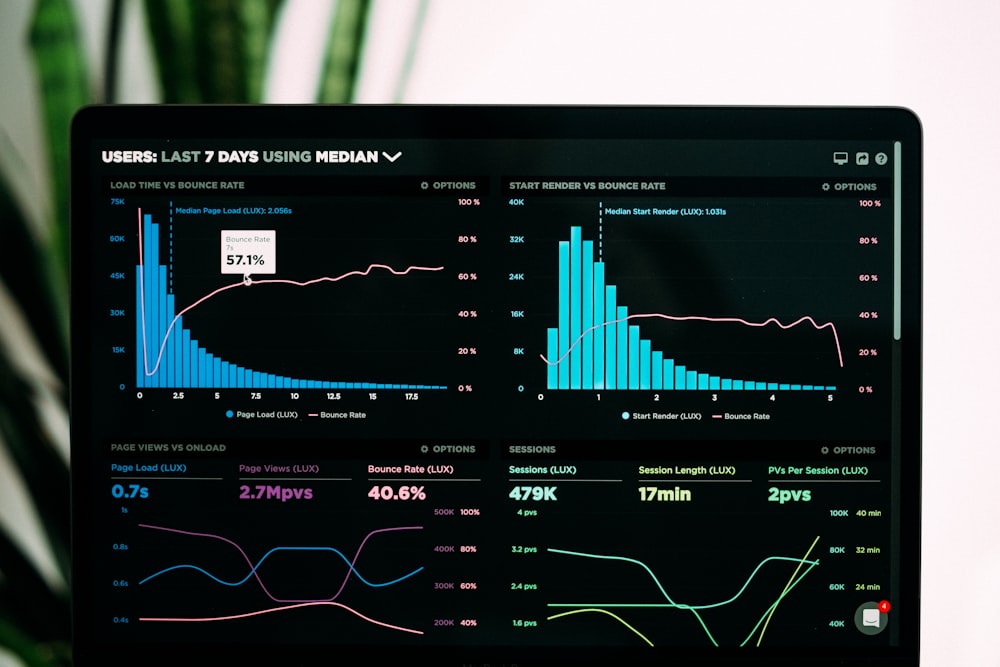
Artificial intelligence systems are increasingly using schema-based approaches to improve prediction and understanding.
AI Applications of Schemas
Similarly, the field of artificial intelligence is increasingly adopting schema-based approaches. From AI tools that visualize database schemas based on natural language descriptions, to systems that automatically generate JSON schemas for data integration, the goal is the same: to give machines a structured knowledge framework that enables them to "understand" and predict patterns in complex information2 3 .
These technologies are powerful demonstrations of the same cognitive principle uncovered in the memory lab—that prediction, guided by structured knowledge, is a key to effective information processing.
- Event Prediction: Systems like CHRONOS forecast real-world developments
- Data Integration: Schema mapping helps combine information from different sources
- Natural Language Understanding: Schemas help AI interpret context and meaning
Conclusion: The Mind's Crystal Ball
The journey from novice to expert in a simple board game mirrors a fundamental process of human learning. We are not mere recorders of experience; we are active participants who use our past to build schemas that help us navigate the future.
The four-in-a-row experiment elegantly shows that this predictive ability, manifested in something as simple as a forward glance, is a powerful mechanism that transforms fleeting events into durable memories.
Our schemas are the mind's crystal ball, allowing us to anticipate what comes next. And in the act of prediction, we don't just prepare for the future—we also build a richer, more meaningful record of the past.
As science continues to unravel how these cognitive blueprints work, we gain a deeper appreciation for the elegant, predictive engine that lives inside our heads.