The Virtual Morris Water Maze: A Comprehensive Guide for Human Spatial Navigation Research in Neuroscience and Drug Development
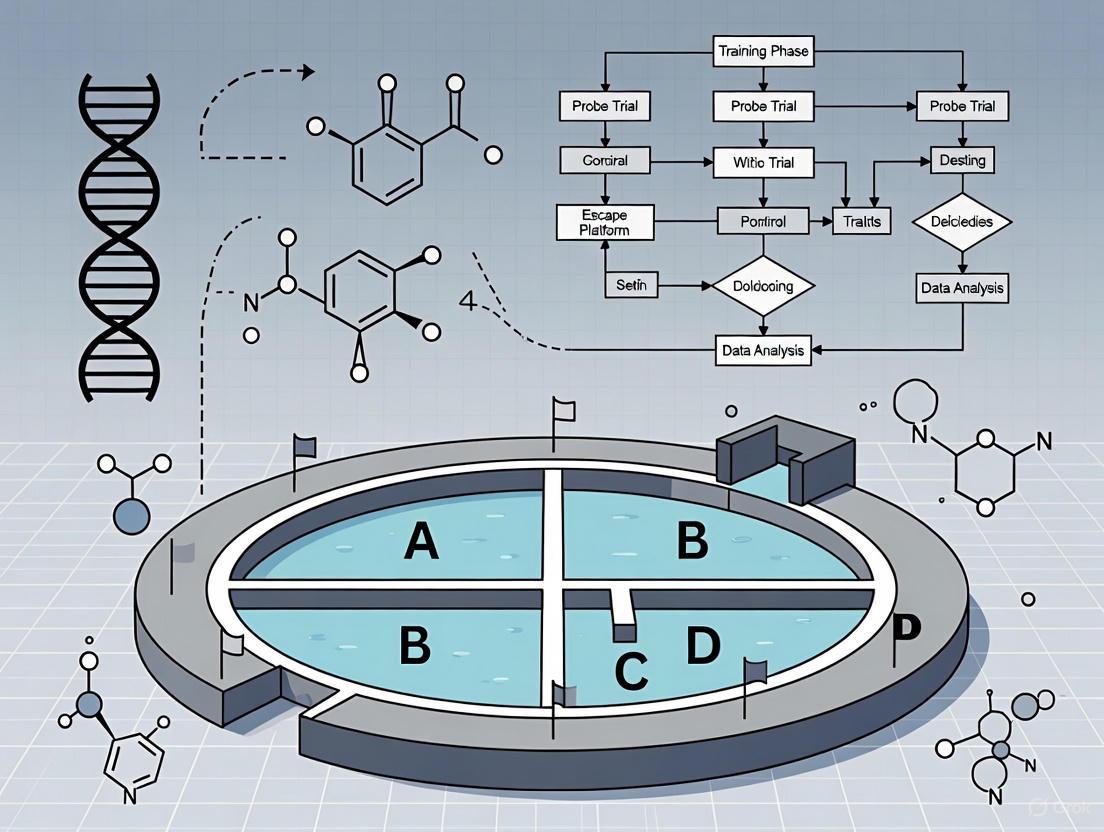
This article provides a comprehensive exploration of the Virtual Morris Water Maze (vMWM), a key tool for assessing spatial learning and memory in human research.
The Virtual Morris Water Maze: A Comprehensive Guide for Human Spatial Navigation Research in Neuroscience and Drug Development
Abstract
This article provides a comprehensive exploration of the Virtual Morris Water Maze (vMWM), a key tool for assessing spatial learning and memory in human research. It covers the foundational principles of translating this classic rodent paradigm to human studies using virtual reality, detailing methodological protocols and technological implementations. The content addresses common challenges and optimization strategies, including task design and data analysis, and critically examines the ecological and predictive validity of vMWM for identifying cognitive deficits in clinical populations such as Mild Cognitive Impairment and Alzheimer's disease. Aimed at researchers, scientists, and drug development professionals, this guide synthesizes current evidence to support the application of vMWM in preclinical and clinical research for neurodegenerative disorders.
From Rodents to Humans: Foundational Principles of the Virtual Morris Water Maze
The Morris Water Maze (MWM), established by Richard G. Morris in the 1980s, has been the gold standard for assessing spatial learning and memory in rodents for decades [1]. Its translation into a virtual reality (VR) paradigm for humans represents a significant advancement in cognitive neuroscience, enabling the study of complex spatial behavior and its underlying neural mechanisms in a controlled, replicable environment [2] [1]. The core principle remains unchanged: participants must learn and remember the location of a hidden target within an environment using only distal visual cues, a process critically dependent on the hippocampus and the formation of a cognitive map [2] [3]. This document provides detailed application notes and protocols for employing the virtual Morris Water Maze (vMWM) in human cognitive research, with a focus on standardization, analysis of search strategies, and application in clinical populations.
Core Performance Data in Human Populations
The vMWM has been successfully deployed to identify performance differences across various demographic groups and clinical populations. The table below synthesizes key quantitative findings from recent studies.
Table 1: Quantitative Performance Metrics Across Populations in vMWM Studies
| Population / Study | Key Performance Metrics | Reported Effect Sizes & Statistical Significance |
|---|---|---|
| Aging (Young vs. Middle-Aged) [2] | Place learning performance; Use of efficient (place-directed) vs. non-specific strategies | Younger adults (20-29 yrs) outperformed older adults (50-59 yrs). A moderate sex effect was observed, with males outperforming females. |
| Type 1 Diabetes (Adolescents) [3] | Time to platform; Path length | Disease duration independently predicted longer time to platform (β=0.464, p<0.001). Nocturnal hypoglycaemia predicted longer path length (β=0.397, p=0.002). |
| Physical vs. Virtual Navigation [4] | Spatial memory accuracy; Subjective experience (ease, immersion) | Memory performance was significantly better in walking vs. stationary conditions. Participants reported the walking condition was "significantly easier, more immersive, and more fun." |
| Aging & Immersive VR [5] | Cost of switching from familiar to novel start locations; Path replication | The cost of switching start locations was equal between age groups. Older adults were more likely to replicate previously taken paths, an effect attenuated in immersive VR. |
Detailed vMWM Experimental Protocol
This section outlines a standardized protocol for a place learning (reference memory) task in the vMWM, suitable for assessing hippocampal-dependent spatial memory. The protocol can be implemented using available software platforms such as NavWell [1].
Pre-Test Setup and Environment Design
- Apparatus: The task can be administered on a standard desktop computer with a keyboard for navigation or, preferably, in a fully immersive VR environment using a head-mounted display for enhanced ecological validity [4] [1].
- Environment Design: A circular or square virtual arena is created. The arena should be surrounded by a set of distinct, distal visual cues (e.g., geometric shapes, abstract paintings, mountain landscapes) that cannot be used for beaconing [3] [5].
- Platform: A hidden platform is placed in a fixed location within one quadrant of the arena, submerged beneath the "surface" so it is not visible to the participant [3].
Stage-Based Testing Procedure
The testing session is typically completed in a single visit without rest intervals and consists of the following sequential stages [3]:
A. Exploration Stage (Duration: 30 seconds)
- Purpose: To familiarize participants with the virtual environment and the mechanics of navigation (e.g., using keyboard arrows or a joystick).
- Procedure: The participant is placed in the pool with no platform present and allowed to navigate freely.
B. Visible Platform Stage (4 trials)
- Purpose: To assess and control for basic motor control, visual acuity, and motivation.
- Procedure: The platform is made visible above the water surface. The participant starts from different, pseudo-randomized locations and must navigate directly to the platform. Measures like
time to platformandpath lengthare recorded.
C. Hidden Platform Stage (16 trials, in 4 blocks of 4)
- Purpose: To assess spatial learning. The participant must learn the fixed location of the hidden platform using the distal cues.
- Procedure: The platform is hidden. The participant starts from a different, pseudo-randomized location at the edge of the arena for each trial. If the platform is not found within 60 seconds, it becomes visible, and the participant is guided to it.
- Primary Measures:
Time to platform,path length,swimming speed, andheading error.
D. Probe Trial (1 trial, typically 30-60 seconds)
- Purpose: To assess spatial memory retention and the precision of the cognitive map, independent of the motor act of landing on the platform.
- Procedure: Conducted after a delay (e.g., 1 hour or 24 hours). The platform is removed entirely from the pool. The participant navigates the pool freely for the set duration.
- Primary Measures:
Percent time spent in the target quadrant,number of platform location crossings, andaverage proximity to the target location.
The following workflow diagram illustrates the stages of a standard vMWM experiment:
Classifying and Analyzing Search Strategies
A critical advancement in vMWM analysis is the move beyond simple performance metrics (e.g., escape latency) to the classification of search strategies, which provides deeper insight into the cognitive processes underlying navigation [2] [6].
Common Search Strategies
Research in both rodents and humans has identified several distinct search patterns:
- Spatial (Place) Strategy: A direct swim to the target location, indicating successful use of a cognitive map. This is the most efficient strategy [2].
- Focal Search: A concentrated search in the vicinity of the target location [2].
- Scanning: A broad, circular search pattern around the perimeter of the pool, not focused on the target [2].
- Chaining: Swimming in a circle at a fixed distance from the pool wall, which is an inefficient, non-spatial strategy [2].
- Thigmotaxis: Swimming in close proximity to the wall, often indicative of anxiety or a failure to engage in spatial problem-solving [2] [6].
Strategy Classification Methods
Three primary methods are used to classify these strategies:
- Eyeballing: A human rater visually classifies paths based on predefined features. While intuitive, this method is subjective and can lead to a large proportion of unclassifiable paths [2].
- Parameter-Based Algorithm: An automated method that uses predefined cut-offs on behavioral measures (e.g., path length, dwell time in zones, heading error) to assign strategies. This is unbiased and replicable [2] [3].
- Automatic Pattern Recognition (e.g., SNMF): An exploratory method like Sparse Non-negative Matrix Factorization (SNMF) decomposes complex path data into basic patterns (strategies). It is a robust, data-driven approach that has shown high convergence with parameter-based classifications [2].
The diagram below illustrates the decision logic for a parameter-based classification system:
Table 2: Key Research Reagent Solutions for vMWM Experiments
| Tool / Resource | Type | Primary Function & Application Notes |
|---|---|---|
| NavWell Platform [1] | Software | An open-source, freely downloadable vMWM system. Allows custom environment and experiment design for desktop or immersive VR. Ideal for standardizing research. |
| DataMaze Repository [7] | Database | An open-source repository of MWM apparatus specifications and task parameters from thousands of papers. Informs experimental design and enables study comparison. |
| Pathfinder & Similar Tools [6] | Analysis Software | Enables detailed analysis of swimming paths and, crucially, the classification of search strategies beyond simple latency measures. |
| Head-Mounted Displays (HMDs) [4] | Hardware | For immersive VR conditions. Enhance ecological validity and sense of presence, which can impact strategy use and neural representations. |
| Sparse Non-Negative Matrix Factorization (SNMF) [2] | Analysis Algorithm | An automatic, unbiased classification method for identifying core search strategies from path-tracking data. |
Application in Clinical and Drug Development Contexts
The vMWM is particularly valuable for detecting subtle spatial navigation deficits in early-stage neurological and neuropathological conditions.
- Alzheimer's Disease (AD) and Mild Cognitive Impairment (MCI): Spatial disorientation is a hallmark early symptom of AD [8] [6]. The vMWM can detect allocentric deficits in prodromal stages [8]. Strategy analysis in mouse models like Tg4-42 reveals a shift from spatial to non-spatial strategies before severe memory deficits are apparent in conventional metrics [6], making it a sensitive tool for preclinical drug testing.
- Type 1 Diabetes: Research shows that disease duration and recent glycaemic control (particularly nocturnal hypoglycaemia) are significant predictors of poorer vMWM performance in adolescents, linking metabolic factors to hippocampal function [3].
- Aging: Age-related declines are not merely due to a loss of allocentric ability but may also involve a strategic preference for well-learned routes (egocentric strategies). Immersive VR that includes physical movement and geometric boundary cues can attenuate these age differences, informing rehabilitative interventions [5].
The virtual Morris Water Maze is a powerful paradigm for translating a gold-standard animal assay to human cognitive research. Its utility is maximized when researchers employ standardized protocols, such as those outlined here, and move beyond simple endpoint measures to a detailed analysis of search strategies. The availability of open-source tools like NavWell and databases like DataMaze promises to enhance reproducibility and collaboration across the field. As a sensitive measure of hippocampal-dependent function, the vMWM holds significant promise for both basic cognitive neuroscience and applied clinical research in drug development and early diagnosis of neurodegenerative diseases.
The hippocampus, a structure deep within the medial temporal lobe, serves as a critical neural hub for processes essential to survival: spatial navigation and memory formation. Research spanning animal models and human studies has consistently demonstrated that the neural circuitry of the hippocampus and its connected regions enables organisms to represent their environment, track their location, and remember past trajectories. The virtual Morris Water Maze (vMWM), a human adaptation of the classic rodent behavioral paradigm, has emerged as a powerful tool for probing these hippocampal functions in both health and disease. This application note details the protocols and experimental designs that leverage the vMWM to investigate the hippocampal circuitry underlying spatial navigation, providing a framework for researchers and drug development professionals to assess cognitive function and potential therapeutic efficacy.
Neural Circuitry of Spatial Navigation
Spatial navigation is supported by a distributed network of brain regions, with the hippocampus acting as a central integrator and coordinator. The classic view emphasizes the role of the hippocampus in allocentric navigation—creating a "cognitive map" of the environment that is independent of one's immediate viewpoint. In contrast, egocentric navigation relies on body-centered coordinates and involves a different neural network, including parietal and prefrontal cortices [9].
Key Nodes in the Navigation Network
- Hippocampus: Forms a cognitive map of the environment and is crucial for place memory. Its function is not isolated but depends on robust communication with other brain regions [10].
- Parahippocampal Gyrus & Retrosplenial Cortex: These regions are vital for translating between allocentric (world-centered) and egocentric (self-centered) spatial reference frames, allowing for successful navigation [11].
- Parietal Cortex (particularly the Precuneus): Recent research highlights its critical role in specific navigation strategies. Individuals who prefer directional responding—navigating based on orientation within an environment—show increased activation in the left precuneus. This suggests that strategy preference, not just performance, determines parietal recruitment [12].
- Entorhinal Cortex: Contains grid cells that provide a metric for the spatial environment, feeding this information into the hippocampus.
- Prefrontal Cortex (especially DLPFC): Involved in planning, decision-making, and executive control during navigation. Schizophrenia patients, for example, show hypoactivation in the DLPFC during spatial navigation tasks, linking this region to navigational deficits [11].
A Network-Based Model of Navigation
The following diagram illustrates the flow of information and functional roles within this network, highlighting the hippocampus as a central integrator.
The Virtual Morris Water Maze (vMWM) Paradigm
The Morris Water Maze (MWM) for rodents, developed by Richard Morris, is a cornerstone of behavioral neuroscience for studying spatial learning and memory [13]. The virtual Morris Water Maze (vMWM) is a human adaptation that transposes the core principles of the task into a computerized environment. Participants navigate a virtual pool to find a hidden platform using distal visual cues, a task that robustly engages hippocampal-dependent spatial memory [12] [3].
Protocol: Standard vMWM for Assessing Spatial Reference Memory
This protocol is designed to evaluate an individual's ability to learn and remember a fixed platform location over multiple trials, a process dependent on hippocampal integrity.
1. Apparatus and Setup:
- Software: vMWM software (e.g., from Neuro Investigations) [3].
- Hardware: A standard computer (15.6" monitor or larger) with a keyboard for navigation. For enhanced immersion and idiothetic cue integration, Augmented Reality (AR) setups with a tablet or head-mounted display in a physical space are recommended [4].
- Virtual Environment: A square virtual room containing a circular pool of water. The walls are adorned with distinct, high-contrast rectangular paintings of different colors and shapes to serve as distal cues [3].
2. Participant Instructions: Inform the participant: "You will be placed in a virtual pool of water. Your goal is to find a hidden platform submerged beneath the surface as quickly as possible. Use the pictures on the walls to help you remember the platform's location. The platform will be in the same spot throughout the test."
3. Experimental Stages (Total duration: 10-15 minutes):
- A. Exploration Stage (30 sec): The participant is introduced to the pool with no platform present. This allows them to familiarize themselves with the movement mechanics (e.g., using arrow keys to "swim") [3].
- B. Visible Platform Stage (4 trials): The platform is made visible above the water. This stage serves as a motor and visual control, ensuring the participant can effectively navigate and see the stimulus [3] [13].
- C. Hidden Platform Stage (16 trials, 4 blocks of 4): The core learning phase. The platform is hidden but remains in a fixed location (e.g., the northeastern quadrant). The participant starts each trial from a different cardinal direction in a randomized order. If the platform is not found within 60 seconds, it becomes visible, and the participant is guided to it [3].
- D. Probe Trial (1 trial, 60 sec): Conducted after the hidden platform trials. The platform is removed entirely from the pool. The participant swims freely for 60 seconds. This stage is a pure test of spatial memory retention, measuring the participant's persistence in searching the quadrant where the platform was previously located [3] [13].
4. Data Collection and Analysis: Primary dependent measures for the Hidden Platform Stage and Probe Trial are summarized in the table below.
Table 1: Key Quantitative Measures in a Standard vMWM Protocol
| Measure | Definition | Cognitive Process Assessed | Interpretation |
|---|---|---|---|
| Time to Platform (Latency) | Time taken from trial start to reaching the platform. | Spatial learning efficiency. | Shorter latencies indicate better learning. |
| Path Length | Total distance swam to reach the platform. | Navigational efficiency and strategy. | Shorter, more direct paths indicate better spatial mapping. |
| Time in Target Quadrant | Percentage of time spent in the correct quadrant during the probe trial. | Spatial memory retention. | A value significantly above chance (25%) indicates successful memory of the platform location. |
| Time to First Move | Duration between trial initiation and the first movement. | Motor initiation and motivation. | Often used as a control measure; can be longer in clinical populations (e.g., adolescents with Type 1 Diabetes) [3]. |
Workflow Diagram of the vMWM Protocol
The following chart outlines the sequential stages and key outcomes of the standard protocol.
Advanced vMWM Protocols for Targeted Research
Beyond assessing standard reference memory, the vMWM can be modified to probe specific cognitive functions and neural mechanisms with greater precision.
Protocol: Delayed-Matching-to-Place (DMP) for Rapid Working Memory
The DMP protocol taxes the hippocampal system's capacity for rapid, one-trial learning, a function highly sensitive to hippocampal disruption and NMDA receptor antagonism [13] [14].
Methodology:
- The hidden platform is moved to a new, unpredictable location each day.
- On a given day, the participant completes multiple trials (e.g., 4-6) with a short inter-trial interval (ITI) of 30-60 seconds.
- The critical measure is the improvement in performance from Trial 1 (naive search) to Trial 2 (memory-guided search) on the same day.
- The ITI between Trial 1 and Trial 2 can be systematically varied to assess the decay of short-term spatial memory.
Application: This paradigm is particularly sensitive to aging effects. Community-living adults over 60 show significant performance deficits in such flexible, rapid working memory tasks compared to younger adults, a deficit that correlates with broader cognitive function scores like the MoCA [14].
Assessing Individual Navigation Strategies
Not all successful navigation relies on the same cognitive strategy or neural circuitry. The vMWM can be used to dissect individual differences.
Methodology (Directional Responding Probe):
- After standard training, a critical "conflict" trial is introduced where the virtual pool is translated within the room environment.
- This creates two potential target locations: the correct place in the room and the correct direction within the pool apparatus.
- Participants are classified as Directional Responders (DIR) if they search at the direction-based location or Non-Directional Responders (N-DIR) if they search at the place-based location [12].
Key Finding: fMRI studies reveal that DIR individuals show significantly increased activation in the left precuneus, a region within the parietal cortex, during navigation. This highlights that strategy preference, independent of overall performance, determines the recruitment of specific cortical regions beyond the hippocampus [12].
Table 2: Comparison of Advanced vMWM Protocols for Cognitive and Clinical Research
| Protocol | Core Manipulation | Primary Cognitive Process | Key Neural Substrate | Example Clinical/Research Application |
|---|---|---|---|---|
| Spatial Reference Memory | Platform location remains fixed across days. | Long-term spatial memory & consolidation. | Hippocampus & medial temporal lobe. | Assessing general cognitive function; Alzheimer's disease models. |
| Delayed-Matching-to-Place (DMP) | Platform location changes daily. | Rapid, one-trial spatial working memory. | Hippocampus (CA3 NMDA receptors). | Detecting age-related cognitive decline [14]; testing NMDA receptor function [13]. |
| Strategy Probe (Directional Responding) | Pool translation creates a place-vs-direction conflict. | Navigation strategy & cognitive style. | Parietal cortex (Precuneus) [12]. | Investigating individual differences in cognitive processing and neural recruitment. |
Critical Considerations and Technological Advancements
Virtual vs. Physical Navigation: The Impact of Movement
A critical methodological consideration is the difference between stationary virtual navigation and physical ambulation. While desktop vMWM is practical, it lacks rich idiothetic cues (vestibular, proprioceptive, motor efferent signals), which are integral to real-world navigation [9] [4].
Evidence: A study using an Augmented Reality (AR) "Treasure Hunt" task demonstrated that participants who physically walked during the task had significantly better spatial memory accuracy and reported higher immersion and ease than those performing a matched stationary VR version. Furthermore, mobile EEG recordings from a patient case study showed a more pronounced increase in hippocampal theta oscillation amplitude during walking, a neural signature of active navigation [4]. This confirms that the inclusion of physical movement provides a more ecologically valid and neurologically engaged model for spatial memory research.
The Scientist's Toolkit: Essential Research Reagents and Materials
Table 3: Key Research Reagents and Solutions for Hippocampal Navigation Research
| Item / Solution | Function / Application | Example Use in Context |
|---|---|---|
| vMWM Software | Presents the virtual environment, controls task parameters, and records behavioral data. | Core software for administering the standard and advanced protocols described above (e.g., from Neuro Investigations [3]). |
| Augmented Reality (AR) Platform | Enables the study of spatial memory with physical movement by overlaying virtual objects onto the real world. | Used in paradigms comparing physical vs. virtual navigation to incorporate idiothetic cues [4]. |
| fMRI-Compatible Response Device | Allows for brain imaging while participants perform the navigation task. | Critical for linking behavior to neural activity, such as identifying precuneus activation in directional responders [12] or DLPFC deficits in schizophrenia [11]. |
| mGlu2/3 Receptor Antagonists | Pharmacological tools to probe the role of metabotropic glutamate receptors in learning and memory. | Preclinical studies show pro-cognitive effects in rodent MWM, suggesting potential for targeting cognitive deficits [15]. |
| Continuous Glucose Monitoring (CGM) | Tracks real-time glycaemic fluctuations in clinical populations. | Used in studies of Type 1 Diabetes to correlate nocturnal hypoglycaemia with impaired vMWM performance (longer path length) [3]. |
The virtual Morris Water Maze provides a robust, flexible, and translatable paradigm for elucidating the role of the hippocampus and its associated neural circuitry in spatial navigation. By employing the detailed protocols outlined—from standard reference memory assessments to advanced working memory and strategy probes—researchers can dissect the complex cognitive and neural mechanisms that underlie navigation. Furthermore, acknowledging the impact of physical movement on performance and neural signals is crucial for designing ecologically valid studies. As a tool, the vMWM is indispensable for basic cognitive neuroscience and for applied clinical and pharmaceutical research, offering a sensitive assay for evaluating cognitive status and the efficacy of novel therapeutic interventions.
In the study of spatial navigation, two primary strategies are well-documented: allocentric (cognitive mapping) and egocentric (stimulus-response based) navigation [16]. An allocentric strategy, sometimes described as a more subconscious process related to having a cognitive map of the environment, involves navigation using an external, world-centered frame of reference and can be thought of as "I'm going to this location" [17] [16]. In contrast, egocentric navigation relies on learned associations between the observer and some object or goal location, using a body-centered frame of reference, and can be conceptualized as "I see the cue and I go to it" [17] [16].
These two navigation systems have distinct neural underpinnings [16]. The hippocampal formation supports allocentric navigation, whereas the caudate nucleus supports egocentric navigation [16]. This neural dissociation explains why navigators with hippocampal damage are impaired when using an allocentric strategy but remain unimpaired when using an egocentric strategy [16].
Table 1: Core Characteristics of Allocentric and Egocentric Navigation
| Feature | Allocentric Strategy | Egocentric Strategy |
|---|---|---|
| Reference Frame | World-centered, external | Body-centered, internal |
| Mental Process | "I'm going to this location" [16] | "I see the cue and I go to it" [16] |
| Primary Neural Substrate | Hippocampal formation [16] | Caudate nucleus [16] |
| Cue Reliance | Configural relationships between distal cues [18] | Proximal landmarks or learned body turns [16] |
| Representation | Cognitive map [17] | Stimulus-response association [17] |
Experimental Assessment in the Virtual Morris Water Maze
The Virtual Morris Water Maze (VMWM) is a premier tool for investigating these navigational strategies in humans. The task, a virtual adaptation of the rodent spatial learning paradigm, requires participants to locate a hidden platform in a virtual pool using visual cues [18] [19]. Its effectiveness stems from the principle that spatial learning relies on distal cues rather than local auditory, visual, or olfactory cues [19].
Dual-Strategy Maze Protocol
A key methodological advancement is the Dual-Strategy Maze, designed to be solvable using either an allocentric or egocentric strategy [17] [16]. This design allows researchers to assess strategy preference and competence separately.
Procedure:
- Familiarization: Participants complete an exploration trial to acclimate to the virtual environment and controls [19].
- Acquisition Training: Participants perform a series of trials (typically 4 trials per day for 5 days) to find the hidden platform from varied start locations [18]. The platform location remains constant.
- Strategy Probe Trials: Interspersed probe trials test the participant's preferred strategy. The platform is removed, and search behavior is analyzed. A search focused on the exact former platform location indicates an allocentric strategy, while a search guided by a specific cue suggests an egocentric approach [17] [16].
- Forced-Strategy Probe Trials: Critical "forced-strategy" probes explicitly require participants to use their non-preferred strategy, directly testing their ability to switch strategies and the extent of their incidental learning [17] [16].
- Place Maze Test: Participants subsequently complete a "Place maze" that is optimally solved using an allocentric strategy, providing a further measure of allocentric competence [17] [16].
Table 2: Key Outcome Measures in the VMWM
| Measure | Protocol Phase | What It Assesses | Interpretation |
|---|---|---|---|
| Escape Latency | Acquisition Training | Time to find the hidden platform [18] | Overall learning efficiency |
| Path Length | Acquisition Training | Total distance swam to platform [20] | Navigational precision |
| Quadrant Preference | Probe Trial | Percentage of time spent in target quadrant [18] | Spatial reference memory (Allocentric) |
| Annulus Crossings | Probe Trial | Number of passes over exact platform location [18] | Spatial accuracy (Allocentric) |
| Search Strategy Classification | All Phases | Categorization of swimming path (e.g., thigmotaxis, scanning, direct) [20] | Underlying behavioral strategy |
Advanced Path Classification with Trajectory Segmentation Analysis
Traditional metrics like escape latency can be supplemented by advanced classification techniques. Trajectory Segmentation Analysis (TSA) provides a more nuanced view by splitting the animal's swimming path into segments and classifying each segment into specific behavioral strategies (e.g., thigmotaxis, incursion, scanning, direct finding) [20]. This method can identify multiple strategies within a single trial, revealing how an animal's behavior evolves. Open-source software like RODA (ROdent Data Analytics) is available to perform this analysis without requiring extensive machine learning knowledge from the researcher [20].
Strategy Selection, Incidental Learning, and Demographic Factors
Research using the dual-strategy VMWM challenges the simplistic view that individuals are innately and exclusively "allocentric" or "egocentric" navigators. Studies show that about a quarter of participants switch strategies during the experiment, and this switching is bilateral [17] [16]. Furthermore, navigators demonstrate incidental learning; they acquire information about their non-preferred strategy even while primarily using another, and are capable of deploying that strategy when required [17] [16]. This indicates that humans can use all environmental information available to them, maintaining a primary strategy while retaining a latent capacity for another.
The relationship between sex and navigation strategy is complex. While some self-report data suggests males prefer allocentric strategies and females prefer egocentric ones, direct observation in VMWM studies yields mixed results [16]. Some studies find the expected difference [16], while others find no sex differences in strategy selection [16]. A key finding from dual-strategy experiments is that both men and women are capable of using and incidentally learning both strategies, though females may show a stronger preference for egocentric navigation [17] [16]. This underscores that strategy preference is likely influenced by a combination of environmental factors, training, and individual differences, rather than sex alone [16].
The Scientist's Toolkit: Essential Research Reagents & Materials
Table 3: Key Research Reagent Solutions for VMWM Studies
| Item | Function/Description |
|---|---|
| Virtual MWM Software | Generates the navigable 3D environment (e.g., Simian Software, Neuro Investigations' VMWT) [19] [21]. |
| Virtual Reality Hardware | Provides an immersive experience; typically includes a VR headset, sensors, and hand-held controllers [19]. |
| DataMaze Repository | An open-source repository of apparatus specifications, task parameters, and performance data from thousands of MWM papers, enabling study design optimization and cross-study comparison [7]. |
| RODA Software | Open-source analytics tool for detailed classification of swimming paths into behavioral strategies using Trajectory Segmentation Analysis [20]. |
| Spatial Transcriptomics Resource (e.g., SOAR) | A "molecular GPS" that maps gene activity in tissues; used in translational research to connect navigational deficits to underlying molecular mechanisms in disease models [22] [23]. |
Experimental Workflow and Neural Pathways
The following diagrams outline the core experimental workflow for dissecting navigational strategies and their underlying neural mechanisms.
Diagram 1: VMWM Experimental Workflow for Strategy Dissociation
Diagram 2: Neural Substrates and Behavioral Outcomes of Navigation
The study of spatial learning and memory in humans has been revolutionized by the adoption of virtual reality (VR) technologies, which serve as a critical bridge between highly controlled laboratory settings and the complex, dynamic nature of the real world. This approach is particularly valuable in the context of adapting the Morris Water Maze (MWM)—a cornerstone of rodent spatial navigation research—for human studies. Virtual environments provide tremendous advantages in terms of variable isolation and manipulation, ease of data collection, and the ability to create standardized, reproducible experimental conditions [24]. The core challenge, however, lies in maintaining ecological validity—the degree to which VR-based findings are transferable to real-world contexts and behaviors [24].
The virtual Morris Water Maze (vMWM) exemplifies this bridge, transforming a classic rodent paradigm into a powerful tool for investigating human spatial cognition, neural mechanisms, and cognitive deficits associated with various neurological and psychiatric conditions [19]. By creating immersive, computer-generated environments, researchers can present subjects with navigational challenges that are homologous in principle to the rodent MWM, while collecting precise, high-density data on behavioral trajectories, decision points, and learning strategies [19] [25]. This Application Note details the protocols and methodological considerations for leveraging VR to create controlled, yet ecologically valid, environments for human spatial navigation research, with direct applications in basic neuroscience and drug development.
Comparative Validity: Quantitative Data on VR vs. Real-World Navigation
A primary concern in using VR for research is whether behaviors and cognitive processes measured virtually genuinely reflect those in the real world. A growing body of literature provides quantitative comparisons, with findings that are crucial for designing and interpreting vMWM studies.
Table 1: Performance Comparisons in Real-World (RE) vs. Virtual Environments (VE)
| Performance Measure | RE vs. VE Findings | Research Context | Citation |
|---|---|---|---|
| Task Completion Time | Significantly longer in VE | Navigational tasks in a multi-level building | [24] |
| Distance Covered | Significantly longer in VE | Navigational tasks in a multi-level building | [24] |
| Error Rate (e.g., wrong turns) | Significantly more errors in VE | Navigational tasks in a multi-level building | [24] |
| Spatial Memory Performance | Superior in RE for survey knowledge (e.g., pointing, map drawing) | Route memory task in a real vs. virtual city | [26] |
| Spatial Memory Performance | Significantly better in physically walking AR condition vs. stationary VR | Object-location associative memory ("Treasure Hunt") task | [4] |
| Perceived Cognitive Workload | Significantly higher in VE | Navigational tasks in a multi-level building | [24] |
Furthermore, studies reveal that while overall performance may differ, the patterns of behavior can be consistent across realms. For instance, areas of high navigational uncertainty have been found to be similar between identical real and virtual buildings [24]. This suggests that VR is adept at capturing relative difficulties and cognitive strategies, even if absolute performance metrics differ.
Table 2: Subjective Experience Comparisons in RE vs. VE
| Subjective Measure | RE vs. VE Findings | Research Context | Citation |
|---|---|---|---|
| Perceived Task Difficulty | Significantly higher in VE | Navigational tasks in a multi-level building | [24] |
| Immersion & Enjoyment | Significantly higher in walking (AR) condition | Object-location associative memory task | [4] |
| Reported Uncertainty Levels | Spatially similar patterns between RE and VE | Navigational tasks in a multi-level building | [24] |
Experimental Protocols for the Virtual Morris Water Maze (vMWM)
The following protocol provides a detailed framework for implementing a human vMWM study, based on established methodologies in the literature [19].
Pre-Experimental Setup
- Virtual Environment Design:
- Homologous Design: Create a virtual circular "pool" bounded by walls, with distal visual cues placed on the surrounding walls. The platform is a submerged, invisible target [19].
- Analogous Design: Create a virtual environment like a room or an open field. The navigational goal is an object or a marked spot on the floor (e.g., a green cone), leveraging the same principle of navigating via distal cues [19].
- Cue Configuration: Decide on a single fixed cue (favoring egocentric navigation) or multiple distal cues (favoring allocentric navigation and cognitive mapping) based on the research question [19].
- Hardware Configuration:
- Immersive VR: Use a head-mounted display (HMD) like the Meta Quest series, providing a wide field of view and head-tracking for a fully immersive experience [27].
- Desktop VR: Utilize a standard desktop computer with a monitor, keyboard, and mouse/joystick. This is less immersive but highly accessible and compatible with various neuroimaging techniques [4] [19].
- Participant Screening and Pre-Testing:
- Obtain informed consent approved by an institutional ethics committee.
- Screen participants for normal or corrected-to-normal vision, absence of neurological or psychiatric history, and susceptibility to VR-induced motion sickness [27].
- Administer the Santa Barbara Sense of Direction Scale (SBSDS) or similar questionnaires to account for baseline differences in spatial ability [26].
Core vMWM Testing Protocol
The typical vMWM experiment consists of a series of trials conducted over one or multiple sessions. The sequence below is standard, though the number of trials can be adjusted [19].
- Exploration Trial:
- Purpose: To familiarize the participant with the VR controls and the general feel of the virtual environment without the pressure of a task.
- Procedure: The participant is allowed to freely navigate the environment for a fixed period (e.g., 60-120 seconds). No platform is present.
- Visible Platform/Target Trials:
- Purpose: To ensure the participant understands the task goal and to establish that they can use motor controls effectively to reach a visible target.
- Procedure: The platform is made clearly visible (e.g., above the water, brightly colored). The participant starts from varying positions and must navigate directly to the platform. Conduct multiple trials (e.g., 4-6) until a performance criterion is met (e.g., finding the platform within a set time in two consecutive trials).
- Hidden Platform/Target Trials (Spatial Acquisition):
- Purpose: To assess spatial learning. The participant must learn the location of the hidden platform relative to the distal cues.
- Procedure: The platform is rendered invisible. Its location remains constant throughout all trials. The participant's starting position is changed pseudo-randomly between each trial to prevent route learning. This phase typically consists of multiple blocks of trials (e.g., 4 trials per day over 3-5 days).
- Primary Measures: Escape latency (time to find the platform), path length, and swimming path efficiency.
- Probe Trial:
- Purpose: To assess spatial memory and recall of the platform location, independent of the motor act of reaching it.
- Procedure: The hidden platform is removed entirely from the environment. The participant is allowed to swim freely for a set period (e.g., 60 seconds).
- Primary Measures: Time spent in the target quadrant (where the platform was previously located), number of platform location crossings, and initial heading error.
Data Acquisition and Advanced Analysis
Beyond traditional measures like escape latency, the vMWM allows for rich, high-fidelity data collection.
- Path Tracking: Software records the participant's precise trajectory, timestamp, and velocity throughout all trials [19].
- Strategy Classification: Employ semi-automated classification methods to deconstruct trajectories into segments representing different exploration strategies (e.g., thigmotaxis, scanning, direct finding) within a single trial. This reveals subtle behavioral patterns that whole-path analysis misses [25].
- Physiological and Neural Recording: The vMWM can be integrated with fMRI, MEG, or EEG to correlate behavioral performance with brain activity. Studies have shown differences in neural recruitment, for example, in schizophrenic patients performing the vMWM [19]. The compatibility of desktop VR with neuroimaging is a significant advantage [4].
Workflow and Signaling Pathway Diagram
The following diagram illustrates the structured workflow for a virtual Morris Water Maze experiment, from setup to data analysis.
The Scientist's Toolkit: Essential Research Reagents and Materials
Successfully implementing a vMWM study requires a suite of hardware, software, and analytical tools.
Table 3: Essential Research Reagents and Solutions for vMWM Studies
| Item Name | Type | Function & Application Notes |
|---|---|---|
| Immersive VR Headset (e.g., Meta Quest 3) | Hardware | Provides a fully immersive 3D experience with head-tracking, enhancing ecological validity and sense of presence [27]. |
| Desktop VR Setup (Monitor, Keyboard, Joystick) | Hardware | A highly accessible and neuroimaging-compatible platform for VR navigation tasks, though less immersive [4] [19]. |
| Game Engine (e.g., Unity, Unreal Engine) | Software | The development platform used to design, build, and render the custom 3D virtual environments for the maze [27]. |
| Virtual Morris Water Maze Software (e.g., Simian) | Software | Specialized commercial software that provides pre-configured, customizable vMWM environments and integrated data analysis tools [19]. |
| Path Tracking & Analysis Software | Software | Custom or commercial tools that record and analyze navigational trajectories, enabling measures like path length, efficiency, and strategy classification [19] [25]. |
| Strategy Classification Algorithm | Analytical Tool | A semi-automated tool (e.g., based on machine learning) to classify path segments into specific search strategies, providing granular behavioral insights [25]. |
| Spatial Ability Questionnaire (e.g., SBSDS) | Protocol | A validated self-report measure to assess participants' baseline spatial navigation ability, used as a covariate in analyses [26]. |
The quantitative and sensitive nature of the vMWM makes it a promising tool for preclinical and clinical drug development. It can be used to evaluate cognitive-enhancing or protective effects of pharmacological compounds by measuring improvements in spatial learning and memory metrics [19]. For instance, the vMWM has been used to identify spatial learning deficits in populations with Parkinson's disease, Alzheimer's disease, schizophrenia, and following traumatic brain injury [19]. In the context of drug development, VR platforms enable the immersive visualization of molecular structures for target identification, and the vMWM provides a translational behavioral assay to evaluate drug efficacy in a human model before extensive clinical trials [28].
In conclusion, VR serves as a powerful bridge, offering a unique combination of experimental control and ecological validity. The vMWM protocol detailed here provides a robust framework for assessing spatial cognition in humans. By carefully considering the comparative data on VR and real-world performance, and by leveraging the advanced toolkit and analytical methods available, researchers can effectively utilize this paradigm to advance our understanding of the brain and develop novel therapeutic interventions.
Implementing the vMWM: Protocols, Technologies, and Clinical Applications
The virtual Morris Water Maze (vMWM) has emerged as a cornerstone paradigm for assessing spatial navigation and memory in human cognitive neuroscience. Originally developed for rodents by Richard Morris, this paradigm has been successfully adapted for human participants using virtual reality technology, providing a powerful tool for investigating hippocampal-dependent learning and the neural substrates of spatial cognition [18] [19]. The core principle of the vMWM involves participants learning to navigate to a hidden platform within a virtual environment using distal visual cues, thereby engaging allocentric spatial processing [18] [5]. The standardized four-stage protocol—comprising Exploration, Visible Platform, Hidden Platform, and Probe Trials—enables dissociable assessment of spatial learning, memory consolidation, and navigational strategies, making it particularly valuable for research on neurodegenerative diseases, neurodevelopmental disorders, and neuropharmacological interventions [19] [3]. This protocol outline provides researchers with a standardized framework for implementing the vMWM to ensure reliability, reproducibility, and cross-study comparability in human spatial navigation research.
Quantitative Benchmarks and Performance Metrics
The table below summarizes the key performance metrics collected during standard vMWM testing, which provide insights into different aspects of cognitive and motor function.
Table 1: Primary Behavioral Metrics in vMWM Protocols
| Testing Phase | Primary Metrics | Cognitive Process Assessed | Typical Values/Notes |
|---|---|---|---|
| All Phases | Time to First Move | Processing speed, decision initiation | Longer in clinical populations (e.g., adolescents with T1D showed significantly longer times) [3] |
| Visible Platform | Time to Platform | Visual-motor coordination, motivation | Used to control for non-cognitive performance factors [5] |
| Path Length | Search efficiency | Distance traveled to reach platform | |
| Hidden Platform | Time to Platform | Spatial learning, acquisition | Decreases with training; indicates learning rate [29] |
| Path Length | Search efficiency, strategy | Shorter paths indicate more efficient navigation [3] | |
| Probe Trial | % Time in Target Quadrant | Spatial memory retention, reference memory | >25% indicates preference for platform location; healthy controls typically show clear preference [19] [5] |
| Platform Crossings | Memory precision | Number of times participant crosses exact platform location |
These quantitative measures allow researchers to dissociate various aspects of cognitive function. For instance, time to first move provides an index of processing speed and motivation, while path length during hidden platform trials reflects the efficiency of spatial learning [3]. The probe trial metrics are particularly crucial for assessing reference memory, as they measure the participant's persistence in searching the former platform location when it is no longer present [18] [5].
The standardized vMWM testing protocol follows a sequential four-phase structure designed to progressively assess different aspects of spatial navigation and memory. The workflow proceeds from general familiarization to specific spatial memory assessment, with each phase building upon the previous one.
Figure 1: Sequential workflow of the standardized virtual Morris Water Maze protocol, illustrating the four primary testing phases and their key components.
This structured progression ensures participants first acclimate to the virtual environment and control mechanism before engaging in cognitively demanding spatial learning tasks. The protocol typically requires 10-15 minutes to complete all phases in a single session without rest intervals [3]. Between phases, participants receive specific instructions relevant to the upcoming task, but no feedback about performance during the actual testing trials.
Detailed Methodologies and Procedures
Exploration Phase
The Exploration Phase serves as an acclimation period where participants familiarize themselves with the virtual environment and navigation controls. During this phase:
- Participants navigate for 30 seconds in the virtual pool with no platform present [3].
- The environment includes distal visual cues on the walls, but participants are not given specific search instructions [30].
- This phase allows participants to practice the motor aspects of navigation using keyboard arrow keys or a joystick, which is particularly important for controlling for age-related differences in technological proficiency [5].
- Researchers may answer basic questions about controls during this phase but should not provide guidance on navigation strategies.
Visible Platform Phase
The Visible Platform Phase assesses basic sensorimotor function and ensures participants understand the core task objective:
- Participants complete four trials with a clearly visible platform [3].
- The platform is typically marked with distinctive cues (e.g., black tape, different color) to make it easily identifiable [19].
- Participants are instructed to "swim toward the platform as quickly as possible" [3].
- This phase controls for potential confounding factors unrelated to spatial learning, such as visual acuity deficits, motor impairment, or lack of task comprehension [5].
- Performance metrics (time to platform, path length) establish a baseline for comparison with subsequent hidden platform trials.
Hidden Platform Phase
The Hidden Platform Phase constitutes the core spatial learning assessment:
- Participants complete 16 trials across four blocks, with the hidden platform maintaining a fixed position throughout [3].
- The platform is submerged beneath the virtual water surface, making it invisible to participants, who must instead rely on distal visual cues to navigate [18] [3].
- Start positions vary semi-randomly between trials, typically from the four cardinal directions (N, S, E, W), preventing the use of simple motor strategies [18].
- If participants fail to locate the platform within 60 seconds, it becomes visible, and they are guided to it to prevent frustration [3].
- This phase engages hippocampal-dependent spatial memory systems and has been shown to increase functional connectivity between posterior hippocampus and dorsal caudate following initial learning [29].
Probe Trial Phase
The Probe Trial assesses spatial memory retention after the acquisition phase:
- Conducted immediately following the hidden platform trials or after a delay (e.g., 24 hours) to assess short-term or reference memory, respectively [18] [3].
- The platform is completely removed from the virtual pool, and participants search freely for 60 seconds [3].
- Primary measures include percentage of time spent in the target quadrant and number of crossings over the former platform location [18] [5].
- A preference for the target quadrant (>25% of time, with chance being 25%) indicates successful formation of a spatial representation of the platform location [5].
- This trial is considered a pure measure of reference memory, as it cannot be solved using non-spatial strategies [18].
Research Reagent Solutions and Materials
Table 2: Essential Materials and Software for vMWM Implementation
| Item Category | Specific Examples | Function/Purpose | Implementation Notes |
|---|---|---|---|
| Virtual Environment Software | Simian Software (MazeEngineers) [19], Neuro Investigations vMWMT Software [3], Blender-customized environments [29] | Presents standardized virtual environments for spatial navigation | Configurable environments; some offer multiple cue configurations [19] |
| Navigation Interface | Keyboard arrow keys [3], MRI-compatible button box [29], Joystick | Translates participant input to movement in virtual space | Keyboard typically allows forward movement and rotation only [3] |
| Display System | 15.6-inch laptop monitor [3], Desktop VR, Immersive VR headsets | Presents virtual environment to participant | Immersive VR enhances body-based sensorimotor cues [5] |
| Data Analysis Tools | SMART digital tracking system [31], Custom MATLAB scripts [29] | Quantifies path length, latency, quadrant preference | Automated tracking provides objective performance metrics [31] |
| Visual Cues | Abstract wall paintings [3], Distinctive landmarks (mountains, buildings) [5] | Provides distal references for allocentric navigation | Should be distinctive, immobile throughout testing [3] |
The selection of appropriate virtual environment software is crucial, with options ranging from commercial packages like Simian Software to custom-built solutions using platforms such as Blender [19] [29]. The display system should be selected based on research questions—desktop VR for standardized visual-cue-based navigation versus immersive VR headsets when investigating the integration of body-based sensorimotor cues [5]. Data analysis tools must be capable of capturing and analyzing the key metrics outlined in Table 1, with particular attention to the spatial distribution of search paths during probe trials.
The standardized four-stage vMWM protocol provides a powerful, reproducible framework for assessing spatial navigation and memory in human participants. Its robust experimental design enables dissociation of multiple cognitive processes, from basic sensorimotor function to complex allocentric spatial memory. The integration of this protocol with neuroimaging techniques has already yielded significant insights into the neural substrates of spatial navigation, revealing learning-dependent changes in functional connectivity between hippocampal-striatal circuits [29] and strategy-dependent recruitment of parietal regions [12]. As research continues to refine these protocols, particularly through the integration of immersive VR technologies that incorporate richer body-based cues [5], the vMWM remains an indispensable tool in the cognitive neuroscience arsenal for investigating both typical and atypical spatial navigation across the lifespan and in various clinical populations.
The virtual Morris Water Maze (vMWM) has become a pivotal tool in translational spatial navigation research, enabling the study of hippocampally-dependent learning and memory in humans. The fidelity and ecological validity of these experiments are profoundly influenced by the technological setup employed, which ranges from simple desktop monitors to fully immersive virtual reality (VR) head-mounted displays (HMDs). The selection of a platform is not merely a technical choice but a methodological one that impacts the nature of the data collected, the cognitive strategies participants employ, and the ultimate interpretability and translational potential of the findings. This document provides a detailed overview of the current technological setups for vMWM experiments, offering application notes and standardized protocols to guide researchers and drug development professionals in implementing these critical tools.
# Technological Platforms & System Specifications
The implementation of a vMWM can be broadly categorized into two technological approaches: desktop-based systems and immersive HMD-based systems. The choice between them involves trade-offs between cost, accessibility, immersion, and the specific research question.
Table 1: Comparison of Virtual Morris Water Maze Technological Platforms
| Feature | Desktop System | Head-Mounted Display (HMD) System |
|---|---|---|
| Description | A standard personal computer setup where the virtual environment is displayed on a monitor and navigation is typically controlled via a keyboard, joystick, or mouse. | A fully immersive system where the user wears a VR headset, blocking out the external world and creating a compelling sense of presence within the virtual environment. |
| Key Components | Computer, monitor, input device (joystick/keyboard/mouse), tracking software [32] [19]. | VR headset (e.g., Oculus), positional sensors, hand-held controllers, a powerful computer, and specialized software (e.g., Simian Labs) [19]. |
| Immersion Level | Low to moderate. The user remains aware of the external environment [32]. | High. The user's visual and auditory fields are dominated by the virtual world, enhancing spatial presence [19]. |
| Data Collected | Path tracking, escape latency, path length, proximity measures, video replay of 2D path [33] [19]. | All desktop data, plus head-tracking for gaze direction, and often more detailed kinematic data from hand controllers [19]. |
| Advantages | Lower cost, easier setup, less risk of simulator sickness, suitable for large-scale or clinical populations [32]. | High ecological validity, enables natural head movements to view cues, more accurate assessment of allocentric navigation [19]. |
| Disadvantages | Lower ecological validity, limited field of view, may encourage non-spatial strategies [32]. | Higher cost, increased risk of cybersickness, requires more technical expertise to setup and maintain [32]. |
# Detailed Experimental Protocols
Protocol 1: Standardized vMWM Testing for Assessing Age-Related Differences
This protocol is adapted from a rodent-based MWM protocol to enhance translational research, utilizing a desktop system and incorporating the proximity measure for finer behavioral analysis [33].
1. Pre-Test Participant Screening and Setup:
- Participants: Recruit participants based on study criteria (e.g., 21 young adults aged 18-30 and 21 older adults aged 60-79) [33].
- Health Screening: Administer the Mini-Mental State Exam (MMSE; cutoff ≥27/30) and the Center for Epidemiologic Studies Depression scale (CES-D; cutoff <16) to rule out cognitive impairment and significant depressive symptoms [33].
- Vision Assessment: Ensure all participants have corrected visual acuity of at least 20/40, normal color vision, and intact contrast sensitivity [33].
- System Setup: Configure the desktop vMWM. The virtual environment should be a simple circular pool surrounded by distinct, distal geometric cues. The hidden platform's location remains constant.
2. Testing Procedure (Order of Trials): Participants complete the following trials in sequence:
- Exploration Trial: A single trial to familiarize the participant with the virtual environment and the control interface (e.g., joystick), without a platform present [19].
- Visible Platform Trials (Cued Learning): The platform is made visible (e.g., above water level). Participants perform multiple trials (e.g., 4-6) from varying start positions to learn the task goal and that the platform is the escape. This ensures participants understand the task demands [19] [18].
- Hidden Platform Trials (Spatial Acquisition): The platform is submerged and made invisible. Participants perform multiple trials (e.g., 24 trials across multiple days) from random start positions around the pool's perimeter. This phase tests the ability to use distal cues for spatial learning [33] [18].
- Probe Trial (Memory Retention): Conducted after the hidden platform trials (e.g., 24 hours later). The platform is completely removed, and the participant swims freely for a set time (e.g., 60 seconds). This assesses spatial reference memory for the platform location independent of motor performance [33] [18].
3. Data Analysis:
- Primary Measure: Use Corrected Cumulative Proximity (CCProx), which calculates the average distance from the platform location throughout the trial, providing a fine-grained analysis of search accuracy [33].
- Secondary Measures: Analyze escape latency, path length, and for the probe trial, time spent in the target quadrant and number of platform location crossings [33] [25].
- Group Analysis: Compare CCProx values between groups (e.g., young vs. older adults) across trials. A median-split on CCProx can further subdivide groups into "good" and "poor" performers to elucidate patterns of deficit [33].
Protocol 2: Immersive HMD vMWM for Neurological and Psychiatric Disorders
This protocol leverages a commercial HMD system (e.g., Oculus with Simian Software) to create a high-immersion environment suitable for detecting subtle navigational deficits in clinical populations [19].
1. Pre-Test Setup and Customization:
- Hardware Setup: Configure the HMD, sensors, and hand-held controllers. Calibrate the system for each participant's inter-pupillary distance (IPD).
- Software Configuration: Use the software's online configuration tool to design the virtual environment. This can be a homologous environment (a direct analog of a water pool) or an analogous environment (e.g., a room with a circular arena and a target spot on the floor) [19].
- Cue Design: Decide on the cue structure based on the research question. A multi-cue environment (paintings on walls, objects) assesses allocentric navigation, while a single-cue environment (one fixed central object) assesses egocentric navigation [19].
2. Testing Procedure: The core procedure is similar to Protocol 1 but within the immersive environment.
- Practice/Familiarization: Allow participants to get accustomed to the HMD and locomotion controls to minimize cybersickness.
- Visible Target Trials: The target (e.g., a green cone or a treasure box) is visible. Participants navigate to it from various start points.
- Hidden Target Trials: The target is hidden. Participants must use the configured distal cues to find its location.
- Probe Trial: The target is removed, and search behavior is recorded.
3. Data Analysis and Clinical Application:
- Advanced Tracking: Utilize the software's data analysis suite, which provides path tracking, video replay, and raw data (x, y, z coordinates) [19].
- Precision Analysis: For probe trials, go beyond simple quadrant analysis. Use sliding windows at parametrically greater distances from the target to assess spatial precision, which can reveal impairments in clinical groups like amnestic patients [19].
- Strategy Analysis: Analyze search paths for strategies like thigmotaxis (wall-hugging), scanning, or direct hits, which can be differentially impaired in disorders like schizophrenia, Parkinson's disease, or following traumatic brain injury [19] [25].
# Experimental Workflow Visualization
The following diagram illustrates the logical workflow for setting up and conducting a vMWM study, from platform selection to data interpretation.
# The Scientist's Toolkit: Essential Research Reagents & Solutions
This section details the key materials and software solutions required for implementing a vMWM laboratory.
Table 2: Essential Research Reagents and Solutions for vMWM
| Item Name | Type | Function & Application Notes |
|---|---|---|
| Simian Software Package | Commercial Software | Provides an online-configurable platform for creating both homologous and analogous vMWM environments. Includes integrated data analysis tools for path tracking and replay [19]. |
| Oculus HMD System | Hardware | A commercial head-mounted display system that offers high immersion. Used as part of the "Full Package" for creating realistic spatial navigation experiences [19]. |
| Proximity Analysis (CCProx) | Analytical Metric | A fine-grained measure of search accuracy, calculated as the average distance from the target platform. It is more sensitive to group differences than escape latency or path length alone [33]. |
| Path Segmentation Classifier | Analytical Tool | A semi-automated software tool (freely available) that classifies swimming paths into strategic segments (e.g., thigmotaxis, scanning, direct finding) within a single trial, revealing subtle behavioral differences [25]. |
| Bayesian Censored Regression | Statistical Method | An advanced statistical approach for analyzing latency data from trials where a time limit is imposed. It correctly models censored data (where the exact latency is unknown), preventing biased estimates and model misspecification [34]. |
This application note details the core behavioral metrics for the virtual Morris Water Maze (vMWM), a cornerstone paradigm for assessing spatial learning and memory in human cognitive neuroscience. Framed within a broader thesis on human spatial navigation research, this document provides researchers, scientists, and drug development professionals with standardized protocols and analytical frameworks for the robust quantification of latency, path length, and quadrant preference. We summarize quantitative benchmarks, delineate detailed experimental methodologies, and introduce advanced metrics to enhance the sensitivity and translational validity of cognitive testing in virtual environments.
The virtual Morris Water Maze (vMWM) is a human analogue of the rodent spatial navigation task, a gold standard for evaluating hippocampal-dependent learning and memory [18] [35]. The task translates the core principle of the original maze—navigating to a hidden goal using distal cues—into a computerized or virtual reality environment [19]. In the vMWM, participants learn the fixed location of a hidden target platform within a virtual arena. Successful performance requires the formation and utilization of a cognitive map of the environment, a process critically dependent on the hippocampus and associated medial temporal lobe structures [36] [35]. The vMWM has proven invaluable for investigating spatial memory deficits in various neurological and psychiatric conditions, including Alzheimer's disease, traumatic brain injury, and schizophrenia [19] [6], and for assessing the efficacy of cognitive-enhancing interventions in preclinical and clinical drug development.
Core Behavioral Metrics: Definitions and Interpretations
The three primary metrics for assessing spatial learning and memory in the vMWM are latency, path length, and quadrant preference. Their definitions and cognitive interpretations are summarized in the table below.
Table 1: Core Behavioral Metrics in the Virtual Morris Water Maze
| Metric | Definition | Cognitive Interpretation | Key Considerations |
|---|---|---|---|
| Latency | Time taken from trial initiation until the participant reaches the target platform. [18] | A direct measure of task-solving efficiency; decreasing latency over trials indicates spatial learning. [18] | Can be confounded by non-cognitive factors like motor speed or interface familiarity. Should be interpreted alongside path length. [18] |
| Path Length | Total distance traveled from the start point to the platform. [37] | A purer measure of navigational efficiency than latency, as it is less influenced by processing speed. [37] | A longer path indicates less efficient navigation and poorer spatial awareness. [37] |
| Quadrant Preference | The amount of time spent in the target quadrant (the quadrant that previously contained the platform) during a probe trial where the platform is absent. [18] [38] | The primary measure of spatial reference memory and retention. A significant preference for the target quadrant indicates successful retention of the platform's spatial location. [18] [6] | This is assessed during a probe trial, which is critical for dissociating reference memory from procedural learning. [18] |
Advanced and Derived Metrics
Beyond the core metrics, several advanced measures provide deeper insight into navigational quality and strategy.
Corrected Integrated Path Length (CIPL)
CIPL is a sophisticated metric that calculates navigational efficiency by dividing the actual path length by the optimal (shortest possible) path from the start location to the platform [37]. A score close to 1.0 indicates a near-direct route, reflecting strong spatial memory and decision-making. Scores significantly above 1.0 reflect inefficient, exploratory paths indicative of cognitive uncertainty or impairment [37]. CIPL is particularly valuable for detecting subtle deficits that may be masked by normal escape latencies, such as in early-stage Alzheimer's models [37].
Search Strategy Analysis
Classifying the trajectories of participants during the probe trial provides insight into the cognitive strategies employed. Strategies can be broadly categorized as:
- Spatial (Allocentric) Strategies: These are hippocampus-dependent and involve navigating based on the relationships between distal cues in the environment. Examples include direct navigation (a straight path to the goal) and indirect navigation (a looping but generally correct approach) [6] [39].
- Non-Spatial (Egocentric) Strategies: These are less dependent on the hippocampus and may involve repetitive, systematic searching (e.g., circling the perimeter or corner testing) or random searching [6] [39]. A preference for non-spatial strategies is often indicative of hippocampal dysfunction [6].
Table 2: Quantitative Benchmarks from Preclinical and Clinical Studies
| Study Model / Context | Key Findings Related to Core Metrics | Implications for Human vMWM Research |
|---|---|---|
| Tg4-42 Alzheimer's Mouse Model [6] | 7 and 12-month-old transgenic mice showed significantly longer escape latencies and no target quadrant preference in the probe trial compared to wild-type controls. A detailed strategy analysis revealed allocentric deficits in 3-month-old mice before conventional metrics showed impairment. | Highlights the superior sensitivity of search strategy analysis over traditional latency measures for detecting early, subtle cognitive decline. |
| Adolescent Humans (fMRI Study) [36] | Participants with a preference for directional (non-place) responding showed increased activation in parietal cortical regions (precuneus), but not the hippocampus, during navigation. | Suggests that strategy preference significantly influences the neural circuits recruited during vMWM performance, which should be considered when interpreting metric data. |
| Acute Stress in Humans [19] | Participants exposed to acute stress before a vMWM test more frequently used allocentric navigation strategies. | Indicates that state-based factors can alter navigation strategies, potentially affecting latency and path length independently of overall spatial learning ability. |
Experimental Protocols for the Virtual Morris Water Maze
A standardized vMWM protocol typically consists of the following phases, run over multiple days [19] [18].
Pre-Test Configuration and Participant Preparation
- Virtual Environment Setup: The virtual environment is configured as a circular pool within a room containing prominent, distal visual cues on the walls [19]. The platform location is fixed for a given participant.
- Participant Acclimation: Participants are informed about the experimental process and allowed an exploration trial to familiarize themselves with the virtual controls and environment [19].
- Hardware: Tasks can be administered via a desktop computer or a virtual reality headset system [19].
Training and Testing Protocol
The following workflow outlines the standard sequence of trials in a vMWM experiment.
Phase 1: Visible Platform Trials (Cued Training)
- Purpose: To ensure participants understand the task goal and to rule out deficits in motor ability, vision, or motivation that could confound results [6].
- Protocol: The platform is made visible (e.g., by marking it with a flag or distinct color). Participants perform multiple trials from various start positions. Successful performance is indicated by a rapid decrease in latency to find the platform across trials [19] [6].
Phase 2: Hidden Platform Trials (Spatial Acquisition)
- Purpose: To assess spatial learning.
- Protocol: The platform is submerged and made invisible. Participants must use distal cues to locate it. Typically, 4-6 trials are run per day for several days, with start positions varied in a semi-random order [18]. Primary metrics are latency and path length across trials and days. Improved performance manifests as a downward trend in these measures.
Phase 3: Probe Trial (Spatial Reference Memory)
- Purpose: To assess the retention of spatial memory for the platform location, independent of performance on the most recent training trial [18].
- Protocol: Conducted after acquisition training, typically 24 hours after the last hidden platform trial. The platform is removed entirely, and the participant is allowed to swim in the pool for 60-120 seconds [18] [38]. The key metric is quadrant preference, specifically the percentage of time spent in the target quadrant versus the other quadrants [18] [6]. A significant preference for the target quadrant indicates robust spatial reference memory.
The Scientist's Toolkit: Essential Research Reagents and Materials
Table 3: Essential Research Reagents and Solutions for vMWM Research
| Item | Function/Description | Example in Application |
|---|---|---|
| Virtual Morris Water Maze Software | Configurable software that generates the virtual environment, records participant movements, and calculates core metrics. | Simian Software (Maze Engineers) or custom-built platforms allow online configuration of environments and automated data analysis [19]. |
| Virtual Reality Hardware | Head-Mounted Displays (HMDs) and controllers that provide an immersive first-person navigation experience. | Oculus Rift or HTC Vive systems provide 360-degree visual input, enhancing ecological validity [19]. |
| Desktop Computer System | A non-immersive alternative for presenting the virtual environment and collecting behavioral data. | A standard PC with a monitor, keyboard, and mouse can be used for joystick-controlled navigation tasks [19]. |
| Data Analysis Suite | Software for advanced trajectory analysis, including calculation of path length, CIPL, and automated classification of search strategies. | Packages like ConductVision, Noldus EthoVision XT, or ANY-Maze can track paths and generate heat maps for detailed analysis [40]. |
| Cognitive & Psychological Assessments | Supplementary tests to control for confounding variables and correlate navigation performance with other cognitive domains. | Tests like the Mini-Mental State Examination (MMSE), Trail Making Test (TMT), and anxiety scales (STAI) help characterize the participant cohort [35]. |
Strategic Decision-Making in Spatial Navigation
The following diagram illustrates the cognitive processes and strategic choices inferred from a participant's performance on the vMWM, linking behavior to underlying neural correlates.
The rigorous analysis of latency, path length, and quadrant preference provides a powerful, multi-faceted approach to quantifying spatial learning and memory in the virtual Morris Water Maze. By adhering to standardized protocols and incorporating advanced metrics like CIPL and search strategy classification, researchers can obtain a rich, nuanced dataset on cognitive function. This framework is essential for advancing our understanding of the neurobiology of spatial navigation, identifying early biomarkers of neurological disease, and rigorously evaluating the efficacy of novel therapeutics in both preclinical and clinical drug development.
Spatial disorientation is one of the earliest and most specific symptoms in Alzheimer's disease (AD) and Mild Cognitive Impairment (MCI), often manifesting before more overt memory deficits [6]. The Morris Water Maze (MWM), originally developed for rodents, has become the gold standard for assessing spatial learning and memory in animal models, with strong translational validity to human cognitive processes [41]. The virtual Morris Water Maze (vMWM) now enables direct clinical assessment of these spatial navigation deficits in human populations, providing a sensitive tool for early detection, disease monitoring, and therapeutic evaluation [1]. This application note details the implementation, protocols, and analytical frameworks for utilizing vMWM in clinical research on neurodegenerative populations.
Clinical Relevance and Pathophysiological Basis
The strong predictive and diagnostic value of spatial navigation assessment stems from its direct relationship to the underlying neuropathology of Alzheimer's disease and related disorders.
Neural Substrates of Spatial Navigation
Hippocampal Dependency: The vMWM is a hippocampus-dependent behavioral task [1]. In humans, the hippocampal formation undergoes significant degeneration with age and is particularly devastated in dementia, making it intimately involved in cognitive mapping and context-dependent behavior in changing spatio-temporal settings [41]. Evidence from virtual navigation tasks has shown high sensitivity to hippocampal dysfunction, with patients exhibiting unilateral hippocampal resections demonstrating severe performance impairments relative to age-matched controls [41].
Forebrain Cholinergic Systems: The functional integrity of forebrain cholinergic systems is essential for efficient performance in navigation tasks and is consistently disrupted in AD patients, with this disruption correlating well with the degree of dementia [41]. This neurobiological link provides a strong rationale for using spatial navigation tasks to assess cholinergic therapies.
Clinical Manifestations in Patient Populations
Spatial orientation, navigation, learning, and recall are commonly disrupted in patients with dementia [41]. Visuospatial and visuoperceptual deficits and topographic disorientation are detectable very early in the course of AD and become more pronounced as the disease progresses [41]. Importantly, deficits in spatial navigation and orientation are more specific in distinguishing AD from other forms of dementia than episodic memory deficits [6]. Some studies suggest that disoriented patients are more likely to progress from MCI to AD, positioning spatial navigation impairment as a potential early indicator of disease progression [6].
Table 1: Clinical Populations Suitable for vMWM Assessment
| Patient Population | Primary Application | Expected Deficit Pattern | Research Utility |
|---|---|---|---|
| Mild Cognitive Impairment (MCI) | Early detection of AD risk | Subtle allocentric navigation deficits, preserved egocentric strategies [6] | Predictive biomarker for conversion to dementia |
| Alzheimer's Disease | Disease monitoring, treatment response | Severe allocentric deficits, impaired spatial learning, thigmotaxis [6] | Outcome measure for clinical trials |
| Parkinson's Disease with Cognitive Decline | Differential diagnosis | Spatial working memory impairment, milder navigation deficits than AD [41] | Detecting comorbid AD pathology |
| Schizophrenia | Cognitive symptom assessment | Impaired spatial working memory, reduced search efficiency [1] | Cognitive remediation outcome measure |
| Stroke/Brain Injury | Localization of cognitive deficits | Strategy deficits corresponding to lesion location (egocentric vs. allocentric) [1] | Neurorehabilitation tracking |
Quantitative Assessment and Outcome Measures
The vMWM provides multiple quantitative measures that can be tailored to specific research questions and patient populations. These measures capture different aspects of spatial learning, memory, and navigation strategies.
Conventional Performance Metrics
Traditional analysis of vMWM performance has focused on measures of efficiency and accuracy in locating the target platform.
Table 2: Conventional vMWM Performance Measures and Clinical Significance
| Performance Measure | Definition | Assessment Target | Clinical Interpretation |
|---|---|---|---|
| Escape Latency | Time taken to locate the hidden platform [41] | Spatial learning acquisition | Longer latencies indicate impaired spatial learning |
| Path Length | Total distance traveled to reach platform [42] | Navigation efficiency | Increased path length suggests less efficient search strategies |
| Time in Target Quadrant | Percentage of time spent in the quadrant where platform was located during training [43] | Spatial reference memory | Lower percentage indicates impaired retention of platform location |
| Platform Crossings | Number of times participant crosses the former platform location [43] | Spatial precision | Fewer crossings suggest less precise spatial memory |
| Average Proximity | Mean distance from platform location during probe trial [43] | Spatial bias | Larger distances indicate poorer spatial memory |
Advanced Analytical Approaches
Recent methodological advances have enabled more sophisticated analysis of vMWM performance, capturing subtle deficits that may be missed by conventional measures.
Search Strategy Analysis: This approach classifies navigation paths into distinct strategies (allocentric, egocentric, thigmotactic, random) [6]. In early AD and MCI, patients often show specific deficits in hippocampus-dependent allocentric strategies while preserving egocentric navigation longer [6].
Vector Field Analysis: Novel measures using vector fields capture the motion of participants and their search patterns in the maze [43]. This approach defines three key metrics:
- Spatial Accuracy: Measures how close the participant's search center is to the actual platform location
- Uncertainty: Quantifies how widespread the search for the platform is
- Intensity of Search: Captures the intention of search about the putative search center [43]
These advanced measures have proven more sensitive than classical approaches, uncovering previously undetected differences in spatial learning and memory [43].
Experimental Protocols and Implementation
Standardized protocols are essential for reliable data collection and cross-study comparisons in clinical research.
Core vMWM Protocol for Clinical Assessment
The following protocol provides a framework for assessing spatial learning and memory in clinical populations:
Apparatus and Setup:
- Virtual Environment: Use a circular pool implemented in VR software (e.g., NavWell) [1]
- Platform: A hidden platform submerged in the virtual water (transparent or matching water color)
- Distal Cues: Place distinctive visual cues on the walls surrounding the virtual pool [41]
- Tracking: Software automatically records position, path, and timing data
Standard Protocol Structure:
- Cued Training (1-3 days): Platform is visible to ensure participants understand the task requirements and to assess basic motor and visual abilities [6]
- Acquisition Training (4-5 days): Participants learn to locate the hidden platform using distal spatial cues [42]
- Probe Trial (Day 5 or 6): Platform is removed, and search patterns are analyzed to assess spatial memory [42]
- Reversal Learning (Optional): Platform location is changed to assess cognitive flexibility and relearning [42]
Protocol for Distinguishing Drug Effects on Memory Stages
For pharmacological studies, timing of drug administration can be modified to target specific memory processes:
- Acquisition: Administer drug prior to training sessions to assess effects on learning [44]
- Consolidation: Administer drug immediately after each training session to assess effects on memory storage [44]
- Retrieval: Administer drug only prior to probe trial to assess effects on memory recall [44]
This approach requires fast-acting drugs with half-lives no longer than 1 hour to avoid influencing subsequent memory stages [44].
Research Toolkit and Implementation Solutions
Successful implementation of vMWM in clinical research requires appropriate technological solutions and methodological rigor.
Essential Research Reagents and Solutions
Table 3: Research Toolkit for Virtual Morris Water Maze Implementation
| Tool/Resource | Function/Purpose | Implementation Considerations |
|---|---|---|
| NavWell Platform | Free, downloadable vMWM software for spatial navigation experiments [1] | Available in "Research" and "Education" versions; supports custom environments and protocols |
| ANY-Maze Software | Behavioral tracking and analysis for rodent MWM; principles applicable to human vMWM analysis [44] | Compatible with various video inputs; provides multiple analysis parameters |
| Standardized Protocols | Predefined testing procedures for reference memory, working memory, and cued learning [1] | Enables cross-study comparisons; reduces methodological variability |
| DataMaze Repository | Open source database of MWM methods and data from thousands of papers [7] | Provides benchmarks for designing experiments; facilitates secondary data analysis |
| Vector Field Analysis | Novel analytical approach using velocity vectors to assess spatial memory [43] | Provides improved sensitivity over conventional measures; identifies subtle deficits |
Implementation Considerations for Clinical Populations
Adaptation for Cognitive Deficits: Patients with neurodegenerative diseases may require protocol modifications, such as:
- Simplified instructions with repeated demonstration
- Shorter trial durations for patients with attention deficits
- Additional practice trials to ensure task comprehension
Technical Setup:
- VR Systems: Choose between immersive VR headsets or desktop computer implementations based on research questions and participant tolerance [1]
- Data Collection: Ensure automated tracking of multiple parameters (latency, path length, search strategy, etc.)
- Environment Design: Standardize cue configuration and platform locations while allowing for counterbalancing across groups
Data Interpretation and Clinical Applications
Pattern Analysis for Differential Diagnosis
Different neurological conditions produce distinct patterns of impairment in the vMWM:
- Alzheimer's Disease: Severe deficits in allocentric navigation with relative preservation of egocentric strategies early in disease [6]
- Aging: Mild to moderate declines in spatial learning with reduced search efficiency
- Frontotemporal Dementia: Possible relative preservation of spatial navigation compared to AD
- Huntington's Disease: Deficits in reversal learning and cognitive flexibility [42]
Application in Clinical Trials
The vMWM serves as a sensitive outcome measure in therapeutic trials:
- Pharmacological Interventions: Detecting pro-cognitive effects of cholinergic agents, neurotrophins, or disease-modifying therapies [44]
- Cognitive Training: Assessing efficacy of cognitive remediation approaches
- Non-pharmacological Interventions: Evaluating benefits of physical exercise, nutritional interventions, or neuromodulation
The virtual Morris Water Maze provides a powerful, translational tool for assessing spatial navigation deficits in clinical populations, with particular relevance for Alzheimer's disease and related disorders. By implementing standardized protocols, utilizing advanced analytical approaches, and carefully interpreting patterns of impairment, researchers can leverage this paradigm to advance early detection, differential diagnosis, and therapeutic development for neurodegenerative diseases. The strong theoretical foundation in hippocampal function and demonstrated sensitivity to early cognitive decline position vMWM as an essential component in the cognitive neuroscience toolkit for clinical research.
Overcoming Challenges: Optimizing vMWM Design and Data Analysis
Addressing Cybersickness and Technical Barriers in Diverse Populations
The virtual Morris Water Maze (vMWM) has become an indispensable tool for studying human spatial learning and navigation, offering high translational value from rodent models to human clinical research [19] [18]. However, the widespread adoption of this paradigm faces a significant challenge: cybersickness. This phenomenon encompasses a constellation of symptoms, including nausea, disorientation, and oculomotor disturbances, that arise from the sensory conflict experienced in virtual environments [45]. The neural mismatch theory posits that these symptoms stem primarily from discrepancies between expected motion (based on visual cues in the virtual environment) and actual sensed motion (from the vestibular system), creating a sensory dissonance that the central nervous system must resolve [45]. For researchers utilizing the vMWM, understanding and mitigating cybersickness is not merely a technical concern but a methodological necessity to ensure data validity and participant safety across diverse populations.
Quantitative Analysis of Cybersickness Factors
Understanding the factors that predict cybersickness severity is crucial for designing equitable vMWM studies. The tables below summarize key individual differences and symptom dynamics identified in recent research.
Table 1: Individual Differences in Cybersickness Propensity
| Factor | Effect Size/Association | Population Studied | Key Findings |
|---|---|---|---|
| Race/Ethnicity | Cohen's d = -0.31 [46] | 931 participants across 6 studies [46] | Black participants reported significantly less cybersickness than White participants, regardless of the VR experience. |
| Motion Sickness Susceptibility | Strong Positive Predictor [45] | 30 participants, 20-45 years old [45] | Susceptibility during adulthood was the most prominent predictor of cybersickness intensity. |
| Gaming Experience | Significant Negative Predictor [45] | 30 participants, 20-45 years old [45] | Greater experience with video games was associated with lower reported cybersickness. |
| Biological Sex | Inconsistent/Mixed [46] [45] | Various studies [46] [45] | Findings across the literature are mixed, with some studies reporting differences and others finding no significant effect. |
Table 2: Cybersickness Symptom Dynamics and Cognitive Effects
| Metric | Findings | Measurement Context |
|---|---|---|
| Symptom Duration | Nausea and vestibular symptoms significantly decreased after VR headset removal [45]. | Pre-, during-, and post-VR immersion assessment. |
| Physiological Biomarker | Pupil dilation emerged as a significant predictor of cybersickness [45]. | Measured during VR immersion via eye-tracking. |
| Cognitive Impact | Negative effects on visuospatial working memory and psychomotor skills [45]. | Performance on VR-based cognitive and psychomotor tasks. |
| Relationship with Presence | Negative association driven by sensory integration processes [47]. | Correlation between self-reported presence and cybersickness. |
Experimental Protocols for Assessment and Mitigation
Comprehensive Cybersickness Assessment Protocol
Objective: To quantitatively evaluate participant susceptibility to and experience of cybersickness before, during, and after vMWM tasks.
Pre-Immersion Assessment:
- Questionnaires: Administer the Motion Sickness Susceptibility Questionnaire (MSSQ) and the Cybersickness in Virtual Reality Questionnaire (CSQ-VR) to establish a baseline susceptibility profile [45].
- Demographic and Experience Data: Record key individual differences, including race, gender, age, and prior experience with video games and VR [46] [45].
In-Task Monitoring:
- Physiological Tracking: Implement eye-tracking within the VR headset to monitor pupil dilation, a potential biomarker for cybersickness [45]. If available, supplementary measures like electroencephalography (EEG) or galvanic skin response (GSR) can be collected.
- Interval Symptom Checks: Briefly pause the vMWM protocol at standardized intervals (e.g., after each block of trials) to have participants complete a short version of the CSQ-VR, tracking symptom development over time [45].
- Cognitive-Motor Interleaving: Intersperse the vMWM trials with brief, validated VR-based cognitive and psychomotor tasks (e.g., visuospatial working memory tests) to objectively measure performance degradation linked to cybersickness [45].
Post-Immersion Assessment:
- Immediate Follow-up: Immediately after headset removal, administer the CSQ-VR again to capture the peak intensity of symptoms [45].
- Delayed Follow-up: Re-administer the questionnaire after a set period (e.g., 15-30 minutes) to track the resolution of symptoms, particularly nausea and disorientation [45].
Protocol for Mitigating Cybersickness in vMWM Studies
Objective: To minimize the onset and severity of cybersickness, thereby reducing data contamination and participant dropout.
Study Design and Technical Setup:
- Hardware Selection: Utilize head-mounted displays (HMDs) with high refresh rates and low latency to reduce sensory conflict [45].
- Software Optimization: Ensure stable, high frame rates and minimize graphical artifacts. Consider implementing a "rest frame" (e.g., a static visual anchor in the periphery) during virtual movement to reduce vection-induced discomfort [47].
- Session Structure:
- Acclimatization Period: Begin with a brief, non-demanding exploration of a simple virtual environment before starting the vMWM task proper [19].
- Short Sessions: Design experiments with shorter, more frequent sessions rather than single, prolonged immersions to prevent symptom accumulation.
- Mandatory Breaks: Enforce breaks between trial blocks, encouraging participants to remove the headset briefly.
Participant Management and Intervention:
- Stratified Sampling: Given the identified racial and susceptibility differences, ensure study populations are adequately stratified to avoid confounding results [46].
- Social Interaction Intervention: For group-based studies or those involving an experimenter, incorporate meaningful social interaction within the VR environment. This has been shown to subjectively and physiologically mitigate the sense of cybersickness [48].
- Clear Communication: Inform participants about the potential for cybersickness and assure them they can pause or stop the session at any time without penalty, which can reduce anxiety that may exacerbate symptoms [19].
Visualizing Workflows and Relationships
The following diagrams illustrate the core concepts and experimental workflows for addressing cybersickness in vMWM research.
Diagram 1: Cybersickness Cause and Effect Framework
Diagram 2: Multi-Modal Assessment Protocol
The Researcher's Toolkit
Table 3: Essential Reagents and Solutions for vMWM Cybersickness Research
| Tool / Solution | Primary Function | Application Notes |
|---|---|---|
| Cybersickness Questionnaire (CSQ-VR) | Subjective symptom measurement | A validated tool superior to SSQ/VRSQ for VR; use pre-, during-, and post-immersion to track symptom dynamics [45]. |
| Motion Sickness Susceptibility Questionnaire (MSSQ) | Baseline susceptibility profiling | Identifies high-risk participants for stratified sampling or additional mitigation [45]. |
| Eye-Tracking Enabled HMD | Physiological biomarker monitoring | Tracks pupil dilation (a significant cybersickness predictor) during task performance [45]. |
| VR Cognitive Test Battery | Objective performance metric | Assesses visuospatial working memory and psychomotor skill degradation due to cybersickness [45]. |
| Social Interaction Module | Experimental intervention | Incorporating social presence in VR can mitigate cybersickness symptoms [48]. |
| Protocol Scripting Software (e.g., Vizard) | Experimental control | Enables precise design of acclimatization phases, session timing, and breaks to minimize symptom triggers [46]. |
The Morris Water Maze (MWM), since its inception in 1981, has been a cornerstone for assessing spatial learning and memory in animal models [49]. Its translation to human studies, via the virtual Morris Water Maze (vMWM), promises a powerful tool for investigating hippocampal-dependent spatial navigation in clinical and cognitive neuroscience [30] [3]. However, this promise is tempered by a significant challenge: a pervasive lack of standardization in both design and procedure. This procedural variability contributes substantially to outcome discrepancies across studies and laboratories, hindering research progress, replicability, and the translational potential of findings from animal models to human applications [7] [50].
A core limitation in behavioural neuroscience is the use of a given assay with vastly different apparatus specifications and task parameters. This variability makes it difficult to compare and replicate results across research labs [7] [30]. For the vMWM, numerous different variations are scattered across the literature, varying in environmental design—such as different shaped arenas or platform sizes—and testing procedures, like trial times or inter-trial intervals, all of which critically influence a person's ability to perform the task [30]. This article details the specific sources of this variability and provides structured guidance and protocols to foster more consistent and reliable research practices.
The inconsistencies in vMWM studies can be categorized into several key domains, each introducing significant noise into experimental outcomes. The table below summarizes the primary sources of variability and their impact on the assessment of spatial navigation.
Table 1: Key Sources of Inconsistency in Virtual Morris Water Maze Studies
| Domain | Source of Variability | Impact on Measurement | Examples from Literature |
|---|---|---|---|
| Apparatus & Environment | Arena shape and size; platform size; number and type of visual cues. | Influences task difficulty and the strategies available for navigation. | Virtual versions vary in both environmental design (e.g., different shaped arenas) [30]. |
| Task Parameters | Trial duration; number of trials; inter-trial interval (ITI); platform visibility stages. | Affects learning curves, memory consolidation, and performance metrics. | Protocols vary in testing procedures (e.g., 1 minute trial times or no inter-trial intervals) [30]. |
| Participant Instruction | The explicit goal given to participants (e.g., explore vs. collect rewards). | Elicits different cognitive strategies and levels of engagement. | A "collect coins" instruction prompted more in-depth exploration than a "draw the structure" instruction [50]. |
| Data Acquisition & Analysis | Methods for tracking paths; behavioral metrics extracted (e.g., latency vs. path length); classification of strategies. | Limits the ability to compare outcomes and capture the complexity of behavior. | Traditional measures like latency have a limited ability to encompass diverse animal behaviors [51]. AI frameworks now extract >30 metrics [51]. |
Beyond these factors, the very modality of testing introduces variability. Studies relying on desktop virtual reality (VR), which uses a keyboard and mouse for navigation, restrict body-based sensorimotor cues essential for spatial processing. In contrast, immersive VR conditions that enable unrestricted ambulation provide richer cues and have been shown to attenuate age-related differences in navigation strategies, such as a preference for replicating familiar paths [5]. This suggests that the choice of VR platform can fundamentally alter the cognitive processes being measured.
Standardized Experimental Protocols
To address the variability outlined above, the following protocols are proposed as a consensus framework for human vMWM studies. These integrate recommendations from recent literature and are designed to enhance cross-study comparability.
Core vMWM Testing Protocol
This protocol is adapted for human participants and is typically administered in a single session lasting 10-15 minutes [3].
- Apparatus: A computer-generated square room with a circular pool. The pool should contain a hidden platform and be surrounded by at least four distinct, high-contrast visual cues placed on the walls [3].
- Participant Instructions: Standardized instructions are critical. Participants should be told to "locate the hidden platform as quickly as possible using the visual cues around the room." The "collect" instruction paradigm has been shown to elicit more consistent engagement and better performance [50].
- Stages of Testing:
- Exploration Stage (30 s): A training phase with no platform present, allowing participants to familiarize themselves with the virtual environment and movement controls [3].
- Visible Platform Stage (4 trials): The platform is visible. This stage assesses basic motor control and comprehension of task mechanics, controlling for sensorimotor deficits [3].
- Hidden Platform Stage (16 trials in 4 blocks): The platform is submerged and invisible. Participants must use distal visual cues to learn and remember its fixed location. This stage assesses spatial learning and memory [3].
- Probe Trial (1 trial): The platform is removed. The primary measure is the percentage of time spent in the target quadrant, which assesses the strength and precision of spatial memory for the platform's previous location [3].
Protocol for Isolating Navigation Strategies
To specifically investigate the use of allocentric (map-based) versus egocentric (response-based) strategies, a modified protocol can be employed [5].
- Procedure: After initial training to a hidden target, participants are tested from both a familiar start location and a novel start location.
- Analysis: Performance (e.g., path efficiency, latency) is compared between the two start types. Successful navigation from a novel start location is a hallmark of flexible, allocentric spatial memory, while a significant performance drop on novel starts suggests a reliance on egocentric strategies [5].
The following workflow diagram illustrates the standardized process for running a vMWM experiment and analyzing the resulting data.
Figure 1: Standardized vMWM Experimental Workflow
The Scientist's Toolkit: Research Reagent Solutions
Implementing a robust vMWM study requires both virtual and analytical components. The following table details essential "research reagents" for the field.
Table 2: Essential Research Reagents and Tools for vMWM Studies
| Item Name | Type | Function/Benefit | Implementation Example |
|---|---|---|---|
| DataMaze Repository | Open-Source Database | Provides a repository of apparatus specs, task parameters, and performance data from thousands of MWM papers to inform experimental design and enable benchmarking [7]. | Researchers can consult DataMaze to determine common pool diameters or platform sizes for a specific model organism before designing a new study [7]. |
| AI-Driven Behavioral Framework | Analytical Tool | Uses convolutional neural networks (CNNs) to automatically detect animal position and track trajectories from video, extracting >30 behavioral metrics for enhanced classification [51]. | Classifying younger vs. older animals with higher precision using a Random Forest classifier on AI-extracted features like path complexity and zone occupancy [51]. |
| Immersive VR Setup | Experimental Apparatus | Enables unrestricted ambulation, providing full body-based sensorimotor cues (vestibular, proprioceptive) for more ecologically valid navigation compared to desktop VR [5]. | Attenuating age-related differences in path replication by testing in an immersive VR condition versus a stationary desktop condition [5]. |
| Multi-Alternative Maze Protocol | Experimental Paradigm | A complex task structure with multiple viable solutions, allowing researchers to study the process of learning and strategy optimization, not just the final outcome [50]. | Transferring a cyclic foraging maze from animal research to humans to study how participants elaborate optimal routes over multiple trials [50]. |
| Standardized Instruction Set | Experimental Protocol | Clear, consistent instructions (e.g., "collect coins") are critical to elicit the desired cognitive processes and ensure participant engagement is comparable across labs [50]. | A study found that a "collect" instruction led to significantly more participants reaching the learning criterion compared to a "draw the structure" instruction [50]. |
The standardization of the virtual Morris Water Maze is not a call for scientific rigidity but a prerequisite for cumulative progress. The pervasive inconsistencies in design and procedure currently undermine the reliability and translational potential of spatial navigation research. By adopting shared protocols, leveraging open-source resources like the DataMaze repository, and employing more sophisticated, automated analysis frameworks, the field can transform the vMWM into a truly robust and replicable tool. This will ultimately solidify its role as the gold standard for assessing spatial cognition in humans, paving the way for more sensitive detection of cognitive deficits in clinical populations and more effective evaluation of therapeutic interventions.
Application Notes: Enhancing Traditional MWM Analysis with AI
The Morris Water Maze (MWM) has long been the gold standard for assessing spatial learning and memory in rodents, and its virtual counterpart enables similar research in humans [30]. Traditional analysis relies on basic metrics like escape latency and quadrant time, but these often fail to capture the full complexity of navigational behavior [52] [43]. Artificial intelligence (AI) and machine learning (ML) now enable researchers to perform sophisticated path analysis, uncovering subtle patterns and strategies that were previously undetectable.
Limitations of Conventional Analysis Methods
Traditional MWM analysis primarily uses measures that compare an animal's residence time in different pool quadrants or the time to locate a hidden platform [43]. These approaches, while useful, reduce rich navigational data to simplified metrics. Performance in the MWM is multifactorial, influenced by visual acuity, motor function, stress response, and anxiety, in addition to cognitive capacity [52]. Consequently, inference of genuine cognitive dysfunction from traditional measures alone can be challenging, as performance deficits may stem from non-cognitive factors.
AI-Driven Frameworks for Automated Behavioral Analysis
Recent research has demonstrated that AI can overcome these limitations through automated processing of MWM test videos. One fully automated pipeline utilizes convolutional neural networks (CNNs) for animal detection, trajectory tracking, and post-processing to extract detailed behavioral features [51]. This framework employs concentric circle segmentation alongside traditional quadrant division, extracting 32 behavioral metrics for each zone to classify animals based on age or treatment groups with enhanced precision [51].
Machine learning classifiers, including random forest and neural networks, have been successfully applied to these feature sets, demonstrating significant improvement in classification performance compared to traditional analysis methods [51]. This approach is particularly valuable for detecting early performance deficits in models of neurodegenerative diseases like Alzheimer's [51].
Vector Field Analysis for Enhanced Spatial Memory Assessment
A novel approach to path analysis uses vector fields constructed from velocity components oriented toward specific points in the water maze [43]. This method quantifies spatial memory through three independent metrics:
- Spatial Accuracy: Measures how close the animal's search center is to the actual platform location
- Uncertainty: Quantifies how widespread the search pattern is around the identified search center
- Intensity of Search: Captures the intention and effort of search around the putative platform location [43]
This vector field approach captures the animal's movement intentions and provides a more nuanced understanding of spatial memory than traditional path accuracy measures [43].
Deep Reinforcement Learning for Navigation Strategy Classification
Deep reinforcement learning (DRL) agents trained in simulated MWM environments have provided insights into navigation strategies and their correlation with neural representations [53]. Research shows that DRL agents develop internal representations resembling biological place cells and head-direction cells found in rodent brains [53]. Furthermore, the distribution of navigation strategies used by artificial agents shows similar learning dynamics to those observed in humans and rodents, validating this computational approach for studying spatial navigation [53].
Table 1: Comparison of Traditional vs. AI-Enhanced MWM Analysis Methods
| Analysis Method | Key Metrics | Advantages | Limitations |
|---|---|---|---|
| Traditional Quadrant Analysis | Escape latency, time in target quadrant, path length [18] | Simple to implement and interpret; well-established in literature | Oversimplifies complex navigation behavior; sensitive to non-cognitive factors [52] |
| AI-Based Video Tracking | 32+ behavioral metrics across concentric zones, classified via ML [51] | High-dimensional analysis; automated and objective; detects subtle patterns | Requires technical expertise; computationally intensive |
| Vector Field Analysis | Spatial accuracy, uncertainty, intensity of search [43] | Captures search intention; independent of motor performance; highly sensitive | Complex implementation; requires specialized algorithms |
| Strategy Classification | Search strategy categories (direct swim, circling, thigmotaxis) [51] | Provides qualitative insights into navigation approach | May require manual labeling; categorical rather than continuous |
Protocols for AI-Enhanced Path Analysis in Virtual MWM
Extended Virtual Water Task Protocol for Humans
The virtual Morris Water Maze (vMWM) for humans adapts the rodent paradigm to study similar cognitive mechanisms in human participants [30]. To ensure reliable and replicable results, the following standardized protocol is recommended:
Pre-Test Preparation
- Environment Design: Implement a circular virtual arena with distal cues placed on the walls. Maintain consistent platform location relative to cues across participants [30].
- Platform Parameters: Use a platform size that provides appropriate difficulty level. In rodent studies, platforms of 10-14 cm diameter are used in pools of 180 cm diameter [51].
- Instruction Standardization: Provide consistent instructions to all participants regarding the task goal and controls.
Testing Procedure
- Acquisition Phase: Conduct 4 trials per day for 5-6 days, with start positions varied in a semi-random sequence across the four cardinal directions (N, S, E, W) [18].
- Probe Trial: Administer 24 hours after the last acquisition trial with the platform removed to assess reference memory [18].
- Reversal Phase: Relocate the platform to the opposite quadrant and conduct additional trials to assess cognitive flexibility [18].
- Cued Trials: Include trials with visible platforms to control for sensory-motor deficits [52].
Data Collection Parameters
- Record positional data at sufficient temporal resolution (typically ≥30 Hz)
- Capture full movement trajectories rather than just summary statistics
- Document trial duration, inter-trial intervals, and environmental consistency [30]
AI-Enhanced Analysis Protocol
Video Processing Pipeline [51]
- Preprocessing: Standardize video frames, correct for perspective distortion, and establish consistent coordinate systems
- Animal Detection: Implement CNN-based detection to identify subject position in each frame
- Trajectory Tracking: Apply tracking algorithms to connect positions across frames into continuous paths
- Trajectory Postprocessing: Smooth paths and correct for tracking errors
Feature Extraction [51]
- Zone-Based Metrics: Calculate time spent, entry frequency, and path efficiency in each quadrant and concentric zone
- Kinematic Measures: Compute velocity, acceleration, and movement patterns
- Search Strategy Classification: Categorize paths into defined navigation strategies (direct swim, circling, thigmotaxis, etc.)
- Vector Field Analysis: Calculate velocity vectors oriented toward occupancy centers [43]
Machine Learning Classification [51]
- Feature Selection: Apply statistical methods to identify the most discriminative features
- Classifier Training: Train multiple classifiers (random forest, neural networks, SVM) on labeled data
- Model Validation: Use cross-validation to assess classifier performance
- Interpretation: Analyze feature importance to understand behavioral differences
Vector Field Analysis Protocol
The vector field analysis method provides a novel approach to quantifying spatial memory components [43]:
Data Preparation
- Trajectory Preprocessing: Ensure clean, continuous positional data
- Velocity Calculation: Compute instantaneous velocity vectors from position data
Vector Field Construction
- Occupancy Center Identification: Calculate the point where the animal spends most time (Poc)
- Intentional Movement Vectors: Project velocity vectors toward the occupancy center
- Convergence hotspot Detection: Identify points where intention vectors converge using negative divergence peaks
Spatial Memory Metrics Calculation [43]
- Accuracy (αcs): Compute as (1 - dcs/e) × 100, where dcs is search center distance from platform, e is maximum error
- Uncertainty (dRS): Calculate as σcs/dPL, where σcs is full width at half maximum of peak, dPL is platform diameter
- Intensity of Search (aIcs): Determine as -Idiv(x0,y0), where Idiv is divergence at peak
Table 2: Key Metrics in AI-Enhanced MWM Analysis
| Metric Category | Specific Measures | Interpretation | Application in Research |
|---|---|---|---|
| Traditional Performance | Escape latency, Path length, Time in target quadrant [18] | Shorter latencies and paths indicate better learning; quadrant preference indicates memory retention | Basic assessment of spatial learning and memory |
| Zone-Based Analysis | Time in concentric zones, Entry frequency, Zone transition patterns [51] | More focused search in target zone indicates precise spatial memory | Differentiating search strategies; detecting subtle deficits |
| Kinematic Measures | Velocity, Acceleration, Angular movement [51] | Movement quality and efficiency; unaffected by spatial learning | Controlling for motor deficits; assessing anxiety (thigmotaxis) |
| Vector Field Metrics [43] | Spatial accuracy, Search uncertainty, Search intensity | Quantitative measures of spatial memory precision and effort | Detecting subtle memory impairments; assessing strategy quality |
| Search Strategy Classification | Direct swim, Focused search, Scanning, Chaining, Random [51] | Qualitative assessment of navigation approach | Understanding cognitive mechanisms; developmental studies |
Implementation Considerations for Research Settings
Technical Requirements
- Hardware: High-resolution cameras (≥1080p) with appropriate frame rates (≥30fps) for video capture
- Computing Resources: GPU acceleration recommended for CNN-based detection and ML classification
- Software: Custom algorithms for vector field analysis or specialized tracking software with export capabilities
Validation Procedures
- Compare AI-generated results with manual scoring to establish validity
- Assess inter-algorithm reliability when using multiple ML approaches
- Conduct sensitivity analyses to determine optimal parameters for specific experimental setups
Reporting Standards
- Document all preprocessing steps and parameter settings
- Report classifier performance metrics (accuracy, precision, recall)
- Include feature importance analyses for interpretability
The Scientist's Toolkit: Research Reagent Solutions
Table 3: Essential Materials and Analytical Tools for AI-Enhanced MWM Research
| Item | Function/Application | Implementation Notes |
|---|---|---|
| Virtual Environment Software | Creates controlled testing arena for human vMWM studies [30] | Should allow precise control of distal cues, platform properties, and start positions |
| Video Tracking System | Captures subject movement for subsequent analysis [54] | High-resolution systems preferred; should operate at sufficient frame rate for velocity calculation |
| AI-Based Detection Algorithm [51] | Automated subject identification in video frames using CNN | Requires training on representative data; should handle occlusion and lighting variations |
| Machine Learning Classifiers [51] | Differentiates subject groups based on behavioral features | Random forest, neural networks, and SVM have shown success in MWM analysis |
| Vector Field Analysis Toolkit [43] | Calculates spatial accuracy, uncertainty, and search intensity | Custom implementation required; provides sensitive measures of spatial memory |
| Strategy Classification Algorithm | Categorizes navigation paths into defined search strategies | Can use rule-based or ML-based approaches; provides qualitative insights |
| Statistical Analysis Software | Handles complex multivariate analysis of behavioral metrics | R, Python, or specialized software like Prism [55] with advanced capabilities |
The integration of AI and machine learning with path analysis in virtual Morris Water Maze research represents a significant advancement over traditional analytical methods. The protocols and application notes detailed here provide researchers with comprehensive frameworks for implementing these advanced analytics in their spatial navigation studies. By moving beyond basic metrics to sophisticated analyses of search strategies, movement dynamics, and spatial memory components, these approaches offer unprecedented sensitivity in detecting cognitive deficits and understanding navigation mechanisms. As these methods continue to evolve and become more accessible, they hold great promise for advancing our understanding of spatial cognition and developing more effective interventions for cognitive disorders.
The virtual Morris Water Maze (vMWM) has emerged as a cornerstone paradigm for assessing spatial navigation and memory in human cognitive neuroscience. Originally developed for rodents, this task requires individuals to locate a hidden platform in a virtual pool using distal visual cues, thereby engaging hippocampal-dependent spatial learning processes [18] [3]. The instructional design of vMWM experiments—specifically, how task goals are structured and presented—profoundly influences the exploration and learning strategies participants employ. Contemporary research reveals that individuals do not rely on a single navigation strategy but rather exhibit strategic preferences that can be shaped by experimental design and measured through distinct neural activation patterns [12] [39]. Understanding these dynamics is crucial for researchers investigating spatial cognition across different populations, including adolescents, older adults, and clinical groups. This protocol outlines standardized procedures for designing vMWM tasks to specifically investigate how task goals influence strategic approaches, enabling more precise assessment of spatial navigation and its underlying neural mechanisms.
Theoretical Background and Key Principles
Navigation Strategies in Spatial Learning
Spatial navigation in the vMWM involves multiple parallel systems and strategies that cannot be easily explained by a simple allocentric-egocentric dichotomy [5]. Research indicates that individuals primarily employ two distinct strategic approaches:
- Directional Responding (Orientation-Based): Participants navigate based on their orientation within the environment rather than absolute spatial locations. This strategy shows increased activation in parietal regions, particularly the left precuneus, cuneal cortex, and superior lateral occipital cortex [12].
- Place Navigation (Location-Based): Participants navigate to specific locations based on fixed spatial relationships between the goal and prominent visual cues. This approach is more strongly associated with hippocampal activation [12].
Individual differences in strategy preference are mediated by distinct cortical regions, with directional responding engaging parietal regions regardless of overall performance level [12]. This dissociation provides a neurobiological basis for interpreting how instructional design and task goals influence strategic approaches.
Instructional Design Principles
Effective vMWM design incorporates several key principles to elicit and measure strategy differences:
- Strategy Conflict Trials: Incorporating test trials that place place-based and directional navigation in competition reveals individual preferences and strategic flexibility [12].
- Progressive Task Structure: Designing tasks with increasing complexity allows researchers to track strategy development from non-spatial approaches (e.g., random exploration) to spatially precise navigation [39].
- Cue Manipulation: Systematically varying available navigation cues (distal landmarks, geometric boundaries, etc.) enables researchers to determine which environmental features participants use to form their strategic approach [5].
Experimental Protocols and Methodologies
Core vMWM Protocol for Strategy Assessment
The following protocol provides a standardized approach for investigating navigation strategies in human participants, adapted from established methodologies [3] [30]:
Apparatus and Setup:
- Use a 15.6-inch laptop computer monitor to display the virtual environment
- Implement navigation via keyboard arrow keys (forward movement and turning only)
- Create a square virtual room with a circular pool and four distinct rectangular abstract paintings on walls as distal cues
- Maintain consistent platform location in the northeastern quadrant across hidden platform trials
Procedure:
- Exploration Stage (30 seconds): Allow participants to familiarize themselves with the virtual environment without any platform present.
- Visible Platform Stage (4 trials): Assess basic motor control and task understanding with a visible platform.
- Hidden Platform Stage (16 trials across 4 blocks): Evaluate spatial learning with a submerged platform using random start positions from four pool corners.
- Probe Trial (60 seconds): Assess spatial memory retention by removing the platform and measuring time spent in target quadrant.
- Strategy Conflict Trial: Translate the pool position to create competition between place and directional responding strategies [12].
Data Collection:
- Record time to first move (assessing decision latency)
- Measure time to platform (goal latency)
- Calculate path length (navigation efficiency)
- Quantify percentage time in target quadrant during probe trial (spatial memory)
- Classify participants as directional (DIR) or non-directional (N-DIR) responders based on conflict trial performance [12]
Strategy Classification Protocol
Advanced computational methods enable precise classification of navigation strategies:
Automatic Trajectory Analysis: Implement machine learning algorithms to classify swim trajectories into distinct strategic categories:
- Non-spatial strategies: 'Stuck', 'circling', 'corner testing'
- Spatial strategies: 'Indirect navigation', 'direct navigation' [39]
Vector Field Analysis: Apply novel quantitative measures using velocity-based vector fields to characterize search patterns:
- Spatial Accuracy: Distance of putative search center from actual platform location
- Uncertainty: Spread of search around the identified search center
- Intensity of Search: Magnitude of velocity vectors directed toward search center [43]
Protocol for Assessing Age-Related Strategy Differences
To investigate how aging affects strategy selection, implement a modified protocol comparing different virtual reality conditions [5]:
Conditions:
- Desktop VR: Participants navigate using keyboard/mouse with visual input only
- Immersive VR: Participants experience unrestricted ambulation with full sensorimotor feedback
Testing Phases:
- Acquisition Trials: Train participants to locate hidden targets from both familiar and novel start locations
- Delayed Probe Trials: Assess memory retention after specified intervals
- Cue Manipulation Trials: Rotate distal landmarks to test cue reliance and beaconing strategies
Table 1: Key Strategy Metrics Across Experimental Conditions
| Measure | Desktop VR Condition | Immersive VR Condition | Strategic Interpretation |
|---|---|---|---|
| Path Efficiency | Lower in older adults | Improved in both age groups | Egocentric strategy reliance |
| Novel Start Cost | Higher in older adults | Reduced age differences | Allocentric flexibility |
| Cue Rotation Effect | Strong landmark dependence | Enhanced boundary use | Geometric cue preference |
| Strategy Shift Rate | Slower adaptation | Faster strategic adjustment | Cognitive flexibility |
Data Analysis and Interpretation
Quantitative Measures of Strategic Behavior
Employ multiple complementary metrics to comprehensively assess navigation strategies:
Table 2: Core Behavioral Measures in vMWM Strategy Assessment
| Measure | Calculation Method | Strategic Significance | Neural Correlates |
|---|---|---|---|
| Directional Response Preference | Search location preference during conflict trials | Orientation-based navigation strategy | Left precuneus activation [12] |
| Spatial Learning Index | Rate of improvement in path length across trials | Allocentric mapping ability | Hippocampal engagement |
| Search Strategy Entropy | Disorderliness of swim trajectories using information theory | Cognitive organization of space | Prefrontal-hippocampal network |
| Cue Reliance Index | Performance change during cue manipulation | Landmark dependency vs. geometric processing | Retrosplenial-parietal circuits |
Neural Correlates of Strategic Approaches
Integrate neuroimaging measures with behavioral assessment to identify neural substrates of different strategies:
- fMRI Protocol: Acquire BOLD signal during vMWM performance, focusing on parietal-hippocampal networks
- Strategy Contrast Analysis: Compare activation patterns between DIR and N-DIR participants
- Functional Connectivity: Assess information flow between precuneus and hippocampal regions during strategy implementation [12]
The Scientist's Toolkit
Essential Research Reagent Solutions
Table 3: Core Materials and Tools for vMWM Strategy Research
| Item | Specification | Function/Purpose |
|---|---|---|
| vMWM Software | Version 1.10 (Neuro Investigations) or equivalent | Presents standardized virtual environment and records behavioral data |
| Strategy Classification Algorithm | Machine learning-based trajectory analysis [39] | Automates identification of navigation strategies from swim paths |
| Vector Field Analysis Toolbox | Custom MATLAB/Python implementation [43] | Quantifies spatial accuracy, uncertainty, and search intensity |
| fMRI-Compatible Response System | Button box or MR-safe navigation device | Enables neural activation measurement during task performance |
| Standardized Distal Cues | Four distinct visual patterns (colors/shapes) | Provides consistent navigational landmarks across participants |
| DataMaze Repository | Open-source database of MWM parameters and outcomes [7] | Facilitates cross-study comparisons and protocol standardization |
Visualization Framework
Experimental Workflow for Strategy Assessment
The following diagram illustrates the complete experimental workflow for assessing navigation strategies in the vMWM:
Strategic Decision Pathways in vMWM
This diagram illustrates how instructional design elements influence strategic choices in the vMWM:
Application Notes and Implementation Guidelines
Population-Specific Considerations
Different participant populations require tailored implementation approaches:
Adolescent Populations:
- Strategy preferences are established but still malleable
- DIR preference associated with increased left precuneus activation [12]
- Consider endocrine factors that might influence strategic flexibility
Aging Populations:
- Older adults show preference for egocentric strategies and familiar routes
- Age differences attenuated in immersive VR conditions with geometric boundaries [5]
- Implement extended training periods to compensate for reduced strategy flexibility
Clinical Populations (e.g., Type 1 Diabetes):
- Disease duration and glycemic control significantly impact spatial performance [3]
- Nocturnal hypoglycemia correlates with longer path lengths
- Consider time-of-day testing effects and glycemic monitoring during assessment
Standardization and Reporting Guidelines
To enhance reproducibility and cross-study comparisons, implement the following standards:
- Apparatus Specifications: Document pool size, platform dimensions, and cue properties relative to virtual viewpoint
- Task Parameters: Report trial structure, inter-trial intervals, and timeout limits consistently
- Data Metrics: Include both traditional (latency, path length) and advanced (vector field properties, strategy classification) measures
- Participant Characteristics: Document prior gaming experience, spatial ability, and relevant clinical factors
- Utilize DataMaze Repository: Contribute to and use open-source database for protocol standardization and comparative analysis [7]
Troubleshooting Common Implementation Issues
- Performance Ceiling Effects: Adjust task difficulty by reducing cue salience or implementing shorter time limits
- Strategy Classification Ambiguity: Employ multiple complementary classification methods (trajectory analysis, vector fields, conflict trials)
- Navigation Inefficiency: Provide explicit instruction about using distal cues if participants fail to develop spatial strategies
- Technical Artifacts: Implement data quality checks for tracking accuracy and input device calibration
Validating the Tool: Ecological Validity and Comparative Performance
The virtual Morris Water Maze (vMWM) has become a cornerstone paradigm in cognitive neuroscience for studying spatial learning and navigation in humans. As a digital translation of the rodent behavioral task, it provides a controlled, scalable, and reproducible experimental setting. A critical question, however, surrounds its ecological validity: the extent to which performance in this virtual environment predicts an individual's capacity for real-world navigation. This application note examines the current evidence linking vMWM performance to real-world navigation, details the neural substrates involved, and provides standardized protocols for researchers, particularly those in preclinical and clinical drug development, to utilize the vMWM as a sensitive and predictive tool.
Linking vMWM to Real-World Navigation: Mechanisms and Evidence
The ecological validity of the vMWM is supported by its ability to engage brain systems known to be critical for real-world navigation and to reveal strategic preferences that mirror those used in daily life.
Shared Neural Substrates
Successful navigation, whether in a virtual or real environment, relies on a distributed brain network. Functional MRI (fMRI) studies using the vMWM consistently show activation in key regions, providing a biological link between task performance and real-world function.
- Hippocampal Engagement: The hippocampus is fundamental for allocentric (place) navigation, which involves creating a cognitive map of the environment independent of one's own position. vMWM studies reliably demonstrate hippocampal activation, confirming the task engages this core navigation structure [36] [6].
- Parietal Cortex and Strategy: Individual differences in navigation strategy are reflected in brain activity. Adolescents and adults who exhibit a strong preference for directional responding—navigating based on orientation within the environment—show increased activation in the left precuneus and lateral occipital cortex during vMWM performance [36]. This highlights that the vMWM can dissociate distinct navigation strategies supported by different cortical networks.
Behavioral Correlates and Strategic Insights
The vMWM's power extends beyond simple performance metrics like escape latency. A detailed analysis of search strategies provides a more nuanced and ecologically valid measure.
- Strategy Analysis Reveals Early Deficits: Research in Alzheimer's disease (AD) mouse models demonstrates that conventional metrics (e.g., escape latency) can fail to detect subtle spatial deficits. However, a detailed analysis of swimming strategies can identify a lack of hippocampus-dependent allocentric strategies in young Tg4-42 mice, long before severe memory deficits emerge [6]. This translates directly to human applications; analyzing the paths taken in a vMWM can distinguish between healthy navigation and the spatially disoriented behavior characteristic of early neurodegenerative disease [56] [6].
- Correlation with Real-World Function: Virtual reality (VR) tasks, including the vMWM and virtual Radial Arm Maze (vRAM), are designed to mimic real-world tasks. Studies show a correlation between performance in real and virtual environments, supporting their use for diagnosing spatial memory impairments in conditions like Mild Cognitive Impairment (MCI) and Alzheimer's Disease [56]. The key strength of VR is its capacity to create body-environment-brain interactions that closely resemble reality within a controlled setting [56].
Table 1: Key Neural Correlates of vMWM Navigation and Their Real-World Functions
| Brain Region | Role in vMWM Performance | Function in Real-World Navigation |
|---|---|---|
| Hippocampus | Supports allocentric (place) navigation and spatial memory formation [36] [6]. | Creating and storing cognitive maps of environments. |
| Precuneus | Associated with a preference for directional responding and visuospatial processing [36]. | Self-referential processing and visuospatial imagery during navigation. |
| Entorhinal Cortex | Not directly measured in all studies, but critical for grid cell function supporting path integration. | Estimating distance and direction during self-motion. |
| Parietal Cortex | Involved in translating spatial information into motor plans and egocentric strategies. | Coordinating body-centered navigation (e.g., left/right turns). |
Experimental Protocols for vMWM Assessment
Standardized protocols are essential for generating reliable, reproducible data that can be compared across studies and linked to real-world outcomes.
Core vMWM Task Protocol
This protocol outlines a standard vMWM procedure for assessing spatial learning and memory in humans.
- Apparatus: A virtual representation of a circular pool (e.g., 20 virtual units diameter) within a room containing distinct, distal visual cues on the walls. The platform is a hidden, submerged target.
- Platform Types:
- Hidden Platform: Used for spatial acquisition trials. Its fixed location must be learned using distal cues.
- Visible Platform: Used for cued training/control trials to assess visuomotor and motivational factors.
- Procedure:
- Cued Training (1-3 days): Participants learn to escape to a visibly flagged platform from random start points. This ensures intact basic motor ability and understanding of the task goal [6].
- Acquisition Training (5+ days): Participants perform multiple trials per day to find the hidden platform from varying start locations. Primary metrics: Escape latency, path length, and swimming velocity.
- Probe Trial (1 trial): Conducted 24 hours after the final acquisition day. The platform is removed, and the participant searches for it for a fixed time (e.g., 60 seconds). Primary metrics: Time spent in the target quadrant, number of platform location crossings, and search strategy analysis [36] [6].
Protocol for Dissecting Navigation Strategies
This advanced protocol, based on Hamilton et al., is critical for assessing ecological validity by identifying individual strategic preferences [36].
- Objective: To determine if a participant relies more on directional responding (going to a specific heading) or place navigation (going to an absolute location in the room).
- Method:
- Train the participant to proficiency in the standard vMWM.
- During a critical probe trial, translate the virtual pool to a new location within the virtual room. This dissociates the "place in the room" from the "direction in the room."
- Measure search behavior at two candidate locations:
- The original place in the room where the platform was located.
- The location consistent with the same directional heading within the pool apparatus.
- Outcome: A preference for searching the directional location indicates directional responding, a strategy associated with increased precuneus activation [36]. This paradigm directly tests the nature of the spatial representation learned by the participant.
The following diagram illustrates the logical relationship between vMWM experimental procedures, the cognitive processes and neural systems they engage, and the resulting behavioral outputs that link to real-world navigation.
The Scientist's Toolkit: Key Research Reagent Solutions
Table 2: Essential Materials and Tools for vMWM Research
| Item / Tool | Function in vMWM Research | Example Application |
|---|---|---|
| Immersive VR System (HMD) | Provides a semi- to fully-immersive 3D experience, enhancing ecological validity by simulating real-world navigation [56]. | Using head-mounted displays (HMDs) to allow physical head turns and depth perception in a virtual maze. |
| vMWM / vRAM Software | Custom or commercial software that presents the maze environment, records participant movements, and controls task parameters. | Creating a virtual pool with distal cues and an invisible platform for spatial learning trials [56] [36]. |
| fMRI-Compatible Interface | Allows presentation of the vMWM task while simultaneously collecting brain activation data. | Correlating hippocampal or precuneus activity with successful place or directional navigation [36]. |
| Path Analysis Algorithm | Software for quantifying search paths, classifying strategies (allocentric vs. egocentric), and calculating spatial precision [6]. | Identifying early, subtle deficits in Alzheimer's model mice by classifying swimming strategies. |
| AI-Powered Research Platforms | Automates qualitative data analysis, transcription, and insight generation from user studies [57]. | Using tools like Maze to transcribe participant feedback and identify usability themes in navigation app testing. |
Application in Preclinical and Clinical Drug Development
The vMWM offers a sensitive, translatable endpoint for evaluating therapeutic efficacy from animal models to human trials.
- Sensitive Endpoint for Preclinical Models: In Alzheimer's disease models like the Tg4-42 mouse, conventional analysis of escape latencies indicated intact spatial memory in 3-month-old mice. However, a detailed analysis of search strategies revealed specific deficits in allocentric navigation at this early age, before the onset of severe neuron loss [6]. This demonstrates the vMWM's power to detect subtle, therapeutic-relevant cognitive deficits earlier than traditional metrics.
- Biomarker for Early Neurodegeneration: Spatial disorientation is one of the earliest symptoms in Alzheimer's disease [6]. The vMWM, particularly when combined with strategy analysis and fMRI, can serve as a functional biomarker to distinguish patients with MCI who may progress to AD or to detect the efficacy of interventions aimed at preserving spatial cognitive function [56] [6].
- Bridging the Translational Gap: The vMWM is one of the few behavioral tasks that can be administered with high fidelity to both rodent models and human participants. This allows for direct comparison of drug effects on homologous brain systems and behaviors across species, thereby de-risking the drug development pipeline.
Spatial navigation deficits serve as a critical early marker for various neurological conditions, including mild cognitive impairment (MCI) and dementia. In human cognitive research, two principal assessment methodologies have emerged: the virtual Morris Water Maze (vMWM), which adapts a classic rodent paradigm for human subjects, and traditional pencil-and-paper drawing tests. This application note provides a comprehensive comparative analysis of these approaches, evaluating their relative sensitivity, implementation protocols, and neural correlates to inform researcher selection for specific investigative contexts. The vMWM immerses participants in computer-generated environments to assess allocentric (world-centered) and egocentric (self-centered) navigation strategies, leveraging technological advancements to probe hippocampal-dependent spatial memory [58] [19]. Conversely, pencil-and-paper tests, such as the Clock Drawing Test (CDT), offer rapid assessment of visuospatial and executive functions through simple drawing tasks [59]. Understanding the comparative sensitivity and appropriate application domains for these tools is paramount for optimizing detection of early cognitive decline in research and therapeutic development.
Quantitative Sensitivity Comparison
Diagnostic Performance for Cognitive Impairment
Table 1: Diagnostic Performance of Digital Drawing Tests vs. vMWM
| Assessment Method | Condition Screened | Sensitivity | Specificity | Key Metrics | References |
|---|---|---|---|---|---|
| Digital Clock Drawing Test (CDT) | Mild Cognitive Impairment (MCI) | 0.86 (95% CI: 0.75-0.92) | 0.92 (95% CI: 0.69-0.98) | Pooled analysis from meta-analysis | [59] |
| Digital Clock Drawing Test (CDT) | Dementia | 0.83 (95% CI: 0.72-0.90) | 0.87 (95% CI: 0.79-0.92) | Pooled analysis from meta-analysis | [59] |
| Paper-and-Pencil CDT (Brief Scoring) | MCI | 0.63 (95% CI: 0.49-0.75) | 0.77 (95% CI: 0.68-0.84) | Pooled analysis from meta-analysis | [59] |
| Paper-and-Pencil CDT (Detailed Scoring) | MCI | 0.63 (95% CI: 0.56-0.71) | 0.72 (95% CI: 0.65-0.78) | Pooled analysis from meta-analysis | [59] |
| Virtual Morris Water Maze (vMWM) | Age-Related Spatial Decline | N/A | N/A | Corrected Cumulative Proximity (CCProx), Search Latency, Path Length | [58] [19] |
Digital drawing tests, particularly the CDT, demonstrate superior diagnostic performance for MCI screening compared to traditional paper-and-pencil versions, with significantly higher sensitivity (0.86 vs. 0.63) and specificity (0.92 vs. 0.77) [59]. This enhanced sensitivity derives from the ability of digital platforms to capture nuanced kinematic data such as drawing velocity, pause duration, and pen pressure, which are not quantifiable with traditional methods. The vMWM, while lacking established binary diagnostic cut-offs, provides rich, continuous performance data (e.g., Corrected Cumulative Proximity) that is highly sensitive to subtle, age-related spatial navigation deficits and correlates strongly with hippocampal integrity [58].
Neural Correlates and Cognitive Domains
Table 2: Neural Correlates and Cognitive Domains Assessed
| Brain Region | vMWM Activation | Pencil-and-Paper Drawing Tests | Functional Significance |
|---|---|---|---|
| Hippocampus | Strong activation in young adults; anterior hippocampus correlates with search accuracy [58] [12]. | Not a primary neural correlate. | Central to spatial memory and cognitive mapping (allocentric navigation). |
| Prefrontal Cortex | Increased activation in older adults, suggesting compensatory shift [58]. | Involved in executive planning of complex figures. | Executive function, strategy, and compensatory mechanisms. |
| Parietal Cortex/Precuneus | Activated, particularly in directional responding strategies [12]. | Key region for visuospatial processing and construction. | Egocentric spatial processing, mental rotation, and visuospatial integration. |
| Cerebellum | Higher activation in young adults vs. older adults [58]. | Involved in motor execution of drawing. | Visuomotor coordination and procedural learning. |
| Occipital Cortex | Activation in cuneus and lateral occipital areas [12]. | Basic visual processing for task execution. | Visual processing of distal cues and landmarks. |
The vMWM strongly engages the hippocampal formation, a region critically involved in spatial memory and particularly vulnerable in early Alzheimer's pathology [58]. vMWM studies consistently reveal an age-related shift in neural activation, with older adults showing increased reliance on prefrontal regions—suggesting compensatory mechanisms—while young adults exhibit more robust hippocampal activation [58]. Successful vMWM performance also involves a network including the parietal cortex (especially the precuneus), cerebellum, and occipital areas [58] [12]. Pencil-and-paper tests primarily engage a fronto-parietal network supporting visuospatial construction, executive planning, and visual integration [59].
Experimental Protocols
Virtual Morris Water Maze (vMWM) Protocol
Figure 1: Experimental workflow for the Virtual Morris Water Maze (vMWM) protocol.
Equipment and Setup
The vMWM requires a virtual reality system, which can range from immersive head-mounted displays to desktop computer setups. The virtual environment typically consists of a circular pool (homologous design) or a room with a navigable arena (analogous design) surrounded by distinct distal visual cues [19]. Key software should include behavioral tracking capabilities to record path length, latency, and search strategy.
Procedure
The testing procedure follows a structured sequence designed to isolate different cognitive components of spatial navigation:
- Participant Preparation: Obtain informed consent and screen for inclusion/exclusion criteria (e.g., normal or corrected-to-normal vision, no neurological or psychiatric conditions). Allow participants to acclimate to the VR equipment to minimize cybersickness [58].
- Exploration Trial: Participants freely explore the virtual environment for a fixed duration (e.g., 60 seconds) without any platform present. This familiarizes them with the virtual controls and the environment's spatial layout [19].
- Visible Platform Trials: The escape platform is clearly visible (e.g., brightly colored or flagged). Participants perform multiple trials (e.g., 4-6) from varying start positions. This phase ensures participants understand the task goal and can execute basic navigation and motor control within the virtual environment [19].
- Hidden Platform Trials: The platform becomes submerged or camouflaged, requiring participants to use the arrangement of distal cues to navigate to its fixed location. Multiple trials (e.g., 12-16) are conducted over one or more days, with start positions randomized [58] [18]. This is the core assessment of spatial learning and memory.
- Probe Trial: Conducted after the final hidden platform trial (either immediately or after a delay), the platform is completely removed. The participant navigates for a set time (e.g., 30-60 seconds). Spatial memory is quantified by the percentage of time spent in the target quadrant where the platform was previously located and the number of crossings over the former platform location [54] [18].
Data Analysis and Key Metrics
- Primary Metrics: Corrected Cumulative Proximity (CCProx) is a highly sensitive measure calculated as the sum of distances from the goal position sampled at high frequency (e.g., every 200ms), corrected for the ideal path [58]. Escape Latency (time to find the platform) and Path Length (distance swam) are standard acquisition metrics.
- Probe Trial Analysis: Target Quadrant Preference (percent time in correct quadrant) and Platform Crossings are measured.
- Search Strategy Classification: Paths can be classified as spatial (direct, focused search), non-spatial (thigmotaxis, circling), or directional (consistent angle approach) [12].
Pencil-and-Paper Drawing Tests Protocol
Figure 2: Standard workflow for administering and scoring pencil-and-paper drawing tests.
Equipment and Setup
The test requires minimal equipment: blank sheets of paper, a pencil, and an eraser. For copying tasks (e.g., pentagons, cube), a stimulus card with the figure to be copied is needed. The testing environment should be well-lit and quiet.
Procedure and Scoring
These tests are often administered as part of a larger neuropsychological battery (e.g., MoCA). The protocol is straightforward but requires standardized administration and scoring:
Clock Drawing Test (CDT):
- Instruction: The participant is instructed to "draw a clock showing the time as 10 minutes past 11." Some protocols use a pre-drawn circle, while others require the participant to draw the circle freehand [59].
- Scoring: Multiple validated systems exist.
- Brief Scoring (e.g., 0-3 points): Assesses gross errors. Pooled sensitivity for MCI is 0.63, specificity 0.77 [59].
- Detailed Scoring (e.g., Sunderland 10-point system): Systematically evaluates the circle, number placement, and hand setting. Pooled sensitivity for MCI is 0.63, specificity 0.72 [59].
Pentagon Drawing Test:
- Instruction: The participant is shown a stimulus image of two interlocking pentagons and asked to copy it as accurately as possible.
- Scoring: Typically scored on a 0-2 point scale (2: well-formed, intersecting pentagons; 1: minor distortions or non-intersection; 0: major spatial distortions). Digital versions show performance comparable to paper-and-pencil in screening for dementia [59].
Cube or Complex Figure Drawing (e.g., Rey-Osterrieth Complex Figure - ROCF):
- Instruction: The participant is asked to copy a complex, two- or three-dimensional figure.
- Scoring: Assesses the accuracy of spatial relationships, proportions, and line quality. This is a more detailed assessment of visuoconstructional ability.
The Scientist's Toolkit: Essential Research Reagents and Materials
Table 3: Essential Research Materials and Solutions
| Category | Item | Specification/Description | Research Function |
|---|---|---|---|
| vMWM Hardware | Virtual Reality System | Head-Mounted Display (HMD) or desktop computer with high-performance graphics card. | Presents immersive virtual environments and enables participant interaction. |
| vMWM Software | Virtual Environment Software | Configurable software (e.g., Simian) allowing customization of pool size, cues, and platform locations. | Creates the spatial learning paradigm tailored to specific research questions. |
| vMWM Software | Behavioral Tracking Package | Software (e.g., ConductVision, Noldus EthoVision XT, ANY-Maze) with integrated analysis tools. | Automates data collection of key metrics (latency, path length, proximity) and enables detailed path analysis. |
| Drawing Test Materials | Digital Drawing Tablet & Stylus | Pressure-sensitive tablet capable of capturing kinematic data (e.g., velocity, pen pressure, on-air movements). | Enables digital administration of drawing tests, capturing rich, quantifiable data beyond final product. |
| Drawing Test Materials | Standardized Scoring Software | Software that assists in automated or semi-automated scoring of digital drawings (e.g., CDT analysis). | Reduces scoring subjectivity, increases throughput, and provides standardized results across sites. |
| Participant Resources | Cognitive Assessment Battery | Standardized tests (e.g., MoCA, MMSE) for general cognitive screening and participant characterization. | Provides baseline cognitive status and allows for correlation with vMWM/drawing test performance. |
The vMWM and pencil-and-paper drawing tests offer complementary strengths in cognitive assessment. The digital Clock Drawing Test excels as a highly sensitive, specific, and rapid tool for population-level screening of MCI and dementia in clinical and research settings [59]. Its digital format enhances traditional paper versions and is well-accepted by older adult populations [60]. In contrast, the vMWM provides a deeply nuanced, process-oriented assessment of hippocampal-dependent spatial navigation, making it ideal for mechanistic studies, evaluating preclinical therapeutic interventions, and detecting subtle age-related cognitive changes [58] [19].
Selection between these paradigms should be guided by research objectives: opt for efficient, scalable digital drawing tests for high-throughput screening, and employ the vMWM for in-depth investigation of spatial memory mechanisms and early pathological changes in neurodegenerative disease progression.
The virtual Morris Water Maze (vMWM) has emerged as a cornerstone paradigm for investigating the neural underpinnings of spatial learning and memory in humans. Translating the classic rodent behavioral task into a virtual environment allows researchers to leverage advanced neuroimaging and electrophysiological techniques to study brain dynamics during navigation with unprecedented precision. This research is critically important for understanding hippocampal-dependent cognitive processes and their deterioration in conditions ranging from normal aging to Alzheimer's disease, schizophrenia, and Type 1 diabetes [19] [61] [62]. The integration of vMWM with modalities like electroencephalography (EEG) and functional magnetic resonance imaging (fMRI) provides a powerful framework for identifying biomarkers of cognitive function and evaluating therapeutic interventions.
This application note provides a comprehensive technical resource for researchers implementing vMWM studies with concurrent neurophysiological recording. We synthesize current methodologies, present quantitative performance data across populations, and detail experimental protocols that satisfy the rigorous demands of translational cognitive neuroscience research.
Neural Oscillations and Spatial Navigation
Theta Rhythm as a Key Correlate of Navigation
The hippocampal theta oscillation (4-8 Hz in humans) represents one of the most robust electrophysiological signatures of spatial navigation. Recent studies utilizing augmented and virtual reality paradigms have demonstrated that the amplitude of theta oscillations increases significantly during physical walking compared to stationary virtual navigation, suggesting that the inclusion of idiothetic (self-motion) cues enhances the engagement of hippocampal networks [4].
Table 1: Theta Power Changes During Navigation Tasks
| Condition | Theta Power Change | Cognitive Correlation | Study Population |
|---|---|---|---|
| Physical Walking (AR) | Significant Increase | Improved spatial memory accuracy | Healthy adults, Epilepsy patients [4] |
| Stationary (VR) | Moderate Increase | Reduced spatial precision | Healthy adults [4] |
| Encoding Phase | Elevated | Successful memory formation | Healthy adults [63] |
| Remembering Phase | Sustained Elevation | Spatial memory retrieval | Healthy adults [63] |
The functional significance of theta oscillations is further highlighted by their relationship to behavioral outcomes. Studies have consistently shown that greater theta power during navigation correlates with improved spatial memory performance, likely reflecting enhanced information processing in the hippocampus and related medial temporal lobe structures [4] [63].
Broad Neural Networks Supporting vMWM Performance
Beyond hippocampal theta oscillations, vMWM performance engages a distributed network of brain regions, as revealed by fMRI and studies of clinical populations:
Table 2: Neural Correlates of vMWM Performance Identified via Neuroimaging and Clinical Studies
| Brain Region | Function in Spatial Navigation | Evidence Source | Performance Impact if Compromised |
|---|---|---|---|
| Hippocampus | Spatial mapping, memory consolidation | fMRI, Patient studies [19] [62] | Increased path length, heading error [62] |
| Prefrontal Cortex | Strategy selection, executive control | fMRI [19] | Poor search accuracy, inefficient paths [62] |
| Medial Temporal Lobe | Allocentric spatial processing | Patient studies [19] | Spatial precision impairments [19] |
| Entorhinal/Perirhinal Cortices | Spatial context integration | fMRI [19] | Deficits in complex navigation tasks |
Research involving schizophrenic patients has revealed that their inefficiency in allocentric learning and memory within the vMWM may be related to an inability to recruit appropriate task-dependent neural circuits, particularly hippocampal-prefrontal networks [19]. Similarly, studies of depressed individuals using magnetoencephalography (MEG) have shown both performance deficits and aberrant neural dynamics during vMWM tasks [19].
Experimental Protocols for vMWM with Neurophysiological Recording
Standardized vMWM Testing Protocol
The following protocol adapts rodent MWM procedures for human subjects while optimizing for concurrent neurophysiological recording, based on established methodologies [62] [18]:
Phase 1: Participant Preparation and Setup (Approx. 30 minutes)
- Screening: Administer cognitive screening (e.g., MMSE ≥27/30) and demographic questionnaires [62].
- EEG Setup: Measure head from inion to nasion for proper EEG cap fitting. Place electrodes and apply gel to achieve impedance <25 kΩ [63].
- Task Instructions: Explain all phases of the vMWM task using standardized instructions.
Phase 2: vMWM Task Administration (Approx. 45-60 minutes)
- Exploration Trial: Familiarize participants with the virtual environment and control interface without the platform present (120s) [19] [62].
- Visible Platform Trials: Conduct 4 trials with the platform clearly indicated to establish task understanding and motor control [19] [62].
- Hidden Platform Acquisition: Administer 4 trials per day for 5-6 days from varied start positions with the platform hidden but stationary [18] [62].
- Probe Trials: Interleave probe trials (platform removed) after acquisition trials to assess spatial memory without reinforcement [18] [62].
- Reversal Learning: Relocate platform to opposite quadrant for 5 additional days to assess cognitive flexibility [18].
Phase 3: Data Collection and Synchronization
- EEG Triggers: Send synchronized trigger pulses at each phase transition (encoding start/end, retrieval start/end) using Arduino technologies or equivalent [63].
- Behavioral Metrics: Record path length, escape latency, time to platform, and proximity measures [62].
- Movement Tracking: Capture x, y, z coordinates and rotation data via game engine assets (~33ms temporal resolution) [63].
EEG Acquisition Parameters for Navigation Studies
For optimal recording of navigation-related neural activity, the following EEG parameters are recommended based on established mobile brain-imaging approaches [63] [4]:
- Sampling Rate: ≥500 Hz to adequately capture theta oscillations
- Filter Settings: High-pass 0.1 Hz, Low-pass 100 Hz, Notch filter 50/60 Hz
- Electrode Layout: 64-channel montage with extended coverage over parietal and medial temporal regions
- Reference: Common average or linked mastoids
- Trigger Synchronization: Millisecond precision between EEG system and virtual environment
Experimental Workflow for vMWM with EEG Recording
The Scientist's Toolkit: Essential Research Reagents and Materials
Table 3: Essential Materials for vMWM Studies with Neurophysiological Recording
| Item | Specification/Model | Primary Function | Implementation Notes |
|---|---|---|---|
| VR Display System | HTC Vive Pro (2880 × 1600) [64] or Oculus Hardware [19] | Presents immersive virtual environment | Higher resolution reduces visual strain during extended tasks |
| EEG Recording System | 64-channel mobile systems (e.g., ActiChamp, LiveAmp) | Records neural oscillations during navigation | Must support trigger synchronization with VR environment [63] |
| Gesture Sensor | Leap Motion Controller [64] | Enables natural gesture-based navigation | Particularly useful for allocentric spatial perspectives [64] |
| Game Engine | Unity 3D with Mapbox SDK [63] [64] | Creates and renders virtual environments | Allows precise control of distal cues and platform locations [19] |
| Data Analysis Software | Custom MATLAB/Python scripts with EEGLAB or MNE-Python | Analyzes behavioral and neural data | Should support proximity measures and time-frequency analysis [62] |
| Synchronization Interface | Arduino Uno/Mega | Synchronizes EEG and VR event markers | Ensures millisecond precision for neural-behavioral correlation [63] |
Data Analysis and Interpretation
Key Behavioral Metrics for vMWM
The following metrics provide comprehensive assessment of spatial learning and memory in vMWM paradigms:
- Corrected Cumulative Proximity (CCProx): Distance from platform position sampled at regular intervals, providing fine-grained analysis of search behavior [62]
- Escape Latency: Time to locate hidden platform [18] [62]
- Path Length: Total distance traveled to platform [18] [61]
- Quadrant Preference: Percentage of time spent in target quadrant during probe trials [18]
- Heading Error: Angular deviation from direct path to platform [19]
Analysis of Navigation-Related Neural Activity
For EEG data analysis, the following approaches are recommended:
- Time-Frequency Analysis: Compute event-related spectral perturbation (ERSP) for theta band (4-8 Hz) during navigation epochs
- Theta-Gamma Coupling: Assess cross-frequency coupling between theta phase and gamma amplitude as a marker of hippocampal information processing
- Functional Connectivity: Calculate phase-locking value or weighted phase lag index between hippocampal and prefrontal electrodes during successful navigation
vMWM Data Analysis Pipeline
The integration of virtual Morris Water Maze paradigms with EEG and neuroimaging technologies provides a powerful experimental framework for investigating the neural correlates of spatial navigation and memory. The protocols and methodologies detailed in this application note offer researchers comprehensive tools for implementing these approaches in both basic cognitive neuroscience and clinical translational studies. As evidenced by the growing literature, this multidisciplinary approach continues to yield valuable insights into hippocampal function across the lifespan and in various pathological conditions, with particular relevance for understanding and diagnosing neurodegenerative diseases.
The virtual Morris Water Maze (vMWM), a human adaptation of the rodent spatial navigation test, has emerged as a powerful tool for assessing hippocampal-dependent spatial learning and memory. Originally developed for rodents by Morris in 1984, the task requires a subject to locate a hidden platform within a virtual arena using distal visual cues, thereby constructing a cognitive map of the environment [18] [65]. Given the well-established role of the hippocampus in both spatial navigation and the pathophysiology of Alzheimer's disease (AD), the vMWM is uniquely positioned to detect subtle, pre-clinical cognitive decline [41] [18]. This application note details the protocols and biomarker potential of the vMWM, framing it within the context of human spatial navigation research for drug development and early diagnostic applications.
vMWM as a Translational Digital Biomarker
In the evolving landscape of preclinical and clinical research, Translational Digital Biomarkers (TDBs) are defined as objective, quantifiable measures of physiological and/or behavioral responses to disease progression or therapeutic intervention, collected via digital monitoring technologies [66]. The vMWM fits this definition perfectly, serving as a bridge between established animal models and human clinical trials.
- Cross-Species Validation: The vMWM protocol has been successfully implemented across species, from zebrafish and rodents to humans, demonstrating its robust translational value [67] [18] [65]. Recent research with adult zebrafish in a virtual Morris water maze-like task showed increased spatial learning performance over days, enhanced path straightness, and goal-headedness, validating the paradigm's ability to quantify spatial learning [67].
- Hippocampal Specificity: The functional integrity of forebrain cholinergic systems and the hippocampus, which are essential for efficient vMWM performance, is consistently and disruptively altered in patients with Alzheimer's disease [41]. Patients with unilateral hippocampal resections show severe impairments in virtual MWM performance, confirming its sensitivity to hippocampal dysfunction [41].
Table 1: Key Advantages of the vMWM for Neurodegenerative Research
| Advantage | Description | Relevance to Biomarker Development |
|---|---|---|
| High Translational Fidelity | Directly parallels the gold-standard rodent Morris Water Maze [18] [30]. | Facilitates direct correlation of findings from preclinical animal models to human trials. |
| Sensitivity to Hippocampal Function | Performance is heavily dependent on the hippocampus and related medial temporal lobe structures [41] [18]. | Targets a brain network affected in the earliest stages of Alzheimer's disease. |
| Rich Data Output | Provides multiple quantitative metrics (e.g., latency, path efficiency, search strategy) [67] [18]. | Enables a multi-dimensional assessment of cognitive decline beyond a single score. |
| Immunity to Confounding Motives | Unlike food-rewarded tasks, escape from water (or its virtual analog) is a universal motivator [18]. | Reduces noise in data caused by differences in appetite or reward perception. |
Quantitative Data and Performance Metrics
The vMWM generates a rich dataset of quantitative measures that can be tracked over time to gauge learning, memory retention, and cognitive strategy. These metrics provide a sensitive profile of spatial navigation abilities.
In a recent 2024 cross-sectional study with 50 healthy adults, the vMWM was used to investigate the relationship between dynamic visual acuity and spatial abilities. The study confirmed the protocol's sensitivity in measuring spatial learning and memory in humans [65]. Furthermore, a 2024 study on behavioral interference demonstrated that the vMWM can dissociate between long-term memory (impaired by interference at event boundaries) and working memory (unaffected), highlighting its specificity in probing different memory systems [68].
Table 2: Core Quantitative Metrics in vMWM Testing
| Metric | Definition | Cognitive Process Measured | Example from Recent Research |
|---|---|---|---|
| Escape Latency | Time taken to locate the hidden platform. | Spatial learning acquisition and efficiency. | Zebrafish showed decreased latency over training days, indicating learning [67]. |
| Path Length | Total distance swam before finding the platform. | Navigational efficiency and strategy. | Human studies analyze path complexity to infer search strategies [30]. |
| Path Straightness | The directness of the path to the platform (goal-headedness). | Precision of the internal cognitive map and heading. | Identified as a key indicator of learning in zebrafish VMWM [67]. |
| Goal Quadrant Preference | Percentage of time spent in the target quadrant during a probe trial (platform removed). | Spatial reference memory retention. | A strong preference indicates successful consolidation of the platform location [18]. |
| Annulus Crossings | Number of times the subject crosses the exact former platform location during a probe trial. | Precision of spatial memory. | A more specific measure of spatial accuracy than quadrant time [18]. |
Detailed Experimental Protocols
Protocol 1: Standard vMWM for Spatial Acquisition and Memory
This protocol is adapted for human participants using virtual reality or computer systems and is designed to assess spatial learning and reference memory over several days [18] [65].
Materials and Software
- Virtual Environment Software: A computer or VR system running a vMWM program, typically featuring a circular pool within a room containing distinct, distal visual cues [30] [65].
- Response Interface: A keyboard, mouse, or joystick for navigation in non-VR setups; VR controllers for immersive systems.
- Data Acquisition System: Software for automatically logging key metrics (latency, path length, quadrant time, etc.) [18].
Procedure
- Participant Preparation: Obtain informed consent. Screen participants for exclusion criteria (e.g., neurological history, severe motion sickness in VR) [65].
- Habituation (Day 0 - Optional): Allow the participant a brief practice session to familiarize themselves with the virtual environment and controls without the spatial learning task.
- Acquisition Training (Days 1-5):
- Conduct 4 trials per day, with each trial starting from a different, semi-randomized cardinal direction (North, South, East, West) to prevent development of a non-spatial response strategy [18].
- In each trial, the participant navigates to find the hidden, invisible platform. The trial ends when the platform is located or after a pre-set maximum time (e.g., 90 seconds) [41].
- Upon finding the platform, the participant remains on it for a brief period (e.g., 10 seconds) for reinforcement.
- The inter-trial interval should be standardized, typically 10-60 seconds, during which the participant is not in the pool environment [18].
- Probe Trial (Day 6):
- Approximately 24 hours after the last acquisition trial, conduct a probe trial to assess reference memory.
- Remove the hidden platform from the pool.
- Allow the participant to swim freely in the pool for a set time (e.g., 60 seconds) [18].
- Record the percentage of time spent in the former goal quadrant and the number of annulus crossings over the exact previous platform location.
The following workflow diagram illustrates the standard vMWM protocol:
Protocol 2: vMWM with Interference Paradigm
This protocol, based on 2024 research, tests the vulnerability of newly formed spatial memories to interference, particularly at event boundaries, which can selectively impact long-term memory consolidation [68].
Procedure
- Learning Session: Participants learn the location of an invisible target over three consecutive trials in the vMWM.
- Interference Condition: Immediately after finding the target on the final trial, participants are presented with a second, different spatial navigation task.
- Control Conditions:
- Delayed Interference: The second task is presented after a 10-second delay.
- No Interference: No second task is presented.
- Recall Session: After a 1-hour or 24-hour break, participants undergo a recall test consisting of 10 "pin-drop" trials where they must indicate the learned target location [68].
- Data Analysis: The primary measure is the mean distance between the pin drops and the true target location. This protocol has shown that immediate interference significantly impairs long-term memory recall, while delayed interference does not, without affecting working memory during learning [68].
The Scientist's Toolkit: Essential Research Reagents and Materials
Successful implementation of the vMWM, whether in animal models or human subjects, relies on a standardized set of tools and virtual reagents.
Table 3: Essential Materials for vMWM Research
| Item Category | Specific Examples | Function in Research |
|---|---|---|
| Virtual Arena Software | Custom software built with Unity Engine, LabVIEW, MATLAB [67]. | Presents the controlled virtual environment and manages task logic. |
| Data Tracking & Analysis Suite | Noldus EthoVision, San Diego Instruments tracking system, custom MATLAB scripts [41] [18]. | Automates recording of movement, calculates performance metrics (latency, path length). |
| Visual Distal Cues | Virtual geometric shapes (squares, triangles, circles) placed on "walls" [41] [18]. | Serves as reference points for building a cognitive map of the arena. |
| Hardware Platform | Computer monitor, Virtual Reality Head-Mounted Display (HMD), spherical treadmills for rodents [67]. | Displays the virtual environment and enables participant navigation. |
| Performance Output Metrics | Escape Latency, Path Efficiency, Goal Quadrant Preference, Annulus Crossings [67] [18]. | Serves as the raw quantitative data for assessing cognitive function. |
The virtual Morris Water Maze represents a paradigm with significant and direct biomarker potential for detecting neurodegenerative decline. Its strong translational foundation, sensitivity to hippocampal integrity, and ability to provide rich, quantitative data on spatial learning and memory make it an invaluable tool for modern neuroscience research. The standardized protocols outlined herein, including novel interference paradigms, provide a clear roadmap for its application in both basic research and clinical drug development. As the field moves towards earlier intervention in Alzheimer's disease, the vMWM is poised to play a critical role in identifying at-risk populations and measuring the efficacy of novel therapeutics.
Conclusion
The Virtual Morris Water Maze represents a significant advancement in cognitive assessment, offering a powerful, ecologically valid tool for evaluating spatial memory in humans. Its strong foundation in rodent models of hippocampal function, combined with adaptable protocols for clinical populations, makes it exceptionally valuable for neurodegenerative disease research. Future directions should focus on standardizing testing protocols across labs, integrating multimodal data streams from AI-driven analytics and neurophysiology, and validating its use as a digital biomarker in large-scale longitudinal and clinical trials. For drug development, the vMWM holds immense promise as a sensitive endpoint for measuring cognitive outcomes and treatment efficacy, potentially accelerating the development of novel therapeutics for conditions like Alzheimer's disease.
References
- 1. NavWell: A simplified virtual-reality platform for spatial ... [https://link.springer.com/article/10.3758/s13428-019-01310-5]
- 2. Search strategies in a human water maze analogue ... [https://www.sciencedirect.com/science/article/abs/pii/S0166432809006871]
- 3. The virtual Morris water maze for cognitive function ... [https://link.springer.com/article/10.1007/s00125-025-06598-x]
- 4. Improved spatial memory for physical versus virtual navigation [https://pmc.ncbi.nlm.nih.gov/articles/PMC12247154/]
- 5. Age differences in spatial navigation stem from a preference ... [https://pmc.ncbi.nlm.nih.gov/articles/PMC12396511/]
- 6. Search strategy analysis of Tg4-42 Alzheimer Mice in the ... [https://www.nature.com/articles/s41598-022-09270-1]
- 7. DataMaze: An open source methods and data repository ... [https://www.sciencedirect.com/science/article/pii/S0149763425003422]
- 8. The feasibility and practicality of auxiliary detection ... [https://www.sciencedirect.com/science/article/pii/S2405844024007795]
- 9. Spatial navigation and memory: A review of the similarities ... [https://pmc.ncbi.nlm.nih.gov/articles/PMC10083890/]
- 10. University of Arizona researchers explore how navigation ... [https://science.arizona.edu/news/university-arizona-researchers-explore-how-navigation-shapes-brain]
- 11. Examining hippocampal function in schizophrenia using a ... [https://www.sciencedirect.com/science/article/abs/pii/S0920996416300895]
- 12. Preference for Directional Responding in a Virtual Morris ... [https://www.sciencedirect.com/science/article/abs/pii/S0166432825004723]
- 13. - Scholarpedia Morris water maze [http://www.scholarpedia.org/article/Morris_water_maze]
- 14. Assessing rapid spatial working memory in community- ... [https://pubmed.ncbi.nlm.nih.gov/39341462/]
- 15. sciencedirect.com/topics/nursing-and-health-professions/ morris - water ... [https://www.sciencedirect.com/topics/nursing-and-health-professions/morris-water-maze-test]
- 16. Incidental learning of allocentric and egocentric strategies ... [https://www.sciencedirect.com/science/article/abs/pii/S0166432818314013]
- 17. Incidental learning of allocentric and egocentric strategies ... [https://pubmed.ncbi.nlm.nih.gov/30794853/]
- 18. Morris water maze: procedures for assessing spatial and ... [https://pmc.ncbi.nlm.nih.gov/articles/PMC2895266/]
- 19. Virtual Morris Water Maze - Maze Engineers - ConductScience [https://maze.conductscience.com/portfolio/virtual-reality-morris-water-maze/]
- 20. A generalised framework for detailed classification of ... [https://www.nature.com/articles/s41598-018-33456-1]
- 21. The Virtual Morris Water Task in 64 Patients With Bilateral ... [https://www.frontiersin.org/journals/neurology/articles/10.3389/fneur.2020.00710/full]
- 22. New 'Molecular GPS' Will Fast-Track Drug Discovery [https://news.feinberg.northwestern.edu/2025/06/16/new-molecular-gps-will-fast-track-drug-discovery/]
- 23. New 'molecular GPS' will fast-track drug discovery [https://news.northwestern.edu/stories/2025/06/new-molecular-gps-will-fast-track-drug-discovery]
- 24. Comparing spatial navigation in a virtual environment vs. ... [https://www.sciencedirect.com/science/article/abs/pii/S0747563224000785]
- 25. Detailed classification of swimming paths in the Morris ... [https://www.nature.com/articles/srep14562]
- 26. Ecological validity of virtual environments to assess human ... [https://www.frontiersin.org/journals/psychology/articles/10.3389/fpsyg.2015.00637/full]
- 27. Virtual Radial Arm Maze for Human Assessing Spatial ... [https://www.preprints.org/manuscript/202510.1165]
- 28. Virtual reality in drug design: Benefits, applications and ... [https://www.sciencedirect.com/science/article/pii/S0959440X25000624]
- 29. Virtual water maze learning in human increases functional ... [https://pmc.ncbi.nlm.nih.gov/articles/PMC6869087/]
- 30. Virtual Water Task: Procedures and Protocols for the ... - Sciety [https://sciety.org/articles/activity/10.31234/osf.io/jq5xz_v1?utm_source=sciety_labs_article_page]
- 31. Using the Morris Water Maze to Assess Spatial Learning and ... [https://journals.plos.org/plosone/article?id=10.1371/journal.pone.0124521]
- 32. Virtual Morris water maze: opportunities and challenges [https://pubmed.ncbi.nlm.nih.gov/33838098/]
- 33. The application of a rodent-based Morris water maze (MWM ... [https://pmc.ncbi.nlm.nih.gov/articles/PMC5726545/]
- 34. Mixed effects modeling of Morris water maze data revisited [https://link.springer.com/article/10.3758/s13420-020-00457-y]
- 35. Spatial memory and learning: investigating the role of ... [https://www.frontiersin.org/journals/behavioral-neuroscience/articles/10.3389/fnbeh.2024.1429069/full]
- 36. Preference for Directional Responding in a Virtual Morris ... [https://www.sciencedirect.com/science/article/pii/S0166432825004723?dgcid=rss_sd_all]
- 37. Understanding Corrected Integrated Path Length in ... [https://conductscience.com/charting-cognitive-efficiency-understanding-corrected-integrated-path-length-in-the-morris-water-maze/?srsltid=AfmBOoroEZis8Dy5CI4N1a8pkDUd6qe6OtpUFrlZBQr5EJohLOi9mKHF]
- 38. Spatial memory: behavioral determinants of persistence in ... [https://pmc.ncbi.nlm.nih.gov/articles/PMC3867716/]
- 39. Investigating navigation strategies in the Morris Water ... [https://www.sciencedirect.com/science/article/abs/pii/S0893608023006986]
- 40. Morris Water Maze - Maze Engineers - ConductScience [https://maze.conductscience.com/portfolio/morris-water-maze/]
- 41. Spatial Navigation (Water Maze) Tasks - NCBI - NIH [https://www.ncbi.nlm.nih.gov/books/NBK5217/]
- 42. Morris Water Maze Test [https://scantox.com/services/discovery/behavioral-tests/cognitive-tests/morris-water-maze-test/]
- 43. Novel measures of Morris water maze performance that use ... [https://pmc.ncbi.nlm.nih.gov/articles/PMC8921876/]
- 44. Simple Protocol for Distinguishing Drug-induced Effects ... [https://pmc.ncbi.nlm.nih.gov/articles/PMC7854118/]
- 45. Cybersickness in Virtual Reality: The Role of Individual ... [https://www.mdpi.com/2813-2084/3/1/4]
- 46. Cybersickness Variability by Race: Findings From 6 ... [https://pmc.ncbi.nlm.nih.gov/articles/PMC9201708/]
- 47. Presence and Cybersickness in Virtual Reality Are ... [https://www.frontiersin.org/journals/psychology/articles/10.3389/fpsyg.2019.00158/full]
- 48. Effects of social interaction on virtual reality cybersickness [https://www.sciencedirect.com/science/article/pii/S0141938223001452]
- 49. A bespoke water T–maze apparatus and protocol [https://www.frontiersin.org/journals/behavioral-neuroscience/articles/10.3389/fnbeh.2024.1492327/full]
- 50. Challenges and insights of transferring animal maze ... [https://www.nature.com/articles/s41598-025-86037-4]
- 51. AI-Driven Framework for Enhanced and Automated ... [https://www.mdpi.com/1424-8220/25/5/1564]
- 52. The water maze paradigm in experimental studies of ... [https://www.sciencedirect.com/science/article/abs/pii/S0149763416300653]
- 53. Investigating Navigation Strategies in the Morris Water ... [https://arxiv.org/abs/2306.01066]
- 54. Morris Water Maze Experiment - PMC [https://pmc.ncbi.nlm.nih.gov/articles/PMC2872979/]
- 55. Multiple Variables Data Table in Prism [https://www.graphpad.com/series/multiple-variables-data-table]
- 56. Application of Real and Virtual Radial Arm Maze Task in Human [https://pmc.ncbi.nlm.nih.gov/articles/PMC9027137/]
- 57. 20 Best AI Tools & Software for Product Designers in 2025 [https://maze.co/collections/ai/tools-for-product-designers/]
- 58. Age-related differences in brain activations during spatial ... [https://pmc.ncbi.nlm.nih.gov/articles/PMC8963826/]
- 59. Evaluation of Digital Drawing Tests and Paper-and-Pencil ... [https://pmc.ncbi.nlm.nih.gov/articles/PMC9381608/]
- 60. Comparing Traditional and Tablet-Based Drawing Tests [https://papers.ssrn.com/sol3/papers.cfm?abstract_id=5704922]
- 61. The virtual Morris water maze for cognitive function ... [https://pubmed.ncbi.nlm.nih.gov/41247493/]
- 62. The application of a rodent-based Morris water maze (MWM) protocol to an investigation of age-related differences in human spatial learning - PMC [https://www.ncbi.nlm.nih.gov/pmc/articles/PMC5726545/]
- 63. Assessing Human Spatial Navigation in a Virtual Space ... [https://www.jove.com/t/65332/assessing-human-spatial-navigation-virtual-space-its-sensitivity-to]
- 64. Dynamic Visualization of VR Map Navigation Systems ... [https://www.mdpi.com/2220-9964/12/3/133]
- 65. Spatial memory and learning: investigating the role of dynamic ... [https://pmc.ncbi.nlm.nih.gov/articles/PMC11390580/]
- 66. Emerging Role of Translational Digital Biomarkers Within ... [https://www.frontiersin.org/journals/behavioral-neuroscience/articles/10.3389/fnbeh.2021.758274/full]
- 67. Adult zebrafish can learn Morris water maze-like tasks in a two ... [https://pmc.ncbi.nlm.nih.gov/articles/PMC11573742/]
- 68. Behavioural interference at event boundaries reduces long ... [https://www.sciencedirect.com/science/article/pii/S0010027724001458]