Validating Brain Signatures: A Roadmap for Reproducible Models in Neuroscience and Drug Development
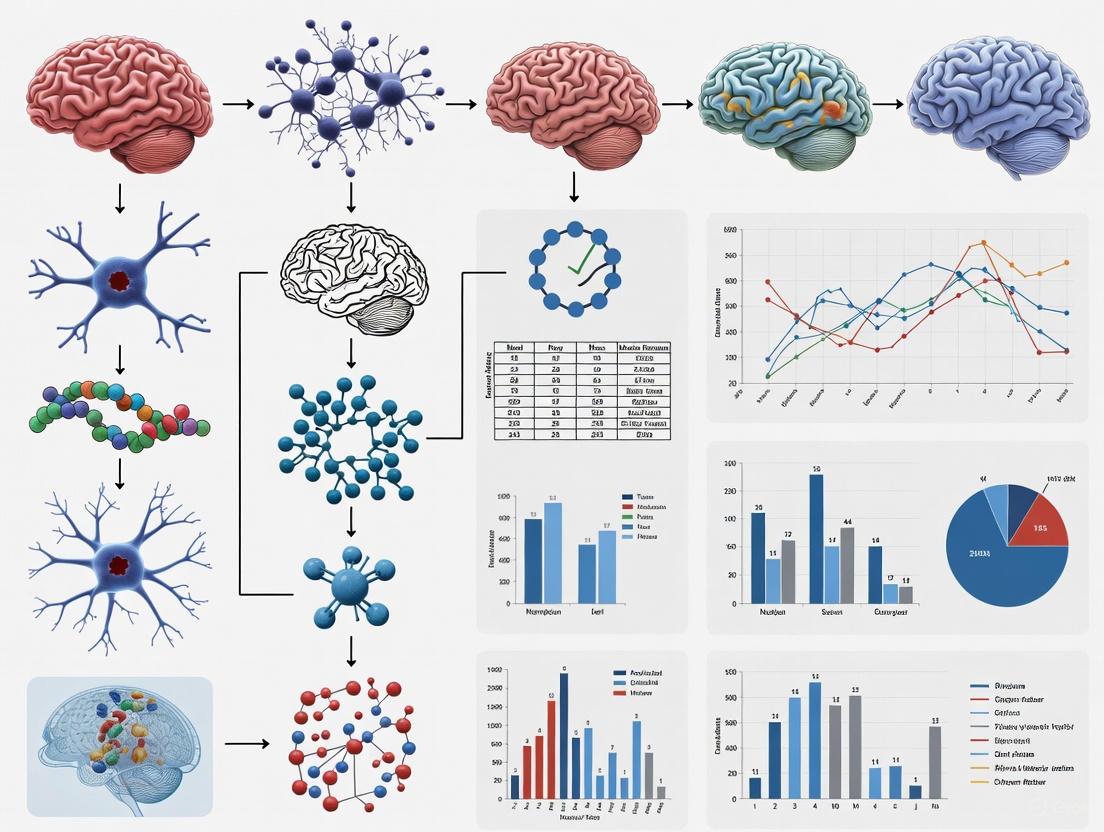
This article provides a comprehensive framework for ensuring the replicability of brain signature models across independent validation datasets, a critical challenge in neuroscience and clinical translation.
Validating Brain Signatures: A Roadmap for Reproducible Models in Neuroscience and Drug Development
Abstract
This article provides a comprehensive framework for ensuring the replicability of brain signature models across independent validation datasets, a critical challenge in neuroscience and clinical translation. We explore the foundational principles of data-driven brain signatures and their evolution from theory-driven approaches. The piece details rigorous methodological frameworks for development and validation, including multi-cohort discovery and aggregation techniques. It addresses key troubleshooting strategies for overcoming sources of irreproducibility, from dataset limitations to computational variability. Finally, we present systematic validation approaches and comparative analyses demonstrating how replicated signatures outperform traditional biomarkers in clinical applications and drug development contexts, offering researchers and pharmaceutical professionals practical guidance for building robust, translatable brain biomarkers.
The Foundation of Brain Signatures: From Theoretical Concepts to Data-Driven Discovery
The quest to define robust brain signatures represents a paradigm shift in neuroscience, moving from theory-driven hypotheses to data-driven explorations of brain-behavior relationships. These signatures, often derived as statistical regions of interest (sROIs), aim to identify key brain regions most associated with specific cognitive functions or clinical conditions. This review objectively compares the performance of emerging signature methodologies against traditional approaches, with particular emphasis on their replicability across validation datasets. We synthesize experimental data from recent validation studies, provide detailed methodologies for key experiments, and evaluate the comparative explanatory power of different modeling frameworks. The evidence indicates that validated signature models consistently outperform traditional theory-based models in explanatory power when rigorously tested across multiple cohorts, establishing their growing significance for clinical applications and drug development.
The "brain signature of cognition" concept has garnered significant interest as a data-driven, exploratory approach to better understand key brain regions involved in specific cognitive functions [1]. These signatures, alternatively termed "statistical regions of interest" (sROIs or statROIs) or "signature regions," are identified through systematic analysis of brain imaging data to discover areas most strongly associated with behavioral outcomes or clinical conditions [1]. This approach marks an evolution from traditional theory-driven or lesion-driven approaches that dominated earlier research [1].
The fundamental challenge in brain signature research lies in establishing replicability across validation datasets—a signature developed in one discovery cohort must demonstrate consistent model fit and spatial selection when applied to independent populations [1]. Without such validation, signatures may reflect cohort-specific characteristics rather than generalizable brain-behavior relationships. This review examines the methodological frameworks for defining and validating these signatures, compares their performance against alternative approaches, and assesses their emerging clinical significance for disorders such as Alzheimer's disease and mild cognitive impairment.
Methodological Frameworks: Comparing Signature Identification Approaches
Signature Identification Pipelines
Different methodological frameworks have emerged for identifying brain signatures, each with distinct advantages and validation requirements. The table below compares two prominent approaches from recent literature.
Table 1: Comparison of Brain Signature Identification Methods
| Method Characteristic | Consensus Gray Matter Signature Approach [1] | Network-Based Signature Identification [2] |
|---|---|---|
| Primary Data Source | Structural MRI (gray matter thickness) | Structural MRI (gray matter tissue probability maps) |
| Feature Selection | Voxel-based regressions with consensus masking | Sorensen distance between probability distributions |
| Analytical Framework | Data-driven exploratory region identification | Brain network construction with condition-related features |
| Validation Approach | Multi-cohort replication of model fits | Examination subject classification accuracy |
| Key Advantages | Does not require predefined ROIs; fine-grained spatial resolution | Provides network neuroscience perspective; individual subject analysis |
| Clinical Applications | Episodic memory; everyday memory function | Alzheimer's disease; mild cognitive impairment classification |
Traditional Versus Signature Approaches
The signature approach addresses several limitations of traditional methods. Theory-driven approaches based on predefined regions of interest (ROIs) may miss subtler effects that cross traditional anatomical boundaries [1]. Similarly, methods using predefined brain atlas regions cannot optimally fit behavioral outcomes when associations recruit subsets of multiple regions without using the entirety of any single region [1].
Machine learning implementations of signature identification—including support vector machines, support vector classification, relevant vector regression, and convolutional neural nets—offer promising alternatives, particularly for investigating complex multimodal brain associations [1]. However, these often face interpretability challenges, functioning as "black box" systems that can be difficult to translate to clinical applications [1].
Figure 1: Methodological comparison between traditional and signature-based approaches for brain region identification
Experimental Protocols and Validation Frameworks
Multi-Cohort Consensus Signature Protocol
A rigorous validation study published in 2023 established a protocol for developing robust brain signatures with demonstrated replicability [1]. The methodology proceeded through these stages:
Discovery Phase: Researchers derived regional brain gray matter thickness associations for neuropsychological and everyday cognition memory domains in two discovery cohorts (578 participants from UC Davis Alzheimer's Disease Research Center and 831 participants from Alzheimer's Disease Neuroimaging Initiative Phase 3) [1].
Consensus Identification: The team computed regional associations to outcome in 40 randomly selected discovery subsets of size 400 in each cohort. They generated spatial overlap frequency maps and defined high-frequency regions as "consensus" signature masks [1].
Validation Framework: Using separate validation datasets (348 participants from UCD and 435 participants from ADNI Phase 1), researchers evaluated replicability of cohort-based consensus model fits and explanatory power by comparing signature model fits with each other and with competing theory-based models [1].
This protocol specifically addressed the pitfall of using discovery sets that are too small, which can lead to inflated strengths of associations and loss of reproducibility [1]. The approach leveraged multi-cohort discovery and validation to produce signature models that replicated model fits to outcome and outperformed other commonly used measures [1].
Network-Based Signature Identification Protocol
An alternative methodology for structural MRI-based signature identification employs brain network construction followed by signature extraction [2]:
Image Processing: Structural T1 MRI images undergo brain extraction using FreeSurfer, transformation to MNI standard space, segmentation into gray matter tissue probability maps (TPMs), and smoothing [2].
Network Construction: Brain networks are constructed using atlas-based regions as nodes and Sorensen distance between probability distributions of gray matter TPMs as edges, creating an individual brain network for each subject [2].
Signature Extraction: Condition-related brain signatures are identified by comparing disorder networks (MCI, PMCI, AD) to those of normal control subjects, extracting distinctive network patterns that differentiate clinical conditions [2].
Validation: Examination subjects (200 total: 50 each of control, MCI, PMCI, and AD) are used to evaluate classification performance based on the identified signature patterns [2].
Figure 2: Experimental workflow for multi-cohort brain signature validation
Performance Comparison: Signature Models Versus Alternatives
Quantitative Performance Metrics
The critical test for any brain signature methodology is its performance in validation cohorts compared to established approaches. Recent research provides direct comparative data:
Table 2: Performance Comparison of Brain Signature Models Against Traditional Approaches
| Model Type | Replicability Rate | Spatial Consistency | Explanatory Power | Validation Cohort Performance |
|---|---|---|---|---|
| Consensus Signature Models [1] | High replicability (highly correlated fits in 50 validation subsets) | Convergent consensus regions across cohorts | Outperformed other models in full cohort comparisons | Maintained performance across independent validation datasets |
| Theory-Based Models [1] | Variable replicability | Dependent on theoretical assumptions | Lower explanatory power than signature models | Inconsistent performance across cohorts |
| Network-Based Signatures [2] | Effective classification of examination subjects | Identified condition-specific networks | Successfully differentiated MCI, PMCI, and AD | Applied to 200 examination subjects with demonstrated efficacy |
| Machine Learning Approaches [1] | Requires large datasets (1000s of participants) | Potential interpretability challenges | Handles complex multimodal associations | Black box characteristics may limit clinical translation |
Replicability Across Cohorts
The consensus signature approach demonstrated particularly strong replicability characteristics. When signature models developed in two discovery cohorts were applied to 50 random subsets of each validation cohort, the model fits were highly correlated, indicating strong reproducibility [1]. Spatial replications produced convergent consensus signature regions across independent cohorts [1].
This replicability is especially notable given the methodological challenges in brain signature research. Studies have found that replicability depends on large discovery dataset sizes, with some research indicating that sizes in the thousands are needed for certain applications [1]. The consensus approach, using multiple discovery subsets and aggregation, appears to mitigate these requirements while maintaining robustness.
The experimental protocols for brain signature identification rely on specialized tools, datasets, and analytical resources. The following table details key components required for implementing these methodologies.
Table 3: Essential Research Resources for Brain Signature Studies
| Resource Category | Specific Tools/Platforms | Function in Signature Research |
|---|---|---|
| Neuroimaging Data | ADNI (Alzheimer's Disease Neuroimaging Initiative) database [1] [2] | Provides standardized, multi-center neuroimaging data for discovery and validation |
| Image Processing | FreeSurfer [2] | Brain extraction, cortical reconstruction, and segmentation |
| Spatial Normalization | FSL (FMRIB Software Library) [2] | Image registration to standard space (MNI) using flirt and fnirt tools |
| Segmentation | FSL-FAST [2] | Tissue segmentation into gray matter, white matter, and CSF probability maps |
| Statistical Analysis | R programming environment [1] | Statistical modeling and implementation of signature algorithms |
| Brain Atlas | Atlas-defined regions (e.g., AAL, Harvard-Oxford) [2] | Provides standardized parcellation for network node definition |
| Validation Framework | Multiple independent cohorts [1] | Enables rigorous testing of signature replicability and generalizability |
Clinical Significance and Applications
Diagnostic and Classification Applications
Brain signatures show particular promise for improving diagnosis and classification of neurological and psychiatric disorders. The network-based signature approach demonstrated effective classification of Alzheimer's disease, mild cognitive impairment (MCI), and progressive MCI using structural MRI data [2]. This classification capability has direct clinical relevance for early detection and differential diagnosis.
The signature framework also enables investigation of shared neural substrates across different behavioral domains. Research comparing signatures in two memory domains (neuropsychological and everyday memory) suggested strongly shared brain substrates, providing insights into the neural architecture of memory function [1].
Biomarker Development for Therapeutic Interventions
For drug development professionals, brain signatures offer potential intermediate biomarkers for tracking treatment response and target engagement. The robust, replicable nature of properly validated signatures makes them candidates for inclusion in clinical trials as objective measures of brain changes associated with therapeutic interventions.
The ability of signature approaches to detect subtle, distributed brain changes—rather than focusing only on obvious, localized atrophy—may provide more sensitive measures of treatment effects, particularly in early stages of neurodegenerative disease when interventions are most likely to be effective.
The validation of brain signatures as robust measures of behavioral substrates represents significant progress toward clinically useful biomarkers. The comparative evidence indicates that data-driven signature approaches, particularly those implementing rigorous multi-cohort validation, outperform traditional theory-based models in explanatory power and replicability.
The consensus signature methodology, with its demonstrated replicability across validation datasets, and network-based approaches, with their individual subject classification capabilities, offer complementary strengths for different clinical and research applications. As these methods continue to be refined and validated across increasingly diverse populations, they hold promise for advancing both our understanding of brain-behavior relationships and our ability to detect and monitor neurological disorders.
For researchers and drug development professionals, the emerging best practice emphasizes signature development in large, diverse cohorts with deliberate investment in independent validation. This approach, while resource-intensive, produces the robust, generalizable signatures needed for meaningful clinical application.
The Evolution from Theory-Driven to Data-Driven Exploratory Approaches
The field of cognitive neuroscience is undergoing a profound methodological shift, moving from traditional, hypothesis-driven studies to robust, data-driven exploratory approaches. This evolution is critical for developing brain signature models—multivariate patterns derived from neuroimaging data that quantify individual differences in brain health and behavior. Central to this paradigm shift is the pressing challenge of replicability, the ability of a model's performance to generalize across independent validation datasets. This guide objectively compares the performance of different methodological approaches and brain features, providing experimental data and detailed protocols to inform researchers and drug development professionals in their study design and analytical choices.
Traditional theory-driven research in neuroscience often begins with a specific hypothesis, typically employing mass-univariate analyses (e.g., t-tests on pre-defined brain regions) to test it. While valuable, this approach can be underpowered to detect the subtle, distributed brain-behavior relationships that characterize complex neuropsychiatric conditions and cognitive traits. The reliance on small sample sizes and single studies has led to a replicability crisis, where many published brain-wide association studies (BWAS) fail to generalize [3].
The emergence of data-driven exploratory approaches, powered by machine learning (ML) and large, collaborative, multinational datasets, offers a solution. These methods, such as the SPARE (Spatial Patterns of Abnormalities for Recognition of Early Brain Changes) framework, leverage multivariate patterns across the entire brain to create individualized indices of disease severity or behavioral traits [4]. This guide compares these two paradigms through the lens of replicability, providing a foundational resource for building more reliable and generalizable neuroimaging biomarkers.
Comparative Performance of Modeling Approaches
The core of this evolution lies in the superior performance of multivariate, data-driven models over conventional mass-univariate or theory-driven methods, particularly when it comes to replicability and effect size.
Table 1: Comparison of Theory-Driven vs. Data-Driven Modeling Approaches
| Feature | Theory-Driven (Mass-Univariate) | Data-Driven (Multivariate ML) |
|---|---|---|
| Core Methodology | Tests hypotheses in pre-specified regions of interest (ROIs). | Discovers patterns from the whole brain without strong a priori assumptions. |
| Typical Sample Size | Often limited (n < 100), leading to low statistical power. | Leverages large samples (n > 10,000), enhancing power and generalizability [4]. |
| Replicability | Often low, as effects are small and sample-dependent. | Significantly higher, especially for stable, trait-like phenotypes [3]. |
| Effect Size | Small, explaining a low percentage of phenotypic variance. | Can achieve a ten-fold increase in effect sizes compared to conventional MRI markers [4]. |
| Individual-Level Prediction | Limited; focused on group-level differences. | Excellent; provides personalized severity scores for individual patients [4]. |
| Handling Comorbidities | Difficult to disentangle multiple overlapping conditions. | Can quantify the specific signature of individual conditions even when they co-occur [4]. |
Supporting Experimental Data on Replicability
A comprehensive 2025 study systematically evaluated the replicability of diffusion-weighted MRI (DWI)-based brain-behavior models, providing crucial benchmarks for the field [3]. The findings underscore the relationship between methodology, sample size, and replicability.
Table 2: Replicability of DWI-Based Multivariate Models for Brain-Behavior Associations (HCP Dataset, n ≤ 425) [3]
| DWI Metric | Overall Phenotypes Replicable | Trait-Like Phenotypes Replicable | State-Like Phenotypes Replicable | Avg. Discovery Sample Needed (n) |
|---|---|---|---|---|
| Streamline Count (SC) | 29% | 42% | 19% | 171 |
| Fractional Anisotropy (FA) | ~28%* | ~50%* | ~19%* | >200 |
| Radial Diffusivity (RD) | ~28%* | ~50%* | ~19%* | >250 |
| Axial Diffusivity (AD) | ~28%* | ~50%* | ~19%* | >250 |
| Any DWI Metric | 36% (21/58) | 50% (16/32) | 19% (5/26) | Varies |
Note: Percentages for FA, RD, and AD are approximate averages based on data reported in [3]. The study found that trait-like phenotypes (e.g., crystallized intelligence) were more replicable than state-like ones (e.g., emotional states), and streamline-based connectomes were the most efficient, requiring the smallest sample sizes for replication.
A key finding was the direct relationship between effect size and replicability. Models requiring a discovery sample size larger than n=425 were found to have very small effect sizes, explaining less than 2% of the variance in the phenotype, thus having "limited practical relevance" [3].
Detailed Experimental Protocols
To ensure transparency and reproducibility, this section outlines the core methodologies behind the cited data.
Protocol 1: Developing a Data-Driven Brain Signature Model (SPARE Framework)
This protocol is based on the study that developed SPARE models for cardiovascular and metabolic risk factors (CVM) using a large multinational dataset [4].
- Data Acquisition and Harmonization: Collect T1-weighted magnetic resonance images (MRI) and FLAIR images from multiple cohort studies (total N = 37,096 in the cited study). Process images through a harmonized pipeline to extract measures of gray matter volume, white matter volume, and white matter hyperintensity (WMH) volume.
- Ground Truth Labeling: Dichotomize participants into CVM+ (e.g., hypertensive) and CVM- (e.g., normotensive) groups based on clinical criteria, medication use, and established cut-offs for continuous measures.
- Feature Extraction: Parcellate the brain into regions of interest (ROIs) using a standard atlas. Calculate summary measures (e.g., volume, intensity) for each ROI to serve as features for the model.
- Model Training: Train a separate support vector machine (SVM) classifier for each CVM (e.g., hypertension, diabetes) to distinguish between CVM+ and CVM- individuals based on their spatial neuroanatomical patterns.
- Individualized Score Generation: The output of the model is a continuous SPARE-index (e.g., SPARE-HTN) for each participant, which quantifies the expression of that specific CVM's brain signature in the individual.
- Validation: Validate the model's performance on a held-out test set and an entirely independent cohort (e.g., UK Biobank). Assess association with cognitive performance and other biomarkers (e.g., beta-amyloid status) to establish clinical validity.
Protocol 2: Testing Replicability of Structural Connectome Models
This protocol is adapted from the large-scale replicability analysis of DWI-based models [3].
- Phenotype Selection and Categorization: Select a broad range of behavioral and psychometric measures. Categorize them as "trait-like" (enduring, stable) or "state-like" (transient, fluctuating).
- Connectome Construction: Preprocess DWI data. Reconstruct structural connectomes using multiple metrics:
- Streamline Count (SC): Number of white matter streamlines between brain regions.
- Microstructural Metrics: Mean fractional anisotropy (FA), mean diffusivity (MD), radial diffusivity (RD), and axial diffusivity (AD) along the tracts.
- Model Fitting and Replication Probability Estimation:
- Repeatedly split the dataset into non-overlapping, equally sized discovery and replication sets.
- In the discovery set, fit a multivariate Ridge regression model to predict the phenotype from the connectome features. Use nested cross-validation to avoid overfitting and estimate unbiased effect sizes.
- Test the significance of the established association in the replication set.
- Estimate the probability of replication (Preplication) as the proportion of splits where a significant discovery association also leads to a significant replication.
- Analysis: Determine the minimum discovery sample size required for a Preplication > 0.8. Compare replicability across different DWI metrics and phenotype categories.
Visualizing Workflows and Relationships
Data-Driven Brain Signature Development
The following diagram illustrates the high-level workflow for developing and validating a data-driven brain signature model, as implemented in the SPARE-CVM study [4].
Replicability Assessment Methodology
This diagram outlines the resampling-based methodology used to empirically evaluate the replicability of brain-phenotype associations [3].
The Scientist's Toolkit: Essential Research Reagents & Materials
Table 3: Key Reagents and Materials for Replicable Brain Signature Research
| Item / Solution | Function / Rationale |
|---|---|
| Multisite MRI Data | Large, diverse datasets (e.g., iSTAGING, UK Biobank, HCP) are fundamental for adequate statistical power and testing generalizability [4]. |
| Harmonized Processing Pipelines | Software (e.g., FSL, FreeSurfer, SPM) configured for consistent image processing across datasets is critical to minimize site- and scanner-specific biases [4]. |
| Structural & Diffusion MRI Sequences | T1-weighted, FLAIR, and diffusion-weighted imaging sequences provide the raw data for quantifying brain structure, lesions, and white matter connectivity [4] [3]. |
| Multivariate Machine Learning Libraries | Software libraries (e.g., scikit-learn in Python) enabling the implementation of models like Support Vector Machines and Ridge Regression are essential for data-driven analysis [4] [3]. |
| Standardized Atlases | Brain parcellation atlases (e.g., AAL, Harvard-Oxford) provide a common coordinate system for extracting ROI-based features from neuroimaging data. |
| Phenotypic Battery | Comprehensive, well-validated behavioral and cognitive tests are needed to define the "phenotype" for brain-behavior association studies [3]. |
In the quest to understand the neural foundations of human behavior, researchers have increasingly turned to data-driven methods to identify brain signatures—multivariate patterns of brain structure or function that reliably predict specific cognitive abilities or behavioral outcomes. The ultimate validation of these signatures lies not in their initial discovery but in their replicability across diverse cohorts and independent datasets. This guide provides a comparative analysis of the experimental approaches and validation outcomes for three key cognitive domains: episodic memory, executive function, and everyday cognition. Each domain presents unique challenges and opportunities for establishing robust, generalizable brain-behavior relationships that can inform clinical practice and therapeutic development.
Comparative Performance of Brain Signature Domains
The table below synthesizes validation performance and neural substrates across the three key brain signature domains, highlighting their relative strengths and replication success.
Table 1: Comparative Performance of Brain Signature Domains Across Validation Studies
| Signature Domain | Primary Neural Substrates | Validation Performance | Key Replication Findings |
|---|---|---|---|
| Episodic Memory | Anterior hippocampus (volume, atrophy rate, activation), posterior medial temporal lobe [5] | Superior memory linked to higher retrieval activity in anterior hippocampus (β=0.24-0.28, p<0.001) and less hippocampal atrophy (β=-0.18, p<0.01) [5] | Stable hippocampal correlates across adulthood (age 20-81.5); no significant age interactions found [5] |
| Executive Function | Multiple-demand network (intraparietal sulcus, inferior frontal sulcus, DLPFC, anterior insula) [6] | Low prediction accuracy from resting-state connectivity (R²<0.07, r<0.28); regional gray matter volume most predictive in older adults [6] | Limited replicability for functional connectivity patterns; structural measures outperform functional ones for prediction [6] |
| Everyday Cognition | Distributed gray matter thickness patterns across cortex [7] | Signature models outperformed theory-based models in explanatory power; high replicability in validation cohorts (r>0.9 for model fits) [7] | Spatial replication produced convergent consensus regions; strongly shared substrates with memory domains [7] |
| Cross-Domain Validation | Consensus regions from gray matter thickness [7] | Web-based ECog discriminates CI from CU (AUC=0.722 self-report, 0.818 study-partner) [8] | Web-based assessments valid for remote data collection; comparable to in-clinic measures [8] |
Experimental Protocols for Signature Development and Validation
Multi-Cohort Consensus Signatures for Everyday and Memory Cognition
The most robust validation protocol involves a multi-cohort approach with strict separation between discovery and validation datasets [7]. This method involves:
- Discovery Phase: Deriving regional brain gray matter thickness associations for behavioral domains (neuropsychological and everyday cognition memory) across multiple independent cohorts
- Consensus Mask Generation: Computing regional associations in multiple randomly selected discovery subsets (e.g., 40 subsets of size 400), generating spatial overlap frequency maps, and defining high-frequency regions as "consensus" signature masks
- Validation Phase: Evaluating replicability of consensus model fits in completely separate validation datasets using correlation analyses between predicted and observed outcomes
- Comparative Analysis: Testing signature models against competing theory-based models for explanatory power
This protocol successfully identified replicable consensus signature regions with strongly shared brain substrates across memory domains, demonstrating high correlation in validation cohorts (r > 0.9 for model fits) [7].
Multi-Modal Hippocampal Assessment for Episodic Memory
Comprehensive hippocampal profiling provides a robust protocol for episodic memory signature development [5]:
- Structural Imaging: Assessing hippocampal volume through high-resolution T1-weighted MRI
- Longitudinal Atrophy Measurement: Quantifying hippocampal atrophy rates through repeated MRIs (2-7 examinations per participant over up to 9.3 years)
- Microstructural Integrity: Evaluating hippocampal tissue properties via diffusion tensor imaging (DTI)
- Functional Assessment: Measuring encoding and retrieval-related hippocampal activity during fMRI associative memory tasks
- Behavioral Component Analysis: Using principal component analysis of multiple memory variables (correct recognitions, correct rejections, recognition misses, false alarms, recollections) to extract a main component of memory performance
This multi-modal approach revealed that superior memory was associated with higher retrieval activity in the anterior hippocampus and less hippocampal atrophy, with no significant age interactions across adulthood (age 20-81.5 years) [5].
Multi-Metric Predictive Modeling for Executive Function
Given the challenges in predicting executive function, a multi-metric approach provides the most comprehensive assessment [6]:
- Network Definition: Defining executive function networks (EFN) by integrating results from previous neuroimaging meta-analyses, with perceptuo-motor and whole-brain networks as controls
- Multi-Modal Feature Extraction: Calculating gray matter volume (GMV), resting-state functional connectivity (RSFC), regional homogeneity (ReHo), and fractional amplitude of low-frequency fluctuations (fALFF) within these networks
- Prediction Framework Implementation: Applying partial least squares regression (PLSR) to predict individual abilities in three EF subcomponents (inhibitory control, cognitive flexibility, working memory) separately for high- and low-demand task conditions
- Age-Stratified Analysis: Conducting separate analyses for young (20-40 years) and older (60-80 years) adults to identify potential age-specific prediction patterns
This protocol revealed that regional GMV carried the strongest information about individual EF differences in older adults, while fALFF did so for younger adults, with overall low prediction accuracies challenging the notion of finding meaningful biomarkers for individual EF performance with current metrics [6].
Figure 1: Multi-cohort validation workflow for robust brain signature development [7].
Signaling Pathways and Neural Workflows
Higher-Order Brain Dynamics for Individual Identification
Advanced analytical approaches are revealing higher-order organization in brain function that may provide more robust signatures:
- Topological Feature Extraction: Applying persistent homology to fMRI time-series data to capture intrinsic shape properties of brain dynamics through connected components, loops, and voids [9]
- Higher-Order Interaction Mapping: Using simplicial complexes to model interactions between three or more brain regions simultaneously, moving beyond traditional pairwise connectivity [10]
- Temporal Dynamics Characterization: Employing delay embedding to reconstruct one-dimensional time series into high-dimensional state spaces, capturing non-linear dynamical features [9]
These approaches have demonstrated superior performance in both gender classification and behavioral prediction tasks compared to conventional temporal feature metrics, highlighting the advantage of topological approaches in capturing individualized brain dynamics [9].
Figure 2: Higher-order and topological analysis frameworks for brain signatures [9] [10].
Table 2: Essential Research Resources for Brain Signature Development and Validation
| Resource Category | Specific Tools & Measures | Research Applications | Validation Evidence |
|---|---|---|---|
| Cognitive Assessments | Everyday Cognition (ECog) scale [8], Associative memory fMRI tasks [5], Executive function battery (inhibitory control, working memory, cognitive flexibility) [6] | Self- and informant-report of daily functioning, Laboratory-based cognitive challenge, Multi-component cognitive assessment | Web-based ECog discriminates CI from CU (AUC=0.722-0.818) [8], Hippocampal activation predicts memory performance [5] |
| Neuroimaging Modalities | Structural MRI (gray matter thickness, volume) [7] [5], Resting-state fMRI (functional connectivity) [6], Diffusion Tensor Imaging (microstructural integrity) [5] | Brain structural assessment, Functional network characterization, White matter integrity measurement | Gray matter thickness signatures show high replicability [7], DTI measures correlate with memory performance [5] |
| Analytical Approaches | Multi-cohort consensus modeling [7], Topological Data Analysis [9], Higher-order interaction mapping [10], Partial least squares regression [6] | Cross-study validation, Non-linear dynamics characterization, Multi-regional interaction modeling, Multivariate prediction | Outperforms theory-based models [7], Superior to conventional temporal features [9] |
| Validation Frameworks | Separate discovery/validation cohorts [7], Web-based vs. in-clinic comparison [8], Longitudinal atrophy tracking [5] | Replicability assessment, Remote data collection validation, Change over time measurement | High correlation of model fits in validation (r>0.9) [7], Web-based comparable to in-clinic [8] |
The comparative analysis of brain signature domains reveals a critical hierarchy of replicability, with everyday cognition and episodic memory signatures demonstrating more robust validation across cohorts and modalities than executive function signatures. This pattern highlights fundamental challenges in capturing complex, multi-component cognitive processes through current neuroimaging approaches.
For researchers and drug development professionals, these findings suggest several strategic considerations:
- Signature Selection: Prioritize everyday cognition and episodic memory domains for biomarker development, as these show more consistent neural substrates and better replication across studies
- Methodological Approach: Implement multi-cohort consensus approaches with strict separation between discovery and validation datasets to ensure generalizability
- Modality Choice: Consider structural measures (gray matter volume, thickness) as more reliable predictors than functional connectivity, particularly for executive functions
- Technological Innovation: Leverage emerging higher-order and topological analysis methods that show promise for capturing more nuanced brain-behavior relationships
The limited replicability of executive function signatures, particularly those based on functional connectivity, underscores the need for more sophisticated analytical frameworks and multi-modal approaches that can capture the complexity of this cognitive domain. As the field advances, the integration of topological methods and higher-order interaction mapping may provide the necessary breakthrough to establish robust, replicable brain signatures across all major cognitive domains.
The growing recognition of a replication crisis has affected numerous scientific fields, challenging the credibility of empirical results that fail to reproduce in subsequent studies [11]. In neuroimaging and brain signature research, this crisis manifests as an inability to reproduce brain-behavior associations across different datasets and populations, undermining the potential for developing reliable biomarkers for neurological and psychiatric conditions [12]. The replication crisis is frequently discussed in psychology and medicine, where considerable efforts have been undertaken to reinvestigate classic studies, though substantial evidence indicates other natural and social sciences are similarly affected [11].
The paradigm in human neuroimaging research has shifted from traditional brain mapping approaches toward developing multivariate predictive models that integrate information distributed across multiple brain systems [13]. This evolution from mapping local effects to building integrated brain models of mental events represents a fundamental change in how researchers approach brain-behavior relationships. While traditional approaches analyze brain-mind associations within isolated brain regions, multivariate brain models specify how to combine brain measurements to yield predictions about mental processes [13]. This shift in methodology has highlighted the critical importance of establishing replicable brain signatures that can reliably predict behavioral and cognitive outcomes across independent validation cohorts.
Quantitative Comparison of Replicability Across Neuroimaging Approaches
Performance Metrics for Brain Signature Replicability
Table 1: Replicability Rates Across Different Neuroimaging Modalities and Phenotypes
| Modality/Phenotype Category | Replicability Rate | Average Sample Size Required | Key Factors Influencing Replicability |
|---|---|---|---|
| DWI-based multivariate BWAS (Overall) | 36% (21/58 phenotypes) | Variable (n ≤ 425) | Effect size, phenotype type, DWI metric [12] |
| DWI Streamline Connectomes (SC) | 29% (HCP), 42% (AOMIC) | n = 171 (average) | Most economic metric for sample size requirements [12] |
| DWI for Trait-like Phenotypes | 50% (16/32) | n = 150 (average) | Temporal stability, enduring characteristics [12] |
| DWI for State-like Phenotypes | 19% (5/26) | n = 325 (average) | Transient, fluctuating characteristics [12] |
| Gray Matter Signature Models | High replicability reported | n = 400 (discovery) | Consensus signature masks, multiple discovery subsets [1] |
| Rigorous Research Practices | ~90% (16 studies) | Not specified | Preregistration, large samples, confirmation tests [14] |
Effect Size and Sample Size Relationships
Table 2: Effect Size and Sample Size Requirements for Replicable Brain Signatures
| Effect Size Threshold | Discovery Sample Required | Replicability Probability | Practical Relevance |
|---|---|---|---|
| <2% variance explained | n > 400 | Low | Limited practical relevance [12] |
| ~5% variance explained | n < 300 | High | Good replicability potential [12] |
| >5% variance explained | n < 300 | High | Strong practical utility [12] |
| Small effect sizes | n > 425 | Preplication > 0.8 | Requires large sample sizes [12] |
Experimental Protocols for Validating Brain Signatures
Signature Derivation and Consensus Mask Generation
The validation of brain signatures requires rigorous methodologies that can withstand the challenges of replicability across diverse cohorts. One prominent approach involves deriving regional brain gray matter thickness associations for specific behavioral domains across multiple discovery cohorts [1]. The protocol involves:
Multiple Discovery Subsets: Researchers compute regional associations to outcomes in 40 randomly selected discovery subsets of size 400 in each cohort [1]. This multiple-subset approach helps overcome the pitfalls of single discovery sets and produces more reproducible signatures.
Spatial Overlap Frequency Maps: The method generates spatial overlap frequency maps from these multiple discovery iterations, defining high-frequency regions as "consensus" signature masks [1]. This consensus approach leverages aggregation across many randomly selected subsets to produce robust brain phenotype measures.
Independent Validation: Using separate validation datasets completely distinct from discovery cohorts, researchers evaluate replicability of cohort-based consensus model fits and explanatory power by comparing signature model fits with each other and with competing theory-based models [1].
Multivariate Predictive Modeling with DWI Data
For DWI-based brain-behavior models, a systematic protocol has been developed to assess replicability:
Dataset Splitting: The methodology involves repeatedly sampling non-overlapping, equally sized discovery and replication sets, testing significance of established associations in both [12].
Model Training: In the discovery phase, researchers fit Ridge regression models with optimal regularization parameters estimated in a nested cross-validation framework to avoid biased estimates [12].
Replication Probability Threshold: Studies use a replication probability threshold of Preplication > 0.8, meaning the identified brain-phenotype association has a probability greater than 80% to be significant (p < 0.05) in the replication study, given it was significant in the discovery dataset [12].
Effect Size Comparison: Beyond significance testing, the protocol investigates how well the magnitude of effect sizes replicates, providing an approach independent of arbitrary significance thresholds [12].
Brain Signature Validation Workflow
Enhancing Replicability Through Rigorous Research Practices
Methodological Rigor in Study Design
Evidence strongly indicates that implementing rigor-enhancing practices can dramatically improve replication rates. A multi-university study found that when four key practices were implemented, replication rates reached nearly 90%, compared to the 50% or lower rates commonly reported in many fields [14]. These practices include:
Confirmatory Tests: Researchers should run confirmatory tests on their own studies to corroborate results prior to publication [14].
Adequate Sample Sizes: Data must be collected from sufficiently large sample sizes to ensure adequate statistical power [14].
Preregistration: Scientists should preregister all studies, committing to hypotheses and methods before data collection to guard against p-hacking [14].
Comprehensive Documentation: Researchers must fully document procedures to ensure peers can precisely repeat them [14].
Advanced Analytical Frameworks
Several advanced analytical frameworks have been developed specifically to enhance replicability in neuroimaging research:
NeuroMark Framework: This fully automated spatially constrained independent component analysis (ICA) framework uses templates combined with data-driven methods for biomarker extraction [15]. The approach has been successfully applied in numerous studies, identifying brain markers reproducible across datasets and disorders.
Whole MILC Architecture: A deep learning framework that learns from high-dimensional dynamical data while maintaining stable, ecologically valid interpretations [16]. This architecture includes self-supervised pretraining to maximize "mutual information local to context," capturing valuable knowledge from data not directly related to the study.
Retain And Retrain (RAR) Validation: A method to validate that biomarkers identified as explanations behind model predictions capture the essence of disorder-specific brain dynamics [16]. This approach uses an independent classifier to verify the discriminative power of salient data regions identified by the primary model.
Factors Influencing Replicability
Essential Research Reagents and Tools
Table 3: Essential Research Tools for Replicable Brain Signature Research
| Tool/Resource | Function | Application in Validation |
|---|---|---|
| NeuroMark Framework | Automated spatially constrained ICA | Biomarker extraction reproducible across datasets and disorders [15] |
| Consensus Signature Masks | Define high-frequency brain regions | Aggregate results across multiple discovery subsets [1] |
| Ridge Regression Models | Multivariate predictive modeling | Establish brain-phenotype associations with regularization [12] |
| Structural Connectomes | Map neural pathways | DWI-based streamline count models for highest replicability [12] |
| Higher-Resolution Atlases | Brain parcellation | Improve replicability (e.g., 162-node Destrieux vs. 84-region Desikan-Killiany) [12] |
| Preregistration Protocols | Study design specification | Guard against p-hacking and selective reporting [14] |
| Mutual Information Local to Context (MILC) | Self-supervised pretraining | Capture valuable knowledge from data not directly related to study [16] |
The critical importance of replicability in brain signature research extends from initial discovery sets through independent validation cohorts. The evidence consistently demonstrates that robust brain signatures are achievable when studies implement rigorous methodology, adequate sample sizes, and appropriate analytical frameworks. The replication rates of nearly 90% achieved through rigorous practices compared to the 50% or lower rates in many published studies highlight the potential for improvement across neuroimaging research [14].
The findings from multiple large-scale studies suggest several key principles for enhancing replicability. First, trait-like phenotypes show substantially higher replicability (50%) compared to state-like measures (19%), informing appropriate target selection for biomarker development [12]. Second, effect size remains a crucial factor, with associations explaining less than 2% of variance requiring sample sizes exceeding 400 participants and offering limited practical relevance [12]. Third, multivariate approaches that leverage distributed brain patterns consistently outperform isolated region analyses, reflecting the population coding principles fundamental to neural computation [13].
As the field progresses, the development of standardized frameworks like NeuroMark that combine templates with data-driven methods and the adoption of rigorous practices including preregistration and independent validation will be essential for establishing brain signatures that reliably translate across diverse populations and clinical applications. Only through such rigorous attention to replicability can brain signature research fulfill its potential to advance understanding of brain function and dysfunction.
The identification of robust and replicable neural signatures represents a paramount challenge in modern neuroscience, particularly for applications in psychiatric drug development. The concept of a "brain signature" refers to a data-driven, exploratory approach to identify key brain regions most associated with specific cognitive functions or behavioral domains [1]. Unlike traditional hypothesis-driven methods that focus on predefined regions of interest, signature-based approaches leverage large datasets and statistical methods to discover brain-behavior relationships that might otherwise remain obscured [1]. The critical test for any proposed neural signature lies in its replicability across independent validation cohorts—a standard that ensures findings are not mere artifacts of a particular sample but reflect fundamental neurobiological principles [1] [17]. This review synthesizes current evidence for shared neural substrates across behavioral domains, examining the convergence of brain network engagement with a specific focus on methodological rigor and translational potential.
Fundamental Brain Networks as Convergent Hubs
Converging evidence from multiple cognitive domains indicates that large-scale brain networks serve as common computational hubs, reconfigured in domain-specific patterns to support diverse behaviors. Research on creativity and aesthetic experience has delineated how core networks—including the default mode network (DMN), executive control network (ECN), salience network (SN), sensorimotor network (SMN), and reward system (RS)—orchestrate complex cognitive processes through dynamic interactions [18]. These networks demonstrate remarkable functional versatility, participating in both seemingly disparate and intimately related behavioral domains.
Table 1: Core Brain Networks and Their Cross-Domain Functions
| Brain Network | Key Regions | Functions in Creative Process | Functions in Other Domains |
|---|---|---|---|
| Default Mode Network (DMN) | Hippocampus, Precuneus, mPFC, PCC, TPJ | Memory retrieval, spontaneous divergent thinking, affective evaluation [18] | Self-referential processing, theory-of-mind [18] |
| Executive Control Network (ECN) | Lateral PFC, Posterior Parietal Cortex | Inhibiting conventional ideas, mental set shifting, novel association formation [18] | Analytical reasoning, cognitive control [18] |
| Salience Network (SN) | Anterior Insula, Anterior Cingulate Cortex | Monitoring novel/emotional features, modulating DMN-ECN coupling [18] | Interoceptive awareness, attention to salient stimuli [18] |
| Sensorimotor Network (SMN) | Precentral & Postcentral Gyri, Supplementary Motor Area | Enhancing creative output, improvisational capability [18] | Motor execution, sensory processing [18] |
| Reward System (RS) | Ventral Striatum, Ventromedial PFC | Reinforcing creative behavior through dopamine-mediated pleasure [18] | Processing rewards, valuation, motivation [18] |
The DMN demonstrates particularly broad involvement across domains. During aesthetic experience, the DMN supports memory retrieval and spontaneous divergent thinking when individuals engage with aesthetic stimuli [18]. Similarly, in decision-making contexts, the ventromedial prefrontal cortex (vmPFC)—a key DMN node—shows reduced activity in individuals less susceptible to framing biases, suggesting its role in integrating emotional context with decision values [19]. This pattern of network reuse extends to the ECN, which remains suppressed during creative generation to enable intuitive thinking but becomes activated during creative evaluation to inhibit conventional ideas and facilitate novel associations [18].
Domain-Specific Modulations Within Shared Networks
While fundamental networks provide common infrastructure, domain-specific challenges recruit specialized modulations within these shared systems. The framing effect in decision-making—where choices are influenced by whether options are presented as gains or losses—reveals how similar cognitive biases can emerge from distinct neural substrates depending on context [19].
Table 2: Domain-Specific Neural Substrates of the Framing Effect
| Experimental Domain | Key Task Characteristics | Primary Neural Substrate | Supporting Connectivity |
|---|---|---|---|
| Gain Domain | Decisions about potential gains; "keep" vs. "lose" frames [19] | Amygdala [19] | Amygdala-vmPFC connectivity modulated by framing bias [19] |
| Loss Domain | Decisions about potential losses; "save" vs. "still lose" frames [19] | Striatum [19] | Striatum-dmPFC connectivity modulated by framing bias [19] |
| Aversive Domain (Asian Disease Problem) | Vignette-based scenarios in loss domain [19] | Right inferior frontal gyrus, anterior insula [19] | Not specified in search results |
Neuroimaging studies using gambling tasks have demonstrated that the amygdala specifically represents the framing effect in the gain domain, while the striatum underlies the same effect in the loss domain, despite producing behaviorally similar bias patterns [19]. This domain-specific specialization within the broader cortical-striatal-limbic network highlights how shared computational challenges—such as incorporating emotional context into decisions—may be solved by different neural systems depending on the nature of the emotional valence (appetitive versus avversive) [19].
The stability of neural signatures is further evidenced by research on lifespan adversity, which has identified a widespread morphometric signature that persists into adulthood and replicates across independent cohorts [17]. This signature extends beyond traditionally investigated limbic regions to include the thalamus, middle and superior frontal gyri, occipital gyrus, and precentral gyrus [17]. Different adversity types produce partially distinct morphological patterns, with psychosocial risks showing the highest overlap and prenatal exposures demonstrating more unique signatures [17].
Diagram 1: Dynamic network reconfiguration across creative stages, showing suppression of ECN during generation and synergistic engagement during evaluation.
Methodological Framework for Signature Validation
The establishment of replicable brain signatures requires rigorous methodological standards and validation procedures. The signature approach represents an evolution from theory-driven methods, leveraging comprehensive brain parcellation atlases and data-driven feature selection to identify combinations of brain regions that best associate with behaviors of interest [1]. Key considerations for robust signature development include:
Discovery and Validation Protocols
Statistical validation of brain signatures necessitates a structured approach to ensure generalizability beyond the initial discovery cohort. Fletcher et al. (2023) outline a method wherein regional gray matter thickness associations are computed for specific behavioral domains across multiple randomly selected discovery subsets [1]. High-frequency regions across these subsets are defined as "consensus" signature masks, which are then evaluated in separate validation datasets for replicability of model fits and explanatory power [1]. This method has demonstrated that signature models can outperform other commonly used measures when rigorously validated [1].
Critical to this process is the use of sufficiently large discovery sets, with recent research indicating that sample sizes in the thousands may be necessary for optimal replicability [1]. Pitfalls of undersized discovery sets include inflated association strengths and poor reproducibility—challenges that large-scale initiatives like the UK Biobank are now addressing [1]. Furthermore, cohort heterogeneity encompassing the full range of variability in brain pathology and cognitive function enhances the generalizability of resulting signatures [1].
Normative Modeling of Individual Variation
Normative modeling approaches offer a powerful framework for capturing individual neurobiological heterogeneity in relation to environmental factors such as lifespan adversity [17]. This technique involves creating voxel-wise normative models that predict brain structural measures based on adversity profiles, enabling quantification of individual deviations from population expectations [17]. The application of this method has revealed that greater volume contractions relative to the model predict future anxiety symptoms, highlighting the clinical relevance of individual-level predictions [17].
Diagram 2: Statistical validation workflow for brain signatures, emphasizing independent replication in validation cohorts.
Research Reagent Solutions for Neural Signature Investigation
Table 3: Essential Methodological Components for Signature Validation Research
| Research Component | Specification/Function | Representative Examples |
|---|---|---|
| Statistical Packages for Normative Modeling | Enables voxel-wise modeling of individual variation relative to population expectations | SPM, FSL, AFNI with custom normative modeling scripts [17] |
| Multicohort Data Resources | Provides large, diverse samples for discovery and validation phases | UK Biobank, ADNI, MARS, IMAGEN cohorts [1] [17] |
| Cognitive Task Paradigms | Standardized behavioral measures for specific domains | Gambling tasks for framing effects [19], Divergent Thinking Tasks for creativity [18] |
| High-Resolution Structural MRI | Enables voxel-wise morphometric analysis (gray matter thickness, Jacobian determinants) | T1-weighted sequences for deformation-based morphometry [17] |
| Data-Driven Feature Selection Algorithms | Identifies brain-behavior associations without predefined ROI constraints | Support vector machines, relevant vector regression, convolutional neural nets [1] |
Implications for Drug Development and Future Directions
The identification of replicable neural signatures across behavioral domains holds significant promise for psychiatric drug development, particularly in establishing objective biomarkers for target engagement and treatment efficacy evaluation. Shared networks like the DMN, ECN, and SN represent promising intervention targets, as their modulation may transdiagnostically influence multiple cognitive and emotional processes [18] [17]. Furthermore, the documented stability of adversity-related neural signatures into adulthood [17] suggests potential windows for preventive interventions.
Future research directions should prioritize the integration of multimodal imaging data to capture complementary aspects of brain organization, the development of dynamic signature models that track temporal changes in brain-behavior relationships, and the establishment of large-scale collaborative frameworks to ensure sufficient statistical power for robust discovery. As signature validation methodologies continue to advance, they offer the potential to transform neuropsychiatric drug development from symptom-based approaches to those targeting specific, biologically-grounded neural systems.
Methodological Frameworks and Real-World Applications in Research and Drug Development
The replicability of findings across independent validation datasets is a cornerstone of robust scientific discovery, particularly in brain imaging research. The challenge of ensuring that a model or signature derived from one cohort generalizes effectively to another is often mitigated by multi-cohort discovery frameworks. These frameworks frequently employ strategies like random subsampling to efficiently analyze large-scale data and consensus generation to distill stable, reproducible patterns. This guide objectively compares computational tools and algorithms that implement these strategies, focusing on their application in generating consensus masks and signatures from neuroimaging data. Supporting experimental data and detailed methodologies are provided to aid researchers, scientists, and drug development professionals in selecting appropriate methods for their work.
Comparative Performance Analysis of Key Algorithms
The following tables summarize the core methodologies and quantitative performance of several relevant algorithms that incorporate subsampling and consensus approaches for biological data analysis.
Table 1: Core Algorithm Comparison
| Algorithm | Primary Methodology | Consensus Mechanism | Key Application Context |
|---|---|---|---|
| MILWRM [20] | Top-down, pixel-based spatial clustering using k-means on randomly subsampled data. | Applies a single model, built on a uniform subsample from all samples, to the entire multi-sample dataset. | Spatially resolved omics data (e.g., transcriptomics, multiplex immunofluorescence); consensus tissue domain detection. |
| SpeakEasy2: Champagne (SE2) [21] | Dynamic, popularity-corrected label propagation algorithm with meta-clustering. | Uses a consensus-like approach by initializing with fewer labels than nodes and employing clusters-of-clusters to find robust partitions. | General biological network clustering (gene expression, single-cell, protein interactions); known for robust, informative clusters. |
| BIANCA [22] | Supervised k-Nearest Neighbor (k-NN) algorithm for automated segmentation. | Performance and output are highly dependent on the composition and representativeness of the training dataset. | Automatic segmentation of white matter lesions (WMLs) in brain MRI; multi-cohort analysis. |
| LPA & LGA [22] | LPA: Pre-trained logistic regression classifier. LGA: Unsupervised lesion growth algorithm. | Do not require training data; their inherent design provides a consistent (consensus) application to any input data. | Automatic segmentation of white matter lesions (WMLs); fast, valid option for specific sub-populations. |
Table 2: Algorithm Performance Benchmarking
| Algorithm / Test Context | Performance Metric | Result | Comparative Note |
|---|---|---|---|
| MILWRM on 37 mIF colon samples [20] | Silhouette-based Confidence Score | Most pixels had high confidence scores. | Successfully identified physiologically relevant tissue domains (epithelium, mucus, lamina propria) across all samples. |
| BIANCA on 1000BRAINS cohort [22] | Dice Similarity Index (DSI) | Mean DSI > 0.7 when trained on diverse data. | Outperformed LPA and LGA when training data included a variety of cohort characteristics (age, cardiovascular risk factors). |
| LPA & LGA on 1000BRAINS cohort [22] | Dice Similarity Index (DSI) | Mean DSI < 0.4 for participants <67 years without risk factors; improved for older participants with risk factors. | Performance was sub-population specific. A less universally reliable option for general multi-cohort studies. |
| SpeakEasy2 (SE2) across diverse synthetic & biological networks [21] | Multiple quality measures (e.g., robustness, scalability) | Generally provided robust, scalable, and informative clusters. | Identified as a strong general-purpose performer across a wide range of applications, though no single method is universally optimal. |
Detailed Experimental Protocols
MILWRM Protocol for Consensus Tissue Domain Detection
The MILWRM (Multiplex Image Labeling with Regional Morphology) pipeline provides a clear protocol for consensus discovery using random subsampling, applicable to spatial transcriptomics and multiplex imaging data [20].
- Data Preprocessing: The protocol begins with modality-specific normalization and smoothing. For multiplex immunofluorescence (mIF) data, this includes down-sampling images to an isotropic resolution (e.g., 5.6 µm/pixel) and applying a smoothing parameter (sigma=2). The goal is to generalize pixel neighborhood information across batches and samples.
- Random Subsampling: Instead of clustering the entire dataset, which can be computationally intensive and prone to batch effects, MILWRM randomly subsamples a proportion of pixels (e.g., 0.2) uniformly from the tissue mask of each sample. This creates a representative, manageable subset of the entire multi-cohort dataset.
- Consensus Cluster Detection: The subsampled pixel data is Z-normalized, and a k-means model is trained. The number of clusters (k) can be user-specified or determined unsupervisedly via inertia analysis. This model, representing the consensus, is then applied to assign every pixel in the full dataset to a tissue domain.
- Downstream Analysis & Validation: MILWRM calculates domain-specific molecular profiles from the original feature space to biologically annotate the consensus domains. It also computes per-pixel confidence scores based on a modified silhouette score, evaluating how much closer a pixel is to its assigned cluster centroid than to the next closest one [20].
Benchmarking Protocol for White Matter Lesion Segmentation
A critical study compared the performance of three WML segmentation algorithms (BIANCA, LPA, LGA) on the 1000BRAINS cohort, highlighting how algorithm choice and training data affect consensus and generalizability [22].
- Aim 1: Impact of Training Data on Consensus (Using BIANCA): To test how training data composition influences consensus masks, BIANCA was trained multiple times on different subsets of the cohort. Each training set was selected based on a specific characteristic (e.g., only young participants, only hypertensive participants). The output of each model was then compared across the entire test set.
- Aim 2: Cross-Algorithm Performance Benchmarking: The three algorithms were applied to predefined subgroups of participants (e.g., aged under/over 67, with/without cardiovascular risk factors). BIANCA was used with its best-performing training setup from Aim 1.
- Ground Truth and Evaluation: The study relied on the 1000BRAINS cohort, which includes epidemiological, clinical, and laboratory data [22]. Algorithm performance was quantitatively evaluated using the Dice Similarity Index (DSI), measuring the spatial overlap between the algorithm's output and a reference standard.
- Key Findings: BIANCA's WML estimations were directly influenced by the training data, demonstrating that a non-representative "consensus" model can introduce systematic bias (e.g., underestimating WML if trained only on young subjects). Its highest performance was achieved when trained on a diverse group of individuals. In contrast, LPA and LGA, which do not require sample-specific training, showed highly variable performance, working well for older participants with risk factors but poorly for younger, healthier individuals [22].
Workflow Visualization
The following diagram illustrates the overarching workflow for multi-cohort consensus generation, integrating principles from the analyzed protocols.
The Scientist's Toolkit: Research Reagent Solutions
Table 3: Essential Computational Tools for Multi-Cohort Analysis
| Tool / Resource | Function | Relevance to Multi-Cohort Discovery |
|---|---|---|
| MILWRM (Python Package) [20] | Consensus tissue domain detection from spatial omics. | Directly implements random subsampling and consensus clustering for multi-sample data from various platforms. |
| SpeakEasy2: Champagne [21] | Robust clustering for diverse biological networks. | Provides a consensus-driven, dynamic clustering algorithm suitable for various data types encountered in multi-cohort studies. |
| BIANCA (FSL Tool) [22] | Supervised WML segmentation from brain MRI. | Highlights the critical importance of training data composition for building generalizable, consensus models. |
| TRACERx-PHLEX (Nextflow Pipeline) [23] | End-to-end analysis of multiplexed imaging data. | Offers a containerized, reproducible workflow for cell segmentation and phenotyping, aiding standardization across studies. |
| 1000BRAINS Cohort Dataset [22] | Population-based brain imaging and epidemiological data. | Serves as a key validation dataset for benchmarking segmentation algorithms and assessing their generalizability. |
| Lancichinetti-Fortunato-Radicchi (LFR) Benchmarks [21] | Synthetic networks with known community structure. | Provides a standardized benchmark for objectively testing and comparing the performance of clustering algorithms. |
The pursuit of replicable and robust biomarkers in neuroscience has led to the emergence of brain signature models as a powerful, data-driven method for identifying key brain regions associated with specific cognitive functions and behavioral outcomes. A significant challenge in this field is ensuring these models maintain performance and explanatory power when applied across diverse datasets, scanners, and populations—a challenge known as the cross-domain problem. Simultaneously, in cryptographic and data security fields, advanced signature aggregation techniques have been developed to efficiently combine multiple distinct signatures into a single, compact representation while preserving verifiability. This guide explores how principles from cryptographic signature aggregation can inform the development of generalized union signatures for brain model domains, focusing on techniques that enhance cross-domain replicability and robustness for research and drug development applications.
Brain Signature Replicability: Foundations and Challenges
The Brain Signature Paradigm in Neuroscience
Brain signatures represent a data-driven, exploratory approach to identify key brain regions most associated with specific behavioral outcomes or cognitive functions. Unlike theory-driven approaches that rely on predefined regions of interest, signature approaches computationally determine areas of the brain that maximally account for brain substrates of behavioral outcomes through statistical region of interest (sROI) identification [1]. This method has evolved from earlier lesion-driven approaches, leveraging high-quality brain parcellation atlases and increased computational power to discover subtle effects that may have been missed by previous methods [1].
The validation of brain signatures requires demonstrating two key properties across multiple datasets beyond the original discovery set: model fit replicability (consistent performance in explaining behavioral outcomes) and spatial extent replicability (consistent identification of signature brain regions across different cohorts) [1]. When properly validated, these signatures serve as reliable brain phenotypes for brain-wide association studies, offering potential applications in diagnosing and tracking neurological conditions and cognitive decline.
The Cross-Domain Challenge in Brain Imaging
Substantial distribution discrepancies among brain imaging datasets from different sources present significant challenges for model replicability. These discrepancies arise from large inter-site variations among different scanners, imaging protocols, and patient populations, leading to what is known as the cross-domain problem in practical applications [24]. Studies have found that replicability depends critically on large discovery dataset sizes, with some research indicating that samples in the thousands are necessary for consistent results [1]. Pitfalls of using insufficient discovery sets include inflated strengths of associations and loss of reproducibility, while cohort heterogeneity—including the full range of variability in brain pathology and cognitive function—also significantly impacts model transferability [1].
Signature Aggregation Techniques: Methodological Approaches
Technical Foundations of Signature Aggregation
Signature aggregation techniques enable multiple signatures, generated by different users on different messages, to be compressed into a single short signature that can be efficiently verified. In formal terms, an aggregate signature scheme consists of four key algorithms: KeyGen (generating public/private key pairs), Sign (producing a signature on a message using a private key), Aggregate (combining multiple signatures into a single compact signature), and Verify (verifying the aggregate against all participants' public keys and messages) [25].
These techniques offer substantial advantages for collaborative environments: verification efficiency through significantly reduced verification time, communication compactness by replacing potentially thousands of individual signatures with a single aggregate, and enhanced scalability through reduced transaction size and storage requirements [25]. Recent advances have focused on privacy-preserving aggregation that prevents identity leakage while maintaining verification integrity.
Cryptographic Implementation Approaches
Table: Comparison of Signature Aggregation Schemes
| Scheme Type | Security Foundation | Privacy Features | Verification Efficiency | Implementation Complexity |
|---|---|---|---|---|
| Certificateless Aggregate Signature (CLAS) | Discrete Logarithm Problem | Identity Privacy | High (No pairing operations) | Moderate [26] |
| ElGamal-based Aggregate Signatures | Discrete Logarithm Problem | Unlinkable contributions | Moderate | High [25] |
| BLS Aggregate Signatures | Bilinear Pairings | Basic aggregation | High | High [25] |
| Traditional Digital Signatures (ECDSA, RSA) | Various | No privacy protection | Low (Linear verification) | Low |
Several specialized implementation approaches have emerged for specific application domains. For Vehicular Ad-Hoc Networks (VANETs), Lightweight Certificateless Aggregate Signature (CLAS) schemes have been developed that eliminate complex certificate management while providing efficient message aggregation and authentication [26]. Recent research has identified vulnerabilities in some schemes to temporary rogue key attacks, where adversaries can exploit random numbers in signatures to generate ephemeral rogue keys for signature forgery [26]. Security-enhanced approaches incorporate additional aggregator signatures and simultaneous verification to effectively resist such attacks while maintaining computational efficiency.
For privacy-sensitive applications like blockchain-based AI collaboration, ElGamal-based aggregate signature schemes with aggregate public keys enable secure, verifiable, and unlinkable multi-party contributions [25]. These approaches allow multiple AI agents or data providers to jointly sign model updates or decisions, producing a single compact signature that can be publicly verified without revealing identities or individual public keys of contributors—particularly valuable for resource-constrained or privacy-sensitive applications such as federated learning in healthcare or finance [25].
Experimental Protocols and Validation Frameworks
Brain Signature Discovery and Validation Protocol
Table: Experimental Parameters for Brain Signature Validation
| Parameter | Discovery Phase | Validation Phase | Statistical Assessment |
|---|---|---|---|
| Sample Size | 400-800 participants per cohort [1] | 300-400 participants per cohort [1] | Power analysis for effect size detection |
| Data Splitting | 40 randomly selected subsets of size 400 [1] | Completely independent cohorts [1] | Cross-validation metrics |
| Spatial Analysis | Voxel-based regression [1] | Consensus signature mask application [1] | Overlap frequency maps |
| Model Comparison | Comparison with theory-based models [1] | Explanatory power assessment [1] | Fit correlation analysis |
A rigorously validated protocol for brain signature development involves multiple phases. In the discovery phase, researchers derive regional brain gray matter thickness associations for specific domains (e.g., neuropsychological and everyday cognition memory) across multiple discovery cohorts [1]. The process involves computing regional associations to outcome in multiple randomly selected discovery subsets, then generating spatial overlap frequency maps and defining high-frequency regions as "consensus" signature masks [1].
The validation phase uses completely separate validation datasets to evaluate replicability of cohort-based consensus model fits and explanatory power. This involves comparing signature model fits with each other and with competing theory-based models [1]. Performance assessment includes evaluating whether signature models outperform other commonly used measures and examining the degree to which signatures in different domains (e.g., two memory domains) share brain substrates [1].
Diagram Title: Brain Signature Validation Workflow
Cross-Domain Adaptation Experimental Framework
For addressing cross-domain challenges in brain image segmentation, researchers have developed systematic experimental frameworks adhering to PRISMA (Preferred Reporting Items for Systematic Reviews and Meta-Analyses) standards [24]. The process involves retrieving relevant research from multiple databases using carefully constructed search terms combining three keyword categories: Medical Imaging (e.g., "brain", "MRI", "CT"), Segmentation (e.g., "U-Net", "thresholding", "clustering"), and Domain (e.g., "cross-domain", "multi-site", "harmonization") [24].
The screening and selection process includes merging duplicate articles, screening based on titles and abstracts, and full-text review to filter eligible articles according to inclusion criteria [24]. Data extraction captures author information, publication year, dataset details, cross-domain type, solution method, and evaluation metrics, enabling comparative analysis of method performance across different brain segmentation tasks (stroke lesion segmentation, white matter segmentation, brain tumor segmentation) [24].
Comparative Performance Analysis
Quantitative Outcomes in Domain Adaptation
Table: Performance Comparison of Domain Adaptation Methods
| Application Domain | Method Category | Performance Metric | Improvement Over Baseline | Key Limitations |
|---|---|---|---|---|
| Stroke Lesion Segmentation (ATLAS) | Domain-adaptive Methods | Overall accuracy | ~3% improvement [24] | Dataset heterogeneity |
| White Matter Segmentation (MICCAI 2017) | Various Adaptive Methods | Segmentation accuracy | Inconsistent across studies [24] | Lack of unified standards |
| Brain Tumor Segmentation (BraTS) | Normalization Techniques | Cross-domain consistency | Variable performance [24] | Protocol variability |
| Episodic Memory Signature | Consensus Signature Model | Model fit correlation | High replicability [1] | Cohort size dependency |
Domain-adaptive methods have demonstrated measurable improvements in various brain imaging tasks. On the ATLAS dataset, domain-adaptive methods showed an overall improvement of approximately 3 percent in stroke lesion segmentation tasks compared to non-adaptive methods [24]. However, given the diversity of datasets and experimental methodologies in current studies, making direct comparisons of method strengths and weaknesses remains challenging [24].
For brain signature validation, studies have demonstrated that consensus signature model fits were highly correlated in multiple random subsets of validation cohorts, indicating high replicability [1]. In full cohort comparisons, signature models consistently outperformed other models, suggesting robust brain signatures may be achievable for reliable characterization of behavioral domains [1].
Method-Specific Performance Characteristics
Different technical approaches demonstrate distinct performance characteristics. Lightweight Certificateless Aggregate Signature schemes for VANETs show significant advantages in both computational efficiency and communication cost while maintaining security, making them suitable for resource-constrained environments [26]. Privacy-preserving AI collaboration frameworks using ElGamal-based aggregate signatures with public key aggregation provide verifiability and unlinkability while minimizing on-chain storage requirements—particularly valuable for federated learning in healthcare and finance [25].
In brain imaging, transfer learning has emerged as a popular approach to leverage pre-trained models on new data, demonstrating success across various studies [24]. Unsupervised learning methods, which do not require labeled data from the target domain, have also shown promising results in cross-domain brain image segmentation, while self-supervised learning approaches, where models are pre-trained on auxiliary tasks before fine-tuning, are increasingly adopted [24].
Research Reagent Solutions
Table: Essential Research Materials for Signature Aggregation Studies
| Reagent/Resource | Function/Purpose | Example Specifications | Application Context |
|---|---|---|---|
| Multi-Cohort Brain Imaging Data | Signature discovery and validation | UCD ADRC (n=578), ADNI 3 (n=831) [1] | Brain signature replicability |
| Standardized Validation Frameworks | Performance benchmarking | PRISMA guidelines [24] | Cross-domain method evaluation |
| Domain Adaptation Algorithms | Cross-domain performance optimization | Transfer Learning, Normalization, Unsupervised Learning [24] | Multi-site brain segmentation |
| Cryptographic Libraries | Signature scheme implementation | ElGamal, BLS, CLAS primitives [26] [25] | Privacy-preserving aggregation |
| Spatial Analysis Tools | Brain region mapping and overlap quantification | Voxel-based regression, frequency maps [1] | Consensus signature identification |
The development of generalized union signatures for multiple domains represents a convergence of neuroscience and cryptographic methodologies aimed at addressing the fundamental challenge of replicability across diverse datasets. Brain signature models, when developed with rigorous validation protocols involving multiple discovery subsets and independent validation cohorts, demonstrate potential for creating robust biomarkers that maintain explanatory power across populations. Simultaneously, cryptographic signature aggregation techniques offer efficient verification and privacy preservation mechanisms that can inform computational frameworks for neural signature integration. For researchers and drug development professionals, these cross-disciplinary approaches promise enhanced reliability in biomarker identification, potentially accelerating therapeutic development and validation through more replicable, cross-domain valid brain signatures. Future research directions should focus on standardized validation protocols, larger diverse cohorts, and refined aggregation techniques that balance verification efficiency with privacy preservation.
The extraction of meaningful signatures from complex biological data is a cornerstone of modern computational research, particularly in the field of neuroscience. These signatures—whether representing brain age, cognitive function, or gene expression patterns—provide crucial insights into health and disease. However, a significant challenge persists: the replicability of these signature models across independent validation datasets. This guide objectively compares the performance of machine learning (ML) and deep learning (DL) approaches in signature extraction, with a specific focus on their robustness and generalizability in brain signature research, a critical consideration for researchers and drug development professionals.
Performance Comparison of Signature Extraction Approaches
The performance of ML and DL models varies significantly depending on the data modality, model architecture, and application domain. The following tables summarize experimental data from key studies, providing a comparative view of their effectiveness.
Table 1: Performance Comparison of Brain Age Prediction Models
| Model Type | Specific Model | Dataset(s) | Key Performance Metric | Result | Reference |
|---|---|---|---|---|---|
| Multimodal ML (Ensemble) | Stacking (sMRI + FA) | Multi-site HC (n=2,558); COBRE (HC n=56, SZ n=48) | MAE (Internal Test) | 2.675 years | [27] [28] |
| MAE (External - HC) | 4.556 years | [27] [28] | |||
| MAE (External - SZ) | 6.189 years | [27] [28] | |||
| Deep Learning | 3D DenseNet-169 | SMC & 24 public datasets (n=8,681) | MAE (Validation) | 3.66 years | [29] |
| Clinical 2D MRI (CU n=175) | MAE (Test, after bias correction) | 2.73 years | [29] | ||
| Clinical 2D MRI (AD n=199) | Mean Corrected Brain Age Gap | 3.10 years | [29] |
Table 2: Performance in Other Signature Domains (Intrusion Detection & Gene Expression)
| Domain | Model Type | Specific Model | Dataset | Key Performance Metric | Result | Reference |
|---|---|---|---|---|---|---|
| Network Intrusion | Machine Learning | CART, Random Forest | CIDDS, CIC-IDS2017 | Accuracy | ~99% | [30] |
| Deep Learning | CNN with Embedding | CIDDS, CIC-IDS2017 | Accuracy | ~99% | [30] | |
| In-Air Signature | Deep Learning | Fully Convolutional Network (FCN) | MIAS-427 (n=4270 signals) | Accuracy | 98% | [31] |
| InceptionTime | Smartwatch Data | Accuracy | 97.73% | [31] | ||
| Gene Expression | Unsupervised ML | ICARus (ICA-based) | COVID-19, Lung Adenocarcinoma | Identified reproducible signatures | Associated with prognosis | [32] |
Detailed Experimental Protocols and Workflows
Multimodal Brain Age Prediction with Machine Learning
The study by Kyung Hee University and Asan Medical Center provides a robust protocol for building a replicable brain age signature using multimodal data [27] [28].
- Data Acquisition and Cohorts: The model was trained on a large, multi-site dataset of 2,558 healthy individuals (age 12-88) from established studies like the Human Connectome Project (HCP) and Cambridge Center for Ageing and Neuroscience (Cam-CAN). This large sample size is crucial for building a generalizable baseline model. External validation was performed on an independent dataset (COBRE) comprising 56 healthy controls and 48 schizophrenia patients [27] [28].
- Data Preprocessing: Structural T1-weighted MRI (sMRI) scans were preprocessed using the Computational Anatomy Toolbox 12 (CAT12). This involved skull-stripping, intensity inhomogeneity correction, and normalization to the Montreal Neurological Institute (MNI) space using DARTEL. Diffusion MRI (dMRI) data was processed to derive Fractional Anisotropy (FA) maps, which measure white matter integrity [27].
- Feature Extraction and Modeling: Features from both sMRI and FA maps were extracted. The methodology employed five representative ML models: Support Vector Regression, Relevance Vector Regression, Lasso Regression, Gaussian Process Regression, and Random Forest Regression. Dimensionality reduction was performed using Principal Component Analysis (PCA). A key aspect of this protocol is the use of a stacking ensemble model, which combines the predictions from the single-modality models to create a superior, multimodal predictor [27] [28].
- Validation and Replicability Analysis: The model's performance was rigorously assessed on the held-out test set from the healthy cohort and, most importantly, on the completely independent COBRE dataset. The difference between predicted brain age and chronological age, known as the brain-predicted age difference (brainPAD), was calculated and compared between healthy controls and schizophrenia patients, demonstrating the clinical relevance and cross-dataset replicability of the signature [27] [28].
Brain Age Prediction Workflow
Robust Gene Expression Signature Extraction with ICARus
The ICARus pipeline was developed specifically to address the challenge of extracting reproducible gene expression signatures from transcriptomic data [32].
- Input Data Preparation: The input is a normalized gene expression matrix (genes x samples). The use of normalization methods like Counts-per-Million (CPM) is recommended. Sparse genes are filtered out to reduce noise [32].
- Determining Near-Optimal Parameters: A critical step for replicability is determining the number of independent components (signatures) to extract. ICARus performs Principal Component Analysis (PCA) on the input data. Instead of using a fixed threshold (e.g., 99% variance explained), it uses the Kneedle algorithm to identify the "elbow" or "knee" point in the scree plot, which signifies a point of diminishing returns. This defines a range of near-optimal parameters (n to n+k) for subsequent analysis [32].
- Intra-Parameter Robustness Assessment: For each parameter value in the determined range, the Independent Component Analysis (ICA) algorithm is run 100 times. The resulting components are clustered, and a stability index (from the Icasso method) is calculated. Only components with a stability index >0.75 are considered robust for that specific parameter [32].
- Inter-Parameter Reproducibility: The robust components from all parameter values are then clustered together. A signature is deemed reproducible only if it appears consistently across different parameter values within the near-optimal range. This two-tiered validation (robustness across runs and reproducibility across parameters) is the core innovation that enhances the replicability of the final signature set [32].
- Downstream Analysis: The final output includes a gene-weight matrix and a sample-signature matrix. These can be used for Gene Set Enrichment Analysis (GSEA) and association with sample phenotypes, allowing for biological interpretation [32].
For researchers aiming to develop replicable signature models, the following tools and resources are essential.
Table 3: Key Research Reagents and Computational Tools
| Item / Resource | Function / Purpose | Relevance to Replicability | Example Use |
|---|---|---|---|
| Multi-site Neuroimaging Datasets (HCP, Cam-CAN, CoRR) | Provides large-scale, diverse data for training generalizable baseline models. | Mitigates overfitting to a single scanner or population; essential for external validation. | Used as primary training data for robust brain age models [27] [28]. |
| Independent Validation Cohorts (e.g., COBRE) | Serves as a completely held-out test set to evaluate model performance. | The gold standard for testing a model's replicability and clinical utility. | Used to validate brain age prediction in schizophrenia [27] [28]. |
| Computational Anatomy Toolbox (CAT12) | A standardized pipeline for processing structural MRI data. | Ensures consistency in feature extraction (e.g., voxel-based morphometry) across studies. | Used for skull-stripping, correction, and normalization of sMRI data [27]. |
| ICARus R Package | Extracts robust and reproducible gene expression signatures from transcriptomic data. | Addresses parameter sensitivity in ICA via stability and reproducibility metrics. | Used to identify gene signatures associated with COVID-19 outcomes [32]. |
| Stacking Ensemble Model | A meta-model that combines predictions from multiple base machine learning models. | Often outperforms single models and can yield more stable and accurate predictions. | Used to combine sMRI and dMRI features for superior brain age prediction [27] [28]. |
| Shapley Value Analysis | A method from cooperative game theory to interpret model predictions and feature importance. | Provides insights into which features (e.g., sensor dimensions) drive a model's output, aiding validation. | Used to analyze contributions of different sensors in in-air signature recognition [31]. |
Visualization of Signature Replicability Framework
The overarching challenge of replicability can be understood as a multi-stage process where computational approaches must overcome specific hurdles to produce signatures that are valid across datasets. The following diagram outlines this framework and the role of advanced computational methods.
Signature Replicability Framework
The comparative analysis of ML and DL approaches for signature extraction reveals that the choice of model is often secondary to the rigor of the experimental design and validation strategy when the goal is replicability.
- Multimodal Integration is Key: The superior performance of the multimodal stacking model for brain age prediction (MAE of 2.675 years) over single-modality models underscores that integrating complementary data sources (e.g., sMRI and FA) captures a more comprehensive biological signature, which generalizes better to external datasets [27] [28].
- Beyond Predictive Accuracy: For a signature to be clinically useful, high predictive accuracy is necessary but not sufficient. The association between the brain age gap (brainPAD) and clinical symptom severity in schizophrenia demonstrates the value of signatures that capture biologically meaningful variations linked to disease [27] [28]. Similarly, DL models can be interpreted; guided backpropagation in a brain age model showed that it focused on cerebrospinal fluid regions, which are known to expand with age and atrophy, lending biological plausibility to the signature [29].
- The Centrality of Robust Pipelines: The development of specialized pipelines like ICARus highlights a paradigm shift. The focus is moving from simply extracting signatures to extracting signatures that are robust to algorithmic parameters and reproducible across dataset variations. This is a direct response to the replicability crisis in computational science [32].
- Performance-Interpretability Trade-off: While DL models can achieve state-of-the-art accuracy, as seen in intrusion detection (99%) and in-air signature recognition (98%), their "black-box" nature can be a limitation [31] [30]. In contexts where understanding the driving features is critical for scientific validation or clinical adoption, inherently interpretable models like Random Forest or models explained via post-hoc analysis (like Shapley values) may be preferred [31] [30].
In conclusion, the path to replicable brain signature models lies in a multi-faceted approach: leveraging large, multi-site datasets for training; prioritizing independent external validation; employing robust analytical pipelines that account for parameter sensitivity; and seeking multimodal integration. No single computational approach is universally best. The optimal strategy involves selecting a model whose complexity and interpretability align with the scientific question, while embedding it within a rigorous validation framework that prioritizes generalizability from the outset.
Highly Comparative Time-Series Analysis (HCTSA) represents a paradigm shift in biomarker discovery, employing massive feature extraction to quantify dynamical properties in time-series data. This approach addresses critical challenges in brain signature research, where replicability across validation datasets remains a fundamental concern. By systematically comparing thousands of time-series features, HCTSA moves beyond single-metric analysis to identify robust biomarkers that capture essential dynamical properties of complex systems, from molecular pathways to neural circuits [33].
The core premise of HCTSA aligns directly with the pressing need for reproducible brain biomarkers. Traditional approaches that select biomarkers based on a priori hypotheses risk missing subtle but biologically significant patterns, potentially undermining generalizability across diverse populations. In contrast, HCTSA's data-driven methodology enables the discovery of features with inherent stability, a property essential for biomarkers intended for cross-validation in independent cohorts [1] [7]. This methodological rigor is particularly valuable for establishing neuroanatomical signatures of conditions like hypertension, diabetes, and other cardiovascular-metabolic risk factors that impact brain health and cognitive outcomes [4].
Computational Methodologies: HCTSA and Competing Frameworks
Core Principles of Highly Comparative Time-Series Analysis
The HCTSA framework operates by generating an extensive feature set that captures a wide array of time-series properties, including linear and nonlinear dynamics, information-theoretic quantities, and predictive features. This comprehensive approach transforms raw time-series data into a feature matrix that enables comparative analysis across diverse dynamical regimes [33]. The methodology has evolved through several iterations, most notably through the development of catch22—a condensed set of 22 highly informative features derived from the original extensive HCTSA library [33].
HCTSA specifically addresses three fundamental sources of variation in longitudinal biomarker data: (A) directed interactions between biomarkers, (B) shared biological variation from unmeasured factors, and (C) observation noise comprising measurement error and rapid fluctuations [34]. By accounting for these confounding factors through a generalized regression model that fits longitudinal data with a linear model addressing all three influences, HCTSA reduces false positives and false negatives in biomarker identification [34].
Competing Methodological Paradigms
Several alternative approaches exist for time-series biomarker discovery, each with distinct methodological foundations:
Dynamic Network-Based Strategies (ATSD-DN): This approach constructs dynamic networks using non-overlapping ratios (NOR) to measure changes in feature ratios during disease progression. It employs dynamic concentration analysis and network topological structure analysis to extract early warning information from time-series data [35].
Multivariate Empirical Bayes Statistics (MEBA): This method ranks features by calculating Hotelling's T² statistic and is designed for analyzing tri-dimensional time-series data with small sample sizes, large numbers of features, and limited time points [35].
Weighted Relative Difference Accumulation (wRDA): This algorithm assigns adapted weights to every time point to extract early information about complicated diseases, emphasizing temporal priority in biomarker identification [35].
Brain Signature Validation Approaches: These methods use data-driven, exploratory approaches to identify key brain regions involved in specific cognitive functions, with rigorous validation across multiple cohorts to ensure replicability of model fits and spatial selection [1] [7].
Table 1: Core Methodological Frameworks for Time-Series Biomarker Discovery
| Method | Core Approach | Feature Selection | Temporal Handling |
|---|---|---|---|
| HCTSA/catch22 | Massive feature extraction (1000s of features) | Data-driven; comprehensive | Captures dynamical properties across timescales |
| ATSD-DN | Dynamic network construction | Network topology analysis | Trajectory analysis through NOR metrics |
| MEBA | Multivariate empirical Bayes | Hotelling's T² ranking | Designed for limited time points |
| wRDA | Relative difference accumulation | Weighted time points | Emphasizes early temporal changes |
| Brain Signature Validation | Spatial overlap frequency maps | Consensus signature masks | Cross-sectional with multi-cohort validation |
Experimental Protocols and Implementation
HCTSA Workflow for Biomarker Discovery
The standard HCTSA pipeline follows a structured workflow from data preprocessing to biomarker validation, with specific adaptations for neuroimaging and physiological monitoring applications.
Experimental Protocols from Key Studies
Dolphin Biomarker Study Protocol: A landmark application of time-series analysis involved 144 bottlenose dolphins with 44 clinically relevant biomarkers measured longitudinally over 25 years [34]. The experimental protocol included:
- Data Collection: Regular sampling in a controlled environment to minimize individual differences (diet, socioeconomic status, medication)
- Model Specification: Linear stochastic differential equation (SDE) to account for directed interactions (type-A), shared biological variation (type-B), and observation noise (type-C)
- Validation Approach: Generalized regression with longitudinal data to minimize false positives/negatives
- Outcome Measures: Identification of directed interactions between biomarkers associated with advanced age
Brain Signature Validation Protocol: The validation of brain signatures for behavioral substrates followed a rigorous multi-cohort design [1] [7]:
- Discovery Phase: Regional brain gray matter thickness associations computed in 40 randomly selected discovery subsets (size 400) across two cohorts
- Consensus Mapping: Spatial overlap frequency maps generated with high-frequency regions defined as "consensus" signature masks
- Validation Testing: Replicability assessed in separate validation datasets (50 random subsets) with comparison against theory-based models
- Performance Metrics: Model fit correlations and explanatory power comparisons across full cohorts
Cardiovascular-Metabolic Risk Signatures Protocol: The SPARE-CVM framework for identifying neuroanatomical signatures of cardiovascular and metabolic diseases employed [4]:
- Data Harmonization: MRI data from 37,096 participants (45-85 years) across 10 cohort studies
- Model Training: Separate support vector classification models for hypertension, hyperlipidemia, smoking, obesity, and type 2 diabetes
- Severity Quantification: Individualized indices reflecting expression of each CVM-specific pattern
- External Validation: Independent validation dataset of N = 17,096 participants from UK Biobank
Performance Comparison: Quantitative Metrics Across Methods
Analytical Performance Metrics
Table 2: Performance Comparison of Time-Series Analysis Methods in Biomarker Discovery
| Method | Feature Dimensionality | Classification Accuracy | Computational Efficiency | Replicability (Cross-Cohort) |
|---|---|---|---|---|
| HCTSA/catch22 | ~9000 (HCTSA) → 22 (catch22) | 84-92% (seizure detection) | Moderate (HCTSA) to High (catch22) | High when validated in large datasets |
| ATSD-DN | Feature ratios (703 from 38 lipids) | AUC: 0.980 (discovery), 0.972 (validation) | Moderate (network construction) | Demonstrated in HCC rat model |
| SPARE-CVM | Multivariate sMRI patterns | AUC: 0.64-0.72 across CVM conditions | High after model training | Validated in 37,096 participants |
| Brain Signature Validation | Voxel-based GM associations | High model fit replicability | Moderate (requires large samples) | High spatial replicability across cohorts |
| Dynamic SDE Modeling | 44 biomarkers with interactions | Significant age-related interactions identified | High for parameter estimation | Longitudinal design (25 years) |
Application-Specific Performance
Neurological and Psychiatric Applications: HCTSA has demonstrated particular utility in distinguishing dynamical signatures of psychiatric disorders from resting-state fMRI data, identifying time-series properties of motor-evoked potentials that predict multiple sclerosis progression, and detecting mild cognitive impairment using single-channel EEG [33]. In these applications, the massive feature extraction approach outperforms traditional univariate metrics by capturing subtle dynamical patterns that would otherwise be overlooked.
Medical Diagnostics: In differential tremor diagnosis, HCTSA-based feature extraction outperformed the best traditional tremor statistics [33]. Similarly, in predicting outcomes for extremely pre-term infants, HCTSA features extracted from bedside monitor data provided predictive value for respiratory outcomes, demonstrating translational potential in critical care settings.
Neuroimaging Biomarkers: The SPARE-CVM framework demonstrated a ten-fold increase in effect sizes compared to conventional structural MRI markers, with particular sensitivity in mid-life (45-64 years) populations [4]. This enhanced sensitivity for sub-clinical stages of cardiovascular and metabolic conditions highlights the value of multivariate pattern analysis for early risk detection.
Table 3: Essential Research Resources for Time-Series Biomarker Discovery
| Resource Category | Specific Tools/Solutions | Function in Research | Example Applications |
|---|---|---|---|
| Software Platforms | HCTSA MATLAB toolbox, catch22 (Python/R) | Massive feature extraction and analysis | Dynamical biomarker discovery [33] |
| Data Harmonization Tools | iSTAGING platform, UK Biobank processing pipelines | Multi-cohort data integration | SPARE-CVM model development [4] |
| Validation Frameworks | PRISMA guidelines, Cochrane systematic review protocols | Methodological rigor in evidence synthesis | Systematic reviews of biomarker performance [36] [37] |
| Statistical Modeling | Linear SDE models, Support Vector Machines | Parameter estimation and classification | Directed interaction identification [34] |
| Network Analysis | NOR-based dynamic network construction | Topological analysis of feature relationships | HCC biomarker discovery [35] |
Interpretation of Findings and Path Forward
The empirical evidence consistently demonstrates that HCTSA and related highly comparative approaches provide substantial advantages for biomarker discovery in complex biological systems. Three key findings emerge from cross-method comparisons:
First, comprehensive feature extraction outperforms hypothesis-driven feature selection in identifying robust, reproducible biomarkers. The catch22 feature set, distilled from thousands of potential metrics, maintains discriminative power while enhancing computational efficiency [33]. This balanced approach addresses the "curse of dimensionality" while preserving sensitivity to biologically meaningful dynamics.
Second, multi-cohort validation is essential for establishing generalizable biomarkers. The strongest performance across methodologies emerges when discovery findings undergo rigorous testing in independent populations [1] [7] [4]. The SPARE-CVM framework's validation across 37,096 participants exemplifies this principle, with consistent performance patterns across demographic subgroups.
Third, dynamic network perspectives capture biological information missed by single-marker approaches. The ATSD-DN strategy identified a lyso-phosphatidylcholine (LPC) 18:1/free fatty acid (FFA) 20:5 ratio as a hepatocellular carcinoma biomarker with superior performance (AUC: 0.980 discovery, 0.972 validation) compared to individual metabolites [35]. This network-oriented paradigm aligns with the complex pathophysiology of most neurological and systemic disorders.
Future methodological development should focus on integrating HCTSA with multi-omics platforms, enhancing interpretability of complex feature sets, and advancing real-time analytical capabilities for clinical translation. As biomarker research increasingly emphasizes replicability and generalizability, the highly comparative approach offers a rigorous mathematical foundation for identifying stable, informative signatures across diverse populations and clinical contexts.
The convergence of neuroimaging and computational pharmacology represents a transformative frontier in translational neuroscience. The critical challenge underpinning this convergence is the replicability of brain signature models across independent validation datasets. A brain signature, in this context, is a data-driven, multivariate pattern of brain structure or function that is systematically associated with a specific cognitive, behavioral, or clinical outcome [1]. The true translational potential of these signatures is realized only when they demonstrate robust model fit and consistent spatial selection when applied to cohorts beyond their initial discovery set [1]. Establishing this replicability is a prerequisite for leveraging such biomarkers to de-risk the drug development process and to create reliable computational platforms for drug repurposing, particularly for complex neurodegenerative and psychiatric disorders.
This guide objectively compares the performance of established and emerging biomarker modalities in tracking disease progression and evaluates the computational frameworks that use this biomarker data for drug repurposing. The focus throughout is on the empirical evidence supporting their replicability and their consequent utility in translational applications.
Comparative Analysis of Neuroimaging Biomarkers for Tracking Cognitive Decline
With the approval of anti-amyloid therapies for Alzheimer's disease (AD), identifying surrogate biomarkers that can dynamically track clinical treatment efficacy has become a pressing need [38]. The A/T/N (Amyloid/Tau/Neurodegeneration) framework provides a useful classification for these biomarkers. A systematic comparison of their longitudinal changes reveals significant differences in their ability to track cognitive decline.
Table 1: Performance Comparison of A/T/N Biomarkers for Tracking Cognitive Decline
| Biomarker | Modality | Strength in Tracking Cognitive Change | Key Advantages | Key Limitations |
|---|---|---|---|---|
| Amyloid-PET | Molecular Imaging | Weak/Not Linked [38] | Confirms fibrillar Aβ presence; useful for participant selection. | Plateaus early; poor correlation with short-term cognitive changes. |
| Tau-PET | Molecular Imaging | Strong [38] | Strong association with symptom severity and disease stage. | High cost; limited accessibility; radiation exposure. |
| Plasma p-tau217 | Fluid Biomarker | Strong [38] | High AD specificity; cost-effective; accessible; allows frequent sampling. | Requires further standardization for clinical use. |
| Cortical Thickness | Structural MRI (sMRI) | Strong [38] | Widely available; strong correlation with cognition. | May be confounded by pseudo-atrophy in anti-Aβ treatments. |
Experimental Protocols for Biomarker Validation
The performance data in Table 1 is derived from longitudinal studies analyzing biomarker and cognitive change rates using linear mixed models [38]. The typical experimental protocol involves:
- Cohorts: Utilizing well-characterized longitudinal cohorts like the Alzheimer's Disease Neuroimaging Initiative (ADNI) and the Anti-Amyloid Treatment in Asymptomatic Alzheimer's (A4)/Longitudinal Evaluation of Amyloid Risk and Neurodegeneration (LEARN) studies [38].
- Data Collection: Serial measurements of amyloid-PET (e.g., 18F-florbetapir), tau-PET (e.g., 18F-flortaucipir), plasma p-tau217, and structural MRI are collected alongside cognitive assessments (e.g., MMSE, ADAS-Cog, CDR-SB, PACC).
- Change Rate Calculation: Individual slopes of change for each biomarker and cognitive score are estimated using linear mixed models.
- Predictive Strength Analysis: Linear models test how well biomarker change rates predict cognitive change rates. The comparative predictive strength is then evaluated through bootstrapping procedures [38].
Beyond Single Modalities: The Emergence of Deep Learning Signatures
Moving beyond single biomarkers, data-driven brain signatures derived from high-dimensional data show great promise. The validation of these signatures requires rigorous methodology:
- Discovery and Consensus: Signatures are derived in multiple discovery cohorts (e.g., UCD ADRC, ADNI 3) by computing regional brain gray matter thickness associations with outcomes. This process is repeated across many randomly selected subsets to generate spatial overlap frequency maps, with high-frequency regions defined as a "consensus" signature [1].
- Validation: The consensus signature is applied to separate validation datasets (e.g., additional UCD and ADNI 1 cohorts) to evaluate the replicability of model fits and explanatory power [1].
Advanced deep learning (DL) frameworks are now capable of learning these signatures directly from high-dimensional, raw neuroimaging data. For instance, self-supervised models pretrained on healthy control data (e.g., from the Human Connectome Project) can be transferred to smaller datasets for disorders like schizophrenia and Alzheimer's disease. Introspection of these models via saliency maps can identify disease-specific spatiotemporal activity, and the discriminative power of these salient features can be validated using independent classifiers like SVM, a process known as "Retain And Retrain" (RAR) evaluation [16].
Comparative Analysis of Computational Drug Repurposing Platforms
Computational drug repurposing uses in silico methods to screen FDA-approved compounds for new therapeutic indications, potentially reducing development costs from $2.6 billion to ~$300 million and cutting time from 10-15 years to as little as 6 years [39] [40]. These platforms can be categorized into three primary methodological approaches.
Table 2: Comparison of Computational Drug Repurposing Approaches
| Computational Approach | Core Methodology | Advantages | Disadvantages & Replicability Challenges |
|---|---|---|---|
| Molecular Methods | Compares drug-induced gene expression signatures (e.g., from LINCS/CMap) to disease-associated gene expression profiles to find drugs that may reverse disease signatures [39]. | Does not require a priori target identification; can integrate multi-omics data (genetic, epigenetic, transcriptomic) [39]. | Limited by availability of disease-relevant transcriptomic data (e.g., CNS vs. cancer cell lines); heterogeneous diseases require subtype-specific signatures [39]. |
| Clinical Methods | Leverages large-scale health data (EMR, insurance claims) to identify drugs effective for indications other than their primary use [39] [41]. | Uses real-world human data; enables precision medicine with sufficient sample size [39]. | EMR data is often messy and incomplete; difficult to track long-term outcomes in neurodegenerative diseases [39]. |
| Biophysical Methods | Uses biochemical properties (e.g., binding affinity) and 3D conformations for drug-target predictions [39]. | Computationally efficient for high-throughput screening of thousands of molecules [39]. | Requires a priori identification of target molecules and crystallographic data [39]. |
| AI-Driven Network Methods | Employs ML/DL and network models to study relations between molecules (e.g., PPIs, DDAs) to reveal repurposing potentials [40]. | Can identify non-obvious drug-disease associations by integrating diverse, large-scale biomedical data [40]. | "Black box" interpretability issues; performance is strongly tied to training data size and quality [40] [16]. |
Experimental Protocols for Repurposing Platform Validation
A rigorous drug repurposing pipeline involves both prediction and validation. Key experimental validation steps include:
- In Vitro/In Vivo Experiments: Biological validation in cell cultures or animal models to confirm predicted therapeutic effects [41].
- Retrospective Clinical Analysis: Interrogating Electronic Health Records (EHR) or insurance claims data to find evidence of off-label usage that supports the predicted efficacy. Searching existing clinical trials (e.g., on ClinicalTrials.gov) for the drug-disease connection also provides strong validation [41].
- Literature Support: Manual or automated mining of biomedical literature (e.g., via PubMed) to find prior supporting evidence for the predicted drug-disease link [41].
Integrated Workflow: From Replicable Brain Signatures to Repurposed Drugs
The translational application of neuroimaging biomarkers in drug repurposing is not a linear path but an integrated, iterative workflow. This process connects the validation of replicable brain signatures to the computational identification and experimental confirmation of repurposed drug candidates. The following diagram illustrates this complex workflow, highlighting the critical feedback loops between biomarker development, computational screening, and clinical validation.
Translational research at the nexus of neuroimaging and computational drug repurposing relies on a specific toolkit of data, software, and experimental resources.
Table 3: Essential Research Reagent Solutions
| Tool/Resource | Type | Function in Translational Research |
|---|---|---|
| ADNI & A4/LEARN Cohorts | Data Resource | Provide longitudinal, multi-modal biomarker and cognitive data essential for discovering and validating biomarkers of cognitive decline [38]. |
| LINCS / Connectivity Map (CMap) | Data Resource | Database of drug-induced gene expression signatures; core resource for molecular-based drug repurposing approaches [39]. |
| Electronic Health Records (EHR) | Data Resource | Large-scale real-world clinical data used for clinical validation of repurposing candidates and clinical method-based discovery [39] [41]. |
| Human Connectome Project (HCP) | Data Resource | Publicly available high-quality neuroimaging data from healthy controls, used for pretraining deep learning models to improve their performance on smaller clinical datasets [16]. |
| Deep Learning Frameworks (e.g., CNN, LSTM-RNN, VAE) | Software Tool | Used to learn complex, predictive patterns directly from high-dimensional neuroimaging data (e.g., fMRI dynamics), enabling the identification of novel brain signatures [40] [16]. |
| Saliency Map Interpretation | Analytical Method | A technique for interpreting trained deep learning models to identify the spatiotemporal features (potential biomarkers) most predictive of a disorder [16]. |
| Therapeutic Target Database & DrugBank | Data Resource | Curated repositories of drug-target interactions, used for validation and as knowledge sources for network-based repurposing approaches [39]. |
The translational pipeline from neuroimaging biomarkers to drug repurposing platforms is fundamentally dependent on the replicability of brain signatures. Biomarkers like plasma p-tau217 and data-driven cortical thickness signatures, which robustly track cognitive decline across validation cohorts, provide the most reliable inputs for computational models [1] [38]. Among repurposing approaches, molecular and AI-driven network methods show significant promise but require careful biological and clinical validation to overcome their respective limitations regarding data relevance and model interpretability [39] [40]. The future of this field lies in tighter integration between these disciplines, where iteratively refined and validated brain signatures continuously improve computational screening, and the resulting drug candidates, in turn, advance our understanding of disease mechanisms and treatment. This virtuous cycle is key to de-risking drug development and delivering effective therapies to patients more efficiently.
Overcoming Replicability Challenges: Technical Solutions and Optimization Strategies
The replicability of brain signature models—data-driven maps that link brain features to behavioral or clinical outcomes—is a cornerstone for their translation into clinical practice and drug development. A significant challenge in this field is that models demonstrating high predictive accuracy in one cohort often fail to generalize to new, independent populations. This article compares how different dataset attributes—namely size, heterogeneity, and population diversity—impact the robustness and generalizability of these models across validation datasets. We synthesize recent evidence to provide a structured comparison of requirements and methodological best practices.
Quantitative Benchmarks for Dataset Sufficiency
Research indicates that dataset specifications must be tailored to the specific goal, whether it is initial discovery or independent validation. The table below summarizes quantitative recommendations derived from recent large-scale studies.
Table 1: Dataset Size Requirements for Robust Brain Signatures
| Research Goal | Recommended Sample Size | Key Findings & Effect Sizes | Supporting Evidence |
|---|---|---|---|
| Discovery of Brain-Behavior Signatures | Hundreds to thousands of participants | Sample sizes in the thousands are often needed for reliable discovery of brain-behavior associations, as smaller samples inflate effect sizes and reduce reproducibility [1]. | Marek et al., 2022 [1] |
| Validation of Pre-defined Signatures | Can be performed with smaller samples (e.g., n=400) | A validation sample of n=400 can successfully test the replicability of a pre-defined signature's model fit, even when the discovery set was much larger [1]. | Fletcher et al., 2023 [1] |
| Machine Learning Model Performance | Large datasets (N=37,096 used in recent studies) | Models trained on large datasets (e.g., N=20,000) achieved a ten-fold increase in effect sizes for detecting cardiovascular/metabolic risk factors compared to conventional MRI markers [42]. | PMC11923046 [42] |
| Multisite Data Aggregation | Aggregating 60,529 scans from 16 sources | Large-scale, heterogeneous datasets (e.g., FOMO60K) are crucial for developing and benchmarking self-supervised learning methods, bringing models closer to real-world performance [43]. | FOMO60K Dataset [43] |
The Critical Role of Population Heterogeneity and Diversity
Beyond sheer size, the composition of a dataset—its heterogeneity and diversity—is a critical determinant of model generalizability.
Heterogeneity: A Double-Edged Sword
Population heterogeneity encompasses multiple sources of variation, including demographics (age, sex), clinical characteristics, and data acquisition parameters (e.g., scanner type, site protocols). While this heterogeneity can challenge predictive models, it also better reflects real-world conditions and improves the generalizability of findings if properly managed [44]. Studies show that predictive models trained on homogeneous datasets often suffer from biased biomarkers and poor performance on new cohorts [44].
Quantifying the Impact of Diversity
A 2022 study introduced a method to quantify population diversity using propensity scores, a composite confound index that encapsulates multiple covariates (e.g., age, sex, scanning site) into a single dimension of variation [44]. The findings were revealing:
- Predictive Accuracy: Even after standard deconfounding practices, population diversity substantially impacts the generalization accuracy of predictive models. Models tested on data subsets with high diversity (large differences in propensity scores) showed significantly lower performance [44].
- Pattern Stability: The brain patterns extracted from predictive models were less stable and reproducible in the presence of high population diversity. This instability was preferentially located in regions of the default mode network [44].
Experimental Protocols for Validation
To ensure the replicability of brain signatures, a rigorous, multi-stage validation protocol is essential. The following workflow outlines a robust methodology cited in recent literature.
Diagram 1: Signature Validation Workflow
The methodology above, as implemented in a 2023 study, involves creating a consensus signature from multiple discovery subsets, which is then rigorously tested against theory-based models in independent validation cohorts [1]. This process evaluates both the replicability of model fits and the consistency of the spatial patterns identified.
Success in this field depends on leveraging a suite of specialized tools, datasets, and analytical frameworks. The following table details key resources.
Table 2: Essential Research Reagents and Resources
| Resource Category | Specific Tool / Dataset | Primary Function | Key Application in Research |
|---|---|---|---|
| Large-Scale Datasets | UK Biobank, ABCD Study, ADNI, FOMO60K | Provide extensive, open-access neuroimaging and phenotypic data for discovery and validation. | FOMO60K aggregates 60,529 scans from 16 sources, enabling benchmarking of self-supervised learning methods [43]. |
| Data Standardization Tools | Brain Imaging Data Structure (BIDS) | Standardizes organization of neuroimaging data to ensure interoperability and reproducibility [45]. | Crucial for efficient management and sharing of large datasets; often used with BIDS starter kit [45]. |
| Cloud Computing & Workflow Tools | Nextflow, Cloud Computing Platforms (e.g., AWS) | Enables scalable processing and analysis of large data volumes that are infeasible on local machines [46]. | Nextflow allows workflows to scale from a laptop to a cloud-native service without code changes [46]. |
| Version Control & Collaboration | Git, GitHub | Manages code versions, facilitates collaboration, and enhances the reproducibility of analytical pipelines [46]. | Invaluable for team-based projects on large datasets; supports branching and conflict resolution [46]. |
| Advanced Analytical Frameworks | Propensity Score Modeling, Leverage-Score Sampling | Quantifies and accounts for population diversity in cohorts; identifies robust, individual-specific neural features [44] [47]. | Propensity scores provide a composite confound index; leverage scores find stable neural signatures across ages [44] [47]. |
| Machine Learning Frameworks | Support Vector Machines (SVM), Graph Neural Networks (GNN) | Derives and validates multivariate brain signatures for patient-level classification and severity estimation [42] [48]. | SPARE-CVM framework used SVMs; BVGN framework used GNNs for accurate brain age estimation [42] [48]. |
Comparative Performance of Dataset Strategies
Different approaches to dataset construction offer complementary strengths and weaknesses. The choice of strategy should align with the specific research objective, whether it is maximizing discovery power or ensuring broad generalizability.
Table 3: Strategy Comparison: Single Large Cohort vs. Multi-Site Aggregation
| Characteristic | Single, Large Cohort | Multi-Site Aggregated Data |
|---|---|---|
| Data Harmony | High: Standardized imaging protocols and consistent phenotypic assessments. | Low: Variable protocols and site-specific biases introduce technical heterogeneity [44]. |
| Population Representativeness | Can be limited by specific inclusion/exclusion criteria. | High: Captures a wider range of demographic, clinical, and genetic diversity, enhancing real-world generalizability [44]. |
| Primary Challenge | May lack the diversity needed for models to generalize to other populations or clinical settings. | Requires sophisticated statistical tools (e.g., propensity scores, ComBat) to harmonize data and account for population diversity [44]. |
| Ideal Use Case | Powerful for initial discovery and testing specific hypotheses under controlled conditions. | Essential for validating the robustness and transportability of biomarkers across different populations and scanners [1] [44]. |
The replication crisis in brain signature research can be directly addressed by strategic dataset construction and rigorous validation. Evidence consistently shows that large sample sizes (ranging from hundreds to thousands) are non-negotiable for reliable discovery, while managed heterogeneity is key for generalizability. The most robust findings emerge from a research ecosystem that leverages large-scale open datasets, standardized processing tools, and validation protocols that explicitly account for population diversity. For researchers and drug developers, prioritizing investments in large, diverse datasets and the analytical frameworks to handle them is paramount for generating translatable and reliable biomarkers.
The application of machine learning (ML) in medical research transforms diagnostic accuracy, predicts disease progression, and personalizes treatments [49]. However, a significant challenge hampers its clinical translation: the reproducibility of feature importance. Machine learning models initialized through stochastic processes with random seeds often suffer from reproducibility issues when those seeds are changed, leading to variations in predictive performance and feature importance [49] [50]. This instability is particularly acute in brain-wide association studies (BWAS), where effect sizes are remarkably smaller than previously thought, necessitating samples with thousands of individuals for reproducible results [51]. The Reproducible Brain Charts (RBC) initiative highlights that combining psychiatric phenotypic data across large-scale studies presents multiple challenges due to disparate assessment tools and varying psychometric properties across populations [52]. This article compares novel validation approaches that stabilize feature importance against traditional methods, providing researchers with experimental data and methodologies to enhance the replicability of brain signature models across validation datasets.
Comparative Analysis of Feature Selection Stability and Performance
Quantitative Comparison of Feature Selection Methods
Table 1: Stability and Performance Metrics Across Feature Selection Techniques
| Feature Selection Method | Jaccard Index (JI) | Dice-Sorensen Index (DSI) | Overall Performance (OP) | Key Strengths | Key Limitations |
|---|---|---|---|---|---|
| Graph-FS (Graph-Based) | 0.46 | 0.62 | 45.8% | Models feature interdependencies; High cross-institutional stability | Computational complexity; Specialized implementation |
| Boruta | 0.005 | - | - | Comprehensive feature consideration | Extremely low stability (JI=0.005) |
| Lasso | 0.010 | - | - | Embedded selection; Handles multicollinearity | Moderate stability (JI=0.010) |
| RFE (Recursive Feature Elimination) | 0.006 | - | - | Iterative refinement | Low stability (JI=0.006) |
| mRMR (Minimum Redundancy Maximum Relevance) | 0.014 | - | - | Balances redundancy and relevance | Relatively low stability (JI=0.014) |
Table 2: Impact of Sample Size on Brain-Wide Association Study (BWAS) Reproducibility
| Sample Size | Effect Size (⎹r⎹) | 99% Confidence Interval | Replication Rate | Effect Size Inflation |
|---|---|---|---|---|
| n = 25 (Typical neuroimaging study) | Highly variable | r ± 0.52 | Very low | High inflation by chance |
| n = 1,964 | ~0.07-0.16 | Significantly reduced | Improving | ~78% inflation on average |
| n = 3,928+ | Median: 0.01; Top 1%: >0.06 | Narrowed | Substantially improved | Minimal inflation |
Performance Metrics Across Model Types
Table 3: Model Evaluation Metrics for Classification Models
| Evaluation Metric | Formula/Calculation | Use Case | Advantages | Limitations |
|---|---|---|---|---|
| F1-Score | F1 = 2 × (Precision × Recall)/(Precision + Recall) | Binary classification | Harmonic mean balances precision and recall | Doesn't account for true negatives |
| Fβ-Score | Fβ = (1+β²) × (Precision × Recall)/(β²×Precision + Recall) | Imbalanced datasets | Allows weighting recall β times more important than precision | Requires careful selection of β parameter |
| Area Under ROC Curve (AUC-ROC) | Area under receiver operating characteristic curve | Model discrimination assessment | Independent of class distribution; Comprehensive threshold evaluation | Can be overly optimistic with imbalanced data |
| Area Under Precision-Recall Curve (AUPRC) | Area under precision-recall curve | Imbalanced classification | More informative than ROC for imbalanced data | Difficult to compare across datasets with different class ratios |
| Kolmogorov-Smirnov (K-S) Statistic | Measures degree of separation between positive and negative distributions | Credit scoring; Risk separation | Directly measures separation capability; Range 0-100 | Less common in some domains |
Experimental Protocols for Reproducible Feature Importance
Repeated Trials Validation with Random Seed Variation
The novel validation approach introduced in recent research addresses stability through comprehensive repeated trials [49] [50]. The methodology proceeds as follows:
Initial Experimentation: Conduct initial experiments using a single Random Forest (RF) model initialized with a random seed for key stochastic processes on multiple datasets that vary in domain problems, sample size, and demographics.
Validation Techniques: Apply different validation techniques to assess model accuracy and reproducibility while evaluating feature importance consistency.
Repeated Trials: For each dataset, repeat the experiment for up to 400 trials per subject, randomly seeding the machine learning algorithm between each trial. This introduces variability in the initialization of model parameters, providing a more comprehensive evaluation of the ML model's features and performance consistency.
Feature Aggregation: The repeated trials generate up to 400 feature sets per subject. By aggregating feature importance rankings across trials, the method identifies the most consistently important features, reducing the impact of noise and random variation in feature selection.
Stable Feature Sets: Identify the top subject-specific feature importance set across all trials. Using all subject-specific feature sets, create the top group-specific feature importance set. This process results in stable, reproducible feature rankings, enhancing both subject-level and group-level model explainability [50].
This approach directly counters the reproducibility challenges in BWAS, where sampling variability causes significant effect size inflation and replication failures at small sample sizes [51].
Graph-Based Feature Selection (Graph-FS) Methodology
The Graph-FS protocol enhances radiomic stability and reproducibility across multiple institutions through these key steps [53]:
Feature Similarity Graph Construction: Construct a feature similarity graph where each node represents a radiomic feature and edges represent statistical similarities (e.g., Pearson correlation).
Component Analysis: Group features into connected components and select the most representative nodes using centrality measures such as betweenness centrality.
Connectivity Preservation: Preserve informative features by linking isolated nodes to their most similar neighbors, maintaining overall graph connectivity.
Multi-Configuration Validation: Systematically vary preprocessing parameters (normalization scales, discretized gray levels, outlier removal thresholds) to evaluate feature stability across different conditions.
Cross-Institutional Testing: Validate selected features across multiple institutions with different imaging protocols, scanner types, and patient populations.
This method achieved significantly higher stability (JI = 0.46, DSI = 0.62) compared to traditional feature selection methods, demonstrating particular utility for multi-center biomarker discovery [53].
NeuroMark Framework for Reproducible Brain Features
The NeuroMark framework addresses reproducibility challenges in neuroimaging through a fully automated spatially constrained independent component analysis (ICA) approach [54]:
Template Construction: Build spatiotemporal fMRI templates using thousands of resting-state scans across multiple datasets and age groups.
Spatially Constrained ICA: Incorporate robust spatial templates with intra-subject spatially constrained ICA to extract individual-level functional imaging features comparable across subjects, studies, and datasets.
Cross-Modal Expansion: Extend beyond functional MRI to incorporate structural MRI (sMRI) and diffusion MRI (dMRI) modalities using large publicly available datasets.
Lifespan Adaptation: Create age-specific templates for infants, adolescents, and aging cohorts to account for developmental changes in functional networks.
Validation: Perform spatial similarity analysis to identify replicable templates and investigate unique and similar patterns across different age populations.
This framework facilitates biomarker identification across brain disorders by enabling age-specific adaptations and capturing features adaptable to each modality [54].
Visualization of Experimental Workflows
Repeated Trials Validation Workflow
Graph-Based Feature Selection Methodology
Table 4: Essential Research Tools for Reproducible Machine Learning in Neuroscience
| Tool/Resource | Type | Function | Access | Key Features |
|---|---|---|---|---|
| NeuroMark Framework | Software Package | Fully automated spatially constrained ICA for reproducible brain features | https://trendscenter.org/data/ | Age-specific templates; Multi-modal support; Cross-dataset comparability |
| Reproducible Brain Charts (RBC) | Data Resource | Integrated neurodevelopmental data with harmonized psychiatric phenotypes | Open access via INDI | Large, diverse sample (N=6,346); Carefully curated imaging data; No data use agreement required |
| PyRadiomics | Software Library | Standardized radiomic feature extraction | Open source (v3.1.0) | IBSI-compliant; Comprehensive feature set; Multiple image transformations |
| Graph-FS | Feature Selection Package | Graph-based feature selection for radiomic stability | Open source (GFSIR) | Models feature interdependencies; High stability across institutions |
| C-PAC (Configurable Pipeline for the Analysis of Connectomes) | Processing Pipeline | Reproducible fMRI processing and analysis | Open source | Highly configurable workflow; Supports multiple preprocessing strategies |
| DataLad | Data Management | Reproducible data curation with detailed audit trail | Open source | Version control for data; Complete provenance tracking |
| ComBat | Harmonization Tool | Batch effect adjustment for multi-site studies | Open source | Removes inter-site variability; Preserves biological signals |
Discussion and Future Directions
The comparative analysis demonstrates that novel validation approaches significantly outperform traditional feature selection methods in stability and reproducibility. The repeated trials validation method achieves stabilization by aggregating results across hundreds of iterations, effectively mitigating the randomness inherent in stochastic ML algorithms [49] [50]. Similarly, Graph-FS addresses a critical limitation of conventional methods by modeling feature interdependencies rather than treating features as independent entities [53].
For brain signature models, the implications are profound. The NeuroMark framework enables reliable extraction of functional network features across diverse cohorts and disorders [54], while the RBC resource provides the large-scale, carefully harmonized data necessary for robust BWAS [52]. These advancements collectively address the reproducibility crisis in neuroimaging, where sampling variability and small effect sizes have previously led to replication failures [51].
Future research should focus on standardizing these methodologies across institutions and modalities, developing unified frameworks that integrate stabilization techniques throughout the ML pipeline, and establishing guidelines for sample size requirements based on expected effect sizes. As machine learning continues transforming medical research, ensuring reproducible feature importance remains paramount for clinical translation and scientific validity.
In the pursuit of robust and replicable brain signatures—multivariate patterns of brain structure or function that correlate with behavioral domains or clinical conditions—researchers face the formidable challenge of model stability. Brain signatures, derived from high-dimensional neuroimaging data, aim to characterize behavioral substrates such as episodic memory or clinical conditions like cardiovascular risk profiles [4] [1]. However, their reliability across different validation cohorts depends critically on controlling sources of variability in the modeling pipeline, with hyperparameter optimization representing a pivotal factor.
Hyperparameters are the configuration settings that govern the machine learning training process itself, distinct from the model parameters learned from data. These include learning rates, regularization strengths, network architectures, and batch sizes. Unlike model parameters, hyperparameters are not learned automatically and must be set prior to training. The process of identifying optimal hyperparameter values is known as hyperparameter optimization (HPO). In brain signature research, where models must generalize across diverse populations and imaging protocols, effective HPO is essential for achieving reproducible findings [1] [55].
The challenge of randomness in deep learning model training manifests in several ways: random weight initialization, stochastic optimization algorithms, random data shuffling, and dropout regularization. Without systematic HPO, this randomness can lead to substantially different models from the same data, threatening the replicability of brain signatures across studies. This article provides a comparative guide to HPO methods, evaluating their performance in mitigating randomness and enhancing reproducibility in neuroimaging research.
Comparative Analysis of Hyperparameter Optimization Methods
Fundamental HPO Approaches: Mechanisms and Workflows
Three primary approaches dominate the hyperparameter optimization landscape: Grid Search, Random Search, and Bayesian Optimization. Each employs distinct strategies for exploring the hyperparameter space, with significant implications for computational efficiency and effectiveness [56].
Grid Search (GS) implements a brute-force approach that exhaustively evaluates all possible combinations within a predefined hyperparameter grid. While systematic, this method becomes computationally prohibitive for high-dimensional spaces due to the curse of dimensionality [56].
Random Search (RS) randomly samples hyperparameter combinations from specified distributions. This stochastic approach often finds good configurations more efficiently than Grid Search, particularly when some hyperparameters have minimal impact on performance [56].
Bayesian Optimization (BO) employs probabilistic models to guide the search process. By building a surrogate model (typically a Gaussian Process) of the objective function, BO adaptively selects promising hyperparameters based on previous evaluations, balancing exploration and exploitation [57] [56].
The following workflow diagram illustrates the fundamental differences in how these approaches navigate the hyperparameter space:
Performance Comparison Across Optimization Methods
Empirical evaluations across multiple domains reveal consistent performance patterns among HPO methods. The following table synthesizes quantitative findings from controlled comparisons:
Table 1: Performance Comparison of Hyperparameter Optimization Methods
| Optimization Method | Computational Efficiency | Model Accuracy | Best-Suited Models | Key Limitations |
|---|---|---|---|---|
| Grid Search [56] | Low (exponential time complexity) | High for low-dimensional spaces | SVM, traditional ML | Computationally prohibitive for complex spaces |
| Random Search [56] | Medium (linear sampling) | Competitive, outperforms Grid in high dimensions | Random Forest, XGBoost | May miss subtle optima in concentrated regions |
| Bayesian Optimization [57] [56] | High (guided search with surrogate models) | Superior for complex, non-convex spaces | Deep Learning, CNN, LSTM | Higher implementation complexity; overhead for surrogate model |
In a comprehensive heart failure prediction study comparing these methods across three machine learning algorithms, Bayesian Optimization demonstrated superior computational efficiency, consistently requiring less processing time than both Grid and Random Search methods [56]. For Convolutional Neural Networks (CNNs) and Long Short-Term Memory (LSTM) networks, Optuna (implementing Bayesian Optimization with Tree-structured Parzen Estimator) showed the best efficiency, while Hyperopt (using annealing search) achieved the highest accuracy for LSTM models [57].
Experimental Protocols for HPO in Brain Signature Research
Methodological Framework for Reproducible Brain Signatures
The validation of brain signatures as robust measures of behavioral substrates requires rigorous experimental protocols that address both model fit and spatial extent replicability [1]. The following workflow illustrates a comprehensive framework for developing and validating brain signature models with integrated hyperparameter optimization:
Implementation Protocols for HPO Methods
Grid Search Protocol:
- Define a discrete hyperparameter grid based on empirical knowledge or literature values
- For brain signature models using Support Vector Machines (common in neuroimaging [4]), key hyperparameters include:
- Regularization parameter C (e.g., logarithmic values from 10⁻³ to 10³)
- Kernel parameters (gamma for RBF kernel, degree for polynomial kernel)
- Employ k-fold cross-validation (typically k=5 or k=10) for each combination to mitigate overfitting
- Select the combination yielding optimal cross-validation performance
Bayesian Optimization Protocol:
- Define search spaces for each hyperparameter as probability distributions
- Initialize with random points (typically 10-20% of total evaluations)
- For each iteration:
- Fit Gaussian Process surrogate model to all observed function evaluations
- Optimize acquisition function (Expected Improvement, Upper Confidence Bound) to select next hyperparameters
- Evaluate objective function with selected hyperparameters
- Update surrogate model with new observation
- Continue for predetermined evaluation budget or until convergence
In brain signature research, the objective function typically involves maximizing cross-validated accuracy or correlation with behavioral outcomes while penalizing model complexity to enhance generalizability [1].
The Researcher's Toolkit for HPO in Neuroimaging
Table 2: Essential Research Reagents and Tools for Hyperparameter Optimization
| Tool/Resource | Function | Application Context |
|---|---|---|
| Optuna [57] | Bayesian optimization framework with TPE search | Efficient HPO for deep learning models; optimal for CNN/LSTM efficiency |
| Hyperopt [57] | Bayesian optimization with annealing search | High-accuracy optimization for LSTM networks |
| Scikit-opt [57] | Optimization algorithms package | General HPO for traditional ML models |
| Ray Tune [58] | Distributed HPO library | Scalable optimization across multiple nodes |
| iSTAGING Consortium Dataset [4] | Large-scale, harmonized neuroimaging data | Training and validation of brain signature models |
| SPARE Framework [4] | Machine learning pipeline for neuroimaging | Quantifying CVM-specific brain patterns |
| UK Biobank Neuroimaging [4] [55] | Large-scale validation dataset | External validation of brain signatures |
Discussion: Implications for Replicable Brain Signature Research
The replicability crisis in brain-wide association studies (BWAS) has been widely documented, with recent research showing that thousands of participants are often required for reproducible findings [55]. While sample size considerations are crucial, our analysis demonstrates that methodological factors—particularly hyperparameter optimization strategies—play an equally vital role in ensuring replicable brain signatures.
Effective HPO contributes to replicability through multiple mechanisms. First, by systematically exploring the hyperparameter space, it reduces the likelihood of cherry-picking configurations that capitalize on chance variations in the discovery sample. Second, Bayesian Optimization's ability to find robust optima translates to models that generalize better across validation cohorts. Third, automated HPO protocols increase methodological transparency and decrease researcher degrees of freedom.
In one large-scale neuroimaging study, machine learning models developed using the SPARE framework successfully identified distinct neuroanatomical signatures of cardiovascular and metabolic diseases in cognitively unimpaired individuals [4]. The robustness of these signatures across diverse populations hinged on appropriate model optimization, underscoring the critical role of HPO in neuroimaging biomarker development.
For researchers pursuing brain signatures as behavioral substrates, we recommend Bayesian Optimization as the primary HPO strategy, particularly for complex deep learning architectures. The initial computational overhead is justified by superior out-of-sample performance and enhanced replicability—essential properties for biomarkers intended for clinical translation.
In the pursuit of replicable brain signatures, hyperparameter optimization transcends mere performance tuning to become a fundamental component of methodological rigor. As neuroimaging studies grow in scale and complexity, with multi-site consortia generating increasingly large datasets [4] [55], systematic approaches to managing randomness through advanced HPO will be essential for deriving robust, generalizable biomarkers of brain health and disease.
The comparative data presented in this guide provides researchers with evidence-based recommendations for selecting optimization strategies aligned with their specific modeling contexts. By adopting these methodologies, the field moves closer to realizing the promise of brain signatures as clinically meaningful tools for diagnosis, prognosis, and treatment monitoring in neurology and psychiatry.
The replication crisis presents a significant challenge in neuroscience, particularly in research aimed at identifying robust brain signatures for cognitive functions and clinical outcomes. A primary source of this irreproducibility is the lack of standardization in data collection methods across different research sites and studies. Inconsistent administration of cognitive assessments, variable wording of questionnaire items, and undocumented changes in protocol introduce noise and systematic biases that undermine the validity and generalizability of findings. Schema-driven data collection frameworks, such as ReproSchema, are designed specifically to address these challenges by providing a structured, version-controlled system for defining and executing research protocols [59] [60].
Within the specific context of validating brain signatures across multiple datasets, standardization is paramount. Research has demonstrated that the reliability of multivariate brain signatures is heavily dependent on the consistency of the behavioral or clinical phenotyping data used to develop and validate them [1] [61]. ReproSchema directly enhances this process by ensuring that the cognitive and behavioral measures—which serve as the critical link between neural patterns and expressed functions—are collected in a uniform, reproducible manner. This article will compare ReproSchema against common alternative data collection methods, evaluating their performance in supporting the rigorous, large-scale validation studies required to establish trustworthy brain biomarkers.
This section provides a detailed comparison of ReproSchema against other common data collection paradigms, assessing their features and suitability for replicable brain signature research.
What is ReproSchema?
ReproSchema is a framework for creating, sharing, and reusing cognitive and clinical assessments. It is not a standalone survey tool but a modular schema and software platform that provides a standardized backbone for data collection, ensuring consistency across multi-site and longitudinal studies [59] [60]. Its core innovation lies in using a structured, machine-readable format (JSON-LD) to define every aspect of a protocol, from individual questions to the overall study design.
The framework is organized around a three-level hierarchical structure that brings rigor to data collection [59] [60]:
- Item Level: The smallest unit, representing an individual question or data point. It captures the exact question text, response options, input type, and any conditional logic.
- Activity Level: A collection of related items forming a complete questionnaire or assessment (e.g., a PHQ-9 depression scale or a memory test).
- Protocol Level: The highest level, representing the entire study design. It sequences multiple activities and defines the overall participant flow.
A key feature for longitudinal research is ReproSchema's robust version management. It systematically tracks all modifications—such as fixing typos, adjusting answer choices, or adding new questions—ensuring that researchers can account for the impact of such changes on data collected over time [60].
Comparative Framework Analysis
The table below quantitatively and qualitatively compares ReproSchema with other common data collection methods used in research, based on features critical for the replicability of brain signature models.
Table 1: Framework Comparison for Replicable Brain Signature Research
| Feature | ReproSchema | Generic REDCap | Flat CSV Files | Paper Forms |
|---|---|---|---|---|
| Inherent Standardization | High (Schema-enforced) [60] | Medium (Template-based) | Low (Manual entry) | None |
| Version Control | Native & granular [59] [60] | Limited (Project-level) | None (File-based) | None |
| Data-Dictionary Integration | Direct & machine-readable [59] | Possible, but separate | Manual | Not applicable |
| Support for Skip Logic | Defined in schema [59] | Yes (GUI-based) | Not applicable | Manual |
| Internationalization | Built-in support [59] | Possible, but manual | Manual | Requires translation |
| Semantic Context (JSON-LD) | Yes [59] | No | No | No |
| Validation (SHACL) | Built-in [59] | Basic data type checks | Manual | Manual |
| Best Suited For | Multi-site longitudinal studies, rigorous phenotyping [60] | Single-site or short-term studies | Simple, one-off surveys | Studies with no digital infrastructure |
As illustrated, ReproSchema's unique strengths are its native version control, machine-readable semantic context, and schema-enforced standardization. These features directly address major sources of variability that plague brain signature validation, such as undocumented changes in instruments or divergent administration procedures across research cohorts [1].
Experimental Protocols for Validation
To establish the real-world performance of a standardization framework, it is essential to examine its application in rigorous validation studies. The following section details a protocol for validating a brain signature, a process that is significantly enhanced by schema-driven data collection.
Workflow for Brain Signature Validation Using a Standardized Protocol
The diagram below outlines the key stages in developing and validating a brain signature, highlighting points where a standardized data schema ensures consistency and reproducibility.
Diagram 1: Brain Signature Validation Workflow
Detailed Experimental Methodology
The validation of a brain signature for memory function, as detailed in a 2023 study, provides a concrete example of this workflow in action [1]. The methodology can be broken down as follows:
- Aim: To rigorously test the replicability and explanatory power of a data-driven brain signature for episodic memory across independent cohorts.
- Discovery Cohorts:
- Sample: 578 participants from the UC Davis Alzheimer's Disease Research Center and 831 participants from the Alzheimer's Disease Neuroimaging Initiative (ADNI) Phase 3 [1].
- Phenotyping: Episodic memory was assessed using standardized neuropsychological tests (SENAS in UCD, ADNI-Mem in ADNI). The use of ReproSchema here would ensure the precise and consistent administration of these tests across both cohorts [1] [60].
- Imaging & Analysis: T1 MRI scans were processed to extract gray matter thickness. The researchers performed voxel-wise regression analyses in 40 randomly selected subsets (n=400) of each discovery cohort to identify regions associated with memory performance. High-frequency regions across these iterations were defined as a "consensus" signature mask [1].
- Validation:
- Validation Cohorts: Separate participants from UCD (n=348) and ADNI 1 (n=435) [1].
- Procedure: The consensus signature model derived in the discovery phase was applied to the validation cohorts to predict memory scores based on gray matter patterns.
- Outcome Measures: The primary metrics were the replicability of model fits (correlation of predicted vs. actual scores across 50 random subsets) and explanatory power (comparison against theory-based models on the full cohort) [1].
- Key Quantitative Results: The study reported that the consensus signature model demonstrated high replicability and outperformed other commonly used models in explaining memory performance, suggesting that robust, generalizable brain signatures are achievable [1].
Performance & Experimental Data
The ultimate test of a standardization framework is its impact on experimental outcomes. The data below summarize the key findings from the validation study, highlighting how standardized protocols contribute to robust results.
Table 2: Experimental Results from Brain Signature Validation Study [1]
| Metric | Discovery Performance | Validation Performance (UCD) | Validation Performance (ADNI 1) | Interpretation |
|---|---|---|---|---|
| Model Fit Replicability | High consensus in signature regions | High correlation in 50 random subsets | High correlation in 50 random subsets | Signature model is stable and reliable across samples |
| Explanatory Power (vs. other models) | N/A | Outperformed theory-based models | Outperformed theory-based models | Data-driven approach captures more variance in memory performance |
| Spatial Convergence | Convergent consensus regions across cohorts | N/A | N/A | Brain-behavior associations are consistent across different populations |
These results underscore the critical importance of rigorous methodology. The study explicitly notes that pitfalls such as "inflated strengths of associations and loss of reproducibility" can arise from using discovery sets that are too small [1]. Furthermore, the consistent phenotyping enabled by a framework like ReproSchema directly mitigates "cohort heterogeneity" as a source of irreproducibility, strengthening the validation chain from behavior to brain structure [1].
Essential Research Reagents & Tools
Successfully implementing a schema-driven validation study requires a suite of methodological "reagents." The following table details the essential components for a study integrating ReproSchema with neuroimaging to validate a brain signature.
Table 3: The Scientist's Toolkit for Schema-Driven Brain Signature Research
| Tool / Reagent | Function & Rationale |
|---|---|
| ReproSchema Schema | The core protocol definition. Provides the standardized, version-controlled backbone for all behavioral and cognitive phenotyping, ensuring data consistency [59] [60]. |
ReproSchema Python Library (reproschema-py) |
Command-line tools for validating schema files and managing protocols. Ensures the schema is correctly formatted before deployment [59]. |
| T1-Weighted MRI Data | High-resolution structural brain images. Serves as the source for the neuroimaging phenotype (e.g., gray matter thickness) linked to the behavioral data [1]. |
| Image Processing Pipeline (e.g., SPM, FSL, FreeSurfer) | Software for automated extraction of imaging-derived features. Processes raw MRI data into quantifiable metrics (voxel-wise maps or regional thickness values) for analysis [1]. |
| Statistical Learning Environment (e.g., R, Python with scikit-learn) | Platform for running voxel-wise association analyses, generating consensus signature masks, and performing model validation statistics [1]. |
| Validation Cohorts | Independent datasets with comparable imaging and phenotyping. Used to test the generalizability of the signature derived in the discovery cohort, which is the gold standard for establishing robustness [1]. |
Implementation Guide
Transitioning to a schema-driven workflow requires careful planning. The following diagram and steps outline the process for implementing ReproSchema in a research setting.
Diagram 2: ReproSchema Implementation Workflow
- Installation: Begin by installing the ReproSchema Python package:
pip install reproschema[59]. - Item Creation: Define each individual question (item) as a standalone JSON-LD file, specifying the question text, response type, and options [59].
- Activity Composition: Group related items into an activity, which represents a full questionnaire. This file defines the order and any display logic for the items [59].
- Protocol Assembly: Create a protocol file that sequences multiple activities, defining the overall flow of the study assessment [59].
- Validation: Critically, validate all schema files using the ReproSchema validator:
reproschema validate my_protocol.jsonld. This checks for correct formatting and logical consistency [59]. - Deployment: The ReproSchema definitions can be integrated into data collection platforms like REDCap or directly used with the
reproschema-uito present the assessments to participants. - Versioning: As changes are required, create new versions of the affected items, activities, or protocols. ReproSchema's persistent identifiers and version history allow for clear tracking of these modifications over the course of a longitudinal study [59] [60].
The pursuit of replicable brain signatures in neuroscience hinges on the ability to collect high-quality, consistent phenotypic data across diverse populations and time. Schema-driven data collection frameworks like ReproSchema provide a foundational infrastructure to achieve this by enforcing standardization, enabling precise version control, and embedding rich metadata. As validation studies have shown, this rigorous approach to measurement is a critical prerequisite for deriving brain models that are not only statistically powerful but also genuinely generalizable and robust [1]. For research teams embarking on the complex journey of biomarker discovery and validation, adopting such standardization frameworks is no longer a luxury but a necessity for producing credible, clinically relevant scientific findings.
The replicability of findings across validation datasets is a cornerstone of credible scientific research, yet it remains a significant challenge in neuroscience. Traditional model systems often fall short: simple cell cultures lack the cellular complexity to model human disease accurately, while animal models are expensive, slow to yield results, and can yield divergent results from humans due to species-specific differences [62] [63]. This reproducibility crisis is particularly pronounced in the study of complex neurodegenerative diseases like Alzheimer's, where the intricate cross-talk between multiple brain cell types is now understood to be a critical driver of pathology [64]. The field urgently requires standardized, human-based model systems that can more faithfully recapitulate human brain biology, thereby producing findings that are more robust and translatable. The emergence of advanced in vitro platforms, specifically the Multicellular Integrated Brains (miBrains) developed by MIT researchers, represents a paradigm shift in this pursuit, offering a new tool for pathological validation with enhanced physiological relevance [62] [64].
Model System Comparison: miBrains Versus Established Alternatives
To objectively evaluate the miBrain platform, it is essential to compare its capabilities and performance against established research models. The following table summarizes this comparative analysis based on key parameters critical for pathological validation and drug discovery.
Table 1: Comparative Analysis of Brain Research Models
| Model Feature | Traditional 2D Cell Cultures | Conventional Brain Organoids | Animal Models | miBrain Platform |
|---|---|---|---|---|
| Cellular Diversity | Limited (1-2 cell types) [62] | Improved (Neurons, some glia) [64] | High, but species-specific [62] | All six major human brain cell types (neurons, astrocytes, microglia, oligodendroglia, pericytes, BMECs) [62] [63] |
| Physiological Relevance | Low; lacks tissue structure [63] | Moderate; has necrotic cores, lacks stable vasculature and immune components [64] | High for host species | High; features neurovascular units, blood-brain barrier (BBB), and myelinated neurons [64] [65] |
| Genetic & Experimental Control | High for single cell types | Limited; co-emergent cell fates [64] | Low; complex whole-organism biology | Highly modular; independent differentiation and genetic editing of each cell type [62] [66] |
| Scalability & Throughput | High | Moderate | Low (costly, time-consuming) | High; can be produced in quantities for large-scale research [62] |
| Key Advantages | Simple, low-cost, high-throughput | Human genetics, 3D structure | Whole-system biology, behavioral readouts | Human-specific, patient-derived, full cellular interactome, scalable [62] [67] [63] |
| Primary Limitations | Biologically simplistic | Incomplete cell repertoire, necrotic cores | Species differences, low throughput, ethical concerns | Still an in vitro simplification of the whole brain [63] |
This comparison highlights the unique position of the miBrain platform. It bridges a critical gap by retaining much of the accessibility and scalability of lab-cultured cell lines while incorporating the complex cellular interactions previously only available in animal models, all within a human genetic context [62] [63].
Experimental Validation: A Deep Dive into APOE4 and Alzheimer's Pathology
The true test of any model system is its ability to yield novel, mechanistically insightful, and reproducible pathological data. The miBrain platform was rigorously validated in a study investigating the APOE4 gene variant, the strongest genetic risk factor for sporadic Alzheimer's disease [63] [66].
Detailed Experimental Protocol
The following workflow outlines the key steps for using miBrains to investigate cell-type-specific pathological mechanisms, as demonstrated in the APOE4 study.
Diagram 1: Experimental workflow for miBrain-based pathological modeling.
1. Cell Differentiation and Culture:
- All six major brain cell types—neurons, astrocytes, microglia, oligodendroglia, brain microvascular endothelial cells (BMECs), and pericytes—were independently differentiated from human induced pluripotent stem cells (iPSCs) [64] [63]. This separate differentiation is a cornerstone of the platform's modularity.
- Cells were validated using immunostaining, flow cytometry, and RNA sequencing to confirm they closely matched their in vivo counterparts [64].
2. miBrain Assembly:
- The validated cells were combined in a specific ratio determined through experimental iteration in a custom-designed 3D "neuromatrix" hydrogel [62] [63]. This hydrogel is engineered from dextran and incorporates brain extracellular matrix (ECM) proteins and an RGD peptide to mimic the brain's native environment and provide a scaffold for 3D tissue organization [64] [66].
- The cell-hydrogel mixture self-assembles into functional neurovascular units that exhibit key brain features, including neuronal activity, a functional blood-brain barrier, and myelination [64] [65].
3. Genetic Modeling and Experimental Design:
- To model APOE4 risk, researchers created different miBrain configurations. The modular design allowed them to create miBrains where only the astrocytes carried the APOE4 variant, while all other cell types carried the benign APOE3 variant [62] [66]. This enabled the team to isolate the specific contribution of APOE4 astrocytes to disease pathology.
4. Outcome Measures and Analysis:
- Pathological outcomes were quantified by measuring the accumulation of amyloid-β protein, levels of phosphorylated tau (p-tau), and expression of immune reactivity markers like glial fibrillary acidic protein (GFAP) in astrocytes [64] [63].
- To probe mechanisms, researchers performed co-culture and conditioned-media experiments, such as culturing APOE4 miBrains in the absence of microglia or dosing them with media from different cell cultures [62] [63].
Key Experimental Findings and Data
The application of the above protocol yielded quantitative data that underscores the platform's utility for robust pathological validation.
Table 2: Key Experimental Findings from APOE4 miBrain Study
| Experimental Condition | Pathological Readout | Key Finding | Biological Implication |
|---|---|---|---|
| APOE4 Astrocytes in Monoculture | Immune Reactivity | Did not express Alzheimer's-associated immune markers [63] | Pathology requires a multicellular environment. |
| APOE4 Astrocytes in Multicellular miBrains | Immune Reactivity | Did express immune markers [63] | The multicellular environment is critical for disease-associated astrocyte reactivity. |
| Fully APOE4 miBrains | Amyloid-β & p-Tau | Accumulated amyloid and p-tau [62] [63] | Recapitulates core Alzheimer's pathology. |
| Fully APOE3 miBrains | Amyloid-β & p-Tau | Did not accumulate amyloid and p-tau [62] [63] | Confirms APOE3 is a neutral baseline. |
| APOE3 miBrains with APOE4 Astrocytes | Amyloid-β & p-Tau | Still exhibited amyloid and tau accumulation [63] [66] | APOE4 astrocytes are sufficient to drive pathology. |
| APOE4 miBrains WITHOUT Microglia | Phosphorylated Tau (p-Tau) | p-Tau production was significantly reduced [62] [63] | Microglia are essential for tau pathology. |
The most significant finding was that molecular cross-talk between APOE4 astrocytes and microglia is required for the production of phosphorylated tau, a key driver of neurotoxicity in Alzheimer's [62] [63]. This was demonstrated by the drastic reduction of p-tau when microglia were absent and the increase in p-tau when miBrains were dosed with combined media from astrocytes and microglia, but not from either cell type alone [62]. This signaling pathway is summarized below.
Diagram 2: Signaling pathway for APOE4-driven tau pathology.
The Scientist's Toolkit: Essential Research Reagents for miBrain Experiments
Building and utilizing the miBrain platform requires a suite of specialized reagents and materials. The following table details the core components as used in the foundational MIT study.
Table 3: Essential Research Reagent Solutions for miBrain Experiments
| Reagent / Material | Function in the Protocol | Key Details / Specifications |
|---|---|---|
| Human Induced Pluripotent Stem Cells (iPSCs) | Foundational starting material for deriving all brain cell types. Enables patient-specific modeling. | Sourced from individual donors; can be genetically edited prior to differentiation [62] [66]. |
| Neuromatrix Hydrogel | 3D scaffold that mimics the brain's extracellular matrix (ECM); supports cell viability and self-assembly. | Dextran-based hydrogel incorporating brain ECM proteins and the RGD peptide [64] [66]. |
| Cell Differentiation Kits & Media | Directs iPSCs to fate-specific lineages. | Validated protocols for differentiating neurons, astrocytes, microglia, oligodendroglia, pericytes, and BMECs [64]. |
| Genetic Editing Tools (e.g., CRISPR) | Introduces or corrects disease-associated mutations in specific cell types. | Used to create isogenic models (e.g., APOE4 vs. APOE3) for controlled experiments [62] [63]. |
| Antibodies for Validation | Characterize and validate differentiated cell types and pathological markers. | Targets include: β-Tubulin (neurons), GFAP/S100β (astrocytes), Iba1/P2RY12 (microglia), O4 (oligodendrocytes), and p-Tau/Amyloid-β (pathology) [64]. |
The miBrain platform represents a significant leap forward for pathological validation in neuroscience research. By integrating all major human brain cell types within a physiologically relevant 3D architecture, it addresses critical shortcomings of existing models and enhances the potential for replicable, human-relevant findings. The platform's modular design is its greatest strength, allowing researchers to move beyond correlation to causation by systematically deconstructing the cellular interactome of disease [66]. The successful elucidation of the APOE4-astrocyte-microglia axis in tau pathology stands as a powerful proof-of-concept, demonstrating how miBrains can uncover disease mechanisms that are difficult or impossible to pinpoint in other systems [62] [63].
Future developments will further strengthen the platform's utility. Planned enhancements include integrating microfluidics to simulate blood flow, employing single-cell RNA sequencing for deeper cellular profiling, and improving long-term culture stability [63] [66]. As noted by MIT Professor Li-Huei Tsai, the potential to "create individualized miBrains for different individuals... promises to pave the way for developing personalized medicine" [63]. For researchers dedicated to understanding and curing complex brain disorders, miBrains offer a robust, scalable, and highly controllable system for validating pathologies and accelerating the journey from discovery to therapy.
Validation Paradigms and Comparative Performance Against Traditional Biomarkers
The "brain signature of cognition" concept has garnered significant interest as a data-driven, exploratory approach to better understand key brain regions involved in specific cognitive functions, with the potential to maximally characterize brain substrates of behavioral outcomes [1]. However, for such signatures to serve as robust biomarkers in both basic neuroscience and drug development pipelines, they must demonstrate rigorous validation across multiple dimensions, particularly spatial extent reproducibility and model fit replicability. The replication crisis affecting various scientific domains, particularly evident in the 90% failure rate for drugs progressing from phase 1 trials to final approval, underscores the critical importance of robust validation protocols [68]. This guide compares validation approaches that ensure brain signatures transcend beyond single-study findings to become reliable tools for understanding brain function and developing therapeutic interventions.
The fundamental challenge lies in moving from theory-driven or lesion-driven approaches that dominated earlier research with smaller datasets toward data-driven signature approaches that leverage high-quality brain parcellation atlases and computational power [1]. While these data-driven methods have the potential to provide more complete accounts of brain-behavior associations, they require demonstration of two key properties: model fit replicability (showing consistent explanatory power for behavioral outcomes across validation datasets) and spatial extent replicability (showing consistent selection of signature brain regions across different cohorts) [1]. Without these validation pillars, brain signatures risk being statistical artifacts rather than genuine biological markers, contributing to the well-documented translational gaps in neuroscience-informed drug development.
Comparative Analysis of Validation Approaches
Table 1: Comparison of Brain Signature Validation Protocols
| Validation Protocol | Core Methodology | Replicability Metrics | Key Strengths | Identified Limitations |
|---|---|---|---|---|
| Consensus Signature Validation [1] | Derivation from 40 randomly selected discovery subsets (n=400 each); high-frequency regions defined as consensus masks | Spatial convergence; model fit correlation in validation cohorts (r-values reported); explanatory power vs. theory-based models | Mitigates single-sample bias; robust to cohort heterogeneity; outperforms theory-based models | Requires large discovery datasets; computational intensity |
| CLEAN-V for Variance Components [69] | Spatial modeling of global dependence; neighborhood pooling; permutation-based FWER correction | Improved power for test-retest reliability; enhanced heritability detection; computational efficiency | Addresses spatial dependence explicitly; superior power vs. mass univariate; controls family-wise error | Methodological complexity; primarily for variance components |
| Clustering Replicability Assessment [70] | PCA and clustering across independent datasets; composition alignment; regional effect size correlation | Between-dataset component correlations (82.1% significant); between-cluster difference correlations (β=0.92) | Examines transdiagnostic utility; assesses biological vs. diagnostic alignment | Limited brain-behavior association replication |
| Bootstrap Model Selection Uncertainty [71] | Quantification of selection rates via bootstrap; replication probability estimation | Model selection rates; Type I error inflation measures | Accounts for model selection uncertainty; simple implementation | Power reduction concerns; computational demands |
Table 2: Performance Benchmarks Across Validation Studies
| Study & Domain | Dataset Size (Discovery/Validation) | Primary Replicability Outcome | Comparative Performance |
|---|---|---|---|
| Brain Signature of Memory [1] | UCD: 578/348; ADNI: 831/435 | High spatial convergence; signature models outperformed competing theory-based models | Superior explanatory power for both neuropsychological and everyday memory domains |
| CLEAN-V (fMRI Reliability) [69] | HCP: 828 subjects | Significantly improved power for detecting test-retest reliability | Outperformed existing methods in detecting reliable brain regions |
| Neurodevelopmental Clustering [70] | POND: 747; HBN: 582 | Two-cluster structure replicated; regional effect sizes highly correlated (R²=0.93) | Clusters transdiagnostic; did not align with conventional diagnostic labels |
| Bootstrap Selection Uncertainty [71] | Simulation-based | Quantified Type I error inflation from selection-inference conflation | Demonstrated substantial inflation when ignoring model selection uncertainty |
Detailed Experimental Protocols
Consensus Signature Development and Validation
The consensus signature approach addresses critical pitfalls of using small discovery sets, including inflated association strengths and loss of reproducibility [1]. The protocol involves several methodical stages:
Discovery Phase: Researchers first obtain regional brain gray matter thickness associations for behavioral domains of interest (e.g., neuropsychological and everyday cognition memory). In each of two independent discovery cohorts, they compute regional association to outcome in 40 randomly selected discovery subsets of size 400. This random subsampling with aggregation helps overcome the limitations of single discovery sets. The process generates spatial overlap frequency maps, with high-frequency regions defined as "consensus" signature masks [1].
Validation Phase: Using completely separate validation datasets, researchers evaluate the replicability of cohort-based consensus model fits and explanatory power through several quantitative measures. Signature model fits are compared with each other and with competing theory-based models. The validation assesses both spatial replication (producing convergent consensus signature regions) and model fit replicability (demonstrating high correlation in multiple random subsets of each validation cohort) [1].
Implementation Considerations: This approach requires large, diverse datasets that capture the full range of variability in brain pathology and cognitive function. The method has shown particular promise in episodic memory domains, with signatures suggesting strongly shared brain substrates across different memory types [1].
CLEAN-V for Spatial Extent Inference
The CLEAN-V (CLEAN for testing Variance components) method addresses the methodological and computational challenges in testing variance components, which are critical for studies of test-retest reliability and heritability [69]:
Model Specification: The approach models global spatial dependence structure of imaging data and computes a locally powerful variance component test statistic by data-adaptively pooling neighborhood information. The core model represents observed imaging data at each vertex as a combination of fixed effects (nuisance covariates), variance components capturing between-image dependencies, and spatially-structured residuals [69].
Spatial Enhancement: Unlike mass univariate approaches, CLEAN-V explicitly models spatial autocorrelation using a predefined spatial autocorrelation function (typically exponential) based on geodesic distance between vertices. This spatial modeling enables more powerful detection of reliable patterns by leveraging the natural continuity of brain organization [69].
Inference Framework: Correction for multiple comparisons is achieved through permutation procedures to control family-wise error rate (FWER). The method has demonstrated substantially improved power in detecting test-retest reliability and narrow-sense heritability in task-fMRI data from the Human Connectome Project across five different tasks [69].
Clustering Replicability Assessment
For studies investigating data-driven subgroups within and across diagnostic categories, assessing clustering replicability requires specific methodologies [70]:
Cross-Dataset Alignment: Researchers first apply principal component analysis (PCA) and clustering algorithms independently to two or more datasets with comparable participant characteristics. They then examine correlations among principal components derived from brain measures, with one study finding significant between-dataset correlations in 82.1% of components [70].
Cluster Stability Metrics: The protocol assesses multiple dimensions of replicability, including the consistency of the number of clusters, participant composition alignment across different brain measures (cortical volume, surface area, cortical thickness, subcortical volume), and correlation of regional effect sizes for between-cluster differences. High correlations in regional effect sizes (β=0.92 in one study) indicate robust replicability of neurobiological differences defining clusters [70].
Brain-Behavior Association Testing: The final stage examines whether identified clusters show consistent behavioral profiles across independent datasets, using both univariate and multivariate approaches. This analysis reveals whether data-driven neurobiological groupings have consistent cognitive or clinical correlates [70].
Signaling Pathways and Workflow Visualization
Brain Signature Validation Workflow
CLEAN-V Spatial Inference Method
The Scientist's Toolkit: Essential Research Reagents and Solutions
Table 3: Essential Resources for Replicability Research
| Resource Category | Specific Tools/Platforms | Primary Function in Validation |
|---|---|---|
| Large-Scale Datasets | ADNI (Alzheimer's Disease Neuroimaging Initiative), HCP (Human Connectome Project), POND Network, Healthy Brain Network (HBN) | Provide diverse, multi-site data for discovery and validation phases; enable assessment of generalizability |
| Computational Frameworks | CLEAN-V R package, Probabilistic Tractography Pipelines, PCA and Clustering Algorithms | Implement specialized spatial statistics; enable data-driven subgroup discovery |
| Quality Control Systems | Digital Home Cage Monitoring (e.g., JAX Envision), Automated QC Pipelines | Control for environmental variability; ensure data quality across sites |
| Reporting Guidelines | PREPARE, ARRIVE Guidelines | Standardize experimental documentation; enhance transparency and reproducibility |
The validation protocols compared in this guide represent significant methodological advances toward robust brain signatures that can reliably inform basic neuroscience and drug development. The consensus signature approach demonstrates that with appropriate discovery and validation methodologies, brain phenotypes can achieve both spatial and model fit replicability across cohorts [1]. Similarly, methods like CLEAN-V show that explicitly modeling spatial dependencies can substantially improve power for detecting reliable neural patterns [69].
Future methodology development should focus on integrating multimodal neuroimaging data, addressing replication challenges in brain-behavior associations [70], and developing more efficient computational approaches that maintain rigor while increasing accessibility. Furthermore, embracing the digital revolution in data collection through automated monitoring systems [72] and adhering to rigorous reporting guidelines will enhance the translational potential of brain signature research.
As the field progresses, the integration of these validation protocols into standard research practice will be essential for bridging the "valley of death" between promising preclinical findings and successful clinical applications [68]. Through consistent application of rigorous validation metrics for spatial extent and model fit replicability, brain signature research can overcome current reproducibility challenges and fulfill its potential to characterize robust biomarkers for cognitive function and dysfunction.
This guide provides an objective comparison of performance benchmarks between advanced brain signature models and established theory-based measures, with a specific focus on hippocampal volume—a key biomarker in neuroscience research. The analysis is framed within the critical context of model replicability across validation datasets.
Multimodal hippocampal signatures demonstrate superior diagnostic performance for identifying early Alzheimer's disease (AD) stages compared to traditional hippocampal volume measures, though they present greater methodological complexity. Theory-based measures like hippocampal volume remain valuable for their simplicity and established replicability in large-scale studies, particularly when study designs maximize covariate variability.
Performance Benchmark Tables
Table 1: Diagnostic Performance in Alzheimer's Disease Classification
| Model Type | Specific Metric | AD vs. HC (AUC) | aMCI vs. HC (AUC) | Data Requirements | Validation Approach |
|---|---|---|---|---|---|
| Signature Model | Multimodal hippocampal radiomics (PET/MRI) [73] | 0.98 | 0.86 | Simultaneous PET/MRI (FDG-PET, ASL, T1WI) [73] | 5-fold cross-validation [73] |
| Theory-Based Measure | Hippocampal volume alone [74] | 0.84 [74] | Limited data | Structural MRI [74] | Longitudinal cohort [74] |
| Theory-Based Measure | Hippocampal volume + atrophy rate [74] | 0.89 [74] | Limited data | Longitudinal MRI (multiple timepoints) [74] | Longitudinal cohort [74] |
Table 2: Replicability and Practical Implementation Factors
| Factor | Signature Models | Theory-Based Measures |
|---|---|---|
| Standardized Effect Size | Enhanced through multimodal data fusion [73] | Dependent on study design (e.g., covariate variability) [55] |
| Replicability Challenges | Model complexity; requires consistent imaging protocols [73] | Generally higher in large samples; affected by sampling bias [55] |
| Sample Size Requirements | Can yield good performance with moderate N (e.g., 159 participants) [73] | Thousands of participants often needed for robust BWAS [55] |
| Computational Complexity | High (feature extraction, machine learning) [73] | Low to moderate (volumetry, linear models) |
| Clinical Interpretation | Emerging (complex feature patterns) [73] | Well-established (volume loss = neurodegeneration) [74] |
| Longitudinal Tracking | Under investigation | Well-established for hippocampal atrophy rates [74] |
Experimental Protocols
Protocol 1: Multimodal Hippocampal Signature Development
This methodology was used to develop the high-performance signature model cited in Table 1 [73].
Participant Cohort
- Total N: 159 participants (53 Healthy Controls, 55 amnestic Mild Cognitive Impairment, 51 Alzheimer's Disease) [73]
- Data Splitting: 5-fold cross-validation [73]
Imaging Acquisition
Simultaneous PET/MRI scanning was performed using a standardized protocol:
- 3D T1-weighted MRI: For high-resolution structural imaging (voxel size: 1.00×1.00×1.00 mm³) [73]
- 18F-FDG PET: To measure glucose metabolism [73]
- 3D Arterial Spin Labeling (ASL): To measure cerebral blood flow [73]
Feature Extraction and Model Training
- Region of Interest: Bilateral hippocampus [73]
- Feature Types: 1,316 features per modality (first-order, shape-based, texture, LoG, wavelet, LBP) [73]
- Feature Selection: Two-stage process using mRMR and LASSO [73]
- Model Type: Logistic regression classifiers for binary classification tasks [73]
Experimental workflow for developing multimodal hippocampal signatures [73].
Protocol 2: Enhancing Replicability in Brain-Wide Association Studies
This methodology addresses fundamental replicability concerns relevant to both signature models and theory-based measures [55].
Study Design Optimization
- Covariate Variability: Intentionally sampling to increase standard deviation of key covariates (e.g., age) [55]
- Longitudinal vs. Cross-Sectional: Using longitudinal designs where feasible to increase standardized effect sizes [55]
- Sampling Schemes: Comparing bell-shaped, uniform, and U-shaped sampling distributions for key variables [55]
Effect Size Estimation
- Robust Effect Size Index (RESI): Used as a standardized effect size measure comparable to Cohen's d [55]
- Meta-Analytic Approach: Applied across 63 neuroimaging datasets (77,695 scans) [55]
Key factors affecting replicability in brain-wide association studies [55].
The Scientist's Toolkit: Research Reagent Solutions
Table 3: Essential Materials for Signature Model Development
| Research Reagent | Function/Purpose | Example Application |
|---|---|---|
| Simultaneous PET/MRI Scanner | Encores coregistered functional and structural data | Multiparametric hippocampal imaging (FDG-PET, ASL, T1WI) [73] |
| High-Resolution T1-Weighted Sequence | Provides detailed structural anatomy for segmentation | Hippocampal volume estimation and morphometric analysis [73] |
| PyRadiomics Package (Python) | Extracts high-throughput quantitative imaging features | Generation of 1,316 radiomics features per modality [73] |
| Standardized Hippocampal Atlas | Provides reference region for segmentation | Consistent ROI definition across subjects (e.g., Johns Hopkins template) [73] |
| Cross-Validation Framework | Validates model performance without data leakage | 5-fold cross-validation for performance estimation [73] [75] |
Performance Interpretation Guidelines
When to Prefer Signature Models
- Early Detection Goals: When targeting subtle early pathological changes (e.g., aMCI identification) [73]
- Multimodal Data Availability: When diverse imaging modalities are accessible and standardized [73]
- Maximum Accuracy Needs: When clinical application demands highest possible classification accuracy [73]
When to Prefer Theory-Based Measures
- Large-Scale Studies: When conducting BWAS requiring thousands of participants [55]
- Replicability Priority: When consistency across diverse populations is paramount [55]
- Resource-Limited Settings: When advanced multimodal imaging or computational resources are limited [74]
Replicability Considerations
- Study Design Trumps Sample Size: Optimizing covariate variability and using longitudinal designs can increase effect sizes more efficiently than simply adding participants [55]
- Validation Rigor: Proper cross-validation with completely held-out test sets is essential for accurate performance estimation [75]
- Data Leakage Prevention: Normalization and preprocessing must be performed separately on training and validation sets to avoid optimistic bias [75]
The replicability of diagnostic models across diverse validation datasets is a critical benchmark for their real-world clinical utility, especially in the trajectory of Alzheimer's disease (AD) and related dementias. This guide provides an objective comparison of the classification performance of various cognitive assessment tools and machine learning (ML) models in distinguishing between cognitively normal (CN), mild cognitive impairment (MCI), and dementia states. Performance data are synthesized from recent studies to aid researchers and drug development professionals in evaluating tool selection based on accuracy, methodology, and context of validation.
Performance Data Comparison
The following tables summarize the quantitative classification performance of traditional cognitive tests, digital tools, and machine learning models as reported in recent literature.
Table 1: Performance of Traditional and Digital Cognitive Screening Tools
| Assessment Tool | Modality | Comparison | AUC | Sensitivity / Specificity | Sample Size | Citation |
|---|---|---|---|---|---|---|
| Montreal Cognitive Assessment (MoCA) | Paper-and-Pencil | Dementia vs. Non-Dementia | - | 83% / 82% (Cutoff<21) | 16,309 | [76] |
| Montreal Cognitive Assessment (MoCA) | Paper-and-Pencil | MCI vs. Normal | - | 77.3% / - (Cutoff<24) | 16,309 | [76] |
| Seoul Cognitive Status Test (SCST) | Tablet-based | CU vs. Dementia | 0.980 | 98.4% Sensitivity | 777 | [77] |
| Seoul Cognitive Status Test (SCST) | Tablet-based | CU vs. MCI | 0.854 | 75.8% Sensitivity | 777 | [77] |
| Seoul Cognitive Status Test (SCST) | Tablet-based | CU vs. Cognitively Impaired | 0.903 | 85.9% Sensitivity | 777 | [77] |
Table 2: Performance of Advanced Machine Learning Models
| Model | Data Modality | Classification Task | Accuracy | AUC | Sample Size (Images/Subjects) | Citation |
|---|---|---|---|---|---|---|
| Ensemble (VGG16, VGG19, ResNet50, InceptionV3, EfficientNetB7) | MRI Scans | AD vs. CN | 99.32% (Internal), 99.5% (ADNI) | - | 3,714 MRI Scans | [78] |
| ResNet152-TL-XAI | MRI Scans | 4-class Staging (Non-, Very Mild, Mild, Moderate Demented) | 97.77% | - | 33,984 Images | [79] |
| 3D-CNN-VSwinFormer | 3D Whole-Brain MRI | AD vs. CN | 92.92% | 0.966 | ADNI Dataset | [80] |
| Deep Learning (MLP) | Tablet-based Cognitive Tests | CDR Classification | 95.8% (Testing) | 0.98 (Testing) | Not Specified | [81] |
| Extra Trees Classifier | NACC UDS-3 Clinical Data | Cognitive Status (COGSTAT) | 88.72% | - | NACC Dataset | [82] |
| XGBoost | NACC UDS-3 Clinical Data | MCI (NACCMCII) | 96.91% | - | NACC Dataset | [82] |
Detailed Experimental Protocols
A critical factor in interpreting performance data is understanding the underlying experimental methodology. The protocols for key studies are detailed below.
Tablet-Based Cognitive Assessment (SCST)
The clinical utility of the Seoul Cognitive Status Test (SCST) was evaluated through a cross-sectional diagnostic study [77].
- Participants: 777 outpatients were recruited, forming two cohorts: SCST–SNSB (n=639) and SCST–CERAD (n=138).
- Reference Standard: The final clinical diagnosis (Cognitively Unimpaired [CU], MCI, or dementia) was established by a multidisciplinary team synthesizing data from clinical interviews, neurological exams, traditional neuropsychological batteries (SNSB-II or CERAD-K), functional assessments (K-IADL), lab tests, and brain imaging. The SCST results were not available to the diagnosticians to avoid incorporation bias.
- Index Test: Participants completed the SCST, a ~30-minute, examiner-assisted tablet-based battery assessing five core domains: attention, language, visuospatial function, memory, and executive function.
- Analysis: Convergent validity was assessed by correlating SCST subtest scores with analogous measures from traditional batteries. Diagnostic utility was evaluated by comparing the SCST composite score against the multidisciplinary reference diagnosis using Receiver Operating Characteristic (ROC) analysis.
Deep Learning for MRI-Based Classification (3D-CNN-VSwinFormer)
This study proposed a novel architecture for AD diagnosis from 3D Magnetic Resonance Imaging (MRI) while explicitly avoiding data leakage [80].
- Data: The model was trained and validated using the Alzheimer's Disease Neuroimaging Initiative (ADNI) dataset. To prevent data leakage, each participant was represented by a single 3D whole-brain MRI scan, as opposed to using multiple similar 2D slices from the same scan in the training and test sets.
- Model Architecture: The 3D-CNN-VSwinFormer model consists of two parts:
- A 3D CNN equipped with a 3D Convolutional Block Attention Module (3D CBAM) to enhance local feature extraction from the volumetric MRI data.
- A fine-tuned Video Swin Transformer to capture global contextual information and perform multi-scale feature fusion.
- Training and Evaluation: The model was trained to differentiate between AD patients and Cognitively Normal (CN) individuals. Its performance was measured by classification accuracy and the Area Under the Curve (AUC) of the ROC plot.
Machine Learning on Clinical Data (NACC)
A comprehensive evaluation of machine learning models was conducted using clinical data from the National Alzheimer's Coordinating Center (NACC) [82].
- Data Source: The study utilized the Uniform Data Set (UDS-3) from the NACC, which contains extensive clinical, demographic, and cognitive test data from subjects across multiple AD research centers.
- Model Training and Selection: A massive grid search was performed, testing over 900 combinations of seven classical ML algorithms (including Random Forest, XGBoost, and Extra Trees Classifier), various feature selectors, and hyperparameters.
- Class Imbalance Handling: The Synthetic Minority Over-sampling Technique (SMOTE) was applied to address class imbalance, which significantly improved model accuracy.
- Prediction Tasks: Models were trained to predict two primary outcomes: broad cognitive status (COGSTAT) and the presence of Mild Cognitive Impairment (NACCMCII). Key predictive features included scores from recounting tasks (e.g., category fluency) and ratios of biomarkers like ttau/abeta.
Workflow Visualization
The following diagram illustrates a generalized experimental workflow for developing and validating a classification model in this research context, integrating common elements from the cited protocols.
The Scientist's Toolkit: Research Reagent Solutions
Table 3: Essential Materials and Digital Tools for Dementia Classification Research
| Item / Solution | Function / Description | Example Use Case |
|---|---|---|
| ADNI Dataset | A widely used, multi-site longitudinal database containing MRI, PET, genetic, and cognitive data from patients with AD, MCI, and CN elders. | Serves as a primary benchmark dataset for training and validating neuroimaging-based ML models for AD classification [80] [82]. |
| NACC UDS Dataset | A comprehensive dataset compiled from dozens of US AD centers, containing standardized clinical, neuropsychological, and demographic data. | Used for developing and validating models that predict cognitive status and progression based on clinical and cognitive features [76] [82]. |
| 3D Whole-Brain MRI | Volumetric magnetic resonance imaging that captures the entire brain structure in three dimensions, allowing for analysis of atrophy patterns. | Used as input for deep learning models (e.g., 3D-CNN) to identify structural biomarkers of AD and MCI while avoiding data leakage from 2D slices [80]. |
| Tablet-Based Cognitive Batteries (e.g., SCST) | Digitized versions of cognitive tests administered on a tablet, enabling automated scoring and capture of process-level metrics (response time, errors). | Provides a brief, scalable, and objective method for collecting rich cognitive data in clinical and research settings for classifying CU, MCI, and dementia [81] [77]. |
| Explainable AI (XAI) Techniques (SHAP, LIME) | Post-hoc interpretation methods that explain the predictions of complex "black-box" ML models by highlighting the contribution of input features. | Increases clinical trust by revealing which features (e.g., specific test scores, brain regions) most influenced a model's classification decision [81] [79]. |
| Synthetic Minority Over-sampling (SMOTE) | An algorithm that generates synthetic examples of the minority class in a dataset to balance class distribution and improve model performance. | Applied to clinical datasets to mitigate class imbalance, leading to significant improvements in the accuracy of predicting MCI and cognitive status [82]. |
The quest to identify robust brain signatures—patterns of brain activity, structure, or molecular composition predictive of behavior or disease vulnerability—represents a central focus of modern neuroscience. However, the translation of these signatures from discovery to clinical application hinges on demonstrating their replicability across diverse validation datasets and biological scales. True validation requires confirmation not merely within independent human cohorts, but across species and biophysical scales, linking non-invasive neuroimaging findings to their underlying molecular and cellular determinants. This guide compares the leading methodological paradigms for achieving this cross-species validation, evaluating their experimental protocols, performance metrics, and utility for drug development.
Comparative Analysis of Cross-Validation Methodologies
Table 1: Comparison of Primary Cross-Species Validation Approaches
| Validation Approach | Core Methodology | Key Performance Metrics | Species Bridge | Replicability Strength |
|---|---|---|---|---|
| Multi-Omics to Experimental Models [83] | Integration of genomics, transcriptomics, epigenetics with machine learning, followed by in vivo/in vitro validation | Identification of 7 core dysregulated genes (e.g., APOE, CDKN1A); Functional validation of mitochondrial dysfunction | Human → Mouse (in vivo) → Mouse Neuronal Cells (in vitro) | High (Computational prediction with two-tiered biological validation) |
| Multimodal Brain-Behavior Prediction [1] [7] | Data-driven gray matter thickness association with behavior; Consensus signature masks | High model fit replicability (correlation in validation subsets); Outperformance of theory-based models | Cross-human cohort validation (UCD → ADNI) | High (Robust spatial and model fit replication across cohorts) |
| Molecular-Imaging Integration [84] | Postmortem proteomics/transcriptomics + antemortem fMRI; Dendritic spine morphometry as bridging cellular context | Hundreds of proteins associated with functional connectivity; Enrichment for synaptic functions | Human molecular data → Human in vivo imaging | Medium (Direct human cross-scale integration but no cross-species replication) |
| Cross-Species Database Infrastructure [85] | Multi-species brain MRI and histology data collection; Comparative neuroanatomy | Database of 29 species with MRI and histology; Foundation for connectome evolution studies | Multiple vertebrates (mammals, birds, reptiles) | Foundational (Enables but does not itself perform validation) |
Table 2: Quantitative Performance Metrics of Validated Signatures
| Signature Type | Discovery Sample Size | Validation Sample/Model | Key Quantitative Outcomes | Effect Size / Performance |
|---|---|---|---|---|
| Mitochondrial AD Biomarkers [83] | 638-2,090 (per omic layer) | AD mouse model & HT22 cellular model | 7 consistently dysregulated genes cross-model | Robust functional evidence linking computational targets to pathology |
| Episodic Memory Brain Signature [1] [7] | 400 random subsets from 578 (UCD) and 831 (ADNI3) | 348 (UCD) + 435 (ADNI1) separate validation | High correlation of model fits in 50 random validation subsets | Outperformed other commonly used measures |
| Childhood Mental Health Predictors [86] | >10,000 children (ABCD Study) | Independent split-halves validation | Prediction of depression/anxiety symptoms from age 9-12 | Small effect sizes, but reliable across independent samples |
| Functional Connectivity-Protein Correlation [84] | 98 individuals | Internal cross-validation with dendritic spine contextualization | Hundreds of proteins explain interindividual functional connectivity variation | P = 0.0174 for SFG-ITG connectivity with spine-contextualized modules |
Experimental Protocols for Cross-Species Validation
Integrated Multi-Omics with Machine Learning and Experimental Validation
The most comprehensive validation framework employs a sequential discovery-to-validation pipeline that bridges computational biology with experimental models [83]:
Data Integration and Preprocessing: Multi-omics data (genotyping, DNA methylation, RNA sequencing, miRNA profiles) are harmonized from human cohorts (ROSMAP, ADNI). Sample sizes range from 638 to 2,090 participants per omic layer. Data undergo quality control, normalization, and confound regression (e.g., for age, sex, batch effects) [83].
Machine Learning Feature Selection: An ensemble of 10 distinct machine learning algorithms (including Random Forest, SVM, GLM) is applied to identify robust mitochondrial-related biomarkers associated with Alzheimer's disease progression. This approach mitigates bias from any single algorithm [83].
In Vivo Phenotypic Validation: Candidate biomarkers are validated in an AD transgenic mouse model (e.g., APP/PS1 mice). Animals undergo cognitive behavioral testing (e.g., Morris water maze, contextual fear conditioning) followed by transcriptomic analysis of brain tissue to confirm differential expression of identified genes [83].
In Vitro Mechanistic Validation: HT22 hippocampal neuronal cells are subjected to H₂O₂-induced oxidative stress to model mitochondrial dysfunction. Functional assays measure reactive oxygen species (ROS) production, mitochondrial membrane potential (ΔΨm), and apoptotic markers. Gene manipulation (knockdown/overexpression) of candidate genes (e.g., CLOCK) tests their necessity in observed phenotypes [83].
Figure 1: Multi-Omics to Experimental Model Validation Workflow. This diagram illustrates the sequential pipeline from human data integration through computational analysis to cross-species experimental validation.
Multimodal Neuroimaging with Cross-Cohort Validation
For validating brain signatures of cognition or mental health risk, a rigorous statistical framework establishes replicability across independent cohorts:
Discovery Phase: In each discovery cohort (e.g., UCD ADRC, ADNI3), regional brain gray matter thickness associations are computed for behavioral domains (e.g., neuropsychological memory, everyday cognition). Analysis is repeated in 40 randomly selected discovery subsets (n=400 each) to ensure robustness [1] [7].
Consensus Signature Generation: Spatial overlap frequency maps are created from the multiple discovery iterations. High-frequency regions are defined as "consensus" signature masks, representing the most reproducible brain-behavior associations [1] [7].
Validation Phase: Using completely separate validation datasets (e.g., additional UCD participants, ADNI1), the replicability of cohort-based consensus model fits is evaluated. Performance is compared against competing theory-based models to establish superiority [1] [7].
Cross-Domain Extension: The method is extended to additional behavioral domains (e.g., everyday memory measured by ECog) to test whether signatures are domain-specific or reflect shared neural substrates [1].
Molecular-Imaging Integration Across Biophysical Scales
This approach directly bridges molecular measurements with in vivo neuroimaging in the same human individuals, creating a unique multiscale dataset:
Multimodal Data Collection: From the same cohort of 98 individuals in the ROSMAP study, researchers collect antemortem neuroimaging (resting-state fMRI, structural MRI) and genetic data, plus postmortem molecular measurements (dendritic spine morphometry, proteomics, gene expression) from superior frontal and inferior temporal gyri [84].
Data Processing and Modularization: Neuroimaging data are processed through standardized pipelines (BIDS validation, preprocessing, atlas parcellation). Molecular data are clustered into covarying protein/gene modules using data-driven approaches (e.g., SpeakEasy, WGCNA) [84].
Cross-Scale Integration: The association between synaptic protein modules and functional connectivity between brain regions (SFG-ITG) is tested. When direct association fails, dendritic spine morphometric attributes (density, head diameter, volume) are used as bridging cellular context to link molecular and systems levels [84].
Replication with Alternative Measures: Analysis is repeated using gene expression data instead of protein abundance, and structural covariation instead of functional connectivity, to confirm findings across methodological variations [84].
Table 3: Research Reagent Solutions for Cross-Species Validation Studies
| Resource Category | Specific Examples | Function/Application | Key Features |
|---|---|---|---|
| Human Cohort Data | ROSMAP [83] [84], ADNI [83] [1], ABCD Study [86] | Discovery and validation of brain-behavior associations | Multi-omics, longitudinal cognitive data, neuroimaging |
| Animal Models | AD transgenic mice (e.g., APP/PS1) [83] | In vivo validation of candidate biomarkers | Well-characterized pathology, cognitive phenotyping |
| Cell Lines | HT22 hippocampal mouse neuronal cells [83] | In vitro mechanistic studies of mitochondrial dysfunction | Responsive to oxidative stress, suitable for genetic manipulation |
| Neuroimaging Databases | Animal Brain Collection (ABC) [85], Digital Brain Bank [85] | Cross-species comparative neuroanatomy | Multi-species MRI and histology data |
| Bioinformatic Tools | Ensemble Machine Learning (10 algorithms) [83], WGCNA [84], ICA [87] | Multimodal data integration and feature selection | Robust biomarker identification, network analysis |
| Molecular Assays | TMT-MS proteomics [84], RNA-seq [84], Golgi stain spine morphometry [84] | Molecular and subcellular phenotyping | High-throughput protein quantification, dendritic spine characterization |
Figure 2: Multi-Scale Integration in Neuroscience Research. This diagram illustrates the conceptual framework bridging molecular measurements to behavioral outcomes through intervening biological scales, with dendritic spine morphology serving as a crucial bridge between molecular and systems levels.
The cross-species validation frameworks presented here represent paradigm-shifting approaches for establishing robust, replicable brain signatures with translational potential. The integrated multi-omics with experimental validation provides the most direct path for drug development, as it identifies specific molecular targets (e.g., mitochondrial-epistatic genes like CLOCK) and validates their functional relevance in disease-related processes [83]. The multimodal neuroimaging approach offers robust biomarkers for patient stratification and treatment monitoring, with demonstrated replicability across cohorts [1] [7] [86]. Finally, the molecular-imaging integration strategy provides unprecedented insights into the cellular and molecular underpinnings of macroscale brain connectivity, offering novel targets for therapeutic intervention [84].
For drug development professionals, these validated cross-species signatures reduce the risk of translational failure by ensuring that candidate targets are reproducible across biological contexts, from molecular and cellular systems through animal models to human neuroimaging. The continued refinement of these validation frameworks, supported by emerging resources like the Animal Brain Collection [85], promises to accelerate the development of targeted therapies for neurological and psychiatric disorders.
In the pursuit of robust and replicable scientific findings, particularly in fields like neuroimaging and clinical research, the choice of analytical approach is paramount. Researchers are often faced with a decision between traditional statistical methods and modern machine learning (ML) algorithms. This guide provides an objective comparison of these approaches, with a specific focus on their explanatory power and performance within the critical context of replicating brain signature models across validation datasets. The ability of a model to not only predict but also to provide interpretable, biologically plausible insights that hold across independent cohorts is a key benchmark for its utility in scientific and drug development settings.
Fundamental Differences Between Statistical and Machine Learning Approaches
The distinction between statistical methods and machine learning is rooted in their primary objectives, which in turn shape their methodologies and applications. Statistical models are primarily designed for inference—understanding and quantifying the relationships between variables, testing hypotheses, and drawing conclusions about a population from a sample. They prioritize interpretability, with results often expressed as coefficients, p-values, and confidence intervals that have clear, contextual meaning [88] [89] [90]. In contrast, machine learning models are engineered for prediction. Their main goal is to achieve the highest possible predictive accuracy on new, unseen data, even if this comes at the cost of model interpretability [88] [89].
This difference in purpose leads to practical divergences. Statistical models often rely on a hypothesis-driven approach, starting with a predefined model based on underlying theory. They require that data meet certain assumptions (e.g., normal error distribution, additivity), and they are typically applied to smaller, structured datasets where understanding the relationship between a limited set of variables is key [88] [91]. Machine learning, conversely, is data-driven. It uses algorithms to learn patterns directly from the data, often without strong a priori assumptions. This makes ML exceptionally well-suited for large, complex datasets with many variables and potential interactions, such as those found in genomics, radiomics, and high-dimensional neuroimaging [88].
The table below summarizes these core distinctions:
Table 1: Core Distinctions Between Statistical and Machine Learning Approaches
| Feature | Statistical Methods | Machine Learning Approaches |
|---|---|---|
| Primary Goal | Inference about relationships and parameters [89] [90] | Maximizing predictive accuracy [88] [89] |
| Model Interpretability | High (e.g., coefficient estimates, p-values) [88] [91] | Often low ("black box"), though varies by algorithm [88] [91] |
| Typical Approach | Hypothesis-driven [89] | Data-driven [89] |
| Underlying Assumptions | Relies on strong statistical assumptions (e.g., error distribution) [88] [91] | Generally makes fewer assumptions about data structure [88] |
| Handling of Complexity | Models kept simple for interpretability [91] | Can handle high complexity and non-linearity well [88] [91] |
| Ideal Data Environment | Smaller samples, limited variables [88] [89] | Large datasets, many variables (e.g., "omics", images) [88] [89] |
Quantitative Performance Comparison
A systematic review of 56 studies in the building performance domain, which shares with neuroimaging a need to model complex, multi-factorial systems, offers a quantitative meta-perspective. The analysis found that ML algorithms generally outperformed traditional statistical methods on both classification and regression metrics. However, the review also noted that statistical methods, such as linear and logistic regression, remained competitive, especially in scenarios characterized by low non-linearity and smaller sample sizes [91].
In the specific context of brain morphology research, one study investigated the replicability of data-driven clustering across two independent datasets (POND and HBN) comprising individuals with autism, ADHD, OCD, and neurotypical controls. The study used Principal Component Analysis (PCA) and clustering on measures of cortical volume, surface area, cortical thickness, and subcortical volume. It found a replicable two-cluster structure across datasets. Notably, the regional effect sizes for between-cluster differences were highly correlated across the independent datasets (beta = 0.92 ± 0.01, p < 0.0001; adjusted R-squared = 0.93), demonstrating that a data-driven ML approach can yield robust and replicable neurobiological findings that transcend diagnostic labels [70].
Table 2: Comparison of Predictive Performance and Replicability
| Study / Aspect | Statistical Methods Performance | Machine Learning Performance | Context and Key Metrics |
|---|---|---|---|
| Systematic Review (Building Performance) [91] | Competitive, especially with low non-linearity and smaller samples. | Generally superior on classification and regression tasks. | Analysis of 56 studies; ML outperformed in predictive accuracy. |
| Brain Morphology Clustering [70] | Not the primary focus; traditional diagnostics used for comparison. | High replicability of a 2-cluster structure across independent datasets. | Regional effect size correlation between datasets: β=0.92, R²=0.93. |
| Clinical Prediction Models [88] | Good interpretability for underlying biological mechanisms. | Potential for overfitting; requires careful validation. | A review in medicine highlighted ML's flexibility but also its risk of overfitting. |
Experimental Protocols for Replicability Validation
The validation of brain signatures provides a robust experimental framework for comparing methodological approaches. The following protocol, derived from a published validation study, outlines the key steps for establishing a replicable model [7].
Workflow for Brain Signature Validation
The diagram below illustrates the end-to-end experimental workflow for developing and validating a replicable brain signature.
Detailed Methodology
- Discovery Phase in Multiple Cohorts: The process begins within two or more independent "discovery" cohorts. For a given behavioral domain (e.g., neuropsychological memory, everyday cognition), regional brain measures (such as gray matter thickness) are associated with the behavioral outcome [7].
- Consensus Signature Derivation: To ensure robustness, the discovery analysis is repeated across numerous randomly selected subsets (e.g., 40 subsets of size 400) within each cohort. This bootstrapping-like approach generates spatial overlap frequency maps. Brain regions that consistently show a high frequency of association with the outcome across these subsets are defined as a "consensus" signature mask [7].
- Validation and Replicability Testing: The derived consensus mask is then applied to completely separate validation datasets. The primary goals of this phase are to:
- Evaluate the replicability of the model's fit to the outcome data.
- Quantify the explanatory power (e.g., variance explained) of the signature model.
- Compare its performance against other, typically theory-based, models (e.g., models using regions of interest from prior literature) [7].
- Performance Benchmarking: A model is considered robust and replicable if its fits are highly correlated across random subsets of the validation cohort and if it consistently explains a greater amount of variance in the outcome compared to alternative models [7].
Analytical Approach Selection Logic
Choosing between a statistical and a machine learning approach depends on the research question, data characteristics, and ultimate goal. The following decision diagram outlines the logical pathway for selecting the most appropriate analytical method.
The Scientist's Toolkit: Essential Research Reagents and Materials
The following table details key solutions and tools employed in the featured brain signature validation experiments, providing a resource for researchers aiming to implement these protocols.
Table 3: Key Research Reagent Solutions for Replicability Studies
| Item Name | Function / Explanation | Example from Featured Research |
|---|---|---|
| Multi-Cohort Discovery Data | Provides the foundational data for initial model generation and internal consensus building. Mitigates cohort-specific biases. | Used two independent discovery cohorts to derive regional brain associations for memory domains [7]. |
| Independent Validation Dataset | A completely separate dataset, not used in discovery, for testing the generalizability and replicability of the model. | Separate validation datasets were used to evaluate the replicability of the consensus model fits [7]. |
| Spatial Overlap Frequency Mapping | A computational method to identify brain regions that consistently relate to an outcome across many resampled datasets, enhancing robustness. | Generated frequency maps from 40 random subsets in each cohort; high-frequency regions became the consensus signature [7]. |
| Consensus Signature Mask | A binary or weighted map defining the neuroanatomical signature, derived from the frequency analysis, used for application in new samples. | The high-frequency regions were defined as the consensus mask applied during validation [7]. |
| Gold-Standard Behavioral Assessments | Well-validated clinical and cognitive instruments critical for ensuring the behavioral phenotype is accurately measured. | POND network used ADOS-2, ADI-R for autism; KSADS was used in HBN for consensus clinical diagnosis [70]. |
| Structured MRI Data & Processing Pipelines | High-quality structural MRI data and standardized software (e.g., Freesurfer) to extract consistent measures of brain morphology. | Cortical volume, surface area, thickness, and subcortical volume were extracted from sMRI in both POND and HBN [70]. |
Conclusion
The replicability of brain signature models across validation datasets represents both a fundamental challenge and tremendous opportunity for neuroscience research and therapeutic development. Successful validation requires rigorous methodological frameworks that incorporate multi-cohort discovery, consensus region identification, and systematic feature comparison. The emerging evidence demonstrates that properly validated signature models consistently outperform traditional theory-based biomarkers in explanatory power and clinical classification accuracy. Future directions must focus on standardizing validation protocols across research consortia, enhancing model interpretability through stabilized machine learning approaches, and integrating multi-modal data from advanced model systems like miBrains. For drug development professionals, replicated brain signatures offer validated targets for therapeutic intervention and repurposing strategies, ultimately accelerating the translation of neuroimaging discoveries into clinical applications that can improve patient outcomes across neurodegenerative and psychiatric conditions.
References
- 1. Toward a statistical validation of brain signatures as robust ... [https://pmc.ncbi.nlm.nih.gov/articles/PMC10171525/]
- 2. Brain signatures based on structural MRI: Classification for ... [https://pmc.ncbi.nlm.nih.gov/articles/PMC9120560/]
- 3. On the replicability of diffusion weighted MRI-based brain ... [https://pmc.ncbi.nlm.nih.gov/articles/PMC12575672/]
- 4. Machine learning reveals distinct neuroanatomical ... [https://www.nature.com/articles/s41467-025-57867-7]
- 5. Stable hippocampal correlates of high episodic memory ... [https://www.nature.com/articles/s41598-025-92278-0]
- 6. Predicting Executive Functioning from Brain Networks [https://pmc.ncbi.nlm.nih.gov/articles/PMC10327061/]
- 7. Toward a statistical validation of brain signatures as robust ... [https://pubmed.ncbi.nlm.nih.gov/36939069/]
- 8. Evaluating the Accuracy of Web-Based and In-Clinic ... [https://www.jmir.org/2025/1/e69689]
- 9. Topological signatures of brain dynamics: persistent ... [https://www.frontiersin.org/journals/human-neuroscience/articles/10.3389/fnhum.2025.1607941/full]
- 10. Higher-order connectomics of human brain function ... [https://www.nature.com/articles/s41467-024-54472-y]
- 11. Replication crisis [https://en.wikipedia.org/wiki/Replication_crisis]
- 12. On the replicability of diffusion weighted MRI-based brain- ... [https://www.nature.com/articles/s42003-025-09048-x]
- 13. Representation, Pattern Information, and Brain Signatures [https://pmc.ncbi.nlm.nih.gov/articles/PMC6296466/]
- 14. Rigorous research practices improve scientific replication [https://humsci.stanford.edu/feature/rigorous-research-practices-improve-scientific-replication]
- 15. Searching Reproducible Brain Features using NeuroMark [https://www.sciencedirect.com/science/article/pii/S1053811924001125]
- 16. Interpreting models interpreting brain dynamics [https://www.nature.com/articles/s41598-022-15539-2]
- 17. A stable and replicable neural signature of lifespan ... [https://www.nature.com/articles/s41593-023-01410-8]
- 18. Mapping the brain networks underlying creativity ... [https://pmc.ncbi.nlm.nih.gov/articles/PMC12522267/]
- 19. Domain-specific neural substrates underlie the framing effect [https://pmc.ncbi.nlm.nih.gov/articles/PMC12172775/]
- 20. Consensus tissue domain detection in spatial omics data ... [https://pmc.ncbi.nlm.nih.gov/articles/PMC11525554/]
- 21. Robust, scalable, and informative clustering for diverse ... [https://genomebiology.biomedcentral.com/articles/10.1186/s13059-023-03062-0]
- 22. BIANCA, LPA and LGA [https://pmc.ncbi.nlm.nih.gov/articles/PMC11872996/]
- 23. Deep cell phenotyping and spatial analysis of multiplexed ... [https://www.nature.com/articles/s41467-024-48870-5]
- 24. Exploring approaches to tackle cross-domain challenges in ... [https://pmc.ncbi.nlm.nih.gov/articles/PMC11211279/]
- 25. Privacy-Preserving AI Collaboration on Blockchain Using ... [https://www.mdpi.com/2076-3417/15/21/11705]
- 26. A lightweight certificateless aggregate signature scheme ... [https://pubmed.ncbi.nlm.nih.gov/40604058/]
- 27. A multimodal ensemble stacking model improves brain age ... [https://www.frontiersin.org/journals/psychiatry/articles/10.3389/fpsyt.2025.1600479/full]
- 28. A multimodal ensemble stacking model improves brain age ... [https://pmc.ncbi.nlm.nih.gov/articles/PMC12443690/]
- 29. A novel deep learning-based brain age prediction ... [https://www.nature.com/articles/s41514-025-00260-x]
- 30. Comparison of Machine Learning and Deep ... [https://www.mdpi.com/1999-5903/12/10/167]
- 31. New online in-air signature recognition dataset and ... [https://www.nature.com/articles/s41598-025-03917-5]
- 32. ICARus: a pipeline to extract robust gene expression ... [https://www.frontiersin.org/journals/bioinformatics/articles/10.3389/fbinf.2025.1604418/full]
- 33. Publications using hctsa | Highly comparative time-series ... [https://time-series-features.gitbook.io/hctsa-manual/information-about-hctsa/publications-using-hctsa]
- 34. A time-series analysis of blood-based biomarkers within a ... [https://pmc.ncbi.nlm.nih.gov/articles/PMC9983899/]
- 35. A New Strategy for Analyzing Time-Series Data Using ... [https://www.nature.com/articles/srep32448]
- 36. Methods Guide for Effectiveness and Comparative ... - NCBI [https://www.ncbi.nlm.nih.gov/books/NBK47095/]
- 37. Systematic and scoping reviews: A comparison and overview [https://www.sciencedirect.com/science/article/abs/pii/S0895796722000631]
- 38. A systematic comparison of ATN biomarkers for monitoring ... [https://pmc.ncbi.nlm.nih.gov/articles/PMC12545699/]
- 39. Insights into Computational Drug Repurposing for ... [https://pmc.ncbi.nlm.nih.gov/articles/PMC6771436/]
- 40. AΙ-Driven Drug Repurposing: Applications and Challenges [https://www.mdpi.com/2305-6320/12/4/28]
- 41. Validation approaches for computational drug repurposing [https://pmc.ncbi.nlm.nih.gov/articles/PMC10785886/]
- 42. Machine learning reveals distinct neuroanatomical signatures ... [https://pmc.ncbi.nlm.nih.gov/articles/PMC11923046/]
- 43. A large-scale heterogeneous 3D magnetic resonance ... [https://arxiv.org/html/2506.14432v1]
- 44. Population heterogeneity in clinical cohorts affects the ... [https://journals.plos.org/plosbiology/article?id=10.1371/journal.pbio.3001627]
- 45. A hitchhiker′s guide to working with large, open-source ... [https://pmc.ncbi.nlm.nih.gov/articles/PMC7992920/]
- 46. Methods for Analyzing Large Neuroimaging Datasets [https://link.springer.com/protocol/10.1007/978-1-0716-4260-3_1]
- 47. Characterizing changes to individual-specific brain ... [https://www.frontiersin.org/journals/aging-neuroscience/articles/10.3389/fnagi.2025.1493855/full]
- 48. Development and Validation of a Brain Aging Biomarker in ... [https://aging.jmir.org/2025/1/e73004]
- 49. Stabilizing machine learning for reproducible and ... [https://www.sciencedirect.com/science/article/pii/S0169260725003165]
- 50. A novel validation approach to subject-specific insights [https://pubmed.ncbi.nlm.nih.gov/40570739/]
- 51. Reproducible brain-wide association studies require ... [https://www.nature.com/articles/s41586-022-04492-9]
- 52. Reproducible Brain Charts: An open data resource for ... [https://pmc.ncbi.nlm.nih.gov/articles/PMC11888297/]
- 53. Graph feature selection for enhancing radiomic stability ... [https://www.nature.com/articles/s41598-025-12161-w]
- 54. Searching Reproducible Brain Features using NeuroMark [https://pmc.ncbi.nlm.nih.gov/articles/PMC11416721/]
- 55. Study design features increase replicability in brain-wide ... [https://www.nature.com/articles/s41586-024-08260-9]
- 56. A Comparative Analysis of Hyper-Parameter Optimization ... [https://www.mdpi.com/2076-3417/15/6/3393]
- 57. Advanced hyperparameter optimization of deep learning ... [https://www.sciencedirect.com/science/article/pii/S0960148123016154]
- 58. AI Model Optimization Techniques for Enhanced ... [https://www.netguru.com/blog/ai-model-optimization]
- 59. ReproNim/reproschema [https://github.com/ReproNim/reproschema]
- 60. ReproSchema - HBCD Data Release Docs [https://docs.hbcdstudy.org/latest/datacuration/reproschema/]
- 61. A multivariate brain signature for reward [https://www.sciencedirect.com/science/article/pii/S1053811923001362]
- 62. MIT researchers invent new human brain model to enable ... [https://news.mit.edu/2025/researchers-invent-human-brain-model-to-enable-disease-research-drug-discovery-1105]
- 63. MIT invents human brain model with six major cell types to ... [https://picower.mit.edu/news/mit-invents-human-brain-model-six-major-cell-types-enable-personalized-disease-research-drug]
- 64. Engineered 3D immuno-glial-neurovascular human miBrain ... [https://pmc.ncbi.nlm.nih.gov/articles/PMC12557797/]
- 65. 3D brain model enables personalized disease research ... [https://www.drugdiscoverynews.com/3d-brain-model-enables-personalized-disease-research-and-drug-discovery-16745]
- 66. Brain Model with Key Tissue Types Enables Personalized ... [https://www.insideprecisionmedicine.com/topics/precision-medicine/brain-model-with-key-tissue-types-enables-personalized-disease-and-drug-research/]
- 67. MIT's miBrain 3D Human Brain Model Is Unlocking Neural ... [https://joshuaberkowitz.us/blog/news-1/mit-s-mibrain-3d-human-brain-model-is-unlocking-neural-complexity-in-a-dish-1719]
- 68. Enhancing Reproducibility in Drug Development Research [https://www.cos.io/blog/enhancing-reproducibility-in-drug-development-research]
- 69. Spatial-extent inference for testing variance components in ... [https://pmc.ncbi.nlm.nih.gov/articles/PMC12224426/]
- 70. Characterizing replicability in the clustering structure of ... [https://www.nature.com/articles/s41398-025-03540-y]
- 71. Inference Based on the Best-Fitting Model can Contribute ... [https://pmc.ncbi.nlm.nih.gov/articles/PMC5487004/]
- 72. Fostering Replicability in Preclinical Research [https://www.jax.org/news-and-insights/jax-blog/2025/may/replicability-in-preclinical-research]
- 73. Multiparametric hippocampal signatures for early diagnosis ... [https://pmc.ncbi.nlm.nih.gov/articles/PMC11017421/]
- 74. Combining hippocampal volume metrics to better ... [https://www.nature.com/articles/s41598-019-42632-w]
- 75. Using Validation Dataset and Cross-validation Techniques [https://www.deepchecks.com/evaluating-model-performance-using-validation-dataset-splits-and-cross-validation-techniques/]
- 76. Sensitivity and specificity of the Montreal cognitive ... [https://pmc.ncbi.nlm.nih.gov/articles/PMC12455826/]
- 77. Clinical Utility and Diagnostic Accuracy of the Tablet-Based ... [https://pmc.ncbi.nlm.nih.gov/articles/PMC12599473/]
- 78. ML-Driven Alzheimer's disease prediction: A deep ... [https://www.sciencedirect.com/science/article/pii/S2472630325000561]
- 79. IoMT driven Alzheimer's prediction model empowered with ... [https://pmc.ncbi.nlm.nih.gov/articles/PMC12511420/]
- 80. A deep learning model for early diagnosis of alzheimer's ... [https://www.nature.com/articles/s41598-025-05568-y]
- 81. Explainable Machine Learning-Based Classification of ... [https://link.springer.com/article/10.1007/s44196-025-01019-8]
- 82. Comprehensive evaluation of machine learning models for ... [https://link.springer.com/article/10.1007/s44248-025-00068-w]
- 83. Integrated Multi‐Omics Analysis and Cross‐Model Validation ... [https://pmc.ncbi.nlm.nih.gov/articles/PMC12559030/]
- 84. Integration across biophysical scales identifies molecular ... [https://www.nature.com/articles/s41593-024-01788-z]
- 85. A Cross-Species Brain Magnetic Resonance Imaging and ... [https://www.nature.com/articles/s41597-025-05540-5]
- 86. Reliable Multimodal Brain Signatures Predict Mental ... [https://www.sciencedirect.com/science/article/pii/S2451902225000928]
- 87. Brain sources composing irregular field potentials have ... [https://pmc.ncbi.nlm.nih.gov/articles/PMC12163988/]
- 88. Comparison of Conventional Statistical Methods with ... [https://pmc.ncbi.nlm.nih.gov/articles/PMC7560135/]
- 89. Machine Learning vs. Statistics: What's the Best Approach? [https://und.edu/blog/machine-learning-vs-statistics.html]
- 90. The Actual Difference Between Statistics and Machine ... [https://medium.com/data-science/the-actual-difference-between-statistics-and-machine-learning-64b49f07ea3]
- 91. A comparative analysis of machine learning and statistical ... [https://www.sciencedirect.com/science/article/abs/pii/S0360132324001100]