Validating Brain-Behavior Associations: A Network Framework for Clinical Neuroscience and Drug Development
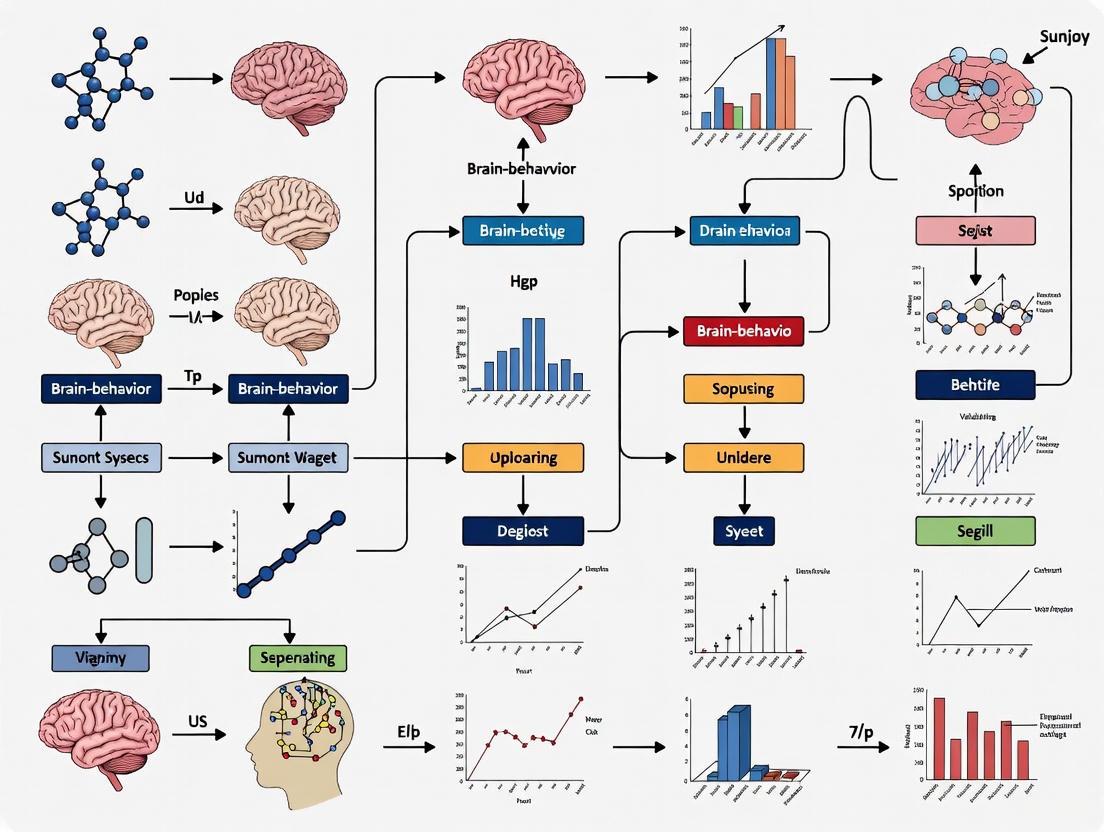
This article explores the integration of network science to rigorously validate brain-behavior associations in clinical neuroscience.
Validating Brain-Behavior Associations: A Network Framework for Clinical Neuroscience and Drug Development
Abstract
This article explores the integration of network science to rigorously validate brain-behavior associations in clinical neuroscience. It addresses the critical challenge of linking complex neural data to behavioral outcomes, a central pursuit for researchers and drug development professionals. The content spans from foundational network principles and multi-modal methodologies to troubleshooting design pitfalls and leveraging comparative approaches for robust, translatable findings. By synthesizing these intents, the article provides a comprehensive framework for enhancing the validity of biomarkers, refining animal models, and ultimately accelerating the development of neurological and psychiatric therapeutics.
The Network Approach: Connecting Brain Circuits to Clinical Behavior
Defining Network Science in Clinical Neuroscience and Psychopathology
In recent years, a conceptual shift has occurred in clinical neuroscience and psychopathology, moving from localized, lesion-based models toward a framework that embraces the inherent complexity of brain-behavior relationships. This transformation has been fueled by the emergence of network science, which provides a universal quantitative framework for analyzing complex systems [1]. The promise of this integrated approach lies in a united framework capable of tackling one of the most fundamental questions in science: how to understand the intricate link between brain and behavior [2] [3]. This guide explores how network science principles are redefining our understanding of clinical conditions by mapping the complex webs of interaction between neural structures and behavioral manifestations, offering researchers and drug development professionals new paradigms for diagnostic and therapeutic innovation.
Network science may be succinctly described as "the science of connections" [1]. It employs graphs—abstract mathematical constructs of nodes and connections—to model complex systems ranging from social networks to biological systems [1]. When applied to clinical neuroscience and psychopathology, network science provides powerful tools to move beyond simplistic one-to-one mappings between brain regions and functions, instead embracing the multidimensional, interactive nature of neural systems and their behavioral correlates [2]. This approach has created synergistic opportunities between previously disconnected research fields, enabling the development of more sophisticated models of brain-behavior relationships [3].
Theoretical Foundations: From Brain Modes to Network Models
Historical Evolution of Brain-Behavior Concepts
The theoretical underpinnings of network approaches in clinical neuroscience can be traced to pioneering work that conceptualized regularities in brain-behavior relationships. Anticipating the current network-based transformation, Godefroy and colleagues (1998) proposed four elementary typologies of brain-behaviour relationships termed 'brain modes' (unicity, equivalence, association, summation) as building blocks to describe associations between intact or lesioned brain regions and cognitive processes or neurological deficits [4]. This framework represented one of the earliest attempts to conceptualize neurological symptoms as emerging from interactions between multiple anatomical structures organized in networks, rather than from models emphasizing individual regional contributions [4].
The original brain modes framework has since been expanded and refined in the new computational era, with the addition of a fifth mode (mutual inhibition/masking summation) to better account for the full spectrum of observed clinical phenomena [4]. This theoretical evolution reflects the growing recognition that connectional (hodological) systems perspectives are essential for formulating cognition as subserved by hierarchically organized interactive brain networks [4].
The Network Approach to Psychopathology
In parallel developments within psychopathology, network approaches have emerged as alternatives to traditional latent variable models of mental disorders. Rather than conceiving symptoms as manifestations of underlying disorders, network perspectives conceptualize mental disorders as causal systems of mutually reinforcing symptoms [2] [3]. This paradigm shift has profound implications for understanding the dynamic interplay between biological substrates and psychological phenomena, suggesting that psychopathology may emerge from feedback loops within interconnected systems spanning neural, cognitive, and behavioral domains.
The integration of these simultaneously developing but largely separate applications of network science—in clinical neuroscience and psychopathology—creates exciting opportunities for a unified framework [3]. By introducing conventions from both fields and highlighting similarities, researchers can create a common language that enables the exploitation of synergies, ultimately leading to more comprehensive models of brain-behavior relationships in health and disease [2].
Comparative Analysis of Network Methodologies
Conceptual Models of Brain-Behavior Relationships
Table 1: Brain Modes Framework for Clinical Neuroscience
| Brain Mode Type | Clinical Definition | Research Example | Network Science Interpretation |
|---|---|---|---|
| Unicity | A behavioural deficit is always linked to damage of a single brain structure | Theoretical only; may oversimplify neural systems | Single node failure point in network |
| Equivalence | Similar deficit appears after damage to any of several brain structures | Documented in aphasia, memory deficits, motor function | Several nodes are positive contributors with functional overlap |
| Association | Deficit appears only when two brain structures are simultaneously damaged | Theoretical in Balint syndrome, confabulations | Several nodes are positive contributors with joint functional contribution |
| Summation | Severe deficit appears when several structures are damaged simultaneously | Documented in language networks | Multiple positive contributors with redundant and synergistic interactions |
| Mutual Inhibition | Second lesion produces paradoxical behavioural improvement | Documented in visuospatial attention | Negative contributors with synergistic inhibitory interactions |
The brain modes framework provides a valuable taxonomy for classifying and understanding different types of brain-behavior relationships observed in clinical practice and research [4]. The equivalence mode, frequently observed clinically, epitomizes a situation in which damage to two separate structures provokes similar behavioural deficits, as seen in aphasia, memory loss, and executive deficits where different lesion locations produce comparable symptoms [4]. For instance, verbal paraphasias have been linked to either temporal or caudate lesions, while non-fluent aphasia depends on frontal or putamen lesions [4].
The association mode describes scenarios where two brain regions must both be damaged to generate a neurological deficit, observed theoretically in conditions such as Balint syndrome, reduplicative paramnesia, confabulations, global aphasia, and dysexecutive functions [4]. In contrast, the summation mode characterizes interactions where lesions in multiple regions result in specific deficits that prove greater than the sum of individual lesion effects when structures are simultaneously damaged [4].
Most intriguingly, the more recently described mutual inhibition/masking summation mode accounts for situations where a second lesion produces paradoxical behavioural improvement from a deficit generated by an earlier lesion, a phenomenon documented clinically and theoretically [4]. This fifth mode illustrates the counterintuitive dynamics that can emerge in complex neural networks and highlights the importance of inhibitory interactions in brain function.
Analytical Tools and Computational Approaches
Table 2: Network Science Tools for Clinical Neuroscience Research
| Tool/Platform | Primary Application | Key Strengths | Limitations |
|---|---|---|---|
| NetworkX | Network analytics in Python | User-friendly, extensive documentation, Matplotlib integration | Slow with larger networks, computational limitations [1] |
| iGraph | Large network analysis | Superior computational speed, efficient for large datasets | Steeper learning curve, especially in Python [1] |
| Graph-tool | Efficient network analysis | C++ implementation, fast statistical tools | Less beginner-friendly [5] |
| Cytoscape | Biological network visualization | Intuitive interface, extensive app ecosystem | Poor performance with very large networks [5] |
| Gephi | Network visualization | Free, point-and-click interface, publication-quality visuals | Desktop application only [1] |
| Brain Connectivity Toolbox (BCTPY) | Network neuroscience | Specialized for brain networks, comprehensive metrics | Domain-specific, less generalizable [5] |
| Network Repository | Data source & benchmarking | Thousands of real-world network datasets, interactive visualization | Varying data quality and documentation [6] |
The methodological ecosystem for network science in clinical research encompasses diverse tools optimized for different aspects of network analysis. For Python-based analyses, NetworkX serves as an accessible entry point with its user-friendly syntax that "almost feels like speaking in English," though its computational speed proves limiting with larger networks [1]. For enhanced performance with substantial datasets, iGraph (C implementation) and graph-tool (C++ implementation) offer superior computational efficiency at the cost of a steeper learning curve [1] [5].
Specialized platforms like Cytoscape cater specifically to biological networks with intuitive graphical interfaces that don't require programming knowledge, supported by an extensive ecosystem of apps (such as ClueGo and MCODE) for functional enrichment and molecular profiling analyses [5]. Meanwhile, Gephi remains a popular choice for network visualization, capable of producing publication-quality figures through its point-and-click interface [1].
For researchers seeking standardized datasets, Network Repository provides the first interactive scientific network data repository with thousands of real-world network datasets across 30+ domains, facilitating benchmarking and methodological comparisons [6]. The integration of these tools creates a robust methodological foundation for applying network approaches to clinical neuroscience questions.
Experimental Protocols and Validation Frameworks
Multi-Modal Data Integration Methodology
The integration of brain and behavioral data represents a core challenge in clinical network neuroscience. Blanken and colleagues (2021) have proposed three methodological avenues for combining networks of brain and behavioral data [2] [3]:
Network Regression Frameworks: These approaches examine how brain networks predict behavioral variables or networks, using techniques such as network-based statistics or multivariate regression models that incorporate network features as predictors.
Data Fusion Methods: Including joint embedding techniques, these methods simultaneously represent brain and behavioral data in a shared latent space, allowing researchers to identify dimensions that capture covariation between brain and behavioral features.
Multi-Layer Network Models: These frameworks represent brain and behavioral data as different layers in a multi-layer network, enabling the quantification of cross-layer interactions and the identification of motifs that span neural and behavioral domains.
These approaches enable researchers to move beyond correlational analyses toward models that can capture the dynamic, multi-level interactions between neural systems and behavioral manifestations.
Validation Protocols for Brain-Behavior Associations
Validating network models of brain-behavior relationships requires rigorous methodological standards:
Lesion Network Mapping Protocol:
- Lesion Identification: Precisely delineate lesion boundaries using structural neuroimaging (e.g., MRI, CT)
- Network Localization: Map lesions onto reference brain networks using normative connectome data (e.g., from the Human Connectome Project)
- Symptom Assessment: Quantify behavioral deficits using standardized clinical instruments
- Network Inference: Identify networks commonly associated with specific symptoms across patients
- Predictive Validation: Test whether network locations predict symptoms in independent cohorts
Multiperturbation Shapley Value Analysis (MSA) Protocol: The MSA approach builds on game-theoretic principles to characterize functional contributions of brain structures by analyzing isolated and combined regional contributions to clinical deficits [4]. This method:
- Treats brain structures as "players" in a complex coalition (network or system)
- Quantifies both positive and negative contributions of each structure
- Reveals redundant interactions (functional overlap) and synergistic interactions (complementary functions)
- Has been successfully applied to post-stroke lesion data to establish causal implications of grey and white matter structures in specific cognitive domains [4]
Network Analysis Workflow for Clinical Neuroscience
Application to Clinical Research: Autism Case Example
Autism research accurately represents research lines in both network neuroscience and psychological networks, providing an illustrative case example of how network approaches can bridge brain and behavior [2] [3]. In autism studies, network approaches have been applied to:
Brain Network Organization: Revealing altered connectivity patterns, particularly in social brain networks, using resting-state functional MRI and diffusion tensor imaging.
Symptom Networks: Mapping relationships between core autistic features (social communication challenges, restricted interests, repetitive behaviors) and co-occurring conditions (anxiety, sensory sensitivities).
Multi-Level Integration: Examining how alterations in neural network organization relate to symptom network structure, potentially identifying key pathways that bridge biological and behavioral manifestations of autism.
This integrative approach demonstrates how network science can move beyond descriptive comorbidity patterns toward mechanistic models that explain how alterations in neural system organization give rise to characteristic behavioral profiles.
Computational Tools for Network Analysis
Table 3: Essential Research Reagents for Network Neuroscience
| Resource Category | Specific Tools | Primary Function | Access Method |
|---|---|---|---|
| Programming Libraries | NetworkX, iGraph, BCTPY | Network construction, analysis, and statistics | Python/R packages |
| Visualization Platforms | Gephi, Cytoscape, Circos | Network visualization and exploration | Desktop applications |
| Data Resources | Network Repository, Stanford SNAP | Benchmarking datasets, reference networks | Online repositories |
| Specialized Analysis | graph-tool, MSA algorithms | Advanced network statistics, causal inference | Python/C++ libraries |
| Educational Resources | "Network Science" (Barabási), "A First Course in Network Science" | Theoretical foundations, practical tutorials | Textbooks, online materials |
The "Research Reagent Solutions" for network neuroscience encompass both software tools and educational resources that enable researchers to implement network approaches effectively. For programming-based analyses, NetworkX provides the most accessible entry point with comprehensive documentation and extensive algorithmic coverage [1] [5]. More computationally intensive analyses may leverage iGraph or graph-tool for improved performance with large networks [1].
Visualization represents a critical component of network analysis, with Gephi offering publication-quality outputs through an intuitive point-and-click interface [1]. For biological networks specifically, Cytoscape and its associated apps (ClueGo, MCODE) provide specialized functionality for molecular interaction networks and pathway analyses [5].
Foundational educational resources include Barabási's comprehensive textbook "Network Science" (2016), which offers an all-inclusive technical foundation in network mathematics, and "A First Course in Network Science" with its practical programming tutorials using real datasets like the C. Elegans neural network [1] [5].
Research Resource Integration Pipeline
Future Directions and Clinical Translation
The integration of network science approaches in clinical neuroscience and psychopathology holds significant promise for advancing both basic understanding and clinical applications. Future developments will likely focus on:
Dynamic Network Models: Moving beyond static network representations to capture temporal dynamics in brain-behavior relationships, potentially using time-varying network approaches from graph theory.
Personalized Network Medicine: Applying network principles to develop individualized models of brain-behavior relationships that can inform personalized neurorehabilitation therapies [4].
Multi-Scale Integration: Developing frameworks that bridge molecular, cellular, systems, and behavioral levels of analysis to create comprehensive network models of clinical conditions.
Intervention Targeting: Using network identification of key nodes and edges to inform targeted interventions, whether through neuromodulation, pharmacological approaches, or behavioral therapies.
As these methodologies continue to mature, network science approaches are poised to transform how researchers and clinicians conceptualize, diagnose, and treat conditions spanning the spectrum from neurological disorders to psychiatric conditions. By providing quantitative frameworks for understanding complex brain-behavior relationships, network science enables a more nuanced, systems-level approach to clinical neuroscience that acknowledges the inherent complexity of both brain organization and behavioral manifestation.
In clinical neuroscience, the brain is a complex network of interconnected regions. Graph theory provides a powerful mathematical framework to model this organization, transforming neuroimaging data into graphs where nodes represent brain areas and edges represent the structural or functional connections between them [7]. Analyzing the network topology—the arrangement of these nodes and edges—allows researchers to quantify brain organization and validate robust brain-behavior associations [8]. This guide compares the core concepts and analytical approaches used to unravel the brain's connectome.
Foundational Concepts of Network Topology
The properties below are fundamental for analyzing and comparing brain networks. They help translate the complex structure of the brain into quantifiable metrics.
Table 1: Key Topological Properties of Brain Networks
| Topological Concept | Definition & Analogy | Relevance in Clinical Neuroscience |
|---|---|---|
| Node Degree [7] | The number of connections a node has. Analogous to the number of direct flights from an airport hub. | Nodes with a high degree (hubs) are critical for integration of brain information; their disruption is implicated in disorders like schizophrenia [7]. |
| Shortest Path [7] | The minimum number of edges required to travel between two nodes. Analogous to the most efficient route between two locations. | Shorter paths enable efficient information transfer. Longer paths may indicate disrupted neural communication in psychiatric illness [7]. |
| Scale-Free Property [7] | A network structure where most nodes have few connections, but a few hubs have many. | Brain networks are thought to be scale-free, making them robust to random damage but vulnerable to targeted hub attacks, as seen in some neurodegenerative diseases [7]. |
| Transitivity (Clustering) [7] | The probability that two nodes connected to a common node are also connected to each other. Analogous to "the friend of my friend is also my friend." | High clustering indicates specialized, modular processing within local brain communities. Alterations are seen in autism spectrum disorder [7]. |
| Centrality [7] | A family of measures quantifying a node's importance for network connectivity (e.g., betweenness centrality tracks how many shortest paths pass through a node). | Identifies bottleneck regions critical for global information flow. Centrality changes are documented in PTSD and depression [8]. |
Experimental Protocols for Network Neuroscience
Translating raw neuroimaging data into a graph for analysis requires a structured workflow. The methodology below outlines the standard pipeline for constructing and analyzing brain networks.
Objective: To reconstruct a structural or functional brain network from neuroimaging data and calculate its topological properties to identify correlates of behavior or clinical symptoms.
Workflow Summary: The process involves defining the network nodes and edges from imaging data, constructing a connectivity matrix, and then applying graph theory to compute topological metrics.
Detailed Methodology:
- Data Acquisition: Acquire high-resolution neuroimaging data. For structural networks, diffusion-weighted magnetic resonance imaging (dMRI) is used to trace white matter tracts [8]. For functional networks, functional MRI (fMRI) captures blood-oxygen-level-dependent (BOLD) signals to infer correlated neural activity between regions [8].
- Network Construction:
- Node Definition: The brain is parcellated into distinct regions of interest (ROIs) using a standardized atlas. Each ROI becomes a node in the graph.
- Edge Definition: For structural networks, the number of white matter streamlines between ROIs, derived from dMRI, defines edge weight. For functional networks, the statistical correlation (e.g., Pearson's correlation) between the fMRI time series of two ROIs defines the edge weight.
- Connectivity Matrix: The result is an N x N symmetric matrix (where N is the number of nodes), where each cell represents the connection strength between two nodes.
- Graph Analysis: The connectivity matrix is treated as a graph, and its topology is interrogated using the metrics defined in Table 1. Software toolboxes like the Brain Connectivity Toolbox are typically used to calculate degree, shortest path length, clustering coefficient, and centrality for each node and for the network as a whole.
- Statistical Comparison & Clinical Validation: The computed graph metrics are compared between a patient group (e.g., individuals with PTSD) and a healthy control group [8]. Statistical tests (e.g., t-tests, ANCOVA) identify significant differences in topology. These differences are then correlated with clinical measures (e.g., symptom severity, cognitive test scores) to establish brain-behavior associations [8].
Comparative Analysis of Network Mapping Techniques
Different techniques for mapping brain circuits offer trade-offs between spatial resolution and invasiveness. The table below compares methods used to derive and validate network-based treatment targets.
Table 2: Comparison of Network Mapping & Modulation Techniques
| Methodology | Spatial Resolution | Invasiveness | Key Application in Network Validation | Representative Finding |
|---|---|---|---|---|
| Lesion Network Mapping [8] | High (MRI-based) | N/A (Post-hoc analysis) | Maps the network of brain lesions that cause a specific symptom to identify therapeutic targets. | A specific brain network connected to lesion locations that modify psychiatric symptoms can be identified [8]. |
| Functional MRI (fMRI) [8] | Moderate (~3mm) | Non-invasive | Measures functional connectivity to identify dysregulated circuits in patient populations. | Can identify multimodal neural signatures of PTSD susceptibility post-trauma [8]. |
| Transcranial Magnetic Stimulation (TMS) [8] | Moderate (~1cm) | Non-invasive | Tests causality by modulating a node and measuring behavioral and network-wide effects. | Used in clinical trials to test brain stimulation targets derived via network mapping [8]. |
| Transcranial Ultrasound (TUS) [8] | High (~2-3mm) | Non-invasive | Allows focal neuromodulation of deep-brain areas (e.g., amygdala) implicated in psychiatric disease [8]. | A developing technique for rebalancing neural circuit stability in deep-brain areas [8]. |
The Scientist's Toolkit: Research Reagent Solutions
This table details essential materials and tools for conducting graph-based analyses in clinical neuroscience.
Table 3: Essential Tools for Network Neuroscience Research
| Research Reagent / Tool | Function & Explanation |
|---|---|
| Diffusion MRI Tractography | Reconstructs the white matter structural pathways (the "wires") of the brain, providing the data to define structural edges in a brain graph [8]. |
| Resting-State fMRI | Measures spontaneous, low-frequency brain activity to map functional connectivity, defining the edges for a functional brain network without requiring a task [8]. |
| Standardized Brain Atlas | A predefined map of the brain's regions used to consistently parcellate the brain into nodes across all study participants, ensuring comparability [7]. |
| Brain Connectivity Toolbox | A collection of standardized functions and algorithms for calculating graph theory metrics (e.g., centrality, clustering) from network data [7]. |
| Network Mapping Software | Specialized software for visualizing and analyzing complex networks, offering layout algorithms and interactive exploration to identify patterns like hubs and clusters [9]. |
Advanced Analysis: From Static to Dynamic Networks
The brain is a dynamic system, and its network topology changes over time. Advanced analyses move beyond static snapshots to capture this temporal nature, which is crucial for understanding processes like learning or the fluctuating symptoms in mood disorders.
Summary of Dynamic Analysis: This approach involves acquiring a series of brain network snapshots over time (e.g., using multiple fMRI scans) [10]. Analyzing this time series reveals how network properties evolve, allowing researchers to:
- Identify temporal hubs that flexibly switch their connections.
- Track network state trajectories to see how the brain transitions between different organizational patterns.
- Calculate time-varying centrality to understand how the functional importance of a brain region fluctuates, potentially linking these dynamics to behavioral states or symptom changes [10].
Analytical Framework Comparison at a Glance
The following table provides a high-level comparison of three analytical frameworks used for validating brain-behavior associations in clinical neuroscience, summarizing their core approaches, data integration capabilities, and primary applications.
| Framework Name | Core Analytical Approach | Type of Data Integrated | Key Output | Stated Advantage | Primary Application in Reviewed Studies |
|---|---|---|---|---|---|
| Interpretable & Integrative Deep Learning [11] | Multi-view unsupervised deep learning | Imaging (structural MRI), clinical behavioral scores, genetics | Stable brain-behavior associations | Identifies relevant associations with incomplete data; isolates variability from confounders | Discovering brain-behaviour links in psychiatric syndromes |
| RSRD "Barcode" with hctsa [12] | Highly comparative time-series analysis (hctsa) | Resting-state fMRI (BOLD time-series) | 44 reliable RSRD features; individualized brain "barcode" | High test-retest reliability; generalizable across cohorts and life stages | Linking intra-regional dynamics to substance use and cognitive abilities |
| i-ECO (Integrated-Explainability through Color Coding) [13] | Dimensionality reduction & color-coding of fMRI metrics | fMRI (ReHo, ECM, fALFF) | Integrated color-coded brain maps; high discriminative power | High diagnostic classification power; accessible visualization for clinical practice | Discriminating between schizophrenia, bipolar disorder, ADHD, and controls |
Detailed Experimental Protocols and Data
This section provides the detailed methodologies and quantitative results from the key studies that form the basis of this comparative guide.
Interpretable & Integrative Deep Learning Protocol
- Objective: To move beyond single-data-source classification and discover stable brain-behavior associations across psychiatric syndromes by integrating multiple data sources [11].
- Dataset: Healthy Brain Network cohort [11].
- Input Features: Clinical behavioral scores and brain imaging features from structural MRI [11].
- Methodology Workflow:
- Key Quantitative Findings:
Resting-State Regional Dynamics (RSRD) "Barcode" Protocol
- Objective: To comprehensively characterize intra-regional brain dynamics and extract a reliable, generalizable set of features that serve as an individual-specific 'barcode' for linking to behavior [12].
- Datasets:
- Input Features: ~5,000 time-series features per brain region from resting-state fMRI (BOLD) data, extracted using highly comparative time-series analysis (hctsa) [12].
- Methodology Workflow:
- Key Quantitative Findings:
| Analysis Type | Specific Metric/Association | Result / Finding |
|---|---|---|
| Feature Reliability | Intra-class Correlation (ICC) of 44 refined features (HCP-YA) | Mean ICC = 0.587 ± 0.06 [12] |
| Individual Identification | Fingerprinting Accuracy | Up to 95% across sessions [12] |
| Cross-Cohort Reliability | ICC correlation (HCP-YA vs. HCP-D vs. MSC) | Spearman r = 0.96 - 0.99 [12] |
| Brain-Behavior Associations | Nonlinear autocorrelations in unimodal regions | Linked to substance use traits [12] |
| Brain-Behavior Associations | Random walk dynamics in higher-order networks | Linked to general cognitive abilities [12] |
i-ECO Integrated Visualization Protocol
- Objective: To provide an integrative and easy-to-understand method for analyzing and visualizing fMRI results by combining multiple analysis dimensions, with high power for discriminating psychiatric diagnoses [13].
- Dataset: UCLA Consortium for Neuropsychiatric Phenomics (130 healthy controls, 50 schizophrenia, 49 bipolar disorder, 43 ADHD) [13].
- Input Features: Three fMRI metrics averaged per Region of Interest (ROI) [13]:
- Methodology Workflow:
- Key Quantitative Findings:
- The i-ECO methodology showed between-group differences that could be easily appreciated visually [13].
- A convolutional neural network model trained on these integrated color-coded images achieved a precision-recall Area Under the Curve (PR-AUC) of >84.5% for each diagnostic group on the test set [13].
The Scientist's Toolkit: Essential Research Reagents & Materials
The following table details key resources and computational tools essential for implementing the analytical frameworks discussed in this guide.
| Item Name | Type / Category | Key Function in the Research Context | Example from Featured Research |
|---|---|---|---|
| Multi-Source Neuroimaging Cohorts | Data Resource | Provide large-scale, often open-access, datasets with imaging and behavioral data for discovery and validation. | Healthy Brain Network [11]; HCP-YA, HCP-D [12]; UCLA CNP [13] |
| hctsa Toolbox | Computational Tool | Automates the extraction of a massive, comprehensive set of time-series features from data, enabling data-driven discovery. | Used to extract ~5,000 features per region for RSRD profiling [12] |
| Stability Selection | Statistical Method | Improves the robustness of feature selection in high-dimensional data, reducing false discoveries. | Combined with digital avatars to find stable brain-behaviour associations [11] |
| AFNI (Analysis of Functional NeuroImages) | Software Suite | A comprehensive tool for preprocessing and analyzing functional and structural MRI data. | Used for fMRI preprocessing in the i-ECO method [13] |
| Convolutional Neural Network (CNN) | Machine Learning Model | A deep learning architecture particularly effective for image classification and pattern recognition tasks. | Used to classify diagnostic groups based on i-ECO color-coded images [13] |
| Test-Retest Reliability Analysis | Statistical Protocol | Quantifies the consistency of a measurement across multiple sessions, critical for individualized biomarkers. | Used to select the 44 most reliable RSRD features (ICC > 0.5) [12] |
Identifying Core Brain-Behavior Networks in Health and Disease
In clinical neuroscience, a paradigm shift is occurring from studying isolated brain regions to investigating complex, large-scale networks. The brain is fundamentally a complex system of interconnected networks, and understanding behavior—in both health and disease—requires mapping these core brain-behavior networks. This approach conceptualizes the brain as a series of interacting networks where cognitive functions and clinical symptoms emerge from the dynamic interplay between distinct but interconnected systems [14]. Research now focuses on identifying how these networks reconfigure across different cognitive loads and how their disruption manifests in various neuropsychiatric disorders [15]. The promise of this network approach lies in creating a unified framework to tackle one of the most fundamental questions in neuroscience: understanding the precise links between brain connectivity and behavior [2].
Core networks consistently identified across studies include the salience network (SN) for detecting behaviorally relevant stimuli, the central executive network (CEN) for cognitive control and working memory, and the default mode network (DMN) for self-referential thought [16] [14]. These networks form the fundamental architecture upon which brain-behavior relationships are built, and their interactions create the neural basis for complex human behavior. This guide provides a comparative analysis of methods for identifying these networks, their alterations in disease states, and the experimental approaches driving discoveries in cognitive network neuroscience.
Core Brain Networks: Architecture and Function
Defining the Major Networks
The foundation of brain-behavior relationships lies in several intrinsically connected large-scale networks. Each network supports distinct but complementary aspects of cognitive and emotional functioning:
Salience Network (SN): Comprising the dorsal anterior cingulate and anterior insula regions, this network functions as an attentional gatekeeper, identifying and filtering internal and external stimuli to guide behavior by detecting survival-relevant events in the environment [16] [17]. It acts as a critical interface between cognitive, emotional, and homeostatic systems, essentially determining which stimuli warrant attention and action [17].
Central Executive Network (CEN): Consisting of regions in the middle and inferior prefrontal and parietal cortices, including the dorsolateral prefrontal cortex (DLPFC), this network is engaged by higher-level cognitive tasks and is crucial for adaptive cognitive control, working memory, and goal-directed behavior [16] [14].
Default Mode Network (DMN): Including regions in the medial frontal cortex and posterior cingulate, this network typically reduces its activity during active cognitive demands and is associated with attention to internal emotional states and self-referential processing [16]. During cognitively demanding tasks, proper DMN suppression is essential for maintaining focus on external stimuli.
Frontoparietal Network (FPN): Often overlapping with conceptions of the CEN, this network demonstrates high flexibility across tasks and is crucial for cognitive control and task switching [15]. Research has shown it to be one of the most flexible networks, changing its connectivity patterns significantly across different cognitive states.
Network Interactions in Cognitive Processing
The dynamic interactions between these core networks create the neural basis for complex behavior. Rather than operating in isolation, these networks engage in a carefully choreographed reciprocal relationship [16]. The salience network is thought to play a crucial role in switching between the default mode and executive networks, facilitating transitions between internal and external focus [16].
During working memory tasks, studies have demonstrated that the FPN and DMN exhibit distinct reconfiguration patterns across cognitive loads. Both networks show strengthened internal connections at low demand states compared to resting state, but as cognitive demands increase from low (0-back) to high (2-back), some connections to the FPN weaken and are rewired to the DMN, whose connections remain strong [15]. This dynamic reconfiguration illustrates how network interactions adapt to support changing behavioral demands.
Table 1: Core Brain Networks and Their Behavioral Correlates
| Network | Key Regions | Primary Functions | Behavioral Correlates |
|---|---|---|---|
| Salience Network (SN) | Dorsal anterior cingulate, anterior insula | Detecting relevant stimuli, attentional control | Interoceptive awareness, emotional response, attention switching |
| Central Executive Network (CEN) | DLPFC, inferior parietal cortex | Cognitive control, working memory, decision-making | Problem-solving, planning, working memory performance |
| Default Mode Network (DMN) | Medial prefrontal cortex, posterior cingulate | Self-referential thought, memory consolidation, social cognition | Mind-wandering, autobiographical memory, theory of mind |
| Frontoparietal Network (FPN) | Lateral prefrontal, posterior parietal | Task switching, cognitive control, adaptive processing | Cognitive flexibility, task engagement, attention control |
Methodological Comparison: Mapping Brain-Behavior Networks
Analytical Approaches for Network Identification
Multiple analytical frameworks have been developed to identify and quantify brain-behavior networks, each with distinct strengths, limitations, and appropriate application scenarios:
Graph Theory: This approach models the brain as a graph composed of nodes (brain regions) and edges (region-region connections), allowing quantification of topological organization through metrics like clustering coefficient, path length, and modularity [18] [14]. Graph theory excels at characterizing the overall architecture of brain networks but faces challenges in directly linking specific network features to particular behaviors [18].
Network-Based Statistic (NBS): Specifically designed for identifying connections that differ between groups (e.g., healthy controls vs. clinical populations), NBS controls the family-wise error rate when mass-univariate testing is performed at every connection [19]. Unlike graph theory, NBS exploits the extent to which connections comprising a contrast of interest are interconnected, offering increased power for identifying dysconnected subnetworks [19].
Connectome-Based Predictive Modeling (CPM): A data-driven approach that searches for all neural connections related to human behaviors without prior bias [18]. CPM builds models that predict individual differences in behavior from connectivity patterns, often revealing novel connections not previously associated with the examined behavior, though these findings require careful interpretation and validation [18].
Granger Causality: Goes beyond correlation to examine potential causal influences between brain regions by testing whether activity in one region predicts future activity in another [16]. This method has been particularly valuable for examining directional relationships between networks, such as impaired excitatory causal outflow from the anterior insula to the DLPFC in schizophrenia [16].
Table 2: Methodological Approaches for Identifying Brain-Behavior Networks
| Method | Application Scenarios | Strengths | Weaknesses |
|---|---|---|---|
| Graph Theory | Quantifying topological architecture of brain networks | Provides multiple metrics to describe network organization | Ambiguous behavioral interpretation; no causal inference |
| Network-Based Statistic (NBS) | Identifying group differences in connectivity | Enhanced power to detect interconnected dysconnected subnetworks | Limited to group comparisons rather than individual prediction |
| Connectome-Based Predictive Modeling (CPM) | Predicting behavior from whole-brain connectivity | Data-driven, unbiased approach discovering novel connections | Findings may be difficult to interpret; requires validation |
| Granger Causality | Examining directional influences between regions | Provides evidence for potential causal relationships | Controversial regarding true causal identification; sensitive to confounds |
| Multivariate Pattern Analysis (MVPA) | Classifying cognitive states from brain activity | High sensitivity for recognizing behavior-related states | Complex interpretation of neural mechanisms |
Experimental Workflow for Network Identification
The following diagram illustrates the standard experimental workflow for identifying core brain-behavior networks across health and disease, integrating multiple methodological approaches:
This workflow begins with data acquisition using neuroimaging techniques like fMRI, followed by extensive preprocessing to address artifacts (particularly motion correction, crucial for clinical populations) [16] [18]. The analysis phase then applies complementary methodological approaches to identify core networks and their relationship to behavioral measures, with final validation through replication and clinical application.
Network Alterations in Disease States
Schizophrenia: A Dysconnection Syndrome
Schizophrenia represents a classic example of network dysfunction, often described as a "dysconnection" syndrome characterized by impaired causal interactions between the salience and central executive networks [16]. Research using Granger causality has demonstrated specific deficits in the excitatory causal outflow from the anterior insula (SN node) to the DLPFC (CEN node), along with impaired inhibitory feedback from the DLPFC to salience network regions [16].
Network-Based Statistic analysis has identified an expansive dysconnected subnetwork in schizophrenia, primarily comprising fronto-temporal and occipito-temporal dysconnections [19]. These network alterations correlate with clinical symptoms, as the severity of deficits in interactions between salience and CEN systems predicts impairment in symptom severity and processing speed [16]. Additionally, research on self-awareness networks in schizophrenia has revealed that approximately 40% of self-awareness connectivity is altered, affecting the integration of internal states with external reality [20].
Persisting Post-Concussion Symptoms: Salience Network Dysfunction
In persisting symptoms after concussion (PSaC), research has identified the salience network as a core disrupted network underlying diverse symptoms [17]. Unlike the broader network dysfunction in schizophrenia, PSaC involves specific perturbations to the salience network's ability to filter and prioritize internal and external stimuli, leading to combinations of headache, depression, vestibular dysfunction, cognitive impairment, and fatigue [17].
This salience network dysfunction has direct therapeutic implications, as researchers have used network identification to propose novel neuromodulation targets within the DLPFC that are distinct from traditional depression targets [17]. This represents a prime example of how identifying core disrupted networks can guide targeted interventions.
Comparative Network Alterations Across Conditions
The table below compares network alterations across different clinical conditions, highlighting both shared and distinct patterns of network dysfunction:
Table 3: Comparative Network Alterations in Clinical Conditions
| Condition | Core Network Alterations | Behavioral/Cognitive Manifestations | Therapeutic Implications |
|---|---|---|---|
| Schizophrenia | Impaired SN-CEN interactions; widespread dysconnections | Reality distortion, cognitive deficits, impaired self-awareness | Potential network-based neuromodulation targets |
| Persisting Concussion Symptoms | Salience network perturbation | Headache, dizziness, cognitive impairment, fatigue | Distinct DLPFC targets for rTMS different from depression |
| Major Depressive Disorder | Altered self-awareness networks (20% of connections) | Negative self-referential thought, rumination | Overlap with schizophrenia alterations (90% of MDD changes overlap) |
| Alzheimer's Disease | Default mode network disruption | Memory deficits, disorientation | Network stability measures may aid early detection |
Conducting rigorous research on brain-behavior networks requires specialized tools and analytical resources. The following table outlines key solutions and their applications in this field:
Table 4: Essential Research Reagents and Resources for Network Neuroscience
| Resource Category | Specific Examples | Function/Application |
|---|---|---|
| Neuroimaging Platforms | 3T fMRI scanners with high-resolution capabilities (e.g., Siemens Skyra) | Acquisition of BOLD signal for functional connectivity analysis [15] |
| Preprocessing Tools | FSL/FLIRT (motion correction), FSL/topup (distortion correction), ArtRepair | Addressing motion artifacts, distortion correction, and data quality control [16] [15] |
| Network Analysis Software | Brain Connectivity Toolbox, Network-Based Statistic toolbox | Graph theory metrics, statistical comparison of networks [19] [14] |
| Data Resources | Human Connectome Project, institutional datasets | Large-scale reference data for comparison and validation [17] [15] |
| Cognitive Task Paradigms | N-back working memory tasks, problem-solving tasks with performance feedback | Standardized behavioral measures linked to network activation [18] [15] |
| Statistical Platforms | MATLAB, Python, R with specialized neuroimaging packages | Implementation of custom analytical pipelines and statistical models |
Experimental Protocols for Network Identification
Protocol 1: Identifying Working Memory Networks Across Cognitive Loads
This protocol outlines the methodology for examining network reconfiguration across working memory demands, based on research with the Human Connectome Project dataset [15]:
Participant Population: Large cohorts (n=448+) including both healthy controls and clinical populations for comparison. Exclusion criteria typically include excessive head motion (>0.5mm), insufficient fMRI frames, and outlier behavioral performance [15].
Task Design: N-back working memory tasks with varying cognitive loads (0-back, 2-back) compared to resting state baseline. Tasks should include math problems or similar stimuli with performance feedback and sufficient trials per condition [18] [15].
fMRI Acquisition Parameters: Standardized protocols including: repetition time (TR)=720ms, echo time (TE)=33.1ms, flip angle=52°, voxel size=2.0mm isotropic, with both left-right and right-left phase encoding [15].
Preprocessing Pipeline: Critical steps include: (1) gradient nonlinearity distortion correction; (2) 6 DOF motion correction; (3) distortion correction and scalp stripping; (4) registration to standard space; (5) frame scrubbing and interpolation for excessive motion; (6) band-pass filtering (0.009-0.08Hz); (7) regression of mean signal, white matter/CSF components, and movement parameters [15].
Network Construction: Define nodes using established brain parcellations (e.g., Power-264 atlas), with edges representing functional connectivity between node time series [15].
Analysis Approach: Apply graph theory metrics (modularity, connectivity strength) and calculate reconfiguration intensity between task states using metrics like nodal connectivity diversity [15].
Protocol 2: Identifying Disorder-Specific Network Alterations
This protocol describes methods for identifying network alterations in clinical populations such as schizophrenia or persisting concussion symptoms:
Participant Selection: Carefully matched case-control design, with comprehensive clinical characterization including symptom severity measures and cognitive performance scores [16] [17].
Data Acquisition: Resting-state fMRI complemented by task-based fMRI targeting relevant cognitive domains (e.g., working memory for schizophrenia, attention tasks for concussion) [16] [17].
Analytical Methods: Primary analysis using Network-Based Statistic for group comparisons, complemented by Granger causality analysis for directional influences between networks [16] [19].
Symptom Correlation: Relate network metrics (connection strength, causal influences) to dimensional measures of symptom severity and cognitive performance [16].
Validation Analyses: Test robustness to potential confounds (particularly motion), replicate findings in independent samples, and compare to healthy control networks [16].
The identification of core brain-behavior networks represents a transformative approach in clinical neuroscience, moving beyond localized brain function to understand how distributed network interactions support cognitive processes and how their disruption produces clinical symptoms. The comparative analysis presented here demonstrates that each methodological approach—from graph theory to predictive modeling—offers complementary insights into these network dynamics.
The consistent identification of the salience, executive, and default mode networks as core systems across health and disease highlights their fundamental role in brain function. Their dynamic reconfiguration across cognitive demands and characteristic alterations in conditions like schizophrenia and persisting concussion symptoms provide critical insights for developing network-based biomarkers and targeted interventions. As methods continue to evolve, particularly with advances in machine learning and multi-modal integration, the field moves closer to a comprehensive understanding of how brain networks give rise to behavior in both health and disease.
The Role of Large-Scale Neuroimaging Datasets in Discovery
Large-scale neuroimaging datasets have revolutionized clinical neuroscience research by providing the extensive data required to detect subtle brain-behavior associations with unprecedented statistical rigor. These datasets address the critical challenge of small effect sizes in neuroscience, where individual laboratories rarely possess the resources to collect samples large enough for robust, reproducible findings [21] [22]. Initiatives like the Human Connectome Project (HCP), Adolescent Brain Cognitive Development (ABCD) study, and UK Biobank now offer researchers worldwide access to comprehensive neuroimaging, genetic, behavioral, and phenotypic data, accelerating discoveries in brain function and dysfunction [21]. This guide objectively compares these pivotal resources, detailing their experimental protocols, data structures, and applications in validating brain-behavior relationships for clinical and pharmaceutical development.
Major Large-Scale Neuroimaging Datasets
The table below summarizes the key characteristics of major international neuroimaging datasets, highlighting their unique research applications:
Table 1: Comparison of Major Large-Scale Neuroimaging Datasets
| Dataset Name | Primary Focus | Sample Size | Key Imaging Modalities | Associated Data | Access Process |
|---|---|---|---|---|---|
| UK Biobank [21] [22] | Population-scale biomedical database | ~500,000 participants (age 40-69) | Structural MRI, fMRI, DTI | Genetic, health records, cognitive measures | Application required |
| ABCD Study [21] [22] | Child and adolescent brain development | ~11,000+ children (age 9-10 at baseline) | Structural MRI, resting-state fMRI, task fMRI | Substance use, mental health, cognitive assessments | Controlled access |
| Human Connectome Project (HCP) [21] [22] | Mapping human brain circuitry | ~1,200 healthy adults | High-resolution structural and functional MRI | Behavioral, demographic, genetic | Open access |
| China Brain Project [23] | Brain cognition, disease mechanisms, and brain-inspired intelligence | Targeted large-scale cohorts | Multi-scale neural mapping | Genetic, behavioral, clinical data | Varies by subproject |
| OpenNeuro [24] | Repository for shared neuroimaging data | Multiple datasets of varying sizes | Diverse MRI, EEG, MEG | Varies by contributed dataset | Open access |
Experimental Protocols and Methodologies
Data Acquisition and Preprocessing
Large-scale neuroimaging datasets employ standardized protocols to ensure data quality and comparability across participants and sites. The ABCD study, for instance, utilizes harmonized structural MRI (T1-weighted and T2-weighted), resting-state fMRI, and diffusion tensor imaging across multiple research sites [21]. A critical preprocessing consideration is the choice between raw data (requiring 1.35 GB per individual in ABCD, totaling ~13.5 TB for initial release) versus processed data (connectivity matrices requiring only ~25.6 MB) [21] [22]. Preprocessing pipelines typically include motion correction, spatial normalization, and artifact removal, with organization increasingly following the Brain Imaging Data Structure (BIDS) standard to facilitate reproducibility [21] [22].
Analytical Approaches for Brain-Behavior Associations
Research utilizing these datasets employs several methodological frameworks to establish robust brain-behavior relationships:
Precision Functional Mapping (PFM): This approach, exemplified in recent psychedelic research, involves dense repeated sampling of individual participants to improve signal-to-noise ratio and effect size detection [25]. In a psilocybin study, PFM revealed persistent decreases in hippocampus-default mode network connectivity up to three weeks post-administration, suggesting a neuroanatomical correlate of long-term effects [25].
Effect Network Construction: Methods like the artificial immune system approach for fMRI data analyze effective connectivity networks by preprocessing steps including head motion correction, normalization, and resampling, followed by Bayesian network structure learning to identify directional influences between brain regions [26].
Multi-Modal Data Integration: Advanced analytical frameworks incorporate non-brain data through methods like multi-modal representation learning, which transforms diverse data types (imaging, genetic, behavioral) into unified vector representations that capture shared semantics and unique features [27].
The following diagram illustrates a generalized workflow for analyzing large-scale neuroimaging datasets:
The Scientist's Toolkit: Essential Research Reagents
The table below details key resources for working with large-scale neuroimaging datasets:
Table 2: Essential Research Reagents and Resources
| Resource Category | Specific Tools/Platforms | Primary Function | Application Context |
|---|---|---|---|
| Data Storage Solutions | Local servers, Cloud storage (AWS, Google Cloud) | Store and manage large datasets (raw NIfTI: ~1.35GB/participant) | Essential for handling raw data; backup strategies critical [21] |
| Computational Frameworks | Bayesian network structure learning, Artificial immune systems | Identify directional influences in brain effect connection networks | Effective connectivity analysis from fMRI data [26] |
| Data Organization Standards | Brain Imaging Data Structure (BIDS) | Standardize file naming and organization across datasets | Facilitates reproducibility and data sharing [21] [24] |
| Quality Control Tools | Framewise Integrated Real-time MRI Monitoring (FIRMM) | Monitor data quality during acquisition | Particularly valuable for challenging populations (e.g., psychedelic studies) [25] |
| Multi-Modal Integration | Multi-modal representation learning, Knowledge graph frameworks | Transform diverse data types into unified semantic representations | Enables integration of imaging with genetic, behavioral data [27] |
Experimental Evidence and Validation Approaches
Pharmacological Intervention Studies
Recent precision imaging drug trials demonstrate how large-scale datasets can elucidate neuropharmacological mechanisms. A randomized cross-over study investigating psilocybin (PSIL) versus methylphenidate (MTP) employed dense repeated sampling (resting-state and task-based fMRI) before, during, and after drug exposure in seven healthy volunteers [25]. This design revealed that PSIL produced context-dependent desynchronization of brain activity acutely, with individual differences strongly linked to subjective psychedelic experience [25]. The study implemented advanced methodologies including multi-echo EPI imaging, Nordic thermal denoising, and physiological signal monitoring to maximize data quality despite challenges like head motion and autonomic arousal [25].
Cross-Dataset Validation Strategies
Robust validation of brain-behavior associations often requires leveraging multiple datasets to bolster sample sizes, particularly for rare conditions or specific population subsets [21]. This approach demonstrates reproducibility across samples and analytical methods. For instance, findings related to cognitive aging might be validated across UK Biobank, ABCD, and targeted clinical cohorts to distinguish normative from pathological trajectories. The following diagram illustrates this multi-dataset validation framework:
Large-scale neuroimaging datasets represent transformative resources for clinical neuroscience, enabling robust detection of brain-behavior associations through unprecedented statistical power and methodological rigor. The comparative analysis presented here demonstrates that while these datasets share common strengths in addressing small effect sizes, they offer complementary strengths—from UK Biobank's population-scale breadth to ABCD's developmental trajectory mapping and precision imaging trials' mechanistic insights. Successful utilization requires careful consideration of dataset selection, analytical methodology, and validation frameworks. As these resources continue to grow and evolve, they promise to accelerate the translation of neurobiological insights into clinical applications for psychiatric and neurological disorders.
Multi-Modal Methods: Integrating Neuroimaging, AI, and Digital Biomarkers
Leveraging MRI and fMRI for Circuit-Level Functional Analysis
Validating brain-behavior associations is a central goal in clinical neuroscience, requiring precise tools to map the brain's functional circuits. Magnetic Resonance Imaging (MRI) and functional Magnetic Resonance Imaging (fMRI) are cornerstone technologies for this endeavor. While conventional MRI provides exquisite anatomical detail, fMRI captures dynamic, activity-related changes in the brain, offering a window into its functional organization [28]. This guide objectively compares the performance of these imaging modalities for circuit-level analysis, supporting the broader thesis that understanding brain network dynamics is crucial for identifying clinical biomarkers and developing novel therapeutic strategies.
Technical Comparison: MRI vs. fMRI for Circuit-Level Analysis
The fundamental difference between these modalities lies in what they measure. Structural MRI visualizes neuroanatomy, whereas fMRI infers neural activity by detecting associated hemodynamic changes, most commonly using the Blood-Oxygen-Level-Dependent (BOLD) contrast [28] [29]. The following section provides a detailed, data-driven comparison of their capabilities and performance in functional circuit analysis.
Table 1: Performance Comparison of MRI and fMRI for Circuit-Level Analysis
| Feature | Structural MRI | fMRI (BOLD Contrast) |
|---|---|---|
| Primary Measured Signal | Tissue proton density (T1, T2 relaxation) | Changes in deoxygenated hemoglobin (dHb) concentration [29] |
| Temporal Resolution | Low (minutes) | Moderate (1-3 seconds typical TR) [29] |
| Spatial Resolution | Sub-millimeter | 1-3 millimeters (standard); limited by vascular source [28] [29] |
| Key Strength | Volumetry, cortical thickness, lesion detection | Mapping whole-brain functional networks & connectivity dynamics [30] |
| Circuit-Level Insight | Indirect (via structural connectivity) | Direct (via functional & effective connectivity) |
| BOLD Sensitivity | Not Applicable | ~1% signal change at 3T [29] |
| Primary Clinical Use | Diagnosis, surgical planning | Pre-surgical mapping, biomarker development [29] |
Table 2: Advanced Quantitative MRI (qMRI) Metrics for Microstructural Analysis [31]
| Quantitative Metric | Hypothesized Biological Sensitivity | Utility Across Age Span |
|---|---|---|
| T1ρ Adiabatic Relaxation | Cellular density [31] | Sharp changes in older age [31] |
| T2ρ Adiabatic Relaxation | Iron concentration [31] | Sharp changes in older age [31] |
| RAFF4 (Myelin Map) | Myelin density [31] | Sensitive in early adulthood, plateaus later [31] |
| Resting-State fMRI (wDeCe) | Global functional connectivity [31] | Sensitive in early adulthood, plateaus later [31] |
| NODDI (fICVF) | Neurite density [31] | Information missing |
| NODDI (ODI) | Neurite spatial configuration [31] | Information missing |
Experimental Protocols for Functional Connectivity Analysis
Task-Based fMRI and Functional Connectivity (TMFC)
Task-based fMRI analyses how the brain reconfigured its functional connectivity in response to specific cognitive demands. Several methods exist to derive Task-Modulated Functional Connectivity (TMFC) matrices, each with distinct strengths.
Table 3: Comparison of Task-Modulated Functional Connectivity (TMFC) Methods [30]
| Method | Description | Best For | Key Finding |
|---|---|---|---|
| Psychophysiological Interaction (sPPI/gPPI) | Models interaction between a physiological brain signal and a psychological task variable. | Block designs; event-related designs (with deconvolution) [30] | With deconvolution, shows high sensitivity in block and rapid event-related designs [30] |
| Beta-Series Correlation (BSC-LSS) | Correlates trial-by-trial beta estimates (from LSS regression) across brain regions. | Event-related designs with variable ISIs [30] | Most robust method to HRF variability; best for non-rapid event-related designs [30] |
| Correlation Difference (CorrDiff) | Simple difference in correlation between two task conditions. | Block designs [30] | Susceptible to spurious co-activations, especially in event-related designs [30] |
| Background FC (BGFC) | Correlates residuals after regressing out task activations. | Intrinsic, task-independent connectivity [30] | Similar to resting-state FC; does not isolate task-modulated changes [30] |
A biophysically realistic simulation study comparing these methods concluded that:
- The most sensitive method for rapid event-related designs and block designs is sPPI and gPPI with a deconvolution procedure [30].
- For other event-related designs, the BSC-LSS method is superior [30].
- cPPI (Correlational PPI) is not capable of reliably estimating TMFC [30].
- TMFC methods can recover rapid (100 ms) modulations of neuronal synchronization even from slow fMRI data (TR=2s), with faster acquisitions (TR<1s) improving sensitivity [30].
Resting-State fMRI (rs-fMRI) Dynamics Analysis
In contrast to task-based fMRI, rs-fMRI studies spontaneous brain fluctuations to map intrinsic functional architecture. Several methods characterize these dynamics, yielding different insights.
Table 4: Comparison of Resting-State fMRI Dynamics Methods [32]
| Method | Description | Temporal Characterization | Sensitivity to Quasi-Periodic Patterns (QPPs) |
|---|---|---|---|
| Sliding Window Correlation (SWC) | Computes correlation between regional time series within a sliding temporal window. | Tracks slow, continuous changes in functional connectivity [32] | Low sensitivity (with 60s window); cluster identity stable during 24s QPP sequences [32] |
| Phase Synchrony (PS) | Measures the instantaneous phase synchrony between oscillatory signals from different regions. | Captures rapid, transient synchronization events [32] | High sensitivity; mid-point of most QPP sequences grouped into a single cluster [32] |
| Co-Activation Patterns (CAP) | Identifies recurring, instantaneous spatial patterns of high co-activation. | Identifies brief, recurring brain-wide activity patterns [32] | High sensitivity; separates different phases of QPP sequences into distinct clusters [32] |
Visualizing Core Concepts and Workflows
The BOLD fMRI Signal Mechanism
The following diagram illustrates the neurovascular coupling process that generates the BOLD fMRI signal, from neural activity to the measured MR signal change.
Figure 1: The BOLD fMRI Signal Pathway. This diagram outlines the cascade from neural activity to the measured BOLD signal, involving neurovascular coupling, hemodynamic changes, and their effect on MRI relaxation parameters [28] [29].
Functional Connectivity Analysis Workflow
This workflow outlines the standard pipeline for processing fMRI data to extract both task-based and resting-state functional connectivity metrics.
Figure 2: Functional Connectivity Analysis Pipeline. The standard workflow from raw data acquisition to statistical validation of network measures, highlighting parallel paths for task and resting-state analyses [30] [29] [32].
The Scientist's Toolkit: Research Reagent Solutions
Table 5: Essential Resources for fMRI Circuit-Level Analysis
| Resource / Solution | Function / Purpose | Example Use Case |
|---|---|---|
| AAL3 Brain Atlas | Standardized parcellation of the brain into Regions of Interest (ROIs) for connectivity analysis [33] | Mapping fMRI scans to a consistent anatomical model to investigate brain-wide connectivity patterns [33] |
| Biophysically Realistic Simulation Platforms | Simulates neuronal activity and BOLD signals using neural mass models (e.g., Wilson-Cowan) and hemodynamic models (e.g., Balloon-Windkessel) [30] | Validating and comparing TMFC methods with known ground-truth connectivity [30] |
| Multivariate Pattern Analysis (MVPA) | A machine learning approach to extract features revealing complex functional connectivity patterns from fMRI data [33] | Classifying Alzheimer's disease stages by analyzing connectivity patterns between ROIs [33] |
| General Linear Model (GLM) Software | Statistical framework for modeling task-related BOLD responses and removing confounds (e.g., motion, drift) [29] | Isulating task-evoked activity from noise in block or event-related designs [29] |
| High-Field MRI Scanners (3T & 7T) | Provide increased BOLD signal-to-noise ratio (SNR) and spatial specificity [28] [29] | Improving detection of subtle circuit-level dysfunction in clinical populations [33] |
| Public Neuroimaging Datasets | Large-scale, curated datasets for method development and validation (e.g., OASIS, ADNI, HCP) [33] [30] | Benchmarking new analytical approaches against standardized data from healthy and clinical cohorts [33] |
AI and Machine Learning for Pattern Recognition in Neural Data
Artificial intelligence (AI) and machine learning (ML) have emerged as transformative technologies for analyzing complex neural data, enabling researchers to decode brain function and validate brain-behavior associations. In clinical neuroscience networks research, these technologies provide the computational power needed to identify meaningful patterns across massive datasets derived from neuroimaging, electrophysiology, and behavioral assessments. The integration of AI-driven pattern recognition is particularly valuable for linking multiscale brain network features to cognitive processes and pathological states, thereby accelerating therapeutic discovery for central nervous system (CNS) disorders [34] [35].
This guide objectively compares the performance, applications, and methodological approaches of different AI technologies used for pattern recognition in neural data. We focus on providing clinical neuroscience researchers and drug development professionals with experimental data and protocols to inform their selection of analytical tools for brain-behavior association studies.
Comparative Analysis of AI Technologies for Neural Data
Performance Benchmarks Across Neural Data Types
Table 1: Performance comparison of AI models on different neural data analysis tasks
| AI Model/Architecture | Primary Data Type | Task | Performance Metric | Result | Experimental Context |
|---|---|---|---|---|---|
| Novel High-Resolution Attention Decoding [36] | Prefrontal Local Field Potentials (LFP) | Decoding (x,y) locus of covert attention | Decoding Accuracy | High accuracy comparable to Multi-Unit Activity (MUA) | Non-human primate study; information maximal in gamma band (30-250 Hz) |
| Two-Step Decoding Procedure [36] | Prefrontal LFP & MUA | Real-time attentional spotlight tracking | Correlation with Behavioral Performance | Strongly improved correlation, especially for LFP | Non-human primate study; labeling of maximally informative trials |
| Transformer-Based Classifiers [37] | Text (for behavioral analogy) | Distinguishing human from AI-generated content | Accuracy / False Positive Rate | >99% accuracy, 0.2% false positive rate | Trained on billions of text documents |
| Graph Neural Networks (GNNs) [38] | Graph-structured data | General inference benchmark | Throughput | 81,404 tokens/second | MLPerf Inference v5.1 benchmark (Data Center, Offline) |
| Convolutional Neural Networks (CNNs) [39] | Image data (e.g., fMRI, sMRI) | Image classification and feature detection | Validation Accuracy (on generic images) | Varies by model (e.g., 71.9% to 82.9% on ImageNet) [40] | Adapted for structural neuroimaging analysis |
Analysis of Scalability and Computational Demand
Table 2: Scalability and resource requirements for neural data AI models
| Technology Category | Training Data Requirements | Computational Intensity | Inference Speed | Hardware Recommendations | Limitations |
|---|---|---|---|---|---|
| Statistical Models [37] [35] | Moderate | Low | Very Fast | Standard CPU | Limited capacity for complex, non-linear patterns in high-density neural signals. |
| Traditional Neural Networks [37] [35] | Large | Medium | Fast | Modern CPU / Mid-range GPU | Struggles with extremely long temporal sequences or hierarchical feature learning. |
| Deep Learning (CNNs, RNNs, Transformers) [37] [41] | Very Large | High | Medium to Fast | High-end GPU / Tensor Processing Unit (TPU) | High computational cost; "black box" nature can hinder clinical interpretability [39]. |
| Prefrontal LFP Decoding [36] | Task-specific, moderate size | Medium | Real-time capable | Specialized processing systems | Primarily validated in non-human primate models; translation to human data requires further testing. |
| Brain-Inspired ML Algorithms [41] | Varies by model | Medium to High | Varies | GPU-accelerated computing | Often designed for specific cognitive processes or neural coding principles. |
Experimental Protocols for Validating Brain-Behavior Associations
Protocol 1: High-Resolution Attention Decoding from LFP Signals
This protocol, adapted from the study validating a novel decoding method, details the process for tracking covert visual attention from prefrontal local field potentials in real-time [36].
Workflow Diagram: Attention Decoding from LFP Signals
Methodology Details:
- Subject Preparation and Behavioral Task: Non-human primates are trained to perform a covert visual attention task without eye movements. The task involves shifting attentional focus to different spatial locations (x,y coordinates) on a screen, cued by visual stimuli [36].
- Neural Signal Acquisition: Local Field Potentials (LFP) are recorded chronically from the prefrontal cortex using multi-electrode arrays. The raw signal is sampled at a high frequency to capture broadband activity [36].
- Preprocessing and Feature Extraction:
- Signals are filtered into standard frequency bands (delta, theta, alpha, beta, gamma).
- The study found that attention-related information was maximal in the gamma band (30-250 Hz), peaking between 60-120 Hz [36].
- Temporal features and power spectral densities are calculated from the filtered signals.
- Two-Step Decoding Procedure and Model Training:
- A machine learning classifier (e.g., support vector machine or neural network) is trained to map the extracted LFP features to the known (x,y) location of the attentional spotlight.
- A novel second step involves labeling maximally attention-informative trials during decoding. This refines the model by focusing on the most behaviorally relevant neural states, which was shown to significantly improve the correlation between the decoded locus of attention and the actual behavior [36].
- Validation: The decoded attentional locus is compared against the animal's actual behavioral performance on the task. A high correlation validates that the decoded signal is functionally relevant [36].
Protocol 2: AI for CNS Drug Discovery and Target Identification
This protocol outlines the application of AI/ML models to identify novel therapeutic targets and predict compound properties for CNS diseases, focusing on the critical step of blood-brain barrier (BBB) permeability prediction [34] [35].
Workflow Diagram: AI-Aided CNS Drug Discovery Pipeline
Methodology Details:
- Data Curation and Integration:
- Collect and pre-process heterogeneous datasets, including genetic and transcriptomic data from brain tissues of patients, high-throughput screening (HTS) data from compound libraries, and known drug-target interactions [34] [35].
- Use natural language processing (NLP) to extract insights from biomedical literature.
- Target Identification: Apply unsupervised learning methods (e.g., clustering) to multi-omics data to identify novel disease subtypes and associated molecular targets. Network analysis algorithms can model protein-protein interaction networks to pinpoint central nodes (proteins) dysregulated in disease [34] [35].
- Virtual Screening and QSAR: Train supervised ML models (e.g., Random Forest, Deep Neural Networks) on chemical structures and their biological activities (Structure-Activity Relationships, SAR) to rapidly screen millions of compounds in silico for binding affinity to the identified target [35].
- Blood-Brain Barrier Permeability Prediction: This is a critical, specialized step for CNS drug discovery. A dedicated classifier (e.g., a Support Vector Machine or Naïve Bayes model) is trained on molecular descriptors of compounds with known BBB penetration data to filter candidates likely to reach the brain [34] [35].
- De Novo Drug Design and Optimization: Use generative models, such as Generative Adversarial Networks (GANs) or autoencoders, to design novel molecular structures with desired properties (e.g., efficacy, safety, BBB permeability). Reinforcement learning can further optimize these structures for better pharmacokinetic profiles (ADME-Tox) [35].
The Scientist's Toolkit: Essential Research Reagents & Materials
Table 3: Key research reagents and computational tools for AI-driven neural data analysis
| Item / Solution | Function in Research | Application Context |
|---|---|---|
| Multi-Electrode Arrays | Chronic recording of Multi-Unit Activity (MUA) and Local Field Potentials (LFP) from multiple brain regions simultaneously. | In vivo electrophysiology in animal models for studying network dynamics [36]. |
| Functional MRI (fMRI) | Non-invasive measurement of brain-wide functional connectivity via the Blood-Oxygen-Level-Dependent (BOLD) signal. | Mapping large-scale human brain networks and their alterations in disease [42]. |
| Diffusion-Weighted MRI (dMRI) | Reconstruction of white-matter structural pathways (tractography) to model the structural connectome. | Linking structural connectivity to functional dynamics and cognitive deficits [42]. |
| MLPerf Benchmark Suite | Provides standardized, peer-reviewed benchmarks for evaluating the training and inference performance of AI hardware/software. | Informing the selection of computational platforms for large-scale neural network training or inference tasks [38]. |
| Public Neuroimaging Datasets | Large, curated datasets (e.g., ADNI, HCP) providing standardized neural and behavioral data for training and testing AI models. | Developing and validating new algorithms for disease classification or biomarker identification [34]. |
| Graph Analysis Software | Software tools (e.g., BrainGraph, NetworkX) for calculating graph theory metrics from brain networks (e.g., small-worldness, modularity, hubness). | Quantifying the topological organization of structural and functional brain networks [42]. |
| CHEMBL / PubChem Database | Public databases containing curated bioactivity data and chemical structures of millions of compounds. | Training QSAR and virtual screening models for drug discovery [35]. |
The objective comparison presented in this guide demonstrates that the selection of an AI technology for neural data pattern recognition is highly dependent on the specific research question, data type, and required interpretability. Methods like LFP decoding offer high temporal resolution for cognitive processes like attention [36], while graph-based approaches and MLPerf-validated models scale effectively for whole-brain network analysis [42] [38]. In CNS drug discovery, a pipeline combining multiple AI approaches—from target identification to BBB prediction—has proven essential for tackling the unique challenges of the brain [34] [35]. As these technologies evolve, the focus will increasingly shift towards improving model interpretability, enabling real-time clinical applications, and forging stronger causal links between network-level brain activity and behavior.
Digital Phenotyping and Wearables for Objective Behavioral Endpoints
The pursuit of objective biomarkers to quantify complex brain-behavior relationships represents a central challenge in clinical neuroscience research. Traditional assessment methods in psychiatry and neurology rely heavily on subjective clinical interviews and patient self-reports, introducing variability that complicates the validation of neural-behavioral associations across research networks. Digital phenotyping—defined as the moment-by-moment quantification of individual-level human phenotype using data from personal digital devices—has emerged as a transformative methodology that addresses these limitations [43]. By passively and continuously collecting behavioral and physiological data in real-world contexts, wearable devices and smartphones generate high-dimensional data streams that can serve as objective behavioral endpoints, providing an essential bridge between neural mechanisms and clinically relevant behavioral manifestations. This approach enables the precise quantification of behavioral constructs that were previously only indirectly measurable, thereby strengthening the evidentiary chain in brain-behavior association studies.
The integration of digital phenotyping into clinical neuroscience networks facilitates the collection of standardized, multimodal data across diverse populations and settings. This methodological shift is particularly valuable for characterizing the dynamic course of neuropsychiatric disorders, where behavioral states fluctuate in response to both internal pathophysiology and environmental contexts [44] [45]. As we examine the current landscape of digital phenotyping technologies and their validation, it becomes evident that these approaches offer unprecedented opportunities to establish robust, quantifiable links between central nervous system function and the full spectrum of human behavior.
Comparative Performance of Digital Phenotyping Approaches
Multimodal Digital Biomarkers for Schizophrenia Spectrum Disorders
Comprehensive observational studies have demonstrated the clinical validity of digital phenotyping in serious mental illness. The HOPE-S study, which collected multimodal data from 100 outpatients with schizophrenia spectrum disorders using commercially available wearables and smartphones, revealed significant associations between digital measures and clinical domains [43]. The research achieved impressive data completeness rates—91% from wearables and 82% from smartphones—demonstrating feasibility in community-dwelling patients. As detailed in Table 1, negative symptoms showed the strongest association with digital biomarkers, correlating with 10 of 12 digital measures, while other clinical domains showed more selective association patterns.
Table 1: Clinical Correlations of Digital Biomarkers in Schizophrenia Spectrum Disorders
| Clinical Domain | Assessment Scale | Significantly Correlated Digital Measures | Number of Significant Associations |
|---|---|---|---|
| Negative Symptoms | Brief Negative Symptom Scale (BNSS) | Total sleep hours, sleep efficiency, total steps, distance traveled, message volume, tapping speed, screen time | 10/12 measures |
| Overall Psychopathology | Positive and Negative Syndrome Scale (PANSS) | Sleep hours, heart rate during sleep, total steps, distance traveled | ≥3 measures |
| Social & Occupational Functioning | Social and Occupational Functioning Assessment Scale (SOFAS) | Total steps, distance traveled, message volume | ≥3 measures |
| Positive Symptoms | PANSS Positive Subscale | Sleep hours, heart rate during sleep, screen time | ≥3 measures |
| Cognitive Symptoms | Brief Assessment of Cognition in Schizophrenia (BACS) | Tapping speed, screen time | 1-2 measures |
| Cognitive Disorganization | PANSS Cognitive/Disorganization Subscale | Tapping speed, message volume | 1-2 measures |
Predictive Performance for Psychotic Relapse
Advanced analytical approaches applied to granular wearable data have demonstrated significant potential for predicting critical clinical outcomes such as psychotic relapse. Research utilizing the e-Prevention dataset—containing 2,699 days of physiological signals from 10 patients with psychotic disorders—has revealed that unsupervised learning methods applied to minute-level activity and heart rate variability metrics can identify precursor patterns to relapse events [44]. The convolutional autoencoder and clustering approach achieved an area under the precision-recall curve of 0.711, outperforming previous benchmarks. Crucially, this research identified that data collected during sleep periods contained more informative signals for relapse prediction than awake data, with models trained on sleep data achieving a harmonic mean of 0.619 compared to 0.580 for awake data and 0.536 for combined data (Table 2).
Table 2: Performance Comparison of Relapse Prediction Models Using Wearable Data
| Model Type | Data Modality | PR-AUC | ROC-AUC | Harmonic Mean | Clinical Population |
|---|---|---|---|---|---|
| Convolutional Autoencoder + Clustering | Sleep data (activity + HRV) | 0.711 | 0.633 | 0.672 | Psychotic disorders (n=10) |
| SPGC 1st Place Benchmark | Multimodal wearable data | 0.651 | 0.647 | 0.649 | Psychotic disorders (n=10) |
| Convolutional Autoencoder (Awake Data Only) | Awake data (activity + HRV) | 0.598 | 0.563 | 0.580 | Psychotic disorders (n=10) |
| Convolutional Autoencoder (All Data) | Combined sleep/awake data | 0.561 | 0.513 | 0.536 | Psychotic disorders (n=10) |
Genetic Association Studies Using Wearable-Derived Phenotypes
Digital phenotyping has expanded beyond behavioral characterization to illuminate genetic underpinnings of psychiatric disorders. A recent large-scale study analyzed wearable and genetic data from the Adolescent Brain Cognitive Development study cohort, generating over 250 wearable-derived features that served as intermediate phenotypes in an interpretable AI framework [45]. This approach identified 29 significant genetic loci and 52 psychiatric-associated genes, including ELFN1 and ADORA3, demonstrating that wearable-derived continuous features enable more precise representation of psychiatric disorders and exhibit greater detection power compared to categorical diagnostic labels. This research establishes a novel pathway for elucidating the genetic architecture of behaviorally defined conditions through objective digital measurements.
Experimental Protocols and Methodologies
Multimodal Data Collection Framework
The validation of brain-behavior associations requires rigorous methodological standards for digital data collection. Established protocols from seminal studies provide replicable frameworks for clinical neuroscience networks. The HOPE-S study implemented a comprehensive data collection system combining consumer-grade wearables (Fitbit Charge 3/4) and smartphone sensors, with continuous monitoring over six-month periods [43]. The protocol specified these core data streams:
- Physiological Measures: Heart rate (average during sleep), heart rate variability metrics (various time and frequency domain measures)
- Activity Metrics: Step counts, activity intensity levels, sedentary behavior episodes
- Sleep Architecture: Total sleep time, sleep stages (light, deep, REM), sleep efficiency, wake after sleep onset
- Mobility Patterns: Distance traveled, location variance, circadian movement patterns
- Social Behavior: Message volume (SMS and WhatsApp), call frequency and duration
- Cognitive Motor Metrics: Touchscreen tapping speed (intertap intervals), keystroke dynamics
Data quality validation procedures included automated anomaly detection, completeness checks, and correlation with clinical assessment timelines. The high compliance rates (82-91% data completeness) demonstrate the feasibility of these protocols in community-dwelling clinical populations.
Neural Network Architectures for Relapse Prediction
Advanced analytical frameworks for relapse prediction in psychotic disorders employ specialized neural network architectures trained on high-frequency wearable data [44]. The protocol involves these key processing stages:
Data Preprocessing: Raw minute-level activity and heart rate variability data are cleaned and normalized per individual to account for basal physiological differences.
Feature Engineering: Twelve distinct features are extracted from activity and HRV metrics, including:
- Mean and standard deviation of activity counts
- HRV time-domain measures (SDNN, RMSSD)
- HRV frequency-domain measures (LF, HF, LF/HF ratio)
- Activity-heart rate coupling metrics
Profile Construction: Two-dimensional multivariate time-series profiles are created using 4-hour windows with 30-minute overlaps, generating 12-channel temporal images.
Network Architecture: Convolutional autoencoders with symmetric encoder-decoder structures are implemented with:
- 2D convolutional layers with increasing filter depth (16, 32, 64) in the encoder
- Corresponding transposed convolutional layers in the decoder
- Latent space bottleneck of 64 dimensions
- ReLU activation functions except for the output layer (Sigmoid)
Training Protocol: Models are trained per patient using only non-relapse data following an anomaly detection framework, with early stopping based on reconstruction loss.
Clustering Method: Extracted latent features are clustered using K-means (K=2) to identify relapse-associated patterns, with cluster labels assigned based on relapse day prevalence.
This protocol specifically addresses the challenge of imbalanced datasets (560 relapse days vs. 2139 non-relapse days) through its anomaly detection approach and personalized modeling framework.
Diagram 1: Relapse Prediction Analytical Workflow
Validation Frameworks for Digital Endpoints
Methodological rigor in validating digital endpoints against established clinical constructs is essential for brain-behavior research. The following validation framework has emerged as standard:
Convergent Validity Testing: Correlation of digital measures with gold-standard clinical assessments (PANSS, BNSS, CDSS, SOFAS) using linear mixed-effects models to account for repeated measures.
Test-Retest Reliability: Assessment of temporal stability of digital measures during clinically stable periods.
Responsiveness Evaluation: Demonstration of sensitivity to change during clinical transitions (relapse vs. remission).
Specificity Analysis: Determination of which digital measures discriminate between specific symptom domains versus general psychopathology.
This multi-dimensional validation approach ensures that digital endpoints capture clinically meaningful constructs rather than incidental behavioral variations.
The Scientist's Toolkit: Essential Research Reagents and Solutions
Successful implementation of digital phenotyping in clinical neuroscience requires specialized tools and analytical resources. Based on the examined studies, the following components constitute essential research reagents:
Table 3: Essential Digital Phenotyping Research Resources
| Tool Category | Specific Solution | Research Function | Validation Status |
|---|---|---|---|
| Wearable Platform | Fitbit Charge 3/4 | Continuous collection of heart rate, sleep architecture, physical activity | Commercially validated; research-grade compliance [43] |
| Mobile Sensing Platform | HOPES Smartphone Application | Passive monitoring of mobility, sociability, screen interactions, tapping dynamics | Research-developed; 82% data completeness in clinical population [43] |
| Data Integration Framework | mindLAMP Open-Source Platform | Unified collection of active (surveys) and passive (sensor) data | Research-validated across multiple clinical trials [44] |
| Analytical Library | Convolutional Autoencoder Python Implementation | Unsupervised feature extraction from multivariate time-series data | Validated on e-Prevention dataset; superior to benchmark methods [44] |
| Genetic Analysis Tools | GWAS Pipeline with Wearable Intermediate Phenotypes | Identification of genetic loci associated with digital behavioral measures | Demonstrated in ABCD cohort; 29 significant loci identified [45] |
| Clinical Validation Tools | Digital Biomarker-Clinical Correlation Framework | Establishment of criterion validity against gold-standard clinical assessments | Validated in schizophrenia spectrum disorders [43] |
Integrated Conceptual Framework for Brain-Behavior Research
The validation of brain-behavior associations through digital phenotyping requires a conceptual framework that integrates multiple data modalities and analytical approaches. The following diagram illustrates this integrative model:
Diagram 2: Integrative Brain-Behavior Research Framework
Digital phenotyping technologies have matured beyond proof-of-concept demonstrations to become validated tools for quantifying objective behavioral endpoints in clinical neuroscience research. The accumulating evidence demonstrates that wearable-derived digital biomarkers can reliably capture clinically meaningful constructs across multiple neuropsychiatric conditions, with particular validation in schizophrenia spectrum disorders [43]. More importantly, these approaches enable the strengthening of brain-behavior associations through continuous, objective measurement in ecological contexts, addressing fundamental limitations of traditional assessment methods.
The integration of advanced analytical approaches, including unsupervised neural networks for anomaly detection [44] and genetic association studies using wearable-derived intermediate phenotypes [45], represents a methodological advancement that bridges the conceptual gap between neural mechanisms and behavioral manifestations. As these technologies continue to evolve within clinical neuroscience networks, they offer the potential to establish robust, biologically-grounded behavioral endpoints that can accelerate therapeutic development and personalize interventions across the spectrum of brain disorders.
Combining Neuroimaging with Transcriptomics and Genetics
In clinical neuroscience, a fundamental challenge lies in bridging the gap between molecular-level mechanisms and macroscopic, system-level brain phenomena observed in vivo. The integration of neuroimaging with transcriptomics and genetics represents a transformative approach to this challenge, creating a powerful multi-scale framework for validating brain-behavior associations. This integrated paradigm leverages non-invasive brain imaging to map neural structure and function, transcriptomics to reveal regional gene expression patterns, and genetics to identify inherited risk factors, thereby enabling a more comprehensive understanding of neurobiological processes in health and disease [46]. This guide compares the predominant methodologies in this rapidly evolving field, providing experimental data and protocols to inform research design and drug discovery efforts.
Comparative Analysis of Integrated Methodologies
The table below summarizes the core methodological approaches for integrating neuroimaging with transcriptomics and genetics, their applications, and key performance considerations.
Table 1: Comparison of Primary Integration Methodologies
| Methodology | Core Approach | Primary Applications | Data Inputs | Key Outputs | Statistical Considerations |
|---|---|---|---|---|---|
| Spatial Transcriptomic-Neuroimaging Association | Correlates spatial gene expression patterns with imaging-derived phenotypes (IDPs) across brain regions [46]. | Identifying molecular correlates of regional vulnerability in neurodevelopmental, psychiatric, and neurodegenerative disorders [47] [48]. | Regional IDP map (e.g., cortical thickness, VMHC); Gene expression data from AHBA or similar atlas [47] [49]. | Genes whose spatial expression correlates with the IDP; Enriched biological pathways [47]. | Requires correction for spatial autocorrelation; Evaluation of gene specificity is crucial to avoid non-specific effects [50] [51]. |
| Transcriptome-Wide Association Study (TWAS) | Imputes genetically regulated gene expression (GReX) and tests for association with a trait or disease [48]. | Prioritizing candidate causal genes from GWAS loci; Understanding genetic effects on disease via gene expression [52] [48]. | GWAS summary statistics; Gene expression reference panels (e.g., GTEx, AHBA). | Gene-trait associations; Tissues/cell types where gene expression is relevant to the trait. | Performance varies with the quality and context-relevance of the expression reference panel [48]. |
| Federated Genotype-Expression-Image Data Integration (GEIDI) | Detects subgroup-specific relationships between imaging biomarkers and gene expression, stratified by genotype [52]. | Personalized medicine; Identifying context-dependent biological mechanisms in heterogeneous cohorts like Alzheimer's disease [52]. | Individual-level genotype, gene expression, and neuroimaging data. | Prioritized genotype-expression-image trios; Subgroup-specific biomarker relationships. | Effectively models how genotype can moderate the expression-imaging relationship [52]. |
Detailed Experimental Protocols
Protocol 1: Spatial Transcriptomic-Neuroimaging Analysis
This protocol, adapted from a study on Diabetic Retinopathy (DR), details the steps to identify genes whose spatial expression patterns correlate with a brain-wide neuroimaging phenotype [47].
Neuroimaging Data Acquisition and Phenotype Extraction:
- Participants: Recruit cohorts (e.g., 46 DR patients vs. 43 healthy controls) matched for age, gender, and handedness [47].
- fMRI Acquisition: Collect resting-state fMRI data using a standardized protocol (e.g., 3T scanner, gradient-echo-planar imaging sequence: TR/TE = 2000/25 ms, voxel size = 3.6×3.6×3.6 mm) [47].
- Preprocessing: Process data using tools like DPABI, including steps for slice-timing correction, realignment, normalization, and smoothing [47].
- Calculate Voxel-Mirrored Homotopic Connectivity (VMHC): Compute VMHC to assess interhemispheric functional synchronization. Transform correlation values using Fisher's z-transformation to create a zVMHC map for each subject [47].
- Group-Level Analysis: Perform a two-sample t-test to identify brain regions with significant VMHC differences between groups, resulting a sample × subject VMHC value matrix [47].
Gene Expression Data Processing:
- Data Source: Obtain normalized gene expression data from the Allen Human Brain Atlas (AHBA), which contains microarray data from over 3,700 brain samples [47] [46].
- Mapping: Map gene expression data to the same parcellation scheme used for the neuroimaging phenotypes (e.g., the HCP-MMP atlas with 180 cortical regions) [49].
- Filtering: Apply quality filters, such as including only genes with high differential stability and brain regions with data from a minimum number of donors, to enhance robustness [49].
Transcriptomic-Neuroimaging Association:
- Spatial Correlation: For each of the ~20,000 genes, calculate the spatial correlation (e.g., Pearson's r) between its regional expression profile and the group-level VMHC difference map across all brain regions [47] [46].
- Statistical Assessment: Evaluate the significance of correlations using null models that account for spatial autocorrelation and gene co-expression to ensure both spatial and gene specificity [50] [51]. A study found that without such corrections, only <5% of associations from ordinary linear regression showed both specificities [50].
Downstream Bioinformatics Analysis:
- Functional Enrichment: Perform Gene Ontology (GO) and Kyoto Encyclopedia of Genes and Genomes (KEGG) enrichment analyses on the significantly associated genes to identify over-represented biological processes and pathways (e.g., transcriptional regulation, mitochondrial function, synaptic activity) [47].
- Protein-Protein Interaction (PPI) Network: Construct a PPI network to identify hub genes (e.g., ACTB, MRPL9) central to the observed molecular interactions [47].
Figure 1: Workflow for Spatial Transcriptomic-Neuroimaging Analysis. This diagram outlines the key steps in a typical study correlating spatial gene expression from the Allen Human Brain Atlas (AHBA) with a neuroimaging-derived phenotype.
Protocol 2: Transcriptome-Wide Association Study (TWAS) for Parkinson's Disease
This protocol is based on a large-scale analysis of Parkinson's Disease (PD) that integrated GWAS with transcriptomic and neuroimaging data [48].
TWAS Execution:
- Input Data: Use summary statistics from a large PD GWAS (N=482,730) and gene expression prediction models trained on relevant tissues from the GTEx project (e.g., 13 brain regions, whole blood) [48].
- Imputation: Impute the genetically regulated gene expression (GReX) for each gene and test its association with PD status using tools like PrediXcan or FUSION [48].
- Significance Thresholding: Apply a false discovery rate (FDR) correction (e.g., FDR < 0.05) to identify significant gene-trait associations. The PD study identified 74 genes associated with the disease [48].
Colocalization and Chromatin State Analysis:
- eQTL Colocalization: Perform colocalization analysis (e.g., with SMR) to evaluate if the same genetic variant influences both gene expression and PD risk, strengthening causal inference [48].
- Regulatory Element Mapping: Use approaches like CoRE-BED to identify specific cell types and gene regulatory elements (e.g., enhancers) implicated in PD pathophysiology [48].
Neuroimaging Transcriptomics Follow-up:
- Resource Utilization: Query the significant PD-associated genes in a neuroimaging transcriptomics atlas (e.g., NeuroimaGene), which contains pre-computed associations between GReX and thousands of neuroimaging-derived phenotypes (NIDPs) in a large reference sample (~33,000 individuals) [48].
- Association Testing: Test for associations between the PD gene set and structural/functional brain measures. The PD study found these genes were predictive of cortical thinning and dysregulation in somatomotor circuitry, identifying specific white matter tracts like the superior longitudinal fasciculus [48].
Successful integration of neuroimaging, transcriptomics, and genetics relies on a suite of key data resources, computational tools, and analytical frameworks.
Table 2: Key Research Reagents and Resources
| Category | Resource/Tool | Primary Function | Key Features / Considerations |
|---|---|---|---|
| Data Resources | Allen Human Brain Atlas (AHBA) [47] [46] | Provides whole-brain microarray gene expression data for ~20,000 genes from postmortem brains. | Anatomically comprehensive; Limited to 6 adult donors; Left-hemisphere focused. |
| Genotype-Tissue Expression (GTEx) [48] | Public resource to study tissue-specific gene expression and regulation. | Includes multiple brain regions and other tissues; Larger sample size than AHBA. | |
| Alzheimer's Disease Neuroimaging Initiative (ADNI) [52] | Longitudinal dataset integrating neuroimaging, genetics, and clinical data from patients and controls. | Model for federated and multi-omics analysis in neurodegeneration. | |
| Transdiagnostic Connectome Project (TCP) [53] | Open dataset with fMRI and behavioral data from individuals with and without psychiatric illness. | Enables study of brain-behavior relationships across diagnostic boundaries. | |
| Analytical Tools | NeuroimaGene Atlas [48] | Compendium of associations between GReX and MRI-derived brain measures. | Allows querying of gene-neuroimaging associations without primary data analysis. |
| Spatial Null Models [50] [51] | Statistical toolkits to generate null models correcting for spatial autocorrelation. | Critical for avoiding false positives in spatial transcriptomic-neuroimaging analyses. | |
| Federated GEIDI Model [52] | A model to identify genotype-stratified relationships between imaging and gene expression. | Enables personalized analysis without centralized raw data sharing. | |
| Methodological Frameworks | Transcriptomic Programs (C1-C3) [49] | Defines generalizable, multi-gene transcriptional programs (e.g., sensorimotor-association axis). | Links genetic risks and brain phenotypes to normative developmental architecture. |
| Gene Specificity Testing [50] [51] | A framework for evaluating if an observed imaging-transcriptomic association is specific to a gene set. | Compares results against null distributions of random or co-expressed genes. |
The integration of neuroimaging, transcriptomics, and genetics is moving clinical neuroscience toward a more mechanistic and causal understanding of brain-behavior relationships. As the field evolves, key challenges remain, including the need for larger, more diverse gene expression atlases, continued development of robust statistical methods to handle data complexity, and the adoption of federated approaches that preserve participant privacy. By leveraging the compared methodologies and resources outlined in this guide, researchers and drug development professionals can better identify and validate novel molecular targets and pathways, ultimately accelerating the development of targeted interventions for brain disorders.
Practical Applications in Neurodegenerative and Psychiatric Trial Design
The validation of brain-behavior associations represents a foundational challenge in clinical neuroscience, directly impacting the development of effective therapies for neurodegenerative and psychiatric disorders. Traditional one-size-fits-all trial designs have yielded disappointing results, as clinical heterogeneity and imprecise outcome measures obscure treatment effects [54]. Contemporary research demonstrates that reproducible and generalizable brain-behavior associations can be achieved across diverse, unharmonized datasets through integrated methodological approaches [55]. This paradigm shift enables a move toward precision medicine frameworks that incorporate neuroimaging, biomarker profiling, and innovative statistical models to stratify patient populations and optimize therapeutic outcomes. This guide compares current and emerging methodological approaches that leverage brain-behavior relationships to enhance trial design, highlighting practical applications and supporting experimental data.
Comparative Analysis of Diagnostic and Biomarker Approaches
Table 1: Comparison of Diagnostic and Biomarker Approaches in Neurodegenerative Trials
| Methodology | Practical Application | Supporting Data/Performance | Key Advantages | Key Limitations |
|---|---|---|---|---|
| CSF Biomarker Profiling | Characterizing Alzheimer's disease pathology in early-onset cognitive decline | 36.4% of tested EOCD participants showed AD-consistent profiles (A+T+); Lumbar punctures more frequent in EOCD (p=0.03) [56] | Enhances diagnostic precision for younger, complex presentations | Invasive procedure limiting widespread use; Variable accessibility in clinical practice |
| Serum Neurofilament Light Chain (NfL) | Monitoring disease progression and treatment response in multiple sclerosis and ALS trials | Serum and CSF NfL levels correlate tightly; Non-invasive serum assays now offer sensitive measurement of disease activity [54] | Simple, non-invasive blood test; Potential for earlier efficacy decisions | Levels may correlate more strongly with brain vs. spinal cord/peripheral nerve involvement |
| Functional Connectivity Predictive Modeling | Predicting behavioral phenotypes (executive function, language) from neuroimaging | Cross-dataset prediction of executive function achieved r=0.14–0.28 across unharmonized samples [55] | Robust across dataset shifts; Generalizable across acquisition parameters | Complex implementation requiring specialized computational expertise |
| Multi-Modal Network Neuroscience | Integrating brain and behavioral data through network approaches | Framework for combining networks of brain and behavioral data in conditions like autism [3] | Unites disparate data types; Exploits synergies between behavioral and neural metrics | Emerging methodology with limited standardized protocols |
Comparative Analysis of Therapeutic Development Platforms
Table 2: Comparison of Emerging Therapeutic Platforms in Neurodegeneration
| Platform | Mechanism of Action | Disease Targets | Experimental Evidence | Delivery Challenges |
|---|---|---|---|---|
| NLRP3 Inflammasome Inhibition | Inhibition of inflammasome activity in microglia | Neuroinflammatory components of Alzheimer's, Parkinson's, ALS | Validated multi-stage phenotypic screening cascade using human THP-1 cells, iPSC-derived microglia, and organotypic brain slices [57] | Requires crossing blood-brain barrier; Limited by current compound stability |
| iPSC-Derived Astrocyte Models | Targeting reactive neurotoxic astrocyte pathways | Neuroinflammatory diseases | Reproducible model of reactive neurotoxic astrocytes established for compound evaluation [57] | Translation from in-vitro efficacy to in-vivo human systems |
| Oligodendrocyte Precursor Cell (OPC) Maturation | Enhancing remyelination potential | Multiple sclerosis, Alzheimer's, stroke | Robust quantification of OPC proliferation, differentiation, and myelin formation using High-Content and 3D Imaging [57] | Ensuring functional integration and survival of mature oligodendrocytes |
| Antisense Oligonucleotides (ASOs) | Targeting causal genetic mutations | Spinal muscular atrophy, Huntington's, ALS | Demonstrated power in monogenic disorders; Chemical modifications increasing stability under development [54] | Limited by blood-brain barrier penetration and intracellular processing efficiency |
Experimental Protocols for Key Methodologies
CogNID Study Protocol for Real-World Clinical Validation
The Cognitive and Neuroimaging for Neurodegenerative Disorders (CogNID) study implements a harmonized protocol for cognitive evaluation, neuroimaging, and biomarker assessment in real-world clinical settings [56]. The methodology includes:
Participant Recruitment: 429 participants recruited from NHS Memory Clinics between December 2018 and November 2024, including both early-onset (EOCD, <65 years) and late-onset (LOCD, ≥65 years) cognitive decline populations [56].
Multimodal Assessment:
- Structured Cognitive Testing: Addenbrooke's Cognitive Examination III (ACE-III) assessing five domains: memory, attention, language, verbal fluency, and visuospatial function [56].
- Neuroimaging: MRI/CT protocols implemented according to standardized acquisition parameters.
- Biomarker Evaluation: Cerebrospinal fluid (CSF) collection and analysis for Alzheimer's disease biomarkers, with optional donation of additional CSF for research purposes [56].
Diagnostic Consensus: Multidisciplinary team consensus diagnoses integrating all available clinical, cognitive, neuroimaging, and biomarker data [56].
This protocol demonstrates the feasibility of implementing standardized assessment batteries in routine clinical practice to generate robust real-world data for therapeutic development.
Connectome-Based Predictive Modeling (CPM) for Brain-Behavior Associations
The functional connectivity predictive modeling protocol enables quantification of brain-behavior relationships across diverse datasets [55]:
Data Acquisition: Collection of resting-state and task fMRI data using standardized protocols with motion exclusion criteria (<0.2 mm).
Connectome Construction: Using the Shen 268 atlas to create individual connectomes that combine all available low-motion fMRI data to improve reliability and predictive power [55].
Behavioral Phenotyping: Derivation of latent factors for constructs like language abilities and executive function using principal component analysis (PCA) of multiple behavioral measures.
Predictive Modeling: Implementation of ridge regression connectome-based predictive modeling (CPM) with rigorous cross-validation (100 iterations of 10-fold cross-validation) and permutation testing (1000 iterations) for significance assessment [55].
Cross-Dataset Validation: Testing model generalizability across unharmonized samples with substantial heterogeneity in acquisition parameters, demographics, and behavioral measures.
This approach demonstrates that neuroimaging predictive models can generalize across substantial inter-dataset variability, achieving cross-dataset prediction of language abilities (r=0.13–0.35) and executive function (r=0.14–0.28) [55].
Integrated Screening Cascade for NLRP3 Inhibitor Discovery
Concept Life Sciences established a validated, multi-stage phenotypic screening cascade for identifying novel NLRP3 inflammasome inhibitors [57]:
Primary Screening: Initial high-throughput screening using human THP-1 cells to identify potential NLRP3 inhibitors.
Mechanistic Validation: Secondary screening in primary human macrophages and human iPSC-derived microglia to confirm target engagement and mechanism of action.
Functional Assessment: Tertiary evaluation in organotypic brain slices to assess compound effects in a more physiologically relevant tissue environment.
Integrated Analysis: Combination of mechanistic and functional readouts to enhance translatability in early drug discovery.
This integrated platform provides a comprehensive approach to evaluating compounds targeting neuroinflammatory pathways, with improved predictive validity for clinical success.
Visualization of Key Methodological Frameworks
Multi-Arm, Multi-Stage Platform Trial Design
MAMS Trial Design Flow
Integrated Biomarker and Clinical Assessment Workflow
Integrated Biomarker Assessment
The Scientist's Toolkit: Essential Research Reagents and Platforms
Table 3: Essential Research Reagents and Platforms for Neuroscience Trials
| Tool/Reagent | Function/Application | Experimental Utility |
|---|---|---|
| iPSC-Derived Microglia | Modeling neuroimmune responses in neurodegenerative diseases | Enables evaluation of compound effects on human microglial function in NLRP3 inflammasome inhibition studies [57] |
| Organotypic Brain Slices | Maintaining native tissue architecture for compound screening | Provides physiologically relevant system for evaluating compound efficacy and toxicity [57] |
| Shen 268 Atlas | Standardized parcellation for functional connectivity analysis | Enables reproducible connectome construction for predictive modeling of brain-behavior relationships [55] |
| High-Content 3D Imaging Systems | Quantifying oligodendrocyte maturation and myelination | Allows robust assessment of OPC proliferation, differentiation, and myelin formation in drug screening [57] |
| Multimodal Data Integration Platforms | Combining neuroimaging, genetic, and clinical data | Supports precision medicine approaches through multivariate patient stratification [54] |
| Validated Behavioral Paradigms | Assessing specific cognitive domains (executive function, language) | Provides reliable phenotypic measures for brain-behavior association studies [55] [58] |
The integration of validated brain-behavior associations into neurodegenerative and psychiatric trial design represents a transformative approach to addressing the high failure rates in neurological drug development. The comparative data presented in this guide demonstrates that methodologies incorporating multimodal biomarkers, functional connectivity profiling, and precision patient stratification offer substantial advantages over traditional one-size-fits-all approaches. The experimental protocols and tools detailed provide a practical framework for implementing these advanced methodologies in both academic and industry settings. As the field progresses, the continued refinement of these approaches through collaborative data sharing and standardization efforts will be essential for realizing their full potential in accelerating the development of effective therapies for neurological and psychiatric disorders.
Overcoming Pitfalls: From Inconsistent Definitions to Data Limitations
Addressing Definitional Inconsistency in Behavioral Concepts
In clinical neuroscience and drug development, the precise measurement of behavior is crucial for validating brain-behavior associations. However, a fundamental challenge persists: there exists no consistent definition of "behavior" across related disciplines [59]. This definitional inconsistency presents significant obstacles for research reproducibility, cross-study comparisons, and the development of standardized behavioral biomarkers for clinical trials.
The confusion stems from profound differences in how various research traditions conceptualize behavior. Some definitions focus exclusively on observable actions, while others incorporate internal events like thoughts and feelings, and still others emphasize the relationship between an organism and its environment [60] [59]. This article compares the major approaches to behavioral conceptualization and measurement, providing researchers with a framework for selecting and implementing consistent behavioral definitions and methodologies in neuroscience networks research.
Comparative Frameworks for Behavioral Conceptualization
Philosophical and Historical Foundations
The theoretical underpinnings of behavioral research have evolved significantly, creating divergent definitional traditions:
Methodological Behaviorism: This early framework, pioneered by John B. Watson, focused exclusively on observable stimulus-response relationships while neglecting internal events and maintaining behaviors that lacked obvious antecedents [60].
Radical Behaviorism: Developed by B.F. Skinner, this philosophy forms the basis of modern applied behavior analysis. It significantly expanded the scope of behavior to include private events (thoughts and feelings) as valid subjects for scientific analysis [60] [61]. This approach views all observable actions as behaviors subject to analysis through operant conditioning techniques within Skinner's Four-Term Contingency Model (Motivating Operations, Discriminative Stimulus, Behavior, Consequences) [61].
Contemporary Approaches Across Disciplines
Modern behavioral research encompasses several distinct but overlapping approaches, each with different definitional emphases:
Table 1: Approaches to Behavioral Research
| Approach | Definition of Behavior | Primary Focus | Typical Methods |
|---|---|---|---|
| Behaviorism | Philosophy of the science of behavior [60] | Conceptual foundations guiding interventions, assessments, and treatment planning [60] | Philosophical analysis [60] |
| Experimental Analysis of Behavior (EAB) | Observable phenomena studied in controlled environments to establish functional relationships [60] [61] | Basic principles of behavior through controlled experimentation, often with non-human subjects [60] [61] | Highly controlled laboratory settings, single-subject designs, cumulative records [60] [61] |
| Applied Behavior Analysis (ABA) | Socially significant human behaviors [60] | Applying behavior principles to improve behaviors of practical importance [60] | Systematic intervention in real-world settings, continuous data collection [60] |
| Cognitive Psychology | Includes internal mental processes and representations | Unobservable cognitive mechanisms underlying observable actions | Laboratory experiments, reaction time measures, neuroimaging |
| Clinical Neuroscience | Behavioral outputs as indicators of neural system function | Brain-behavior relationships, neurological bases of behavior | Neuroimaging, pharmacological challenges, neuropsychological testing |
These definitional differences have practical consequences. For instance, what counts as "behavior" in a rodent model in EAB (e.g., lever presses in a Skinner box) [61] differs substantially from "behavior" in ABA (e.g., social communication in autism intervention) [60] or in cognitive neuroscience (e.g., neural correlates of decision-making).
Experimental Approaches and Their Methodological Frameworks
Core Experimental Paradigms
Different research traditions have developed distinct methodological approaches to studying behavior, each with specific strengths for addressing particular research questions:
Table 2: Experimental Designs in Behavioral Research
| Experimental Design | Key Features | Advantages | Ideal Applications |
|---|---|---|---|
| Reversal (A-B-A-B) Design [62] | Baseline (A) and intervention (B) conditions are sequentially introduced and withdrawn | Most powerful for demonstrating functional relations between variables [62] | When withdrawal of treatment is ethically and practically feasible [62] |
| Multiple Baseline Design [62] | Implementation of intervention staggered across behaviors, settings, or subjects [62] | Does not require treatment withdrawal; flexible implementation [62] | When treatment effects are irreversible or withdrawal unethical [62] |
| Multielement/Alternating Treatments Design [62] | Two or more conditions presented in rapidly alternating succession [62] | Allows quick comparison of multiple interventions [62] | Comparing relative effectiveness of different treatments [63] [62] |
| Changing Criterion Design [62] | Stepwise changes in performance criteria over time | Demonstrates control through successive approximation | Shaping new behaviors through gradual steps |
| Group Designs (RCTs) [64] | Random assignment to conditions, group comparisons | High internal validity, familiar to regulatory bodies | Drug efficacy trials, population-level interventions |
Analytical Approaches to Behavioral Data
The types of experimental questions researchers ask about behavior determine appropriate analytical strategies:
- Parametric Analysis: Investigates what value of the independent variable will be most effective [63]
- Non-parametric Analysis: Examines how behavior differs in treatment versus non-treatment conditions [63]
- Component Analysis: Identifies which parts or combinations within a treatment package are effective [63]
- Comparative Analysis: Determines which independent treatment is most effective [63]
- Functional Analysis: Identifies the function (purpose) of a behavior [63]
These analytical approaches represent different experimental questions that can be answered through appropriate experimental designs [63]. For instance, a comparative analysis investigating which of two treatments is more effective would typically use a multielement/alternating treatments design [63] [62].
Visualization of Behavioral Conceptualization and Measurement
Signaling Pathway: From Behavior Definition to Measurement
The following diagram illustrates the conceptual pathway from theoretical foundations to practical measurement in behavioral research:
Pathway from Behavior Definition to Measurement
This pathway demonstrates how high-level philosophical assumptions cascade down to influence specific measurement strategies and how empirical findings can recursively refine theoretical foundations.
Experimental Workflow for Validating Brain-Behavior Associations
The following workflow illustrates a methodologically rigorous approach to establishing valid brain-behavior associations in clinical neuroscience research:
Experimental Workflow for Validation
This workflow emphasizes the importance of precise behavioral operationalization at the outset of research and the necessity of appropriate experimental designs for establishing valid brain-behavior relationships.
The Scientist's Toolkit: Research Reagent Solutions
To address definitional inconsistency in behavioral concepts, researchers can utilize several methodological "reagents" - standardized approaches and frameworks that enhance reproducibility and cross-study comparison:
Table 3: Essential Methodological Reagents for Behavioral Research
| Research Reagent | Function | Application Context |
|---|---|---|
| BCT Taxonomy v1 [64] | Standardized classification of 93 behavior change techniques in 16 groupings | Enables consistent reporting and comparison of intervention components across studies [64] |
| Single-Subject Experimental Designs [60] [62] | Individuals serve as their own controls with repeated measures, prediction, verification, replication [62] | Establishing functional relationships in controlled environments; requires only one or few subjects [60] [62] |
| PASS Criteria [64] | Framework for evaluating behavior change methods: Practicability, Applicability, Sensitivity, Specificity [64] | Assessing methodological quality and potential effectiveness of behavioral interventions [64] |
| Operant Conditioning Chambers [61] | Controlled environments that minimize extraneous variables (e.g., Skinner boxes) [61] | Basic behavioral research with animal subjects to establish fundamental principles [61] |
| Four-Term Contingency Model [61] | Expands traditional ABC model to include Motivating Operations before antecedents [61] | Comprehensive analysis of variables controlling behavior in applied settings [61] |
These methodological reagents provide standardized approaches that can reduce definitional inconsistency and enhance the comparability of behavioral research across laboratories and studies.
Discussion and Future Directions
Addressing definitional inconsistency in behavioral concepts requires concerted effort across multiple research communities. Promising approaches include:
Developing explicit ontologies that link key constructs of behavior change interventions (BCTs, delivery modes, mechanisms of action, target behaviors, and contexts) into unified knowledge structures [64]. Such formal frameworks recognize that behavioral techniques may be differentially effective depending on delivery methods, target behaviors, and contexts.
Adopting standardized reporting guidelines that require explicit operational definitions of behavioral constructs in research publications. This practice would enhance meta-analytic efforts to identify effective behavior change techniques [64].
Utilizing experimental designs that allow for both precise measurement of behavior and examination of brain-behavior relationships. Single-subject designs offer particular advantages for establishing functional relationships while maintaining clinical significance [62].
The integration of rigorous behavioral measurement with advanced neuroscientific techniques represents the most promising path forward for validating brain-behavior associations in clinical neuroscience networks research. By adopting consistent definitions and methodological approaches across laboratories and research traditions, the field can accelerate discovery and improve the development of targeted interventions for neurological and psychiatric disorders.
Systematic Variation and Morgan's Canon in Experimental Design
In the rigorous field of clinical neuroscience, establishing robust brain-behavior associations is paramount. The validity of this research hinges on experimental designs that proactively mitigate confounding factors and prevent interpretive pitfalls. Two foundational principles are critical for this endeavor: systematic variation, a control procedure for evaluating alternative explanations, and Morgan's Canon, an epistemological rule for interpreting behavioral data. This guide provides a comparative analysis of these methodological frameworks, detailing their protocols, applications, and roles in strengthening causal inference in neuroscience and drug development research. Their combined application is essential for validating the complex networks that underlie behavior and for developing targeted therapeutic interventions.
Core Conceptual Frameworks and Definitions
Systematic Variation
Systematic variation is a controlled experimental approach where the investigator deliberately and sequentially alters potential explanatory variables before concluding that a observed difference (e.g., between species, strains, sexes, or treatment groups) is genuine [65]. It is a logical process of elimination that rules out confounding factors, such as differences in motivation or methodological bias, thereby ensuring that the inferred difference is not an artifact of the experimental setup [65]. In functional genomics, this concept is equally critical, as systematic differences between perturbed and control cells—arising from selection biases, confounders, or biological factors—can lead to overestimated model performance and spurious conclusions if not properly accounted for [66].
Morgan's Canon
Morgan's Canon is a principle of parsimony in comparative psychology, coined by C. Lloyd Morgan in 1894. Its canonical formulation states: "In no case is an animal activity to be interpreted in terms of higher psychological processes if it can be fairly interpreted in terms of processes which stand lower in the scale of psychological evolution and development" [67]. The canon serves as a safeguard against unbridled anthropomorphism—the attribution of human-like mental states to animals without sufficient evidence—and encourages researchers to prioritize simpler explanations (e.g., associative learning) over more complex ones (e.g., insight or reasoning) where justified [65] [68].
Table 1: Conceptual Comparison of Systematic Variation and Morgan's Canon
| Feature | Systematic Variation | Morgan's Canon |
|---|---|---|
| Primary Function | Control procedure / Methodological safeguard | Interpretive rule / Epistemological principle |
| Core Purpose | To rule out alternative explanations for an observed effect by actively testing confounds. | To prevent the over-interpretation of behavior by favoring simpler cognitive explanations. |
| Stage of Application | Primarily during experimental design and data collection. | Primarily during data analysis and interpretation. |
| Key Strength | Strengthens internal validity by addressing confounding variables. | Promotes interpretive conservatism and limits anthropomorphic bias. |
Experimental Protocols and Methodological Applications
Protocol for Implementing Systematic Variation
The following step-by-step protocol, applicable to a broad range of neuroscience studies, outlines how to implement systematic variation to validate a hypothesized group difference.
Step 1: Initial Observation
- Observe a apparent difference between groups (e.g., Species A performs better on a cognitive task than Species B).
Step 2: Vary Motivational Factors
- Aim: Rule out performance differences driven by variations in motivation (e.g., hunger, curiosity, reward valuation).
- Method: Systematically adjust motivational parameters, such as varying the type or quantity of reward, or the duration of food deprivation to a standardized level [65].
- Outcome Analysis: If the performance difference persists after equating motivation, proceed to the next step. If it disappears, the effect may be attributable to motivational differences.
Step 3: Vary Methodological/Procedural Factors
- Aim: Rule out differences caused by the specific test parameters or sensory modalities.
- Method: Employ a different but functionally equivalent experimental paradigm to test the same underlying construct. For instance, if the initial test was a visual task, develop an analogous tactile or auditory task [65].
- Outcome Analysis: If the group difference is replicated across multiple distinct methodologies, confidence in a genuine underlying difference increases. If not, the result may be specific to the original test's format.
Step 4: Final Inference
- Only after systematically varying and ruling out key alternative explanations can the researcher confidently infer a true species, strain, or sex difference for the specific psychological construct being measured.
Protocol for Applying Morgan's Canon
This protocol guides the interpretation of behavioral data in a manner consistent with Morgan's Canon, using the example of an animal solving a problem.
Step 1: Document the Behavior
- Objectively describe the observed behavior and its context without using mental state terminology (e.g., "The animal moved the lever, causing the door to open," not "The animal wanted to open the door").
Step 2: Propose Competing Explanations
- Generate a minimum of two competing hypotheses:
- Lower-Process Explanation: Invokes mechanisms like trial-and-error learning, instinct, or associative learning (e.g., "The animal previously received a reward for a similar lever-pushing action").
- Higher-Process Explanation: Invokes complex cognition like insight, planning, or theory of mind (e.g., "The animal mentally simulated the action and its outcome before executing it").
Step 3: Evaluate the "Fairness" of the Simpler Explanation
- Critically assess if the lower-process explanation can fairly account for all aspects of the observed behavior, considering the animal's learning history and biological predispositions [68] [67]. This is the core of the canon.
Step 4: Prioritize the Lower Explanation
- If the lower-process explanation provides a fair and sufficient account, it must be prioritized as the more parsimonious and provisional interpretation.
Step 5: Seek Independent Evidence for Higher Processes
- A higher-process interpretation should only be entertained if the lower-process explanation is demonstrably inadequate and there is independent, convergent evidence for advanced cognitive abilities in the species [67].
Comparative Analysis in Functional Genomics
The principles of systematic variation and cautious interpretation are directly applicable to modern high-throughput fields like functional genomics. The following table compares methodological approaches for evaluating genetic perturbation responses, highlighting how controlling for systematic variation is a central challenge.
Table 2: Comparison of Perturbation Response Prediction Evaluation Methods
| Method / Framework | Core Approach | Handling of Systematic Variation | Key Finding / Implication |
|---|---|---|---|
| Standard Metrics (e.g., PearsonΔ) | Correlates predicted vs. actual gene expression changes [66]. | Susceptible. Can be inflated by capturing systematic background differences rather than perturbation-specific effects. | Can lead to overestimated performance, as simple baselines (e.g., perturbed mean) perform surprisingly well [66]. |
| Perturbed Mean Baseline | Nonparametric; predicts the average expression profile across all perturbed cells [66]. | Captures it directly. Serves as a benchmark for how much predictive performance arises from average perturbation effects vs. specific biology. | Its strong performance indicates that systematic variation is a major driver of predictions in many datasets [66]. |
| Systema Framework | A novel framework emphasizing perturbation-specific effects and landscape reconstruction [66]. | Explicitly mitigates it. Designed to differentiate predictions that replicate systematic effects from those capturing true biology. | Reveals that generalization to unseen perturbations is substantially harder than standard metrics suggest, enabling more biologically meaningful model development [66]. |
The Scientist's Toolkit: Essential Research Reagent Solutions
The following reagents and tools are fundamental for implementing the controlled experiments required to apply systematic variation and Morgan's Canon.
Table 3: Key Reagent Solutions for Behavioral and Neural Circuit Experimentation
| Item / Solution | Function in Experimental Design |
|---|---|
| Species-Tailored Behavioral Assays | Customized testing apparatus and protocols designed for the specific sensory and motor capabilities of the model organism (e.g., olfactory tasks for rodents, visual tasks for primates). Essential for systematic variation to rule out methodological bias [65]. |
| Motivational Reinforcers | A range of rewards (e.g., sucrose solution, juice, food pellets, social access) used to ensure consistent performance across groups and to systematically vary motivation as a control procedure [65]. |
| Chemogenetic (DREADDs) & Optogenetic Tools | Allows precise, reversible manipulation of specific neural cell types or circuits during behavior. Helps move from correlation to causation in brain-behavior associations, testing necessity and sufficiency. |
| Control Viral Vectors (e.g., GFP-only) | Critical controls for viral vector experiments (e.g., DREADDs). Subjects receiving these vectors account for nonspecific effects of surgery, viral expression, and light delivery (in optogenetics), isolating the effect of the specific manipulation. |
| Single-Cell RNA Sequencing Kits | Enables transcriptomic profiling at the single-cell level in perturbation screens. Crucial for identifying and quantifying systematic variation, such as consistent differences in cell cycle phase or stress pathways between perturbed and control populations [66]. |
Visualizing Logical Workflows and Signaling Pathways
Decision Workflow for Behavioral Interpretation
This diagram outlines the logical decision process for applying Morgan's Canon and systematic variation in behavioral neuroscience.
Systematic Variation Control Protocol
This flowchart details the specific, sequential steps of the systematic variation control procedure.
Navigating the 'Accuracy Paradox' and Class Imbalance in AI Models
In clinical neuroscience, the quest to validate robust brain-behavior associations relies heavily on predictive modeling. However, the presence of class imbalance in neurobehavioral datasets—where rare clinical conditions or behavioral phenotypes are underrepresented—often leads to the accuracy paradox. This phenomenon sees models achieving high accuracy by simply predicting the majority class, thereby failing to identify critical minority classes essential for neurological biomarker discovery. This guide objectively compares evaluation metrics and methodologies to navigate this paradox, providing neuroscientists and drug development professionals with protocols for building more reliable predictive models.
Understanding the Accuracy Paradox in Clinical Contexts
The accuracy paradox describes a scenario where a machine learning model exhibits high accuracy but possesses poor predictive power for the critical, often minority, class of interest [69]. In clinical neuroscience, this frequently occurs when datasets are imbalanced; for instance, when comparing a large cohort of healthy controls to a smaller group of patients with a specific neurological disorder.
A model can achieve misleadingly high accuracy by consistently predicting the most common class (e.g., "healthy control") while failing to identify the clinically significant condition (e.g., "pre-symptomatic Alzheimer's disease") [70]. This creates a dangerous illusion of competence, as the model's performance on paper does not translate to practical utility in a research or diagnostic setting. Consequently, a model with a slightly lower overall accuracy might have far greater clinical value if it demonstrates an improved ability to detect the minority class [69] [71].
Critical Metrics for Performance Comparison Beyond Accuracy
Relying solely on accuracy is an insufficient practice for model validation in imbalanced class settings. The table below summarizes the essential metrics that provide a more nuanced and truthful evaluation, which is critical for assessing models that predict behavioral phenotypes or neurological conditions [71] [70].
Table 1: Key Performance Metrics for Imbalanced Classification in Clinical Neuroscience
| Metric | Mathematical Formula | Clinical Interpretation | Use-Case Scenario |
|---|---|---|---|
| Precision | ( \frac{TP}{TP + FP} ) | When the model predicts a positive class (e.g., 'disease'), how often is it correct? | Prioritize when the cost of a False Positive is high (e.g., initiating an invasive treatment). |
| Recall (Sensitivity) | ( \frac{TP}{TP + FN} ) | What proportion of actual positive cases (e.g., 'disease') did the model correctly identify? | Prioritize when the cost of a False Negative is high (e.g., missing an early disease diagnosis). |
| F1-Score | ( 2 \times \frac{Precision \times Recall}{Precision + Recall} ) | The harmonic mean of precision and recall; provides a single balanced metric. | Use when seeking a balance between precision and recall for a single class. |
| ROC-AUC | Area under the Receiver Operating Characteristic curve. | Measures the model's ability to distinguish between classes across all classification thresholds. | Good for an overall performance summary when class balance is not extremely skewed. |
| PR-AUC | Area under the Precision-Recall curve. | Measures the trade-off between precision and recall, focusing on the positive class. | Superior for imbalanced data; highlights performance on the minority class. |
These metrics, derived from the confusion matrix, allow researchers to move beyond a monolithic view of performance and instead focus on the specific predictive capabilities that matter for their clinical question [71].
Experimental Protocols for Robust Model Validation
Protocol A: Benchmarking Metrics on an Imbalanced Neuro-Behavioral Dataset
This protocol outlines a standardized method for comparing model performance using a realistic, imbalanced dataset, simulating a scenario like classifying cognitive decline from neuroimaging data.
1. Dataset Preparation:
- Dataset: Use a modified version of the Wisconsin Breast Cancer dataset as an analog for a clinical biomarker dataset [70].
- Induce Imbalance: Artificially reduce the minority class ('malignant' as a proxy for a neurological disorder) to constitute approximately 5.6% of the total data.
- Feature Selection: Use a single feature (e.g., 'mean texture') to increase the difficulty of the prediction task.
2. Model Training & Evaluation:
- Models: Train two different classifiers, such as a Decision Tree and a Logistic Regression model [70].
- Evaluation:
- Calculate the overall accuracy for both models.
- Generate confusion matrices.
- Compute precision, recall, and F1-score specifically for the minority class.
3. Expected Outcome: The experiment will likely demonstrate that a model (e.g., the Decision Tree) can achieve high overall accuracy (e.g., ~94%) while failing to identify most minority class cases. In contrast, another model (e.g., Logistic Regression) might have a lower overall accuracy but a higher recall for the minority class, making it more clinically useful [70].
Protocol B: Cumulative Accuracy Profile (CAP) Curve Analysis
The CAP curve is a visual tool to assess model performance beyond traditional metrics and is particularly useful for binary classification tasks [71].
1. Procedure:
- Step 1: Order the test dataset by the model's predicted probability for the positive class, from highest to lowest.
- Step 2: Plot the cumulative proportion of actual positive instances (e.g., patients with the condition) on the y-axis against the cumulative proportion of all data instances on the x-axis.
- Step 3: Compare the model's CAP curve against two benchmarks:
- Random Model: A diagonal line from (0,0) to (1,1).
- Perfect Model: A line that reaches the maximum cumulative positives at the smallest possible data proportion.
2. Interpretation: A model with a CAP curve that rises sharply and lies closer to the perfect model line indicates a superior ability to identify the positive class early, which is a sign of a high-quality model for imbalanced data [71].
The following diagram illustrates the logical workflow for navigating the accuracy paradox, from data preparation to final model selection.
Diagram 1: A workflow for model evaluation under class imbalance, emphasizing metrics beyond accuracy.
For researchers implementing these experimental protocols, the following tools and resources are essential.
Table 2: Essential Toolkit for Imbalanced Classification Research
| Tool/Resource | Function | Example/Code Snippet |
|---|---|---|
Python sklearn Library |
Provides functions for model training, metrics calculation, and dataset splitting. | from sklearn.metrics import precision_score, recall_score, confusion_matrix |
| Confusion Matrix Visualization | Creates a heatmap of the confusion matrix for intuitive model diagnosis. | sns.heatmap(cm, annot=True, fmt='d', cmap='Blues') [71] |
| CAP Curve Code | Custom function to plot the Cumulative Accuracy Profile for model comparison. | See the plot_cap_curve function provided in the search results [71]. |
| Neural Network Visualization (R) | For visualizing complex model architectures, though less interpretable than linear models. | Use the plot.nnet() function from R packages to visualize network weights [72]. |
| Color Palettes for Visualization | Ensures clarity and accessibility in all charts and diagrams. | Use high-contrast, colorblind-friendly palettes (e.g., sequential, diverging) [73] [74]. |
For clinical neuroscientists and drug developers, the stakes of predictive modeling are exceptionally high. A model's failure to identify a rare neurological subtype or a pre-symptomatic behavioral signature can slow down biomarker discovery and therapeutic development. By moving beyond the seductive but often misleading accuracy metric and adopting the rigorous, multi-faceted evaluation framework outlined here—centered on precision, recall, CAP curves, and PR-AUC—researchers can build and select models that offer genuine predictive power and clinical relevance. This approach ensures that AI models serve as robust tools for elucidating the complex networks linking the brain to behavior.
Ensuring Robustness and Explainability of Clinical AI Tools
The integration of Artificial Intelligence (AI) into clinical medicine represents one of the most transformative technological shifts in modern healthcare. AI systems now demonstrate remarkable capabilities, from diagnosing complex conditions to predicting treatment outcomes, with recent studies even showing AI outperforming doctors in specific diagnostic tasks [75]. However, the transition from research laboratories to clinical practice demands overcoming two significant challenges: ensuring algorithmic robustness and providing meaningful explainability.
The clinical environment presents unique challenges for AI implementation. Models must maintain performance across diverse patient populations, imaging equipment, and clinical settings while providing explanations that align with clinical reasoning. This requirement is particularly critical in brain-behavior research, where understanding the relationship between neural mechanisms and behavioral outcomes is fundamental to advancing treatments for psychiatric and neurological disorders. The lack of transparency in traditional "black-box" AI models creates significant barriers to clinical adoption, as physicians rightly hesitate to trust recommendations without understanding their rationale [76] [77].
This article examines the current landscape of robust and explainable clinical AI tools, comparing performance across different methodological approaches and providing experimental validation frameworks specifically contextualized for brain-behavior association research.
Technical Approaches to AI Robustness
Foundations of Robust AI Development
Robustness in clinical AI refers to a model's ability to maintain predictive performance despite variations in input data, potential adversarial attacks, or distribution shifts between training and real-world deployment environments. Several technical approaches have emerged to enhance robustness:
Adversarial Training: This technique involves feeding adversarially perturbed examples during model training to improve resilience against malicious manipulations or natural data variations. Frameworks like AutoAttack and RobustBench now automate this process, making it more accessible to clinical AI developers [78].
Certifiably Robust Models: These approaches provide mathematical guarantees on model behavior under small input perturbations, offering particularly important safeguards in high-stakes domains like autonomous treatment planning or diagnostic imaging [78].
Dynamic Defense Systems: These systems implement inference-time detection and mitigation mechanisms for adversarial examples using safety monitors and specialized defense layers integrated into model architectures [78].
Robustness Validation Frameworks
Robustness validation requires comprehensive testing protocols that simulate real-world challenges. Leading frameworks incorporate:
Cross-population Validation: Testing model performance across diverse demographic groups, clinical sites, and equipment types to identify performance degradation.
Stress Testing: Exposing models to corrupted, noisy, or out-of-distribution data to evaluate failure modes and limitations.
Red Teaming: Aggressively probing AI systems for failures, biases, and vulnerabilities before deployment, with specialized approaches for simulating prompt injection in clinical language models or edge-case behavior in diagnostic systems [78].
Table 1: Comparative Performance of Robustness Enhancement Techniques in Clinical AI
| Technique | Clinical Application | Reported Performance | Limitations |
|---|---|---|---|
| Adversarial Training | Medical imaging diagnosis | 12-15% improvement in robustness to noisy inputs [78] | Computational intensive; may reduce accuracy on clean data |
| Certifiable Defenses | Autonomous treatment systems | Mathematical guarantees for bounded perturbations [78] | Limited to specific attack models; often computationally complex |
| Ensemble Methods | Clinical risk prediction | 8-10% improvement in out-of-distribution generalization [79] | Increased inference cost; memory intensive |
| Domain Adaptation | Multi-site neuroimaging | 15-20% improvement in cross-site reliability [80] | Requires representative target domain data |
Explainable AI (XAI) Methodologies in Healthcare
Technical Approaches to Explainability
Explainable AI (XAI) encompasses techniques that make AI model decisions transparent and interpretable to human users. In healthcare, these methods are broadly categorized into:
Model-Agnostic Techniques: Methods like LIME (Local Interpretable Model-agnostic Explanations) and SHAP (SHapley Additive exPlanations) create post-hoc explanations by probing model behavior without requiring internal knowledge. These are particularly valuable for explaining complex ensemble or deep learning models [77].
Model-Specific Techniques: Approaches like attention mechanisms in transformer architectures or Grad-CAM (Gradient-weighted Class Activation Mapping) in convolutional networks provide explanations by leveraging the model's internal representations, often yielding more faithful explanations than agnostic methods [77].
Concept-Based Explanations: These emerging techniques describe predictions using human-understandable concepts rather than abstract features, potentially aligning better with clinical reasoning patterns that rely on established medical concepts [78] [76].
XAI Evaluation in Clinical Contexts
Evaluating XAI effectiveness requires assessing both technical correctness and clinical utility. Technical metrics include explanation fidelity (how accurately explanations represent model reasoning) and robustness (consistency of explanations for similar inputs). Clinical utility encompasses actionability (whether explanations inform clinical decisions) and trust calibration (whether explanations appropriately influence clinician reliance on AI) [77].
Table 2: Comparison of Explainable AI Techniques in Clinical Decision Support
| XAI Method | Interpretability Level | Clinical Applications | Key Strengths | Key Limitations |
|---|---|---|---|---|
| SHAP | Local & Global | Risk prediction, Treatment planning | Solid theoretical foundation; granular feature attribution | Computationally intensive; may produce counterintuitive explanations |
| LIME | Local | Diagnostic imaging, Clinical notes | Intuitive; fast for individual predictions | Instability across similar inputs; synthetic sampling artifacts |
| Attention Mechanisms | Local & Global | Medical language processing, Time-series | Built-in; aligns with human attention patterns | May not represent true reasoning; potential misleading correlations |
| Grad-CAM | Local | Medical imaging, Histopathology | Visually intuitive; no architectural changes required | Limited to CNN architectures; coarse localization |
| Counterfactual Explanations | Local | Treatment planning, Diagnostic support | Actionable insights; "what-if" scenarios | Computationally complex; may generate unrealistic examples |
Experimental Protocols for Validation
Reproducibility in Brain-Behavior Association Studies
Validating AI tools for brain-behavior research requires specialized methodologies that address the unique challenges of neuroscientific data. The reproducibility crisis in brain-behavior associations has highlighted the limitations of traditional mass-univariate approaches, which often fail to replicate across studies [81]. Multivariate methods like Canonical Correlation Analysis (CCA) and Partial Least Squares (PLS) have emerged as more robust alternatives for capturing complex brain-behavior relationships [80].
The experimental protocol for validating robust and explainable AI in this domain should include:
Multi-site Dataset Collection: Assembling large, diverse datasets from multiple imaging centers with comprehensive behavioral phenotyping.
Multivariate Association Mapping: Applying CCA/PLS to identify latent variables linking brain features (morphometry, connectivity, white matter integrity) with behavioral measures (symptoms, cognition, functioning).
Cross-validation Framework: Implementing rigorous internal validation (e.g., k-fold cross-validation) and external validation on held-out sites or populations.
Explanation Generation: Applying XAI techniques to interpret the learned associations between brain features and behavioral constructs.
Clinical Utility Assessment: Evaluating whether the AI tools and their explanations improve hypothesis generation, experimental design, or clinical decision-making.
Brain-Behavior AI Validation Workflow
Case Study: Multivariate Brain-Behavior Association Mapping
A systematic review of 39 studies using CCA/PLS for brain-behavior associations in psychiatric disorders reveals consistent methodological patterns and findings [80]:
Sample Characteristics: Studies ranged from N=569 (ADHD) to N=5,731 (transdiagnostic), with larger samples generally demonstrating more reproducible associations.
Brain Features: Most studies focused on brain morphology (38%), resting-state functional connectivity (28%), or white matter integrity (18%) as neural correlates.
Behavioral Measures: Studies incorporated diverse behavioral measures including clinical symptoms (64%), cognitive performance (55%), and less frequently, physical health metrics (18%) or clinical history (15%).
Reproducible Findings: Across diagnostic groups, consistent associations emerged between clinical/cognitive symptoms and frontal brain morphology/activity, as well as white matter association fibers.
The experimental protocol for these studies typically follows a standardized workflow, as visualized in the diagram above, with specific attention to mitigating bias from high feature-to-sample ratios through regularization and out-of-sample testing.
The Scientist's Toolkit: Research Reagent Solutions
Implementing robust and explainable AI for brain-behavior research requires specialized tools and frameworks. The following table catalogs essential research reagents and their applications in this domain.
Table 3: Essential Research Reagents for Robust and Explainable Clinical AI
| Tool/Category | Specific Examples | Function | Application Context |
|---|---|---|---|
| XAI Libraries | SHAP, LIME, Captum, ExplainaBoard | Generate post-hoc explanations for model predictions | Model interpretation; validation of feature importance; clinical communication |
| Adversarial Robustness Frameworks | IBM Adversarial Robustness Toolbox, CleverHans, RobustBench | Test and enhance model resilience to perturbations | Safety validation; stress testing; regulatory compliance |
| Multivariate Analysis Tools | CCA/PLS implementations in Python/R, Multivariate Pattern Analysis | Identify complex brain-behavior relationships | Discovery neuroscience; biomarker identification; dimensional psychopathology |
| Medical AI Guidelines | TRIPOD+AI, DECIDE-AI, SPIRIT-AI, CONSORT-AI | Standardized reporting and development frameworks | Study design; manuscript preparation; regulatory submission |
| Neuroimaging Data Platforms | UK Biobank, ADNI, Human Connectome Project | Large-scale, standardized neuroimaging datasets | Model training; cross-validation; generalizability assessment |
| MLOps & Safety Monitoring | MLflow, TFX, ONNX Safety Monitors | Embed safety and monitoring into AI lifecycle | Deployment; continuous monitoring; quality assurance |
Integrated Framework for Clinical AI Validation
Synthesizing Robustness and Explainability
The most effective clinical AI systems integrate robustness and explainability throughout the development lifecycle rather than treating them as separate concerns. This integrated approach includes:
Safety-First MLOps Pipelines: Implementing continuous integration/deployment pipelines that embed robustness checks, explainability validation, and safety testing as pre-deployment gates [78].
Human-in-the-Loop Validation: Incorporating clinician feedback on both model performance and explanation quality throughout development, creating iterative refinement cycles that align technical capabilities with clinical needs [77].
Multi-stakeholder Governance: Establishing clear accountability frameworks involving clinicians, patients, developers, and regulators to ensure AI systems meet diverse needs while maintaining transparency and safety [79].
Performance Benchmarks and Clinical Impact
Recent advancements demonstrate the tangible benefits of robust and explainable AI in clinical neuroscience:
Diagnostic Accuracy: AI systems now achieve 96.0% on the MedQA clinical knowledge benchmark, representing a 28.4 percentage point improvement since late 2022 [75].
Clinical Decision Support: Studies show that AI-doctor collaboration often yields better outcomes than either alone, particularly when explanations help clinicians appropriately weight AI recommendations [75] [77].
Brain-Behavior Mapping: Multivariate methods like CCA have identified reproducible transdiagnostic associations between psychopathology and distributed neural circuits, advancing the neurobiological understanding of mental disorders [80].
Ensuring robustness and explainability in clinical AI tools is not merely a technical challenge but a fundamental requirement for responsible implementation in brain-behavior research and clinical practice. The integration of adversarial robustness techniques with multivariate association mapping and transparent explanation generation creates a powerful framework for developing clinically actionable AI systems.
As the field progresses, several key priorities emerge: First, the development of standardized evaluation metrics for both robustness and explainability specific to clinical contexts. Second, the creation of larger, more diverse neuroimaging datasets with comprehensive phenotyping to support generalizable model development. Third, the establishment of regulatory frameworks that balance innovation with safety, incorporating both technical performance and clinical utility.
The future of clinical AI in brain-behavior research lies in systems that not only predict with accuracy but also explain with clarity, generalize with reliability, and ultimately enhance our understanding of the complex relationships between brain function and behavior.
Strategies for Improving Patient Recruitment and Trial Retention
Successful clinical trials are the cornerstone of advancing medical knowledge, yet their execution is frequently hampered by significant challenges in patient recruitment and retention. These processes are critical for ensuring trials are completed on time, within budget, and yield statistically powerful, valid results [82] [83]. Within the specific context of validating brain-behavior associations in clinical neuroscience networks research, these challenges are often amplified. Participants with neurological conditions may face cognitive deficits, and the abrupt, traumatic nature of many neurological presentations creates unique obstacles for recruitment and sustained participation in long-term studies [84] [85]. This guide provides an objective comparison of modern strategies and solutions, framing them within the methodological needs of clinical neuroscience to help researchers and drug development professionals optimize their trial outcomes.
Quantitative Comparison of Recruitment & Retention Strategies
The landscape of patient recruitment and retention is evolving, with traditional methods being supplemented or replaced by innovative, technology-driven approaches. The table below summarizes the core strategies, their implementation, and their documented effectiveness.
Table 1: Comparison of Patient Recruitment Strategies
| Strategy | Key Methodologies | Reported Efficacy & Data |
|---|---|---|
| Digital Outreach & Social Media Campaigns | Targeted advertising on platforms (e.g., Facebook, Instagram); use of lookalike audiences and retargeting; personalized campaigns based on patient data [82] [86]. | Can lead to a 30% increase in recruitment efficiency; allows for precise demographic and interest-based targeting [82]. |
| Traditional Advertising Methods | Printed brochures, posters, newspaper ads, and radio broadcasts; partnerships with patient advocacy groups [86]. | Crucial for reaching older demographics and those with limited internet access (e.g., 12% of Americans 65+ are offline); builds trust through conventional channels [86]. |
| AI-Driven Patient Matching | Use of artificial intelligence to analyze large datasets (EHRs, demographics) for identifying eligible candidates; predictive analytics to forecast engagement likelihood [82]. | Can improve patient matching accuracy by 40%, leading to faster recruitment cycles [82]. |
| Clear Exclusion Criteria Communication | Highlighting exclusion criteria prominently in all patient-facing materials, including ads, landing pages, and sign-up forms [86]. | Minimizes application processing waste and prevents false hope among ineligible candidates, thereby optimizing advertising spend [86]. |
Table 2: Comparison of Patient Retention Strategies
| Strategy | Key Methodologies | Reported Efficacy & Data |
|---|---|---|
| Remote Monitoring & Virtual Trials | Use of wearables, mobile apps, and telehealth platforms for real-time data collection and communication; reducing the need for frequent clinic visits [82] [83]. | Associated with a 25% decrease in patient dropout rates by reducing participant burden [82]. |
| Personalized Engagement & Communication | Customized messaging via email, SMS, or app notifications; tailored content addressing individual concerns; use of gamification and incentives [82] [83]. | Can lead to a 15% increase in retention rates and improvements in protocol adherence [82]. |
| Flexible Scheduling & Burden Reduction | Offering flexible appointment times, remote participation options, compensation for travel, and home health visits [86] [83]. | Directly addresses key reasons for dropout, making participation less burdensome and more convenient for a wider range of participants [83]. |
| Ongoing Support & Communication | Providing a dedicated specialist for questions, regular updates on study progress, and transparent communication about risks and benefits [83]. | Fosters trust and maintains patient engagement throughout the trial duration, making participants feel invested in the study's success [83]. |
Experimental Protocols for Key Strategies
To ensure the reliable implementation and validation of these strategies, detailed experimental protocols are essential. The following sections outline methodologies for two critical approaches: decentralized clinical trials and AI-driven patient matching.
Protocol: Implementing a Decentralized Clinical Trial (DCT) Framework
Objective: To evaluate the effectiveness of a decentralized trial model in improving participant retention and data completeness in a longitudinal neuroscience aging study, while maintaining data integrity and patient safety.
Background: Traditional trials require frequent site visits, which is a major burden for participants, especially those with neurological conditions or mobility issues. DCTs leverage technology to facilitate remote participation [82] [83].
Table 3: Research Reagent Solutions for DCT Implementation
| Research Reagent / Tool | Function in Protocol |
|---|---|
| FDA-Cleared Wearable Device (e.g., Activity Tracker) | Enables continuous, passive collection of biometric data (e.g., sleep patterns, step count, heart rate) relevant to behavioral and motor function assessment. |
| Smartphone Application with eCOA | Hosts electronic Clinical Outcome Assessments (eCOA) for patients to report symptoms; sends medication and task reminders; facilitates telehealth visits. |
| Secure Cloud-Based Data Platform | A centralized, compliant repository for all data collected from wearables, apps, and telehealth sessions, enabling real-time monitoring by the research team. |
| HIPAA-Compliant Telehealth Platform | Allows for virtual visits with clinical staff for assessments, check-ins, and informed consent processes, reducing the need for physical travel. |
Methodology:
- Study Design: A randomized controlled trial comparing a DCT arm against a traditional site-based arm. Participants in the DCT arm are provided with a kit containing a wearable device and instructions for installing the study app on their personal smartphone.
- Participant Training: A virtual session is conducted to train participants and, if applicable, their caregivers on using the wearable device and the smartphone app, including how to complete eCOA surveys and connect for telehealth calls.
- Data Collection Workflow:
- Continuous Data: The wearable device syncs data automatically to the cloud platform.
- Scheduled Data: The app prompts participants to complete specific cognitive or behavioral tasks and eCOAs at pre-defined intervals.
- Clinical Visits: Scheduled telehealth visits replace in-person clinic appointments for protocol-specified assessments.
- Data Integrity & Safety Monitoring: The cloud platform is monitored in real-time by the research team for missing data, protocol deviations, or adverse events reported through the app or wearable. Alerts are triggered for immediate follow-up.
- Outcome Measures:
- Primary: Participant dropout rate at 6 and 12 months, compared between DCT and traditional arms.
- Secondary: Data completeness rate (percentage of scheduled data points received), participant satisfaction scores, and cost per retained participant.
Protocol: AI-Driven Patient Matching and Predictive Analytics
Objective: To assess whether an AI-powered pre-screening tool can improve the speed and accuracy of identifying eligible patients for a clinical trial on a specific age-related neurological disorder, compared to manual chart review.
Background: A significant portion of clinical trial delays stems from the slow and often inaccurate process of manually identifying eligible patients from large electronic health record (EHR) systems. AI and machine learning models can automate this process [82].
Table 4: Research Reagent Solutions for AI-Driven Matching
| Research Reagent / Tool | Function in Protocol |
|---|---|
| De-identified EHR Dataset | A large, historical dataset containing structured (e.g., diagnoses, medications) and unstructured (e.g., clinical notes) data for model training and validation. |
| Natural Language Processing (NLP) Engine | Software tool to parse and extract relevant clinical concepts (e.g., symptom severity, family history) from unstructured text in clinical notes. |
| Machine Learning Model (e.g., Random Forest, NLP Model) | The core algorithm that learns patterns from the training data to predict the probability of a new patient meeting the complex trial eligibility criteria. |
| Clinical Trial Matching Software | The integrated platform that houses the ML model, connects to live EHR data (with appropriate governance), and presents a prioritized list of potential candidates to research coordinators. |
Methodology:
- Data Preparation & Model Training: A de-identified EHR dataset is used to train a machine learning model. The model is trained on features such as diagnostic codes, medication records, lab results, and concepts extracted from clinical notes using NLP. The target variable is a binary label indicating whether a patient would have met the trial's eligibility criteria.
- Validation & Integration: The trained model's performance is validated on a held-out test set. Once validated, the model is integrated into a clinical trial matching software that can securely query a live, privacy-preserving EHR data feed.
- Experimental Comparison: The study is conducted over a 6-month period. Research coordinators are blinded to the AI tool's output for the first 3 months (control phase, using manual screening only). In the subsequent 3 months (intervention phase), they use the AI-generated list of potential candidates.
- Outcome Measures:
- Primary: Number of eligible patients identified per week.
- Secondary: Time from initial screening to patient enrollment; accuracy of identification (positive predictive value of the AI list); and screen failure rate.
The validation of complex brain-behavior associations in clinical neuroscience demands rigorous and efficient clinical trials. As the comparative data and detailed protocols in this guide illustrate, overcoming the perennial challenges of patient recruitment and retention is now increasingly feasible through a strategic combination of technology and patient-centricity. The integration of decentralized trial models, AI-powered analytics, and personalized engagement strategies represents a paradigm shift. By adopting and systematically testing these approaches, researchers can enhance the quality, efficiency, and generalizability of their studies, ultimately accelerating the development of new therapies for neurological disorders.
Cross-Species Validation and Translational Best Practices
The Value and Limitations of Model Species in Neuroscience
The use of model species is fundamental to advancing our understanding of the brain and developing treatments for neurological disorders. In the context of validating brain-behavior associations in clinical neuroscience, model organisms serve as experimentally accessible stand-ins for humans, enabling the investigation of complex neural circuits and behavioral domains [87]. These species are selected based on practical advantages such as short generation times, genetic tractability, and physiological similarity to humans [88]. However, an overreliance on a handful of traditional models, combined with inherent biological differences between species, presents significant challenges for translating basic research findings into clinical applications [89]. This guide objectively compares the performance of various model species, evaluates key experimental methodologies for establishing brain-behavior relationships, and outlines essential research tools, providing a framework for selecting appropriate models within clinical neuroscience research networks.
Comparative Analysis of Model Species in Neuroscience
Different model species offer distinct advantages and limitations for neuroscience research, influenced by factors such as genetic similarity to humans, neural complexity, and suitability for high-throughput studies. The table below provides a structured comparison of the primary model species used in neuroscience.
| Model Species | Key Advantages | Primary Neuroscience Applications | Major Limitations |
|---|---|---|---|
| Mouse (Mus musculus) | 95% of animal studies; well-established genetic tools; mammalian brain organization; cost-effective [90] [91]. | Target validation; neurodegenerative disease models; behavioral analysis; circuit mapping [90]. | Limited genetic diversity in standard strains; complex behaviors differ from humans [90] [92]. |
| Zebrafish (Danio rerio) | Genetic tractability; high-throughput screening; transparent embryos for visualization; shares ~70% of genes with humans [87] [88]. | Neurodevelopment; drug screening; simple behavioral paradigms (e.g., learning) [87] [91]. | Limited behavioral repertoire analysis; simpler brain structure than mammals [91]. |
| Fruit Fly (Drosophila melanogaster) | Unparalleled genetic tools; large collection of mutant lines; simple nervous system; low cost [93] [87]. | Neurogenetics; circadian rhythms; fundamental mechanisms of learning/memory [93] [87]. | Significant evolutionary distance from mammals; lacks complex mammalian brain structures [93]. |
| Roundworm (C. elegans) | Fully mapped connectome; transparent body; rapid life cycle; well-understood development [87] [88]. | Molecular neuroscience; neural development; cell death (apoptosis) [88]. | Extremely simple nervous system (302 neurons); limited relevance for complex brain functions [88]. |
| Non-Human Primates | Close phylogenetic and physiological similarity to humans; complex cognitive abilities [94]. | High-level cognition; brain mapping; advanced neuroprosthetics [94]. | High cost; long life cycles; significant ethical constraints; limited use of genetic tools [94]. |
| Non-Standard Models (e.g., Bats, Singing Mice) | Specialized behaviors for studying specific brain functions (e.g., navigation, vocalization) [92]. | Spatial navigation in 3D; neural mechanisms of social communication [92]. | Limited availability of species-specific genetic tools and reagents [92]. |
Key Experimental Protocols for Validating Brain-Behavior Associations
Rigorous experimental protocols are essential for establishing reproducible and generalizable brain-behavior associations. The following methodologies are critical for this validation process in clinical neuroscience networks.
Brain Signature Validation for Behavioral Domains
This protocol aims to identify robust, data-driven brain regions associated with specific cognitive functions, such as memory, and validate their generalizability across independent cohorts [95].
- Imaging and Behavioral Data Acquisition: Collect high-resolution structural T1-weighted MRI scans and standardized cognitive assessments (e.g., neuropsychological memory tests, informant-based everyday function scales like the Everyday Cognition (ECog)) from multiple, diverse cohorts [95].
- Discovery of Consensus Signature Regions: In discovery cohorts, perform voxel-based regression analyses to compute regional gray matter associations with behavioral outcomes. Repeat this process across numerous randomly selected subsets (e.g., 40 subsets of 400 participants) to generate spatial overlap frequency maps. Define high-frequency regions as "consensus" signature masks [95].
- Cross-Cohort Validation: Apply the derived consensus signature models to entirely separate validation cohorts. Evaluate model performance by comparing the explanatory power and model fits of the signature models against traditional theory-based models to assess replicability and robustness [95].
Cross-Species Validation of Neural Circuits
This protocol uses evolutionary comparisons to distinguish conserved neural principles from species-specific adaptations, strengthening the translational relevance of findings.
- Species Selection based on Behavioral Phenotype: Select species based on specialized, well-defined behavioral capabilities relevant to the research question (e.g., bats for 3D navigation, Alston's singing mice for rapid vocal turn-taking) [92].
- In Vivo Neural Recording during Behavior: Use miniature wireless recording devices (e.g., Neuropixels probes, custom-built microdrives) to record neural activity from hypothesized brain regions (e.g., hippocampus, orofacial motor cortex) while the animal engages in its specialized natural behavior [92].
- Circuit Manipulation and Causal Testing: Employ techniques like optogenetics or chemogenetics (DREADDs) to transiently silence or activate specific brain regions identified in the recording phase. Quantify changes in the targeted behavior (e.g., disruption of vocal coordination upon silencing the orofacial motor cortex) to establish causal necessity [92].
Visualizing Workflows and Relationships
Brain Signature Validation Workflow
Cross-Species Research Logic
The Scientist's Toolkit: Essential Research Reagent Solutions
The following reagents and tools are critical for executing the experimental protocols described above and advancing research on brain-behavior associations.
| Research Reagent / Tool | Primary Function | Key Applications |
|---|---|---|
| CRISPR-Cas9 Systems | Enables precise gene editing with high efficiency and flexibility in various species [91] [90]. | Creating transgenic disease models; target validation; functional gene studies [91] [90]. |
| Genetically Encoded Calcium Indicators (e.g., GCaMP) | Visualizes neural activity in real-time by fluorescing in response to intracellular calcium influx [92]. | In vivo imaging of population and single-cell activity during behavior; functional circuit mapping [92]. |
| Optogenetic Actuators (e.g., Channelrhodopsin) | Allows precise excitation or inhibition of specific neuronal populations using light [91] [92]. | Establishing causal links between neural circuit activity and specific behaviors [92]. |
| Chemogenetic Actuators (e.g., DREADDs) | Permits remote control of neuronal activity using administrated designer ligands [92]. | Manipulating neural circuits over longer timescales without implanted hardware [92]. |
| Wireless Neural Recorders (e.g., Neuropixels) | Enables high-density, large-scale neural recording in freely behaving animals [92]. | Studying neural population coding during naturalistic behaviors and social interactions [92]. |
| Viral Vector Systems (e.g., AAV) | Used for efficient delivery of genetic constructs (e.g., indicators, actuators) to specific brain regions [90]. | Targeted gene expression; circuit tracing; gene therapy validation in animal models [90]. |
Critical Limitations and Translational Challenges
Despite their utility, model species have inherent limitations that can mislead drug development and obscure our understanding of brain-behavior relationships.
- Translational Validity Gaps: A significant challenge is that animal models may not accurately predict human outcomes. Approximately 95% of drug candidates that show promise in animal models fail in human clinical trials, often due to lack of efficacy or unforeseen safety issues [89]. This highlights the complexity of modeling human-specific disease pathology and drug responses in other species.
- Narrow Genetic Diversity: Traditional laboratory mouse strains are often highly inbred, resulting in limited genetic variability. This fails to represent the genetic diversity of human populations and can lead to findings that are not generalizable. Emerging models like Collaborative Cross and Diversity Outbred mice are being developed to address this limitation [90].
- Simplified Behavioral Representations: The behavioral repertoire of many model organisms, such as zebrafish and Drosophila, is limited compared to humans, making it difficult to model complex cognitive domains or psychiatric conditions [87] [91]. Even in mice, which are mammals, complex behaviors like higher cognition and social interaction differ substantially from humans [92].
- Anatomical and Physiological Disparities: Fundamental differences in brain structure and function exist across species. For instance, while rodents exhibit continuous theta oscillations in the hippocampus during navigation, bats and primates do not, challenging the assumption that this rhythm is a universal mechanism for spatial coding [92]. Such differences can lead to overgeneralization of species-specific findings.
- Ethical and Practical Constraints: The "Three Rs" framework (Replacement, Reduction, Refinement) guides ethical research, pushing for alternatives where possible [94]. Furthermore, research on species phylogenetically closer to humans, such as non-human primates, involves higher costs, longer life cycles, and more stringent ethical oversight [94].
The quest to understand the human brain often relies on comparative studies across species. Identifying conserved neural circuits affirms the relevance of animal models for fundamental neuroscience and drug development, while recognizing species-specific adaptations is crucial for contextualizing and translating these findings. This guide objectively compares neuroanatomical and functional organization across species, focusing on conserved principles and key divergences. The data presented herein are framed within the critical context of validating brain-behavior associations, a foundational challenge in clinical neuroscience networks research. The following sections synthesize experimental data and methodologies, providing a structured resource for researchers and drug development professionals.
Conserved Neural Circuits Across Species
A fundamental finding in modern neuroscience is the deep conservation of core brain circuits across mammals. The following examples, supported by quantitative data, highlight key conserved systems.
Inhibitory Microcircuit Motifs
Research demonstrates that the basic building blocks of cortical inhibition are remarkably conserved between mice and humans. Kim et al. (2023) revealed that specific inhibitory circuit motifs function identically in both species [96]. The synaptic dynamics formed by parvalbumin (Pvalb) and somatostatin (Sst) interneurons with pyramidal cells show conserved temporal profiles: Pvalb-cell-mediated motifs promote early-onset inhibition, while Sst-cell-mediated motifs favor late-onset inhibition [96]. This conservation is underpinned by transcriptomic profiling, which identified over 70 genes differentially enriched in Pvalb and Sst cells that are consistent across species and are related to synaptic connectivity [96].
Hierarchical Cortical Organization
The primate cerebral cortex is organized along hierarchical processing streams, supported by variations in microstructure and connectivity. Fulcher et al. (2019) demonstrated that a similar organizational principle exists in the mouse cortex [97]. By integrating independent datasets on cytoarchitecture, gene expression, and long-range axonal connectivity, they showed that cortical areas in both species are ordered along a putative functional hierarchy from primary sensory to transmodal prefrontal areas. Furthermore, the study used the T1w:T2w MRI map as a common spatial reference and found a significant interspecies correspondence in the transcriptional patterning of numerous brain-related genes relative to this marker (Spearman ρ = 0.44, P = 1 × 10⁻⁴) [97]. Genes with striking cross-species correspondence included interneuron marker Pvalb (ρmouse = 0.57, ρhuman = 0.70) and NMDA receptor signaling gene Grin3a (ρmouse = –0.63, ρhuman = –0.65) [97].
Value Computation Circuits
Decision-making that integrates information value with extrinsic rewards relies on conserved neural mechanisms. A recent study identified the lateral habenula (LHb) as a key substrate for these computations in both humans and monkeys [98]. During a task trading off information and reward, LHb neurons in both species signaled the subjective value of options, integrating the value of information with the value of extrinsic rewards. This integrated value signal predicted and causally influenced ongoing decisions, demonstrating a conserved circuit for complex economic decisions [98].
Evidence Accumulation Strategies
Perceptual decision-making relies on evidence accumulation, a strategy conserved across rodents and humans. A synchronized pulse-based decision task revealed that rats, mice, and humans all employ a drift-diffusion model (DDM) strategy, where sensory evidence is accumulated until a decision threshold is reached [99]. All three species showed a key signature of this strategy: longer response times correlated with increased accuracy (Mouse: R = 0.80; Rat: R = 0.83; Human: R = 0.85) [99].
Table 1: Quantified Conservation in Neural Circuits and Genetic Expression
| Conserved Feature | Species Compared | Experimental Measure | Key Quantitative Result |
|---|---|---|---|
| Transcriptional Gradients | Mouse vs. Human | Spatial correlation of gene expression vs. T1w:T2w MRI | Spearman ρ = 0.44 (P = 1 × 10⁻⁴) [97] |
| Pvalb Interneuron Signaling | Mouse vs. Human | Correlation of cell density & gene expression | ρ = 0.76 (P = 3 × 10⁻⁷) [97] |
| Information Value Coding | Human vs. Monkey | Willingness to pay for information | ~16% of mean expected reward [98] |
| Evidence Accumulation | Mouse, Rat, Human | Correlation of accuracy & response time | R = 0.80 (Mouse), 0.83 (Rat), 0.85 (Human) [99] |
Species-Specific Adaptations and Functional Differences
Despite deep conservation at the circuit level, significant species-specific adaptations exist, impacting the scale, functional specialization, and behavioral implementation of neural processes.
Cortical Specialization and Microstructural Variation
The mouse cortex exhibits relative structural uniformity compared to the highly differentiated primate cortex. Fulcher et al. reported consistently weaker correlations between T1w:T2w maps and other organizational maps in mouse compared to macaque and human [97]. For instance, the correlation with hierarchical level was ρmacaque = 0.76 versus ρmouse = 0.29, and with cytoarchitectural type was τmacaque = 0.87 versus τmouse = 0.51 [97]. This suggests that the primate brain has undergone more specialized cortical differentiation.
Decision-Making Priorities
In the synchronized evidence accumulation task, while all three species used a similar DDM strategy, they exhibited different priorities [99]. Quantitative model comparisons revealed that humans prioritized accuracy, demonstrated by higher decision thresholds in the DDM. In contrast, rodent performance was limited by internal time-pressure; rats optimized for reward rate, while mice showed high trial-to-trial variability, at times switching away from an accumulation strategy [99].
Divergent Gene Expression
Although many genes show conserved expression, some exhibit significant interspecies differences, highlighting potential molecular specializations. Fulcher et al. identified specific NMDA receptor signaling genes with divergent correlations to T1w:T2w maps between mouse and human, including Grin2b/GRIN2B (ρm = 0.19, ρh = –0.63) and Grin3b/GRIN3B (ρm = –0.34, ρh = 0.26) [97]. These genes are candidates for underlying functional differences in cortical processing.
Table 2: Quantified Species-Specific Adaptations in Brain and Behavior
| Adaptation Feature | Species Compared | Experimental Measure | Key Quantitative Result |
|---|---|---|---|
| Cortical Differentiation | Mouse vs. Macaque/Human | Correlation of T1w:T2w with hierarchical level | ρmouse = 0.29 vs. ρmacaque = 0.76 [97] |
| Decision Threshold (DDM) | Mouse, Rat, Human | Drift Diffusion Model parameter | Lowest in mice, highest in humans [99] |
| NMDA Receptor Gene (Grin2b) | Mouse vs. Human | Correlation of expression vs. T1w:T2w | ρm = 0.19 vs. ρh = –0.63 [97] |
Methodological Protocols for Cross-Species Validation
Validating brain-behavior associations across species requires carefully designed experimental and analytical protocols. The following are detailed methodologies from key studies.
Integrative Analysis of Multimodal Datasets
Protocol (Fulcher et al., 2019): This study identified conserved cortical gradients through data-driven integration of independent open datasets [97].
- Data Assembly: Spatial maps for the mouse cortex were assembled, including:
- Common Spatial Reference: The T1w:T2w MRI map was used as a common reference frame to compare data across mouse and human brains without requiring predefined homologies of cortical areas [97].
- Data-Driven Comparison: Spatial correlations were computed between the T1w:T2w map and each other modality (e.g., gene expression) within each species. Ortholog genes were mapped between species to compute interspecies correlations of these spatial relationships [97].
Synchronized Cross-Species Behavioral Testing
Protocol (Cross-species evidence accumulation framework): This approach enabled direct quantitative comparison of decision-making [99].
- Task Synchronization: A free-response, pulse-based evidence accumulation task was implemented for rats, mice, and humans using identical core mechanics, stimulus statistics (flash duration, rate, probability), and a non-verbal, feedback-driven training pipeline [99].
- Rodent Testing: Animals performed the task in a 3-port operant chamber, initiating trials with a nose poke and receiving sugar water rewards for correct choices [99].
- Human Testing: An online video game was developed that preserved the exact stimulus statistics and mechanics of the rodent task. Participants destroyed asteroids by clicking on the side with more frequent flashes, earning points instead of food rewards [99].
- Model-Based Analysis: Choice and response time data from all species were fit with the same computational models (e.g., Drift Diffusion Model) to extract and compare strategic parameters like decision thresholds [99].
Predictive Validity Comparison for Lesion-Behavior Mapping
Protocol (Predictive Validity Comparison (PVC)): This method statistically determines if two behaviors are mediated by distinct brain regions using lesion data [100].
- Hypothesis Setting: The null hypothesis (H₀) is that two behaviors are mediated by a single pattern of lesion damage. The alternative hypothesis (H₁) is that they are mediated by distinct patterns [100].
- Prediction Generation:
- Two sets of predictions for individuals' behavioral scores are constructed.
- The first set is generated under H₀, using a single LBM to predict both behaviors.
- The second set is generated under H₁, using two distinct LBMs, each fit to a separate behavior [100].
- Comparison Criterion: The predictive accuracies of the two sets of predictions are compared. LBMs are declared "distinct" only if the predictions under H₁ are significantly more accurate than those under H₀. This establishes a criterion based on predictive power for behavior [100].
Experimental Visualization and Workflows
The following diagrams illustrate key experimental workflows and neural circuits described in the methodologies.
Cross-Species Evidence Accumulation Workflow
Diagram 1: Cross-species evidence accumulation task workflow.
Conserved Inhibitory Microcircuit Motif
Diagram 2: Conserved inhibitory microcircuit motif.
Predictive Validity Comparison (PVC) Logic
Diagram 3: Predictive validity comparison (PVC) logic.
The Scientist's Toolkit: Key Research Reagents and Materials
This section details essential tools and resources used in the featured cross-species research.
Table 3: Key Research Reagent Solutions in Cross-Species Neuroanatomy
| Research Reagent / Resource | Function in Research | Example Application |
|---|---|---|
| Allen Brain Atlas | Provides open, high-resolution maps of gene expression and connectivity in mouse and human brains. | Served as a primary data source for identifying conserved transcriptional gradients [97]. |
| T1w:T2w MRI Map | A non-invasive imaging contrast used as a common spatial reference for cross-species cortical alignment. | Enabled data-driven comparison of cortical organization between mouse and human without predefined areal homologies [97]. |
| Drift Diffusion Model (DDM) | A computational model that decomposes decision-making into key parameters (e.g., threshold, drift rate). | Used to quantitatively compare evidence accumulation strategies across mice, rats, and humans [99]. |
| Multiplexed Fluorescent In Situ Hybridization (mFISH) | Allows for simultaneous visualization of multiple RNA transcripts within a tissue sample to identify cell types. | Employed for transcriptomic validation of patched cell types (e.g., Pvalb, Sst) in human cortical samples [96]. |
| Predictive Validity Comparison (PVC) | A statistical method and web app for determining if two behaviors rely on distinct brain lesion patterns. | Provides a principled criterion for establishing the uniqueness of brain-behavior relationships in lesion studies [100]. |
Using Evolutionary Perspectives to Inform Homology
In the quest to validate brain-behavior associations in clinical neuroscience, the concept of homology offers a powerful, evolutionarily-grounded framework for distinguishing meaningful biological relationships from superficial similarities. Homology, classically defined as the similarity of traits in different organisms due to shared ancestry, has long served as a foundational concept in evolutionary biology [101]. In contemporary research, this concept has been productively extended beyond comparative anatomy to inform diverse fields including protein modeling and network neuroscience. This guide objectively compares how evolutionary perspectives on homology, implemented through specific computational and statistical methodologies, enhance the validation of brain-behavior relationships against other common approaches. We demonstrate that methods incorporating evolutionary principles provide superior specificity and biological interpretability for identifying robust, conserved neurobiological features relevant to drug development and clinical diagnostics.
Core Concepts: Defining Homology Across Biological Scales
The Foundational Principle and Its Modern Extensions
At its core, homology describes a relationship of sameness due to common evolutionary origin. The classical definition refers to traits found in different organisms that are inherited by continuous descent from a common ancestor where the trait was first present [101]. This concept has been dynamically adapted to various subfields:
- In Protein Science: Homology modeling predicts the three-dimensional structure of a "target" protein based on its amino acid sequence and an experimental structure of a related homologous protein, or "template" [102]. This relies on the well-established evolutionary principle that protein structure is more conserved than amino acid sequence among homologs [102] [103].
- In Evolutionary Developmental Biology (Evo-Devo): The homology concept is challenged and refined by discoveries of hybridization, transgenerational epigenetic inheritance, and deep homologies in genetic toolkits, pushing for a more dynamic conceptual framework [101].
- In Neuroscience: The concept is applied to determine whether similarities in neural circuits or cognitive functions across species represent true evolutionary homologs (shared ancestry) or analogous structures (independent evolution) [104] [101]. For instance, debates continue on the homologous nature of neurons, with evidence suggesting that some neural structures in ctenophores may have originated independently from those in bilaterians [101].
The Critical Distinction: Homology vs. Analogy
A fundamental tenet is the distinction between homology and analogy, which is crucial for accurate biological inference.
- Homology: Indicates shared ancestry. Example: The forelimbs of humans, bats, and whales are homologous as tetrapod limbs, despite different functions.
- Analogy (or Convergence): Indicates independent evolution of similar forms or functions due to similar selective pressures, not shared ancestry. Example: The wings of birds and insects are analogous.
This distinction is vital in clinical neuroscience. Relying on analogy alone for translating findings from animal models to humans can lead to flawed predictions in drug development. Evolutionary perspectives help researchers prioritize homologous neural systems that are more likely to share underlying genetic, molecular, and functional properties with humans.
Methodological Comparison: Evolutionary vs. Standard Approaches
Evolutionarily-informed methods leverage deep biological principles, often leading to superior performance in detecting remote relationships and predicting function, especially in low-information contexts.
Protein Homology Detection and Structure Prediction
Table 1: Comparison of Protein Homology and Structure Detection Methods
| Method | Core Principle | Key Input | Key Output | Strength | Weakness/Limitation |
|---|---|---|---|---|---|
| TM-Vec & DeepBLAST [105] | Evolutionary structural conservation via deep learning | Protein sequences | Structural similarity (TM-score), structural alignments | Identifies remote homologs beyond sequence similarity; scalable for large DBs | Performance depends on training data; computational cost of training |
| BLAST [106] | Local sequence similarity | Protein or nucleotide sequences | Sequence alignments, E-value | Fast, well-established; excellent for close homologs | Fails for remote homology where sequence identity is low (<25%) |
| SWISS-MODEL [103] | Comparative (homology) modeling | Amino acid sequence | 3D atomic-resolution model | High-quality models when template is available; automated workflow | Model quality highly dependent on template selection and alignment |
| Structure Alignment (e.g., TM-align) [105] | 3D structural superposition | Protein structures | TM-score, structural alignment | Gold standard for comparing known structures | Requires solved/predicted structures, which are often unavailable |
Experimental Protocol for Remote Homology Detection:
- Dataset Curation: Obtain a benchmark dataset like CATH or SWISS-MODEL, clustered at a specific sequence identity (e.g., 40%) to ensure fold diversity [105].
- Method Application: Run TM-Vec to generate vector embeddings for all sequences and compute predicted TM-scores (a metric for structural similarity) between query proteins and all database entries. In parallel, run BLAST on the same dataset.
- Performance Validation: Compare the predicted TM-scores from TM-Vec against the ground-truth TM-scores calculated by TM-align on experimentally determined structures. For BLAST, use E-values and sequence identity.
- Metric Calculation: Calculate the true positive rate (sensitivity) and false positive rate for identifying pairs that share a fold (TM-score ≥ 0.5) across a range of sequence identities. TM-Vec maintains a high correlation (r ~0.78-0.97) with true TM-scores even at sequence identities below 0.1%, whereas BLAST and other sequence-based methods fail [105].
Brain Network Comparison
Table 2: Comparison of Brain Network Statistical Comparison Methods
| Method | Core Principle | Key Input | Key Output | Strength | Weakness/Limitation |
|---|---|---|---|---|---|
| Network ANOVA [107] | Nonparametric ANOVA for labeled networks based on edit distance | Sample of adjacency matrices | F-statistic, p-value for group difference | Detects localized, unlocalized, and global network modifications; model-free | Does not directly identify specific subnetwork |
| Permutation Network Framework (PNF-J) [108] | Permutation testing with Jaccard index of key node sets | Groups of networks, key node sets | Jaccard Ratio (RJ), p-value | Incorporates topological features; tests consistency of network organization | Requires pre-definition of "key nodes" (e.g., by degree, centrality) |
| Mass-Univariate Nodal/Edge Analysis [108] | Independent statistical test at each node or edge | Groups of networks | Significant nodes/edges | Simple, easy to implement; provides localizing information | Ignores network topology; multiple comparison problem; low power for distributed effects |
| Exponential Random Graph Model (ERGM) [108] | Models network topology as a function of structural parameters | Single network | Parameters for network features (e.g., edges, triangles) | Captures complex topological features natively | Group comparisons are difficult to formulate |
Experimental Protocol for Group Network Comparison (PNF-J):
- Network Construction: For each subject's fMRI data, construct a functional brain network. Define nodes (e.g., brain regions from an atlas) and edges (e.g., correlation of BOLD time series between regions) [108].
- Key Node Identification: For each subject's network, identify a set of key nodes based on a topological property, such as the top 20% of nodes with the highest degree (number of connections) [108].
- Similarity Matrix Calculation: For all pairs of subjects, calculate the Jaccard index (J) between their key node sets. J = |A ∩ B| / |A ∪ B|, where A and B are key node sets. This creates a similarity matrix.
- Test Statistic Calculation: Calculate the Jaccard Ratio (RJ) = Mean(J within groups) / Mean(J between groups).
- Permutation Testing: Randomly permute group labels many times (e.g., 1000), recalculating RJ for each permutation. The p-value is the proportion of permuted RJ values that are greater than or equal to the observed RJ value.
The Scientist's Toolkit: Essential Reagents for Evolutionary-Informed Analysis
Table 3: Key Research Reagent Solutions and Databases
| Tool/Resource Name | Function/Brief Explanation | Primary Application Domain |
|---|---|---|
| BLAST (Basic Local Alignment Search Tool) [106] | Finds regions of local similarity between sequences to infer functional and evolutionary relationships. | Sequence Homology Search |
| CDD (Conserved Domain Database) [106] | A collection of sequence alignments and profiles representing protein domains conserved in evolution. | Protein Domain Annotation |
| SWISS-MODEL Template Library (SMTL) [103] | A curated library of experimentally determined protein structures used as templates for homology modeling. | Protein Structure Modeling |
| CATH Database [105] | A hierarchical classification of protein domain structures into Class, Architecture, Topology, and Homology. | Protein Fold Classification & Benchmarking |
| TM-Vec & DeepBLAST [105] | Deep learning tools for remote protein homology detection and structural alignment using only sequence information. | Remote Homology Detection |
| Network ANOVA [107] | A statistical test for comparing populations of networks (e.g., from different patient groups), detecting various types of differences. | Brain Network Comparison |
| Jaccard Index [108] | A similarity measure for sets, used to quantify the overlap of key nodes (e.g., hubs) between different brain networks. | Network Topology Comparison |
Conceptual Integration: Brain Modes as Homologous Functional Motifs
The "brain modes" framework provides a direct bridge between evolutionary homology and clinical neuroscience. This framework posits that complex brain-behaviour relationships emerge from a limited set of elementary interaction typologies between brain regions, which can be seen as homologous functional motifs [4]. These modes describe how different brain configurations produce behaviour, offering a system-level homology for understanding cognitive processes.
The diagram illustrates five elementary brain modes. Modes 1-4 represent scenarios where brain regions make positive functional contributions, and their lesioning produces a deficit. In contrast, Mode 5 represents a unique scenario where a brain region exerts a negative or inhibitory influence, and its lesioning can paradoxically lead to behavioural improvement [4]. For drug development, this implies that some targets might be best treated with inhibitors, while others (in Mode 5) might require agonists or disinhibition strategies.
Integrating evolutionary perspectives through the homology concept provides a rigorous, biologically-grounded foundation for validating brain-behaviour associations in clinical neuroscience. As demonstrated, methodologies that leverage deep evolutionary principles—such as structural conservation in proteins and conserved functional motifs in brain networks—consistently outperform more superficial similarity-based approaches, particularly in challenging scenarios involving remote relationships or complex system-level interactions. For researchers and drug development professionals, this comparative guide underscores the critical importance of selecting analytical tools that distinguish true homology from mere analogy. The future of the homology concept lies in its continued refinement through evo-devo and network science, promising more powerful, predictive models of brain function and dysfunction that will ultimately accelerate the development of targeted neurotherapeutics.
Strategies for Aligning Animal Model Data with Human Clinical Outcomes
The validation of brain-behavior associations in clinical neuroscience research fundamentally depends on effective translational models. Animal models have long served as the cornerstone of preclinical research, providing critical insights into neurological function and potential therapeutic interventions. However, a persistent translational gap has limited their predictive value for human clinical outcomes. Analyses reveal that approximately 90% of drugs that appear safe and effective in animal studies fail once they reach human trials, with roughly half failing due to lack of efficacy and 30% due to unmanageable toxicity [109] [89]. This discrepancy stems from profound interspecies biological differences, limitations in modeling complex human psychiatric conditions, and methodological challenges in experimental design [89] [110] [111]. This guide objectively compares traditional and emerging approaches, providing researchers with strategic frameworks for enhancing translational alignment in brain-behavior research.
The Current Landscape: Animal Model Applications and Limitations
Established Utility in Biomedical Research
Animal models remain integral to biomedical research, valued for their ability to simulate disease progression, enable drug discovery, and facilitate toxicological studies prior to human trials [112]. Their significance stems from shared physiological and genetic mechanisms with humans, particularly in mammalian species. Transgenic animal models, especially mice, have proven invaluable for linking genotypes to disease phenotypes through technologies like CRISPR-Cas9, which enables precise introduction of disease-causing mutations [112]. In neuroscience specifically, animal models have contributed fundamentally to understanding basic neural mechanisms, with rodents comprising the most widely utilized models due to their genetic manipulability, practical laboratory maintenance, and neurological similarities to humans [111] [112].
Table 1: Current Animal Model Applications in Neuroscience and Drug Development
| Application Area | Common Model Species | Key Utilities | Representative Examples |
|---|---|---|---|
| Neuropsychiatric Disorder Modeling | Mice, Rats, Non-human primates | Study pathogenesis, test interventions | Depression, anxiety, schizophrenia models |
| Drug Discovery & Safety | Mice, Rats, Dogs, Non-human primates | Pharmacokinetics, toxicity testing, efficacy assessment | Preclinical neuropharmaceutical testing |
| Neurological Mechanism Investigation | Mice, Rats, Zebrafish, C. elegans | Neural circuitry, molecular pathways, behavior | Optogenetics, neural pathway mapping |
| Genetic Neuroscience | Transgenic mice, Drosophila | Gene function, disease pathways | CRISPR-Cas9 models of neurological disorders |
| Cognitive & Behavioral Research | Rats, Mice, Non-human primates | Learning, memory, decision-making | Maze tasks, cognitive control assessments |
Documented Limitations and Translational Failures
Despite their widespread use, systematic reviews of animal experiments demonstrate poor human clinical and toxicological utility [110]. In 20 reviews examining clinical utility, animal models were found significantly useful or consistent with clinical outcomes in only two cases [110]. The high attrition rate in drug development highlights this translational gap, with species differences representing a primary factor [109] [89]. Notable examples include:
- Vupanorsen: Appeared safe in rodents and monkeys but caused dose-dependent liver enzyme elevations and hepatic fat accumulation in humans, halting development in 2022 [109].
- Ziritaxestat: Showed no mortality or toxicity in rat and dog studies but was terminated after excess deaths in Phase 3 trials [109].
- BMS-986094: Well tolerated in animal toxicology studies but led to fatal cardiac and renal failure in humans [109].
These cases represent not rare outliers but rather underscore a persistent translational gap between preclinical and clinical safety assessments [109]. Limitations include inability to model complex human psychiatric conditions, interspecies differences in drug metabolism, and the distortion of outcomes arising from experimental environments and protocols [89] [110].
Quantitative Assessment: Predictive Value Across Model Systems
Table 2: Comparative Analysis of Model System Predictive Value
| Model System | Predictive Strength for Human Outcomes | Major Limitations | Optimal Research Applications |
|---|---|---|---|
| Rodent Models | Limited (5-10% translational success for pharmaceuticals) [109] [110] | Genetic/physiological differences, simplified behavioral measures, artificial environments | Early-stage drug screening, mechanistic studies, circuit mapping |
| Non-Human Primates | Moderate (Highest among animal models due to phylogenetic proximity) [111] | Ethical concerns, cost, limited availability, still significant biological differences | Complex cognitive tasks, social behavior, advanced neuroimaging |
| Human Organ Perfusion | High (Direct human tissue response) [109] | Limited viability time, no systemic interactions, availability | Organ-specific toxicity, metabolism studies, localized drug effects |
| Organ-on-Chip Technology | Moderate to High (Human cells with physiological flow) [113] [109] | Simplified systems, missing systemic interactions, early validation stage | Disease modeling, toxicity screening, personalized medicine |
| Stem Cell-Derived Models | Moderate (Human genetic background) [109] | Developmental immaturity, limited organizational complexity | Disease modeling, genetic studies, personalized screening |
| Digital Twins/AI Models | Emerging (Potential for high prediction with sufficient data) [109] [114] | Limited biological granularity, validation requirements, data quality dependence | Clinical trial simulation, drug combination optimization, risk prediction |
Strategic Framework for Enhanced Translational Alignment
Methodological Refinements in Animal Research
Improving the translational value of animal models requires strategic methodological enhancements rather than complete abandonment. Research indicates that poor methodological quality evident in at least 11 systematic reviews significantly contributes to poor predictive utility [110]. Key strategic refinements include:
Clinical Alignment in Experimental Design: Designing animal studies that replicate clinical conditions, including factors such as age, sex, and comorbidities present in the human condition [111]. This includes modeling polypharmacy scenarios when investigating drug interactions, as adverse drug reactions in hospitalized patients often result from drug interactions [89].
Transdiagnostic Approach Implementation: Moving beyond discrete illness categories studied in isolation to identify symptom and disorder-general impairments that may transcend conventional diagnostic boundaries [53]. This approach acknowledges that murky boundaries often exist between nominally distinct diagnostic categories and that cognitive control deficits negatively impact across numerous psychiatric disorders [53].
Cross-Species Behavioral Paradigms: Implementing identical behavioral tasks across species to facilitate direct comparison. For example, the Stroop task—a classical experimental manipulation of cognitive control—can be adapted for both rodents and humans to study inhibitory processes and conflict resolution [53]. This enables more direct neural and behavioral comparisons.
Enhanced Methodological Rigor: Implementing higher standards of experimental design, including blinding, randomization, sample size justification, and preregistration to address the reproducibility crisis in animal research [89] [110].
Integrated Validation Framework
A critical strategy for improving alignment involves implementing formal validation processes for animal models similar to those required for non-animal alternatives [110]. The consistent application of formal validation studies to all test models is warranted, regardless of their animal, non-animal, historical, contemporary or possible future status [110]. This integrated framework should include:
- Predictive Validation: Establishing quantitative correlation between model outcomes and human clinical responses across multiple compounds and conditions.
- Construct Validation: Ensuring the model accurately reflects the theoretical construct of the human condition being modeled.
- Face Validation: Verifying that the model exhibits analogous phenotypic manifestations to the human condition.
Complementary Human-Based Technologies
Strategic integration of emerging human-based technologies addresses fundamental species difference limitations. The FDA's recent decision to phase out animal testing requirements for monoclonal antibodies and Congress's passage of the FDA Modernization Act 3.0 in 2024 signals a regulatory shift toward human-relevant systems [109] [114]. Key technologies include:
Human Organ Perfusion Systems: Utilizing donated human organs that cannot be transplanted through advanced perfusion technology that maintains organs in a living state for hours or days [109]. This platform enables drug introduction, response observation, and high-resolution data collection with physiological responses closer to those seen in patients.
Organ-on-Chip Technology: Microfluidic devices lined with living human cells that emulate organ-level physiology and disease responses [113] [109]. These systems recapitulate tissue-tissue interfaces and mechanical cues that influence cell responses.
Human Stem Cell-Derived Models: Including induced pluripotent stem cell (iPSC)-derived neurons and brain organoids that capture patient-specific genetic backgrounds [109]. These enable study of human neural development and disease processes in controlled environments.
Digital Twins and AI Integration: Computational models that simulate human physiology and disease progression, with machine learning serving as the integrative layer to unify disparate datasets [109]. These in silico approaches can incorporate human clinical data, molecular profiling, and existing literature to predict outcomes.
Experimental Protocols for Alignment Validation
Cross-Species Behavioral Paradigm Protocol
The Stroop task provides a validated experimental protocol for direct human-animal comparison in cognitive control assessment [53]. This protocol examines conflict processing and inhibitory control—processes disrupted across numerous psychiatric disorders including psychotic, attentional, mood, and substance use disorders [53].
Materials and Methods:
- Human Participants: Administer computerized Stroop task during fMRI acquisition using parameters matching the Human Connectome Protocol (TR = 800ms, TE = 37ms, flip angle = 52°, voxel size = 2mm³) [53].
- Animal Subjects: Implement analogous conflict task in appropriate model species (e.g., rodents) with congruent and incongruent stimulus conditions.
- Behavioral Measures: Record accuracy and reaction time for congruent vs. incongruent trials across species.
- Neural Correlates: Conduct simultaneous neural recording (fMRI in humans, electrophysiology or calcium imaging in animals) in prefrontal regions during task performance.
- Analysis Approach: Compare behavioral interference effects (incongruent-congruent differences) and neural activation patterns across species.
Implementation Considerations:
- Task difficulty should be calibrated to species capabilities while maintaining conceptual equivalence.
- Control for potential confounding factors including motivation, sensory processing, and motor response requirements.
- Ensure sufficient statistical power through appropriate sample sizes based on prior effect sizes.
Human Organ Perfusion Protocol for Toxicity Assessment
This protocol utilizes human organs declined for transplantation to assess compound safety and mechanism of action [109].
Materials and Methods:
- Organ Procurement: Secure human organs (e.g., liver, kidney, heart) through ethical donation protocols with full informed consent when organs cannot be used for transplantation.
- Perfusion System Setup: Utilize clinically validated normothermic perfusion systems maintaining physiological temperature, pressure, and flow parameters.
- Compound Administration: Introduce drug candidate at clinically relevant concentrations through arterial inflow.
- Multimodal Monitoring: Collect real-time data through:
- Vascular resistance and flow measurements
- Biochemical analysis of perfusate (enzymes, metabolites, biomarkers)
- Tissue biopsies for histology and molecular analysis
- Functional assessments (e.g., electrical activity in heart, bile production in liver)
- Endpoint Analysis: Compare results to known clinical responses of reference compounds.
Validation Metrics:
- Concordance with established human clinical toxicity profiles
- Predictive value for organ-specific adverse effects
- Reproducibility across different donor organs
The Scientist's Toolkit: Essential Research Reagents and Platforms
Table 3: Research Reagent Solutions for Translational Neuroscience
| Tool Category | Specific Products/Platforms | Research Function | Translational Advantage |
|---|---|---|---|
| CRISPR-Cas9 Systems | In vivo CRISPR editors, Lentiviral/AAV delivery vectors | Gene editing in animal models, introduction of human disease variants | Enables precise recapitulation of human genetic variants in model systems [112] |
| Humanized Animal Models | Human immune system mice, Humanized liver models | Study human-specific pathways, immune responses, drug metabolism | Incorporates human biological components into whole-organism context [111] |
| Organ-on-Chip Platforms | Blood-brain barrier chips, Neural circuit chips | Modeling tissue-specific barriers, neural networks, disease mechanisms | Provides human cell-based systems with physiological flow and mechanical cues [113] [109] |
| Normothermic Perfusion Systems | Organ Assist, XVIVO perfusion systems | Maintaining human organs ex vivo for drug testing | Enables direct assessment of drug effects on functional human tissue [109] |
| Multi-omics Analysis Suites | Single-cell RNA sequencing, Spatial transcriptomics, Proteomics | Comprehensive molecular profiling across species | Identifies conserved and divergent pathways across species [109] |
| AI/ML Integration Platforms | Digital twin technology, Predictive toxicology algorithms | Data integration, outcome prediction, clinical trial simulation | Identifies complex patterns across disparate datasets to improve prediction [109] [114] |
Aligning animal model data with human clinical outcomes requires a fundamental shift from reliance on single model systems to integrated approaches that leverage the respective strengths of animal and human-based technologies. The emerging paradigm emphasizes using the right model for the right question within a validation framework that explicitly tests predictive value for human outcomes [109] [110]. For researchers validating brain-behavior associations in clinical neuroscience networks, this entails:
- Implementing cross-species experimental designs with identical behavioral paradigms and neural readouts
- Systematically validating animal model findings against human data early in the research pipeline
- Strategically integrating human-based technologies to address specific translational limitations
- Applying rigorous methodological standards to all model systems regardless of type
This integrated approach promises to accelerate the identification of illness-relevant features of brain functioning while delivering safer and more effective therapies to patients [53] [109]. As regulatory agencies increasingly accept human-based data and technologies continue advancing, the field moves closer to a future where biomedical research reliably translates to clinical benefit.
The Role of Natural History Data and External Controls in Rare Diseases
Rare diseases represent a highly heterogeneous group of disorders characterized by high phenotypic and genotypic diversity within individual conditions [115]. With over 7,000 rare diseases identified affecting more than 250 million people globally, and most lacking effective treatments, the drug development community faces unique challenges including patient identification, recruitment difficulties, trial design complexities, and prohibitive costs [115]. In this context, natural history data and external controls have emerged as critical scientific tools for validating brain-behavior associations in clinical neuroscience research and advancing therapeutic development. These approaches play significant roles in defining and characterizing disease progression, identifying patient populations, discovering novel biomarkers, understanding genetic relationships, and evaluating treatment effects when traditional randomized controlled trials are impractical or unethical [115] [116]. This article examines the methodologies, applications, and regulatory considerations of these approaches within the framework of clinical neuroscience networks research.
Defining Key Methodological Approaches
Natural History Studies: Mapping the Disease Terrain
A natural history study is an observational study designed to track the natural course of a disease and is likely to include patients receiving the current standard of care [115]. These studies should be comprehensive and granular, aiming to identify demographic, genetic, environmental, and other variables that correlate with disease outcomes in the absence of treatment [115]. Beyond their role in drug development, natural history studies benefit rare disease patients by establishing communication pathways, identifying disease-specific centers of excellence, facilitating understanding of current standard-of-care practices, improving diagnosis, and identifying ways to improve patient care [115].
Table 1: Types of Natural History Studies and Their Characteristics
| Study Characteristic | Retrospective Studies | Prospective Studies | Cross-Sectional Studies | Longitudinal Studies |
|---|---|---|---|---|
| Data Collection | Data from existing medical records; variable time points and inconsistent collection [117] | New data generated after study initiation using standardized procedures [117] | Data collected at a single point in time [117] | Data collected from the same patients over time [117] |
| Duration | Can be performed quickly [117] | Generally require more time [117] | Faster data collection and analysis [117] | Requires extended time commitment [117] |
| Data Quality | Medical terminology may have changed over time or been used inconsistently [117] | Uses up-to-date definitions of medical conditions and treatments [117] | Provides disease snapshot but limited progression data [117] | Provides comprehensive information about disease onset and progression [117] |
| Bias Susceptibility | Higher risk of referral bias and length-biased sampling [117] | Less susceptible to bias due to predefined protocols [117] | Unable to track disease progression over time [117] | Better suited to distinguish disease phenotypes and subgroups [117] |
| Utility as External Control | Limited unless patient characteristics can be closely matched [117] | High potential for use as external control [117] | Less likely to be suited as external control group [117] | Most likely to be used as external control group [117] |
External Control Arms: Scientific Rigor When Randomization Fails
External controls are arms of clinical trials made up of people external to the study, constructed with data from placebo arms of past studies, natural history studies, electronic health records, or a combination of datasets from multiple sources [118]. The goal is to provide a well-matched control group to establish the treatment effect of the study medicine when comparator arms in randomized clinical trials may be impractical or unethical to assemble [116]. The use of external controls has been successfully implemented in regulatory submissions, with approximately 45 U.S. FDA approvals incorporating external control data in their benefit/risk assessment over the past two decades [118].
Experimental Protocols and Methodological Frameworks
Protocol for Prospective Natural History Study Design
The design of a robust natural history study requires meticulous planning and execution. The following protocol outlines key methodological considerations:
Study Planning and Objectives: Define clear primary and secondary objectives, focusing on quantifying disease progression, identifying subpopulations, and developing clinical outcome assessments [117]. Engage patient advocacy groups early for input on study design and endpoint selection [119].
Patient Population and Recruitment: Establish inclusion/exclusion criteria that account for genotypic and phenotypic heterogeneity [120]. Utilize multiple recruitment strategies including disease-specific centers of excellence, registries, and international collaborative networks [115] [120]. The CINRG Duchenne Natural History Study exemplifies this approach, recruiting 440 patients from 20 centers across 9 countries [115].
Data Collection Standards: Implement standardized data collection procedures using common data elements. Code patient experiences using standardized vocabularies like MedDRA (Medical Dictionary for Regulatory Activities) [117]. Collect data across multiple body systems, as treatment responses might be more reliably detected in less affected systems [117].
Clinical Outcome Assessments: Incorporate multiple assessment types including clinician-reported, patient-reported, caregiver-reported, and performance outcome measures [120]. For neurodegenerative diseases like CLN2, use disease-specific clinical scores that quantitatively rate motor and language function [120].
Quality Assurance and Monitoring: Establish rigorous data quality control processes that adhere to Good Clinical Practice guidelines [120]. Implement source data verification, audit trails, and regular monitoring procedures.
Statistical Analysis Plan: Develop a prospectively defined statistical analysis plan that addresses handling of missing data, subgroup analyses, and longitudinal modeling approaches [117].
Methodology for Constructing External Control Arms
Building a methodologically sound external control arm requires careful attention to potential biases and confounding factors:
Data Source Evaluation: Assess potential data sources for completeness, quality, and relevance to the target population. Common sources include disease registries (e.g., STRIDE for Duchenne muscular dystrophy [115], ENROLL-HD for Huntington's disease [115]), electronic health records, claims databases, and prior clinical trial datasets [115].
Cohort Definition and Matching: Apply inclusion/exclusion criteria identical to the interventional trial. Implement sophisticated statistical matching techniques such as propensity score weighting to account for baseline differences [118]. This method examines multiple variables (age, time on steroid treatment, baseline scores on key functional measures) to identify similarities and differences within the trial population [118].
Endpoint Harmonization: Ensure outcome measures are identical in definition and assessment methodology between the experimental and external control groups. In Duchenne muscular dystrophy, the North Star Ambulatory Assessment has been validated for comparisons with external controls [118].
Bias Assessment and Sensitivity Analyses: Systematically evaluate potential sources of bias, including confounding by indication, temporal trends in standard of care, and differences in data collection methods [116]. Conduct comprehensive sensitivity analyses to test the robustness of findings under different assumptions and methodological approaches [116].
Validation Against Historical Controls: Where possible, validate the external control arm against historical placebo groups from previous trials. The Collaborative Trajectory Analysis Project demonstrated that both real-world data and natural history data are highly comparable to data from patients treated with placebo in multiple recent Duchenne muscular dystrophy trials [118].
The following diagram illustrates the integrated workflow for utilizing natural history data to support drug development, from study design through regulatory submission:
Integrated Workflow for Natural History Data in Drug Development
Comparative Quantitative Data Analysis
Natural History Study Outcomes Across Rare Neurological Diseases
Table 2: Natural History Study Applications in Rare Neurological Diseases
| Disease | Study/Registry Name | Sample Size & Design | Key Quantitative Findings | Regulatory Impact |
|---|---|---|---|---|
| Duchenne Muscular Dystrophy (DMD) | CINRG Duchenne Natural History Study [115] | 440 patients aged 2-28 years from 20 centers in 9 countries; prospective with up to 10-year follow-up [115] | 66% ambulatory at initial visit; 87% received glucocorticoid therapy during follow-up [115] | Informed endpoint selection and trial design for multiple therapeutic development programs |
| CLN2 Disease | DEM-CHILD Database Natural History Study [120] | 140 genotype-confirmed patients from two international cohorts; longitudinal assessments [120] | Highly predictable disease course with rapid loss of motor and language functions; homogeneous across international sites [120] | Accepted by FDA and EMA as valid natural history controls leading to expedited approval of cerliponase alfa [120] |
| Spinal Muscular Atrophy (SMA) | RESTORE Registry [115] | Target enrollment: 500 participants; prospective, multinational, 15-year follow-up [115] | Data on long-term outcomes for patients with genetically confirmed SMA [115] | Provides information on effectiveness and long-term safety of emerging and approved treatments [115] |
| Huntington's Disease (HD) | ENROLL-HD Registry [115] | >20,000 participants across 158 clinical sites in 22 countries; longitudinal, observational [115] | Comprehensive repository of prospective clinical research data and biological specimens [115] | Serves as foundational resource for trial feasibility and endpoint selection in multiple interventional programs [115] |
Methodological Comparison of External Control Applications
Table 3: External Control Arm Implementation in Regulatory Decisions
| Therapeutic Area | Intervention | External Control Methodology | Regulatory Outcome | Key Supporting Evidence |
|---|---|---|---|---|
| CLN2 Batten Disease | Brineura (cerliponase alfa) [119] | Single-arm trial outcomes benchmarked against untreated natural history controls [119] | Approval based on comparison to historical controls [119] | Natural history data showed highly predictable disease course with rapid functional decline [120] |
| Duchenne Muscular Dystrophy | Eteplirsen [119] | Accelerated approval using increased dystrophin as surrogate endpoint with supportive functional data from historical controls [119] | Accelerated approval [119] | External control data demonstrated slower disease progression compared to natural history [119] |
| Friedreich's Ataxia | Skyclarys (omaveloxolone) [119] | One controlled trial plus supportive external comparator analysis [119] | Approval with single controlled trial and external comparator [119] | Statistical analysis of matched external controls provided additional evidence of effectiveness [119] |
Table 4: Essential Research Reagent Solutions for Natural History Studies
| Research Tool Category | Specific Examples | Function and Application | Regulatory Considerations |
|---|---|---|---|
| Disease Registries | STRIDE (DMD) [115], ENROLL-HD (Huntington's) [115], RESTORE (SMA) [115] | Provide longitudinal, real-world data on disease progression and treatment outcomes [115] | Must comply with data standards for regulatory submissions; require informed consent for data sharing [120] |
| Clinical Outcome Assessments | North Star Ambulatory Assessment (DMD) [118], CLN2 disease-specific clinical scores [120] | Quantify disease progression and treatment response using validated, clinically meaningful measures [120] | Should be fit-for-purpose and validated for the specific context of use [117] |
| Biomarker Assays | TPP1 enzyme activity testing (CLN2) [120], genetic variant analysis [120] | Support diagnosis, patient stratification, and measurement of treatment response [117] | Biomarkers intended as surrogate endpoints require rigorous validation [119] |
| Data Standardization Tools | MedDRA (Medical Dictionary for Regulatory Activities) [117], Common Data Elements [117] | Ensure consistent terminology and enable data pooling across studies and sites [117] | Data for regulatory submissions must comply with established data standards [117] |
| Statistical Methodologies | Propensity score weighting [118], disease progression modeling [115] | Address confounding in external control comparisons and model natural disease trajectories [115] [118] | Methods should be pre-specified in statistical analysis plans; sensitivity analyses recommended [116] |
Regulatory Framework and Validation Standards
Regulatory agencies have established clear frameworks for using natural history data and external controls in drug development. The FDA's 2019 guidance on natural history studies and 2023 draft guidance on externally controlled trials provide frameworks for sponsors [119]. The FDA has also established a Real-World Evidence (RWE) framework evaluating the use of RWE to support approval of new indications for already approved drugs [115]. Similarly, the EMA has demonstrated flexibility through tools like Scientific Advice, Protocol Assistance, and the PRIME scheme for accelerated development [119].
Critical to regulatory acceptance is demonstrating data quality and methodological rigor. Key validation principles include:
Prospective Planning: External controls should be planned in advance, not added as an afterthought [119]. Early dialogue with regulatory agencies is essential to gain alignment on acceptable methodologies [119].
Data Quality and Relevance: Natural history data used for regulatory decision-making should be collected according to data standards for marketing applications [117]. International data standards should be considered, and data collection processes should implement quality control measures [117] [120].
Methodological Rigor: Statistical methods like propensity score matching and covariate adjustment are crucial to address baseline imbalances and minimize bias [119]. Comprehensive sensitivity analyses should explore the robustness of findings to different methodological assumptions [116].
Context of Use: The level of evidence required depends on the specific regulatory context. For serious conditions with unmet needs and dramatic treatment effects, natural history controls may support traditional approval [117]. In other contexts, they may support accelerated approval with requirements for post-marketing confirmation [119].
Natural history studies and external controls represent transformative methodologies in clinical neuroscience research and rare disease drug development. When designed and implemented with scientific rigor, these approaches enable the validation of brain-behavior associations through quantitative mapping of disease trajectories and provide ethically sound, methodologically robust means of generating comparative evidence. As regulatory frameworks continue to evolve and methodological innovations advance, these strategies are increasingly transitioning from exceptions to common practice in rare neurological disease research. The integration of high-quality natural history data with sophisticated statistical methods for constructing external controls represents a powerful paradigm for accelerating therapeutic development while maintaining scientific integrity—ultimately advancing treatments for patients with high unmet medical needs.
Conclusion
Validating brain-behavior associations requires a synergistic approach that integrates network theory, multi-modal data, rigorous methodology, and evolutionary perspective. The network framework provides a powerful structure for moving beyond simple correlations to uncover the dynamic interplay between neural circuits and behavior. For biomedical research, this translates into more reliable biomarkers, better-predicted therapeutic outcomes, and more translatable animal models. Future progress hinges on fostering interdisciplinary collaboration, building large-scale, shared digital data repositories, and continuing to develop sophisticated analytical tools that can handle the complexity of the brain. By adopting this integrated framework, clinical neuroscience can more effectively bridge the gap between biological mechanisms and behavioral manifestations, accelerating the development of targeted interventions for brain disorders.
References
- 1. A quick guide to Network Science | Towards Data Science [https://towardsdatascience.com/a-quick-guide-to-network-science-709e516c6896/]
- 2. Connecting brain and behavior in clinical : A neuroscience ... network [https://pubmed.ncbi.nlm.nih.gov/34324918/]
- 3. Connecting brain and behavior in clinical : A neuroscience ... network [https://research.vu.nl/en/publications/connecting-brain-and-behavior-in-clinical-neuroscience-a-network-/]
- 4. Revisiting ‘ brain modes’ in a new computational era: approaches for... [https://pmc.ncbi.nlm.nih.gov/articles/PMC7174035/]
- 5. Network Science Resources | COMBINE [https://www.combine.umd.edu/network-science-tool-resources/]
- 6. Network Data Repository | The First Interactive Network Data Repository [https://networkrepository.com/]
- 7. : Graph | theory analysis of protein... network topology Network [https://www.ebi.ac.uk/training/online/courses/network-analysis-of-protein-interaction-data-an-introduction/introduction-to-graph-theory/graph-theory-network-topology/]
- 8. & Brain Foundation announces Behavior ... | EurekAlert! Research 2025 [https://www.eurekalert.org/news-releases/1093058]
- 9. Graph visualization UX: Designing intuitive data experiences [https://cambridge-intelligence.com/graph-visualization-ux-how-to-avoid-wrecking-your-graph-visualization/]
- 10. Design using Network | by Mihirj | Medium Graph Theory [https://medium.com/@mihirj404/network-design-using-graph-theory-8b1789557b9a]
- 11. Interpretable and integrative deep learning for discovering... [https://pubmed.ncbi.nlm.nih.gov/39824899/]
- 12. Spontaneous brain regional dynamics... | Nature Human Behaviour [https://www.nature.com/articles/s41562-025-02332-0?error=cookies_not_supported&code=b537dac6-5a49-4058-9e19-9e523c18a52d]
- 13. The colors of our brain: an integrated approach for dimensionality reduction and explainability in fMRI through color coding (i-ECO) - PMC [https://pmc.ncbi.nlm.nih.gov/articles/PMC9107439/]
- 14. Cognitive Network Neuroscience - PMC [https://pmc.ncbi.nlm.nih.gov/articles/PMC4854276/]
- 15. Core networks and their reconfiguration patterns across cognitive loads - PMC [https://pmc.ncbi.nlm.nih.gov/articles/PMC6866471/]
- 16. interactions Brain - PMC network in health and disease [https://pmc.ncbi.nlm.nih.gov/articles/PMC3858486/]
- 17. In Persisting Concussion Symptoms, a Perturbed ‘ Core ’ Is... Network [https://bbrfoundation.org/content/persisting-concussion-symptoms-perturbed-core-network-identified-potential-targets-non]
- 18. Behavioral Studies Using Large-Scale Brain Networks – Methods and Validations - PMC [https://pmc.ncbi.nlm.nih.gov/articles/PMC9244405/]
- 19. Network-based statistic: identifying differences in brain networks - PubMed [https://pubmed.ncbi.nlm.nih.gov/20600983/]
- 20. Exploring Self-Awareness Brain ... Networks in Health and Disease [https://ccbs.ici.um.edu.mo/exploring-self-awareness-brain-networks-in-health-and-disease-a-multi-center-study/]
- 21. A hitchhiker′s guide to working with large, open-source neuroimaging datasets - PMC [https://pmc.ncbi.nlm.nih.gov/articles/PMC7992920/]
- 22. A hitchhiker’s guide to working with large, open-source neuroimaging datasets | Nature Human Behaviour [https://www.nature.com/articles/s41562-020-01005-4]
- 23. 中国 脑 科学计划进展 - PMC [https://pmc.ncbi.nlm.nih.gov/articles/PMC9568407/]
- 24. OpenfMRI [http://openfmri.org/]
- 25. Psilocybin’s acute and persistent brain effects: a precision imaging drug trial | Scientific Data [https://www.nature.com/articles/s41597-025-05189-0]
- 26. CN105022934A - 一种用于从 fMRI ... - Google Patents [https://patents.google.com/patent/CN105022934A/zh]
- 27. 新一代知识图谱关键技术综述 [https://crad.ict.ac.cn/fileJSJYJYFZ/journal/article/jsjyjyfz/HTML/2022-09-1947.shtml]
- 28. Functional magnetic resonance imaging - Wikipedia [https://en.wikipedia.org/wiki/Functional_magnetic_resonance_imaging]
- 29. Overview of Functional Magnetic Resonance Imaging - PMC [https://pmc.ncbi.nlm.nih.gov/articles/PMC3073717/]
- 30. of whole-brain task-modulated Comparison ... functional connectivity [https://www.nature.com/articles/s42003-024-07088-3?error=cookies_not_supported&code=88be92a7-d19f-4977-8a48-44476bc03aa4]
- 31. Utility of quantitative in MRI ageing research - PMC metrics brain [https://pmc.ncbi.nlm.nih.gov/articles/PMC10034010/]
- 32. of Resting-State Comparison Methods for... Functional MRI [https://pubmed.ncbi.nlm.nih.gov/35444518/]
- 33. Frontiers | Brain functional of connectivity -based... analysis fMRI [https://www.frontiersin.org/journals/medicine/articles/10.3389/fmed.2025.1540297/full]
- 34. Artificial intelligence and machine learning-aided drug discovery in central nervous system diseases: State-of-the-arts and future directions - PubMed [https://pubmed.ncbi.nlm.nih.gov/33295676/]
- 35. Artificial intelligence and machine learning‐aided drug discovery in central nervous system diseases: State‐of‐the‐arts and future directions - PMC [https://www.ncbi.nlm.nih.gov/pmc/articles/PMC8043990/]
- 36. of novel high resolution attention decoding... Behavioral validation [https://pubmed.ncbi.nlm.nih.gov/33582274/]
- 37. What is AI ? | Copyleaks Pattern Recognition [https://copyleaks.com/blog/what-is-pattern-recognition-ai]
- 38. NVIDIA: MLPerf AI Benchmarks [https://www.nvidia.com/en-us/data-center/resources/mlperf-benchmarks/]
- 39. How AI Recognizes Patterns and Predicts Outcomes [https://www.stack-ai.com/blog/how-does-ai-recognize-patterns-and-make-predictions]
- 40. AI-Benchmark [https://ai-benchmark.com/tests.html]
- 41. -inspired Brain and Computation for... Machine Learning [https://www.frontiersin.org/research-topics/8317/brain-inspired-machine-learning-and-computation-for-brain-behavior-analysis/magazine]
- 42. Network neuroscience - Wikipedia [https://en.wikipedia.org/wiki/Network_neuroscience]
- 43. JMIR mHealth and uHealth - Utility of Digital Based on... Phenotyping [https://mhealth.jmir.org/2025/1/e56185]
- 44. Relapse prediction using wearable through convolutional... data [https://www.nature.com/articles/s41598-025-03856-1?error=cookies_not_supported&code=f5b20de7-ca14-46b1-9da5-56490c35dec4]
- 45. from Digital using AI characterizes... phenotyping wearables [https://pubmed.ncbi.nlm.nih.gov/39399036/]
- 46. Imaging Transcriptomics of Brain Disorders - PMC [https://www.ncbi.nlm.nih.gov/pmc/articles/PMC9616271/]
- 47. Frontiers | Genetic mechanisms of hemispheric functional connectivity... [https://www.frontiersin.org/journals/cell-and-developmental-biology/articles/10.3389/fcell.2025.1590627/full]
- 48. analyses of Parkinson’s disease... Neuroimaging transcriptomic [https://www.nature.com/articles/s41531-025-01149-y?error=cookies_not_supported&code=1c2fc635-5b65-4ae1-bd11-dcb18b50ff2c]
- 49. Cortical gene expression architecture links... | Nature Neuroscience [https://www.nature.com/articles/s41593-024-01624-4?error=cookies_not_supported&code=dec8e419-773d-452a-b153-032e853ee753]
- 50. Statistical testing in transcriptomic - neuroimaging studies: A how-to... [https://pubmed.ncbi.nlm.nih.gov/34862695/]
- 51. Statistical testing in transcriptomic‐neuroimaging studies: A how‐to and evaluation of methods assessing spatial and gene specificity - PMC [https://www.ncbi.nlm.nih.gov/pmc/articles/PMC8764473/]
- 52. Frontiers | Integrating Transcriptomics, Genomics, and Imaging in Alzheimer's Disease: A Federated Model [https://www.frontiersin.org/journals/radiology/articles/10.3389/fradi.2021.777030/full]
- 53. The Transdiagnostic Connectome Project: an open dataset for studying brain-behavior relationships in psychiatry | Scientific Data [https://www.nature.com/articles/s41597-025-04895-z]
- 54. diseases - Improving clinical Neurodegenerative outcomes trial [https://neurotorium.org/next-steps-for-improving-clinical-trial-outcomes-neurodegenerative-disease/]
- 55. -phenotype predictions can survive across diverse real-world... Brain [https://pmc.ncbi.nlm.nih.gov/articles/PMC10849571/]
- 56. Frontiers | The Cognitive and Neuroimaging for Neurodegenerative ... [https://www.frontiersin.org/journals/psychiatry/articles/10.3389/fpsyt.2025.1630082/full]
- 57. Concept Life Sciences Presents New Data Advancing Neuroinflammation and Neurodegeneration Research at Neuroscience 2025 - PharmiWeb.com [https://www.pharmiweb.com/press-release/2025-11-20/concept-life-sciences-presents-new-data-advancing-neuroinflammation-and-neurodegeneration-research-at-neuroscience-2025]
- 58. Frontiers | Brain – Behavior for Risk Taking Depend on... Associations [https://www.frontiersin.org/journals/behavioral-neuroscience/articles/10.3389/fnbeh.2020.587152/full]
- 59. What is behavior ? Inconsistency of the basic concept between... [https://www.jstage.jst.go.jp/article/janip/73/1/73_73.1.1/_article]
- 60. Experimental Analysis of Behavior, ABA, and Practice of ABA | ABA Exam Review [https://behavioranalyststudy.com/experimental-analysis-of-behavior-aba-and-practice-of-aba-a-4/]
- 61. What is Experimental Behavior Analysis | Careers in Experimental Behavior Analysis [https://www.appliedbehavioranalysisedu.org/experimental-behavior-analysis/]
- 62. Section D: Experimental Design – Learning Behavior Analysis, LLC [https://learningbehavioranalysis.com/section-d-experimental-design/]
- 63. Dana Do’s: The Distinction Between Analysis Types and Experimental Designs [https://passthebigabaexam.com/dana-dos-the-distinction-between-analysis-types-and-experimental-designs/]
- 64. Evaluating the effectiveness of behavior change techniques in health-related behavior: a scoping review of methods used - PMC [https://pmc.ncbi.nlm.nih.gov/articles/PMC6062857/]
- 65. Why the study of comparative psychology is important to... [https://pmc.ncbi.nlm.nih.gov/articles/PMC9872648/]
- 66. Systema: a framework for evaluating genetic... | Nature Biotechnology [https://www.nature.com/articles/s41587-025-02777-8?error=cookies_not_supported&code=2f15ce01-32d7-4c73-bbed-ec674e1f1187]
- 67. ' Morgan - Wikipedia s Canon [https://en.wikipedia.org/wiki/Morgan%27s_Canon]
- 68. Lloyd Morgan : Applications in Research - Terapia Online... Canon [https://www.mentesabiertaspsicologia.com/blog-psicologia/lloyd-morgan-canon-applications-in-research]
- 69. Stat Digest: The idea behind accuracy | by paradox /Data... | Medium AI [https://digestize.medium.com/stat-digest-the-idea-behind-accuracy-paradox-e79daa9fd917]
- 70. How to Check the Accuracy of Your Machine Learning Model in 2025 [https://www.deepchecks.com/how-to-check-the-accuracy-of-your-machine-learning-model/]
- 71. Evaluating Classification Model Performance Using Confusion Matrix... [https://www.linkedin.com/pulse/evaluating-classification-model-performance-using-matrix-panpatil-bxgif]
- 72. Visualizing neural networks in R – update [https://beckmw.wordpress.com/2013/11/14/visualizing-neural-networks-in-r-update/]
- 73. 12 Data Visualization Color Palettes for Telling Better Stories with Your Data – HEAVY.AI Support Portal [https://support.heavy.ai/hc/en-us/articles/33519718087831-12-Data-Visualization-Color-Palettes-for-Telling-Better-Stories-with-Your-Data]
- 74. Color Palettes for Data Visualization - GeeksforGeeks [https://www.geeksforgeeks.org/data-visualization/color-palettes-for-data-visualization/]
- 75. Science and Medicine | The 2025 Index Report | Stanford HAI AI [https://hai.stanford.edu/ai-index/2025-ai-index-report/science-and-medicine]
- 76. Explainable Artificial Intelligence for Medical Applications: A Review [https://arxiv.org/html/2412.01829v1]
- 77. Explainable AI in Clinical Decision Support Systems: A Meta-Analysis of Methods, Applications, and Usability Challenges - PMC [https://pmc.ncbi.nlm.nih.gov/articles/PMC12427955/]
- 78. Safety Techniques in AI : From Alignment to Adversarial... 2025 [https://www.gocodeo.com/post/ai-safety-techniques-in-2025-from-alignment-to-adversarial-robustness]
- 79. Guidelines and standard frameworks for artificial intelligence in medicine: a systematic review - PMC [https://pmc.ncbi.nlm.nih.gov/articles/PMC11700560/]
- 80. Multivariate brain-behaviour associations in psychiatric disorders | Translational Psychiatry [https://www.nature.com/articles/s41398-024-02954-4]
- 81. Brain and Behavior: Assessing reproducibility in association studies | eLife [https://elifesciences.org/articles/46757]
- 82. And Patient Services in the Real World... Recruitment Retention [https://www.linkedin.com/pulse/patient-recruitment-retention-services-real-world-205ef]
- 83. and Patient in Clinical Recruitment : Retention and... Trials Strategies [https://mdgroup.com/blog/patient-recruitment-and-retention-in-clinical-trials-strategies-and-challenges/]
- 84. Understanding recruitment and retention in neurological research [https://pubmed.ncbi.nlm.nih.gov/20187349/]
- 85. Trials in Clinical Aging Neuroscience [https://www.numberanalytics.com/blog/clinical-trials-neuroscience-aging-research]
- 86. 5 Ways to Improve Patient in Clinical Recruitment Trials 2025 [https://www.patiro.com/insights/5-ways-to-improve-patient-recruitment-in-clinical-trials-in-2025]
- 87. Frontiers | Non-mammalian models in behavioral neuroscience ... [https://www.frontiersin.org/journals/behavioral-neuroscience/articles/10.3389/fnbeh.2015.00233/full]
- 88. Organism Explained: Types, Uses & Key Traits in Biology Model [https://www.vedantu.com/biology/model-organism]
- 89. Frontiers | The (misleading) role of animal models in drug development [https://www.frontiersin.org/journals/drug-discovery/articles/10.3389/fddsv.2024.1355044/full]
- 90. The Role of Mouse Models in Drug Discovery [https://www.taconic.com/resources/animal-models-drug-discovery]
- 91. Advancing Neuroscience with Animal Model Research [https://www.numberanalytics.com/blog/advancing-neuroscience-animal-model-research]
- 92. Expanding Neuroscience ’s Menagerie of Model Animals [https://www.simonsfoundation.org/2019/06/21/expanding-neurosciences-menagerie-of-model-animals/]
- 93. Editorial: Invertebrate Neuroscience : Contributions From Model and... [https://pmc.ncbi.nlm.nih.gov/articles/PMC8316811/]
- 94. Role of animal models in biomedical research: a review - PMC [https://pmc.ncbi.nlm.nih.gov/articles/PMC9247923/]
- 95. Toward a statistical validation of brain signatures as robust measures... [https://pmc.ncbi.nlm.nih.gov/articles/PMC10171525/]
- 96. Neural Circuits: Comparing mouse and human brains [https://elifesciences.org/articles/90017]
- 97. Discovering Conserved Properties of Brain Organization ... [https://pmc.ncbi.nlm.nih.gov/articles/PMC6616058/]
- 98. A neural mechanism for conserved value computations ... [https://www.nature.com/articles/s41593-023-01511-4]
- 99. A cross-species framework for investigating perceptual ... [https://elifesciences.org/reviewed-preprints/105116]
- 100. Using predictive validity to compare associations between ... [https://pmc.ncbi.nlm.nih.gov/articles/PMC10400786/]
- 101. Frontiers | Editorial: The future of the homology concept under novel... [https://www.frontiersin.org/journals/ecology-and-evolution/articles/10.3389/fevo.2024.1427997/full]
- 102. Homology modeling - Wikipedia [https://en.wikipedia.org/wiki/Homology_modeling]
- 103. SWISS-MODEL: homology modelling of protein structures and complexes - PMC [https://pmc.ncbi.nlm.nih.gov/articles/PMC6030848/]
- 104. The female orgasm and the homology concept in evolutionary biology [https://pubmed.ncbi.nlm.nih.gov/36533733/]
- 105. Protein remote homology detection and structural alignment using deep learning | Nature Biotechnology [https://www.nature.com/articles/s41587-023-01917-2]
- 106. Homology - Site Guide - NCBI [https://www.ncbi.nlm.nih.gov/guide/homology/]
- 107. An ANOVA approach for statistical comparisons of brain networks - PMC [https://pmc.ncbi.nlm.nih.gov/articles/PMC5856783/]
- 108. Frontiers | A permutation testing framework to compare groups of brain networks [https://www.frontiersin.org/journals/computational-neuroscience/articles/10.3389/fncom.2013.00171/full]
- 109. Beyond animal testing: How human trials are... | pharmaphorum data [https://pharmaphorum.com/rd/beyond-animal-testing-how-human-data-trials-are-reshaping-drug-development]
- 110. Systematic reviews of animal experiments demonstrate poor human ... [https://pubmed.ncbi.nlm.nih.gov/18186670/]
- 111. Appropriateness of Animal for Studying Models Disease Human [https://www.news-medical.net/life-sciences/How-Appropriate-are-Animal-Models-for-Studying-Human-Disease.aspx]
- 112. Role of animal in biomedical research: a review | Laboratory... models [https://labanimres.biomedcentral.com/articles/10.1186/s42826-022-00128-1]
- 113. Experimental Animal Market Model Analysis: Challenges and... 2025 [https://www.linkedin.com/pulse/experimental-animal-model-market-2025-analysis-challenges-fzw2e]
- 114. Animal models in pharma have become obsolete | STAT [https://www.statnews.com/2025/05/19/animal-models-testing-nih-fda-pharma-drug-discovery-fda-nih-congress/]
- 115. and Real‐World Natural in History : Applications... Data Rare Diseases [https://pmc.ncbi.nlm.nih.gov/articles/PMC10107901/]
- 116. External control arms for rare diseases: building a body of supporting evidence - PubMed [https://pubmed.ncbi.nlm.nih.gov/37095406/]
- 117. New FDA Guidance on Natural Studies for History Rare Diseases [https://www.allucent.com/resources/blog/new-fda-guidance-natural-history-studies-rare-diseases]
- 118. Understanding external controls and their importance to clinical trials for rare diseases | Sarepta Therapeutics [https://www.sarepta.com/newsroom/understanding-external-controls-and-their-importance-clinical-trials-rare-diseases]
- 119. Smarter Trial Designs for Rare Neurological Disease Trials - TFS... [https://tfscro.com/resources/rare-neurological-disease-trials-smarter-design-with-natural-history-external-controls-and-real-world-evidence/]
- 120. Frontiers | Natural Studies in NCL and Their Expanding Role... History [https://www.frontiersin.org/journals/neurology/articles/10.3389/fneur.2022.785841/full]