Research Articles
Correcting Motion Artifacts in MRI: Overcoming Gray Matter Thickness Underestimation in Research and Drug Development
Head motion during MRI acquisition systematically biases morphometric estimates, causing significant underestimation of cortical gray matter volume and thickness.

Volumetric Navigators for Prospective Motion Correction in MRI: A Comprehensive Guide for Biomedical Researchers
This article provides a comprehensive examination of volumetric navigators (vNavs), an advanced MRI technology for prospective motion correction.
Advanced Motion Correction in fMRI: Harnessing Multi-Echo Sequences for Cleaner Data and Robust Biomarkers
This article provides a comprehensive overview of multi-echo fMRI sequences as a powerful solution for mitigating motion artifacts, a pervasive challenge in functional neuroimaging.
A Comprehensive Guide to Accelerometer-Based Motion Artifact Removal for Biomedical Research
Motion artifacts present a significant challenge in obtaining clean physiological signals from wearable sensors used in clinical trials and biomedical research.
ABCD-BIDS Preprocessing Pipeline: A Comprehensive Guide to Motion Denoising for Robust fMRI Analysis
This article provides a comprehensive overview of the ABCD-BIDS preprocessing pipeline, with a specialized focus on motion denoising techniques for resting-state fMRI data.

Real-Time Visual Feedback for Motion Reduction: Mechanisms, Applications, and Efficacy in Biomedical Research
This article synthesizes current research on real-time visual feedback (RTVF) as a powerful tool for reducing unwanted motion in clinical and research settings.
Movie Watching in fMRI: A Practical Guide to Reducing Pediatric Head Motion for Researchers
Head motion remains a significant confound in pediatric neuroimaging, compromising data quality and leading to costly data loss.
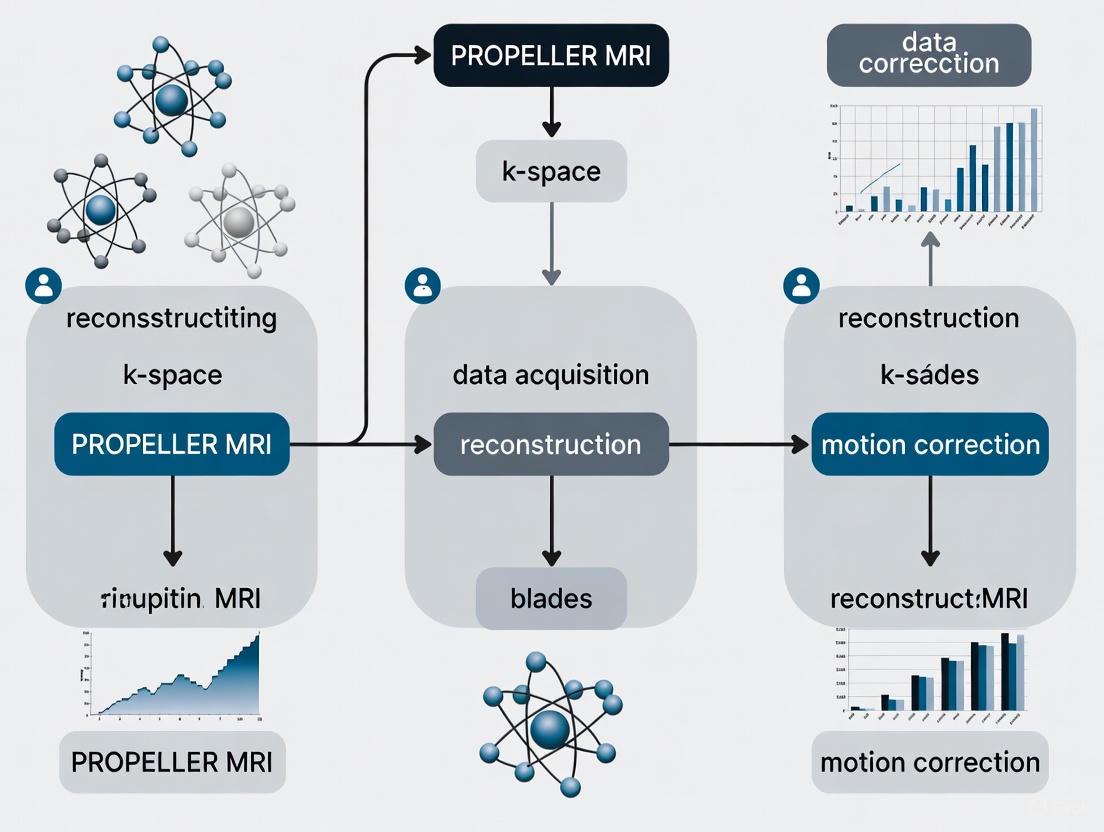
PROPELLER MRI: A Comprehensive Guide to Motion-Resistant Structural Imaging for Biomedical Research
This article provides a comprehensive examination of PROPELLER (Periodically Rotated Overlapping Parallel Lines with Enhanced Reconstruction) MRI, a critical motion-resistant technique for structural imaging.

Behavioral Training to Reduce Head Motion in MRI: A Comprehensive Guide for Researchers and Clinicians
Head motion is a major source of artifact in MRI, threatening data quality in both research and clinical settings.
Global Signal Regression in fMRI: A Comprehensive Guide to Motion Artifact Reduction for Robust Brain Research
Global Signal Regression (GSR) remains one of the most contentious preprocessing steps in resting-state functional MRI (rs-fMRI), presenting researchers with a critical dilemma.